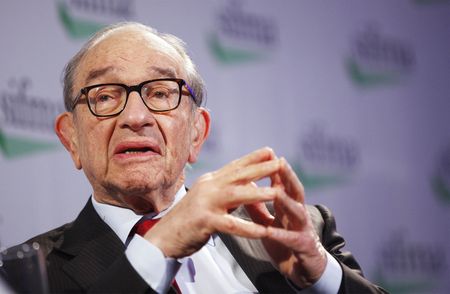

WASHINGTON — The late former Federal Reserve Chairman Alan Greenspan, who passed away Monday, left behind a legacy that is already shaping the direction of the nation’s central bank under its newest leader, Kevin Warsh.
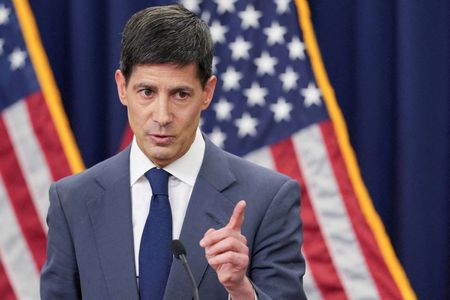
Warsh, who referenced Greenspan four times during his White House swearing-in ceremony exactly one month ago, appears to be adopting many of the same central banking philosophies that defined Greenspan’s tenure — along with some of the potential pitfalls that came with them.
Greenspan, who led the Federal Reserve for more than 18 years, was known for keeping his public statements vague and trusting financial markets to work things out on their own. That approach helped keep inflation low and economic growth steady for much of his time in office — a period so stable it became known as the “Great Moderation.”
However, that same philosophy led Greenspan to dismiss warning signs of a growing housing bubble, believing that the most sophisticated financial institutions would not systematically misjudge asset values or ignore major risks. When the U.S. subprime mortgage crisis triggered a global financial meltdown shortly after he left office, Greenspan acknowledged during congressional testimony that there was “a flaw” in his belief in rational and efficient markets.
Greenspan, who died at home from complications of Parkinson’s disease at age 100, had a gift for finding meaning in obscure economic data, according to Brookings Institution Senior Fellow Donald Kohn, a longtime top Fed staffer under Greenspan who later became Fed vice chair. In a tribute published Monday, Kohn wrote that Greenspan could “dazzle and puzzle” by “finding insight in often obscure pieces of data, occasionally combining these series in wondrous ways.”
But Kohn also noted that despite recognizing rapid price increases in certain local housing markets, Greenspan “doubted a national bubble across these markets, and he did little with his soapbox or powers over bank regulation to preemptively build resilience.”
In the aftermath of the 2007-2009 financial crisis, sweeping regulatory reforms — known as Dodd-Frank — required banks to hold larger financial cushions, develop contingency plans, and operate under tighter federal oversight, all to ensure no institution would ever be considered too large to be allowed to fail and require a taxpayer-funded rescue.
Some of those regulations are now being rolled back under Fed Vice Chair for Supervision Michelle Bowman, and Warsh has stated that reducing the Fed’s overall footprint is among his goals.
Warsh has made no secret of Greenspan’s influence on him, referencing him repeatedly during his May 22 swearing-in and connecting several of his own views on the economy and the Fed’s proper role to positions Greenspan was known for.
One area of alignment is communication. Greenspan was famously guarded and deliberately vague in his public statements, believing that keeping his options open made him better able to respond to unexpected developments. Warsh has similarly expressed concern that the Fed’s current habit of extensive public explanation risks restricting policymakers’ flexibility.
The first policy statement released under Warsh’s leadership last week was noticeably shorter and removed any explicit direction about where interest rates might be headed.
Still, Warsh has shown a willingness to speak about the future when he believes it matters. Before taking office, he pointed to how Greenspan in the mid-1990s correctly identified that rising worker productivity would help hold down inflation — and used that insight to push back against colleagues who favored raising interest rates.
Warsh believes a comparable situation may be unfolding today because of the rapid spread of artificial intelligence, and has directed one of five task forces he created at the start of his chairmanship to study productivity trends.
Broadly, the reforms Warsh is pursuing reflect an idea Greenspan would likely support: that the central bank should stay in its lane, keep its role as limited as possible, and allow households, businesses, and investors to handle the rest.
As Warsh works to scale back policies that grew out of the financial crisis — including the Fed’s large balance sheet and its expanded approach to public communications — he must ultimately decide how far to go in the one area where Greenspan himself admitted he was wrong.
At his first press conference as chairman, Warsh explained his thinking on market communication: “Financial markets perform best when they react to incoming data. I think the financial markets work less efficiently when they ask a question. How will the Federal Reserve react to that incoming information?” He added, “When all the financial markets are doing is reflecting back what we’ve said, then we’re taking the most important source of information and we’re being blind to it. I’d like us to create a system where those blinders come off, where markets are following data that they efficiently think is reliable.”