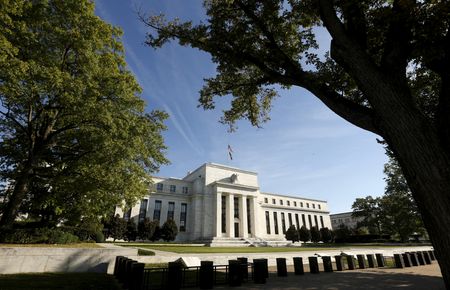

The U.S. Federal Reserve is scheduled to release the results of its yearly bank health evaluations on Wednesday at 4:00 p.m. ET.
Known as “stress tests,” these exercises put major banks’ financial standing up against a hypothetical worst-case economic scenario — one that shifts from year to year. Traditionally, the results carry significant weight because they determine how much money banks must keep in reserve and how much they can give back to shareholders through dividends and stock buybacks.
This year, however, the results come during a broad reworking of capital regulations under President Donald Trump’s banking regulators, meaning the findings won’t actually trigger changes to capital requirements — though they will still shed light on the overall health of the nation’s banking sector.
Why Does the Fed Test Banks This Way?
The Fed created these evaluations in the wake of the 2007-2009 financial crisis as a safeguard against future economic shocks. The formal testing program launched in 2011, and in the early years, several major institutions struggled to meet the bar. Citigroup, Bank of America, JPMorgan Chase, and Goldman Sachs Group all had to revise their financial plans to satisfy the Fed’s concerns. Deutsche Bank’s U.S. division failed the tests in 2015, 2016, and 2018.
Over time, banks have become more skilled at navigating the process, and the Fed has worked to make it more transparent. In 2020, the agency dropped the old “pass-fail” grading system in favor of a more tailored approach that sets capital requirements based on each bank’s individual risk profile.
How Are Banks Evaluated?
The tests measure whether a bank would remain above the required minimum capital ratio of 4.5% — the share of capital held relative to total assets — during a simulated economic crisis. Well-performing banks typically land well above that floor. The country’s largest global banks must also carry an added buffer known as a “G-SIB surcharge” of at least 1%.
A bank’s performance also determines the size of its “stress capital buffer,” an extra financial cushion introduced in 2020 that sits on top of the 4.5% minimum. The worse a bank performs in the hypothetical scenario, the larger that buffer must be.
This year’s test covers 32 banks and includes a scenario involving a severe worldwide recession, along with heightened stress in both commercial and residential real estate. Banks with large trading operations face the added challenge of a simulated global market shock and the sudden default of their biggest trading partner.
What Makes This Year’s Results Different?
Back in February, the Fed announced it would not update the stress capital buffers following this year’s test, choosing instead to keep the current levels in place for now. That means Wednesday’s results will give analysts and investors a window into each institution’s financial condition, but won’t lead to any changes in how much capital banks are required to hold.
Why Aren’t Capital Levels Changing?
The Fed is holding the line on capital requirements while it reworks the testing process in response to longstanding complaints from the banking industry. Banks have argued for years that the tests are too secretive, too subjective, and too burdensome.
The Fed has already made several adjustments — including dropping the pass-fail system and eliminating a qualitative review component that banks said gave regulators too much unchecked authority to penalize them. The stress capital buffer was also created to simplify the system and make capital requirements more specific to each bank’s risks.
Still, the industry remained dissatisfied, arguing the process lacked transparency, and in 2024 took the Fed to court to push for further changes. Under the Fed’s proposed reforms, banks would gain access to the previously secret models used in the tests and could weigh in on the annual scenarios before they are finalized.
While the banking industry celebrated the proposed changes as a significant victory, critics cautioned that the reforms could make the tests less unpredictable and therefore less effective.
Fed Vice Chair for Supervision Michelle Bowman, who is leading the reform effort, said keeping capital levels frozen during this year’s test would give regulators the opportunity to take in feedback and “correct any deficiencies.”