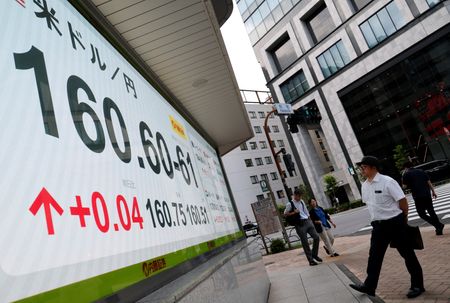

Japan’s yen continued to struggle near historic lows on Friday, with financial markets closely watching for possible government intervention after neither a diplomatic breakthrough nor a central bank rate increase managed to reverse the currency’s prolonged decline.
The yen edged 0.1% higher against the U.S. dollar, trading at 161.205 yen, finding a brief moment of stability following a drop to a two-year low the day before. However, trading volumes remained light due to holidays in the United States and across much of Asia.
Most major world currencies saw little movement as shipping traffic through the Strait of Hormuz returned to normal following the signing of a U.S.-Iran peace deal earlier in the week, though doubts remain about whether the agreement will hold long-term.
Japan’s currency has received little lasting support despite the Ministry of Finance stepping in earlier this year to sell U.S. dollars and the Bank of Japan raising interest rates to their highest level in 31 years last week. Investor confidence has been further shaken by concerns over the spending agenda of Japanese Prime Minister Sanae Takaichi, fueling speculation that additional government currency intervention may be on the horizon.
Tony Sycamore, a market analyst at IG in Sydney, offered his outlook on what Japan’s Ministry of Finance might do next. “Our view is that Japan’s Ministry of Finance will likely defend the 161.95 level the first couple of times it’s tested, deploying similar firepower to what we saw in April and May — around ¥11.7 trillion,” he said.
Sycamore cautioned, however, that such efforts would come at a cost. “That would mean they would have used roughly 11–12% of their total reserves in a relatively short period, with little noticeable impact,” he noted. “At that stage, they would need to become far more selective with future interventions to preserve flexibility and credibility, keeping plenty of ammunition in reserve.”
New data released Friday showed Japan’s annual core inflation remained below the Bank of Japan’s 2% target for the fourth consecutive month in May, as government fuel subsidies helped offset rising raw material costs tied to the ongoing Middle East conflict.
Analysts from Capital Economics offered a longer-term inflation warning in a research note: “While the government’s fuel price caps have so far kept a lid on consumer prices, we expect the pass-through of higher energy costs to utilities charges and other goods and services to lift inflation to around 3.5% by early-2027.”
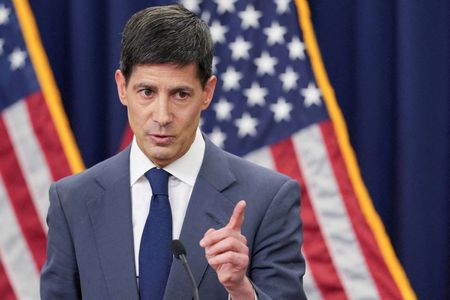
Notes from the Bank of Japan’s April meeting, also released Friday, revealed that some board members pushed for faster interest rate increases if the Middle East conflict drags on, in order to prevent underlying inflation from surpassing targets. Bank of Japan Deputy Governor Ryozo Himino echoed that sentiment Friday, stating the central bank will keep raising rates while monitoring the risk of inflation exceeding its 2% goal.
Elsewhere in currency markets, the U.S. dollar index — which tracks the greenback against a group of six major currencies — held steady at 100.81, a day after climbing 0.5% to reach a one-year peak.
The British pound was essentially flat at $1.3205 after the Bank of England opted to hold interest rates steady at 3.75% on Thursday, determining it was too soon to raise them given ongoing uncertainty about inflation pressures. Traders are also keeping an eye on a by-election involving Greater Manchester mayor Andy Burnham, whose potential victory could set up a leadership challenge to Prime Minister Keir Starmer within the ruling Labour Party.
The euro held steady at $1.1459. The Australian dollar dipped 0.1% to $0.7011, while the New Zealand dollar remained unchanged at $0.5756.
In the cryptocurrency market, Bitcoin slipped 0.2% to $62,868.18, while Ethereum was flat at $1,708.98.