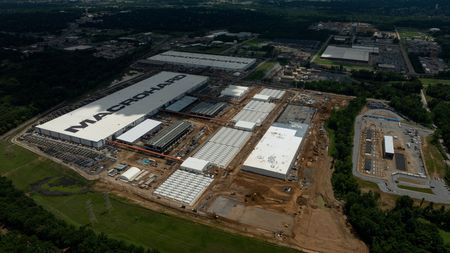

Investors are closely watching Micron Technology’s upcoming earnings report as a way to measure whether the artificial intelligence boom driving U.S. stock markets higher still has momentum behind it.
Even after a significant mid-week drop, major U.S. stock indexes remain near record territory, buoyed by strong corporate profits tied to AI investment and easing concerns about the Iran conflict.
Micron’s stock has climbed 298% so far this year. When the company releases its quarterly financial results on Wednesday, June 24, investors will be looking for clues about whether the massive wave of spending on data centers — and the profits flowing to chipmakers as a result — can keep outperforming expectations.
“There’s been a lot of momentum here recently,” said Andy Pratt, director of investment strategy at Burney Company. “This AI trend is something that’s continued, and honestly, what we see with this revenue surprise signal that we monitor is there’s still a lot of juice.”
Adding to the positive sentiment, Apple has agreed to team up with Intel to design and produce chips domestically, a move that could meaningfully accelerate Intel’s recovery. That news helped push the S&P 500 up nearly 1% for the week, putting it on track for a second straight weekly gain. The Philadelphia SE Semiconductor index also hit a record high, rising about 7% for the week.
The pressure surrounding Micron’s report is significant. Stock valuations are stretched, and some investors are questioning whether the rally has gone too far. A strong showing from Micron could give markets the confidence to push higher.
Steve Kolano, chief investment officer at Integrated Partners, described Micron’s earnings as “setting up as a classic positive feedback loop.” He added: “That really seems to be kind of the only game in town. … If you look at the book to bill of semiconductor companies right now and the backlog, the demand is just through the roof in relation to chip capacity.”
Major technology companies have signaled that AI-related spending is not cooling off, with projections showing it could surpass $700 billion this year, up from $400 billion in 2025.
Still, the broader economic picture continues to loom over markets. The Federal Reserve’s preferred measure of inflation is scheduled for release next week, along with a final reading on first-quarter economic growth. Both reports will offer a clearer picture of consumer health and overall economic momentum.
Earnings growth for S&P 500 companies in the second quarter is projected at 22.9%, a step down from the 29.3% growth recorded in the first quarter, according to data from Tajinder Dhillon, head of earnings research at LSEG.
Drew Matus, chief market strategist at MetLife Investment Management, noted that rising stock markets have been a key pillar of support for American consumers. He said any threat to the AI trade or the ongoing stock market climb is being watched carefully.
“It has not just been market effects but macroeconomic effects at this point,” Matus said. “We’re definitely worried about the wealth effect going away and what that might mean.”
For now, most analysts believe the AI investment story remains on solid footing. The recent public debut of SpaceX has added to that momentum, and Nasdaq’s decision to include additional AI and chip infrastructure companies such as Astera Labs and CoreWeave will require index funds to purchase those stocks, further supporting the sector.
“The way I would view this is,” said Burney’s Pratt, “you could continue betting on these companies kind of until proven otherwise.”