Homebuyers received some welcome news this week as mortgage rates declined slightly after climbing steadily for more than a month to nearly seven-month highs.
Freddie Mac reported Thursday that 30-year fixed mortgage rates fell to 6.37% from the previous week’s 6.46%. The current rate remains below last year’s level of 6.62% for the same period.
The weekly decrease breaks a streak of five consecutive rate increases that had been adding hundreds of dollars to monthly payments for home shoppers and reducing their purchasing power.
Current rates have returned to approximately the same level they held two weeks earlier.
Borrowing costs for 15-year fixed mortgages, commonly chosen by homeowners seeking to refinance, also declined this week. These rates fell to 5.74% from 5.77% the previous week, compared to 5.82% one year ago, according to Freddie Mac.
Multiple factors drive mortgage rate changes, including Federal Reserve policy decisions and bond market investors’ economic and inflation forecasts.
Just six weeks earlier, 30-year mortgage rates had fallen below 6% for the first time since late 2022, creating optimism among buyers as spring home shopping season approached. However, conflict with Iran subsequently erupted, driving oil prices upward and raising inflation concerns.
These inflation expectations contributed to rising yields on 10-year U.S. Treasury bonds, which banks reference when setting home loan prices.
Thursday’s midday trading showed the 10-year Treasury yield at 4.28%, down slightly from 4.3% the previous week. The yield stood at just 3.97% in late February, before the Iranian conflict began.
Rising inflation could prevent the Fed from reducing interest rates. While the central bank doesn’t directly control mortgage rates, its short-term rate decisions significantly influence bond investors and ultimately impact 10-year Treasury yields.
The housing market has struggled since 2022, when mortgage rates started climbing from pandemic-era lows. Previously owned home sales remained essentially unchanged last year, stuck at three-decade lows, and have continued sluggishly this year with January and February showing year-over-year declines.
Despite current rates being slightly lower than a year ago, their recent upward movement has already reduced mortgage applications. Additional increases could further dampen home sales during the housing market’s traditionally busiest season.
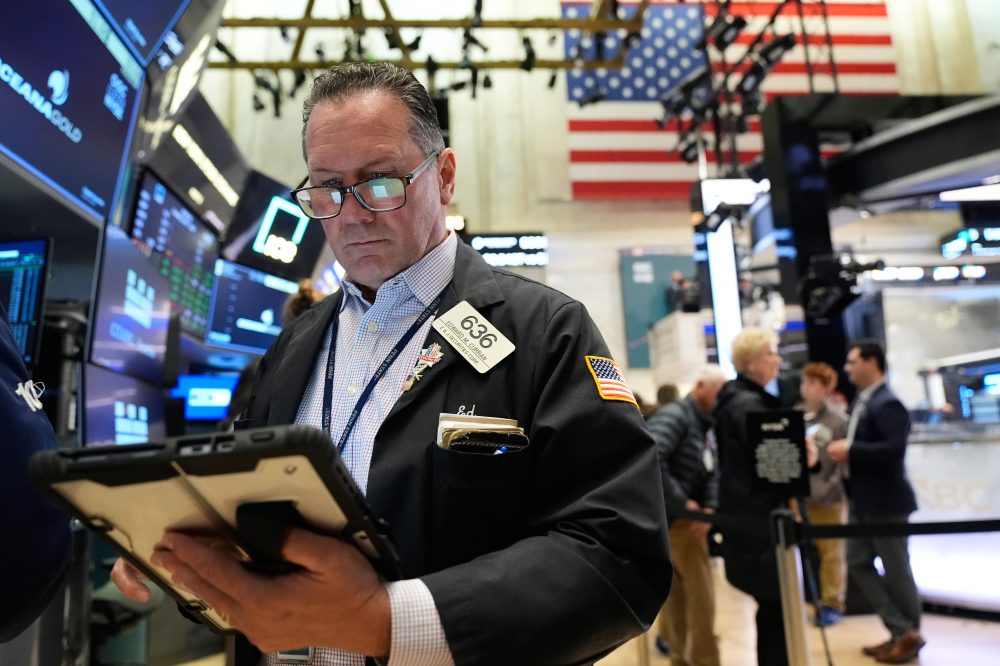
Technology stocks experienced a sharp decline Thursday following news that artificial intelligence company Anthropic has limited distribution of its latest AI system due to cybersecurity concerns, reigniting market anxiety about AI’s potential to disrupt established software businesses.
Earlier this week, Anthropic announced it would restrict access to its “Claude Mythos” AI system to approximately 40 select companies, including tech giants Microsoft and Google. The decision came after the model identified thousands of security flaws across major operating systems and web browsers.
“If Mythos is that strong and that powerful and it’s exposing these vulnerabilities that have been around for years, it just shows one, the weakness of the current software that’s out there and two, that AI is still making incredible progress versus legacy software companies,” explained Michael O’Rourke, chief market strategist at JonesTrading.
The market reaction was swift and severe. The S&P 500 Software and Services Index dropped 3.1% on Thursday, contributing to a nearly 26% decline for the year as investors worry about AI’s impact on subscription-based software companies.
Cybersecurity companies bore the brunt of the selloff, with stocks like Cloudflare, Okta, CrowdStrike and SentinelOne falling between 4.7% and 7.7% during morning trading sessions.
Zscaler emerged as one of the day’s worst performers on the S&P 500, plummeting 8.6%. Investment firm BTIG contributed to the decline by downgrading the stock from “buy” to “neutral,” expressing worries about customer demand and increased competition.
“We’re getting back to being concerned about the prior software-specific concerns stemming from AI and private credit that are coming back to the fore,” noted Steve Sosnick, chief market analyst at Interactive Brokers.
The widespread decline affected major enterprise software companies as well. Atlassian, Workday, Adobe, Salesforce and Intuit all saw their share prices drop between 3.7% and 6.8% as investors reassessed the competitive landscape in light of advancing AI capabilities.
A Delaware-connected rare earth mining company is exploring the establishment of a magnet manufacturing facility in France after announcing a significant investment in a French processing operation.
USA Rare Earth revealed Thursday it will invest 40 million euros ($47 million) to acquire a 12.5% ownership stake in Carester, a French company constructing a rare earth processing facility in southern France.
The investment comes as both the United States and European nations work to develop independent sources of rare earth materials, which are essential for renewable energy technology, electronic devices, and military equipment, while reducing reliance on China, the world’s dominant supplier.
“They (the French government) are interested in… supporting a potential USA Rare Earth magnet-making facility in the south of France,” CEO Barbara Humpton stated during an investor conference call.
Chief Financial Officer Robert Steele confirmed the company is in preliminary planning phases for the potential magnet plant but declined to provide specific timelines or additional details about the project.
USA Rare Earth’s strategy involves creating a comprehensive rare earth operation that encompasses mining, processing, and magnet production. The company secured $1.6 billion in combined debt and equity financing from the U.S. government in January and operates a magnet manufacturing facility in Stillwater, Oklahoma, scheduled to begin operations later this year.
InfraVia, a critical minerals investment fund supported by the French government, will also purchase a matching 12.5% stake in Carester as part of the agreement.
Carester’s French facility will focus on producing heavy rare earths, materials that are crucial for magnet manufacturing but may become increasingly difficult to obtain due to anticipated supply shortages, according to industry analysts.
The partnership includes 15-year supply and purchase agreements that will allow USA Rare Earth to ship materials from its Round Top mining operation in Texas to France for processing and then acquire the resulting heavy rare earth oxides.
USA Rare Earth’s British subsidiary, Less Common Metals, which manufactures rare earth alloys and metals, previously established a partnership with Carester in May of last year to develop a processing plant in France.
Carester has secured 216 million euros in funding from Japanese investors and the French government for its Caremag processing facility, which is projected to produce 1,400 metric tons of rare earth oxides annually from recycled magnets and mining materials.
Swedish electric vehicle manufacturer Polestar announced Thursday that its first-quarter vehicle deliveries climbed 7% compared to the same period last year, driven by the company’s strategic focus on European markets amid challenging global conditions.
The automaker delivered 13,126 vehicles during the first three months of 2024, an increase from the 12,263 units sold during the first quarter of 2023.
This upward trend reflects Polestar’s deliberate shift toward prioritizing European operations over the past year, a move designed to improve profit margins and revenue streams while navigating volatile worldwide electric vehicle demand, rising operational expenses, and growing financial losses.
According to Polestar CEO Michael Lohscheller, the company saw robust performance in “key markets such as Australia, Germany, Sweden, South Korea and the UK.”
In February, the automaker unveiled updated versions of its popular Polestar 2 sedan and Polestar 4 SUV models, scheduled for release within the next 12 months. These refreshed vehicles aim to sustain sales growth and draw new customers while preserving the brand’s luxury market positioning.
The company continues to grapple with U.S. import duties that have squeezed profit margins, created manufacturing obstacles and cost pressures, and required restructuring of supply chains along with relocating production facilities to American soil.
Like many electric vehicle manufacturers, Polestar depends significantly on financial backing and resources from its primary investor, Geely Holding, as smaller EV companies form partnerships with larger corporations to survive in an intensely competitive marketplace.
The automaker projects it will operate approximately 250 retail locations by year’s end, marking a 20% increase from its current network.
WASHINGTON — The U.S. economy experienced minimal expansion during the final three months of last year, with the Commerce Department announcing Thursday that growth reached just 0.5% at an annualized rate, a reduction from their earlier projection.
The nation’s gross domestic product, which measures total output of goods and services, saw a dramatic slowdown in the October-December period compared to the strong performance earlier in the year. The third quarter had shown robust 4.4% growth, while the second quarter posted 3.8% expansion. Thursday’s revised figure represents a downward adjustment from the department’s prior 0.7% estimate for the fourth quarter.
The 43-day federal government shutdown significantly impacted economic performance, with federal spending and investment dropping at a 16.6% annual rate. This decline subtracted 1.16 percentage points from the quarter’s overall GDP growth. Meanwhile, consumer spending rose at a modest 1.9% rate, representing a decrease from both the previous estimate and the second quarter’s 3.5% pace.
Looking at the full year, the economy expanded 2.1% in 2025, marking a deceleration from 2.8% growth in 2024 and 2.9% in 2023.
Economic prospects for the current year remain uncertain following the U.S.-Israeli conflict with Iran, which has elevated energy costs and created disruptions in international trade networks.
The nation’s employment situation showed weakness throughout last year, with hiring reaching its lowest levels outside of a recession since 2002. However, job creation has shown volatility in early 2026, with employers adding 160,000 positions in January, eliminating 133,000 in February, and unexpectedly creating 178,000 jobs in March.
Thursday’s data represents the Commerce Department’s final revision of fourth-quarter GDP figures. The initial report on first-quarter economic performance is scheduled for release on April 30.
WASHINGTON — Weekly unemployment benefit applications across the United States climbed higher last week, occurring just before Iran, Israel and the United States revealed a two-week ceasefire agreement that brought some hope to an otherwise uncertain global economic landscape.
New claims for jobless benefits during the week that concluded April 4 increased by 16,000, reaching 219,000 compared to the prior week’s total of 203,000, according to Thursday’s Labor Department data. While this figure exceeded the anticipated 210,000 applications that analysts from FactSet had predicted, it falls within typical ranges seen over recent years.
Weekly unemployment benefit applications serve as a key indicator of U.S. layoff activity and provide nearly real-time insights into labor market conditions.
The ceasefire announcement made Tuesday evening caused oil prices to drop dramatically to $95 per barrel, though they rebounded close to $100 early Thursday as doubts emerged about the agreement’s longevity. This skepticism intensified after Israel conducted multiple strikes on Lebanon and Iran once again blocked the vital Strait of Hormuz, a waterway through which one-fifth of global oil supplies flow.
Stock markets also pulled back Thursday after experiencing significant gains the previous day.
Before the ceasefire declaration, U.S. crude oil had climbed to $112 per barrel, a substantial increase from approximately $67 in the period preceding the conflict. Despite Wednesday’s sharp drop, both businesses and consumers continue facing elevated energy expenses as oil and gasoline prices remain high.
These developments occur while U.S. inflation already exceeds the Federal Reserve’s 2% goal, making it less likely that central bank officials will reduce interest rates in the near future. The government will release its March consumer price data on Friday.
Additionally on Thursday, delayed government information due to the federal shutdown revealed that a crucial inflation measure stayed elevated in February, even before U.S. and Israeli military actions against Iran began.
Federal Reserve officials implemented three rate increases to end 2025 due to concerns about job market weakness but have avoided further rate reductions this year.
Last week’s Labor Department data showed U.S. employers surprisingly added 178,000 positions in March, bringing the unemployment rate down to 4.3%. This followed an unexpectedly large decline of 92,000 jobs in February. Adjustments also reduced December and January employment figures by 69,000 positions, indicating ongoing labor market pressures.
Several prominent corporations have recently implemented workforce reductions, including software company Oracle, which media sources report eliminated thousands of positions last week. The Wall Street Journal reported Wednesday that The Walt Disney Co. plans to eliminate 1,000 jobs from its staff.
Additional companies announcing recent layoffs include Morgan Stanley, Block, UPS and Amazon.
Weekly unemployment applications have remained relatively steady in a range primarily between 200,000 and 250,000 since the U.S. economy recovered from the pandemic-related downturn. However, employment growth started declining approximately two years ago and decreased further in 2025 due to President Donald Trump’s unpredictable tariff implementations, federal workforce reductions and ongoing effects of elevated interest rates designed to combat inflation.
Employers created fewer than 200,000 positions last year, compared to roughly 1.5 million in 2024, based on FactSet data.
The U.S. job market appears trapped in what economists describe as a “low-hire, low-fire” situation that has maintained historically low unemployment rates while making it difficult for jobless individuals to secure new employment.
Thursday’s Labor Department report indicated that the four-week average of jobless claims, which smooths out weekly fluctuations, increased by 1,500 to 209,500.
The overall number of Americans receiving unemployment benefits for the week ending March 28 decreased by 38,000 to 1.79 million, representing the lowest total in nearly two years.
WASHINGTON — Federal Reserve officials received concerning news Thursday as their preferred inflation measurement showed continued price pressures in February, occurring before the Iran conflict drove up gasoline costs nationwide.
The closely-watched inflation indicator climbed 0.4% between January and February, representing a modest uptick from the prior month’s reading. When measured against February of last year, consumer prices increased 2.8%, matching January’s annual rate. Thursday’s economic data release experienced delays due to a reporting backlog stemming from the six-week federal government shutdown that occurred last fall.
When removing volatile food and energy prices from calculations, the core inflation measure similarly jumped 0.4% month-over-month in February, while posting a 3% annual increase. The yearly figure represents a slight improvement from January’s 3.1% reading.
However, the monthly rate of increase, if sustained throughout an entire year, would significantly exceed the Federal Reserve’s established 2% inflation goal.
Thursday’s economic report serves as a preview for more crucial inflation statistics scheduled for Friday’s release, when federal officials will publish the widely-followed consumer price index covering March activity. Friday’s numbers will mark the first official data capturing the gasoline price surge resulting from the Iran conflict. Economic analysts predict the March report will demonstrate a substantial 0.9% monthly jump from February, alongside a 3.4% yearly increase. The annual measurement would represent a dramatic rise from February’s 2.4% figure.
The anticipated sharp inflation acceleration in March will intensify Federal Reserve concerns that consumer prices are drifting further from their target range, making interest rate reductions increasingly unlikely in the near term. During their latest policy meeting last month, certain Fed policymakers expressed support for considering potential rate increases should inflation trends fail to improve.
WASHINGTON — The nation’s economic expansion slowed dramatically in the final three months of last year, with the Commerce Department announcing Thursday that growth reached only 0.5% annually during the October-December period, revising downward from an earlier projection.
This represents a significant deceleration from the robust economic performance seen earlier in the year, when the nation’s gross domestic product surged 4.4% in the third quarter and 3.8% in the second quarter. The revised figure marks a reduction from the department’s prior fourth-quarter estimate of 0.7%.
The 43-day federal government shutdown that occurred last fall significantly hampered economic activity, with government spending and investment plummeting at a 16.6% annual rate. This decline subtracted 1.16 percentage points from the quarter’s overall GDP performance. Meanwhile, consumer spending increased at a modest 1.9% rate, representing a decrease from both the previous estimate and the second quarter’s 3.5% pace.
Looking at the full year, the economy expanded 2.1% in 2025, marking a decline from 2.8% growth in 2024 and 2.9% in 2023.
Economic forecasters face uncertainty about the year ahead, as the ongoing U.S.-Israeli conflict with Iran has pushed energy costs higher and created disruptions in international trade networks.
The nation’s employment situation showed weakness throughout last year, with hiring reaching its lowest levels outside of a recession since 2002. However, 2026 has brought mixed signals: companies hired 160,000 workers in January, eliminated 133,000 positions in February, then unexpectedly added 178,000 jobs in March.
Thursday’s data represents the Commerce Department’s final revision of fourth-quarter economic performance. Officials plan to release preliminary first-quarter growth figures on April 30.
WASHINGTON — Federal Reserve officials received concerning news Thursday as their preferred inflation metric showed continued price pressures in February, occurring before the Iran conflict sent gasoline costs soaring nationwide.
The closely watched inflation indicator climbed 0.4% from January to February, marking a slight uptick from the prior month’s increase. Year-over-year, consumer costs advanced 2.8%, matching January’s annual pace. The economic data release came later than usual due to a reporting backlog stemming from the six-week federal government shutdown that occurred last autumn.
When removing volatile food and fuel prices, the core inflation measure similarly jumped 0.4% month-to-month in February, while posting a 3% annual increase. This yearly figure represents a modest decline from January’s 3.1% reading.
However, the monthly gains suggest an annualized pace that would significantly exceed the Federal Reserve’s 2% inflation goal if sustained throughout the year.
Thursday’s figures serve as a preview for more crucial inflation statistics scheduled for Friday’s release, when officials will unveil March’s consumer price index data. Friday’s report will mark the first to capture the economic effects of surging fuel costs triggered by the Iran conflict. Economic analysts predict March will show a substantial 0.9% monthly jump and a 3.4% annual increase, representing a sharp rise from February’s 2.4% yearly rate.
The anticipated March inflation surge is expected to intensify Federal Reserve concerns about prices drifting further from their target, making near-term interest rate reductions increasingly unlikely. During their latest policy meeting, several Fed policymakers expressed support for considering potential rate increases if inflation trends fail to improve.
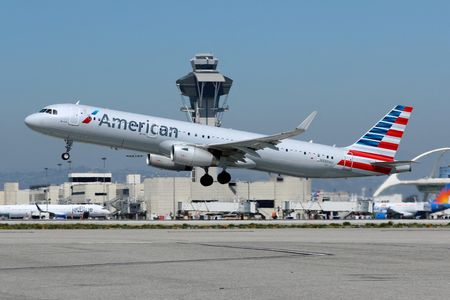
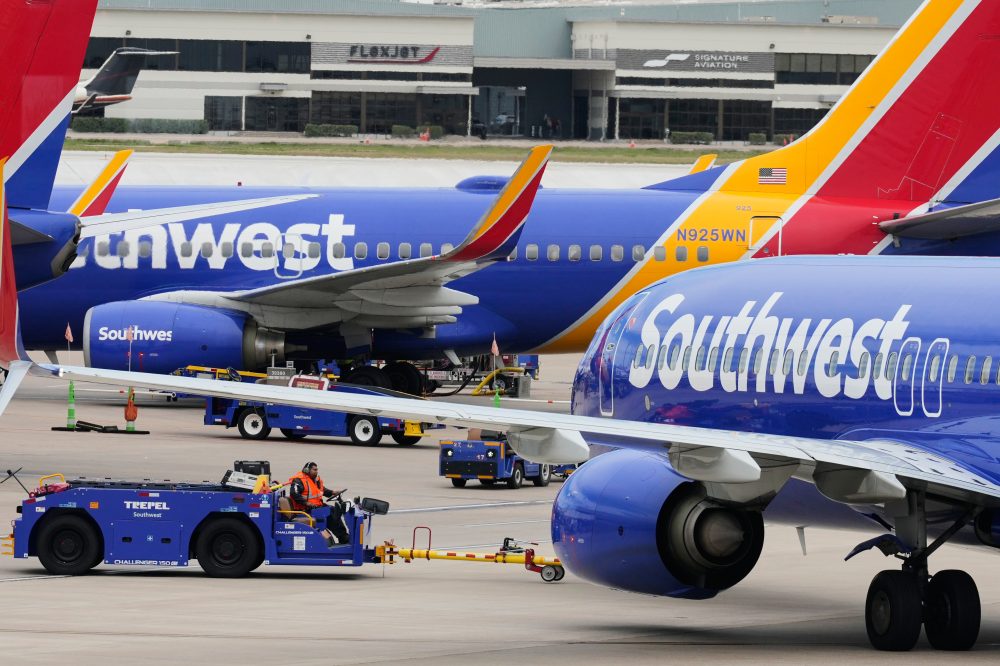
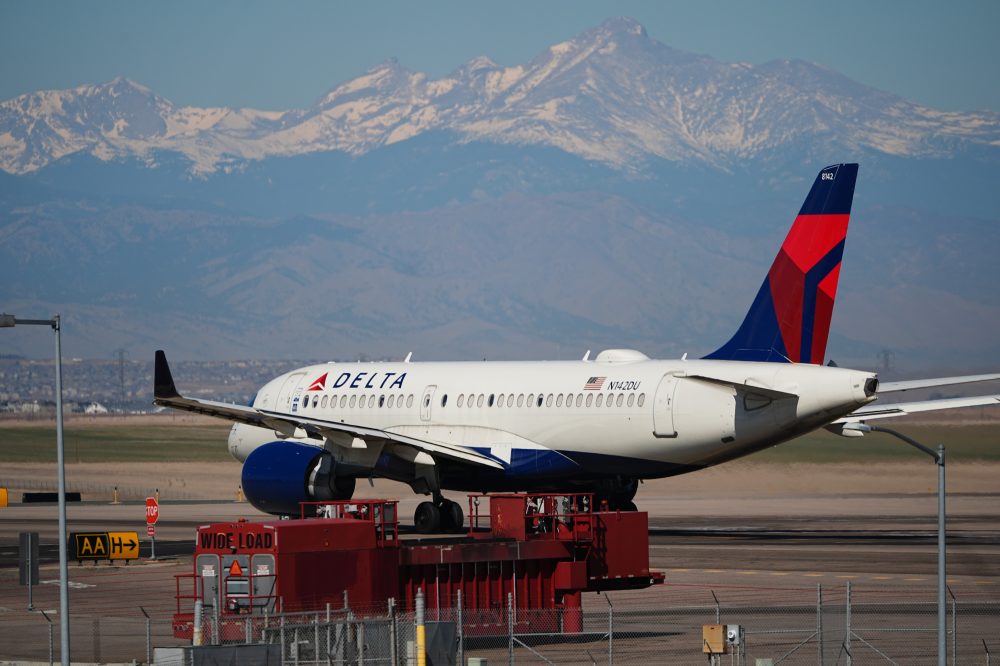
American Airlines announced Tuesday it will increase baggage fees for domestic and short-distance international flights as jet fuel costs continue to climb dramatically due to Middle East tensions affecting global oil supplies.
The Dallas-based carrier becomes among the final major U.S. airlines to implement cost-protection measures as operational expenses mount from elevated fuel prices. The disruptions stem from Middle East conflicts that have impacted shipping routes through the Strait of Hormuz, a critical waterway handling approximately 20 percent of worldwide oil transportation.
Aviation fuel costs have skyrocketed from roughly $85-$90 per barrel in February to approximately $209 per barrel currently, data from the International Air Transport Association shows.
Beginning Thursday, American will implement a $10 increase for both first and second checked bags on domestic routes and short-haul international destinations. The carrier also announced a $50 hike for third checked bags, bringing that fee to $200, though this pricing already existed for certain markets including Canada.
Starting May 18, passengers flying basic economy will face an additional $5 charge for checked luggage. These travelers will also lose access to complimentary seat selection and automatic system-wide flight upgrades.
Customers purchasing premium cabin tickets will maintain free baggage allowances on both domestic and international routes, the airline noted.
Air travelers around the globe are confronting a challenging new landscape of escalating costs, reduced flight availability, and tough choices about whether journeys justify the expense.
The primary driver behind these changes is unstable oil and aviation fuel pricing, which has surged dramatically following the outbreak of Middle Eastern warfare and conflicts near the strategic Strait of Hormuz that have disrupted worldwide petroleum distribution.
“Volatility is the real story here,” said Shye Gilad, a former airline captain who now teaches at Georgetown University’s business school. “Right now, the airlines are trying to make bets on what they think will happen in the future.”
Carriers are implementing conservative strategies, reducing flight schedules and modifying ticket costs in methods that aviation analysts predict will create uneven market effects while eventually impacting virtually all passenger categories.
Aviation experts indicate that discount carriers and budget-minded travelers who depend on them will likely experience the most immediate and severe consequences, though passengers in first-class and business sections won’t avoid increased costs and less favorable scheduling.
Petroleum costs have fluctuated dramatically over recent weeks, momentarily reaching $119 per barrel before dropping Wednesday to under $95 following President Donald Trump’s announcement of a two-week Middle Eastern ceasefire that temporarily reopened the Strait of Hormuz. However, the underlying unpredictability driving these fluctuations persists, particularly after Iran again blocked the crucial shipping channel for global petroleum transport following Israeli military actions in Lebanon.
“When prices move quickly in both directions, it’s very hard for airlines to make predictions,” Gilad said. “That’s why there’s a lag between oil market moves and what passengers see in ticket prices.”
This means that even during petroleum price decreases, travelers might not experience immediate financial relief. Airlines can require months, occasionally up to a full year, to modify ticket costs and additional charges while waiting for energy markets to achieve stability.
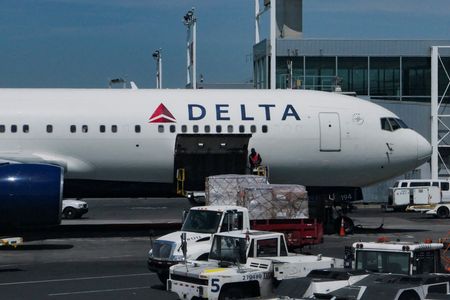
“At this level of fuel, it’s hard to call anything temporary,” Delta Air Lines CEO Ed Bastian told reporters this week after the Atlanta-based carrier raised its checked baggage fees.
Bastian announced Wednesday as Delta initiated the earnings reporting period for American airlines that elevated fuel expenses are projected to increase operating costs by $2 billion during the second quarter exclusively.
United Airlines CEO Scott Kirby stated in a recent employee communication that sustained high aviation fuel prices would result in an additional $11 billion in yearly expenses. This amount exceeds double what United generated during its most successful year.
“For perspective,” he said, “in United’s best year ever, we made less than $5 billion.”
The International Air Transport Association reports that average worldwide jet fuel pricing climbed to $209 per barrel last week, increasing from approximately $99 at February’s conclusion when the conflict began.
Passengers traveling from the United States to Hong Kong and New Delhi are experiencing these cost increases directly.
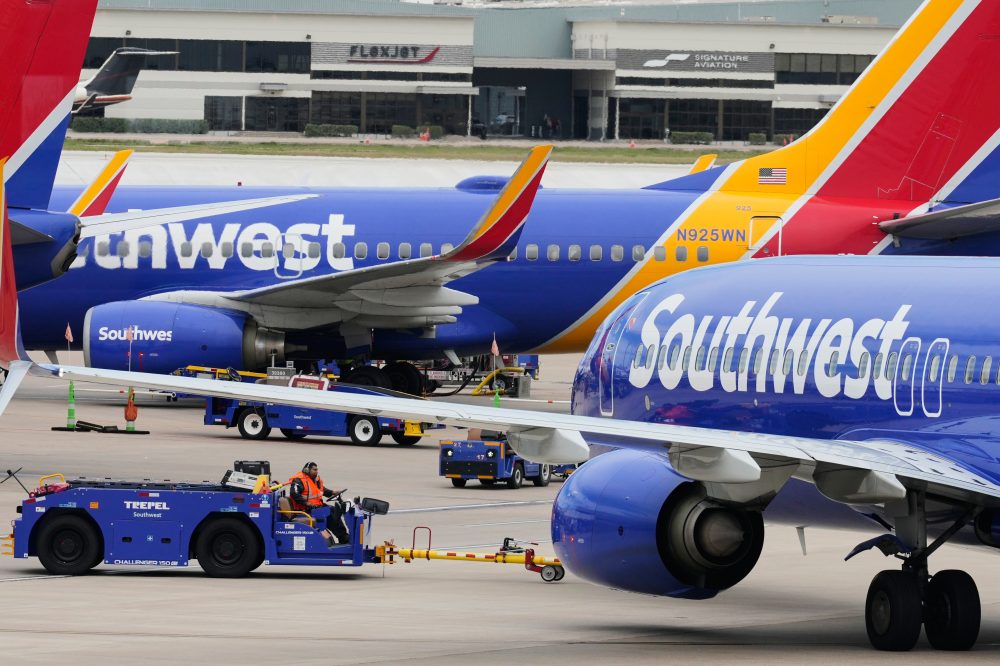
American carriers are incorporating elevated operational expenses into ticket pricing and supplementary charges. Delta, United, Southwest Airlines and JetBlue have all increased their baggage checking fees.
United has expanded beyond additional charges to modify pricing in its premium sections. The airline announced last week it is implementing the “pay for what you want” strategy already common in economy class to its upscale cabins, converting benefits like early seat selection and completely refundable tickets into optional add-ons.
Hong Kong’s Cathay Pacific recently increased fuel surcharges by approximately 34% across all destinations, while Air India on Monday imposed up to $280 in additional fees on certain flights. Emirates, Lufthansa and KLM have similarly modified charges or ticket prices to address the pricing instability.
For certain travelers, the issue extends beyond expense to the unpredictability that’s altering their trip planning approaches.
Bill Moorehouse, 50, a solutions director at a global provider of business and technology services, routinely travels for work every four to six weeks.
“When you have business trips and you have a carefully coordinated schedule, you don’t want unknowns and disruptions. And right now, it just feels like it’s more likely that things could go wrong and throw your trip off course,” the Cupertino, California, resident said.
Currently, he’s limiting travel to nearby destinations.
“I think it’s a good time to do your spring cleaning and reconnect with friends locally.”
Meanwhile, airlines are also modifying their flight frequency.
BNP Paribas calculates that worldwide April schedules have been reduced approximately 5% compared to earlier projections. The global investment bank noted that most reductions occur in the Middle East, though smaller decreases have also appeared in Europe, Asia and North America.
United Airlines is eliminating about 5% of its scheduled flights in the immediate future, reducing less profitable destinations and temporarily halting some international service rather than “burning cash” on routes that cannot accommodate the increased fuel expenses. The airline’s CEO indicated the reductions will focus on overnight flights and routes during traditionally slower travel periods such as Tuesday, Wednesday and Saturday.
Delta is abandoning plans to increase flights and seating capacity this summer, resulting in approximately 3.5% fewer seats than initially scheduled.
These decisions demonstrate why major airlines are better equipped to handle fuel price increases than budget carriers, whose “no frills” approach provides limited flexibility for absorbing unexpected expenses. Larger airlines can utilize dynamic pricing strategies, market more seats at premium rates or substitute larger aircraft on specific routes, enabling flight reductions without losing overall capacity.
“Leisure travelers and budget conscious travelers are going to absolutely feel it first because it may make the difference between going and not going,” Gilad said.
This factor has already influenced Anna Del Vecchio’s decision. The 36-year-old Seattle resident has established an annual spring tradition of visiting family in Philadelphia before flying to Paris to see friends she met as a teenager during a volunteer internship.
Her credit card rewards typically cover the roundtrip flight, but ticket prices now approach $1,400 — nearly double her previous years’ costs.
“It wasn’t even scratching the surface for the flight this time,” she said, “so I decided to delay the trip.”
However, if airfare exceeds $1,500, she might be unable to make a journey she hasn’t missed in years.
“It might be the kind of thing where it just ends up being that I have to travel less.”
The artificial intelligence company that created ChatGPT has shared bold financial forecasts with investors, anticipating $2.5 billion in advertising income for 2024 and a dramatic climb to $100 billion by 2030, according to a Thursday report from Axios citing sources familiar with investor presentations.
According to the financial projections presented to investors, OpenAI anticipates advertising income will climb dramatically over the coming years: $11 billion in 2027, $25 billion in 2028, and $53 billion by 2029. These ambitious targets assume the company’s artificial intelligence products will attract 2.75 billion weekly users by the decade’s end.
When contacted about the Axios findings, OpenAI representatives had not provided a response at the time of this report.
The AI company announced in January its plans to introduce advertisements within ChatGPT for select American users as part of an effort to increase overall income and support the expensive development costs of artificial intelligence technology. These promotional messages were initially tested among users of ChatGPT’s no-cost version and the more affordable Go subscription plan.
Just last month, an OpenAI representative revealed that the ChatGPT advertising trial program in America had achieved $100 million in yearly revenue projections within just six weeks of beginning. During that same period, the company had grown its advertiser base to more than 600 businesses.
OpenAI’s advertising push represents an attempt to compete in a market currently controlled by tech giants Alphabet’s Google and Facebook’s parent company Meta. To put this in perspective, Google’s advertising division brought in $294.69 billion during 2025, while Meta’s advertising revenue reached $196.18 billion for the same year.
While some industry experts have expressed concerns that incorporating advertisements into ChatGPT might frustrate users and damage confidence in the platform, OpenAI maintains that consumer trust measurements remain unaffected and that users rarely dismiss the promotional content.
A major Dubai-based aviation company has announced a significant partnership with investment giant Blackstone to create an ambitious aircraft leasing venture worth $1.6 billion per year.
Dubai Aerospace Enterprise and Blackstone Credit and Insurance revealed their collaboration Thursday, establishing a joint investment program called Equator that will focus on acquiring commercial aircraft to lease to airlines around the world.
Under the arrangement, Dubai Aerospace Enterprise will be responsible for acquiring aircraft from outside sources, while the company’s Aircraft Investor Services division will handle day-to-day management of the fleet assets.
This partnership represents the latest move by alternative investment firms to enter the aviation finance market, an industry that has seen increased attention from institutional investors as limited aircraft availability drives up leasing costs.
Blackstone Credit and Insurance operates through its Infrastructure and Asset Based Credit Group, which oversees more than $100 billion in assets. The Equator program will receive funding from various sources, including capital from funds overseen by ITE Management, which maintains a strategic partnership with Blackstone Credit and Insurance.
Dubai Aerospace Enterprise currently manages approximately 700 aircraft in its fleet. The company also handles more than 100 aircraft worth over $4 billion through third-party management agreements as of the end of 2025. The firm serves as the managing entity for seventeen different management contracts with institutional and financial investors.
Financial markets experienced a setback Thursday as the fragile ceasefire between the United States and Iran showed signs of strain, with both nations disagreeing about the scope of their recent two-week agreement.
Energy prices climbed while stock markets retreated as the critical Strait of Hormuz shipping lane remained essentially blocked to maritime traffic. Tensions escalated with renewed verbal disputes between Washington and Tehran, despite planned peace negotiations scheduled for the weekend.
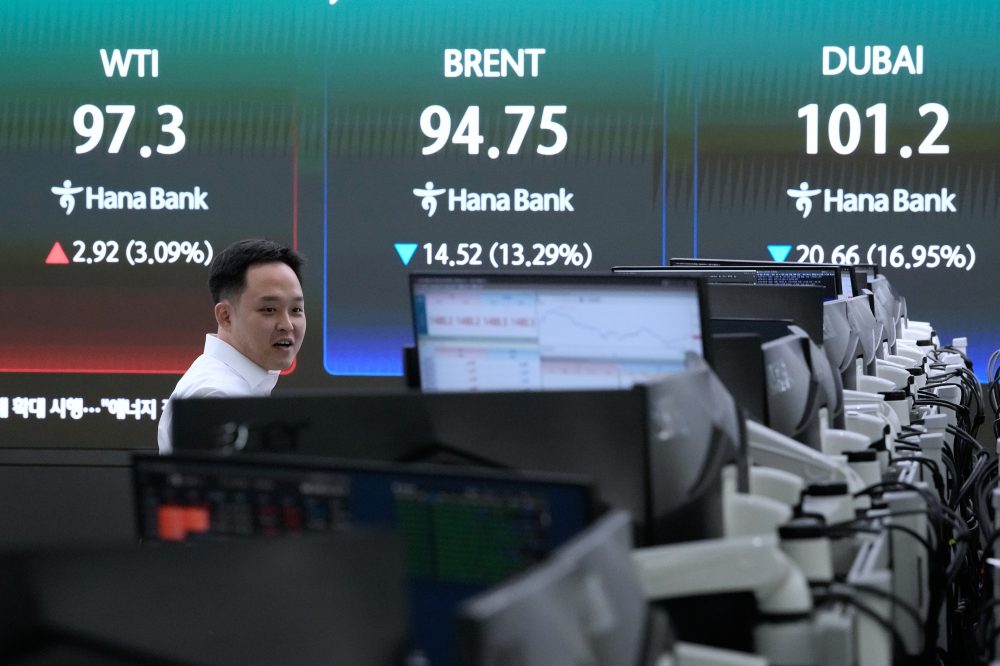
Both Brent and WTI crude oil benchmarks surged past $98 per barrel Thursday morning before pulling back slightly, driven by fresh uncertainty about the ceasefire’s stability. While current prices remain below earlier weekly peaks, the increase was sufficient to halt Wednesday’s worldwide stock market gains.
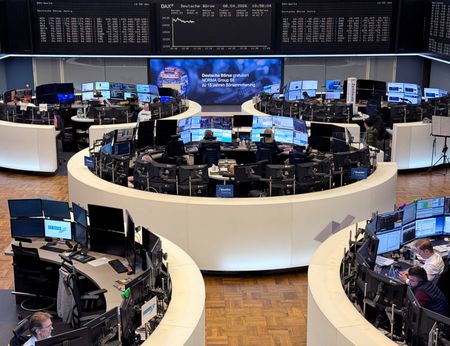
Asian markets led the decline, with Japan’s Nikkei and South Korea’s KOSPI indexes dropping after several days of increases. European markets opened lower, and U.S. stock futures traded in negative territory before the opening bell.
Currency markets showed mixed signals, with the dollar trading relatively flat as investors awaited clarity on whether the U.S.-Iran truce would survive. The Japanese yen retreated from Wednesday’s advances, settling near 159 against the dollar.
Questions about the ceasefire’s longevity intensified as the Strait of Hormuz remained blocked to shipping. Iranian maritime authorities warned Wednesday that unauthorized vessels would face targeting and destruction, while Tehran continues weighing toll charges for waterway passage.
Iran has also accused Israel of violating ceasefire conditions through continued strikes in Lebanon. Although weekend peace discussions remain scheduled to begin Saturday, Iran’s chief negotiator called proceeding “unreasonable,” while President Trump issued additional military warnings.
These developments are unlikely to comfort investors hoping the ceasefire would provide the market breakthrough they anticipated, or that the global energy crisis would ease soon. This maintains concerns about potential inflationary pressures and helped slow Wednesday’s Treasury bond rally.
Regarding inflation data, traders will monitor Thursday’s February personal consumption expenditures report, projected to show U.S. prices rising 0.4% for the second consecutive month, even before recent energy price spikes.
Federal Reserve meeting minutes released Wednesday revealed some policymakers favoring rate increases for the next policy move. However, “many participants” still supported rate reductions, with “most” recognizing potential economic growth risks from the conflict that could justify additional cuts.
Shipping data shows daily traffic through the Strait of Hormuz has plummeted to under 10% of normal levels since the U.S.-Iran conflict began. Tehran’s demonstrated capacity to disrupt Gulf energy supplies illustrates how the conflict has already shifted regional power balances.
Thursday’s key economic releases include U.S. February PCE inflation data at 8:30 a.m., weekly unemployment claims at 8:30 a.m., and final fourth-quarter GDP figures at 8:30 a.m. A 30-year Treasury bond auction is scheduled for 1 p.m.
Amazon disclosed Thursday that its cloud computing division’s artificial intelligence operations generated more than $15 billion in revenue during the first quarter of 2026, marking the first time the tech giant has revealed specific financial figures from its AI investments.
Chief Executive Andy Jassy told shareholders that these figures are “ascending rapidly” and noted that the company’s overall cloud operations would be expanding even more quickly if not for current capacity limitations affecting the technology sector.
The CEO also revealed that Amazon’s semiconductor division, which manufactures Graviton and Trainium processors, has reached an annual revenue rate exceeding $20 billion. This represents a doubling from the $10 billion figure the company announced earlier this year.
“There’s so much demand for our chips that it’s quite possible we’ll sell racks of them to third parties in the future,” Jassy stated.
These financial revelations demonstrate that Amazon’s substantial investments in artificial intelligence infrastructure are beginning to generate significant returns. Jassy has previously indicated he believes AI technology will help Amazon Web Services reach $600 billion in yearly sales, which doubles his earlier projections, according to exclusive reporting from Reuters last month.
Amazon Web Services recorded total revenue of $128.7 billion in 2025, representing approximately 20% growth compared to the previous year. Industry analysts project the division will reach $142 billion in sales this year.
The company announced in February it plans to invest roughly $200 billion in capital expenditures this year, with most funds directed toward AI development and related infrastructure. While this substantial spending initially concerned investors, Jassy assured shareholders Thursday that much of the AWS investment will generate revenue during 2027 and 2028.
“We already have customer commitments for a substantial portion of it,” he explained.
WASHINGTON – Smaller artificial intelligence companies specializing in defense applications are experiencing an unprecedented wave of interest from military officials and investors after the Pentagon severed its relationship with major AI contractor Anthropic, highlighting the military’s need to expand its roster of technology providers.
Following the public breakdown between the Defense Department and Anthropic, which resulted in the company’s removal from military projects, emerging defense AI firms including Smack Technologies and EdgeRunner AI report a dramatic transformation in how they’re being received by potential clients and backers who previously showed little interest.
The Pentagon’s deteriorating partnership with Anthropic has created new pathways for smaller competitors who have long attempted to break into what represents one of the world’s most profitable government contracting opportunities. Securing defense contracts often leads to additional business with other federal agencies and serves as a valuable endorsement for commercial customers.
Tyler Sweatt, who leads Second Front, a firm that assists technology companies in meeting Pentagon security requirements, described the change: “We’ve seen a massive increase in demand from customers and the government to get AI solutions fielded since Anthropic was declared a supply-chain risk. Our customers are turning to us as the Pentagon turns to them to deploy quickly in the wake of the Anthropic blowup.”
After the Pentagon labeled Anthropic’s products a “supply-chain risk” in March and legal disputes emerged between the parties, military officials have shown heightened interest in AI startups. Andrew Markoff, who co-founded and runs the 19-employee Smack Technologies in El Segundo, California, said the military’s message has been clear: “We want more, we want demos, let’s talk about how we can move faster.” A judge issued a temporary order in late March preventing the Pentagon’s blacklisting of Anthropic.
Tyler Saltsman, who co-founded and leads EdgeRunner AI, reported similar developments. His company had been waiting over a year for Space Force contract approval to navigate Pentagon procurement processes. The agreement was finalized within weeks of the Anthropic controversy becoming public. “I can’t prove that the Anthropic drama sped this up,” Saltsman noted, “but I have a sneaky suspicion it did.”
A Pentagon spokesperson stated: “The Pentagon will continue to rapidly deploy frontier AI capabilities to the warfighter through strong industry partnerships across all classification levels.”
A Pentagon technology official previously informed Reuters that the dispute with Anthropic, combined with the recognition that the Defense Department relied too heavily on a single AI provider, compelled the agency to broaden its supplier base.
MARINE CORPS CONTRACT ACCELERATION
Smack’s experience with the Marine Corps provides the most concrete illustration of post-Anthropic momentum. The company secured a Marine Corps contract in March 2025 and successfully delivered a prototype by October – software capable of condensing what typically requires months of operational planning into approximately 15 minutes.
Although the prototype proved successful, progress slowed considerably. Full-scale production had been scheduled for fiscal year 2027, meaning implementation wouldn’t begin until October 2027 at the earliest. Throughout the 2025 holiday season and into early 2026, the project lacked clear direction.
Following the Anthropic controversy, Smack received invitations to numerous Marine Corps meetings centered on one key question: how quickly could production begin this year? Markoff described “very specific guidance and movement and energy” toward preparing the prototype for combat deployment in 2026 – advancing the timeline by more than a year.
Interest expanded beyond the Marines. While Smack maintains contracts with the Navy and Air Force, Markoff said inquiries arrived almost immediately from U.S. Special Operations Command and other military branches.
EdgeRunner, which operates with Army Special Forces units and holds a Space Force contract, reported that Navy engagement has accelerated significantly. Previously biweekly or monthly meetings now occur several times weekly.
Both EdgeRunner and Smack are now working rapidly to achieve higher security clearance levels – the requirement for accessing the most operationally critical applications and largest military contracts.
EdgeRunner reported that military officials indicated the company could reach IL-6 status, a security designation allowing access to secret and top-secret information, within three months – a timeframe Saltsman called extraordinary, considering the process typically requires 18 months or longer. He attributed this acceleration to pressure from Pentagon leadership to streamline procurement procedures and the urgency the Anthropic situation has brought to the department’s artificial intelligence initiatives.
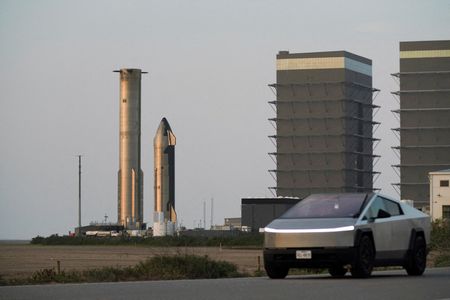
Tesla is working on plans for a compact, budget-friendly electric SUV, according to four sources with knowledge of the project who spoke with Reuters.
The electric vehicle manufacturer has reached out to suppliers in recent weeks to discuss manufacturing processes and component specifications for the new compact SUV, which would be an entirely new model rather than a modified version of existing Model 3 or Y vehicles, the sources revealed.
Three sources indicated the compact SUV would be manufactured in China, while one source mentioned Tesla’s plans to eventually expand production to facilities in the United States and Europe. The vehicle would measure approximately 4.28 meters (about 14 feet) in length, making it notably smaller than Tesla’s popular Model Y SUV, which stretches about 15.7 feet long, according to two of the sources.
This development comes after CEO Elon Musk canceled plans for a much-anticipated affordable electric vehicle project in 2024, redirecting the company’s focus toward robotaxis and humanoid robots. The key question remains whether this new compact SUV represents a return to Tesla’s mass-market strategy for human-operated vehicles or aligns with the company’s autonomous vehicle ambitions.
According to one source familiar with the project and a Tesla employee knowledgeable about the company’s current product strategy, the new model could potentially fulfill both roles. While the Tesla employee wouldn’t confirm specific vehicle details, they explained that the company now designs models to be driverless while maintaining human-driving capabilities.
The employee noted that while Tesla pursues full autonomy across its vehicle lineup, the company recognizes that many international markets won’t embrace or regulate driverless vehicles for several years. Maintaining flexibility to produce vehicles with or without driving controls could boost sales and help keep manufacturing facilities operating at full capacity.
As Tesla pursues its autonomous future, industry analysts forecast a potential third consecutive year of declining sales for traditional electric vehicles, which currently generate most of the company’s revenue. Currently, Tesla operates a limited robotaxi service only in Austin, Texas, with many vehicles still requiring human safety operators.
Tesla did not respond to requests for comment regarding the new vehicle plans.
The four sources emphasized that the project remains in early development phases. Reuters could not confirm whether Tesla has approved the vehicle for production.
The automaker has previously begun development on products that faced significant delays or cancellation. Tesla unveiled concept versions of a Roadster sports car and Semi freight truck in 2017, but has yet to produce the sports car or achieve mass production of the Semi.
Two sources indicated Tesla plans to price the new vehicle substantially below its entry-level Model 3 sedan, which currently starts at $34,000 in China and approximately $37,000 in the United States. The company would reduce costs partly by incorporating a smaller battery, resulting in shorter driving range compared to the Model Y’s 306 to 327 miles.
One source added that the vehicle would feature a single electric motor instead of the dual-motor performance option available on current Tesla models. Tesla also aims to significantly reduce the vehicle’s weight to about 1.5 metric tons, compared to the Model Y’s approximately two-ton weight.
Three sources confirmed the new model would be manufactured at Tesla’s Shanghai facility. While timing remains uncertain, production is unlikely to begin this year, according to the sources.
For years following Tesla’s 2008 launch with luxury electric vehicles, Musk emphasized the company’s mission to create affordable, mass-market electric vehicles essential for addressing climate change. However, repeated attempts to achieve this goal have encountered setbacks.
Starting in 2020, Musk announced Tesla’s goal to sell 20 million vehicles annually by decade’s end, nearly doubling Toyota’s current global sales leadership. A project Musk promoted for a $25,000 electric vehicle, commonly called the “Model 2” by enthusiasts and investors, was expected to drive dramatic sales growth.
In 2024, Reuters reported Tesla had abandoned Model 2 plans, though the company still intended to develop a driverless robotaxi using the same platform. Tesla’s major Chinese competitors had already begun producing significantly cheaper electric vehicles. Later that year, Musk declared it would be “pointless” and “silly” for Tesla to manufacture a $25,000 electric vehicle for human drivers, given the company’s imminent driverless vehicle offerings.
A former Tesla manager described an entirely new affordable traditional vehicle as a significant shift from the company’s philosophy through mid-2025. Until recently, the manager explained, Tesla had abandoned mass-production efforts for entry-level vehicles in favor of robotaxis as the primary method for reducing per-mile costs for passengers and vehicle owners offering ride services.
After canceling the Model 2, Musk and other Tesla executives outlined various plans for new, “more affordable” electric vehicles using vague language. When these vehicles debuted last fall, they were simplified versions of current Model 3 and Y vehicles offered in new “standard” trim levels with modest price reductions.
U.S. pricing of $36,990 for the Model 3 Standard and $39,990 for the Model Y disappointed some investors who considered the prices too high to attract new buyer segments and haven’t significantly impacted Tesla’s overall sales performance.
Publicly, Musk and Tesla continue emphasizing robotaxi and humanoid robot plans, which has helped maintain Tesla’s remarkable stock market valuation.
Tesla’s market capitalization stands at approximately $1.3 trillion, far exceeding its financial fundamentals even compared to high-performing technology companies. Investors approved a compensation package last year granting Musk up to $1 trillion in Tesla stock tied to various product and financial milestones.
The company now plans to begin production this month of a two-door Cybercab robotaxi, initially revealed as a concept vehicle in 2024, featuring no pedals or steering wheel. However, the timeline for sales or deployment in Tesla’s robotaxi fleet remains unclear. The automaker has not requested the federal exemption required to sell vehicles without steering wheels or pedals, according to a National Highway Traffic Safety Administration spokesperson.
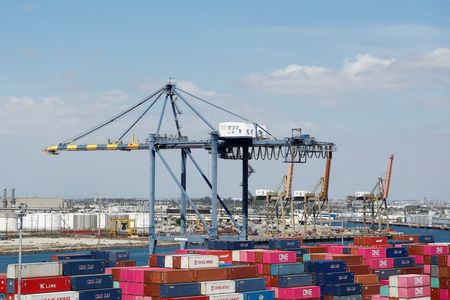
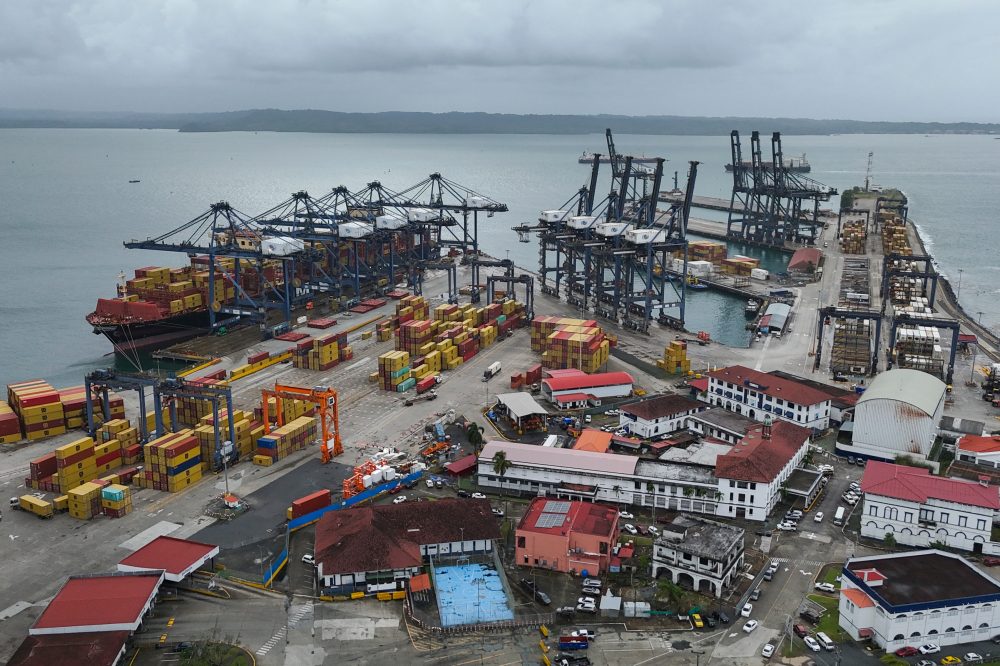
American seaports experienced a modest decline in shipping container activity during March, according to data released Thursday by supply chain technology firm Descartes Systems Group.
The nation’s ports processed 2,353,611 twenty-foot equivalent units during the month, representing a 1.1% decrease compared to the same period last year. These standardized containers serve as the industry benchmark for measuring cargo volume.
Despite the monthly decline, shipping activity for the first quarter of the year remains down 4.8% compared to 2025 levels. However, March’s container volumes still exceeded pre-pandemic figures from March 2019 by 32.3%, according to Descartes’ analysis.
The company noted that this sustained activity demonstrates consistent consumer demand, even as businesses navigate uncertainty surrounding potential tariff changes and ongoing conflict in Iran.
Container shipments arriving from China specifically totaled 711,652 units in March 2026, marking a 6.7% year-over-year reduction. Chinese imports represented 30.2% of all containers entering American ports last month.
Economists frequently monitor container import patterns as an indicator of overall economic health, with volumes typically increasing during periods of growth and declining when economic activity slows.
The German luxury automaker Mercedes-Benz experienced a decline in global vehicle sales during the opening quarter of 2026, as the company continues to face significant challenges in the Chinese automotive market while restructuring its product offerings there.
The luxury car manufacturer sold 419,400 vehicles worldwide during the first three months of the year, representing a 6% decrease compared to the same period in 2025, according to company data released Thursday from Berlin.
The automaker saw positive momentum in other key markets, with European sales climbing 7% and United States sales surging 20% during the quarter. However, these gains were overshadowed by a dramatic 27% collapse in Chinese sales.
The Chinese market has become increasingly competitive for Mercedes-Benz and its German competitor BMW, as both companies battle intense pricing pressure from domestic Chinese automotive brands in what represents the globe’s largest car market.
Company officials characterized 2026 as a “transition year” for Mercedes-Benz operations in China, explaining that the sales downturn stems partially from discontinuing certain entry-level vehicle models as the company prepares to introduce updated product lines.
The parent company of the popular 7-Eleven convenience store chain announced Thursday it will delay plans to publicly list its North American business operations until at least the fiscal year beginning in April 2027.
Seven & i Holdings, based in Tokyo, had originally planned to move forward with the stock listing during the latter half of 2026. A company representative cited unpredictable market conditions and challenges in forecasting consumer spending patterns as reasons for the postponement.
The Japanese retail giant confirmed it remains committed to its massive share repurchase program, planning to buy back approximately 2 trillion yen (equivalent to $12.59 billion) in company stock through fiscal year 2030. The company has already completed 600 billion yen of this buyback initiative in the financial year that concluded in March 2025.
Stock prices for Seven & i dropped 4.6% on Thursday following initial reports of the listing delay published by the Nikkei business publication just before market closing.
This development follows last year’s dramatic takeover attempt when Canadian retail company Alimentation Couche-Tard made an unsolicited $46 billion offer to acquire Seven & i Holdings. The proposed deal, which would have represented Japan’s largest foreign acquisition in history, ultimately collapsed when Couche-Tard withdrew its bid, stating that Seven & i had declined to participate in meaningful negotiations.
Economic analysts anticipate Chinese financial institutions dramatically increased their loan activity in March compared to the previous month, according to a new survey released Thursday.
Seventeen economists surveyed expect Chinese banks distributed approximately 3.4 trillion yuan (equivalent to $497.61 billion) in fresh yuan-denominated loans during March, representing a substantial jump from February’s 900 billion yuan total.
This lending surge follows predictable seasonal trends, as financial activity typically accelerates in March when business operations resume normal pace after Chinese New Year holidays and banking institutions work to achieve their quarterly lending goals.
Despite the expected increase, the projected lending volume remains below the 3.64 trillion yuan that banks issued during March of the previous year.
Citi Research analysts noted in their assessment: “Bills discounting rate has been moving sideways throughout March, indicating steady but not really strong credit demand.”
Recent economic data shows China’s manufacturing sector grew at its strongest rate in twelve months during the previous month, supported by rising consumer demand.
China’s central banking authority has committed to increasing financial support for domestic consumption, innovation initiatives, and small business enterprises, though officials have not indicated plans for immediate widespread interest rate reductions.
Goldman Sachs revised its economic forecast on Sunday, withdrawing its prediction for a 10 basis-point rate decrease this year. The investment firm stated the central bank would likely implement policy easing “if the growth outlook deteriorates significantly.”
The survey also projected the broader M2 money supply indicator would expand 8.9% in March compared to the same period last year, slightly down from February’s 9% growth rate.
Economists estimate outstanding yuan loans increased 5.9% year-over-year in March, moderating from the previous month’s 6% expansion.
Total social financing, which measures overall credit availability and market liquidity, likely more than doubled to reach 5.4 trillion yuan in March, up from February’s 2.38 trillion yuan.
Global financial markets are experiencing a sobering moment as initial optimism about Middle East peace negotiations gives way to harsh realities on the ground.
Following yesterday’s market rally based on diplomatic hopes, Asian equities and Wall Street futures have declined, though they’re maintaining most of their previous gains. The dollar remains steady while Treasury bonds failed to keep pace with European bond market improvements.
Federal Reserve officials continue signaling patience regarding interest rate cuts, with some even discussing potential rate increases, which has dampened bond market enthusiasm.
The weekend diplomatic talks between Iran and the United States face significant obstacles. Tehran is questioning the value of Saturday’s scheduled negotiations while Israel continues military operations in Lebanon. The negotiating positions remain far apart, with the two sides’ 10-point and 15-point proposals sharing virtually no common ground. Reports indicate that Tehran’s proposal differs significantly between its English translation and original Farsi version.
A critical issue undermining market confidence involves the Strait of Hormuz shipping situation. Contrary to some U.S. officials’ claims about normal operations, the vital waterway remains severely restricted. Ship tracking data reveals vessels still backed up on both sides of the strait, with minimal traffic flowing through Iran’s controlled checkpoint at the northern entrance.
The shipping disruption represents a massive decline from pre-conflict levels. Daily vessel transits have plummeted from approximately 138 ships to fewer than 10. Iran’s Revolutionary Guards are leveraging their newfound control over the waterway, requiring tanker inspections and approval along with fees of $1 per barrel or $2 million for very large crude carriers.
These payments must be made in yuan or cryptocurrency, creating complications for those concerned about challenges to dollar dominance in oil markets. Ship owners face a difficult situation, as paying these fees would violate multiple international sanctions regimes even if they were willing to comply.
The situation raises broader concerns about maritime freedom, a cornerstone of international trade. If Iran succeeds in charging transit fees through Hormuz, it could set a precedent for other nations to impose similar charges on strategic waterways like the Taiwan Strait, Bab el-Mandeb, Cape of Good Hope, or Cape Horn, potentially fragmenting global supply chains further.
Thursday’s economic calendar includes several key data releases that could influence market direction, including U.S. personal spending, income and core inflation data for February, weekly unemployment claims, and the final fourth-quarter GDP revision. Germany will release February industrial output figures, while IMF Managing Director Kristalina Georgieva will deliver opening remarks ahead of the spring IMF and World Bank meetings.
HONG KONG (AP) — Crude oil climbed back above $97 per barrel while Asian stock markets declined Thursday as investors questioned the durability of a two-week ceasefire between the United States and Iran.
Market watchers expressed doubt about whether the recently announced truce was already unraveling following devastating Israeli attacks in Lebanon that resulted in hundreds of casualties. In response to the Lebanese strikes, Iran once again shut down the Strait of Hormuz shipping corridor.
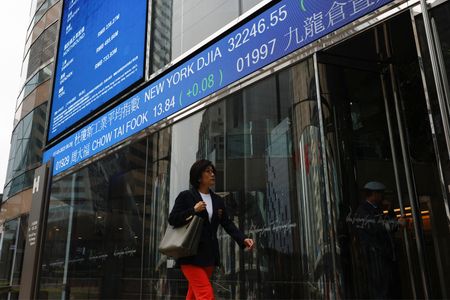
Japan’s Nikkei 225 index declined 0.9% to close at 55,824.30, while South Korea’s Kospi index dropped 1.6% to finish at 5,776.03.
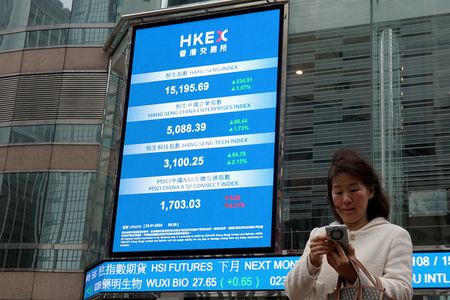
In Hong Kong, the Hang Seng index slipped 0.4% to 25,801.87, and China’s Shanghai Composite fell 0.7% to 3,965.70.
Australia’s S&P/ASX 200 dipped 0.1%, and Taiwan’s Taiex also retreated 0.1%.
U.S. stock futures pointed to a decline of more than 0.1% at Thursday’s opening.
Energy prices rebounded Thursday, erasing earlier losses that occurred when news of the temporary truce first emerged. Brent crude, the global benchmark, gained 2.4% to reach $97.02 per barrel after briefly dropping below $92 when the ceasefire was initially announced.
West Texas Intermediate, the U.S. oil standard, jumped 3.3% Thursday to $97.50 per barrel.
Concerns about worldwide energy supplies persisted as the Strait of Hormuz remained mostly blocked despite repeated U.S. demands for its reopening. This critical waterway typically handles about 20% of global oil shipments.
Diplomatic efforts to secure a lasting peace agreement could begin as early as Friday in Pakistan, with U.S. Vice President JD Vance anticipated to head the American delegation.
U.S. markets rallied Wednesday after President Donald Trump revealed the two-week ceasefire arrangement with Iran late Tuesday evening.
The S&P 500 surged 2.5% to 6,782.81, while the Dow Jones Industrial Average climbed 2.9% to 47,909.92. The Nasdaq composite advanced 2.8% to 22,635.00.
As optimism grew about potential conflict reduction, airline stocks soared Wednesday with United Airlines jumping 7.9% and American Airlines rising 5.6%. Carnival cruise line shares rocketed 11.2% higher, recovering some losses accumulated since the Iran conflict began amid worries about elevated fuel expenses.
Precious metals declined in Thursday trading, with gold dropping 0.7% to $4,743.20 per ounce and silver falling 1.6% to $74.18 per ounce.
Currency markets saw the U.S. dollar strengthen to 158.66 Japanese yen from the previous 158.57 yen. The euro traded at $1.1668, up from $1.1663.
Investment banking giant Goldman Sachs has revised downward its oil price projections for the second quarter of 2026, cutting estimates to $90 per barrel for Brent crude and $87 for U.S. crude following Wednesday’s announcement of a temporary ceasefire between the United States and Iran.
The financial institution had previously anticipated Brent and West Texas Intermediate (WTI) oil would reach average prices of $99 and $91 per barrel respectively during that period.
“Given the reduction in the risk premium at the front of the curve and already edging up oil flows through the SoH (Strait of Hormuz), we nudge down our Q2 forecast for Brent/WTI,” the investment bank explained in its research note.
Oil markets have experienced significant volatility this week, with Brent crude declining more than 11% amid optimism that the strategically important Strait of Hormuz shipping lane could reopen following President Donald Trump’s agreement to the two-week ceasefire with Iranian leadership.
Despite the overall weekly decline, oil prices climbed during Thursday’s early Asian trading hours as market participants expressed skepticism about whether Middle Eastern oil production would return to full capacity, given uncertainty about the durability of the ceasefire and ongoing restrictions in the critical waterway.
For the latter half of 2026, Goldman Sachs maintained its price projections at $82 and $80 per barrel for Brent crude in the third and fourth quarters, while forecasting WTI at $77 and $75 respectively.
The investment bank cautioned that upward pressure on prices remains the primary risk to their forecasts, citing possibilities of extended supply disruptions and continued production shortfalls from crude-producing nations.
Should the ceasefire collapse and Middle Eastern oil production losses persist at approximately 2 million barrels daily, Goldman Sachs warned that Brent crude could surge to an average of $115 per barrel during the fourth quarter.
Brandon Craig, set to become the next chief executive of mining company BHP Group, traveled to Beijing this week for discussions with Chinalco leadership about expanding business partnerships, the Chinese aluminum corporation announced Thursday.
The visit has drawn attention from investors as BHP continues to navigate challenging negotiations with China’s Mineral Resources Group, its largest customer. The dispute has escalated to the point where CMRG has prohibited its steel manufacturing facilities from purchasing certain BHP products while both sides work to finalize annual supply agreements.
During last month’s statements, Craig indicated his priority would be improving BHP’s business relationships throughout China.
According to a WeChat social media post from the company, Chinalco’s Chairman Duan Xiangdong held Wednesday meetings with Craig, expressing optimism about expanded collaboration between the two corporations.
BHP representatives have not yet provided comments regarding the Beijing meetings.
Craig is scheduled to officially begin his role as chief executive on July 1st.
Financial markets showed cautious optimism Thursday morning as the US dollar recovered from recent losses, with traders closely watching developments surrounding a precarious ceasefire agreement between the United States and Iran.
Currency trading data revealed the dollar index, which tracks the greenback’s performance against major world currencies like the euro and Japanese yen, climbed 0.03% to reach 99.09. Meanwhile, the euro dropped 0.07% to $1.1654 in early session activity.
The Japanese yen retreated from Wednesday’s stronger position, declining 0.06% against the dollar to settle at 158.7 yen per dollar. The British pound also slipped 0.04% to $1.3387.
Wednesday’s trading session saw the dollar tumble to its lowest point in a month following news of the Middle East truce announcement.
However, the ceasefire agreement faces significant challenges, with Israel maintaining its separate military operations against Iran-backed Hezbollah forces in Lebanon. Iranian officials have criticized both Israel and the United States for allegedly breaking the terms of the agreement, stating that continuing peace negotiations would be “unreasonable.”
Maritime traffic through the strategically important Strait of Hormuz continues to face restrictions, with vessels still requiring special permits for passage. Shipping companies report they need additional assurances before returning to normal operations in the waterway.
“Any signs that the ceasefire is breaking down, whether through renewed restrictions in the strait or spillover from regional conflicts like Lebanon, could push oil prices higher again, strengthen the U.S. dollar and weigh on risk assets,” explained Daniela Hathorn, senior market analyst at capital.com.
Among global currencies, the dollar has emerged as the primary winner during the Iran conflict, largely because America produces more energy than it consumes, making it less vulnerable to economic disruption compared to oil-importing nations such as Japan and various European countries.
The five-week military confrontation has undermined investor confidence worldwide, creating what experts describe as the most severe disruption to international oil and gas supplies in recorded history.
Market analysts suggest the uncertain peace deal leaves Iran with enhanced control over shipping through the crucial strait compared to pre-conflict conditions, particularly after President Donald Trump stepped back from earlier threats to target Iranian civilian infrastructure.
Thursday’s economic calendar includes the release of February personal spending figures and the PCE deflator from the United States. Akihiko Yokoo, senior analyst at Mitsubishi UFJ Bank, noted in a research report that while market sentiment has improved following the ceasefire announcement, the dollar-yen exchange rate may remain within current trading ranges during Tokyo sessions, though robust US economic data could spark a dollar rally.
Bank of Japan Governor Kazuo Ueda is scheduled to testify before parliament beginning at 0415 GMT Thursday.
Other currency movements included the Australian dollar weakening 0.13% against the greenback to $0.7034, while New Zealand’s currency declined 0.02% to $0.5821.
Cryptocurrency markets also showed declines, with bitcoin falling 0.50% to $71,018.20 and Ethereum dropping 0.96% to $2,188.86.
The shipping giant FedEx and the union representing over 5,000 of its aviators announced Wednesday they have struck a preliminary contract agreement following nearly three years of bargaining sessions.
Negotiations between FedEx executives and the Air Line Pilots Association (ALPA) have been ongoing since May 2021.
The proposed contract would boost pilots’ hourly compensation by approximately 40% by 2026, with additional yearly raises of 3% scheduled from 2028 through 2030, according to union officials.
Senior pilots serving as captains would receive retroactive compensation up to $150,000 for wages lost during the extended negotiation period, while first officers would collect up to $102,500 in back pay.
“The tentative agreement will next be presented to the FedEx Master Executive Council for their review,” union representatives stated, noting the agreement emerged from discussions facilitated by the National Mediation Board.
The Memphis-based shipping company, which maintains the globe’s largest cargo aviation fleet with 390 freight aircraft and 313 turboprop planes, has verified the preliminary contract with its aviators’ union.
Last year, company pilots voted down a previous proposed agreement that included a 30% salary boost and enhanced retirement benefits, with younger aviators expressing concerns about job outsourcing practices.
Asian financial markets displayed a more cautious tone Thursday as the tenuous Gulf ceasefire began showing strain, pushing petroleum prices upward and serving as a reminder to investors that inflationary pressures will persist for an extended period.
The Strait of Hormuz showed little evidence of meaningful reopening, with Iran asserting authority over the crucial petroleum shipping lane and requiring fees for secure transit.
“You have a fifth of the world’s oil supply moving through a corridor that is still effectively under the influence of one of the parties to the conflict,” said Nigel Green, CEO at deVere Group. “That’s not stability.”
“You don’t need a full blockade to move oil markets sharply higher again,” he added. “Missiles are still being launched in the Gulf, Israel is still engaged on another front, and yet markets are behaving as though the region has normalised.”
Consequently, U.S. crude futures climbed 2.8% to reach $96.99 per barrel, while Brent crude increased 2.1% to $96.74.
Japan’s Nikkei index fluctuated around unchanged levels after surging 5.4% in the prior trading session. South Korean markets declined 0.4% following the previous day’s 6.8% rally. The MSCI Asia-Pacific index excluding Japan dropped 0.3%.
U.S. markets showed weakness in pre-market trading, with S&P 500 and Nasdaq futures both declining 0.2% as Wednesday’s rally momentum faded.
European markets presented mixed signals, with EUROSTOXX 50 futures gaining 0.1%, German DAX futures falling 0.3%, and British FTSE futures advancing 0.5%.
**PRICE PRESSURES MOUNTING**
Energy costs remaining approximately 40% above pre-conflict levels means an inflationary surge will soon appear in economic data worldwide.
Thursday’s expected U.S. core inflation data for February is projected to show a substantial 0.4% monthly increase for the second consecutive month, occurring before the recent energy price spike.
Federal Reserve meeting minutes revealed increasing numbers of officials believe interest rate increases may be necessary to combat inflation, though many still prefer rate reductions as the next policy move.
This development limited Treasury bond gains, which were smaller compared to significant advances in European debt markets. Ten-year U.S. Treasury yields remained at 4.29%, up from 3.96% before Iran was attacked.
Federal funds futures now indicate only 7 basis points of rate cuts for the remainder of this year, abandoning expectations for 50 basis points of reductions since February’s end.
“The committee broadly agreed that it was too early to act, suggesting the Fed will likely remain on hold this year, in line with our view,” said analysts at JPMorgan in a note.
They also anticipate risks shifting toward just one European Central Bank rate increase this year instead of two.
The changing interest rate outlook helped the dollar recover some initial losses, with the euro unchanged at $1.1660 and below its peak of $1.1721.
The dollar stabilized at 158.60 yen after declining to 157.89 during Wednesday’s session.
Gold remained flat at $4,718 per ounce following an overnight peak of $4,777.
The Walt Disney Company is reportedly preparing to eliminate up to 1,000 worker positions over the next several weeks, with a significant portion of the layoffs expected to impact the entertainment giant’s marketing division, according to a Wednesday report from the Wall Street Journal.
The newspaper cited unnamed sources familiar with the matter for its reporting on the anticipated workforce reduction. Reuters was unable to independently confirm the information, and Disney representatives had not provided a response to requests for comment as of Wednesday evening.
PORTLAND, Ore. — A significant legal victory for utility company PacifiCorp could put more than $1 billion in wildfire victim compensation in jeopardy following a Wednesday decision by Oregon’s appeals court.
The three-judge panel at the Oregon Court of Appeals overturned a lower court’s verdict and ordered a new examination of the class-action lawsuit, citing problems with how the jury was instructed during a 2023 trial. That original trial had found PacifiCorp responsible for negligent conduct when it failed to shut off electrical power despite fire safety warnings from senior officials, resulting in punitive damages awarded to affected property owners.
Following that initial verdict, additional juries have mandated that PacifiCorp pay more than $1 billion in compensation to a class representing thousands of wildfire victims.
The appellate court determined that the trial judge made an error by telling jurors they could apply evidence from four separate wildfire incidents to every member of the plaintiff class.
“We conclude that … that instruction was legally erroneous, because certain evidence at trial, particularly related to causation, did not necessarily apply to every class member,” the judges wrote. “We further conclude that giving the instruction was prejudicial to PacifiCorp. Consequently, we reverse and remand.”
The court emphasized that class members owned more than 2,000 different properties affected by various fires, with some locations “separated by well over a hundred miles.” The disasters encompassed the Santiam Canyon blaze in northwestern Oregon, the Echo Mountain Complex fire along the coastline, and the South Obenchain and 242 fires in the state’s southwestern region.
Oregon’s Labor Day weekend fires in 2020 rank among the state’s most catastrophic natural disasters on record. The blazes claimed 11 lives, consumed over 1,560 square miles of land, and eliminated thousands of residential structures.
Questions remain about the lawsuit’s future direction and whether plaintiff attorneys will challenge the appellate decision before Oregon’s highest court. More than 1,000 class members have trials scheduled for 2026 and 2027.
“There are no winners in wildfire; however, the Court’s decision supports PacifiCorp’s longstanding belief that this process was prejudicial and not appropriate for managing wildfire litigation,” the utility said in a statement. “The company remains open to resolving reasonable claims and will continue to defend against unsupported claims.”
Legal representatives for the plaintiffs characterized the decision as a “procedural setback” while asserting that “nothing in this ruling suggests the jury got it wrong.”
“In fact, the Court rejected PacifiCorp’s efforts to win this appeal on the merits. Instead, what the court addressed was a single jury instruction, charting several paths forward — including fixing that instruction and trying the case again.”
In related developments, PacifiCorp has committed to paying more than $2 billion in settlements for various lawsuits connected to the 2020 fires, including $575 million to federal authorities for wildfire damage on government property in Oregon and California.
This past February, PacifiCorp revealed intentions to sell its wind energy, natural gas production, and distribution infrastructure in Washington state to Portland General Electric Company for $1.9 billion as part of efforts to strengthen its financial position. Despite challenging wildfire verdicts through appeals, PacifiCorp has been required to secure court bonds, creating pressure on the company’s available cash resources.
A federal appeals court in Washington D.C. has denied a request from artificial intelligence company Anthropic to temporarily stop the Pentagon’s national security blacklisting while legal proceedings continue, delivering a victory for the Trump administration on Wednesday.
The company behind the widely-used Claude AI assistant argues that Defense Secretary Pete Hegseth exceeded his legal authority when he labeled Anthropic as a national security supply-chain threat. This classification prevents the company from securing Pentagon contracts and may lead to a government-wide ban.
Company leadership has stated the designation threatens to eliminate billions in potential revenue and severely damage their reputation in the marketplace.
The three-judge panel from the U.S. Court of Appeals for the District of Columbia Circuit rejected Anthropic’s emergency request to suspend the designation during litigation. Wednesday’s ruling does not represent a final decision on the merits of the case.
This legal battle represents one of two separate lawsuits Anthropic has initiated challenging Hegseth’s unprecedented action, which followed the company’s refusal to permit military applications of Claude for U.S. surveillance operations or autonomous weapon systems due to ethical and safety considerations.
Hegseth implemented the designations using two distinct legal authorities, prompting Anthropic to file separate challenges against each order.
On March 26, a federal judge in California temporarily blocked one of the orders, determining the Pentagon appeared to have illegally punished Anthropic for its positions on AI safety protocols.
This marks the first instance of a domestic company being publicly classified as a supply-chain security threat under rarely-used government procurement regulations designed to shield military systems from foreign interference or sabotage.
In their court filings, Anthropic contends the government violated their First Amendment free speech protections by retaliating against their AI safety stance. The company also claims they were denied the opportunity to challenge their designation, violating their Fifth Amendment due process rights.
The legal documents characterize the designations as unlawful, lacking factual foundation, and contradicting the military’s previous positive assessments of Claude’s capabilities.
According to court documents, the Justice Department maintains that Anthropic’s unwillingness to remove usage restrictions could create operational uncertainty for the Pentagon regarding Claude’s deployment and potentially compromise military systems during critical operations.
Government officials assert their decision resulted from Anthropic’s rejection of contractual requirements, not from the company’s AI safety positions.
The D.C. case involves legislation that could expand the blacklist to encompass broader civilian government agencies following an interagency review process.
Meanwhile, the California case addresses more limited statutory authority that specifically bars Anthropic from Pentagon contracts involving military information systems.
The maker of Corona and Modelo beers delivered better-than-anticipated financial results for its latest quarter, driven by consistent consumer interest in its Mexican beer portfolio including Pacifico and Victoria brands.
Constellation Brands managed to outperform Wall Street expectations despite ongoing challenges across the alcohol industry, with strategic pricing adjustments and enhanced marketing campaigns boosting sales of flagship products like Modelo Especial and Corona Sunbrew.
The beverage company reported quarterly revenue of $1.92 billion for the period ending February 28, representing an 11% year-over-year decline that was less severe than the 13% drop analysts had predicted. Wall Street had forecast revenues of approximately $1.88 billion.
Per-share adjusted earnings reached $1.90 for the quarter, surpassing analyst expectations of $1.72 and providing a bright spot amid broader industry turbulence.
Company leadership expressed optimism about recent performance trends across its beer, wine, and spirits divisions, though executives acknowledged continued market volatility and limited visibility for future quarters.
The alcohol industry continues facing headwinds as consumers reduce discretionary spending amid economic uncertainty. In January, outgoing CEO Bill Newlands cautioned that beer sales would face pressure due to weakening demand among Hispanic consumers. Newlands will step down April 13, with Nicholas Fink taking over leadership.
Recent developments have provided some relief for the company’s cost structure. Under a new U.S. government announcement this month, Constellation’s products are exempt from aluminum tariffs beginning April 6, which should ease margin pressures moving forward.
The company is banking on product innovation to drive future growth, including new offerings like Modelo Chelada Suprema and Limon y Sal non-alcoholic beverages, along with expanded packaging options.
Looking ahead, Constellation projects fiscal 2027 organic sales will range from a 1% decline to 1% growth, a significant improvement from the anticipated 10% drop in fiscal 2026. Annual adjusted earnings are expected to fall between $11.20 and $11.90 per share for fiscal 2027, below analyst estimates of $12.36.
Company shares, which have declined approximately 38% in 2025, dropped an additional 1.5% in after-hours trading following the earnings announcement.
Residents of a mobile home community in Durango, Colorado are taking steps to preserve affordable housing options as costs continue to rise across the region.
Mobile home parks serve as a crucial resource for budget-conscious housing in many areas, and this Colorado mountain community is determined to maintain accessibility for residents who depend on these lower-priced alternatives.
The effort in Durango represents a broader challenge facing communities nationwide as housing costs climb and affordable options become increasingly scarce, particularly in desirable locations.
Financial markets across the globe experienced explosive growth Wednesday as news of an Iran ceasefire sent investors into celebration mode, while oil prices crashed by their steepest decline in half a decade.
The dramatic market movements raise questions about whether this represents merely a massive relief rally or signals a fundamental shift in investor confidence.
Stock markets delivered their strongest performance in a full year, with Asian markets leading the charge as South Korea jumped 7.5% and Japan climbed 5%. European markets gained 3.7% while Wall Street benchmarks surged between 2.5% and 2.9%, with the Nasdaq recovering to levels seen before the conflict began.
Energy markets told a different story entirely. Oil prices collapsed as Brent crude fell 13% and West Texas Intermediate dropped 16% – marking the sharpest single-day decline since April 2020. European liquefied natural gas prices also tumbled 15%.
The dollar weakened significantly, dropping 1% as investors moved away from safe-haven assets. Emerging market currencies posted strong gains, with the South African rand, Hungarian forint, and Chilean peso all rising approximately 2%.
Bond markets experienced substantial rallies, particularly in Europe where two-year German and UK yields plunged roughly 25 basis points. Ten-year yields fell 15-20 basis points. US Treasury movements were more restrained, with yields declining 6 basis points on the shorter end.
Minutes from the Federal Reserve’s March meeting revealed growing support among officials for potential interest rate increases. The documents showed a “strong case for a two-sided” approach to monetary policy, meaning the central bank could raise rates just as easily as cut them.
This marks an expansion from January when only “several” officials supported rate hikes. The minutes noted concerns about persistent oil price increases, which could remove rate cuts from consideration this year even if the ceasefire maintains.
Market analysts point to rising uncertainty as a key challenge for investors and businesses. Policy uncertainty has remained structurally elevated, making forecasting and planning increasingly difficult for all market participants.
Looking ahead, traders will monitor Middle East developments, energy market fluctuations, and several economic data releases including US jobless claims, inflation data, and final fourth-quarter GDP figures. A $22 billion Treasury auction for 30-year bonds is also scheduled.
While relief across financial markets remains evident, questions persist about whether current conditions represent sustainable recovery or temporary euphoria that could reverse quickly.
Media veteran Jeff Shell has departed from his role as president of Paramount, with the resignation coming as he faces a complex lawsuit and while the entertainment giant pursues its massive acquisition of Warner Bros. Discovery.
The company announced Wednesday that Shell had “elected to transition” away from his presidential duties and board position. While Paramount’s board investigated claims from a recent legal filing that accused Shell of breaking securities disclosure regulations, they discovered no proof of any violations. However, the executive chose to leave to concentrate on the pending court case.
“PSKY is grateful for Mr. Shell’s many contributions and to have relied on him as a valued advisor,” Paramount said in a statement. The entertainment company has not yet named Shell’s replacement.
The controversy began last month when R.J. Cipriani filed a fraud lawsuit against Shell, claiming he delivered 18 months of crisis communication work from 2024 through 2026 without receiving payment. Cipriani stated that Shell had promised to help him create an English adaptation of a Spanish series already broadcasting on Roku in return for these services, but allegedly reneged on that agreement. His March 9 legal filing in California seeks $150 million in damages.
The lawsuit also claims Shell disclosed confidential details about Paramount’s Ultimate Fighting Championship partnership and its planned Warner Bros. Discovery purchase, which Cipriani argues broke federal securities regulations.
Shell responded with his own legal action, charging Cipriani with defamation and extortion in what he described as a “shakedown” seeking a “massive payday” for unwanted services. He denied sharing any insider information about Paramount’s UFC or Warner negotiations.
The court battle has expanded since then, with Cipriani adding Paramount, CEO David Ellison and additional company executives to his lawsuit. Paramount stated Wednesday it would “respond in the proceedings to the frivolous and baseless claims” targeting the company and board members. Shell’s legal representatives declined additional comment.
This marks Shell’s second sudden exit from a major corporate leadership role. In 2023, he resigned as NBCUniversal’s CEO after Comcast investigated an inappropriate workplace relationship.
Shell played a key role alongside Ellison during Skydance’s Paramount takeover, which completed in August. The company now aims for an even larger target with its proposed $81 billion Warner acquisition that could dramatically transform Hollywood’s structure. After extensive negotiations that were initially contentious with Netflix, Paramount and Warner executives reached an agreement that shareholders will vote on April 23, while regulators continue their review process.
A temporary truce in the Middle East conflict involving Iran has reignited discussions about whether the Federal Reserve might lower interest rates before the year ends, though economic uncertainty remains high.
The two-week ceasefire agreement has somewhat reduced worries about rising inflation, leading financial markets to reconsider the likelihood of rate cuts. However, oil prices continue trading roughly 30% higher than before the conflict began, making any policy changes far from certain.
On Wednesday, traders analyzed how a potential long-term peace settlement and the reopening of critical shipping routes through the Strait of Hormuz might impact the economy. Yet ongoing military actions, including Israeli strikes in Lebanon and an Iranian attack on a Saudi oil pipeline, highlight the fragile nature of the temporary agreement.
Recent Federal Reserve meeting minutes revealed that some central bank officials believe they should remain open to raising rates if inflation continues at elevated levels. Upcoming economic data is expected to show March consumer prices increased at the fastest rate since the 2022 inflation peak that triggered the Fed’s aggressive rate hiking campaign.
Federal Reserve officials have indicated that short-term inflation spikes alone wouldn’t necessarily drive policy changes. However, if conflict continues and prices remain high enough to strain household budgets, policymakers could face a challenging decision between maintaining high rates to combat inflation or cutting them to support economic growth.
With American negotiators traveling to Pakistan for peace discussions this weekend, market participants are taking a cautious approach. Current interest rate futures suggest approximately a 25% probability of a U.S. rate reduction by December’s end. This represents a significant drop from the 65% chance markets initially priced in following the ceasefire announcement, though it’s still a notable shift from pre-ceasefire expectations when traders had factored in potential rate increases.
“With conditions much less likely to pressure the Fed to hike this year, we think the market should be pricing in closer to one full cut in the U.S.,” wrote Evercore ISI’s Krishna Guha.
International markets showed more dramatic shifts in central bank expectations following the ceasefire news, with traders reducing bets on multiple rate increases by both the European Central Bank and Bank of England.
San Francisco Federal Reserve President Mary Daly addressed the situation Wednesday during remarks to the St. George Area Chamber of Commerce in Utah, though she avoided focusing heavily on the ceasefire’s policy implications.
Daly emphasized it was premature to determine how the Iranian conflict and elevated oil prices might affect the broader economy, noting the outcome depends largely on the conflict’s duration.
“There’s a concern that maybe this will push inflation up: that’s our job, we’ll focus on that,” she said. “And there’s a concern that maybe the labor market isn’t as solid, but we’re not seeing that, we’re seeing it kind of settle at a good place.”
WASHINGTON – Federal Reserve officials demonstrated heightened consideration for potential interest rate increases during their March meeting, as persistent inflation continues to surpass the central bank’s established 2% objective, newly released meeting minutes reveal.
The March 17-18 meeting minutes, published Wednesday, show an expanding number of policymakers believed rate increases could become necessary to combat ongoing inflationary pressures, particularly with the economic disruption caused by the U.S.-Israeli conflict with Iran.
According to the official record, “Some participants judged that there was a strong case for a two-sided description of the (Federal Open Market) Committee’s future interest rate decisions in the post-meeting statement, reflecting the possibility that upwards adjustments to the target range for the federal funds rate could be appropriate if inflation were to remain at above-target levels.”
This represents a notable shift from January’s meeting, where only “several” officials expressed openness to possible rate hikes. By March, following the war’s outbreak, “many participants pointed to the risk of inflation remaining elevated for longer than expected amid a persistent increase in oil prices.”
The Federal Reserve maintained its key overnight interest rate within the 3.50%-3.75% range during the March meeting, acknowledging the new economic uncertainties introduced by the Middle Eastern conflict.
However, despite inflation concerns, “many participants” continued to anticipate rate reductions in their primary economic forecasts, with “most participants” believing that prolonged Middle Eastern conflict could sufficiently harm economic growth to justify additional cuts.
The minutes stated: “Most participants raised the concern that a protracted conflict in the Middle East could lead to a further softening in labor market conditions, which could warrant additional rate cuts, as substantially higher oil prices could reduce households’ purchasing power, tighten financial conditions, and reduce growth abroad.”
The meeting minutes were made public one day following a two-week ceasefire agreement between the United States and Iran, news that triggered oil prices to plummet over 15% to approximately $92 per barrel.
The policy discussions from last month’s meeting illustrated how the Middle Eastern conflict, which disrupted international shipping routes and drove oil prices up more than 50%, created competing pressures for Fed officials as they balance inflation control with employment objectives.
During the March meeting, Fed officials indicated they would likely maintain current policy rates until clearer evidence emerged regarding whether inflation risks or employment concerns posed the greater threat. Updated economic forecasts released with their policy statement projected higher inflation for the year while showing minimal changes to unemployment expectations.
Fed staff presentations during the meeting identified potential risks for weaker economic and employment growth alongside higher-than-anticipated inflation compared to January projections, citing “the potential economic effects of developments in the Middle East, government policy changes, and the adoption of AI.”
With inflation running above target levels since 2021, staff noted that “a salient risk was that inflation could prove to be more persistent than the staff anticipated.”
A state appeals court has delivered a significant victory for PacifiCorp, the utility company owned by Warren Buffett’s Berkshire Hathaway, in litigation stemming from catastrophic Oregon wildfires that occurred in 2020.
The Oregon Court of Appeals in Salem determined Wednesday that a lower court judge made an error when allowing the wildfire lawsuit to move forward as a class-action case. This ruling could substantially decrease PacifiCorp’s financial exposure, which Berkshire Hathaway has projected might reach tens of billions of dollars.
The legal battle centers on accusations from Oregon property owners and businesses who claim PacifiCorp acted negligently by keeping power lines energized during dangerous wind conditions over Labor Day weekend in 2020. These alleged failures reportedly sparked four separate fires — the Santiam Canyon, Echo Mountain Complex, South Obenchain, and 242 fires — which collectively damaged over 2,000 properties.
PacifiCorp, headquartered in Portland, argued that the trial court judge handling the James litigation made a mistake in combining fires that occurred more than 100 miles apart from each other, along with a fifth fire that the company attributes to lightning strikes rather than power line issues.
The three-member appeals panel took issue with jury instructions that allowed jurors to “assume that the evidence at the trial applies to all class members.”
Judge Anna Joyce explained that much of the testimony focused on “particular issues concerning particular wildfires,” including specific ignition points within the Santiam Canyon fire, which was the largest of the blazes.
Joyce noted in her written opinion that jurors should not “simply ‘assume’ that that evidence applied ‘to all class members.’”
Class-action lawsuits typically enable plaintiffs to seek larger financial recoveries while reducing legal costs compared to individual lawsuits.
The appeals court has sent the case back to Judge Steffan Alexander at the Multnomah County Circuit Court, giving him the opportunity to reconsider whether grouping all plaintiffs into one class remains appropriate given how the litigation has developed.
Attorneys representing the plaintiffs have not yet responded to requests for comment on the ruling.
In a public statement, PacifiCorp acknowledged it remains “sensitive to the profound losses” experienced by fire victims and continues to be willing to resolve legitimate claims.
“There are no winners in wildfire, however the court’s decision supports our longstanding belief that this process was prejudicial and not appropriate for managing wildfire litigation,” the company stated.
The James litigation has involved multiple “mini-trials” that started in January 2024 and were projected to extend through 2028.
Before a February 25 jury decision that granted $305 million to 16 plaintiffs (approximately $19 million per person), plaintiffs had typically received around $5 million each on average, including compensation for non-financial damages like emotional trauma.
Credit rating agency Standard & Poor’s issued a warning last month that it might downgrade PacifiCorp to “junk” bond status if future jury verdicts continue at such high levels.
As of late March, PacifiCorp had negotiated roughly $2.2 billion in settlements with about 4,600 wildfire claimants.
On February 20, the utility agreed to a $575 million payment to settle federal government claims connected to six wildfires across Oregon and California that burned government-owned land.
Berkshire Hathaway acquired PacifiCorp for $5.1 billion in 2006. The utility operates under Berkshire Hathaway Energy, previously led by Greg Abel, who took over as Berkshire’s chief executive on January 1, succeeding Warren Buffett. Buffett continues as chairman of the Omaha, Nebraska-based holding company.
WASHINGTON — Federal Reserve meeting minutes released Wednesday reveal that more central bank officials are now open to raising interest rates this year, driven by concerns that escalating gas prices from the Iran conflict could fuel persistent inflation.
The March 17-18 meeting documents show that “some” of the Fed’s 19 policymakers on the rate-setting committee wanted to modify their official statement to signal potential future rate increases. This represents growth from “several” officials who held this view in January, and while the Fed doesn’t provide exact counts, “some” indicates greater support than “several” in central bank terminology.
Additionally, “many” officials highlighted concerns that elevated oil and gas costs might keep inflation high for “longer than expected, which could call for rate increases” to bring price pressures under control.
Despite these discussions, the Federal Reserve maintained its benchmark interest rate at approximately 3.6%. The central bank has held rates steady through its first two meetings of 2024, following three rate reductions at the close of 2023. Fed Chair Jerome Powell minimized expectations for rate cuts during his post-meeting press conference, suggesting officials’ projections of one potential reduction this year might not materialize.
Powell emphasized that any rate decrease would require consistent progress in lowering underlying inflation. “If we don’t see that progress then you won’t see the rate cut,” he stated at the time.
The meeting records, published three weeks following the gathering, highlight the challenging position facing the Fed as it works to achieve its dual congressional objectives of price stability and full employment. Policymakers recognized that the Iran situation could also pressure consumers to reduce spending to compensate for higher fuel costs, potentially slowing economic growth and increasing joblessness.
The Federal Reserve traditionally increases rates to slow economic activity and fight inflation, while reducing them to stimulate growth and job creation. This “two-sided” risk creates a complex balancing act for central bank officials.
Southwest Airlines announced it will increase baggage fees by $10 starting Thursday, marking another shift for the carrier that abandoned its famous “bags fly free” policy less than 12 months ago due to escalating jet fuel expenses linked to the Iran conflict.
Beginning Thursday, passengers will pay $45 for their first checked bag and $55 for a second bag, the airline confirmed. Certain passengers including select loyalty program members, qualifying co-branded credit card users, and active military personnel will continue to receive complimentary first bag privileges.
The Texas-based airline explained the fee adjustment comes “as part of an ongoing analysis of the business and against the evolving global backdrop,” according to their official statement.
Southwest eliminated its popular decades-long practice of providing two free checked bags per passenger in May 2025, ending a signature benefit the company had promoted as a major competitive advantage for years.
The carrier has joined several other major U.S. airlines implementing fee increases since Middle East hostilities commenced on February 28, triggering volatile oil markets as combat near the Strait of Hormuz has disrupted worldwide petroleum distribution. The strategic waterway typically handles approximately 20 percent of global oil transit, and threats to this passage have driven up aviation fuel prices derived from crude oil.
Delta Air Lines implemented its own baggage fee increases on Wednesday, while both JetBlue and United Airlines announced higher bag charges last week.
Crude oil prices dropped Wednesday toward $95 per barrel following President Donald Trump’s announcement of a two-week ceasefire agreement with Iran, reached just before his deadline for Tehran to reopen the Strait of Hormuz and restore oil tanker access to the Persian Gulf. However, prices continue trading significantly above pre-conflict levels due to persistent risks of renewed fighting.
The ceasefire’s stability remains questionable after Iran again blocked the Strait of Hormuz on Wednesday following Israeli strikes against Hezbollah forces in Lebanon, raising concerns about the agreement’s durability.
Jet fuel averaged $4.81 per gallon on Tuesday across major hubs in Chicago, Houston, Los Angeles and New York, representing a substantial jump from $2.50 the day before hostilities began, according to data from Argus Media. The energy intelligence firm monitors pricing through its U.S. Jet Fuel Index covering these critical markets.
International carriers have responded to rising fuel costs by implementing or expanding fuel surcharges, a strategy that American airlines historically avoid using.
The Securities and Exchange Commission has selected a seasoned white-collar defense attorney and former agency veteran to head its enforcement division following the unexpected departure of its previous director last month, according to three sources with knowledge of the decision.
David Woodcock, who works as a partner at the Dallas office of Gibson, Dunn & Crutcher, will take over the role previously held by Margaret Ryan. Ryan stepped down after serving only six months in the position, reportedly due to disagreements with SEC leadership regarding the direction of enforcement activities.
Woodcock brings extensive experience in securities law and previously served as director of the SEC’s Fort Worth regional office from 2011 through 2015. During his tenure there, he established a specialized task force focused on identifying and investigating accounting fraud and financial reporting violations, according to his professional profiles.
Both Woodcock and SEC representatives have not yet responded to requests for comment regarding the appointment.
A former chief executive of mining giant Rio Tinto is orchestrating a massive $1 billion merger that could reshape the emerging deep-sea mining industry.
Tom Albanese, who headed Rio Tinto from 2007 to 2013, announced Wednesday that his company American Ocean Minerals will combine with Odyssey Marine Exploration through an all-stock transaction. The partnership seeks to establish one of the globe’s most extensive collections of underwater mineral rights.
This latest consolidation reflects growing momentum in the deep-sea mining sector, which targets critical materials beneath ocean waters covering most of Earth’s surface. However, the industry faces significant opposition from environmental groups and several nations concerned about ecological impacts.
Despite ongoing diplomatic and regulatory hurdles preventing actual deep-sea extraction, Western governments including the United States are actively pursuing alternative mineral sources to reduce dependence on China’s market control.
Albanese’s American Ocean Minerals, established this year, focuses on harvesting polymetallic nodules scattered across vast Pacific seafloor areas. These formations contain valuable metals including cobalt, nickel, copper and manganese essential for modern technology.
The merger will combine Odyssey’s holdings—including stakes in Ocean Minerals and Cook Islands exploration rights—with assets from CIC Limited, where Albanese serves as chairman and holds additional Cook Islands permits.
Approximately 30% of Odyssey’s current investors have already endorsed the transaction.
Beyond the primary metals, AOM believes its licensed territories may yield rare earth elements and titanium. While initially planning to contract third-party refiners, the company may eventually construct its own U.S. processing facility.
“What we’re seeing now is a concerted, bipartisan need to find energy and minerals resources, and deep-sea mining is a key part of that,” Albanese told Reuters in discussing the venture’s strategic importance.
The deal includes $150 million from institutional investors through private placement, plus $75 million in pre-public funding. Notable backers include Emmy-winning television personality Mike Rowe, host of “Dirty Jobs.”
Upon completion anticipated by August, the merged entity will begin trading on Nasdaq using the symbol “AOMC.” Odyssey Marine’s stock price surged 88% to $1.57 following Wednesday’s announcement.
The company has petitioned Washington for two international licenses covering the Pacific’s Clarion-Clipperton Zone, creating potential conflict with the International Seabed Authority.
President Donald Trump indicated in January his administration would accelerate permitting for international mining operations.
The ISA, established under the UN Convention on the Law of the Sea which the U.S. hasn’t ratified, has spent years developing mining regulations without reaching final standards during last month’s meetings.
Another industry player, The Metals Company, has similarly requested Trump administration permits for international operations.
Financial firms Citigroup and Cantor Fitzgerald—led by Brandon Lutnick, son of Commerce Secretary Howard Lutnick—structured the private placement. Moelis & Co provided advisory services to Odyssey.
American Ocean Minerals plans to host a conference call Monday to detail the merger terms.
Delaware’s small business community will gather in Dover later this month as seventeen entrepreneurs compete for state grant funding through the EDGE 2.0 program.
The Delaware Division of Small Business has revealed the competitors who will participate in the grant pitch competition scheduled for April 30th and May 1st at Delaware Technical Community College in Dover. Both days will run from 9 a.m. to 4 p.m.
Among the selected participants, nine will compete in the Entrepreneur category while eight others will present in the STEM division. These finalists emerged from a pool of 123 applicants who sought funding in this latest round.
Community members interested in observing the presentations can attend without charge, though advance registration is necessary to guarantee seating. Those wishing to attend can register at https://bit.ly/4sAcqQa.
This competition marks the thirteenth iteration of the EDGE program since state officials first launched the initiative to support Delaware’s emerging businesses.
Media executive Jeff Shell has been removed from his position as president of Paramount Skydance, according to a Wednesday report from Deadline.
The departure follows a complex legal battle involving R.J. Cipriani, a Las Vegas gambler and FBI informant who filed a $150 million lawsuit against Shell. Cipriani claimed the executive failed to honor commitments related to developing a music program. Shell responded last month by filing his own legal action against Cipriani, claiming extortion and defamation, as reported by the Los Angeles Times.
This marks the second high-profile dismissal for Shell in recent years. In April 2023, he was terminated from his role as NBCUniversal’s chief executive following allegations of improper behavior involving a female CNBC journalist, Deadline noted.
According to the entertainment publication, Shell’s departure from Paramount follows several weeks of legal disputes stemming from misconduct allegations.
The report indicates that law firm Gibson Dunn had previously appeared to clear Shell of Cipriani’s accusations that the executive had disclosed confidential and potentially damaging information.
Shell took on the presidential role managing daily operations after Paramount Global finalized its acquisition of Skydance Media in the previous year.
Representatives from Paramount have not yet provided a response to requests for comment regarding Shell’s removal.
Delta Air Lines announced Wednesday it’s abandoning all expansion plans for the upcoming summer travel season as skyrocketing fuel costs squeeze the airline industry.
The Atlanta-headquartered carrier revealed it’s eliminating planned capacity increases for the June quarter, reducing available flights by approximately 3.5 percentage points compared to original projections. Company executives stated that expansion efforts now face a “downward bias until the fuel environment improves.”
The airline’s revised outlook underscores mounting pressure across the aviation sector as Middle East tensions have sent energy markets into turmoil. Jet fuel prices have nearly doubled since late February, creating the industry’s most significant challenge since recovering from the pandemic.
Some optimism emerged Tuesday when President Donald Trump announced a two-week ceasefire agreement with Iran had been reached.
Despite the fuel concerns, Delta’s stock jumped 12% in early trading after reporting first-quarter earnings that exceeded expectations. Competing airlines United, American, and Southwest also saw shares climb 9% to 11% as investors reacted positively to potential fuel price relief and Delta’s strong quarterly performance.
Fuel expenses typically represent about 25% of airline operational costs, making carriers vulnerable when prices surge faster than they can adjust ticket prices, especially since seats are often sold months ahead of travel dates.
The current crisis threatens to reshape the industry landscape, potentially forcing weaker airlines to slash routes, increase borrowing, or face substantial losses while financially stronger competitors maintain investments and capture market share.
Delta Chief Executive Ed Bastian cautioned that rising fuel expenses will accelerate industry-wide changes.
“It’s going to separate the winners and force the weaker players to take some pretty significant steps to either get better or something else will happen,” Bastian stated.
United Airlines CEO Scott Kirby has indicated his company is preparing for Brent crude oil to potentially reach $175 per barrel and stay above $100 through 2027.
Airlines are responding by cutting flight schedules, especially on less profitable routes and non-essential business travel. Since mid-March, domestic carriers have reduced planned capacity growth by more than half a percentage point.
Delta projects adjusted earnings between $1.00 and $1.50 per share for the June quarter. The midpoint estimate of $1.25 falls short of analyst predictions averaging $1.41 per share.
The carrier anticipates paying roughly $4.30 per gallon for jet fuel during the second quarter, adding more than $2 billion to fuel expenses compared to the same period last year.
Airlines have leveraged robust travel demand to offset some increased fuel costs through higher ticket prices, baggage fees, and additional charges.
Bastian indicated Delta plans to recover approximately 40% to 50% of elevated fuel costs in the second quarter through fare increases, though he acknowledged full cost recovery will require more time.
The airline expects a $300 million boost from its refinery operations in the second quarter, up from about $60 million in the March quarter as refining profit margins expanded.
Tuesday brought news that Delta will increase checked baggage fees, matching recent moves by United and JetBlue Airways.
Bastian suggested the higher fees may become permanent. “At this level of fuel, it’s hard to call anything temporary,” he explained.
The CEO dismissed concerns that increased fares and fees might reduce demand, noting ticket sales have grown at double-digit rates year-over-year during the past month, with strong momentum continuing into the second quarter.
He emphasized that affluent travelers remain resilient and Delta hasn’t observed any demand impact among higher-income customers.
For the March quarter, Delta reported adjusted earnings of 64 cents per share, surpassing analyst expectations of 57 cents.
While Delta previously forecast full-year adjusted earnings between $6.50 and $7.50 per share in January, Bastian declined to update guidance given current market uncertainty. Analysts now project $5.40 per share.
Global financial markets experienced a massive surge Wednesday following the announcement of a temporary ceasefire between the United States and Iran, bringing relief to investors who have been closely watching oil prices since tensions escalated.
The two-week truce, which President Donald Trump revealed Tuesday night just before his deadline for Iran to reopen the Strait of Hormuz, sent shockwaves through trading floors worldwide. Crude oil futures for both Brent and WTI dropped below the $100 per barrel mark, while stock prices jumped and government bond values climbed.
Stock exchanges across the globe posted their strongest single-day performance since April of last year. The S&P 500 futures climbed 2.5%, Japan’s Nikkei index soared more than 5%, and South Korea’s KOSPI jumped over 6%. European markets also celebrated, with the STOXX 600 gaining approximately 3.5% during early trading hours.
Companies that benefit most from lower energy costs and declining interest rates led the rally, including travel companies, banks, technology firms, and industrial manufacturers. South Korean semiconductor company SK Hynix stood out with a remarkable 15% increase, boosted by optimistic earnings expectations following Samsung’s strong quarterly profit forecast announced Tuesday.
The U.S. dollar weakened from its recent 11-month peak as investors moved away from safe-haven assets. Even the struggling Japanese yen gained ground, pulling back from the critical 160-per-dollar level it nearly reached Tuesday.
Government bond markets also rallied strongly on the ceasefire news. U.S. Treasury yields declined as investors reconsidered the possibility of Federal Reserve interest rate cuts. European government bond yields similarly fell as traders reduced expectations for rate increases from the European Central Bank. British bonds saw the most dramatic movement, with yields dropping more than 20 basis points.
The ceasefire depends on Iran’s commitment to reopening the Strait of Hormuz, which Tehran has indicated it will do if attacks against Iran stop. Negotiations between the two nations are scheduled to begin Friday.
Despite the positive market reaction, analysts warn that current conditions still reflect underlying concerns. Oil prices above $90 per barrel would have been considered problematic for the global economy just months ago, and central bank policy expectations remain far from pre-conflict levels.
According to energy analysts, a temporary halt to hostilities and the reopening of the Strait of Hormuz would allow Middle Eastern oil producers to ship substantial quantities of crude that have been trapped in the Persian Gulf since fighting began, providing immediate relief to global energy markets.
The market response represents a dramatic shift from President Trump’s increasingly aggressive statements and threats earlier this week, with the relief rally demonstrating investors’ eagerness for any sign of de-escalation in the conflict.
Federal approval has cleared the way for a massive new shipping facility along Delaware’s waterfront. Governor Matt Meyer revealed that the Department of the Army has granted necessary permits for the Delaware Container Terminal project in Edgemoor.
The permits enable the Diamond State Port Corporation and their private partner Enstructure to move forward with dock construction and river dredging work. The new facility will be located along the Delaware River, positioned three miles northeast of the existing Port Wilmington.
Once completed, the cutting-edge container facility is designed to process up to 1.2 million TEUs of cargo shipments annually. Project leaders expect the development to generate employment opportunities spanning numerous sectors while boosting Delaware’s position in maritime commerce.
Financial markets witnessed a massive $950 million wager against oil prices positioned just hours before President Donald Trump revealed a ceasefire agreement with Iran, marking another substantial gamble on petroleum futures ahead of a significant policy declaration.
Market data from LSEG shows that on Tuesday evening, traders offloaded a total of 8,600 contracts combining Brent and U.S. crude oil futures at 1945 GMT.
Around 2230 GMT that same evening, Trump pulled back from his earlier threats of destroying “a whole civilization” and revealed a two-week ceasefire arrangement with Iran. This announcement sent crude oil futures tumbling approximately 15% to under $100 per barrel when Wednesday’s official trading began.
While substantial positions betting on petroleum price movements aren’t uncommon among traders who use them for hedging large physical oil transactions, executing such massive trades in concentrated blocks is extremely rare.
Typically, traders distribute sweeping orders across multiple exchanges and employ algorithmic trading systems over extended periods to minimize market impact from their positions. Additionally, large-scale orders are seldom processed after the 1830 GMT settlement time on weekdays.
This substantial wager mirrors a comparable situation from March 23, when market participants dumped $500 million worth of oil futures merely 15 minutes before Trump announced postponing strikes on Iran’s energy facilities. That revelation shocked markets and triggered a similar 15% crude price decline.
Tuesday’s activity involved approximately 6,200 Brent futures contracts changing ownership at 1945 GMT, representing roughly 1% of that day’s total regular session volume. Meanwhile, about 2,400 WTI futures contracts traded during this timeframe, also accounting for around 1% of daily regular trading.
CME Group chose not to provide commentary, while ICE did not respond immediately to requests for comment.
Market activity and price swings have surged dramatically since hostilities began. During the three-year period preceding the conflict, approximately 300,000 Brent crude futures contracts typically traded daily.
Over the past month, that figure has doubled as daily trading volumes reached unprecedented levels exceeding 1 million contracts, equivalent to one billion barrels of petroleum.
International investors withdrew a staggering $70.3 billion from emerging market investments during March, marking the most significant capital flight since the pandemic-induced selloff in March 2020, according to new data released Wednesday by the Institute of International Finance.
The massive outflow was primarily driven by investors abandoning emerging market stocks, particularly in Asian markets, though bond investments also saw withdrawals, the global banking trade group’s report revealed.
This dramatic shift represents a complete turnaround from what the IIF called “exceptionally large” investment inflows in January and continued positive flows in February. The organization characterized March’s reversal as a “sharp regime break following a major geopolitical shock.”
Stock market withdrawals alone totaled $56 billion, representing the largest such exodus in at least two decades, the data indicated.
Asian markets bore the brunt of the investment retreat, absorbing nearly all of the equity-related outflows after experiencing healthy investment inflows earlier this year. The region proved particularly susceptible to surging oil prices and “technology-linked equity repositioning,” according to IIF senior economist Jonathan Fortun.
The Iran conflict, which erupted in late February and rapidly expanded throughout the region, caused oil prices to surge 50% above $100 per barrel while diminishing investors’ willingness to take risks.
Emerging market assets, which had experienced tremendous growth over the previous eighteen months, suffered significant declines, draining capital from investment portfolios and reducing debt issuance to minimal levels. South Korean markets exemplified this volatility, climbing nearly 50% during the year’s first two months before losing more than one-third of those gains following the war’s outbreak.
The International Monetary Fund cautioned Tuesday that numerous emerging market countries now rely heavily on foreign financing from hedge funds, pension funds, and insurance companies, making them susceptible to rapid capital withdrawals during crisis periods.
Despite the massive outflows, Fortun noted that “March did not resemble a uniform, system-wide stop across all EM assets,” describing the situation instead as a “concentrated risk-off episode.”
“March data do not yet point to a fully generalized EM funding event,” Fortun explained.
Bond market outflows proved more contained at $14.2 billion and included some positive developments, such as China attracting $2.5 billion in inflows, slightly exceeding the previous month’s total.
Latin American stock markets also maintained positive momentum, drawing $1.4 billion in investments.
Should the Iran conflict prove brief, Fortun suggested, “March may end up looking like the peak month of liquidation.”
However, he warned that prolonged conflict could worsen conditions.
“Higher inflation, delayed easing in global financial conditions, a firmer dollar, and reduced policy flexibility across vulnerable EMs would all make it harder for flows to stabilize quickly,” he concluded.
A Connecticut-based aerospace components manufacturer announced Wednesday its plans to enter the stock market with a potential company valuation reaching $11.2 billion, joining a wave of defense technology firms going public during ongoing global conflicts.
Arxis, headquartered in Bloomfield, Connecticut and supported by private equity firm Arcline Investment Management, plans to raise as much as $1.06 billion through the sale of 37.7 million shares. Each share will be priced in the $25 to $28 range.
The timing reflects a broader trend where investment bankers are focusing on defense technology companies for stock market launches, believing these firms can better weather market uncertainty stemming from the ongoing U.S.-Israeli conflict with Iran.
Two other defense-related companies, drone manufacturer AEVEX and precision parts maker Elmet, have similarly announced plans for U.S. stock market debuts in recent weeks.
The company specializes in creating electronic and mechanical parts for the aerospace, defense, medical technology, and specialized industrial sectors. Arxis operates through two main business divisions focusing on electronic components and mechanical components respectively.
Company officials stated they plan to use the money raised from going public to reduce existing debt, with remaining funds allocated toward operational expenses and general business needs. Arcline, their private equity backer, focuses specifically on industrial sector investments.
Several major investment firms including Capital International Investors, Capital Research Global Investors, Janus Henderson Investors, and T. Rowe Price Investment Management have expressed preliminary interest in purchasing a combined $400 million worth of shares from the offering.
Goldman Sachs, Morgan Stanley, and Jefferies will serve as the primary underwriters for the stock offering. The company plans to trade on the Nasdaq exchange using the ticker symbol “ARXS.”
As corporate charitable giving faces mounting pressure from economic uncertainties and policy changes, Liberty Mutual Foundation has stepped forward with a major commitment to nonprofit organizations nationwide.
The charitable foundation tied to the Boston-headquartered insurance giant announced Wednesday it has created a $600 million endowment designed to provide stable, long-term funding for community organizations. Foundation leaders say this permanent funding source will enable more responsive grantmaking during challenging times.
“We all know that we live in really challenging times. And that is very true for our nonprofit partners as well,” said Melanie Foley, who chairs the foundation’s board. “We’ll be there to continue to support them, be as flexible as we can be, really listening to what they need.”
The endowment represents a significant evolution for the foundation, which was established in 2003. Foley explained that the organization had reached sufficient maturity to warrant “a permanent, self-sustaining” funding mechanism. The Fortune 100 insurance company is financing the endowment through asset transfers, including shares from various Liberty Mutual business units.
This financial commitment elevates Liberty Mutual Foundation into an elite group of charitable organizations managing more than $100 million in assets. Foley believes nonprofit partners will gain “a sense of security” from this development, which should enable the foundation to expand its grantmaking beyond the approximately $50 million it has distributed in recent years.
While Foley stressed that Wednesday’s announcement wasn’t specifically prompted by current sector challenges, the timing comes during a particularly turbulent period for nonprofit organizations. Charitable giving has seen declining participation rates among American donors over several years, even as individual donations remain the primary source of philanthropic funding nationwide. Additionally, federal funding freezes and social service budget cuts proposed by the Trump administration have eliminated previously dependable revenue streams for many organizations. Corporate support for diversity and inclusion initiatives, which often benefited nonprofits serving marginalized communities, has also faced recent reversals.
Organizations most likely to benefit from this new endowment include Boston-area nonprofits working in housing stability, workforce development, and climate resilience—areas where foundation leaders believe they can apply Liberty Mutual’s insurance industry knowledge most effectively. According to company representatives, the foundation supported over 500 nonprofit organizations last year. Past beneficiaries have ranged from major national organizations like the American Red Cross to local Boys & Girls Clubs chapters and community groups such as Bridge Over Troubled Waters, which serves homeless youth.
According to Leah Battin, who manages strategic advisory services at Chief Executives for Corporate Purpose, corporate foundations can offer nonprofits enhanced “rigor and relevance” when their charitable focus aligns with their business expertise. She noted that a healthcare company, for example, might address health-related social issues like environmental pollution or nutrition with greater precision than family or community foundations lacking that specialized knowledge.
“They can take long-term views around ecosystems change that really benefit and draw from the expertise of the company,” Battin explained.
With the endowment now in place, Foley said Liberty Mutual Foundation plans to offer more substantial grants over extended timeframes. She highlighted a recent collaborative program that provides nonprofit partnerships with resources and time to address complex challenges beyond their individual capabilities. During its inaugural year, this initiative distributed over $9 million among more than a dozen partnerships tackling issues from employment readiness to food security. Several partnerships received three-year commitments, which Foley noted represents the maximum duration for their grant awards.
The foundation also plans to offer emergency grants similar to those deployed during the COVID-19 pandemic, aimed at helping organizations cope with inflationary pressures. Foley emphasized the goal is maintaining readiness for “the unexpected.”
“As things come up in the environment, we’re gonna be there to think with our partners of how we are best suited to support them,” Foley said.
Financial professionals are developing fresh investment strategies to handle market volatility stemming from Middle East conflicts and their impact on global economics, according to a Reuters analysis.
As worldwide inflation and interest rates become more difficult to forecast due to geopolitical tensions affecting economic projections, fund managers find it increasingly hard to make investment decisions based on long-range forecasts.
Instead, many financial experts are making short-term wagers on securities that may have been incorrectly valued during the Iran conflict.
Several key investment trends have emerged:
ENERGY PRICES EXPECTED TO STAY ELEVATED
Crude oil prices dropped nearly 15% on Wednesday, falling below $100 per barrel following ceasefire news, but analysts anticipate prices will remain elevated due to ongoing concerns about the Strait of Hormuz shipping route.
Six-month oil contracts are trading around $79, which is above pre-war levels from February 28.
These futures contracts typically fall sharply when diplomatic progress appears likely, and some market watchers believe they’ve declined too steeply.
Michael Haigh, Societe Generale’s global head of commodities research, predicts that even a successful ceasefire with no additional conflicts would establish an oil price floor of $85 per barrel by December. He noted that if countries become more focused on energy security and begin building oil reserves, prices could climb even higher.
This outlook has made investors less pessimistic about energy company stocks, which they’ve traditionally avoided. A Bank of America poll from March 31 showed that while 30% of investors still view the energy sector negatively due to environmental concerns, this represents a decline from 40% six months earlier.
Shell announced Wednesday that it anticipates stronger oil trading conditions ahead.
CURRENCIES OF OIL-PRODUCING NATIONS
The U.S. dollar has recovered strength after months of weakness, but if conflicts diminish and reduce demand for the reserve currency while crude prices stay high, currencies from certain oil-producing countries could perform well, market participants suggest.
Van Luu, Russell Investments’ global head of solutions strategy, explained a scenario involving a permanent ceasefire: “It will take a while for everything to ramp up again, for the tankers to travel again, and oil prices might have a higher floor.”
“If oil prices are $85 to $100 (a barrel) then energy exporters in politically stable countries, and you could consider Norway and Canada in that camp, should do better,” Luu added.
GOVERNMENT BOND RECOVERY POTENTIAL
President Trump’s ceasefire announcement caused British and European government borrowing costs to plummet as concerns about inflation among energy-importing nations decreased.
Investment managers believe these yields remain too elevated compared to interest rate and inflation projections, particularly in Britain where the base rate sits at 3.75%, consumer inflation stands at 3.2%, and the 10-year yield hovers just under 4.7%.
Nicolo Bragazza, a Morningstar Wealth associate portfolio manager who favors British government bonds, stated: “We don’t see something similar to 2022 when UK inflation went above 10%.”
In Europe, German 10-year yields are approximately 2.9% compared to interest rates at 2%. Markets now assign just a 20% probability to a European Central Bank rate increase in April, down from 60% before Trump’s Iran ceasefire announcement.
IDENTIFYING PRICING MISTAKES
Bragazza observed that investors frequently overreact to positive and negative developments, creating pricing errors as unrelated assets move together in markets driven by war concerns.
Bruno Taillardat, Edmond de Rothschild’s head of quantitative portfolio management, noted: “(Trading) is not as dispersed as it should be and there are some sectors which should be more immune to this at least in the medium term.”
He pointed to global healthcare stocks, typically viewed as relatively safe during economic downturns, having moved in sync with a worldwide index of economically sensitive businesses since the war began.
In markets driven by emotion, Taillardat said, investors who spot mispricing opportunities caused by daily cross-market movements would excel.
Taillardat expects Trump’s public statements to maintain market volatility and excessive reactions to news headlines.
“It’s this kind of asymmetric behaviour that generates the right opportunities,” Morningstar’s Bragazza concluded.
Twelve months have passed since the implementation of what the Trump administration called ‘Liberation Day,’ but small business owners nationwide are finding themselves grappling with the financial consequences of ongoing tariff policies.
The impact is particularly visible in retail operations, where store owners report dramatic price increases on merchandise that directly affect their bottom line and customer relationships. These trade policy effects are creating a challenging environment for independent retailers trying to maintain competitive pricing.
At Misfit Toys, owner Paulina Gamino explains how the tariff structure has fundamentally altered their business model. Items that previously carried a $25 price tag now cost customers as much as $45, she reports. This dramatic markup has forced the store to significantly reduce their purchasing volume.
According to business owners affected by these policies, the combination of elevated costs and market unpredictability is creating a dual challenge. Not only are they dealing with higher wholesale prices, but the uncertain business climate is also discouraging customer spending and reducing profit margins across multiple sectors.
The situation illustrates how national trade policies can have far-reaching effects on local economies, particularly impacting smaller enterprises that lack the purchasing power and financial flexibility of larger corporations to absorb such cost increases.
More than 270,000 Chevrolet Malibu sedans across the United States are being recalled by General Motors due to malfunctioning backup cameras that may show distorted or completely blank images.
According to the National Highway Traffic Safety Administration, when backup cameras fail to show proper images, drivers lose critical visibility when reversing, creating dangerous conditions that could lead to accidents.
Federal safety officials report that GM’s parts supplier discovered problems with the bonding process during camera housing assembly, which can cause adhesive connections to fail over time. The company’s investigation revealed that Sharp Electronics cameras installed in the Malibu are positioned in a way that allows moisture to penetrate weak housing seals.
The safety recall affects 2023, 2024, and 2025 model year Chevrolet Malibu vehicles.
General Motors reports no known accidents or injuries have occurred related to this camera defect.
Authorized dealerships will install replacement backup cameras at no cost to vehicle owners.
GM plans to begin mailing notification letters to affected owners starting May 18. Vehicle owners can reach Chevrolet customer service at 1-800-222-1020 or contact the NHTSA Vehicle Safety Hotline at 1-888-327-4236. Additional details are available at www.nhtsa.gov.
Financial experts remain divided about the likelihood of success for billionaire investor Bill Ackman’s massive $64 billion acquisition proposal targeting Universal Music Group, the world’s largest music company.
The crucial decision rests with French business magnate Vincent Bolloré and his family’s investment firm Vivendi, who together control approximately 32% of UMG’s ownership. Market watchers are uncertain whether these major shareholders will embrace the potential benefits of a U.S. stock exchange listing or choose to maintain greater control over the entertainment giant. Both parties have remained silent regarding Ackman’s Pershing Square proposal.
On Wednesday, Universal Music Group announced its board of directors would examine the acquisition offer and evaluate its “implications” for all stakeholders, declining to elaborate further. The proposed deal combines cash and stock valued at roughly 30.40 euros per share, exceeding the company’s record high price of 29.49 euros reached in May 2024.
EXPERT OPINIONS VARY:
J.P. Morgan expects Bolloré and Vivendi to reject the proposal, stating “there is nothing in proposal that UMG could not do itself” and suggesting Bolloré prefers pursuing value opportunities independently.
AlphaValue researchers described the potential U.S. listing as a “merger” in disguise that could deliver beneficial cash infusions to both ownership groups if they choose to accept.
Morningstar avoided predicting shareholder support but indicated the combination might help realize UMG’s potential, calling the company “grossly undervalued.” The firm noted that beyond Bolloré, Vivendi, Tencent and Pershing Square, remaining investors would have “little to say in the outcome.”
Deutsche Bank provided no forecast on Bolloré’s decision while characterizing the bid as “opportunistic and timely” given UMG’s recent struggles, including a 14% stock decline this year through Tuesday.
ING researchers acknowledged “a bit of wishful thinking” regarding certain valuation assumptions but praised the proposal for highlighting legitimate concerns about UMG’s current challenges. On Tuesday, these analysts suggested the transaction “might well fail.”
Energy giant Shell disclosed Wednesday that declining natural gas production and short-term cash flow pressures will be partially counterbalanced by improved oil trading performance, providing an early indication of how Middle East conflicts are affecting major energy companies’ financial results.
International oil prices for Brent crude surged to multi-year peaks approaching $120 per barrel following U.S.-Israeli military action against Iran that commenced in late February. Iran subsequently blocked the Strait of Hormuz shipping lane and launched attacks against neighboring Gulf states, including damaging Shell’s Pearl gas facility in Qatar, which may require approximately 12 months to fully repair.
The energy company reported that fluctuating commodity prices created significant changes in inventory valuations, resulting in working capital—calculated as current assets minus current liabilities—falling to negative $10 billion to $15 billion during the quarter.
Shell indicated it anticipates these working capital shifts will normalize over time should oil and natural gas prices stabilize.
Market Analysts Weigh In
Financial analysts from RBC noted the magnitude of these fluctuations highlights the extraordinary nature of current market dynamics, while expressing confidence that Shell’s financial foundation can weather these challenges.
RBC increased its projected net income estimate for Shell’s first quarter by 7 percent to $6.8 billion and forecasts a 31 percent increase in operating cash flow, excluding working capital effects, reaching $17.1 billion.
UBS analysts similarly boosted their first-quarter net income projections by 18 percent to $6.9 billion and raised operating cash flow estimates by 30 percent to $16.3 billion, not including working capital impacts.
Shell anticipates trading performance in its chemicals and products division, encompassing oil trading operations, will substantially exceed the previous quarter’s results. The company also expects improved adjusted earnings from its marketing segment, which includes retail fuel stations.
Natural Gas Production Targets Reduced
Despite trading gains, Shell decreased its first-quarter integrated gas production forecast to 880,000-920,000 barrels of oil equivalent daily, down from the previous guidance of 920,000-980,000 barrels. Fourth quarter 2025 production reached 948,000 barrels of oil equivalent per day.
The company’s liquefied natural gas production outlook remained within established parameters as operational limitations in Australia and equipment failures in Qatar were balanced by increased output from LNG Canada operations.
Shell cautioned that net debt will climb by $3 billion to $4 billion due to variable elements of long-term shipping lease agreements. Net debt totaled $45.7 billion at 2025’s conclusion, with a gearing ratio of 17.7 percent, remaining below Shell’s preferred threshold of 20 percent. UBS projects Shell’s net debt could rise by $11.2 billion.
Adjusted earnings from Shell’s renewables and energy solutions division are expected to increase to $200 million-$700 million, compared to $131 million in the prior quarter.
Complete quarterly financial results will be released on May 7.
Shares of Levi Strauss climbed approximately 12% on Wednesday after the iconic denim company reported its best quarterly revenue performance in almost four years, demonstrating resilience against import tariff pressures through strategic pricing adjustments.
The San Francisco-based company has successfully navigated roughly 10% tariffs on U.S. imports implemented in 2025 by capitalizing on strong consumer appetite for its loose-fitting jeans collection and expanding its reach among younger shoppers via online platforms. This strategy has allowed Levi’s to implement selective price increases while reducing promotional discounting.
“Demand hasn’t been affected (by) higher pricing, and we see benefits becoming more fully realized starting in F2Q,” Raymond James analyst Rick Patel noted in his research commentary.
The clothing manufacturer announced upcoming leadership changes, revealing plans to find a successor for Chief Financial Officer Harmit Singh, who plans to step down after approximately 13 years leading the company’s financial operations.
“While the announcement of the retirement of long-time CFO Harmit Singh was somewhat unexpected, we believe investors will be pleased that he will remain in his role through the search and transition period to ensure continuity,” Telsey Advisory Group analyst Dana Telsey wrote in her analysis.
The company’s stock has posted gains for three consecutive years. Currently trading at a forward price-to-earnings multiple of 12.91 for the coming year, Levi’s valuation sits between competitors Ralph Lauren at 19.23 and American Eagle at 9.68.
However, market watchers noted the company’s updated guidance remained cautious, especially regarding U.S. market expectations, suggesting potential demand softening despite Middle Eastern conflicts and elevated fuel costs not yet impacting sales performance.
Recent consumer behavior shows affluent Generation Z and Millennial buyers continuing to spend on discretionary items including apparel, accessories, beauty products, and fragrances, creating what economists describe as a divided marketplace where higher-income consumers maintain spending while budget-conscious households reduce purchases due to increased living expenses.
“We like Levi’s premium denim share leadership, focus on working capital discipline and unified product lines, and continued product and lifestyle innovation,” TD Cowen analyst Oliver Chen stated.
Purchasing a vehicle brings excitement and satisfaction, but watching its value decline over time is far less enjoyable. While depreciation affects nearly every vehicle, some models maintain their worth significantly better than others in the resale market, primarily based on consumer demand and desirability.
Automotive analysts at Edmunds recently examined transaction records to determine which SUVs best preserve their financial value. They compared current selling prices of used 2023 model year SUVs against their original sticker prices, then ranked the top two performers in five different size segments. While these findings focus on 2023 models, they may also indicate smart purchasing decisions for 2026 vehicles.
In the subcompact category, the Toyota Corolla Cross stands out as an exceptionally practical and affordable option. This no-frills vehicle includes numerous standard safety technologies and provides impressive cargo capacity despite its compact dimensions. Though not particularly stylish, the Corolla Cross delivers outstanding financial value by maintaining 81.7% of its initial worth after three years.
The Honda HR-V follows closely behind, appealing to buyers seeking reliable daily transportation. Analysts highlighted the HR-V’s spacious interior and cargo capacity, though noted disappointment with its sluggish acceleration performance.
Within the small SUV segment, the Toyota RAV4 excels across fundamental categories. This comfortable and spacious vehicle offers multiple trim options to accommodate various price points. Outstanding safety ratings and exceptional fuel efficiency contribute to the RAV4 Hybrid achieving an impressive 81.4% value retention rate.
The Honda CR-V ranks second among small SUVs, earning praise for its smooth driving experience and user-friendly technology systems. Experts also highlighted the CR-V’s comfortable handling characteristics, generous cargo space, and excellent fuel economy available with its hybrid engine option.
The Toyota 4Runner commands fierce loyalty among buyers wanting genuine off-road capabilities and rugged styling. Built on the Tacoma truck platform, this midsize SUV continues appealing to traditional enthusiasts seeking authentic trail performance. The 4Runner leads all vehicles in this study by retaining an average of 83% of its value after three years.
For those desiring even more adventurous capabilities while maintaining strong resale value, the Ford Bronco offers compelling appeal. This vehicle combines nostalgic design elements with exceptional off-road performance and extensive customization possibilities.
The Toyota Highlander has remained a favored three-row family vehicle for over twenty years. The current generation continues delivering comfortable driving dynamics and outstanding fuel economy through its hybrid powertrain. While the third-row seating proves somewhat cramped, buyers appreciate the Highlander Hybrid’s solid 77% value retention after three years.
The Honda Pilot earns second place recognition for its reputation providing abundant passenger and cargo space for expanding families. Though its third-row accommodations exceed the Highlander’s, Honda currently doesn’t manufacture a hybrid Pilot variant.
The Toyota Sequoia attracts shoppers requiring maximum interior space and robust performance capabilities. Its hybrid powertrain delivers strong acceleration and passing power, even though fuel economy matches most non-hybrid competitors. An 80% residual value after three years provides confidence this large SUV won’t devastate your finances upon purchase.
Chevrolet’s Tahoe claims second position among large three-row SUVs for value retention. With its selection of powerful V8 engines plus a turbocharged diesel six-cylinder option, the Tahoe excels for heavy towing applications. The vehicle also incorporates Chevrolet’s newest technological features.
Any SUV represents a substantial financial commitment regardless of size. Understanding that your chosen vehicle will maintain its worth provides valuable reassurance for such a significant purchase.
Energy corporation Exxon Mobil announced Wednesday that escalating oil and natural gas prices stemming from the U.S.-Israeli conflict with Iran may generate upstream earnings increases reaching $2.9 billion during the first quarter, despite operational disruptions affecting some Middle Eastern production facilities.
The company’s downstream operations face different challenges, with projected losses of approximately $5.3 billion primarily due to timing factors, according to a regulatory filing. Exxon indicated these earnings will recover in subsequent quarters once oil and gas deliveries reach their destinations.
The military action that commenced February 28 caused oil prices to surge as high as 65%, forcing several Middle Eastern energy facilities to halt operations after the Strait of Hormuz – which handles one-fifth of worldwide energy transport – was essentially blocked. Data from LSEG shows Brent crude averaged $78.38 per barrel in the first quarter, representing a 24% increase from the prior three-month period.
According to the filing, Exxon’s first-quarter oil and gas output will drop 6% because of the conflict compared to fourth-quarter production of 5 million barrels of oil equivalent daily. The company noted that facilities in Qatar and the UAE represented 20% of Exxon’s worldwide oil production in 2025.
Complete first-quarter financial results are scheduled for release May 1. Market analysts closely monitor the company’s preliminary earnings data, which outlines market conditions affecting profits, as indicators for broader oil industry performance when results emerge next month.
Timing factors may reduce downstream first-quarter profits by $3.3 billion to $4.1 billion versus the fourth quarter. Chief Financial Officer Neil Hansen described this “unusually large, negative timing impact” as temporary, resulting from accounting regulations within the trading operations.
“These impacts will unwind over time and result in net positive profit once the underlying transactions are complete. These are sound trades and the profitability that will result from them will be material,” Hansen stated.
Similar to other petroleum companies, Exxon uses financial derivatives to hedge crude oil, natural gas, and refined product sales, reducing price volatility risks during shipping periods that can span weeks between the United States and Asia. The physical shipment value doesn’t appear in earnings until transactions conclude, the company explained.
Exxon will record impairment charges between $600 million and $800 million due to supply disruptions that prevented physical cargo deliveries associated with certain hedging positions.
Financial markets worldwide may see some recovery following recent geopolitical developments, but experts warn they’re unlikely to return to conditions seen before the latest Middle East tensions, as energy costs and inflation pressures are expected to persist.
A ceasefire agreement between the United States and Iran was announced late Tuesday by President Donald Trump, establishing a two-week suspension of military actions. The deal requires Iran to reopen the Strait of Hormuz and guarantee safe passage for commercial vessels.
The announcement immediately caused oil prices to drop while stock and bond markets experienced gains across the globe.
Financial analysts note that earlier expectations for interest rate reductions in major economies including the United States, Britain, and Norway have been abandoned and are unlikely to return. Some experts suggest the ceasefire might actually increase the probability of higher rates, since severe oil supply disruptions that could slow economic growth appear less likely.
The recent energy crisis has brought inflation concerns into sharp focus, demonstrating how major world economies have struggled for years to bring inflation back to desired levels, according to market analysts.
Bond investors have faced significant challenges as a result. The FTSE World Government Bond Index dropped more than 3% during March, marking its steepest monthly decline in eighteen months.
Andrew Lilley, who serves as chief rates strategist at Sydney-based investment firm Barrenjoey, explained the market shift: “Sometimes these events, even when unwound, have changed the psyche of what the likely next move is for most central banks.”
“This temporary oil price shock has brought investors closer to the truth, which is that actually inflation has been persistently high for the last three years,” Lilley added.
Energy security concerns continue to create uncertainty, with oil prices reaching record levels this week and remaining elevated due to supply constraints. A recent survey conducted by Central Banking Publications found that more than two-thirds of central banks consider geopolitical risks their primary concern.
Central banks in India and New Zealand maintained their current interest rates on Wednesday at 5.25% and 2.25% respectively, while indicating future increases may be necessary.
The Reserve Bank of New Zealand stated: “The balance of risks has shifted, and there are likely to be differences between the near term and medium term. Any signs of significant second-round inflationary effects or increases in medium-term inflation expectations would require decisive and timely increases in the OCR to re-anchor inflation expectations.”
Markets responded positively to the ceasefire news, with stocks climbing, the dollar weakening, and Brent crude oil futures dropping below $100 per barrel for the first time in two weeks.
Treasury bonds and markets in Europe, Britain, and Australia also saw strong gains. However, yields only returned to mid-March levels, with 10-year Treasury yields at 4.85% and two-year yields at 3.72%, roughly matching current Federal Reserve rates.
While some analysts believe stocks could continue rising if peace is maintained, they expect short-term yields to face difficulty declining further as policymakers have limited room for rate cuts.
Federal funds futures, which had anticipated two U.S. rate cuts for 2026 at the beginning of the year, now suggest only a 50% probability of a single reduction.
Prashant Newnaha, senior rates strategist at TD Securities in Singapore, emphasized central bank vigilance: “Central banks will be on high alert that this supply shock does not feed into higher inflation expectations. Rate cuts should be off the table.”
Japan appears positioned for rate increases as well, with the ceasefire reducing concerns about Gulf energy supplies that the country depends upon.
Naka Matsuzawa, chief strategist at Nomura Securities in Tokyo, noted: “The BOJ was totally willing to raise rates without this Middle East uncertainty. And now this ceasefire will give a good reason for them to go ahead and raise rates in April. All the other conditions, including wages and inflation, were all met already.”
Even China, which has historically faced deflationary pressures, is seeing global investment banks withdraw previous predictions for rate cuts this year.
While bonds could see some recovery, particularly following heavy March selling and aggressive positioning that anticipated rate increases in Europe and Britain, the reduced recession risk from the ceasefire has policymakers moving away from rate cuts toward a more cautious approach.
As Indian central bank Governor Sanjay Malhotra stated Wednesday: “Risks are on the upside.”
The chief executive of Southeast Asia’s largest ride-hailing and delivery company says artificial intelligence will be key to overcoming rising fuel costs and economic challenges facing the industry.
Anthony Tan, CEO of Singapore-based Grab, told Reuters that AI-powered products and services will help the company maintain growth while addressing customer affordability concerns amid rising fuel prices linked to Middle East conflicts.
The company recently made its first expansion beyond Southeast Asia by acquiring Delivery Hero’s Foodpanda operation in Taiwan earlier this year.
However, Grab’s revenue projections for fiscal 2026 came in lower than what Wall Street analysts expected, suggesting slower growth in its primary ride-hailing and delivery sectors as consumers face economic uncertainty.
“Call us maybe bold, but we just have a lot of belief in our AI-led product strategy and it’s paying off. We’ve seen it in our results and we continue to see it grow,” Tan said during a Reuters interview following a Jakarta product launch event.
“The reality is that the fuel cost situation is real for everyone. How do companies like us translate that into a way of how to be even more conscious of our customers’ wallets?” he added.
Despite reporting its first annual net profit in February after 14 years of operation, the Nasdaq-traded company’s financial forecasts disappointed investors. Grab’s stock price has dropped nearly 30% year-to-date.
Tan emphasized that the company’s size, with an estimated market value of $14.5 billion according to LSEG, provides a competitive advantage by generating valuable data for growth initiatives.
“As we make things more affordable, more people are ordering. That’s the best way to drive growth, where you can find and build AI-led growth that no one else has shown and built before,” he explained.
On Wednesday, Grab introduced 13 new products, including a “group ride” option that uses artificial intelligence to automatically calculate more accurate fare splits for multiple passengers, potentially reducing costs by up to 40%.
The company did not disclose the total investment amount for developing these 13 AI-powered products.
Indonesia, which represents the region’s largest economy and Grab’s biggest market among eight countries where it operates, will see a broader rollout of these features soon.
“We are very happy to be in Indonesia and I can tell you, we’re just going to keep doubling down,” Tan stated.
Financial experts say the intense stock market selloff driven by volatility-focused investment funds appears to be winding down, which could pave the way for U.S. stock market gains if trading turbulence decreases in the weeks ahead.
Tensions between the United States and Iran, along with climbing oil costs, have created numerous reasons for investors to pull money from stocks. Automated trading systems that mechanically dump shares when market uncertainty increases have been a major driver of the selling pressure.
Investment strategies tied to volatility levels, which modify their stock holdings based on market risk assessments, have become increasingly common in recent years. While these funds control relatively small amounts compared to the entire market, financial analysts emphasize their importance since they purchase stocks during rallies and sell during downturns, potentially magnifying price movements in both directions.
These approaches, encompassing volatility control funds and commodity trading advisers (CTAs), sold off $24 billion worth of stocks in the previous week, pushing their total net sales since early March to approximately $108 billion, based on Nomura data. The combined assets under management for these strategies, including risk-parity funds, total around $1 trillion or more, according to Nomura estimates.
This selling activity has reduced these strategies’ stock market exposure to some of the smallest levels seen in recent years, with historical data showing only 20% of past periods had lower exposure levels, Nomura reports.
“The outlook is turning more neutral, but not yet a tailwind,” said Joanna Wang, Nomura’s cross-asset and equity derivatives strategist.
“If volatility picks up from here, there’s still meaningful selling capacity in the system,” Wang explained.
These investment approaches respond to actual volatility measurements from the past month or longer periods. Even though the Cboe Volatility Index (VIX), which tracks trader expectations for future market fluctuations, has declined, these backward-looking volatility measures remain near their peak levels since the tariff-related market disruption in April 2025.
The S&P 500’s one-month historical volatility currently sits at approximately 21%, close to its highest point since mid-May 2025, and more than 5 percentage points above its 20-year average.
For market optimists, there’s a clear positive sign: since stock exposure has already been dramatically reduced, these funds have much less ammunition for additional selling.
“We’re moving past the steepest selling,” Wang noted.
“Strategies like volatility control and CTAs have already taken a lot of risk off the table,” she continued.
If volatility remains at present levels or continues declining through late April, Nomura’s forecasting models suggest systematic strategies might become net purchasers of roughly $20 billion by early May.
Conversely, if volatility increases significantly, these strategies could potentially sell an additional $48 billion in stocks by the end of April, according to Nomura projections.
While the dollar amount of this selling activity is relatively small compared to the approximately $55 trillion total value of the S&P 500 index alone, analysts emphasize these funds deserve attention due to when and how they execute their market transactions.
A major data center company in Brazil has unveiled plans for a massive expansion worth $2 billion over the next four years, according to company officials who spoke with Reuters.
Tecto Data Centers, which receives financial backing from BTG Pactual’s investment funds, will construct five new data center facilities across Brazil as part of this ambitious growth strategy extending through 2028. The announcement comes as Latin America’s largest economy experiences a surge in data center development.
Brazil has been positioning itself as an attractive destination for major data center investments, drawing interest from American companies and Chinese tech giant TikTok by highlighting its affordable renewable energy sources and plentiful water supplies.
Tecto’s Chief Revenue Officer Tito Costa explained that while government tax incentives through the Redata program would be beneficial, they aren’t crucial for moving forward with the company’s expansion strategy. Brazilian officials have been working to restart this incentive program.
Costa emphasized that part of Tecto’s strategy involves bringing high-quality enterprise services to underserved regions throughout Brazil.
“Today, companies are often forced to go to Sao Paulo or Rio de Janeiro, the country’s main data center hubs, in order to access top-tier services. We see this as a very good opportunity, it helps to justify part of these investments outside Sao Paulo,” Costa stated.
The expansion includes a 20-megawatt capacity facility planned for Porto Alegre in southern Brazil, alongside a much larger 200-megawatt data center in Santana do Parnaiba, located in the greater Sao Paulo metropolitan region.
These two announced facilities, combined with three additional centers yet to be revealed, will expand Tecto’s current network of seven operational data centers. The existing facilities span from Rio de Janeiro to Fortaleza in Brazil’s northeast, and extend internationally to Barranquilla on Colombia’s coast.
This major investment follows Tecto’s separation last year from telecommunications infrastructure company V.Tal, another BTG-backed firm that manages an extensive network including 26,000 kilometers of underwater cables and 450,000 kilometers of terrestrial fiber networks.
A major South Korean financial institution has begun divesting a significant portion of its Samsung Electronics holdings, putting roughly $2.1 billion worth of stock on the market, according to financial documents obtained by news agencies.
Shinhan Bank is making available 15 million Samsung Electronics shares, pricing them between 204,395 and 208,605 Korean won per share. This pricing strategy offers buyers a reduction of approximately 0.9% to 2.9% compared to Samsung’s closing price of 210,500 won on Wednesday.
The stock offering represents roughly 0.25% of Samsung Electronics’ total shares currently in circulation, the financial documents indicated. Samsung’s stock price jumped 7.1% during Wednesday’s trading session as investors responded positively to news of a Middle East ceasefire agreement.
Representatives from Samsung Electronics were not available for immediate comment regarding the share sale. Attempts to reach Shinhan Bank officials were unsuccessful as the inquiry was made outside normal business operating hours.
Elon Musk’s space exploration company is targeting an astronomical $1.75 trillion price tag for its upcoming public stock debut, according to financial analysts who examined the numbers behind what could become a record-breaking initial public offering.
The massive valuation would instantly place the rocket and satellite company among America’s top six most valuable publicly traded corporations, surpassing established giants like Meta Platforms and Berkshire Hathaway in market worth.
Despite the stratospheric pricing that far exceeds typical Wall Street benchmarks, investor appetite appears insatiable. The planned stock offering could generate $75 billion or more in capital, potentially setting new IPO records. Some eager investors are already purchasing shares through complicated private market deals just to secure early ownership stakes.
“It has almost no comparable listed peer to benchmark a valuation off of and would likely come at a significant premium to anything else that is listed in the space tech sector, given its size and market leadership,” said Samuel Kerr, global head of equity capital markets at Mergermarket.
The company’s financial foundation rests primarily on its thriving Starlink satellite internet service, which now serves more than 10 million customers worldwide, alongside a rocket launch operation that has revolutionized space access. The reusable Falcon 9 rocket, which achieved the first successful controlled landing after an orbital mission in December 2015, completed a record-breaking 165 launches during 2025.
Investment professionals are also factoring in Musk’s proven ability to transform entire industries, betting that current experimental ventures like the Starship deep-space rocket, artificial intelligence subsidiary xAI, and planned data center satellites will eventually generate substantial returns.
“This is a set of proven juggernaut, mega-cap businesses,” said Daniel Hanson, portfolio manager at Neuberger’s Quality Equity Fund, an existing SpaceX investor with close to 10% of its $2.6 billion in assets allocated to the company. “The launch business and the Starlink business are proven, here and now. xAI is about optionality,” he said, referring to businesses that could add value over time as they benefit from long-term shifts toward AI, data and global connectivity.
The space company maintains an overwhelming advantage in deploying low-Earth orbit satellites for its Starlink internet service, which generates between 50% and 80% of total company revenues and operates profitably. However, several major initiatives remain in development stages, including the delayed Starship program designed for lunar and Mars exploration, plus ambitious plans to deploy up to one million data-processing satellites connected to its currently unprofitable AI division.
According to PitchBook analyst Franco Granda, justifying the enormous valuation will require “investors will need to keep strict tabs on the timing of Starship coming to market and on the ramp-up of Starlink service direct to cellphones.”
The company’s operational tempo exceeds all competitors, launching rockets approximately every two days – faster than any government space program or private competitor in history. This rapid launch capability provides crucial advantages in a market where limited launch access has become a major obstacle for rivals like Amazon, which is developing competing satellite networks.
“It’s a one-of-a-kind for a start,” said Mark Boggett, CEO of venture capital fund Seraphim Space.
Financial data exclusively obtained by Reuters shows the company generated approximately $8 billion in operating profits and between $15-16 billion in revenues during 2025, with growth rates ranging from 51% in 2024 to 100% in 2021.
Using conservative projections that assume revenues and cash flows will double in 2026, the proposed $1.75 trillion valuation would result in a price-to-revenue ratio of 56 and a price-to-EBITDA multiple of 109 – extraordinary figures even for rapidly expanding technology companies.
For comparison, Tesla trades at 12 times projected revenues and 79 times EBITDA, while high-flying AI company Palantir commands ratios of 43 and 75 respectively after its stock price increased 500% over two years.
“Starlink is the only reason this valuation is defensible,” said Shay Boloor, chief market strategist at Futurum Equities. Its subscriber base “is just growing at crazy levels.”
The company’s February merger with Musk’s xAI artificial intelligence startup established a combined valuation of $1.25 trillion, with SpaceX valued at $1 trillion and the Grok chatbot developer at $250 billion. Current private market trading values the merged entity at $1.54 trillion.
“SpaceX is consistently one of the most actively traded names on our platform because there’s nothing else like it in the private markets today,” said Greg Martin, co-founder at Rainmaker Securities, a trading platform for private pre-IPO shares. “Demand has also almost always outpaced supply, and that’s been true even during periods where broader secondary market activity has been more muted.”
Leading international investment banks have abandoned their predictions for Chinese interest rate reductions this year, now forecasting that Beijing will maintain current rates as the nation demonstrates economic stability despite ongoing Middle East tensions.
The shift in expectations comes as China demonstrates stronger performance compared to neighboring countries during the Iran conflict, with economic indicators pointing toward recovery.
Goldman Sachs China economist Xinquan Chen explained the rationale behind the revised outlook in a recent analysis. “Against the backdrop of China’s relative resilience amid Hormuz disruptions, better-than-expected activity data in January-February, and the producer price index (PPI) likely turning positive in March, we see no clear catalyst for a policy rate cut in 2026,” Chen stated.
Chen confirmed Goldman Sachs is “removing our call for a 10-basis-point (bps) rate cut in the third quarter from our baseline,” though the bank continues to anticipate a 50 basis point decrease in required bank reserves.
Unlike numerous nations dealing with rising inflation pressures, China continues to face deflationary challenges, providing flexibility to address inflation concerns driven by increasing oil costs. Additionally, China’s substantial oil and gas stockpiles provide protection against energy supply disruptions.
Standard Chartered’s head of Greater China and North Asia economic research, Shuang Ding, emphasized China’s relative insulation from regional conflicts. “Middle East conflicts certainly had an impact on China, but it will be smaller than on other countries,” Ding noted.
“China has effectively ruled out the possibility of interest rate cuts (for now), and there is no need for interest rate hikes in the short term,” he added.
Following Tuesday’s agreement between the United States and Iran on a two-week ceasefire, market observers noted that China’s domestic policy adjustments since the Iran conflict began have remained measured, primarily limited to fuel price modifications.
China’s central banking authority has committed to sustaining an “appropriately loose” monetary approach throughout this year, utilizing various mechanisms including reserve requirement adjustments and interest rate tools to ensure sufficient market liquidity.
Banking sector indicators have demonstrated strong liquidity levels since early this month, with overnight repo rates reaching near three-year minimums and seven-day repo rates dropping below the primary policy rate.
ANZ analysts reinforced the trend toward stable rates in their assessment. “As the growth momentum is within the policy target, we no longer expect policy rate cuts in both 2026 and 2027,” the analysts concluded.
Financial markets rallied sharply Wednesday morning after news broke of a temporary ceasefire agreement between the United States and Iran, providing relief to investors who had been watching escalating tensions in the Middle East for more than a month.
The diplomatic breakthrough was announced Tuesday evening, coming just hours ahead of a deadline set by former President Trump, who had threatened devastating strikes against Iranian civilian infrastructure unless Tehran reopened the crucial Strait of Hormuz shipping corridor.
Markets worldwide responded enthusiastically to the news. Major stock indexes across Asia and Europe surged between 4% and 5%, while oil prices plummeted 16% to approximately $90 per barrel as traders anticipated the restoration of Middle Eastern energy shipments. The dollar, which had attracted safe-haven investment during the crisis, dropped 1% against the Japanese yen.
For weeks, investors have been dealing with the uncertainty of the ongoing conflict, complicated by mixed signals from both sides. While Trump had hinted at potential diplomatic solutions on multiple occasions, Iranian officials had consistently rejected reports of any negotiation efforts.
The extended conflict and resulting spike in energy costs had raised concerns about potential damage to economic growth and complications for Federal Reserve policy decisions. The S&P 500 experienced its worst monthly performance in a year during March.
Wednesday morning saw Treasury bond yields decline, reflecting changing expectations about interest rates. Current futures markets indicate investors now anticipate the Federal Reserve will maintain current borrowing costs throughout the year, based on data compiled by LSEG.
Prior to the conflict, market participants had expected at least two quarter-point rate reductions this year. However, inflation worries during the crisis had shifted expectations toward a possible rate increase at one point last month.
Early Wednesday trading showed significant gains across major indexes. Dow E-mini futures climbed 1,083 points or 2.31%, while S&P 500 E-minis advanced 168.5 points or 2.53%. Nasdaq 100 E-minis posted gains of 790.5 points or 3.24%.
The Russell 2000 Index futures, which are particularly sensitive to interest rate changes, jumped 3.4%. Meanwhile, the CBOE Volatility Index, commonly known as Wall Street’s fear gauge, fell 4.8 points to reach its lowest level in over two weeks.
More than 271,000 General Motors vehicles across the United States are being recalled due to defective backup camera systems, federal safety officials announced Wednesday.
The National Highway Traffic Safety Administration reported that the recall primarily affects Chevrolet Malibu sedan models. According to NHTSA, drivers may experience problems with their backup camera displays showing unclear, warped, or completely empty screens when reversing.
Safety regulators warn this malfunction significantly limits drivers’ ability to see what’s behind their vehicles while backing up, creating potential safety hazards. The federal agency stated that authorized dealerships will examine the faulty camera systems and install replacement units as needed.
Vehicle owners affected by this recall should contact their local Chevrolet dealers to schedule inspection and repair appointments.
ZURICH, April 8 – A consortium of six major Swiss financial institutions announced Wednesday they are collaborating to explore practical applications for a digital currency tied to the Swiss franc.
The banking group, working alongside Swiss Stablecoin AG, plans to create a protected digital testing platform where they can examine methods to integrate blockchain technology with Switzerland’s national currency, according to their announcement.
The collaborative effort includes UBS, PostFinance, Sygnum, Raiffeisen, ZKB and BCV, with the initiative remaining open for additional banking partners to participate.
According to UBS, Switzerland currently lacks a regulated digital franc currency that has widespread practical use throughout the country. The testing platform is scheduled to operate during 2026 and is designed to bolster Switzerland’s digital financial infrastructure, the banking giant noted.
A Hong Kong conglomerate’s subsidiary has launched legal arbitration against Danish shipping giant Maersk, claiming the company collaborated with Panama’s government in a coordinated effort to seize control of crucial port facilities along the Panama Canal.
Panama Ports Company, which operates under Hong Kong’s CK Hutchison Holdings, announced Tuesday that Maersk A/S deliberately sabotaged their existing contract to operate terminals at both ends of the Panama Canal, creating an opening for a Maersk-affiliated company to assume control of the Balboa terminal.
The arbitration proceedings will take place in London, though the Hong Kong firm has not disclosed what specific compensation or remedies it plans to seek.
Earlier this year in February, Panama’s administration took control of both the Balboa and Cristobal port facilities following a Supreme Court decision that invalidated the concession agreement permitting Panama Ports Company to manage these operations. This judicial ruling prompted strong criticism from Chinese officials.
Subsequently, Panama’s leadership permitted subsidiaries of both Maersk and Mediterranean Shipping Company to assume operational control of these two strategic ports.
Panama Ports Company initiated separate arbitration against Panama in February, later expanding their compensation demands to exceed $2 billion by late March.
The company emphasized Tuesday that their legal action against Maersk represents a distinct case from their ongoing efforts to seek accountability from Panama for what they characterized as “anti-contract and anti-investor conduct.”
Both Panama’s administration and Maersk have not yet provided responses to these allegations.
These legal challenges may further complicate CK Hutchison’s original strategy to divest most of their global port portfolio, including the Panama facilities, through a $23 billion transaction involving a consortium that included U.S. investment giant BlackRock.
The divestiture proposal, initially revealed in March 2025, gained approval from U.S. President Donald Trump, who has previously raised concerns about Chinese influence over this vital shipping corridor. However, the planned transaction reportedly frustrated Beijing, leading China’s competition authority to announce a regulatory review of the arrangement last year.
The transaction participants have been exploring alternative approaches to complete the sale, including potential plans to incorporate a Chinese investor into the purchasing consortium.
TOKYO (AP) — Stock markets throughout Asia experienced dramatic gains during Wednesday morning sessions, while crude oil values tumbled following announcement of a temporary two-week truce between the United States and Iran that will reopen the strategically vital Strait of Hormuz.
Japan’s primary Nikkei 225 index climbed 5.0% to reach 56,106.18 during early market activity. Australia’s S&P/ASX 200 rose 2.6% to 8,952.30. South Korea’s Kospi index experienced a substantial 5.9% increase to 5,819.97. Hong Kong’s Hang Seng index advanced 2.6% to 25,767.42, while Shanghai’s Composite index posted gains of 1.7% to 3,957.55.
U.S. crude oil futures dropped significantly by $16.84 to $96.11 per barrel. International Brent crude fell $14.51 to $94.76 per barrel.
These market movements reflected investor response to the ceasefire announcement, as recent petroleum price increases had directly resulted from the conflict, which had effectively prevented transit through the Strait of Hormuz. A substantial portion of global oil shipments passes through this waterway, including supplies destined for energy-dependent Japan.
“Yet the mood remains one of cautious optimism rather than outright celebration. The ceasefire is only two weeks long, and markets will be watching closely to see whether shipping through the Strait of Hormuz normalizes as promised and whether the fragile truce can pave the way for a more durable peace agreement,” Tim Waterer, chief market analyst at KCM Trade, said.
On Tuesday evening, Trump announced he would postpone his threatened strikes against Iranian infrastructure including bridges, power facilities and other civilian installations. Iran’s foreign minister confirmed that maritime passage through the strait would resume for the following two weeks under Iranian military oversight.
International stock markets have experienced significant volatility in recent weeks following the conflict’s start in late February. Trump’s ultimatum regarding Strait of Hormuz access expired at 8 p.m. Eastern time.
Earlier on Wall Street, trading concluded with gains after Pakistan’s prime minister encouraged Trump to extend his deadline by an additional two weeks while requesting Iran reopen the waterway. The S&P 500 overcame earlier losses to finish with a slight 0.1% increase. The Dow Jones Industrial Average declined 85 points, or 0.2%, while the Nasdaq composite rose 0.1%.
Treasury bond markets saw yields decline on news of the potential ceasefire. The 10-year Treasury yield decreased to 4.24% from Tuesday’s earlier rate of 4.30%.
Currency markets showed the U.S. dollar weakening to 158.54 Japanese yen from Wednesday’s 159.52 yen. The euro strengthened to $1.1671, rising from $1.1597.
TikTok has revealed plans to spend 1 billion euros ($1.16 billion) on constructing another data storage facility in Finland, marking the company’s second such investment in the Nordic country in under a year, officials announced Wednesday.
The social media giant’s decision comes as its parent company ByteDance recently escaped a potential U.S. prohibition related to data security issues, while European governments increase demands for social platforms to shield young users from potentially harmful algorithms.
The new facility will be located in Lahti, a city in southern Finland, with starting capacity of 50 megawatts and eventual capability reaching 128 megawatts. TikTok described the project as part of its broader “12 billion (euro) European data sovereignty initiative delivering industry-leading protections for the data of over 200 million European users.”
Finland has emerged as an attractive destination for major tech companies seeking data center locations, with firms like Microsoft and Google drawn to the nation’s frigid temperatures, affordable clean energy, and stable business environment within the European Union framework.
However, TikTok’s Finnish expansion has faced political resistance. When news of the company’s initial data center broke last year, Finnish lawmakers expressed concern about being kept uninformed despite defense ministry approval. Former economic affairs minister Wille Rydman publicly questioned the project due to security worries and lack of transparency.
“At the very least, I would hope that this property development company would reconsider once more whether it really wants TikTok as its tenant,” Rydman told Finland’s public broadcaster Yle, referencing TikTok’s local partner.
Currently, TikTok stores European user information with additional security measures across facilities in Norway, Ireland, and the United States. The company’s initial Finnish data center in Kouvola is scheduled to begin operations by year’s end, while the newly announced Lahti facility should be running by 2027.
Lahti’s mayor welcomed the substantial investment announcement.
“In the context of Lahti, the investment is substantial. We are pleased that a main tenant agreement has been signed and that the project is progressing as planned,” Mayor Niko Kyynarainen stated.
The federal government has rejected appeals from Ford Motor Company and other American automobile manufacturers who sought relief from aluminum import tariffs, according to a Tuesday report from the Wall Street Journal.
The automakers submitted their requests after fires at a Novelis aluminum rolling facility caused significant disruptions to their supply chains, creating shortages of the material needed for vehicle production.
Reuters was unable to independently confirm the Wall Street Journal’s reporting at the time of publication.
Air passengers will soon encounter new restrictions on portable charging devices as airlines work to prevent dangerous lithium battery fires during flights.
Beginning April 20, Southwest Airlines will implement a policy allowing passengers to bring only one portable charger aboard aircraft. The devices must remain in passengers’ personal possession throughout the flight and cannot be stored in overhead compartments or checked baggage. Southwest already mandates that charging devices stay visible during use so crew members can respond immediately if overheating occurs.
Southwest’s new limitation exceeds the International Civil Aviation Organization’s recent recommendation of two chargers per traveler. However, airline officials say they won’t conduct aggressive bag searches or confiscate devices. Instead, Southwest Vice President of Safety and Security Dave Hunt explained the carrier will educate passengers about the restrictions during booking and at airports while highlighting potential hazards.
This educational approach could prove effective since many travelers remain unaware of the dangers, according to Jeff Marootian, CEO of UL Standards & Engagement, which develops safety guidelines for electronic device manufacturers.
“A huge part of the concern here is seeing that number of incidents continue to increase, correlating, of course, to the number of devices that people are bringing on planes,” he said.
Federal Aviation Administration data shows lithium battery incidents reached 97 cases in 2025, with reports climbing annually as passengers carry increasing numbers of rechargeable electronics including smartphones, tablets, laptops and power banks. Marootian noted his organization receives approximately two incident reports weekly, documenting a 42% surge in portable charger-related problems during 2025.
A catastrophic incident occurred in January 2025 when a fire erupted on an Air Busan aircraft preparing for departure at a South Korean airport. All 176 passengers and crew evacuated safely before flames burned through the aircraft’s roof.
Flight crews carry specialized fire-resistant containers and protective gloves designed to isolate overheating electronics and prevent fire spread. Hunt stated Southwest’s updated regulations will “strengthen our ability to contain and mitigate lithium battery incidents, including reducing the risk of battery fires.”
To accommodate passengers affected by the new restrictions, Southwest plans to install power outlets at every seat by mid-2026.
Former United Airlines pilot Steve Arroyo, who flew commercially for 37 years and now works as an aviation safety consultant, praised Southwest’s proactive approach. While acknowledging that fires remain rare considering approximately 100,000 daily flights worldwide, he emphasized the severe potential consequences of battery incidents.
“It can turn into something very serious very quickly,” Arroyo said.
SINGAPORE – International currency markets experienced dramatic shifts Wednesday morning as the U.S. dollar plummeted to its weakest position in two weeks following President Donald Trump’s announcement of a two-week ceasefire agreement with Iran.
Major world currencies saw significant gains against the American dollar during early Asian trading sessions. The Japanese yen rose 0.6 percent, reaching 158.68 yen per dollar, while the European euro climbed 0.7 percent to $1.167. The British pound also gained 0.7 percent, trading at $1.3385.
Australia and New Zealand’s currencies posted even stronger performances, with the Australian dollar surging 1.3 percent to $0.7068 and the New Zealand dollar jumping 1.4 percent to $0.5810.
The ceasefire announcement marked a dramatic shift from Trump’s earlier threats to launch extensive strikes against Iran’s civilian infrastructure. Financial markets embraced the news with enthusiasm, transitioning to what traders call a “risk-on” environment less than two hours before Trump’s ultimatum for Tehran to reopen the Strait of Hormuz was scheduled to expire.
The U.S. Dollar Index, which tracks the greenback’s performance against six major currencies, fell 1.0 percent to 98.97 – marking its lowest point in two weeks. Digital currencies also benefited from the positive market sentiment, with bitcoin climbing 3.4 percent to $71,664.41 and ethereum soaring 5.7 percent to $2,234.78.
Oil markets experienced a sharp decline in early Wednesday trading as crude prices tumbled following President Donald Trump’s announcement of a ceasefire agreement with Iran.
West Texas Intermediate crude for May delivery dropped $12.04 per barrel, representing a 10.66% decline, bringing prices down to $100.90 per barrel as of 2251 GMT.
Trump’s ceasefire declaration was made just ahead of his established deadline for Iran to reopen the Strait of Hormuz, a critical waterway through which approximately 20% of global oil shipments pass.
PERTH, April 8 – American crude oil prices experienced a sharp decline during early Wednesday morning trading, dropping just hours before President Donald Trump’s ultimatum for Iran to reopen the Strait of Hormuz was set to expire.
West Texas Intermediate crude scheduled for May delivery decreased by $4.45 per barrel, representing a 3.94% drop that brought prices down to $108.50 per barrel at 2216 GMT.
Federal Reserve Vice Chair Philip Jefferson expressed concerns Tuesday about dual economic pressures threatening both employment stability and price increases across the nation.
Speaking at the University of Detroit Mercy, Jefferson outlined his cautious economic perspective amid ongoing global uncertainties.
“In the current environment, I confront an outlook in which there is downside risk to the labor market and upside risk to inflation,” Jefferson stated in his prepared remarks. “I remain cautious about my outlook…. I continue, however, to see our current policy stance as appropriately positioned to allow us to assess how the economy evolves.”
Jefferson emphasized that current short-term interest rate levels provide the Federal Reserve flexibility to address unpredictable impacts from Middle Eastern conflicts and fluctuating energy costs on the central bank’s dual goals of maintaining stable prices and full employment.
Federal Reserve officials maintained their benchmark interest rate between 3.50% and 3.75% last month, indicating they want to observe additional inflation improvements before implementing rate reductions.
The Fed vice chair characterized the employment situation as generally balanced but susceptible to negative disruptions, noting that companies are already hesitant about new hiring decisions.
Jefferson warned that a significant economic setback could reduce job creation and increase unemployment beyond the current 4.3% rate.
Regarding inflation concerns, Jefferson acknowledged that price increases continue exceeding the Federal Reserve’s 2% objective. While he previously anticipated inflation would moderate later this year as previous tariff impacts diminished, he now projects short-term price increases due to oil market disruptions.
Jefferson expressed confidence that existing monetary policy will continue supporting employment while enabling inflation to resume its downward trajectory.
Despite acknowledging that sustained higher energy costs could burden consumer and business expenditures while simultaneously pressuring inflation forecasts upward, Jefferson remained optimistic about policy effectiveness.
“I am confident that our current policy stance is well-positioned to respond to a range of outcomes,” he concluded.
Financial markets showed mixed results Tuesday as investors nervously watched the clock tick toward President Donald Trump’s ultimatum to Iran regarding the blocked Strait of Hormuz oil passage.
Stock exchanges initially declined but recovered by day’s end, with major indices finishing nearly unchanged. The Dow Jones dropped a modest 0.2% while other primary market indicators remained flat as traders held their breath ahead of Trump’s 8 p.m. Eastern deadline.
The president has demanded Iran end its blockade of Gulf oil routes, but Tehran has displayed no indication of compliance. Reports suggest Iran has severed direct diplomatic communications with Washington, escalating tensions further.
Trump’s social media warning that “a whole civilization will die tonight, never to be brought back again” has drawn sharp criticism from legal experts. Former State Department legal advisor Brian Finucane characterized the statement as potentially constituting “a threat to commit genocide” under both domestic and international legal frameworks.
The energy crisis stemming from the Iran conflict has created widespread economic disruption, particularly across Asian markets where nations face mounting challenges from climbing oil costs, accelerating inflation, and weakening currencies.
Inflation indicators continue climbing, with New York Federal Reserve data showing consumer price expectations rising to 3.4% in March from the previous month’s 3.0%. Energy forecasters have substantially increased their projections, with the Energy Information Administration boosting its 2026 oil price outlook by 22% to $96 per barrel.
Market sectors displayed varied performance Tuesday. Communications services gained 1% while consumer staples declined 1.8%. Notable individual stock movements included Paramount Skydance and UnitedHealth, both posting significant gains of 11% and 9% respectively.
Currency markets saw the dollar index fall 0.3%, with the Australian dollar among the day’s strongest performers ahead of an anticipated central bank decision. Japanese bond yields reached their highest levels since 1999, hitting 2.43% on 10-year securities.
Oil prices showed mixed results, with West Texas Intermediate crude gaining 0.5% to reach its highest closing price since 2022, while Brent crude slipped 0.5%. Gold advanced 1% as investors sought safe-haven assets.
In corporate news, billionaire investor Bill Ackman’s Pershing Square announced a proposed $64 billion acquisition of Universal Music Group, offering a 78% premium for the entertainment company behind major artists including Taylor Swift and Billie Eilish.
Looking ahead, market participants will closely monitor Middle East developments, energy sector movements, and potential policy announcements. Key economic data releases include interest rate decisions from Australia and India, along with various European economic indicators.
The Federal Reserve will release minutes from its March meeting, while Treasury officials conduct a $39 billion auction of 10-year notes. Fed officials, including San Francisco President Mary Daly, are scheduled to make public statements that could influence market sentiment.
Delta Air Lines on Tuesday revealed plans to increase baggage charges, becoming another major U.S. airline to respond to escalating jet fuel expenses linked to ongoing Middle East warfare.
Starting Wednesday, travelers on domestic flights and short international routes will face $10 higher costs for their first two checked bags, while third bag fees jump $50. The new pricing structure sets first bag fees at $45, second bags at $55, and third bags at $200, Delta confirmed.
“These updates are part of Delta’s ongoing review of pricing across its business and reflect the impact of evolving global conditions and industry dynamics,” the carrier said in a statement.
This represents Delta’s first domestic baggage fee increase in two years. International long-distance flight baggage costs remain unchanged.
Last month, CEO Ed Bastian informed investors that rising jet fuel expenses have already increased Delta’s operational costs by approximately $400 million since fighting erupted on February 28. Leadership teams at United Airlines and American Airlines have reported comparable cost increases.
Jet fuel prices in major cities including Chicago, Houston, Los Angeles and New York averaged $4.69 per gallon on Monday, nearly doubling from $2.50 before the war began, data from Argus Media shows. The energy intelligence firm monitors pricing across these key aviation centers.
Delta confirmed that free baggage allowances will continue for premium cabin passengers, active military members, qualifying co-branded credit card users, and certain loyalty program members.
The Atlanta-based airline’s decision comes after United and JetBlue implemented similar baggage fee increases last week, though both maintained free first bags for select customers.
Aviation companies worldwide are struggling with unpredictable oil markets as combat near the Strait of Hormuz threatens global petroleum supplies. Approximately 20% of worldwide oil shipments pass through this critical waterway. Since jet fuel derives from crude oil, energy price fluctuations directly impact airline operating costs, with fuel representing carriers’ second-largest expense behind personnel.
Beyond raising ticket costs, industry experts predict U.S. airlines will increasingly rely on additional service fees to counter higher expenses, while international carriers are implementing or expanding fuel surcharges.
A senior executive at German pharmaceutical company Bayer told reporters Tuesday that recently announced federal tariffs on imported medications won’t force the company to revise its business projections for 2026.
Sebastian Guth, who serves as Chief Operating Officer for Bayer Pharmaceuticals and heads the company’s U.S. operations, explained that the drugmaker had already factored potential tariffs into its planning. “We feel that we’ve appropriately anticipated tariffs as we think about our 2026 guidance,” Guth stated during an interview.
The executive expressed confidence in the company’s position, noting that existing trade agreements between the United States and European Union provide some protection. Under last year’s deal, tariff rates on most European goods, including pharmaceutical products, cannot exceed 15 percent.
Earlier this year in March, Bayer released financial projections showing expected earnings before interest, taxes, depreciation and amortization of between 9.6 billion and 10.1 billion euros for 2026. This represents growth from the company’s 2025 EBITDA figure of 9.669 billion euros.
The tariff policy stems from an executive order signed by President Donald Trump last week, targeting brand-name prescription drugs brought into the United States from overseas. Companies can avoid these fees by agreeing to government pricing negotiations or promising to manufacture their products domestically.
Implementation of these tariffs is set to begin in September for most pharmaceutical companies.
While sixteen major global drugmakers have already negotiated agreements with federal officials to exempt billions of dollars in medications from the new tariffs, Bayer was not included in those initial discussions. Guth would not discuss whether his company has since engaged with the Trump administration about potential exemptions.
The executive also highlighted a separate trade agreement between Britain and the United States as a potential model for other nations. Under that arrangement, British pharmaceutical companies receive tariff-free access to American markets in exchange for higher domestic drug prices.
The British deal requires increasing medicine expenditures from 0.3 percent of the country’s gross domestic product to 0.35 percent by 2028, eventually reaching 0.6 percent by 2035. Guth suggested this framework could guide how other wealthy nations approach pharmaceutical pricing reforms.
“There’s an acknowledgment that it isn’t going to happen overnight, but will happen over time,” Guth said regarding these gradual pricing adjustments.
A new study from the Dallas Federal Reserve Bank indicates that prolonged disruptions to global oil shipping due to the Iran conflict could push U.S. inflation rates above 4% before the end of this year, with potentially steeper short-term spikes possible.
However, the research published Tuesday suggests that while headline inflation numbers may climb, the impact on long-term inflation expectations would remain relatively small. Federal Reserve officials closely monitor these expectations and have found reassurance in their current stability.
“There is little evidence of higher gasoline prices being passed through to core inflation or long-run inflation expectations becoming unanchored,” the Dallas Fed study authors stated.
The research comes as Middle East tensions reached a critical point Tuesday, with President Donald Trump demanding Iran reopen the Strait of Hormuz or face attacks on its infrastructure including power facilities and transportation networks.
The Dallas Fed analysis examined various scenarios involving the Strait of Hormuz, a critical waterway that handles one-fifth of global oil shipments and has been effectively blocked for five weeks.
According to the study, a three-month closure of the strait could spike inflation by 5.2 percentage points on an annual basis during March, though this surge would fade quickly, leaving fourth-quarter inflation only 0.35 percentage points higher.
A more prolonged nine-month blockade would drive oil prices from their current $115 per barrel to $167, potentially boosting fourth-quarter inflation by up to 1.8 percentage points, researchers determined.
Current inflation measured by the personal consumption expenditure index stood at 2.8% in January, compared to the Federal Reserve’s 2% target.
Core inflation, which strips out volatile food and energy costs, would see smaller increases of 0.18 percentage points for a three-month closure or 0.49 percentage points for a nine-month disruption. Core inflation measured 3.1% in January.
The study found that household inflation expectations would see more limited increases. Short-term expectations spanning one year could climb by as much as 0.8 percentage points, while longer-term five to ten-year expectations that concern Fed officials most would rise by no more than 0.09 percentage points.
Moody’s Ratings downgraded its assessment of U.S. business development companies this Tuesday, shifting from a stable to negative outlook due to increased investor withdrawal demands, elevated debt levels, and diminished access to capital markets.
The rating agency noted a dramatic change in financial conditions for perpetual non-traded BDCs, which experienced robust capital inflows during the third quarter of 2025 but then faced unprecedented outflows during the first quarter of 2026.
These perpetual non-traded BDCs operate as closed-end investment funds that provide financing to private businesses. Unlike publicly traded companies, they don’t appear on stock exchanges and have no set expiration date, enabling them to raise money continuously while providing investors with restricted, occasional opportunities to withdraw funds.
Artificial intelligence technology has created another layer of risk, especially for BDCs that have significant investments in software companies.
This worry is intensifying challenges within private credit markets, which have already been a consistent source of difficulty for alternative investment managers, as investors fear AI could fundamentally threaten software investment portfolios – a major focus area for the $2 trillion sector.
While industry leaders have consistently characterized these worries as excessive, investors continue to feel anxious. Large funds have seen withdrawal requests spike as concerns mount that investment quality may decline as artificial intelligence technology advances.
BDCs, which provide loans to many of the same mid-sized companies that private credit funds target, serve as an early warning system for problems within the industry.
The South Korean automotive manufacturer Hyundai Motor announced on Tuesday that it’s restarting sales of its recalled 2026 Palisade SUVs following the completion of a software solution to address a power seat malfunction that led to the death of a 2-year-old child in Ohio.
The company confirmed it has completed development of a software patch for the 2026 model year Palisade and Palisade Hybrid models that feature powered seating in the second and third rows, specifically affecting the Limited and Calligraphy trim levels. Hyundai had suspended all sales in the middle of March and issued a recall covering 68,500 Palisade vehicles after the fatal incident occurred. Dealerships will be authorized to restart sales once they install the software patch on affected vehicles.
WASHINGTON, April 7 – Negotiations to modify the North American trade agreement between the United States, Mexico, and Canada will probably extend beyond the July 1 target date, according to U.S. Trade Representative Jamieson Greer, who spoke Tuesday at a Hudson Institute gathering.
While the Trump administration plans to address as many trade issues as possible before the summer deadline, Greer indicated the discussions to restructure the commercial arrangement will likely require additional time. He suggested the U.S. might need to consider withdrawing from the current North American trade framework to allow negotiations to continue.
Speaking about the administration’s position, Greer noted that President Donald Trump “has been clear that he is dissatisfied with a lot of the outcomes of USMCA,” particularly citing increased automotive shipments from Mexico and rising steel and aluminum imports from both neighboring nations.
The trade representative acknowledged that despite valuable components within the USMCA framework – which Trump signed in 2020 as a replacement for the 1994 North American Free Trade Agreement – separate negotiating approaches will be necessary for Mexico and Canada due to distinct trade circumstances with each country.
Discussions with Mexico have already begun, while talks with Canada are expected to commence in May. The three nations face a July 1 requirement to either approve extending the current USMCA or indicate their intent to withdraw from the agreement, which would trigger a decade-long exit process that could provide additional time for modifications.
“So I think that we aren’t probably going to resolve all issues by July 1,” Greer stated, while emphasizing that his office would work to address as many concerns as possible before that date. He also mentioned the need to inform Congress about U.S. intentions regarding the trade agreement by June 1.
Delaware residents and Americans nationwide are bracing for higher costs in the coming year as inflation expectations climb due to escalating energy prices linked to Middle East conflicts, according to a new Federal Reserve Bank of New York survey released Tuesday.
The March consumer expectations report revealed that Americans anticipate inflation will hit 3.4% within the next 12 months, marking a significant rise from February’s 3% projection. This uptick brings the volatile measurement back to December levels.
The surge in short-term inflation forecasts coincided with dramatically higher gasoline price expectations, which jumped 5.3 percentage points to reach 9.4% – the steepest increase recorded since March 2022. That earlier spike occurred during similar energy market disruptions following Russia’s invasion of Ukraine, which like the current Middle East conflict initiated by President Donald Trump and Israel, created widespread turmoil in global energy markets.
Federal Reserve officials weren’t caught off guard by the near-term inflation expectation increase, as these projections typically respond quickly to current events. However, the survey showed more restrained long-term outlook changes: three-year inflation projections edged up slightly from 3% to 3.1% in March, while five-year expectations remained steady at 3%.
These projected inflation rates all exceed the Federal Reserve’s 2% target goal. The central bank has been working to bring inflation back to that benchmark, but the ongoing conflict, combined with lingering effects from Trump’s import tariff policies, has disrupted what had been progress toward the Fed’s objectives.
During a Tuesday morning Bloomberg television interview, New York Federal Reserve President John Williams explained that conflict-related energy disruptions “will directly go into headline inflation because energy prices are an important component of that…I expect headline inflation to actually be elevated, you know, in the middle of this year” and reach approximately 2.75% annually.
Williams emphasized that he considers current monetary policy “well positioned” and appropriately calibrated as policymakers monitor economic developments. The Federal Reserve’s benchmark interest rate currently sits between 3.5% and 3.75%, with officials projecting just one rate reduction this year based on last month’s policy discussions.
The steadiness of long-term inflation expectations likely provides reassurance to Fed policymakers, demonstrating that Americans maintain confidence the conflict won’t trigger broader inflationary pressures. Federal Reserve officials generally agree that public inflation expectations significantly influence actual price movements.
The New York Fed’s survey also revealed that participants expressed increased pessimism regarding both current and future personal finances, while showing divided opinions about employment market conditions. Researchers noted that unemployment rate expectations for the coming year reached their highest point since April 2025.
Ford Motor Company has issued a major safety recall affecting 422,613 trucks and SUVs after discovering that windshield wiper arms can fracture during operation, creating hazardous driving conditions that could lead to accidents.
The safety recall encompasses Ford Expedition and Lincoln Navigator models from 2021 through 2023, along with Ford’s F-Series Super Duty pickup trucks manufactured in 2022 and 2023.
Ford plans to send initial notification letters to affected vehicle owners beginning April 13. A second round of correspondence will follow once the company finalizes repair procedures.
Authorized Ford dealerships will examine and replace defective wiper components at no cost to owners once the fix becomes available.
Starting April 1, 2026, owners can search their Vehicle Identification Numbers on the NHTSA website to verify if their vehicle is part of this recall.
The recall specifically affects these vehicle models:
1. Lincoln Navigator (2021-2023 model years)
2. Ford Expedition (2021-2023 model years)
3. F-250 SD, F-350 SD, F-450 SD, F-550 SD and F-600 SD Super Duty trucks (2022-2023 model years)
Vehicle owners seeking additional information can reach Ford’s customer service department at 1-866-436-7332 and should mention recall reference number 26S24.
The founding families behind two major beauty industry players are heading to New York this week for high-stakes merger discussions that could reshape the global cosmetics landscape.
Representatives from U.S. cosmetics powerhouse Estee Lauder and Spanish beauty company Puig are scheduled to meet to hash out details of a potential business combination, according to an insider familiar with the negotiations who spoke anonymously due to the private nature of the talks.
The source indicated that both Estee Lauder and Puig hope to finalize an agreement within the next few weeks. This information backs up an earlier report published by Spanish business publication Expansion.
Last month, both companies publicly announced they were exploring a deal that would establish the globe’s biggest premium beauty corporation, bringing together prestigious brands such as Tom Ford, Carolina Herrera, Rabanne, Jean Paul Gaultier, and Clinique.
When contacted for comment, Puig representatives declined to provide a statement, while Estee Lauder officials were unavailable during non-business hours.
The merger discussions have already impacted Puig’s scheduled business activities. The company was originally planning to release its first-quarter sales figures and conduct its capital markets presentation on April 14, but has pushed back the sales announcement to April 28 and has not yet revealed a new date for the markets presentation.
According to Expansion’s reporting, the deal would be structured as a combined cash-and-stock public acquisition offer from Estee Lauder targeting Puig, with the resulting company trading on the New York Stock Exchange.
The proposed merger structure would reduce the Lauder family’s controlling interest, bringing their ownership closer to what the Puig family would hold, while Puig’s shareholders without voting rights would receive either cash payments or shares with limited voting power, the Spanish publication reported.
Industry experts project the merged entity would generate revenues exceeding 20 billion euros, positioning it as the world’s top premium beauty conglomerate, surpassing L’Oreal’s Luxe division, which recorded 15.6 billion euros in revenue and acquired Kering’s beauty portfolio last October.
Major U.S. stock markets began trading Tuesday with mixed results as financial markets reacted to escalating tensions between the United States and Iran ahead of a critical deadline set by President Donald Trump regarding the Strait of Hormuz.
Market participants closely monitored statements from both American and Iranian officials, searching for indicators about the direction of the international standoff before Trump’s ultimatum for Iran to restore access to the strategically important waterway.
At the opening bell, the Dow Jones Industrial Average gained 74.9 points, representing a 0.16% increase to reach 46,744.76. Meanwhile, the S&P 500 index declined by 9.9 points or 0.15% to settle at 6,601.93. The technology-heavy Nasdaq Composite experienced the steepest decline, falling 69.2 points or 0.31% to 21,927.087.
Ride-sharing giant Uber has strengthened its technology partnership with Amazon by incorporating the company’s specialized computer processors to enhance artificial intelligence capabilities, Amazon announced Tuesday.
The expanded collaboration allows Uber to leverage Amazon Web Services’ Graviton processors for improved ride and delivery operations, while also utilizing Trainium chips to develop AI systems that power the company’s mobile applications.
The ride-hailing service is focused on refining its digital platform, improving the speed of connecting drivers with passengers, and creating more personalized customer experiences as it works to attract users and maintain its competitive position in the market.
For Amazon, this partnership represents part of a broader strategy to promote its specialized processors and draw in corporate clients looking to take advantage of the surging demand for AI development and processing capabilities.
The president of the Federal Reserve Bank of New York warned Tuesday that ongoing conflict in the Middle East will cause inflation to climb higher throughout 2024 due to rising energy costs.
John Williams told Bloomberg Television that energy price increases from the war “will directly go into headline inflation because energy prices are an important component of that.” He predicted that inflation rates will reach elevated levels during the middle of the year.
Williams forecasts that headline inflation will hit approximately 2.75% for the full year, driven by the energy market disruptions caused by the Middle Eastern conflict. Despite these concerns, he emphasized that current monetary policy remains appropriately positioned to address whatever economic challenges may emerge.
The New York Fed president’s comments highlight how geopolitical tensions continue to influence domestic economic conditions, particularly through energy market volatility that affects consumer prices across the board.
WASHINGTON – Federal data released Tuesday revealed that February orders for essential U.S. manufacturing equipment surpassed analyst predictions, though revised January numbers paint a more cautious picture of business investment trends in early 2024.
The Commerce Department’s Census Bureau reported that orders for non-defense capital goods, excluding aircraft – a key indicator economists use to gauge business equipment spending – climbed 0.6% in February. This followed a revised 0.4% decline in January.
Financial analysts surveyed by Reuters had anticipated a 0.4% increase for February, following what was initially reported as a 0.1% January gain before the downward revision.
The mixed signals suggest businesses may be exercising more caution with equipment purchases during the opening months of the year, despite February’s stronger-than-expected performance.
The Census Bureau continues working to release delayed economic data following disruptions from last year’s federal government shutdown.
A German biotechnology company announced Tuesday it will maintain ongoing discussions with a major investor who has publicly outlined specific changes the firm should implement.
Hamburg-based Evotec responded to demands from MAK Capital, stating in a Tuesday announcement: “We have maintained a constructive dialogue with MAKCapital for some time and we look forward to continuing our engagement with them as well as with other investors.”
The biotech firm also revealed Tuesday that its supervisory board has nominated Dieter Weinand, the former leader of Bayer’s pharmaceutical division, for election as chairman.
MAK Capital issued an open letter to Evotec’s management on Monday outlining several demands, including spinning off and publicly listing the company’s contract development and manufacturing arm, Just Evotec Biologics. The investment firm, which controls approximately 7% of Evotec’s shares, also pushed for faster restructuring efforts and requested the appointment of industry executive Wolfgang Hofmann to the supervisory board.
The company has faced significant financial challenges, with its stock price falling more than 85% during the past five years. Adding to its troubles, Evotec disclosed in early 2024 that former CEO Werner Lanthaler had failed to properly report his personal stock transactions in the company for several years.
Wall Street heavyweight Bill Ackman is making a massive play for the music industry, proposing a $64 billion acquisition of Universal Music Group through his investment firm Pershing Square Capital Management. The record label represents chart-topping artists including Taylor Swift and Bad Bunny.
Under the proposed arrangement, Universal Music would combine with Pershing Square SPARC Holdings, a acquisition vehicle that received Securities and Exchange Commission approval in 2023. The merged entity would relocate its headquarters to Nevada and shift its stock trading from Amsterdam to the New York Stock Exchange.
“UMG’s stock price has languished due to a combination of issues that are unrelated to the performance of its music business and importantly, all of them can be addressed with this transaction,” Ackman stated on Tuesday.
The offer breaks down to 30.40 euros per share, equivalent to $35.12, placing Universal Music’s total worth at roughly 56 billion euros considering all outstanding shares.
Under the deal structure, Universal Music investors would collect 9.4 billion euros in cash payments (5.05 euros per share) plus 0.77 shares in the new combined company for every Universal Music share they currently hold.
Universal Music has not yet provided a response to requests for comment regarding the proposal.
Pershing Square expects the deal to reach completion before the end of 2024.
This marks Ackman’s second attempt at acquiring a piece of Universal Music. In 2021, he abandoned plans to secure a 10% ownership stake after the SEC raised concerns about whether special-purpose acquisition company regulations would permit such a transaction under New York Stock Exchange guidelines.
Universal Music shares jumped over 10% during midday Amsterdam trading following the announcement.
Wall Street futures declined Tuesday morning as investors evaluated rising tensions in the Middle East conflict, with President Trump’s deadline for Iran to reopen the Strait of Hormuz looming.
Reports emerged of multiple strikes targeting Iran’s Kharg Island, a critical oil export facility, while Iran’s Revolutionary Guards issued warnings to neighboring nations about potential attacks on U.S. and allied infrastructure that could disrupt energy supplies for years to come.
These developments come as Trump’s Tuesday deadline approaches for reopening the Strait of Hormuz, which Tehran has refused to comply with. A senior Iranian official told Reuters that discussions about lasting peace could only commence after the strikes cease.
“Either there is a climbdown on the part of Washington or Tehran, which could prompt a major rally in equities and easing of energy prices, or a major escalation with all the implications that might have for financial markets,” said Dan Coatsworth, head of markets at AJ Bell.
The ongoing conflict, now entering its second month, has created volatility in global markets as investors navigate between escalating rhetoric and reports of potential peace negotiations.
As of 7:17 a.m. ET, Dow E-minis dropped 156 points or 0.33%, S&P 500 E-minis fell 22.25 points or 0.33%, and Nasdaq 100 E-minis declined 114.5 points or 0.47%.
In other market news, the U.S. government announced Monday it would increase payments to private insurers providing Medicare Advantage plans to seniors in 2027 by an average of 2.48%, up from the minimal change initially proposed.
Health insurance companies saw significant gains in premarket trading, with UnitedHealth climbing 6%, Humana jumping 9.6%, and CVS Health rising 7%.
Monday’s trading session ended positively for Wall Street’s major indices, marking the fourth straight day of gains for both the S&P 500 and Nasdaq as investors processed Middle East developments while preparing for the upcoming quarterly earnings reports.
Since the Middle East conflict began, the S&P 500 has declined more than 4%, occurring just as the index was recovering from earlier losses driven by concerns about AI disruption affecting private credit and software companies.
UBS Global Wealth Management reduced its S&P 500 target for end-2026 to 7,500 from 7,700 on Monday.
This week, market participants will closely examine inflation data to determine whether rising crude oil prices from the conflict have affected broader economic price pressures.
The Iran conflict has created complications for Federal Reserve interest rate policy as officials balance inflation concerns against a strong labor market backdrop.
Statements from Fed policymakers Austan Goolsbee, Philip Jefferson, and Mary Daly throughout the day will be analyzed for insights into future monetary policy direction.
In individual stock movement, Broadcom shares increased 3.4% in premarket trading after the semiconductor company announced a long-term partnership with Alphabet’s Google to develop AI chips and related components.
Stock prices for major health insurance companies soared during pre-market trading Tuesday morning after federal officials announced significantly higher payment increases for Medicare Advantage programs than previously expected.
The surge was led by UnitedHealth, which saw shares climb 6.9%, while other major insurers including CVS Health, Elevance Health, Centene and Molina Healthcare experienced gains ranging from 3.6% to 6%.
Humana, which focuses primarily on Medicare coverage, posted the strongest performance with a 10.7% jump, making it the top performer among S&P 500 companies in early trading.
Late Monday, the Centers for Medicare & Medicaid Services announced it would boost payments to private companies providing Medicare Advantage coverage to seniors by an average of 2.48% for 2027. This represents a dramatic increase from the modest 0.09% bump initially proposed in January.
Financial analysts at RBC Capital Markets noted the increase substantially exceeded their projections of 1% to 1.5%.
“We view the revision more as righting an actuarial wrong, not CMS backing off its disciplinarian attitude towards MA,” Jefferies analysts said in a note.
During a media briefing, a Medicare agency representative explained that insurance companies will receive an additional 2.5% boost through modifications to risk assessment payments tied to patient health conditions, bringing the total increase to approximately 5%.
According to CMS projections, the enhanced payment structure will generate more than $13 billion in additional funding for Medicare Advantage programs in 2027.
These government payment levels directly influence the monthly premiums insurers charge customers, determine which benefits they can provide, and ultimately impact company profitability. Insurance companies use these rates when submitting bids for Medicare Advantage contracts they plan to offer in 2027.
Investment banking firm Goldman Sachs announced Tuesday that technology companies may now present compelling investment opportunities following an extended stretch of poor market performance that has driven stock prices down significantly.
According to the financial services company, the current year has witnessed technology stocks experiencing some of their most challenging relative performance compared to other market sectors in five decades. “(So far this year), we have seen one of the weakest periods of relative returns for technology over the past 50 years,” the brokerage stated in their research note.
Multiple developments have contributed to the technology sector’s struggles since the start of 2025, leading many investors to shift their money toward value-oriented investments instead. Key factors behind this trend include the introduction of DeepSeek, an artificial intelligence platform from China, along with enormous capital expenditures by major U.S. technology companies and AI-related changes disrupting the software business landscape.
Goldman Sachs analysts believe these challenging conditions have created favorable circumstances for investors looking to purchase technology stocks, noting that while company growth rates continue to be robust, their market valuations have dropped considerably.
The research shows that in American markets, the premium pricing previously commanded by major technology companies has decreased substantially and now sits at nearly identical levels to the broader technology sector. On a worldwide basis, information technology companies’ price-to-earnings ratios have fallen below those seen in consumer discretionary, consumer staples, and industrial sectors.
“The underperformance of the technology sector is also starting to generate attractive valuation opportunities for investors as its valuation, relative to expected consensus growth, has fallen below that of the global aggregate market,” Goldman analysts explained.
The ongoing conflict involving Iran has also enhanced the technology sector’s investment appeal, according to the firm’s assessment. “Given the relative insensitivity of cash flows in the technology sector to economic growth, and the benefit it would derive on any rally in bond yields, this sector might prove to be more defensive over the next few months,” Goldman researchers noted.
Despite the depressed stock valuations, technology companies have continued to deliver impressive financial results, the investment bank reported. Within the S&P 500 index, market analysts expect information technology earnings per share to increase by 44%, representing 87% of the entire index’s earnings growth for the first quarter.
“Earnings revisions have been more positive than for any sector too. This has led to a record gap between performance and underlying earnings growth,” Goldman Sachs concluded in their analysis.
The head of America’s largest bank recently sat down with NPR’s Steve Inskeep to discuss several pressing issues facing the nation and world today.
Jamie Dimon, who serves as chief executive of JPMorgan Chase, shared his insights on the current state of the U.S. economy during the wide-ranging conversation. The banking executive also offered his thoughts on how ongoing military conflict involving Iran is affecting global markets and stability.
Additionally, Dimon addressed the rapidly evolving role of artificial intelligence in both the financial sector and broader economy, discussing how these technological advances may shape the future business landscape.
A major battery manufacturer that supplies electric vehicle makers including Tesla and General Motors has announced significant financial losses for the first quarter of this year.
LG Energy Solution, based in South Korea, revealed Tuesday that it anticipates an operating loss of 208 billion won, equivalent to approximately $138.16 million, during the January through March period. The company attributed the red ink to declining orders from electric vehicle manufacturers.
The projected loss exceeded Wall Street expectations, which had predicted a smaller deficit of 160 billion won according to LSEG SmartEstimate forecasts from financial analysts.
The battery manufacturer, which also counts Hyundai Motor among its clients, has been struggling with reduced demand for EV batteries. Contributing to this challenge, General Motors temporarily shut down a Detroit electric vehicle manufacturing facility until April.
Company officials said revenue is expected to drop 2.5 percent compared to the same period last year, falling to 6.6 trillion won.
The financial projections include tax benefits from the U.S. Inflation Reduction Act related to the company’s American battery manufacturing operations, according to a regulatory document filed by LG Energy Solution. Without these federal tax incentives, the operating loss would have reached 398 billion won.
To counter the weakness in electric vehicle battery sales, the company is pivoting toward energy storage systems, which are experiencing increased demand due to growing electricity requirements for artificial intelligence data centers.
In February, LG Energy Solution announced plans to triple its energy storage system revenue this year compared to 2023. Investment firm Nomura projects the company’s energy storage revenue could reach approximately 2.8 trillion won by 2025.
Financial analysts believe recent U.S. legislation could benefit South Korean battery manufacturers. The CHARGE Act, introduced in Congress last month, would prohibit imports of certain Chinese-manufactured energy storage systems due to concerns about potential remote monitoring capabilities in products made in China and shipped to the United States.
LG Energy Solution plans to release comprehensive quarterly earnings results on April 30.
The Ford Motor Company announced Tuesday it is pulling more than 422,000 vehicles from American roads due to malfunctioning windshield wipers, according to federal safety officials.
The National Highway Traffic Safety Administration reported that the massive recall affects several popular Ford models, including the Lincoln Navigator SUV, Ford Expedition SUV, and select F-series pickup trucks.
Federal regulators explained that the windshield wiper arms on these vehicles may snap or break completely, rendering the wipers useless during operation. This mechanical failure creates dangerous driving conditions, particularly during rain or snow when clear visibility is essential for safe vehicle operation.
To address the safety concern, Ford dealerships will conduct thorough inspections of affected vehicles and install replacement wiper arms at no cost to owners, the safety administration confirmed.