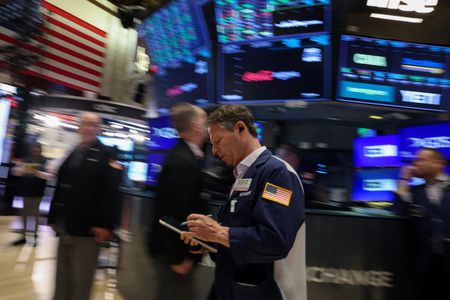

Financial markets across the globe experienced explosive growth Wednesday as news of an Iran ceasefire sent investors into celebration mode, while oil prices crashed by their steepest decline in half a decade.
The dramatic market movements raise questions about whether this represents merely a massive relief rally or signals a fundamental shift in investor confidence.
Stock markets delivered their strongest performance in a full year, with Asian markets leading the charge as South Korea jumped 7.5% and Japan climbed 5%. European markets gained 3.7% while Wall Street benchmarks surged between 2.5% and 2.9%, with the Nasdaq recovering to levels seen before the conflict began.
Energy markets told a different story entirely. Oil prices collapsed as Brent crude fell 13% and West Texas Intermediate dropped 16% – marking the sharpest single-day decline since April 2020. European liquefied natural gas prices also tumbled 15%.
The dollar weakened significantly, dropping 1% as investors moved away from safe-haven assets. Emerging market currencies posted strong gains, with the South African rand, Hungarian forint, and Chilean peso all rising approximately 2%.
Bond markets experienced substantial rallies, particularly in Europe where two-year German and UK yields plunged roughly 25 basis points. Ten-year yields fell 15-20 basis points. US Treasury movements were more restrained, with yields declining 6 basis points on the shorter end.
Minutes from the Federal Reserve’s March meeting revealed growing support among officials for potential interest rate increases. The documents showed a “strong case for a two-sided” approach to monetary policy, meaning the central bank could raise rates just as easily as cut them.
This marks an expansion from January when only “several” officials supported rate hikes. The minutes noted concerns about persistent oil price increases, which could remove rate cuts from consideration this year even if the ceasefire maintains.
Market analysts point to rising uncertainty as a key challenge for investors and businesses. Policy uncertainty has remained structurally elevated, making forecasting and planning increasingly difficult for all market participants.
Looking ahead, traders will monitor Middle East developments, energy market fluctuations, and several economic data releases including US jobless claims, inflation data, and final fourth-quarter GDP figures. A $22 billion Treasury auction for 30-year bonds is also scheduled.
While relief across financial markets remains evident, questions persist about whether current conditions represent sustainable recovery or temporary euphoria that could reverse quickly.