Spanish pharmaceutical company Almirall is actively pursuing licensing agreements with numerous Chinese companies as it seeks to expand its medicine portfolio, according to CEO Carlos Gallardo.
Speaking from Shanghai on Thursday, Gallardo revealed that his company is currently engaged in discussions with multiple Chinese firms to secure rights for various medical treatments that could be marketed in other regions.
“I’m sure my team is talking to dozens of companies at this point in time,” Gallardo stated during the interview.
The pharmaceutical executive explained that Almirall is concentrating its efforts on medical dermatology products within the Chinese market. The company’s particular areas of interest encompass treatments for rare diseases, non-melanoma skin cancer, atopic dermatitis, and psoriasis.
According to Gallardo, dermatology and immunodermatology treatments often have broader therapeutic applications, making them particularly attractive to pharmaceutical companies seeking versatile assets.
While the CEO described the framework for potential agreements with Chinese companies as “very standard,” he noted that increased competition among Western firms is driving up initial payment requirements.
“More and more Western companies are looking into collaborations in China,” Gallardo explained. “And therefore, the more companies looking for collaboration, then that increases demand, and that is inflationary to deal terms. So yes, we’ve seen an increase in the amount of the upfronts, in particular, in licensing deals.”
This trend is reflected in recent market data. In 2022, Almirall entered into an agreement with China’s Simcere Pharmaceutical Group, paying $15 million upfront to obtain development and commercialization rights for an experimental autoimmune disease treatment outside the Greater China region, which encompasses Hong Kong, Macau, and Taiwan.
Industry data from Pharmcube shows that average upfront payments for licensing experimental medicines from Greater China companies have surged to $77.7 million this year, representing a doubling from last year’s $38.8 million and approximately triple the 2021 levels.
These upfront payments typically represent just one component of licensing agreements, which also include milestone payments and ongoing royalties based on product performance.
When asked about projections for future licensing deals with Chinese companies over the next one to two years, Gallardo remained cautious about making specific predictions.
“With deal-making, it’s very difficult to predict whether you’re going to sign one deal in one year or you’re going to sign three,” he acknowledged.
A major U.S. private equity firm has completed the sale of a significant Colombian oil production company to a Philippine infrastructure investment group, according to an announcement made Wednesday.
Carlyle Group has finalized a deal to transfer ownership of SierraCol to Prime Infrastructure Capital, which is controlled by prominent Filipino business leader Enrique K. Razon Jr. The financial terms of the transaction were not revealed.
SierraCol was established by Carlyle in 2020 following the acquisition of petroleum assets from Occidental Petroleum. Industry sources previously indicated that Carlyle had been seeking approximately $1.5 billion for the Colombian operation in 2025.
The sale comes as Carlyle continues expanding its energy portfolio through other major deals. In January, the company reached a preliminary agreement to acquire most international holdings from Russian energy giant Lukoil, which faces sanctions, while also planning to combine its European refining operation Moeve with the downstream operations of Portugal’s Galp energy company.
“This is where our track record is strong and I expect to continue that. We have a clear playbook for executing complex carve-outs and strengthening these businesses,” said Bob Maguire, co-head of Carlyle International Energy Partners (CIEP).
Maguire noted that CIEP maintains flexibility regarding investment allocation between downstream and upstream energy acquisitions.
CIEP managing director Parminder Singh explained to Reuters that acquiring assets from major energy companies has become increasingly challenging in today’s market conditions, as large corporations focus on expanding their own oil and gas holdings while scaling back low-carbon initiatives.
Since establishing SierraCol in 2020, Carlyle has poured approximately $1 billion into the operation, primarily upgrading existing facilities to maintain steady net production at roughly 45,000 barrels of oil equivalent daily while cutting operational emissions.
The Colombian company’s total daily output reaches 77,000 barrels of oil equivalent, representing approximately 10% of Colombia’s national oil production capacity.
Financial data from SierraCol’s website shows the company generated $205 million in free cash flow over the 12 months ending in October 2025, while carrying net debt of $618 million.
Prime Infrastructure Capital operates various energy, waste management, and water infrastructure projects throughout its portfolio.
Vehicle purchases in China experienced a dramatic downturn last month, with domestic passenger car sales plummeting 34.2% compared to the same period last year, industry data revealed Wednesday.
The China Association of Automobile Manufacturers reported that just 950,000 passenger vehicles were purchased domestically in February, a sharp drop from the nearly 1.4 million units sold during January.
When including international shipments, total passenger vehicle sales still declined 15.4% year-over-year, despite overseas deliveries surging 58% to reach 586,000 units. This data underscores the difficulties Chinese auto manufacturers face as they attempt to compensate for sluggish home market performance through international expansion.
The automotive industry confronts mounting pressure from diminished consumer interest as Beijing continues eliminating trade-in incentive programs designed to boost electric vehicle adoption. Additionally, Chinese buyers have become increasingly cautious about major expenditures amid economic uncertainty and an ongoing real estate market downturn.
February’s sales figures were also likely impacted by the timing of Lunar New Year celebrations, China’s most significant holiday period, which traditionally affects commercial activity during the month.
Electric vehicle giant Tesla has received the green light to enter Britain’s residential electricity market after securing regulatory approval on Thursday, introducing fresh competition during a period when UK consumers are increasingly anxious about escalating energy costs.
Britain’s energy oversight body Ofgem announced that Tesla Energy Ventures, a division of the electric car manufacturer, has been authorized to serve as an electricity provider following an approval process that commenced in July of last year.
This regulatory clearance allows the Texas-headquartered company, controlled by wealthy entrepreneur Elon Musk, to broaden its operations across Britain. The firm plans to leverage its solar power technology and energy storage systems to challenge established residential energy providers including Octopus Energy, British Gas, and EDF.
Tesla already holds an electricity generation permit in the UK through another subsidiary, Tesla Motors Limited. Current Tesla vehicle owners frequently utilize Powerwall battery systems in their homes, which harness solar power to charge their cars and can feed surplus energy back to the electrical grid.
Energy costs have skyrocketed following the conflict in Iran, creating widespread anxiety among British consumers about their utility expenses.
Government-regulated pricing protects most UK households from immediate impacts of increased natural gas costs through July, but officials may face pressure to extend assistance if the international crisis continues beyond that timeframe.
Tesla’s vehicle sales in Britain have experienced a downward trend recently, dropping 8.9% compared to the previous year in 2025, as the company faces challenges from more affordable Chinese competitors and public criticism of Musk’s political positions.
The automotive giant behind Jeep, Ram, and Chrysler vehicles has completed a massive $5.8 billion bond sale to shore up its finances after taking significant losses from a major electric vehicle strategy overhaul.
Stellantis announced Wednesday that it successfully priced the multi-part bond offering, which comes just weeks after the company revealed it was absorbing 22.2 billion euros in financial charges. The substantial losses stem from the automaker’s decision to scale back its electric vehicle ambitions after CEO Antonio Filosa acknowledged the company had overestimated consumer appetite for electric cars.
The bond sale, which was completed Tuesday, was structured in three separate portions: 2.2 billion euros in perpetual notes with a 5.25-year period before potential redemption and 6.25% interest rate; 1.8 billion euros in perpetual bonds with an 8-year protection period and 6.875% rate; and 865 million British pounds in perpetual notes with a 6.5-year term initially offering 8.25% returns.
“This issuance will further strengthen Stellantis’ capital structure and liquidity position,” the company stated in announcing the bond completion.
The financial instruments are scheduled to be finalized on March 16.
The manufacturer, which also owns Peugeot, Fiat, and Citroen brands, is now pivoting toward greater focus on hybrid vehicles and traditional gasoline engines, moving away from former CEO Carlos Tavares’ electric-focused approach. Company leadership argues that consumer demand for fully electric vehicles has fallen short of earlier forecasts, especially in American markets.
Stellantis plans to unveil its revised long-term strategic plan on May 21.
Despite experiencing a decline in natural disaster costs during 2025, American homeowners may not see relief in their insurance premiums anytime soon.
While the financial impact from catastrophic weather events decreased last year, the United States still recorded more than $100 billion in weather-related losses for the fourth occurrence within a five-year span.
Insurance industry analysts indicate that this persistent pattern of massive financial damage will keep insurers cautious about lowering their rates, even during years with reduced disaster activity.
The ongoing trend of extreme weather events causing enormous economic losses continues to influence how insurance companies assess risk and set pricing for homeowners across the country.
States that experienced significant hail damage and tornado destruction from severe thunderstorms are particularly likely to see continued increases in home insurance costs this year, according to industry forecasts.
While numerous Western companies retreat from the Chinese market due to disappointing sales, British consumer health company Haleon is taking the opposite approach by significantly expanding its presence in the world’s second-largest economy.
The maker of popular dental care products is investing 65 million pounds ($87 million) in a new oral health manufacturing facility in Shanghai, bucking the trend that has affected major brands from BMW to Nike, all of which reported declining Chinese sales in recent years.
Haleon’s confidence stems from strong performance of its Sensodyne toothpaste line, which has experienced mid-teens growth rates in China. The company’s CEO Brian McNamara plans to bring the Parodontax gum health brand to more than 30 Chinese cities by 2027’s end.
“For us, China’s an incredible market,” McNamara explained to Reuters, pointing to the substantial 860 million-pound gum health sector in the country.
The executive emphasized the market opportunity, stating: “Over 70% of consumers in China suffer from gum health issues. We have a product to address it. There’s a clear consumer need.”
China represents approximately 10% of Haleon’s 11-billion-pound global business and nearly 13% of the worldwide oral health market valued at $59 billion, which analysts project will reach $80 billion by 2031.
The company recently relaunched its Parodontax brand in China during late 2024, marking a second attempt after an unsuccessful launch five years earlier, according to Jayant Singh, Haleon’s global oral health division leader.
This time, the company has customized the product specifically for Chinese preferences, creating a sweeter and more aromatic flavor profile, enhanced foaming action during brushing, and more attractive packaging design. The reformulated product is now available in 10,000 retail locations across 19 cities.
“It’s these minor nuances that you need to put into your mix to really drive acceptance,” Singh explained.
Despite this progress, Haleon’s flagship Sensodyne brand reaches only about 11% of Chinese households, significantly trailing the domestic market leader Yunnan Baiyao, which Haleon estimates captures 29.8% market share.
The expansion contrasts sharply with other Western companies’ recent China strategies. Starbucks sold majority control of its Chinese operations to Boyu Capital in November following weak performance, while Nike is restructuring its China approach after multiple quarters of declining sales.
Demonstrating its commitment to the market, Haleon purchased the Chinese government’s stake in their local joint venture for approximately 700 million pounds last year.
McNamara accompanied British Prime Minister Keir Starmer on his January diplomatic visit to China, where he held productive discussions with senior regulatory officials.
“We’ve found the Chinese government very supportive of what we’re trying to do,” the CEO noted.
Kevin Ketels purchased his electric 2026 Chevrolet Blazer with future technology in mind, not fuel savings. The Detroit resident wanted to embrace what he saw as the next generation of transportation. However, with current international conflicts pushing gasoline prices higher, the 55-year-old is relieved he’s no longer dependent on his previous gas-burning SUV from over a decade ago.
“Electricity can go up, but it won’t go up nearly as much as gas will and it won’t go up nearly as fast, either,” said Ketels, who teaches global supply chain management at Wayne State University.
Industry analysts believe sustained elevated fuel costs could boost electric vehicle interest and purchases, particularly among consumers who expect their power bills to remain relatively unaffected by international turmoil.
However, numerous variables impact both consumer EV decisions and utility rates.
Owners of traditional gasoline vehicles face greater exposure to price swings caused by international tensions compared to those who plug in their cars. AAA reports the nationwide average for regular gasoline reached $3.57 this week, climbing from $2.94 just one month earlier.
In contrast, “residential electricity prices are regulated and are much less volatile than gasoline prices,” explained Erich Muehlegger, an economics professor at University of California, Davis. “As a result, EV owners are largely unaffected by oil price shocks.”
Still, analysts note that power costs have been climbing across the country due to multiple factors, including increased electricity demand from expanding data centers.
“This is an inflationary event,” stated Holt Edwards, principal in Bracewell’s Policy Resolution Group, referring to the current conflict. “Is this the driver in electricity prices? I think probably not. But it’s certainly a contributing factor.”
The degree to which oil and gas disruptions might impact the electricity sector remains unclear.
For EV owners, the cost of charging largely depends on what energy sources comprise their local power grid, according to specialists.
Since regulators establish residential electricity rates on an annual basis, most households avoid month-to-month fluctuations in natural gas costs. While higher natural gas prices can affect electricity generation expenses, natural gas hasn’t experienced the same rapid price increases as oil recently.
Natural gas represents just one of numerous energy sources—along with coal, nuclear power, and renewable energy—that supply the electrical grid.
“The energy component varies depending on the energy you’re using and the price of the energy that you’re using to generate electricity,” explained Pierpaolo Cazzola, an energy specialist at Columbia University’s Center on Global Energy Policy. “What happens is that in the U.S., the variation of the price of the energy component is smaller than it is elsewhere.”
Researchers indicated that prolonged warfare could impact future electricity bills, providing additional justification for nations to embrace clean energy transitions.
“Clean power and electrification combined is what provides the most security,” noted Euan Graham, an analyst at energy think tank Ember.
Michael B. Klein, a 56-year-old software developer from Evanston, Illinois, has operated EVs for eight years to reduce fuel expenses and address environmental concerns.
Whenever electrical grid performance advances—particularly through renewable energy additions—”I get that benefit no matter what,” said Klein, who operates a Chevy Bolt. “They can improve the efficiency of gas engines, but you have to get a new car in order to reap the benefit of that.”
Multiple researchers identify elevated gasoline costs as a significant factor in EV sales, especially when high prices continue long-term. Motorists also explore more fuel-efficient hybrid options during such periods.
Automotive shopping platform Edmunds examined consumer research patterns for the week beginning March 2, following the start of the Iran conflict. Their data showed that interest in hybrids, plug-in hybrids, and battery EVs represented 22.4% of all vehicle research on their platform that week, increasing from 20.7% the previous week. When analysts reviewed the major nationwide fuel price spikes in 2022, they observed similar sharp increases in electrified vehicle consideration.
Whether this translates to actual EV purchases depends on buyers’ expectations for long-term savings, not just immediate benefits, researchers explain.
Adding complexity: A sudden surge in EV demand could increase vehicle prices, Graham observed.
“I think the real step change would be in whether this causes governments to shift tax, tariff policies around EVs,” Graham stated. Such changes would help decrease fossil fuel reliance, he added.
EV purchasers enjoy “really substantial” gasoline savings throughout their vehicles’ lifespans even without government tax incentives, according to Peter Zalzal, an attorney with Environmental Defense Fund.
“We’re talking about thousands and thousands of dollars” in savings, Zalzal noted. “And as gas prices increase, those savings are only greater. Fuel costs are a big piece of overall vehicle costs, and increases in fuel prices have significant impacts on people.”
Nevertheless, new EV purchase prices still exceed those of gasoline-powered vehicles; new EVs averaged $55,300 last month, while new vehicles overall averaged $49,353, according to Kelley Blue Book. Some specialists also raised national security concerns regarding EVs due to China’s dominance in significant portions of the EV supply chain.
Ketels, the EV owner and professor, believes EVs and renewable energy should become strategic priorities for both individuals and the United States because they could be manufactured domestically “and we don’t have those fluctuations and those worries.”
However, with the federal government reducing many incentives for both sectors, “it puts us at a disadvantage globally,” Ketels stated. “I think it’s been a terrible mistake to withdraw these incentives and to attack the sustainable energy industry,” and the current conflict “is just making it that much more obvious.”
Swiss banking giant UBS has struck a preliminary settlement deal with Trevor Murray, a former employee who claimed the financial institution wrongfully terminated him for blowing the whistle on questionable business practices, according to Wednesday court documents.
Murray, who previously worked as a bond strategist for the bank, alleged that UBS dismissed him in 2012 as punishment for his refusal to create and distribute deceptive research materials to clients.
Both sides anticipate finalizing their settlement agreement within the next month, based on a joint filing submitted by UBS and Murray’s legal teams, bringing closure to litigation that has spanned more than a decade.
The resolution comes after a complex legal journey that saw Murray initially win a $2.6 million jury verdict, which the Supreme Court later upheld before a New York appellate court ultimately overturned the award last year. The high court’s earlier decision in 2024 had established more favorable legal standards for employees pursuing whistleblower claims against their former employers.
Stock market futures took a significant hit Thursday morning as crude oil prices climbed back above the $100 per barrel mark, raising fresh concerns about inflation and prompting investors to scale back their expectations for Federal Reserve rate reductions.
Oil prices surged after reports emerged of two oil tankers catching fire in Iraqi waters following what appeared to be Iranian attacks, marking part of a wider pattern of strikes targeting oil infrastructure and transportation networks throughout the Middle East region. Iranian officials have warned that crude prices could potentially reach as high as $200 per barrel.
Investment bank Goldman Sachs has revised its prediction for the Federal Reserve’s next interest rate reduction, moving the expected timing from June to September. Market futures now indicate traders are anticipating just one quarter-point decrease by year’s end, a reduction from the two cuts previously expected before the current conflict began.
International financial markets have experienced significant volatility this month as the ongoing conflict between the United States and Israel against Iran has disrupted petroleum supply chains and driven crude prices substantially higher, creating complications for central banks worldwide as they consider loosening monetary policies.
In separate developments, Washington announced the initiation of two new trade investigations examining excessive industrial capacity among 16 major trading partners and investigating forced labor practices. This long-anticipated action aims to restore tariff pressure following the Supreme Court’s dismantling of much of former President Donald Trump’s tariff framework last month.
As of 3:35 a.m., S&P 500 E-mini contracts had declined 47.5 points or 0.7%, while Dow E-mini futures dropped 387 points or 0.82%, and Nasdaq 100 E-mini contracts fell 171.25 points or 0.69%.
After a series of credit problems have emerged in recent months, market participants are closely examining the approximately $2 trillion private credit sector, with growing worries about loan quality and borrowers’ capacity to handle higher interest rates.
According to a Financial Times report, Glendon Capital Management has accused private credit companies like Blue Owl of concealing portfolio weaknesses.
Morgan Stanley restricted withdrawals from one of its private credit investment vehicles on Wednesday, while JPMorgan Chase wrote down the value of certain loans to private credit funds.
Bumble stock is expected to attract attention Thursday following the dating platform’s announcement of fourth-quarter revenue that exceeded analyst projections. The company’s shares gained approximately 20% in extended trading Wednesday evening.
Later today, market participants will review unemployment claims data and listen to remarks from Federal Reserve Vice Chair for Supervision Michelle Bowman.
Four ex-employees of Deutsche Bank have launched legal action against Germany’s biggest bank, demanding more than 600 million pounds (equivalent to $800 million) in compensation related to a matter involving Italy’s Monte dei Paschi bank, according to Deutsche Bank’s annual report released Thursday.
Deutsche Bank characterized the legal challenges brought in English courts as “without merit.”
While these legal battles were previously known, the massive financial demands being sought had not been publicly revealed until now.
This enormous sum adds to another 152 million euro ($175.58 million) lawsuit filed by a separate former banker in a Frankfurt court during 2024, which is scheduled for a hearing this year.
The former employees bringing these cases claim Deutsche Bank damaged their professional careers.
In response, Deutsche Bank stated it “will defend itself against them robustly, including disputing the inflated, unrealistic alleged losses claimed.”
These legal challenges emerged during what became Deutsche Bank’s most successful financial year since 2007, which led to increased compensation for CEO Christian Sewing.
Sewing’s total pay package reached approximately 10.5 million euros ($12.12 million) for 2025, representing an increase from the previous year’s 9.75 million euros, as revealed in the bank’s annual filing.
A Connecticut-based healthcare investment fund achieved impressive 28% returns in the past year by concentrating on artificial intelligence-powered medical companies, and now plans to expand those investments further.
Braidwell, headquartered in Stamford, Connecticut, was established by Alex Karnal, a former Deerfield Management executive, and Brian Kreiter, who previously served as chief operating officer at Bridgewater Associates. The fund has positioned artificial intelligence technology as the core of its investment approach.
The investment firm raised $3.5 billion when it launched in early 2022, making it one of the largest hedge fund debuts following the coronavirus pandemic. According to a recent investor letter obtained by Reuters, Braidwell has invested over $1 billion across various biotechnology, pharmaceutical, and medical device companies.
Major success stories from last year included cancer testing company Guardant Health, medical device manufacturer Alphatec, and molecular diagnostics firm Caris Life Sciences, according to Karnal and Kreiter’s investor communication. The Braidwell Partners Fund concluded the December quarter managing approximately $3.1 billion in assets.
The investment company operates through three distinct divisions. The primary Braidwell Partners Fund focuses on publicly traded stocks and bonds, while Braidwell Credit offers direct lending services to healthcare businesses. Additionally, the firm runs Braidwell Labs, which supports early-stage healthcare startups.
“We expect 2026 to show some incredible opportunities at the intersection of AI and Bio,” said Kreiter. “You will likely see us build or back both AI-enabled medicine companies as well as companies that are developing platforms and tools that will be used by medicine makers.”
Braidwell documented a 49.5% increase in overall gross performance from 2023 to 2025. The flagship fund generated 28% gross returns and 21% net returns last year, performing similarly to broader life sciences market indicators, which averaged gains of 27% to 35%. The fund’s strong performance was primarily driven by investments in non-therapeutic businesses.
Karnal currently holds the position of chief investment officer at Braidwell after spending approximately 16 years with Deerfield, a healthcare-focused investment company. He has also established a nonprofit organization called the Institute for Life Changing Medicines alongside gene-therapy pioneer James Wilson.
Before joining Braidwell, Kreiter worked as an assistant to Chicago’s mayor and later spent nearly 13 years at the prominent hedge fund Bridgewater.
The two founders have been developing their investment platform since 2022, seeking to combine conventional Wall Street investment strategies with medical research and artificial intelligence technologies.
Braidwell employs approximately 40 professionals, including molecular biologists, biostatisticians, commercial analysts, artificial intelligence engineers, and portfolio managers. Karnal and Kreiter, who had maintained a professional relationship for years, seriously began planning Braidwell’s launch during the COVID-19 pandemic.
While still employed at Bridgewater, Kreiter began developing an early natural-language artificial intelligence system, assembling a team of engineers who had previously contributed to IBM’s Watson computer platform. The co-founders began exploring potential healthcare solutions that could serve the broader population recovering from the pandemic.
One of their initial software applications was utilized by the NFL to help manage that year’s Super Bowl, though the NFL did not respond to requests for comment.
“We decided to build a company from scratch in our labs to support emerging venture-stage companies – and then we also wanted to buy the stock of public companies, and give loans to big, established companies because our view is that in most areas of investing that type of activity is very siloed,” Karnal said in an interview.
An artificial intelligence company is taking the Pentagon to court over a decision that could cost billions in revenue, and legal scholars believe the firm has solid grounds for its challenge.
Anthropic filed a federal lawsuit Monday contesting the Defense Department’s move to blacklist the company from military contracts by labeling it a supply chain security threat. The AI lab argues this action violated its constitutional rights to free speech and due process, claiming it was retaliation for the company’s stance on AI safety in military applications.
Company leadership revealed Tuesday that this blacklisting could slash Anthropic’s projected 2026 earnings by several billion dollars while damaging its reputation in the marketplace.
The Pentagon relied on an uncommon statute that permits blocking companies from specific contracts when they might expose military computer systems to hostile infiltration. According to a Reuters examination of legal records, this law has never faced court scrutiny or been applied against an American corporation.
While courts typically show deference to executive branch decisions on national security matters, five legal experts specializing in national security law told Reuters the Pentagon may have exceeded its authority.
“It’s not at all clear that the statute can even apply to an American company where there’s no foreign entanglement,” stated Alan Rozenshtein, a professor at University of Minnesota Law School.
The Defense Department declined to provide comments regarding ongoing litigation.
Anthropic, which operates as a U.S.-incorporated company with American headquarters, maintains it doesn’t qualify as an “adversary” under Trump administration definitions that include China, Russia, Iran, North Korea, Cuba and Venezuela, according to court documents.
The company highlighted that Defense Secretary Pete Hegseth offered no rationale for how Anthropic’s Claude AI system posed supply chain dangers, despite ongoing military use of the technology. The lawsuit references Hegseth’s February 24 meeting where he described Claude as “exquisite” technology the Defense Department would “love” to partner with.
Military forces utilized Claude as recently as last month during operations targeting Iran, based on Reuters reporting.
Hegseth classified Anthropic as a national security supply chain threat on March 3 following the company’s refusal to remove Claude’s built-in restrictions preventing military use for autonomous weapons or domestic surveillance operations.
In a February 27 social media statement announcing the designation, Hegseth criticized Anthropic for hiding behind the “sanctimonious rhetoric of ‘effective altruism’” to “strong-arm the United States military into submission.”
Anthropic maintains that AI technology lacks sufficient reliability for autonomous weapons systems and opposes domestic surveillance on ethical grounds. Pentagon officials counter that Anthropic’s limitations could jeopardize American military personnel.
Federal law defines supply chain risks as threats where adversaries might sabotage, infiltrate or disrupt government information technology infrastructure.
The statute invoked by the Pentagon, Section 3252, permits the defense secretary to exclude companies from certain contracts to prevent “adversaries” from sabotaging, introducing malicious functions, or otherwise compromising military information systems to “surveil, deny, disrupt, or otherwise degrade” their operations.
The Pentagon also designated Anthropic under separate legislation that could expand contract exclusions across civilian government agencies. Anthropic submitted an additional legal challenge to that designation Monday.
Section 3252 permits company exclusions only as final measures, and other defense contractors aren’t mandated to completely cease collaborating with designated firms.
Reuters couldn’t locate other companies publicly designated as supply chain risks under Section 3252, though this specialized procurement statute doesn’t mandate public disclosure of such designations.
Amos Toh, a national security law specialist at the Brennan Center for Justice, said Claude’s usage policies don’t appear to create foreign sabotage or subversion threats.
“These are basically safety protocols. You can debate whether these protocols are acceptable or not, but they run directly counter to the risk that the law is designed to regulate,” Toh explained.
Anthropic’s legal filing argues the supply chain risk designation punishes the company for its AI safety positions in violation of First Amendment constitutional protections for free speech and expression.
Legal scholars suggested Trump and Hegseth’s public criticism of Anthropic, including Trump’s social media post calling it a “RADICAL LEFT WOKE COMPANY,” could strengthen this constitutional argument.
“A lot of things Hegseth has said and the Pentagon has done undermine their case and suggest there was personal animus and bad blood between the parties, and that the Pentagon had it out for Anthropic,” said Joel Dodge, a legal expert at Vanderbilt University.
Anthropic also contends Hegseth’s supply chain risk order violated Fifth Amendment due process protections by imposing “draconian punishments” without “meaningful process,” factual determinations, or opportunities for the company to contest the decision.
Courts generally hesitate to challenge federal agency determinations but show particular deference to executive branch national security judgments.
This deference would likely form the core of the government’s legal strategy, according to legal experts who said Justice Department attorneys could reference numerous cases where courts determined judges shouldn’t second-guess presidential and military defense decisions.
The government might argue that the president and cabinet secretaries possess broad supplier selection authority and that the military cannot depend on vendors whose usage policies restrict military operations.
The Justice Department could also invoke legal precedent establishing that contract decisions don’t constitute First Amendment violations when supported by legitimate policy or operational justifications.
Eric Crusius, an attorney and government contract specialist not involved in the case, said the government is attempting to impose the “death penalty” on Anthropic and must demonstrate “there was no alternative and that they meticulously considered other options prior to pulling the trigger.”
Anthropic’s lawsuit claims Hegseth’s decision violated the Administrative Procedure Act, legislation allowing courts to overturn actions deemed “arbitrary, capricious, an abuse of discretion, or otherwise not in accordance with law.”
Legal experts identified apparent contradictions in the government’s position as strong evidence that Hegseth’s decision was arbitrary.
“The government was simultaneously threatening to use the (Defense Production Act) to force Anthropic to sell its services, using its services in active military operations, and saying it’s too dangerous to use them in government contracts,” said University of Minnesota Law School professor Alan Rozenshtein.
“Not all of these things can be true,” he concluded.
The British capital has claimed the crown as the world’s premier financial technology center, surpassing traditional powerhouses New York and San Francisco, new research reveals.
For the first time in history, European financial technology investment has reached the same level as the United States, with each region attracting 40 billion euros in funding, according to fresh analysis from hedge fund Finch Capital released Thursday.
The shift represents a dramatic change in the global landscape, with European FinTech investment climbing 37% from 2022 to 2025, while funding for America’s leading tech centers dropped 13% during the same period.
Despite this milestone, challenges remain for European companies seeking major funding rounds. According to the research, every European investment deal exceeding one billion euros required leadership from American investors.
Finch Capital partner Aman Ghei characterized a nine billion euro funding gap as “a policy gap, not a market verdict,” pointing to structural differences between the regions.
The data reveals stark contrasts in pension fund allocation strategies. European pension funds dedicate merely 0.02% of their assets to venture capital investments, far below the 1.9% rate seen in the United States. Closing this disparity could generate an additional 37.5 billion euros in annual funding, the firm estimates.
However, Europe demonstrates particular strength in highly regulated business sectors. Companies focused on chief financial officer services and regulatory compliance software deliver 2.54 times their investment value, significantly outperforming the 1.31 times return seen in American markets.
Ghei also noted that European corporations are missing investment opportunities that their American counterparts pursue more aggressively, citing technology giant ASML’s investment in artificial intelligence company Mistral as a prime example.
The hedge fund partner emphasized that European capital markets possess sufficient resources, making dependence on American investors unnecessary for future growth.
Japanese automaker Honda Motor announced Thursday it anticipates significant financial losses ranging from $2.6 billion to $4.3 billion for the current fiscal year ending this month, following a major reassessment of its electric vehicle plans.
The company has decided to halt development and cancel market introductions of several electric vehicle models planned for U.S. production, citing what it called a “slowdown of the EV market in North America.” This strategic pivot is expected to generate expenses and losses totaling up to 2.5 trillion yen across several fiscal years.
The dramatic financial revision represents a sharp turnaround from Honda’s earlier projections, which had anticipated a profit of 300 billion yen for the fiscal year. Company officials scheduled a press conference for Thursday morning to discuss the changes in strategy.
The announcement reflects broader challenges facing automakers as they navigate shifting consumer demand and market conditions in the electric vehicle sector across North America.
Energy markets experienced significant turbulence Thursday morning as Brent crude oil prices momentarily climbed above $100 per barrel, marking another dramatic swing following recent spikes that approached $120.
The surge came as Iranian forces intensified attacks on commercial vessels navigating the critical Strait of Hormuz, raising fresh concerns about global oil supplies. This escalation occurs while U.S. military strikes against Iran continue into their second week.
Energy prices initially jumped more than 9% higher during early trading. U.S. benchmark crude increased 6.5% to approximately $93 per barrel, while Brent crude, used as the international pricing standard, rose 6.6% to around $98 per barrel.
Tehran has intensified its strategy of targeting commercial shipping and energy infrastructure to create economic pressure that would force the United States and Israel to halt the ongoing conflict. However, there are no indications that hostilities are diminishing.
Iranian forces have struck oil production facilities and refineries across Gulf Arab states while essentially halting cargo movement through the strategic Strait of Hormuz, a waterway that handles one-fifth of global oil trade.
To address the market disruption, the International Energy Agency announced Wednesday its largest emergency oil release in history, committing 400 million barrels to stabilize energy markets affected by the conflict. The United States plans to contribute 172 million barrels from its Strategic Petroleum Reserve next week to help combat rising prices.
This coordinated response followed a meeting Tuesday in Paris where energy ministers from the Group of Seven nations – Canada, the United States, France, Italy, Japan, Germany and Britain – discussed strategies to reduce energy costs.
Despite these measures, ongoing conflict and market uncertainty continue to fuel predictions that prices could climb even higher.
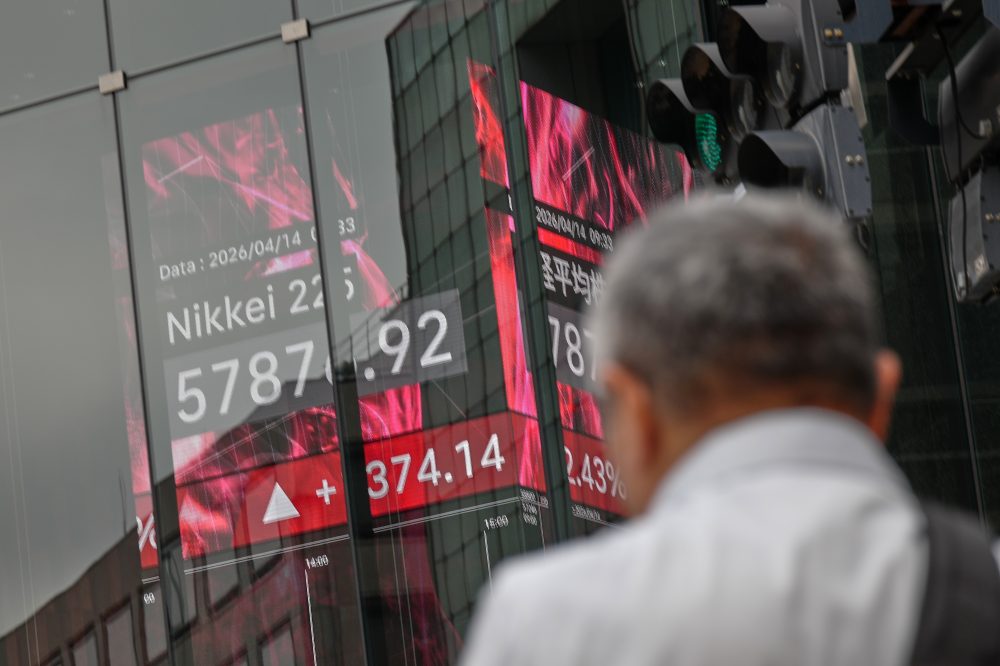
Asian financial markets declined in response, with Tokyo’s Nikkei 225 dropping 1% to 54,452.96. South Korea’s Kospi fell 0.5% to 5,583.25, while Hong Kong’s Hang Seng decreased 0.9% to 25,678.92.
China’s Shanghai Composite index declined 0.1% to 4,129.10, and Australia’s S&P/ASX 200 fell 1.3% to 8,529.00.
U.S. market futures also showed declines.
Currency markets saw the dollar weaken to 158.84 Japanese yen from 158.95 yen, while the euro dropped to $1.1553 from $1.1566.
Wednesday’s U.S. stock trading showed minimal movement as the S&P 500 edged down 0.1% for a second consecutive day of modest changes following volatile trading triggered by the Iran conflict. The Dow Jones Industrial Average fell 0.6% to its lowest point this year, while the Nasdaq composite gained 0.1%.
Throughout the conflict, dramatic oil price movements have created worldwide market volatility, sometimes changing by the hour. Energy prices reached their highest levels since 2022 this week due to concerns about prolonged Middle Eastern production disruptions, raising fears of damaging global inflation.
Oxford Economics noted in their analysis that “the swings in Brent crude oil prices over the past several days are eye-catching and odds are volatility will remain because of the absence of a timeline for when the conflict will de-escalate and when the Strait of Hormuz, which is effectively closed, will see traffic begin to recover.”
The firm suggested that depending on conflict developments, oil prices could potentially reach $140 per barrel.
Wednesday’s economic data revealed U.S. consumer prices increased 2.4% in February compared to the previous year for groceries, gasoline and other living expenses.
This figure matched the previous month and was lower than economists’ 2.5% projection, though it remains above the Federal Reserve’s 2% target and doesn’t account for this month’s gasoline price increases due to the war.
The combination of elevated inflation and economic stagnation could create a challenging “stagflation” scenario that Federal Reserve policy tools cannot easily address. These concerns stem not only from higher energy costs but also from weakening U.S. employment trends.
Rising oil prices have caused traders to delay expectations for when the Federal Reserve might resume interest rate cuts. President Donald Trump has publicly demanded such reductions, which would stimulate the economy and job market but could potentially worsen inflation.
German luxury automaker BMW announced Thursday that it anticipates a moderate drop in company profits this year, with vehicle deliveries expected to remain unchanged as international trade barriers create challenges for the business.
The Munich-based manufacturer projects that increased tariff pressures will reduce profit margins in their automotive division by approximately 1.25 percentage points by 2026. The company forecasts margins between 4% and 6%, down from 5.3% recorded in 2025.
BMW’s pre-tax profits dropped 6.7% in the previous year to 10.2 billion euros (equivalent to $11.78 billion), with projections showing an additional decline of 5% to 9.9% for 2026.
Vehicle sales are expected to match 2025 levels, following a significant drop in the crucial Chinese market during that period.
While BMW’s manufacturing operations in the United States have helped reduce the impact of American import duties – with the company’s largest facility located in Spartanburg, South Carolina – the automaker still contends with European Union tariffs on its electric Mini vehicles produced in China.
Global truck manufacturing giant Daimler announced Thursday its projection for maintaining steady profit margins in its industrial operations through 2026, with company officials anticipating stronger performance during the latter half of the year.
The major commercial vehicle producer forecasts its adjusted return on sales for industrial business will range from 6% to 8% in 2026, slightly below the 7.9% achieved in 2025.
Vehicle production is expected to increase, with Daimler Truck projecting unit sales between 330,000 and 360,000 vehicles in 2026, representing growth from the 315,000 units sold from ongoing operations during 2025.
Company officials cautioned that these projections depend heavily on broader economic conditions and international political developments, especially potential U.S. trade tariffs, while noting that supply chain interruptions or Middle Eastern conflicts could affect outcomes.
“For 2026, we are positioned for operational improvement on higher volumes and efficiency gains compensating materially higher tariff effects,” Chief Financial Officer Eva Scherer stated.
The truck manufacturing sector across Europe, including competitors Traton and Volvo, has faced challenges from declining North American demand as reduced freight activity and tariff-related uncertainty have impacted new orders.
Daimler Truck reported achieving cost reductions exceeding 100 million euros ($115.49 million) during 2025 through its European efficiency program and targets generating an additional 250 million euros in recurring savings throughout 2026.
A major legal battle has erupted in the fragrance industry as cosmetics powerhouse Estee Lauder takes British perfumer Jo Malone to court over naming rights, according to Thursday reports from the Financial Times.
The dispute stems from Estee Lauder’s 1999 acquisition of Malone’s original perfume company, a deal that included purchasing the commercial rights to use the entrepreneur’s name. After departing from Estee Lauder in 2006, Malone established a fresh fragrance venture called “Jo Loves” five years later in 2011.
According to the Financial Times, Wednesday’s lawsuit targets the appearance of “Jo Malone” on Jo Loves product packaging being sold through Zara’s United Kingdom operations.
The legal action accuses Malone of violating her original contract, infringing on trademark protections, and engaging in “passing off” – a legal concept that involves deceiving customers into believing products come from a different company than their actual source, the report indicated.
Representatives from Estee Lauder, Inditex (Zara UK’s parent company), and Jo Loves have not yet provided responses to media inquiries. Attempts to contact Malone directly were unsuccessful.
ROME – Italy’s government-backed defense contractor Leonardo announced Thursday that the company anticipates substantial expansion ahead, forecasting increases in contracts, revenue, and core earnings throughout the coming year.
The defense manufacturer projects new orders will climb to approximately 25 billion euros ($28.85 billion), up from the 23.8 billion euros recorded in 2025. Revenue is expected to grow to 21 billion euros, compared to 19.5 billion euros in the previous year.
The company also anticipates its earnings before interest, taxes, and amortization (EBITA) will reach 2.03 billion euros by year’s end.
In a company statement, the Rome-headquartered firm declared: “The Group is positioned on a path of strong growth, supported by a strengthening of profitability and cash generation.”
Based on the previous year’s financial performance, Leonardo announced plans to distribute a dividend of 0.63 euros per share to shareholders.
While SUVs continue to dominate showroom floors, automotive specialists are highlighting the overlooked advantages of hatchback vehicles for 2026. These cars provide superior cargo flexibility compared to traditional sedans, featuring roomier and more accessible storage areas. Many models also deliver engaging driving dynamics with responsive handling and energetic powertrains.
Automotive research firm Edmunds has identified their top picks for affordable four-door hatchbacks currently available. This selection encompasses vehicles offering excellent fuel economy, spirited performance capabilities, and practical daily-use functionality. Listed prices reflect destination fees.
Toyota Corolla
The Corolla remains a go-to choice for buyers seeking dependable transportation without breaking the bank, providing comfortable operation and extensive standard equipment. The four-door hatchback variant offers 17.8 cubic feet of cargo capacity versus just 13.1 cubic feet in the standard sedan configuration. Power comes from a 169-horsepower four-cylinder engine as standard. For enthusiasts, Toyota offers the GR Corolla hatchback featuring a 300-horsepower turbocharged three-cylinder with all-wheel-drive capability. While a fuel-efficient hybrid variant exists, it’s only offered in sedan form.
Starting price: $25,575
Kia K4
Making its debut for 2026, the K4 hatchback showcases athletic, streamlined styling that commands attention on the road. This model complements the existing K4 sedan as one of Kia’s most accessible offerings. Cargo capacity significantly exceeds the sedan variant at 22.2 cubic feet behind the rear seating area. Three trim levels are available: EX, GT-Line and GT-Line Turbo. Base EX and GT-Line models utilize a 147-horsepower four-cylinder, while the GT-Line Turbo features a turbocharged 190-horsepower unit. The K4 also stands out with its comprehensive five-year bumper-to-bumper warranty protection.
Starting price: $26,235
Mazda 3
While Mazda offers both sedan and hatchback versions of the 3, the hatchback variant truly shines with its sophisticated European-inspired design and premium interior appointments. Edmunds noted the model’s practical nature with 20.1 cubic feet of storage capacity. Engine options include a standard 186-horsepower four-cylinder or an optional turbocharged unit producing 250 horsepower. The more powerful engine provides enhanced acceleration and comes with standard all-wheel drive, though AWD is available with the base engine as well. The Mazda 3’s rear seating area is more compact than other hatchbacks in this comparison.
Starting price: $26,785
Subaru Impreza
Edmunds notes that while the 2026 Impreza may not excite driving enthusiasts, it serves buyers seeking affordable, practical transportation. Performance lags behind many competitors, even with the upgraded 180-horsepower four-cylinder found in the top RS trim level. However, every Impreza includes standard all-wheel drive as a valuable feature. The model impresses with its spacious interior and excellent outward vision. Storage capacity reaches 20.4 cubic feet in the rear cargo area. For those requiring a sensible all-weather hatchback, the Impreza delivers solid satisfaction.
Starting price: $27,790
Honda Civic
The Civic maintains its excellent reputation for delivering outstanding value to car buyers. While available as both sedan and hatchback, the hatchback version excels in cargo room and overall performance. The rear storage area provides an impressive 24.8 cubic feet of space. The standard four-cylinder engine delivers reliable performance, while an optional hybrid system achieves up to 48 mpg combined according to EPA estimates. Performance enthusiasts can opt for the high-performance Type R variant with its 315-horsepower engine. However, Civic pricing typically runs higher than competitive models.
Starting price: $29,090
VW Golf GTI
The current Golf GTI generation launched for 2022, with recent updates bringing refreshed exterior appearance, enhanced infotainment technology with larger touchscreen display, and additional standard features. Edmunds praises the model’s combination of sporty dynamics and practical utility. Volkswagen no longer markets the standard Golf in America, leaving only the performance-oriented GTI with its 241-horsepower turbocharged four-cylinder engine. Edmunds testing highlighted the GTI’s quick acceleration, upscale cabin materials, and 19.9 cubic feet of cargo capacity.
Starting price: $36,320
According to Edmunds, “SUVs get all the glory — and more sales — but these handy hatchbacks should not be discounted in any savvy new car search.”
This information was provided by automotive website Edmunds, with Nick Kurczewski contributing to the report.
Mexico-based cement manufacturer Cemex announced Wednesday its intention to divest Colombian operations through transactions expected to generate approximately $555 million, continuing the company’s strategy of consolidating assets beyond its primary markets.
According to a company statement, Swiss competitor Holcim will acquire a cement production facility, grinding mill, and additional plant portfolio for $485 million, with the transaction anticipated to finalize before year’s end.
The Mexican cement producer indicated ongoing negotiations with unnamed buyers for additional Colombian assets valued at roughly $70 million.
Reports suggest Cemex has been pursuing an exit from Colombia following recent asset sales in Central America and the Philippines over the past two years.
The company will maintain ownership of two Colombian cement facilities with total annual production capacity of 1.6 million metric tons, along with a grinding operation, ready-mix concrete plants, and aggregate mining sites.
“We are pleased with the continued progress we are making in further streamlining our portfolio, while we focus on investing and strengthening our position in key geographies and businesses in the U.S., Europe and Mexico,” Chief Executive Jaime Muguiro said.
Holcim’s chief executive previously indicated to Reuters that significant acquisitions could occur in coming months, following the company’s 1.85 billion euro ($2.14 billion) purchase of German construction systems manufacturer Xella.
An investment firm is raising red flags about potential problems lurking within the private credit industry, specifically targeting Blue Owl and similar companies for allegedly hiding portfolio weaknesses, according to a Financial Times report published Thursday.
Glendon Capital Management claims that Blue Owl and numerous competitors have “misrepresented” the actual loss rates within their investment portfolios and are concealing “larger losses than reported,” the Financial Times stated, referencing a company presentation.
The allegations surface as market participants prepare for potentially troubling developments following several recent credit problems that have intensified examination of the approximately $2 trillion private credit sector.
Reuters was unable to independently confirm the Financial Times report. Blue Owl has not yet provided a response to requests for comment made after standard business hours, and a Glendon representative has not replied to LinkedIn inquiries.
Blue Owl, headquartered in New York, oversaw more than $300 billion in assets at the end of December.
According to the Financial Times, Glendon specifically challenged Blue Owl’s loan valuations within Blue Owl Capital Corporation, one of its most significant funds.
The newspaper reported that Blue Owl’s elevated loan valuations at the close of 2025, when compared to current public market prices for debt from identical companies, raised Glendon’s “concerns about the true valuation” of the portfolio.
These worries have intensified due to Blue Owl’s recent difficulties, which became apparent late last year when the company restricted fund withdrawals. Additional investor anxiety emerged last month when the firm sold stakes in other alternative asset management companies.
The broader industry faced additional pressure Wednesday when Morgan Stanley imposed redemption limits on one of its private credit funds, while JPMorgan Chase wrote down the value of certain loans to private credit funds.
Investment banking giant Goldman Sachs has revised its timeline for anticipated Federal Reserve interest rate reductions, moving its predictions from summer to fall due to escalating concerns about inflation tied to Middle East tensions.
The financial institution now anticipates the Federal Reserve will implement quarter-point interest rate decreases in September and December, according to a Wednesday announcement. This represents a significant shift from Goldman’s previous projection, which called for the first rate reduction to occur in June, with an additional cut following in September.
In their Wednesday analysis, Goldman Sachs stated that “A June start now looks too early under our higher revised inflation forecast.” The bank noted that while their new timeline reflects current economic conditions, earlier rate cuts could still materialize if employment markets deteriorate more rapidly and significantly than currently anticipated.
An artificial intelligence company is taking legal action to challenge the Pentagon’s classification of the firm as a potential security threat to government supply chains.
Anthropic submitted documents to the U.S. Court of Appeals for the D.C. Circuit on Wednesday, requesting an immediate halt to the Defense Department’s risk designation while the matter undergoes court review.
According to court filings, Anthropic argues that the Pentagon’s classification would result in “irreparable harm” to the company’s operations.
The AI firm has simultaneously launched a separate legal challenge in California federal court, aiming to prevent the Pentagon from adding the company to a national security restricted list.
Aviation companies across the globe are confronting a financial crisis as jet fuel costs skyrocket at rates far exceeding crude oil price increases, leaving even well-prepared carriers scrambling to adjust their operations.
Since the beginning of the U.S.-Israeli conflict with Iran, jet fuel expenses have doubled while crude oil prices have climbed by only one-third, creating an unprecedented challenge for the aviation industry. This dramatic disparity has forced airlines to rapidly implement ticket price increases, additional fuel charges, and route reductions.
The situation has exposed a critical weakness in airline financial planning: most hedging contracts protect against crude oil fluctuations rather than jet fuel price variations. Cathay Pacific Airways Chief Financial Officer Rebecca Sharpe explained this vulnerability during earnings announcements in Hong Kong on Wednesday.
“It’s a dramatic increase,” Sharpe stated. “Our hedging is on crude oil rather than jet fuel. And therefore, while we do have some protection from that hedging, obviously, it’s not protecting against the jet fuel price in totality.”
The crisis has created distinct winners and losers across the industry. Large U.S. and Chinese carriers find themselves completely vulnerable, having no hedging agreements in place to buffer against fuel cost spikes. Aviation specialist Hans Joergen Elnaes notes that historically, elevated fuel prices during Middle Eastern conflicts tend to persist for months.
Budget airlines face particularly severe challenges, according to Nathan Gee, Bank of America’s head of Asia Pacific transportation research.
“Traditionally, the history is low-cost carriers that carry the most price-sensitive customers. They’re the ones that get squeezed the most in this environment,” Gee explained.
Hedging strategies present their own complications for airlines. While derivative contracts can provide protection against sudden fuel cost increases, they also create potential losses when prices decline, potentially locking carriers into above-market rates through swap agreements that have previously caused financial damage to some companies.
European carriers, where hedging practices are widespread, face significant profit impacts from sustained fuel price increases. J.P. Morgan analysis suggests that a continued 10% rise in jet fuel costs could reduce budget carrier Wizz Air’s operating profits by up to 31% this year, while other major European airlines including Air France KLM, Lufthansa, IAG (British Airways’ parent company), and Ryanair could see profit reductions between 3% and 10%.
Wizz Air, which reported a 50 million euro ($57.74 million) financial impact from the Middle Eastern crisis, has secured hedging coverage for 83% of its jet fuel requirements through March, but protection drops to only 55% for the period ending March 2027. CEO Jozsef Varadi told Reuters last week that the company maintains strong protection and is “not naked” in terms of fuel price exposure.
Asian markets have experienced particularly dramatic changes in fuel pricing structures. Before the conflict began, jet fuel typically cost about $21 per barrel more than crude oil. However, refining margins expanded dramatically to $144 on March 4 and remained elevated at $65 as of Wednesday.
“That’s what blew out last week and that’s where everyone is less protected,” BofA’s Gee observed.
Even airlines with no Middle Eastern routes have been forced to respond to the crisis. Air New Zealand and Australia’s Qantas Airways, despite maintaining more than 80% hedging coverage against crude oil for the six-month period ending in June, have already implemented fare increases to safeguard their profit margins.
Bank of America projects that Asian airlines could experience average net profit decreases of 6% for each $10 per barrel increase in refining margins sustained over 90 days, assuming carriers cannot implement offsetting price adjustments.
Most Asian carriers either lack hedging protection entirely or have only secured coverage against Brent oil price benchmarks. Industry analysts identify Singapore Airlines and Virgin Australia as exceptions, having established stronger defenses against jet fuel price increases.
Cathay’s Sharpe explained that jet fuel hedging remains uncommon due to market limitations and cost considerations compared to oil hedging options.
“The market is very thin and it makes it very expensive,” she noted. “Fuel prices can be highly volatile and we don’t have a crystal ball as to what the future will bring.”
Japan’s largest brokerage firm, Nomura Holdings, is expanding its currency exchange and emerging markets trading operations throughout Asia as company executives predict ongoing market turbulence will boost client activity.
The financial services giant also anticipates that the positive market environment which pushed global stock markets to record levels will return once geopolitical conflicts subside and elevated oil prices decline.
“Our macro businesses tend to perform well in periods of volatility. So that has been a big theme for us and probably is going to continue being one of our main focus areas,” Rig Karkhanis, Nomura’s head of global markets, told Reuters during an interview this week.
The macro division includes interest rate, currency, and emerging market trading services that help clients diversify and adjust their investment portfolios.
While Karkhanis anticipates extended market volatility, he believes the generally positive stock market environment will continue for another two years, fueled by massive artificial intelligence infrastructure investments that will enhance productivity and economic growth.
“My base case is we’ll see a normalisation of geopolitical risk. Oil price volatility is likely a short-term phenomenon and we should go back to where we were two or three months ago,” he explained.
This latest hiring initiative continues Nomura’s market division recovery efforts as the company works to establish itself as a global competitor while maintaining profitability across various market conditions.
Karkhanis revealed that Nomura is also recruiting for its U.S. interest rates division under Moritz Westhoff, who became the new head of U.S. rates in August. However, he refused to disclose the exact number of positions being filled.
The company previously strengthened its spread products division—mainly credit trading—approximately two and a half years ago when global interest rate cuts began, and enhanced its equity trading operations about a year ago, betting on rising stock markets.
Market volatility over the past year has significantly benefited Nomura’s trading income, which reached 716 billion yen ($4.5 billion) during the first nine months of the fiscal year ending in March.
“Next year I think it’ll be another very strong year,” Karkhanis predicted.
Regarding Japanese government bonds, Karkhanis expects reduced geopolitical tensions to lower yields on long-term Japanese debt securities.
International asset managers are increasingly investing in these bonds, especially longer-term securities with yields comparable to similar European bonds, according to Karkhanis. Additional purchases by domestic asset managers could drive long-term Japanese government bond yields even lower.
The industry faces difficulty finding traders experienced with Japanese government bond yields at levels not witnessed since Japan’s economic bubble period of the 1980s and early 1990s.
“We would love to hire more JGB traders,” Karkhanis stated. “Japan rates traders are probably the most in demand globally, so it’s highly competitive.”
Investment banking firm Goldman Sachs has increased its oil price predictions for the final quarter of 2026, anticipating extended disruptions to petroleum shipments through the strategically important Strait of Hormuz amid the ongoing U.S.-Israeli conflict with Iran.
The financial institution now projects Brent crude at $71 per barrel and West Texas Intermediate at $67 per barrel for Q4 2026, up from previous estimates of $66 and $62 respectively.
Oil markets have experienced dramatic increases since hostilities commenced on February 28, with Brent crude climbing over 36% and WTI advancing approximately 39%. Both oil benchmarks momentarily reached $119 on Monday, marking their highest points since the middle of 2022.
The conflict has essentially closed the Strait of Hormuz to normal shipping traffic, stranding oil tankers for over a week and compelling producers to halt operations as storage facilities approach maximum capacity.
In a Thursday research note, Goldman’s analysts explained they now anticipate 21 days of severely reduced oil flow through the Strait of Hormuz at just 10% of typical volumes, followed by a month-long gradual restoration. This represents a significant revision from their initial projection of a 10-day disruption period.
The investment bank warned that daily oil prices could surpass their 2008 record highs if Strait of Hormuz shipping remains constrained throughout March.
Goldman has updated its economic models to account for a more substantial government response, incorporating 254 million barrels from global strategic petroleum reserve releases and 31 million barrels from Russian crude withdrawals, which would cut the impact on worldwide commercial oil stockpiles by almost half.
The International Energy Agency announced Wednesday its agreement to release an unprecedented 400 million barrels from strategic reserves to counter the price surge that began with the conflict, with the United States providing the majority of the additional supply.
Under Goldman’s primary scenario, where Strait of Hormuz shipping begins recovering after March 21, the firm expects IEA member nations will not deploy the full 400 million barrel allocation available to them.
The bank cites logistical constraints limiting daily withdrawals from Organization for Economic Co-operation and Development strategic reserves to 3 million barrels, along with a four-week phase-out period extending into early June when WTI prices are projected to moderate to the lower $70 range.
A major Singapore-based logistics company is working toward a massive stock market debut in Hong Kong, with industry sources indicating the firm is seeking a $20 billion valuation.
GLP, which manages more than $80 billion in assets globally, is in discussions about the potential public offering with financial advisers Citi and Morgan Stanley, according to three individuals familiar with the plans who requested anonymity due to the confidential nature of the discussions.
The sources indicated that neither the exact size of the offering nor a definitive timeline has been established, though the listing could potentially occur within this year.
Under Hong Kong stock exchange regulations, large companies typically must offer at least 15% of their shares during an initial public offering.
When contacted for comment, GLP, Citi, and Morgan Stanley all declined to provide statements.
Should the offering move forward, it would bring another high-profile company to Hong Kong’s increasingly active equity capital market, which has been dominated primarily by mainland Chinese firms.
Hong Kong claimed the top spot worldwide for IPO fundraising last year and has maintained strong momentum into 2026. The city has generated approximately $5.5 billion through IPOs and secondary listings in January alone, marking its best start since 2021, based on data from HKEX and LSEG.
The Hong Kong listing would represent GLP’s comeback to public trading after a consortium of investors led by company CEO Ming Mei acquired the firm from Singapore’s stock exchange in 2017 for S$16 billion ($12.6 billion).
The investor group that privatized GLP included Hopu Investment, Hillhouse, Bank of China’s investment division, and Ping An Insurance Group.
According to its website, GLP positions itself as a worldwide thematic investor and business developer concentrating on logistics real estate, digital infrastructure, renewable energy, and associated technologies.
The company reports managing over $80 billion in assets spanning real assets and private equity investments.
GLP has undertaken several strategic moves in recent years to bolster its financial foundation and transform its operations. Last August, a subsidiary of the Abu Dhabi Investment Authority committed to investing as much as $1.5 billion in the company.
In March 2025, GLP finalized the divestiture of GCP International to Ares Management through a transaction involving $3.7 billion in immediate proceeds plus potential additional payments of up to $1.5 billion.
WASHINGTON – CVS Health’s insurance subsidiary Aetna has reached a settlement agreement worth $117.7 million with federal authorities to resolve accusations of False Claims Act violations, the U.S. Department of Justice announced Wednesday.
The substantial financial settlement addresses federal allegations that the major health insurer engaged in practices that violated laws designed to prevent fraud against government programs.
The Justice Department’s announcement comes as part of ongoing federal efforts to hold healthcare companies accountable for potential violations of regulations governing government healthcare programs.
The chief executive of Samsung Display expressed concerns Thursday about potential cost increases stemming from ongoing Middle East warfare, according to media reports from Seoul.
The company leader told reporters that military conflicts in the region could lead to higher expenses for energy and raw materials that are essential for manufacturing flat panel displays found in smartphones and various electronic devices.
The warning comes as global supply chains continue to face disruptions from geopolitical tensions affecting key resource markets worldwide.
TAIPEI, March 12 – The investment fund sector in Taiwan is preparing for substantial growth, with industry leaders projecting total managed assets to reach T$30 trillion ($968 billion) over the coming three years.
This projection marks a significant 36% jump from today’s T$22 trillion in combined onshore and offshore assets under management, according to Paul You, who leads Taiwan’s Securities Investment Trust & Consulting Association.
The anticipated growth stems from changing investment behaviors among Taiwanese investors, who are moving away from picking individual stocks toward exchange-traded funds that offer diversified market exposure, You explained during a recent interview with Reuters.
The transformation signals a maturing investment landscape in Taiwan as retail investors increasingly embrace professionally managed funds and broader market strategies rather than attempting to select winning individual securities.
The U.S. dollar climbed to its strongest position this year on Thursday as surging oil costs raised concerns about inflation and prompted expectations that central banks worldwide may need to tighten monetary policies more aggressively.
During early Asian market sessions, the euro weakened by 0.1% against the dollar, trading at $1.1549 and approaching its lowest point since November. The Japanese yen also declined, briefly crossing the 159-per-dollar threshold and falling as much as 0.2% to 159.23, nearing its weakest position since July 2024.
Other major currencies also lost ground, with the Australian dollar declining 0.1% to $0.7148, the New Zealand dollar dropping 0.1% to $0.5907, and the British pound falling 0.2% to $1.3385.
Energy market turbulence intensified after Iran warned that global oil prices could reach $200 per barrel following its military strikes on commercial vessels Wednesday, which caused shipping traffic through the critical Strait of Hormuz to slow dramatically.
Economic experts caution that rising oil prices amid supply concerns will increase energy expenses and hamper worldwide economic growth, with risks mounting as the regional conflict continues.
President Donald Trump stated Wednesday that the United States was in “very good shape” regarding its conflict with Iran and that America would “look very strongly at the Straits.” Despite this, three sources with knowledge of the situation told Reuters that U.S. intelligence suggests Iran’s leadership remains largely stable and unlikely to collapse soon, even after nearly two weeks of continuous bombardment by U.S. and Israeli forces.
“President Trump keeps on saying, even overnight, that the war will end soon — it’s unclear to us that it’s really up to him,” commented Rodrigo Catril, a currency analyst at National Australia Bank in Sydney.
“We should expect ongoing volatility in energy prices,” he noted during a podcast appearance.
“The Strait of Hormuz is not just about oil, it’s about LNG, it’s about fertilizers,” he explained. “The longer that there’s no ability to go through, the pressure on prices will continue.”
Brent crude jumped 6.9% to $98.30 during early Asian trading, despite the International Energy Agency’s Wednesday announcement of a record 400 million barrel release from strategic reserves to counter the global price spike.
The Cboe oil volatility index, which has climbed in seven of the eight trading sessions since the conflict began, soared Wednesday to 121.01, reaching levels not seen since the early pandemic period in 2020.
Market confidence suffered another blow after the Trump administration Wednesday initiated a new trade probe examining industrial overcapacity among 16 major trading partners, an effort to restore tariff leverage after the Supreme Court invalidated a key component of Trump’s tariff strategy last month.
“U.S. breakeven inflation and swap spreads are on the march wider,” ING analysts noted in a client report, adding that eurozone 10-year swap rates are also approaching 3%.
Trading data suggests investors now anticipate central banks will implement tighter monetary policies sooner than previously expected. The European Central Bank may raise rates as early as June, while Australia’s Reserve Bank could potentially hike rates at next week’s meeting and again in May, according to LSEG information.
Federal Reserve futures markets show diminished expectations for policy easing this summer, with a 50.7% probability that the Fed will skip a rate cut at its July meeting, up from 43.4% the previous day, based on CME Group’s FedWatch tool.
In offshore trading, the dollar remained steady against the Chinese yuan at 6.8766. Cryptocurrency markets also declined, with Bitcoin falling 0.6% to $70,231.21 and Ethereum dropping 0.8% to $2,053.31.
Energy market volatility driven by escalating Middle East conflicts won’t translate into increased American oil drilling, according to the head of a major oilfield services firm.
Andy Hendricks, chief executive of Patterson-UTI, explained Tuesday that companies need market stability to justify ramping up production, despite crude prices reaching $119 per barrel earlier this week – the highest point since August 2022.
The dramatic price swings began in late February when Iran blocked the Strait of Hormuz, a critical shipping channel that forced Middle Eastern oil producers to slash output. During Monday’s trading alone, oil prices fluctuated within a $35.80 range before settling Tuesday at $83.45 per barrel, dropping $11.32 as President Donald Trump forecasted reduced tensions.
“The challenge is in December, when we and the oil and gas companies we work for were all working on our budgets, oil was in the $50s,” Hendricks explained during an interview, noting that bringing new wells into production requires more than six months.
“What is the true price of oil going to be in six to nine months?” he questioned.
American oil output currently sits near historic highs at 13.7 million barrels daily last month, based on Energy Information Administration data. The Permian Basin produced 6.59 million barrels per day, slightly below last year’s peak of 6.74 million barrels daily.
According to Hendricks, future US production levels will largely depend on how quickly Iranian tensions ease and normal shipping resumes through the Strait of Hormuz.
“I think the risk is that Permian oil production starts to slow this year. If it does slow this year that will probably cause prices to move up and then that will cause the industry to start to pick up activity,” he stated.
International oil and gas merger and acquisition activity continued its sluggish pace for a second consecutive year in 2025, reaching just $18 billion, according to a Wednesday report from analytics company Enverus.
The firm attributed the weak deal activity to a shortage of premium resources and depressed oil prices, pushing transaction values far beneath the typical $60 billion annual average.
“International M&A is being shaped less by appetite and more by availability,” said Andrew Dittmar, principal analyst at Enverus.
“Majors have pulled back significantly from the M&A market and focused on organic expansion. Independent and private buyers have stepped in to acquire mature assets and smaller interests these firms are shedding,” Dittmar added.
South American markets dominated announced deal values, representing half of all international transactions. This activity centered around consolidation within Argentina’s Vaca Muerta shale region and strategic repositioning across Brazilian markets.
Argentina experienced its most active merger and acquisition period since 2014, driven by regional specialists expanding operations after international oil companies departed. Vista Energy’s acquisition of Petronas Argentina for approximately $1.45 billion in April marked a significant transaction.
In Brazil, major oil companies and government-owned entities divested mature offshore properties to local operators while simultaneously increasing investments in deepwater exploration projects.
Enverus anticipates continued weakness in international upstream deal activity unless additional development-ready resources enter the marketplace. However, the firm notes that rising crude prices driven by geopolitical tensions could enhance short-term cash flows available for acquisitions.
Market volatility may create challenges by expanding the gap between buyer and seller price expectations, potentially reducing transaction volume until market conditions stabilize.
“If higher prices prove durable it will cause a resurgence of interest in expanding global supply, unlocking more development projects and broadening buyer appetite,” Dittmar said.
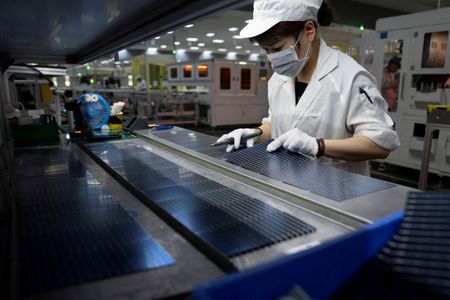
TOKYO – Gaming giant Nintendo announced Thursday that its latest Pokemon title, “Pokemon Pokopia,” has moved more than 2.2 million units during its first four days on the market, providing a boost to confidence surrounding the company’s upcoming Switch 2 console.
Gaming industry experts had expressed concerns that Nintendo’s next-generation system might struggle without major blockbuster titles to attract consumers, while rising memory chip costs have also raised questions about potential impacts on the company’s profit margins.
The recently launched life simulation title, which branches off from the traditional Pokemon franchise, has earned strong critical acclaim and currently holds an 89 rating on the review compilation site Metacritic.
Jefferies analyst Atul Goyal described the title as a “stealth hit” in his analysis for clients.
“Pokopia serves as a critical software catalyst, accelerating adoption for the … (Switch 2) hardware install base by capturing the lucrative non-gamer demographic,” Goyal explained in his report.
The company has previously found success appealing to broader audiences through titles like “Animal Crossing: New Horizons,” an island-based life simulation that became a popular escape for many players during the COVID-19 lockdown period.
Energy markets defied expectations Wednesday as crude oil prices surged 5% despite international authorities announcing the biggest strategic petroleum reserve release on record, sending ripple effects through financial markets nationwide.
The International Energy Agency’s decision to release 400 million barrels from global stockpiles failed to calm energy markets, as oil prices continued climbing amid ongoing supply concerns. This energy surge pushed two-year Treasury bond yields to their highest levels since September, creating headwinds for stock markets.
Wall Street finished the day predominantly in negative territory, with eight of the eleven S&P 500 sectors declining. Consumer staples led the losses, falling 1.3%, while energy stocks bucked the trend with a 2.5% gain. The Nasdaq managed a minimal positive close despite the broader market weakness.
Currency markets saw the dollar strengthen 0.4% against major trading partners, with the dollar-yen exchange rate approaching 159, its strongest position since January. This level has previously prompted intervention discussions between U.S. and Japanese monetary authorities.
Bond markets reflected the inflationary pressures from rising energy costs, with the 10-year Treasury yield climbing above 4.22% for the first time in a month. The two-year yield reached approximately 3.65%, marking its highest point since September.
Concerns about the $2 trillion private credit market continued mounting, with JPMorgan reportedly reducing valuations on loans to certain private credit funds. Major firms in this sector, including KKR, Apollo, and Blackstone, saw their stock prices decline 2-3%.
Individual stock movements included Oracle jumping 9% and Chevron rising 3%, while Visa and Boeing each dropped 1.7%. Precious metals struggled, with silver leading declines at 3%, and copper falling 1%.
Iran’s recent statements suggesting oil could reach $200 per barrel have added to market anxiety, despite the coordinated global response through strategic reserve releases. Energy analysts suggest the market reaction indicates supply concerns run deeper than initially anticipated.
Japan faces particular challenges as the yen weakens, given that the country imports 95% of its energy needs. The combination of safe-haven dollar demand and Japan’s energy dependency creates a complex situation for potential currency intervention.
Looking ahead, market participants will monitor Middle East developments, energy price movements, and upcoming economic data including U.S. jobless claims and trade figures. Federal Reserve officials are also scheduled to speak on banking regulations and capital requirements.
Investment management company Janus Henderson announced Wednesday that its board has rejected Victory Capital’s acquisition bid, determining the proposal does not outweigh an existing agreement with Trian and General Catalyst.
Victory Capital, headquartered in San Antonio, publicly announced its $8.6 billion acquisition offer last month, creating competition for Janus Henderson after the company had already accepted a $7.4 billion purchase agreement from Nelson Peltz’s Trian alongside General Catalyst.
According to Janus Henderson, Victory’s current offer cannot move forward due to “significant closing risk and uncertain value.”
The investment firm highlighted multiple concerns, particularly the challenge of securing the necessary 75% client approval rate required to finalize Victory’s proposed transaction.
“Some of our most important clients told us they would have significant reservations about maintaining their relationships with us if we moved forward with Victory Capital,” stated Janus CEO Ali Dibadj in an internal communication.
Victory Capital responded by claiming Janus Henderson failed to “engage substantively” with their offer.
“The issues cited by the Special Committee to support its decision could be addressed through substantive engagement, and Victory Capital remains fully committed to pursuing this compelling opportunity,” the company stated.
Market performance reflected the decision Wednesday, with Janus Henderson shares declining 0.6% while Victory Capital gained approximately 1.6%. Both stocks remained unchanged in after-hours trading.
Janus Henderson expressed additional concerns about Victory’s efficiency goals, warning that the proposed cost-reduction measures could disrupt operations, cause key personnel departures, and compromise regulatory compliance standards.
“We would not expect another party to enter the discussions, as that too would likely need to drive significant cost savings,” commented TD Cowen analyst Bill Katz.
“Whether VCTR looks to sweeten the offer or alter the funding mix remains to be seen, but given the risks addressed by JHG’s special committee, its advisors and the board, it would seem difficult for such a combination to arise.”
Janus Henderson noted that Trian, which controls 20.7% of company shares, has confirmed its intention to oppose Victory’s proposal and encourage other shareholders to do the same.
The company also pointed out that Victory Capital has not agreed to cover the $297 million penalty fee that would result from terminating the existing Trian-General Catalyst agreement.
Janus Henderson maintained its support for the Trian-led transaction and urged shareholders to approve the deal during the scheduled April meeting.
Energy Secretary Chris Wright announced Wednesday that America will tap into its emergency oil stockpile, releasing 172 million barrels in an effort to bring down soaring gas prices caused by the ongoing Middle East conflict.
The massive oil release comes as part of a coordinated international response, with the 32-member International Energy Agency agreeing earlier Wednesday to release a total of 400 million barrels globally.
According to Wright, the oil distribution will kick off next week and is expected to take approximately four months to complete.
Gas prices have skyrocketed since the U.S. and Israel launched military operations against Iran starting February 28. Iran has retaliated with strikes targeting Israel and Gulf nations that host American military installations.
The conflict has created significant economic uncertainty worldwide, particularly after Iran’s Islamic Revolutionary Guard Corps threatened to halt oil shipments through the Gulf region unless American and Israeli military actions stop. These threats have sent shockwaves through global financial markets.
When reporters asked President Donald Trump earlier Wednesday about potentially using the nation’s strategic oil reserves, he indicated the administration would “reduce it a little bit.”
Wright assured Americans that the country has plans to rebuild these emergency reserves, stating: “The United States has arranged to more than replace these strategic reserves with approximately 200 million barrels within the next year.”
SHANGHAI/HONG KONG – Chinese businesses are flocking to financial protection strategies to shield themselves from currency risks as a strengthening yuan has damaged exporter profits for months, with recent Middle Eastern conflicts adding to market instability.
This movement has reached unprecedented levels and sources indicate government officials are actively supporting the shift. Currently, short-term caution is pushing investors and companies toward the dollar, temporarily halting an 11-month yuan surge.
However, long-term hedging activities will strengthen the market, and the rush toward protection indicates a significant transformation as exporters reduce dollar holdings, potentially driving the yuan even higher as export activity flourishes.
Through forward contracts, which allow companies to lock in exchange rates ahead of time, businesses sold a record $39 billion worth of foreign currencies in January.
This came after record dollar sales to Chinese banks totaling $100 billion in December and $80 billion in January.
The pattern will likely persist as China’s exports jumped 22% during January and February, positioning the economy to exceed last year’s record $1.2 trillion trade surplus.
Chinese exporters, who earn dollars from overseas sales, traditionally retained most proceeds as investments, converting only necessary amounts to yuan for domestic expenses.
A climbing yuan creates difficulties: Their dollar reserves lose value. Consequently, they’ve been dumping dollars and increasing protection measures, which further pressures the yuan upward, encouraging additional dollar selling.
“We have seen a stark transformation in market participants’ view on the yuan over the past year,” said Lynn Song, chief economist for Greater China at ING in Hong Kong.
“Where overwhelmingly we had a strong yuan depreciation bias in the markets, (we now have) almost a consensus yuan appreciation bias,” he explained, noting this shift encourages hedging that strengthens yuan performance in immediate trading.
This creates a sensitive scenario for regulators trying to prevent one-sided markets, with two sources confirming authorities have urged both importers and exporters to reduce exposure through hedging.
Recently, trading activity has spiked with short-term options favoring the dollar. However, company interviews and public statements reveal increasing efforts to guard against yuan strength.
During recent months, foreign exchange regulators and the central bank have directed certain Chinese banks to promote hedging instruments and boost corporate hedging percentages, which would become part of regulatory assessments for lenders, according to two informed sources not authorized for public comment.
These unofficial directives, called window guidance, instructed some coastal province banks to raise client hedging ratios to approximately 40%, one source revealed. The national average stands at 30%, increasing eight percentage points since 2020, Li Bin, deputy head of the State Administration of Foreign Exchange (SAFE), announced at a January media briefing.
“We will continue to strengthen exchange-rate risk management services … supporting businesses in better focusing on their core operations and mitigating risks,” he stated.
People’s Bank of China Governor Pan Gongsheng informed reporters at the National People’s Congress last week that combined with 30% yuan usage in cross-border commerce, roughly 60% of trade “is relatively less affected by exchange-rate fluctuations.”
“This ratio is projected to increase further this year,” he noted. The PBOC declined comment when Reuters inquired, and SAFE didn’t immediately respond.
Financial losses provide strong motivation for companies caught holding dollars as the currency surrendered nearly 6% of its yuan value over 11 months.
Huizhou Sanchuang Technology, a Chinese cooling equipment manufacturer, has dramatically altered its approach from a year ago, deputy financial officer Michael Don explained. Previously, the company maintained cash reserves in Hong Kong investment products, earning returns as the dollar strengthened.
“Now, we settle the dollar receipts as soon as we get them,” he said.
Beijing Ultrapower Software blamed yuan strength for contributing to a 28% drop in its 2025 profits, according to company documents.
Suzhou Junchuang Auto Technologies attributed a 31% decline in annual earnings to the rising yuan; other companies reporting foreign exchange losses include robot manufacturer Ninebot, Shenzhen Hello Tech Energy, and Shenzhen Hui Chuang Da Technology.
In response, numerous firms have adopted forwards, options and swaps, explained Liu Wencai, founder of risk-management consultancy D-Union.
D-Union discovered that a record 1,409 publicly traded Chinese companies reported currency-risk hedging activities in 2025, up 13.5% from the previous year. Additionally, roughly 300 companies have already announced forex hedging strategies this year.
Foreign exchange risk hedging “would greatly improve corporate value and is more significant at a time when Chinese companies are ramping up overseas expansion,” Liu stated.
Certainly, Middle Eastern warfare has disrupted many projections. PBOC adjustments to forward reserve requirements have made dollar selling in forward markets slightly costlier, with both factors combining to stop yuan advances.
However, companies have accumulated approximately $1 trillion in domestic dollar deposits plus another $2 trillion in foreign dollar holdings, Soochow Securities estimates suggest. If even a small portion were hedged or brought home due to uncertainty, it would significantly alter China’s forex market flows.
A prominent American medical device manufacturer reported Wednesday that hackers infiltrated its computer systems worldwide, causing significant operational disruptions.
Stryker Corporation, headquartered in Portage, Michigan, released a statement on its corporate website addressing the security breach. “We have no indication of ransomware or malware and believe the incident is contained. Our teams are working rapidly to understand the impact of the attack on our systems,” the company announced.
According to The Wall Street Journal, Handala’s logo appeared on the company’s login screens. Handala is a cybercriminal organization with connections to Iran.
The company confirmed that the cyber intrusion specifically targeted its Microsoft software systems. Representatives did not respond to requests for further details.
The corporation produces various healthcare equipment ranging from prosthetic joints to medical beds and generated over $25 billion in revenue during 2025. Stryker employs approximately 56,000 workers globally.
Alexander Leslie, who serves as a senior adviser with Recorded Future, a threat intelligence firm, emphasized the significance of targeting such a company. He noted the “escalation in target choice and effect.”
“Attacking a high-profile U.S. health care manufacturer is exactly the kind of pressure point that creates outsized strategic and political ripple effects,” Leslie explained to The Associated Press.
SAN FRANCISCO — Tech giant Microsoft has joined forces with artificial intelligence company Anthropic in seeking federal court intervention to stop the Trump administration from classifying the AI firm as a supply chain security risk.
In court documents filed Tuesday, Microsoft is contesting Defense Secretary Pete Hegseth’s decision from last week that excluded Anthropic from Pentagon contracts by categorizing its artificial intelligence technology as a threat to national security.
The military’s move against Anthropic followed a highly visible disagreement over the company’s decision to restrict military applications of its Claude AI system. President Trump has also directed all federal departments to discontinue using Claude.
“Employing a supply chain risk classification to resolve a contractual disagreement could result in serious economic consequences that do not serve the public good,” Microsoft stated in its Tuesday court submission to the San Francisco federal courthouse, where Anthropic filed suit against the administration on Monday.
According to Microsoft’s legal documents, the Pentagon’s decision “compels government contractors to follow unclear and poorly defined orders that have never previously been used against an American business.”
The filing requests judicial intervention to temporarily suspend the classification, allowing for more “thoughtful dialogue.”
Pentagon officials refused to provide comment, citing their policy against discussing ongoing legal proceedings.
Microsoft has also expressed support for Anthropic’s two ethical boundaries that created friction during contract talks.
“Microsoft also believes that American AI should not be used to conduct domestic mass surveillance or start a war without human control,” the company stated. “This position is consistent with the law and broadly supported by American society, as the government acknowledges.”
BEIJING – The world’s largest automotive market experienced its most significant downturn in 24 months during February, as China’s total vehicle sales declined 15.4% compared to the previous year, according to new industry data released Wednesday.
The China Association of Automobile Manufacturers reported that domestic vehicle purchases dropped dramatically by 34.2%, reaching just 950,000 units sold within the country’s borders. However, international shipments provided a bright spot, surging 58% to reach 590,000 vehicles exported during the month.
Industry analysts point to the timing of Lunar New Year celebrations as a contributing factor to the sharp monthly fluctuations. The holiday period traditionally creates significant volatility in manufacturing and consumer spending patterns during the opening months of each year.
When examining the broader picture, combined domestic sales and international exports showed a 10.7% decrease across January and February together, indicating underlying challenges in the market beyond seasonal disruptions. Reduced government incentives have also created headwinds for consumer demand in recent months.
Stock markets across Asia posted solid gains Tuesday while investors closely monitored developments in the Iran conflict for indications of when hostilities might conclude.
U.S. market futures and crude oil prices both moved upward during trading.
Japan’s Nikkei 225 index climbed 2.1% to reach 55,387.75, while South Korea’s Kospi jumped dramatically by 3.5% to 5,724.30.
Hong Kong’s Hang Seng index posted a modest 0.3% increase to 26,039.23, and China’s Shanghai Composite index edged up slightly by 0.1% to 4,127.34.
Australia’s S&P/ASX 200 increased 0.5% to $8,738.50.
Taiwan’s main stock index surged 3.9%.
Meanwhile, U.S. markets showed mixed results Tuesday, with the S&P 500 declining 0.2% to 6,781.48, following a day of dramatic fluctuations driven by extreme oil market movements. The Dow Jones Industrial Average dropped 34 points, or 0.1%, closing at 47,706.51, while the Nasdaq composite managed a slight gain of less than 0.1% to 22,697.10.
Crude oil prices continued trading well below Monday’s peak levels. These dramatic price swings have created turbulence in financial markets globally due to concerns that the conflict might disrupt international oil and natural gas supplies for an extended period.
In early Wednesday trading, Brent crude oil, which serves as the international benchmark, increased 9 cents to $85.36 per barrel. This represents an 11% decline from the previous day’s closing price.
U.S. benchmark crude gained 36 cents to reach $83.81 per barrel.
Oil markets experienced a dramatic drop Monday afternoon from nearly $120 per barrel, the highest price point since 2022, following President Donald Trump’s comments to CBS News that he believes “the war is very complete, pretty much.” These remarks sparked optimism that the conflict could end soon, potentially restoring normal oil shipments from Middle Eastern producers to global customers.
Despite this, tensions have escalated as the conflict enters its 11th day. U.S. Defense Secretary Pete Hegseth announced plans for the most aggressive strikes to date, while Pentagon officials provided details about the expanding number of injuries among American military personnel.
American forces reported destroying more than a dozen Iranian mine-laying vessels Tuesday, prompting Iran to threaten a complete blockade of regional oil exports, declaring it would prevent “even a single liter” from reaching enemy nations.
President Trump has consistently emphasized his commitment to maintaining access through the Strait of Hormuz. The ongoing conflict has effectively shut down this critical waterway along Iran’s coastline, through which approximately 20% of global oil typically passes daily.
“If Iran does anything that stops the flow of Oil within the Strait of Hormuz, they will be hit by the United States of America TWENTY TIMES HARDER than they have been hit thus far,” Trump wrote on his social media platform late Monday.
Historical data shows stock markets typically recover fairly quickly from military conflicts, provided oil prices don’t remain elevated for extended periods. Uncertainty about the duration of current price levels has caused dramatic market volatility worldwide, with significant fluctuations occurring even within single trading sessions.
Extended high oil prices could severely impact household budgets already strained by inflation. Businesses would face increased costs for fuel and inventory transportation to retail locations and distribution centers. This scenario raises concerns about “stagflation,” an economic condition combining stagnant growth with persistent high inflation.
In currency markets early Wednesday, the dollar strengthened to 158.26 Japanese yen from 158.23 yen. The euro gained ground against the dollar, rising to $1.1625 from $1.1610.
HONOLULU (AP) — Visitors to Hawaii might be surprised to learn that the vibrant purple lei they received as a welcome gift likely contains flowers that never grew on Hawaiian soil.
The majority of these scentless orchid garlands are crafted using blooms shipped from Thailand, where cultivation and assembly costs are significantly lower than producing the flower necklaces that have become emblematic of Hawaiian heritage.
Several Hawaii state legislators believe more should be done to support makers of lei using locally cultivated, aromatic flowers. Proposed solutions include mandatory labeling that would distinguish Hawaii-produced garlands and banning government agencies from purchasing foreign-made lei, although some vendors express concern these regulations could price the garlands beyond reach.
“You don’t come to Hawaii and not at least have a flower or a lei,” explained Kuhio Lewis, CEO of the Hawaiian Council, a nonprofit organization dedicated to advancing Native Hawaiian culture and commerce. “For us to now be importing is not good. It’s actually embarrassing.”
The tradition of presenting and wearing lei crafted from flowers, foliage, seeds or shells has long been connected to Hawaiian people, who view these garlands as symbols of affection or the “aloha” spirit. According to a 2002 University of Hawaii publication, they served not only ceremonial purposes but were part of daily attire for everyone from tribal leaders to young children.
Currently, Hawaii residents exchange lei for numerous occasions, from birthday parties to job promotions. Graduating students from elementary through college levels receive lei stacked so high they nearly obscure their faces behind towering walls of blossoms. Legislative session opening days see lawmakers experience similar floral coverage. Expectant mothers receive open-ended strands instead of closed loops, following a belief that circular lei symbolize umbilical cords endangering unborn babies.
“We always are looking for ways that we can honor people through our Indigenous cultures, which is giving lei,” stated state Rep. Darius Kila, who is Native Hawaiian.
Given lei-giving’s deep roots in Hawaiian society, legislators frequently purchase and distribute them — during groundbreaking ceremonies, to recognize community members or volunteers, or for staff birthday celebrations.
This year, Kila championed legislation requested by the Hawaiian Council that would have mandated a specific portion of lei bought by state officials contain in-state grown flowers. The proposal also called for lei labeling informing buyers about flower origins.
While that legislation didn’t pass, a companion Senate measure continues advancing. It would establish a working committee to examine whether local flower producers and lei creators can satisfy growing garland demand, while developing recommendations to safeguard the domestic industry.
“The growing commercialization of lei and lei materials has led to increased use of imported plant materials and manufactured components that are marketed using Hawaiian language, imagery, and place names,” the Senate legislation declares. This practice “may mislead consumers and undermine local growers, lei makers, and cultural practitioners.”
When Hawaii’s population and visitor numbers surged during the 1900s, lei manufacturers began incorporating non-indigenous ornamental plants like carnations and jasmine to satisfy escalating demand, and these varieties remain widely popular today.
Kila, a Democratic representative from western Oahu, maintains a personal policy for himself and his team: “I really try not for us to give out orchid lei, specifically the purple Thailand orchid lei.”
During a recent lei shopping trip through Honolulu’s Chinatown, where numerous lei vendors and flower retailers cluster together, Kila searched for puakenikeni — nicknamed the “10-cent flower,” allegedly referencing times when lei sold for ten cents — along with ginger and tuberose varieties. These non-native blossoms produce varying intensities of jasmine-scented sweetness.
“People want pikake” — a jasmine variety, noted Francis Wong, proprietor of the established Chinatown business Jenny’s Lei and Flowers. “That’s the top flower in Hawaii.”
Wong typically obtains the fragrant white blossoms from a Nanakuli farm, close to Kila’s community. However, winter months bring seasonal supply shortages, he mentioned.
Wong and his spouse Pickoun Wong, who assembles flowers in the shop’s rear area, have operated the business for 18 years. They offer Thailand orchids to provide customers more affordable alternatives, particularly when local flower availability is restricted.
Local residents consistently choose local flowers, according to Monty Pereira, general manager at Watanabe Floral. However, imported blooms help extend scarce local inventory, he noted. One favored lei combines Hawaii-grown tuberose with imported carnations.
The Thailand-cultivated orchids also satisfy lei demand beyond Hawaii, frequently from former residents now living in other states, he added.
Watanabe Floral ranks as Hawaii’s largest florist operation. It distributes approximately 250,000 lei annually, representing roughly 25% of total business volume, Pereira reported.
He filed testimony opposing Kila’s proposed state agency purchasing restrictions, arguing it might inadvertently decrease overall lei consumption rather than bolster the industry.
Limiting imported flowers could inflate lei prices, he explained during an interview.
“If like 30 lei stands and florists are fighting for the same lei, that’s when lei is going to start to be $100, $150, $200,” he warned. During the previous Mother’s Day, a three-strand pikake lei commanded $150.
Additionally, Trump administration tariffs have raised Thailand orchid costs to nearly match some local flower prices, he observed.
Pereira, who is Native Hawaiian, expresses concern about people increasingly choosing lei made from candy or ribbons instead of flowers, a trend particularly common at graduation events.
“The bigger threat is making it so expensive that the people of Hawaii cannot afford to enjoy something that’s culturally significant to us,” he concluded.
WASHINGTON — Consumer costs are expected to climb significantly in the coming months, driven by recent dramatic increases in fuel prices that economists say will push inflation well beyond February’s relatively modest projections.
The Labor Department is set to release February inflation data Wednesday, with economists surveyed by FactSet predicting a 2.5% annual increase in consumer prices, up slightly from January’s 2.4%. Core inflation, which strips out volatile food and energy costs, is also forecast at 2.5% for February, matching January’s five-year low.
However, these numbers reflect conditions before the Iran conflict that began February 28, which has disrupted shipping through the Persian Gulf and caused dramatic swings in oil markets. Fuel costs have already surged and are anticipated to drive inflation substantially higher when March data becomes available next month.
The price increases will concern Federal Reserve officials focused on controlling inflation and may dampen consumer spending while weighing on economic growth overall. While the surge could prove temporary if the conflict resolves quickly as President Donald Trump has suggested, rising gas costs threaten to worsen inflation for several months as Americans continue struggling with nearly five years of persistently high prices that have made affordability a challenging political issue for congressional Republicans facing midterm elections this year.
Crude oil reached nearly $120 per barrel late Sunday before dropping Monday after Trump indicated the conflict would be a “short-term excursion.” However, he has also warned of continued attacks, leaving the timeline for resolution unclear.
Energy analysts caution prices could climb much higher if the Strait of Hormuz stays blocked, which has eliminated approximately three-quarters of Persian Gulf oil production from global markets, according to Wood Mackenzie energy analytics. The firm projects oil could hit $150 per barrel in coming weeks if shipments don’t restart.
Such increases would further elevate U.S. gas prices, which reached a nationwide average of $3.54 per gallon Tuesday according to AAA, representing roughly a 20% jump in just one month.
Eventually, higher fuel costs will increase other expenses including airfares and shipping charges, potentially making groceries and restaurant meals more costly.
Meanwhile, given oil price volatility — U.S. crude fell nearly 9% to $86.55 Tuesday afternoon — forecasting the long-term impact remains challenging. If shipping resumes within a week or so, gas prices will likely decrease fairly quickly, though they typically drop much more gradually than they rise.
Laura Rosner-Warburton, senior economist at MacroPolicy Perspectives consulting firm, anticipates inflation could surge 0.8% to 0.9% in March alone compared to the previous month when that data is released. This would mark the largest monthly increase in nearly four years, potentially pushing annual inflation above 3% and possibly approaching 4% in subsequent months.
In contrast, overall prices are projected to rise just 0.3% in February from the prior month.
The gas price jump so far this month represents the steepest increase since March 2022, and before that, June 2009, Rosner-Warburton noted.
“That is enormous,” she said. “Increases of that magnitude are highly unusual.”
Core prices will face less immediate impact this month but could edge higher over time as expensive fuel drives up airline tickets and other transportation expenses. Core inflation is expected to have risen 0.3% in February from January.
Even if the sharp increase proves brief, it will almost certainly postpone any Federal Reserve interest rate reduction when policymakers meet next week. The Fed lowered its benchmark rate three times last year before keeping it steady at January’s meeting.
Fed officials remain deeply split over whether maintaining the current 3.6% rate is necessary to bring inflation closer to the 2% target, or if they should lower rates to encourage borrowing, spending, and job creation.
Last Friday’s government employment report showed an unexpectedly steep job decline in February, with employers cutting 92,000 positions and unemployment rising to 4.4% from 4.3%, though still remaining relatively low.
The disappointing jobs data creates a particularly challenging situation for the Fed, which would typically lower rates to stimulate growth and hiring but usually raises rates — or maintains current levels — when inflation concerns arise.
“That’s always the worst-case scenario for the central bank,” said Austan Goolsbee, president of the Federal Reserve Bank of Chicago, on Bloomberg Friday. “As we get more uncertainties, I kind of think that the time at which it makes sense to act keeps getting pushed back.”
Gregory Daco, chief economist at EY-Parthenon consulting firm, explained that normally the Fed would view an oil price shock as having only temporary inflation effects and might still reduce rates if the economy needed lower borrowing costs.
However, Fed policymakers were stung several years ago when they initially characterized the post-COVID inflation surge of 2022-23 — the worst in four decades — as temporary, Daco said. Consequently, they will hesitate to risk cutting rates too early. Some officials even suggested during January’s meeting they might need to raise rates soon rather than lower them, according to meeting minutes — and that was before the Iran conflict began.
Currency traders adopted a wait-and-see approach Wednesday as the U.S. dollar maintained stability amid ongoing uncertainty about the escalating conflict involving the United States, Israel and Iran.
Financial markets had initially anticipated that President Donald Trump might work toward a quick end to the hostilities, though Trump has simultaneously issued strong warnings about striking Iran if it interferes with energy shipments through the critical Strait of Hormuz waterway.
The American currency had strengthened significantly during the conflict’s early days as oil prices climbed, but has since retreated somewhat on speculation the crisis might resolve quickly. However, market experts doubt such an outcome.
“We expect the war to run for months, not weeks, while acknowledging the high level of uncertainty,” said Kristina Clifton, senior currency strategist at Commonwealth Bank of Australia.
Tuesday saw what both Pentagon officials and Iranian sources described as the most devastating air attacks since fighting began, with U.S. and Israeli forces conducting intensive strikes against Iranian targets.
Escalating tensions further, Iran’s Islamic Revolutionary Guard Corps threatened to halt Gulf oil shipments unless American and Israeli military operations stop immediately.
These rapidly changing Middle Eastern developments have created challenges for traders attempting to accurately assess market risks, leading many to pause their activities temporarily.
“Traders are largely sitting on their hands and waiting for further news and greater clarity so that risk can be priced more efficiently,” said Chris Weston, head of research at Pepperstone.
During early Asian trading, the euro traded at $1.16205, showing modest improvement from Monday’s three-month low. The British pound gained 0.12% to reach $1.34305.
The dollar index, tracking the U.S. currency against six major competitors, registered 98.876, moving slightly away from Monday’s three-month peak.
Australia’s dollar, considered sensitive to global risk sentiment, remained near Tuesday’s nearly four-year high at $0.713.
The Australian currency’s strength followed Reserve Bank of Australia Deputy Governor Andrew Hauser’s Tuesday warning that rising oil costs would increase inflation pressures and potentially trigger interest rate increases at next week’s policy meeting.
“The war in the Middle East has had some large impacts on expectations for central bank interest rates,” CBA’s Clifton said. “Since the war began at the end of February markets have either moved from pricing cuts to pricing hikes, or to pricing less cuts than previously.”

Federal Reserve futures markets now anticipate only 39.7 basis points of rate reductions by year’s end, suggesting uncertainty about whether the central bank will implement a second quarter-point cut in 2024.
Market attention will focus on Wednesday’s February U.S. inflation report, with economists surveyed by Reuters predicting core consumer prices increased 0.2% monthly while overall prices rose 0.3%.
The Wall Street Journal reported Tuesday that the International Energy Agency has proposed its largest-ever strategic oil reserve release to counter crude price increases driven by the Middle Eastern conflict.
Major technology corporations are abandoning their traditional approach of using cash reserves, instead turning to bond markets to secure funding for massive artificial intelligence infrastructure projects, according to industry reports released March 10.
Investment in AI technology is set to skyrocket from $410 billion in 2025 to more than $600 billion by 2026, raising concerns about a potential AI investment bubble among market watchers.
Bridgewater Associates warned last month that the AI investment surge has moved into a “more dangerous phase,” characterized by exponentially increasing infrastructure investments and greater dependence on external financing.
Amazon leads the charge with plans to secure approximately $37 billion through an 11-part bond offering, specifically targeting AI infrastructure development. The retail giant’s bond sale generated remarkable investor interest, attracting roughly $126 billion in peak demand across U.S. markets. This follows Amazon’s November initiative to raise $15 billion in its first U.S. dollar bond sale in three years, which drew $80 billion in investor demand. Amazon currently maintains $105.03 billion in outstanding debt against $86.81 billion in cash reserves, with a $2.75 billion bond payment scheduled for May 12, 2026.

Cloud software company Salesforce is preparing to issue up to $25 billion in debt to support a significant share repurchase program, according to Bloomberg News reports citing industry sources. The company holds $8.50 billion in outstanding debt compared to $7.33 billion in cash, with its next major payment of $1.50 billion due April 11, 2028.
Oracle announced in February its intention to raise between $45 billion and $50 billion in 2026 through combined debt and equity offerings to expand cloud infrastructure capacity. The database company faces legal challenges from bondholders who filed suit in January, alleging Oracle failed to properly disclose its need for substantial additional debt to fund AI infrastructure development. Oracle, led by Chairman Larry Ellison, previously filed for approximately $18 billion in debt through a six-part offering in September 2025. The company carries $131.25 billion in outstanding debt while holding $38.46 billion in cash, with a $2.75 billion payment due March 25, 2026.
Google’s parent company Alphabet made headlines in February by issuing an unusual 100-year bond worth 1 billion pounds ($1.35 billion) as part of a comprehensive $31.51 billion global debt raising effort. The company sold 5.5 billion pounds in sterling bonds across five separate offerings. Previously, Alphabet filed in November to raise $17.50 billion in U.S. debt and 6.5 billion euros ($7.58 billion) in European markets for general corporate purposes, including existing debt payments. Alphabet maintains $80.21 billion in outstanding debt against $30.71 billion in cash, with a $2 billion payment scheduled for August 15, 2026.
Telecommunications provider Verizon filed in November to raise approximately $11 billion in corporate bonds to help finance its $20 billion acquisition of fiber-optic internet provider Frontier Communications, which completed in January. Verizon carries the highest debt load at $149.02 billion outstanding against $19.05 billion in cash reserves, with a $205.66 million payment due March 20, 2026.
Facebook owner Meta Platforms filed for its largest bond offering in company history last October, seeking up to $30 billion to fund expensive AI infrastructure expansion. Meta faces substantial cost pressures from AI investments, increasing its capital spending plans by 73% this year to deliver personalized AI services to its extensive social media user base. The company holds $59 billion in outstanding debt compared to $35.87 billion in cash, with a $2.66 billion payment scheduled for August 15, 2027.
Swiss banking giant UBS appeared before a federal judge in Brooklyn Tuesday, seeking protection from potential Holocaust-related lawsuits stemming from newly discovered Nazi connections at Credit Suisse, the bank it acquired last year.
UBS attorney David Burns requested that U.S. District Judge Edward Korman issue a “clarifying order” confirming that a massive $1.25 billion settlement from 1999 encompasses “all claims, past, present and future” connected to the Holocaust, World War Two, and related events.
The 1999 agreement resulted in payments to more than 458,000 Holocaust survivors and their families through Credit Suisse, according to legal documents. UBS purchased Credit Suisse in a Swiss government-orchestrated bailout during 2023.
The current legal dispute emerged after a 2020 investigation into Credit Suisse revealed fresh evidence of the bank’s Nazi connections, including 890 accounts potentially linked to Nazi organizations. Judge Korman has not announced when he will make his decision.
During the lengthy 2-hour and 15-minute hearing, Burns argued that the Simon Wiesenthal Center, a prominent Jewish human rights organization, should be barred from challenging the existing settlement, stirring up public debate about it, or pursuing fresh legal action based on newly surfaced information regarding Credit Suisse’s Nazi relationships.
“The Wiesenthal Center has from the outset made the very public and private claim that Nazi assets are not part of the settlement, and has threatened litigation,” Burns stated. He emphasized that UBS sought “complete closure.”
However, Faith Gay, representing the Wiesenthal Center that had previously supported the 1999 agreement, pushed back against UBS’s request for what she characterized as an advisory ruling that “expands and reinterprets” the settlement by dismissing claims “as broad as the Grand Canyon.” Gay maintained her client has made no litigation threats.
“There’s nothing for you to decide,” Gay informed the judge who had originally supervised the settlement. “And yet they’ve given us this proposed order that binds all parties.”
Gay further alleged that UBS was attempting to suppress her client’s constitutional right to free speech by silencing criticism of the settlement’s validity, comparing it to “putting a sock in Simon Wiesenthal’s mouth.”
Part of the disagreement centers on UBS’s refusal to provide approximately 150 documents requested by investigator Neil Barofsky, which the bank claims fall under attorney-client privilege protection.
UBS has already provided 16.5 million documents to Barofsky and indicated willingness to release the contested materials if Korman grants the requested clarifying order.
Barofsky’s investigation is scheduled for completion this year.
Judge Korman noted that Nazi assets were not discussed during the original 1999 settlement talks, as he recalled. He urged both legal teams to negotiate over which documents could be released.
The U.S. Senate Judiciary Committee recently examined details from Barofsky’s investigation during hearings last month.
Committee Chairman Senator Charles Grassley, a Republican, revealed to reporters that the 890 questionable accounts belonged to entities including the German Foreign Office, which coordinated Jewish deportations to concentration camps, along with the SS paramilitary force and a German weapons manufacturer.
Both UBS and Credit Suisse have issued public apologies for their involvement in Holocaust-era activities.
DOVER, DE (March 10, 2026) – Delaware insurance officials are stepping forward to clear up confusion among homeowners who worry that ongoing property reassessments across the state will lead to higher insurance bills.
The state’s Department of Insurance, along with its Consumer Services & Investigation division, is launching an educational effort to inform residents that property value reassessments have no direct connection to homeowners insurance premium calculations.
According to state officials, numerous Delaware residents have reached out with concerns that the statewide reassessment process currently underway will automatically trigger increases in their annual insurance costs.
The department’s advisory aims to explain the actual factors that insurance companies use when determining premium rates for homeowners policies.
February brought encouraging news for the housing market as buyers responded to declining mortgage rates and a small uptick in available properties, driving up home sales as the spring buying season approached.
The National Association of Realtors reported Tuesday that sales of existing homes climbed 1.7% in February compared to January, reaching a seasonally adjusted annual rate of 4.09 million units.
While sales dropped 1.4% compared to the same month last year, with all regions except the South showing year-over-year declines, the February figure exceeded economists’ projections of 3.84 million units, according to FactSet.
“Good momentum, but nonetheless sales are still below one year ago,” Lawrence Yun, NAR’s chief economist, said during a conference call.
Housing prices maintained their upward trajectory last month, though at a more moderate pace. The nationwide median home price reached $398,000 in February, marking a 0.3% increase from the previous year and setting a new February record since data collection began in 1999. This extends the streak of annual price increases to 32 consecutive months.
February’s performance represents a recovery from January’s disappointing results, when existing home sales experienced their steepest monthly drop in nearly four years and hit their slowest annual pace in over two years, though NAR later revised January’s numbers slightly upward.
The housing sector has struggled since 2022, when borrowing costs started climbing from their pandemic-era lows. Last year, sales of existing homes remained at three-decade lows.
Since 2023, sales activity has consistently hovered near the 4-million annual rate, falling significantly short of the historical average of 5.2 million annually.
Rapid price appreciation, particularly in recent years, combined with a nationwide housing shortage worsened by years of insufficient construction, has pushed homeownership beyond reach for many potential buyers.
Meanwhile, decreasing mortgage rates have enhanced buying power for those who can afford current market conditions.
Two weeks ago, the average 30-year mortgage rate fell just below 6% for the first time since late 2022, according to mortgage buyer Freddie Mac.
First-time homebuyers particularly benefited from the rate decline last month, representing 34% of all February purchases and matching the highest percentage seen in five years, Yun noted.
However, the 10-year Treasury yield, which influences mortgage pricing, has increased following oil price spikes since the Iran conflict began, potentially pushing borrowing costs higher as spring buying season arrives.
“Despite mortgage rates falling below 6% briefly, international conflict has sent them higher in recent days,” Lisa Sturtevant, chief economist at Bright MLS, said in an email. “If the conflict with Iran is limited, the housing market could rebound quickly. However, a prolonged conflict could stall home sales activity this spring.”
Affordability continues challenging many prospective homeowners, particularly first-time buyers lacking existing home equity for new purchases. Economic uncertainty and signs of labor market weakness are also keeping potential buyers hesitant, economists note.
Those able to purchase are finding more options available, though inventory remains well below historical standards.
Unsold homes totaled 1.29 million at February’s end, representing a 2.4% increase from January and 4.9% growth from the previous February, NAR reported. This still falls far short of the approximately 2 million homes typically available before the COVID-19 pandemic.
February’s inventory equals a 3.8-month supply at current sales rates. A balanced market between buyers and sellers traditionally requires 5 to 6 months of supply.
“We really do need more inventory to show up,” Yun said, warning that insufficient spring inventory combined with increased buyer activity could drive prices higher.
Tourism officials in Ocean City, Maryland are rolling out an innovative social media campaign designed to showcase what makes their coastal destination special.
The new video series, titled “Only in Ocean City,” will make its debut on Friday, April 3rd, according to an announcement made March 10th by Ocean City Tourism officials.
The campaign aims to capture the distinctive experiences, seaside appeal, and unique attractions that set the popular Maryland beach resort apart from other coastal destinations along the East Coast.
Officials say the series will focus on highlighting unexpected adventures and the special character that draws visitors to the oceanfront community year after year.
NEW YORK — Oil prices soared past $110 per barrel on Monday, marking the highest levels witnessed since 2022, as the ongoing conflict involving Iran continues to disrupt global energy markets and impact Delaware consumers.
Delaware drivers are experiencing immediate financial pressure as fuel costs rise at service stations across the state.
However, the impact extends far beyond vehicle owners. Virtually every product purchased by consumers — from groceries to household items — requires transportation from manufacturing locations. These shipping expenses will increase alongside rising gasoline, diesel, and aviation fuel costs.
The oil price surge is expected to become a major contributor to U.S. inflation rates. Industry analysts warn that if the military conflict persists, the cost of virtually all consumer products could rise.
“The longer this lasts, the more significant the shock would be,” stated Gregory Daco, chief economist at consulting firm EY-Parthenon.
The following details explain how escalating oil and gasoline expenses may affect Delaware consumers while the conflict continues.
Crude oil serves as the raw material for gasoline, diesel, and aviation fuel production. When crude prices increase, the cost of these essential fuels that power vehicles, equipment, buses, delivery vehicles, and aircraft also rises.
Throughout the United States, motorists paid an average of $3.48 per gallon for regular gasoline on Monday, compared to $2.98 before hostilities commenced. Fuel prices have jumped approximately 17% since the U.S. and Israel launched attacks against Iran.
Regional variations exist across different states. California drivers faced $5.20 per gallon, representing a 12% increase from the previous week. Several California refineries have ceased operations in recent years, forcing the large state to import gasoline and other refined petroleum products from Asian markets.
In contrast, Louisiana’s average price reached $3.04, benefiting from local oil production and refining facilities.
The current oil price increase will likely drive gasoline costs even higher, with Asia and Europe potentially experiencing more severe impacts due to their greater reliance on Middle Eastern oil and natural gas compared to the United States.
Diesel fuel prices — which power large commercial trucks — also climbed on Monday to $4.65 per gallon nationally, representing a 23% increase since the war began.
“Can’t underscore what a massive jolt this is to the logistics, trucking, (agriculture) sectors,” wrote Patrick De Haan, a petroleum analyst at GasBuddy, on X Monday.
The practical shutdown of the Strait of Hormuz, the critical waterway transporting one-fifth of global crude oil and liquified natural gas, has already created shipping industry challenges. Rapidly increasing oil and gas prices will compound these difficulties.
According to Patrick Penfield, professor of supply chain practice at Syracuse University, fuel expenses represent 50% to 60% of total shipping operation costs, meaning higher fuel prices significantly impact the entire industry.
“When fuel prices start to go up, everything starts to slow down,” Penfield explained. “So your ships slow down, your trucks slow down. People are less apt to ship things via air. And it really kind of causes a drag on the economy when fuel price go up.”
Fuel surcharges will also increase as shipping companies attempt to transfer higher expenses to customers, ultimately raising product prices for consumers.
Home heating and cooking expenses using natural gas will likely increase as the military conflict continues.
Europe’s benchmark natural gas prices have risen 75% since the war started, based on Intercontinental Exchange data.
This could also impact costs for products manufactured from natural gas, including petrochemical feedstock used in plastic and rubber production, as well as nitrogen fertilizer.
The oil price spike probably won’t immediately affect U.S. grocery store prices, according to David Ortega, a professor of food economics and policy at Michigan State University. However, if oil prices stay elevated for a month or longer, he noted, “we’re in different territory.”
Rising oil prices impact agriculture through two mechanisms, Ortega explained. They increase input costs including fuel for farming equipment and fertilizer derived from natural gas. They also boost demand for soybean oil, palm oil, and other vegetable oils that serve as petroleum-based fuel alternatives.
However, Ortega noted that farm production costs represent only a small portion of supermarket prices. Processing and food transportation, which require substantial energy, account for larger shares.
“Food gets to the grocery store on diesel, whether it’s on a truck or on a boat,” Ortega said.
If oil prices remain high, fresh foods requiring rapid transportation could experience price increases more quickly than packaged foods with longer shelf lives, Ortega predicted.
With U.S. oil prices climbing roughly 42% from pre-war levels — reaching approximately $95 per barrel from about $67 before the conflict — JPMorgan economists roughly estimate this could increase U.S. inflation from 2.4% in January to 3% or higher in upcoming months.
EY-Parthenon economist Daco estimated that rising gas prices could drive monthly inflation as high as 1% in March, which would represent the largest monthly increase in four years. Annual inflation would approach 3% under this scenario.
“That’s a significant shock in and of itself,” Daco stated.
Mark Mathews, chief economist and executive director of research at the National Retail Federation, indicated that higher gas prices would likely impact consumer spending, particularly affecting lower-income shoppers.
U.S. households spend an average of $2,500 annually, or nearly $50 weekly, on gasoline, he noted. If consumers pay an additional $10 per week, their budgets face definite strain.
“How do they offset that?” he questioned. “Going out to a movie theater or going to a theme park or going out to eat — all those areas would be … more likely see cuts.”
Mathews anticipates that retailers will absorb increased transportation costs temporarily — similar to their approach with higher tariffs — before raising prices.
Italian Finance Minister Giancarlo Giorgetti cautioned against transferring higher energy costs to consumers, referencing lessons from Russia’s Ukraine invasion.
“We must act immediately to stop energy prices from spreading to all consumer goods, as happened in 2022,” he stated during a Monday G7 meeting in Brussels, according to his office’s statement.
Ed Anderson, a professor of supply chain and operations management for the McCombs School of Business at the University of Texas, indicated that shipping companies won’t immediately transfer costs to customers.
“If the conflict is only in the short run, companies will eat it,” he said.

A major Swiss robotics company announced Monday it has joined forces with technology giant Nvidia to bridge the performance gap between virtual robot training and real-world factory operations.
ABB’s robotics division will leverage Nvidia’s Omniverse simulation technology to create more lifelike training environments for industrial robots. The enhanced virtual settings will include realistic elements like proper lighting effects, accurate shadows, and detailed surface textures.
According to Marc Segura, who leads ABB Robotics as president, the collaboration will deliver significant benefits to manufacturers. “This will save companies a lot of time and money,” Segura stated.
The partnership represents an effort to address the longstanding challenge of ensuring robots trained in computer simulations can perform equally well when deployed on actual production lines.
Financial markets opened the week under heavy pressure Monday as U.S. stock futures declined sharply by more than 1%, driven by escalating Middle East tensions that sent crude oil prices skyrocketing.
Energy markets saw dramatic movement with crude oil jumping over 25% to approach $120 per barrel, while investors flocked to the safety of the U.S. dollar. The dramatic rise in energy costs has intensified concerns that the Federal Reserve may need to keep interest rates higher for an extended period, pushing the 10-year Treasury yield to its highest level in over a month.
Political developments in Iran added to market uncertainty as the country announced Monday that Mojtaba Khamenei would succeed his father Ali Khamenei as supreme leader, signaling that hardline factions maintain their grip on power in Tehran.
The military conflict between the U.S.-Israel alliance and Iran has now stretched into its tenth day with no signs of de-escalation, as missile and drone strikes continue to impact the broader region.
An extended Middle East conflict poses significant risks to global energy distribution networks and could undermine worldwide economic growth during an already vulnerable period for the American economy.
Market anxiety reached elevated levels as the Cboe Volatility Index, commonly known as Wall Street’s fear gauge, surged 5.16 points to 34.62, marking its highest reading since April 2025.
Economic data has already unsettled investors after February’s surprising job losses and rising unemployment figures. Combined with soaring energy prices, these developments could place the Federal Reserve in a challenging position regarding future rate adjustments.
This week brings several critical economic reports that could shape market direction. Wednesday will deliver inflation statistics, followed by unemployment claims data, job openings figures, personal consumption expenditure numbers – the Fed’s preferred inflation metric – and revised quarterly GDP estimates.
The Federal Reserve’s upcoming rate decision on March 18 has markets nearly certain that policymakers will maintain current interest rate levels.
Pre-market trading at 3:13 a.m. ET showed significant declines across major indices: Dow E-minis fell 863 points or 1.82%, S&P 500 E-minis dropped 108.5 points or 1.61%, and Nasdaq 100 E-minis declined 407 points or 1.65%.
Small-cap stocks faced even steeper losses with Russell 2000 futures down 3.1%.
The previous week already delivered disappointing results for major indices. The Dow Jones Industrial Average fell 0.95%, recording its worst weekly performance since early April 2025. The S&P 500 declined 1.33% for its poorest week since mid-October, while the Russell 2000 suffered its largest weekly drop since early August. The Nasdaq Composite finished Friday’s session down 1.59%.
MADRID, March 9 – The sports investment division of American fund Apollo is set to complete its purchase of a majority stake in Spanish soccer club Atletico Madrid this Tuesday, March 12, according to a report from Spanish business publication Expansion citing industry sources.
Apollo Sports Capital will acquire 55% ownership of the prominent European football team, making the U.S. firm the controlling shareholder of the Madrid-based club.
The investment agreement was originally announced in November, with industry sources indicating the transaction values the entire soccer organization at roughly 2.5 billion euros, equivalent to approximately $2.88 billion.
When contacted for verification, representatives from both Apollo and Atletico Madrid have not yet provided responses to requests for comment on the pending transaction.
Asian financial markets experienced devastating losses on Wednesday as escalating tensions in the Middle East sent shockwaves through global trading centers, with South Korea bearing the brunt of investor panic.
The South Korean Kospi index crashed 12% in what marked the exchange’s most catastrophic single-day performance in history. Meanwhile, Japan’s Nikkei and Taiwan’s primary stock gauge each dropped approximately 4% as the crisis spread across the region.
The Korean currency plummeted to its weakest position in nearly two decades, while Seoul and multiple other Asian trading hubs were compelled to halt operations intermittently due to the severity of the market rout.
Manufacturing powerhouses throughout Asia face significant vulnerability to energy imports from Middle Eastern nations, making both the price increases and supply disruptions particularly concerning for these economies.
Despite the Asian turmoil, other global markets showed signs of stabilization as investors paused to assess developments. U.S. and international Brent crude prices climbed an additional 3%, though they remained below Tuesday’s peaks of 8 months and 19 months respectively.
European equities gained roughly 0.5% in what appeared to be a temporary respite following two consecutive days of substantial declines. American stock futures also edged slightly higher, while the dollar’s recent surge leveled off, even as government bond yields continued their upward trajectory.
Precious metals, including gold, which surprisingly declined during this week’s geopolitical turmoil, recovered some ground Wednesday as the urgent demand for cash subsided.
President Trump revealed initiatives to offer shipping insurance and potential naval protection for energy shipments departing the effectively blockaded Gulf region. While these measures may provide marginal relief, their implementation could require considerable time to generate meaningful results. Global markets questioning when energy supply disruptions will end are now considering timelines measured in weeks rather than days.
The Iranian conflict and broader regional instability remain highly unpredictable. Market attention has shifted to succession plans for Supreme Leader following Ayatollah Ali Khamenei’s death last weekend. Some investors found encouragement in a New York Times report indicating Tehran officials secretly contacted Washington over the weekend regarding potential conflict resolution.
However, investors hoping for calm seas once Gulf tensions subside face numerous other concerns, including growing anxiety about private credit funds managed by firms such as Blackstone and BlackRock.
Wednesday’s economic calendar returns focus to standard indicators, featuring ADP’s private employment data and ISM’s services sector analysis. The employment figures may receive heightened scrutiny ahead of Friday’s comprehensive U.S. jobs report.
European natural gas prices have skyrocketed this week due to Middle Eastern supply disruptions, particularly from Qatar, reaching three-year highs nearly 20% above last year’s levels. As the Iranian situation develops, Europe enters spring with gas reserves significantly below five-year averages, though EU officials stated Wednesday they see no immediate threat to natural gas security.
Key Wednesday events include U.S. February ADP employment data at 8:15 AM, February services sector surveys between 9:45-10:00 AM, the Federal Reserve’s latest Beige Book release, and Broadcom’s corporate earnings report.
ANKARA – Turkish lawmakers are examining proposed legislation that officials project will bring in a minimum of 4.2 billion lira (approximately $95.58 million) each year through new taxes on cryptocurrency activities, based on the bill’s financial impact assessment.
Government analysts indicate the actual revenue from digital currency taxation could exceed these initial projections, though precise calculations remain difficult since this represents Turkey’s first attempt at comprehensive crypto asset taxation.
The legislation, introduced by President Tayyip Erdogan’s AK Party, would establish a dual taxation system for digital currencies. Cryptocurrency transactions would face a 0.03% transaction fee, while profits earned from trading on government-approved platforms would be subject to a 10% withholding tax.
Officials acknowledged in their analysis that determining exact budget contributions from the profit-based crypto tax remains challenging at this stage.
The draft legislation also includes provisions beyond cryptocurrency, proposing a 20% special consumption tax on certain precious stones. This additional measure is projected to contribute roughly 1.9 billion lira annually to Turkey’s government revenues, according to the impact study.
The exchange rate used in calculations values one U.S. dollar at 43.9432 Turkish liras.
Finance ministers from the world’s seven largest economies will convene Monday to consider tapping into strategic petroleum stockpiles in a coordinated response to soaring oil costs, according to a Financial Times report published March 9.
At least three nations within the Group of Seven, including the United States, have already signaled their backing for the proposal, sources told the Financial Times. The discussion will involve finance ministers alongside International Energy Agency Executive Director Fatih Birol during a scheduled conference call examining the economic consequences of the Iran conflict.
The potential reserve release comes as crude oil costs skyrocketed over 25% during Monday’s trading session, reaching their peak levels since mid-2022. Market analysts attribute the dramatic price increase to supply reductions by several key oil-producing nations and growing concerns about extended maritime shipping delays linked to the widening military confrontation between the U.S., Israel, and Iran.
Neither the International Energy Agency nor representatives from the G7 presidency provided responses to media inquiries made after standard business hours.
Global energy markets are experiencing their most severe disruption since the 1970s crisis, as oil prices have surged dramatically following escalating conflict in the Middle East.
Brent crude oil opened above $100 per barrel Monday morning and continued climbing, reaching a peak of $119.50. This represents a staggering 25% increase that analysts say could mark the largest single-day jump in oil prices ever recorded. Since President Trump authorized military action against Iran, crude prices have climbed an extraordinary 60%.
Market experts warn these price levels typically signal an approaching global recession. While today’s economy relies less heavily on oil than in previous decades, and alternative crude sources exist, analysts believe current supplies cannot sustain a prolonged military conflict.
The situation appears headed for an extended standoff. Trump’s demand for “unconditional surrender” combined with Iran’s selection of the former hardline supreme leader’s son as the new hardline supreme leader makes compromise unlikely for either nation.
Maritime tracking data reveals oil tankers are avoiding the critical Strait of Hormuz shipping route. With Iran launching military strikes throughout the region, vessels won’t attempt passage even if war-risk insurance becomes available and affordable. The supply disruption has forced Gulf nations to reduce production and exhaust storage capacity – a situation that requires significant time to reverse.
Fuel costs are rising rapidly across sectors. Europe receives approximately half its jet fuel through the strait, pushing aviation fuel to unprecedented levels equivalent to $190 per barrel.
Asian stock markets plummeted Monday, with Japan’s Nikkei falling 7%, South Korea dropping 8%, and Taiwan declining 5%. European market futures show losses between 1% and 3%, while Wall Street futures indicate a 2% drop.
Government bond yields are climbing worldwide as investors prepare for accelerated inflation that could prevent central banks from implementing economic stimulus measures even during potential slowdowns.
Rising costs for liquefied natural gas, aviation fuel, and fertilizer will increase expenses for heating homes, travel, and food purchases.
American consumers face particular pressure at gas stations, where pump prices could rise 10% to 20% or higher. Such dramatic increases historically generate public outcry strong enough to influence military conflicts.
Monday’s key market developments include meetings with ECB board member Piero Cipollone and Eurozone finance ministers in Brussels, plus releases of investor confidence data and German industrial production figures.
Live Nation Entertainment appears to be approaching an agreement to resolve federal antitrust charges that claim the entertainment giant has unlawfully controlled the live music market, according to a Monday report from Bloomberg News.
The report, which cited unnamed sources, suggests the company is moving toward settling the government lawsuit rather than continuing to fight the monopoly allegations in court.
Reuters was unable to independently confirm the settlement discussions at this time.
WASHINGTON – Treasury Secretary Scott Bessent announced Wednesday that President Donald Trump will likely implement higher temporary import duties on goods from around the world before the week ends, boosting rates from the current 10% to 15%.
Trump’s administration had to create new tariff measures after the Supreme Court invalidated his earlier worldwide duties that were established using national emergency powers. The president then put in place 150-day import taxes at 10% using Section 122 of the Trade Act of 1974 in late February.
When asked about Trump’s plan to increase the rate to 15%, Bessent told CNBC: “That’s likely sometime this week.”
The Treasury Secretary explained that during the 150-day window, government agencies will conduct comprehensive reviews to establish more permanent tariff structures. “During the 150 days, we will see studies from USTR on Section 301, tariffs from Commerce on Section 232,” Bessent stated, noting these alternative legal frameworks have proven more resilient against court challenges.
Bessent indicated the administration’s goal is to restore Trump’s tariff policies to their previous strength within a five-month timeframe using these more established legal mechanisms.
Regarding the Section 232 national security tariffs and Section 301 unfair trade practice duties, Bessent noted: “They are slow moving, but they are more robust.”
Government officials from the United States and Japan are exploring the possibility of establishing a display manufacturing facility on American soil through a collaboration with Japan Display, according to two informed sources who spoke Monday.
This potential partnership would fall under Japan’s comprehensive $550 billion investment commitment and represents an effort to reduce America’s dependence on Chinese-made display technology, particularly for defense applications. The move comes as intense pricing pressures have forced most Japanese display manufacturers to exit the global market.
Japan Display has chosen not to provide any statement regarding these discussions. However, the company’s stock price jumped dramatically by 80% on Monday, bringing the financially troubled firm’s market value to 190 billion yen, equivalent to approximately $1.2 billion.
According to initial reporting by Nikkei Asia, the proposed manufacturing project carries an estimated price tag of around $13 billion.
Sources familiar with the negotiations indicate this display facility represents just one element of multiple agreements currently being discussed between Washington and Tokyo. One source, speaking on condition of anonymity, confirmed the broader scope of these talks.
Previous reporting has revealed that both nations are also working to incorporate a nuclear energy initiative featuring Westinghouse into a second phase of agreements, all stemming from investment pledges Japan made as part of its trade tariff arrangement with the United States.
Japan Display originated in 2012 through a government-supported consolidation that combined the display manufacturing divisions of major corporations Sony Group, Toshiba, and Hitachi. The company previously held a position among the world’s leading liquid crystal display panel producers and served as the main screen supplier for Apple’s iPhone products.
However, Apple’s transition to organic light-emitting display technology, coupled with aggressive pricing from Chinese competitors, has resulted in Japan Display experiencing financial losses for over ten years.
Currently, the company is streamlining its Japanese manufacturing operations to concentrate resources on automotive display markets while simultaneously discontinuing OLED panel manufacturing for Apple Watch devices.
The Japanese government previously invested more than 460 billion yen in Japan Display before divesting its stake last year, ultimately losing approximately one-third of its total investment.
Industry analysis firm Counterpoint projects that China will maintain its dominance in worldwide display manufacturing capacity, with its market share expected to grow from 68% in 2023 to 75% by 2028.
CHICAGO (AP) — Energy markets experienced dramatic volatility Monday as crude oil costs climbed beyond $115 per barrel amid escalating Middle Eastern conflict that jeopardizes regional oil production and transportation networks.
Brent crude, which serves as the global benchmark, jumped to $115.31 per barrel — a substantial 24% increase from Friday’s closing figure of $92.69.
Meanwhile, West Texas Intermediate crude, the domestic light sweet oil standard, reached $116.33 per barrel, representing a 28% climb from Friday’s $90.90 closing price.
Monday brought fresh evidence of the conflict’s expanding impact on infrastructure as Bahrain reported Iranian attacks on a crucial desalination facility that provides drinking water, while oil storage facilities in Tehran continued burning after overnight Israeli military operations.
These sharp price jumps built upon last week’s already significant gains, when U.S. crude climbed 36% and Brent increased 28%. Energy costs have skyrocketed as the two-week-old conflict has drawn in nations and regions essential to Persian Gulf petroleum production and transportation.
According to independent research company Rystad Energy, approximately 15 million barrels of crude oil — representing roughly 20% of global supply — normally transit the Strait of Hormuz daily. However, concerns about Iranian missile and drone strikes have virtually halted tanker traffic through this waterway, which borders Iran to the north and facilitates oil and gas shipments from Saudi Arabia, Kuwait, Iraq, Qatar, Bahrain, the United Arab Emirates and Iran.
Several major producers including Iraq, Kuwait and the UAE have reduced output as storage capacity reaches limits due to constrained export capabilities. Military strikes by Iran, Israel and the United States targeting energy infrastructure since hostilities began have further intensified supply worries.
Current Brent and U.S. crude trading levels haven’t been seen since 2022, when Russia’s invasion of Ukraine disrupted global energy markets.
The petroleum price surge that began when Israel and the U.S. launched attacks on Iran March 1 has created widespread financial market anxiety, raising concerns that elevated energy expenses will drive inflation higher and reduce American consumer spending, which powers the nation’s economy.
Asian markets reflected this uncertainty as Tokyo’s Nikkei 225 index dropped more than 7% in early Monday trading, with other regional exchanges also declining.
Domestic fuel costs have risen sharply, with regular gasoline reaching $3.45 per gallon Sunday — an increase of approximately 47 cents from the previous week, according to AAA data. Diesel prices climbed to about $4.60 per gallon, up roughly 83 cents over seven days.
Energy Secretary Chris Wright, appearing on CNN’s “State of the Union,” predicted American gas prices would return below $3 per gallon “before too long.”
“Look, you never know exactly the time frame of this, but, in the worst case, this is a weeks, this is not a months thing,” Wright added.
Market experts and investors warn that sustained oil prices above $100 per barrel could prove too burdensome for the worldwide economy.
Iranian officials reported that Israeli strikes on Tehran oil storage facilities and a petroleum transfer terminal early Sunday resulted in four fatalities. Israeli military representatives stated these facilities were being utilized by Iran’s armed forces to fuel missile launches. Mohammad Bagher Qalibaf, Iran’s parliamentary speaker, cautioned that the war’s effects on the petroleum sector would continue expanding.
Iran typically exports about 1.6 million barrels daily, primarily to China, which may need alternative suppliers if Iranian shipments face disruption — another factor potentially driving energy prices higher.
Natural gas prices have also increased during the conflict, though less dramatically than oil. Late Sunday trading showed prices at approximately $3.33 per 1,000 cubic feet, up 4.6% from Friday’s $3.19 close, following an 11% weekly gain.
U.S. stock futures, which often signal market direction, declined Sunday evening, indicating Wall Street’s major indices would likely open lower Monday. S&P 500 futures fell 2.2%, while Dow futures dropped 2.3%. Nasdaq composite futures declined 2.6%.
Friday’s trading session saw the S&P 500 fall 1.3% and the Dow plunge as much as 945 points before closing down roughly 450 points. The Nasdaq composite finished 1.6% lower.
Investment firm Starboard Value has accumulated a major ownership position in french fry producer Lamb Weston and is pushing the company to accelerate business improvements and expense reductions to boost share values, the Wall Street Journal reported Sunday based on insider sources.
According to the WSJ’s reporting, Starboard has emerged as one of Lamb Weston’s biggest investors, though the precise percentage of ownership remains undisclosed.
The company, valued at $6.34 billion in market worth, provides french fries and potato-based appetizers to major restaurant chains including McDonald’s and Yum Brands.
The investment firm has held shares for some time but recently identified an opportunity to increase its position after determining the stock was trading below its true value, the report indicated.
A Lamb Weston spokesperson told Reuters via email that the company appreciates “ongoing and constructive dialogue” with its investors.
Last year, the potato products manufacturer reached an agreement with Jana Partners, which resulted in Starboard Value gaining significant representation on the company’s board of directors.
Starboard Value has not yet provided a response to Reuters’ requests for comment made outside regular business hours.
Asian financial markets opened Monday with steep losses as crude oil prices climbed above $100 per barrel, driven by supply disruptions from ongoing Middle Eastern warfare.
Japan’s primary stock index, the Nikkei 225, dropped 6.2% to 52,166.92 in early trading sessions. South Korea’s Kospi index declined 6.3%, while Australian and New Zealand markets each fell over 3%.
U.S. market indicators also showed weakness, with S&P 500 and Dow Jones Industrial Average futures both declining 1.9%.
Brent crude oil reached $107.97 per barrel when trading resumed Sunday on the Chicago Mercantile Exchange, marking a 16.5% increase from Friday’s closing price of $92.69.
Oil prices have reached their highest point in more than three and a half years. The ongoing conflict has created supply worries as it affects major oil-producing nations and disrupts Persian Gulf exports.
These price spikes come after last week’s dramatic increases, with U.S. crude jumping 36% and Brent crude climbing 28%. The two-week-old war has impacted regions crucial for oil and gas production and transportation from the Persian Gulf.
Market experts warn that sustained oil prices above $100 per barrel could inflict significant harm on the worldwide economy.
Friday saw the S&P 500 decline 1.3% following employment data showing U.S. job losses exceeded job creation last month, coinciding with oil prices breaking above $90 per barrel. This combination of economic weakness and rising inflation presents challenges for investors, as the Federal Reserve lacks effective tools to address both issues simultaneously.
The Dow experienced dramatic swings, falling as much as 945 points before closing down 453 points or 0.9%, while the Nasdaq composite dropped 1.6%.
Energy markets are experiencing significant volatility as crude oil prices have broken through the $100 per barrel mark for the first time since 2022, driven by ongoing warfare in Iran that is severely disrupting oil production and transportation throughout the Middle East region.
Brent crude, which serves as the global benchmark, reached $101.19 during trading on the Chicago Mercantile Exchange, representing a 9.2% increase from Friday’s closing price of $92.69. Meanwhile, West Texas Intermediate crude, the domestic U.S. standard, climbed even higher to approximately $107.06 per barrel, marking a substantial 16.2% jump from its previous settlement of $90.90.
These dramatic price increases come after already significant gains last week, when U.S. crude surged 36% and Brent crude climbed 28%. The conflict, now entering its second week, has affected key nations and strategic locations essential for Persian Gulf oil and gas operations.
According to research firm Rystad Energy, approximately 15 million barrels of crude oil move through the Strait of Hormuz daily, representing roughly 20% of global oil supply. Iranian missile and drone threats have effectively halted tanker traffic through this critical waterway, which borders Iran to the north and facilitates energy exports from Saudi Arabia, Kuwait, Iraq, Qatar, Bahrain, and the United Arab Emirates.
The supply disruption has forced Iraq, Kuwait, and the UAE to reduce production as their storage facilities reach capacity due to limited export capabilities. Adding to supply concerns, Iran, Israel, and the United States have all targeted oil and gas infrastructure since hostilities began.
The last time U.S. crude futures exceeded $100 per barrel was June 30, 2022, when prices hit $105.76, while Brent crude last crossed this threshold on July 29, 2022, reaching $104.
The oil price surge, which began following the March 1 attacks by Israel and the U.S. on Iran, has created widespread concern in financial markets about potential inflation increases and reduced consumer spending, which could impact the broader economy.
American consumers are already feeling the effects at gas stations, where regular gasoline prices have risen to $3.45 per gallon as of Sunday, an increase of 47 cents from the previous week, according to AAA. Diesel prices have climbed even more dramatically, reaching approximately $4.60 per gallon after an 83-cent weekly increase.
Natural gas prices have also risen, though less dramatically than oil, gaining about 11% last week to close Friday at $3.19 per 1,000 cubic feet.
Market analysts and investors are expressing concern that sustained oil prices above $100 per barrel could prove too burdensome for the global economy to absorb.
Recent military action over the weekend saw Israeli forces target oil storage facilities in Tehran, along with four oil tankers and a petroleum transfer terminal.
Mohammad Bagher Qalibaf, Iran’s parliamentary speaker, warned that the conflict’s impact on the oil sector would continue to escalate, predicting that oil production and sales would become increasingly difficult.
Iran typically exports about 1.6 million barrels daily, primarily to China. Any disruption to these exports could force China to seek alternative suppliers, potentially driving energy prices even higher.
Global financial markets experienced a sharp downturn Monday as escalating Middle East tensions sent crude oil prices skyrocketing and sparked widespread concerns about inflation and economic growth worldwide.
Energy prices surged dramatically overnight, with Brent crude climbing 17% to reach $108.73 per barrel, building on last week’s already substantial 28% gain. Meanwhile, U.S. crude oil futures jumped 19% to $108.33 per barrel.
The oil market turmoil intensified after Iran appointed Mojtaba Khamenei as the successor to his father Ali Khamenei for the position of supreme leader, indicating that hardline leadership continues to control Tehran as the nation enters its second week of conflict with the United States and Israel.
Financial markets are preparing for extended periods of elevated energy costs as the Middle East crisis shows no signs of resolution and shipping vessels continue avoiding the strategically important Strait of Hormuz.
“The global economy remains dependent on the concentrated flow of Mideast oil and natural gas through the Strait of Hormuz,” said Bruce Kasman, chief economist at JPMorgan.
Kasman projected a potential short-term price spike toward $120 per barrel before prices moderate if the conflict ends quickly. “But absent a clear and decisive political resolution, Brent crude oil prices are expected to settle at an elevated $80 bbl through mid-year,” he explained.
According to the economist’s analysis, such price levels could reduce worldwide economic growth by 0.6% annually during the first six months of this year while pushing consumer prices up by 1% on an annual basis.
Kasman warned that an extended and more widespread conflict could drive oil beyond $120 per barrel and potentially trigger a global economic recession.
U.S. stock market futures led the global decline, with S&P 500 futures dropping 1.6% and Nasdaq futures falling 1.7% in early trading.
Asian markets faced severe pressure, as Japan’s Nikkei futures plummeted to 52,400, representing a dramatic decline from Friday’s closing level of 55,620.
Bond markets reflected inflation concerns as the threat of rising prices overshadowed traditional safe-haven demand. Ten-year Treasury note futures declined 13 ticks while three-year futures dropped 22 ticks.
Currency markets saw investors flocking to U.S. dollars while avoiding currencies from nations that rely heavily on energy imports, particularly Japan and European countries.
The dollar strengthened 0.3% against the yen to reach 158.35, while the euro weakened 0.7% to $1.1537.
Even gold, typically viewed as a safe investment during crises, declined 0.6% to $5,140 per ounce as traders speculated that investors might need to sell profitable positions to offset losses in other areas.
Oil markets experienced dramatic volatility Monday as crude prices skyrocketed amid growing concerns over Middle Eastern supply disruptions caused by the widening conflict between the United States, Israel and Iran.
West Texas Intermediate crude futures climbed as high as $20.34 per barrel during early trading, settling at $105.73 – a gain of $14.83 or 16.31% as of 2220 GMT. Earlier in the trading session, prices peaked at $111.24, representing a 22.4% increase and marking the highest levels seen since July 2022.
The dramatic price movement caps off a week of significant market turbulence, with oil futures gaining 12% on Friday alone and posting a remarkable 36% increase over the seven-day period.
Political developments in Iran added to market uncertainty Monday when the country announced Mojtaba Khamenei would replace his father Ali Khamenei as Supreme Leader. This leadership transition demonstrates that hardline factions maintain control in Tehran as the nation enters its second week of conflict with U.S. and Israeli forces.
Military operations expanded over the weekend as Israeli forces targeted Iranian military leaders in Lebanon’s capital city. The strikes, which occurred early Sunday morning, marked a significant escalation by bringing combat operations into central Beirut. Previous days of military action have resulted in nearly 400 casualties according to reports.
Energy analysts warn that global consumers and businesses should prepare for extended periods of elevated fuel costs, even if the current seven-day-old conflict resolves quickly. The ongoing situation has created challenges including damaged infrastructure, disrupted transportation networks, and increased risks for maritime shipping operations through crucial waterways.
WASHINGTON – Treasury Secretary Scott Bessent offered reassurance Wednesday about global oil supplies as military tensions escalate between U.S.-Israeli forces and Iran in the Middle East.
Speaking during a Wednesday interview on CNBC, Bessent emphasized that petroleum markets currently have adequate supply levels despite the ongoing conflict. “The crude markets are very well supplied. There are hundreds of millions of barrels on the water away from the Gulf. But more importantly, we have a series of announcements that we’re going to be making,” the Treasury Secretary stated.
Crude oil prices climbed approximately 1% Wednesday following U.S.-Israeli military strikes against Iranian targets that have disrupted regional supply chains. However, the rate of price increases moderated after President Donald Trump indicated the U.S. Navy might provide protection for commercial vessels navigating the Strait of Hormuz.
On Tuesday, Trump directed the U.S. International Development Finance Corporation to offer political risk coverage and financial backing for maritime commerce in the Persian Gulf region.
Bessent confirmed the administration’s commitment to protecting oil transportation routes. “So, U.S. government is going to step in, and when it is appropriate, and should it be needed, the U.S. Navy will provide safe passage through the straits for the oil tankers,” he explained.
The fragrance and personal care retailer Bath & Body Works announced Wednesday that it anticipates a more significant drop in yearly revenue than Wall Street experts had predicted, citing consumers who are tightening their budgets and spending less on high-priced candles and body care products.
The company’s stock price, which dropped by nearly 50% in the previous year, climbed approximately 5% in pre-market trading following the release of strong holiday season results.
Financial pressures from inflation concerns and employment market uncertainty have led shoppers to reduce purchases of costly luxury items, creating challenges for retailers like Bath & Body Works that depend on discretionary spending.
The Ohio-headquartered retailer now projects annual net revenue will drop between 2.5% and 4.5%, significantly worse than the 1.9% decrease that analysts had estimated, based on LSEG data.
The company also predicted full-year adjusted earnings per share would land between $2.40 and $2.65, with the middle point falling short of analyst expectations of $2.56.
Despite these challenges, the retailer successfully boosted customer demand during the crucial holiday shopping period through enhanced marketing campaigns and promotional strategies.
CEO Daniel Heaf has implemented what he calls the “No-Regret Moves” business transformation strategy, which emphasizes customer loyalty programs, digital platform improvements, and brand revitalization through updated marketing, product packaging, and distribution methods.
“We are making progress, but transformations of this scale take time. We are undertaking a comprehensive, end-to-end evolution of our business,” Heaf said.
To reach more customers and compete in the challenging retail environment, the company recently began selling its products through Amazon’s online marketplace in the United States.
Last November, Bath & Body Works announced plans to reduce product sizes and discontinue certain secondary product lines, including hair care and men’s grooming items, by early 2026 to concentrate on its core business areas.
The retailer reported quarterly revenue of $2.72 billion, surpassing analyst projections of $2.62 billion.
For the quarter ending January 31, the company delivered adjusted earnings of $2.05 per share, exceeding analyst estimates of $1.77 per share.
Despite officially withdrawing from Russia two years ago, Japanese automaker Mazda has unexpectedly emerged as one of the nation’s most popular car brands, according to new sales data released March 4.
Russian automotive research firm Autostat reports that Mazda has jumped to sixth place in vehicle sales, moving 4,871 units during January and February compared to just 338 vehicles during the same timeframe in 2025.
The dramatic increase stems from Russia’s revised scrappage fee structure, which heavily penalizes larger, more powerful vehicles while keeping costs low for compact cars with smaller engines. Mazda’s CX-5 crossover has become the leading imported vehicle in this category.
The Japanese manufacturer ceased operations in Russia following Moscow’s military action in Ukraine in 2022, and recently forfeited its opportunity to repurchase a 50% ownership interest in a Vladivostok production facility.
When contacted by Reuters, Mazda has maintained that unauthorized third-party sales remain beyond the company’s influence.
Thousands of vehicles from international manufacturers that abandoned the Russian market continue flowing into the country through intermediary nations, predominantly China, without official approval from the automakers.
Sales patterns have dramatically shifted since December 1, when Russia implemented massive increases in scrappage fees for high-performance and luxury vehicles purchased by private buyers for personal use. These changes have made compact vehicles significantly more attractive to consumers.
According to Wednesday’s Autostat report, Russian automobile sales increased 2.5% compared to the previous year in February, reaching 80,027 vehicles. Toyota, ranking ninth, represents the only other top-ten brand not originating from China, Russia, or Belarus.
The Delaware Division of Small Business has rolled out a digital nomination system that enables business leaders, investors, and local officials to recommend Census Tracts for inclusion in the state’s Opportunity Zone 2.0 initiative.
The new web-based platform was unveiled in collaboration with Delaware Governor Matt Meyer, targeting economic development specialists, investment professionals, and government representatives who can identify areas suitable for the expanded program.
This nomination process represents the state’s effort to broaden participation in opportunity zone designations, allowing stakeholders to directly influence which communities could benefit from the tax incentive program designed to spur economic development in underserved areas.
Following several years of testing and early market adoption, car manufacturers are preparing to launch a new wave of electric vehicles designed to better meet consumer demands and expectations. The upcoming year will bring electric cars featuring extended driving ranges, improved charging capabilities, more competitive prices, and unique styling. Automotive analysts at Edmunds have highlighted five standout electric vehicles set to arrive in 2026.
BMW iX3
Premium electric SUVs have typically fallen into two categories: costly high-end models or basic entry-level versions with narrow market appeal. The 2027 BMW iX3 stands out because it strikes an ideal balance between affordability and functionality that mirrors what buyers appreciate about the conventional X3. Built specifically as an electric vehicle rather than adapted from a gas-powered model, the iX3 emphasizes energy efficiency, cabin space, and charging capabilities that previous electric models couldn’t match.
According to BMW, the iX3 will deliver approximately 400 miles per charge, significantly exceeding the capabilities of many current electric SUVs. This impressive range works alongside rapid charging technology and access to Tesla’s Supercharger network, making long trips more convenient. The updated iX3 will feature athletic handling, sophisticated interior design, and BMW’s newest entertainment system technology.
Expected launch: summer 2026. Projected base price: $60,000
Chevy Bolt
Chevrolet’s decision to bring back the Bolt carries important implications, demonstrating that electric vehicles can remain relevant without premium pricing. General Motors presents the updated Bolt as an improved, contemporary version of the original model that was manufactured between 2017 and 2023. The 2027 Bolt represents more of an enhancement than a complete redesign, featuring updated appearance and faster charging technology.
The vehicle is anticipated to travel 262 miles per full charge, while the integration of a Tesla-compatible charging port provides convenient access to Tesla’s extensive charging infrastructure. This represents a substantial improvement for a vehicle focused on affordability and everyday practicality. The updated Bolt provides one of the most straightforward paths to electric vehicle ownership through reasonable pricing, practical commuting range, and reduced charging complications.
Expected launch: spring 2026. Base price: $28,995, including delivery
Rivian R2
The Rivian R2 generates significant interest because it brings Rivian’s adventure-focused brand philosophy to a broader customer base. Rivian, an emerging automaker that also produces the three-row R1S SUV and R1T pickup, created the R2 to directly challenge popular compact electric SUVs like the Hyundai Ioniq 5 and Tesla Model Y.
The R2 accommodates five passengers and promises over 300 miles of range while maintaining Rivian’s emphasis on off-road performance and capability. The vehicle will feature a single electric motor for rear-wheel drive configuration, with all-wheel drive available through dual or triple motor setups. Should Rivian meet its commitments, the R2 could emerge as one of the market’s most adaptable EVs for families, outdoor adventurers, and city drivers.
Expected launch: spring 2026. Projected base price: $45,000
Slate Truck
Slate represents a completely new American automotive company, with its inaugural vehicle offering a unique approach among current EVs. The basic model functions as a stripped-down two-seat electric pickup that’s more compact than Ford’s Maverick small truck. The standard configuration lacks amenities like an audio system, central touchscreen display, or power windows. Every Slate Truck begins production with identical specifications.
The company’s innovation lies in extensive post-purchase customization options. Slate will provide conversion kits to transform the truck into a five-seat SUV, along with various exterior color wraps and wheel-tire packages. The standard battery pack reportedly provides up to 150 miles per charge, while an upgraded battery option extends range to 240 miles.
Expected launch: late 2026. Projected base price: $28,000
2026 Subaru Trailseeker
The 2026 Subaru Trailseeker will serve as the company’s second electric offering following the Solterra crossover SUV. With greater length than the Solterra, it provides enhanced cargo capacity and rear passenger room. The Trailseeker essentially represents what the Outback might become as an electric vehicle. It includes standard all-wheel drive and a moderately raised profile for improved performance on unpaved roads and light off-road terrain.
Subaru indicates the Trailseeker can travel up to 260 miles per charge. While this range may seem modest for a 2026 EV, the vehicle does include standard all-wheel drive and responsive acceleration. The Trailseeker utilizes many components shared with the new Toyota bZ Woodland, making either vehicle attractive for buyers seeking an electric SUV with outdoor capabilities.
Expected launch: spring 2026. Base price: $39,995, including delivery
These five vehicles demonstrate positive developments in the EV market and explain why 2026 represents a significant year for car shoppers. Spanning luxury and economy segments while addressing utility and adventure needs, each model serves different buyer requirements without demanding major sacrifices.
Economic debates that dominate headlines today – taxing the wealthy, eliminating tariffs, breaking up monopolies – might sound like modern political talking points. But these same arguments were made 250 years ago by Adam Smith, the Scottish economist many consider the founder of modern capitalism.
Smith’s masterwork “The Wealth of Nations” reaches its 250th anniversary on Monday, having been published March 9, 1776 – the same year America declared independence. The economic treatise continues to influence policy discussions worldwide, though experts disagree about what Smith actually believed.
The Scottish philosopher opposed trade protectionism in language that seems aimed at today’s political climate. “It is the maxim of every prudent master of a family never to attempt to make at home what it will cost him more to make than to buy,” Smith wrote in his influential work.
He questioned protectionist policies with examples that remain relevant: “Would it be a reasonable law to prohibit the importation of all foreign wines, merely to encourage the making of claret and burgundy in Scotland?”
Smith’s thousand-page book emerged during the Industrial Revolution’s early stages, thirteen years before France’s revolution. Modern readers can draw connections between the economic nationalism Smith criticized and contemporary “America First” trade policies.
While free-market advocates claim Smith as their intellectual ancestor, his views on wealth inequality sound remarkably progressive by today’s standards. “It is not very unreasonable that the rich should contribute to the public expense, not only in proportion to their revenue, but something more than in that proportion,” he argued.
One of Smith’s most quoted observations remains: “No society can surely be flourishing and happy, of which the far greater part of the members are poor and miserable.”
Scholars studying “An Inquiry into the Nature and Causes of the Wealth of Nations” – the book’s complete title – find it surprisingly applicable to current economic challenges, though interpretations vary widely.
Free-market economists have traditionally viewed Smith as their philosophical foundation, while recent scholarship suggests he held more progressive views, similar to modern European social democrats.
“You can find a ‘Smith’ to support anything you want to say,” observed Leo Steeds, a research associate at King’s College London, regarding the Scottish Enlightenment figure.
Smith acknowledged situations where tariffs might be justified – unfair trade terms or national security concerns – arguments increasingly common among U.S., European, and other trading partners today.
“Smith did understand those arguments,” explained Eamonn Butler, who directs the Adam Smith Institute in London. “But he thought these things (tariffs) really should be as temporary as possible. He thought the more trade you have, the better everybody is.”
Smith’s “invisible hand” metaphor has become economics’ most recognizable concept, typically understood as free markets directing individual self-interest toward collective benefit.
“It is not from the benevolence of the butcher, the brewer, or the baker, that we expect our dinner, but from their regard to their own interest,” Smith explained.
However, scholars note this famous metaphor appears only once in the entire book and shouldn’t justify unlimited free-market policies without considering Smith’s broader arguments.
“This book … is actually a critique of the way in which special interests, monopolists, powerful people, lobbies capture the state,” said Pratap Bhanu Mehta, a prominent Indian academic and public intellectual.
“He says: You fix that, then free markets come.”
Nobel Prize-winning economist Joseph Stiglitz from Columbia University agreed with this interpretation.
“It was much more of an enlightened self-interest looking at society more broadly,” Stiglitz noted. “Modern economics is based on infinitely selfish people. And clearly, Adam Smith didn’t believe that.”
Smith, who taught moral philosophy at Glasgow University, explicitly condemned pure selfishness.
“All for ourselves, and nothing for other people, seems, in every age of the world, to have been the vile maxim of the masters of mankind,” he wrote.
Anniversary celebrations honoring “The Wealth of Nations” are planned throughout the year in Glasgow, Edinburgh, London, and Smith’s birthplace of Kirkcaldy on Scotland’s coast.
Smith’s cultural influence extends beyond academia – his ghost appeared as a character in a satirical musical about Royal Bank of Scotland’s 2008 collapse during last year’s Edinburgh festival.
There are boundaries to reinterpreting Smith through modern lenses, experts caution.
Though he criticized extreme wealth and argued that concentration of riches among few people caused widespread poverty, Mehta suggested Smith would have accepted inequality levels unthinkable today, reflecting his era’s standards.
Critics including Karl Marx later attacked Smith’s ideas about dividing labor into specialized tasks, arguing these concepts created soul-crushing, repetitive factory jobs for workers.
Despite ongoing questions and conflicting interpretations, economic historian Richard van den Berg from Goldsmiths, University of London, believes the debate hasn’t weakened the book’s appeal across generations.
“It is a tool,” he concluded. “A tool for producing ideas.”
Investment firm KKR is reportedly exploring the potential sale of a specialized cooling technology company that could fetch more than $3 billion, according to a Financial Times report published Sunday.
The private equity giant is collaborating with financial advisors on the possible divestiture of CoolIT Systems, sources familiar with the discussions told the publication. However, the potential transaction remains in early stages with no certainty that a deal will be completed.
Several prospective purchasers have already been identified as possible participants in the bidding process, the report indicated. Neither KKR nor CoolIT Systems provided immediate responses to requests for comment when contacted outside normal business hours, and Reuters was unable to independently confirm the details.
The growing demand for data centers has created significant challenges for cooling systems, as advanced artificial intelligence and cloud computing servers require substantial electrical power that generates extreme heat levels beyond what conventional air-based cooling can effectively manage.
This surge in data center requirements has triggered numerous transactions throughout the sector as organizations compete to expand infrastructure capacity to address the increasing power and cooling demands.
According to its corporate website, CoolIT focuses on creating, engineering and producing liquid cooling solutions specifically designed for artificial intelligence and computing applications. KKR completed its acquisition of the company in 2023.
Intel’s Chief Executive Officer Lip-Bu Tan is shifting direction on the company’s advanced 18A chip manufacturing process, potentially opening it up to external customers, according to Chief Financial Officer David Zinsner.
During a technology conference held Wednesday in San Francisco, Zinsner revealed that Tan is now viewing the 18A manufacturing capability as a service that could be provided to outside clients. This marks a significant change from the previous year’s strategy, when the company primarily designated the technology for its own internal operations.
The announcement signals a potential strategic pivot for the semiconductor giant as it considers new revenue streams from its manufacturing capabilities.
Electric vehicle giant Tesla experienced a dramatic decrease in United Kingdom vehicle sales during February, though the company managed to maintain its lead over Chinese competitor BYD, according to Wednesday data released by New Automotive.
The automotive research firm reported that Tesla delivered 2,208 vehicles throughout February in the UK market, representing a steep 45.2% decline compared to the same month last year. Meanwhile, BYD saw growth in their UK presence, with sales climbing 40.9% to reach 968 units during the same period.
The February sales figures come as battery-electric vehicles continue gaining market share, now representing one-fourth of all car sales in the United Kingdom.
MINNEAPOLIS — Target Corporation is investing billions of dollars this year in an effort to reverse ongoing sales declines and restore its reputation as an appealing destination for affordable fashion, home goods, beauty items and groceries.
Leading this recovery effort is Michael Fiddelke, who assumed the chief executive position last month after more than two decades with the retail chain.
Fiddelke, formerly the company’s chief operating officer, faces significant challenges ahead. Some shareholders had hoped for external leadership when Brian Cornell departed after serving as CEO for over 11 years. This week, the discount retailer reported another quarter of falling comparable store sales. The company also encountered demands to publicly oppose immigration enforcement actions in Minneapolis, its corporate home base.
In a recent conversation with The Associated Press at Target’s corporate offices, Fiddelke discussed his approach to revitalizing stores and product offerings, rebuilding customer confidence, and managing political and economic pressures that have intensified the company’s challenges. The discussion was condensed for brevity and clarity.
“Prove is the right word. It’s a ‘Prove it’ story,” Fiddelke said. “I have the benefit of a 23-year running start that has taught me so much about how retail works. I’ve gotten to see Target at its very best. I’ve gotten to see us when we are not at our very best, and that leads (to) a real clear view for me of when we’re hitting on all cylinders. It means even being candid on the stuff that I had my fingerprints on. I was COO for two years. I was CFO for some times that were great, and some times that weren’t.”
“So as long as I’m able to couple — and I believe I can — the benefit of that experience with clear-eyed candor about where we’re at and where we need to drive change, I like that combination,” he added.
Regarding the company’s design approach, Fiddelke explained: “One of the things that’s critical to being design-led is you have to have an environment that fosters creativity in the right way. And I think if you were to pull any buyer into this discussion, they would say that outside stimulus of what’s different, what did I just see, that can often come in travel to other markets. The Alpine Chalet that you saw in our stores just this recent (fourth quarter) — the inspiration for that was from a European Christmas market trip. Where we lost it was during the pandemic. Travel was limited for a couple of years. We’re back to full form now. It probably took us a little longer than it should have, but it’s all about creating the conditions for creativity.”
When asked about learning from the company’s history, he noted: “I think that history can be instructive on centering who we are in our core. That’s different than nostalgia for nostalgia’s sake. And so there’s an important balance to hold in our heads where spending time in the archives, spending time talking with leaders who have led Target at different chapters. That’s all helpful. And you can’t just fall in love with nostalgia. The playbook from 10 years ago is not going to win in today’s retail.”
Addressing Target’s community involvement, Fiddelke stated: “I’ve been at Target 23 years. It has certainly been true in every single one of those 23 years that Target has a deep history of being a productive partner in the communities in which our 2,000 stores operate. And our roots run deep there. Companies of our scale giving 5% of our operating profits back into community. You don’t find a lot of those. And so knowing kind of core truths about who we are, our role in community, matters. Investment in team matters. Target being a place for everyone matters. The teams we build that reflect the communities that we serve, that’s true for the guests in our stores, that’s for the partners that find a place on our shelf.”
Regarding customer trust issues, he acknowledged: “As we went through last year, it was one of the things that impacted our sales. And so we know we’ve got trust to win back with guests, and we’ll be focused on doing it. There’s no easy button to win back trust, but we’ll do the work.”
On navigating current challenges in Minneapolis, Fiddelke emphasized: “When I think about navigating the start of the year here, especially in our hometown in Minneapolis, the thing that we have kept front and center every single day is the safety of our team. And so the safety of the team and the safety of our guests has been our North Star for decision making, and that’s guided every decision that we’ve made.”
Concerning recent performance, he said: “Even over the course of the last year, even at the end of the year, we saw a business that, broadly speaking, was below where we expected. And so, I’m not satisfied with our performance in total. I wouldn’t call out any specific subgroups within that.”
“I think we’re an emotional brand. We’re a brand people love,” Fiddelke noted. “And the thing I can say is we hold ourselves to a high standard in the product that shows up on our shelves and the experience that we create and the way we show up in the community. So I can’t speak for everyone, but we know where we’re focused.”
His strategy moving forward focuses on controllable factors: “The best thing for us to do is always focus on a clear strategy. Control what we can control. I think over the past several years, there’s been a lot of volatility to manage in the environment. There’s a lot that falls into the we-can’t-control-it bucket, whether it’s the global pandemic or whether it’s changes in policy. And so the right thing for us to do is to be laser-focused on how do we best show up for all those families and guests that depend on us every day.”
Describing employee morale, Fiddelke concluded: “If I had to characterize what I’m hearing from the team, it’s a team that’s hungry to win. There’s so much pride in Target and there’s so much excitement to get this company back to growth. And I think just like I’m not satisfied with our performance the last few years, a team would tell you the same.”
The world’s largest ocean container shipping company announced Wednesday that it will implement emergency fuel surcharges on select international trade routes beginning March 16.
Mediterranean Shipping Company (MSC) stated the additional fees will apply to shipping lanes connecting Europe with southern Africa, as well as routes between the North West Continent and the Canary Islands.
For the Europe to southern Africa shipping lane, MSC will charge an additional $60 for each twenty-foot equivalent unit (TEU) of standard containers, while refrigerated containers will incur a $90 per TEU fee.
Ships traveling the North West Continent to Canary Islands route will face surcharges of 25 euros per TEU for regular containers and 35 euros per TEU for refrigerated cargo units.
SUGARLOAF, Pa. — John Zola once considered his 40-acre Pennsylvania property a slice of heaven, complete with apple orchards nestled in rolling hills, a barn, meadows, and enough space for four family homes — one for him and his wife, and one each for their three grown children.
That dream turned into a nightmare when a utility contractor appeared at his door in late 2024, announcing plans to construct a massive 500-kilovolt transmission line directly through his land.
The towering 240-foot metal structures would dwarf his century-old apple trees by ten times their height, casting shadows over the family homes and the recreational areas where his grandchildren swim and play basketball.
Similar transmission projects are rapidly multiplying nationwide as utilities scramble to supply electricity to massive data processing facilities operated by major technology corporations, sometimes transmitting power across hundreds of miles.
While President Donald Trump views artificial intelligence advancement as essential for America’s economic competitiveness and national defense, the technology’s enormous energy requirements threaten to strain the electrical grid beyond capacity — leaving property owners like Zola trapped in the crossfire.
PPL, the regional utility company, maintains it has worked to minimize community impact while fulfilling its duty to provide reliable electricity service. However, Zola believes their only concern is profit.
“They don’t look at whose lives they are destroying, whose property they are destroying,” Zola said.
These massive transmission projects represent the newest battleground in conflicts over technology companies’ enormous infrastructure needs.
Communities have organized fierce resistance against numerous giant data centers, citing concerns about increased utility bills and permanent damage to their neighborhoods.
Transmission line opponents share similar motivations: they argue these projects violate private property rights and pose lasting threats to protected public spaces, agricultural land, home values, and pristine water sources — all to provide electricity they believe offers them no benefit.
While transmission construction has historically encountered obstacles and lengthy approval procedures, two decades of stable electricity consumption didn’t create pressing needs.
However, energy experts warn the grid remains outdated, inefficient, and with surging demand, risks causing widespread power failures during extreme weather. Utility companies maintain that any new transmission infrastructure — including lines primarily serving large customers like data centers or industrial facilities — helps everyone by increasing overall grid capacity.
Some congressional members want to exempt these projects from state or certain environmental oversight, while some technology companies are attempting to construct their own power facilities or locate adjacent to existing ones, partly to sidestep regulatory complications.
These aren’t neighborhood distribution lines mounted on wooden poles. Instead, they’re high-capacity lines supported by steel towers standing five or six times taller, designed to transport bulk electricity over vast distances.
Certain projects — including the Sugarloaf line potentially crossing Zola’s property — need corridors spanning 200 feet in width.
Major utility corporations predict their capital expenditure growth will primarily stem from transmission construction, with transmission investment expected to nearly double to approximately $50 billion annually between 2019 and 2028.
However, this expansion is generating pushback from property owners, environmental groups, municipal leaders, consumer protection advocates, and entire states.
In Texas Hill Country, the Hill Country Preservation Coalition emerged to oppose construction of the southernmost segment of three 765-kilovolt lines — representing the highest voltage level used domestically — that Texas authorities approved to cross the state in east-west “superhighway” paths.
Coalition founder Jada Jo Smith describes it as a “Goliath” that will be extremely difficult to stop. To reduce potential harm, the organization is urging state officials to select an alternative, somewhat longer route that follows existing highway rights-of-way.
“Why would you choose a route that would potentially harm our most iconic rivers that we have left in the state of Texas?” Smith said.
Pennsylvania’s consumer protection official, Darryl Lawrence, is challenging a proposed $1.7 billion transmission line extending more than 200 miles from West Virginia across half of Pennsylvania.
He questions whether less expensive options exist, whether the anticipated data center demand will actually develop, and why grid managers want to bring power into a state that typically exports electricity as a major producer.
West Virginia residents are also opposing two planned transmission lines that would connect coal-burning power plants to northern Virginia, known as “data center alley.”
In the Midwest electrical region, a $22 billion transmission proposal has sparked months of controversy, with utility commissioners from North Dakota, Montana, Arkansas, Mississippi, and Louisiana asking federal authorities to reject it.
“I think you may see more of those,” said Todd Snitchler, president and CEO of the Electric Power Supply Association, which represents independent power plant owners. “These are real dollars and consumers are paying a lot of attention.”
The Indiana-headquartered Midcontinent Independent System Operator informed federal regulators in documentation that the lines are essential to meet increasing demand from manufacturing and data centers, stating that the necessity for new power transmission “has never been greater.”
In eastern Pennsylvania, Amazon and other developers have so many data processing projects planned that PPL forecasts its peak electricity demand will more than triple by 2030.
PPL, serving over 1.5 million electricity customers, contends that the 12-mile Sugarloaf project will reduce disruptions by utilizing and expanding an existing power line corridor that previously housed a removed residential line, instead of creating an entirely new pathway.
The company has proposed paying property owners for land access rights, but landowners fear that refusal could lead PPL to pursue eminent domain legal action to force agreements.
The proposed line would pass approximately 100 feet from where Zola’s grandchildren sleep. Recently, Zola reported that holdout property owners received increased financial offers from PPL.
“My offer went from $17,000 to $85,000,” Zola said. “Just like that. And there’s no amount of money for me. And when you come here, you’ll understand why.”
One of the world’s “Big Four” accounting companies has selected a new leader to guide its global operations, according to a Wednesday report from the Financial Times.
KPMG has appointed Gary Wingrove, who previously served as the head of the firm’s Australian division, to take over as the company’s worldwide chief executive officer. The Financial Times cited sources with knowledge of the decision in their reporting.
The news agency Reuters noted they were unable to independently confirm the appointment at the time of their report on March 4th.
LONDON – International corporations and investment firms completed massive stock sales worth tens of billions of dollars during recent trading sessions as Middle East tensions escalated into active conflict, financial advisors and new data reveal.
Financial markets data from LSEG shows approximately $20 billion in equity transactions occurred during three consecutive trading days from Friday through Tuesday, representing nearly 16% of the total $130 billion in deals completed this year. This trading activity was almost three times higher than the typical daily volume recorded over the previous two months.
The previous week marked the most active period for worldwide equity capital markets in 2024, with transaction values exceeding $25 billion, the data indicates. Deal proceeds have increased 60% compared to the same timeframe in 2025.
According to three equity advisors who spoke with Reuters, several companies and their stakeholders have sought equity investors before market conditions potentially deteriorate further and complicate capital raising efforts.
Among the major transactions, shareholders of U.S.-listed medical company Medline, including Abu Dhabi Investment Authority (ADIA), Blackstone and Carlyle, moved to sell shares in a deal potentially valued at $3.4 billion. Additional companies entered the market seeking funding for planned acquisitions. ADIA refused to provide comment, while Medline and other investors did not respond to inquiries about their sale timing.
Financial markets have experienced significant disruption due to U.S. and Israeli military actions against Iran and Tehran’s retaliatory strikes throughout the region.
Tom Johnson, Barclays’ global head of capital markets, who handled a $2.5 billion funding round for Britain’s Rosebank Industries on Tuesday, explained the market dynamics. “If you’re confronted with an option where you’ve got very strong visibility over an outcome and it’s available, in an environment where volatility is picking up, it’s probably the right thing to take what’s in front of you,” Johnson stated.
“If you think the market is strong enough to do these deals, there’s a sense you should just get on with things,” he continued, discussing the broader increase in sales activity since Friday.
Johnson clarified that Rosebank’s capital raise followed predetermined schedules rather than being accelerated by Middle East conflict. A Rosebank representative confirmed the fundraising announcement occurred at least two weeks before regional conflicts began, with the company prioritizing rapid completion of the transaction process.
French energy company Engie completed a 3 billion euro ($3.49 billion) capital raise on Friday to support financing for its UK Power Networks acquisition. Alexis Le Touze, BNP Paribas’ head of equity capital markets for France, told Reuters the Friday launch timing aimed to avoid potential market disruption while capitalizing on strong market reception and significant investor interest.
“If things in the market are getting worse and worse, you may not be in a position to finance your project or finance your acquisition,” Le Touze added, referencing the increased dealmaking activity since Friday.
An Engie spokesperson attributed the capital raise decision primarily to positive investor feedback and favorable market conditions.
Tom Swerling, Deutsche Bank’s global head of equity capital markets, offered perspective on future market activity. “If we have market volatility like this for a number of weeks, then it’s very possible that transactional activity will slow down, but at the end of the day, we have a lot of clients that still need to do deals,” Swerling said.
The United States Postal Service has brought in financial restructuring experts to help navigate a deepening cash crisis that threatens the agency’s future operations, according to Postmaster General David Steiner.
In a recent interview, Steiner revealed that the mail service faces the possibility of depleting its funds as early as 2027, a timeline Reuters initially disclosed in December. The agency has accumulated approximately $120 billion in net losses since 2007, primarily due to declining first-class mail volumes that have dropped to levels not seen since the late 1960s.
The postal service has engaged Alvarez & Marsal, a consulting firm, for a short-term contract to assist with contingency planning across multiple scenarios, Steiner explained.
“We are out of cash in 12 months if we don’t do anything different,” Steiner stated Thursday. “I do not want to be in a position where we’re six weeks out from running out of cash, and we say, Oh heck, what are we going to do?”
On March 17, Steiner is scheduled to appear before the House of Representatives to discuss the postal service’s financial challenges. He plans to caution lawmakers that without substantial improvements, Americans might not receive Valentine’s Day cards in February 2027.
The postmaster general highlighted that mail delivery has decreased by 110 billion pieces annually compared to peak volumes from 15 years ago, representing a loss of $86 billion in potential revenue at today’s rates.
The postal service disclosed a $1.25 billion quarterly net loss last month. Agency officials have urged lawmakers to overhaul the Postal Service Civil Service Retirement System requirements, grant greater pricing flexibility, and raise the current $15 billion debt ceiling that was reached years ago.
“If we can’t get help from the outside, from either our regulator or from Congress on the debt limit — everything’s got to be on the table,” Steiner emphasized.
The postal chief advocates for increasing stamp prices beyond the current 78 cents for first-class mail, suggesting Americans would accept rates of 90 to 95 cents per letter, especially considering other countries charge $2 or more.
In January, the postal service introduced an online bidding system allowing companies to submit proposals for accessing its final-mile delivery network. This initiative opens more than 18,000 destination delivery units and local processing facilities nationwide to additional customers, potentially generating crucial revenue.
The agency provides delivery services to over 170 million addresses across the United States six days weekly, with the final mile representing the costliest segment of the delivery process. This last-mile challenge also creates significant expenses for companies including FedEx, UPS, and Amazon.
Congressional action in 2022 provided approximately $50 billion in financial assistance spread over ten years and mandated that future retirees participate in a government health insurance program.
The legislation removed the requirement for the postal service to prefund retiree health benefits for current and former employees over a 75-year period, an obligation that no private company or other federal agency faces. Steiner’s predecessor, Louis DeJoy, warned Congress in 2021 that the postal service was trapped in a “death spiral” without meaningful reforms.
SAN FRANCISCO (AP) — Following a prolonged courtroom battle that resulted in multiple monopoly rulings against the tech giant, Google has agreed to significantly reduce the profitable charges it collects from its Android app marketplace while providing pathways for competing platforms to receive official certification.
The settlement terms submitted Wednesday to a San Francisco federal court represent the most recent development in litigation that started in August 2020 when Epic Games, the video game developer, launched an antitrust lawsuit aimed at creating more opportunities for alternative payment methods to challenge Google’s Play Store monopoly, which extracts commissions ranging from 15% to 30% on numerous in-app purchases.
These concessions from Google arrive five months following the U.S. Supreme Court’s rejection of the company’s appeal attempting to reverse a federal judge’s mandate for sweeping Play Store reforms after a 2023 trial where jurors determined the system constituted an illegal monopoly.
Facing mounting legal pressure, Google has now agreed to reduce its standard subscription and e-commerce transaction fees to between 10% and 20% while introducing a new alternative charging just 5% for payment handling services.
Developers will maintain the option to utilize payment processing systems other than Google’s, and users will have access to download applications from alternative marketplaces that complete a verification procedure. While not mandatory, alternative app platforms that undergo Google’s registration system are less likely to trigger security risk notifications.
Federal Judge James Donato must still authorize these proposed modifications as an alternative to the more comprehensive restructuring he mandated in October 2024. Google is requesting an April 9 court hearing to address any judicial concerns about the revisions, which have earned support from Epic Games CEO Tim Sweeney, whose North Carolina-based company created the popular Fortnite video game.
“Epic has been advocating for open platforms for a long time and this really brings Android up to the status of a truly open platform,” Sweeney told The Associated Press during an interview that also included Sameer Samat, the Google executive in charge of Android.
“We think it’s really great to focus more energy and time on building than on quarreling,” Samat said about Google’s decision to finally strike a truce with Epic after years of acrimony.
Google plans to implement this revised Play Store framework globally, pending regulatory clearance in other nations. The Mountain View, California-based company will launch the changes initially in the United States, United Kingdom, and European Union, according to Samat.
The reduced commission structure will likely impact the earnings of Google’s parent company, Alphabet Inc., though the corporation is better positioned to absorb the financial impact given its current $3.7 trillion market valuation — four times higher than when Epic initiated its lawsuit.
Alphabet confronts additional potential challenges as Google’s search engine faces orders to share more collected information following its designation as an illegal monopoly in a separate Justice Department case. Components of Google’s digital advertising technology were also ruled an abusive monopoly last year in another federal lawsuit, with a Virginia federal judge currently considering whether to mandate a corporate breakup to restore market competition.
Epic’s 2020 challenge against Google’s Play Store occurred alongside a parallel campaign targeting Apple’s iPhone app marketplace, which continues to face ongoing legal disputes regarding alternative payment system management.
Sweeney remains pessimistic about negotiating an agreement with Apple similar to the Google settlement because the legal proceedings developed differently. In the Apple litigation, a federal judge determined that the iPhone app store does not constitute a monopoly but still mandated changes to help consumers access alternative payment methods — modifications that Epic contends have not been implemented.
For the present, Sweeney plans to celebrate the Play Store case resolution with inspiration from a classic Rolling Stones song.
“As the song says, ‘You can’t always get what you want, but if you try, you can often get what you need,’” Sweeney said. “And what we need is competition.”
Investment bank Citi has boosted its short-term aluminum price projection to $3,600 per metric ton, an increase from the previous $3,400 forecast, as ongoing conflict in Iran creates significant supply chain disruptions across the region.
The financial institution indicated that aluminum could potentially reach $4,000 per metric ton under optimal market conditions, driven by shipping interruptions and emergency declarations from major producers.
“Force majeure has now materialised at two Gulf producers, marking a clear shift from risk to realised disruption,” Citi said.
Aluminum prices on the London Metal Exchange reached their highest point in nearly four years Wednesday following Aluminium Bahrain’s decision to halt shipments, intensifying concerns about how Middle Eastern tensions are affecting supplies of the metal commonly used in construction, transportation and packaging industries.
The company, which runs the largest aluminum production facility outside China, announced force majeure Wednesday, informing clients about potential shipping delays due to inability to transport materials through the Strait of Hormuz.
Maritime traffic through the strategic waterway connecting Iran and Oman has virtually stopped after vessels faced Iranian retaliatory attacks targeting U.S. and Israeli interests. This shipping route typically handles approximately 20% of global oil consumption.
According to Citi analysts, the conflict’s impact may persist due to ongoing shipping and insurance complications, with container-transported raw materials and processed products expected to recover more gradually than oil tanker operations, even if limited passage resumes.
The bank also highlighted potential risks of production facility instability, which could postpone operational restarts by several months.
Goldman Sachs projected Monday that aluminum prices might reach $3,600 per ton if regional production remains offline for one month.
The Federal Reserve released its quarterly economic assessment Wednesday, revealing that the nation’s economy continues to demonstrate strength with modest growth, steady job markets, and ongoing price increases across most regions.
The central bank’s “Beige Book” report, which compiles economic insights from business leaders and community groups nationwide, painted an optimistic picture for the months ahead. “Overall, economic expectations were optimistic, with most (Fed) districts expecting slight to moderate growth in the coming months,” the Federal Reserve stated in its comprehensive analysis.
According to the assessment, companies anticipate that price increases will moderate in the near future. “On balance, firms expected prices to rise at a somewhat slower pace in the near term,” the report indicated. This document provides Federal Reserve officials with detailed economic insights before their eight annual policy meetings.
The data collection period ended February 23, occurring after the Supreme Court struck down several of President Trump’s international tariffs but before the onset of the U.S.-Israeli conflict with Iran.
The findings reveal an economy showing greater strength than anticipated despite challenges from current administration policies, including ongoing import duties that continue driving up costs and immigration enforcement measures affecting workforce availability and consumer spending in certain areas like Minneapolis.
Among the Fed’s twelve regional districts, seven showed economic expansion while five experienced stagnant or declining conditions, representing a modest deterioration from January’s assessment.
At its late January meeting, the Federal Reserve maintained its key interest rate between 3.50% and 3.75%, pointing to labor market stabilization and persistent inflation as justification for halting the rate reduction cycle from late 2025’s final three meetings.
Recent economic indicators showing manufacturing sector growth, January’s wholesale price surge, and absence of significant labor market weakening had already suggested the central bank would maintain current rates at its mid-March meeting, even before the Iran situation pushed oil prices higher.
This geopolitical development may extend the Fed’s pause due to inflation concerns.
Market analysts currently predict the Fed won’t implement another rate reduction until late July, when former Fed Governor Kevin Warsh is anticipated to assume leadership of the central bank.
President Trump formally submitted Warsh’s nomination to replace Fed Chair Jerome Powell to the Senate Wednesday. Powell’s leadership term concludes in mid-May, and Warsh is expected to favor the rate cuts Trump advocates.
The report’s detailed accounts support growing sentiment among Fed policymakers that employment markets are stabilizing, while inflation remains problematic despite expectations of improvement later this year as tariff effects diminish.
Companies and consumers across all twelve Fed regions continue struggling with elevated costs from the Trump administration’s trade policies. A flower importing business in the Boston region reported implementing its third price increase within twelve months, while a Dallas Fed contact described input costs rising unexpectedly, sometimes doubling without warning.
However, the Beige Book noted that “most districts received reports of some firms holding selling prices stable despite higher costs because their customers were increasingly price-sensitive,” which may support arguments from some Fed officials that tariff-related consumer inflation is largely behind us.
The assessment suggested labor availability continues exceeding demand – a financial services company informed the San Francisco Fed it “recently hired a candidate with decades of experience for an entry-level role” – though evidence of layoffs remains limited outside the technology industry.
Despite widespread concerns about artificial intelligence potentially displacing workers entirely, the latest Beige Book showed minimal evidence of such displacement.
“Despite weak hiring overall, contacts at larger firms with more stable operations continued to hire recent college graduates at steady levels, citing long-term employment needs and the belief that AI will increase productivity and business activity,” the New York Fed reported.
The assessment contained numerous examples demonstrating the impact of the Trump administration’s unauthorized immigrant enforcement, as companies searched for alternative labor sources while managing what appeared to be related decreases in service demand.
The Minneapolis Fed district presented a particularly troubling situation, where immigration enforcement has resulted in two U.S. citizen deaths, faced strong community resistance, and caused extensive disruption. A Minnesota landscaping company reported that federal immigration enforcement “was having a significant effect on our staff” and described inability to locate replacement workers.
Workers, suppliers, and customers were characterized as “afraid to travel,” non-residential building permit values in the city fell to ten-year lows, and survey data showed sharp decreases in foot traffic throughout the Minneapolis-St. Paul region, especially affecting retail and restaurant businesses.
Germany’s most powerful industrial union experienced another defeat this week in employee council elections at Tesla’s manufacturing facility near Berlin, once again unable to gain majority control following a contentious campaign filled with accusations and court battles.
IG Metall, which has been working to expand its influence at Tesla’s massive production facility in Gruenheide, announced it won just 13 positions out of 37 total seats on the employee council, keeping the majority under non-union control.
The election process at Tesla’s sole European manufacturing location began on Monday and concluded Wednesday.
This outcome represents a step backward for the union, which previously held 16 seats on the 39-member council. The previous council was also controlled by non-union representatives, and IG Metall has spent years advocating for improved workplace conditions.
Tesla announced the newly elected council will begin its duties next week.
“Unfortunately, it was not enough to secure a … majority,” stated Laura Arndt, IG Metall’s primary candidate. “We will continue to do our utmost in the new works council to bring about change for us and our colleagues at the Gigafactory.”
The union has claimed that company leadership has deliberately encouraged anti-union attitudes among workers. Plant manager Andre Thierig has responded by arguing the union’s primary goal is simply increasing IG Metall membership numbers.
Employee councils, chosen through staff elections, form a fundamental part of Germany’s workplace relations system, serving as employee representatives in discussions with company management.
While IG Metall holds dominant positions on councils throughout German automotive companies including Volkswagen, BMW and Mercedes, the union continues to struggle at Tesla, where CEO Elon Musk has been vocal about his opposition to organized labor.
Conflicts reached a breaking point in February when Tesla filed criminal charges against an IG Metall representative, alleging the person illegally recorded a council meeting.
IG Metall rejected the accusation, calling it a “calculated lie.”
A New Jersey business owner has admitted her role in a massive investment scam that bilked investors out of hundreds of millions of dollars through her failed clothing technology company.
Christine Hunsicker, age 48 from Lafayette, New Jersey, entered a guilty plea Wednesday to securities fraud charges in Manhattan federal court. The entrepreneur agreed to give up nearly $300 million in assets and will face sentencing on August 5th, with a potential prison term of up to two decades.
Hunsicker’s legal team has not yet commented on the case. Federal authorities initially brought six criminal charges against her last July, just one month following CaaStle’s Chapter 7 bankruptcy filing for liquidation.
According to federal investigators, Hunsicker misrepresented CaaStle as a thriving “Clothing-as-a-Service” enterprise valued at over $1.4 billion that helped businesses offer rental clothing options to customers. In reality, the company was struggling financially and running out of money.
The fraudulent financial statements claimed CaaStle generated profits of $66.3 million from $439.9 million in revenue during 2023. However, the company actually suffered losses of $81 million on just $15.7 million in actual revenue.
Federal prosecutors say the deceptive practices spanned six years starting in 2019. This came three years after Hunsicker received recognition from Inc. magazine as one of their “Most Impressive Women Entrepreneurs” and was featured in Crain’s New York Business “40 Under 40” list.
“Christine Hunsicker fashioned a massive fraud scheme, built on forged documents, fabricated audits and material misrepresentations to hundreds of venture capital investors,” U.S. Attorney Jay Clayton said in a statement. “Individuals who exploit investor trust for personal gain will be held accountable.”
Markets across the United States and Europe saw significant upward movement Wednesday as investors grew optimistic about a potential de-escalation of Middle East tensions, with oil and energy market stability contributing to a broader recovery in previously struggling assets.
The positive trading session provided what many analysts are calling a temporary pause in recent volatility, though questions remain about how long this market relief might last. Asian markets, however, failed to participate in the rally and experienced notable declines.
Several key developments shaped Wednesday’s trading activity, including what appeared to be profit-taking and position adjustments by investors who may be betting on a swift resolution to regional conflicts.
The market movements saw oil prices, the dollar, and volatility measures all decline, while Wall Street, European equities, emerging market currencies, and precious metals like silver posted strong recoveries. Asian markets bucked this trend, with stocks there taking significant hits during the session.
Economic indicators released Wednesday painted a picture of underlying strength in global business activity, though analysts caution that purchasing managers’ surveys for February were conducted before the current Middle East crisis began. Service sector data showed U.S. business activity jumping to its highest level in over three and a half years during February, while Chinese activity reached three-year highs and European growth also accelerated.
In Federal Reserve news, President Donald Trump officially submitted Kevin Warsh’s nomination for Fed Chair to the Senate Wednesday, setting the confirmation process in motion. The nomination faces potential obstacles, with some senators expressing concerns about the administration’s investigations into current chair Jerome Powell and Governor Lisa Cook, while others worry Warsh might compromise the central bank’s independence.
Wednesday’s market performance showed eight of the S&P 500’s sectors posting gains, with consumer discretionary stocks leading the advance. Energy, consumer staples, and materials sectors declined. Notable individual stock movements included Amazon rising 4% and Cisco gaining 2.5%.
Currency markets experienced dramatic swings, particularly for emerging market currencies that were initially hit hard before closing strongly. The Brazilian real, South African rand, and Mexican peso all followed this pattern, while the Korean won recovered from a 17-year low and the Indian rupee bounced back from record lows. Among major currencies, the Australian dollar posted the biggest gains, and Bitcoin surged 8% above $73,000 to reach a one-month high.
Bond markets saw Treasury yields rise again, with short-term rates climbing 5 basis points, causing the yield curve to flatten further. The spread between 2-year and 10-year bonds narrowed to 54 basis points, marking the flattest close of the year.
Commodity markets showed mixed results, with oil prices holding steady as U.S. crude inventories increased, while European liquefied natural gas prices dropped 10%. Gold advanced 1%, and other precious metals posted gains of up to 3%.
Looking ahead to Thursday’s trading, investors will be watching for further developments in Middle East tensions, along with economic data releases including UK purchasing managers’ indices for February, eurozone retail sales for January, U.S. weekly jobless claims, and preliminary fourth-quarter productivity figures. Several central bank officials are also scheduled to speak, including European Central Bank President Christine Lagarde and Federal Reserve Vice Chair Michelle Bowman.
Semiconductor company Broadcom announced Wednesday that its second-quarter revenue projections surpass Wall Street expectations, driven by robust demand for specialized chips that power artificial intelligence systems in data centers.
Major technology companies including Alphabet, Microsoft, Amazon and Meta are projected to invest a minimum of $630 billion this year in building AI infrastructure, creating increased demand for semiconductors, servers, storage systems and networking equipment from manufacturers like Broadcom.
“Our AI revenue growth is accelerating, and we expect AI semiconductor revenue to be $10.7 billion in Q2,” CEO Hock Tan said in a statement.
The semiconductor firm anticipates quarterly revenue of approximately $22.0 billion, surpassing the average analyst projection of $20.56 billion according to LSEG data.
The company also revealed plans for a new stock buyback program valued at up to $10 billion.
Last month, Broadcom indicated it anticipates selling a minimum of 1 million chips by 2027 using its innovative stacked design technology, establishing a new product line and sales objective that could generate billions in revenue.
The firm’s chip stacking technology allows clients to create semiconductors with enhanced performance while consuming less power to satisfy the expanding computational demands of AI applications.
Revenue growth in the infrastructure software division decelerated to approximately 1% at $6.80 billion during the first quarter, falling short of analyst predictions of 2.6% growth reaching $6.88 billion.
Broadcom stock remained relatively unchanged during volatile after-hours trading. The shares have declined roughly 8% year-to-date, following a 49% increase in 2025.
AI chip leader Nvidia reported stronger-than-anticipated January quarter results last month and projected current-quarter revenue above market forecasts. However, this failed to prevent a stock selloff as investors remained concerned about potential overinvestment in AI technology.
Market participants also express concern that Nvidia continues directing capital toward expanding AI infrastructure rather than increasing returns to shareholders, with uncertain long-term benefits.
American Eagle Outfitters surpassed Wall Street’s revenue predictions on Wednesday, driven by successful efforts to attract spending from well-off young consumers.
The clothing retailer’s strategic focus on capturing Gen Z customers with higher disposable income has helped the company weather the challenging retail environment that has impacted many competitors.
Star-studded advertising campaigns have played a key role in this success, including holiday promotions featuring lifestyle mogul Martha Stewart in their “Give Great Jeans” campaign, and another “Great Jeans” advertisement starring “Euphoria” actress Sydney Sweeney that even caught positive attention from U.S. President Donald Trump.
The retailer offers merchandise across a wide price spectrum, from high-end items like women’s “Premium Dolman Trench Coats” selling for $298 down to budget-friendly accessories including socks, flip-flops and earrings priced around $10. Holiday quarter revenues exceeded expectations thanks to robust performance from Aerie, the company’s intimates and athleisure division.
However, the fourth quarter saw gross margins decline by 30 basis points due to a $50 million hit from tariff costs.
Competitors including Abercrombie & Fitch and Steve Madden have similarly reported concerns about tariff pressures expected in 2026 as retailers grapple with uncertainty around trade duties.
American Eagle’s operating income dropped significantly in 2025 to $226 million, roughly half of previous levels. This decline stemmed partly from a $102 million impairment charge related to shutting down Quiet Platforms, an e-commerce logistics venture the company purchased in 2021, along with additional store impairments and corporate restructuring costs.
“AEO’s performance is a useful counterpoint to the cautious consumer narrative we’ve seen from other retailers this week,” said Michael Gunther, senior vice president of research and market intelligence at Consumer Edge.
“The results, commentary, and outlook suggest the young adult apparel consumer is still spending, but increasingly with brands that are earning their attention.”
Holiday quarter net revenue reached $1.76 billion, topping analysts’ average projection of $1.74 billion based on LSEG data.
The company delivered quarterly adjusted earnings of 84 cents per share, surpassing Wall Street estimates of 72 cents per share.
Management projects annual comparable sales will increase in the mid-single-digit percentage range, outpacing analysts’ forecasts of a 2.92% gain.
American Eagle stock, which climbed 58% in 2025, showed little movement in after-hours trading following the earnings announcement.
Amazon confirmed Tuesday that it has eliminated positions throughout its robotics division, impacting no fewer than 100 corporate employees, according to sources with knowledge of the situation.
The tech giant previously cut approximately 16,000 positions in January, with company leadership indicating at that time that additional workforce reductions would follow.
Tuesday’s eliminated positions were within the department that creates robots and automated systems used mainly in the company’s warehouse operations.
“We regularly review our organizations to make sure teams are best set up to innovate and deliver for our customers,” the company stated, declining to provide specific numbers regarding the job eliminations. The robotics division cuts were first reported by Business Insider.
Beginning with the elimination of roughly 14,000 corporate positions in October, Amazon has now reduced its white-collar workforce by 30,000 employees. The company has attributed these cuts to improved efficiency through artificial intelligence implementation and changes to corporate culture. These reductions affected close to 10% of corporate staff, while the majority of Amazon’s 1.5 million workforce consists of hourly employees, especially those working in warehouse facilities.
The most recent job cuts follow Amazon’s January decision to stop development of the Blue Jay robotic arm, which the company had showcased at an October demonstration. The Blue Jay system included multiple mechanical arms capable of handling several items simultaneously and was intended to assist workers in confined areas.
Beyond the major October and January workforce reductions, Amazon has also eliminated smaller numbers of positions across various departments over the past year, including devices and services, books, podcasts, and public relations divisions.
Ford Motor Company has announced two major recalls involving almost 1.74 million vehicles across the United States due to malfunctioning backup camera systems.
The National Highway Traffic Safety Administration released documentation this week detailing how certain Ford and Lincoln models experience backup camera failures. In some 2021-2026 Ford Broncos and 2021-2024 Ford Edges, a part within the entertainment system can become too hot and stop working, causing the backup camera screen to go black when reversing. A separate issue affects 2020-2022 Ford Escapes and Lincoln Corsairs, plus 2020-2024 Lincoln Aviators and Explorers, where the backup camera image appears upside-down or flipped.
The first recall encompasses 849,310 Broncos and Edges, while the second involves 889,950 Escapes, Corsairs, Aviators and Explorers. Ford believes every one of these vehicles contains the defective components. However, federal safety documents indicate the automaker has not received reports of crashes or injuries related to either camera problem.
Federal safety officials are cautioning that both camera malfunctions could lead to higher accident risks.
Owners of affected Broncos and Edges will receive a no-cost software repair for their vehicle’s Accessory Protocol Interface Module (APIM). Ford plans to send notification letters by month’s end, with repairs available through dealerships or wireless updates sent directly to vehicles.
However, engineers are still working on a solution for the inverted camera problem affecting Escapes, Corsairs, Aviators and Explorers. Ford will send preliminary warning letters to these vehicle owners over the next several months while the fix is being developed.
Vehicle owners can check if their car or SUV is included by visiting NHTSA’s website or Ford’s recall database using their vehicle identification number, or by contacting Ford customer service at 1-866-436-7332.
SANTA FE, N.M. — A New Mexico jury this week viewed testimony from Meta CEO Mark Zuckerberg as part of a landmark lawsuit examining how social media platforms affect teenagers and children, with the Facebook and Instagram creator defending his company’s approach to content moderation.
State prosecutors claim Meta broke consumer protection regulations by withholding information about social media addiction risks and child sexual exploitation occurring on their platforms. Meta’s legal team counters that the company openly discusses potential risks, actively removes dangerous content, and recognizes that harmful material sometimes bypasses their security measures.
During recorded testimony from last year, state attorneys presented Zuckerberg with internal company documents and user messages dating to Facebook’s early days in 2008, highlighting concerns about “problematic” and compulsive social media usage.
“Over the past 15 years, users of your products have repeatedly told your company and you personally that they find the products to be addictive, that’s true isn’t it?” asked Previn Warren, representing New Mexico.
Zuckerberg challenged the terminology used by prosecutors.
“I think people sometimes use that word colloquially,” he responded. “That’s not what we’re trying to do with the products, and it’s not how I think they work.”
The Meta chief added that he wanted to “make sure that we can understand so we can improve the products and make them better for people in ways that they want.”
Zuckerberg acknowledged that he previously established objectives for staff members to boost the duration teenagers spent using the platform as part of efforts to grow business income and expand user numbers.
“Yes, I think we focused on time spent as one of the major engagement goals,” Zuckerberg stated. “Sometime during 2017 and beyond — for at this point most of the last 10 years — we’ve focused on other metrics.”
The questioning also examined Zuckerberg’s choice to remove a short-lived Instagram prohibition on cosmetic filters that altered users’ appearances in ways that appeared to encourage plastic surgery.
“I care a lot about not cracking down on the ways that people can express themselves and there’s, like, always been a lot of pressure to do that and censor our services,” Zuckerberg explained. “I didn’t find any of the anecdotal examples that people used to be convincing that it was actually clear evidence that this was going to be harmful.”
The testimony footage was presented Wednesday during the fourth week of civil proceedings against Meta, which also manages WhatsApp.
On Tuesday, the New Mexico jury viewed separate video testimony where prosecutors questioned Instagram executive Adam Mosseri about Meta’s safety protocols, profit priorities, and platform features. They also inquired about policies for younger users that might lead to unwelcome contact with adults.
The New Mexico lawsuit and a concurrent trial in Los Angeles may influence the direction of thousands of similar legal cases targeting social media corporations.
Zuckerberg provided testimony last month in Los Angeles regarding young people’s Instagram usage and has faced congressional questioning about youth safety across Meta’s platforms.
During his 2024 congressional appearance, he offered apologies to families who believed their tragedies resulted from social media harm. While he told parents he was “sorry for everything you have all been through,” he avoided accepting direct accountability for their experiences.
Japan’s government has reached out to Japan Display regarding the establishment of an advanced manufacturing facility in the United States, according to a Saturday report from Nikkei Asia.
The proposed factory would be valued at $13 billion and represents a component of Japan’s substantial $550 billion investment and lending initiative targeting the American market.
The discussions involve Japan Display potentially managing operations at the state-of-the-art facility, though Reuters was unable to immediately confirm the details of the report.
The potential manufacturing plant would mark a significant expansion of Japanese technology operations on American soil as part of the broader economic partnership between the two nations.
American Airlines has received federal clearance on Wednesday to become the first United States carrier to restart flight operations to Venezuela.
The carrier declared its plans to reestablish Venezuelan service in January, coinciding with President Donald Trump’s directive to the Transportation Department to reopen commercial aviation routes to the South American nation following a U.S. military operation that removed former President Nicolás Maduro from power.
Despite ongoing State Department advisories discouraging American citizens from traveling to Venezuela, federal authorities have granted American Airlines permission to begin planning flight schedules to the country.
American Airlines held the distinction of being the final U.S. carrier operating Venezuelan routes when it halted service in 2019, ending flights connecting Miami to both Caracas, the nation’s capital, and Maracaibo, a major petroleum industry center. Company representatives stated that specific details regarding which routes will be reestablished between the United States and Venezuela have not yet been determined.
This development could enable both Venezuelan and American travelers to once again enjoy tourism exchanges between the nations, similar to the regular travel patterns that existed before bilateral relations deteriorated in 2019. When the carrier initially revealed this strategy in January, officials noted it would provide passengers opportunities to reconnect with relatives and explore new commercial ventures.
Using retirement funds to secure a down payment for a house may seem appealing, particularly when saving enough money for a home purchase proves challenging. However, financial experts urge caution before making this decision.
While 401(k) plans and Individual Retirement Accounts permit homebuyers to access or borrow limited amounts from their retirement funds for down payments, this approach carries substantial tax consequences and potential long-term financial repercussions.
“Planning is the name of the game here,” Stephen Kates, a financial analyst at personal finance website Bankrate, said. “Running the numbers, having a solid understanding of what you can financially cover and financially manage is going to be really important before you step into this.”
Rising inflation, elevated mortgage interest rates, and soaring housing costs have created significant barriers for American homebuyers. However, the S&P 500 has experienced only five negative years from 2005 to 2025, boosting retirement account values considerably.
Fidelity Investments reports that average 401(k) account balances reached $146,400 by December 31, representing a substantial 66% increase over ten years across 24.8 million accounts. Meanwhile, average IRA balances hit $137,095 at year’s end, marking a 51% rise since late 2015 across 18.9 million accounts.
Despite these gains, many savers still lack sufficient funds for home down payments. Redfin’s analysis shows the median December down payment reached $64,000 nationwide.
In contrast, median balances for retirement accounts tell a different story: $34,400 for 401(k) plans and $10,476 for IRAs as of December 31, according to Fidelity. These median figures typically appear lower than averages because newer participants haven’t accumulated substantial balances yet.
Realtor.com analysis reveals that typical American households needed seven years to accumulate down payment funds last year, an improvement from the 12-year peak in 2022 but still double pre-pandemic timeframes.
National Association of Realtors data shows 46% of homebuyers between July 2024 and June 2025 used personal savings for down payments, including 59% of first-time purchasers. Alternative funding sources included family assistance, inheritance money, or proceeds from investment sales.
However, retirement fund withdrawals remained uncommon. Only 6% of all buyers and 11% of first-time purchasers accessed 401(k) or pension funds for down payments, while 3% withdrew from IRA accounts.
Prospective homebuyers must evaluate how retirement fund withdrawals will impact their future financial security.
“Most likely, somebody who’s taking money out of the 401(k), they’re going to have to retire later than they otherwise would have, especially if they’re taking a relatively large portion of their balance,” Kates said.
Most 401(k) programs permit loans for primary residence purchases, though repayment terms and requirements vary by plan.
IRS regulations restrict 401(k) loans to 50% of vested account balances or $50,000, whichever amount is smaller.
Account holders with balances under $10,000 may borrow their entire amount if their plan administrator permits.
Borrowers should carefully evaluate the consequences of retirement fund loans.
Borrowed amounts require repayment, creating additional monthly obligations alongside homeownership expenses including mortgage payments, insurance premiums, and property taxes.
The most significant 401(k) loan risk occurs when borrowers lose employment before completing repayment.
Under these circumstances, outstanding balances become taxable distributions. Borrowers under 59 and a half years old also face an additional 10% tax penalty.
Additionally, retirement savings suffer because unpaid loans cannot be repaid.
The IRS allows 401(k) hardship withdrawals for specific financial circumstances, including medical expenses, funeral costs, education expenses, and primary residence purchases.
Unlike loans, hardship withdrawals don’t require repayment but permanently reduce retirement savings. Individuals more than six months from age 60 face 10% tax penalties plus regular income taxes on withdrawn amounts.
“The best option of the two that are available — either the loan or the hardship withdrawal — the loan is the more preferable option, because you can borrow from yourself, you’re going to pay yourself back with interest,” Kates said.
IRA accounts function differently from 401(k) plans. While they prohibit loans, IRAs allow penalty-free withdrawals up to $10,000 for home purchases, even for individuals under 59 and a half, provided they qualify as first-time homebuyers.
Like 401(k) withdrawals, IRA users must balance immediate fund access against reduced retirement income.
Potential homebuyers should consult financial planners and retirement plan administrators before making withdrawal decisions, regardless of account type.
China’s commerce ministry issued a stark warning Saturday about potential worldwide semiconductor shortages, citing escalating tensions between Dutch chipmaker Nexperia and its Chinese operations.
The automotive industry worldwide faced production delays in October when Beijing restricted exports of Chinese-manufactured Nexperia semiconductors following the Netherlands’ seizure of the company from Chinese parent firm Wingtech. These semiconductors play crucial roles in vehicle electronic systems.
Although diplomatic efforts helped alleviate the initial chip shortage, tensions between Nexperia’s Netherlands-based headquarters and its Chinese division have worsened. The Dutch headquarters supports removing Wingtech’s ownership, while the Chinese unit wants that control reinstated.
China’s warning followed accusations Friday from Nexperia’s Chinese packaging division that the Netherlands headquarters had shut down computer access for all Chinese employees.
“(This has) provoked new conflicts and created new difficulties and obstacles for (company-to-company) negotiations,” China’s commerce ministry stated on its official website.
“Nexperia Netherlands has seriously disrupted the company’s normal production and operation, and if this triggers a global semiconductor production and supply chain crisis again, the Netherlands must bear full responsibility for this,” the ministry added.
In Friday’s response, Nexperia’s Dutch operations didn’t deny taking the IT measures but challenged claims that production was impacted at the assembly and testing plant in China’s Guangdong province.
Following Wingtech’s loss of control in September, Nexperia’s Chinese division declared independence from its Dutch parent company. Since then, both sides have accused each other of negotiating in bad faith, while the Dutch headquarters has stopped supplying wafers to the Guangdong facility.
Mediation attempts by Beijing, The Hague, and Brussels have failed to break the deadlock.
China has criticized the Netherlands for insufficient pressure on Nexperia’s Dutch headquarters to compromise and for allowing Amsterdam court proceedings that transferred Wingtech’s ownership to a Dutch attorney in October.
Stock markets throughout Asia opened with significant gains Thursday morning, building on momentum from a Wall Street recovery as crude oil prices settled after recent volatility.
South Korea’s Kospi index recovered the entire 12% loss it suffered the previous day, while Tokyo’s Nikkei 225 surged 4.4% higher.
The positive movement in Asian markets followed Wednesday’s recovery on Wall Street, where investors found relief as oil price increases slowed and economic data provided positive signals about the U.S. economy.
On Wednesday, the S&P 500 gained 0.8%, nearly wiping out losses accumulated since Middle East tensions escalated. The Dow Jones Industrial Average increased 0.5%, while the Nasdaq composite posted a 1.3% gain.
Financial markets worldwide have experienced volatility this week due to uncertainty surrounding Middle East conflicts, with many investors closely monitoring crude oil price movements for direction.
Throughout Wednesday’s trading session, oil prices pulled back from earlier highs.
Brent crude, the global benchmark, reached above $84 per barrel before settling at $81.40, returning to previous day levels. U.S. benchmark crude edged up just 0.1% to close at $74.66 per barrel.