
Financial professionals are developing fresh investment strategies to handle market volatility stemming from Middle East conflicts and their impact on global economics, according to a Reuters analysis.
As worldwide inflation and interest rates become more difficult to forecast due to geopolitical tensions affecting economic projections, fund managers find it increasingly hard to make investment decisions based on long-range forecasts.
Instead, many financial experts are making short-term wagers on securities that may have been incorrectly valued during the Iran conflict.
Several key investment trends have emerged:
ENERGY PRICES EXPECTED TO STAY ELEVATED
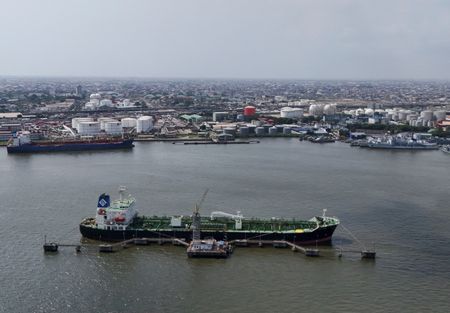
Crude oil prices dropped nearly 15% on Wednesday, falling below $100 per barrel following ceasefire news, but analysts anticipate prices will remain elevated due to ongoing concerns about the Strait of Hormuz shipping route.
Six-month oil contracts are trading around $79, which is above pre-war levels from February 28.
These futures contracts typically fall sharply when diplomatic progress appears likely, and some market watchers believe they’ve declined too steeply.
Michael Haigh, Societe Generale’s global head of commodities research, predicts that even a successful ceasefire with no additional conflicts would establish an oil price floor of $85 per barrel by December. He noted that if countries become more focused on energy security and begin building oil reserves, prices could climb even higher.
This outlook has made investors less pessimistic about energy company stocks, which they’ve traditionally avoided. A Bank of America poll from March 31 showed that while 30% of investors still view the energy sector negatively due to environmental concerns, this represents a decline from 40% six months earlier.
Shell announced Wednesday that it anticipates stronger oil trading conditions ahead.
CURRENCIES OF OIL-PRODUCING NATIONS
The U.S. dollar has recovered strength after months of weakness, but if conflicts diminish and reduce demand for the reserve currency while crude prices stay high, currencies from certain oil-producing countries could perform well, market participants suggest.
Van Luu, Russell Investments’ global head of solutions strategy, explained a scenario involving a permanent ceasefire: “It will take a while for everything to ramp up again, for the tankers to travel again, and oil prices might have a higher floor.”
“If oil prices are $85 to $100 (a barrel) then energy exporters in politically stable countries, and you could consider Norway and Canada in that camp, should do better,” Luu added.
GOVERNMENT BOND RECOVERY POTENTIAL
President Trump’s ceasefire announcement caused British and European government borrowing costs to plummet as concerns about inflation among energy-importing nations decreased.
Investment managers believe these yields remain too elevated compared to interest rate and inflation projections, particularly in Britain where the base rate sits at 3.75%, consumer inflation stands at 3.2%, and the 10-year yield hovers just under 4.7%.
Nicolo Bragazza, a Morningstar Wealth associate portfolio manager who favors British government bonds, stated: “We don’t see something similar to 2022 when UK inflation went above 10%.”
In Europe, German 10-year yields are approximately 2.9% compared to interest rates at 2%. Markets now assign just a 20% probability to a European Central Bank rate increase in April, down from 60% before Trump’s Iran ceasefire announcement.
IDENTIFYING PRICING MISTAKES
Bragazza observed that investors frequently overreact to positive and negative developments, creating pricing errors as unrelated assets move together in markets driven by war concerns.
Bruno Taillardat, Edmond de Rothschild’s head of quantitative portfolio management, noted: “(Trading) is not as dispersed as it should be and there are some sectors which should be more immune to this at least in the medium term.”
He pointed to global healthcare stocks, typically viewed as relatively safe during economic downturns, having moved in sync with a worldwide index of economically sensitive businesses since the war began.
In markets driven by emotion, Taillardat said, investors who spot mispricing opportunities caused by daily cross-market movements would excel.
Taillardat expects Trump’s public statements to maintain market volatility and excessive reactions to news headlines.
“It’s this kind of asymmetric behaviour that generates the right opportunities,” Morningstar’s Bragazza concluded.