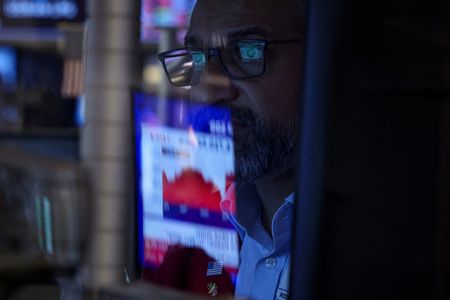
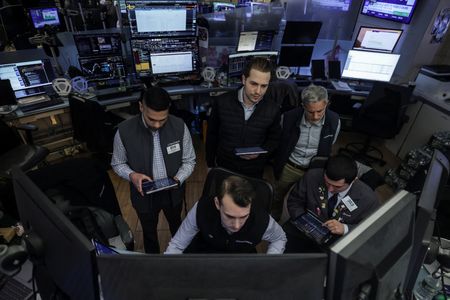
TOKYO (AP) — Stock markets across Asia displayed varied performance during cautious Tuesday trading, while petroleum prices maintained their upward climb before President Donald Trump’s ultimatum expires for Iran to restore full shipping access through the Strait of Hormuz or face strikes on infrastructure including power facilities and bridges.
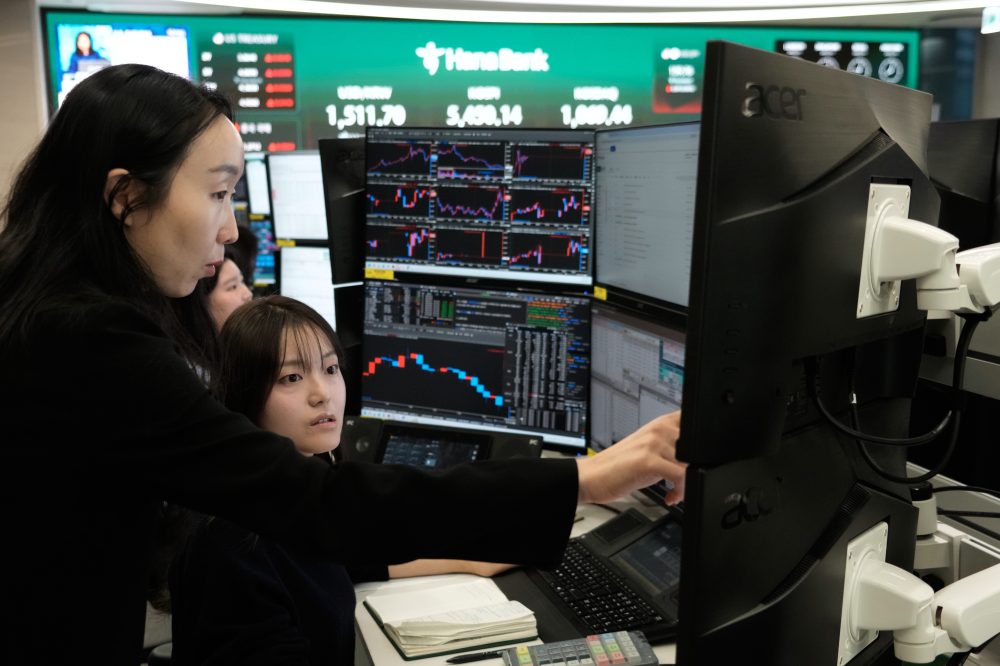
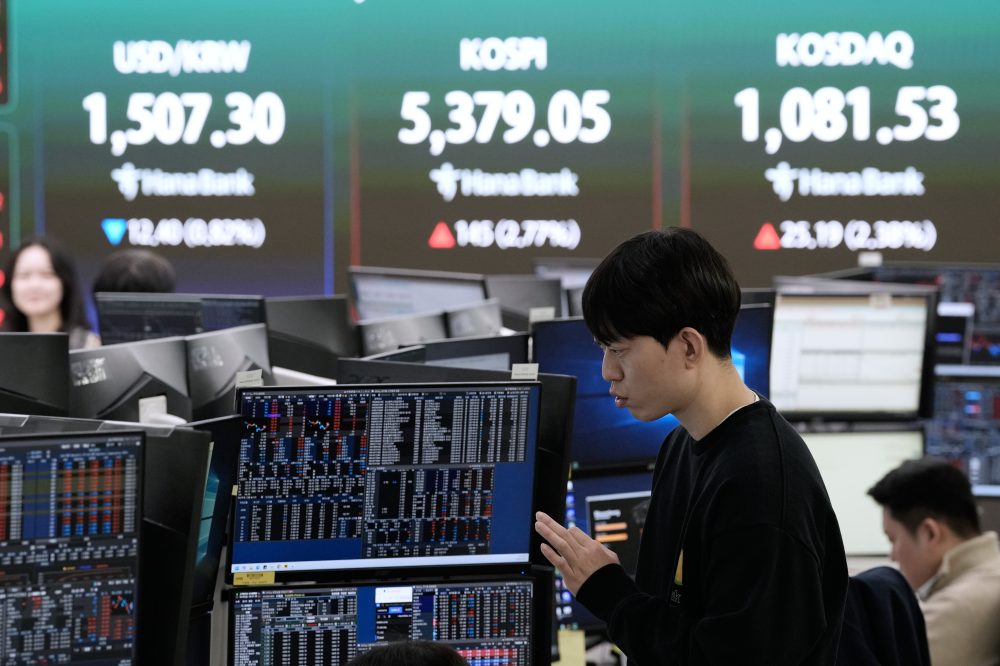
Japan’s primary Nikkei 225 index reversed early positive movement to fall 0.2% during morning sessions, settling at 53,310.30. Australia’s S&P/ASX 200 posted a 1.5% increase to reach 8,706.90. South Korea’s Kospi remained nearly flat, dropping less than 0.1% to 5,445.80. China’s Shanghai Composite moved up 0.4% to 3,896.98. Hong Kong markets remained closed due to a holiday.
U.S. markets saw modest upward movement on Wall Street, with the S&P 500 advancing 0.4% following its first positive week in six attempts. The Dow Jones Industrial Average climbed 165 points, representing a 0.4% gain, while the Nasdaq composite increased 0.5%.
Energy markets witnessed significant activity as U.S. benchmark crude oil surged $2.37 to reach $114.78 per barrel. International Brent crude rose $1.40 to $111.17 per barrel. These prices remain substantially elevated compared to approximately $70 before the conflict began.
Petroleum prices have fluctuated dramatically due to uncertainty surrounding the Iranian conflict’s duration and its impact on worldwide oil and natural gas distribution. Iran rejected Monday’s ceasefire proposal, instead demanding a complete end to hostilities.
Singapore-based researchers at Mizuho Bank noted in their Mizuho Daily report that Trump’s recent moves represent “an escalation cycle that has now been extended several times since his first ultimatum in late March.”
“Given the differing perspectives, hopes of a complete resolution to the conflict remains elusive while countries continue to work on bilateral solutions,” the report stated.
During ongoing negotiations, Iranian and Omani representatives continued developing administrative procedures for the strategic waterway that handles one-fifth of global oil shipments during peaceful periods. Iran’s control over this passage has disrupted the worldwide economy.
Overall, the S&P 500 increased 29.14 points to 6,611.83. The Dow Jones Industrial Average added 165.21 points to reach 46,669.88, while the Nasdaq composite rose 117.16 points to 21,996.34.
Bond markets showed Treasury yields remaining relatively stable. The 10-year Treasury yield held at 4.33%, still significantly higher than its pre-war level of 3.97%.
Currency markets saw the U.S. dollar strengthen to 159.89 Japanese yen from 159.62 yen. The euro declined to $1.1529 from $1.1543.
Elon Musk’s rocket company SpaceX has shared new details about its upcoming initial public offering during a private meeting with banking partners, revealing plans to allocate an unusually large number of shares to individual investors and schedule a special event for 1,500 retail participants in June.
During a virtual conference with bankers on Monday evening, SpaceX Chief Financial Officer Bret Johnsen emphasized the company’s commitment to everyday investors, stating that “Retail is going to be a critical part of this and a bigger part than any IPO in history,” according to two sources with knowledge of the discussion.
Johnsen explained that the substantial retail component reflects the company’s appreciation for long-term supporters, saying the large retail component is by design as “those are folks that have been incredibly supportive of us and of Elon (Musk) for a long time, and we want to make sure that we recognize that.”
The aerospace manufacturer is preparing for what industry experts expect to be the most significant initial public offering ever recorded, with plans to raise $75 billion and achieve a company valuation of up to $1.75 trillion.
Company executives have scheduled their investor roadshow to commence during the week of June 8, when leadership and financial advisors will present the investment opportunity to potential backers. Approximately 125 financial analysts representing the 21 participating banks will meet with SpaceX representatives one day prior to the roadshow launch.
On June 11, SpaceX will host a major investor gathering for 1,500 retail participants. The company plans to extend participation opportunities to individual investors across multiple countries, including the United States, United Kingdom, European Union, Australia, Canada, Japan, and South Korea.
A lead underwriter from the banking syndicate told the group of 21 investment firms that the retail demand and share allocation will exceed anything they have “never seen before,” the sources indicated.
Final details regarding the offering structure and exact retail allocation percentages will be determined closer to the IPO launch date. Previous reports indicated that founder Elon Musk sought to reserve as much as 30% of company shares for smaller investors, significantly higher than the typical 5% to 10% allocation seen in most public offerings.
SpaceX plans to release its public IPO prospectus document in late May. The company has not yet responded to requests for comment regarding the disclosed details.
Elon Musk’s rocket company SpaceX has revealed key information about its upcoming initial public offering during a Monday evening conference with its banking team, according to two sources with knowledge of the discussion.
The aerospace manufacturer announced plans to reserve a substantial number of shares specifically for individual investors and will invite 1,500 of them to a special gathering in June after launching its IPO roadshow, the sources reported.
During the virtual conference, Chief Financial Officer Bret Johnsen emphasized the company’s commitment to retail participation. “Retail is going to be a critical part of this and a bigger part than any IPO in history,” Johnsen stated, according to the two individuals who requested anonymity due to the confidential nature of the meeting.
Johnsen explained that the substantial retail component represents an intentional strategy, noting that “those are folks that have been incredibly supportive of us and of Elon (Musk) for a long time, and we want to make sure that we recognize that.”
The gathering marked the first time the complete banking syndicate came together as part of preparations for what could become the largest initial public offering on record. SpaceX aims to secure $75 billion in funding, which would establish the company’s worth at approximately $1.75 trillion, according to previous reports.
This approach represents a departure from traditional IPO strategies, with SpaceX prioritizing individual investor participation over institutional buyers in its public market debut.
Financial markets remained on edge Tuesday as the US dollar held near recent peaks while traders awaited a critical deadline set by President Trump regarding Iran’s control of Persian Gulf shipping routes.
The American currency has strengthened significantly as ongoing Middle East conflicts and Iran’s ability to block the crucial Strait of Hormuz shipping lane have sent energy costs climbing and prompted investors to seek refuge in dollar-denominated assets, particularly across Asian markets.
While Easter holiday optimism about potential diplomatic progress temporarily slowed additional dollar purchases, financial markets showed clear nervousness with minimal dollar selling activity ahead of President Trump’s 8 p.m. Eastern deadline.
Currency exchange rates reflected the tension, with the Japanese yen trading at 159.67 against the dollar, approaching multi-decade lows similar to levels that triggered government intervention in 2024. The euro was valued at $1.1539 while the British pound stood at $1.3235, both slightly recovering from multi-month lows reached in late March.
“(The) market (is) long USD in case of further escalation, but stocks, gold and CNH trade well and put a lid on dollar gains,” explained Brent Donnelly, president at Spectra Markets.
“It’s hard to make any high-confidence predictions here … we wait for 8 p.m. and see what type of attacks Iran and U.S./Israel launch in the meantime,” Donnelly added.
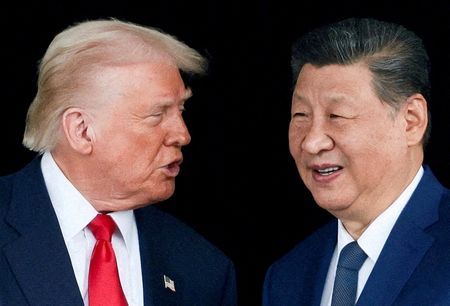
During Monday remarks, Trump indicated Iran could be “taken out” in one night “and that night might be tomorrow night.” The president promised to target Iranian power facilities and infrastructure, dismissing concerns about potential war crimes or alienating Iranian citizens.
Iranian leadership has refused ceasefire proposals, demanding a complete end to hostilities. Recent developments include Israeli claims of responsibility for killing an Iranian intelligence official and striking a southern Iranian petrochemical facility.
The Australian and New Zealand currencies, which dropped sharply when Iranian attacks on regional energy infrastructure escalated in late March, showed modest recovery to $0.6917 and $0.5714 respectively, though trading remained cautious.
South Korea’s won continued struggling below the 1,500 level, a threshold previously reached only during the 2009 financial crisis and late 1990s economic turmoil. Indonesia’s rupiah hit record lows Monday, while China’s yuan remained stable in international trading.
“The dollar may ease modestly further in the near term because of optimism the U.S. will ‘end’ the Iran war,” Commonwealth Bank of Australia analysts noted.
“However, there are three participants in the war: the U.S., Israel and Iran. What matters for the world economy and currencies is whether the Strait of Hormuz is open. The U.S. leaving the conflict does not re-open the Strait,” the analysts concluded.
Samsung Electronics revealed Tuesday that its first-quarter earnings reached unprecedented levels, climbing more than eight times higher than the same period last year as artificial intelligence technology continues reshaping the semiconductor industry.
The South Korean technology giant anticipates operating profits of 57.2 trillion won (equivalent to $37.92 billion) during the first three months of 2024, significantly exceeding analyst predictions of 40.6 trillion won. This represents a dramatic increase from the 6.69 trillion won recorded in the first quarter of 2023.
These preliminary figures nearly tripled Samsung’s previous quarterly profit record of 20 trillion won, which was achieved in the final quarter of last year.
The company has positioned itself as a primary winner in the artificial intelligence data center expansion, which has created supply constraints for conventional chips used in mobile devices, computers, and gaming systems. This shortage contributed to chip prices nearly doubling during the first quarter alone.
Industry analysts at TrendForce anticipate that contract DRAM memory chip costs will surge by more than 50% in the current quarter as supply shortages continue.
Approximately one year ago, Samsung’s chief executive issued an apology regarding the company’s underwhelming financial performance and stock value, following the firm’s delayed entry into producing high bandwidth memory chips essential for Nvidia’s artificial intelligence processors.
However, Samsung has been closing the competitive gap with South Korean competitor SK Hynix through its newest HBM4 chip technology, while simultaneously capitalizing on the recovery in standard chip demand powered by AI inference capabilities that enable platforms like ChatGPT to provide instant responses.
In March, American memory chip manufacturer Micron Technology projected third-quarter revenues exceeding Wall Street forecasts after achieving record-breaking second-quarter results due to strong AI demand and limited supply availability.
Samsung indicated that its revenue is projected to increase 68% to reach 133 trillion won during the January through March timeframe.
Oil markets saw significant gains Tuesday as President Donald Trump escalated his warnings toward Iran, with threats of enhanced measures should the nation continue blocking access to the strategically vital Strait of Hormuz.
West Texas Intermediate crude contracts climbed $1.12 per barrel, representing a 1.1% increase that brought prices to $113.52 by late Tuesday evening GMT.
The price surge reflects market concerns over potential disruptions to global oil supplies, as the Strait of Hormuz serves as a crucial shipping lane for international petroleum exports.
Air New Zealand announced Tuesday that it will reduce its flight schedule and increase ticket prices during May and June as ongoing Middle East conflicts continue to drive up aviation fuel costs worldwide.
The carrier revealed that these schedule adjustments will impact approximately 4% of flights and affect 1% of total passengers planning to travel during the two-month period. This represents the second time in nearly four weeks that the airline has made such operational changes.
“Like airlines globally, we’re experiencing jet fuel prices that are more than double what they would usually be,” an Air NZ spokesperson said.
Passengers whose travel plans are affected will receive notifications starting at 2100 GMT Monday, with the airline planning to complete all customer communications by week’s end.
The New Zealand-based carrier previously announced in March, roughly two weeks after the Middle East conflict began, that it would reduce 5% of its flight operations through early May.
Aviation industry experts note that shutdowns at key Middle Eastern airport hubs have created additional challenges for the airline sector beyond rising fuel costs.
Broadcom Corporation announced Monday it has entered into an extended partnership with Google to create and manufacture specialized artificial intelligence processors and related hardware for Google’s advanced AI systems until 2031.
Additionally, the technology firm reached a separate agreement with AI company Anthropic, granting the startup access to approximately 3.5 gigawatts of artificial intelligence computing power using Google’s processors, beginning in 2027.
Neither company revealed the monetary value of these partnerships.
Following the announcement, Broadcom’s stock price climbed roughly 3% during after-hours trading.
The market for specialized processors like Google’s tensor processing units (TPUs), designed specifically for artificial intelligence tasks, has grown dramatically as companies look for cost-effective alternatives to Nvidia’s expensive graphics processing units.
Previous reports from December indicated Google has been working to position its TPUs as competitive options against Nvidia’s dominant graphics processors. Sales of these tensor processing units have emerged as a vital component of Google’s cloud computing revenue growth, helping demonstrate to shareholders that artificial intelligence investments are producing financial returns.
Anthropic stated Monday that this latest agreement supports the company’s pledge to invest $50 billion in bolstering American computing infrastructure.
The AI startup reported that interest in its Claude artificial intelligence model has grown rapidly in 2026, with annual revenue projections now exceeding $30 billion, compared to approximately $9 billion recorded at the close of 2025.
According to Anthropic, the company develops and operates Claude using various AI hardware platforms, including Amazon Web Services’ Trainium processors, Google’s tensor processing units, and Nvidia’s graphics processors.
Amazon continues to serve as Anthropic’s main cloud computing provider and development partner.
The company behind ChatGPT has formally requested Delaware Attorney General Kathy Jennings and California’s top prosecutor to examine Elon Musk’s business practices, which they characterize as improper and harmful to competition.
The request comes ahead of a major courtroom battle between Musk and OpenAI scheduled to commence this month. Musk filed suit against OpenAI and its chief executive Sam Altman in 2024, claiming the company abandoned its original nonprofit mission as it transitions toward a profit-driven structure.
Musk helped establish OpenAI in 2015 but departed three years later, subsequently creating a competing artificial intelligence venture called xAI that developed the Grok chatbot to rival ChatGPT.
Court documents from August revealed that Musk attempted to recruit Meta Platforms CEO Mark Zuckerberg to join his consortium’s acquisition attempt of OpenAI in early 2023, though Zuckerberg declined to participate.
In correspondence sent Monday to Attorney General Jennings and California’s Rob Bonta, the artificial intelligence company stated that Musk’s legal action demands more than $100 billion in damages from OpenAI’s nonprofit arm, which would devastate the organization financially.
An Oakland, California judge determined in January that a jury will decide the case during the April trial proceedings.
Jason Kwon, OpenAI’s chief strategy officer, wrote in Monday’s letter that the litigation threatens the company’s mission to develop artificial general intelligence that serves humanity’s broader interests.
Kwon criticized Musk’s legal filings, stating they “suggest that your offices did not thoroughly investigate OpenAI’s plan to recapitalize and merely relied on promises about what OpenAI will do in the future.”
Financial markets moved upward on Monday despite escalating tensions with Iran and climbing oil costs, as investors appeared to dismiss President Trump’s latest aggressive statements while waiting for more substantial developments in the Middle East conflict.
Stock exchanges across Asia that remained open during Easter Monday posted gains, with South Korea leading the way with nearly 2% growth, India rising 1%, and Japan’s Nikkei adding 0.5%. U.S. markets also climbed, with major indices gaining between 0.4% and 0.5%.
The positive market movement came even as Trump escalated his threats against Iran on Monday, declaring that every bridge and power plant in the country would be destroyed by Tuesday midnight unless an agreement is reached and the Strait of Hormuz reopens. This followed his profanity-filled warnings issued Sunday.
However, financial markets showed little reaction to the harsh words. While oil prices did increase by 1%, with West Texas Intermediate reaching its highest closing price since June 2022, other indicators suggested investors remain skeptical of the rhetoric. The dollar weakened, and U.S. Treasury bond prices edged downward.
Market analysts suggest that traders may now be disregarding Trump’s aggressive language, much of which echoes previous statements, and instead focusing on tangible policy actions and developments.
Despite the ongoing Iran conflict entering its sixth week, rising gasoline prices above $4 per gallon, and oil costs 65% higher than last year, early March economic indicators show the U.S. economy maintaining resilience. Employment numbers exceeded forecasts, manufacturing activity reached 2022 highs, and economic surprise indices hit four-week peaks on Monday.
The energy crisis has prompted several Asian nations, including India and the Philippines, to intervene in currency markets to support their monetary systems. With oil prices elevated globally and Asian premiums for physical supplies at record levels, additional countries may follow suit.
Nations with current account deficits, particularly Indonesia, face heightened vulnerability, while even surplus countries risk entering dangerous cycles of energy costs, currency devaluation, and inflation. In extreme scenarios, some governments might need to liquidate foreign bonds or gold reserves to finance fuel purchases.
Looking ahead, markets will monitor Middle East developments, energy sector movements, and various economic data releases including service sector reports from Australia, the eurozone, and the United Kingdom. The U.S. Treasury will auction $58 billion in three-year notes, while several Federal Reserve officials are scheduled to speak, including Chicago Fed President Austan Goolsbee and Vice Chair Philip Jefferson.
In sector performance, eight of eleven S&P 500 categories posted gains, led by consumer discretionary, consumer staples, and energy stocks. Starbucks jumped 5% while Boeing gained 2%. Among currencies, the Australian dollar and British pound led gains in developed markets, while Bitcoin surged 4% to reclaim the $70,000 level.
The online retail giant Amazon announced Monday that it has finalized a fresh partnership agreement with the United States Postal Service for package delivery services.
According to sources familiar with the arrangement, the new contract allows Amazon to maintain approximately 80% of its current shipping volume through USPS, which translates to over 1 billion packages annually. Amazon serves as the postal service’s biggest individual client.
The agreement comes as welcome relief for the financially struggling mail agency, which operates on an $80 billion budget. Amazon’s business represents roughly $6 billion in yearly revenue for USPS, according to individuals with knowledge of the partnership terms.
The retail company had previously posed a significant challenge to the postal service by developing plans to establish its own nationwide delivery network, which could have eliminated the need for USPS services entirely.
In a prepared statement, Amazon expressed satisfaction with the outcome: “We’re pleased to have reached a new agreement with USPS that furthers our longstanding partnership and will let us continue supporting our customers and communities together.”
The negotiations became contentious after Amazon voiced opposition to postal service proposals to auction off access to its final-mile delivery infrastructure. The e-commerce company had previously warned it might reduce its delivery partnership with the cash-strapped postal service by at least two-thirds, according to earlier reports.
The U.S. Postal Service has not yet provided a response regarding the new agreement.
CBS announced Monday that it plans to transform its late-night programming strategy by selling its 11:35 p.m. time slot to Byron Allen following the conclusion of Stephen Colbert’s talk show this May.
The network, owned by Paramount Skydance, will relocate Allen’s comedy program “Comics Unleashed” to this prime slot through a time purchase arrangement. Starting May 22, viewers will see two consecutive 30-minute episodes each night, according to network officials.
Time purchases represent a standard industry approach during overnight and early morning periods, where networks sell designated airtime blocks to external producers or companies instead of creating their own content for those hours.
This arrangement covers the 2026-2027 television season and is expected to transform CBS’s late-night operations from a financial burden into a revenue generator.
“The Late Show with Stephen Colbert,” which frequently featured political commentary targeting President Donald Trump, will conclude its decade-long tenure on CBS May 21.
Under this new deal, Allen will also maintain control of the 12:37 a.m. slot, where his comedy game show “Funny You Should Ask” will continue airing.
“I truly appreciate CBS’ confidence in me by picking up our two-hour comedy block of Comics Unleashed and Funny You Should Ask, because the world can never have enough laughter,” Allen stated.
“The Late Show” originally premiered in 1993 featuring David Letterman, who joined CBS after being overlooked for NBC’s “The Tonight Show” hosting position.
Before taking over “The Late Show” in 2015, Colbert gained recognition as a correspondent on “The Daily Show” and later hosted “The Colbert Report” on Comedy Central.
Delmarva Power & Light customers who rely on the utility’s default electricity service are bracing for higher monthly bills starting June 1st, with the company announcing a significant rate adjustment that will impact household budgets across the region.
The utility revealed that customers enrolled in Standard Offer Service (SOS) will experience an 18-20% jump in their electricity supply costs. This translates to roughly a 9% increase in total monthly electric bills for affected customers.
The rate adjustment affects customers who have not chosen an alternative electricity supplier and remain on the utility’s standard service option. This default service covers a substantial portion of Delmarva Power’s customer base throughout Delaware and Maryland’s Eastern Shore.
The timing of the increase adds another layer of financial pressure for residents already dealing with rising costs across various sectors of the economy. The utility company estimates the impact will be felt immediately when the new rates take effect at the beginning of June.
Customers concerned about the rate increase may want to explore alternative electricity supply options or energy conservation measures to help offset the additional costs on their monthly bills.
The streaming service Netflix intensified its focus on interactive entertainment Monday by introducing Netflix Playground, a specialized gaming platform targeting young audiences with games featuring beloved characters like Peppa Pig and Sesame Street.
Industry experts note that the company’s venture into gaming has not yet become a significant revenue generator. According to analysts, Netflix faces obstacles due to its more restricted collection of recognizable characters and franchises when compared to competitors like Warner Bros Discovery, which controls major properties including DC Comics.
Among Netflix’s most successful gaming offerings are Rockstar Games’ “GTA: San Andreas” and titles connected to the platform’s original programming like “Squid Game: Unleashed.”
The company described the new platform as a “curated space where parents know kids are entertained, engaged and enriched.”
This initiative targets increased interaction with family subscribers, as children’s programming typically helps prevent subscription cancellations since parents tend to maintain their memberships longer.
The application caters to youngsters aged eight and below and comes at no additional cost with existing Netflix subscriptions.
All games function without internet connectivity, featuring titles such as “Playtime With Peppa Pig,” “Dr. Seuss’s Horton!” and “Sesame Street” games.
Beyond parental oversight features, the service guarantees an advertisement-free experience with no in-app purchases or hidden charges.
Netflix Playground became available for download Monday in the United States, Canada, the United Kingdom, Australia, the Philippines and New Zealand. The company plans a worldwide rollout by month’s end.
A federal court has ruled in favor of the company behind Stanley tumblers, throwing out a class-action lawsuit that alleged the manufacturer hid the presence of lead in their wildly popular water bottles.
U.S. District Judge Tana Lin in Seattle issued her ruling Friday, determining that consumers could not prove a “specific and plausible risk of harm” from lead exposure when using the tumblers manufactured by Pacific Market International.
The vibrant-colored drinkware, often called Stanley cups, gained massive popularity especially among female consumers through social media influencer marketing campaigns.
Neither attorneys representing the consumers nor lawyers for Pacific Market International provided immediate responses when contacted Monday about the court’s decision.
The legal battle emerged after concerns about potential lead contamination spread rapidly across social media platforms in early 2024.
Seattle-based Pacific Market International explained that their manufacturing process includes pellets designed to maintain proper beverage temperatures, acknowledging these pellets contain “some lead” while emphasizing the material remains sealed and unreachable by users.
Consumer plaintiffs argued they either wouldn’t have purchased the Stanley cups or would have expected to pay lower prices if they had been aware of potential health risks.
However, Judge Lin’s comprehensive 41-page ruling concluded that plaintiffs failed to establish that lead usage in Stanley tumblers would matter to typical consumers making purchasing decisions.
The court found no evidence showing that simply having lead present created danger, or that the pellets could contaminate beverages, leading to ingestion or inhalation risks.
“Without even a hypothetical explanation of how any consumer might be harmed by the lead in defendant’s product, the problem remains that the dangers plaintiffs warn of are completely disconnected from the Stanley cups,” Judge Lin stated in her decision.
She further explained: “If Stanley tumblers work as advertised and pose no plausible risk of harm, any representations by defendant that the tumblers are ‘safe and suitable for ordinary use’ cannot be shown to be ‘false’ or ‘misleading.’”
While Judge Lin dismissed the current lawsuit, she indicated plaintiffs may file an amended complaint, warning that failure to address the case’s fundamental weaknesses “particularly as related to materiality” would result in permanent dismissal.
Two prominent Federal Reserve officials are raising red flags about inflation, describing it as a more pressing concern than employment issues while expressing support for maintaining tighter monetary policies.
During a recent podcast interview with The Indicator from Planet Money, Cleveland Federal Reserve President Beth Hammack and Chicago Fed President Austan Goolsbee were asked to evaluate economic conditions using a color-coding system ranging from crisis-level red to all-clear green.
Goolsbee painted a concerning picture of inflation trends, rating them “at least orange. Orange with a chance of meatballs; it hasn’t been great,” as gasoline costs continue climbing. “I was optimistic that we would get back to this path to 2% inflation, but yikes, it’s going from orange to red lately — we had tariffs increasing prices, that was supposed to go away, kind of didn’t go away, and now we add another stagflationary shock on top ….it’s a troubling moment.”
Hammack shared similar worries about price increases, noting inflation has exceeded target levels for five consecutive years and has remained “basically moving sideways” over the past two years. She described the situation as “definitely at the brighter, the more vibrant color orange: I don’t know if that’s burnt orange, burnt sienna: my Crayola box is a little bit old.”
The Wednesday interview took place before Friday’s release of March employment data, which revealed the largest monthly job gains since Donald Trump returned to the presidency in January. Unemployment dropped to 4.3%, though this decline was primarily attributed to significant numbers of workers exiting the labor force.
Regarding employment conditions, Hammack views the unemployment rate as the most reliable gauge, currently sitting near what she considers full employment levels. Despite calling it a “fragile type of balance,” she rates the employment outlook as yellow to green — possibly “chartreuse,” she noted, “or actually it’s like the Diet Mountain Dew” preferred by a colleague on the Federal Reserve’s policy committee.
Hammack described the financial system as “generally green” and stated the economy appears stable from a financial perspective, even with stock market declines following the Iran conflict.
Goolsbee took a more reserved stance on both employment and financial conditions, assigning a “yellow” rating to the job market due to its current state of minimal hiring and firing, which he attributes to ongoing economic uncertainty.
Concerning financial systems, while satisfied with payment mechanisms, he expressed greater concern about asset valuations. “It does look like there is a lot of frothiness,” he observed, questioning whether current conditions reflect genuine productivity gains or represent a bubble ready to burst.
“Maybe that’s yellow? You are never going to hear me say the word ‘chartreuse,’” he concluded.
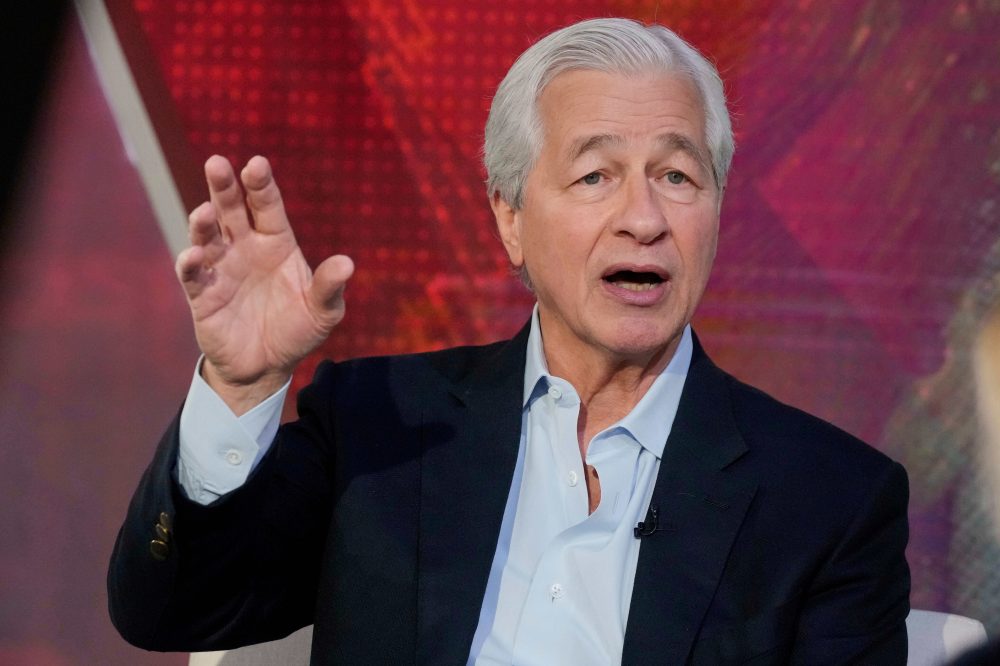
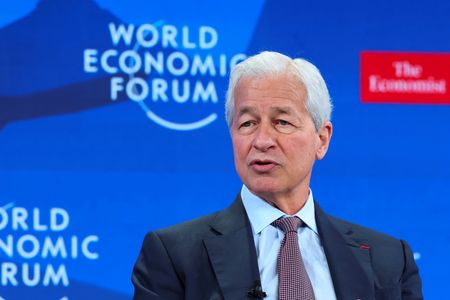
NEW YORK (AP) — In his yearly message to shareholders, JPMorgan Chase’s chief executive Jamie Dimon cautioned that Middle Eastern conflicts involving Iran could trigger fresh inflationary pressures across America’s otherwise strong economy by destabilizing worldwide energy markets.
The banking leader characterized inflation as a potential spoiler for economic progress this year, noting that chaos in oil and commodity sectors could send shockwaves throughout the economy, impacting fuel costs and production expenses across industries. Dimon also expressed concern that persistent price increases might compel the Federal Reserve to maintain elevated interest rates for extended periods, creating additional challenges for the economy and banking sector.
“Given our complex global supply chains, countries are experiencing disruptions in shipbuilding, food and farming, among others,” Dimon wrote. “The outcome of current geopolitical events may very well be the defining factor in how the future global economic order unfolds — then again, it may not.”
The JPMorgan executive has traditionally utilized his yearly correspondence to address significant economic and policy matters. Previous communications have examined subjects including the coronavirus pandemic, domestic political unrest, worldwide financial crises, and international trade disputes.
However, Dimon maintained a largely positive outlook despite identifying these concerns.
“Despite the unsettling landscape, the U.S. economy continues to be resilient, with consumers still earning and spending (though with some recent weakening) and businesses still healthy,” he wrote.
Beyond addressing the immediate geopolitical situation, Dimon highlighted wider dangers associated with regional instability.
“We should not turn a blind eye to the role the current regime in Iran has played in fostering terrorism and killing thousands of people, including Americans and many of its own citizens, over many years,” he wrote.
WASHINGTON — A senior Federal Reserve leader indicated Monday that borrowing costs might need to rise if price increases continue surpassing the central bank’s 2% goal, signaling some policymakers are reconsidering their previous inclination toward lowering rates.
Cleveland Federal Reserve Bank President Beth Hammack told The Associated Press during an interview that she generally favors maintaining the Fed’s key interest rate at current levels “for quite some time.”
Hammack explained the central bank faces challenging scenarios in both directions. She noted the Fed might need to lower rates if elevated gasoline costs trigger economic slowdown and job losses. However, persistent price increases could necessitate rate increases.
“I can foresee scenarios where we would need to reduce rates … if the labor market deteriorates significantly,” Hammack stated. “Or I could see where we might need to raise rates if inflation stays persistently above our target.”
These remarks indicate mounting worry among certain Fed officials that price pressures, which were already elevated before the Iran conflict began, might require rate increases to control. Such action would represent a dramatic reversal from late 2024, when the central bank reduced its primary rate three times.
Additional Fed leaders have recently suggested rate increases remain possible, including Chicago Fed President Austan Goolsbee. Meeting minutes from the Fed’s late January session revealed several of the 19 rate-setting committee members favored modifying their post-meeting statement to acknowledge potential “upward adjustments” to rates.
Any rate increase would likely trigger strong criticism from President Donald Trump, who has repeatedly attacked the Fed for not cutting rates more aggressively. Trump has advocated reducing the central bank’s benchmark rate to 1%, compared to its current level near 3.6%.
Two inflation reports are scheduled for release this week, though only one will likely capture the effects of gasoline price increases since the Iran war started February 28. According to AAA, gas prices reached $4.12 per gallon nationally on Monday, representing an 80-cent increase from one month ago.
Friday’s March inflation data will provide initial insight into how higher fuel and energy costs affected consumer prices. Economic forecasters predict annual inflation will worsen substantially, climbing to 3.1% from February’s 2.4%, based on FactSet polling. Monthly price increases are expected to reach 0.8% from February to March, marking the largest jump in nearly four years.
The Commerce Department will release the Fed’s preferred inflation measurement for February on Thursday, though this data won’t include any Iran conflict impacts.
Hammack revealed Cleveland Fed projections suggest inflation could hit 3.5% in April, which would mark the highest level since 2024. Price increases previously peaked at 9.1% in June 2022 before gradually declining.
“Inflation has been running above our target for more than five years now,” Hammack observed, noting further increases would mean prices are “moving in the wrong direction, away from our 2% objective.”
Congressional mandate requires the Federal Reserve to pursue both low inflation and maximum employment, and rising fuel costs could jeopardize both objectives, explaining why officials like Hammack stress the “two-sided risks” facing the central bank.
Higher gasoline prices may prompt consumers to reduce spending in other economic areas, Hammack explained, potentially causing weaker growth and job losses that would require Fed response through rate reductions.
The war’s economic impact depends on its duration and how long it elevates fuel and other costs, Hammack said. Now in its sixth week, the conflict has already exceeded her expectations when the Fed last convened March 17-18.
Rising gas prices from the Iran war represent “the No. 1 thing” Hammack hears about from residents in her district, which encompasses Ohio and portions of Pennsylvania, West Virginia, and Kentucky.
“We know that causes a lot of pain personally, as it eats up a bigger and bigger share of people’s paychecks. So it’s important for us to stay focused on it,” she concluded.
A top White House economic adviser expressed optimism Monday that recent technological advances and business investments could pave the way for the Federal Reserve to reduce interest rates.
Kevin Hassett, speaking during a CNBC interview on April 6th, argued that what he describes as a “supply shock” driven by artificial intelligence improvements and increased capital investment is creating favorable economic conditions.
“If we have a supply shock like we’re seeing because of all this capital spending … AI increasing productivity, it puts downward, downward pressure on inflation, and that should take the pressure off the Fed. They should be able to lower rates,” Hassett explained during the television appearance.
The economic adviser also indicated his expectation that interest rates would decline under the leadership of Kevin Warsh, whom President Donald Trump has nominated to serve as the next Federal Reserve chair.
Investment management firm Barings has implemented withdrawal restrictions on one of its private credit funds following an unprecedented wave of investor exit requests, according to regulatory documents filed Monday.
The company placed a 5% ceiling on withdrawals from its Barings Private Credit Corp fund after investors demanded to redeem 11.3% of their holdings during the first three months of the year. Under the new limitations, the fund will only honor approximately 44.3% of each investor’s withdrawal request.
The move reflects growing unease among retail investors who are abandoning private credit investments due to worries about market transparency, asset valuations, and potential disruption from artificial intelligence developments.
Barings joins a growing list of major financial firms implementing similar protective measures. Apollo Global, Blue Owl, Ares Management, and BlackRock all established 5% withdrawal caps during the first quarter as private credit funds encounter their initial major stress test.
The current situation mirrors the redemption crisis that struck non-traded real estate investment trusts starting in late 2022, when valuation concerns spooked investors and triggered mass withdrawal requests.
Private credit funds like Barings typically provide quarterly liquidity opportunities through tender offers capped at 5% of total shares. These funds primarily hold illiquid loans that cannot be easily sold on open markets.
Investment tracking firm Robert A. Stanger reports that similar non-traded investment vehicles returned a record $7.4 billion to investors during the first quarter through April 2.
Industry experts argue that periods of heavy redemption requests represent normal market dynamics for semi-liquid investment products rather than fundamental flaws in their structure.
“As market conditions evolve, we expect differences in performance across managers to become more pronounced given that long-term results are driven in part by the importance of underwriting quality, portfolio construction, and balance sheet management,” Barings Private Credit stated in a letter to shareholders.
Financial analysts have endorsed the withdrawal restrictions, noting they help prevent massive cash outflows and avoid forced sales of fund assets at unfavorable prices.
The Associated Press announced Monday that it will present voluntary buyout packages to an undetermined number of American journalists as the organization accelerates its transformation from the newspaper-centered model that has defined it since the 1800s.
The wire service is shifting its focus toward visual storytelling and exploring new income streams, especially through partnerships with artificial intelligence companies, as traditional newspaper clients struggle financially. Major newspaper companies, which once generated the majority of AP’s earnings, now contribute only 10% of total revenue.
“We’re not a newspaper company and we haven’t been for quite some time,” said Julie Pace, executive editor and senior vice president of the AP, during an interview.
While the organization has made adjustments—including doubling its U.S. video journalist workforce since 2022—it still maintains staffing patterns originally designed to serve newspapers and broadcasters across individual states.
This structure traces back to AP’s origins in the mid-1800s, when New York newspapers established the cooperative to share costs for reporting beyond their local coverage areas.
The exact number of journalists facing potential job losses remains unclear, partly by design. The AP doesn’t disclose its total journalist count, though it maintains substantial international operations alongside its domestic staff.
According to Pace, the organization aims to reduce its worldwide workforce by under 5%. The Marketing and Media Alliance has estimated AP’s total staff at 3,700, though the timing of that assessment is uncertain.
Given that buyouts are currently limited to U.S.-based journalists, the reduction within that group will likely exceed 5%. Whether layoffs follow will depend on buyout acceptance rates, Pace explained.
The News Media Guild, representing AP journalists, declined immediate comment on the restructuring plan when contacted Monday.
Newspaper revenue has fallen 25% for AP during the past four years. Major publishers Gannett and McClatchy ended their AP relationships in 2024.
Recently, the company discovered that Lee Enterprises—which publishes The Buffalo News, St. Louis Post-Dispatch, and Richmond Times-Dispatch—wants to terminate its contract early, despite it running through 2026.
Pace clarified that the buyout strategy was already underway before learning of Lee Enterprises’ decision. “We made a decision earlier this year that we needed to be bolder in this transformation,” she stated.
Beyond expanding video operations, AP is creating rapid-response teams where journalists contribute to major stories regardless of their geographic assignment, Pace said. The organization is also assigning more reporters to specialized beats focused on topics that interest customers. However, it remains committed to maintaining operations in all 50 states.
“The AP is not in trouble,” Pace emphasized. “We’re making these changes from a position of strength but we’re doing so now to recognize our changing customer base.”
Current clients are primarily broadcast, digital, and technology companies, reflecting evolving news consumption patterns. Technology company revenue has grown 200% over four years, according to Kristin Heitmann, senior vice president and chief revenue officer.
AP was among the earliest news organizations to partner with an AI company, licensing portions of its text archive to OpenAI in 2023. The organization launched on Snowflake Marketplace last year for direct enterprise data licensing and created AP Intelligence to serve financial and advertising industries.
Google contracted with AP last year for news delivery through its Gemini chatbot, marking the tech company’s first agreement with a news publisher.
“If you can think of a large technology company,” Heitmann noted, “they are a customer of ours.”
Last month, AP agreed to provide U.S. election data to Kalshi, the world’s largest prediction market.
The company’s established expertise in election data represents another growth sector, with customer numbers increasing 30% between the 2020 and 2024 election cycles. Additional momentum came when ABC, CBS, NBC, and CNN joined the service last year.
The traditionally wholesale-focused organization has also seen increased interest in its consumer-facing website, apnews.com, which generates revenue through advertising and donations.
Leadership stressed that expanding into new business areas won’t compromise AP’s commitment to delivering quick, accurate, unbiased reporting. “If anything, it makes it more important that we retain these values as we make the transition,” Pace said.
AP is experimenting with innovative fact-checking methods, including video formats, and increasingly featuring journalists publicly explaining their reporting processes, she said.
“I think that authenticity, and the fact that you can associate a real person who is often quite experienced and quite deep on their beats … it builds more credibility,” she explained. “We’re really trying to embrace that because I do think it’s vital when there is so much misinformation out there.”
Global supply chain disruptions intensified last month, reaching their highest point since early 2023, according to new data from the Federal Reserve Bank of New York released Monday.
The bank’s Global Supply Chain Pressure Index climbed to 0.68 in March, up from February’s reading of 0.54. When the index sits at zero, it indicates typical supply chain conditions, while positive numbers signal increasing strain on global logistics networks.
While the New York Fed didn’t specify what drove March’s increase, the uptick likely stems from disruptions connected to ongoing Middle East conflicts involving U.S.-Israeli military actions against Iran. Despite the recent climb, current supply chain stress remains far below the peak of 4.49 recorded in December 2021, when pandemic-related shutdowns severely impacted the global economy.
A real estate investment trust specializing in healthcare properties has taken steps toward becoming a publicly traded company by submitting its initial public offering documents on Monday.
National Healthcare Properties joins a growing list of REITs seeking to raise capital through public stock markets this year, as market conditions have become more favorable for certain sectors despite ongoing economic uncertainties and concerns about artificial intelligence’s impact on various industries.
According to IPOX CEO Josef Schuster, current market conditions favor companies in specific sectors. “The IPO window is wide open for firms…less susceptible to the economy, inflation and the AI-driven valuation reset of the software sector. This pertains particularly to U.S.-domiciled firms,” Schuster explained to Reuters.
The timing appears strategic, following the strong performance of Janus Living, another senior housing REIT that raised $966 million in its New York stock debut last month. That company’s shares have climbed 19.5% since going public.
Renaissance Capital senior strategist Matt Kennedy noted the current market dynamics, stating: “IPO bankers are looking at which industries are working, and bringing those deals to market, (but also) we’re seeing IPO filings from companies with a clear need for capital.”
The New York-headquartered company, which initially submitted confidential IPO documents in January, operates as a self-managed REIT with a focus on senior living facilities and healthcare-related real estate investments.
National Healthcare Properties currently owns a portfolio spanning 37 senior housing communities and 130 outpatient medical facilities spread across 29 states as of the end of 2025.
The company stands to benefit from demographic trends, particularly the expanding elderly population in America and the shortage of new senior housing construction, which creates increased demand for existing properties.
Data from real estate services firm JLL indicates that Americans aged 65 and older represent the largest group of healthcare service users in the country.
Schuster highlighted the appeal of healthcare-focused REITs to investors, explaining: “Healthcare REITs have been a bright spot, due to their uncorrelated nature, their potential role as a takeover target, attractive dividend yield and strong recent performance history.”
Wells Fargo Securities, Morgan Stanley, and BMO Capital Markets will serve as the primary underwriters for the offering. The company plans to trade on the Nasdaq stock exchange using the ticker symbol “NHP.”
WASHINGTON – The nation’s services industry saw reduced growth during March as companies dealt with sharply rising costs for materials and supplies, reaching levels not seen in three and a half years, according to new economic data released Monday.
The Institute for Supply Management reported its nonmanufacturing index fell to 54.0 in March, down from February’s reading of 56.1. Market analysts had predicted a smaller decline to 54.9. Any measurement above 50 signals expansion in the services industry, which represents over two-thirds of America’s total economic output.
The ongoing U.S.-Israel military engagement with Iran, now entering its second month, has driven global petroleum costs upward by more than 50 percent. Nationwide gasoline prices at the pump have climbed past $4 per gallon, marking the first time in over three years that threshold has been crossed. Economic forecasters anticipate the war’s inflationary impact will become evident in this Friday’s March Consumer Price Index data.
February’s producer price increases already reflected expectations of the Middle Eastern conflict’s escalation.
The ISM survey showed business input costs jumped dramatically to 70.7, representing the steepest level since October 2022, compared to February’s 63.0 reading.
This pricing indicator had stayed high previously, with companies attributing increased expenses to President Donald Trump’s comprehensive tariff policies, which the U.S. Supreme Court later overturned. Trump’s response included implementing worldwide tariffs lasting up to 150 days.
Supply chain delivery times lengthened, with the supplier deliveries metric rising to 56.2 from February’s 53.9. Readings exceeding 50 percent indicate delayed shipments. Manufacturing facilities reported similar delays, particularly food, beverage and tobacco producers who cited “container delays.”
Anticipated inflation consequences from the conflict have significantly reduced expectations for interest rate reductions this year. The Federal Reserve maintained its primary overnight rate between 3.50% and 3.75% during last month’s meeting.
New business orders climbed to a two-year peak of 60.6, up from February’s 58.6. However, international order growth declined substantially and backlog increases moderated.
Employment within the services sector declined, with job-related measurements falling to their lowest point since December 2023. This contradicts March’s strong employment rebound, which included 143,000 additional private service jobs. The ISM employment indicator has historically been an unreliable predictor of the Labor Department’s private services employment figures.
The world’s largest asset management company is making a bold move to challenge an established competitor in the technology investment space.
BlackRock submitted paperwork on Monday to federal regulators seeking permission to launch a new exchange-traded fund focused on the Nasdaq-100 index. The proposed iShares Nasdaq-100 ETF would use the trading symbol “IQQ” if approved by the Securities and Exchange Commission.
This new offering would directly compete with Invesco’s highly successful QQQ Trust ETF, which ranks among the world’s largest exchange-traded funds with approximately $376 billion under management, based on LSEG data.
The filing did not include details about what fees would be charged to investors.
Currently, very few publicly available exchange-traded funds focus exclusively on tracking the Nasdaq-100 index, according to VettaFi’s ETF database information.
Invesco’s existing product has become one of America’s most actively traded funds and serves as a popular investment vehicle for those seeking exposure to large technology and growth companies.
The Nasdaq-100 index includes the 100 largest companies trading on the Nasdaq exchange, excluding financial firms. Major technology corporations like Nvidia and Apple are among its key components.
Nasdaq officials expressed support for the increased competition in a public statement. “Expanding access to the Nasdaq-100 is intended to be additive, supporting investors by improving the efficiency, liquidity, and availability of benchmark-linked exposure across markets and product types,” the exchange operator said.
Financial markets responded to the news with Invesco’s stock price dropping nearly 4% to $23.19 during early trading sessions. BlackRock’s shares also declined slightly by 0.6%.
A federal appeals court delivered a significant legal victory Monday to prediction market company Kalshi, blocking New Jersey gaming officials from shutting down the platform’s sports betting operations within state borders.
The Philadelphia-based 3rd U.S. Circuit Court of Appeals decided by a 2-1 margin that federal commodity trading regulations take precedence over state gambling laws when it comes to Kalshi’s sports-related event contracts.
The decision represents a crucial win for Kalshi amid growing tensions between prediction market companies and state gaming authorities across the country. These platforms have faced increasing scrutiny from regulators who claim they operate without proper licensing.
State officials have contended that companies like Kalshi violate local gaming statutes, including rules that prevent individuals under 21 from placing wagers, while operating without required state permits.
New Jersey took action against Kalshi last year, issuing a cease-and-desist order claiming the company’s sports betting contracts violated state laws that specifically ban wagering on college athletics.
In response, Kalshi filed a lawsuit defending its operations. The company maintained that its registration as a designated contract market under the U.S. Commodity Futures Trading Commission provides legal authority for its activities. Kalshi argued that its event contracts qualify as “swaps” under federal Commodity Exchange Act regulations.
The company had not provided a response to requests for comment as of Monday evening.
Major technology corporations are encountering growing pressure from shareholders regarding the environmental consequences of their massive data center operations, following recent project cancellations due to community resistance.
Amazon, Microsoft, and Google’s parent company Alphabet have all recently halted construction on billion-dollar data center projects after facing local opposition, and now investors are demanding greater accountability for these facilities’ environmental effects.
Over a dozen investment firms are intensifying their demands ahead of this spring’s annual shareholder meetings, pushing for detailed information about water consumption and conservation practices as these tech companies expand their computing infrastructure, according to recent interviews.
Boston-based Trillium Asset Management, which oversees more than $4 billion in assets, submitted a proposal to Alphabet in December requesting transparency about meeting climate commitments despite rising energy demands from data centers, according to Andrea Ranger, the firm’s director of shareholder advocacy.
Alphabet committed in 2020 to cutting emissions in half and transitioning to carbon-free energy by 2030. However, Trillium reported that emissions actually increased by 51%, leaving investors “in the dark” about the company’s strategy for achieving these targets.
A comparable proposal from Trillium the previous year gained backing from nearly 25% of independent shareholders.
Giovanna Eichner, a shareholder advocate at Green Century Capital Management, revealed ongoing conversations with Nvidia about potentially filing a proposal “to ensure that short-term AI gains do not come at the cost of long-term climate and financial risk,” though she declined to provide additional specifics.
Investors are particularly focused on obtaining comprehensive water usage information. Data centers across North America consumed almost 1 trillion liters of water in 2025, according to market research firm Mordor Intelligence, matching approximately what New York City uses annually.
Although Meta, Google, Amazon and Microsoft have implemented closed-loop cooling systems in their data centers that significantly reduce water requirements, the reporting on consumption varies considerably between companies.
Meta’s 2025 environmental report included water usage for company-owned facilities but excluded leased properties and construction sites. Overall consumption jumped 51% from 3,726 megaliters in 2020 to 5,637 megaliters in 2024, representing enough water to serve over 13,000 households annually.
Google’s 2025 environmental report covered owned and leased facilities but omitted third-party operated sites. Both Amazon and Microsoft disclosed total water consumption in their 2025 sustainability reports without providing site-by-site breakdowns.
Josh Weissman, Amazon’s director of infrastructure capacity delivery, stated the company is “increasingly disclosing site-specific water consumption data where we operate.” An Amazon representative emphasized the company’s commitment to being a “good neighbor” through efficiency investments, new energy development, and water usage reduction.
Facility-specific data is essential for investors to properly evaluate operational risks and company performance in managing them, according to investment professionals who also seek information about water supply replenishment efforts.
“We haven’t seen them disclosing enough about their water consumption (and the) impact on the local community,” explained Jason Qi, lead technology analyst at Calvert Research and Management.
A Microsoft representative described environmental sustainability as “a core value” and stated the company is “proactively addressing sustainability challenges and accelerating solutions for long‑term impact.”
Google declined to provide comment and Meta did not respond to requests for comment.
Dan Diorio, vice-president of the Data Center Coalition, a lobbying organization representing the major tech companies, said enhanced community engagement has become a primary focus over the past year.
“Being upfront with them regarding energy and water use, and so that residents can understand that this project will not stress their resources… and will protect them as rate payers is crucial,” Diorio said.
Software giant Oracle Corporation announced Monday that Hilary Maxson will take on the role of chief financial officer for the technology company.
The appointment was made public in a corporate announcement released earlier this week, marking a significant leadership change at the multinational software firm.
The National Center on Sexual Exploitation has taken the unusual step of naming Meta CEO Mark Zuckerberg individually on their annual “Dirty Dozen” list, which typically targets companies contributing to sexual exploitation. This year’s list breaks from tradition by including Zuckerberg as a person rather than just naming his company among the 11 other organizations cited.
The NCSE specifically called out Zuckerberg’s role as leader of Meta’s platforms, stating “Under his leadership, Facebook, Instagram, Messenger, and WhatsApp have become breeding grounds for child sexual abuse, grooming, sextortion, and sex trafficking.” The organization releases this list annually to highlight entities they believe facilitate exploitation.
The head of America’s largest bank issued a stark warning Monday about how Middle Eastern conflicts could impact the U.S. economy, specifically pointing to Iran as a potential source of market disruption.
In his yearly message to investors, JPMorgan Chase Chief Executive Jamie Dimon expressed concern that military actions involving Iran could trigger significant disruptions in oil and commodity markets, potentially leading to persistent inflation and higher borrowing costs than financial markets currently anticipate.
The 70-year-old banking executive, who has led JPMorgan for twenty years, delivered this assessment just one day after President Donald Trump escalated tensions with Iran, issuing threats to strike the nation’s infrastructure including power facilities and transportation networks if Iran fails to reopen the Strait of Hormuz shipping channel.
Addressing the broader economic landscape, Dimon acknowledged multiple global challenges facing the nation.
“The challenges we all face are significant,” Dimon stated, pointing to various international tensions including the ongoing conflict in Ukraine, widespread Middle Eastern hostilities, and strained relations with China.
“Now, because of the war in Iran, we additionally face the potential for significant ongoing oil and commodity price shocks, along with the reshaping of global supply chains, which may lead to stickier inflation and ultimately higher interest rates than markets currently expect,” he added.
The banking chief noted that only time would reveal whether military action in Iran accomplishes American strategic goals, while emphasizing that nuclear weapons development remains the most serious threat posed by Iran.
Financial markets have already responded to war-related inflation concerns by essentially eliminating expectations for interest rate reductions this year, a sharp reversal from the monetary policy easing that helped drive stock markets to record levels in the previous year.
The benchmark S&P 500 stock index recently completed its weakest quarterly performance since 2022, declining steadily since late February due to the conflict and subsequent energy price increases.
Despite these concerns, Dimon characterized the American economy as maintaining its strength, with consumers continuing to earn and spend money, though he noted some recent softening in activity, while businesses remain financially sound.
However, he cautioned that economic growth has been supported by substantial government deficit spending and previous stimulus measures, while noting that infrastructure investment needs continue to grow.
Dimon identified several positive economic factors, including fiscal stimulus from President Trump’s legislative package he referred to as the “Big, Beautiful Bill,” deregulation initiatives, and business investment driven by artificial intelligence technology.
Regarding the private credit market, Dimon suggested the $1.8 trillion sector likely does not pose a systemic threat to the financial system, despite recent investor withdrawals from such funds amid concerns that AI advances could harm underlying borrowers.
The banking leader warned that when credit conditions eventually deteriorate, losses across all leveraged lending will exceed expectations due to gradually weakening credit standards throughout the industry.
He also noted that private credit markets often lack transparency and rigorous loan valuations, increasing the likelihood that investors will sell their holdings if they anticipate worsening conditions.
This assessment came after Blue Owl recently informed investors it was restricting withdrawals from two investment funds following unprecedented first-quarter redemption requests, with AI-related concerns driving investors away from its technology-focused fund.
Dimon also used his shareholder letter to strongly criticize updated capital requirements proposed by federal banking regulators last month, describing certain elements as continuing to be “nonsensical.”
JPMorgan was among several major banks that successfully lobbied to weaken initial 2023 versions of the Basel-III regulations and Global Systemically Important Banks’ surcharge rules.
Nevertheless, Dimon maintained Monday that the current proposals remain “very flawed,” arguing that JPMorgan’s required capital surcharge would only decrease to 5.0%, a level he characterized as punishment for the bank’s success and described as “absurd” and “un-American.”
International investors poured $15.02 billion into worldwide stock funds during the week ending April 1, marking the second consecutive week of positive investment flows as market participants expressed optimism about potential easing of Middle East tensions.
According to data from LSEG Lipper, this followed an even stronger performance the previous week when global equity funds attracted approximately $40.14 billion in new investments.
The investment surge occurred despite escalating rhetoric from President Donald Trump, who on Sunday issued warnings to Iran about targeting infrastructure including power facilities and bridges if the crucial Strait of Hormuz shipping lane remains closed by Tuesday.
American stock funds captured $7.05 billion in fresh investment during the latest reporting period, down from the previous week’s massive $36.95 billion influx. Meanwhile, European equity funds drew $3.25 billion in new money, while Asian markets attracted $2.96 billion.
In contrast to the equity market enthusiasm, bond funds experienced significant outflows as investors pulled $19.58 billion from fixed-income investments, marking the first week of net withdrawals since December 31, 2025.
High-yield bond funds saw particularly heavy selling, with investors removing $5.1 billion, while euro-denominated bond investments lost $3 billion in the same period.
Money market funds continued their downward trend for a second straight week, experiencing $16.93 billion in withdrawals as investors sought alternatives.
Precious metals investments showed signs of recovery, with gold and other commodity funds receiving $78.33 million in new investments, representing their first positive week since February 25.
Emerging market investments remained unpopular for the fourth consecutive week, with investors withdrawing approximately $3.29 billion from emerging market bonds and $1.98 billion from emerging market stocks, according to data covering 28,838 different funds.
American crude oil prices have skyrocketed to unprecedented heights as refineries worldwide engage in fierce competition for supplies, following disruptions to Middle Eastern oil shipments due to ongoing regional conflicts, according to industry experts.
While European nations traditionally purchase the majority of American crude exports, the competition has intensified dramatically as Asian buyers aggressively seek alternative sources from the Americas, Africa, and Europe to compensate for Middle Eastern oil that cannot pass through the Strait of Hormuz.
The surge in oil costs is creating significant financial strain and expanding losses for refineries across both continents, according to sources and market analysts. This pressure is particularly severe for government-owned companies mandated to maintain fuel production for national security purposes.
“Asian refiners, shut out of Middle Eastern supply, are bidding aggressively for every available Atlantic Basin barrel,” said Paola Rodriguez-Masiu, chief oil analyst at Rystad Energy, in a note dated April 3.
Market traders report that West Texas Intermediate Midland crude bound for North Asia in July on large tanker vessels now commands premiums between $30 and $40 per barrel, depending on the pricing benchmark used.
One trading professional valued the premium at $34 per barrel compared to Dubai pricing, while another placed it at $30 per barrel above dated Brent. Two additional sources indicated offers have approached $40 per barrel over an August ICE Brent reference point.
These figures represent a significant increase from premiums of approximately $20 per barrel for transactions completed in late March and early April, when Japanese refineries including Taiyo Oil acquired WTI crude, traders noted.
“Every day there’s a new price,” one of the traders said, adding that Asian refiners face severe losses from the premiums.
Another market participant suggested refineries might benefit more from reducing crude processing and purchasing refined products instead, if suppliers are available.
The premium surge occurred after the immediate monthly spread for WTI futures reached its most extreme backwardation on Thursday, a market condition where current prices exceed future month values.
Increased discounts on American crude compared to the global Brent benchmark have also boosted demand for shipping vessels along the U.S. Gulf Coast, limiting tanker availability in the area and elevating transportation costs.
In European markets, purchase offers for WTI Midland delivered to the continent rose to an unprecedented premium approaching $15 per barrel against dated Brent on Thursday.
“At current physical differentials and freight rates, European refiners buying spot crude cannot make money running those barrels through their systems,” Rodriguez-Masiu said.
Federal safety officials announced Monday they have wrapped up their investigation into Tesla’s remote vehicle summoning technology, which had been under scrutiny across approximately 2.59 million cars nationwide.
The National Highway Traffic Safety Administration examined Tesla’s “actually smart summon” capability, which enables drivers to use their smartphones to remotely guide their vehicles short distances through parking lots and on private property while watching the process.
Safety investigators determined the technology was mainly connected to slow-speed collisions that caused minimal property damage, finding no reports of injuries or deaths linked to the feature.
Tesla has not yet provided a statement regarding the investigation’s closure.
According to NHTSA findings, most reported problems involved cars hitting stationary objects like other parked vehicles, garage doors, or entrance gates. These incidents typically occurred at the beginning of summon operations when drivers had poor visibility or limited awareness of surroundings.
Federal officials stated that the infrequent nature and minor severity of these incidents, combined with Tesla’s corrective measures, did not justify additional regulatory action currently.
The agency emphasized that ending this investigation does not mean they’ve determined no safety defects exist, and they maintain authority to pursue further measures if circumstances change.
Tesla resolved the identified problems by releasing multiple wireless software upgrades designed to enhance obstacle recognition, improve detection of blocked cameras, and better handle moving objects like gates.
The software improvements also targeted reducing malfunctions caused by weather conditions such as snow or moisture interfering with camera systems.
Last month, regulators elevated their separate examination of Tesla’s Full Self-Driving technology to a more serious “engineering analysis” phase, which often leads to vehicle recalls. That expanded investigation now covers roughly 3.2 million vehicles.
This development underscores ongoing regulatory oversight of Tesla’s automated driving and assistance technologies amid concerns about accidents, visibility challenges, and whether these systems properly alert drivers during real-world use.
In a related decision last month, the agency dismissed a petition calling for recalls of 2.26 million Tesla vehicles over unintended acceleration issues related to pedal confusion, stating they found no evidence of safety defects.
Stock market futures showed gains Monday morning as Wall Street responded to encouraging signs that Middle East hostilities could be winding down, following the strongest weekly performance for major indexes in four months.
Both the United States and Iran have been presented with a framework proposal aimed at ending the ongoing conflict, coming just one day after President Donald Trump issued stark warnings to Tehran, threatening to unleash “hell” if no agreement was reached. Iranian officials indicated the Strait of Hormuz would remain closed during any temporary truce.
Market participants found encouragement in reporting from Axios, which cited four knowledgeable sources indicating that American officials, Iranian representatives, and regional mediators are actively negotiating terms for a possible 45-day pause in fighting.
Energy sector stocks declined in pre-market activity as oil prices softened Monday. Exxon Mobil dropped 1.3%, while Chevron decreased 1% and Occidental Petroleum fell 1.7%.
Major market indexes closed with mixed results Thursday but managed to secure their first positive weekly showing in six weeks as hopes for conflict resolution provided market relief.
The conflict has now stretched into its second month after delivering significant blows to global financial markets throughout March. Both the S&P 500 and Nasdaq experienced their steepest monthly declines since 2022, while the Dow, Nasdaq, and Russell 2000 all entered correction territory by dropping 10% from their peak levels.
Market activity was anticipated to be lighter than usual Monday due to holiday closures across European and Asian markets.
As of 4:50 a.m. Eastern Time, Dow E-mini futures had advanced 73 points or 0.16%, S&P 500 E-minis gained 24.25 points or 0.37%, and Nasdaq 100 E-minis rose 159.25 points or 0.66%.
This week, market watchers will closely examine domestic inflation statistics to determine whether elevated energy costs resulting from the Iranian conflict have begun affecting the broader economy.
These upcoming reports will follow Friday’s employment data revealing that U.S. job creation exceeded expectations in March, marking the largest monthly increase in nonfarm payrolls in 15 months.
Money market traders are no longer anticipating any Federal Reserve rate reductions this year, a significant shift from the two cuts they had projected before the conflict began, according to CME Group’s FedWatch Tool.
In individual stock movement, Soleno Therapeutics shares jumped more than 30% following a Financial Times report Sunday indicating Neurocrine Biosciences was close to acquiring the rare genetics pharmaceutical company for over $2.5 billion.
Major Indian technology companies are bracing for another disappointing quarter as they prepare to release earnings reports beginning April 9th, according to analysis from seven financial firms.
The anticipated revenue and profit increases of approximately 10% compared to last year are primarily attributed to favorable currency exchange rates rather than genuine business growth, analysts report.
Global conflicts, reduced discretionary client spending, and mounting concerns about artificial intelligence’s impact on traditional services continue to pressure company budgets and client investments, making next year’s revenue projections a critical focus for investors.
Companies scheduled to announce fourth-quarter results include Tata Consultancy Services, Infosys, HCLTech, and other major software service providers.
Ambit Capital analysts noted in their preview assessment: “We expect limited deal win surprises, patchy ex-BFSI growth and slow start to (the first half of 2027) on macro/gen AI uncertainty.”
The Indian rupee declined 4% against the dollar during the March quarter, reaching historic lows. This currency weakness typically benefits software companies since they invoice clients in foreign currencies while paying most expenses in rupees, boosting profits when converting dollar earnings.
The technology sector, valued at $315 billion and employing approximately 5.9 million workers, last achieved double-digit revenue growth during the March 2023 quarter. Since that time, market demand has weakened as customers reduced discretionary expenditures, extended decision-making timelines, and redirected investments toward cost-cutting initiatives and AI-focused projects.
Financial analysts predict Infosys and HCLTech will announce annual revenue growth targets of 2%-4% and 4%-6% respectively for fiscal year 2027.
The six largest companies—TCS, Infosys, HCLTech, Wipro, Tech Mahindra, and LTM—are projected to achieve combined revenue growth of 10.9% year-over-year for the March quarter, with net profits increasing 10.3%.
However, when accounting for currency fluctuations, the top four technology firms are expected to show only 1.8% revenue growth for the year, Ambit researchers indicated.
Yes Securities analysts anticipate uneven performance across sectors, with banking and financial services showing relative strength while retail, healthcare, and technology segments may struggle due to greater reliance on discretionary spending.
Jefferies analysts stated in their preview: “Our recent interactions suggest that overall client budgets have not increased materially and discretionary spending remains at bay.”
HSBC analysts suggested that even conservative revenue projections could support stock valuations, noting that current prices reflect expectations of minimal growth.
Motilal Oswal analysts commented on AI concerns: “While the fears around the impact due to AI are difficult to validate or falsify, the burden of proof now sits with IT companies. Re-rating, thus, depends on proof of surviving and thriving.”
Technology company shares have dropped 20% this year as investors worry that advanced AI platforms from companies like Anthropic and Palantir could disrupt established business models and reduce traditional service demand. The broader Nifty 50 index has declined 13%.
Electric vehicle giant Tesla experienced a remarkable surge in car registrations throughout South Korea during March, according to data released by market research firm Carisyou on Monday.
The company registered 11,134 vehicles in the country last month, representing a dramatic 330% increase compared to March of the previous year, the research firm reported.
The significant boost in registrations follows Tesla’s recent decision to reduce pricing on select Model Y and Model 3 electric vehicles produced at its Chinese manufacturing facilities. These price reductions have intensified competitive pressure among electric vehicle manufacturers operating in the South Korean market.
A nationwide shortage of skilled seamstresses and tailors is creating challenges for an industry experiencing unprecedented demand for their services. While fewer professionals enter the field, customers are increasingly seeking custom alterations and clothing modifications.
The growing interest stems from several trends, according to industry professionals. Consumers are looking to modify off-the-rack garments for better fit, update secondhand purchases, and extend the lifespan of their clothing investments.
Kil Bae, an experienced New York tailor, has observed another factor driving business growth. The popularity of weight-loss drugs like Zepbound and Wegovy has brought in customers needing clothing adjustments as their body sizes change. However, finding qualified workers to meet this demand proves increasingly difficult as veteran craftspeople leave the workforce through retirement.
To combat the skills gap, the Fashion Institute of Technology has launched a collaborative training initiative with Nordstrom, hoping to develop the next generation of sewing professionals and address the industry’s staffing challenges.
Major financial institution Citigroup has revised its predictions for when the Federal Reserve will begin cutting interest rates, moving the expected timeline from summer to fall following robust employment figures and ongoing inflation concerns.
In a research note released April 3rd, the prominent Wall Street firm adjusted its forecast to anticipate three quarter-point rate reductions occurring in September, October, and December, rather than the previously predicted cuts in June, July, and September.
“We continue to think signs of a weakening labor market will result in cuts later in the year. But the timing of upcoming data suggests a later start to rate cuts than we had previously been expecting,” Citigroup said.
The revision follows March employment data that showed job creation bouncing back beyond forecasts as a healthcare workers’ strike concluded and warmer weather conditions returned. However, analysts warn that labor market challenges may emerge due to ongoing international conflicts with uncertain resolution timelines.
The financial services company anticipates that reduced hiring activity will drive unemployment rates upward during summer months, following patterns observed in recent years.
Stock prices for Indian technology services company Wipro climbed sharply Monday morning after the firm announced a major acquisition worth $375 million. The company agreed to purchase the information technology operations of Singapore’s Olam Group, marking a significant expansion move.
Trading data showed Wipro’s stock climbing as high as 3.2% during Monday’s session, with shares still up 1.9% by 9:34 a.m. local time. The performance made Wipro the strongest performer on India’s technology sector index, which gained 0.5%. Wipro also ranked as the second-best performer on the benchmark Nifty 50 index, even as that broader market measure declined 0.2%.
According to Monday’s announcement, Olam Holdings will transfer 200 million shares of Mindsprint, its technology and digital services division, to Wipro Networks. Olam Holdings operates as part of Singapore’s food and agriculture business conglomerate.
Mindsprint delivers technology solutions, cybersecurity services, and digital transformation support across multiple industries. The company serves clients in food and agriculture, manufacturing, retail, consumer goods, healthcare, and life sciences sectors.
Financial analysts at ICICI Securities characterized the transaction as Wipro’s most substantial acquisition ever, noting it should improve revenue predictability while enhancing the company’s consulting abilities and specialized knowledge in food and agriculture markets.
The brokerage firm explained that this deal brings specialized industry knowledge, proprietary technology platforms, and dedicated service relationships that create more strategic partnerships compared to traditional outsourcing contracts.
As part of the broader agreement, Olam committed to an eight-year service contract guaranteeing $100 million in annual spending with Wipro. Company officials project this contract could exceed $1 billion in total value over its duration.
Despite Monday’s gains, Wipro shares remain down 24.5% for the year, while the broader technology sector index has fallen 19.2% during the same period.
At his Manhattan tailoring business, Kil Bae works intently at his sewing machine, adjusting a dress when a modeling agent walks in carrying a vintage Tommy Hilfiger jacket needing alterations.
The customer purchased the reversible bomber jacket—featuring plaid on one side and red on the other—for just $20 at a thrift store. He’s now prepared to pay $280 to have it fitted properly. Such dramatic price differences between purchase and alteration costs would have been unusual several years ago, but Bae says these requests are sustaining his business, 85 Custom Tailor.
Bae meticulously inspects the cotton jacket before beginning to pin adjustments, moving around his client with the precision of an artist. Having begun his tailoring apprenticeship at 17 in South Korea, the now 63-year-old craftsman represents a vanishing profession in America, where skilled garment workers are retiring faster than new ones are entering the field.
Consumers raised on inexpensive fast fashion are increasingly turning to professional seamstresses and tailors for custom-fitted clothing, revitalizing thrift store purchases, and extending garment lifespans, fashion experts report. Popular weight-loss medications such as Zepbound and Wegovy have also created greater demand for clothing adjustments including waistband modifications and sleeve alterations, according to Bae.
“I recommend this job to young people because this one cannot be AI’d,” Bae explained, acknowledging that while artificial intelligence handles pattern creation, it cannot duplicate the handcrafted skills of professional tailors. “Different bodies. Different shape. They cannot copy like this. If I close this door, I can go out and find another one.”
Similar to other specialized trades like engraving and musical instrument repair, custom garment creation and fitting has failed to attract sufficient new workers to replace retiring professionals who are ending decades-long careers.
Federal labor statistics from nearly two years ago showed fewer than 17,000 tailors, custom sewers, and dressmakers employed at business establishments nationwide—representing a 30% drop from the previous decade.
When including independent contractors and household workers, the median age for all garment professionals reached 54 last year, which is 12 years above the median for all employed Americans, government data shows.
Fashion industry analysts suggest that relatively low wages compared to required skills and the physical demands of detailed work likely discourage younger people from pursuing these careers.
As of May 2024, tailors, dressmakers, and custom sewers earned an average annual salary of $44,050, significantly below the $68,000 average for all occupations, according to federal wage data.
“Most of fashion training is really aimed at mass production, not spending time in a shop handmaking a garment,” explained Scott Carnz, provost at LIM College, which offers fashion business degrees. “The work is also tedious.”
Online employment listings for sewing professionals have remained relatively steady, reports Cory Stahle, an economist with Indeed’s research division. From February 2020 through the same month this year, job postings decreased only 2%, while marketing and software positions dropped nearly 30%.
“There is a kind of a craftsmanship … that I think is an important piece that we can’t ignore,” said Stahle, who analyzes U.S. employment trends.
Foreign-born workers have sustained America’s garment industry for more than a century, including immigrants with various legal statuses, refugees, and naturalized citizens.
Recent census analysis by the Migration Policy Institute revealed approximately 40% of tailors, dressmakers, and sewers were born outside the United States, according to Julia Gelatt, associate director of the nonpartisan organization’s immigration policy program. The largest populations originated from Mexico, South Korea, Vietnam, and China.
To combat the growing worker shortage, the fashion industry is developing programs to train future master tailors.
Nordstrom, which employs more tailors and alteration specialists than any other North American retailer, collaborated with New York’s Fashion Institute of Technology to create a nine-week advanced sewing and alteration program.
“Customarily, tailoring has never been part of the American skill set,” noted FIT instructor and Broadway costume designer Michael Harrell, who leads the course.
The fashion school received 200 applications for its first class of 15 students, who began in October and completed certification in February, said Jacqueline Jenkins, executive director of the school’s Center for Continuing and Professional Studies.
This practical training prepares participants for employment at Nordstrom, where the upscale department store employs 1,500 people for tailoring and alterations ranging from basic hem adjustments and repairs to complex suit fittings and evening gown modifications.
Ten graduates from the initial class have been hired or are currently in the hiring process, according to Marco Esquivel, Nordstrom’s alterations director.
“We owe it to the broader industry to ensure that this is an art form that exists for years and years to come and continues to serve customers both within our walls as well as outside,” Esquivel stated.
Other retailers are simultaneously expanding their tailoring operations due to customer demand.
Brooks Brothers, a luxury brand manufacturing custom menswear since the 1800s, piloted women’s tailoring services at five locations last year. This year, the company expanded custom women’s clothing to 40 additional stores, with prices beginning at $165 for shirts and $1,398 for suits.
At 85 Custom Tailor, Bae repeatedly confirmed that the customer with the Tommy Hilfiger jacket wanted to proceed with the expensive alterations. Jonathan Reiss, 33, remained committed to the investment, planning to wear the jacket frequently.
“I think I fell victim to buying cheap stuff, and then you realize it just falls apart or shrinks or it just doesn’t last long,” Reiss explained.
Bae’s son is one year older than Reiss. The tailor attempted to convince him to learn the trade, but his son pursued computer work before opening a bagel shop.
“Young people. They just want to find a job in computers,” Bae observed. “I think that’s too boring. I think this is very interesting. Every time, I am drawing in my head. I am like an artist.”
Bae learned his craft from his older siblings at their custom clothing business approximately 93 miles from Seoul. After five years of training, he relocated to South Korea’s capital for custom orders and sample work with various companies. He later moved to the New York area, working as a pattern maker for designer brands including Ralph Lauren and Donna Karan.
He established his own Connecticut shop in 2011, but the COVID-19 pandemic forced closure after a decade of operation. He reopened at his current Manhattan location one year later.
His workshop features three specialized sewing machines: a standard model, a heavy-duty version for materials like denim and leather, and an overlock machine that simultaneously cuts, trims, and finishes fabric edges.
Bae plans to continue working as long as his hands remain steady enough for precise work.
TOKYO (AP) — Stock markets across Asia climbed higher Monday as traders kept a watchful eye on escalating tensions with Iran, climbing energy costs, and potential policy moves from President Donald Trump.
Japan’s main Nikkei 225 index advanced nearly 1.1% to reach 53,692.42 during morning sessions. South Korea’s Kospi index posted stronger gains of 1.5%, closing at 5,460.24. Markets remained shuttered in Australia for the Easter holiday, while exchanges in Hong Kong and Shanghai stayed closed for traditional Chinese celebrations.
A critical Tuesday deadline set by Trump for Iran to reopen the Strait of Hormuz is approaching rapidly. Market analysts worry the conflict could intensify beyond that point. Trump issued additional warnings against Iran over the weekend as military operations persisted in the area. U.S. forces successfully recovered two pilots after Iran shot down their military aircraft.
Energy markets remain the primary concern for traders worldwide.
U.S. crude oil futures climbed 38 cents to reach $111.92 per barrel. International Brent crude prices jumped $1.71 to $110.74 per barrel. While energy trading was suspended Friday, petroleum prices have been climbing steadily due to concerns the Iranian conflict may continue longer than initially anticipated.
Although the United States imports only a small percentage of its oil from the Persian Gulf region, petroleum operates as a global commodity with worldwide pricing. Countries such as Japan, which lacks natural energy resources, depend heavily on imports and require open access through the Strait of Hormuz.
“As we kick off the first full trading week of April, the word uncertainty is paramount. Last year it was centered on the impact of ‘Liberation Day’ tariffs, this year it’s uncertainty surrounding the ongoing Iranian War,” said Jay Woods, analyst at Freedom Capital Markets in New York.
American financial markets remained closed for Good Friday and will resume operations Monday. Several European exchanges also suspended trading Friday.
Currency markets saw the U.S. dollar edge slightly higher to 159.65 Japanese yen Monday from 159.63. The euro declined to $1.1509 from $1.1517.
The shipping giant United Parcel Service announced Sunday it has resolved a labor dispute with the International Brotherhood of Teamsters regarding limitations on driver severance packages, restricting the offers to 7,500 employees.
The settlement establishes early retirement compensation at $150,000 per eligible driver.
The Teamsters union had challenged UPS’s Driver Choice Program, claiming the company launched the initiative without proper contract negotiations, violating terms of their 2023 labor agreement. Union representatives maintained that contract language prevents UPS from making individual deals with drivers without union involvement.
Earlier this year in January, UPS revealed plans to eliminate as many as 30,000 positions and close 24 operational centers as part of a strategic shift away from handling millions of low-margin shipments for Amazon.com, its biggest client.
DONGGUAN, China – When President Donald Trump imposed sweeping tariffs designed to damage Chinese manufacturing, Agilian Technology faced a critical test of survival that would reshape how the electronics company approaches international business.
The Dongguan-based manufacturer, which produces electronics primarily for Western brands and generates over half its revenue from American orders, experienced months of frozen contracts as customers demanded production facilities outside China’s borders.
Chinese manufacturers faced widespread disruption from the trade policies, with the nation’s official purchasing managers’ index showing contraction through most of 2025. The April 2025 reading marked the lowest point since December 2023.
However, Beijing’s countermeasures – restricting exports of critical minerals and metals that American companies struggle to source elsewhere – eventually led to tariff reductions. By March, China’s official PMI registered its strongest growth in twelve months.
This turnaround enabled Agilian, which operates as a $30 million annual business, to rebuild while recognizing the strategic value of its Chinese operations, despite pursuing alternative manufacturing locations.
China’s manufacturing recovery may come as unexpected news to Trump, particularly following the first anniversary of what he termed his “Liberation Day” tariff implementation, designed to revitalize American industrial capacity and demonstrate U.S. economic strength.
“The data confirms that Trump’s tariffs indeed haven’t derailed the momentum that we’ve seen in China’s manufacturing sector,” said Nick Marro, principal economist for Asia and lead for global trade at the Economist Intelligence Unit. He added that levies “resulted in a restructuring of trade linkages and supply chains.”
Official statistics reveal China’s trade surplus climbed to $213.6 billion during the first two months of 2026, compared to $169.21 billion in the same period previously. Throughout 2025, China expanded its trade surplus by one-fifth to reach a record $1.2 trillion – matching the Netherlands’ entire gross domestic product.
Despite this overall growth, American-bound exports dropped 20% in 2025, creating significant challenges for manufacturers dependent on the U.S. market, according to Agilian CEO Fabien Gaussorgues.
Speaking from his factory in southern Dongguan, Gaussorgues expressed uncertainty about potential progress during Trump’s scheduled May visit to China.
“The best we can hope for is probably a pledge for both sides to keep talking and maybe some type of framework to keep trade tensions from boiling over like they did last year,” Marro said.
Economic analysts and industry leaders anticipate Trump’s upcoming visit will extend the current pause in hostilities between the economic superpowers.
He Yadong, representing China’s Ministry of Commerce, emphasized that both nations should honor commitments made during previous negotiations and ongoing discussions.
“China has shown the rare earths (are) a leverage of mass destruction,” said Denis Depoux, general manager of consultancy Roland Berger. “It’s a nuclear weapon of trade.”
CRISIS PREPARATION
Agilian leadership now treats Trump’s tariff strategy as a blueprint for managing future trade conflicts.
During 2024, as Trump gained momentum in polling, Agilian’s customers sought to avoid potential tariffs by requesting shipment to North American storage facilities. Similar strategies by other importers drove warehouse costs to extreme levels, according to company vice-president Renaud Anjoran.
Following Trump’s electoral victory, late-night calls from distressed clients became routine occurrences.
A customer with Malaysian family connections pressed Agilian to establish manufacturing operations in Penang.
While Agilian had created an Indian subsidiary, most clients resisted that option due to concerns about production delays and customs complications.
“India takes time,” Gaussorgues said. “It took us one year to have the official company.”
PRESIDENTIAL TRANSITION
Following Trump’s inauguration, initial tariff increases totaling 20% on Chinese goods concerned customers but didn’t drive them away.
However, April 2nd brought an additional 34 percentage point tariff escalation.
Agilian customers viewed this development as catastrophic, leading to widespread order cancellations. Product pallets soon accumulated throughout the company’s 12,000-square-meter Dongguan facility.
Chinese retaliation followed swiftly. Escalating measures pushed tariffs beyond 100% for both countries before month’s end. “Things were frozen,” said Anjoran.
The company committed to the Penang option, identifying a partner factory. This location offered the advantage of distance from South China Sea military tensions.
Agilian also explored industrial space in Dharwad, India, and even considered American production. However, incomplete supply chains would have maintained dependence on tariff-affected Chinese components while increasing labor expenses.
BACKUP STRATEGY CHALLENGES
By mid-2025, Agilian’s Indian team located a 4,000-square-meter industrial facility and began planning product allocation. Embargo-style conditions with China made the Indian alternative more acceptable to clients.
A May agreement between Washington and Beijing eliminated most China-specific tariffs. However, in August, while the Dharwad facility remained unfinished, Trump imposed 50% tariffs on India to pressure the country away from Russian oil purchases.
Anjoran remained committed: “We want to be a multi-country manufacturer. Focus on the long arc of time.”
Penang pre-production testing also commenced mid-year, revealing that “everything takes way, way, longer” compared to Chinese operations.
TARIFF REDUCTION
Throughout summer months, China’s export restrictions highlighted American reliance on materials processed almost exclusively within China, creating pressure across automotive, defense, and other sectors.
An October summit between Trump and Chinese President Xi Jinping reduced tariffs by 10 percentage points. By this time, Agilian’s clients had stopped inquiring about tariffs and relocation strategies.
The company reported its most productive period ever during 2025’s second half, with production hours increasing 29% compared to the first six months. With tariffs remaining elevated but manageable, clients resumed orders and placed additional contracts.
Anjoran warns that returning to 100% tariff levels would force American-focused customers to halt production and suspend shipments.
Agilian plans continued development of Indian and Malaysian facilities “as an insurance policy,” Gaussorgues explained. However, decreasing costs and improving quality of Chinese components make the Dongguan base essential.
He aims for 30% revenue growth over three years, though concerns remain about potential Trump interference.
“I started in January saying, okay, this might be a good year and then the Iran war started,” he said.
Three sovereign wealth funds from the Middle East, with Saudi Arabia taking the lead, have committed approximately $24 billion in equity funding to support Paramount’s proposed $81 billion acquisition of Warner Bros. Discovery, according to a Sunday report from the Wall Street Journal.
The signed commitments represent a significant financial backing for the entertainment industry mega-deal, though Reuters was unable to independently confirm the reported agreements at this time.
The development marks a major step forward in what would be one of the largest media industry consolidations in recent years, bringing together major entertainment properties under a single corporate umbrella.
LOS ANGELES — In an unexpected development, Hollywood writers and major film studios have struck a four-year contract deal following approximately three weeks of discussions.
The Writers Guild of America West announced on social media that its negotiating team gave unanimous support to the preliminary contract with The Alliance of Motion Picture and Television Producers, the organization that speaks for the studios. The alliance verified the agreement in its own statement posted online Saturday.
“We look forward to building on this progress as we continue working toward agreements that support long-term industry stability,” the alliance stated.
While specific contract details haven’t been released yet, the agreement is anticipated to address key writer concerns including enhanced healthcare benefits and stronger safeguards against artificial intelligence use. The guild posted on social media that the contract secures writers’ health coverage, expands on 2023 improvements, and “helps address free work challenges.”
This contract spans four years instead of the standard three-year term and requires approval from both the guild’s leadership board and membership to become final.
The swift agreement stands in sharp contrast to the bitter negotiations from three years earlier, when Hollywood writers launched a massive strike that effectively paralyzed much of the entertainment industry.
Writers overwhelmingly supported that previous agreement, which delivered increased pay, longer job security, and artificial intelligence oversight. The existing contract was scheduled to end in May.
Studio executives are simultaneously negotiating fresh contracts with unions representing performers and directors, whose agreements expire at the end of June. SAG-AFTRA President Sean Astin told The Associated Press in February that he’s observed indications that studios want “to work as partners again.” Hollywood performers also staged a months-long walkout in 2023 seeking improved contract terms.
This writers’ preliminary agreement emerges while the Writers Guild of America West deals with an ongoing walkout by its own staff union that began in February. Over 100 employees in legal, events, and residuals divisions have been striking over alleged unfair labor practices, the Los Angeles Times reported.
Whether the staff union’s weeks-long strike will affect the preliminary studio agreement remains unclear. The union previously announced it was canceling its yearly awards show due to the staff strike.
Oil-producing nations in the OPEC+ alliance are weighing a production increase during Sunday’s meeting, according to four sources within the organization, though any boost would exist primarily on paper since major members cannot actually increase output due to the ongoing U.S.-Israeli war with Iran.
The conflict has effectively blocked the Strait of Hormuz – the planet’s most crucial oil shipping channel – since late February, cutting off exports from key OPEC+ nations including Saudi Arabia, the United Arab Emirates, Kuwait and Iraq. These four countries were the only members of the group capable of substantially boosting production before hostilities began.
Meanwhile, other alliance members like Russia face their own production constraints due to Western sanctions and infrastructure damage from the ongoing Ukraine conflict.
Throughout the Gulf region, missile and drone strikes have caused extensive damage to oil facilities. Multiple Gulf officials indicate it would require several months to restore normal operations and meet production goals, even if fighting ceased and the Hormuz strait reopened immediately.
During OPEC+’s previous gathering on March 1, which coincided with the start of major oil supply disruptions, the group authorized a small production bump of 206,000 barrels daily for April.
One month following that decision, what experts describe as the most significant oil supply crisis ever recorded has eliminated between 12 and 15 million barrels per day from global markets – representing up to 15% of worldwide supply.
Oil prices have climbed to four-year peaks near $120 per barrel. JPMorgan analysts warned Thursday that crude could surge beyond $150 – setting a new record – if Hormuz shipping disruptions continue through mid-May.
Sunday’s discussions will focus on establishing OPEC+ production quotas for May, according to sources familiar with the agenda.
Any production increase would have minimal immediate effect on available supply but would demonstrate the alliance’s willingness to boost output once the Hormuz strait becomes accessible again, OPEC+ sources explained. Energy consulting firm Energy Aspects described such an increase as “academic” while strait disruptions persist.
Taiwan-based Foxconn, recognized globally as the largest contract electronics manufacturer and Nvidia’s primary server producer, announced Sunday that its first-quarter revenue surged 29.7% compared to the same period last year, driven by robust artificial intelligence market demand.
The company disclosed that revenue for the January through March period reached T$2.13 trillion, equivalent to $66.60 billion. This figure came close to analyst expectations of T$2.148 trillion, according to LSEG SmartEstimate projections that prioritize forecasts from consistently accurate analysts.
The strong financial performance reflects the growing demand for AI-related technology and services in the global marketplace.
The United Kingdom is actively pursuing artificial intelligence company Anthropic to establish a larger presence in Britain, seeking to benefit from tensions between the AI firm and US military officials, according to a Financial Times report published Sunday.
Government officials in Britain have presented various incentives to Anthropic, including opportunities for expanding operations in London and pursuing a dual stock listing arrangement, the publication reported, citing sources familiar with the discussions.
Neither Anthropic nor Britain’s Department of Science, Innovation and Technology provided immediate responses when contacted for comment.
The department’s efforts have received backing from Prime Minister Keir Starmer’s administration, with plans to present these proposals directly to Anthropic’s chief executive Dario Amodei during his scheduled visit in late May, according to the Financial Times.
The courtship comes after US officials placed Anthropic on a national security blacklist, labeling the company as a supply-chain security threat following the firm’s refusal to permit military use of its Claude AI chatbot for surveillance operations or autonomous weapons systems.
Currently, a federal judge has issued a temporary order halting the blacklisting action, while Anthropic pursues a second legal challenge against the supply-chain risk classification.
A three-week labor dispute at a major Colorado beef processing plant has come to an end after the company agreed to restart contract negotiations with its workforce.
Approximately 3,800 employees at the JBS facility in Greeley, Colorado will head back to work following the company’s commitment to resume talks on April 9th and 10th. The workers had walked off the job last month demanding wage increases that keep pace with inflation and an end to company fees for replacing safety gear.
The timing of this labor action coincides with unprecedented challenges in the beef industry, as cattle supplies have plummeted to their lowest levels in three-quarters of a century. This shortage has driven beef prices to historic highs, creating record costs for processing companies like JBS when purchasing livestock for slaughter, even as they benefit from elevated meat prices.
“Workers remain united and will continue to fight until JBS fully ends its unfair labor practices,” stated Kim Cordova, who leads the local union representing the Greeley employees.
Cordova emphasized that workers are seeking a contract agreement that provides proper protection, demonstrates appropriate respect, and ensures livable compensation.
A company representative confirmed to Reuters that no new agreement has been reached and the original contract proposal remains unchanged.
“We are pleased to welcome our team members back and are preparing to resume and ramp up operations at the Greeley plant next week,” the JBS spokesperson stated via email.
This work stoppage has reduced America’s meat processing capabilities at a time when the industry is already facing constraints. Tyson Foods shuttered a Nebraska beef facility earlier this year and scaled back operations at a Texas location.
The labor conflict involves workers represented by United Food and Commercial Workers Local 7 union and comes during a period when meat processing companies typically aim to maximize plant efficiency and capacity to help offset substantial operational expenses.
Thousands of employees at a massive Colorado beef processing facility have decided to end their three-week walkout and head back to work after the company agreed to restart contract talks, union officials said Saturday.
The labor action at the Swift Beef Co. facility in Greeley, Colorado, started on March 16 when United Food and Commercial Workers Local 7 members walked off the job seeking improved wages and healthcare benefits.
This work stoppage occurred during a time when the nation’s cattle population has dropped to its lowest point in 75 years, caused partly by drought conditions and poor pricing for ranchers. At the same time, consumer beef costs have reached unprecedented heights, contributing to broader economic concerns across the country.
Union representatives stated that employees will clock back in on Tuesday morning following JBS USA’s commitment to restart discussions later this week.
“Workers remain united and will continue to fight,” said local union president Kim Cordova in a statement.
Company spokesperson Nikki Richardson confirmed that JBS USA is “preparing to resume and ramp up operations at the Greeley plant next week.”
“Our Last, Best and Final offer remains on the table,” Richardson said in an email that did not include terms. “We hope employees will have the opportunity to review and vote on it soon.”
This Greeley walkout marks the first time U.S. slaughterhouse workers have gone on strike since employees at a Hormel facility in Minnesota left their posts in 1985. That previous strike extended beyond a year and featured violent clashes between law enforcement and demonstrators.
JBS operates as the globe’s biggest meat processing corporation with a $17 billion market value. The company serves as Greeley’s largest employer in this city of roughly 114,000 residents located 50 miles northeast of Denver.
Union leaders launched the Greeley strike citing allegations that Swift Beef Co. management took retaliatory actions against employees and engaged in other unfair labor practices.
The union reported that the company proposed annual wage increases of less than 2%, falling short of Colorado’s inflation rate. JBS USA has rejected claims of labor law violations and maintained that its contract proposal was reasonable.
Industry analyst Abby Greiman from Ever.Ag noted that the Greeley facility handles approximately 6% of the nation’s total beef slaughterhouse capacity.
A prolonged work stoppage could have disrupted the entire industry and potentially pushed consumer prices even higher, according to Jennifer Martin from Colorado State University’s animal sciences department.
Federal statistics show that ground chuck beef prices have more than doubled in the past twenty years, jumping from $2.55 to $6.07 per pound.
The Colorado labor dispute followed January’s closure of a Tyson Foods processing plant in Lexington, Nebraska, which was anticipated to impact the local economy significantly. Tyson Foods blamed the shutdown on reduced cattle herds and projected losses in the millions this year.
JBS received approval for New York Stock Exchange trading last May despite environmental protests and a federal investigation that resulted in the company’s October guilty plea for bribing Brazilian officials to secure financing for U.S. expansion.
At the Greeley location, union officials accused the company of attempting to pressure workers into leaving the union through individual meetings, according to union general counsel Matt Shechter.
The ongoing conflict with Iran is creating financial challenges for prospective homebuyers, driving up borrowing costs even as market conditions in many regions continue to benefit those looking to purchase property this spring.
Home loan rates have been climbing steadily since the war started, as rising energy costs fuel inflation concerns and push up yields on 10-year Treasury bonds, which financial institutions use to set mortgage pricing.
Just in late February, 30-year mortgage rates had fallen to slightly below 6% – the lowest point in over three and a half years. This week, those rates jumped to 6.46%, marking the highest level seen in almost seven months.
The international crisis is adding fresh uncertainty to America’s economic future while the employment market shows signs of weakness.
Though current rates remain below last year’s levels, the recent upward movement has already caused a decline in loan applications. Additional rate hikes could dampen home sales during the traditionally peak season for real estate activity.
“The war in Iran has seriously complicated the spring buying season,” said Joel Berner, senior economist at Realtor.com. “I expect that many buyers will be put off by rising rates and mounting economic uncertainty, choosing to bide their time rather than jumping on board for a purchase before rates go up.”
Buyers who can manage current borrowing costs this spring will likely encounter a more favorable market environment compared to last year. This gives them greater bargaining strength when dealing with sellers, many of whom are seeing their properties remain unsold for extended periods, potentially making them more open to reducing initial prices or providing buyer incentives for closing expenses, repairs, or other concessions to complete transactions, according to real estate professionals.
In the Dallas-Fort Worth region, reduced asking prices and increased inventory are compelling many sellers to price more aggressively or consider offering buyer incentives, according to Matthew Crites, an agent with Coldwell Banker Realty.
“It’s been a really good buyer’s market to kind of start the year off with,” he said.
These market dynamics helped homebuyer Anne King secure favorable terms when she targeted a three-bedroom, two-bathroom ranch home in Fort Worth with a $275,000 listing price.
The contract administrator submitted an offer $10,000 under the asking price and requested $5,000 toward closing expenses. The seller agreed, and later provided an additional $12,000 for repairs following a home inspection that uncovered roof issues.
“Fortunately for me, the seller was in a position they needed to sell,” said King, 57. Her purchase closed in late February, just before the Middle East conflict began.
King had hoped borrowing costs would decrease further before her purchase, but decided to proceed rather than risk facing increased competition this spring from other buyers who might create bidding situations – an experience she had last May when purchasing a two-bedroom, two-bathroom townhouse in Arlington, Texas.
She secured a 6% mortgage rate and intends to refinance when rates decline.
“I feel like I got a good deal on this property, and that’s all that matters,” she said.
Although available housing inventory remains below historical norms nationwide, active listings – which include all properties except those with pending sales – increased nearly 8% in February compared to the previous year, based on Realtor.com data.
The growth varies regionally, with Western, Midwestern, and Southern areas significantly outpacing the Northeast. Nevertheless, 43 of the 50 largest metropolitan areas showed increased inventory in February versus a year earlier, with listings rising between 10% and 38.5% in numerous markets, including Seattle, Indianapolis, Las Vegas, Houston, and Denver.
As properties take longer to sell, prices have begun declining. Median listing prices dropped in February compared to the previous year in just over half of the nation’s 50 largest metro areas, including nearly 9% decreases in Austin and Memphis, and reductions exceeding 5% in Washington D.C., San Diego, and Los Angeles.
Another indication that buyers may hold negotiating advantages this spring comes from a Redfin analysis estimating approximately 46% more sellers than potential buyers in the national market during February. This represents an increase from about 30% a year earlier and marks the largest seller-buyer gap in records dating to 2013, according to Redfin.
Miami, Nashville, and Austin are among metropolitan areas where sellers most significantly outnumber buyers, Redfin determined.
America’s housing market has experienced a sales decline since 2022, when mortgage rates started rising from pandemic-era lows. Previously owned home sales remained essentially unchanged last year, staying at a 30-year low. Sales have continued to lag this year, falling in January and February compared to the same period last year.
While home price growth has decelerated or declined in many metropolitan areas, affordability obstacles remain significant for many potential buyers because salary increases haven’t matched home price appreciation.
The median price for existing homes sold in February reached $398,000, according to the National Association of Realtors. This represents nearly five times median household income, compared to the traditional guideline of homes costing three times household income.
Recent mortgage rate increases add to affordability challenges. For a $400,000 home near downtown Dallas, assuming a 20% down payment and 30-year loan at 6%, monthly payments would total approximately $2,248. At 6.4%, that payment would rise to $2,331.
While mortgage rates remain below last year’s levels, making monthly payments more manageable, they’re still significantly higher than the sub-3% averages available during most of 2020 and 2021 when the economy struggled with coronavirus impacts.
The housing market has cooled substantially since earlier this decade, when extremely low mortgage rates created a buying frenzy that drove prices sharply higher. During that period, homes commonly sold well above asking prices after receiving multiple offers.
While some sellers still receive multiple offers currently, it’s no longer typical.
Jo Chavez, a Redfin agent in Kansas City, advises selling clients to expect their homes probably won’t sell immediately. She also recommends “reasonable” pricing strategies.
“We have a lot of sellers who have that idea of like, ‘well, my neighbors sold for this much, and so I think I should price $10,000 above them,’” said Chavez. “And that’s obviously not a logical approach, because there were less sales last year.”
Kansas City ranks among the few metropolitan areas where median listing prices aren’t falling. Prices rose 4.1% in February from a year earlier, according to Realtor.com. However, available inventory surged nearly 20%.
Gail Sanders and her husband David listed their four-bedroom, three-bathroom home in Olathe, Kansas, in late February. Despite hosting multiple open houses and reducing their asking price from $535,000 to $525,000, the couple hadn’t received any offers as March ended.
The couple wants to sell and purchase a home in another Kansas City suburb closer to their three adult children and grandchildren. Until they find a buyer, those plans remain stalled.
“We just didn’t think it was fair to somebody else to put a contingent offer on (another house), but then also lock ourselves into something when we weren’t sure how fast ours was going to move,” said Gail Sanders, a senior claims director. “I don’t want to be stuck with two house mortgages on the off chance.”
A recent study from the Federal Reserve Bank of New York has uncovered disturbing connections between the expansion of legalized sports gambling and deteriorating financial conditions among American consumers.
The research adds to mounting evidence that the rapid growth of online sports wagering platforms is creating significant economic hardships for bettors across the nation.
As digital betting applications have become increasingly accessible and popular, the Federal Reserve’s findings highlight growing concerns about the impact of legalized gambling on household financial stability.
The study’s results contribute to an expanding body of research examining the relationship between state-sanctioned sports betting and consumer credit problems, including rising bankruptcy rates.
Since many states began authorizing online sports gambling in recent years, advertisements for betting platforms have become ubiquitous, appearing everywhere from mobile apps to downtown business districts in cities like Kansas City, Missouri.
The New York Fed’s analysis represents the latest effort by researchers to quantify the real-world financial consequences of America’s rapidly expanding legal sports betting industry.
A major shareholder advisory firm is urging investors to reject BP’s proposal to eliminate certain climate disclosure requirements, calling the move unprecedented in the United Kingdom.
Institutional Shareholder Services (ISS), whose guidance influences significant portions of shareholder voting at corporate annual meetings, issued the recommendation against BP’s board proposal in a Friday analysis.
The oil giant is seeking approval at its April 23 shareholder meeting to eliminate two climate disclosure commitments dating back to 2015 and 2019. These original resolutions mandated company-specific environmental reporting and were initially approved with nearly unanimous shareholder support.
“A particularly compelling argument would be required to justify such a legal revocation, which we believe is unprecedented in the UK context,” ISS stated in explaining its position.
To successfully remove these environmental reporting obligations, BP must secure support from at least 75% of its shareholders.
The advisory firm criticized BP’s justification for the change, stating: “We do not consider the Board’s argument that the prior resolutions detract from the clarity of reporting and standardised disclosures to constitute a sufficiently compelling case to offset the concerns for ‘retiring’ the relevant disclosures.”
BP’s leadership argues that newer mandatory disclosure frameworks have made the targeted requirements obsolete, providing more standardized and comparable environmental data. The company maintains it will continue reporting climate information through broader systems including the Task Force on climate-related Financial Disclosures and climate-related Financial Disclosure Regulations.
This ISS recommendation comes amid growing pressure from European investors involved in a climate-focused campaign against BP. The effort is spearheaded by Dutch activist shareholder organization Follow This, though participating investors represent less than half a percent of BP’s total ownership.
Additionally, ISS is advising shareholders to oppose a separate BP proposal that would permit the company to conduct online-only shareholder meetings.
Housing expenses are forcing an increasing number of older Americans to abandon living independently and search for roommates to make ends meet.
The demographics of roommate-seekers have shifted dramatically over the past ten years. While younger adults traditionally dominated the shared housing market, that pattern is changing as more young people remain in their family homes longer due to economic pressures.
Data reveals that the percentage of senior citizens looking to share rental properties has increased threefold compared to levels seen a decade earlier. This represents a significant change in living arrangements for a population that typically values independence and privacy.
The trend highlights the growing affordability crisis affecting older adults on fixed incomes, who find themselves unable to cover the full cost of independent housing in today’s market. Many are discovering that splitting expenses with a housemate has become their only viable option for maintaining stable housing.
This shift reflects broader economic pressures impacting multiple generations, as both young adults and seniors face similar challenges in securing affordable living situations in an increasingly expensive housing market.
A Nevada court has ruled to block prediction market platform Kalshi from continuing operations in the state unless the company secures proper gambling licenses, following a Friday hearing in Carson City.
Judge Jason Woodbury announced his decision to grant a preliminary injunction requested by the Nevada Gaming Control Board, which will prevent the New York-based company from offering event-based betting contracts to Nevada residents without appropriate licensing.
Legal representatives for Kalshi contended that their contracts should be classified as “swaps” under federal oversight, specifically falling within the U.S. Commodity Futures Trading Commission’s regulatory authority – a stance the federal agency has supported in similar court cases.
However, Judge Woodbury rejected this argument, drawing comparisons between traditional sports betting and Kalshi’s platform operations. He noted that placing a $100 wager on a baseball game through a licensed state gaming operator was essentially identical to purchasing a sporting event contract through Kalshi’s service.
“No matter how you slice it, that conduct is indistinguishable,” Woodbury stated. “So I find based on the arguments that have been presented that it is a gaming activity that is prohibited for any non-licensee to engage in.”
The judge’s ruling extends a temporary restraining order he had previously issued on March 20, which blocked the company from offering sports, election, and entertainment-related contracts. The new injunction will remain in effect through April 17 while court officials work to establish the terms of a longer-lasting prohibition.
Kalshi representatives did not provide immediate responses to requests for comment regarding the court’s decision.
Nevada stands alone as the only state that has successfully obtained a court-enforced prohibition against Kalshi, positioning itself at the center of an expanding legal dispute over state authority to regulate prediction market operations.
Prediction market platforms like Kalshi enable users to place financial wagers on various event outcomes, including sports competitions and elections, through what the companies call “event contracts.”
The legal battle escalated Thursday when the CFTC filed lawsuits against three states, challenging their regulatory authority over companies like Kalshi. Arizona is among those states, having made headlines last month as the first to file criminal charges against Kalshi for allegedly operating an unlicensed gambling operation.
Meanwhile, a similar injunction in Massachusetts that would have blocked Kalshi’s sports event contracts remains suspended while the company pursues an appeal of that ruling.
Financial analysts are divided on whether the private credit industry represents a minor concern or the seeds of the next major financial crisis, with both perspectives potentially proving accurate depending on timing.
Warning signals have been emerging from the specialized private lending market since mid-2023, as this sector had gained tremendous traction among businesses seeking customized financing and investors chasing higher yields.
Investor withdrawals from private credit funds, called business development companies (BDCs), have intensified in 2024 due to concerns about market competition, declining profits, and worries that artificial intelligence could disrupt software companies these funds support.
This week, Blue Owl Capital became the most recent BDC to announce record-breaking withdrawal requests and implemented limits on redemptions, which regulations permit them to do.
Major financial firms including Ares Management, Apollo Global, Blackstone, KKR, and private credit divisions of Morgan Stanley, J.P. Morgan, and Goldman Sachs have similarly restricted withdrawals.
Most companies have indicated these redemptions reflect an industry adjustment period rather than a full-blown crisis.
However, additional warning signs are appearing. BDCs face increased borrowing costs from banks while the historically high double-digit returns from private lending continue to decline.
“You’re going to have credit cycles, you’re going to have losses, you’re going to have some markdowns. I mean, they’re not lending at 5% for a reason, right?” said John Giordano, managing director of New York-based Seaport Global Holdings.
Giordano doesn’t view the risks as system-wide threats, highlighting how BDCs maintain low leverage, hold senior debt positions, or participate through equity stakes in company management. He also emphasized the banking sector’s strong capitalization.
The private lending sector expanded following the 2008 financial crisis, becoming an alternative to traditional bank financing for private equity firms acquiring mid-sized companies through long-term loans featuring simpler terms and higher returns.
Information about specific exposures, valuations, and losses at BDCs remains limited due to their private nature, but these companies collectively manage over half a trillion dollars in private assets. The Alternative Investment Management Association values the entire private credit industry at $3.5 trillion, making it large enough to significantly impact financial markets.
Stock prices of publicly traded BDCs have dropped significantly this year, trading at approximately 20% below their net asset values. Shares of U.S. software service companies, the sector most connected to private credit, have also declined by one-fifth in 2024.
Rory Dowie, equity portfolio manager at Marlborough in London, said his company has reduced exposure to several asset managers and eliminated holdings in Swiss private equity firm Partners Group. Partners Group’s chair Steffen Meister stated last month that default rates in private credit could double in coming years due to AI-driven economic disruption.
Dowie explains that the interconnected relationship between public and private markets in AI financing could create cascading effects. “It’s hard to say what’s going to crack first… and it becomes a self-fulfilling prophecy whereby you could get a bigger, more systemic issue occurring.”
Javier Corominas, director of global macro strategy at Oxford Economics, wrote this week that the market has already entered early phases of a gradual private credit crisis, estimating that 25%-35% of these portfolios face AI disruption risks.
“We are still at the beginning of discovering the issues and it might not happen tomorrow, it might happen in three months or six months,” said London-based Alberto Gallo, chief investment officer at Andromeda Capital Management.
“You have this box where you have 100 companies, but you know that 10 of them are dead cats. Until you open the box, they are still alive. That’s basically what they have created.”
Corominas noted that while total bank lending to BDCs remains modest and controllable, the greater concern lies with private credit holdings among U.S. life and annuity insurers, which have more than doubled over the past decade.
Private credit represents approximately 35% of total U.S. insurer investments and nearly 25% of UK insurer assets, according to his analysis.
More concerning, insurers connected to private equity firms hold an estimated $1 trillion in assets obtained through these relationships, and exposure to private credit losses will disproportionately affect U.S. pension funds and retail savers who purchased life annuities from these insurers.
“Should private credit losses erode insurer solvency, the resulting contagion would not resemble the bank-run dynamics of 2008, but would instead manifest as a slow, grinding erosion of retirement security — harder to detect in real time, and significantly more difficult to reverse,” Corominas wrote.
Andromeda’s Gallo said he wouldn’t dismiss private credit concerns as non-systemic risks simply by comparing them to the 2008 subprime crisis, which was driven by extended housing leverage through collateralized debt obligations.
“This is a different animal with different contagion channels,” he said, referring to how leverage increases in later stages of private credit through insurers.
During the subprime crisis, contagion spread through banks with proper asset valuation, but this situation involves insurance companies without mark-to-market pricing and higher default risk.
“Regulators always fight the last crisis, and here you have the opposite, the mirror image of the last crisis,” he said.
Escalating rental prices across the nation are forcing Americans of all ages to abandon solo living arrangements, with a notable increase in older adults turning to shared housing solutions.
The housing affordability crisis has created an unexpected trend: seniors who once lived independently are now actively searching for roommates to help split monthly expenses. This shift represents a significant change in how older Americans approach their living situations as they face financial pressures from an increasingly expensive rental market.
The phenomenon reflects broader economic challenges affecting housing accessibility, as even older adults on fixed incomes find themselves unable to afford independent living arrangements they may have maintained for decades.
Travelers flying United Airlines will face higher baggage costs starting Friday, with the carrier adding $10 to checked bag fees as escalating fuel expenses from Middle East warfare force major airlines to raise prices.
Passengers flying within the United States, Mexico, Canada and Latin America will now be charged $45 for their initial checked bag and $55 for a second piece of luggage, the airline announced.
“This is the first time in two years the airline has raised bag fees,” United said in a statement.
Certain travelers will continue to receive complimentary first checked bags, including those with co-branded credit cards, specific loyalty program members, active military service members and passengers flying in premium class seating. Travelers who check bags within 24 hours of departure will face an extra $5 charge.
United follows JetBlue’s lead, which increased its checked bag costs on Monday by as much as $9 during busy travel seasons, as ongoing Middle East conflicts continue to severely impact worldwide oil distribution, especially around the critical Strait of Hormuz where approximately 20% of global oil normally flows. This disruption has caused petroleum prices to swing dramatically, directly impacting airline operational expenses since aircraft fuel derives from crude oil.
JetBlue explained that increasing prices for optional services used by specific passengers helps maintain affordable base ticket prices. Similar to United’s approach, JetBlue will keep offering complimentary first checked bags to qualifying customers.
Jet fuel prices averaged $4.88 per gallon on Thursday across Chicago, Houston, Los Angeles and New York markets, rising sharply from $2.50 before hostilities started on February 28, data from Argus Media shows. The energy intelligence firm monitors average pricing across these key aviation centers through its U.S. Jet Fuel Index.
During an investor conference last month, United CEO Scott Kirby told attendees that elevated jet fuel expenses had already increased operating costs by approximately $400 million. Leadership at Delta Air Lines and American Airlines shared comparable financial impacts.
Aviation fuel represents airlines’ second-largest expense category behind personnel costs. Industry experts anticipate U.S. carriers will transfer higher fuel expenses to customers through increased ancillary fees or ticket pricing, as they typically avoid fuel surcharges that several international airlines have already implemented.
A court in Rome has declared subscription fee increases by the streaming service Netflix as illegal and mandated that the company provide refunds to its Italian customers, according to an announcement made Friday by a consumer advocacy organization.
The consumer advocacy group Movimento Consumatori released a statement explaining that the court sided with their legal action against Netflix Italia, finding that contract terms permitting subscription rate hikes between 2017 and January 2024 were unjust.
In response, Netflix announced plans to challenge the court’s ruling through an appeal process. The company stated: “We take consumer rights very seriously and believe our terms have always complied with Italian laws and practice.”
The judicial decision determined that these contract provisions violated Italy’s Consumer Code by permitting modifications without providing legitimate justification within the agreement itself.
Under the court’s order, each customer will receive a decrease in their current monthly fee, reimbursement for excessive payments already made, and potential additional compensation where warranted.
Data from Italy’s telecommunications regulatory body shows Netflix served slightly more than 8 million individual users in Italy during 2024, with paid subscriptions totaling 5.4 million in 2025.
Consumer attorneys Paolo Fiorio and Riccardo Pinna, who handled the legal case, explained the financial impact: “For the Premium Plan, the unlawful increases applied in 2017, 2019, 2021 and 2024 amount to 8 euros ($9.22) a month, while for the Standard Plan the total is 4 euros a month.”
They further detailed potential refunds: “A Premium subscriber who has paid for Netflix continuously from 2017 to the present day is entitled to a refund of about 500 euros, while a Standard subscriber is due a refund of about 250 euros.”
The Rome tribunal also mandated that Netflix Italia publish the decision on its website and in major Italian newspapers to notify customers about the voided clauses and their right to compensation.
Netflix operates as the globe’s biggest video streaming platform, providing movies and TV shows in multiple languages to over 190 nations worldwide.
The publicly-traded company, listed on the Nasdaq exchange, maintained a market capitalization of approximately $420 billion in early April 2026 while serving more than 325 million paying customers globally.
LAS VEGAS (AP) — A historic chapter in American journalism closed Friday as the Las Vegas Review-Journal ceased printing the Las Vegas Sun, terminating the country’s final joint operating agreement between rival newspapers after decades of collaboration.
In an editorial announcement, the Review-Journal informed readers they would no longer discover a printed Las Vegas Sun section included with their newspaper. The editorial acknowledged that the Sun continues operating its website, maintains hundreds of thousands of social media followers, and remains free to produce its own print edition.
“We encourage them to do so. The Review-Journal competes with countless sources of news and entertainment, but we would welcome one more. We just don’t want to foot the bill. It is time the Sun stood up on its own two feet,” the editorial stated, though it did not reveal specific financial details.
Both newspapers were scheduled to appear in court Friday, where Sun representatives hoped a judge would mandate immediate resumption of printing services, according to attorney Leif Reid in an email statement. He noted this marked the first day in 76 years without a printed Sun edition.
“This does irreparable harm to our community, as no one benefits when a local newspaper is prevented from being published,” Reid commented.
The uncommon joint operating agreement mandated that the Sun be included as a daily insert within the Review-Journal, while both organizations maintained editorial independence through separate newsrooms and websites.
A trial court previously determined the agreement was invalid because a 2005 modification never received approval from the U.S. attorney general. In February, the U.S. Supreme Court refused to consider the Sun’s appeal.
The Review-Journal editorial characterized the Supreme Court ruling as a definitive win, stating that suspending Sun publication Friday resulted from “6½ years of litigation between the newspapers, precipitated by the Sun.”
These partnerships between competing publications have disappeared as part of the “long, slow goodbye of newspapers as we knew them,” explained news industry analyst Ken Doctor. The Detroit Free Press and Detroit News concluded their 40-year arrangement last year, with USA Today Co., owner of the Free Press, recently announcing plans to acquire the Detroit News.
The Sun launched in 1950 after the Review-Journal declined to negotiate with International Typographical Union typesetters. The union established its own publication and secured financial support from businessman Hank Greenspun, whose family continues to own the newspaper.
Operating since 1909, initially as the Clark County Review, the Review-Journal belongs to the Adelson family, casino industry leaders and major Republican Party contributors, and remains Nevada’s largest daily newspaper.
The Review-Journal’s editorial stance tends conservative, while the Sun leans liberal. The 1970 legislation signed by President Richard Nixon, known as the Newspaper Preservation Act, aimed to reduce newspaper expenses while preserving competition and editorial diversity in cities where newspapers faced financial difficulties.
The publications first established their joint operating agreement in 1989 when the Sun faced financial hardship. This arrangement transformed the Sun into a weekday afternoon paper and weekend morning section within the Review-Journal, while the Review-Journal managed production, distribution, and advertising. The Review-Journal also collected all revenue and paid monthly fees to cover the Sun’s news and editorial operations.
The 2005 amendment restructured the Sun as a daily morning insert in the Review-Journal.
Review-Journal ownership attempted to terminate the agreement in 2019, prompting Sun ownership to file suit claiming the termination violated antitrust regulations.
The 1970 legislation permitting such agreements emerged when news sources were limited and concerns about media monopolies were greater.
Las Vegas and Nevada overall now feature more robust, independent news organizations compared to many other regions, noted Stephen Bates, a journalism and media professor at the University of Nevada, Las Vegas.
While the Sun maintains an online presence, it has argued in court that eliminating its print edition could complicate staff recruitment, reduce readership, and potentially force closure.
Genelle Belmas, a University of Kansas journalism professor specializing in media law, expressed disappointment about the potential end of America’s final joint operating agreement. During Las Vegas visits, she appreciated obtaining the Review-Journal with the Sun included, providing contrasting perspectives in one publication. Online news sources enable consumers to remain in echo chambers more easily, she observed.
“Every local news outlet we lose — and that includes big towns, small towns, whatever — is a loss of perspective and a loss of a potential alternative view,” Belmas stated.
The March employment report delivered a surprise boost to the U.S. economy, with job creation far outpacing Wall Street predictions and unemployment declining to 4.3%, reinforcing expectations that Federal Reserve officials will maintain their current interest rate policy while monitoring economic conditions, inflation trends, and geopolitical tensions involving Iran.
Employment growth reached 178,000 positions last month according to Friday’s data release. Previous months saw significant revisions, with February’s job losses adjusted to 133,000 from the initially reported 92,000 decline, while January’s employment gains were updated to 160,000 from 126,000. Financial analysts surveyed by Reuters had predicted only 60,000 new jobs for March. The jobless rate improved from February’s 4.4% figure, surpassing the anticipated 4.4% consensus forecast.
MARKET RESPONSE:
EQUITIES: Stock trading was suspended for the Good Friday holiday.
DEBT MARKETS: Treasury bond yields climbed following the employment data release. The benchmark 10-year note yield increased by 4 basis points to reach 4.35%.
CURRENCY: The dollar index gained 0.06 points to 100.08.
EXPERT ANALYSIS:
STEVE SOSNICK, CHIEF STRATEGIST AT INTERACTIVE BROKERS, NEW CANAAN, CONNECTICUT:
“For the time being we can put the narrative to bed about the labor market going into retrograde. The headline number blew away expectations. The one month revision was substantial but the two month revision is quite small. It’s hard to say this is anything but a solid report.
“If you’re hoping for cuts, this report does nothing to improve your hopes.”
MARK LUSCHINI, CHIEF INVESTMENT STRATEGIST AT JANNEY MONTGOMERY SCOTT, PITTSBURGH:
“This is kind of a mixed reading but overall solid enough to allow the Fed to stay on the sidelines. Revisions took some of the thunder out of the headline number, and wage growth is slowing, indicative of perhaps some slack in labor markets. But mostly the point is unemployment isn’t surging, which is a good sign for the economy.”
ZACHARY GRIFFITHS, HEAD OF INVESTMENT-GRADE CREDIT, CREDITSIGHTS, CHARLOTTE, NORTH CAROLINA:
“The market reaction has been tempered a little bit. We did have further downward revisions. You have February at negative 133,000 so there’s clearly a lot of volatility on this data, a lot of revisions, commonly that are then revised again with the annual look back. So it’s tough to take a signal from the data over the past couple months on net.”
“As for Fed policy based on this data, the threshold for any policy adjustments by the Fed is very high right now. I think they’re probably in wait-and-see mode particularly now that we got this headline payrolls beat of more than 170,000, which is certainly well above what the Fed has been talking about in terms of a breakeven rate with respect to the unemployment level. So we do think that the threshold to hike is higher than the threshold to cut, but we think policy is likely on hold for the foreseeable future, and today’s report certainly reinforces that view.”
JUAN PEREZ, DIRECTOR OF TRADING, MONEX USA, WASHINGTON:
“Not so strong…looking at the prior month’s revision, it looks like we lost more than the original Feb reading of 92K…we feel the dollar’s moves today and Monday will be naturally limited because of the observance of the Easter holiday, particularly in key regions like European nations and Latin America.
“The petro-dollar effect, which has been the main catalyst of the U.S. dollar resurgence recently, is fading as optimism grows that energy problems will be alleviated. There’s not a ton of clarity in a world where uncertainty reigns, but labor is overshadowed by the effects of armed conflict and hopes over its resolution.”
An automotive review website has completed its inaugural comprehensive evaluation of a Chinese-manufactured vehicle, with results that suggest American car companies should take notice.
Edmunds conducted extensive testing on a Geely Galaxy M9, a hybrid SUV that retails for approximately $25,000 in China, marking the first time the popular car-shopping platform has evaluated a Chinese vehicle. The decision came amid rising American consumer curiosity about affordable, technology-rich Chinese automobiles, despite these vehicles being essentially prohibited from entering the US market.
Following extensive testing at Edmunds’ Los Angeles facility, Editor-in-Chief Alistair Weaver concluded that numerous features of the M9 are “ahead of the vehicles that we’re driving in the U.S.” He praised the vehicle’s technological capabilities, stating “The technology is terrific.”
The testing process involved both real-world driving scenarios over three weeks and a comprehensive 227-point performance assessment covering acceleration, braking, driving range, and various functionality measures.
Current market barriers including regulatory restrictions, legislative opposition, and tariffs approaching 100% prevent Chinese vehicles from entering the American marketplace. However, recent Cox Automotive research indicates growing consumer interest in Chinese automotive brands, with some buyers exploring ways to import these vehicles through Mexico or Canada.
Geely clarified that providing the test vehicle aimed to showcase their technological advancement globally rather than signal intentions to enter the American market. A company representative stated, “Geely continuously evaluates global markets, but our current commercial focus for the Galaxy M9 remains on China.”
The connection between Edmunds and Geely developed during this year’s CES technology conference. While importing new Chinese vehicles for sale remains prohibited, Edmunds legally borrowed the vehicle for testing purposes on American roads.
Testing revealed that the three-row Galaxy M9 competes effectively with vehicles priced at double its cost, including fully-equipped versions of the Hyundai Palisade, Kia Telluride, and Toyota Grand Highlander. Edmunds determined the vehicle would remain competitive even if priced at twice its current Chinese retail cost for the American market.
Notable features include a 30-inch entertainment display that Edmunds found comparable to Tesla’s responsiveness, plus distinctive amenities popular in Chinese vehicles such as an integrated refrigerator, external speakers, and a retractable entertainment screen for rear passengers.
The plug-in hybrid’s projected 808-mile range exceeds estimates for comparable products planned by American manufacturers. This extended-range hybrid technology uses substantial batteries for electric-powered driving combined with small gasoline engines functioning primarily as charging generators. Edmunds’ evaluation showed the M9 travels roughly 100 miles on electric power before requiring generator assistance.
Chinese manufacturers have utilized extended-range hybrid technology for several years, while major American automakers including Ford and Stellantis are preparing to introduce similar systems as alternatives to slower-selling electric vehicles.
According to Tu Le, founder of Sino Auto Insights consulting firm, China’s intensely competitive automotive market has driven manufacturers to develop increasingly feature-rich models at reduced prices. Le warned that excluding these options from the American market, particularly as domestic prices increase, will frustrate consumers.
“We’re seeing some of the most innovative products at the lowest prices, and consumers around the world are benefiting,” Le explained. “To keep them out 100%, full stop, that’s what’s going to upset people.”
WASHINGTON – The American job market showed surprising strength in March, with employers adding far more positions than anticipated, though economic experts warn that ongoing international conflicts could dampen future growth.
According to Friday’s report from the Bureau of Labor Statistics, employers created 178,000 new positions last month, a dramatic turnaround from February’s revised loss of 133,000 jobs. The unemployment rate dropped to 4.3% from February’s 4.4%.
The March figures significantly exceeded economist predictions, which had forecast only 60,000 new jobs. Forecasts had ranged from a loss of 25,000 positions to gains of up to 125,000 jobs.
The job market recovery came as a healthcare worker strike concluded and milder weather conditions encouraged hiring across various sectors.
However, multiple challenges continue to create uncertainty for employers and workers alike. The employment landscape has faced disruption from President Trump’s trade policies, including aggressive import duties that the Supreme Court overturned in February, prompting the administration to implement global tariffs lasting up to 150 days.
Recent Bureau of Labor Statistics data revealed that job openings fell by their largest margin in nearly 18 months during February, suggesting weakening demand for workers.
The situation became more complex in late February when the United States and Israel began military operations against Iran. This conflict has driven global oil prices up more than 50% and pushed domestic gasoline costs higher, creating additional economic pressure.
Economic analysts believe the war, now entering its second month, adds another layer of business uncertainty and expect negative impacts on employment during the current quarter.
The Trump administration’s mass deportation efforts have also affected labor market dynamics by reducing the available workforce, which economists say ultimately decreases demand for both goods and services.
Due to historically low labor force growth, experts estimate that fewer than 50,000 monthly job additions are needed to match working-age population growth, with some calculations suggesting the break-even point could be zero or negative.
JPMorgan economists warned that “negative payroll readings in any given month will become more common,” noting that “even with job growth sufficient to stabilize the unemployment rate, there could be negative payroll readings at least a third of the time.”
While March’s data likely came too early to reflect the Middle East conflict’s full impact, some economists expect those effects to appear in April’s employment report. National retail gasoline prices have exceeded $4 per gallon this week for the first time in over three years.
Rising fuel costs are expected to increase inflation and reduce household spending power, potentially offsetting wage growth benefits and slowing consumer spending. The conflict erased approximately $3.2 trillion from stock market values in March, while President Trump announced plans for more aggressive military action against Iran on Wednesday.
Financial analysts believe March’s employment data will not influence Federal Reserve interest rate decisions, as supply chain disruptions from the conflict continue to work through the economy. Expectations for rate cuts this year have diminished significantly, with the Fed maintaining its benchmark rate between 3.50% and 3.75% last month.
Recent court rulings holding major technology corporations accountable for harm caused by their social media platforms could mark a turning point in how Silicon Valley faces legal consequences for user injuries.
Legal advocates are optimistic that these judicial decisions will create momentum for broader reforms affecting the technology industry. The verdicts represent a significant shift in how courts view corporate responsibility when it comes to platform design and user safety.
One particularly notable case involved a Los Angeles Superior Court jury that determined Meta and YouTube were liable for causing harm to a young woman through what the court found to be deliberately addictive platform features. This March 2026 ruling has been hailed as groundbreaking by legal observers.
Outside the courthouse, Mary Rodee, whose teenage son took his own life at age 15, stood beside a display honoring victims’ names. Her presence highlighted the human cost behind these legal proceedings and the families seeking justice for losses they attribute to social media platforms.
The implications of these verdicts extend beyond individual cases, as they could establish precedents that reshape how technology companies approach product development and user protection measures. Industry watchers suggest these decisions may encourage additional litigation and prompt legislative action aimed at increasing oversight of social media platforms.
NEW YORK, April 3 – Wall Street investors are preparing for crucial inflation data and early corporate earnings reports next week that may reveal how the ongoing Middle East conflict is impacting America’s economy and businesses, as financial markets seek clarity amid war-related uncertainty.
Market participants have been grappling with mixed messages regarding the potential conclusion of the conflict that started more than a month ago with U.S.-Israeli military operations against Iran.
The S&P 500 managed to climb during the abbreviated trading week, breaking a five-week losing streak. However, the key index recently completed its worst quarterly performance since 2022, declining steadily since late February due to war concerns and the accompanying spike in energy costs.
“It’s going to be hard to get the market’s attention off the Middle East, oil prices and the risks that have emerged,” said Matthew Miskin, co-chief investment strategist at Manulife John Hancock Investments. “The markets have been so myopically focused on geopolitical risk and … how all this is going to shake out.”
Equity markets have struggled throughout the year, with worries about artificial intelligence disruption and private credit vulnerabilities adding to Middle East conflict uncertainties. The S&P 500 currently sits nearly 6% below its late-January record peak.
Energy supply disruptions and price volatility from the war continue to dominate investor concerns, particularly regarding the Strait of Hormuz, a vital Middle Eastern oil transport route where shipping has been disrupted. U.S. crude oil surged past $110 per barrel Thursday after crossing the $100 mark earlier in the week for the first time since 2022.
“The market is pricing off oil,” said Doug Huber, deputy chief investment officer at Wealth Enhancement Group. “Inflation expectations, bond markets — everything is stuck to this concept of what oil is doing.”
The upcoming consumer price index report, a key inflation indicator, will serve as an initial measure of the war’s energy-related economic impact. With U.S. crude prices surging approximately 90% year-to-date, national average gasoline prices exceeded $4 per gallon this week for the first time in over three years.
“We think the first stage of oil price pass-through will have arrived in March via motor fuel,” BNP Paribas noted in their CPI preview analysis.
The March CPI data, scheduled for release April 10, is projected to show a 0.9% monthly increase, based on Reuters polling through Thursday. The “core” CPI measure, which excludes volatile energy and food costs, is anticipated to rise 0.3%.
Miskin indicated he’ll be monitoring “ripple effects” throughout other sectors resulting from the conflict and energy price increases, though he noted the March data may be premature to capture broader inflationary consequences.
“You’re just trying to get as much real-time data as you can to formulate where the inflation and economic growth trends are going,” Miskin explained.
Inflation concerns driven by the war have caused markets to essentially eliminate expectations for interest rate reductions this year, after such cuts had been central to many optimistic stock predictions.
“The market already has inflation on the brain,” said Patrick Ryan, chief investment strategist at Madison Investments. If CPI were to “surprise with a much higher print, that could also be something that the market would take negatively.”
Next week will also feature another inflation metric, the personal consumption expenditures price index, though that PCE information covers February, largely preceding the current conflict. Updated fourth-quarter U.S. economic growth data is also expected, while investors will examine Wednesday’s Federal Reserve March meeting minutes for rate policy insights.
Earnings season will begin capturing Wall Street’s focus, with investors depending on strong corporate profit projections to bolster U.S. stock performance this year. Delta Air Lines and beverage company Constellation Brands are among companies reporting next week.
These initial reports will preview the first-quarter earnings period, which begins in earnest the following week. S&P 500 companies collectively are forecast to deliver a 14.4% first-quarter earnings increase compared to the previous year, according to LSEG IBES data.
“The Q1 earnings season beginning in mid-April should show that underlying earnings growth is still strengthening and broadening,” Deutsche Bank equity strategists wrote in their analysis.
Residents in Durango, Colorado are taking action to preserve affordable living options in their mobile home community. The initiative comes as mobile home parks nationwide face increasing pressure from rising costs that threaten their traditional role as affordable housing.
The Colorado mountain town’s residents are organizing efforts to ensure their mobile housing remains accessible to working families and retirees on fixed incomes. Their campaign represents a growing trend across America where communities are pushing back against pricing pressures in manufactured housing parks.
What will families spend to put together an Easter basket this spring? National Public Radio set out to answer that question by visiting a pair of retail locations in the Washington D.C. metropolitan area.
The investigation sought to provide consumers with a realistic picture of Easter shopping expenses as families prepare for the upcoming holiday celebration.
Residents of a mobile home community in Durango, Colorado are actively working to preserve affordable housing options as costs continue to rise nationwide.
The community’s efforts come as mobile home parks across the country face increasing financial pressures that often result in higher costs for residents. Many mobile home communities that were once considered budget-friendly housing alternatives are becoming less accessible to working families.
The Durango residents’ initiative represents a grassroots approach to addressing housing affordability challenges that affect communities nationwide, particularly in areas where traditional housing costs have escalated beyond many residents’ means.
Samsung Electronics is poised to announce extraordinary first-quarter earnings on Tuesday, with analysts predicting the South Korean tech giant will post operating profits that could reach record-breaking heights.
Driven by skyrocketing memory chip prices fueled by artificial intelligence demand, Samsung is expected to reveal a dramatic six-fold increase in operating profit for the January through March period. Industry experts estimate profits will hit 40.5 trillion won ($26.9 billion) alongside a 50% revenue increase, based on analysis from 29 financial analysts compiled by LSEG SmartEstimate.
To put this achievement in perspective, Samsung’s projected quarterly earnings nearly equal the 43.6 trillion won in operating income the world’s largest memory chip manufacturer generated for the entire previous year. Some Wall Street firms are even more optimistic, with Citi projecting profits could reach 51 trillion won.
Samsung attributes this remarkable performance to what the company describes as an “unprecedented supercycle” in the memory chip market.
“You couldn’t ask for things to be better,” commented Ko Yeongmin, an analyst with Daol Investment & Securities, highlighting the robust strength currently seen in memory chip demand.
However, investors will be watching closely for any indication of how ongoing Middle East conflicts might affect Samsung’s impressive growth trajectory. The company typically provides limited forward-looking commentary during initial earnings announcements, saving detailed outlooks for comprehensive reports released later each month.
The regional conflict has created new challenges, including elevated energy expenses and potential disruptions to critical manufacturing materials. These factors could potentially lead major technology companies to scale back their massive artificial intelligence data center investments.
Additionally, market watchers have noted some softening in spot pricing for DRAM (dynamic random access memory) chips as device makers have increased prices on smartphones, computers and other consumer electronics, which has dampened buyer demand.
These concerns, combined with Google’s introduction of memory-efficient TurboQuant technology last month, have triggered selling pressure on memory chip stocks. Samsung’s share price has declined 14% since the conflict began on February 28, though the stock remains up 50% year-to-date, supported by Big Tech companies’ multi-billion dollar AI investment commitments.
Despite recent market volatility, industry experts maintain optimistic views about future prospects, pointing to persistent memory chip supply shortages.
“We have seen a cooling (in memory chip spot prices) over the last 3-4 weeks yes. We do believe it’s temporary,” explained Tobey Gonnerman, president of semiconductor distributor Fusion Worldwide.
“The demand and backlog remains strong,” Gonnerman added, emphasizing that memory production capacity will likely fall short of total market demand for an extended period.
Market research firm Trendforce supports this outlook, forecasting continued price increases for traditional DRAM chip contracts. After doubling during the first quarter compared to the previous quarter, contract prices are projected to climb an additional 58-63% in the April-June timeframe.
Samsung Electronics co-CEO Jun Young-hyun revealed to shareholders last month that the company is negotiating extended three-to-five year contracts with key customers to provide protection against potential demand volatility.
While Samsung’s memory chip operations will generate the majority of company profits, other business segments face headwinds. The contract chip manufacturing division, which competes directly with TSMC, is anticipated to continue operating at a loss, though it recently secured a promising partnership with Nvidia to produce next-generation AI inference processors.
Both the smartphone and display panel divisions are expected to experience roughly 50% profit declines in the first quarter due to increased memory component costs and intensifying market competition, according to Kiwoom Securities analysis.
Samsung may also confront rising labor expenses, as South Korean employee unions have demanded changes to bonus structures and issued strike threats for May.
South Korean automaker Hyundai Motor announced Friday that ongoing conflicts in the Middle East are severely impacting its vehicle shipments to European and North African markets, highlighting the broader strain on international supply networks.
The shipping challenges demonstrate how regional conflicts are blocking crucial maritime corridors, increasing transportation expenses, causing delivery delays, and creating additional pressure on automotive manufacturers and their parts suppliers.
Hyundai Motor, which ranks as the globe’s third-largest automaker by sales volume alongside affiliate Kia Corp, cautioned that supply chain effects would persist long after any resolution to the Iranian conflict. Kim Dong-jo, a senior vice president within Hyundai Motor’s Global Policy Office, emphasized the lengthy recovery process ahead.
“Even if the conflict ends, it will take a considerable amount of time to rebuild and restore existing supply chains,” Kim stated during remarks at Pyeongtaek-Dangjin Port, located southwest of Seoul. The port hosted a meeting where government representatives, shipping companies, and automotive manufacturers gathered to evaluate the war’s economic impact.
The discussion occurred at the facility where thousands of vehicles awaited loading onto a massive transport vessel capable of carrying approximately 4,900 cars destined for America’s western ports.
Kim explained that escalating transportation expenses and raw material shortages connected to the regional conflict were creating additional strain on component suppliers and manufacturing operations. He noted that Hyundai was collaborating with both suppliers and government agencies to reduce operational disruptions.
Hyundai Motor Group’s shipping division, Hyundai Glovis, reported current inability to utilize certain Middle Eastern transportation corridors, requiring temporary cargo storage at backup facilities until regional stability returns.
The logistics company indicated that while shipping lanes to North American eastern and western ports remain largely unaffected, limited Middle Eastern access and increased fuel expenses were reducing operational effectiveness.
South Korea’s Trade Minister Yeo Han-koo informed attendees that some cargo shipments were being redirected to temporary storage hubs including Sri Lanka, where companies are waiting to determine when normal transportation can resume.
Reuters previously reported last month that Japanese used vehicle exports faced entry difficulties into Sri Lanka as ports became overcrowded with cargo rerouted from Dubai due to Middle Eastern conflicts.
While South Korea’s March export figures showed the strongest growth in nearly four decades, Middle Eastern shipments dropped 49%. Automotive exports remained relatively flat as supply disruptions balanced out robust demand for eco-friendly vehicles.
Hyundai Motor reported Thursday that global vehicle sales reached 358,759 units in March, representing a 2.3% decrease compared to the previous year. Domestic sales fell 2.0% while international sales declined 2.4%.
Trading activity Friday saw Hyundai Motor and Hyundai Glovis stock prices close down 1.2% and 0.7% respectively, contrasting with the benchmark KOSPI index’s 2.7% gain.
Electric vehicle manufacturer Tesla is aggressively expanding its retail footprint in Japan, setting its sights on becoming the nation’s leading foreign automotive brand within the next year, according to the company’s Japan division head.
Richi Hashimoto, Tesla’s country manager, announced Friday that the company plans to operate at least 60 retail locations as part of its ambitious growth strategy in Japan. This expansion comes as Tesla launched its Model Y L, a six-seat family-oriented vehicle designed to appeal beyond early technology adopters.
“We want to aim to become the number one imported car brand, possibly as early as next year,” Hashimoto stated during the Model Y L launch event, describing the company’s medium and long-term objectives for the Japanese market.
The American electric vehicle manufacturer currently operates 35 retail stores and 14 service facilities across Japan, with plans to more than double its service network to approximately 30 locations. Last year, Tesla delivered just over 10,000 vehicles in the country.
Hashimoto emphasized that Tesla’s retail strategy focuses on providing test drive opportunities to address consumer hesitations about transitioning from gasoline-powered vehicles to electric alternatives.
“Simply increasing stores to sell cars doesn’t make customers buy,” Hashimoto explained, noting that driver concerns typically disappear once they experience driving an electric vehicle.
Tesla’s expansion occurs as electric vehicle sales have significantly declined in the United States and other major global markets, making regions with lower electric vehicle adoption increasingly valuable for the company’s growth.
German luxury manufacturers have historically dominated Japan’s imported vehicle market, according to Japan Automobile Importers Association statistics. Mercedes-Benz led foreign brands in 2025 with nearly 51,000 units sold, followed by BMW, Volkswagen, and Audi.
Japan remains among the slowest major economies to embrace fully electric vehicles, with consumers showing strong preference for hybrid technology despite electric vehicle launches from Toyota, Suzuki, Nissan, and China’s BYD.
Industry analysts suggest that fuel price concerns, intensified by Middle Eastern conflicts, may encourage more Japanese consumers to consider switching from gasoline and diesel vehicles to electric alternatives.
Tesla Japan has prioritized staff development, including comprehensive training for sales advisors, approximately 70% of whom have been in their positions for less than six months, according to Hashimoto. This investment has reduced the time required for new employees to complete their first sale.
During the first quarter of this year, Tesla achieved roughly half of its total 2023 sales volume in Japan, Hashimoto reported.
TOKYO (AP) — Energy markets experienced dramatic volatility Friday as concerns about an extended Iran conflict drove crude oil costs sharply higher, while Asian financial markets showed mixed performance during cautious trading sessions. Many regional exchanges remained shuttered for Good Friday observances.
U.S. benchmark crude oil climbed 11.4% to reach $111.54 per barrel, while Brent crude, which serves as the global pricing standard, soared 7.8% to $109.03 per barrel.
According to BMI, a division of Fitch Solutions, “A more extended conflict raises the threat to physical infrastructure, extends disruptions through the Strait of Hormuz, and will entail a longer post-war recovery period, with price impacts spilling over later into the year.”
While the United States imports only a small percentage of its oil from the Persian Gulf region, petroleum operates as a global commodity with worldwide pricing mechanisms affecting all markets.
Asian nations face significantly different exposure to Middle Eastern supply disruptions. Japan depends heavily on oil shipments passing through the Strait of Hormuz to meet its energy requirements and would be forced to seek alternate shipping lanes during any closure. However, market observers suggest Japan and neighboring countries expect to negotiate transportation agreements with Iran to maintain access.
Tokyo’s Nikkei 225 index advanced 0.9% during Friday morning sessions to close at 52,938.62. South Korea’s Kospi surged 2.1% to reach 5,344.41, while China’s Shanghai Composite declined 0.5% to 3,899.57. Markets in Hong Kong, Singapore, Australia, New Zealand, the Philippines, Indonesia and India remained closed for the holiday.
U.S. markets, which were shuttered Friday, completed their first positive week since the Iran conflict began, despite opening Thursday with losses triggered by surging energy costs.
The market turbulence followed President Donald Trump’s Wednesday evening declaration that American military operations against Iran would continue, without providing a definitive timeline for concluding Middle Eastern hostilities.
The S&P 500 increased 7.37 points, or 0.1%, to finish at 6,582.69. Multiple days of strong performance this week allowed the benchmark index to post a 3.4% weekly gain. The Dow Jones Industrial Average dropped 61.07 points, or 0.1%, to close at 46,504.67. The Nasdaq composite advanced 38.23 points, or 0.2%, to end at 21,879.18. Both indices also recorded weekly increases.
Government bond yields held relatively stable in fixed-income markets. The benchmark 10-year Treasury yield decreased to 4.30% from the previous 4.32%.
Currency markets saw the U.S. dollar strengthen slightly to 159.66 Japanese yen from 159.53 yen. The euro traded at $1.1535, dropping marginally from $1.1537.
Economic experts anticipate that March employment figures will show improvement after February’s disappointing numbers, driven by the conclusion of healthcare worker strikes and seasonal weather improvements. However, the ongoing Middle East conflict is creating fresh concerns about future job market stability.
The expected recovery represents a return to the sluggish growth patterns seen throughout the previous year, according to economic analysts. Business uncertainty has been a persistent challenge, beginning with President Donald Trump’s trade policies and continuing through various geopolitical developments.
Following the Supreme Court’s February decision to overturn certain trade duties, Trump implemented new global tariffs lasting up to 150 days. The situation became more complex when U.S. and Israeli forces launched strikes against Iran at February’s end, causing global oil prices to surge over 50% and driving up domestic fuel costs. The month-long conflict has added another layer of business uncertainty that economists expect will impact employment this quarter.
“We saw this last year, uncertainty puts businesses on the back foot when it comes to hiring,” said Sophia Kearney-Lederman, a senior economist at FHN Financial. “Last year, the big uncertainty was around tariffs. This year, it’s around what the conflict in the Middle East and rising oil prices will mean.”
Friday’s Bureau of Labor Statistics employment report is expected to reveal that nonfarm payrolls grew by 60,000 positions last month, based on a Reuters economist survey. February saw payrolls decline by 92,000 jobs, marking the sixth decrease since January 2025 and the second-largest drop during that period.
Unemployment rates are projected to remain steady at 4.4%, though some analysts believe it could climb to 4.5%. Despite Good Friday not being a federal holiday, some financial markets will be closed.
Approximately 31,000 Kaiser Permanente nurses in California and Hawaii who were on strike returned to their positions in late February, which should positively impact healthcare employment numbers for March. Healthcare continues to serve as the primary source of job growth, with economists citing demographic trends as a driving factor.
Construction and leisure/hospitality sectors are also expected to show improvement after weather-related declines during the winter months.
Last month’s job creation was likely limited to specific sectors, including social assistance programs. Recent BLS data revealed that job openings fell by the largest margin in nearly 18 months during February, indicating weakening labor demand.
“Everything is just moving at a snail’s pace, lots of uncertainty, and we are still deporting people,” said Ron Hetrick, a senior labor economist at Lightcast.
Mass deportation policies implemented by the Trump administration have also contributed to labor market challenges, economists note, by reducing available workers, which ultimately impacts demand for goods, services, and additional employees. With historically low labor supply growth, economists estimate that fewer than 50,000 monthly jobs are needed to match working-age population growth.
Some projections suggest the break-even rate could be zero or negative. JPMorgan economists warned that “negative payroll readings in any given month will become more common,” noting that “even with job growth sufficient to stabilize the unemployment rate, there could be negative payroll readings at least a third of the time.”
While March data may be too early to reflect Middle East conflict impacts, some economists believe effects could appear in April’s employment report. National retail gasoline prices have exceeded $4 per gallon this week for the first time in over three years.
Rising fuel costs will contribute to increased inflation and reduce household spending power, counteracting wage growth benefits and slowing consumer spending.
Average hourly earnings are projected to increase 0.3% last month, representing a 3.7% annual wage growth rate.
The conflict erased approximately $3.2 trillion from stock market values in March. Trump announced plans for more aggressive Iranian strikes on Wednesday.
“Businesses are going to hunker down and go back in the bunker for a period of time,” said Brian Bethune, an economics professor at Boston College. “My guess is that period will likely be one or two months. So we will probably see that in April and May. The prospects for the second quarter are just not good.”
March employment data will not influence interest rate decisions, economists said, as supply chain disruption effects from the conflict have yet to fully impact the economy.
Rate cut possibilities for this year have significantly decreased. The Federal Reserve maintained its benchmark overnight interest rate between 3.50%-3.75% last month.
“Absent a pickup in layoffs, we see the ‘low-hire, low-layoff’ equilibrium as uncomfortable but sustainable and one that doesn’t call for pre-emptive Fed policy support,” said Andrew Husby, a senior economist at BNP Paribas Securities Corp.
WASHINGTON — America’s employment sector appears to have recovered in March following a disappointing February, though economists caution that international tensions and rising energy costs may threaten future progress.
Federal labor officials are set to announce Friday that employers across the nation created approximately 60,000 new positions last month, reversing February’s loss of 92,000 jobs. Unemployment is projected to remain steady at 4.4%, based on forecaster predictions compiled by FactSet.
March’s employment gains were likely boosted by milder temperatures and the return of 31,000 Kaiser Permanente workers who ended their February strike.
Nancy Vanden Houten, Oxford Economics’ chief U.S. economist, anticipates that Iran’s military conflict and the corresponding spike in fuel costs will dampen hiring activity. However, “the impact of the war might not be felt for some time,” she noted in her analysis. Corporate decisions regarding staffing and capital investments typically require time before appearing in official statistics.
Additionally, substantial tax refunds this season will sustain consumer spending and economic momentum. Yet she cautioned that “another month or two of reasonably good labor market and economic data won’t be a reason to conclude that the economy isn’t facing downside risks related to the war.”
Vanguard senior economist Adam Schickling has revised his unemployment projections upward to 4.6% by December, compared to his pre-conflict estimate of 4.2%.
The nation’s employment landscape already faces significant challenges.
Throughout the previous year, organizations averaged merely 9,700 monthly job additions, marking the slowest growth outside recession periods since 2002. Companies have hesitated to expand their workforce due to uncertainties surrounding President Donald Trump’s trade and immigration initiatives. Recent Labor Department data revealed the weakest hiring activity since April 2020, during pandemic shutdowns.
Simultaneously, employers have avoided layoffs, creating what analysts call a “no-hire, no-fire” environment that prevents younger job seekers from entering the market. Concerns are mounting that artificial intelligence technology is eliminating entry-level positions.
Employment growth remains concentrated in healthcare and social services sectors, including childcare and rehabilitation facilities. When excluding this category, all remaining private employers eliminated 285,000 positions over the past twelve months.
Schickling projects that healthcare and social assistance will represent 45% of new hiring over the coming four years, compared to the historical norm of 20%. This shift mirrors America’s aging demographics, similar to patterns Japan experienced during the early 2010s, according to his research.
TOKYO – Tech giant Microsoft announced Friday it plans to pour 1.6 trillion yen, equivalent to $10 billion, into Japan from 2026 through 2029 to build up artificial intelligence capabilities and enhance cybersecurity collaboration with Japanese officials.
The massive financial commitment also encompasses preparing 1 million engineers and developers through training programs by 2030, according to Microsoft’s announcement made during Vice Chair and President Brad Smith’s Tokyo visit. Company officials stated the initiative supports Prime Minister Sanae Takaichi’s strategy to accelerate economic growth using cutting-edge technologies while protecting national security interests.
The technology company plans to partner with Japanese businesses like SoftBank and Sakura Internet to boost AI computing power within Japan’s borders, enabling corporations and government entities to maintain sensitive information domestically while utilizing Microsoft Azure cloud services. Additionally, Microsoft will enhance collaboration with Japanese security agencies on cyber threat intelligence sharing and crime prevention efforts.
According to Microsoft’s internal research, Japan’s artificial intelligence usage has surged since 2024, with approximately 20% of working-age citizens now utilizing generative AI applications.
Government projections indicate Japan could face a shortage exceeding 3 million AI and robotics professionals by 2040.
China’s services sector experienced a notable deceleration in March after reaching its strongest performance in nearly three years during February, according to new data released Friday by a private research firm.
The RatingDog China General Services index, produced by S&P Global, dropped to 52.1 in March compared to February’s reading of 56.7. Despite the decline, the figure remained above 50, indicating continued growth rather than contraction in the sector.
These findings differed from government data published earlier this week, which indicated services activity increased in March. The discrepancy stems from the surveys examining different business segments.
The world’s second-largest economy began 2024 with strong momentum, benefiting from increased exports related to artificial intelligence technology, accelerated manufacturing production, and improved consumer spending and business investment.
However, ongoing tensions in the Middle East have created uncertainty in international commerce and energy markets, potentially affecting China’s economic trajectory.
ING’s chief economist for Greater China, Lynn Song, noted in recent analysis that China appears well-equipped to handle immediate disruptions from Middle Eastern conflicts. Song cautioned that “if higher energy prices and shipping disruptions persist or worsen, we could see pressure build in the months ahead.”
The March survey revealed that new customer orders grew at their weakest rate since April 2025, while international orders declined after showing improvement the previous month.
Employment in the services sector contracted at the steepest pace in half a year, with companies attributing staff reductions to employee departures, retirements, vacant positions, and organizational changes.
Operating expenses for services companies continued climbing in March, with the cost index registering 50.7 compared to February’s 50.9. Higher fuel, materials, and wage expenses drove the increases.
The relatively modest cost pressures enabled many service businesses to reduce their prices in efforts to boost sales volumes.
While companies maintained optimistic expectations for the coming year, confidence levels decreased slightly from February’s survey results.
The combined index measuring both manufacturing and services activity fell to 51.5 in March from the previous month’s 55.4 reading.
The online retail giant Amazon will begin implementing a 3.5% fuel and logistics fee for third-party merchants using its platform beginning April 17, as energy costs continue climbing due to the Iran conflict.
The temporary fee will affect numerous sellers who utilize Amazon’s fulfillment services, the company confirmed to The Associated Press via email Thursday.
“Elevated costs in fuel and logistics have increased the cost of operating across the industry,” Amazon stated in their email response.
The Seattle-headquartered corporation explained it has been absorbing these cost increases until now, but like other major shipping companies, when expenses stay high, it introduces temporary fees to help offset some of these costs. The company emphasized its charge is “meaningfully” below surcharges imposed by other major shipping providers.
“We remain committed to our selling partners’ success and to maintaining broad selection and low prices for customers,” Amazon stated.
The fuel and logistics fee will impact sellers in the United States and Canada who use Amazon’s Fulfillment by Amazon service. Beginning May 2, the surcharge will also affect merchants using Buy with Prime and Multi-Channel Fulfillment services.
Amazon becomes part of an expanding group of shipping companies implementing surcharges to offset climbing energy expenses as the Iran conflict continues.
Both United Parcel Service and FedEx have raised their fuel surcharges. The United States Postal Service announced last week it would impose an 8% fuel surcharge affecting packages shipped beginning April 26. The postal service said this surcharge will stay active until January 17, 2027.
Multiple international energy corporations are competing to acquire controlling interest in a highly productive offshore oil operation in the Gulf of Mexico, according to industry insiders familiar with the bidding process.
Companies including Shell, TotalEnergies, and BP have expressed interest in purchasing majority ownership of the Shenandoah deepwater drilling site, sources revealed. Spain-based Repsol and Chevron are also considering participation in the acquisition process.
The current owners of the Shenandoah operation recently launched a formal sale procedure, making 51% of the project available to prospective purchasers. Beacon Offshore Energy, which operates the field and receives backing from Blackstone, along with HEQ Deepwater, owned by Quantum Capital Group and Houston Energy, are the selling parties. The remaining ownership belongs to Navitas Petroleum of Israel.
Industry sources anticipate that preliminary offers will be submitted within the coming weeks. Additional participants from Middle Eastern and Asian energy sectors may also enter the competition process.
The final purchase price will vary based on several factors, including the actual percentage sold and fluctuations in crude oil markets, according to sources who requested anonymity due to the confidential nature of negotiations.
When contacted for comment, representatives from Total, Repsol, BP, Beacon, Quantum, Blackstone and Shell declined to provide statements. An HEQ spokesperson also refused to comment. Chevron’s response was more measured: “Chevron regularly evaluates its business opportunities and portfolio. We do not disclose our business development strategies,” a company spokesperson said.
The Shenandoah site represents an ultra-deepwater operation, with petroleum and natural gas reserves located approximately 30,000 feet below the ocean surface. Such drilling operations present significant technical difficulties due to extreme pressure conditions reaching 20,000 pounds per square inch, though industry specialists consider these locations among the most promising in the Gulf region.
Production at Shenandoah commenced in July, with Beacon announcing in October that four initial wells were meeting production targets of 100,000 barrels daily.
The attractiveness of American oil and gas properties has increased due to ongoing Middle Eastern conflicts, which have elevated crude prices while positioning these assets safely away from conflict zones with global distribution capabilities, one source explained.
The Seattle coffee giant Starbucks has finalized a major partnership agreement with Chinese investment firm Boyu Capital, transferring majority ownership of its China business operations, the company revealed on Thursday.
Originally outlined last November, this strategic partnership is designed to accelerate Starbucks’ expansion efforts in China, the world’s second-largest economy, where domestic competitors such as Luckin and Cotti have been capturing market share through competitive pricing strategies.
Under the completed agreement, investment funds managed by Boyu Capital will control a 60% ownership stake in Starbucks’ Chinese retail locations. Starbucks will maintain the remaining 40% while continuing to provide brand licensing and intellectual property rights to the joint venture. Notably, Boyu’s founding team includes a grandson of former Chinese President Jiang Zemin.
Molly Liu, who serves as chief executive officer of Starbucks China, explained in a company statement that this partnership will enable “hyper-localization” of the Starbucks brand throughout the Chinese market.
The coffee chain currently operates roughly 8,000 locations across China. Through this new partnership with Boyu, Starbucks has set an ambitious target to more than double that presence, aiming to reach 20,000 stores in the country.
Financial markets worldwide experienced significant turbulence Thursday, with oil prices jumping dramatically and stock markets declining after President Donald Trump suggested the conflict with Iran would continue, dashing hopes for a quick resolution to the Strait of Hormuz closure.
Crude oil prices skyrocketed, with U.S. oil climbing 11% while global markets struggled. The volatility reflects ongoing uncertainty about when the critical shipping route might reopen.
Market analyst Jamie McGeever noted that employment data scheduled for Friday could reveal additional economic challenges. The upcoming nonfarm payrolls report is anticipated to show modest job growth of 60,000 positions, with unemployment holding steady at 4.4%.
However, beneath these seemingly stable numbers lie concerning trends. Job creation has essentially stalled over the past six months, with employment gains averaging near zero. This stagnation comes at a particularly challenging time as the Middle East conflict continues to pressure the economy.
Thursday’s trading session exemplified how expectations about the Strait of Hormuz reopening continue to drive market sentiment. Trump’s Wednesday remarks indicating no immediate ceasefire or resolution sent stocks tumbling and oil soaring. Some of these movements reversed slightly Thursday following news that Iran and Oman would collaborate on monitoring shipping traffic through the strait, raising hopes for eventual reopening. The conflict has now entered its sixth week.
Adding to market concerns, private credit markets faced additional stress as Blue Owl announced withdrawal restrictions on two of its funds following unprecedented redemption requests. This development has intensified worries about asset valuations and potential risks within the private lending sector.
The restriction on investor withdrawals represents the latest example of investors seeking to exit private credit investments, only to face limitations. Such moves typically heighten rather than calm investor concerns and are likely to attract increased regulatory scrutiny.
Thursday’s market performance showed mixed results across regions. Asian markets suffered significant declines, with Japan falling 2% and South Korea dropping 5%. European markets outside the UK posted modest losses, while Wall Street showed mixed performance. The FTSE 100 managed a 0.7% gain.
Within U.S. sectors, real estate led gains with a 1.5% increase, while technology advanced 0.7%. Consumer discretionary stocks declined 1.5%. Individual stock movements included Intel rising 5% and Tesla falling 5%.
Currency markets saw the dollar strengthen broadly, while the Indian rupee surged 2% for its best single-day performance since 2013 following central bank measures to limit foreign exchange speculation.
In commodities, Brent crude jumped 7% to $108 per barrel, while West Texas Intermediate crude’s 11% surge to $111 represented its largest dollar gain in five years. Gold declined 2%.
Looking ahead to Friday’s trading, many global markets will remain closed, though U.S. bond markets will operate until noon. Investors will focus on Middle East developments, energy market movements, and the release of March employment data and manufacturing surveys.
Native American casino leaders gathered in San Diego this week with one major concern dominating their annual convention discussions: the explosive rise of online prediction markets.
During both public sessions and private meetings, tribal officials addressed the rapid expansion of betting platforms such as Polymarket and Kalshi, expressing concerns about threats to their carefully regulated position in America’s gaming landscape.
The tribal gaming sector brings in over $40 billion annually, with these revenues supporting healthcare, housing, education and essential social programs across Native American communities. Meanwhile, prediction market applications see billions of dollars change hands during major events like the Super Bowl.
David Bean, who chairs the Indian Gaming Association, has criticized prediction markets for mischaracterizing their services to avoid a carefully established system of federal, state and tribal regulations.
“This is no innovation,” Bean stated during Wednesday’s press conference. “This is unlawful gambling dressed up as finance.”
The organization urged Congress to impose stricter controls on prediction markets and revealed plans for a defense fund to back legal challenges against these platforms.
Companies including Kalshi, Polymarket and Robinhood maintain their users participate in futures trading rather than gambling activities. These firms reject allegations of regulatory avoidance.
These prediction platforms enable users to bet on outcomes ranging from NCAA tournaments to international conflicts. What began as a specialized tool in political science has surged in both popularity and controversy following the 2024 election cycle.
Platform operators describe their customers as trading “event contracts” with other users. They contend their services differ fundamentally from gambling and should fall under Commodity Futures Trading Commission oversight, similar to agricultural or petroleum markets.
While the commission reviews potential new prediction market regulations, the Trump administration has expressed support for these platforms, which currently face legal action from over a dozen states and four tribal governments.
During the 1970s tribal self-determination movement, Native communities sought economic development tools to address widespread poverty. Bingo halls and card games emerged in community centers and temporary structures across reservations nationwide.
Brookings Institution fellow Patrice Kunesh explained that tribes, with limited taxation authority, utilized this revenue source to reconstruct their governments following decades of federal oversight.
“Tribes were asserting sovereignty. That rankled the states,” Kunesh observed.
Following a 1987 Supreme Court ruling that prevented California from closing card rooms on two reservations, states pushed Congress for gambling regulation authority. This led to the 1988 Indian Gaming Regulatory Act, creating what Kunesh termed a tribal compromise.
This legislation broadened tribal gaming options, allowing informal bingo operations to evolve into sophisticated casino resorts worth billions. The Act also established strict oversight requirements and mandated state-tribal gaming agreements.
Tribal gaming has faced competition before. When the 1988 Indian Gaming Regulatory Act passed, commercial casinos operated legally in just two states. That figure has expanded to 27 states, while the industry now competes with legal sports betting in 39 states and growing online casino markets.
Former National Indian Gaming Commission Chairman Jonodev Chaudhuri notes prediction markets stand out because they rapidly entered online gaming with minimal regulation. He characterized this year’s convention atmosphere as collectively anxious.
“There’s an intensity in the discussions that is more pointed than I’ve seen perhaps ever in these rooms,” Chaudhuri remarked.
The Indian Gaming Association indicated studies examining financial impacts are currently underway.
Four tribal nations have filed federal lawsuits against Kalshi and Robinhood, alleging violations of federal law and state-tribal agreements. In legal responses, these platforms argue they operate financial markets rather than casinos or sportsbooks and don’t conduct business on tribal territory.
The Ho-Chunk Nation, one of Wisconsin’s 11 federally recognized tribes with exclusive gaming rights under state compact, joins these legal challengers. Ho-Chunk President Jon Greendeer described the battle as David versus Goliath, with tribal social services at stake.
“We’re taking on somebody who makes more money on one event than we do in an entire year,” Greendeer stated.
The Indian Gaming Association has submitted supporting briefs in the expanding litigation against prediction platforms while preparing resources for potential legal action. Congressional appeals face uncertainty given Trump administration support for the prediction market sector.
“We’re seeing some hesitancy from lawmakers who don’t want to upset the big boss,” Bean commented.
According to National Indian Gaming Commission data, tribal gaming enterprises achieved record revenues of nearly $44 billion in 2024.
Less than half of America’s 576 federally recognized tribes operate gaming facilities. Many tribal casinos, especially in remote locations, generate only enough income for basic government functions and social programs.
Kunesh notes that Indian Gaming Regulatory Act compliance costs significantly reduce tribal revenues. The law also enables states to negotiate revenue-sharing arrangements with tribes, typically in exchange for some market exclusivity.
“People think tribes are making money hand over fist. That’s a terrible misunderstanding,” Kunesh emphasized.
Federal labor officials have ordered Amazon to enter contract negotiations with union representatives for roughly 5,000 warehouse employees at the company’s Staten Island facility, according to a Wednesday ruling from the National Labor Relations Board.
The decision requires the retail giant to sit down with Amazon Labor Union officials to discuss wages, workplace conditions, and other employment issues. The union, which was established in 2022, has since partnered with the International Brotherhood of Teamsters.
In its decision, the NLRB determined that Amazon “has engaged in unfair labor practices” by declining to enter discussions with the union or acknowledge its validity as a bargaining representative.
Amazon has rejected the federal board’s determination and indicated plans to challenge the ruling in court.
“Representatives of the NLRB improperly influenced this election,” the company said in a statement, suggesting they planned to appeal.
“We’re confident an unbiased court will overturn the original certification, and we look forward to the opportunity for our team to fairly voice their opinions.”
The Teamsters organization praised the decision, describing it in a statement as a “historic victory for Amazon Teamsters nationwide and a testament to worker power.”
Elon Musk’s rocket company SpaceX has raised its sights on a valuation exceeding $2 trillion for its planned stock market debut, according to a Bloomberg News report Thursday that cited sources with knowledge of the discussions. If achieved, this would mark the biggest initial public offering ever recorded.
The space exploration company and its financial advisors are presenting this ambitious valuation figure to potential investors as they prepare for the public stock launch, Bloomberg reported.
According to the news outlet, discussions remain fluid and the IPO details may still undergo modifications.
SpaceX has not yet provided a response to requests for comment regarding the reported valuation target.
The rocket manufacturer, headquartered in Starbase, Texas, recently filed confidential documentation with federal securities regulators and aims to debut on the stock market before year’s end.
This public offering follows Musk’s recent combination of SpaceX with artificial intelligence company xAI, a transaction that assigned a $1 trillion value to the aerospace firm and $250 billion to the creator of the Grok chatbot technology.
Each evening before starting his Uber driving shift, 74-year-old Stu Goldberg opens a small notebook containing his personal safety reminders. The handwritten notes include “No tickets. Full stops” and “Careful backing up. Watch for pedestrians and bikes.”
The Plainview, New York resident holds a doctorate in neuropsychology and spent years operating his own business. When he first retired, driving strangers around the city wasn’t part of his plan. However, financial realities forced him back into the workforce, navigating New York’s streets during nighttime hours.
“I like the freedom. I like the flexibility. I like meeting people,” Goldberg said. “I like that most of the time I can get, once or twice a day, a good conversation with somebody.”
This scenario reflects a nationwide trend of Americans choosing to “unretire” in recent years. Following lengthy careers in healthcare, education, and corporate settings, many are re-entering employment due to inadequate retirement funds, increasing expenses, and the need to remain engaged.
Many are turning to gig economy opportunities through smartphone applications and online platforms. Tasks like transporting passengers and packages, pet sitting, or handling laundry services appeal to them because they offer schedule control and the option to work when convenient.
“We’re living longer, so people are working longer because they have to fund those extra years,” said Carly Roszkowski, vice president of financial resilience at the nonprofit organization AARP. “And this concept of retirement for most people as like a cliff or a day they’re working towards really isn’t a reality for most.”
Goldberg had hoped to pursue teaching after closing his software and telemarketing business. However, he discovered that occasional adjunct statistics instruction wouldn’t provide sufficient income.
“Uber came up, and it was not a bad choice for me because I was comfortable driving people,” he said. “I felt it could be a good way to make money and keep most of it.”
According to AARP’s January 2025 survey, approximately 20% of Americans over 50 who haven’t retired report having zero retirement savings.
Industry professionals and retirees note that gig work offers both benefits and drawbacks, including minimal employment protections and potentially inadequate pay that may not cover work-related costs ineligible for tax deductions.
Barbara Baratta, age 72, concluded her pediatric nursing career in 2018. After becoming restless during her initial retirement years, she registered with Rover, a pet care application that connects her with dog walking opportunities and allows her to use her medical background administering pet medications.
The activity helps maintain her fitness level. “I get my steps in and do hill climbing,” she said.
On a cold afternoon in her New Jersey neighborhood, with wind chill dropping temperatures into the twenties, Baratta worked to encourage Barley, a mixed-breed dog combining pit bull, beagle, and shepherd characteristics, to venture outside.
“Barley, if you turn this way, the wind will be blowing behind you,” she said gently, leading the dog down a wide street.
Baratta enjoys the physical demands of dog walking. Despite completing two half-marathons recently, she acknowledges that “being older and not having knees that are totally great” creates challenges on steep or uneven surfaces. She recommends that people her age carefully consider which animals they agree to walk.
“Some dogs are big and strong, which can be an issue, a lesson I learned very early on,” Baratta said. “An 80-pound dog, … they’re going to pull, they’re going to run away.”
Goldberg warns that driving can strain the back and legs, while locating restrooms during shifts becomes increasingly problematic with age.
Retirement can bring feelings of isolation and lengthy days. Part-time employment offers opportunities for human connection.
Baruch Schwartz, 78, worked as a wedding photographer for many years until the physical demands became too challenging for full-time work. He began driving for Uber and Lyft and finds fulfillment in feeling useful. “I feel like I’m on a mission,” he said after transporting a passenger home from kidney dialysis treatment.
Operating as an Uber driver provides Goldberg opportunities to encounter diverse individuals. During one evening shift, he discussed the film “Braveheart” with a Scottish historian. Another passenger sought his advice about proposing to his girlfriend.
“I’m amazed at what people will tell me about their relationships,” Goldberg said.
The appeal of gig platform employment includes schedule autonomy. Baratta’s flexible hours enabled her to provide childcare for her grandchildren.
Goldberg valued the scheduling freedom during a recent family death. However, between that unexpected travel and dental surgery, with no paid time off or sick leave benefits, he lost several days of earnings.
“When that happens, even though you have the flexibility, which you like, and you don’t have to call anybody and say ‘I’m not driving today,’ you still don’t make the money that day. And you’re still paying insurance,” Goldberg said.
Before committing to gig work, individuals should investigate what portion of earnings the company retains.
“The house always wins, so the amount of money you are going to get as a driver or delivery worker is very much controlled by the platform,” said Alexandrea Ravenelle, a sociologist and gig economy researcher at The University of North Carolina at Chapel Hill. “There are no workplace protections, so if you get injured on the job, if you have any types of problems, if you have a car accident, for instance, you are entirely out of luck.”
Goldberg encountered three severe potholes within three weeks, spending $144 each time for tire replacements. Despite working, he lost money during those weeks.
“I’d say most drivers are not happy with the money that they’re making, unless they’re working more hours than I’m willing to do,” Goldberg said. “You have to put in the hours, and that is what a lot of people don’t anticipate.”
LisaKay “LK” Foyle, 64, from Orange, Texas, discovered methods to increase her earnings through Poplin, an application connecting her with clients requiring laundry assistance. Her seniority on the platform allows her to select high-paying express orders while declining lower-rate jobs.
Foyle is amazed by the condition of some families’ clothing: “all the socks are inside-out, all the underwear is in the pants, and you’ve got to check every single pocket, or you’re washing marbles or frogs or the snacks they had that day.”
Baratta’s dog walking earnings supplement multiple small pensions and Social Security payments. She charges $20 for thirty-minute walks, excluding travel time to locations. Rover retains approximately 20% of her fees. Her monthly income of $1,000 to $2,000 helps cover expenses.
“The dogs and cats are delights,” Baratta said. “I’m not becoming rich doing this, … but I’ve met a lot of great families doing it.”
Elon Musk’s rocket company SpaceX has been in conversations with Saudi Arabia’s Public Investment Fund regarding a potential $5 billion investment as part of the company’s upcoming stock market debut, according to two individuals with knowledge of the discussions.
The proposed investment would help protect the Saudi fund’s current ownership position of slightly less than 1% in the Texas-based space company, sources revealed.
The aerospace manufacturer has been securing major investors well in advance of its public offering, according to three additional sources. SpaceX hopes to generate an unprecedented $75 billion through the IPO, potentially surpassing previous massive public offerings like Saudi Aramco’s 2019 debut and Alibaba’s 2014 launch.
The space exploration company is working to assess market appetite for such a large-scale transaction, sources indicated, speaking on condition of anonymity due to the private nature of the negotiations. Officials emphasized that no definitive agreements have been reached and any potential deal could still be modified.
Neither SpaceX nor the Saudi Public Investment Fund provided responses when contacted for comment.
Major institutional investors known as anchor investors typically pledge to purchase predetermined amounts of stock before public marketing begins, demonstrating market confidence and supporting overall demand for the shares. While SpaceX pursues these large-scale institutional backers, a substantial portion of the stock allocation is anticipated to be directed toward high-net-worth clients of the investment banks managing the offering.
The Starbase, Texas-headquartered company has recently filed confidential documentation with the Securities and Exchange Commission and is planning to go public sometime this year.
Homebuyers across the nation are facing fresh challenges as mortgage rates have surged for the fifth consecutive week, hitting their peak level in almost seven months during what’s typically the busiest season for house hunting.
Freddie Mac reported Thursday that the standard 30-year fixed mortgage rate increased to 6.46%, up from the previous week’s 6.38%. This marks the highest point since September 4th, when rates reached 6.5%. For comparison, rates stood at 6.64% during the same period last year.
Rising borrowing costs can increase monthly payments by hundreds of dollars for potential homeowners, significantly reducing their purchasing power in an already challenging market.
Just five weeks earlier, the average rate had fallen below 6% for the first time since late 2022, but escalating oil prices linked to Middle East conflicts have sparked renewed inflation fears, driving rates upward.
Homeowners looking to refinance are also feeling the pinch, as 15-year fixed-rate mortgages climbed to 5.77% from 5.75% the week prior. Freddie Mac noted this compares to 5.82% one year ago.
Multiple elements drive mortgage rate fluctuations, including Federal Reserve policy choices, bond market investor sentiment regarding economic outlook and inflation expectations. These rates typically mirror movements in the 10-year Treasury yield, which serves as a benchmark for lenders when setting home loan prices.
Thursday’s midday bond trading showed the 10-year Treasury yield at 4.3%, declining from 4.42% seven days earlier. The yield was merely 3.97% in late February, before Middle East tensions drove oil prices higher.
As oil costs increase inflation expectations, Treasury yields climb accordingly, which pushes mortgage rates upward. Elevated inflation could also prevent the Federal Reserve from reducing interest rates. While the central bank doesn’t directly control mortgage rates, its decisions regarding short-term rates significantly influence bond investors and ultimately impact 10-year Treasury yields.
America’s housing sector has struggled since 2022, when mortgage rates began climbing from pandemic-era record lows. Previously owned home sales remained essentially stagnant last year, hitting a three-decade low point. Sales have continued their sluggish pace this year, dropping in both January and February compared to the same months in 2023.
The recent rate surge creates additional obstacles for would-be buyers, potentially dampening home sales during the market’s traditionally most active period.
Although current 30-year mortgage rates remain below last year’s levels, the upward trend has already reduced mortgage application activity.
The Mortgage Bankers Association reported that mortgage applications decreased 10.4% last week compared to the prior week, with much of the decline attributed to fewer refinancing applications.
“Looking ahead, stability in the mortgage rate environment will be key to bringing buyers back into the market,” MBA CEO Bob Broeksmit said in a statement.
NEW YORK (AP) — With “The Super Mario Galaxy Movie” hitting cinema screens nationwide, theaters are rolling out themed activity areas, special merchandise containers, and character appearances to attract what Hollywood considers its most valuable audience segment: children and families.
Universal Pictures projects the animated sequel will earn $186 million in domestic revenue through its five-day opening weekend, with global earnings reaching approximately $350 million. These numbers would establish it as 2026’s top-performing film, exceeding other youth-targeted successes including Pixar’s “Hoppers” at $297 million globally and Amazon MGM’s “Project Hail Mary” at $300.8 million worldwide.
This phenomenon represents the peak of an ongoing shift rather than a new development. According to Comscore data, 2024 marked the first time in decades that PG-rated productions generated more domestic revenue than any other classification, totaling $3.18 billion in ticket sales. Five of the year’s six highest-earning films globally carried PG ratings: “Inside Out 2,” “Moana 2,” “Despicable Me 4,” “Wicked,” and “Mufasa: The Lion King.”
The previous year showed similar patterns, with PG-rated features collecting $2.96 billion, surpassing the traditionally dominant PG-13 category. Global box office leaders included “Ne Zha 2,” “Zootopia 2,” “Lilo & Stitch,” “A Minecraft Movie,” and the PG-13 but family-appealing “Avatar: Fire and Ash.”
The entertainment industry has faced significant challenges recently. Corporate consolidations, including Paramount Skydance’s proposed acquisition of Warner Bros. Discovery, have intensified concerns within an already uncertain business environment. Although 2026 ticket sales show improvement, they remain over 20% below pre-pandemic figures. AMC, the country’s largest theater chain, announced in February its continued closure of underperforming locations.
Despite widespread concerns about cinema’s future viability, tomorrow’s moviegoers — today’s children — are attending screenings in record numbers.
“There’s a recognition that this is an increasingly important group of movie fans and we’re doing everything we can to make sure their experience is wonderful,” says Michael O’Leary, president and chief executive of Cinema United, the trade group for theater owners.
Generation Alpha, comprising children aged 12 and under, could represent cinema’s greatest opportunity. Research conducted last year by the National Research Group revealed that no demographic expressed stronger preference for theatrical viewing over home entertainment than Gen Alpha.
“We’re emboldened by some of the research that indicates younger folks are the fastest growing demographic of people going to the movies,” O’Leary says. “We’re very much focused on the fact that we have to build the next generation of movie fans.”
The original “Super Mario Movie” from 2023, produced through Universal’s partnership with Nintendo and Illumination Entertainment, earned $1.36 billion worldwide. Industry analysts expect the sequel to approach similar figures, contributing to an expanding collection of billion-dollar family entertainment properties. Disney’s “Zootopia 2” recently achieved $1.87 billion globally, setting a new record for animated Hollywood productions.
A generation raised with mobile devices, tablets, and streaming platforms is now driving today’s most successful theatrical releases.
“What’s been true for a long time and is maybe even truer today: Families want to be out,” says Jim Orr, distribution chief for Universal, which recently extended its exclusive theatrical window from three weekends to five. “They want to do things. They want to make memories.”
“No one talks about: Remember that great time when we sat on the couch?”
The upcoming year promises even greater focus on young audiences, with 26 wide-release PG productions scheduled for 2026, compared to 24 in 2025 and 18 in 2024.
Summer schedules feature family-oriented releases almost weekly, including anticipated blockbusters “Toy Story 5” (June 19), “Minions & Monsters” (July 1), and live-action “Moana” (July 10). While ratings remain pending, “The Mandalorian and Grogu” (May 22), “Supergirl” (June 26), and “Spider-Man: Brand New Day” (July 31) will all court younger demographics.
This surge in PG content follows several years when family productions primarily debuted on streaming platforms during the pandemic, raising concerns about permanent industry changes.
“The family film has literally come back from near-extinction,” says Paul Dergarabedian, head of marketplace trends for Comscore. “The one genre that really took a major hit with the pandemic was the family film.”
Children increasingly represent a crucial theater demographic: frequent moviegoers who attend six or more films annually. This trend extends beyond elementary ages — 41% of Generation Z moviegoers attended at least six screenings last year according to NRG, rising from 31% two years prior.
Film enthusiasts concerned about theaters becoming entertainment complexes may find little comfort in franchise-driven, youth-oriented blockbusters’ dominance. Mid-budget adult productions appear less frequently, while dramas and comedies struggle to draw audiences. Family entertainment’s expanded cinema presence partly reflects declining adult attendance.
While older audiences prove harder to entice from home viewing, families demonstrate greater enthusiasm for theatrical experiences. Despite increased ticket prices and abundant streaming options, the appeal of leaving home remains strong for these demographics.
“In many instances, they’re going to the theater to get away from all of the other screens that inhabit their lives,” says O’Leary. “When I was a kid, you went to the movies, in part, to escape from something. So it’s a new variation on that old theme.”
Dergarabedian now refers to PG as “the new PG-13.” Where moderately adult-oriented films once anchored multiplexes, PG-rated productions now command that central position.
“The kids that are going to the movies today are going to take their kids tomorrow,” Dergarabedian says. “As long as people keep making kids, the future of the movie theater experience is assured.”
NEW YORK — Tesla reported increased vehicle deliveries during the first quarter, signaling potential recovery following a challenging year marked by consumer boycotts related to CEO Elon Musk’s political positions, though the numbers didn’t meet Wall Street projections.
The electric vehicle manufacturer announced Thursday that deliveries climbed 6% to reach 358,023 units, representing the company’s first year-over-year quarterly growth in three years. This uptick comes after a difficult period of declining sales attributed to an outdated product lineup and customer pushback against Musk’s conservative political commentary.
However, questions remain about how robust this recovery truly is.
The March quarter deliveries came in 6% below the 381,000 vehicles that Wall Street analysts had forecast, based on FactSet research data. The numbers also remained significantly below Tesla’s first-quarter peak from 2023, when the company delivered 423,000 vehicles — nearly 20% higher than current levels.
During that earlier period, Tesla held the distinction of being the world’s largest electric vehicle manufacturer, a position it maintained until late last year when Chinese competitor BYD overtook the company.
Tesla shares declined 3% to $369 in early trading following the announcement.
Lower-priced variants of Tesla’s Model X and Model 3, launched in late 2023, may have contributed to the improved delivery numbers. Specific information about models priced under $40,000 wasn’t disclosed but could be revealed when Tesla announces quarterly financial results on April 22.
Wall Street expects Tesla to report approximately 25 cents per share in net income — roughly double the prior year — on revenues of $23 billion, according to FactSet projections.
While Tesla stock has declined alongside broader market trends this year, it remains 30% higher than twelve months ago.
The company’s valuation continues to reach extraordinary levels, with shares trading at 181 times projected earnings compared to 22 times for the overall stock market.
This premium valuation reflects Musk’s successful messaging to investors about shifting focus from traditional vehicle sales toward the company’s potential dominance in autonomous robotaxis and Tesla’s Optimus humanoid robots for industrial and residential applications.
Meanwhile, before that futuristic vision materializes, competitors from Europe and China continue capturing market share. Chinese manufacturer BYD recently disclosed producing 2.26 million electric vehicles in the previous year, surpassing Tesla’s 1.64 million units to claim the global leadership position.
Energy company BP announced Thursday the appointment of Carol Howle to the position of deputy chief executive, placing her in charge of the firm’s comprehensive strategic review and portfolio assessment.
The promotion comes as Howle transitions from her role as interim chief executive, which she held until Meg O’Neill assumed the company’s top position on Wednesday. Along with her new deputy CEO duties, Howle will resume her previous responsibilities leading BP’s supply, trading and shipping operations.
The British energy giant is implementing a significant strategic transformation after returning its focus to oil and gas operations last year, abandoning a previous unsuccessful venture into renewable energy investments.
As part of this restructuring, BP has eliminated billions in funding for planned renewable projects and committed to selling $20 billion worth of assets before 2027 while working to decrease both debt obligations and operational expenses. The company’s net debt dropped from $26 billion to $22 billion during the final quarter of last year, with BP maintaining its goal of reaching between $14 billion and $18 billion by the end of 2027.
Company Chairman Albert Manifold, who assumed his position in October following Murray Auchincloss’s unexpected departure as CEO in December, has indicated that BP possesses certain assets that could hold greater worth for other organizations.
According to O’Neill’s statement, Howle will guide the development of long-range strategic planning extending beyond BP’s 2027 objectives. The company’s strategy and sustainability division will report directly to Howle, who brings 25 years of experience within BP to her new role.
O’Neill represents a historic appointment as BP’s first externally recruited CEO in more than 100 years and marks the first time a woman has led one of the world’s five largest oil companies.
This deputy CEO position is not unprecedented for BP, as Lamar McKay previously held the same role beginning in 2016 during Bob Dudley’s tenure as chief executive.
Fast-food giant McDonald’s announced Thursday it’s expanding its budget-friendly offerings with new menu items priced at three dollars or less, along with a four-dollar breakfast deal, as the restaurant industry works to appeal to cost-conscious consumers struggling with economic pressures.
The Chicago-based company plans to feature no fewer than 10 items available all day at the three-dollar price point or below. Additionally, McDonald’s will highlight selected budget items at even deeper discounts for a short period, including the Sausage McMuffin for $1.50 and the McDouble for $2.50.
Along with the new four-dollar breakfast option, the restaurant chain has rolled out lunch and dinner packages ranging from five to six dollars.
In February, CEO Chris Kempczinski noted there was mounting proof that the company’s affordable pricing approach was proving successful, citing increased visits from customers with lower incomes.
Last year, the corporation began providing financial support to franchise owners for their “extra value” meal offerings as ingredient costs, particularly beef, stayed elevated. However, Kempczinski previously stated the company wouldn’t maintain subsidized pricing indefinitely.
McDonald’s initially introduced its five-dollar meal option in June 2024 as a temporary promotion but later decided to continue the offer. The chain also provided a 15% reduction on combination meals and rolled out five and eight-dollar promotions during the previous year.
The Wall Street Journal initially broke news of these menu additions last month.
Competing chains like Burger King are similarly ramping up their efforts by expanding affordable menu selections.
Stock prices for major U.S. investment management firms tumbled Thursday following Blue Owl’s announcement that it would restrict how much money investors can pull from two retail-focused investment funds, raising renewed worries about the alternative investment sector.
These restrictions represent the most recent example of withdrawal limitations implemented this year, highlighting vulnerabilities and damaging investor confidence in what had emerged as one of Wall Street’s preferred investment strategies.
Apollo Global saw its shares decline 3%, while Blackstone dropped 3.4% and Ares Management fell 2.1%.
KKR’s stock price decreased 1.5%, and Carlyle Group shares slipped 2.4%.
Blue Owl’s stock fell 3.5%. The firm imposed redemption restrictions following investor requests to pull out 40.7% of shares from its technology-focused Blue Owl Technology Income Corp (OTIC) and 21.9% of shares from the larger Blue Owl Credit Income Corp (OCIC).
BROADER CONCERNS OR ISOLATED INCIDENTS?
Generally, private equity and private credit companies seek capital from wealthy individuals and institutional investors, providing semi-liquid investment options that allow periodic withdrawals while putting money into less liquid assets like buyout positions and direct lending.
Robust investor appetite for portfolio diversification in recent years has also encouraged fund managers to pursue retail investors. However, with numerous portfolio companies in the technology sector facing challenges, some investors are looking to exit their positions.
The withdrawal restrictions may increase regulatory attention on similar investment products and raise important questions regarding asset valuation, disclosure practices, and liquidity risks.
Some experts have also raised concerns about potential widespread systemic problems, although Federal Reserve Chair Jerome Powell stated earlier this week that the central bank has not identified any threats to the overall financial system.
“Systemic risks remain low, banks are well insulated, and institutional investor demand is likely to be stable,” analysts at Morgan Stanley wrote.
Ford Motor Company announced Thursday that its U.S. vehicle sales fell almost 9% during the first quarter, highlighting the ongoing challenges facing American car buyers struggling with affordability issues.
The Detroit-based automaker sold 457,315 vehicles during the three-month period ending March 31, reflecting broader industry struggles with pricing pressures that continue to impact consumer purchasing power.
Several factors are making new vehicle purchases increasingly difficult for Americans, including expensive loan rates, high vehicle prices, and the lack of federal tax incentives for electric car purchases, all of which have cooled buyer interest.
The situation has been worsened by the continuing conflict in the Middle East, which has driven up energy costs and put additional strain on household budgets. Gas prices across the United States are already climbing toward an average of $4 per gallon.
While higher fuel costs traditionally encourage consumers to consider electric vehicles, industry experts warn that overall car sales could continue suffering if vehicle prices stay at current elevated levels.
Ford’s sales decline mirrors similar results from competitors General Motors and Toyota, both of which announced reduced sales figures on Wednesday, indicating the challenges are affecting the entire automotive sector.
WASHINGTON – America’s trade imbalance grew larger in February despite exports reaching unprecedented levels, as incoming goods surged at an even faster pace, according to federal data released Thursday.
The Commerce Department’s Bureau of Economic Analysis and Census Bureau reported the trade gap expanded by 4.9% to reach $57.3 billion last month. January’s figures were adjusted to show a deficit of $54.7 billion, slightly higher than the initial $54.5 billion estimate. Economic forecasters had predicted February’s shortfall would climb to $61.0 billion.
Government agencies continue working to catch up on delayed data publications stemming from last year’s federal shutdown. Trade statistics remain unpredictable due to changing policy directions.
In February, the Supreme Court overturned President Trump’s sweeping tariff measures, which had been implemented using emergency powers legislation. Trump countered by establishing worldwide tariffs lasting up to 150 days.
The president has justified these trade barriers as essential for closing the trade gap and strengthening domestic manufacturing, despite the loss of 100,000 factory positions since January 2025.
Economic analysts anticipate that the ongoing U.S.-Israeli conflict with Iran will further complicate trade patterns. Shipping limitations through the Strait of Hormuz have affected various commodities, from energy resources to agricultural fertilizers.
February saw incoming goods climb 4.3% to $372.1 billion overall. Physical merchandise imports grew 5.0% to $291.5 billion, driven largely by capital equipment purchases that increased by $7.8 billion. This surge primarily involved computer systems, related accessories, and semiconductor chips, likely connected to artificial intelligence development and data center construction projects.
Industrial materials and supplies saw $3.1 billion in additional imports, mainly from increased crude oil purchases. Consumer product imports gained $2.2 billion, including a $1.0 billion rise in pharmaceutical imports. Vehicle, parts, and engine imports contributed another $1.6 billion increase.
On the export side, outgoing goods and services surged 4.2% to achieve a record $314.8 billion. Physical goods exports alone jumped 5.9% to an unprecedented $206.9 billion.
Industrial supplies and materials led export growth with a $10.2 billion increase to record levels, primarily from monetary gold and natural gas sales. Non-petroleum exports also set new highs.
The merchandise trade shortfall widened 3.0% to $84.6 billion in February. After accounting for inflation, the goods deficit rose by $0.5 billion, or 0.6%, to $83.5 billion.
Trade activity reduced economic growth in the previous quarter. The Atlanta Federal Reserve projects first-quarter GDP growth at a 1.9% annual rate, compared to the fourth quarter’s 0.7% expansion.
Trade imbalances with specific countries showed mixed results. The deficit with China grew from $12.5 billion in January to $13.1 billion in February, while the gap with Mexico expanded significantly by $4.1 billion to reach $16.8 billion.
Service exports increased $1.1 billion to a record $107.9 billion, boosted by travel, business services, financial services, and intellectual property licensing. However, transportation service exports declined.
Service imports jumped $1.3 billion to an all-time high of $80.6 billion, primarily due to increased intellectual property charges.
Major U.S. stock exchanges began Thursday trading with significant losses following President Donald Trump’s indication of more forceful action against Iran, which reduced investor confidence in a rapid conclusion to Middle Eastern tensions.
Trading opened with the Dow Jones Industrial Average dropping 96.4 points, representing a 0.21% decline to reach 46,469.36. The S&P 500 index decreased by 62.7 points, falling 0.95% to 6,512.61, while the technology-heavy Nasdaq Composite saw the steepest decline, losing 368.4 points or 1.69% to open at 21,472.523.
The market declines occurred during the final trading day of a week shortened by holidays, as investors processed the implications of the president’s more hawkish stance on Iran policy.
Tesla’s vehicle deliveries came in below Wall Street projections for the first quarter of 2024, released Thursday, with industry analysts pointing to the end of federal electric vehicle tax incentives as a contributing factor to reduced consumer demand.
The electric automaker reported delivering 358,023 vehicles during the three-month period ending in March, representing a 14.4% decline compared to the previous quarter and a 6.3% increase over the same period last year.
Financial analysts had projected the company would deliver approximately 368,903 vehicles during the quarter, based on data compiled by Visible Alpha.
Investment powerhouse KKR announced Thursday that it has successfully secured $23 billion for its newest North America-focused private equity fund, marking the company’s largest regional fund to date.
This massive fundraising success demonstrates the strong appetite investors continue to have for private market opportunities, particularly as more businesses choose to stay private for extended periods to sidestep the unpredictable nature of public stock markets.
Major companies worth billions, such as artificial intelligence leader OpenAI and betting platform Kalshi, exemplify this trend by remaining privately held while still attracting substantial investment capital.
The newly established fund, officially called KKR North America Fund XIV or NAX4, will focus on opportunistic private equity deals throughout the North American market.
KKR’s track record shows impressive results, with the three previous funds in this series generating gross returns of 23% over the last ten years. The firm’s total private equity assets under management have grown to approximately $229 billion, representing nearly double the amount since 2020.
According to KKR’s official statement, the fund drew interest from a diverse mix of both returning and first-time investors, spanning public pension funds, private retirement plans, sovereign wealth funds, insurance companies, university endowments, charitable foundations, and private wealth management platforms.
WASHINGTON — Weekly unemployment benefit applications declined last week, showing continued stability in the job market despite ongoing concerns about economic uncertainty stemming from the Iran conflict and rising energy prices.
New claims for unemployment assistance dropped by 9,000 to reach 202,000 for the week that concluded March 28, down from the prior week’s total of 211,000, according to Thursday’s Labor Department data. The figure came in lower than the 212,000 applications that economists polled by FactSet had predicted and falls within typical ranges seen over recent years.
These weekly unemployment claims serve as a key indicator of job market conditions and provide near real-time insight into the pace of layoffs across the country.
Several major corporations have announced workforce reductions recently, including software company Oracle, which media outlets report eliminated thousands of positions this week.
Additional companies implementing job cuts include Morgan Stanley, Block, UPS, and Amazon.
Since the economy recovered from the pandemic-related downturn, weekly unemployment applications have generally remained steady between 200,000 and 250,000. Employment growth, however, began decelerating approximately two years ago and slowed further in 2025 due to President Donald Trump’s unpredictable tariff policies, federal workforce reductions, and continued impact from elevated interest rates designed to combat inflation.
Job creation totaled less than 200,000 positions last year, a sharp contrast to roughly 1.5 million new jobs added in 2024, based on FactSet information.
The Labor Department’s February employment report revealed an unexpected loss of 92,000 jobs, indicating continued pressure on the labor market. Downward revisions also eliminated 69,000 positions from December and January totals, pushing the unemployment rate to 4.4%.
March employment data will be released Friday.
February’s disappointing job numbers contribute to economic uncertainty surrounding the Iran war, which has driven oil prices up more than 40% and increased costs for businesses and consumers alike.
These developments occur while inflation was already running above desired levels in the United States.
Recent Commerce Department data showed the Federal Reserve’s preferred inflation measure increased 2.8% in January compared to the same period last year. This exceeds the Fed’s 2% goal and demonstrates that prices remained stubbornly high even before the Middle East conflict triggered energy cost spikes.
The combination of persistent inflation and Middle East conflict uncertainties prompted the Fed to maintain its benchmark interest rate at the most recent meeting, casting doubt on potential rate reductions in the near term.
Federal Reserve officials implemented three rate increases to end 2025 amid concerns about labor market weakness.
Economic experts describe the current U.S. job market as trapped in a “low-hire, low-fire” environment that maintains historically low unemployment levels while making it difficult for jobless individuals to secure new employment.
Thursday’s Labor Department data indicated the four-week moving average for unemployment claims, which smooths out weekly fluctuations, decreased by 3,000 to 207,750.
The overall count of Americans receiving unemployment benefits for the week ending March 21 increased by 25,000 to 1.84 million, government figures showed.
Defense contractor stocks have tumbled even as Middle East tensions continue, showing that Wall Street’s typical strategy of buying military shares during conflicts had already run its course weeks earlier when investors anticipated stronger action from President Trump’s administration.
The NYSE Arca Defense index, tracking 34 American companies both large and small, dropped almost 8% last month while the broader S&P 500 fell 5%. This contrasts sharply with February 2022, when the same defense index jumped 12% following Russia’s attack on Ukraine.
Market experts say the weak showing indicates investors are cashing out after strong gains this year, rather than reflecting reduced demand or concerns about future military spending.
“A lot of conflict premium was in their valuations,” explained David Bianco, Americas chief investment officer at German asset manager DWS.
“We saw gold and oil and defense rally, part of the reason was messages from the administration, when Trump was sending the armada to the Middle East. Nobody knew anything, but they saw chances of a conflict,” Bianco added.
Bianco revealed he started cutting back his heavy position in defense stocks before Middle East fighting escalated.
Warning signs appeared well ahead of the U.S.-Israeli bombing campaign that started in late February, indicating Washington was gearing up for potential confrontation with Iran.
Reuters had documented in preceding weeks how America was strengthening military presence in the Middle East while preparing for extended operations if diplomatic efforts collapsed.
European defense companies experienced similar declines, falling 11% in March for their worst monthly performance since the pandemic. This broad selloff reflected investor fears about potential energy disruptions from the war. European defense stocks had previously rallied as governments across the continent unveiled massive military buildup plans following Russia’s Ukraine invasion.
Trump’s proposal for a $1.5 trillion military budget by 2027 far exceeds the $901 billion Congress approved for 2026, but questions remain about whether lawmakers will approve such dramatic increases.
“Nothing that has happened so far suggests that a $1.5 trillion 2027 defense budget could be exceeded. For these reasons, one should not expect upside to come from the current conflict,” wrote Bernstein analyst Douglas Harned in a recent research note.
Defense stocks have skyrocketed more than 150% from 2020 through 2025, pushing the sector to extremely high price levels.
The S&P 500 Aerospace & Defense segment now trades at roughly 32 times expected earnings over the next 12 months, significantly above the overall S&P 500’s ratio of about 20 times, based on LSEG data.
Wall Street has shown little excitement despite Pentagon efforts to increase production for restocking depleted missile and ammunition supplies.
Revenue increases will take considerable time to appear since lengthy manufacturing processes and factory limitations restrict how quickly companies can boost output, industry analysts note.
Profit growth expectations for 2026 dropped to around 12% by March’s end from approximately 15% at the start of 2026 for major contractors including General Dynamics, Lockheed Martin, Northrop Grumman, L3Harris and RTX, according to Tajinder Dhillon, head of earnings and equity research at LSEG Data & Analytics.
“The conflict would need to last longer, or expand materially, for (earnings) estimates to move higher,” stated Sameer Samana, head of global equities at Wells Fargo Investment Institute.
Apart from high stock prices, investors cite restricted manufacturing flexibility as another concern.
Richard Safran, senior analyst and managing director of aerospace and defense at Seaport Research Partners, noted that defense company funding gets redirected toward immediate operational requirements instead of modernization or development projects during active conflicts.
The Trump administration is also pushing defense contractors to focus on manufacturing rather than returning money to shareholders, creating additional uncertainty about dividend payments and stock buybacks.
The industry’s future prospects depend largely on federal budget decisions, with important spending information expected April 21, Bloomberg News reported.
A major private credit company announced Thursday it will cap investor withdrawals from two of its retail funds following an unprecedented wave of redemption requests.
Blue Owl Capital Management received withdrawal demands totaling 40.7% of investor shares in its Blue Owl Technology Income Corp fund, along with requests for 21.9% of shares in the Blue Owl Credit Income Corp fund, according to preliminary data released in shareholder communications.
The investment firm responded by reinstating standard withdrawal limits of 5% of fund shares per quarter. These business development companies typically maintain such restrictions, though Blue Owl had relaxed the policy last quarter to accommodate redemptions of 15.4% of shares.
The withdrawal surge highlights investor concerns in the private credit sector as market conditions shift. Blue Owl’s decision to reimpose the quarterly caps will force many investors seeking to exit their positions to wait longer to access their money.
WASHINGTON – The number of Americans filing for unemployment benefits declined last week, reflecting continued stability in the job market despite growing concerns about economic uncertainty from overseas conflicts.
Weekly unemployment benefit applications decreased by 9,000 to reach a seasonally adjusted 202,000 for the week ending March 28, according to Thursday’s report from the Labor Department. This figure came in below the 212,000 applications that economists had predicted.
Throughout this year, unemployment claims have remained within a 201,000-230,000 range, reflecting what economic experts characterize as a “low hire, low fire” employment environment. Analysts attribute this market stagnation to ongoing uncertainty stemming from President Donald Trump’s aggressive trade tariff policies.
Job creation in the private sector has averaged just 18,000 new positions monthly over the three-month period ending in February.
Economic experts point to the Trump administration’s strict immigration policies as another factor limiting job growth by reducing available workers. Additionally, the month-long conflict between the U.S. and Israel against Iran has created further business uncertainty. President Trump announced Wednesday his intention to pursue more aggressive military action against Iran.
While economists surveyed by Reuters anticipate job growth may have recovered to 60,000 positions in March, some caution this improvement might be short-lived due to the ongoing conflict, which has driven global oil prices up more than 50%. National gasoline prices have exceeded $4 per gallon this week for the first time in over three years.
February saw a decrease of 92,000 jobs, attributed partially to healthcare worker strikes and severe weather conditions. The unemployment rate is expected to remain unchanged at 4.4%.
The Bureau of Labor Statistics plans to release March employment data on Friday, noting that Good Friday is not a federal holiday in the United States.
“We do expect it (war) to delay the modest improvement we expected in the labor market this year, as uncertainty, a slowdown in consumer spending and rising costs cause businesses to put hiring on hold,” said Nancy Vanden Houten, lead U.S. economist at Oxford Economics.
The count of individuals collecting unemployment benefits beyond their first week, which serves as an indicator of hiring activity, rose by 25,000 to a seasonally adjusted 1.841 million during the week ending March 21, according to the claims data.
These continuing claims numbers have dropped from the elevated levels seen last year. However, individuals who have used up their benefit eligibility, which is capped at 26 weeks in most states, may be keeping these numbers artificially low. Bureau of Labor Statistics information released this week revealed a larger-than-anticipated decline in available job positions during February, with hiring rates falling to their lowest point in nearly six years.