
WASHINGTON – Smaller artificial intelligence companies specializing in defense applications are experiencing an unprecedented wave of interest from military officials and investors after the Pentagon severed its relationship with major AI contractor Anthropic, highlighting the military’s need to expand its roster of technology providers.
Following the public breakdown between the Defense Department and Anthropic, which resulted in the company’s removal from military projects, emerging defense AI firms including Smack Technologies and EdgeRunner AI report a dramatic transformation in how they’re being received by potential clients and backers who previously showed little interest.
The Pentagon’s deteriorating partnership with Anthropic has created new pathways for smaller competitors who have long attempted to break into what represents one of the world’s most profitable government contracting opportunities. Securing defense contracts often leads to additional business with other federal agencies and serves as a valuable endorsement for commercial customers.
Tyler Sweatt, who leads Second Front, a firm that assists technology companies in meeting Pentagon security requirements, described the change: “We’ve seen a massive increase in demand from customers and the government to get AI solutions fielded since Anthropic was declared a supply-chain risk. Our customers are turning to us as the Pentagon turns to them to deploy quickly in the wake of the Anthropic blowup.”
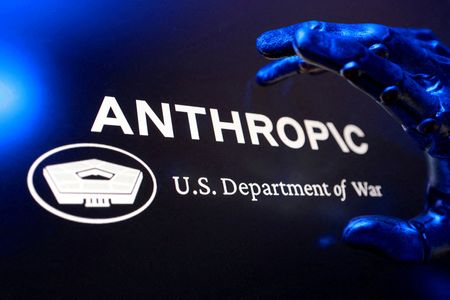
After the Pentagon labeled Anthropic’s products a “supply-chain risk” in March and legal disputes emerged between the parties, military officials have shown heightened interest in AI startups. Andrew Markoff, who co-founded and runs the 19-employee Smack Technologies in El Segundo, California, said the military’s message has been clear: “We want more, we want demos, let’s talk about how we can move faster.” A judge issued a temporary order in late March preventing the Pentagon’s blacklisting of Anthropic.
Tyler Saltsman, who co-founded and leads EdgeRunner AI, reported similar developments. His company had been waiting over a year for Space Force contract approval to navigate Pentagon procurement processes. The agreement was finalized within weeks of the Anthropic controversy becoming public. “I can’t prove that the Anthropic drama sped this up,” Saltsman noted, “but I have a sneaky suspicion it did.”
A Pentagon spokesperson stated: “The Pentagon will continue to rapidly deploy frontier AI capabilities to the warfighter through strong industry partnerships across all classification levels.”
A Pentagon technology official previously informed Reuters that the dispute with Anthropic, combined with the recognition that the Defense Department relied too heavily on a single AI provider, compelled the agency to broaden its supplier base.
MARINE CORPS CONTRACT ACCELERATION
Smack’s experience with the Marine Corps provides the most concrete illustration of post-Anthropic momentum. The company secured a Marine Corps contract in March 2025 and successfully delivered a prototype by October – software capable of condensing what typically requires months of operational planning into approximately 15 minutes.
Although the prototype proved successful, progress slowed considerably. Full-scale production had been scheduled for fiscal year 2027, meaning implementation wouldn’t begin until October 2027 at the earliest. Throughout the 2025 holiday season and into early 2026, the project lacked clear direction.
Following the Anthropic controversy, Smack received invitations to numerous Marine Corps meetings centered on one key question: how quickly could production begin this year? Markoff described “very specific guidance and movement and energy” toward preparing the prototype for combat deployment in 2026 – advancing the timeline by more than a year.
Interest expanded beyond the Marines. While Smack maintains contracts with the Navy and Air Force, Markoff said inquiries arrived almost immediately from U.S. Special Operations Command and other military branches.
EdgeRunner, which operates with Army Special Forces units and holds a Space Force contract, reported that Navy engagement has accelerated significantly. Previously biweekly or monthly meetings now occur several times weekly.
Both EdgeRunner and Smack are now working rapidly to achieve higher security clearance levels – the requirement for accessing the most operationally critical applications and largest military contracts.
EdgeRunner reported that military officials indicated the company could reach IL-6 status, a security designation allowing access to secret and top-secret information, within three months – a timeframe Saltsman called extraordinary, considering the process typically requires 18 months or longer. He attributed this acceleration to pressure from Pentagon leadership to streamline procurement procedures and the urgency the Anthropic situation has brought to the department’s artificial intelligence initiatives.