Category: Business

  • United Airlines Implements New Policy Requiring Headphone Use or Risk Removal

    United Airlines Implements New Policy Requiring Headphone Use or Risk Removal

    United Airlines has implemented a new policy that gives flight crews the authority to remove passengers who refuse to use headphones during flights. The airline created this regulation after receiving numerous complaints from travelers frustrated by fellow passengers playing music, watching shows, or conducting phone calls without using personal audio devices.

    The new rule represents the airline’s effort to address ongoing issues with noise disturbances in the cabin that have been disrupting the travel experience for other passengers.

  • United Airlines Can Remove Passengers Who Won’t Wear Headphones

    United Airlines Can Remove Passengers Who Won’t Wear Headphones

    United Airlines has established a new policy that gives flight crews the authority to remove passengers who refuse to wear headphones during flights. The airline created this regulation in response to growing passenger complaints about disruptive audio from fellow travelers’ personal entertainment devices and phone calls.

    The new rule addresses a common source of in-flight tension where passengers are forced to listen to other people’s music, television programs, and telephone conversations throughout their journey. Flight attendants can now enforce headphone usage to maintain a quieter cabin environment for all travelers.

  • Middle East Crisis Threatens Global Computer Chip Supply, Prices Could Rise

    Middle East Crisis Threatens Global Computer Chip Supply, Prices Could Rise

    Semiconductor manufacturers in South Korea are raising alarms about potential supply chain disruptions stemming from the escalating Iranian conflict, warning that extended Middle Eastern instability could drive up computer chip costs worldwide.

    Following discussions with leadership from major companies including Samsung Electronics, the globe’s largest memory chip producer, ruling party legislator Kim Young-bae outlined industry concerns on Thursday about rising energy expenses and material shortages.

    The semiconductor sector also expressed worries that the regional turmoil might derail major technology companies’ long-term strategies to establish artificial intelligence computing facilities throughout the Middle East, which could reduce the current high demand for chips, according to Kim’s statements.

    “We say the semiconductor supercycle has arrived, but data centre plans are highly likely to be disrupted, potentially creating problems with chip demand,” Kim told journalists during a press conference.

    “Officials raised a possibility that semiconductor production could be disrupted if some of these key materials cannot be sourced from the Middle East,” he explained.

    Among the most critical concerns is the potential shortage of helium, a vital component used for temperature control during chip manufacturing processes. Currently, no substitute materials can replace helium’s role in semiconductor production, making Middle Eastern supplies particularly important.

    Memory chip manufacturer SK Hynix responded to these concerns by announcing adequate helium reserves and expressed confidence that their material procurement would remain unaffected. Samsung Electronics chose not to provide public commentary on the situation.

    According to industry representatives, chipmaking companies have been working to diversify their supply sources as Middle Eastern geopolitical instability has continued over recent years, with many securing advance material stockpiles as protective measures.

    Both Samsung Electronics and SK Hynix have experienced significant gains from increased memory chip pricing, fueled by worldwide competition among technology firms racing to construct AI computing centers.

    The concerns intensified after Amazon reported on Monday that several of its computing facilities in the United Arab Emirates and Bahrain sustained damage from drone attacks during the regional conflict, raising questions about major technology companies’ expansion timeline in the area.

    American technology leaders including Microsoft and Nvidia have been establishing the UAE as a central location for artificial intelligence processing capabilities required to operate services like ChatGPT.

    The current crisis escalated after Iran launched multiple drones and missiles targeting Gulf nations in response to American and Israeli military actions that resulted in the death of Supreme Leader Ayatollah Ali Khamenei on Saturday.

  • Swiss Pharma Giant Roche Warns of Ongoing US Tariff Impact on Diagnostics

    Swiss Pharma Giant Roche Warns of Ongoing US Tariff Impact on Diagnostics

    The chairman of Swiss pharmaceutical giant Roche indicated Saturday that while the company’s drug products should stay protected from US import duties under a recent government agreement, its diagnostics operations continue facing tariff challenges.

    Severin Schwan told the Swiss publication Neue Zuercher Zeitung that Roche was among nine major drug manufacturers that struck a December deal with President Donald Trump, agreeing to reduce medication prices in exchange for three-year tariff protection.

    “As far as pharmaceuticals are concerned, we assume our agreement with the government is binding and that we will continue to be exempt from tariffs on the import of medicines,” Schwan stated in the interview.

    However, he emphasized ongoing concerns about another major part of the business: “But our diagnostics business continues to be significantly affected.”

    According to Schwan, Roche’s diagnostics arm – which brought in nearly 14 billion Swiss francs in revenue during 2025 – ships substantial quantities of testing equipment and instruments from Switzerland and other European locations to American markets.

    The company also manufactures diagnostic products within the United States that face import duties from China, creating a complex tariff situation.

    “But because China has introduced retaliatory tariffs, we end up, as a U.S. net exporter, paying tariffs twice. That’s absurd,” Schwan explained.

    The chairman anticipates Washington will reimpose import duties through alternative legal mechanisms once the current 150-day tariff suspension concludes.

    Despite these trade challenges, Schwan dismissed any possibility of separating the diagnostics unit from the main company. “That is not a topic at all. We are sticking with it,” he assured the newspaper.

  • Nvidia Stops Making AI Chips for China Market, Report Says

    Nvidia Stops Making AI Chips for China Market, Report Says

    Computer chip manufacturer Nvidia has ceased manufacturing its H200 artificial intelligence processors designated for Chinese customers, according to a Thursday report from the Financial Times.

    The technology company has redirected production resources at manufacturing partner TSMC from creating H200 processors to focus on its upcoming Vera Rubin technology, the Financial Times reported, referencing two sources familiar with the situation.

    Neither Nvidia nor TSMC provided immediate responses when contacted for verification of the report by Reuters.

    The development comes just one week after Nvidia announced it had obtained U.S. government approval to deliver “small amounts” of H200 processors to Chinese clients. The production halt indicates the company doesn’t anticipate significant H200 revenue from China in the immediate future.

    A representative from the U.S. Commerce Department stated last month that Nvidia had not completed any H200 processor sales to Chinese buyers.

    Earlier this year, the Trump administration officially approved Nvidia’s H200 processor exports to China in January, though actual deliveries have been delayed by regulatory safeguards embedded in the approval process.

  • Global Markets Mixed as Middle East Crisis Sparks Economic Uncertainty Debate

    Global Markets Mixed as Middle East Crisis Sparks Economic Uncertainty Debate

    Financial analysts are questioning whether the ongoing Middle East turmoil will create lasting economic disruption or merely temporary market fluctuations, according to a global markets overview by Rocky Swift.

    The debate centers on conflicting assessments from top officials about the conflict’s economic impact and its effects on worldwide commerce.

    Taking an optimistic stance, U.S. Energy Secretary Chris Wright described the Iranian conflict situation to Fox News as representing a “small price” worth paying to accomplish America’s strategic military objectives, despite the violence claiming hundreds of lives and disrupting regional oil transport.

    International Monetary Fund leader Kristalina Georgieva offered a more cautious perspective, predicting extended market instability as the warfare – initiated by American and Israeli airstrikes that resulted in Iran’s supreme leader’s death – continues to challenge economic systems worldwide.

    Diplomatic solutions remain elusive, with no new pathways emerging to end the violence or improve safety for vessels navigating the Strait of Hormuz. The Republican-controlled Senate rejected legislation designed to halt aerial bombardments against Iran, which responded by launching additional missile attacks targeting Israel.

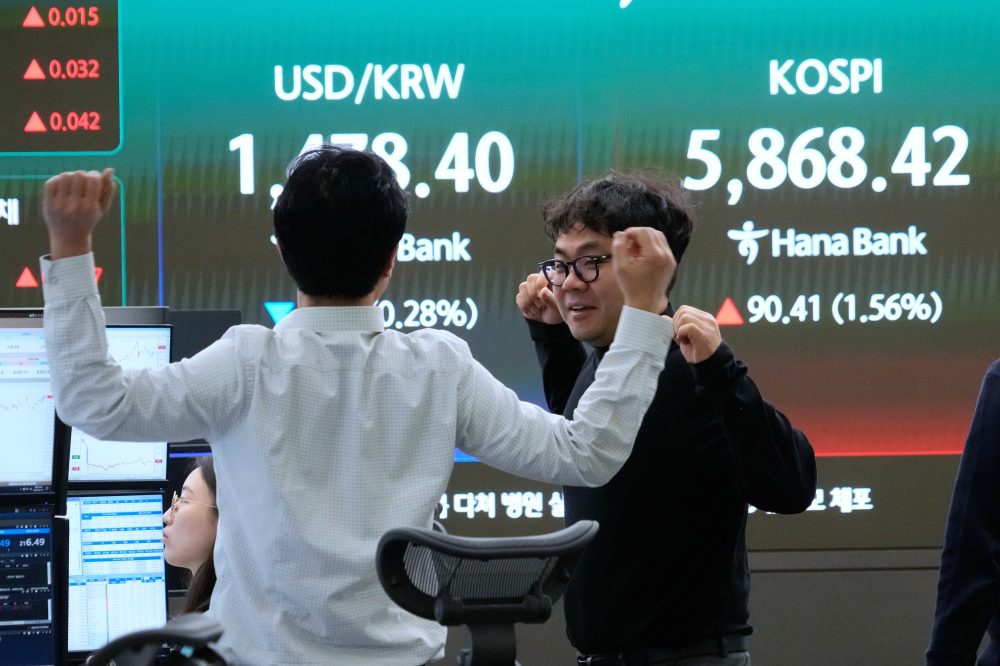
    Financial markets displayed mixed reactions to the ongoing tensions. Asian trading sessions showed strong gains, particularly in South Korea’s KOSPI index, while oil values maintained their upward trajectory and gold prices climbed as investors sought secure investments.

    China’s National People’s Congress commenced with various policy announcements and economic plans. Chinese markets responded favorably to slightly reduced growth projections, interpreting this as evidence of efforts to restructure the economy toward increased domestic spending.

    European and American stock futures initially showed positive movement before shifting downward, suggesting potential declines when those markets begin trading.

    Thursday’s market-moving events include eurozone January retail sales data, remarks from European Central Bank President Christine Lagarde, French industrial production figures and government bond auctions, UK debt auction activities, and U.S. employment claims, layoff statistics, productivity measurements, and import pricing information.

    Federal Reserve officials Austan Goolsbee from Chicago and supervision vice chair Michelle Bowman are also scheduled to deliver speeches.

  • Former Star Entertainment Executives Found Guilty of Duty Violations

    Former Star Entertainment Executives Found Guilty of Duty Violations

    Australia’s corporate oversight agency announced Thursday that a federal court has determined two former top-level Star Entertainment officials violated their corporate responsibilities in managing money laundering and criminal activity risks.

    The Australian Securities and Investment Commission (ASIC) reported that the court ruled against former CEO and Managing Director Matthias Bekier and former Chief Legal & Risk Officer Paula Martin for breaking the law. However, the court rejected ASIC’s claims against seven former board members who served in non-executive roles.

    According to ASIC, the court cleared Bekier of wrongdoing regarding his approval to increase Star’s credit limits with two gambling junket operators, including Suncity, and his oversight of the company’s business relationship with Sixin Qin.

    The regulator stated that Martin failed to properly inform the board about potential risks from Star’s agreement with Suncity and participated in providing false information to the casino company’s banking partner, National Australia Bank, concerning customer use of CUP cards.

    ASIC announced plans to ask the court to impose monetary fines on both former executives and to ban them from corporate management positions for a designated time period.

    The company’s stock price dropped 4.2% to close at A$0.115, marking the lowest closing value since February 17.

  • Tesla’s UK Vehicle Sales Plummet 37% Amid Rising Chinese EV Competition

    Tesla’s UK Vehicle Sales Plummet 37% Amid Rising Chinese EV Competition

    Electric vehicle manufacturer Tesla saw a steep decline in UK vehicle registrations last month, with February numbers falling 37% compared to the previous year, according to new data released Thursday by the Society of Motor Manufacturers and Traders (SMMT).

    The company’s UK registrations dropped to 2,422 vehicles in February, down from 3,852 units during the same month in 2024. This decline occurred while Chinese electric vehicle manufacturers like BYD continue expanding their market presence.

    Despite Tesla’s struggles, the broader UK automotive market showed strength, with total new vehicle registrations climbing 7.2% to reach 90,100 units. Industry data indicates this represents the strongest February performance since 2004, driven largely by improved private retail purchases.

    Tesla representatives pushed back against using monthly registration figures as a measure of company performance. “Tesla monthly registration figures are not an accurate reflection of sales or orders taken,” a company spokesperson told UK media outlets, explaining that quarterly data provides a more accurate picture due to how vehicles are shipped from manufacturing facilities to the UK market.

    The spokesperson added: “Across January and February the orders and reservations from customers far exceed their respective months in 2025 and 2024, however these orders remain unfulfilled as we have not yet registered and delivered these cars to customers.”

    These findings align with separate research published Wednesday by transport analysis firm New Automotive, which recorded Tesla’s February sales at approximately 2,208 vehicles, representing nearly a 50% decline.

    Meanwhile, Chinese competitor BYD demonstrated strong growth, with New Automotive reporting a 40% increase in sales, while SMMT data showed an even more dramatic 83% surge. However, BYD’s total volume still remains below Tesla’s numbers in the UK market.

    The variation in reported figures stems from different data collection methods and sources used by SMMT and New Automotive in their respective analyses.

  • Oil Price Spike Could Slow World Economy, Goldman Sachs Warns

    Oil Price Spike Could Slow World Economy, Goldman Sachs Warns

    Investment banking giant Goldman Sachs warned Thursday that rising Middle East tensions could push oil prices to $100 per barrel, creating significant headwinds for the global economy as conflicts in Iran threaten to disrupt crucial energy supplies from the region.

    The financial firm’s analysts project that such an oil price spike would reduce worldwide economic growth by 0.4 percentage points, while simultaneously driving up inflation across the globe.

    Goldman’s current projections show oil prices climbing somewhat higher before settling back to an average of $76 per barrel during the first three months of 2026, then dropping further to $65 by year’s end.

    However, in a more pessimistic scenario, the investment bank anticipates crude prices could surge to approximately $100 per barrel before returning to normal levels throughout 2026.

    According to Goldman’s baseline predictions, the world economy would face a “modest” 0.1 percentage point reduction in GDP growth, coupled with a 0.2 percentage point increase in overall inflation rates.

    Should oil reach the $100 threshold, global inflation could jump by 0.7 percentage points, the analysts noted.

    The report indicates that central banks typically don’t respond immediately to oil market disruptions, though they often implement modest policy tightening when inflation rises or price shocks become severe.

    Under Goldman’s standard forecast, worldwide monetary policy is expected to remain largely unchanged. However, policymakers might adopt a more aggressive stance – potentially delaying interest rate reductions in developing nations – if crude oil hits $100 per barrel or if increased costs affect consumer prices more dramatically than usual.

    The analysts expect elevated oil prices to reduce real incomes and consumer spending in most countries, while oil-producing nations like Canada and various Latin American economies could see economic benefits from higher energy revenues.

  • Swiss Skincare Giant Galderma Stock Jumps on Strong Sales Growth

    Swiss Skincare Giant Galderma Stock Jumps on Strong Sales Growth

    Stock prices for Galderma, a Swiss-based skincare corporation, climbed Thursday morning following the company’s announcement of strong annual revenue performance and optimistic future projections.

    The skincare giant reported annual revenue of $5.21 billion, representing a 17.7% increase from the previous year. The company’s Therapeutic Dermatology division led this impressive performance, with sales jumping more than 50% primarily due to its newly introduced Nemluvio treatment. This medication addresses chronic skin disorders including atopic dermatitis and prurigo nodularis.

    Looking ahead to 2026, Galderma forecasts revenue growth between 17% and 20%, along with core profit margins reaching approximately 26% when calculated on a constant-currency basis.

    By mid-morning trading, the company’s stock had climbed roughly 7%. Financial analysts from Vontobel noted that these projections surpassed market expectations, contributing to investor enthusiasm.

  • Chinese Semiconductor Leaders Push for National Chip Equipment Development

    Chinese Semiconductor Leaders Push for National Chip Equipment Development

    Leading semiconductor industry executives in China are pressing their government to launch a unified national initiative aimed at developing advanced chip manufacturing equipment during the next five-year planning cycle from 2026 to 2030.

    Three prominent industry leaders – Zhao Jinrong of Naura Technology Group, Chen Nanxiang of Yangtze Memory Technologies Corp, and Liu Weiping of Empyrean Technology – collaborated with major semiconductor research institutions on a joint article published Wednesday evening. The piece advocates for Beijing to consolidate national resources and coordinate technological advances across various organizations.

    The semiconductor industry has become a central focus of tensions between China and the United States since 2020, with Washington implementing export controls designed to prevent China from advancing its production capabilities for chips smaller than 7-nanometers.

    In their published article in Science and Technology Review, a publication connected to China’s association of science and technology professionals, the executives used Dutch company ASML as a model for what China hopes to achieve.

    “Taking lithography machines as an example, ASML’s extreme ultraviolet (EUV) equipment has 100,000 components supplied by 5,000 suppliers, with ASML merely serving as the integrator,” the industry leaders explained in their article.

    ASML Holding, based in the Netherlands, currently stands as the only global provider of EUV lithography equipment, which is crucial for manufacturing the most sophisticated semiconductor chips that power mobile devices, artificial intelligence systems, and high-performance computing.

    “How to establish China’s ASML, so that the ‘integrated’ can jump out of the barrier of ‘fame and fortune’, and uniformly allocate funds and human resources is an urgent issue that relevant departments should immediately formulate implementation plans,” the executives stated.

    According to the industry leaders, Chinese research institutions have achieved significant advances in various EUV components including laser light sources, wafer positioning systems, and optical assemblies. However, they emphasized that combining these individual breakthroughs into a functioning complete system represents a critical challenge that must be addressed during China’s upcoming 15th five-year planning period.

    The article highlighted additional technological gaps requiring government coordination, including electronic design automation software and essential materials like silicon wafers and specialized gases used in chip production.

    China’s latest government work report, released Thursday, officially designated semiconductors as a fundamental component of emerging industries, alongside aerospace, biotechnology, and low-altitude economic activities.

    During the report presentation, Chinese Premier Li Qiang emphasized recent progress in domestically-led semiconductor research and development initiatives.

    While the five-year strategic plan did not specifically reference lithography equipment, it called for efforts to ‘improve advanced process manufacturing capabilities, accelerate the development of key equipment, materials and components.’

    Data published in Science and Technology Review indicates that China’s semiconductor manufacturing capacity for mature 28-nanometer processes and larger accounts for one-third of worldwide capacity, with both production and design activities facing no current restrictions.

    The semiconductor executives also recommended establishing public research platforms equipped with cutting-edge processing capabilities to investigate, develop, and test new device architectures, manufacturing equipment, components, materials, and design software.

  • Hong Kong Company Demands $2B From Panama After Port Seizure

    Hong Kong Company Demands $2B From Panama After Port Seizure

    A Hong Kong business subsidiary that lost operational control of two strategic Panama Canal ports announced Friday it will pursue $2 billion in damages from Panama’s government following what it calls an unlawful seizure of the facilities.

    The Panama Ports Company, which operates under Hong Kong’s CK Hutchison Holdings, revealed it is pursuing this compensation amount through international arbitration processes already underway.

    Last week, Panama’s administration took operational control of the Balboa and Cristobal port facilities located at opposite ends of the Panama Canal, the vital shipping route for global maritime commerce. This action followed a ruling by Panama’s highest court that deemed the operating agreement permitting Panama Ports Company to manage both facilities as unconstitutional.

    The Hong Kong firm had managed both port operations since 1997 and recently extended its operating agreement in 2021 for an additional quarter-century. Both Beijing and Hong Kong officials have criticized Panama’s seizure of these strategic facilities.

    These port facilities gained international attention when former U.S. President Donald Trump claimed early last year that China was controlling Panama Canal operations.

    Following CK Hutchison’s announcement in March of last year regarding a $23 billion transaction to transfer most of its worldwide port holdings, including the Panama facilities, to a group involving U.S. investment giant BlackRock, Beijing strongly objected and the transaction has remained stalled for months.

    “CK Hutchison and the Panama Ports Company will not relent and they are not coming for some token relief – they will assert all of their rights and damages they are due because of the radical breaches and anti-investor conduct of the Panamanian State,” Friday’s statement said.

    The company also clarified that Panama’s government had incorrectly reported the requested compensation amount in previous public statements. Panama’s Economy Minister Felipe Chapman had previously indicated the firm was pursuing $1.5 billion in damages.

    In a second Friday announcement, CK Hutchison accused Panama of occupying both port facilities and seizing Panama Ports Company assets and staff members without proper transparency. The corporation stated it would continue pursuing available domestic and international legal remedies regarding this matter.

  • Middle East Conflict Drives Gas Prices Up 11% in One Week Across Delaware

    Middle East Conflict Drives Gas Prices Up 11% in One Week Across Delaware

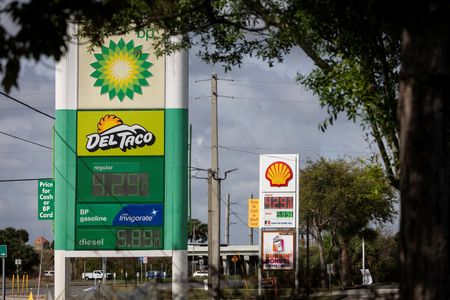
    Energy costs are climbing sharply across Delaware and the nation as military conflict in the Middle East enters its second week, with no clear resolution in sight.

    The escalating situation began when U.S. and Israeli forces conducted major strikes against Iran, sparking a broader regional conflict that has now affected nearly every Middle Eastern nation through missile and drone attacks.

    Maritime traffic carrying approximately 20 million barrels of daily oil production remains stuck in the Persian Gulf, unable to navigate safely through the Strait of Hormuz – the critical shipping channel that borders Iran’s northern coast.

    Damage to essential oil and natural gas infrastructure throughout the region has created significant supply disruptions.

    By Friday’s close, crude oil costs had skyrocketed past $90 per barrel, with U.S. crude finishing at $90.90 – representing a 36% weekly increase. International Brent crude jumped 27% during the same period, reaching $92.69.

    These dramatic price increases are directly impacting what Delaware residents and businesses pay for gasoline, diesel fuel, and aviation fuel, with many motorists already noticing higher costs when they fill up.

    “It’s crazy. It’s not needed, especially at a time when people are already struggling, but not unexpected from all this turmoil that’s going on,” commented Mark Doran while refueling in Middlebury, Vermont on Friday. “I don’t think there’s been an end in sight to any Middle East conflict that’s been started by us, so the fact that they say that there’s going to be an end that quickly is not believable, and the Middle East is, you know, a place that the U.S. is not going to solve.”

    Earlier this week, President Donald Trump indicated that American military actions against Iran were expected to continue for four to five weeks, though he noted the country has “the capability to go far longer.” By Friday, Trump seemed to dismiss potential negotiations with Iran unless they agreed to “unconditional surrender.”

    “The more news we get, the more it seems like this is going to last a really long time,” explained Al Salazar, who leads macro oil and gas research at Enverus.

    According to AAA motor club data, regular gasoline nationwide reached $3.32 per gallon Friday, marking an 11% jump from the previous week. Diesel fuel climbed to $4.33 per gallon, up 15% over the same timeframe.

    International markets dependent on Middle Eastern energy supplies are experiencing even more severe price increases. European diesel costs have doubled, while Asian jet fuel prices have surged nearly 200%, according to Claudio Galimberti, chief economist at Rystad Energy.

    Energy costs continued rising throughout the week as Iran launched multiple retaliatory strikes, including a drone attack on the American Embassy in Saudi Arabia, expanding the conflict’s scope. Iranian forces also targeted a major Saudi Arabian refinery and a liquefied natural gas facility in Qatar, stopping refined product flows and removing approximately 20% of global LNG supply from the market.

    “We keep seeing news of vessels being hit or refineries or pipelines, so the list is very long,” Galimberti noted. He estimates that roughly 9 million barrels of daily oil production are currently unavailable due to facility damage or precautionary shutdowns by producers. “Right now, with all of this shut in, we are in a situation of extreme deficit.”

    While the United States exports more oil than it imports, this doesn’t shield American consumers from global price increases or guarantee that domestic producers can quickly compensate for lost supply.

    Oil trades on international markets, meaning even American-produced crude has increased in value based on Middle Eastern developments. Additionally, for many U.S. oil companies, “if you put more wells in the ground, there’s about a six-month lag before you get that production uplift,” Salazar explained.

    The U.S. also cannot simply convert all its crude oil into gasoline. Most American oil production consists of light, sweet crude, while East and West Coast refineries are primarily configured to process heavier, sour crude. Consequently, the U.S. exports some crude oil while importing certain refined products like gasoline.

    Jerry Dalpiaz from Covington, Louisiana, said he began filling his vehicles and gas containers “the day that they announced that the United States has started military operations against Iran” because he anticipated rising fuel costs.

    “I can weather the storm because I’m in good financial position, but I feel sorry for my fellow citizens who are living paycheck to paycheck because they have to drive to get to work and they have to change their oil and all those things,” Dalpiaz said. “And they need some relief and it doesn’t seem to be coming anytime soon.”
    On Friday, Trump announced a plan to provide insurance coverage for losses up to approximately $20 billion in the Gulf region, designed to restore maritime trade confidence, help stabilize international commerce, and support American and allied Middle Eastern business operations.

    However, some energy analysts believe additional insurance won’t address the underlying security concerns.

    “The problem is that in the oil trading, oil shipping world, people are worried about counterterrorism,” said Amy Jaffe, director of the Energy, Climate Justice and Sustainability Lab at New York University, noting concerns about automated drone speedboats, weapon-carrying flying drones, and mines or other explosive devices. “In order for the United States to create the atmosphere that undoes the current bottleneck at the Strait of Hormuz, there has to be some credible demonstration of solutions to the counter-terrorism problem.”

    Salazar questioned what the “new normal” might look like if the Strait of Hormuz could be effectively reopened, and what adequate security measures would entail.

    “All it takes is one individual with a RPG (rocket-propelled grenade) to stand on the shore and take out a tanker, right?” Salazar said. “And this is forever, do you know what I mean?”

  • Chinese E-Commerce Giant JD.com Falls Short of Revenue Expectations

    Chinese E-Commerce Giant JD.com Falls Short of Revenue Expectations

    Chinese e-commerce powerhouse JD.com delivered disappointing financial results Thursday, falling below analyst expectations for quarterly revenue as the company grapples with fierce market competition and diminishing benefits from government support programs.

    The challenging business environment reflects broader economic struggles across China, where consumer spending has weakened due to an ongoing real estate crisis, job market uncertainties, and international trade tensions that have slowed growth in the world’s second-biggest economy.

    These economic headwinds have particularly impacted retailers like JD.com, which dominates China’s home appliance market, as consumers reduce spending on non-essential items. Although the company previously benefited from government subsidy programs over recent quarters, those advantages are now diminishing as year-over-year performance comparisons become more challenging.

    To counter these pressures, JD.com has expanded into different product lines and developed new income sources, including its instant retail operations and advertising services.

    “Our revenue mix has become increasingly diversified, and as profitability strengthens … and higher-margin businesses such as advertising contribute a larger share, we are confident that our profit streams will become more diversified as well,” stated JD.com Chief Financial Officer Ian Su Shan.

    “Despite some short-term fluctuations in the fourth quarter, our financial position remains solid,” Su Shan added.

    The company’s stock price showed modest gains during pre-market trading in the United States.

    JD.com continues to battle intensifying competition from e-commerce competitors including Alibaba and PDD Holdings, which have increased promotional offers on their Chinese market platforms. These companies have all committed significant resources to sales promotions and price reductions, leading to reduced profit margins across the sector.

    For the quarter ending in December, JD.com reported revenue growth of 1.5% reaching 352.3 billion yuan (equivalent to $51.12 billion), which fell short of the analyst consensus estimate of 353.86 billion yuan compiled by LSEG.

    The company recorded a net loss of 2.7 billion yuan for ordinary shareholders during the quarter, contrasting sharply with the 9.9 billion yuan profit achieved in the same period last year.

  • Investment Giant BlackRock Restricts Fund Withdrawals Amid Market Turmoil

    Investment Giant BlackRock Restricts Fund Withdrawals Amid Market Turmoil

    Investment management giant BlackRock announced Friday it has imposed restrictions on withdrawals from one of its major debt funds following an unprecedented surge in investor requests to pull their money out, signaling growing unease in the massive $2 trillion private credit market.

    The company’s stock price dropped 5.7% on the New York Stock Exchange following the announcement.

    Investor confidence in private credit has deteriorated over recent months, with retail investors increasingly seeking to exit funds such as BlackRock’s $26 billion HPS Corporate Lending Fund (HLEND), which was originally structured to serve affluent individual investors.

    Recent corporate failures have heightened concerns about lending practices, including bankruptcies of a U.S. automotive parts company and a subprime vehicle lender last year, plus the recent failure of a British mortgage lending firm.

    The trend has affected other major players as well. Earlier this week, competitor Blackstone raised its typical 5% redemption cap to 7% on an $82 billion fund, while the firm and its staff injected $400 million to satisfy all withdrawal requests. Blue Owl repurchased 15.4% of one of its funds during January.

    HLEND faced withdrawal demands totaling $1.2 billion during the first quarter, representing approximately 9.3% of the fund’s total net asset value.

    The fund informed investors it would distribute $620 million through its quarterly redemption process, reaching the 5% threshold that typically allows fund managers to impose withdrawal restrictions.

    The fundamental challenge stems from a structural disconnect in how these funds operate.

    HLEND operates as a business development company (BDC), which BlackRock obtained through its acquisition of HPS Investment Partners in a $12 billion expansion into private credit during 2024. The fund reported that withdrawal requests exceeded the 5% threshold for the first time in its history.

    BDCs collect capital primarily from individual investors and deploy it in loans to medium-sized businesses that typically cannot be liquidated quickly, creating problems when large numbers of investors simultaneously seek to exit.

    Blackstone President Jon Gray noted last week that institutional investors continue putting money into private credit investments.

    HLEND explained that the 5% restriction helps avoid “a structural mismatch between investor capital and the expected duration of the private credit loans in which HLEND invests.”

    New investments in the fund totaled $840 million during the first quarter, falling short of the $1.2 billion in withdrawal requests from existing investors.

    According to HLEND’s description, its loan portfolio focuses on established private companies with consistent cash generation, structured to receive priority repayment in bankruptcy situations. The fund distributes dividends on a monthly basis.

    Company filings show that 19% of HLEND’s investments are concentrated in software companies, a sector experiencing significant selling pressure as investors worry about disruption from artificial intelligence-focused startups.

    Market participants are also moving toward safer investments as financial markets experience increased volatility this year, driven by concerns about potential economic slowdown from extended Middle East conflicts, AI-related business disruptions, and loan payment failures.

    HPS stated that the current market volatility presents investment opportunities for the firm.

  • Stock Exchange Pays $9M Fine After Computer Error Crashes Market Opening

    Stock Exchange Pays $9M Fine After Computer Error Crashes Market Opening

    The New York Stock Exchange has reached a $9 million settlement with federal regulators following a major computer malfunction that caused chaos during market opening in early 2023.

    The Securities and Exchange Commission announced Friday that the fine resolves charges related to a technical failure on January 24, 2023, when NYSE accidentally operated both its main trading platform and backup system at the same time.

    The computer error fooled the primary system into believing that opening auctions had already taken place for 2,824 of the exchange’s 3,421 listed companies at that time, according to regulators.

    The malfunction triggered trading suspensions for 84 stocks, with 81 of those securities experiencing unexplained price drops exceeding 10%. More than 4,000 trades had to be canceled as a result.

    Major corporations caught up in the technical snafu included ExxonMobil, McDonald’s, 3M, Verizon, Walmart and Wells Fargo.

    Federal regulators said it took NYSE officials 39 minutes to discover the problem with opening auctions and an additional 44 minutes to fully understand the extent of the disruption.

    The SEC determined that the exchange lacked proper written protocols and procedures to handle the auction process. NYSE compensated member firms more than $5.77 million for losses from the incident.

    Intercontinental Exchange, the Atlanta-based parent company of NYSE, issued a statement saying it has improved its systems and procedures since the incident. The company maintained that “NYSE opening and closing auctions continue to be the most reliable liquidity event for NYSE-listed symbols.”

  • Global Investment Funds Drop Sharply Due to Middle East Tensions

    Global Investment Funds Drop Sharply Due to Middle East Tensions

    International investment funds targeting developing nations have experienced significant losses throughout March as rising tensions involving Iran prompted investors to abandon riskier investments, positioning these funds among the poorest performing investment options available.

    According to data from LSEG Lipper, investment funds concentrating on Pakistan, Chile, Greece, Colombia, Argentina, the United Arab Emirates and Saudi Arabia experienced the most substantial losses during the past month among 518 investment categories that Lipper monitors.

    This downturn comes after developing market investments showed impressive performance at the beginning of the year, fueled by lower prices, promising growth potential and a declining U.S. dollar.

    The MSCI emerging markets stock index dropped over 6% during this week, while the MSCI World Index fell 2.2% and the MSCI United States declined just 0.7%.

    Data tracking approximately 13,000 developing market equity funds revealed that weekly investment inflows decreased to $5.8 billion this week, marking the smallest amount in seven weeks.

    Goldman Sachs indicated that should the current disruption remain brief, the overall impact on company earnings might stay contained due to the relatively stable sector composition, and the firm continues to project 25% growth in MSCI EM earnings per share by 2026.

    “However, higher starting valuations following strong gains last year leave EM equity markets vulnerable to near-term correction risks,” the brokerage said.
  • Middle East Conflict Disrupts Global Fashion Supply Chain, Strands Clothing Shipments

    Middle East Conflict Disrupts Global Fashion Supply Chain, Strands Clothing Shipments

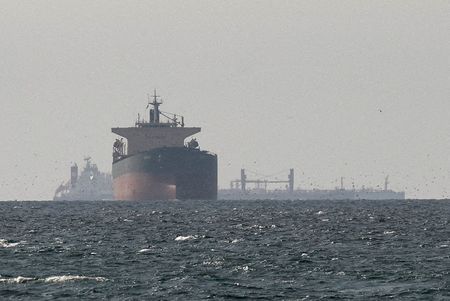
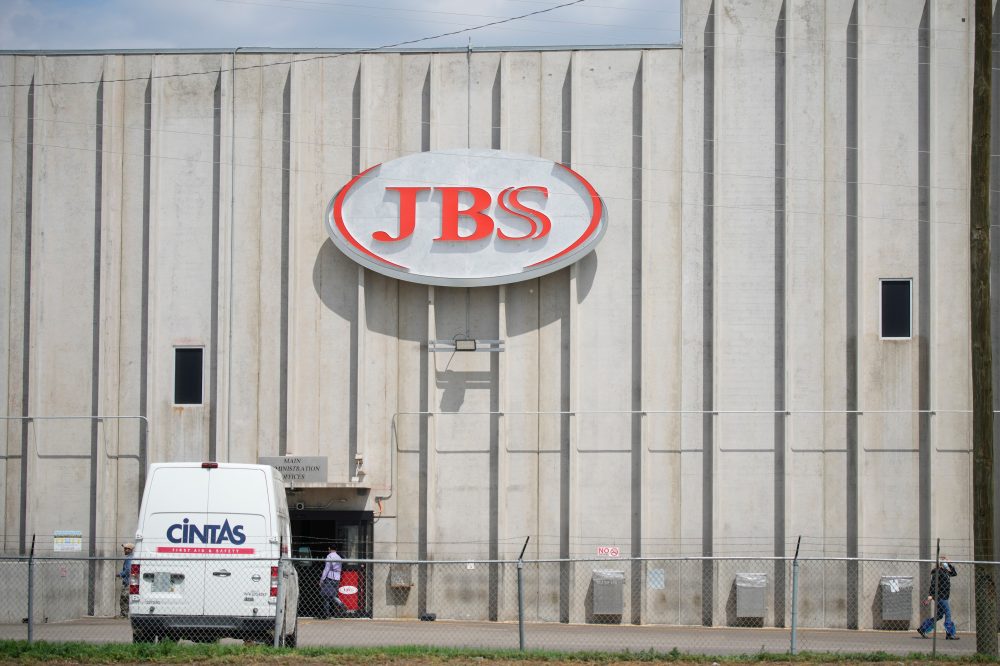
    Clothing shipments destined for major retailers including Zara’s parent company Inditex are sitting idle at airports across Bangladesh and India as ongoing Middle East conflicts force major airlines like Emirates and Qatar Airways to suspend operations, according to manufacturing industry sources.

    The region serves as a global hub for clothing production, with fast fashion companies depending heavily on factories throughout Bangladesh, India and Pakistan to supply their constant demand for new apparel items.

    Shovon Islam, who leads the Sparrow Group manufacturing company and works with European brands including Inditex, M&S, Next, and Primark, described the challenging situation his company faces.

    “Some of my apparel consignments are currently stuck at Dhaka airport,” Islam explained. “They were supposed to be flown to the UK via Dubai, but with operations at Dubai airport suspended, we are now in a very difficult position. We’re trying to figure out alternative routes, but none of them are simple or cost-effective.”
    The closure of Middle Eastern airspace began last Saturday when the conflict started, resulting in the shutdown of Dubai’s airport – the world’s busiest international hub – for multiple days. This has led to widespread flight cancellations across Emirates, Qatar Airways, and Etihad.

    According to Frederic Horst, who manages operations at Sydney’s Trade and Transport Group, South Asian exporters depend extensively on Gulf-based carriers for their cargo needs, typically using space on passenger flights along with dedicated freight aircraft.

    The impact is substantial, with over half of Bangladesh’s air cargo and 41% of India’s shipments traveling through Gulf routes, making Emirates and Qatar Airways essential carriers for the region.

    Inditex maintains extensive supplier networks in the affected region, working with 150 facilities in Bangladesh, 122 in India, and 69 in Pakistan based on company data from 2023. The company has not responded to inquiries about how the transportation disruptions are affecting their operations.

    The reduced flight availability has created a sharp spike in shipping costs across the industry.

    Alexander Nathani, who partners with Mumbai-based Kira Leder to produce leather jackets for Inditex and Austrian retailers including Cigno Nero, Fussl and Wiedner, reports that transportation expenses from Mumbai to Austria have doubled due to the cancellations.

    “The whole freight capacity is being blocked now on the airlines that are flying, so prices are increasing,” Nathani noted. “One consignment in Pakistan is stuck in the factory, and the other consignment from Mumbai is being accepted for Swiss Air on Monday – let’s hope they’re also flying and that it all goes.”

    When contacted about the shipping disruptions from South Asia, retailers Primark, H&M and M&S indicated that most of their merchandise travels by ocean freight rather than air transport. Next has not yet provided a response to questions about the situation.

    Mohammad Hatem, who heads the Bangladesh Knitwear Manufacturers and Exporters Association, warned that the problems could expand beyond air transport.

    “The suspension of cargo flights due to airspace closures in the Middle East is already disrupting air shipments,” Hatem stated, adding concerns about potential closure of the Strait of Hormuz shipping channel between Iran, Oman and the UAE, which could drive up ocean transport costs as well.

    “All in all, we are worried – we can see another major crisis ahead.”

  • US Dollar Still Safe Haven Despite Challenges, Australian Bank Official Says

    US Dollar Still Safe Haven Despite Challenges, Australian Bank Official Says

    A senior Australian banking official indicated on Friday that America’s financial dominance on the world stage might eventually diminish, though recent investor behavior during Middle East tensions demonstrates the dollar continues to serve as a refuge during uncertain times.

    During remarks at a New York policy discussion, Reserve Bank of Australia Deputy Governor Andrew Hauser observed that there’s minimal evidence yet of any lasting erosion in confidence regarding United States financial stability, despite the greenback experiencing weakness amid trade policy uncertainties in the previous year.

    “While the events of 2025 could be a sign that things have changed, what we saw was far from unique. It is surely noteworthy that the dollar did appreciate following the recent attacks on Iran,” said Hauser.

    “In truth, the dollar has never been a perfect hedge for all risk-off events, appreciating most persistently during periods of funding stress associated with strong demand for the currency.”

    Hauser emphasized that international investors continue purchasing substantial amounts of American assets, contradicting widespread reports suggesting money is flowing away from the US toward alternative investments in countries like Australia. He noted that investment flows into Australia have stayed consistent with historical patterns.

    Nevertheless, Hauser identified one significant shift: increased capital moving into America over recent months has primarily targeted stocks rather than bonds.

    This pattern indicates a potential transition away from what economists call “exorbitant privilege” – the unique advantage allowing America to borrow extensively because the dollar serves as the world’s primary reserve currency, according to Hauser.

  • Boeing Nears Historic 500-Plane Deal During Trump’s China Visit

    Boeing Nears Historic 500-Plane Deal During Trump’s China Visit

    Aircraft manufacturer Boeing is on the verge of securing what could rank among its most significant sales agreements ever, according to a Bloomberg News report released Friday. Sources with knowledge of the negotiations indicate the deal involves approximately 500 Boeing 737 Max aircraft.

    The massive purchase agreement is expected to be revealed during President Donald Trump’s upcoming state visit to Beijing, marking his first official trip to China since 2017. The timing of the announcement appears coordinated with the high-profile diplomatic meeting between the two world leaders.

    Industry insiders familiar with the negotiations provided details to Bloomberg News about the potential agreement, though specific financial terms were not disclosed in the March 6 report.

  • Wegovy Maker Novo Nordisk Partners with Hims & Hers After Legal Fight

    Wegovy Maker Novo Nordisk Partners with Hims & Hers After Legal Fight

    Pharmaceutical company Novo Nordisk and telehealth platform Hims & Hers Health have reached an agreement to collaborate following a legal confrontation that emerged last month, according to Bloomberg News reporting on Friday.

    The Danish drugmaker, which produces the popular weight-loss medication Wegovy, will now make its obesity treatments available through the Hims & Hers online health platform under the new partnership arrangement.

    According to Bloomberg’s report, which cited an unnamed source with knowledge of the situation, both companies are preparing to publicly reveal their collaboration agreement as early as Monday.

    The partnership marks a significant shift from the adversarial relationship that had developed between the two healthcare companies, transforming their recent legal conflict into a business alliance focused on expanding access to weight-loss treatments.

  • Gas Prices Jump 11% as Middle East Conflict Disrupts Oil Markets

    Gas Prices Jump 11% as Middle East Conflict Disrupts Oil Markets

    American drivers are feeling the squeeze at gas stations nationwide as fuel costs climb dramatically amid escalating military conflict with Iran that’s disrupting international oil markets. The rising prices could present political challenges for President Trump’s administration heading into November’s midterm elections.

    This week alone, fuel costs have increased by more than 10 percent while crude oil climbed past $90 per barrel – reaching multi-year highs that are adding financial pressure on families already dealing with broader inflation concerns. When asked about the climbing gas prices during a Thursday Reuters interview, Trump responded dismissively, stating “if they rise, they rise.”

    The current administration had promised to reduce energy costs and expand domestic oil and gas production during Trump’s second term, though his presidency has been characterized by market instability and unpredictability due to policy changes including tariffs and international tensions. While America leads the world in oil production and exports significant quantities, it also imports millions of barrels daily as the globe’s top oil consumer.

    According to AAA data released Friday, regular gasoline nationwide averaged $3.32 per gallon – an 11 percent jump from the previous week and the highest level recorded since September 2024. Diesel prices reached $4.33 per gallon, climbing 15 percent week-over-week to hit the highest point since November 2023.

    REGIONAL IMPACT HITS TRUMP SUPPORTERS

    Drivers across the Midwest and Southern regions, including areas that backed Trump in recent elections, are experiencing some of the most severe price increases since the Iranian conflict began.

    Georgia, considered a key swing state, saw retail gasoline prices climb by 40.1 cents per gallon during the past week, according to GasBuddy’s tracking data.

    South Fulton healthcare insurance employee Andrenna McDaniel expressed shock at the rapid price escalation she witnessed.

    “They jumped up so quickly,” McDaniel commented Friday, also stating her complete disagreement with the ongoing war.

    The Democratic voter explained she’s now limiting her driving to essential trips only and feels fortunate to work remotely, reducing her need to travel compared to other commuters.

    Georgia supported Donald Trump in the 2024 presidential race.

    Trump supporter Richard Soule, a 69-year-old Air Force veteran and retired firefighter, believes temporary financial hardship justifies the president’s actions to safeguard America.

    “When President Trump went in there and bombed out their nuclear, and they just thumbed their nose at it, I believe he did the right thing at the right time,” Soule stated Friday while refueling his Ford F-150 pickup in Marietta, Georgia.

    Additional states including Indiana and West Virginia have experienced price increases of 44.3 cents and 43.9 cents per gallon, respectively.

    ANALYSTS PREDICT CONTINUED INCREASES

    Industry experts warn that additional price hikes may be imminent as crude oil costs continue their upward trajectory. Friday’s trading saw U.S. oil futures close at $90.90 per barrel, gaining nearly $10 in the largest single-day increase since April 2020.

    “Given current market conditions, the national average price of gasoline could climb toward $3.50 to $3.70 per gallon in the coming days if oil continues rising and supply disruptions persist,” warned GasBuddy analyst Patrick De Haan.

    Supply interruptions affecting the Middle East and the Strait of Hormuz, a critical shipping route, have increased international demand for American oil, consequently raising costs for domestic refineries as well.

    “The U.S. has weaned itself off of its dependence on Middle Eastern crude, but obviously Asian refineries, and to a lesser extent, European refineries have not,” explained Denton Cinquegrana, chief oil analyst with OPIS. “That’s what you’re seeing happen in the spot market, because the demand for U.S. exports rise, and so the price rise.”

    Seasonal trends may compound the problem further. Spring typically brings higher gasoline prices that peak during summer months due to increased driving demand and the production of summer-grade gasoline, which costs more to manufacture.

    Diesel fuel has experienced even steeper price jumps since Iran began responding to American and Israeli military actions, severely impacting shipping through the Strait of Hormuz.

    Worldwide diesel supplies remain constrained due to high demand for heating and electricity generation during an extended winter season across the United States and other regions, combined with limited refining capacity.

    When diesel costs increase, consumer prices for everything from groceries to household goods follow suit, since the fuel powers freight transportation, manufacturing, farming operations, and international shipping, analysts noted.

    “In a world where buzzword seems to be ‘affordability’, that is certainly not going to help,” Cinquegrana observed.

  • Fed Official: Interest Rates May Stay High as Oil Prices Surge

    Fed Official: Interest Rates May Stay High as Oil Prices Surge

    A top Federal Reserve official cautioned Friday that the central bank might need to consider tougher monetary policies if inflation fails to decline toward the end of 2024, even as economic uncertainty grows due to volatile oil markets.

    Cleveland Fed President Beth Hammack told Reuters she anticipates inflation will begin moving toward the Fed’s 2% goal, though she doesn’t expect to reach that target by year’s end.

    “My expectation has been that inflation would start making progress towards our 2% target. I don’t think we’ll get there by the end of this year by any stretch, but I think we’ll make some decent progress,” Hammack stated during the interview.

    Under current economic conditions, “rates should be on hold for …quite some time,” she explained. However, Hammack warned that persistent price pressures could force the Fed to act more aggressively.

    “If inflation is not making progress towards our goal in the latter half of this year, as I expect that it should, that might be a reason why we might need to be more restrictive from policy perspective,” she said.

    The Fed official acknowledged that while reaching the 2% inflation target by 2027 is possible, it’s not guaranteed. She noted the central bank could still reduce rates if there’s strong evidence inflation is heading in the right direction, even without hitting the exact target.

    Hammack expressed uncertainty about how climbing oil prices related to President Donald Trump’s conflict with Iran might affect future inflation trends.

    She said it’s “too early to know” the full impact, explaining her approach to analyzing oil market disruptions: “I try to look at what’s the magnitude and what’s the persistence? So, is this something that lasts for a week? Does it last for two months? Depending on what you know, what that time frame is, (that) will determine some more of the underlying economic impact.”

    The official suggested that prolonged oil price shocks could simultaneously fuel inflation while hurting economic growth and employment, requiring careful Fed evaluation before making policy changes.

    Hammack’s remarks came on the same day government data revealed the U.S. economy shed 92,000 jobs in February, with unemployment climbing slightly to 4.4%. The disappointing employment figures heightened concerns about labor market weakness while Trump’s military actions have sent energy costs soaring due to global supply disruptions.

    These competing forces create a challenging situation for Fed policymakers. Rising gasoline prices threaten to worsen already elevated inflation levels, which have been further complicated by Trump’s extensive import tax policies. Such increases could also destabilize public expectations about future inflation, potentially requiring the Fed to maintain current interest rates longer or even consider increases.

    Conversely, a weakening job market could justify rate reductions. The Fed cut its benchmark rate by three-quarters of a percentage point last year to a range of 3.5% to 3.75% to support employment, despite inflation remaining above the 2% target.

    Markets widely expect the Fed to keep rates unchanged when it meets March 17-18. Hammack serves as a voting member of the Federal Open Market Committee, which sets interest rate policy.

    Regarding the employment data, Hammack said the numbers suggest stabilization and that she’s focusing primarily on unemployment rates given current uncertainties affecting payroll calculations.

    The Fed official reported no major systemic problems in financial markets but noted she’s monitoring private credit issues that could potentially harm investors.

    Hammack also supported the current banking regulatory framework as the Fed considers modifications that might reduce financial system oversight.

    “I believe that the system has been made safer by a number of the regulations that were put in place” following the 2008 financial crisis, she said. These rules helped banks successfully weather the COVID-19 pandemic, when they “able to be a source of strength and a source of lending into the real economy” during the crisis.

    “I think it’s important that we maintain that level of support,” Hammack concluded, while acknowledging some regulatory areas might need adjustments.

  • Middle East Crisis Drives U.S. Oil Prices to Four-Year Peak

    Middle East Crisis Drives U.S. Oil Prices to Four-Year Peak

    Ongoing tensions involving Iran have driven American Gulf Coast crude oil prices to their highest point in nearly four years, as Middle Eastern production disruptions force international buyers to seek U.S. alternatives.

    Mars sour crude, a key oil variety extracted from Gulf of Mexico wells and popular with refineries worldwide, reached an $11 premium over the West Texas Intermediate benchmark on Friday, according to industry brokers. This represents the steepest price since April 2020 and marks a $4 jump from Thursday’s levels.

    The dramatic increase becomes even more striking when compared to just one week earlier, when Mars crude commanded only a $1.50 premium.

    Additional heavy oil varieties including Heavy Louisiana Sweet and West Texas Sour have similarly experienced price increases.

    Global benchmark oil prices have climbed steadily following last week’s initial hostilities, with Brent crude closing Friday at $92.69 per barrel – the highest price point since October 2023.

    The practical shutdown of the Strait of Hormuz has compelled multiple nations, including Iraq, to reduce their oil output. This strategic waterway serves as a crucial passage for medium and heavy crude from Persian Gulf nations, and those shipments have been largely halted. Kuwait’s announcement of additional production reductions on Friday further contributed to rising Mars prices, according to one trader.

    “Refiners that rely on these grades will need to find similar, or roughly similar, alternatives to replace the lost barrels, so Mars and other U.S. Gulf sour heavies and mediums are natural substitutes and are getting bid up aggressively,” stated Matt Smith, Kpler’s lead Americas oil analyst. He noted that purchasers, particularly in Asia, are urgently seeking additional supplies of these medium and heavy crude varieties.

    “This time of year also marks the shift from winter into driving season, when demand typically rises across all crude grades,” explained Tim Snyder, chief economist at Matador Economics. He emphasized that the supply disruption caused by warfare remains the primary price driver.

    “In the short term we will continue to see these grades rise until we see the Strait of Hormuz open up,” Snyder predicted.

  • Four Companies Including Vertiv, EchoStar to Enter S&P 500 Index

    Four Companies Including Vertiv, EchoStar to Enter S&P 500 Index

    Four technology and telecommunications companies received major news Friday when S&P Dow Jones Indices announced their inclusion in the prestigious S&P 500 index.

    Data center equipment manufacturer Vertiv, photonics specialists Lumentum and Coherent, and telecommunications company EchoStar will all become part of the widely-followed benchmark for large-cap U.S. stocks. The S&P 500 serves as a key indicator tracked by trillions of dollars in index funds and exchange-traded funds, making any membership changes significant events for investors.

    Stock markets responded immediately to the announcement, with Vertiv shares climbing nearly 6% in after-hours trading while EchoStar gained approximately 4%. Lumentum and Coherent also posted gains, rising 1.7% and 0.4% respectively following the closing bell.

    The strong performance reflects a common pattern where companies joining the index experience stock price increases as fund managers purchase shares to mirror the benchmark’s composition, creating additional demand and trading volume.

    These four newcomers will take the places of dating platform Match Group, managed care provider Molina Healthcare, food processing company Lamb Weston, and payroll software developer Paycom. Companies leaving the index typically face downward pressure as the same index-tracking funds sell their holdings to maintain proper portfolio balance.

    This trend was evident in after-hours trading, with Paycom dropping 3%, Match Group falling 0.7%, and Molina experiencing a slight decline.

    According to S&P Dow Jones Indices, the transition will become official before markets open on March 23 as part of the index’s quarterly rebalancing process.

  • Boeing Chief Executive Earned $9.4 Million Last Year

    Boeing Chief Executive Earned $9.4 Million Last Year

    SEATTLE – Aerospace giant Boeing disclosed that Chief Executive Kelly Ortberg earned a total compensation package worth $9.4 million during 2025, the company revealed in regulatory documents filed Friday.

    The executive’s pay breakdown consisted of a base salary of $1.5 million, along with $3.9 million in performance-based incentive payments and another $3.9 million from stock units that became available to him, the filing showed. Additionally, Ortberg collected $650,000 in various other perks, which encompassed contributions to his retirement plan and access to the company’s private aircraft fleet.

    Beyond his immediate compensation, the Boeing leader was granted an additional $17.5 million worth of company stock that will become available to him gradually over the next three-year period.

  • Luxury Retailer Saks Global Announces 15 Additional Store Closures

    Luxury Retailer Saks Global Announces 15 Additional Store Closures

    Luxury department store operator Saks Global announced Friday it will shutter an additional 15 retail locations as the company works to streamline operations following its bankruptcy filing earlier this year.

    The retailer revealed it will close 12 Saks Fifth Avenue locations and three Neiman Marcus stores as it concentrates resources on more profitable, upscale shopping destinations. Company officials said this latest round of closures largely completes their process of eliminating underperforming retail outlets.

    The restructuring efforts come after the luxury chain faced significant financial challenges last year, including missed payments to suppliers and inventory shortages when numerous brands halted product shipments. However, Saks Global reported improved conditions recently, with over 500 brands now shipping merchandise again and nearly $1.3 billion in retail receipts being released.

    The company’s two prestigious Bergdorf Goodman locations in New York will remain unaffected by these closures. Additionally, officials continue negotiations with various landlords to determine the final count of operating stores.

    In February, a federal bankruptcy judge granted final approval for Saks Global’s restructuring financing package, providing $1 billion in fresh capital for the company. This funding helped resolve payment disputes with high-end suppliers including Chanel, Dolce & Gabbana, and LVMH, as well as landlords and Amazon.

    The luxury retailer entered bankruptcy proceedings with $3.4 billion in outstanding debt, approximately one year after a major business deal united Saks Fifth Avenue, Bergdorf Goodman, and Neiman Marcus under single ownership in an attempt to create a dominant luxury retail empire.

    Earlier closure phases already eliminated most Saks OFF Fifth outlet stores and the remaining Neiman Marcus Last Call discount locations.

  • Federal Judge Throws Out Terror Attack Lawsuit Against Crypto Giant Binance

    Federal Judge Throws Out Terror Attack Lawsuit Against Crypto Giant Binance

    A Manhattan federal judge has thrown out a sweeping civil lawsuit that attempted to hold the world’s biggest cryptocurrency platform, Binance, and its founder Changpeng Zhao responsible for allegedly enabling terrorist financing.

    The case, dismissed Friday by U.S. District Judge Jeannette Vargas, involved 535 plaintiffs—attack survivors and family members of victims—who claimed Binance’s platform facilitated transactions that supported 64 terrorist incidents worldwide spanning from 2017 to 2024.

    Judge Vargas ruled that the victims failed to demonstrate that Binance and Zhao “culpably associated themselves with these terrorist attacks, participated in them as something they wanted to bring about, or sought by their actions to ensure their success.”

    The lawsuit targeted terrorist organizations including Hamas, Hezbollah, Iran’s Revolutionary Guard, Islamic State, Kataib Hezbollah, Palestinian Islamic Jihad and al Qaeda, which the victims classified as foreign terrorist organizations.

    Plaintiffs attempted to make Binance and Zhao financially responsible for what they described as hundreds of millions of dollars in cryptocurrency transfers involving these groups, plus billions more in transactions with Iranian users who allegedly supported attack perpetrators.

    While acknowledging that Binance and Zhao might have had general knowledge about terrorist financing occurring on their platform, Judge Vargas determined their connection to the terrorist groups was limited to the fact that “they, or their affiliates, had accounts on, and have transacted on, the Binance exchange in an arms’ length relationship.”

    The judge criticized the plaintiffs’ massive 891-page complaint containing 3,189 paragraphs as “wholly unnecessary” despite what she acknowledged were “weighty” accusations. She did allow the victims to revise and refile their lawsuit.

    Legal representatives for the plaintiffs have not yet responded to media inquiries about the ruling.

    In legal documents, both Binance and Zhao stated their opposition to terrorism.

    Zhao claimed the victims were attempting to “piggyback” on Binance’s November 2023 criminal guilty plea and $4.32 billion penalty for breaking federal anti-money-laundering and sanctions regulations to justify seeking triple damages under federal Anti-Terrorism Act provisions.

    “Binance was pleased to see that the court in this case correctly dismissed these baseless allegations,” an exchange representative stated via email. “Binance takes compliance seriously and has no tolerance for bad actors on its platform.”

    Legal counsel for Zhao declined immediate comment on the dismissal.

  • Luxury Retailer Saks Global Announces 15 Additional Store Closures During Bankruptcy

    Luxury Retailer Saks Global Announces 15 Additional Store Closures During Bankruptcy

    The luxury retail company that owns Saks Fifth Avenue and Neiman Marcus announced Friday it will permanently close 15 additional department stores as it continues restructuring under Chapter 11 bankruptcy protection.

    Saks Global Inc. revealed plans to shut down 12 additional Saks Fifth Avenue locations and three more Neiman Marcus stores. Among the affected Saks locations are stores in Chevy Chase, Maryland, Chicago, and San Antonio, Texas. According to a company representative, these stores will continue operating through the end of May.

    This latest round of closures adds to the nine stores the company announced for closure last month – eight Saks Fifth Avenue locations and one Neiman Marcus store. Those initial closures are scheduled to wrap up by the end of April.

    When all 24 planned store closures are complete this spring, the luxury retail giant will operate 13 Saks Fifth Avenue stores, including its iconic Manhattan Fifth Avenue flagship location, along with 32 Neiman Marcus stores and Bergdorf Goodman in New York City.

    In positive news for the struggling retailer, Saks Global reported that 500 brand partners have resumed product shipments, unlocking approximately $1.3 billion in retail inventory. This represents over 80% of expected merchandise deliveries from February through April, with the company anticipating continued progress.

    The retailer has also negotiated payment arrangements with roughly 175 suppliers or is currently in discussions to establish such agreements.

    Saks Global has been downsizing operations since entering Chapter 11 bankruptcy protection in January. Last month, the company announced it would eliminate 14 of its standalone Fifth Avenue Club personal styling locations, retaining only three.

    The company also discontinued Horchow.com, the home goods website that Neiman Marcus purchased in the late 1980s. Since February 19, customers visiting the site are automatically redirected to the home section of NeimanMarcus.com.

    Additionally, Saks Global is shuttering most of its Saks Off Fifth outlet stores, keeping only 12 locations. These remaining outlets will primarily function as clearance centers for excess merchandise from Saks Fifth Avenue, Neiman Marcus, and Bergdorf Goodman.

  • Trump’s Former Trade Representative Steps Down from Media Company Board

    Trump’s Former Trade Representative Steps Down from Media Company Board

    Robert Lighthizer, who previously served as the United States trade representative, has stepped down from his position on Trump Media & Technology Group’s board of directors as of Friday, according to Securities and Exchange Commission documents filed March 6.

    Lighthizer was instrumental during former President Donald Trump’s administration in implementing significant tariffs on goods from China and leading efforts to restructure the North American Free Trade Agreement with Mexico and Canada.

    The SEC filing indicated that Lighthizer’s exit from the board and its various committees was not the result of any conflicts with company leadership or board members.

    Trump Media & Technology Group, which Trump established and operates the Truth Social platform targeting conservative users, has faced challenges in expanding its media operations while competing against established social media giants and dealing with inconsistent user engagement.

    The company has explored the possibility of making Truth Social a standalone publicly traded entity.

    Last December, TMTG announced a major strategic shift by agreeing to combine with TAE Technologies, a California company, in a stock transaction worth more than $6 billion. This merger represents a move toward fusion energy development, creating a public company focused on building large-scale power facilities to address growing electricity needs, particularly from artificial intelligence data centers.

  • Major Investment Bank Predicts Oil Could Hit $100 Amid Middle East Crisis

    Major Investment Bank Predicts Oil Could Hit $100 Amid Middle East Crisis

    A major Wall Street investment firm is predicting that oil prices could climb beyond $100 per barrel within the next week if shipping disruptions through a critical Middle Eastern waterway persist.

    Goldman Sachs issued the warning on March 6, stating that the risks to their original price predictions are mounting rapidly due to severe interruptions in the Strait of Hormuz shipping lanes.

    The financial institution indicated it may need to adjust its oil price projections in the coming days unless there are clear signs that normal shipping operations will resume through the strait. Goldman Sachs currently projects Brent crude prices in the $80s range for March and upper $70s for the second quarter.

    “We now also think it’s likely that oil prices, especially for refined products, would exceed the 2008 and 2022 peaks, if Strait of Hormuz flows were to remain depressed throughout March,” the bank stated.

    Oil markets experienced their most significant weekly increases on Friday since the extreme market volatility witnessed during the early months of the COVID-19 pandemic in 2020. The gains came as Middle Eastern conflicts have brought shipping and energy exports through the crucial Strait of Hormuz to a standstill.

    According to Goldman Sachs’ calculations, daily shipping volumes through the Strait of Hormuz have declined by approximately 90%.

    Tensions escalated further when a representative of Iran’s Revolutionary Guards issued a challenge to U.S. President Donald Trump to send American naval forces to provide protection for oil tankers navigating the strait. Trump responded by demanding Iran’s “unconditional surrender,” marking a significant increase in his demands one week after initiating military action alongside Israel, potentially complicating efforts to reach a quick resolution to the conflict.

    Additionally, Barclays issued its own warning earlier in the day, suggesting that Brent crude prices could potentially reach $120 per barrel if the Middle Eastern conflict continues for several more weeks.

  • Stock Market Falls as Oil Hits Highest Level Since 2023 Following Jobs Data

    Financial markets experienced a sharp decline on Friday as investors grew increasingly concerned about the possibility of an economic downturn combined with persistent inflation pressures. The day’s trading saw significant losses across major stock indices following the release of employment data.

    Crude oil prices climbed to their highest point since 2023, with the surge attributed to ongoing conflict involving Iran. The escalating tensions in the region have created uncertainty in global energy markets, pushing petroleum costs upward once again.

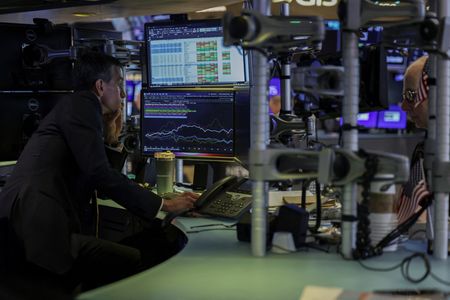
    Market activity at the New York Stock Exchange reflected the day’s volatility, with trader Michael Gagliano among those working to navigate the challenging trading conditions on the exchange floor.

    The combination of disappointing jobs figures and rising energy costs has created a challenging environment for investors, who are now weighing the potential for reduced economic growth alongside inflationary pressures from higher oil prices.

  • Major AI Companies Scrap Texas Data Center Expansion Plans

    Major AI Companies Scrap Texas Data Center Expansion Plans

    Two technology powerhouses have pulled out of plans to expand a major artificial intelligence facility in Texas following prolonged discussions about funding and shifting operational requirements, according to a Bloomberg News report released Friday.

    Oracle and OpenAI were working to grow their AI data center as part of the Stargate initiative, a collaborative effort involving SoftBank, OpenAI, and Oracle focused on constructing data facilities. President Donald Trump announced this ambitious project in January, stating the participating companies planned to commit as much as $500 billion toward AI infrastructure development.

    While the existing facility continues operating and construction work proceeds on current sections, Oracle and OpenAI have chosen not to proceed with preliminary agreements to lease additional space for expansion, according to the report.

    The breakdown in discussions has created an opportunity for Meta Platforms to potentially secure the expansion space in Abilene, Texas, from developer Crusoe. Nvidia played a role in facilitating these new negotiations.

    Both Oracle and OpenAI rely on Nvidia’s artificial intelligence chips at their Stargate location. The semiconductor company intervened to ensure its technology, rather than products from rival Advanced Micro Devices, would power the enlarged data center, the report indicated.

    Nvidia has committed $150 million as a deposit to Crusoe and began efforts to bring Meta on board as a tenant for the expanded facility, Bloomberg News stated.

    Representatives from Oracle, OpenAI, and Meta have not yet provided responses to requests for comment.

    The three companies originally announced intentions to establish five additional AI data centers across the United States for the Stargate project in September. These facilities include three locations partnering with Oracle, two connected to SoftBank, and the proposed expansion of Oracle’s Abilene site.

  • Bond Markets Face Major Losses as Middle East War Sparks Inflation Worries

    Bond Markets Face Major Losses as Middle East War Sparks Inflation Worries

    International government bond markets are experiencing some of their most significant weekly declines in months, driven by worries that ongoing Middle East warfare will push inflation higher and prompt central banks to take more aggressive monetary policy stances.

    Oil prices were poised Friday to record their strongest weekly performance since the extreme market swings during the early COVID-19 pandemic in spring 2020, as the conflict has disrupted shipping and energy exports through the crucial Strait of Hormuz.

    German government bonds saw their biggest yield jumps in nearly three years, while certain U.S. short-term government debt was tracking toward its weakest weekly performance since the Liberation Day tariff disputes.

    Thomas Urano, co-chief investment officer at Sage Advisory in Austin, explained the market dynamics: “Energy price inflation is generally shorter term in nature. But that’s going to hit headline inflation hard.”

    Two-year government bonds, which react most strongly to changing interest rate expectations, have borne the heaviest impact from the sell-off, continuing their decline even after reports showed the U.S. economy unexpectedly lost jobs last month.

    British two-year bond yields, known as gilt yields, climbed 35 basis points this week to reach their highest point since October. The increase represents the largest weekly yield jump since August 2024.

    German two-year yields reached their peak since October 2024 and were headed for a 30-basis-point weekly increase, marking the largest such rise since April 2023.

    U.S. two-year yields advanced 16 basis points for the week, representing the biggest gain since last April’s tariff-related market turbulence.

    Michael Lorizio, head of U.S. rates and mortgage trading at Manulife Investment Management, noted that last week’s rally had pushed two-year Treasury yields to a three-and-a-half year low, leaving some investors in unfavorable positions. He added that others believed the yield decline had gone too far given economic conditions, contributing to this week’s market movement.

    In Britain and several other nations, the week’s market shifts were amplified by investors reversing their positions on short-term bond rallies and yield curve changes as central banks reduce rates.

    Fidelity International portfolio manager Mike Riddell described the situation: “There’s been a colossal stop out and positioning clean-up.”

    Money market participants are now assigning less than a 50% probability to a Bank of England rate reduction in the near term.

    James Rossiter, head of global macro strategy at TD Securities in London, observed: “Inflation expectations have become much more important to central banks after they were really burned in 2022.”

    The market disruption has spread internationally, with both Australia and Canada experiencing approximately 20 basis point increases in their borrowing costs this week.

    When bond yields increase, it indicates that bond prices are declining.

    The selling pressure has extended into corporate bond markets as well.

    The iTRAXX Europe Crossover index, which measures insurance costs against default risk for high-yield corporate debt, stood around 287 basis points Friday after touching 290.5 basis points earlier, its widest spread since June.

    A comparable investment-grade credit measure, the iTRAXX Europe Main, hit its widest level since May, surpassing 60 basis points.

    Berenberg chief economist Holger Schmieding commented on the broader implications: “However the conflict is resolved, it has already undermined our previous assumption that energy prices would remain low and stable this year.”

    European Central Bank policymaker Jose Luis Escriva stated Friday that the ECB is highly unlikely to alter rates at its upcoming meeting and will continue making decisions on a meeting-by-meeting basis.

    Market participants are pricing in an 11% likelihood of a rate increase at the March ECB meeting, with 29% odds for a hike at the April gathering.

    In the United States, federal funds futures traders are not fully anticipating a rate cut until September, which represents a delay from the previously expected July timeframe.

  • Corporate Loan Failures Reach All-Time High of 9.2% in 2025

    Corporate Loan Failures Reach All-Time High of 9.2% in 2025

    Corporate borrowers in America’s private lending market experienced their worst year on record in 2025, with failures reaching an unprecedented 9.2%, according to new data released Friday by Fitch Ratings.

    The credit rating agency’s analysis examined 302 businesses carrying private credit obligations and documented 38 separate default incidents involving 28 different companies. This alarming figure surpassed the previous year’s already-troubling record of 8.1% in 2024.

    Companies generating $25 million or less in annual earnings represented the largest portion of last year’s failures, with problems spread across multiple industry sectors, the research shows.

    Fitch’s study focused predominantly on mid-sized enterprises earning $100 million annually or less, typically carrying approximately $500 million or less in total outstanding obligations.

    The agency’s default calculations encompassed both formal bankruptcy proceedings and troubled debt restructuring agreements, where struggling companies negotiated modified payment terms with their financial partners.

    These troubling statistics emerge during a broader market downturn affecting software companies, which represent a significant segment of private credit borrowing.

    Interestingly, Fitch documented zero software sector defaults during 2025, though the agency clarifies it classifies software companies based on their primary target markets when relevant.

    The majority of private credit arrangements featured variable interest rates connected to federal benchmark rates, which have remained elevated for three consecutive years. Fitch identified this factor as a primary driver behind last year’s surge in defaults.

    “Capital structures in the PMR portfolio tend to be predominantly floating rate with minimal interest rate hedges in place,” the report’s authors wrote, referring to privately monitored ratings. “This leaves companies’ cash flow highly vulnerable to elevated rates.”

  • Federal Officials Plan Streamlined System for $166 Billion in Tariff Refunds

    Federal Officials Plan Streamlined System for $166 Billion in Tariff Refunds

    Federal authorities are moving forward with plans to establish a streamlined system for refunding billions of dollars in tariffs that courts have declared unlawful.

    Brandon Lord, who heads the trade policy and programs directorate at U.S. Customs and Border Protection, informed the Court of International Trade on Friday that his agency is developing a simplified refund mechanism. According to Lord’s court submission, the new system should be operational within 45 days and will demand very little documentation from importing businesses.

    This development follows Wednesday’s court order requiring the federal government to reimburse all importers for unlawful tariffs, including accumulated interest. U.S. Court of International Trade Judge Richard Eaton ruled that every importer on record deserves compensation following the Supreme Court’s decision invalidating the substantial import taxes that former President Donald Trump implemented under the 1977 International Emergency Economic Powers Act.

    The proposed refund system must receive Judge Eaton’s approval before implementation can begin.

    Lord’s court filing revealed staggering numbers: more than 330,000 importing companies have submitted over 53 million entries to CBP since March 4, resulting in approximately $166 billion in tariff payments that must now be returned.

    Under existing procedures, Lord calculated that processing these refunds would consume more than 4.4 million employee hours. He emphasized that reassigning all staff to refund processing full-time would be impossible, explaining that such a move would severely compromise CBP’s other critical operations, including revenue protection duties and essential national security responsibilities.

    However, Lord expressed confidence in the agency’s ability to create and deploy an innovative system that will consolidate and expedite both refund and interest payments within the 45-day timeframe.

    “This new process will require minimal submission from importers,” Lord stated in his filing. “It will also minimize errors by ensuring accurate IEEPA refund calculations through system validations and allowing for a review period for CBP to resolve any discrepancies with the importer and to confirm no other outstanding enforcement issues or no revenue is owed.”

    Lord also highlighted a significant procedural hurdle: while CBP transitioned to electronic-only refunds as of February 6, the vast majority of eligible importers have not yet enrolled in the digital payment system. Of the 330,566 companies that paid the contested tariffs, only 21,423 have finished setting up their accounts to receive electronic refunds.

    “Until importers complete the process to receive refunds electronically, the refunds will be rejected,” Lord warned in his statement.

  • Customs Agency Developing 45-Day System for $166B Tariff Refunds

    Customs Agency Developing 45-Day System for $166B Tariff Refunds

    Federal customs officials announced Friday they are developing a streamlined refund system that will allow businesses to reclaim illegally collected tariff payments within 45 days, eliminating the need for costly lawsuits.

    Brandon Lord, a senior official with U.S. Customs and Border Protection, made the announcement in court documents as federal attorneys worked with a trade judge to establish procedures for returning $166 billion in tariff collections to approximately 330,000 importing businesses.

    The refunds stem from tariffs that formed a cornerstone of former President Donald Trump’s trade strategy, which the Supreme Court ruled unconstitutional last month. While the high court struck down the tariffs, it provided no guidance on refund procedures, leaving many smaller importing companies concerned about expensive and lengthy legal battles.

    According to Lord’s court filing with the U.S. Court for International Trade, the upcoming system will streamline the process significantly. “This new process will require minimal submission from importers,” Lord stated in the document.

  • Brazilian Airline Gol Plans Long-Distance Flights with New Aircraft Fleet

    Brazilian Airline Gol Plans Long-Distance Flights with New Aircraft Fleet

    A major Brazilian airline is preparing to make a significant shift in its operations by adding international long-distance flights for the first time, according to industry sources.

    Gol, which currently flies only Boeing 737 aircraft on domestic routes, will reportedly announce Friday that it plans to establish Rio de Janeiro’s Galeao international airport as the base for its upcoming fleet of Airbus A330-900 aircraft.

    The airline is set to receive five of these wide-body planes, each equipped with roughly 300 seats and capable of flights lasting up to 15 hours. The aircraft will be added to Gol’s operations progressively from 2026 through 2027.

    Two individuals with knowledge of the strategy indicated that the new planes will service extended routes to North America and Europe, with New York and Florida among the potential destinations under consideration.

    According to one source who spoke anonymously due to the confidential nature of the plans, Gol has been pursuing landing slots in multiple major European cities, including Porto and London, though the airline may not ultimately serve all of these locations.

    When contacted for confirmation, Gol representatives declined to provide details about these expansion plans.

    The move would represent a major transformation for the Brazilian carrier, which has historically focused exclusively on shorter domestic flights within Brazil using its fleet of narrow-body Boeing aircraft.

  • Canada, U.S. Trade Officials to Meet Ahead of Major Trade Agreement Review

    Canada, U.S. Trade Officials to Meet Ahead of Major Trade Agreement Review

    Trade officials from Canada and the United States will hold their first face-to-face meeting of the year this Friday in Washington, as both nations gear up for a mandatory evaluation of their trilateral trade agreement with Mexico.

    Dominic LeBlanc, Canada’s minister overseeing trade relations with the U.S., is scheduled to sit down with American trade representative Jamieson Greer, according to confirmation from the minister’s office.

    Jean-Sébastien Comeau, communications director for LeBlanc’s office, stated: “They will discuss the upcoming trilateral review of the CUSMA, as well as bilateral concerns.”

    The meeting takes place against the backdrop of the approaching July 1 deadline for reviewing the United States-Mexico-Canada Agreement, known as CUSMA in Canada and USMCA in the United States.

    While the two officials have maintained phone contact throughout the year, their last in-person meeting occurred in October, according to statements LeBlanc made the previous week.

    Canada is pushing to eliminate duties on several crucial industries, including steel and aluminum, automotive sectors, copper goods, and lumber products. These tariffs have resulted in Canadian job losses, despite data showing nearly 90% of Canada’s overall exports enter the U.S. without tariffs under the current trade agreement.

    The discussions take on added significance given President Donald Trump’s previous statements suggesting he might abandon the three-nation deal, calling it unnecessary for America and indicating preference for separate bilateral agreements with Canada and Mexico.

    Speaking at a recent event, LeBlanc indicated Canada is working with the U.S. to eliminate tariffs on impacted industries, with potential agreements possibly being incorporated into bilateral deals during the trade pact review process.

    Greer has characterized negotiations with Canada as “more challenging,” pointing to ongoing obstacles including Canadian restrictions on dairy markets and limitations on American wine and spirits sales.

    While Canada and the United States have yet to formally begin their review process, the U.S. has already initiated discussions with Mexico. American and Mexican negotiators are set to begin bilateral talks during the week of March 16 as part of their joint assessment of the trade agreement, the U.S. Trade Representative’s office announced Thursday.

  • Customs Agency Tells Court It Can’t Process Ordered Tariff Refunds

    Customs Agency Tells Court It Can’t Process Ordered Tariff Refunds

    WILMINGTON, Del. – U.S. Customs and Border Protection has informed a federal court that it lacks the capability to process tariff refunds that were ordered following a Supreme Court decision declaring certain tariffs unlawful.

    The customs agency made this declaration in documents submitted Friday to the U.S. Court for International Trade, stating it cannot fulfill the court’s directive to return the disputed tariff payments.

    The filing comes after the nation’s highest court previously determined that the tariffs in question were imposed illegally, leading to the court order requiring their return to affected parties.

  • December Business Stockpiles Show Modest Growth, Commerce Department Reports

    December Business Stockpiles Show Modest Growth, Commerce Department Reports

    WASHINGTON – American businesses experienced a modest increase in their stockpiled goods during December, according to federal data released Friday by the Commerce Department’s Census Bureau.

    The nation’s business inventory levels climbed 0.1% last month, marking the first uptick after remaining flat in November. This slight growth met predictions from economic analysts.

    When compared to the same period last year, business stockpiles showed a more substantial 1.6% increase in December. These inventory figures represent a crucial element in calculating the nation’s gross domestic product, though they tend to fluctuate significantly.

    The data release experienced delays due to the federal government shutdown that occurred last year. Previous government reports indicated that business inventories had fallen for three consecutive quarters during the final months of the year, although the rate of decline had been slowing.

    These inventory changes contributed 0.21 percentage points to the nation’s 1.4% annualized economic growth rate during the October through December period.

    Retail businesses saw their stockpiles recover by 0.1% in December, bouncing back from a 0.4% drop the previous month. Meanwhile, wholesale operations recorded a 0.2% inventory gain, and manufacturing companies increased their stock levels by 0.1%.

    Business sales activity strengthened by 0.5% in December, following a 0.6% increase in November. However, retail sales remained unchanged during the month. At the current sales rate, companies would need approximately 1.36 months to completely sell through their existing inventory, an improvement from the 1.37 months required in November.

  • BP Demands $3.7 Billion in Natural Gas Contract Dispute Victory

    BP Demands $3.7 Billion in Natural Gas Contract Dispute Victory

    Energy giant BP is pursuing damages of at least $3.7 billion following its successful arbitration case against American natural gas company Venture Global over undelivered liquefied natural gas shipments, according to newly released company documents.

    According to Venture Global’s annual report published this week, BP’s compensation demands range from $3.7 billion to potentially more than $6 billion, plus additional costs for interest and legal expenses.

    When contacted for comment, BP representatives declined to respond, while Venture Global’s spokesperson dismissed the British company’s damage claims as “unserious and not supported by evidence or controlling law.”

    The arbitration case represents part of a massive legal battle in the LNG sector, with major energy companies including BP, Shell, Unipec, Edison, Galp, Repsol and Orlen all filing disputes against Venture Global.

    BP successfully won its October arbitration regarding Venture Global’s inability to fulfill LNG deliveries under a long-term agreement scheduled to commence in late 2022.

    The International Chamber of Commerce’s arbitration court determined that Venture Global violated its contractual duties by failing to properly announce the start of commercial operations at its Calcasieu Pass facility and by not operating as a “reasonable and prudent operator,” according to Venture Global’s regulatory documents filed at that time.

    Despite this loss, Venture Global, which ranks as America’s second-largest LNG exporter, has prevailed in two of the three arbitration cases filed against the company.

    The company successfully defended itself in Shell’s arbitration claim and later defeated Shell’s court appeal challenging that arbitration decision.

  • Stock Markets Drop Thursday as Middle East Conflict Worries Investors

    Stock Markets Drop Thursday as Middle East Conflict Worries Investors

    Stock markets began Thursday’s trading session with significant declines as investors remained concerned about the ongoing Middle East conflict, which has now stretched into its sixth day. Market analysts worry that the continuing tensions could trigger new inflationary pressures, potentially complicating future decisions by the Federal Reserve regarding monetary policy.

    At the opening bell, the Dow Jones Industrial Average dropped 212.7 points, representing a 0.44% decrease to reach 48,526.73. The S&P 500 index declined by 18.4 points, or 0.27%, settling at 6,851.08. Meanwhile, the Nasdaq Composite experienced a steeper fall of 100.0 points, down 0.44% to 22,707.468.

    The market reaction reflects growing investor uncertainty about how prolonged Middle East tensions might impact global economic stability and influence the Federal Reserve’s approach to interest rate policies moving forward.

  • US Investment Firm Blue Owl Faces $48M Loss from UK Property Lender Collapse

    US Investment Firm Blue Owl Faces $48M Loss from UK Property Lender Collapse

    A major U.S. investment firm is facing significant financial exposure following the collapse of a British property lending company, according to a Bloomberg News report released Friday.

    Blue Owl, an alternative asset management company overseeing $307 billion in investments, has approximately 36 million pounds ($48 million) tied up with Century Capital Partners Ltd, a London-based lender that went into administration in February, sources familiar with the situation told Bloomberg.

    The American private-credit company had provided financing for the highest-risk portion of loans that Century originated, focusing primarily on expensive properties in central London’s real estate market.

    Century Capital collapsed with roughly 95 million pounds in total obligations, occurring just days before Market Financial Solutions, a larger competitor, also entered a British form of bankruptcy proceedings.

    According to the Bloomberg report, both lending companies depended on credit lines from private investment firms and traditional banks to create short-term property loans. These loans typically served borrowers unable to obtain conventional bank financing and carried elevated interest rates. The report noted that no creditor has alleged fraudulent activity by Century Capital.

    Neither Century Capital nor Blue Owl provided immediate responses when contacted for comment by Reuters.

    Blue Owl has faced increased investor attention in 2026 as financial pressures, restrictions on withdrawals, and a substantial asset sale have sparked wider questions about emerging difficulties in the private-credit industry.

    The failure of Market Financial Solutions has intensified worries about lending practices and the rapidly expanding private finance sector.

    **STOCK PERFORMANCE DECLINING**

    Last month, Blue Owl announced plans to divest $1.4 billion worth of assets from three investment funds, distribute some proceeds back to certain investors, and reduce outstanding debt. The company also permanently eliminated quarterly withdrawal options for investors in its smallest fund, which primarily serves high-net-worth individuals.

    This move negatively affected share prices by raising concerns about private lending standards and potential cash flow problems throughout the sector.

    Blue Owl’s stock price dropped more than 6% on Friday and has declined over 30% during 2026. Over the past twelve months, the company’s shares have lost nearly 49% of their value.

    The current exchange rate shows $1 equals 0.7485 British pounds.

  • Prudential Japan Unit Reports Employee Data Theft Scandal

    Prudential Japan Unit Reports Employee Data Theft Scandal

    Prudential Financial’s life insurance division in Japan announced Friday that several of its workers stationed at partner agencies illegally accessed and removed confidential business data, then distributed it to colleagues within the company.

    According to the firm’s disclosure, eleven staff members extracted operational data during 379 separate incidents across seven different agencies. The stolen information was then passed along to other Prudential personnel, who utilized it to develop sales marketing tactics.

    The compromised data included details about agency sales performance and other internal business operations, the company revealed.

    This latest scandal emerges just weeks after the head of Prudential’s Japanese life insurance division stepped down in February, amid a separate misconduct investigation involving approximately 100 workers and roughly 3.1 billion yen in damages.

    “Both the seconded employees who removed the information and the employees who received it lacked a fundamental understanding of the rules and failed to perform basic compliance actions,” Prudential Gibraltar Financial Life Insurance said in a statement.

    The insurance company announced it will terminate all life insurance employee assignments to outside agencies by March’s end. Additionally, several current and former company leaders have agreed to voluntarily forfeit portions of their salaries.

    “After confirming the content of all cases with the agencies, no issues were identified that would raise concerns under the Unfair Competition Prevention Act, nor was there any inappropriate removal of contract information,” it added.

    Trading activity showed Prudential’s parent company stock dropping 3.4% during Friday morning sessions.

  • Stock Markets Drop on Middle East Concerns, Disappointing Jobs Data

    Stock Markets Drop on Middle East Concerns, Disappointing Jobs Data

    Major U.S. stock markets began Friday trading with significant declines as investors grappled with dual concerns: escalating Middle East conflicts that could drive up energy prices and unexpectedly poor employment data for February.

    At the opening bell, the Dow Jones Industrial Average dropped 320.2 points, representing a 0.67% decline to 47,634.55. The broader S&P 500 index fell 61.7 points or 0.90% to reach 6,769.03, while the technology-heavy Nasdaq Composite experienced the steepest drop, falling 327.8 points or 1.44% to 22,421.172.

    Investors are concerned that ongoing tensions in the Middle East could lead to higher energy costs, which would contribute to inflationary pressures across the economy. These worries were compounded by February jobs data that revealed the economy lost jobs when growth had been anticipated.

  • China’s Wealthiest Province Plans Major AI Industrial Transformation

    China’s Wealthiest Province Plans Major AI Industrial Transformation

    BEIJING, March 6 – Leaders and business executives from Guangdong Province, China’s southern technology and manufacturing center, announced Friday their commitment to integrate artificial intelligence throughout the region’s massive $2 trillion economy. The announcement came just one day after Beijing unveiled its comprehensive “AI plus” initiative designed to weave the technology into every sector of the nation’s economy.

    The declarations were made during a gathering focused on discussing new government policy documents and a five-year development plan that, for the first time, places AI-powered industrial transformation at the heart of economic expansion.

    Given Guangdong’s crucial role in worldwide supply networks, manufacturing everything from mobile phones to home appliances and electric cars, the province’s success in implementing AI technology will significantly influence how much the European Union and United States can reduce their supply chain dependence on China during this period of increasing geopolitical tensions.

    Guangdong holds the distinction of being China’s most economically productive province, maintaining the top position nationally for over thirty years. The region generated approximately 14.6 trillion yuan ($2.1 trillion) in gross domestic product for 2025, creating an economy larger than entire nations such as Australia.

    Governor Meng Fanli stated that Guangdong would expand “AI plus” implementations throughout various industries while promoting widespread commercial adoption of artificial intelligence technology.

    The province’s Communist Party leader Huang Kunming announced plans to accelerate the development of new infrastructure projects, particularly massive computing facilities.

    Shenzhen Mayor Qin Weizhong, representing China’s leading technology center, reported that industries including artificial intelligence, robotics, and semiconductor manufacturing experienced growth rates exceeding ten percent during the previous year. Strategic emerging sectors represented 43% of Shenzhen’s total economic output, according to Qin. The city serves as headquarters for major technology corporations including Huawei, Tencent, and DJI.

    The mayor explained that Shenzhen was fast-tracking domestic alternatives for chip manufacturing equipment, computing infrastructure, and electronic design automation software – technological areas where China trails the United States and faces restrictive American trade controls.

    Qin also called for increased federal assistance to establish an independent AI hardware and software ecosystem while expanding Chinese-developed standards in fields such as artificial intelligence and intelligent vehicles.

    A provincial government asset official indicated that Guangdong would direct state investment toward advanced manufacturing sectors, including artificial intelligence and drone technologies.

    GAC Group Chairman Feng Xingya announced his automotive company would intensify implementation of AI systems within self-driving vehicle technology.

  • Federal Safety Officials Meet with Self-Driving Car Company Leaders

    Federal Safety Officials Meet with Self-Driving Car Company Leaders

    WASHINGTON – Federal highway safety regulators are bringing together top executives from major self-driving car companies for a comprehensive safety discussion this Tuesday.

    The National Highway Traffic Safety Administration has organized the autonomous vehicle safety forum, which will feature leadership from three prominent companies in the field. Participants include Tekedra Mawakana, co-CEO of Waymo (owned by Alphabet), Aicha Evans who heads Amazon’s Zoox division, and Chris Urmson, chief executive of Aurora.

    The gathering comes as the current administration works to accelerate the rollout of driverless taxi services while removing regulatory obstacles, though officials remain focused on safety considerations. Federal regulators are examining possible new measures, including what they describe as “future guidance on the safe domestic development, testing, and deployment” of autonomous vehicles.

    The full-day conference will also examine how remote assistance technology is being utilized in robotaxi operations, as the industry continues to evolve rapidly.

  • Middle East Conflict Shakes Global Markets as Oil Prices Surge 20%

    Middle East Conflict Shakes Global Markets as Oil Prices Surge 20%

    Financial markets worldwide are grappling with uncertainty as the Middle East conflict continues into its second week, creating unprecedented challenges for economic forecasting and monetary policy decisions.

    The U.S. dollar has become investors’ preferred safe haven during this period of unrest, posting its best weekly gains since late 2024 with a 1.7% increase. Meanwhile, rising energy costs are sparking concerns about a repeat of the 2022 energy crisis, though market analysts note the absence of widespread panic seen in previous global crises.

    Key market stress indicators remain relatively stable, including corporate bond spreads and the VIX volatility measure, suggesting many investors continue to trust President Donald Trump’s promise of a swift resolution to the conflict.

    The recent Bank of America survey revealed that half of global fund managers considered gold ownership the most popular investment strategy, with the precious metal climbing 70% over the past year. Technology stocks and emerging market investments also attracted heavy investment flows before the current selloff.

    These previously popular assets have taken significant hits this week, alongside bonds experiencing their worst weekly decline in over a year as inflation concerns mount and interest rate projections shift dramatically.

    Kit Juckes, who leads foreign exchange strategy at Societe Generale, emphasized that current market conditions aren’t creating systemic risks. “There’s nothing that gums up the works of the system,” Juckes explained.

    “There’s just a geopolitical shock that, for the sake of argument, has sent the dollar up, stocks down, and boosted some volatility and sent oil prices up very quickly,” he added.

    Market volatility measures have increased but remain well below crisis levels. The VIX equity volatility index sits above 20 after its largest weekly jump since November, far from the record 60 reached during Trump’s “Liberation Day” events last April.

    Bond market volatility, measured by the ICE BofA MOVE index, has reached its highest point since November at 75, though still below April’s peak around 140. Currency fluctuations have also intensified but less dramatically than during January’s Greenland annexation threats.

    Energy markets represent the primary source of current market stress, with oil prices surging over 20% in one week – the largest weekly increase in four years.

    Nicolas Forest, chief investment officer at Candriam, offered perspective on historical conflict impacts: “When you look at past crises, we can see that generally the impact of past conflicts are relatively neutral for equities. We can see some shock, but after three months, six months, it’s relatively manageable.”

    However, Forest warned about oil reaching $100 per barrel: “That’s another story.”

    The potential energy crisis compounds existing market vulnerabilities that financial regulators have highlighted recently, including excessive hedge fund borrowing in government bond markets, possible artificial intelligence investment bubbles, and growing risks in private credit markets.

    Kevin Thozet from Carmignac has long argued that markets underestimate sustained inflation risks, particularly given resilient global economic growth. He advocates for inflation-protected bonds over traditional government securities.

    “Even with oil nearing $90 a barrel, people are still underappreciating the risk of inflation over the medium term,” Thozet stated.

    With numerous uncertainties surrounding interest rates and long-term economic impacts, investors are gravitating toward familiar strategies.

    Dan Izzo, founder of hedge fund BLKBRD, described the current investment dilemma: “People are struggling to understand the answer of, ‘what do I buy?’”

    “Earlier this year and before the war in Iran, people were firmly rooted in buying assets in the rest of the world, certainly as AI and credit-related U.S. risks have emerged,” Izzo noted.

    “The war has shifted this thinking,” he concluded.

  • Robinhood Launches $658M Investment Fund for Everyday Investors on Stock Exchange

    Robinhood Launches $658M Investment Fund for Everyday Investors on Stock Exchange

    Popular trading platform Robinhood made history Friday by launching its massive $658.4 million venture capital fund on the New York Stock Exchange, breaking down barriers that have traditionally kept everyday investors away from lucrative private company investments.

    For years, major venture capital firms in Silicon Valley have dominated investments in private companies, leaving individual investors unable to participate in a market where company values have skyrocketed.

    Trading under the symbol ‘RVI,’ the new fund holds positions in several well-known private tech companies, including data analytics company Databricks, business expense platform Ramp, and digital banking service Revolut.

    “There is a big gap in the market where the retail customer cannot access private assets,” Robinhood’s Chief Financial Officer Shiv Verma explained during a Reuters interview.

    Many of these private companies now carry price tags that match or surpass major publicly traded corporations. Databricks secured funding in February that valued the company at $134 billion, while Ramp achieved a $32 billion valuation last November.

    Financial experts warn the fund comes with inherent risks, particularly regarding how private company values can fluctuate, though these concerns apply broadly across the venture capital industry. The market for venture capital exits has also experienced significant turbulence as initial public offering activity has declined.

    Robinhood set the initial share price at $25 and sold 12.6 million shares, though this fell short of their original fundraising goals. Market volatility continues to affect investor interest in new public offerings amid ongoing global tensions and concerns about artificial intelligence disruption.

    Verma emphasized that Robinhood deliberately selected established, mature companies that pose “much less risk” compared to newer startups.

    “These are great investments, they’re going to do well and if there’s some short-term volatility in the interim, because it’s a closed-end fund, you’re not forced to sell,” he stated.

    The CFO noted the fund may eventually branch into additional industries such as energy, robotics, aerospace, and defense, and attracted interest from institutional investors during their marketing campaign.

    Robinhood has transformed from a simple trading application aimed at individual investors into a comprehensive financial services company, helping drive its market value beyond $72 billion.

  • Disappointing Jobs Report Sparks Federal Reserve Rate Cut Speculation

    Disappointing Jobs Report Sparks Federal Reserve Rate Cut Speculation

    Federal Reserve officials find themselves facing a difficult balancing act after February’s disappointing employment figures coincided with surging oil prices, potentially forcing policymakers to choose between controlling inflation and supporting a struggling job market.

    The latest employment report revealed that American businesses eliminated 92,000 positions in February, while previous months’ job creation numbers were also revised downward. Oil prices climbed close to $90 per barrel during the same period, driving gasoline costs up from $3.00 to $3.32 nationwide in just one week.

    Health sector labor disputes and continued federal government workforce reductions contributed to February’s job losses, but the data still dashed expectations that employment growth was gaining momentum.

    These twin pressures of weakening employment and rising energy costs have revived concerns about “stagflation” – a scenario combining economic stagnation with inflation that Fed officials believed they had successfully addressed.

    While the Federal Reserve is anticipated to maintain current interest rates at its March 17-18 policy meeting, officials may need to engage in deeper conversations about economic strategy as supply chain vulnerabilities resurface. The situation echoes challenges from the pandemic period, when global supply disruptions proved difficult to predict and manage.

    Market participants have increased their expectations for a Fed rate reduction in June following the jobs data, though the decision will likely depend on how policymakers weigh competing economic risks that could simultaneously drive prices higher and slow growth.

    Fed Governor Christopher Waller shared his perspective during a Bloomberg Television appearance, describing the oil price surge as “more like a one-off event” that wouldn’t necessarily trigger Fed action. However, he recognized the uncertainty if ongoing conflicts continue pushing energy costs upward.

    “If it’s unwound in … a couple of weeks or even two months, it’s not going to be a big factor down the road,” Waller explained. “If it becomes more permanent … Then it’ll start bleeding through to other parts of the economy.”

    The disappointing February employment figures are expected to carry additional weight in Fed deliberations. Waller had previously indicated he would resist supporting additional rate cuts if February’s job numbers proved strong, following January’s unexpectedly robust employment gains.

    “If the labor market continues to go weak … If we get a bad number … the question is why are you just sitting on your hands” rather than supporting employment through rate reductions, Waller stated.

    Some Fed officials are already grappling with competing priorities, as inflation remains approximately one percentage point above the central bank’s target while new upward price pressures emerge.

    San Francisco Fed President Mary Daly addressed the challenge during a CNBC interview, saying “The hopes that the labor market was steadying — maybe that was too much. But we also have inflation printing above target and oil prices rising. How long they last, we don’t know, but both of our goals are risks now and we need to keep our eye on both.”

  • SEC Hits Investment Firm with $20M Fine for Unreported Suspicious Activity

    SEC Hits Investment Firm with $20M Fine for Unreported Suspicious Activity

    Federal securities regulators announced Friday they have imposed a $20 million penalty against investment firm Canaccord Genuity for neglecting to submit about 150 required suspicious activity reports to authorities.

    The company reached a settlement agreement with the Securities and Exchange Commission without acknowledging any wrongdoing while paying the substantial civil penalty. As part of the resolution, Canaccord Genuity also accepted an official censure from regulators.

  • Brazilian Bank Extends Digital Payment System to Argentina in Cross-Border Move

    Brazilian Bank Extends Digital Payment System to Argentina in Cross-Border Move

    SAO PAULO – Brazil’s government-owned banking giant has taken its popular instant payment technology across borders for the first time, introducing the service in Argentina on Friday.

    Banco do Brasil partnered with its subsidiary Banco Patagonia to create a system that lets any Brazilian using the Pix payment platform make purchases in Argentina, regardless of which bank they use back home. This marks the first time the widely-used Brazilian payment system has operated outside the country’s borders.

    “The launch of Pix abroad strengthens Banco do Brasil’s international operations and underscores its commitment to innovation in payment methods,” said Felipe Prince, the bank’s vice president for Internal Controls and Risk Management.

    Prince noted that Argentina serves as the opening move in a broader plan to expand payment convenience for Brazilian customers worldwide.

    Banco Patagonia’s chief executive Oswaldo Parre described the partnership as advancing regional financial integration between the neighboring South American nations.

    The Brazilian banking institution is now considering whether to roll out similar services in other regions across the Americas, Europe, and Asia, particularly targeting areas with significant Brazilian populations.

    THE PAYMENT PROCESS

    Brazil’s central banking authority created Pix to facilitate immediate, 24-hour money transfers at no cost to individual users. Nearly 900 financial institutions now support the platform, which has grown into Brazil’s dominant payment method with more than 170 million users nationwide, according to regulatory data.

    The cross-border version works through QR code scanning – Brazilian customers use their banking applications to scan codes at participating Argentine businesses. While merchants receive payment in Argentine pesos, customers see charges in Brazilian reais on their accounts.

    Banco do Brasil manages all backend operations, including peso-to-real currency exchanges and applicable fees, with full cost transparency displayed to customers before they confirm transactions.

  • February Job Losses Hit 92,000 as National Unemployment Climbs to 4.4%

    February Job Losses Hit 92,000 as National Unemployment Climbs to 4.4%

    WASHINGTON — The nation’s employment picture darkened unexpectedly in February as employers eliminated 92,000 positions, pushing the jobless rate higher to 4.4% and signaling continued challenges in the labor market.

    Friday’s report from the Labor Department showed a dramatic shift from January’s performance, when employers had added 126,000 positions across private companies, nonprofit organizations, and government agencies. Economic forecasters had predicted February would bring 60,000 new positions.

    Making matters worse, government statisticians revised downward the job counts for December and January by a combined 69,000 positions.

    The employment sector had been anticipated to recover this year following a disappointing 2025, when economic turbulence from President Donald Trump’s unpredictable tariff strategies and persistent high interest rate effects limited job creation to just 15,000 monthly additions.

    Building industry employers eliminated 11,000 positions in February, likely due to harsh winter weather conditions. Medical sector companies dropped 28,000 workers following a month-long labor strike involving over 30,000 nursing staff and frontline medical workers at Kaiser Permanente facilities across California and Hawaii.

    The employment market’s future direction — along with broader economic prospects — faces uncertainty due to ongoing conflict with Iran.

    Business owners showed hesitation in expanding their workforce throughout the previous year due to questions surrounding President Trump’s trade tariff policies and their unpredictable implementation timeline.

    Elevated borrowing costs, deliberately set by the Federal Reserve to address post-COVID inflation surges, also created headwinds for job growth during 2025.

    The effects of Trump’s assertive trade approach may diminish in 2025. His import duties became more moderate and consistent after securing a trade agreement with China last year, plus arrangements with major trading partners including Japan and European Union nations. Many companies have adapted to tariff expenses, frequently transferring these costs to consumers through price increases.

    Companies required “a year to bake some of those costs into their business model, and now it’s time to get back to growth mode,” stated Andy Decker, CEO of Atlanta-based Goodwin Recruiting.

    The Supreme Court has overturned Trump’s most significant tariff measures, though he continues implementing replacement policies.

    Nevertheless, current hiring levels remain well below the robust employment expansion of 2021-2023, when the economy rebounded from pandemic restrictions and monthly job additions approached 400,000. Economic analysts characterize today’s employment environment as “no-hire, no-fire”: businesses avoid expanding staff while retaining existing employees.

    Fortunately, reaching adequate job growth targets has become more achievable recently.

    Previously, employers needed to create over 100,000 monthly positions to prevent unemployment increases.

    However, Baby Boomer workforce exits and President Trump’s deportation policies have reduced job competition. This has lowered the equilibrium point to between zero and 50,000 monthly jobs, according to Joe Brusuelas, chief economist at tax and consulting firm RSM. “Under the current conditions, 70,000 should be considered solid,” he explained.

    Businesses may be delaying hiring decisions while purchasing, implementing, and optimizing new technologies, particularly artificial intelligence systems. AI capabilities potentially allow companies to “do more with less” and reduce workforce needs, especially for beginning-level roles, Brusuelas noted.

    Companies are considering, he explained, “we’ve invested an awful lot of money in (capital expenditures), and we need to see how much we can produce with our current labor force… The last thing you want to do is hire a lot of young people and then let them go.”

  • February Jobs Report Shows Unexpected Loss as Unemployment Climbs to 4.4%

    February Jobs Report Shows Unexpected Loss as Unemployment Climbs to 4.4%

    The nation’s job market took an unexpected turn in February as employment dropped by 92,000 positions, pushing the unemployment rate up to 4.4%, according to Friday’s employment data from the Bureau of Labor Statistics.

    The February decline caught economists off guard, as they had predicted the economy would add 59,000 jobs during the month. Instead, the labor market contracted following January’s revised gain of 126,000 positions, which was adjusted downward from the initially reported 130,000.

    Several factors contributed to February’s employment setback, including a major strike involving 31,000 Kaiser Permanente healthcare workers in California and Hawaii, along with severe winter conditions that disrupted business operations nationwide. The healthcare strike has since concluded.

    Economic analysts noted that January’s stronger-than-expected job growth had been artificially inflated by updates to statistical models used to track business openings and closures, making February’s pullback partly a correction from the previous month’s inflated numbers.

    The employment landscape continues to face headwinds from policy uncertainties surrounding President Trump’s tariff initiatives, which were implemented under emergency powers legislation. Although the Supreme Court invalidated the original tariffs, the administration responded by establishing a 10% worldwide tariff, later announcing plans to increase it to 15%.

    Additional challenges stem from the administration’s immigration enforcement measures, which have tightened labor supply, and delayed population adjustments resulting from last year’s 43-day government shutdown.

    New Census Bureau figures show the nation’s population grew by only 1.8 million people, representing a 0.5% increase to 341.8 million residents in the year ending June 2025.

    While the unemployment rate rose from January’s 4.3%, economists emphasized that the current level remains historically low. Most analysts indicated they would only become concerned if joblessness exceeded 4.5%.

    The ongoing Middle East conflict adds another layer of uncertainty to the economic outlook. Gas prices have jumped more than 20 cents per gallon since U.S. and Israeli forces launched strikes against Iran last weekend, with Tehran’s retaliation raising fears of broader regional warfare.

    Market volatility from the conflict could prompt higher-income consumers—who drive much of the nation’s economic activity through spending—to reduce their purchases, potentially creating additional employment pressures.

    Federal Reserve officials are scheduled to meet March 17-18, with expectations they will maintain the current benchmark interest rate between 3.50% and 3.75% as they monitor inflation risks from the escalating conflict.

  • European Companies Scramble for Tariff Refunds After Supreme Court Decision

    European Companies Scramble for Tariff Refunds After Supreme Court Decision

    European companies are scrambling to recover potentially billions in tariff payments following a Supreme Court decision that invalidated several of President Trump’s major trade levies, according to interviews with business executives across the continent.

    Discussions with twelve European companies spanning electronics manufacturing to consumer goods reveal how businesses are working to adjust to rapidly shifting U.S. trade policies during the ongoing commercial dispute under the Trump administration.

    Following the nation’s highest court’s February decision to overturn Trump’s “liberation day” tariffs, the president implemented a fresh 10% across-the-board duty that may increase to 15%, creating fresh global confusion about trade agreements negotiated last year and the actual rates facing importers.

    “The Supreme Court ruling has said one thing… The White House is saying something else,” said Simon Hunt, CEO of Italian beverage company Campari, in an interview with Reuters. He noted conflicting messages from customs agencies and trade tribunals as well.

    “If there’s an opportunity to recover (tariff payments), then clearly, like every other company, we’ll look at it. But at this stage, we’re just going to wait and see,” Hunt added.

    The federal government had gathered over $130 billion through tariff collections that courts have now declared unlawful, representing a cornerstone of Trump’s trade strategy. The Supreme Court’s decision offered no direction regarding refund procedures, creating uncertainty about how importers might reclaim their payments.

    This Friday, the U.S. Court of International Trade plans to convene with federal attorneys to develop a compensation framework. Government legal representatives indicated the process would necessitate individual examination of tens of millions of transactions.

    German electric motor manufacturer ebm-papst’s American division is exploring legal remedies for reimbursement, including modifying import documentation through post-summary correction (PSC), which permits changes up to 300 days after merchandise enters the United States.

    This approach could theoretically reduce the relevant tariff percentage and trigger an automatic refund, according to trade consultants. However, some industry experts expressed skepticism about receiving payments and worried U.S. officials might obstruct the procedure.

    “This option is being used. Where legally permissible and appropriate,” an ebm-papst representative confirmed to Reuters.

    The German manufacturer, reporting annual revenue exceeding 2 billion euros ($2.36 billion) and employing approximately 13,500 workers, has received inquiries from American customers regarding potential refunds and described its tariff losses as reaching “double-digit” millions of euros.

    The company’s conversations with U.S. customers highlight another complication in the refund process: only the official importer of record can file for reimbursement.

    Businesses that aren’t the importer of record but may have covered duties through contractual arrangements must pursue compensation through their suppliers or distributors, a complication that could spark legal battles between trading partners.

    “There are still no binding guidelines from U.S. authorities and many details remain unclear. This includes, for example, whether the mutually agreed EU-U.S. agreement is still valid,” the ebm-papst representative stated.

    “The tariff damage is considerable,” they added.

    Nicolas Urien, director of global trade advisory at Customs Support Group consulting firm, explained that companies are “changing paperwork” through procedures allowing importers to modify entries before U.S. customs finalizes duty assessments.

    This approach only applies to “unliquidated” imports but could provide companies a more straightforward path to seek refunds than pursuing court action, where expenses are discouraging many smaller businesses.

    “A PSC may be used for unliquidated entries – where duties have been paid but not yet finalised – to remove tariffs that are no longer legally valid,” Urien explained. “Some companies have already initiated this process.”

    The Financial Times reported Friday that some American companies were having refund applications rejected, citing unnamed sources. A federal trade court judge ordered the government Wednesday to begin processing refunds.

    An American executive at a small European alcohol company said the firm was investigating refund claims and seeking guidance from industry associations and logistics partners. The company had also examined the post-summary correction option.

    While the business could file a lawsuit, it currently plans to wait for clearer federal guidance on the refund process, viewing any potential payout as an unexpected windfall.

    The recovery would be like “finding loose change down the back of the sofa,” the executive commented.

  • January Shopping Slump: Americans Tighten Wallets as Retail Sales Drop

    January Shopping Slump: Americans Tighten Wallets as Retail Sales Drop

    Americans tightened their purse strings at the beginning of 2026, continuing a pattern of reduced consumer spending that started in the final months of last year.

    January retail sales dropped by 0.2% after remaining unchanged in December. The January decline surprised economists who had predicted sales would remain flat for the month.

    Health and personal care retailers experienced the steepest downturn, with sales plummeting 3% compared to December figures. Fuel stations recorded a 2.9% decrease in revenue, while apparel retailers saw purchases drop by 1.7% from the previous month.

    However, some retail sectors bucked the downward trend. Home decoration and building supply stores, including garden and landscaping retailers, posted increases. Furniture and home decor businesses recorded a 0.7% uptick in sales, while construction material vendors experienced a 0.6% boost.

    Despite the monthly decline, January 2026 retail sales remained 3.2% higher than the same period in 2025.

  • German Media Giant Acquires UK’s Daily Telegraph for $766 Million

    German Media Giant Acquires UK’s Daily Telegraph for $766 Million

    A prominent German media corporation, Axel Springer, has finalized the purchase of Telegraph Media Group, the company behind Britain’s renowned Daily Telegraph newspaper, for 575 million pounds ($766 million), both organizations confirmed on Friday.

    This transaction brings closure to an extended ownership battle surrounding the Telegraph Media Group, which operates the 171-year-old conservative Daily Telegraph along with its Sunday edition.

    According to Axel Springer, the company plans to make significant investments in the Telegraph group with the goal of transforming it into “the leading center-right media outlet in the English-speaking world” while accelerating its growth in American markets.

    “More than 20 years ago, we tried to acquire The Telegraph and did not succeed. Now our dream comes true,” stated Axel Springer CEO Mathias Döpfner.

    The German corporation’s portfolio includes notable publications such as Bild and Welt newspapers, as well as the political news organization Politico.

    This acquisition concludes years of instability regarding the newspaper’s ownership and eliminates a competing proposal from the Daily Mail’s owner to purchase the Telegraph properties.

    The Barclay family, who previously controlled the Telegraph group, decided to sell the publications in 2023 as part of efforts to settle outstanding family debts. RedBird IMI, a partnership involving RedBird Capital Partners and Sheikh Mansour bin Zayed Al Nahyan—a UAE royal family member and the country’s vice president—had initially proposed acquiring the newspapers.

    However, this consortium withdrew their offer in 2024 after facing significant resistance from the UK government, which introduced new laws preventing foreign government control of British media outlets.

    Subsequently, the Daily Mail’s owner submitted a 500 million-pound proposal, but the government mandated an investigation earlier this year due to concerns about market competition and maintaining diverse perspectives in Britain’s media landscape.

    The Spectator, a conservative news magazine that was previously included in the Telegraph group, was separately acquired in 2024 by Paul Marshall, a British hedge fund executive.

  • Maine Lobster Industry Struggles as Catch Drops to Lowest Level Since 2008

    Maine Lobster Industry Struggles as Catch Drops to Lowest Level Since 2008

    PORTLAND, Maine — For the fourth consecutive year, Maine’s lobster industry has recorded a drop in its annual harvest, according to state fishing officials who released the data Friday. The sector continues struggling with rising operational expenses, inflation pressures, and shifting ocean conditions.

    Maine’s signature seafood export, which serves as a cornerstone of the state’s cultural heritage and economic identity, has seen consistent yearly decreases since 2021. Researchers point to increasingly warm ocean temperatures as a factor driving lobster populations northward into Canadian territorial waters.

    This year’s harvest totaled 78.8 million pounds (35.7 million kilograms), representing a significant drop from the more than 110 million pounds (49.9 million kilograms) recorded in 2021. The 2025 figures mark the industry’s weakest performance since 2008.

    According to Carl Wilson, commissioner of the Maine Department of Marine Resources, inflation severely impacted operations last year, resulting in over 21,000 fewer fishing expeditions compared to 2024. Additional challenges included market instability from tariff concerns and a delayed start to the peak fishing season.

    “This combination of factors likely contributed to the decline from 2024 to 2025 in the lobster harvest of more than eight million pounds and a decrease in the overall value of more than $75 million,” Wilson said in a statement.

    Maine waters produce the overwhelming majority of America’s lobster supply, though other New England coastal areas also support trapping operations.

    The fishery typically generates more than $500 million annually in dockside value, ranking among the nation’s most profitable catches. Last year’s total reached more than $461 million.

    Southern New England’s lobster fishery has carried an official depletion designation from regulators for several years. This downturn occurred as ocean temperatures rose off Rhode Island and southern Massachusetts coasts, with scientists cautioning that similar patterns may be emerging in Maine waters. These crustaceans demonstrate high sensitivity to temperature fluctuations during juvenile stages and throughout their life cycles.

    The regulatory Atlantic States Marine Fisheries Commission declared last year that lobster populations have experienced “rapid decline in abundance in recent years” across critical zones, officially determining the species faces overfishing pressures. Conservation organizations have advocated for stricter fishery management measures.

    Industry representatives have challenged this evaluation, arguing that fishermen already operate under extensive regulations designed to protect lobster stocks and preserve endangered whale populations.

    Despite recent declines, last year’s harvest numbers remain elevated compared to historical standards, exceeding the typical 50 million to 70 million pounds (approximately 23 million to 32 million kilograms) recorded during the 2000s and even lower totals from the previous decade.

    The sector experienced exceptional growth during the 2010s, with annual catches surpassing 100 million pounds (45 million kilograms), peaking at more than 132 million pounds (60 million kilograms) in 2016.

    Despite sustained high prices for both retail customers and wholesale buyers, elevated costs for essential supplies including fuel and equipment created “not a very profitable season,” according to John Drouin, who operates from Cutler.

    However, some positive developments emerged, as lobster trapping showed greater consistency compared to the previous year, noted Steve Train, who works from Long Island.

    “Hauling was more consistent, with less peaks and valleys, and the price was higher in the summer months,” Train said. “But I think I landed a little less.”

    Lobsters continue to be widely available at restaurants and seafood retailers, though pricing remains elevated. Typical dockside prices ranged from $3 to $5 per pound during the 2010s but have exceeded $6 per pound in recent years. Last year’s average dock price reached $5.85 per pound.

  • United Airlines CEO: Rising Fuel Costs After Iran Strike Will Impact Earnings

    United Airlines CEO: Rising Fuel Costs After Iran Strike Will Impact Earnings

    The head of United Airlines announced Friday that rapidly climbing fuel expenses in the wake of military strikes against Iran will significantly impact the company’s financial performance for the first quarter of this year.

    Speaking with CNBC, Chief Executive Officer Scott Kirby described the anticipated financial impact as “meaningful,” while noting that passenger demand for air travel continues to hold strong despite the challenging circumstances.

    Aviation fuel costs have surged 15% over the past seven days, creating additional financial strain for airlines that are already dealing with substantial operational challenges stemming from the expanding Middle East conflict. The ongoing regional tensions have resulted in more than 20,000 canceled flights, leaving thousands of travelers without transportation options.

  • Dollar Weakens Following Surprising February Job Losses

    Dollar Weakens Following Surprising February Job Losses

    NEW YORK – The American dollar retreated from earlier gains on Friday following the release of employment figures that showed a surprising drop in job creation during February, raising expectations that interest rate cuts could come sooner than markets had anticipated.

    February’s employment report revealed the U.S. economy shed 92,000 positions, a stark contrast to January’s revised figure of 126,000 new jobs added. Financial analysts surveyed by Reuters had predicted the creation of 59,000 new positions, based on January’s initially reported gain of 130,000 jobs.

    Currency markets responded immediately to the news. The dollar’s value against the Japanese yen remained relatively stable at 157.61, down from 157.905 recorded moments before the employment data was released. Meanwhile, the dollar index pulled back from earlier increases, ending the trading session essentially unchanged at 99.10.

  • French Pharmaceutical Giant Acquires Brain Cancer Drug Company for $2.5B

    French Pharmaceutical Giant Acquires Brain Cancer Drug Company for $2.5B

    A major pharmaceutical acquisition was announced Friday as French drug company Servier revealed plans to purchase Day One Biopharmaceuticals in a deal valued at approximately $2.5 billion.

    The acquisition involves Servier paying $21.50 per share in cash, marking a significant 68% premium above Day One’s closing stock price.

    The purchase will provide Servier with access to Ojemda, a medication designed to treat pediatric low-grade glioma, which represents the most frequently occurring type of brain tumor found in children.

    According to company officials, Servier plans to finance the entire transaction using its current cash reserves and investment holdings.

  • World’s Largest Copper Producer Partners with Microsoft for AI Mining Tech

    World’s Largest Copper Producer Partners with Microsoft for AI Mining Tech

    Chile’s government-owned mining company Codelco, which produces more copper than any other company globally, has entered into a partnership with tech giant Microsoft to explore how artificial intelligence can transform mining operations, the company announced Thursday.

    The memorandum of understanding establishes an 18-month collaboration between the two companies, with shared oversight for both strategic planning and day-to-day implementation. The partnership will focus on several key areas including heavy data processing, AI-powered decision making, self-operating equipment, automated critical systems, and enhanced digital security measures.

    Both organizations plan to work together on early-stage testing of innovative technologies and will exchange knowledge from their international operations and expertise.

    Codelco’s Chief Executive Officer Ruben Alvarado emphasized the significance of the collaboration, stating: “Working with a world-class technological leader like Microsoft consolidates our leadership in the future of mining. Faced with an accelerated digital transformation, we have to process and consider large volumes of operational data.”

    Microsoft Latin America President Tito Arciniega highlighted the broader implications of the partnership, saying: “This alliance with Codelco reflects the potential that artificial intelligence represents to advance development in the mining sector and Chilean market, facilitating safer, more efficient and sustainable operations with a focus on people, productivity and long-term value for the company and country.”

  • US Import Costs Rise Despite Cheaper Energy as Equipment Prices Surge

    US Import Costs Rise Despite Cheaper Energy as Equipment Prices Surge

    WASHINGTON – The cost of goods imported into the United States climbed in January, driven by more expensive capital equipment despite lower energy prices, according to federal data released Thursday.

    The Bureau of Labor Statistics reported that import costs increased 0.2% last month, matching the upwardly adjusted December figure. This aligned with forecasts from economists surveyed by Reuters, who predicted the 0.2% monthly increase after an initially reported 0.1% December rise.

    Over the full year through January, import costs dropped 0.1% compared to remaining flat in December. The data release faced delays due to last year’s government shutdown, which lasted 43 days and prevented October survey collection, causing the bureau to skip publishing October and November import price changes.

    Officials indicated that ongoing effects from the 2025 government shutdown will continue delaying future import price reports.

    Energy imports became cheaper, with fuel prices dropping 2.2% in January following a 1.1% decrease the previous month. Food import costs grew 0.2%. When removing fuel and food from calculations, core import prices jumped 0.5%, up from December’s 0.3% increase.

    Annual core import price growth reached 1.6% through January, partially reflecting the weakening dollar against currencies of major trading partners. The trade-weighted dollar fell 7.37% in 2025 and has declined approximately 1.61% year-to-date.

    Capital goods imports drove much of the increase, rising 0.4% with nonelectrical machinery leading at 0.5% growth. Consumer goods imports excluding automobiles edged up 0.1%, while vehicle, parts and engine prices gained 0.2%.

    Air passenger fares for imports dropped significantly by 10.1% after a 6.4% increase previously, as reduced Asian and Latin American/Caribbean rates outweighed higher European costs. These airfare changes factor into Personal Consumption Expenditures calculations, the inflation metric the Federal Reserve uses for its 2% target.

    While recent government data showed modest consumer price increases in January, producer inflation picked up pace. Before Thursday’s import data, economists projected the core PCE index could rise as much as 0.5% in January, potentially pushing annual growth to 3.1%.

    December’s core PCE inflation stood at 0.4% monthly and 3.0% annually. The government plans to release January’s delayed PCE inflation report next Friday.

  • DTC Receives $14.3M Federal Grant to Overhaul Delaware Bus Fleet

    DTC Receives $14.3M Federal Grant to Overhaul Delaware Bus Fleet

    Delaware Transit Corporation has landed a substantial $14.3 million federal grant that will breathe new life into dozens of buses serving communities across the First State.

    The funding comes through the Federal Transit Administration’s Bus and Bus Facilities Program for fiscal year 2026 and will support comprehensive rehabilitation work on 51 buses. These vehicles make up nearly one-quarter of the entire DART fixed-route bus fleet that serves Delaware residents daily.

    Rather than buying brand new buses, DTC officials say they’re taking a smart financial approach by refurbishing their current fleet. This midlife rehabilitation strategy allows the transit agency to keep buses in excellent working condition while avoiding the steep price tags that come with purchasing replacement vehicles.

    The overhaul program represents what transportation officials call a high-return investment that will help maintain buses in a “State of Good Repair” as equipment costs continue climbing nationwide.

  • Rising Oil Prices Could Cost Airlines Billions Without Fuel Protection

    Rising Oil Prices Could Cost Airlines Billions Without Fuel Protection

    Major American airlines could face significant financial pressure as oil prices climb following recent military strikes involving the U.S., Israel, and Iran. The carriers have left themselves exposed to these price swings after abandoning fuel cost protection strategies years ago.

    Aviation fuel costs have jumped 15% over the past week, adding another burden to an industry already struggling with conflict-related disruptions that have led to more than 20,000 canceled flights and stranded thousands of travelers.

    After labor expenses, fuel represents airlines’ second-biggest cost, usually making up 20% to 25% of their operating budgets. Most U.S. carriers stopped using hedging strategies over the last twenty years to protect against fuel price volatility. Southwest Airlines, once a regular user of these financial tools, discontinued the practice in 2025, describing it as costly and unreliable. Meanwhile, international competitors like Air France-KLM and Cathay Pacific continue using these protective measures.

    Hedging allows airlines to guard against fuel cost spikes through specialized financial contracts. However, these strategies can backfire when prices drop, forcing carriers to pay above-market rates through swap agreements—a situation that previously hurt U.S. airlines.

    Without these protections, airlines now face direct exposure to sustained increases in jet fuel prices, which currently average $2.83 per gallon according to the Oil Price Information Service. Spot fuel trading at the U.S. Gulf Coast reached $4.12 per gallon Thursday, marking the highest level since June 2022, based on data from Platts, an S&P Global Energy division.

    The financial impact varies by carrier size. Delta Air Lines reported in regulatory documents that each one-cent increase in jet fuel costs per gallon raises their annual fuel expenses by approximately $40 million. American Airlines faces about $50 million in additional costs per cent increase, while Southwest sees roughly $22 million in extra expenses.

    An American Airlines representative explained that their fuel consumption runs about double Southwest’s amount, “which is a product of our fleet size and overall level of flying vs. Southwest.”

    TD Cowen analysts projected Monday that United Airlines’ earnings per share for the March quarter could range between just 5 and 22 cents at current fuel prices, falling well below United’s January forecast of $1 to $1.50 per share. United declined to provide comment.

    Reuters calculations show these four major U.S. carriers could collectively face $5.8 billion in additional fuel expenses if current elevated prices persist throughout the year, reversing several years of declining fuel costs.

    JetBlue, Delta, and Alaska Airlines did not respond to requests for comment.

    The actual impact on profit margins will depend on how long the conflict continues and each airline’s ability to offset rising expenses. Some carriers may successfully raise ticket prices, particularly those serving more premium passengers and business travelers.

    Morgan Stanley analyst Ravi Shanker stated, “I’m pretty convinced the airlines are going to remain unhedged in the U.S. and look to pass through the costs to end consumers (only if needed in the event of sustained fuel inflation) instead.”

    Shanker noted that European airlines’ ability to reduce fuel costs will depend on their hedging prices, considering jet fuel’s price volatility over the past year.

    Airlines serving highly competitive domestic routes with less premium revenue, such as Alaska Air and JetBlue, may struggle more with cost increases. American Airlines, which serves many price-conscious leisure travelers and operates fuel-intensive short routes with frequent takeoffs and landings, also faces challenges.

    Delta maintains some protection through its subsidiary-owned Pennsylvania refinery, which processes about 190,000 barrels daily—covering nearly three-quarters of Delta’s fuel needs. This ownership shields the company from refining margins that other companies would charge for converting crude oil into jet fuel.

    However, this refinery doesn’t protect Delta from crude oil price fluctuations. Benchmark U.S. crude exceeded $81 per barrel Thursday, reaching its highest closing price since July 2024.

  • Budget Airline Wizz Air UK Approved for Trans-Atlantic Charter Operations

    Budget Airline Wizz Air UK Approved for Trans-Atlantic Charter Operations

    The British branch of budget airline Wizz Air announced Friday that it has obtained approval to launch flight operations connecting the United Kingdom with the United States. The carrier revealed its authorization came through on March 6th, opening the door for trans-Atlantic service.

    The low-cost airline indicated it will concentrate on providing charter flight services, particularly for European soccer clubs and their supporters planning to travel for this summer’s World Cup competition. This specialized approach represents Wizz Air UK’s entry into the competitive trans-Atlantic aviation market.

  • Wall Street Watches Middle East Crisis and Inflation Data for Market Direction

    Wall Street Watches Middle East Crisis and Inflation Data for Market Direction

    Financial markets are bracing for a pivotal week as investors monitor the expanding Middle East conflict and await critical inflation data that could shape economic policy decisions.

    The ongoing U.S.-Israeli military operations against Iran, now in their sixth day as of Thursday, have created significant market turbulence, with energy prices leading a wave of volatility across various investment sectors.

    Wall Street experienced sharp fluctuations following the Middle East tensions, pushing the S&P 500 benchmark index down 0.7% for the week through Thursday. The Cboe Volatility index, commonly known as Wall Street’s fear gauge, reached its highest point since November earlier this week.

    Market participants are weighing historical patterns showing stocks typically recover after major global events against the uncertainty surrounding the Iranian conflict’s trajectory.

    “This is a very big event and it seems incredibly uncertain where it’s headed,” said Rick Meckler, partner at Cherry Lane Investments. “To some extent, it’s left investors as neither sellers nor buyers.”

    ENERGY PRICE SURGE RAISES CONCERNS

    A primary concern for financial markets has been the dramatic rise in energy costs resulting from the conflict and its potential effects on inflation and economic growth. The military action has disrupted shipping through the Strait of Hormuz, a critical passage handling approximately 20% of global oil and liquefied natural gas transportation.

    Brent crude oil reached $85 per barrel on Thursday, climbing from $70 before the weekend military strikes began. Rising oil costs can negatively impact stock markets through multiple channels, including higher gasoline prices that reduce consumer purchasing power.

    Michael Arone, chief investment strategist at State Street Investment Management, indicated that oil price movements will serve as “a good barometer for whether risk assets will do well or they will do poorly” in the immediate future. He noted that oil crossing the $100 per barrel threshold would represent a psychological barrier that “would spook markets more.”

    Despite the weekly decline, the S&P 500 remains within 2% of its record closing high achieved in late January.

    Positive expectations regarding economic fundamentals and robust corporate profit growth this year have supported stock market optimism, offsetting concerns about artificial intelligence disruptions and private credit issues.

    Looking ahead, “developments in the Middle East will move really all financial markets,” said Dominic Pappalardo, chief multi-asset strategist for Morningstar Wealth.

    FEBRUARY INFLATION REPORT IN FOCUS

    Inflation statistics will also command Wall Street’s attention next week. The February consumer price index report is scheduled for Wednesday release, following January’s better-than-anticipated reading for this closely monitored inflation metric.

    February CPI is projected to show a 0.2% monthly increase, based on a Reuters survey. Market analysts suggest investors may downplay a modest report since it covers a timeframe largely preceding the Middle East crisis. However, an unexpected inflation spike could prove especially troublesome.

    “If we get upside surprises to the inflation data next week, that could further fuel fears about inflation expectations rising and that would be bad for markets,” Arone said. “The concern is that higher oil prices will only feed into higher inflation dynamics going forward.”

    RATE CUT EXPECTATIONS DIMINISH

    Concerns about energy-driven inflation increases have led investors to delay their projections for the Federal Reserve’s next interest rate reduction.

    Market expectations for at least a 25 basis point cut at the Fed’s June meeting have dropped to approximately 32%, according to CME FedWatch, declining from 47% one week ago and 75% one month prior.

    Following the central bank’s rate reductions last year to support a softening job market, anticipation for additional easing this year of roughly two standard quarter-point cuts has been essential to the bullish stock market outlook. Investors typically link lower interest rates with higher valuations for stocks and other investments.

    “If we continue to see increasing energy prices sparking inflation concerns, it will be much more difficult for the Fed to implement those two forecasted rate cuts in 2026,” Pappalardo said.

  • Brazilian Aircraft Maker Embraer Plans to Boost Plane Production Nearly 10% in 2026

    Brazilian Aircraft Maker Embraer Plans to Boost Plane Production Nearly 10% in 2026

    Brazilian aircraft manufacturer Embraer announced Friday its plans to ramp up plane production significantly in 2026, targeting delivery of up to 255 commercial and executive aircraft – representing a potential 9.4% increase from the prior year.

    The São Paulo-based company outlined its projections for the upcoming year, anticipating commercial aircraft deliveries will range between 80 and 85 units, an improvement from 78 delivered in 2025. Business jet deliveries are expected to climb to between 160 and 170 units, surpassing last year’s total of 155.

    As the globe’s third-largest aircraft manufacturer behind industry giants Airbus and Boeing, Embraer has steadily increased its annual production since 2021, capitalizing on robust worldwide demand for both regional aircraft and executive jets.

    The anticipated production increase is expected to fuel significant revenue growth, with the company projecting earnings between $8.2 billion and $8.5 billion for this year. This follows a record-breaking $7.6 billion in revenue achieved in 2025, which exceeded the company’s initial forecast range of $7.0 to $7.5 billion.

    The Brazilian manufacturer, which endured a 10% export tariff to the United States throughout most of 2025, stands to gain from the Trump administration’s implementation of updated trade policies that restored zero-tariff status for the aviation sector.

    For the fourth quarter, Embraer reported core profits of $298.4 million, marking an 8.9% decline, while net revenue climbed 15% to reach $2.65 billion. Financial analysts surveyed by LSEG had anticipated these figures would reach $284.8 million and $2.52 billion respectively.

  • Stock Futures Drop as Middle East Tensions Drive Up Energy Costs

    Stock Futures Drop as Middle East Tensions Drive Up Energy Costs

    Stock market futures dropped Friday morning as continuing Middle East warfare raised concerns about rising inflation driven by higher energy prices, while investors prepared for an important employment report.

    The military operations between the U.S.-Israel coalition and Iran have now lasted nearly a week with no resolution in sight. Energy prices have experienced their largest weekly increase since Russia began its invasion of Ukraine in 2022, as commercial shipping through the critical Strait of Hormuz came to a complete stop.

    Qatar’s natural gas production sector reported that even with an immediate end to the Middle Eastern warfare, it would require “weeks to months” to restore normal delivery schedules, according to industry reports.

    Rising oil costs pushed airline stocks lower during pre-market hours, with American and Delta both falling 1%. The passenger airline sector within the S&P 500 is heading toward a 9% weekly decline.

    Market participants are paying close attention to the weekly employment data, particularly watching how corporate adoption of artificial intelligence might affect job numbers. The employment figures are scheduled for release at 8:30 a.m. Eastern Time.

    Robust economic indicators throughout the week, combined with surging crude oil prices, have caused market analysts to delay their projections for a 25-basis-point Federal Reserve interest rate reduction from July to October, based on LSEG data compilation.

    Early Friday morning at 5:14 a.m. Eastern Time, Dow E-mini contracts dropped 130 points or 0.27%, while S&P 500 E-minis declined 23 points or 0.34%. Nasdaq 100 E-mini futures fell 102.5 points or 0.41%.

    Semiconductor companies focused on artificial intelligence saw declines, with Nvidia and Advanced Micro Devices each dropping approximately 0.7%. Federal authorities are considering new export regulations for AI semiconductor technology, though no final decisions have been reached.

    Even with the negative sentiment, American equities have outperformed both Asian and European markets this week, supported by a 1.5% recovery in technology shares following February’s declines. The technology-focused Nasdaq index is positioned for modest weekly increases.

    Marvell Technology shares surged 12% after the semiconductor firm projected fiscal 2028 revenues exceeding analyst expectations.

    Market confidence also received support from the perception that America faces less vulnerability to energy disruptions due to its status as an oil-exporting nation.

    Energy sector stocks showed strength Friday, with Occidental Petroleum gaining 2% and NextDecade rising 2.3%. Natural gas exchange-traded funds posted increases of 2.2% and 1% respectively.

    Gap Inc. shares tumbled 5.9% following the retailer’s warning about challenges and uncertainty from U.S. import duties, while projecting annual adjusted earnings mostly below analyst forecasts.

    Oracle stock edged up 1% after reports emerged that the business software giant is planning significant workforce reductions as it confronts financial strain from extensive AI data center development investments.

  • Oil Prices Surge to Highest Levels Since July Amid Middle East Crisis

    Oil Prices Surge to Highest Levels Since July Amid Middle East Crisis

    Crude oil prices are experiencing their most dramatic weekly surge since Russia began its full-scale invasion of Ukraine in February 2022, driven by escalating Middle East tensions that have disrupted critical shipping routes and energy exports through the strategically important Strait of Hormuz.

    This week alone, Brent crude futures have climbed 20%, while West Texas Intermediate has soared 25%. On Friday, Brent continued its upward trajectory, gaining $2.09 or 2.45% to reach $87.50 per barrel at 0953 GMT. Meanwhile, WTI increased $3.76 or 4.64% to $84.77. Both oil benchmarks are now trading at their peak levels since July 2024.

    The situation could worsen significantly according to Qatar’s energy minister, who warned the Financial Times in an interview published Friday that he anticipates all Gulf energy producers will halt exports within weeks. Such a scenario, he predicted, could propel oil prices to $150 per barrel.

    The dramatic price rally began following weekend strikes by the United States and Israel targeting Iran, which prompted Tehran to block tanker traffic through the Strait of Hormuz. This waterway is crucial to global energy markets, handling approximately one-fifth of the world’s daily oil supply.

    The regional conflict has expanded throughout the Middle East’s primary energy-producing regions, causing production disruptions and forcing the closure of refineries and liquefied natural gas facilities.

    “With every passing day, halted activities in Hormuz will have two major impacts on oil: the inability to store 20 million barrels per day and the lack of flow to the world, which could drive global energy prices higher,” explained Priyanka Sachdeva, senior market analyst at Phillip Nova.

    When asked about rising U.S. gasoline prices connected to the conflict, President Donald Trump expressed little concern during an exclusive Reuters interview Thursday, stating “if they rise, they rise” and emphasizing that the military operation remained his top priority.

    A White House representative indicated that the U.S. Treasury Department is preparing to announce measures aimed at addressing rising energy costs from the conflict. This news temporarily drove prices down more than 1% earlier Friday.

    However, price declines were limited after Bloomberg News reported that the Trump administration has decided against using the Treasury Department to trade oil futures at this time.

    On Thursday, the Treasury issued waivers allowing companies to purchase sanctioned Russian oil currently stored on tankers, aiming to alleviate supply shortages that have forced Asian refineries to reduce fuel processing.

    Indian refiners received the initial waivers and have subsequently purchased millions of barrels of Russian crude, marking a reversal of months of pressure to cease such transactions.

    Ship-tracking company Kpler estimates approximately 30 million barrels of Russian oil are currently available and loaded on vessels throughout the Indian Ocean, Arabian Sea region, and Singapore Strait, including volumes held in floating storage.

    Despite the recent price increases, they remain relatively moderate compared to previous market shocks, such as in 2022 when Russia’s Ukrainian invasion pushed oil above $100 per barrel.

    “It’s important to put this move into perspective: despite crude’s almost 20% surge this month, the price is currently just $3.40 above its average over the last four years,” noted IG analyst Tony Sycamore.

  • Prada Overhauls Versace Strategy, Cuts Outlet Stores and Secondary Lines

    Prada Overhauls Versace Strategy, Cuts Outlet Stores and Secondary Lines

    Luxury fashion conglomerate Prada is implementing a major strategic overhaul at Versace following its recent acquisition, with plans to eliminate discount retail channels and discontinue lower-tier product lines.

    The Italian fashion house announced that Pieter Mulier, currently with Richemont’s Alaia brand, will become Versace’s new creative director starting in July. His debut collection won’t hit runways until early 2027, marking a significant transition period for the iconic brand.

    During this interim phase, Prada’s Finance Chief Andrea Bonini informed analysts that the company will discontinue Versace Jeans and eliminate all other sub-brands within the ready-to-wear category. Instead, the focus will shift to revitalizing the premium Atelier Versace collection, emphasizing haute couture and exclusive projects.

    A key component of the restructuring involves dramatically reducing Versace’s reliance on discounted sales channels. The brand currently operates through extensive outlet networks, with recent Morgan Stanley research indicating that outlet sales account for over 30% of Versace’s total revenue – among the highest in the luxury sector.

    Versace’s physical outlet presence is substantial, with 62 brick-and-mortar discount locations compared to 52 at Ferragamo and 54 at Burberry, according to Morgan Stanley data. Prada intends to gradually phase out these discount channels while also reducing promotional campaigns across the board.

    The acquisition’s financial impact has been significant for Prada, with profit margins taking a hit in 2025 and expected to continue declining at the operational level throughout this year. Financial improvements aren’t anticipated until 2027, coinciding with Mulier’s creative debut.

    Versace recorded an operational loss last year, and Prada aims to contain this year’s expected operating deficit to what Bonini described as a “two-digit figure.” Despite the required additional investments, company executives anticipate generating cost savings through the integration of their former competitor.

    Versace generated 684 million euros in revenue during 2025, though Prada projects a mid-single-digit decline in sales for 2026 when calculated at constant exchange rates.

  • French Media Giant Eyes Live Events as Revenue Growth Strategy

    French Media Giant Eyes Live Events as Revenue Growth Strategy

    A major French entertainment company announced Thursday its strategy to transform television content into live experiences and events, positioning this expansion as a key revenue driver for 2026 and beyond.

    Banijay, which is preparing to combine operations with All3Media, sees significant untapped potential in extending its popular shows beyond traditional broadcasting. The company’s chief executive François Riahi highlighted plans to bring the hit series ‘Black Mirror’ to audiences through immersive live experiences starting in 2026.

    “We have a gold mine that we’re not fully exploiting,” Riahi explained during a media conference call. He referenced the intense competition between Paramount and Netflix for Warner’s content library as proof of today’s value of intellectual property.

    “That gives you an idea of how fundamental IP is today,” he stated.

    The entertainment giant’s financial performance showed modest gains in its core television production business, with consolidated revenue climbing 0.4% to 3.29 billion euros ($3.81 billion) in 2025 when currency fluctuations are excluded. Meanwhile, the company’s online gambling operations demonstrated stronger growth, increasing 10.2% to reach 1.59 billion euros.

    The gaming sector, which includes the Betclic betting platform, represented roughly one-third of total company revenue in 2025 but generated nearly half of all profits. This division’s combined earnings before interest, taxes, depreciation, and amortization jumped 8.6% to 961 million euros.

    Looking ahead, Riahi expects the betting division to capitalize on major sporting events in 2026, particularly the soccer World Cup. The company’s strategy for both Betclic and recently purchased Tipico will center on attracting new customers.

    The company plans to release detailed medium-term financial projections during a strategic presentation scheduled for March 26, which will incorporate the effects of recent acquisitions.

  • Danish Biotech Zealand Pharma Stock Crashes After Weight Loss Drug Falls Short

    Danish Biotech Zealand Pharma Stock Crashes After Weight Loss Drug Falls Short

    A Danish biotechnology company experienced its worst trading session ever on Friday as investors reacted harshly to underwhelming clinical trial data for its weight loss medication.

    Zealand Pharma’s stock price collapsed by more than 30% after the company revealed that petrelintide, an obesity treatment being developed alongside pharmaceutical giant Roche, produced modest results in its mid-stage testing phase.

    The clinical study, which tracked 493 participants over 42 weeks, showed patients achieved weight reduction of up to 10.7% when using the experimental medication, according to data published Thursday.

    However, these findings pale in comparison to competing obesity therapies currently under development. Eli Lilly’s amylin-based treatment candidate demonstrated weight loss reaching 20.1% in similar mid-stage clinical testing, setting a much higher benchmark.

    The competitive landscape for obesity medications has become increasingly demanding, with pharmaceutical companies vying for market share in what analysts project could become a multi-billion dollar annual industry.

    This latest disappointment mirrors recent struggles faced by Novo Nordisk, whose stock value dropped significantly last month when their advanced obesity treatment failed to match Lilly’s performance in direct comparison studies.

    During early trading in Copenhagen, Zealand’s shares dropped to their lowest point since August 2023, eliminating approximately 8.3 billion Danish crowns (equivalent to $1.3 billion) from the company’s total market capitalization.

    Investment firm Jefferies noted in their client advisory: “Potential for Wegovy-like efficacy, but with placebo-like tolerability does suggest this is a viable drug, though likely viewed as 2nd-best to Lilly’s elora for now.”

    KBC Securities shared similar sentiments, proposing that petrelintide might find better application in helping patients maintain weight loss rather than initial treatment.

    “We think this outcome makes first line positioning difficult,” analysts at the Belgian financial services firm stated.

    Roche entered into a collaborative agreement with Zealand in March 2025 to jointly advance petrelintide’s development, with company representatives characterizing the partnership as a “nearly perfect fit” for challenging the current obesity treatment market leaders.

  • Investors Pull Money from Stock Funds as Middle East Tensions Rise

    Investors Pull Money from Stock Funds as Middle East Tensions Rise

    International investors pulled money out of stock funds for the first time in two months during the week ending March 4, as escalating tensions between the U.S., Israel and Iran sparked concerns about inflation and reduced appetite for riskier investments.

    According to data from LSEG Lipper, U.S. stock funds experienced the largest withdrawals, with investors pulling out $21.92 billion – the most significant exodus since January 7. This led to overall global stock fund outflows of approximately $1.44 billion.

    The escalating Middle East situation has raised concerns about potential oil price spikes, putting pressure on stock markets and increasing worries about inflation and possible delays in interest rate reductions.

    The MSCI World Index is heading toward its worst weekly performance since early April 2025, dropping more than 2.5% this week.

    European stock funds continued to attract investment but at a slower pace, bringing in $8.8 billion compared to roughly $11.88 billion the week before. Asian funds drew $7.43 billion in new investments.

    Looking at specific sectors, industrial and energy funds received $2.53 billion and $1.21 billion in new money respectively, while financial sector funds experienced outflows of about $1.9 billion.

    Demand for safer investments drove money market fund inflows to $20.22 billion, similar to the previous week’s levels.

    Bond funds remained popular for the ninth consecutive week, attracting $16.12 billion in new investments globally.

    Short-term bond funds saw particularly strong interest, with inflows jumping to $3.62 billion from about $1.23 billion the previous week. Euro-denominated and corporate bond funds also performed well, drawing $2.31 billion and $2.09 billion respectively.

    However, investors moved away from gold and precious metals funds, withdrawing approximately $2.62 billion in their second weekly selloff in eight weeks.

    In developing markets, stock fund investments cooled to an eight-week low of $5.3 billion. Bond fund purchases in these markets also slowed to $2.5 billion from roughly $3.04 billion the previous week, according to data covering 28,803 funds.

  • Travel Company Stocks Jump as AI Chatbot Pulls Back from Direct Booking Plans

    Travel Company Stocks Jump as AI Chatbot Pulls Back from Direct Booking Plans

    Stock prices for major online travel companies jumped significantly Thursday following news that OpenAI is retreating from plans to allow customers to book travel directly through its ChatGPT platform, calming investor worries about AI technology potentially eliminating travel booking intermediaries.

    Expedia’s stock climbed more than 12%, while Booking Holdings saw an 8% increase and Tripadvisor gained 5%.

    The stock surge came after The Information published a report indicating that OpenAI discovered ChatGPT users were using the chatbot to research travel options but weren’t following through with actual purchases on the platform.

    According to the report, which cited an OpenAI representative, the artificial intelligence company will now concentrate on enabling purchases through individual third-party applications that connect to ChatGPT.

    OpenAI has not responded to requests for comment from Reuters.

    Financial experts and market watchers have expressed growing worry that AI-powered tools might eventually become the primary method for travel research and reservations, potentially eliminating the need for traditional online travel booking platforms.

    Bernstein analyst Richard Clarke described the OpenAI development as moderately beneficial for online travel companies in his analysis.

    “This means that Booking and Expedia can continue to get in front of consumers on AI-platforms, lowering the risk of disintermediation,” Clarke added.

    Both Expedia and Booking Holdings were early adopters when OpenAI introduced its plugin system in 2023, becoming some of the first businesses to connect with ChatGPT.

  • Wells Fargo Freed from Federal Penalties After Fake Accounts Scandal

    Wells Fargo Freed from Federal Penalties After Fake Accounts Scandal

    The Federal Reserve has concluded its enforcement measures against Wells Fargo that stemmed from the bank’s fake accounts controversy, officials announced Thursday in Washington.

    Federal regulators said they decided to end the disciplinary actions after Wells Fargo completed almost ten years of operational reforms. The enforcement measures, which began in 2018, included an unusual restriction on the bank’s asset growth that was removed in 2025.

    Wells Fargo offered no comment on the Federal Reserve’s decision other than confirming the enforcement action had been terminated.

    The removal of the asset growth restriction represents a significant victory for Wells Fargo, which faced limitations on expansion for seven years under the Federal Reserve’s penalty – the first such measure of its kind implemented by the central banking system.

    Thursday’s announcement represents the complete end of all additional regulatory oversight that was placed on Wells Fargo after its extensive sales misconduct crisis, during which bank workers opened millions of customer accounts without authorization.

  • Ford Recalls Nearly 2 Million Vehicles Nationwide Over Backup Camera Problems

    Ford Recalls Nearly 2 Million Vehicles Nationwide Over Backup Camera Problems

    The National Highway Traffic Safety Administration announced Friday that Ford Motor Company will recall 1.74 million vehicles across the United States due to backup camera malfunctions that could compromise driver visibility when reversing.

    According to federal safety regulators, the recall targets specific Ford Bronco and Ford Edge vehicles where a component called the Accessory Protocol Interface Module may experience overheating problems. When this module overheats and fails, drivers lose their rearview camera display entirely, creating potential safety hazards.

    NHTSA officials also revealed a second recall issue affecting additional Ford models, including the Ford Escape and Lincoln Corsair. These vehicles face a different camera problem where the backup display shows upside-down or flipped images when drivers shift into reverse, potentially confusing operators about what’s actually behind their vehicle.

    The safety administration’s announcement comes as automakers continue addressing technology-related defects in modern vehicles equipped with mandatory backup camera systems.

  • German Electronics CEO Steps Down as Chinese Takeover Looms

    German Electronics CEO Steps Down as Chinese Takeover Looms

    BERLIN – The chief executive of German electronics retailer Ceconomy announced Friday his intention to resign from his position later this year, citing personal circumstances, as the company moves forward with a planned acquisition by Chinese technology giant JD.com.

    Kai-Ulrich Deissner informed Reuters that Ceconomy’s supervisory board will convene next Thursday, March 12, to determine the company’s future direction following his departure announcement.

    Deissner transitioned to the chief executive position in May 2025 after serving as the company’s chief financial officer beginning in February 2023.

    The outgoing executive, who has backed the proposed JD.com acquisition, indicated that regulatory clearance for the deal is anticipated during the first six months of this year.

    The German retailer, which operates the well-known MediaMarkt and Saturn electronics store brands, expects to leverage JD.com’s expertise in logistics operations and technological capabilities following the acquisition.

  • Hong Kong Company Fights Back Against Panama Port Seizure

    Hong Kong Company Fights Back Against Panama Port Seizure

    A Hong Kong-based conglomerate announced Friday it has intensified its legal battle against Panama’s government following the seizure of its port operations, filing a petition to challenge the decree that authorized the takeover.

    CK Hutchison stated that Panama illegally took control of its facilities, confiscated assets, and failed to engage in proper consultations, leading the company to pursue additional legal remedies both domestically and internationally.

    The company’s subsidiary, Panama Ports Company, which operates two terminals adjacent to the strategically important Panama Canal, submitted an administrative request asking for reconsideration of Panama’s executive decision that resulted in the occupation of its operations and seizure of assets, according to CK Hutchison.

    A week prior, Panamanian officials conducted searches at CK Hutchison’s local port subsidiary, further intensifying the conflict over control of the two facilities.

    In January, Panama’s administration canceled the agreements that granted the company authority over the two canal ports after a judicial decision declared the contracts violated the constitution.

    Officials announced last week that the disputed Balboa and Cristobal ports would be managed on an interim basis by Maersk and MSC.

    Last year, CK Hutchison had reached an agreement for a $23 billion divestiture of numerous ports globally, including the Panamanian facilities, to a group headed by BlackRock and Mediterranean Shipping Company.

    The transaction has faced opposition from Beijing while receiving support from U.S. President Donald Trump, who stated his intention to “reclaim” the Panama Canal in order to diminish Chinese control over the waterway’s critical infrastructure.

  • Venezuela Signs Major Gold Deal with Commodities Trader for U.S. Markets

    Venezuela Signs Major Gold Deal with Commodities Trader for U.S. Markets

    A Venezuelan state-controlled mining enterprise has entered into a multimillion-dollar agreement with commodities trading firm Trafigura to supply gold for American markets, according to a Wednesday report from Axios citing sources with knowledge of the arrangement.

    Under the terms of the agreement, Venezuela’s mining company Minerven will provide between 650 and 1,000 kilograms of gold dore bars to Trafigura, according to the Axios report. The trading company will then transport the precious metal to refining facilities through a separate agreement coordinated with the U.S. government.

    The White House confirmed the arrangement in a statement to Reuters, noting that U.S. Interior Secretary Doug Burgum, who traveled to Venezuela on Wednesday, played a key role in facilitating the agreement.

    “This historic gold deal between Trafi and Venezuela had been in the works at President Trump’s direction,” the official said. “We are helping Venezuela restore their mining sector, which will help American industry get the minerals we need.”

    White House officials declined to share additional specifics regarding the contract’s terms and conditions.

  • Global Shipping Giant Halts Middle East Routes Amid Regional Crisis

    Global Shipping Giant Halts Middle East Routes Amid Regional Crisis

    COPENHAGEN — Global shipping giant Maersk announced Friday it is temporarily shutting down two major shipping routes that connect the Middle East with Asia and Europe as ongoing regional conflicts continue to disrupt international trade networks.

    The Copenhagen-based company, which ranks among the world’s largest container shipping operators, revealed it will pause operations on its FM1 route that serves the Far East to Middle East corridor and its ME11 route that links the Middle East with European markets.

    “This decision has been taken as a precautionary measure to ensure the safety of our personnel and vessels while minimizing operational disruption across our wider network,” Maersk said in an advisory to customers.

    Regional instability has intensified dramatically following weekend military operations by the United States and Israel against Iran, described as their most significant strikes against the country in decades. The attacks resulted in the death of Iran’s Supreme Leader Ayatollah Ali Khamenei.

    The ongoing crisis has forced 147 container vessels to seek shelter in Gulf waters, creating bottlenecks at ports and driving up shipping costs that are affecting supply chains spanning from Asia to Europe, according to maritime data company Xeneta.

  • Mortgage Rates Rise to 6%, Breaking Three-Week Decline

    Mortgage Rates Rise to 6%, Breaking Three-Week Decline

    Home loan rates reversed course this week, climbing back to 6% after reaching their lowest point in three and a half years, according to mortgage giant Freddie Mac.

    The standard 30-year fixed mortgage rate rose to 6% from the previous week’s 5.98%, Freddie Mac reported Thursday. This represents a significant improvement from the 6.63% rate seen one year ago.

    This slight uptick brings to a close three consecutive weeks of declining rates, which had been fluctuating near the 6% mark throughout this year. The previous week’s figure represented the first time rates had fallen beneath 6% since September 2022.

    Home loan rates respond to multiple economic forces, including Federal Reserve policy choices and bond market investors’ outlook on economic growth and inflation trends. These rates typically mirror movements in the 10-year Treasury yield, which serves as a benchmark for lenders when setting home loan prices.

    Thursday’s midday trading showed the 10-year Treasury yield at 4.14%, climbing from approximately 4% seven days earlier.

    Bond yields have risen recently as climbing oil prices create additional inflationary pressure, potentially discouraging the Federal Reserve from reducing interest rates.

    While the Fed doesn’t directly control mortgage rates, its decisions regarding short-term rate adjustments are closely monitored by bond market participants and can ultimately impact 10-year Treasury yields that shape mortgage pricing.

    Borrowing costs for homes have been declining for several months, contributing to increased home sales during the final four months of 2025, although not sufficiently to pull the housing sector from its downturn that began in 2022 when mortgage rates started rising from pandemic-era record lows.

    Previously owned home sales across the nation remained at three-decade lows last year. Even more attractive mortgage rates this year failed to boost home sales in the most recent month.

    Nevertheless, with 30-year mortgage rates averaging below last year’s levels, conditions appear more favorable for potential homebuyers who can manage current rates as the spring buying season approaches.

  • International Investors Flee Indian Tech Stocks Amid AI Disruption Fears

    International Investors Flee Indian Tech Stocks Amid AI Disruption Fears

    International investors withdrew a staggering $1.85 billion from Indian technology companies during February, representing the largest monthly exodus from the sector in seven months, according to new data released Friday.

    The massive selloff by foreign portfolio investors totaled 169.49 billion rupees and triggered a devastating 19.5% decline in India’s IT stock index – the worst monthly drop since September 2008 during the global financial crisis, National Securities Depository data revealed.

    Investor anxiety spiked after major U.S. technology companies including Anthropic and Palantir announced significant advances in artificial intelligence automation tools. The developments raised fears that AI could disrupt traditional information technology services and reduce demand for Indian IT companies.

    The ten companies that make up the IT index saw their combined market value plummet by approximately $62.8 billion throughout February. This follows a record-breaking year in 2023 when foreign investors dumped $8.18 billion worth of Indian IT stocks due to declining earnings and reduced client spending.

    “The IT sector is facing multiple headwinds, particularly from the rapid advancement of AI tools,” explained Piyush Gupta, a fund manager at AlphaGrep Investment Management.

    Market analysts believe that strategic partnerships between Indian technology firms and global AI companies – such as the collaboration between Infosys and Anthropic – along with improved sector earnings will be essential to winning back international investor confidence.

    Despite the technology sector turmoil, February wasn’t entirely negative for Indian markets. International investors actually increased their overall investments to 226.15 billion rupees, the highest level in 17 months since September 2024, by shifting money into other market segments.

    This broader investment rebound was driven by stronger corporate earnings and reduced trade tensions following India’s completion of a significant trade agreement with the European Union and progress toward a framework deal with the United States.

    Foreign money flowed heavily into capital goods, financial services, metals, and energy companies, supported by improving earnings despite temporary impacts from new labor regulations.

    However, Gupta cautioned that while stronger earnings and trade progress support long-term prospects, the return of foreign investment will likely be gradual and remains vulnerable to geopolitical events and external market shocks.

    That vulnerability became apparent quickly. International investors sold 175.70 billion rupees worth of Indian stocks in just four trading sessions during March as escalating tensions in the U.S.-Israeli conflict with Iran drove up oil prices and reduced global appetite for riskier investments.

  • Asian Millionaires Flee Dubai for Singapore After Iran Missile Strikes

    Asian Millionaires Flee Dubai for Singapore After Iran Missile Strikes

    Following last week’s Iranian missile and drone strikes on Dubai, affluent Asian investors are rapidly relocating their wealth from the Middle Eastern financial hub to safer regional alternatives like Singapore and Hong Kong.

    Two Indian business owners residing in Dubai each attempted to transfer over $100,000 from their local banking institutions to Singapore accounts immediately after the attacks, seeking to reduce their exposure to regional risks. Technical difficulties caused by the Iranian strikes initially prevented these transactions, though one entrepreneur eventually succeeded in moving his funds through an alternative UAE-based financial institution.

    Financial advisors and legal professionals report that numerous other wealthy Asian clients are either inquiring about or actively pursuing similar asset relocations as the ongoing conflict between the U.S., Israel and Iran undermines the Gulf region’s reputation as a secure investment destination.

    Ryan Lin, a private wealth attorney based in Singapore, revealed that six or seven of his 20 Dubai-based clients – each managing approximately $50 million in assets – reached out to him this week. Three are planning immediate transfers to Singapore, with one client “checking how quickly they can transfer everything to Singapore,” Lin stated.

    Iris Xu, a principal at Anderson Global, a corporate and fund services firm, noted that between 10 and 20 family offices have contacted her company this week about relocating Middle Eastern assets back to Singapore due to concerns the conflict may continue. “Dubai was always about tax benefits but now I think the tax benefits may not be the top priority for them,” Xu explained.

    An unnamed Singapore-based wealth management professional disclosed conversations with 13 UAE-based clients, with more than half seriously considering asset transfers to Singapore. “Flying back and forth will be a challenge even if the conflict ends tomorrow. It is a confidence thing,” the advisor noted.

    Grace Tang, CEO of Phillip Private Equity, described her primarily Asian clientele as nervous, with 10 to 20 individuals asking about wealth transfers to Singapore while focusing on capital preservation.

    However, not all financial professionals interpret the Middle Eastern conflict as triggering immediate capital exodus. Dhruba Jyoti Sengupta, CEO of Dubai-based WRISE Private Middle East, stated his firm hasn’t witnessed “serious capital flight discussions” as clients maintain confidence in the UAE’s long-term stability.

    “They are sophisticated global investors, already diversified internationally, but deeply invested … in the UAE’s growth story,” Sengupta said. “Despite the broader geopolitical turmoil in the region, clients are feeling safe and secure.”

    UAE Central Bank Governor Khaled Mohamed Balama emphasized Thursday that the nation’s banking and financial sectors remain resilient and stable, with institutions operating normally without disruption despite regional developments.

    Major Singapore-based wealth managers Bank of Singapore and DBS Group indicated their clients are monitoring regional events closely while adopting a cautious wait-and-see strategy.

    Some investors are proceeding with UAE expansion plans despite the uncertainty. Jeremy Lim, co-founder of GrandWay Family Office, continues developing an Abu Dhabi family office, stating his plans remain unchanged provided the UAE avoids direct conflict involvement and Iran doesn’t escalate further.

    “The real deal-breaker for businesses would be if the UAE were to…become directly involved alongside one side in a conflict,” Lim explained.

    Dubai has attracted numerous wealthy Asian families and entrepreneurs in recent years, particularly from China, due to favorable tax policies and the region’s property and infrastructure expansion.

  • French Tech Giant Atos Reaches Revenue Goals Despite Cutting Nearly 20% of Jobs

    French Tech Giant Atos Reaches Revenue Goals Despite Cutting Nearly 20% of Jobs

    A major French technology services firm has successfully reached its annual revenue goals following a dramatic corporate overhaul that resulted in nearly one-fifth of its workforce losing their jobs.

    Atos announced Friday that it generated full-year revenue just above 8 billion euros (equivalent to $9.3 billion), achieving its financial target and demonstrating advancement in its recovery efforts after extensive financial reorganization.

    The technology company eliminated 19% of its staff, reducing its workforce to 63,193 employees through its comprehensive restructuring initiative known as the “Genesis” program, which was designed to restore the company’s profitability following several years of financial difficulties.

    Within Atos’s primary business division, revenue dropped 16.2% organically to 6.96 billion euros, even though the company secured a significant cybersecurity agreement with the European Commission during the reporting period. Meanwhile, the Eviden division saw sales increase by 6.7% to 1.04 billion euros, boosted by completing delivery of Germany’s Jupiter supercomputer project.

    The company reported a contract backlog worth 10.7 billion euros at year-end December, equivalent to 1.3 years of revenue, indicating a strong pipeline of committed business that supports management’s optimism about the recovery trajectory.

    Looking ahead, Atos anticipates 2026 will serve as a “year of stabilization” with goals for positive organic revenue growth, while limiting potential declines to no more than 5% even in difficult market conditions. The company plans to accelerate expansion in 2027-2028, targeting annual revenue increases of 5-7% and achieving a 10% operating margin by 2028.

    Additionally, Atos aims to improve its financial position by reducing its leverage ratio to net debt below 1.5 times operating income by 2028, working toward achieving an investment-grade credit rating.

  • February Job Growth Expected to Show Modest Gains Despite Winter Challenges

    February Job Growth Expected to Show Modest Gains Despite Winter Challenges

    The nation’s employment landscape appears to be gaining strength this year following a disappointing 2025 hiring period.

    Federal labor officials are anticipated to announce Friday that American employers across private companies, nonprofit organizations, and government entities created approximately 60,000 new positions in February. While this figure represents a decline from January’s surprisingly robust 130,000 job additions, it demonstrates significant progress compared to 2025’s dismal monthly average of merely 15,000 new positions – the poorest hiring performance since the pandemic-driven recession of 2020.

    Economic analysts surveyed by FactSet predict the nation’s jobless rate remained steady at 4.3% during February.

    Bank of America Institute revealed Wednesday that their customer account data indicates strong February hiring activity for the second consecutive month, showing 1.3% growth following January’s 0.8% increase. “Job market growth is gaining traction,” David Tinsley, a senior economist at the Bank of America Institute, told reporters Wednesday. “February’s numbers show real forward momentum.”

    Similarly, payroll processing company ADP released private sector data Wednesday revealing businesses created 63,000 positions in February, marking the strongest performance since July.

    The upcoming Labor Department announcement will likely indicate that February employment growth faced obstacles from harsh winter conditions and a month-long strike involving nurses and healthcare workers at Kaiser Permanente facilities across California and Hawaii, potentially reducing payroll numbers by over 30,000 positions. Several economists also believe January’s strong employment figures may have been inflated and could face downward revisions in Friday’s release.

    The employment market’s future – along with broader economic prospects – remains uncertain due to ongoing conflict with Iran.

    Companies showed hesitation in expanding their workforce during the previous year amid confusion surrounding President Donald Trump’s tariff policies and their unpredictable implementation.

    Elevated borrowing costs, implemented by the Federal Reserve to address post-pandemic inflation surges, also created headwinds for employment growth throughout 2025.

    Trump’s assertive trade strategy effects may diminish in 2025. His import duties became more moderate and consistent following trade agreements reached with China and key trading partners including Japan and the European Union. Many companies have also adapted to tariff expenses, frequently transferring costs to consumers through increased pricing.

    Companies required “a year to bake some of those costs into their business model, and now it’s time to get back to growth mode,” said Andy Decker, CEO of Atlanta-based Goodwin Recruiting.

    The Supreme Court has also overturned Trump’s most significant tariff measures, though replacement policies are in development.

    Nevertheless, current hiring activity remains well below the employment surge of 2021-2023, when the economy recovered from pandemic restrictions and monthly job creation approached 400,000 positions. Many economic experts characterize today’s employment environment as “no-hire, no-fire”: businesses avoid workforce expansion while retaining existing employees.

    Fortunately, achieving adequate job growth has become more manageable under current conditions.

    Previously, employers needed to create over 100,000 monthly positions to prevent unemployment rate increases.

    However, Baby Boomer workforce exits and Trump administration deportation policies have reduced job market competition. This has lowered the equilibrium point to between zero and 50,000 monthly positions, according to Joe Brusuelas, chief economist at tax and consulting firm RSM. “Under the current conditions, 70,000 should be considered solid,” he said.

    Businesses may be delaying hiring decisions while investing in and learning to optimize new technologies, particularly artificial intelligence. AI capabilities potentially allow companies to “can do more with less” and reduce workforce needs, especially for entry-level roles, Brusuelas explained.

    Companies are considering, he noted, “we’ve invested an awful lot of money in (capital expenditures), and we need to see how much we can produce with our current labor force… The last thing you want to do is hire a lot of young people and then let them go.”

  • German Airline Lufthansa Exceeds Profit Expectations Despite Strike Challenges

    German Airline Lufthansa Exceeds Profit Expectations Despite Strike Challenges

    German aviation giant Lufthansa delivered financial performance that exceeded analyst expectations for 2025, driven by enhanced cost control measures and strategic fleet modernization efforts.

    The airline group announced Friday that its adjusted operating profit reached 2 billion euros ($2.32 billion), surpassing the 1.9 billion euro forecast compiled from analyst projections. This represents a significant increase from the 1.6 billion euros in adjusted operating profit recorded in 2024.

    Lufthansa also saw its operating profit margin climb to 4.9%, marking an improvement from the 4.4% margin achieved the previous year.

    The company has set ambitious targets to restore operating margins to the 8-10% range by 2028-2030, up from the 4.4% recorded in 2024. However, labor disruptions continue to pose obstacles to profit recovery, including the recent strike action that occurred on February 12.

    Looking ahead to 2026, Lufthansa expressed caution about market conditions, citing geopolitical instability as a key concern. The airline anticipates capacity expansion of 4%, along with projected increases in both revenue and profit margins, though the overall business environment remains uncertain.

  • Asian Markets Show Mixed Results as Oil Prices Drop Amid Middle East Tensions

    Asian Markets Show Mixed Results as Oil Prices Drop Amid Middle East Tensions

    HONG KONG (AP) — Financial markets across Asia displayed varied results Friday after Wall Street experienced modest declines, while crude oil prices dropped over $1 following their climb to the highest point since summer 2024.

    American market futures showed slight gains as the conflict involving Iran reached its seventh day, with Israeli military strikes continuing to target Iran’s and Lebanon’s capital cities. The S&P 500 future contracts rose 0.2%, while Dow Jones Industrial Average futures climbed 0.3%.

    During Asian market hours, South Korea’s Kospi index dropped 0.8% to close at 5,536.40, capping off a turbulent week that saw a dramatic 12% plunge Wednesday followed by nearly 10% recovery Thursday. The benchmark had surpassed 6,000 points in recent weeks before military conflicts began disrupting market stability.

    Japan’s Nikkei 225 posted gains of 0.4%, finishing at 55,518.63.

    Hong Kong’s Hang Seng surged 1.6% to reach 25,713.49, while Shanghai’s Composite index posted modest growth of 0.1%, closing at 4,113.70.

    Australia’s S&P/ASX 200 fell 1.1% to 8,845.30.

    Taiwan’s Taiex declined 0.4%, while India’s Sensex dropped 0.6%.

    Crude oil markets retreated Friday, providing relief from this week’s dramatic increases driven by production and supply concerns related to the Iran conflict. U.S. benchmark crude declined 1.2% in early trading to $80.07 per barrel, after reaching $81.01 Thursday.

    International benchmark Brent crude fell 1% to $84.59 per barrel, following Thursday’s peak of $85.41.

    Market experts warn that if crude prices surge to $100 per barrel and remain elevated, the global economy may struggle to absorb the impact. This uncertainty has triggered dramatic market fluctuations throughout the week, with conditions changing by the hour.

    Friday’s crude price relief came after the U.S. granted a 30-day temporary exemption allowing Indian refineries to purchase Russian oil, according to ING analysts Warren Patterson and Ewa Manthey. While not a “game-changer,” they noted it demonstrates American efforts to control oil price increases.

    Future oil pricing will depend on consistent restoration of petroleum shipments through the Strait of Hormuz after tanker operation disruptions, ING analysts explained. Approximately 20% of global seaborne oil travels through this critical waterway between Iran and Oman.

    Thursday’s Wall Street session saw the S&P 500 decline 0.6% to 6,830.71. The Dow industrials dropped 1.6% to 47,954.74, while the Nasdaq composite fell 0.3% to 22,748.99.

    Semiconductor company Broadcom’s stock surged 4.8% following better-than-anticipated quarterly earnings and revenue results, helping limit broader Wall Street losses.

    Aviation sector stocks ranked among the biggest U.S. market decliners, as rising oil prices increase fuel expenses while hundreds of thousands of travelers remain stranded throughout the Middle East due to ongoing warfare.

    American Airlines dropped 5.4%, United Airlines decreased 5%, and Delta Air Lines fell 3.9%.

    In early Friday currency trading, the U.S. dollar strengthened to 157.80 Japanese yen from 157.56 yen. The euro remained flat at $1.1611.

    Precious metals saw gains, with gold prices rising 1.1% and silver climbing 2.7%.

  • Global Financial Markets Shake as Middle East Conflict Escalates

    Global Financial Markets Shake as Middle East Conflict Escalates

    Financial markets around the globe are experiencing significant volatility as conflict continues to escalate in the Middle East, creating widespread disruption across multiple sectors.

    On Friday, U.S. and European stock futures showed gains while Asian markets recovered from earlier declines, potentially influenced by a slight drop in oil prices amid reports that the U.S. government is considering market intervention to control the recent price spike.

    The effectiveness of such intervention remains questionable, as attempting to manipulate derivative markets while the underlying commodity faces supply shortages presents significant challenges.

    The ongoing conflict has disrupted numerous aspects of global commerce, affecting everything from international shipping routes to airline operations and general business activities.

    President Donald Trump has expressed interest in participating in decisions regarding Iran’s future leadership, demonstrating his continued involvement in international affairs.

    This week has proven particularly volatile for investors, who have alternated between optimistic speculation and intense concern about how long the conflict might persist and its potential severity.

    Energy markets have borne the brunt of the impact, with crude oil prices tracking toward their most substantial weekly increase since Russia’s February 2022 invasion of Ukraine.

    Investment professionals remain deeply concerned about potential inflation increases, leading to rapid adjustments in interest rate predictions for major central banks worldwide, which has driven bond yields upward.

    Asian stock markets are experiencing their most significant weekly decline in six years amid the ongoing uncertainty.

    Despite the market turmoil, attention will also turn to the release of U.S. employment data later today.

    Economic forecasters predict the nation will report 59,000 new jobs added in February, following January’s increase of 130,000 positions, with unemployment expected to remain unchanged at 4.3%.

    Although it may be premature to identify clear signs of artificial intelligence impacting employment, analysts will examine the report carefully for potential warning indicators, including sluggish job creation, possible job losses, or concerning increases in unemployment rates.

    Important market-moving events scheduled for Friday include the February U.S. employment report and speeches from Federal Reserve officials Daly, Paulson, Collins, and Hammack.

  • EssilorLuxottica Heir Plans Buyout of Family Members in Billion-Dollar Deal

    EssilorLuxottica Heir Plans Buyout of Family Members in Billion-Dollar Deal

    The son of a prominent eyewear magnate is working to finalize a massive transaction that would give him greater control over the family’s business empire, according to a recent Financial Times report.

    Leonardo Maria del Vecchio revealed in a Friday interview with the publication that he’s approaching completion of an agreement to purchase the ownership interests of two family members in Delfin, the investment vehicle that holds controlling power over EssilorLuxottica.

    The potential transaction would consolidate more authority within the family’s holding structure, which maintains significant influence over the major eyewear corporation.

  • Middle East Conflict Sends Oil Prices Soaring, Stock Markets Tumbling

    Middle East Conflict Sends Oil Prices Soaring, Stock Markets Tumbling

    Financial markets across the globe experienced significant turbulence Thursday as the escalating conflict between Iran and the U.S.-Israeli coalition sent oil prices soaring and investors fleeing to safer assets.

    The warfare entered its sixth day with intensified bombing campaigns, according to local witnesses, while Tehran fired missiles toward Israel and threatened retaliation against Americans “wherever they are” following a U.S. attack on a vessel away from the main combat zone. Meanwhile, Republican lawmakers in Washington blocked bipartisan efforts Wednesday to stop American airstrikes.

    The conflict expanded Thursday as additional oil tankers came under assault in Persian Gulf waters, with Iranian drones reportedly entering Azerbaijan airspace, heightening concerns the crisis could spread to other energy-producing nations. Initial reports indicate an Iranian explosive-laden remote boat targeted a Bahamas-flagged crude carrier anchored near Iraq’s Khor al Zubair port. A separate tanker off Kuwait’s coast was leaking oil and taking on water following a major blast on its port side.

    “Today there’s more hesitancy because of concerns around the potential for the price of oil to get a lot higher. There’s a lot of attention being given to the bottleneck that is occurring in the Strait of Hormuz,” said Kristina Hooper, chief market strategist at Man Group.

    Despite traders focusing on Middle Eastern developments, Hooper noted the market’s current “attention span is that of a gnat.” She cautioned about possible volatility following Friday’s U.S. employment report, as investor worries grow regarding artificial intelligence’s impact on job markets.

    “You could see an economic data point change the mood quickly. There’s the potential we see that tomorrow with the jobs report,” she said.

    American stock indices declined significantly by midday Thursday, with the Dow Jones Industrial Average dropping 776.22 points or 1.59% to 47,963.19. The S&P 500 decreased 40.94 points or 0.60% to 6,828.56, while the Nasdaq Composite fell 47.41 points or 0.21% to 22,760.07.

    MSCI’s global stock measure declined 4.04 points or 0.39% to 1,027.55.

    European markets also struggled, with the pan-European STOXX 600 index falling 1.29%. However, Asian markets showed mixed results after MSCI’s Asia Pacific index gained 2%. South Korea’s KOSPI surged almost 10%, recovering most of Wednesday’s record losses after President Lee Jae Myung activated a $68 billion market stabilization fund. Japan’s Nikkei climbed nearly 2%, and Chinese stocks rose almost 1% following Beijing’s announcement of a 4.5%-5% annual economic growth target.

    Currency markets saw the dollar strengthen as investors sought safe-haven investments, recovering from Wednesday’s brief decline.

    The dollar index, measuring the greenback against major currencies including the yen and euro, increased 0.44% to 99.24.

    The euro declined 0.45% to $1.1581, while the dollar gained 0.36% against the Japanese yen to 157.59.

    Digital currencies also fell, with bitcoin dropping 2.91% to $71,209.57 and Ethereum declining 3.33% to $2,079.12.

    Bond markets reflected inflation concerns as U.S. Treasury yields climbed for the fourth consecutive day amid fears that rising oil costs could influence Federal Reserve monetary policy.

    The benchmark 10-year Treasury yield increased 5.6 basis points to 4.138% from Wednesday’s 4.082%, while the 30-year bond yield rose 3.5 basis points to 4.7518%.

    The 2-year note yield, typically aligned with Fed interest rate expectations, climbed 4.8 basis points to 3.589% from 3.543%.

    Energy prices jumped as the conflict disrupted supply chains and shipping routes, forcing several major Middle Eastern oil producers to reduce output. Ship tracking data from Vortexa and Kpler shows approximately 300 oil tankers remain stuck in the Strait of Hormuz, with traffic virtually stopped since the weekend.

    U.S. crude oil surged 6.44% to $79.47 per barrel, while Brent crude rose 3.81% to $84.50 per barrel.

    Precious metals reversed Wednesday’s gains due to higher Treasury yields and dollar strength. Spot gold dropped 0.98% to $5,085.79 per ounce, while U.S. gold futures fell 1.25% to $5,056.30 per ounce.

  • World’s Largest Music Company Delays U.S. Stock Market Plans

    World’s Largest Music Company Delays U.S. Stock Market Plans

    The world’s largest music company has suspended its plans to list shares on the U.S. stock market, blaming unfavorable market conditions announced Thursday.

    Universal Music Group stated that current market circumstances would result in a valuation below what the company believes it’s truly worth. The music giant indicated it will reassess the situation if market conditions improve.

    This move reverses a previous arrangement with billionaire Bill Ackman’s investment firm Pershing Square, which had requested the U.S. stock offering. Ackman had maintained that a New York stock exchange listing would increase UMG’s share value and trading volume.

    The company posted impressive 2025 full-year earnings of 12.5 billion euros (equivalent to $14.5 billion), representing an 8.7% increase compared to the previous year when adjusted for currency fluctuations.

    For the third year running, UMG’s roster of performers controlled global music charts in 2025, securing 9 out of 10 positions on the IFPI Global Artist Chart. Taylor Swift topped the list, followed by K-pop group Stray Kids and Drake, while the KPop Demon Hunters soundtrack ranked among the year’s best-selling releases.

    The music company announced it had finalized new “Streaming 2.0” partnerships with both Spotify and YouTube (owned by Alphabet) during 2025. These deals advance UMG’s business model of generating higher revenues from devoted “superfans” rather than casual music listeners, focusing on merchandise and premium subscription services.

    Revenue from premium streaming subscriptions increased 5.6% to reach 4.88 billion euros, surpassing the overall streaming revenue growth rate of 1.5%.

    The company’s adjusted EBITDA (earnings before interest, taxes, depreciation and amortization) climbed 5.6% to 2.81 billion euros in 2025.

    However, net profits available to shareholders decreased 26.5% to 1.53 billion euros. UMG attributed this decline to changes in the value of its investments in companies such as Spotify and Tencent Music. When excluding these adjustments, the company’s modified net profit actually increased 7.0% to 1.91 billion euros.

  • Electronics Giant Foxconn Reports Minimal Impact from Middle East Tensions

    Electronics Giant Foxconn Reports Minimal Impact from Middle East Tensions

    Taiwan-based technology giant Foxconn reported Friday that current tensions involving the United States, Israel and Iran are not significantly disrupting the company’s operations.

    Chairman Young Liu made the comments while addressing media representatives at the company’s New Taipei headquarters, located adjacent to Taiwan’s capital city. Foxconn serves as the globe’s premier electronics manufacturer and plays a crucial role in producing artificial intelligence servers for Nvidia.

    During the briefing, Liu expressed confidence about the company’s future performance, stating he anticipates 2026 will prove to be an exceptionally strong year for the technology corporation.

  • Oil Prices Drop Amid Possible US Market Intervention, Russian Purchase Waivers

    Oil Prices Drop Amid Possible US Market Intervention, Russian Purchase Waivers

    Crude oil prices experienced their first decline in six trading sessions as the United States weighs potential intervention in futures markets to control escalating energy costs and has authorized waivers permitting Indian refiners to purchase Russian crude oil.

    Brent crude futures dropped $1.14, representing a 1.33% decrease to $84.27 per barrel, while West Texas Intermediate fell $1.46, or 1.8%, reaching $79.55 as of early Friday morning GMT.

    These government actions come in response to dramatic price increases following the military conflict between the U.S., Israel, and Iran that began February 28. The conflict has blocked tanker traffic through the Strait of Hormuz, a critical waterway that typically handles approximately 20% of global daily oil transport, while also forcing the closure of refineries, oil production facilities, and natural gas plants throughout the strategically important Middle Eastern energy region.

    Since the conflict began, oil prices have surged dramatically over four consecutive trading days, with Brent crude climbing 18% and WTI gaining 21%.

    A high-ranking White House official announced Thursday that the Treasury Department plans to reveal measures aimed at combating elevated energy prices resulting from the Iranian conflict, including possible intervention in oil futures markets, though specific details were not disclosed.

    Such action would represent an uncommon strategy by Washington to affect energy costs through financial market mechanisms rather than manipulating actual oil supply volumes.

    To address physical supply shortages that have forced refineries, particularly in Asian markets, to reduce fuel processing operations, the Treasury has approved exemptions allowing companies to purchase sanctioned Russian oil currently held on tankers.

    Indian refiners received the initial waivers and have responded by purchasing millions of barrels of immediate-delivery Russian crude shipments, according to industry sources, marking a reversal of months of pressure to cease such transactions.

    Market experts warned that current price increases remain relatively moderate when compared to previous oil shocks, especially the period following Russia’s comprehensive invasion of Ukraine in 2022, when barrel prices exceeded $100.

    “While panic around surging oil prices appears to be spreading beyond market circles, it’s important to put this move into perspective: despite crude’s almost 20% surge this month, the price is currently just $3.40 above its average over the last four years,” IG analyst Tony Sycomore wrote in a note.

  • Global Markets Face Worst Week in Years as Middle East Tensions Drive Oil Surge

    Global Markets Face Worst Week in Years as Middle East Tensions Drive Oil Surge

    Financial markets across the globe are bracing for one of their most difficult weeks in recent memory as escalating Middle East tensions continue to shake investor confidence and drive dramatic swings in oil prices.

    Asian markets closed lower on Friday, with regional stock indices on track for their steepest weekly decline since 2020. The ongoing conflict has investors moving their money into safer assets as concerns grow that the U.S.-Israel military action against Iran may persist longer than many originally expected.

    Market participants are also adjusting their expectations for central bank policies, worried that sustained high energy costs could reignite inflationary pressures across major economies.

    U.S. Treasury bond yields have surged 18 basis points during the week – their largest increase in nearly 12 months – while the dollar is positioned for its strongest weekly performance in more than a year.

    According to Daleep Singh, chief global economist at PGIM Fixed Income, the uncertainty is creating unusual market conditions. “The range of plausible outcomes (of the war) has expanded to include both the possibility of an exceptionally constructive resolution and a highly destructive one,” Singh explained. “Markets are being asked to price a much fatter set of tails with very little reliable information about the likelihood of each, or the path in between.”

    Energy markets have experienced the most dramatic impact from the regional conflict. Brent crude oil futures are now trading near $83 per barrel, a significant jump from the $69 level seen just one week earlier. U.S. crude reached a 20-month peak earlier in the week.

    Both oil benchmarks are positioned to record weekly gains exceeding 15%, representing their largest increases since February 2022.

    Investment analysts at Klay Group warned of potential broader economic consequences. “The most market-relevant risk lies in severe escalation or direct infrastructure damage across key Gulf producers, which would likely produce sustained upward pressure on oil, feed into higher headline inflation, tighten global liquidity, and materially raise recession risks,” the firm’s senior investment team stated.

    The market turbulence has particularly impacted technology stocks and high-performing indices. MSCI’s comprehensive Asia-Pacific stock index outside Japan dropped 0.4% and is heading toward a 6.6% weekly decline, which would mark its worst performance since March 2020.

    Japan’s Nikkei index fell 0.5% and is tracking toward a 6.5% weekly loss, while South Korea’s Kospi is facing its largest weekly drop in six years with a 10.5% decline.

    Ben Bennett, head of Asia investment strategy at L&G Asset Management, explained the market dynamics: “When the dollar rallies and U.S. yields rise, funding conditions are tightening, which will often exacerbate broader moves particularly if there’s leverage involved.”

    The dollar has stood out as one of the few beneficiaries during this volatile period, even as stocks, bonds, and sometimes precious metals have all declined. While the dollar’s rally paused on Friday, it remains on course for a 1.4% weekly gain, supported by safe-haven demand and reduced expectations for U.S. interest rate cuts.

    The euro, which faces particular vulnerability to energy price spikes, is set for a 1.7% weekly decline, while the British pound is heading for a 0.95% weekly drop.

    Market expectations for Federal Reserve rate cuts have shifted significantly, with investors now pricing in approximately 40 basis points of easing this year, down from 56 basis points a week ago. The probability of a Bank of England rate cut this month has fallen to 23% from what was nearly a certainty just last week.

    Meanwhile, the European Central Bank is now expected to raise rates by year-end, reflecting the changing economic landscape.

    These shifting rate expectations have pushed global bond yields higher. The benchmark 10-year U.S. Treasury yield held steady at 4.1421% in Asian trading Friday, after rising 18 basis points for the week. The two-year yield has jumped 20 basis points during the same period.

    Gold prices remained stable at $5,078.88 per ounce but are headed for a 3.7% weekly decline as rising yields and dollar strength have overshadowed the precious metal’s traditional safe-haven appeal.

  • Trade Officials Set March 16 Start Date for USMCA Agreement Review

    Trade Officials Set March 16 Start Date for USMCA Agreement Review

    Trade representatives from the United States and Mexico will commence bilateral talks during the week beginning March 16 as part of their joint examination of the United States-Mexico-Canada trade agreement, according to an announcement Thursday from the U.S. Trade Representative’s office.

    The office reported that U.S. Trade Representative Jamieson Greer and Mexico’s Secretary of Economy Marcelo Ebrard have directed their negotiating teams to initiate preliminary discussions focused on strategies to guarantee that trade agreement advantages flow mainly to member nations, while also decreasing reliance on goods imported from countries outside North America.

    The statement indicated that negotiating teams plan to convene on a regular basis throughout this joint review process.

  • US Dollar Surges to Biggest Weekly Jump in Year Amid Middle East Crisis

    US Dollar Surges to Biggest Weekly Jump in Year Amid Middle East Crisis

    The American dollar maintained stability during early Friday trading in Asia and is on track for its largest weekly increase in more than a year as intensifying Middle Eastern tensions push investors toward safer financial havens.

    Both the euro and Japanese yen struggled as the ongoing crisis pushed oil prices higher, creating inflation concerns for nations that rely heavily on energy imports and altering predictions for Federal Reserve and other central bank policies.

    Initial optimism about potential de-escalation faded amid new uncertainties, with Iran cautioning that Washington would “bitterly regret” the destruction of an Iranian naval vessel. President Donald Trump expressed his desire to participate in selecting Iran’s future leader following joint U.S. and Israeli airstrikes that resulted in Supreme Leader Ali Khamenei’s death during the conflict’s opening phase.

    “If the Middle Eastern conflict continues at its current intensity, it’s likely to bring sustained higher inflation, a stronger U.S. dollar, and a vastly reduced chance of Fed rate cuts,” market analyst Tony Sycamore from IG wrote in his analysis.

    The dollar index, which tracks the greenback’s performance against multiple currencies, dropped slightly by 0.06% to 99.00, though it remains positioned for a 1.4% weekly increase that would mark the strongest performance since November 2024.

    The euro showed minimal movement at $1.1612, while the yen gained 0.06% to reach 157.5 per dollar. The British pound remained nearly unchanged, rising just 0.04% to $1.3361.

    Thursday saw the conflict intensify as American and Israeli aircraft targeted locations throughout Iran while Gulf cities faced renewed attacks.

    During a telephone conversation with Reuters, Trump indicated that Mojtaba Khamenei, the deceased supreme leader’s son who had been viewed as a potential successor, would be an improbable selection.

    The dollar emerged as among the few beneficiaries during turbulent trading sessions that have negatively impacted stocks, bonds, and occasionally even traditionally safe precious metals.

    Energy price increases stemming from the Middle Eastern conflict have heightened concerns about returning inflation, with overnight index swaps revealing changes in interest rate expectations for major central banks.

    Market participants have delayed their timeline for the Federal Reserve’s next rate reduction to either September or October, based on LSEG data. Expectations for rate cuts from the Bank of England have similarly been reduced, while financial markets have increased speculation about European Central Bank rate increases potentially occurring this year.

    “The fears of what happened to inflation when the Russia-Ukraine war began and what we saw post-pandemic with supply shocks, that’s still sort of front of mind,” explained Skye Masters, National Australia Bank’s head of markets research, during a podcast appearance. “You see that repricing in OIS curves, and you are seeing some meaningful repricing in bond markets as well.”

    With attention focused on the conflict, currency traders largely ignored Thursday’s economic indicators.

    Weekly unemployment benefit applications among Americans remained steady, while February layoffs declined significantly, indicating stable employment market conditions.

    Friday’s employment data has become the market’s primary focus. Economic forecasters surveyed by Reuters anticipate nonfarm payrolls likely grew by 59,000 positions last month following January’s 130,000 increase. The unemployment rate is projected to remain at 4.3%.

    Jayati Bharadwaj, TD Securities’ head of FX strategy, believes there’s potential for short-term adjustments in dollar positioning given current risk-averse market sentiment. However, she anticipates the Iranian situation will stay limited, particularly during a U.S. midterm election period.

    “(The) U.S. dollar upside should persist only while risk premia remain elevated in crude oil, potentially echoing the price action seen in June 2025 until a regime shift happens in Iran with U.S. backing,” Bharadwaj noted in her analysis.

    The Australian dollar gained 0.16% against the American currency to $0.7017. New Zealand’s dollar increased 0.15% to $0.5903.

    In digital currency markets, bitcoin decreased 0.26% to $70,956.52, while ethereum dropped 0.27% to $2,074.84.

  • Plant-Based Food Company Beyond Rebrands, Expands Into Protein Drinks

    Plant-Based Food Company Beyond Rebrands, Expands Into Protein Drinks

    The plant-based food company formerly known as Beyond Meat has undergone a major rebrand, now calling itself Beyond The Plant Protein Co. as it shifts away from the declining market for meat substitutes toward protein beverages and snack products.

    This week, the California-based company updated its website and social media presence to reflect the new identity, with packaging simply displaying “Beyond.” The rebrand coincides with the January launch of Beyond Immerse, a sparkling protein beverage, and plans for a protein bar release this summer.

    The transformation comes at a crucial time for the struggling brand. Revenue fell 14% during the first nine months of 2025, while stock prices have remained under $1 throughout this year. The broader plant-based meat industry has seen retail sales crash 26% over the past two years following a 2020 peak, according to NIQ data.

    Company founder and CEO Ethan Brown, who established the business in 2009, explained the strategic shift. “For me, it is an opportunity to reshape the company around very real food that is directly from plants,” Brown stated. “It’s about delivering all those benefits of the plant kingdom to the consumer in ways that they’re going to be able to easily integrate it into their lives.”

    Beyond isn’t alone in this industry pivot. Several plant-based companies are racing to capitalize on surging consumer protein demand. Eat Just launched a mung bean protein powder last spring, while Impossible Foods partnered with Equii Foods in January to create protein-enhanced breads and pastas. Plant-based dairy brand Silk also debuted a protein drink in January.

    Industry expert Chris Costagli from NIQ attributes the plant-based meat decline to consumer skepticism about ingredient lists containing unfamiliar additives, excess sugars, and high sodium levels. “There’s a lot of fillers and gums and texturizers and things that give those products a more familiar feel,” Costagli explained. “I think as people have been paying closer and closer attention to what they’re actually ingesting, it’s causing some products to stumble.”

    Costagli believes simplified, healthier reformulations could revive the category, similar to successes in plant-based dairy. Beyond is banking on this approach, having already redesigned its signature burger in 2024 for better nutrition. Last summer introduced Beyond Ground, featuring just four components: faba bean protein, potato protein, psyllium husk, and water, with no “meat” reference on packaging.

    Moving forward, Brown says the company will emphasize products that highlight plant origins, such as chickpea sausages and faba bean strips. The goal is to “celebrate the realness” of simplified ingredients while potentially drawing customers back to meat alternatives.

    “Hopefully, at some point people will say, ‘Wait a minute, how did we get here, where protein taken from red lentils, peas and brown rice and oil taken from avocado and mixed together into a burger is somehow not good for you?’” Brown questioned.

    Currently, newer products like Beyond Ground and Beyond Immerse are exclusively sold through the company’s online Beyond Test Kitchen platform. Brown says this allows rapid innovation and feedback collection before eventual retail distribution.

    The El Segundo-based company will maintain production of traditional plant-based burgers, chicken alternatives, and similar meat-mimicking products, which remain successful in European markets, including McDonald’s menus abroad.

    Despite current challenges, Brown maintains optimism about plant-based meat becoming “a much more dominant choice” within the next decade or two, though acknowledges navigating through what he terms “a period of confusion.” “It’s just not the moment for plant-based meat right now,” he admitted.

  • AI Company Anthropic Challenges Pentagon’s National Security Risk Label

    AI Company Anthropic Challenges Pentagon’s National Security Risk Label

    An artificial intelligence company has been labeled a national security threat by Pentagon officials, according to the firm’s top executive who spoke out Thursday.

    Dario Amodei, who leads Anthropic, revealed that his AI laboratory received official notification from the Department of War on March 4th regarding their new classification. The government letter informed the company it had been marked as a supply chain threat to the nation’s security interests.

    “Yesterday (March 4) Anthropic received a letter from the Department of War confirming that we have been designated as a supply chain risk to America’s national security,” Amodei stated.

    The CEO expressed strong disagreement with the Pentagon’s decision and announced plans to fight back through the legal system. “We do not believe this action is legally sound, and we see no choice but to challenge it in court,” he declared.

    The announcement came during Amodei’s public remarks on Thursday, marking the first time the company has disclosed receiving such a designation from defense officials.