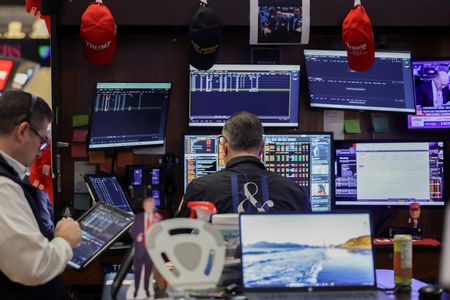

Wall Street futures declined Tuesday morning as investors evaluated rising tensions in the Middle East conflict, with President Trump’s deadline for Iran to reopen the Strait of Hormuz looming.
Reports emerged of multiple strikes targeting Iran’s Kharg Island, a critical oil export facility, while Iran’s Revolutionary Guards issued warnings to neighboring nations about potential attacks on U.S. and allied infrastructure that could disrupt energy supplies for years to come.
These developments come as Trump’s Tuesday deadline approaches for reopening the Strait of Hormuz, which Tehran has refused to comply with. A senior Iranian official told Reuters that discussions about lasting peace could only commence after the strikes cease.
“Either there is a climbdown on the part of Washington or Tehran, which could prompt a major rally in equities and easing of energy prices, or a major escalation with all the implications that might have for financial markets,” said Dan Coatsworth, head of markets at AJ Bell.
The ongoing conflict, now entering its second month, has created volatility in global markets as investors navigate between escalating rhetoric and reports of potential peace negotiations.
As of 7:17 a.m. ET, Dow E-minis dropped 156 points or 0.33%, S&P 500 E-minis fell 22.25 points or 0.33%, and Nasdaq 100 E-minis declined 114.5 points or 0.47%.
In other market news, the U.S. government announced Monday it would increase payments to private insurers providing Medicare Advantage plans to seniors in 2027 by an average of 2.48%, up from the minimal change initially proposed.
Health insurance companies saw significant gains in premarket trading, with UnitedHealth climbing 6%, Humana jumping 9.6%, and CVS Health rising 7%.
Monday’s trading session ended positively for Wall Street’s major indices, marking the fourth straight day of gains for both the S&P 500 and Nasdaq as investors processed Middle East developments while preparing for the upcoming quarterly earnings reports.
Since the Middle East conflict began, the S&P 500 has declined more than 4%, occurring just as the index was recovering from earlier losses driven by concerns about AI disruption affecting private credit and software companies.
UBS Global Wealth Management reduced its S&P 500 target for end-2026 to 7,500 from 7,700 on Monday.
This week, market participants will closely examine inflation data to determine whether rising crude oil prices from the conflict have affected broader economic price pressures.
The Iran conflict has created complications for Federal Reserve interest rate policy as officials balance inflation concerns against a strong labor market backdrop.
Statements from Fed policymakers Austan Goolsbee, Philip Jefferson, and Mary Daly throughout the day will be analyzed for insights into future monetary policy direction.
In individual stock movement, Broadcom shares increased 3.4% in premarket trading after the semiconductor company announced a long-term partnership with Alphabet’s Google to develop AI chips and related components.