Electric vehicle manufacturer Rivian Automotive reported stronger-than-expected delivery numbers for the first three months of 2024, suggesting consumer interest in its electric SUVs and pickup trucks is bouncing back after a challenging period last year.
The California-based company announced Thursday that it shipped 10,365 vehicles during the January-March period, topping Wall Street predictions of 9,678 deliveries according to data from Visible Alpha. The automaker also maintained its annual delivery target of between 62,000 and 67,000 vehicles for the full year.
Industry experts believe rising fuel costs since conflicts began in Iran this February may be pushing more consumers toward electric alternatives, potentially benefiting companies like Rivian and market leader Tesla.
Rivian’s performance had struggled during the final quarter of 2023 when a federal tax incentive worth $7,500 for electric vehicle purchases ended in September, making their vehicles more expensive and removing a key purchasing motivator for buyers.
Manufacturing numbers also exceeded expectations, with Rivian producing 10,236 vehicles during the quarter compared to analyst estimates of 9,852 units.
The improved production figures come at a crucial time as the company prepares to launch its more affordable R2 model this spring. The entry-level version of the R2, with an expected starting price around $45,000, is scheduled to reach customers next year.
Company officials believe this new model will help them reach a broader range of customers and compete directly with Tesla’s popular Model Y Premium, which starts at $44,990.
Rivian also announced a major partnership with ride-sharing company Uber last month, where Uber plans to invest as much as $1.25 billion in the electric vehicle maker. Under the agreement, Rivian’s self-driving R2 SUVs will serve as autonomous taxis starting in 2028.
The company is scheduled to release its complete first-quarter financial results on April 30 following the close of stock market trading.
Following two years of adjustments to its budget offerings, McDonald’s is adopting a streamlined strategy with its latest value menu approach.
Beginning April 21, the restaurant chain will launch a redesigned McValue menu featuring 10 items, each priced below $3. Morning options will include hash browns and Sausage McMuffins, while the remainder of the day brings choices like small fries and McDouble burgers.
While certain items already fall under the $3 threshold in various regions across the United States, others currently exceed this price point. This uniform selection will take the place of McDonald’s existing McValue offerings, which currently allow patrons to select from a restricted list of $1 items when purchasing a full-priced product.
This move toward clearer value messaging and increased customer choice mirrors recent strategies implemented by McDonald’s competitors. Taco Bell debuted its Luxe Value Menu in January, also featuring 10 selections at $3 or below. Panera Bread rolled out its inaugural value menu in February, offering 10 choices at $4.99 each.
Wendy’s updated its Biggie Deals value offerings in January, now showcasing $4 Biggie Bites, $6 Biggie Bags, and $8 Biggie Bundles. KFC has recently incorporated $5 bowls into its domestic menu options.
These budget-friendly menus aim to provide customers with economical choices, even as fast-food establishments simultaneously introduce premium-priced items such as McDonald’s Big Arch burger or Burger King’s limited-edition Peppercorn BLT Whopper.
Restaurant chains have prioritized affordability for multiple years to attract back patrons frustrated by rising food costs. While prices for dining out typically increase 3.5% annually, government data shows they jumped 7% in 2023, 4% in 2024, and 3.8% in 2025.
“Throughout all retail sectors, including quick-serve restaurants, ‘value’ has transformed into a promotional necessity,” stated Roger Beahm, an emeritus marketing professor at Wake Forest University’s School of Business.
McDonald’s launched its $5 Meal Deal in June 2024 and will introduce a $4 Breakfast Meal Deal on April 21. The company debuted the McValue menu in January 2025, and last autumn introduced Extra Value Meals, which offer a 15% savings on bundled meals compared to purchasing items separately.
“Value matters more than ever to our customers, and we take that responsibility seriously,” Alyssa Buetikofer, the chief marketing and customer experience officer for McDonald’s USA, told The Associated Press.
According to Buetikofer, McDonald’s has enhanced customer perceptions regarding value and affordability since 2024. However, the company chose to redesign its McValue menu after customers expressed desires for greater flexibility and improved morning value. Breakfast items comprise half of the under-$3 menu selections.
California McDonald’s franchisee Scott Rodrick endorsed the new approach, believing it will streamline the ordering process by reducing customer confusion about available deals.
“The value proposition is super clear — no deep explanation or mental gymnastics needed to understand where value is on my menu board,” Rodrick said.
Rodrick noted that the modifications received widespread franchisee approval, with most U.S. locations expected to implement them. Approximately 95% of McDonald’s domestic restaurants are franchisee-owned and operated, with individual pricing control.
The fast-food industry’s balancing act of promoting value through deals and discounts while increasing prices on premium items appears successful, according to Revenue Management Solutions, a restaurant consulting firm. February saw U.S. fast-food restaurant traffic increase by less than 1% compared to the previous year. Traffic declined 2% during the final quarter of 2025 and in January.
However, the consulting company cautioned that elevated gas prices resulting from the Iran conflict likely affected fast-food traffic in March, potentially pressuring chains to provide additional value offerings.
Beahm warned that the term “value” risks becoming overused. Eventually, the excitement of deals diminishes, and customers lose track of previous pricing, he explained.
“If everything is always positioned as a value, then can anything really be a value?” Beahm said.
He believes new product introductions represent an effective customer attraction strategy. Enhanced service or unexpected benefits, such as charitable donations with purchases, offer alternative approaches.
Jennifer Fritch, an assistant marketing professor at Arcadia University, concurred. The fast-food marketplace is saturated, she noted, and price-only focus reduces food to a commodity. Younger consumers particularly seek emotional connections, customization, and ingredient transparency, and will pay premium prices when they discover these qualities, she explained.
“If it’s just cheap food, that’s not a winning long-term strategy,” Fritch said. “The list of demands and list of expectations is higher than it has ever been, and it’s insufficient to try to gain sales just on cost.”
Turmoil in the Middle East is creating widespread disruption across international financial markets, prompting companies around the world to make significant changes to their investment and dividend plans.
The ongoing conflict has created challenges for global supply chains and raw material distribution, leading several major corporations to alter their financial strategies. Here are the companies that have announced changes to their public offerings or shareholder payments:
Swedish outdoor technology company Dometic Group has eliminated its planned dividend payment of SEK 1.00 ($0.11) per share, opting instead to pay no dividend for 2025. The company cited increased economic uncertainty from geopolitical developments and noted that demand and trading conditions have become weaker than expected.
Travel booking website Loveholidays is considering postponing its planned London stock market debut worth up to 1 billion pounds ($1.3 billion), according to a source with knowledge of the situation who spoke to Reuters. The delay stems from the conflict’s negative impact on market confidence and disruptions to travel operations.
Canadian well construction automation firm McCoy Global announced it will halt its quarterly dividend payments to preserve financial flexibility during the Middle East crisis. The company stated that the conflict has created uncertainty while disrupting logistics and delivery timelines.
Walmart-backed Indian financial technology company PhonePe has put its initial public offering plans on hold following market instability caused by geopolitical tensions. The firm indicated it will restart the IPO process when market conditions stabilize.
XED Executive Development, an executive education platform that was set to become the first company from India’s low-tax GIFT City to go public, has withdrawn its stock offering. The company blamed weak market sentiment from the Middle East conflict and delays in completing required video verification processes for non-resident Indian and foreign investors that are connected to the ongoing crisis.
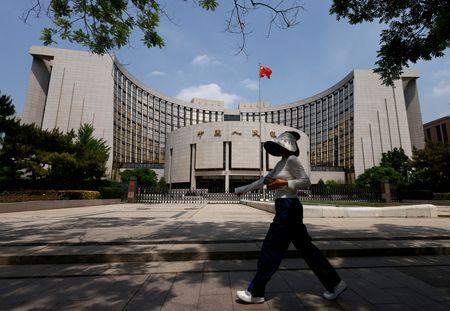
BEIJING, April 2 – The People’s Bank of China announced Thursday it has authorized 12 additional financial institutions to operate its digital yuan system, validating a previous Reuters report from last month.
Among the newly approved banks are China CITIC Bank, China Everbright Bank, China Guangfa Bank, and Shanghai Pudong Development Bank, according to the central bank’s official statement.
The expansion is designed to “enhance the inclusiveness of digital yuan services” and provide citizens with “safe, convenient and efficient” payment alternatives, officials stated.
With Thursday’s announcement, the total count of authorized digital yuan operators has reached 22 institutions.
China’s efforts to integrate the digital yuan into everyday commerce have progressed more gradually than anticipated since the program’s 2019 debut, largely because consumers already have access to secure and affordable payment methods through established platforms like Alibaba’s Alipay and Tencent Holdings’ WeChat Pay.
This initiative unfolds as China maintains its strict stance against virtual currencies and prohibits stablecoins, creating a stark difference with the United States, where President Donald Trump has endorsed cryptocurrencies while rejecting a digital dollar.
“The central bank will continue to expand the number of operating institutions in an orderly manner in accordance with market-oriented and rule-of-law principles,” the PBOC stated, emphasizing its goal to establish an “open, inclusive and fair competitive environment” for digital currency growth.
DES MOINES, Iowa (AP) — American motorists are experiencing wild daily fluctuations in gasoline costs, leaving drivers frustrated and financially strained as fuel expenses reach their highest levels since 2022.
International conflicts involving Iran have driven up petroleum costs globally, pushing the national average price for gasoline beyond $4 per gallon this Tuesday, AAA data shows.
Fuel costs can shift overnight or vary significantly between neighboring stations, compelling American drivers to strategize when to refuel or search extensively for better deals.
Industry analysts explain that individual gas retailers typically don’t control these price variations, and most station owners aren’t profiting from the additional costs when prices climb. The volatility drivers see reflects a massive, unpredictable petroleum market that makes it challenging for stations to maintain consistent pricing.
Lonnie McQuirter, who oversees operations at 36 Lyn Refuel Station in south Minneapolis, reports his profit margins have become significantly narrower. Located approximately one mile from Interstate 35, his neighborhood store displayed $3.399 per gallon for regular gasoline Wednesday, roughly 18 cents below the metropolitan area’s average according to AAA.
“We price based on what we’re able to buy fuel at, and how well we can operate,” McQuirter explained. He avoided commenting on competitors’ strategies, noting, “They’ve got different economics.”
McQuirter attributes his higher charges compared to last month primarily to wholesale fuel costs, which fluctuate several times daily. He’s simultaneously dealing with increased credit card processing fees and rising pump maintenance expenses.
During challenging periods like this, when consumers are “screaming for help,” McQuirter said independent operators like himself respond more from compassion than profit motives.
“We’re in our stores every day looking our customers in the eye,” he stated. “It really takes a toll when people are having to cut back on certain things in order to afford to live.”
Much of the pricing remains beyond gas retailers’ influence. Approximately half of pump prices cover crude oil costs, gasoline’s primary component, according to the U.S. Energy Information Administration. About 20% compensates refineries that convert crude into gasoline.
These expenses have increased as crude oil values surged responding to warfare and transportation disruptions in the Strait of Hormuz. Gas retailers adjust pump pricing to reflect higher costs they’ve just paid for incoming gasoline shipments.
Government levies — federal, state and municipal — comprise nearly 20% of pricing, while roughly 10% remains for retailers, who must still cover transportation, labor and additional operating costs.
Retailers’ markup has averaged approximately 38 cents per gallon during the past five years, according to convenience store industry group NACS, citing OPIS research data. Following expenses, stations might retain around 15 cents per gallon, explained Jeff Lenard, a NACS vice president.
“Some make more, some make less,” Lenard observed.
Patrick De Haan, petroleum analysis director at GasBuddy, drew comparisons to homeowners determining sale prices.
“If I was selling a house today, I’d be beholden to whatever the housing market is,” De Haan noted. “That’s the same for gas station owners. Whatever the price of oil and gasoline are, they are a price taker, not maker.”
Though the national average recently exceeded $4 per gallon, costs vary dramatically across states, cities and individual stations.
Tax differences alone create substantial gaps. California’s gasoline taxes and fees totaled approximately 71 cents per gallon last year, while Alaska charged roughly 9 cents.
Refinery proximity, retailer type, location volume and nearby fuel alternatives also influence pricing.
Stations near competitors might price gasoline competitively on prominent outdoor displays to draw drivers, hoping they’ll enter and purchase higher-profit merchandise, said Neal Walters, an energy-focused partner at global consulting firm Kearney.
“It’s one of the only retail locations where you don’t have to go into the store to find out what you’re paying,” Walters noted.
While American retailers distribute hundreds of millions of gasoline gallons daily nationwide, they typically don’t experience substantial profits when prices increase.
“The margins shrink when prices go up because it’s harder for them to pass along the increases as quickly as they themselves get them,” De Haan explained.
When petroleum costs begin declining, retailers might recoup some losses, especially during supply cost uncertainty. Prices can surge rapidly but tend to decrease gradually like a drifting feather, said Garrett Golding, assistant vice president for energy programs at the Federal Reserve Bank of Dallas.
Elevated gas prices can also damage sales inside stations, when customers squeezed at pumps reduce spending on other items.
“So it’s not always the case that higher prices mean the service station owners are actually doing better,” Golding explained.
Most petroleum industry profits occur upstream, he said, through companies extracting and refining crude oil. However, Golding notes they aren’t necessarily celebrating; eventually, significant price spikes could begin reducing demand.
“It may be a good stretch of days or weeks for them,” he said, “but they’re also cautious of what it could portend.”
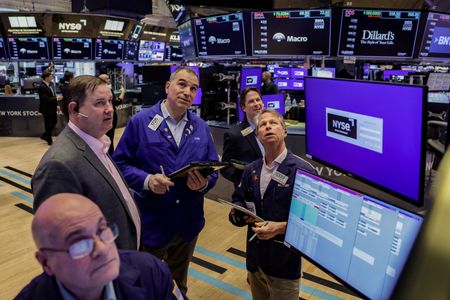
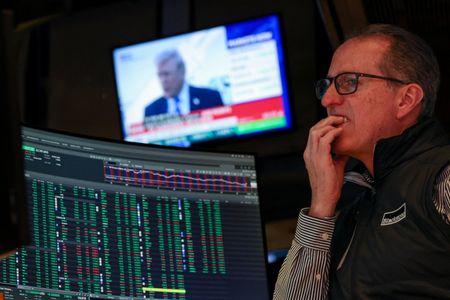
Financial markets worldwide took a downturn Thursday following President Trump’s prime-time television address, which dashed investor hopes for a swift resolution to the Iran conflict.
During his speech, Trump indicated the military operations would likely continue for another two to three weeks, providing limited new information about the situation. The president stated that U.S. forces had nearly accomplished their objectives in Iran but warned he would “hit them” in the coming weeks and “bring them back to the Stone Ages.”
The market response was swift and negative. Brent crude oil jumped back to nearly $109 per barrel, while West Texas Intermediate climbed just above $107. This represented a significant reversal from earlier gains.
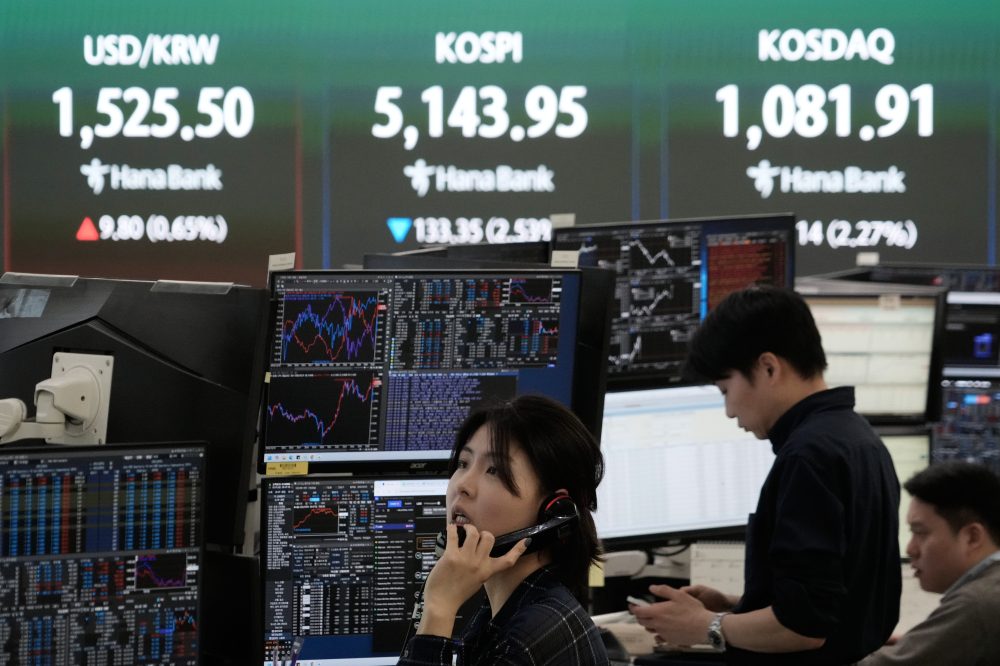
Stock markets across Asia closed lower, with Japan’s Nikkei falling 2.4% and South Korea’s Kospi dropping 4.7%. European markets opened down approximately 1%, and U.S. stock futures pointed to losses before the opening bell.
Currency markets saw the dollar index climb back above the 100 level after two consecutive days of declines, as investors sought safe-haven assets. Gold retreated from the two-week peaks it reached Wednesday when there were brief signs of optimism. U.S. Treasury bonds also declined.
While Trump mentioned that “discussions are ongoing,” he provided few specifics regarding access through the strategically important Strait of Hormuz.
Investors are entering the extended Easter weekend with heightened anxiety about future developments. Adding to market concerns, the March U.S. employment report will be released on Good Friday, offering additional insight into any economic impact from recent events.
Despite the geopolitical tensions, early March economic indicators have shown more resilience than many analysts anticipated. The ISM manufacturing survey improved, consumer confidence rose unexpectedly, private sector job growth exceeded projections, and corporate earnings forecasts for the full year are actually rising.
The current economic picture shows significant input cost increases alongside robust business activity, which could keep central banks vigilant about monetary policy decisions.
In other business news, as NASA prepares for its first lunar mission in fifty years, Elon Musk’s SpaceX has submitted paperwork for an initial public offering that could potentially become the largest in history. This offering will test investor interest in high-profile risk assets amid current market uncertainty.
Additionally, Amazon is reportedly in discussions to acquire satellite telecommunications company Globalstar, according to the Financial Times. This move would advance Amazon’s efforts to develop its own low-earth-orbit satellite network to compete with SpaceX’s Starlink service.
Air travel to and from the United Arab Emirates continues to recover slowly from the initial impact of the Iran conflict, with Trump’s overnight comments suggesting the situation will persist for several more weeks.
Today’s key economic releases include weekly jobless claims and February trade balance data at 8:30 a.m. EDT, followed by remarks from Dallas Federal Reserve’s Lorie Logan at 10:15 a.m. EDT.
Wall Street investment bank Goldman Sachs announced Thursday that it has finalized its purchase of Innovator Capital Management, an active exchange-traded fund company, marking a significant expansion into the rapidly growing active ETF market.
Active ETFs represent one of the most rapidly expanding sectors in investment management, drawing investors seeking cost-effective options and adaptable investment approaches during periods when traditional passive index funds have underperformed.
The financial giant first revealed its intention to purchase Innovator Capital in December, acquiring a company that oversees 171 ETFs worth approximately $31 billion in assets through a transaction valued at roughly $2 billion.
“With this acquisition, we have taken a transformative step in our commitment to provide sophisticated investment solutions that are designed to deliver specific outcomes for investors through market cycles,” stated Goldman Sachs Chief Executive Officer David Solomon.
As part of the transaction, Innovator’s founding partners Bruce Bond and John Southard will assume roles as advisory directors at Goldman Sachs, according to the company’s announcement. Additionally, Chief Investment Officer Graham Day and Head of Distribution Trevor Terrell will become partners at the firm.
The acquisition will bring more than 70 Innovator staff members into Goldman Sachs, the company reported.
Goldman Sachs Asset Management now manages approximately 240 ETFs worldwide, bringing the firm’s total ETF assets under management to $90 billion, according to the announcement.
States that have legalized sports gambling are growing concerned about new competition that could reduce their tax revenue streams. New Hampshire, which relies on sports betting proceeds to help finance government operations, is watching as alternative platforms begin attracting wagering dollars.
Traditional sportsbooks like DraftKings have provided states with steady income through revenue-sharing agreements since sports betting became legal in many jurisdictions. However, emerging prediction market companies including Kalshi and Polymarket are now capturing some of that betting activity.
The shift represents a potential challenge for state budgets that have come to depend on sports wagering taxes and fees. As basketball betting reaches peak season, officials are monitoring whether bettors will migrate to these newer platforms that operate outside traditional state-regulated frameworks.
The competition highlights the evolving landscape of legal gambling as technology creates new ways for people to place bets on various outcomes beyond traditional sports events.
Businesses hit hard by former President Trump’s overturned tariffs are finding new ways to access cash while waiting for government refunds that could take years to arrive.
Companies are now using their pending refund claims as collateral to secure loans, avoiding the need to sell those claims at significant losses to financial firms. This creative financing approach has emerged following the U.S. Supreme Court’s February decision that declared Trump’s “Liberation Day” tariffs unconstitutional.
The tariffs, announced exactly one year ago on April 2, created massive disruption across American businesses. More than 330,000 importing companies paid the taxes and are now collectively seeking approximately $166 billion in refunds from the federal government.
Financial institutions including commercial banks, hedge funds, and private credit companies are actively offering loans backed by these refund claims, according to industry experts.
“There’s a lot of money looking to be deployed,” explained Raniero D’Aversa, who leads the restructuring practice at law firm Orrick and advises clients on these transactions. “You’re paying interest, but you’re not giving away 50% of your claim. You still own the claim.”
The loan arrangements typically function as term loans where interest accumulates and gets paid from the eventual refund. This structure appeals to importers because they maintain ownership of their claims instead of selling at reduced prices.
Neil Seiden, who serves as managing director at Asset Enhancement Solutions and helps arrange corporate debt financing, said the investment funds he partners with require minimum loans of $10 million supported by tariff claims worth at least $20 million.
However, these deals carry substantial risks for both parties. Companies face steep interest charges, while lenders risk losing money if collateral values drop or borrowers cannot repay. Currently, businesses can sell a $500,000 claim outright for roughly 55 to 75 cents per dollar, according to Seiden.
“What happens if the market goes from fifty cents to twenty cents? Now my collateral value has diminished and my loan is at risk,” D’Aversa warned.
The timing of refund payments will determine whether borrowing makes financial sense compared to selling claims immediately. Using a hypothetical 15% interest rate, the break-even point for borrowing versus selling a claim at 80 cents per dollar occurs at just over two years, Seiden calculated.
Trade specialists predict refunds could require at least two years to process, citing the Trump administration’s resistance to payments along with potential appeals, eligibility reviews, and bureaucratic delays. The U.S. customs agency announced Tuesday it was developing a refund system, though some payments may face delays.
“Every company will make a different decision depending upon how their business is doing and when they think the refund will be received,” Seiden noted. He emphasized that lenders perform thorough reviews to ensure borrowers can handle repayment, and any interest not covered by refunds must come from company funds.
Seiden’s firm has completed $20 million in tariff claim purchases but has not yet finalized any loans.
Meanwhile, some investors prefer purchasing refund rights directly from importers. Brian Coppola, managing partner at Outpost Capital Partners, said he plans to invest billions in refund claims and has already bought several from major U.S. retail chains.
As this market expands, buyers are seeking additional protections. Tony Gulotta, a principal at tax consulting firm Ryan, said he has explored contingency insurance options with buyers to guard against seller bankruptcy or loss of cooperation during the refund process.
Large retail companies may present extra risks if they passed tariff costs to customers, potentially triggering class-action lawsuits, Gulotta explained.
“Their customers will want that money back,” Gulotta said. “If you’re buying from a retailer, you have to distinguish any liability they might have to consumers.”
The streaming service Netflix continues working to develop lasting entertainment properties after missing out on Warner Bros Discovery’s extensive collection of beloved characters and storylines.
Netflix’s Chief Creative Officer Bela Bajaria explained the company will continue funding original concepts and collaborating with established studios including MGM and Warner Bros to create films and shows with staying power similar to “Stranger Things,” “Wednesday” and “Bridgerton.”
“To me, that’s just continually the goal,” Bajaria stated during a recent interview.
The unsuccessful effort to purchase Warner Bros’ legendary film studio and HBO exposed a weakness for the streaming company, which has built its original content library over roughly twelve years compared to more than 100 years of stories and characters owned by Warner Bros, Walt Disney and Universal Pictures. Netflix was prepared to make its largest financial commitment ever at $72 billion to strengthen its content library and add intellectual properties like Harry Potter and “Game of Thrones,” since developing successful franchises has proved difficult.
Discussions with 16 current and former Netflix leaders, industry professionals and representatives reveal the streaming company’s approach of creating content for diverse audiences simultaneously differs from developing interconnected content universes like Taylor Sheridan’s “Yellowstone” spin-offs that attract dedicated viewership.
However, Netflix’s prominent producer Shonda Rhimes has successfully transformed Julia Quinn’s “Bridgerton” books into a series now entering its fifth season, complete with a spinoff and touring experience set in Regency-era London called “The Queen’s Ball.”
Entertainment franchises provide value to companies as lower-risk ventures that generate additional income through product sales and live experiences. Well-known characters and storylines also capture viewer attention in today’s crowded media environment filled with countless entertainment options.
Netflix revealed its first significant purchase, comic book publisher Millarworld, one day before Disney announced in August 2017 it would remove its films from the streaming platform to launch its own competitor, eventually named Disney+.
“Stranger Things” has achieved remarkable success, generating a spinoff series, stage production, and merchandise. Netflix highlights additional examples including the action film “Extraction” featuring Chris Hemsworth, which spawned a sequel and third movie currently in development, plus a series starring French actor Omar Sy. The long-running dating program “Love Is Blind” has been adapted for international markets, including versions in Brazil, France and Japan.
Some expensive ventures failed while building original franchises, including the reported $700 million agreement to obtain rights to Roald Dahl’s collection, featuring cherished children’s tales like “Charlie and the Chocolate Factory.” This investment hasn’t created a major success in five years, though Netflix plans another attempt this year with a Willy Wonka-themed reality program called “Golden Ticket” where contestants navigate challenges and temptations on a set featuring a chocolate river.
Creating reliable hits that generate new series helps attract and keep subscribers while boosting engagement, which increased only 2% during the second half of 2025, according to media consultant Owl & Co. Overall growth has slowed, with revenue projected to rise 13% this year based on LSEG data, compared to 16% in 2025, while advertising sales account for just 3% of total revenue. YouTube’s growing popularity presents competitive pressure. YouTube and Disney, with its collection of famous characters, have consistently surpassed Netflix in television viewing share since October 2024, according to Nielsen’s media distributor measurements covering broadcast, cable and streaming.
Adding complexity, Paramount Skydance is purchasing Warner Bros, potentially reducing suppliers of original programming.
Using a $2.8 billion gain from the unsuccessful Warner Bros transaction, Netflix Co-CEOs Ted Sarandos and Greg Peters will maintain their independent approach. Upcoming releases feature established characters and stories, including a live-action “Scooby-Doo” series and a “Narnia” film based on C.S. Lewis books directed by Greta Gerwig.
“The Electric State” demonstrates an expensive failure highlighting the risks of attempting to create an extensive Marvel-style cinematic universe.
Netflix recruited Joe and Anthony Russo, the directors behind Disney’s successful Avengers films and Netflix’s “Extraction,” to adapt the acclaimed science-fiction novel, casting “Stranger Things” star Millie Bobby Brown alongside Hollywood star Chris Pratt.
Critics harshly criticized the $320 million film upon its release last year. Plans to expand the property further, including potential spinoff series and sequels, never developed, according to two sources directly familiar with the project who requested anonymity to protect professional relationships.
“A lot of people have big movies that also are IP that don’t work,” Netflix’s Bajaria commented. “We’re in the film and TV business, so a lot of things work, a lot of things don’t work.”
Other risks, such as Netflix’s choice to approve “Squid Game,” a dystopian thriller from creator Hwang Dong-hyuk that other companies had rejected, succeeded tremendously by creating a worldwide phenomenon.
Through its massive content volume, Netflix also experiences unexpected successes, like Sony Pictures Imageworks’ Oscar-winning animated film “KPop Demon Hunters,” which became the platform’s most-watched movie ever last year.
When breakthrough success occurs, the company can utilize its extensive global reach and advanced algorithm to build excitement for content that viewers start binge-watching, helping create cultural moments.
Netflix is developing “KPop Demon Hunters” as its next major franchise, featuring licensed merchandise from Mattel and Hasbro, themed adult meals from McDonald’s, a potential concert tour and a planned animated sequel.
However, the success surprised Netflix, according to two sources. The company actually lacked licensed merchandise to capitalize on the popularity during holiday shopping season. Netflix has stated in interviews that it contacted toy manufacturers and retailers a year or more before the film’s debut, but they were reluctant to invest in an unproven property.
During a March 18 presentation in Los Angeles, Netflix revealed its 2026 schedule, featuring a fourth “Bridgerton” installment, a second season of “One Piece,” an adaptation of the popular manga series, a live-action television series based on the “Assassin’s Creed” video game franchise, and a “Little House on the Prairie” reboot.
“We’re off to a strong start and feeling confident about the quality and consistency of our slate this year,” stated Jinny Howe, vice president of original series at Netflix.
Electric vehicle giant Tesla has posted rising sales figures from its Chinese manufacturing operations for the second quarter running, according to new industry data released Thursday.
The company’s Shanghai manufacturing plant produced 85,670 Model 3 and Model Y vehicles in March, representing an 8.7% increase compared to the same period last year, according to figures from the China Passenger Car Association. These numbers include both domestic Chinese sales and vehicles shipped to European and other international markets.
The March figures represent the fifth consecutive month of increasing sales for Tesla’s Chinese operations, with industry experts attributing the growth to strengthening demand from European customers. Market analysts suggest that Tesla and other electric vehicle manufacturers may see additional benefits from rising oil prices connected to ongoing tensions involving Iran.
Looking at the broader quarterly picture, Tesla’s Chinese factory sales jumped 23.5% during the January through March period compared to the previous year, a significant acceleration from the modest 1.9% growth recorded in the final quarter of last year.
Industry watchers anticipate Tesla’s worldwide first-quarter delivery numbers will show nearly 10% improvement over last year’s disappointing performance, when consumer backlash against CEO Elon Musk’s political statements negatively impacted sales.
Despite the recent positive trends, Tesla continues facing significant challenges in key markets. The company saw its European market share drop by nearly half last year while losing ground in China, where its share of the electric vehicle market declined from 10% to 8% in 2024.
Chinese automaker BYD remains Tesla’s primary competitor, continuing to challenge the American company’s position in European markets. However, BYD’s strong international expansion has not been enough to compensate for difficulties in its domestic Chinese market.
As Tesla works to diversify beyond electric vehicles, the company is exploring solar energy systems, humanoid robotics, and self-driving taxi services as potential growth areas. Recent reports indicate Tesla is negotiating with Chinese companies for approximately $2.9 billion in solar equipment purchases.
NEW YORK (AP) — Small business owners nationwide are feeling the economic pinch from the ongoing Middle East conflict, as shipping routes become disrupted, transportation costs climb, and customers reduce spending due to rising gas prices.
The impacts are widespread: a footwear company can’t get shoes delivered from Vietnam on schedule, a California pistachio operation has millions in product stuck at sea, a Missouri lawn care business is buying extra fertilizer before prices jump higher, and an Illinois electronics retailer is watching fuel costs eat into profits.
Business owners acknowledge that pandemic-related supply chain problems were more severe, but they worry about what extended warfare could mean for their operations.
“The costs are rising, the routes are changing, and capacity is tightening. It’s all happening at the same time, and that’s a perfect storm for small businesses,” said Brandon Fried, executive director of the Airforwarders Association, a trade group for U.S companies that move cargo through the supply chain on all modes of transport.
According to the U.S. Department of Agriculture, America leads global pistachio exports, with Iran ranking second.
Jared Lorraine serves as chief operating officer at Nichols Farms in Hanford, California, where his family has grown and processed pistachios for four generations. International sales account for roughly half their revenue, with shipments going to Europe, China, and growing markets in the Middle East.
The practical shutdown of the Strait of Hormuz has blocked deliveries to multiple customers. When hostilities began, Lorraine estimates approximately $5 million in pistachios became trapped on vessels, preventing delivery to buyers in Saudi Arabia, Iran and the United Arab Emirates.
“While much of the public attention has been focused on oil, which is significant, really, the destruction of the food system is I think equally as serious,” he said, adding 70% to 80% of food in the Middle East is imported.
Following the U.S. bombing of Iran on February 28, Nichols Farms found about $5 million worth of pistachios aboard ships that became stranded, according to Lorraine. The company successfully redirected some shipments: one cargo load was unloaded in Jeddah, Saudi Arabia, for truck transport to the UAE. Two additional loads reached an Omani port after being transferred to smaller containers in India. However, $3.5 million worth of product remains at sea.
“A lot of it has just been in limbo,” Lorraine said. “It’s literally been sitting idle for the last three weeks and we’re just saying, OK, what do we do?”
Matthew Tran founded Birchbury, a Los Angeles-based footwear company specializing in minimalist shoes, also called “barefoot” footwear. His company manufactures in Vietnam and distributes to customers throughout the U.S., U.K., Australia and Canada.
Under normal circumstances, Tran spends roughly $3,500 for each shipping container from Vietnam. Since the conflict began, that cost has doubled to approximately $7,000 due to route changes and increased insurance expenses. Delivery times have also extended by three to four weeks.
“It’s kind of like a traffic jam,” he said about the shipping time. “So even though it doesn’t seem like it would directly affect me because I’m going from Vietnam to America, it does affect me when there’s more congestion.”
While he noted that COVID-related supply chain problems were more severe when operations completely stopped, he expressed concern about the war’s duration.
“They always say the wars are going to be short, but they’re never short,” he said. He worries about customers having less money for discretionary spending since gas prices have surged.
“Customers don’t understand, but also their gas prices just went up, too, right?,” he said. “People just don’t want to spend money at the end of the day because they’re like, ‘Oh man, gas is up a lot.’ Buying another new pair of shoes is secondary to being able to go places with your car.”
In Kansas City, Missouri, Jake Wilson operates Top Class Lawn Care, maintaining nearly 400 properties throughout the metro area. The Strait of Hormuz closure has disrupted fertilizer markets, since Middle Eastern countries provide approximately 30% of worldwide fertilizer exports, according to the International Fertilizer Association.
Wilson launched his company in 2011 and has developed solid relationships with suppliers. Within days of the conflict’s start, two suppliers contacted him via email, warning of upcoming price increases and recommending advance purchases.
Price volatility poses challenges since roughly 70% of his clients agree to annual lawn care contracts with upfront payment at year’s beginning.
He wants to avoid returning to customers mid-season asking for additional money due to fertilizer cost increases.
“It’s kind of on me to try to get out ahead of it, the best I can, so I could still try to be profitable while keeping prices where I quoted at the beginning of the year,” he said.
Typically, he purchases fertilizer quarterly, ordering two or three months before application. Currently, he’s attempting to secure supplies through fall and into year-end, essentially doubling standard orders.
“I don’t want to wait till summer and go to my supplier and they either say, well, we don’t have any product available or what we do have is now 60%, 70% more expensive than what it was quoted in early spring, or first of the year,” he said.
Rising fuel costs have one electronics retailer reconsidering complimentary shipping policies.
Abt Electronics in Chicago consumes an average of 25,000 gallons of diesel and 30,000 gallons of gasoline monthly to operate more than 650 delivery vehicles, according to Jon Abt, the retailer’s co-president.
With gas prices climbing, Abt expressed concern about maintaining free shipping and delivery for orders over $35.
“It’s an eye-opening expense, ” Abt said. “It will affect the cost of making deliveries. This will also hit the shipping companies we use for out-of-state deliveries,”
While Abt hasn’t received March fuel bills yet, he plans to absorb costs temporarily while monitoring market conditions and competitor responses.
He added, “We like delivering things for free, and I think customers expect it.”
Commercial fishing operations throughout Rhode Island are grappling with the financial strain of elevated fuel costs that are severely impacting their bottom line.
The surge in fuel expenses is creating substantial economic pressure on fishing vessel operators who depend on diesel to power their boats for daily operations at sea.
This financial burden threatens the viability of Rhode Island’s maritime fishing sector, which plays an important role in the state’s coastal economy.
France’s Finance Minister Roland Lescure revealed Thursday that his administration plans to unveil new incentives within the next few weeks aimed at attracting data center development to the nation.
Speaking from Paris on April 2nd, Lescure also mentioned that Japanese investors are currently evaluating European locations for potential data center installations.
BEIJING – Chinese commerce officials stated Thursday that the government backs international business partnerships and technology collaborations when they comply with legal requirements.
Commerce ministry spokesperson He Yadong made these comments when asked about potential Chinese government actions regarding Meta’s purchase of Manus, a Chinese artificial intelligence company.
According to a Financial Times report from March, Chinese authorities have prevented two founding members of Manus from departing the country while officials examine whether Meta’s $2 billion acquisition of the company broke investment regulations.
The spokesperson’s statements come as Chinese regulators continue their review of the high-profile technology deal between the social media giant and the AI startup.
Stock market futures dropped sharply Thursday morning following President Donald Trump’s announcement that military operations against Iran would escalate in the coming two to three weeks, contradicting his previous statement to Reuters that America would be “out of Iran pretty quickly.”
The conflicting messages about the timeline and goals of the month-long conflict have created significant market volatility throughout March, resulting in the S&P 500’s largest monthly decline in a year. Meanwhile, Brent crude oil posted record monthly gains and climbed to $107 per barrel following Trump’s latest remarks.
Market uncertainty has shifted Federal Reserve policy expectations dramatically. Before the conflict began, traders anticipated at least two quarter-point interest rate reductions this year. Now, according to LSEG data, rate futures suggest the central bank will maintain current levels throughout most of the year. At one point in March, investors even priced in a 50% probability of a rate increase due to conflict-related concerns.
By 3:05 a.m. Eastern Time, Dow futures had fallen 551 points or 1.18%, while S&P 500 futures dropped 86.75 points or 1.31%. Nasdaq 100 futures declined 379 points or 1.57%.
The Russell 2000 index futures, which are particularly sensitive to interest rate changes, fell nearly 2%. The CBOE VIX volatility index, often called Wall Street’s fear gauge, jumped 2.1 points to 26.68. Over the previous two trading sessions, expectations for a quick war resolution had encouraged risk-taking and pushed the VIX to its lowest level in over a week.
Investors sought safety in U.S. dollar assets while traditional safe-haven investments like precious metals experienced declines.
Market attention will also focus on SpaceX developments after reports that Elon Musk’s company has quietly filed for a public stock offering targeting a $1.75 trillion valuation, according to Reuters sources familiar with the matter. Related space industry stocks including Rocket Lab, Planet Labs and Intuitive Machines gained ground Wednesday as investors anticipated renewed sector interest.
Dallas Federal Reserve President Lorie Logan’s scheduled remarks later Thursday will be closely monitored for interest rate guidance, while weekly unemployment claims data precedes Friday’s March employment report. U.S. markets will remain closed Friday for the Good Friday holiday.
Financial markets worldwide experienced significant turbulence Thursday following President Donald Trump’s latest statements regarding ongoing military operations against Iran, dashing investor expectations for a near-term resolution to the conflict.
Trump’s remarks about continuing to target Iranian positions for an additional two to three weeks sent shockwaves through global trading floors, causing stock prices to tumble, oil costs to spike, and investors to flee toward safer assets.
The president indicated that U.S. military objectives in Iran were nearing completion but stopped short of providing a definitive timeline for concluding operations. His announcement that bombing campaigns would persist for several more weeks left market participants deeply unsettled.
Mike Houlahan, director of Electus Financial Ltd in Auckland, expressed skepticism about the president’s address. “I don’t think there was an awful lot in the speech per se, apart from the fact that they’re going to keep bombing for the next two to three weeks,” Houlahan commented.
“That pushes out the resolution timeframe farther,” he added. “The next question is because he’s extended it, confirmed it’s going to take another two to three weeks, does that put added pressure on the fuel supply chain?”
Market participants had previously grown optimistic about a potential conflict resolution following Trump’s earlier weekly comments, which had boosted international equities and weakened the dollar. However, Thursday’s address revealed the harsh reality of an extended military engagement.
This revelation prompted traders who had recently increased their risk exposure to quickly reverse course ahead of the approaching long weekend.
Energy supply disruptions and their inflationary consequences have remained primary concerns for financial markets. Trump’s Wednesday comments failed to clarify whether U.S. military activities might cease before Iran reopens the strategically crucial Strait of Hormuz.
Iran’s control over this essential shipping route has created what analysts describe as the most severe global energy crisis in recorded history. Brent crude futures for June delivery jumped approximately 5% to $106.16 per barrel following the president’s speech.
Matt Simpson, senior market analyst at Stonex in Brisbane, warned of prolonged economic impacts. “With no plans to reopen the Strait of Hormuz that he effectively closed, oil prices are to remain high indefinitely,” Simpson stated, adding that markets must prepare for “the next round of inflation.”
Economic experts suggest Trump’s statements and the prospect of continued oil supply disruptions could heighten concerns about stagflation – the damaging combination of elevated inflation and sluggish economic growth that disrupted markets in March.
Bank of Japan board member Toichiro Asada acknowledged Wednesday that Japan might face stagflation risks from the Iran conflict that would prove difficult to address through monetary policy measures.
Russel Chesler, head of investments and capital markets at Vaneck in Sydney, emphasized the uncertainty driving market volatility. “The key question in all investors’ minds is ‘when is this going to be over?’, that is what is creating the volatility,” Chesler explained.
“We are looking at a situation now where we are getting into a stagflation situation with lower growth and higher inflation expectations,” he added.
Treasury bond yields climbed across Asian markets Thursday amid fears that rising inflation would eliminate any possibility of more accommodative monetary policy. Ten-year note yields increased 5 basis points to 4.376% after Trump’s address.
While analysts anticipate continued market volatility as investors closely monitor developments over the coming weeks, they expect both the U.S. dollar and oil prices to trend higher in the short term as investors adopt defensive positioning.
The dollar, which has strengthened due to safe-haven demand since the conflict began in late February, gained ground against major currencies Thursday, reversing two days of declines.
Carol Kong, currency strategist at Commonwealth Bank of Australia, predicted further dollar strength. “The dollar has already edged a little bit higher … and I think given our expectations for the war to extend into at least June, the dollar can definitely increase further,” Kong said.
“It’s hard to feel optimistic about the end of the war for sure, because ultimately Israel and Iran are the two other parties to the war; it’s not just the U.S.,” she concluded.
Financial policymakers around the globe face an unprecedented challenge: attempting to decode the mindset of corporate leaders, union representatives, and everyday consumers as they manage their budgets during another wave of energy price volatility.
Officials are weighing whether to increase borrowing costs to address climbing inflation rates. However, they will only take action if they believe energy price increases stemming from Middle Eastern conflicts will spread throughout the broader economy, pushing up price expectations everywhere.
The challenge lies in the notorious difficulty of accurately measuring these expectations. While monetary authorities have access to numerous surveys, metrics, and indicators, each tool comes with significant limitations or outright flaws.
Following the COVID-19 outbreak, these institutions have created additional instruments to address data collection shortfalls regarding consumer and business behavior. However, gauging expectations continues to be more artistic interpretation than precise methodology.
This uncertainty could make officials more hesitant to raise rates, as they typically avoid decisions based on instinct alone and prefer waiting for additional evidence to minimize the chance of making incorrect policy choices.
POST-2022 BEHAVIORAL SHIFTS
Richmond Federal Reserve Bank President Tom Barkin shared his approach with Reuters: “I try hard to get into the thoughts of price-setters and how they are seeing it – trying to calibrate their confidence in pricing power.”
“The ‘hike’ case would be around inflation expectations starting to finally move,” he explained. “I don’t have a sense that they’ve broken out at this point.”
A key factor complicating matters is evolving behavioral patterns.
During 2022, both consumers and businesses lacked familiarity with accelerating inflation, making their price and wage decisions relatively inflexible.
European Central Bank board member Isabel Schnabel addressed this shift during a university presentation Friday: “But now people have lived through a painful episode of inflation, and this may mean that inflation expectations are more fragile, and so they could be more sensitive to such an energy price shock.”
Before the pandemic, businesses found adjusting their prices to be a complex undertaking, typically limiting such changes to annual reviews. This approach became unsustainable as adjustment frequency increased dramatically, according to Schnabel’s analysis.
This development makes both the frequency and size of price modifications valuable signals that expectations are evolving.
Historically, monetary authorities depended on polling data and market signals to evaluate expectations. However, surveys lack the frequency needed to capture rapid developments, and their timeframes often don’t align with policymaker needs.
Market-based inflation indicators also have limitations because they incorporate additional returns, or risk premiums, that investors require for holding specific securities. These premiums fluctuate with market conditions, obscuring genuine price expectation changes.
The implications are significant: financial markets currently anticipate the ECB will implement two or three rate increases this year, the Bank of England twice, while expectations for Federal Reserve rate reductions in 2026 have disappeared.
INNOVATIVE APPROACHES TO ADDRESS INFORMATION SHORTFALLS
To address these knowledge gaps, central banks have introduced various new analytical tools. They monitor anticipated wage movements, including major labor agreements announced by unions that might influence other salary negotiations.
They conduct direct business surveys and engage with executives to assess expected behaviors, while incorporating increasing numbers of external surveys containing forward-looking data.
Staff members track price change frequency, modify existing surveys to address data shortfalls, and have updated their forecasting models to correct weaknesses that failed to predict 2022’s inflation surge triggered by the pandemic and Ukraine conflict.
Understanding how current inflation pressures differ from those four years ago remains central to their decision-making process.
There appears to be broad agreement that current conditions are fundamentally different.
Borrowing costs are already elevated, government spending is more constrained, labor market flexibility is increasing, and unlike during the pandemic when spending was restricted, households don’t have substantial cash reserves.
Bank of England Governor Andrew Bailey explained to Reuters: “We’re coming into this situation with the gradual disinflation that we were having, the labour market is softening (and) growth is a little bit below potential.”
“And one of the consistent messages we get from businesses is, for most sectors of the economy, a real lack of pricing power.”
Utilizing their improved analytical capabilities, central banks currently maintain confidence that long-term inflation expectations remain stable near their established targets.
However, prolonged conflict will keep energy costs elevated, and as consumers experience rising everyday expenses like gasoline, inflation expectations become more likely to increase. The precise timing of this shift remains unclear, leaving officials to rely on their own judgment.
ECB policymaker Primoz Dolenc summarized the challenge: “Economics itself is not an exact science. It’s of course based on analytics but by definition there is also a perception and judgment element.”
One year after President Donald Trump implemented his comprehensive ‘Liberation Day’ tariff package, the American dollar has demonstrated remarkable recovery, bolstering its reputation as a safe investment amid ongoing Middle Eastern warfare.
During the first quarter of this year, the dollar climbed approximately 1.6%, marking its strongest three-month period since the end of 2024. This surge stems largely from America’s position as an energy-producing nation and investors seeking secure assets during uncertain times.
The current strength presents a dramatic turnaround from twelve months ago, when Trump’s tariff implementation triggered significant dollar weakness. At that time, markets responded negatively to increased trade policy uncertainty, the president’s criticism of Federal Reserve actions, and his distancing from international partnerships and global organizations.
Last year proved particularly challenging for the greenback, with the dollar index – which compares the currency’s value against major international currencies – dropping nearly 10%. This decline represented the currency’s poorest annual showing since 2017.
Despite the recent recovery in early 2026, financial experts caution that the dollar continues facing long-term downward forces, while questions persist regarding its dominant role in international commerce and financial markets.
International monetary authorities are closely monitoring central bank reserve holdings for indicators that nations might be reducing their dollar dependency. Recent International Monetary Fund data covering the fourth quarter of 2025 shows a continued gradual decrease in the dollar’s portion of worldwide foreign exchange reserves.
This declining share has been a gradual trend over recent years, with the euro and Chinese yuan appearing to benefit most from the dollar’s challenges. Nevertheless, experts don’t anticipate the dollar losing its status as the primary global reserve currency anytime soon, given America’s continued leadership in worldwide economic activity, international trade, and debt markets. The recent changes remain too modest to significantly impact the dollar’s overall dominance.
Foreign investment patterns also play a crucial role in dollar strength. International investors hold substantially more American assets than U.S. investors possess overseas, reflecting years of foreign capital flowing into the United States that has supported currency strength. Any reduction in this investment flow could potentially weaken the dollar’s position.
President Donald Trump addressed the nation Wednesday evening via television, announcing that American military forces have nearly achieved their established objectives in the ongoing conflict with Iran and indicating the war will conclude in the near future.
Trump stated that U.S. forces will continue striking targets within Iran for an additional two to three weeks. Following the president’s remarks, financial markets showed immediate reactions with stock prices declining, the dollar strengthening, and oil prices climbing.
Financial experts and market analysts shared their assessments of the president’s announcement:
Jon Withaar, who serves as Senior Portfolio Manager at Pictet Asset Management in Singapore, expressed disappointment with the lack of specific details. “We have no additional certainty or clarity around timeline from this address and this is what the market was looking for. The fact that we can expect 2-3 more weeks of action, boots on the ground were not ruled out and that threats to hit infrastructure were reiterated will put the market back on the defensive, particularly as we come into the long weekend,” Withaar stated.
Tony Sycamore, a Market Analyst with IG in Sydney, noted that investors had anticipated continued de-escalation trends. “There was a base case here that you were going to see continued de-escalation, which we had seen over the past couple of days. By and large, we did see that, but I think the market wanted a little bit more,” Sycamore explained.
“There wasn’t a lot new for me,” he continued. “(The Strait of Hormuz) remains the variable in everybody’s playbook. When you look at the stock markets we’re seeing a bit of a buy-the-rumour, sell-the-fact type reaction, and for crude oil the opposite. But now there’s another two to three weeks of uncertainty hanging overhead for markets.”
Kazunori Tatebe, Chief Strategist at Daiwa Asset Management in Tokyo, highlighted the absence of crucial timeline information. “There was no mention in Trump’s speech about the details on when the war ends or when the passage of the Strait of Hormuz will become possible. There are still uncertainties. So the domestic equities are not going to head for a further rise. We need another step forward, like the possibility for the opening of the strait. The positive side is that the war is not going to escalate,” Tatebe said.
Global financial markets remained largely unchanged Thursday as traders and investors prepared for a crucial televised speech from President Donald Trump regarding the military situation with Iran.
Trump’s national television address, set to air at 9 p.m. Eastern Time tonight, is anticipated to outline how U.S. forces have met their military objectives against Iran. Sources suggest the president may also confirm plans to conclude the conflict over the next two to three weeks, statements that could significantly influence worldwide financial markets.
Since hostilities with Iran commenced in late February, the U.S. dollar has strengthened due to its status as a safe-haven investment. However, growing speculation about a potential ceasefire has begun to shift market dynamics, leading to a two-day weakening of the dollar.
During early Asian trading sessions, the euro remained virtually unchanged at $1.1592, while the British pound held steady at $1.3308, both maintaining their recent upward momentum against the dollar.
The Australian and New Zealand dollars, both considered risk-sensitive currencies, also showed little movement, trading at $0.69265 and $0.57495 respectively.
The dollar index, which tracks the currency’s performance against multiple international currencies, stayed flat at 99.56 following a 0.3% drop on Wednesday.
Kyle Rodda, a senior financial market analyst at capital.com, emphasized the significance of tonight’s presidential address. “It all hinges now on what U.S. President Donald Trump says in his address to the nation today,” Rodda stated.
“But there is a quiet optimism, perhaps if only as market participants look to reshape the narrative to explain the price action – of a de-escalation in the war,” he added.
However, Carol Kong, a currency strategist at Commonwealth Bank of Australia, warned that even if U.S. forces withdraw, Iran would likely continue restricting access through the Strait of Hormuz, a critical passage for approximately 20% of worldwide oil and liquefied natural gas shipments.
“Together with damaged energy and transport infrastructure, energy supplies are unlikely to return to pre-war levels quickly,” Kong explained.
The Japanese yen was trading at 158.64, maintaining distance from the psychologically significant 160 level that Japanese officials view as a threshold for potential market intervention.
Following tonight’s presidential address, market attention will shift to Friday’s employment report. Economic forecasters predict approximately 60,000 new jobs were added in March, based on median estimates from economists surveyed by Reuters.
A significant decline in employment figures could renew expectations for Federal Reserve interest rate reductions this year, a possibility that has been largely dismissed as oil price increases from the Iran conflict have heightened inflation concerns.
E-commerce giant Amazon is reportedly pursuing an acquisition of satellite telecommunications company Globalstar in a deal that could be worth nearly $9 billion, according to a Wednesday report from the Financial Times.
The news sent Globalstar’s stock price surging 24% to $85 per share during after-hours trading. The satellite company’s market valuation stood at $8.81 billion as of the previous trading session’s close.
Sources familiar with the discussions told the Financial Times that both companies continue to work through complicated aspects of the potential acquisition after extended negotiations.
The deal faces a significant hurdle due to Apple’s 20% ownership position in Globalstar, which has required Amazon to engage in discussions with the iPhone maker as part of the acquisition process, according to the report.
Computer chip giant Intel is preparing to pump an additional $15 million into SambaNova, an artificial intelligence startup where Intel’s own chief executive officer serves as board chairman, according to corporate documents reviewed by Reuters.
The planned investment, which requires regulatory clearance, would expand Intel’s ownership in SambaNova to 9%. This follows a $35 million investment Intel made in the company just two months earlier in February, which had already increased the tech giant’s stake to 8.2% from 6.8% the previous year. The companies had announced a “strategic collaboration” in February.
These transaction details, which had not been previously disclosed, demonstrate Intel’s continued pursuit of deals that could enhance the personal wealth of CEO Lip-Bu Tan, a successful venture capitalist brought in a year ago to revitalize the struggling chipmaker.
Intel revealed in a late March regulatory filing that four unnamed companies had received financing significant enough to warrant disclosure due to their size and potential benefit to Tan. The company did not indicate whether this represented a complete list.
Reuters identified these investments and determined their values by examining Intel’s disclosures alongside public statements from both Intel and the startup companies involved.
The four companies with Tan connections are EPIC Microsystems, 3D Glass Solutions, OPAQUE Systems, and SambaNova, the document review revealed.
Intel responded with a statement saying it “maintains rigorous, well-established governance and conflict-of-interest policies, with active Board oversight to ensure all decisions are made in the best interests of the company and its shareholders.”
The company noted it was already an investor in three of the four companies before Tan assumed the CEO position. Intel declined to provide specific comments about the SambaNova financing.
“In specialized industries like semiconductors and advanced computing, overlap among long-time investors is expected,” the company stated.
Reuters had reported in December that Intel had pursued at least three deals that would benefit Tan, either by considering acquisitions of Tan-backed startups or investing in them through Intel Capital, its venture investment arm.
Intel’s March regulatory filing revealed a much broader pattern of such dealmaking activities.
Corporate governance specialists previously told Reuters that such transactions raise concerns due to inherent conflicts when dealing with Tan’s investment portfolio companies. However, some semiconductor industry analysts have praised Tan’s industry connections, which Tan believes position him uniquely to negotiate mutually beneficial agreements.
When asked about Intel’s March filing, Wharton School professor Daniel Taylor, a corporate governance expert, said he found nothing inherently problematic with the disclosure.
Tan has advocated for Intel’s support of SambaNova, a startup that has struggled to fulfill ambitious goals of competing with Nvidia’s AI hardware and software platform.
Tan has served as SambaNova’s board chairman since November 2017. The company eliminated 77 positions in California in April 2025 and around that time considered fundraising or a potential sale at a reduced valuation, Reuters had previously reported.
Near the end of last year, Intel and SambaNova executed a non-binding acquisition agreement that ultimately fell through. Reuters could not determine the reasons for the failed deal.
Despite these difficulties, Intel increased its investment in February and is now considering additional funding. Tan’s investment firms are major SambaNova backers and could suffer substantial losses if the company collapses.
Responding to Reuters’ questions, SambaNova stated that 2025 was its most successful year on record and that the company has redirected its focus toward AI inference computing, which involves the calculations needed to respond to user queries in chatbots like OpenAI’s ChatGPT, an area experiencing high demand.
SambaNova has “aligned the organization and new financing around this transition” and has launched a new chip, the company said.
In January, Intel invested $2.3 million in AI startup OPAQUE Systems, securing a 14% ownership stake valued at approximately $41 million, Reuters’ analysis showed.
Venture funds connected to Tan, including Walden and FactoryHQ Fund, controlled 17% of the startup before the January funding round. Their holdings were worth about $46 million following the investment round.
OPAQUE Systems, Walden, and FactoryHQ did not respond to comment requests.
Intel also invested $3.4 million in EPIC Microsystems for nearly 5% ownership in January, the review indicated. Tan-backed venture funds were major investors in the semiconductor company, and Tan’s son Andrew serves on its board.
Intel Capital has also invested $8 million across two funding rounds in 3D Glass Solutions since Tan became Intel’s chief executive. Tan’s Walden firm owned 9.6% following the second financing round, the review showed.
Andrew Tan, EPIC Microsystems, and 3D Glass Solutions did not respond to comment requests.
As March Madness basketball fever builds, officials in New Hampshire and several other states are raising alarms about a potential threat to their gambling revenue streams.
State legislators are expressing anxiety that their share of sports betting profits could decline significantly as gamblers increasingly migrate to prediction market platforms instead of traditional regulated sportsbooks.
The emergence of these new technological betting platforms represents a growing challenge for states that have come to rely on tax revenue from legalized sports wagering operations.
Major car manufacturers are preparing to pour billions of dollars into expanding their United States manufacturing operations as they work to circumvent potential tariffs from the Trump administration, though industry leaders emphasize they need certainty regarding trade policies before moving forward with final plans.
Automotive companies have pressed the Trump administration to renew the United States-Mexico-Canada Agreement, which faces evaluation this year. Industry executives describe this trade pact as essential for American vehicle manufacturing.
Toyota has committed to a $10 billion investment across the United States during the coming five years, though the company has only revealed specifics for approximately $2 billion of that total.
“Where we build, what we build, is all in flux so to speak,” Toyota Division General Manager David Crist told Reuters on the sidelines of the New York Auto Show. “It’s hard to make those decisions with a 25% USMCA tariff. I think we have to get more clarity on that before we finalize every decision within the $10 billion, but that investment is coming.”
Hyundai has revealed plans for a $26 billion investment commitment extending through 2028. The manufacturer displayed a concept SUV and announced intentions to manufacture a new mid-size truck in America by 2030.
Hyundai CEO Jose Munoz explained the company’s goal of producing 80% of US-sold vehicles domestically while increasing American production from 800,000 units to 1.2 million annually. “We want to invest here,” Munoz told Reuters at the show. “This is our most important market.”
Previously, Hyundai informed the Trump administration that unclear USMCA status was causing delays in investment choices.
“Early confirmation of USMCA’s extension would immediately unlock over $20 billion in new American investments. Every month of ambiguity slows job creation, site selection and technology development,” Hyundai said.
Volkswagen revealed an updated version of its Atlas SUV on Wednesday, manufactured at the company’s Tennessee facility.
“When you look at the investment volumes and also lead times to build up a product portfolio and supply chains, stability is just so important,” Kjell Gruner, president and CEO of Volkswagen Group of America, told Reuters.
Nissan’s most affordable vehicles for American consumers come from Mexican facilities, creating complications due to tariff policies, according to Christian Meunier, chairman of Nissan Americas. “The problem is, they’re not made in the U.S., and it’s a very big challenge to build very affordable cars in the U.S. because of the labor rate,” he told Reuters.
Nissan is expanding operations at its Tennessee manufacturing site and introducing a new Rogue hybrid model there next year. The tariffs were “a good thing for Nissan, because it forced us to accelerate the localization of our production,” Meunier said.
Financial markets surged Wednesday as investors grew increasingly hopeful that tensions in the Middle East could soon ease, with President Donald Trump indicating America would pull out of Iran “pretty quickly” ahead of his prime-time television speech.
The optimism sent stock markets climbing across the globe while driving down oil prices and weakening the dollar. Trump’s evening address is expected to “provide an important update” on the Iran situation, though market analysts warn the speech could create volatility in either direction.
In a market analysis column, financial expert Jamie McGeever examined whether central banks have been dumping U.S. Treasury bonds, noting that Federal Reserve custody holdings have dropped to their lowest point in 16 years. According to McGeever, while central banks likely are selling these securities, the pace isn’t as rapid as many believe.
Stock markets painted a picture of widespread gains, with South Korea jumping 9% and Japan rising 5% in Asian trading. European markets also participated in the rally, with the STOXX 600 climbing 2.5% and London’s FTSE 100 advancing 1.8%. On Wall Street, the S&P 500 gained 0.7% while the Nasdaq posted a stronger 1.2% increase. The MSCI World index recorded its largest two-day advance since April of last year.
Eight of the S&P 500’s sectors posted gains, with industrial, materials, technology, and communications services companies all rising at least 1%. Energy stocks bucked the trend, falling 4% in their worst single-day performance in a year. Individual stock movers included Nike, which plummeted 15%, and Chevron, down 5%. On the positive side, Intel surged 8% while Eli Lilly climbed 5%.
Currency markets saw the dollar weaken by 0.4%, marking its steepest two-day decline since early February. The British pound led gains among major developed-nation currencies, while the Chilean peso topped emerging market performers.
Bond trading remained relatively calm, with Treasury yields edging up 1-2 basis points across different maturities. Interest rate futures began pricing in the possibility of a Federal Reserve rate cut this year rather than an increase.
Commodity markets reflected the geopolitical optimism, with Brent crude falling 3% and West Texas Intermediate dropping 2%. Gold bucked the trend by gaining 2%, while U.S. natural gas hit a six-month closing low.
The uncertainty surrounding Trump’s messaging has created confusion in markets. Recent statements from the president have been contradictory – sometimes declaring the war over, other times suggesting continued bombing campaigns. Similarly mixed signals have emerged regarding the strategic Strait of Hormuz, potential ground troops, and the likelihood of reaching a diplomatic agreement.
Despite March bringing armed conflict, oil prices reaching $100 per barrel, and major global supply disruptions, consumer confidence and business sentiment surveys suggest widespread optimism that any economic damage will prove temporary. Purchasing managers’ indices also reflect this generally positive outlook.
Investors appear eager to capitalize on market dips, though questions remain about whether this confidence will translate into solid economic activity data. While it’s hard to envision no impact on production, trade, spending, or investment, markets have defied expectations before.
In an unusual twist, U.S. natural gas futures fell Tuesday to their lowest level since the Middle East crisis began February 28, posting their weakest close in half a year. While global energy prices remain elevated and volatile, particularly in Asia and Europe, American gas prices face pressure from high storage levels and unseasonably mild weather. The front-month contract closed Tuesday at $2.819 per million British thermal units, down 20% from its post-February 27 peak of $3.494 reached March 9.
Looking ahead to Thursday’s trading session, market participants will be watching for Middle East developments, energy market movements, and economic data from Australia, South Korea, Canada, and the United States. Federal Reserve Dallas President Lorie Logan is also scheduled to speak.
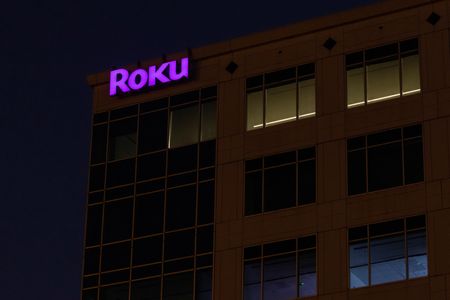
WASHINGTON – Federal trade officials announced Wednesday they have launched a patent infringement investigation targeting streaming devices and display equipment made by Roku and Hisense brands.
The U.S. International Trade Commission revealed that Las Vegas company InnoTV Labs LLC filed the complaint, claiming that imported products from California-based Roku Inc, Purple Tag Media Technology Shanghai Ltd, and China-based Hisense Visual Technology Co violate its patent rights.
According to the trade commission’s announcement, InnoTV Labs is seeking both a limited exclusion order and cease and desist orders to stop the importation of the allegedly infringing streaming players, display devices and related components.
The investigation falls under Section 337, which allows the trade panel to examine whether imported goods violate U.S. intellectual property rights.
Investment professionals nationwide say their clients are grappling with an accumulation of economic uncertainties as they enter the second quarter, including concerns about ongoing conflicts, volatile energy costs, and private credit market disruptions.
Despite a strong rally on the final trading day of March that marked the year’s best single-day performance, U.S. stock indices still posted their weakest quarterly results since 2022. The S&P 500 fell 4.6% during the first three months of the year.
This unease represents a fundamental change in how financial professionals view market risk. The traditional approach of spreading investments across different asset types, which worked reliably for years, now faces new challenges as advisors question whether past market behavior will predict future trends.
Mark Stancato from VIP Wealth Advisors in Decatur, Georgia, explained the current environment: “Markets can handle bad news. What they struggle with is a lack of clarity about policy direction and end goals. That’s what we’re seeing, not just equity volatility but a broader sense that outcomes are hard to model.”
The first quarter saw weakness across both stock and bond markets, with 10-year Treasury yields climbing from 4.01% in early March to peaks of 4.44% by month’s end. Even gold, typically considered a safe investment during turbulent times, experienced its worst month since October 2008 with a 13% decline in March.
Lisa Kirchenbauer, who works at Omega Wealth Management in Arlington, Virginia, described the current climate: “This is one of the toughest economic/market situations I’ve ever seen.”
Jim Carroll, a senior wealth advisor at Ballast Rock Private Wealth in Charleston, South Carolina, noted that daily market swings increased during the first quarter, even though overall market declines remained relatively controlled.
Matt Dmytryszyn, who serves as chief investment officer at Composition Wealth, expressed concern that mounting economic pressures might alter how wealthy families approach spending decisions, potentially impacting the broader economy.
Dmytryszyn warned that growth factors could weaken under current conditions. Should this occur, economic recovery would depend more heavily on artificial intelligence productivity improvements and spending by affluent consumers. If these elements fail to deliver, he cautioned, “we could see a two-phase equity market decline, one driven by the fear and impact of the war with Iran, with a second stemming from a U.S. economic recession.”
David Haas of Cereus Financial Advisors in Franklin Lakes, New Jersey, worries about the possibility of stagflation – a rare but troubling combination of rising prices and economic stagnation.
“I am not expecting 7% inflation, but it’s likely to be north of 4%,” Haas stated. He anticipates that elevated oil costs and supply chain problems could slow economic expansion. “Not necessarily recession, but maybe close.”
Many advisors find the concurrent decline in both stocks and bonds particularly troubling, as it mirrors the challenging conditions of 2022 when both investment categories lost value and provided no safe refuge for investors.
Jon Ulin of Ulin & Co Wealth Management in Boca Raton observed: “Simultaneous weakness in both stocks and bonds has exposed the limits of the traditional 60/40 cushion investors have counted on for decades.”
Multiple advisors emphasized that the sheer number and complexity of current issues presents unprecedented challenges.
Kirchenbauer noted that this uncertainty appears to be affecting client behavior, as she has observed reduced responsiveness to her communications.
“Are they numb, overwhelmed, petrified?” she wondered.
A major data center development company is on the verge of securing $16 billion in funding to construct an enormous Oracle facility, according to Bloomberg News reports released Wednesday.
Related Digital has spent recent months gathering the substantial financing needed to develop a sprawling campus in Saline Township, Michigan. The massive facility is designed to support Oracle’s computing applications for OpenAI, with funding arrangements expected to reach completion within the coming weeks.
The financing deal reflects the ongoing surge in artificial intelligence infrastructure investments, as major technology corporations allocate billions toward building systems capable of rivaling human cognitive abilities.
Investment giant Blackstone plans to contribute approximately $2 billion in equity funding, representing roughly half of what was originally considered for the project, according to the Bloomberg report.
Bank of America is spearheading an additional $14 billion in debt financing. While initially planned as construction lending, the funding package is now anticipated to take the form of a bond offering.
An Oracle representative expressed satisfaction with the project’s advancement, stating: “We are proud of the rapid progress that’s been made both in financing and developing our data center in Saline Township, Michigan.”
The company spokesperson confirmed that vertical construction has begun at the campus site, emphasizing that development remains on schedule and proceeding as planned.
Related Digital, Blackstone, and Bank of America did not provide immediate responses to requests for comment from Reuters.
The ambitious project stems from an October announcement by OpenAI, Oracle, and Related Digital regarding their collaboration to build a data center campus exceeding one gigawatt capacity in Saline Township. The initiative represents part of their broader Stargate effort to expand artificial intelligence infrastructure throughout the United States.
Textile manufacturing operations processed 20.1 million pounds of synthetic fibers using cotton-based production systems during February 2026, according to newly released industry data.
The figures represent the total volume of artificial fiber materials that were handled through cotton processing equipment nationwide during the month.
This measurement tracks how much manmade fiber content flows through traditional cotton manufacturing systems, providing insight into current textile production patterns and the integration of synthetic materials in conventional cotton processing facilities.
Elon Musk’s rocket company has taken the first steps toward going public by submitting initial documents with federal regulators, according to two people with knowledge of the filing. The potential stock offering could become the largest in Wall Street history and might elevate Musk to trillionaire status.
The anticipated SpaceX public offering is expected to be among Wall Street’s most significant events this year, with multiple investment firms positioning themselves to assist in raising billions of dollars. The funds would support Musk’s ambitious goals of establishing a lunar base, launching massive orbital data centers, and eventually sending humans to Mars.
The individuals who disclosed this information requested anonymity since they lack authorization to discuss the confidential Securities and Exchange Commission registration publicly.
SpaceX has not yet responded to requests for comment on the matter.
While the exact fundraising target remains undisclosed, reports suggest the company aims to raise up to $75 billion. The stock debut, potentially scheduled for June, could establish SpaceX’s total valuation at $1.5 trillion—nearly twice its December valuation when some minority shareholders sold their holdings, according to Pitchbook research.
Beyond manufacturing reusable rockets for launching astronauts and equipment into space, SpaceX operates Starlink, the globe’s largest satellite communications network. The company has also recently acquired two other Musk ventures: the social media platform X (previously known as Twitter) and his artificial intelligence company, xAI.
Consumer products giant Unilever is undergoing a massive transformation under CEO Fernando Fernandez, who is steering the company back toward the beauty and personal care sectors where he built his career.
The 59-year-old Argentine executive, who previously scored major success expanding the TRESemmé hair care brand throughout Brazil about 15 years ago, has orchestrated the sale of Unilever’s entire food division since taking over as CEO last year.
This week, the company finalized an agreement with spice manufacturer McCormick that creates a massive $65 billion food conglomerate encompassing everything from sauces to seasonings. Under the arrangement, Unilever will maintain approximately 10% ownership while shareholders control another 55%.
The divestiture strips away food products ranging from Magnum ice cream to Hellmann’s mayonnaise, leaving behind a streamlined organization concentrated on beauty, personal care, and household products – sectors where Fernandez devoted most of his 38-year tenure at Unilever promoting items like Dove soap and Surf laundry detergent.
“This is the right step at the right time to build a simpler, sharper, higher-growth Unilever,” Fernandez explained to financial analysts following the McCormick agreement.
“We are creating a 39-billion-euro household and personal care pure play with leading positions in highly attractive categories, a stronger exposure to fast-growing geographies like the U.S. and India,” he added.
The restructuring centers around Unilever’s 23 primary home, beauty and personal care “power brands” that generate most of the company’s revenue, including Dermalogica, Pond’s, Sunsilk and Cif cleaning products.
Stock market reaction proved mixed, with Unilever shares dropping to two-year lows Tuesday and declining further Wednesday as investors expressed concerns about the extended timeline for completing the transaction in 2027.
However, some financial backers recognize long-term advantages in concentrating on faster-expanding beauty, personal care and home product markets.
“Perhaps the most overlooked benefit is the increased focus gained by simplifying Unilever’s business model,” explained David Samra, managing director at Artisan Partners, a Unilever investor. “The company moves from operating in two distinct industries to concentrating on a narrower group of brands in faster-growing markets.”
While the food segment maintained high profit margins, its sales expansion consistently trailed other divisions, hampering Unilever’s objective to boost annual revenue by 4%-6%.
“The prize of a pure-play home and personal care company will be worth it in the end,” stated Barclays analyst Warren Ackerman.
The strategic pivot comes after sustained pressure from investors and board members demanding organizational changes, including billionaire activist investor Nelson Peltz, who holds a $1.73 billion stake and serves on the board.
This pressure contributed to the departure of two previous CEOs, most recently Hein Schumacher, who was removed for insufficient progress in streamlining the company’s brand portfolio. Fernandez, who served as finance chief under Schumacher, received promotion to accelerate the restructuring process.
These transactions represent a dramatic reversal after Unilever spent most of the past century acquiring food and beverage companies including Marmite, Colman’s and Horlick’s.
However, increasingly health-focused consumers and the emergence of GLP-1 weight-loss medications have weakened demand for packaged foods while intensifying competition from lower-priced store brands has further challenged the sector.
Currently, Unilever trades at a forward price-to-earnings multiple of 14.8 times, below competitors L’Oreal, Procter & Gamble, Nestle and Danone, which range between 17.2 and 25.3 times, according to LSEG Workspace information.
“Unilever has historically traded at a discount to pure-play HPC peers like L’Oréal or Procter, partly because of the drag from lower-growth food categories,” noted Will Nott, portfolio manager at Ninety One, another Unilever investor.
“There is clearly re-rating potential, but it won’t happen overnight. The market will want to see clean execution through the transition,” he concluded.
Aerospace industry stocks experienced significant gains Wednesday following news that Elon Musk’s SpaceX has secretly submitted paperwork for a public stock offering, with investors anticipating major growth opportunities for the space sector.
According to Reuters, the private space company filed confidential documents for a U.S. stock market debut and could be valued at more than $1.75 trillion, based on information from a source close to the situation.
Multiple aerospace companies saw their stock prices climb, with Rocket Labs increasing 5.8% and Planet Labs jumping 9.6%. Intuitive Machines rose 10.5% while Howmet Aerospace gained 3.4%.
Year-to-date performance has been strong across the sector, with Planet Labs up more than 56%, Intuitive Machines rising 26%, and Howmet Aerospace climbing 16.3%.
“It isn’t unusual for the entire sector to rally because some investors will interpret the announcement of the IPO as very positive for that type of industry and the timing is also coincidental with the launch this evening of the U.S. space escapade,” explained Peter Andersen, founder of Andersen Capital Management.
The timing coincides with NASA’s planned Wednesday evening launch of four astronauts on a 10-day lunar mission.
Other Musk-related investments also benefited, with Tesla stock rising 2.6% and satellite communications firm EchoStar, which holds SpaceX investments, gaining 4.8%.
Specialized investment funds focused on aerospace performed well, with the Ark Space & Defense Innovation and Procure Space exchange-traded funds climbing 2.9% and 4.8% respectively. Both funds have more than doubled their value since 2023.
The potential public offering arrives during a period of heightened investor interest in space-related businesses, fueled by reduced launch expenses, expanding satellite infrastructure, and increasing demand for orbital data center capabilities.
SpaceX’s market entry could generate substantial retail investor interest, with Musk reportedly considering reserving up to 30% of company shares specifically for individual investors, according to Reuters.
A coalition of states led by California is requesting $10.3 million in legal fees and expenses after successfully preventing the proposed merger between grocery giants Kroger and Albertsons.
California would receive $5.1 million of the total amount as the state increasingly takes on major antitrust cases independently of federal regulators. U.S. District Judge Adrienne Nelson in Portland, Oregon, has already determined that the states deserve compensation for their legal costs but hasn’t yet decided on the specific dollar amount.
The Golden State is spearheading several other antitrust battles, including a bipartisan push to stop Nexstar’s $3.54 billion purchase of Tegna after federal authorities chose not to intervene. California and eight other states, plus the District of Columbia, are also continuing their lawsuit against Live Nation even after the Department of Justice reached a settlement during the trial.
Additionally, California is examining Paramount Skydance’s proposed $110 billion deal to acquire Warner Bros Discovery, which federal regulators are also investigating.
The fee request demonstrates the significant financial burden states face when challenging corporate mergers. According to court documents filed in Oregon federal court, the states spent less money by collaborating with the U.S. Federal Trade Commission on the case.
The FTC and state coalition achieved victory in 2024 when Judge Nelson issued a ruling that stopped the $25 billion transaction, which states argued would have created the biggest supermarket merger in American history.
Washington state pursued its own separate legal challenge, resulting in an additional state court order preventing the merger. Washington was ultimately granted $28.4 million in legal fees and costs.
However, well-funded corporations invest heavily in defending their proposed deals. Kroger and Albertsons combined reported spending $1.5 billion on merger-related expenses. A portion of those costs went toward employing over 60 defense lawyers from eight different law firms, with some attorneys charging more than $1,625 per hour, according to state filings.
Representatives for both Kroger and Albertsons have not yet responded to requests for comment on the fee request.
The Hershey Company announced Wednesday it will return to traditional recipes for its entire Reese’s product line beginning in 2027, following public backlash from the candy brand’s founding family.
While the iconic Reese’s Peanut Butter Cups have maintained their original milk chocolate and peanut butter formula, certain seasonal items like miniature Easter eggs currently use a coating with reduced chocolate content.
The Pennsylvania-based confectionery giant confirmed it will restore these items to “their classic milk chocolate and dark chocolate recipes” within three years.
Additional improvements planned for next year include switching to natural colorings across product lines and upgrading Kit-Kat’s formula for enhanced creaminess. The company also announced a 25% boost in research and development spending.
“Hershey is committed to making products consumers love and that means continually reviewing our recipes to meet evolving tastes and preferences,” company representatives stated.
The controversy erupted when Brad Reese, whose grandfather created the beloved peanut butter cups, published a scathing Valentine’s Day letter targeting Hershey’s brand management team.
“How does The Hershey Co. continue to position Reese’s as its flagship brand, a symbol of trust, quality and leadership, while quietly replacing the very ingredients (Milk Chocolate + Peanut Butter) that built Reese’s trust in the first place?” Reese questioned in his LinkedIn post.
Company officials defended previous recipe modifications as responses to consumer innovation demands, though rising cocoa costs have prompted chocolate manufacturers industrywide to explore reduced-chocolate alternatives.
The Associated Press attempted to reach Brad Reese for additional commentary Wednesday.
Brad Reese descends from H.B. Reese, who worked at Hershey for two years before establishing his independent confectionery business in 1919. H.B. Reese developed the famous peanut butter cups in 1928, and his six children later sold the family enterprise to Hershey in 1963.
Elon Musk’s rocket company has quietly submitted paperwork for a public stock offering that could shatter records as the largest market debut in history, according to a source with knowledge of the matter who spoke Wednesday.
The confidential filing by SpaceX positions the company for a potential market value exceeding $1.75 trillion, demonstrating how space exploration has evolved from risky speculation into a legitimate investment opportunity. The company’s success stems from its innovative reusable rocket technology and the Starlink satellite internet service.
This development follows SpaceX’s combination with Musk’s artificial intelligence company xAI through a transaction that assigned a $1 trillion value to the rocket business and $250 billion to the creator of the Grok chatbot.
The billionaire entrepreneur, recognized as the world’s wealthiest individual, oversees a vast collection of companies including Tesla electric vehicles, space launches, satellite internet, artificial intelligence, and social media platforms.
“Investors could use a sum-of-the-parts analysis, but, like with Tesla, SpaceX’s valuation could very much fluctuate wildly based off how much the public believes in Musk’s vision,” explained Angelo Bochanis, a data and index associate at Renaissance Capital, which specializes in IPO research and investment funds.
“So far, investors seem to be clamoring for any sort of exposure to SpaceX,” Bochanis added.
SpaceX representatives did not provide an immediate response when contacted for comment.
The Texas-based company, operating from Starbase, may attempt to generate more than $50 billion through the stock offering, easily exceeding Saudi Aramco’s 2019 public debut, which currently holds the record for largest IPO.
Such a massive SpaceX launch could revitalize the sluggish IPO marketplace after years of limited activity, with industry observers anticipating strong interest from both individual and institutional investors attracted by Musk’s reputation and the company’s rapidly expanding space and satellite operations.
Based on its recent merger valuation, SpaceX ranks as the world’s most valuable private company. Prior to the xAI deal, the rocket manufacturer was worth approximately $800 billion in secondary trading.
Other prominent startups, including OpenAI (creator of ChatGPT) and competitor Anthropic, are reportedly considering major public offerings, creating a broader evaluation of investor interest in new stock listings.
While many large startups have stayed private longer by accessing substantial private funding, a SpaceX public offering could motivate others to pursue stock market debuts.
Bloomberg News initially reported the confidential filing earlier Wednesday.
A public listing would increase analyst and investor examination of what some call the “Muskonomy” — the entrepreneur’s extensive business network and interconnected financial interests — drawing attention to how his various companies are funded, managed, and valued across markets.
“A likely dual-class share structure would let Musk tap public capital while retaining firm control, even after the substantial dilution that comes with a public offering,” noted Minmo Gahng, assistant professor of finance at Cornell University.
Beyond SpaceX, Musk operates Tesla electric vehicles, Neuralink brain-chip technology, and The Boring Company tunnel construction.
Last year, Musk also incorporated social media platform X into xAI through a stock exchange, providing the AI company with access to the platform’s information and user network.
Concerns about Musk’s capacity to manage multiple trillion-dollar companies might limit investor excitement, according to analysts.
“It is understandable that investors would be concerned with Musk overseeing multiple significant enterprises, especially given his polarizing public profile at times. However, SpaceX appears somewhat differentiated,” said Kat Liu, vice president at IPOX.
“The business is operationally mature, technologically ahead in several key areas, and profitable, which provides a solid fundamental underpinning,” Liu continued.
This announcement coincides with NASA preparing to send four astronauts on a 10-day lunar mission as early as Wednesday evening, representing the most ambitious American space venture in decades.
According to January reporting citing informed sources, SpaceX earned approximately $8 billion in profit from $15 billion to $16 billion in revenue last year.
An increasing number of wealthy individuals and private companies have funded a renewed American space competition, investing significantly in rockets, satellite networks, and moon-related projects, including SpaceX and Jeff Bezos’ Blue Origin.
With NASA increasingly relying on commercial partners and rising defense spending, space has become a strategic arena defined by technological advancement, national security concerns, and potential economic opportunities.
SpaceX has also requested authorization to deploy up to 1 million solar-powered satellites designed as space-based data centers, far exceeding current or planned deployments.
For nearly twenty years, NASA engineers and researchers have theorized about relocating power-intensive computing operations beyond Earth.
The SpaceX-xAI merger has attracted investor interest in how Musk might utilize an integrated system of rockets, satellites, and AI technology to address technical and financial challenges, expanding artificial intelligence infrastructure into space.
Artificial intelligence has emerged as Wall Street’s preferred investment theme, with AI-related companies driving a significant technology stock rally and increasing valuations throughout the sector.
Energy giant Shell is pursuing negotiations with Venezuela’s government to secure development rights for four substantial offshore regions located near Trinidad and Tobago, according to sources with knowledge of the discussions.
The British-based oil company has spent years working to move forward with the Dragon natural gas field project in Venezuelan waters, which contains 4.2 trillion cubic feet of reserves. Company officials may reach a final investment decision on this major project before the year concludes.
Sources indicate Shell is now seeking to expand its Venezuelan operations beyond the Dragon field, targeting additional areas under the administration of interim President Delcy Rodriguez.
The company’s strategy focuses on gaining access to three additional fields that, combined with Dragon, form part of the massive 12 trillion cubic foot Mariscal Sucre project located off Venezuela’s eastern coastline. Shell also has its sights set on the 7.3 trillion cubic foot Loran offshore region, which spans across the border into Trinidad waters, potentially providing access to approximately 20 trillion cubic feet of total reserves.
Last month, Shell representatives traveled to Caracas to sign initial agreements with Rodriguez’s government, covering both the Dragon project advancement and potential development of two onshore oil and gas locations called Carito and Pirital.
The company’s plan involves transporting Venezuelan natural gas to Trinidad for conversion into liquefied natural gas destined for international markets. This strategy would significantly boost Shell’s Atlantic LNG facility, which has struggled to operate at full capacity due to inadequate gas supplies.
Shell currently manages Trinidad’s section of the Loran-Manatee field development. Meanwhile, American energy company Chevron maintains ownership stakes in two Venezuelan blocks containing the Loran field, but is reportedly preparing to surrender these interests as part of a separate agreement to expand heavy oil operations in Venezuela’s Orinoco Belt region.
“The proximity to Manatee makes Loran an attractive investment opportunity for Shell,” the company stated in an email response, acknowledging its pursuit of the additional Venezuelan territories.
Representatives from Venezuela’s oil ministry, state petroleum company PDVSA, Trinidad and Tobago’s Energy Ministry, and Chevron did not provide responses to requests for comment.
“The plan is to drill subsea wells on the Loran side and tie them back to our Manatee platform in Trinidad, once we get the rest of the field. It is an easy fix and makes sense for us to produce the entire block,” explained one individual familiar with the ongoing negotiations.
Shell maintains a 45 percent ownership stake in Trinidad’s Atlantic LNG facility, which ranks as Latin America’s largest liquefied natural gas operation. The project’s original capacity of 15.5 million metric tons annually has been reduced to 12 million tons due to insufficient gas availability. Last year’s shipments totaled less than 9 million metric tons, according to industry data.
During last week’s CERAWeek conference in Houston, Shell CEO Wael Sawan indicated the company could approve up to two Venezuelan projects this year, contingent on improved financial and legal conditions.
“What we are looking at at the moment is where we can add value to Venezuela,” Sawan explained. “Initially, I would say it’s more geared towards gas, and in particular gas that can be monetized through LNG.”
Both Trinidad and Shell have been working to increase regional gas production and secure Venezuelan supplies, given that the two countries are separated by just six miles at their closest point. The Mariscal Sucre fields — including Dragon, Rio Caribe, Patao and Mejillones — are positioned closer to Trinidad’s existing infrastructure than to Venezuela’s facilities, despite Venezuela’s extensive undeveloped offshore gas resources.
Previous arrangements had granted Russia’s Rosneft interests in the Patao and Mejillones fields through agreements with PDVSA. Additionally, PDVSA has been seeking a development partner for Rio Caribe under a production-sharing arrangement, though the status of any preliminary agreements remains unclear.
Rosneft’s Venezuelan assets were transferred to Russia’s state-controlled Roszarubezhneft in 2020, but these fields have remained undeveloped. The continued Russian involvement in these areas creates complications for finalizing any Shell agreement, sources noted.
“We are making progress, and yes, the assignment of the fields to the Russian company is a problem, but we will get over it. I am sure,” stated a Shell source familiar with the negotiations.
Maryland has earned recognition as the nation’s second-best fishing destination, climbing significantly from its seventh-place ranking last year, according to a new report from charter booking service FishingBooker.
The worldwide online platform evaluated states based on consistent angler demand, exceptional access to waterways including bays and rivers, and cost-effectiveness for visitors. Maryland’s rise in the rankings reflects growing recognition of what local anglers have long known about the state’s fishing opportunities.
“With roughly a fifth of the state covered by water, Maryland offers outstanding opportunities for both saltwater and freshwater anglers,” FishingBooker noted in their assessment.
The recognition carries significant economic weight for the region. Recent data from the Bureau of Economic Analysis shows fishing and boating activities generated more than $700 million in economic value for Maryland. This represents a substantial portion of the $10.6 billion contributed by the state’s entire outdoor recreation sector.
The fishing industry supports numerous local jobs across equipment manufacturing, retail sales, boat maintenance, and charter guide services throughout the state.
Anglers seeking distinctive experiences can target invasive species like blue catfish and Chesapeake Channa, commonly called snakehead. These non-native fish present both environmental challenges and fishing opportunities, with no seasonal restrictions or catch limits due to their invasive status.
Both species can reach record-breaking sizes in Maryland waters and provide excellent table fare. A recent Department of Natural Resources analysis found that bowfishing removes more Chesapeake Channa than traditional fishing methods. Growing numbers of specialized charter services focus on these invasive species, helping reduce their environmental impact while creating unique angling experiences.
The Maryland Department of Natural Resources maintains online resources to connect anglers with local charter services and guides. Their interactive map system lists available charter options, including operators specializing in blue catfish excursions. The department’s Outdoor Recreation Business Directory also provides information about tackle retailers, outfitters, and other fishing-related enterprises.
Maryland DNR Secretary Josh Kurtz encourages residents to experience the state’s waters firsthand as spring weather improves, highlighting what makes Maryland a premier destination for anglers.
The conflict in Iran has created major disruptions for a critical oil pricing system that affects nearly one-fifth of the world’s crude supply, according to industry reports from Singapore and London.
The Dubai oil benchmark, which determines pricing for 18 million barrels of daily oil production, relies on crude from the United Arab Emirates, Oman and Qatar – most of which typically ships through the Strait of Hormuz.
Since the Iran war started with U.S.-Israeli military action on February 28, oil shipments have largely stopped due to concerns about Iranian attacks on vessels passing through the strategic waterway.
S&P Global Energy Platts, the organization responsible for setting Brent and Dubai oil prices, now confronts the challenge of pricing oil that cannot be transported from Gulf ports.
Industry sources told Reuters the benchmark system has essentially collapsed, with many traders abandoning Dubai-priced cargo deals and related derivatives trading. Many are demanding significant changes to the system.
PRICING DIFFICULTIES DURING SUPPLY CRISIS
The situation highlights how challenging it becomes to price oil scheduled for delivery two months ahead during what experts call the most severe supply disruption in history.
Uncertainty remains about when buyers might resume loading crude from Strait of Hormuz ports, as very few tankers have traveled through the waterway since fighting began.
Consequently, Middle Eastern crude prices have reached nearly $170 per barrel, surpassing Brent’s previous record of $147 set in 2008, dramatically increasing costs for Asian purchasers who rely on Dubai pricing.
Market participants are now turning to alternative pricing approaches, including different benchmarks. Multiple Asian refineries have shifted to pricing U.S. crude purchases based on differentials to international Brent crude futures.
AVAILABLE CRUDE GRADES REDUCED SIGNIFICANTLY
Shortly after hostilities commenced on March 2, Platts removed oil loading within the Strait from consideration, reducing the benchmark from five crude grades to just two – Abu Dhabi Murban shipped from the UAE’s Fujairah port, and Oman crude. According to Platts, this decision eliminated approximately 40% of deliverable crude.
Platts, which must continue publishing Dubai prices used to value numerous crude barrels, stated it has conducted extensive discussions with market participants during this unprecedented period.
“Widespread market feedback stressed the need for immediate action to ensure the Platts Dubai benchmark continued to reflect the tradable spot market value of physical crude oil in the Middle East and we are confident in its ability to do so, even through historic moments of volatility,” the agency responded via email to Reuters.
Industry representatives have suggested various modifications to Platts, from suspending Dubai price assessments to restoring the three crude grades for delivery or adding other regional grades based on delivered Asian prices, according to knowledgeable sources.
“The liquidity of the Dubai benchmark is being threatened and market participants would surely be looking for an update to the methodology,” stated Sparta Commodities analyst June Goh.
ASIAN REFINERIES FACE MAJOR IMPACT
Elevated Dubai prices have severely affected Asian refineries, increasing their primary feedstock costs and consequently raising retail fuel prices for consumers, Goh noted.
Platts’ March 2 modification surprised many market participants, some reported.
Platts usually conducts lengthy consultations before implementing changes, and traders were caught off-guard by the rapid exclusion of May-loading shipments during March trading, noting the benchmark no longer represents the region accurately.
“It is costing consumers in March tens of billions of dollars, because the Platts numbers published in March are used to price many Asian and remaining Gulf barrels,” explained Onyx Capital’s Jorge Montepeque, who previously designed the benchmark while working at Platts, referring to the benchmark’s dramatic increase.
UNPRECEDENTED TRADING ACTIVITY QUESTIONED
Platts determines Dubai prices through trades conducted during its Market on Close (MOC) process, known as “the window,” using partial cargoes of 25,000 barrels each. When parties complete trades for 20 partials, sellers declare delivery of a 500,000-barrel cargo from Dubai basket crude grades.
Trading records reveal TotalEnergies’ trading division Totsa invested approximately $4 billion in Dubai partials during March, resulting in delivery of 77 Oman and Murban crude cargoes totaling 38.5 million barrels from the 82 cargoes delivered through MOC.
TotalEnergies, which refused to provide comment, controlled purchases throughout March, while Mercuria and Equinor acquired five cargoes on the final trading day, data indicated. Totsa’s market dominance contributed additional upward pressure on Dubai benchmark pricing.
“This is huge,” commented Adi Imsirovic, an experienced oil trader and benchmark expert, regarding Totsa’s trading activity.
“Given the overall market situation and the extent of the price increases as well as the volume of oil involved, this might have been the biggest oil market position ever,” he continued.
Large position accumulation by physical oil trading participants is standard practice and violates no regulations.
Some industry players negatively affected by price movements will face significant costs from the Dubai benchmark’s sharp rise, with traders estimating losses between $60 to $100 per barrel, depending on when they covered short positions.
American consumers opened their wallets wider in February following a pullback in spending during January, but an ongoing conflict in Iran has driven fuel costs sharply higher and could force families to cut back on purchases.
The Commerce Department reported Wednesday that consumer spending climbed 0.6% last month, exceeding forecasts and reversing a 0.1% drop in January. However, concerns are mounting that Americans already dealing with years of high inflation may reduce their purchases as energy costs surge.
Gasoline prices crossed the $4 per gallon threshold on Tuesday for the first time in two years and climbed an additional 4 cents overnight.
By Wednesday, the nationwide average for regular gasoline reached $4.06 per gallon, representing a full dollar increase from pre-war levels.
Shoppers increased purchases at clothing and accessory retailers by 2%, while electronics and appliance store sales grew 0.5%. Online retail activity expanded 0.7%.
The monthly data provides only a limited view of consumer behavior and excludes categories such as travel and lodging. Among service sectors tracked, restaurant sales advanced 0.4%.
The Iran conflict commenced on February 28 and has resulted in the closure of the Strait of Hormuz, eliminating one-fifth of global oil supplies. Brent crude prices, the international benchmark, have surged more than 45% since hostilities began. Diesel fuel costs have climbed even more rapidly than gasoline, increasing transportation expenses for businesses. Economic analysts anticipate corresponding inflation increases, possibly beginning this month.
Analysts had anticipated that unusually substantial tax refund payments would stimulate consumer activity early in the year. However, escalating fuel expenses are expected to consume much of that additional income.
“The hit to real incomes from higher gas prices is especially regressive, hurting lower-income households disproportionately, while the lift from tax refunds is more evenly spread,” Samuel Tombs, chief economist at Pantheon Economics, wrote in a recent report. “Moreover, refunds will slow to a trickle by late April, providing little protection if high prices persist.”
Elevated gasoline costs appear positioned to decrease actual household earnings by approximately $15 billion monthly, he noted.
Patrick De Haan, an analyst at GasBuddy, which monitors fuel costs, explained that the key measure of gasoline’s impact is how much fuel expenses represent of a consumer’s earnings. He indicated that gas prices are nearing 3% of median household income.
“When that gets up to about 4, 4 1/2, 5%, that’s really when people really start trimming back on some of their discretionary purchases,” he said.
Several retailers have already issued warnings about potential consumer impacts if fuel prices continue climbing.
Daniel Erver, CEO of Hennes & Mauritz, stated last week that the Swedish fashion retailer anticipates energy costs will have a “significant impact on the consumer behavior.”
Meanwhile, Darren Rebelez, CEO of convenience store operator Casey’s General Store, informed investors last month that substantial reductions in customer spending are unlikely unless gasoline approaches $5 per gallon.
Technology giant Intel announced Wednesday it will purchase back nearly half of its Irish manufacturing facility from Apollo Global Management for $14.2 billion, regaining complete control of the plant as the company’s financial situation strengthens and artificial intelligence fuels processor demand.
Apollo Global Management had purchased the 49% ownership stake in the Leixlip, Ireland facility for $11.2 billion in 2024 through a joint venture agreement. The sale provided Intel with crucial funding during a difficult period to support its manufacturing expansion efforts across Europe and the United States.
Since that time, Intel has undergone significant leadership changes, with new CEO Lip-Bu Tan implementing comprehensive restructuring measures to restore the company’s financial health. These efforts have included workforce reductions and selling off assets. The chipmaker has also secured substantial investments from Nvidia and the U.S. government, with the federal government now holding the largest shareholder position.
Following nearly three years on the sidelines of the artificial intelligence revolution, Intel is now seeing increased demand for its central processing units used in data centers, driven by the growth of inference technology that powers AI system responses to user requests.
“Today, we have a stronger balance sheet, improved financial discipline and an evolved business strategy,” Intel Chief Financial Officer David Zinsner said on Wednesday.
Intel plans to finance the stake repurchase using existing cash reserves combined with approximately $6.5 billion in new borrowing. Company executives anticipate the transaction will increase profits and improve its credit standing beginning in 2027.
The Irish manufacturing facility, designated as Fab 34, produces semiconductors using Intel’s advanced Intel 4 and Intel 3 manufacturing processes, creating Core Ultra and Xeon 6 processor lines.
American consumers and businesses are treating the recent surge in oil prices as a temporary setback rather than a long-term economic threat, according to Richmond Federal Reserve Bank President Tom Barkin.
In an exclusive interview Tuesday, Barkin explained that weekly credit card data and his ongoing discussions with corporate leaders suggest people haven’t dramatically changed their spending habits despite higher fuel costs.
“My instinct is you’ve still got a short-term lens on this,” Barkin stated, noting that while gasoline purchases have increased significantly, other consumer spending remains robust.
“Gas spending is up a lot, obviously, but the rest of spending still looks pretty healthy,” explained Barkin, who doesn’t vote on interest rate decisions this year. “If you think this is a two- or three- or four-week thing, an extra $10 to $15 isn’t great but it doesn’t fundamentally change your standard of living. If you think this is going to last for a long time that’s when I think you’re more likely to see pullback.”
Oil prices have soared following U.S. military action in Iran, creating uncertainty for Federal Reserve officials who must balance concerns about rising inflation with patience to avoid overreacting to potentially temporary price spikes.
During their latest meeting, Fed policymakers maintained interest rates between 3.50% and 3.75%, while still anticipating one quarter-point reduction before year’s end.
The volatile nature of the situation became evident this week when Brent crude oil prices briefly exceeded $119 per barrel – a 70% increase from pre-conflict levels – before dropping to approximately $102 after President Trump suggested the military campaign might be concluding. Trump plans to address the nation Wednesday evening.
Meanwhile, gas prices climbed again Wednesday to a national average of $4.06 per gallon, according to AAA data, marking the highest levels since summer 2022 when pandemic-related supply disruptions and strong consumer demand triggered the worst inflation surge in four decades.
Federal Reserve officials are determined to prevent a recurrence of that inflationary period, and the oil price increases temporarily led investors to expect interest rate hikes rather than the anticipated cuts.
Barkin indicated multiple scenarios could influence Fed policy moving forward, but he believes rate increases would primarily depend on rising inflation expectations – a development that would force policymakers to demonstrate their commitment to maintaining their 2% inflation target.
“The hike case would be around inflation expectations starting to finally move,” he noted. “I don’t have a sense that they’ve broken out at this point.”
Conversely, arguments for rate cuts would emerge if inflation drops quickly toward the Fed’s 2% goal from its current level about one percentage point higher, or if job market weakness requires monetary support.
Friday’s March employment report will be closely monitored to determine whether February’s job losses were an isolated incident or indicate emerging economic weakness.
Without significant labor market deterioration, the Fed may remain in a holding pattern, as inflation is expected to make slow progress toward the central bank’s target amid ongoing price pressures from Trump administration policies including tariffs and oil-related costs.
Through his corporate conversations, Barkin observes a growing divide between goods retailers, who face consumer resistance to price increases, and service providers, particularly those serving affluent customers, who feel more comfortable raising prices.
After speaking with a retailer serving low- to moderate-income shoppers, “I had the strong sense that consumers are exhausted by price increases,” he said. “They’re pushing back. I walked out with the lens that 1% to 2% (of price increases) … that would be about as much as they could handle.”
“Where there’s more vulnerability is on the services side, particularly selling to high-end customers,” he added.
“Goods suppliers who’ve been through the drill multiple times with trying to pass on tariffs and trying to pass on oil shock costs, they just don’t feel they’ve got much left,” Barkin observed. “I don’t have the same feeling on services.”
This dynamic will likely result in slower progress returning to the Fed’s inflation target, an outlook reflected in market expectations that rule out rate increases but anticipate an extended pause lasting well into 2027 before cuts begin.
“I see a gradual path, not a quick path. That’s my instinct.”
Currency analysts are forecasting that the American dollar’s slight strengthening since the U.S.-Israeli conflict with Iran commenced more than a month ago will soon reverse course, as the greenback loses its traditional status as a crisis refuge.
According to a recent Reuters survey of nearly 70 foreign exchange experts conducted between March 27 and April 1, the dollar’s safe-haven reputation continues to deteriorate amid ongoing concerns about U.S. trade policy uncertainty and questions surrounding Federal Reserve autonomy.
Conventional crisis assets have performed poorly during this conflict, with Treasury bond yields climbing significantly and gold prices dropping more than 10% since hostilities began. The dollar has managed only a modest 2% increase against other major currencies, primarily due to investors closing out short positions.
Steven Englander, who leads global G10 currency research at Standard Chartered, explained the administration’s impact on market confidence. “For a lot of the surprise policy moves by the Trump administration, there’s a direct impact, but the indirect impact has almost always been to increase the risk premium on U.S. assets by increasing the range of uncertainty about the sets of policy reversals he’s willing to pull,” Englander stated.
He noted the lack of genuine enthusiasm behind recent dollar purchases, adding, “But I don’t see much of the recent dollar-buying as enthusiastic. What strikes me is whenever there is a hope they’ll come to a resolution, you see the dollar sell off very quickly. As soon as things normalize and say, oil goes back below $90, euro-dollar would be above $1.18 before you could snap your fingers, which might be true if it happened tomorrow.”
Market volatility has intensified as traders react to President Trump’s shifting rhetoric between military escalation and diplomatic solutions. Meanwhile, expectations for Federal Reserve interest rate reductions have evaporated due to rising inflation risk premiums, putting additional pressure on riskier investments.
The survey’s median projections show the euro maintaining its current $1.16 exchange rate through April and June, before appreciating roughly 2% to $1.18 within six months and climbing another 2% to $1.20 over the next year.
Derek Halpenny, MUFG’s head of global markets research for Europe, Middle East and Africa, observed that the dollar’s response has been surprisingly weak given the circumstances. “You’d have expected to see a 4-5% strengthening of the dollar based on a 60-70% jump in crude oil prices alone. But that’s not what we’ve had so far, it’s been far more modest,” Halpenny said. “The safe-haven status of the dollar has been undermined to a degree,” he added.
Oil prices have retreated from their early March high of $119.50 per barrel – representing a 65% increase from pre-war levels – to approximately $104, though this still reflects a 40% gain. Stock markets showed signs of recovery on Wednesday.
Erik Nelson, Wells Fargo’s head of G10 currency strategy, outlined his bearish outlook for the greenback. “We’re bearish on the dollar for a couple of reasons. One, the dollar’s trading rich versus its fair value and the very sharp and sudden shift toward dollar-longs now looks pretty stretched,” Nelson explained.
He emphasized broader economic concerns, stating, “The other is this notion the U.S. is far more immune to the crisis than Europe or Japan or others. While that may be true in terms of energy imports, there are still going to be massive ripple effects in the U.S. from higher energy prices. Add to that an already-weak labor market backdrop and this is only going to exacerbate real income issues for consumers.”
Rising energy costs are anticipated to further burden an already slowing American economy, potentially limiting any additional gains for the dollar in the near term.
Elon Musk’s rocket company SpaceX has quietly submitted paperwork for what financial analysts are calling a potential game-changer for the struggling initial public offering market worldwide.
The aerospace startup is seeking to raise more than $50 billion through its stock market debut, which would establish a company valuation of approximately $1.75 trillion. This massive figure would surpass Saudi Aramco’s 2019 listing as the largest IPO in global history.
The worldwide market for new stock offerings has been searching for a major success story for several years, with the last company to go public at over a trillion-dollar valuation being the Saudi oil giant five years ago.
SpaceX possesses several characteristics that market observers believe could break the current dry spell in large-scale public offerings: an enormous valuation exceeding one trillion dollars, a chief executive with devoted retail investor followers, and involvement in a rapidly expanding industry sector.
However, financial experts remain divided on whether investors possess sufficient interest for such a massive stock offering. Additionally, some analysts suggest the company’s unique position might limit its ability to boost broader market confidence.
Brian Jacobsen, who serves as chief economic strategist at Annex Wealth Management, described the situation to Reuters in stark terms. “It’s either a bellwether or a harbinger,” Jacobsen stated.
Jacobsen explained that while sufficient excitement surrounds the company to draw investor attention, SpaceX might be so distinctive due to its famous CEO that it could potentially harm other space industry stocks by monopolizing all available interest, rather than benefiting the sector overall.
Samuel Kerr, who leads global equity capital markets at data provider Mergermarket, emphasized the historic nature of the potential offering. “SpaceX will be far and away the largest IPO in history at the sizes being discussed now,” Kerr explained.
“It will be a real test for public market capacity at a time of real market turmoil. But if any business can list in this market, its probably SpaceX given the tremendous hype,” he added.
The rocket manufacturer’s stock market launch could function as a crucial indicator for the IPO industry overall. Strong investor reception would signal that a long-anticipated recovery in major deals is finally beginning.
Multiple years of unpredictable markets, caused by increasing interest rates, inflation worries, and international political tensions, have forced companies to delay their public offerings, even as more businesses prepare for potential listings. Industry professionals hope 2026 will mark a widespread return of market debuts.
Kat Liu, a vice president at IPO research company IPOX, believes a successful SpaceX launch could trigger additional large offerings. “A successful SpaceX listing could well act as a catalyst for other large-scale IPOs,” Liu stated.
“It would demonstrate that public markets have both the depth and appetite to accommodate sizeable, high-valuation offerings, and could help validate current late-stage private market pricing,” she continued.
Multiple prominent privately-held companies, including SpaceX, artificial intelligence developer OpenAI, and TikTok’s parent company ByteDance, have achieved valuations comparable to major publicly-traded corporations, blurring traditional distinctions between private and public enterprises.
A successful SpaceX public offering would place the company alongside technology giants like Microsoft and Apple, which attract the majority of both individual and institutional investment dollars.
In February, Musk announced that SpaceX had purchased his artificial intelligence company xAI in a record-breaking transaction. According to a Reuters source, this deal established SpaceX’s worth at $1 trillion while valuing xAI at $250 billion.
Minmo Gahng, an assistant finance professor at Cornell University, analyzed the strategic benefits of this acquisition. “The recent xAI fold-in allows him (Musk) to bundle launch, Starlink, and AI into a single, scarce mega story that can support a richer valuation than the businesses might achieve separately,” Gahng observed.
According to January reporting by Reuters citing informed sources, SpaceX earned approximately $8 billion in profit from $15 billion to $16 billion in revenue during the previous year.
Current market indicators show that an index monitoring major stock debuts has performed worse than general equity benchmarks over the past twelve months.
Financial analysts suggest that a successful SpaceX public debut could encourage other large, postponed listings to move forward, particularly in industries requiring significant capital investment that have struggled to attract public market investors.
However, some experts have expressed more reserved opinions about broader market possibilities. Mergermarket’s Kerr noted a potential downside: “(SpaceX) could take up so much capacity that other mega issuers might choose to hold off not to test the same window.”
As fuel costs continue to climb, automotive research firm Edmunds reports growing consumer interest in electric and hybrid vehicles. For those considering a complete switch to electric power, purchasing a pre-owned model offers substantial savings opportunities. Although new electric vehicles typically cost more than comparable gasoline-powered cars, rapid depreciation often makes three-year-old electric models less expensive than their traditional counterparts.
This price advantage extends beyond older electric vehicle models. Several top-rated vehicles from Edmunds’ recommended list are available at attractive prices in the pre-owned market. The pricing data reflects 2022 to 2024 model years to provide realistic expectations for buyers. Battery range figures represent new vehicle specifications, as maximum distance capability diminishes gradually with battery age and use.
For budget-conscious buyers, the Chevrolet Bolt EV and its crossover variant, the Bolt EUV, represent exceptional value in the used electric vehicle market. These models offer impressive technology packages, roomy interiors, and compact dimensions ideal for urban parking. The Bolt EV delivers up to 259 miles of EPA-rated range per charge, while the EUV version provides up to 247 miles of driving distance.
The Bolt line ran from 2017 through 2023, with a new generation planned for 2027. Budget permitting, 2022 or 2023 models offer enhanced styling and upgraded technology. These vehicles work best for drivers with home charging capability, as public charging can be notably slow. Average pricing for 2021-2023 models: approximately $18,000.
Hyundai’s Kona Electric transforms the brand’s compact crossover into an engaging electric vehicle. The electric version maintains the standard Kona’s agile handling while adding instant electric motor acceleration, creating an enjoyable driving experience. Additional benefits include supportive seats and over 250 miles of EPA-estimated range.
While Hyundai introduced a redesigned 2024 Kona Electric with expanded interior space and enhanced technology, better value lies in 2022 or 2023 models. Edmunds testing showed these earlier versions offered superior acceleration and greater real-world range compared to the newer design. Average pricing for 2022-2024 models: approximately $19,000.
The Hyundai Ioniq 5 consistently ranks among Edmunds’ preferred electric SUVs due to its comfort, rapid charging capabilities, and intuitive interior layout. While not the most affordable new electric vehicle, used examples offer excellent value given their comprehensive standard equipment list. The Ioniq 5’s unique styling distinguishes it from conventional SUVs.
Buyers should avoid the Standard Range trim, which offers only 220 miles of EPA-estimated range despite its lower price. Other Ioniq 5 configurations provide greater range, with the single-motor version achieving up to 303 miles. Average pricing for 2022-2024 models: approximately $25,000.
The Tesla Model 3 stands out as the premier choice for electric sedan shoppers. It features generous interior space and optional advanced driver assistance technology that reduces highway driving stress. Access to Tesla’s extensive Supercharger fast-charging network provides a significant advantage, and Tesla’s popularity ensures abundant used Model 3 inventory.
Tesla refreshed the Model 3 for 2024, making newer models worthwhile if budget allows for updated interior and exterior design, additional features, and improved comfort. The Model 3 lineup typically includes a base model with limited range, a long-range variant, and a high-performance version. Average pricing for 2022-2024 models: approximately $26,000.
Audi’s Q8 E-tron, originally launched in 2019 as the brand’s first mainstream electric vehicle, may not lead its class but offers luxury electric SUV features at mainstream prices. Standard equipment includes all-wheel drive, leather seating, ventilated front seats, and premium audio systems.
Range limitations represent the E-tron’s primary weakness, with 2023 models achieving only 226 miles of EPA-estimated range. The 2024 Q8 E-tron redesign significantly improved range to 285 miles, making it worth the additional investment. Average pricing for 2022-2024 models: approximately $34,000.
Used electric vehicle purchases offer compelling financial benefits. Concerns about battery replacement costs should consider that electric vehicles include eight-year/100,000-mile battery warranties, with some manufacturers providing extended coverage.
A Brooklyn wine shop owner has developed an innovative approach to circumvent hefty tariffs on European wine imports by purchasing premium bottles already stored within the United States.
Chris Leon, proprietor of the popular Brooklyn establishment Leon & Son, has begun searching American basements and private collections for high-quality European vintages, which he then acquires and sells through digital auction platforms.
“There’s a lot of wine here already, a lot of really good wine,” Leon explained, describing how the auction concept provides a workaround for the tariff challenges.
Leon’s creative business model represents one of many ways entrepreneurs and business owners are adapting to the trade policy changes implemented during the Trump administration, which resulted in increased import duties on various products ranging from pharmaceuticals to alcoholic beverages.
The strategy emerged from Leon’s concerns about how tariffs would affect his operation, considering that imported wines generate 90% of his shop’s income. The trade measures have impacted numerous European wine varieties, including French champagne, Italian barolo, and Spanish rioja, as part of comprehensive trade policy reforms that began in April of the previous year.
Items planned for the inaugural auction feature Italian wine labels that are no longer manufactured, sourced from a private collector’s long-held inventory, plus bottles from a New York restaurant’s storage connected to discontinued menu pairings.
Under an EU-U.S. trade agreement enacted in August, European wines encountered a 15% import duty upon entering American markets. Although the Supreme Court reversed several Trump-era tariffs in February, replacement levies were swiftly established, including minimum 10% charges on European merchandise.
The former president defended these measures as necessary to address significant trade imbalances between the United States and various international partners.
Wine industry representatives cautioned last year about potential negative impacts on their businesses. Leon & Son joins thousands of wine companies nationwide that have been compelled to develop innovative solutions.
Other American wine enterprises are transitioning to domestic options or less expensive imported brands as tariff-driven price increases accelerate in 2026, according to recent industry reporting.
Vanessa Price, who serves as a wine director, restaurant owner, and author of “Big Macs & Burgundy,” noted that emerging auction platforms like Leon’s concept provide a modern alternative to established auction houses such as Christie’s and Sotheby’s, which have traditionally dominated fine wine auctions.
“There is still plenty of room… to come in and shake things up,” Price observed. “Because it’s still such a mysterious world for so many people.”
NEW YORK — World leaders continue their urgent efforts to address skyrocketing oil and gasoline costs following the outbreak of the Iran conflict, which has removed unprecedented amounts of oil from global markets as crude-laden vessels remain stuck in the Persian Gulf and military actions have damaged key infrastructure including refineries and export facilities.
In an attempt to provide relief to consumers facing higher fuel costs, President Donald Trump and international leaders have implemented various emergency measures, releasing additional oil supplies to help stabilize volatile markets.
The International Energy Agency’s 32 member countries have initiated their largest-ever emergency reserve release, putting 400 million barrels into circulation. Meanwhile, Trump has authorized withdrawals from the Strategic Petroleum Reserve, removed sanctions from Russian and Iranian oil supplies, and issued a temporary suspension of the Jones Act, which mandates that vessels transporting cargo between American ports must fly U.S. flags.
However, these emergency actions have proven insufficient, as crude oil prices have climbed above $100 per barrel and U.S. gasoline averages have reached $4.06 per gallon. Industry analysts indicate that while these interventions provide some relief, they fall far short of replacing the stranded oil supplies.
“They’re all incremental,” explained Mark Barteau, who teaches chemical engineering and chemistry at Texas A&M University. “You’re talking about these different patches being at the level of maybe 1 to 2 million barrels a day each, and you’ve got to get to 20, so it’s hard to see those actually adding up to the numbers that are needed. And then the question is, how long can you sustain those?”
Prior to the conflict’s start, approximately 15 million barrels of crude oil and 5 million barrels of refined products moved daily through the Strait of Hormuz, the critical Persian Gulf chokepoint, representing roughly 20% of worldwide oil usage, International Energy Agency data shows.
Beyond this transportation bottleneck, several Middle Eastern oil-producing countries have suspended operations because they cannot export their fuel from the Gulf region and their storage facilities have reached capacity. This situation has eliminated an additional 10 million barrels daily from global markets, according to IEA figures.
The crisis is further complicated by the eight Persian Gulf nations that collectively control approximately 50% of the world’s oil reserves. Under typical conditions, these countries work together to adjust production levels and maintain price stability, noted Jim Krane, who studies energy issues at Rice University’s Baker Institute. Normally, Saudi Arabia would deploy its spare capacity to increase market supply and restore calm.
“But all of that spare capacity is also bottled up inside the Persian Gulf right now and it can’t get to market either,” Krane explained. “So the main emergency response system that we have is also blocked.”
The IEA emphasized in its latest assessment that “the resumption of transit through the Strait of Hormuz is the single most important action to return to stable oil and gas flows and reduce the strains on markets and prices.”
Without that solution, international leaders are searching for alternative methods to increase available oil supplies.
Several countries have developed alternative routes to move oil from the Gulf region. Saudi Arabia has increased usage of its East-West pipeline system, which connects the Persian Gulf to the Red Sea, to transport approximately 5 million barrels daily around the blockade, according to Michael Lynch, a distinguished fellow at the Energy Policy Research Foundation, a nonpartisan organization specializing in energy and economic issues. However, since the kingdom was already utilizing this pipeline for oil transport, limited additional capacity exists to handle stranded tanker cargo.
Trump’s temporary removal of sanctions affecting roughly 140 million barrels of Iranian oil already in transit has not actually increased market supply, but rather expanded the potential buyer pool, explained Daniel Sternoff, a senior fellow at Columbia University’s Center on Global Energy Policy.
Previously, Iranian oil was primarily purchased by private Chinese refiners at significantly reduced prices, Sternoff noted. With sanctions removed, additional buyers can compete for these supplies, driving up prices to Iran’s advantage.
“As soon as you are moving to waive sanctions on your adversary with whom you’re fighting a military conflict, to do something in their benefit, it just shows you that you are running out of options to try to prevent a rise in the price of oil,” Sternoff observed.
The Russian oil sanctions removal could prove more impactful, since Russia had been accumulating unsold oil in storage vessels, Sternoff said. “By waiving sanctions, it will allow those barrels to clear.”
Trump’s Jones Act suspension, permitting foreign vessels to temporarily handle domestic cargo transport, might help reduce natural gas costs by allowing more efficient liquefied natural gas shipments from Gulf Coast facilities to New England markets.
However, energy experts don’t anticipate significant oil or gasoline price impacts from this measure. “It’s helpful, but not a game changer,” Lynch commented.
While the United States ranks as a major oil producer and exports more than it imports, the country cannot immediately increase production to fill global supply gaps.
“If the U.S. were to try to make up the global shortfall, we would need to nearly double our production,” Barteau stated. “We couldn’t drill wells that fast even if we wanted to.”
Even achieving a 1 million barrel daily production increase, which the U.S. managed during the shale energy boom, would be challenging to replicate, Lynch explained.
“If we run every drilling rig right now, what happens a week from now when the war is over and the price goes back down $20?” Lynch questioned. “People don’t want to develop long-term production based on a short-term price spike.”
Stopping oil exports to keep that supply within the United States would not reduce gasoline prices either, according to experts.
Oil operates as a global commodity, meaning events occurring anywhere in the world affect prices everywhere.
Additionally, the U.S. lacks sufficient production of the specific oil types its refineries require. American production reached about 13.7 million barrels daily by late 2025, Energy Information Administration data shows. Meanwhile, refineries processed approximately 16.3 million barrels daily that year, depending on imports to meet demand, according to the American Fuel and Petrochemical Manufacturers trade association.
This discrepancy exists because nearly 70% of American refineries are configured to handle heavy, sour crude oil, while much U.S. production consists of light, sweet crude unlocked through shale extraction techniques.
“They need different crudes than the ones that are being produced right next to them now,” Krane noted.
Consequently, only 60% of crude oil processed in U.S. refineries comes from domestic sources, AFPM reports. Retrofitting domestic refineries would require billions in investment and temporary shutdowns that typically increase gasoline prices.
“A lot of people like the IEA are making the point that this is the biggest oil crisis ever, which is partly true, partly an exaggeration, depending on how you count things,” Lynch said. “A lot of it has to do with how long does this last… if it goes on for another six weeks we get to be in some serious trouble.”
Electric vehicle manufacturer Tesla is anticipated to announce decreased quarterly deliveries when it releases earnings Thursday morning, as the company faces cooling consumer demand and growing competition in major markets worldwide.
Market analysts predict the company delivered approximately 368,900 vehicles during the first three months of 2024, representing an 11.8% decline from the previous quarter, though still showing 9.6% growth compared to the same period last year when controversy surrounding CEO Elon Musk’s political statements impacted sales.
Data compiled by Visible Alpha shows industry experts forecasting deliveries around this figure, while a separate survey of 23 analysts puts the average estimate at 365,645 units for the January through March timeframe.
Several factors are contributing to the challenging market conditions Tesla faces. Increased competition from rival manufacturers in European and Chinese markets is putting pressure on sales, while the elimination of the $7,500 federal tax incentive for electric vehicle purchases in the United States last September has dampened consumer interest.
Despite these near-term headwinds, Wall Street analysts still project moderate growth for Tesla throughout 2024, though market sentiment has become notably more cautious in recent months. Some industry watchers are now predicting potential declines rather than the steady growth previously expected.
Looking ahead, analysts project Tesla will deliver approximately 1.7 million vehicles this year, with expectations rising to 1.84 million units by 2027, according to Visible Alpha research data.
The company has been diversifying its business strategy beyond traditional electric vehicles, investing heavily in solar energy systems, humanoid robotics technology, and self-driving taxi services as potential future revenue sources.
The competition to acquire British aerospace and defense company Senior Plc became less crowded Wednesday when private equity firm Arcline Investment Management withdrew from takeover discussions, leaving other potential buyers still in the running.
Senior Plc chose not to provide a statement when contacted for comment about the development. The company’s stock showed only slight gains as of Wednesday morning trading.
This acquisition attempt represents part of a broader trend of American private equity companies pursuing British firms during a period of heightened global defense spending driven by international conflicts and rising geopolitical tensions worldwide.
The aerospace supplier, which serves major clients including Lockheed Martin, generates approximately 16% of its total revenue from defense-related contracts.
Arcline Investment Management did not provide specific reasons for abandoning its pursuit of the company.
British takeover regulations now prohibit the private equity firm from attempting another acquisition approach for Senior Plc during the next six months, unless extraordinary circumstances arise.
Senior Plc previously turned down a 1.14 billion pound offer from Advent in early March. The company continues active discussions with both Advent and the joint Tinicum-Blackstone group regarding potential deals.
Energy giant BP welcomed its new chief executive Wednesday, marking a historic milestone as Meg O’Neill becomes the first woman to lead a major oil company.
O’Neill assumed leadership of the British petroleum company after previously working at Australia’s Woodside Energy and Exxon Mobil. She represents BP’s first outside CEO appointment in over 100 years and is the fourth person to hold the position since 2020.
In an internal message to BP workers obtained by Reuters, O’Neill outlined her vision for the company’s future direction.
“I believe we can safely accelerate performance and drive innovation, sustainability and growth,” she stated in the employee communication. “I’m committed to providing clear direction and consistency so we can move forward together with confidence.”
O’Neill’s appointment comes as BP works to distance itself from unsuccessful renewable energy investments and refocus on traditional oil and gas operations. The leadership change occurred exactly one year after the company shifted its strategic priorities back toward fossil fuel production.
She will collaborate with newly appointed chairman Albert Manifold, who joined the company in October and has emphasized the importance of restructuring BP’s business portfolio to improve financial returns. Manifold faces mounting pressure from Elliott Investment Management, a major shareholder and activist investor, to address what they view as operational deficiencies.
As part of organizational changes, Manifold recently streamlined the company’s board of directors, including the departure of former Shell financial chief Simon Henry. The reduced board size aims to enable quicker decision-making and more focused oversight during BP’s strategic transformation.
The company has implemented significant financial restructuring, slashing billions from renewable energy projects while committing to sell $20 billion in assets by 2027. These moves support goals to decrease debt and operational expenses.
BP’s financial position showed improvement in the most recent quarter, with net debt declining from $26 billion to $22 billion. The company maintains its debt reduction target of reaching between $14 billion and $18 billion by 2027.
In February, BP halted its share repurchase program to concentrate resources on debt reduction and increased investment in traditional oil and gas projects.
An international conflict involving Iran is creating widespread economic impacts across the United States, with consumers now paying more than $4 per gallon at gas pumps nationwide.
The military action has created additional financial burdens beyond fuel costs, particularly affecting agricultural operations and beer production facilities throughout the country. These industries are experiencing rising expenses that threaten to impact their bottom lines.
Despite these mounting economic pressures affecting multiple sectors, financial markets appear relatively unfazed by the developing situation, with stock prices showing resilience in the face of these geopolitical tensions.
Tech giant Microsoft has outlined plans for a massive $5.5 billion investment in Singapore’s cloud computing and artificial intelligence infrastructure, according to a Wednesday report from the Wall Street Journal.
The substantial financial commitment is expected to span through 2029, focusing on expanding the company’s technological capabilities in the Southeast Asian nation.
When contacted by Reuters for additional details about the investment announcement, Microsoft representatives had not yet provided a response.
A Chinese aerospace company is planning to raise approximately $607 million through a public stock offering to advance its reusable rocket technology, according to regulatory documents filed Tuesday.
CAS Space Technology aims to collect roughly 4.18 billion yuan through its planned debut on Shanghai’s technology-focused STAR Market. The move comes as Chinese space companies capitalize on favorable government policies to pursue public listings.
Shanghai’s stock exchange relaxed public offering requirements for Chinese reusable rocket developers in late December, reflecting Beijing’s strategy to narrow the space technology gap with the United States.
Reusable rocket technology plays a vital role in cutting launch expenses and helping nations and corporations deploy satellites for various purposes, including military monitoring and providing dependable internet and broadband services.
The Guangzhou-headquartered company represents a commercial offshoot of the Chinese Academy of Sciences, the nation’s largest government research organization. CAS Space joins other firms like LandSpace and GalaxySpace in announcing intentions to access China’s financial markets.
The company intends to allocate the majority of its offering proceeds toward developing reusable rocket systems, a field where Elon Musk’s SpaceX currently holds the most proven track record.
This latest public offering plan demonstrates China’s initiative to direct investment capital toward private launch service providers, supporting widespread satellite network deployment while decreasing reliance on government-controlled operators.
LandSpace, a privately-held company leading China’s reusable rocket sector, seeks to raise slightly more than $1 billion on the STAR Market.
CAS Space continues operating at a loss due to substantial research investments, having accumulated approximately 2.5 billion yuan in losses. Research and development expenditures have surpassed revenue over the previous three years, highlighting the capital-heavy nature of its business approach.
The company announced that its next-generation Kinetica-2 rocket successfully completed its first mission Monday, placing multiple satellites and a test spacecraft into orbit.
The Kinetica-2 features design elements enabling frequent, cost-effective launches through an engineering framework that supports potential reusability, positioning the system to serve China’s growing low-Earth orbit satellite network.
Global financial markets are experiencing a substantial upswing as investors react positively to potential de-escalation in the Iran conflict, though some experts wonder if this April 1st rally might prove to be wishful thinking.
Stock markets across Asia and Europe posted impressive gains after President Donald Trump indicated that American military operations against Iran could wrap up in two to three weeks, without requiring Tehran to agree to any preliminary conditions for ending hostilities.
The optimistic sentiment drove Asia-Pacific equity indexes to their strongest performance in weeks, with the MSCI benchmark excluding Japan climbing 4.3% and breaking a four-session decline. This surge represents the index’s most robust single-day performance since the April 10 post-Liberation Day recovery.
South Korean markets led the charge with the Kospi index jumping as much as 7.7%, bolstered by March export data that far exceeded analyst predictions. Manufacturing activity in the country also reached its fastest expansion rate in over four years during March, driven by strong semiconductor demand and new product introductions.
Technology-focused markets in Japan and Taiwan also posted strong gains, with Japanese corporate confidence showing improvement in March according to recent data releases.
The market enthusiasm persisted despite reports from the Wall Street Journal suggesting the UAE might join the conflict and is seeking UN Security Council approval for military involvement to reopen the Strait of Hormuz. Additionally, U.S. Foreign Secretary Marco Rubio indicated that America may need to reassess its NATO relationships following the war’s conclusion.
President Trump is scheduled to provide a national update on the Iran situation during a Wednesday evening address at 9 p.m. Early Wednesday trading showed S&P 500 futures gaining 0.2%.
Tuesday’s Wall Street session saw significant advances as investors anticipated a possible resolution to the conflict, while oil markets showed more restrained movement during Asian trading hours. Brent crude futures increased 1.2%, recovering some ground from the previous day’s losses.
European market futures opened higher Wednesday morning, with pan-regional contracts up 1.8%, German DAX futures climbing 1.8%, and FTSE futures advancing 0.9%.
In other market developments, Greece is set to rejoin MSCI’s developed market classification beginning May of next year, representing a significant recovery milestone 13 years after being removed from the benchmark.
Wednesday’s key economic indicators include manufacturing PMI data from France, Germany, and the eurozone, along with U.S. retail sales figures, ISM manufacturing data, and weekly energy inventory reports. Germany will also conduct a seven-year government debt auction.
CUPERTINO, Calif. — Half a century ago, two young friends with big dreams launched what would become one of the world’s most valuable companies from a garage in California. Steve Jobs and Steve Wozniak established Apple Computer Co. on April 1, 1976, transforming from startup founders into technology legends.
The partnership began when Jobs, then 21 and a college dropout, joined forces with 25-year-old Wozniak, who worked at Hewlett-Packard and loved building gadgets. They signed a simple two-page agreement that gave each founder 45% ownership, while advisor Ron Wayne received the remaining 10%.
Wayne’s decision to sell his stake for $2,300 during Apple’s rocky early days would become legendary — that share would be worth $370 billion today, given Apple’s current $3.7 trillion market value.
The company’s journey included dramatic highs and lows. After forcing out Jobs during a bitter corporate dispute in 1985, Apple struggled for years before bringing him back in 1997. Jobs initially agreed to serve as a temporary consultant but eventually became CEO, launching an unprecedented period of innovation that produced the iPod, iPhone, and iPad.
Apple’s first major breakthrough came in June 1977 with the Apple II computer, selling for $1,298 (approximately $7,000 in today’s dollars). The success led to Apple’s public offering in late 1980 at $22 per share — an investment that would be worth millions today after stock splits.
The company made history on January 24, 1984, when Jobs quoted Bob Dylan’s “The Times They Are A-Changin’” while introducing the first Macintosh computer. The machine brought computer mice and graphical interfaces to mainstream users. Apple had previewed the Macintosh two days earlier with a memorable Super Bowl commercial directed by Ridley Scott, inspired by George Orwell’s “1984” novel.
Despite innovative features, the $2,500 Macintosh (nearly $7,900 today) sold poorly, leading to layoffs and tension between Jobs and CEO John Sculley, whom Jobs had recruited from PepsiCo in 1983. The relationship deteriorated into a power struggle that ended with Jobs’ resignation in September 1985.
Following Jobs’ departure, Apple continued producing Mac computers under Sculley’s leadership but struggled against cheaper PCs running Microsoft software. A seven-year legal battle over Microsoft’s use of Mac-style interfaces ended unsuccessfully for Apple with a 1994 Supreme Court ruling.
Apple cycled through several CEOs — firing Sculley in 1993, replacing him with Michael Spindler until early 1996, then board member Gil Amelio. Amelio’s most significant move was purchasing an operating system from NeXT, the company Jobs had started after leaving Apple, for $428 million.
Jobs returned as an advisor in 1997, initially planning to focus on his family and Pixar, the animation studio he had purchased from George Lucas for $5 million in 1986. However, when Apple dismissed Amelio in July 1997, Jobs took control and engineered a remarkable comeback.
By August 1997, Jobs had reconciled with Microsoft founder Bill Gates, securing a $150 million investment that helped fund the colorful, translucent iMac computers. The “i” prefix represented “internet, individual, instruct, inform, and inspire.”
Jobs launched the iPod in October 2001, a music device initially storing 1,000 songs. Apple sold 450 million iPods in various models, virtually eliminating CDs and paving the way for music streaming.
The iPhone became Jobs’ greatest achievement when he unveiled it on January 9, 2007, in San Francisco. “These are not three separate devices. This is one device! And we are calling it the iPhone,” he announced after describing an iPod with touch controls, a revolutionary phone, and an internet device.
More than 3 billion iPhones have sold since then, still generating over half of Apple’s $416 billion annual revenue nearly 15 years after Jobs’ death from cancer. While successor Tim Cook hasn’t created another product as revolutionary as the iPhone, he has grown Apple’s value tenfold from its $350 billion worth when Jobs died.
Taiwan Semiconductor Manufacturing Company, the globe’s leading contract semiconductor producer, will begin equipment setup and full-scale manufacturing of ultra-advanced 3-nanometer wafers by 2028 at its second Japanese manufacturing facility, according to a Tuesday evening government document filed in Taiwan.
During a February meeting with Japan’s Prime Minister Sanae Takaichi, TSMC Chief Executive CC Wei announced the company’s intention to begin large-scale production of state-of-the-art 3-nanometer semiconductors at the second Japanese manufacturing site.
The updated blueprint calls for the second Japanese chip manufacturing facility to produce 15,000 12-inch wafers each month using cutting-edge 3-nanometer processing methods, Tuesday’s filing revealed.
This represents a significant shift from TSMC’s earlier Japanese operations, which concentrated on older semiconductor technologies. The company announced in 2024 that combined investment in both Japanese facilities would surpass $20 billion, with total monthly output reaching 100,000 12-inch wafers using older 40, 22/28, 12/16 and 6/7-nanometer processes.
Japan’s Yomiuri newspaper reported in February that the second facility’s investment would approach $17 billion, though TSMC has not confirmed this amount and refused to comment on the reported spending figure.
TSMC’s initial Japanese manufacturing plant began high-volume production in late 2024.
The semiconductor giant created its Japanese division, Japan Advanced Semiconductor Manufacturing, in 2021 with backing from Sony Semiconductor Solutions Corporation. DENSO Corporation and Toyota Motor Corporation subsequently became minority stakeholders in the venture.
Major manufacturers in Japan demonstrated growing confidence in their business prospects during March, with sentiment levels climbing to 17 from the previous quarter’s reading of 16, according to Wednesday’s release of the Bank of Japan’s quarterly business survey.
This marks the fourth consecutive quarter that the closely monitored “tankan” survey’s key diffusion index has shown improvement, even as concerns mount over Japan’s economic outlook and potential oil supply disruptions stemming from the ongoing conflict in Iran.
The diffusion index measures the difference between companies anticipating favorable business conditions and those expecting challenging times ahead.
Meanwhile, large non-manufacturing companies, including service industry businesses, maintained their previous sentiment level at 36, showing no change from the last quarterly survey.
While Japan’s inflation rates have remained relatively controlled so far, anxiety is building regarding fuel costs and pricing for various consumer goods. Both investors and everyday consumers face uncertainty about the duration of the Middle East conflict and potential policy statements from U.S. President Donald Trump. Japan’s primary stock index, the Nikkei 225, has experienced significant volatility in recent weeks.
Financial experts suggest the Bank of Japan might begin increasing interest rates due to inflation concerns, particularly given rising energy expenses and the weakening yen — factors that significantly impact everyday living expenses for Japanese citizens.
Traditionally, Japan’s economy has thrived when the yen weakened because of its substantial export industries, particularly automobiles and electronics. A declining yen increases the value of export revenues when converted back to Japanese currency.
However, in recent times, the weak yen has become problematic since Japan lacks natural resources and must import most of its energy needs, along with essential items like food and manufacturing materials.
The U.S. dollar has been gaining strength against the yen in recent periods.
Japan’s central banking institution maintained negative interest rates for several years to combat deflation before returning to standard monetary policy in 2024. Interest rates remained steady at 0.75% during March. The Bank of Japan’s next monetary policy committee meeting is scheduled for April 27-28.
SINGAPORE, April 1 – Financial markets across Asia experienced substantial gains during Wednesday’s trading session as investors responded optimistically to signals that the Iran conflict might reach a resolution in the near future, while stronger-than-anticipated economic data from March helped drive recoveries in Korean and Japanese equities.
The MSCI Asia-Pacific index excluding Japan climbed 2.7%, breaking a four-session decline as South Korea’s Kospi index soared as high as 5.5%. Japan’s Nikkei 225 also posted gains of 3.9% at its peak, following comments from U.S. President Donald Trump suggesting America could conclude its military operations against Iran in two to three weeks without requiring Tehran to agree to any deal beforehand.
“They’re still quite far apart in terms of what a truce means, or what peace means, but the market is embracing the fact that they are talking,” explained Rodrigo Catril, a currency strategist with National Australia Bank in Sydney.
“That’s a positive sign, at least in terms of signalling or willingness to end the conflict,” Catril noted during a podcast appearance. “Whether a compromise can be reached remains to be seen,” he continued. “While this is all happening, attacks are continuing from both sides.”
The President is scheduled to deliver a national address regarding Iran at 9 p.m. Wednesday (0100 GMT Thursday), according to White House spokesperson Karoline Leavitt’s announcement on X. Following this news, S&P 500 e-mini futures rose 0.3% while Nasdaq futures advanced 0.5%.
Wall Street markets had already posted strong gains Tuesday as investors wagered on a possible resolution to the conflict, pushing the S&P 500 up 2.9%, though oil markets showed more restrained movement as Asian trading commenced. Brent crude futures increased 1.1% to reach $105.16 per barrel, recovering some ground from the prior session’s losses.
Korean equities were positioned for their largest single-day gain in two weeks, with Samsung Electronics jumping 8% and SK Hynix climbing 7.8%. This surge followed news that exports had increased 48.3% compared to the same period last year in March, far exceeding analyst projections. Additionally, a purchasing managers’ index revealed that the nation’s manufacturing sector expanded at its fastest rate in over four years during March, driven by semiconductor demand and new product introductions.
In Japan, corporate confidence among major manufacturers showed improvement during the first quarter, based on a closely monitored survey published Wednesday. This indicates that growing economic uncertainty stemming from Middle Eastern tensions has not yet affected business optimism.
The dollar index, which tracks the currency’s performance against six major peers, edged up 0.1% to 99.8070 after recording its steepest single-day decline since March 19 on Tuesday. This movement reflected traders’ revised expectations regarding potential Federal Reserve policy adjustments earlier than previously anticipated.
Federal funds futures markets now indicate a 32% likelihood of a 25-basis-point interest rate reduction at the central bank’s meeting concluding July 29, up significantly from just 7.5% probability the previous day, according to CME Group’s FedWatch monitoring tool.
The 10-year U.S. Treasury yield decreased 1.2 basis points to 4.297%.
In digital currency markets, bitcoin declined 0.3% to $67,988.87, while ethereum dropped 0.2% to $2,100.94.
HONG KONG (AP) — Markets across Asia posted substantial gains Wednesday following Wall Street’s strongest performance in months, driven by growing optimism that military action against Iran may be nearing an end.
Early trading showed South Korea’s Kospi climbing 5.2% to reach 5,312.45, while Japan’s Nikkei 225 advanced 3.5% to 52,840.67.
Meanwhile, Australia’s S&P/ASX 200 gained 1.9% to settle at 8,641.30.
The market enthusiasm followed President Donald Trump’s Tuesday statement suggesting U.S. military operations against Iran would likely conclude within two to three weeks, adding that America “will not have anything to do with” subsequent developments in the Strait of Hormuz.
The White House announced Trump plans to address the nation Wednesday evening regarding the Iran conflict.
These comments followed Trump’s directive to U.S. allies to “go get your own oil” while criticizing their limited participation in military efforts. Major shipping disruptions in the Strait of Hormuz, a critical waterway handling approximately 20% of global oil transport, have driven energy costs higher and contributed to worldwide inflation pressures.
Energy markets showed mixed movement with oil prices stabilizing after earlier declines. Brent crude, the global benchmark, increased 0.6% to $104.62 per barrel in early Wednesday trading. U.S. benchmark crude climbed 0.9% to $102.30.
Tuesday’s Wall Street session saw the S&P 500 surge 2.9% to 6,528.52, marking its strongest single-day performance since May. The Dow Jones Industrial Average jumped 2.5% to close at 46,341.51, while the technology-heavy Nasdaq composite soared 3.8% to finish at 21,590.63.
The U.S. dollar maintained stability in Wednesday trading as President Donald Trump suggested America’s military engagement with Iran could conclude within the next few weeks, though mixed messaging about the conflict’s trajectory continues to create uncertainty among investors.
Currency markets showed modest movement following Trump’s remarks, with safe-haven buying that had previously boosted the dollar beginning to ease. The Japanese yen gained ground, pulling back from its yearly low of 160.46 against the dollar and moving past the critical 160 threshold that had raised concerns about potential intervention from Japan’s central bank.
Market indicators reflected the cautious sentiment, with the dollar index dropping 0.03% to 99.70. The euro climbed 0.21% to reach $1.1576, while the Japanese yen strengthened 0.11% to trade at 158.55 per dollar. British sterling also advanced 0.21% to $1.3247.
The dollar had previously gained strength as a safe-haven investment since the Iran conflict began in late February. As a net energy exporter, the United States finds itself in a more favorable position than many other countries to weather potential oil supply disruptions.
“While the headlines were worth a bit of a jump in risk assets, the state of the war and its impact on fundamentals haven’t materially changed yet and the overnight moves are liable to quickly reverse,” said Kyle Rodda, senior financial market analyst at Capital.com.
Trump’s Tuesday statement indicated the military campaign against Iran could wrap up in two to three weeks. His comments came after a Wall Street Journal report suggested the president had told advisors he would consider ending military operations even if the strategically important Strait of Hormuz shipping route remains largely blocked, with no clear timeline for reopening it.
The White House announced Trump would deliver a national address Wednesday evening at 9 p.m. EDT “to provide an important update on Iran.”
However, conflicting messages emerged from Defense Secretary Pete Hegseth, who characterized the coming days as critical for the Iran conflict and warned Tehran that military action would escalate without a negotiated agreement.
Attention now turns to Friday’s March employment report, which economists expect will show 60,000 new jobs added during the month. This follows February’s unexpected loss of 92,000 positions. A significant weakening in employment data could revive expectations for Federal Reserve interest rate cuts this year, which markets have largely dismissed due to inflation concerns stemming from higher oil prices related to the Iran situation.
Other currencies also showed movement, with the Australian dollar gaining 0.35% to $0.6924 and New Zealand’s currency strengthening 0.19% to $0.5756. In digital assets, bitcoin slipped 0.03% to $68,177.08, while ethereum declined 0.08% to $2,103.76.
Crude oil prices climbed higher during Wednesday morning trading sessions, continuing an unprecedented surge that marked the strongest monthly performance on record during March.
June delivery Brent crude contracts increased by 66 cents, representing a 0.63% gain to reach $104.63 per barrel as of early GMT trading. Market data from LSEG shows March delivered a historic 64% monthly increase for front-month Brent contracts, the largest gain since records began in June 1988.
Meanwhile, U.S. West Texas Intermediate crude showed strong movement, with May contracts climbing 96 cents or 0.95% to $102.34 per barrel. June WTI contracts gained 46 cents, rising 0.49% to $93.62 per barrel.
Energy market analysts from LSEG explained the persistent volatility in a research note: “Even with diplomatic channels reportedly still active and intermittent comments from the U.S. administration predicting a short end to the conflict, the combination of limited tangible diplomatic progress, continued maritime attacks, and explicit threats against energy assets keeps supply risks skewed to the upside.”
Wednesday’s gains helped crude recover from Tuesday’s sharp decline, when June Brent contracts dropped more than $3 following unverified media reports suggesting Iran’s president might be prepared to conclude the ongoing conflict.
President Donald Trump addressed reporters Tuesday, stating the United States could conclude military operations within two to three weeks and emphasizing that Iran doesn’t need to reach an agreement to end hostilities. This represented Trump’s most direct statement yet about his intention to conclude the month-long military campaign.
However, energy analysts warn that even if fighting stops, damaged infrastructure will likely continue constraining oil supplies.
According to a Wall Street Journal report, Trump has suggested he might end the conflict before reopening the Strait of Hormuz, a critical shipping channel handling 20% of worldwide oil and liquefied natural gas commerce.
A Reuters survey released Tuesday revealed that Organization of the Petroleum Exporting Countries production fell by 7.3 million barrels daily during March compared to February, demonstrating the significant impact of enforced export reductions caused by the Hormuz closure.
The strait’s blockade and resulting production interruptions prompted analysts to dramatically revise their annual oil price projections upward between February and March, according to a Reuters economist and analyst poll.
The March survey projects Brent crude will average $82.85 per barrel during 2026, approximately 30% above February’s pre-war forecast of $63.85.
The $19 upward revision represents the most significant annual forecast adjustment in Reuters’ monthly oil polling data, which extends back to 2005.
This Wednesday marks a significant milestone for one of the world’s most recognizable technology companies as Apple celebrates its 50th anniversary since its humble beginnings in a California garage.
The story began in early 1976 when Steve Wozniak finished designing a computer circuit board that he planned to demonstrate at a local hobbyist club. His friend Steve Jobs recognized the commercial potential of manufacturing and selling these boards, leading to the birth of Apple.
Over five decades, the company has fundamentally transformed both the technology sector and modern culture by bringing desktop computers and later smartphones into mainstream use, establishing the mobile app ecosystem, and demonstrating the power of seamlessly integrated hardware and software.
However, the iPhone manufacturer now confronts significant challenges as it works to prove its continued relevance in an era dominated by artificial intelligence developments. Competitors including Alphabet and Microsoft are investing tens of billions of dollars to establish leadership in the AI space.
Apple’s stock performance reflects these concerns, ranking as the second-poorest performer among the “Magnificent Seven” technology stocks since OpenAI introduced ChatGPT in November 2022.
While Apple has incorporated machine learning capabilities into its processors since 2017, industry analysts and investors point to delayed feature rollouts, including an updated version of Siri, as evidence that the company was caught off-guard by consumer AI adoption patterns.
The competitive landscape is intensifying as companies like OpenAI develop AI-powered devices designed to challenge the smartphone’s long-standing market dominance.
Nevertheless, Apple’s product lineup continues to attract strong consumer interest.
Robust sales of the newest iPhone 17 series boosted the company’s December quarter financial results, while the $599 MacBook Neo — representing Apple’s most affordable laptop offering to date — experienced a successful product launch.
Independent technology analyst Ben Thompson offered this perspective on Stratechery.com Tuesday: “The company made it fifty years with no one truly competing with its integrated business model; the fate of its next fifty years may rest on the question of just how compelling AI ends up being — and if OpenAI can out-Apple the original.”
The company’s financial trajectory tells a remarkable growth story. Apple went public in 1980, but its stock value accelerated significantly after 2000 as the iPhone achieved bestseller status and the product portfolio expanded. The introduction of in-house M-series processors also contributed to increased Mac computer sales and stock appreciation.
Today, Apple stands among the world’s most valuable corporations and largest companies by revenue. Strong consumer demand for its latest iPhone models is projected to generate approximately $465 billion in sales for the current fiscal year ending in September.
The services division, encompassing the App Store, Apple Music, and streaming platforms, has emerged as a crucial growth engine. This expanding device ecosystem generates consistent revenue through subscription services and app sale commissions, though it has also sparked high-profile disputes with companies like Epic Games over in-app payment control.
Geographically, Apple’s revenue sources are shifting as the U.S. smartphone market reaches saturation. China and developing markets such as India now play increasingly important roles in driving company revenues.
The evolution from Wozniak’s original 1976 circuit board — which became the Apple I computer — to today’s consumer electronics empire spans an impressive product range. Apple’s innovation timeline includes breakthrough devices like the iPod, and current offerings now extend to smartwatches, wireless earbuds, and the mixed-reality Vision Pro headset.
New Zealand’s dairy giant Fonterra has reached a settlement with environmental organization Greenpeace by acknowledging that product labeling on its butter likely deceived consumers about cattle feeding practices.
The environmental advocacy group Greenpeace Aotearoa filed the legal action in 2024, contending that Fonterra deceived buyers by marketing its Anchor butter as “100% New Zealand grass-fed.”
According to Greenpeace’s allegations, the packaging used on butter products in New Zealand grocery stores from December 2023 through April 2025 violated regulations because cattle consumed feed beyond grass, including palm kernel supplements.
“An admission of guilt from New Zealand’s biggest company is a massive win against corporate greenwash everywhere. It’s simple: companies shouldn’t be allowed to mislead customers to sell products,” stated Greenpeace spokesperson Sinéad Deighton-O’Flynn.
“Palm kernel is a dry, gravelly cow feed that comes from the destroyed paradise rainforests of Southeast Asia. It isn’t grass, and to claim otherwise is misleading and deceptive,” she added.
In its official response, Fonterra acknowledged that utilizing the contested labeling was “likely to mislead some New Zealand consumers, particularly those unaware of the nature of the feeds that are provided to dairy cows.”
The company confirmed it has eliminated the disputed labeling from Anchor butter product packaging.
Trading activity showed Fonterra stock prices declined by 0.3% following the announcement.
Three major companies announced Tuesday they have reached an exclusive partnership agreement focused on electricity generation and distribution. Microsoft, energy giant Chevron, and investment firm Engine No. 1 revealed the collaboration as tech companies scramble to meet growing power demands.
The tech industry is facing unprecedented electricity needs as companies expand their data center operations to support artificial intelligence platforms like ChatGPT and Microsoft’s Copilot service.
“No commercial terms have been finalized, and there is no definitive agreement at this time,” the three partners stated in their joint announcement.
Chevron and Engine No. 1 previously formed an alliance in 2023 to construct natural gas power facilities adjacent to data centers across the United States. Their plan includes utilizing turbines manufactured by GE Vernova for these projects.
According to Bloomberg News reports, the Microsoft partnership centers on a planned natural gas power facility in West Texas with an estimated price tag of approximately $7 billion. The proposed plant would produce 2,500 megawatts of electricity in its initial phase, designed to supply a major data center complex.
Chevron announced in November that its inaugural AI data center power project using natural gas would be constructed in West Texas, targeting a 2027 launch date.
Recent reports also indicate Microsoft has committed to leasing a Texas data center facility that was initially planned for Oracle and OpenAI operations.
Federal regulators are zeroing in on suspicious trading activity in prediction markets, where potentially illegal insider information may have generated millions in profits for unknown traders.
David Miller, the newly appointed enforcement director for the Commodity Futures Trading Commission, outlined the agency’s key priorities during his first public address since taking the role earlier this month. The CFTC will concentrate on combating market misconduct including insider trading within prediction markets and manipulation schemes in energy trading.
Miller highlighted several enforcement focus areas, including market abuse like spoofing tactics and intentional violations of anti-money laundering regulations.
Regulators have taken notice of strategically-timed trades that occurred just before President Donald Trump announced significant policy changes during his second presidential term, transactions that may have yielded millions for unidentified market participants.
“We are aware of the speculation about insider trading,” Miller stated. “We are watching.”
The CFTC continues battling state regulatory agencies in court over which authority should oversee event contracts – financial instruments that enable traders to place bets on whether specific events will occur. As these emerging markets expand, worries about questionable trading practices have intensified.
“Our position is that event contracts are not gaming. The event contracts at issue are swaps. Insider trading law applies,” Miller explained.
While detailing the commission’s main enforcement targets, Miller emphasized that the previous administration’s approach of “regulation by enforcement” has ended – addressing criticism leveled at Democratic regulators.
The CFTC intends to enhance incentives encouraging businesses and individuals to assist in agency investigations, Miller announced. Companies that provide complete cooperation and address their violations would face reduced financial penalties.
These benefits would extend even to situations where confidential government investigations are already in progress.
“Cooperation in our view is binary: you’re either in or you’re out,” Miller said. “That means robust, full cooperation.”
A federal trademark dispute has emerged between pop superstar Taylor Swift and a Las Vegas entertainer who claims the singer’s latest album borrows too heavily from her established brand.
Maren Wade filed the lawsuit Monday in California federal court, alleging Swift’s 2025 release ‘The Life of a Showgirl’ infringes on her own ‘Confessions of a Showgirl’ trademark. Wade, who performs under her legal name Maren Flagg, developed her showgirl concept starting in 2014 with a Las Vegas Weekly column about behind-the-scenes entertainment industry life, later expanding it into a touring live performance.
According to the legal filing, ‘Both share the same structure, the same dominant phrase, and the same overall commercial impression. Both are used in overlapping markets and are directed at the same consumers.’
The complaint describes Wade as a multi-talented performer whose showgirl brand spans live performances, written content, and digital platforms. Swift’s album, her 12th studio release that debuted in October, achieved massive commercial success with 4 million copies sold during its opening week. The album artwork showcases Swift dressed in Las Vegas-style cabaret clothing, photographed underwater with orange and mint green styling.
Interestingly, Wade initially appeared supportive of Swift’s showgirl theme, posting social media content that incorporated Swift’s songs, album-related hashtags, and the signature mint green color palette. However, Wade’s online activity has ceased in recent months.
The legal action targets not only Swift but also her trademark management company, record label, and merchandising division. The lawsuit describes a situation of ‘textbook reverse confusion: a junior user’s overwhelming commercial presence drowns out the senior user’s mark, until consumers begin to assume that the original is the imitation. What Plaintiff had built over twelve years, Defendants threatened to swallow in weeks.’
Swift’s representatives have declined to provide comment regarding the litigation.
Wade’s legal team argues that Swift’s organization would have been aware of the existing trademark. Supporting this claim, the U.S. Patent and Trademark Office reportedly rejected Swift’s application to trademark ‘Life of a Showgirl’ due to potential consumer confusion with Wade’s existing registration.
The lawsuit states, ‘Defendants were therefore placed on actual notice that their chosen designation was likely to be confused with a mark that already belonged to someone. They continued using it anyway.’
Patent office correspondence from early March indicates the application faced suspension over confusion concerns with both Wade’s ‘Confessions’ trademark and a separate pending ‘Showgirl’ trademark application related to fragrance products.
Wade seeks a permanent court order preventing Swift and her associated companies from continuing to use the ‘Life of a Showgirl’ title and related visual elements, plus financial compensation including profits generated from the disputed branding.
Families who lost loved ones in two deadly Boeing 737 Max crashes have been dealt a legal setback after a federal appeals court rejected their attempt to revive criminal charges against the aerospace giant.
The families’ legal team contended that Justice Department officials failed to adequately include them in discussions before striking an agreement with Boeing in 2024 that resulted in the dismissal of criminal conspiracy charges. Those charges were based on accusations that Boeing deceived federal aviation officials about a flight control system connected to the disasters that claimed 346 lives.
On Tuesday, three judges on the 5th U.S. Circuit Court of Appeals unanimously ruled against the families’ assertion that federal prosecutors violated the Crime Victims’ Rights Act, determining they could not restart the criminal proceedings.
Family attorney Paul Cassell criticized the court’s decision as “badly flawed.”
“Today’s ruling means that Boeing escapes criminal justice accountability for killing 346 people,” Cassell stated Tuesday. “The victims’ families were never given a meaningful opportunity to shape the negotiations between the Justice Department and Boeing, dating back to 2020.”
Boeing declined to comment Tuesday, though during appellate arguments in New Orleans last month, company lawyer Paul Clement noted that more than 60 other families “affirmatively supported” the agreement while dozens more raised no objections.
“Boeing deeply regrets” the tragic crashes, Clement had stated, adding the company “has taken extraordinary steps to improve its internal processes and has paid substantial compensation” to victims’ families.
The settlement enabled Boeing to sidestep prosecution by agreeing to pay or invest an additional $1.1 billion in penalties, victim compensation, and internal safety improvements.
During the same court proceedings, government lawyers maintained they had “solicited and weighed the views of the crash victims’ families as it’s decided whether and how to prosecute the Boeing Company” over multiple years.
The fatal accidents occurred within five months of each other between 2018 and 2019, killing everyone aboard both aircraft — a Lion Air jet that crashed into waters near Indonesia and an Ethiopian Airlines plane that went down in a field moments after departure.
The legal proceedings have followed a complex path. Justice Department officials initially filed fraud charges against Boeing in 2021 but agreed to defer prosecution in exchange for a financial settlement and compliance commitments.
Federal prosecutors later concluded in 2024 that Boeing had breached that arrangement, leading the company to agree to enter a guilty plea. However, U.S. District Judge Reed O’Connor in Texas, who had supervised the case for years, rejected that plea agreement and ordered both parties back to the negotiating table.
The Justice Department returned in May with a revised deal and requested complete withdrawal of the criminal charge, which O’Connor granted in November. Justice officials argued that proceeding to trial risked a jury acquittal that would leave Boeing facing no additional consequences.
When dismissing the case, O’Connor determined that federal prosecutors had not acted improperly and had fulfilled their responsibilities under the Crime Victims’ Rights Act while explaining their reasoning.
O’Connor also noted that legal precedent prevented him from blocking the dismissal simply because he questioned whether the government’s new Boeing agreement truly served public interests.
The legal dispute focused on software that Boeing created for the 737 Max, which carriers started operating in 2017. Boeing marketed it as an upgraded version of its 737 series that would require minimal additional pilot instruction.
However, the Max incorporated substantial modifications that Boeing minimized — particularly an automated flight control feature designed to compensate for the aircraft’s enlarged engines. Boeing omitted mention of this system from flight manuals, leaving most pilots unaware of its existence.
In both fatal incidents, this software repeatedly forced the aircraft’s nose downward due to incorrect sensor data, and pilots from Lion Air and Ethiopian Airlines could not regain aircraft control. Following the Ethiopian crash, aviation authorities grounded the planes globally for 20 months.
Investigators determined that Boeing failed to notify crucial Federal Aviation Administration officials about software modifications before regulators established pilot training standards for the Max and approved the aircraft for commercial service.
“One can only hope that another Boeing crash won’t be the outcome of this badly flawed ruling,” family attorney Cassell stated Tuesday.
AT&T has finalized a major agreement valued at approximately $2 billion to enhance the federal emergency communications network known as FirstNet, according to a government agency announcement made Tuesday.
Under the terms of this arrangement, the telecommunications giant will contribute roughly $1 billion toward system improvements while simultaneously generating $1 billion in savings for the program through rate reductions, the National Telecommunications and Information Administration reported.
AT&T originally secured the 25-year contract to construct FirstNet back in 2017, following recommendations from a federal commission that called for establishing such a network in response to the September 11th terrorist attacks.
FirstNet serves as a crucial communication platform enabling first responders including emergency medical teams, fire departments, and law enforcement to share essential information through a unified network. Currently, more than 31,000 agencies across the United States rely on this system.
According to the telecommunications agency, this new arrangement became feasible following President Donald Trump’s executive directive issued earlier in 2025, which instructed federal departments to conduct comprehensive reviews of existing contracts.
“This agreement-in-principle… reflects AT&T’s ongoing dedication to our public-private partnership,” stated Wes Anderson, who serves as AT&T’s President of Public Sector operations.
NEW YORK (AP) — Stock markets struggled during the opening months of the year, but everything changed when warfare erupted.
Brent crude oil has climbed beyond $100 per barrel for the first time since summer 2022, while gas prices have skyrocketed. This marks a sharp departure from an extended stretch when oil costs remained mostly within the $60 to $70 range.
At the start of 2026, global markets were primarily focused on artificial intelligence concerns — questions about corporate overspending on AI technology and which businesses might become outdated. Today, investor focus has shifted entirely to the duration of Iran’s conflict, potential inflation spikes, and economic consequences. Major market indices like the S&P 500 have experienced wild daily fluctuations.
The conflict’s unpredictability creates challenges for Federal Reserve interest rate policy. The Fed maintained steady rates this year following three reductions in late 2025. Lower rates would boost economic activity but might fuel inflation, while higher rates could control price increases at the cost of economic expansion.
Market volatility surged throughout March as the Iran conflict unfolded:
Energy prices have driven dramatic U.S. stock market movements since hostilities began. Brent crude, representing roughly three-quarters of global oil benchmarks, has jumped from approximately $70 per barrel to peaks of $119. Market sentiment has oscillated between optimism for swift conflict resolution and fears that extended fighting will disrupt Persian Gulf energy supplies, potentially triggering severe inflation.
By late February, motorists across much of America were paying less than $3 per gallon. By Tuesday, national averages exceeded $4 for the first time since 2022.
Diesel fuel increases have been even more dramatic, with current averages reaching $5.45 per gallon compared to roughly $3.76 before fighting started, according to AAA data.
“Americans (are) spending hundreds of millions of dollars more on gasoline every day,” said Patrick De Haan, the head of petroleum analysis at fuel-tracking service GasBuddy.
American stock markets entered 2026 following three consecutive years of solid performance. Many overseas markets had outperformed U.S. exchanges in 2025 after lagging for several years.
The S&P 500 dropped nearly 4.6%, marking its poorest quarterly showing since 2022. The technology-heavy Nasdaq composite closed Thursday down more than 10% from its October record high, a decline steep enough for Wall Street professionals to label it a “correction.”
Energy companies have emerged among the S&P 500’s top performers for both the month and quarter. Exxon Mobil recorded its biggest quarterly increase, according to FactSet data. Occidental Petroleum and Valero Energy also posted strong results.
The month concluded with another significant market swing upward on renewed speculation that hostilities might end sooner than anticipated. However, similar optimism has emerged and disappeared multiple times during the conflict.
Investors usually turn to bonds and similar safe investments when global events threaten economic stability. However, inflation concerns from rising energy costs have triggered bond sell-offs and corresponding yield increases.
The 10-year Treasury yield stood at just 3.97% in late February but expanded to 4.44% before retreating slightly. This increase has elevated mortgage rates and other borrowing costs for American consumers and businesses. Market traders now see minimal probability of Federal Reserve rate cuts this year.
Future developments remain difficult to forecast. President Donald Trump has alternated between discussing conflict resolution and threatening to escalate by targeting Iran’s energy infrastructure. Iranian officials have dismissed Trump’s claims regarding diplomatic progress.
Iran continues controlling the Strait of Hormuz, the Persian Gulf waterway through which one-fifth of global oil moves during peaceful periods. Analysts expect continued heightened volatility in energy and stock markets as long as this situation persists.
JetBlue Airways has implemented new baggage fee increases of up to $9 as the airline grapples with dramatically higher fuel costs stemming from the Middle East conflict involving Iran.
The updated pricing structure became effective this past Monday. Economy travelers on domestic routes will now pay $39 for their first checked bag during regular travel periods, representing a $4 increase from the previous $35 fee. During busy travel seasons including spring break in April, summer months, and major holidays, the cost jumps to $49 — up $9 from the former $40 charge, according to the airline.
Second bag fees have also climbed, rising from $50 to $59 during standard periods and from $60 to $69 during high-demand travel times.
In a statement provided to The Associated Press on Tuesday via email, the New York JFK-based carrier explained that increasing prices for optional services “used by select customers” helps the company maintain competitive base ticket prices.
“While we recognize that fee increases are never ideal, we take careful consideration to ensure these changes are implemented only when necessary,” JetBlue stated.
The aviation industry worldwide is facing mounting operational costs as jet fuel prices have skyrocketed nearly 85% since Iran’s conflict commenced on February 28. The ongoing situation has reduced maritime traffic through the Strait of Hormuz, a critical waterway handling one-fifth of global oil transport. Additionally, airspace restrictions across portions of the Middle East have intensified cost pressures by requiring airlines to use longer flight paths that consume additional fuel.
Jet fuel represents one of airlines’ largest operational expenses, generally comprising approximately 25% of total operating costs. According to Argus Media’s tracking data, jet fuel averaged $4.62 per gallon on Monday, a dramatic increase from $2.50 the day prior to the conflict’s start. The energy intelligence firm monitors pricing across major aviation centers including Chicago, Houston, Los Angeles, and New York.
Several international carriers have already implemented fuel surcharges or raised base fares in response to these pressures. Aviation industry experts anticipate U.S. airlines will transfer portions of their increased fuel expenses to passengers through additional fees like baggage charges and seat upgrade costs.
JetBlue noted that certain passenger categories will continue receiving complimentary first bag checking, including holders of the airline’s co-branded credit cards and loyalty program members who have achieved specific status levels. The majority of passengers on transatlantic flights will also maintain free first bag privileges, the carrier confirmed.
Iran’s strategy of blocking Strait of Hormuz access to vessels from nations it considers hostile has created volatile crude oil pricing, subsequently driving up fuel costs. Earlier this month, executives from Delta Airlines, American Airlines, and United Airlines disclosed that elevated jet fuel prices have already contributed approximately $400 million in additional operating expenses.
Wall Street experienced a dramatic turnaround Tuesday, with major indices posting their strongest gains since spring as investor sentiment shifted toward optimism regarding a potential resolution to the Iran conflict. The S&P 500 jumped 2.9% in what marked its most significant single-day increase since May, while the Dow Jones Industrial Average climbed 1,125 points or 2.5%. The Nasdaq composite posted an even stronger 3.8% rally. Just one day earlier, concerns over the ongoing conflict had pushed the S&P 500 more than 9% below its record high established earlier this year. Market gains accelerated as crude oil prices retreated, which also contributed to declining bond yields.
Meanwhile, American drivers are facing their highest fuel costs in two years, with gasoline prices crossing the $4 per gallon threshold nationwide. AAA reports the current national average sits at $4.02 for regular unleaded, representing more than a dollar increase since the Iran war commenced on February 28. This surge marks the steepest monthly price jump in the organization’s recorded history. The escalating fuel costs are expected to strain household budgets, potentially forcing families to reduce spending in other areas. Additionally, businesses confronting higher transportation expenses may pass those costs along to consumers through increased prices on everyday items including groceries.
Despite the mounting energy costs stemming from the Middle East conflict, American consumer confidence showed a slight improvement in March. The Conference Board announced Tuesday that its consumer confidence index edged up to 91.8 from February’s reading of 91. While the headline figure remained relatively stable, the organization noted growing pessimism in other survey components, particularly regarding inflation expectations. Survey participants increasingly mentioned concerns about oil, gas, and war, with 12-month inflation expectations jumping to levels not seen since August 2025.
The U.S. labor market showed additional signs of cooling as job openings dropped to 6.9 million in February, down from January’s 7.2 million positions. The Labor Department’s Job Openings and Labor Turnover Summary revealed that layoffs increased while voluntary job departures declined. The decrease in workers voluntarily leaving their positions typically signals reduced confidence in finding better employment opportunities or improved compensation elsewhere.
In Ohio, a federal jury reached an impasse in the corruption trial of two former FirstEnergy Corporation executives connected to a $60 million bribery scheme. Jurors in Akron declared they could not reach a unanimous verdict regarding former CEO Chuck Jones and ex-senior vice president Michael Dowling. The pair faced charges including felony corruption, bribery, conspiracy, and aggravated theft for allegedly paying $4.3 million to Sam Randazzo, who was set to chair the Public Utilities Commission of Ohio. Prosecutors argued the payment constituted bribery for regulatory and legislative favors, while defense attorneys characterized it as a legitimate legal settlement. The presiding judge indicated she would rule on a mistrial motion at a later date.
In international political news, Brazilian President Luiz Inácio Lula da Silva announced he will retain current Vice President Geraldo Alckmin as his running mate for October’s general election. Despite pressure to select a partner from a larger right-wing party, the leftist president chose to maintain his alliance with the former São Paulo state governor. During Tuesday’s Cabinet meeting, Lula confirmed that Alckmin will step down from his ministerial position to comply with Brazil’s electoral requirements for the upcoming nationwide vote.
A prominent British digital banking firm announced Tuesday it will withdraw from the American market as part of a strategic realignment toward its home country and European operations.
Monzo, the UK-based mobile banking company, revealed its decision to shut down U.S. services in order to concentrate resources on markets where it sees greater growth potential.
“With a fast-growing customer base of 15 million in the UK and the growth opportunity our European banking licence creates, we’re making a deliberate, strategic decision to focus on scaling in our home market and Europe and to step away from the US,” the company stated.
According to Bloomberg News, which initially broke the story, the banking firm will halt new customer registrations and eliminate roughly 50 jobs as part of the closure process.
Current American account holders will be able to maintain access to their banking services until June, Bloomberg reported, citing an unnamed source with knowledge of the situation.
The withdrawal represents a significant shift for the digital bank, which had been attempting to establish a foothold in the competitive U.S. financial services market.
Investment firm Irenic Capital Management announced Tuesday it has taken a substantial position in Snapchat’s parent company, claiming the social media platform could reach a valuation five times higher than its current worth through strategic changes.
In a letter to Snapchat co-founder and CEO Evan Spiegel, Irenic portfolio manager Adam Katz stated the company “should be worth a lot more than $7 billion.” Katz suggested that implementing Irenic’s recommended changes could boost the company’s value to approximately $35 billion.
The investment firm disclosed it now holds an economic stake of about 2.5% in the company’s Class A shares.
Irenic, known for successfully driving changes at technology and aerospace companies, is pushing Snapchat to either sell off or close down Specs, its augmented-reality glasses division. The firm also recommended workforce reductions to lower expenses and increased stock buybacks at current discounted prices.
“Snap should not continue doing what it has been doing. It’s not working,” Katz wrote in his letter. “And we’re not telling you anything you don’t know already.”
The market responded favorably to the news, with Snapchat’s shares climbing more than 12% during Tuesday’s trading session, which marked the final day of the quarter. However, the stock has still declined 45% since January.
While Katz praised management for creating a popular social media platform, he added “we think you have a second act,” emphasizing opportunities for improved artificial intelligence implementation.
Bloomberg first reported on Irenic’s investment position before the firm made its letter public.
Snapchat responded that it maintains dialogue with all investors and values their input. “We’ve taken steps to improve performance, strengthen free cash flow, and offset dilution, and will continue to evaluate actions that drive long-term value for all stockholders,” stated Chairman Michael Lynton.
The company previously announced plans to repurchase up to $500 million in Class A shares and has formed a partnership with Perplexity AI to add conversational search capabilities to its platform.
Billionaire investor Warren Buffett refuses to guarantee he will continue his massive yearly contributions to the Gates Foundation after recent revelations about Bill Gates’ connections to convicted sex offender Jeffrey Epstein.
During his first television appearance since leaving his role as Berkshire Hathaway’s CEO in January, the 95-year-old Buffett revealed to CNBC that he hasn’t spoken with Gates since February, when the Justice Department made public documents showing Gates and Epstein held multiple meetings about charitable work after Epstein’s 2008 conviction on Florida prostitution charges.
Buffett, who still serves as Berkshire’s chairman, started distributing his wealth in 2006 and has contributed over $47 billion in company stock to the Gates Foundation since then.
His typical pattern involves giving Berkshire shares to the foundation and four family-related charities each year around mid-year, plus additional November donations to the family charities. His 2024 contribution to the Gates Foundation exceeded $4.5 billion.
When questioned about whether his Gates Foundation contributions would persist, Buffett responded: “I’ll wait and see what unfolds. I’m learning things I didn’t know.”
The foundation hasn’t yet provided comment on Buffett’s statements. In February, the organization stated that Gates “took responsibility for his actions” during an employee town hall where the Microsoft co-founder addressed his Epstein associations.
Buffett announced in 2024 that his Gates Foundation donations would cease upon his death, with 99.5% of his remaining assets transferring to a charitable trust managed by his children.
The New York Times reported that Buffett had developed concerns about the foundation’s expansion and its decreased willingness to pursue risky initiatives that might yield greater philanthropic impact.
The Justice Department documents contained photographs showing Gates with Epstein, along with images featuring women whose identities were concealed.
Gates has maintained that his interactions with Epstein were strictly philanthropic in nature and acknowledged meeting with him was an error. He has also rejected claims of any contact with victims of the financier’s sexual crimes.
This month, Vanity Fair reported that Epstein seemingly facilitated a “large portion” of $8 million in Gates Foundation grants distributed between 2013 and 2019 to a think tank focused on global peace and security issues, but potentially linked to obtaining visas for young Eastern European women.
The foundation told Vanity Fair that Epstein played no role in their grant approval procedures.
Speaking to CNBC, Buffett expressed no regret about his foundation donations but stated he wished “certain things hadn’t happened.”
He also voiced amazement at how Epstein deceived numerous individuals before his July 2019 arrest on sex-trafficking charges. Epstein died the subsequent month while held in a Manhattan detention facility.
“I don’t see how anybody could have pulled that off,” Buffett commented. “This guy found people’s weaknesses … It is ruining one person after another.”
WASHINGTON – The American job market showed fresh signs of weakness in February as available positions declined sharply and companies hired workers at the slowest pace in nearly six years, according to federal employment data released Tuesday.
Available job positions dropped by 358,000 to reach 6.882 million by February’s end, the Bureau of Labor Statistics reported in its monthly Job Openings and Labor Turnover Survey. This figure fell short of the 6.918 million openings that economic analysts had predicted. The percentage of job openings slipped from 4.4% in January down to 4.2%.
Companies filled 498,000 fewer positions in February, bringing total hiring to just 4.849 million – marking the weakest hiring activity since March 2020 when the coronavirus pandemic began. The hiring rate declined from 3.4% to 3.1% compared to the previous month. Meanwhile, job cuts and terminations rose by 61,000 to 1.721 million, though this remains relatively modest, pushing the layoff rate up slightly from 1.0% to 1.1%.
Federal Reserve Chairman Jerome Powell recently characterized the current employment situation as a “zero-employment growth equilibrium” that carries “a feel of downside risk,” noting employers’ hesitation to either significantly expand their workforce or conduct major layoffs.
Economic experts attribute this employment standstill to ongoing uncertainty stemming from President Donald Trump’s trade and immigration policy positions, which have affected both worker demand and availability. During the three-month period ending in February, private sector job growth averaged merely 18,000 new positions monthly.
WASHINGTON — American consumers showed slightly improved confidence levels in March, even as fuel costs continue climbing due to the ongoing conflict in Iran, according to new data released Tuesday.
The Conference Board reported that consumer confidence climbed marginally to 91.8 in March, up from the previous month’s reading of 91 in February.
According to the organization, while increased expenses from tariffs and oil price spikes caused by Middle Eastern warfare didn’t impact the overall confidence measurement, other survey components revealed growing pessimism, particularly regarding inflation expectations.
Survey participants made significantly more references to petroleum costs, gasoline prices, and the Iranian conflict, while their expectations for inflation over the next 12 months jumped to heights not witnessed since August 2025, when tariff concerns reached their peak.
Nationwide gasoline prices surpassed $4 per gallon on Tuesday for the first time in two years, as the Middle Eastern war continues to drive fuel costs higher across the globe.
WASHINGTON — Available positions across the United States decreased to 6.9 million during February, providing fresh evidence of continued weakness in the nation’s employment landscape.
Federal labor officials announced Tuesday that open job positions dropped from the previous month’s total of 7.2 million in January.
Data from the Job Openings and Labor Turnover Summary revealed that companies increased layoffs while fewer workers voluntarily left their positions — typically viewed as an indicator of worker confidence in securing improved wages or better workplace environments.
America’s employment sector has struggled throughout the previous twelve months, influenced by persistent elevated borrowing costs and questions surrounding President Donald Trump’s economic agenda, along with concerns about artificial intelligence’s role in the workplace.
Companies hired fewer than 10,000 workers monthly during 2025 — representing the weakest employment growth outside of an economic downturn since 2002. This year began with a promising 126,000 new positions created in January. However, February saw the nation eliminate 92,000 jobs. Friday’s release of March employment data is anticipated to demonstrate recovery, with economists predicting employers, charitable organizations, and government entities will have added 60,000 positions during the month.
Even with slow hiring patterns, joblessness remains minimal at 4.4%. Economic experts describe the current situation as a cautious employment environment where businesses avoid expanding their workforce but resist releasing existing employees. Increasing concerns suggest artificial intelligence may be replacing entry-level positions, while companies delay hiring choices until they better comprehend artificial intelligence implementation strategies.
A cloud computing company has landed one of the largest financing deals of the year, securing $8.5 billion to fuel expansion of its artificial intelligence services as businesses scramble for more computing power.
CoreWeave announced Tuesday it has obtained the massive funding through a delayed-draw term loan facility, allowing the company to build out its AI cloud platform infrastructure. The deal represents part of a broader $28 billion in combined equity and debt commitments the firm has raised over the past 12 months.
Under the financing arrangement, CoreWeave can initially access approximately $7.5 billion, with the ability to draw the full $8.5 billion once its data center facilities achieve steady operational performance. The loan carries an eight-year term, set to mature in March 2032.
Major Wall Street banks structured the complex transaction, with Morgan Stanley and MUFG serving as co-lead organizers and book runners. Goldman Sachs and JPMorgan participated as additional coordinating lead arrangers for the deal.
Investment giant Blackstone Credit & Insurance anchored the financing, while a consortium of international financial institutions, asset management firms, and insurance companies joined as participants in the loan facility.
Chinese telecommunications giant Huawei Technologies announced modest annual revenue growth on Tuesday, with 2025 sales climbing 2.2% as the company’s core infrastructure and consumer device divisions helped offset declines in cloud computing.
The Shenzhen-based technology firm generated 880.9 billion yuan ($127.5 billion) in total revenue for 2025, representing a significant deceleration from the 22.4% growth rate achieved in 2024.
This year’s financial performance represents Huawei’s second-best revenue showing on record, though still falling short of the company’s peak 891 billion yuan in sales recorded in 2020. Net earnings climbed 8.6% to reach 68 billion yuan.
The technology company’s mobile phone division experienced severe setbacks following US trade sanctions that limited access to cutting-edge semiconductor technology and Google’s Android platform, causing overall revenues to plummet 29% in 2021. The 2025 results mark four straight years of recovery since that low point.
Sales from Huawei’s consumer division, encompassing smartphones and various digital products, increased 1.6% to 344.5 billion yuan. Meanwhile, the information and communication technology infrastructure segment – the company’s primary revenue source – achieved 2.6% sales growth totaling 375 billion yuan, according to the company’s official statement.
The firm’s cloud computing division, though smaller in scale, reported a 3.5% revenue decrease, reflecting intense competition within China’s saturated market. However, the intelligent automotive solutions unit, which assists traditional car manufacturers in developing connected vehicles, experienced remarkable growth of 72.1% with revenues reaching 45 billion yuan.
Huawei maintained substantial investment in research and development initiatives to counter the impact of continuing US trade restrictions.
Research and development expenditures jumped to 192.3 billion yuan in 2025, accounting for 22% of total annual revenue, as the company poured resources into software development, semiconductor design, and manufacturing equipment to decrease dependence on restricted American technology.
Company chairwoman Meng Wanzhou, who is the daughter of Huawei founder Ren Zhengfei, acknowledged in a statement that the organization faces a future “full of uncertainty,” while committing to further expansion of Huawei’s developer community.
The company’s latest Ascend AI processors, model 950PR, have been engineered for better compatibility with Nvidia’s CUDA software platform and have undergone testing at major Chinese technology companies including ByteDance and Alibaba.
Huawei, which develops both Ascend artificial intelligence chips and Kunpeng central processing units, reported that its Ascend platform attracted over 4 million developers by year-end, while the Kunpeng system reached 3.8 million developers.
“Our computing business continued to seize opportunities in AI,” Meng stated.
The technology firm noted that its 384 SuperPod artificial intelligence computing platform, launched last year as a competitor to Nvidia’s GB200 NVL 72 system, has secured clients across internet services, financial services, and telecommunications sectors.
WASHINGTON – Single-family home values across America showed modest growth during January, though escalating mortgage rates tied to ongoing Middle East conflicts may push potential first-time homebuyers out of the market, according to new federal data.
The Federal Housing Finance Agency reported Tuesday that home values climbed 0.1% in January, following a revised 0.3% increase in December. December’s figure was initially reported as a smaller 0.1% gain. Over the full year ending in January, home prices grew 1.6%, down from December’s 1.9% annual increase. This deceleration in yearly price growth partially stems from higher prices from the previous year falling out of the comparison calculations.
Home affordability had been showing signs of improvement before the conflict involving the U.S. and Israel with Iran drove up oil costs and sparked concerns about inflation, leading to higher U.S. Treasury bond yields. Since mortgage rates follow the benchmark 10-year Treasury note, the popular 30-year fixed-rate mortgage has surged to a six-month peak of 6.38%, up from 5.98% just before the conflict began.
Regional variations showed significant differences across the country. The East South Central area experienced the largest monthly price jump at 1.7%. The Mountain, West North Central, New England and Middle Atlantic regions also posted gains. However, the West South Central region saw prices drop 0.7%, while the South Atlantic region declined 0.4% and the East North Central area fell 0.1%.
Looking at annual comparisons, the East North Central region led with a 4.4% price increase, followed closely by the Middle Atlantic region at 4.3%. The East South Central, New England and West North Central areas also recorded strong yearly gains. Meanwhile, the Pacific and West South Central regions experienced price declines, and the South Atlantic region remained flat year-over-year.
Employee representatives at consumer goods giant Unilever are sounding alarms about a potential merger with McCormick & Company, expressing fears that the massive deal could trigger significant job losses across Europe.
The proposed combination would merge Unilever’s food division with the American spice manufacturer, creating a $60 billion food conglomerate. Such a deal would bring together popular brands like Hellmann’s mayonnaise with McCormick’s Cholula hot sauce under one corporate umbrella.
The Unilever European Works Council, which speaks for nearly 20,000 workers across Europe and Britain, expressed deep concerns about the transaction’s impact on employment.
“We fear that a possible transaction could be accompanied by further personnel measures,” the council stated. “Uncertainty among the workforce is high.”
This worker resistance presents another obstacle for Unilever and its Chief Executive Fernando Fernández, who is spearheading a comprehensive restructuring of the British company. His strategy focuses on streamlining operations, reducing expenses, and concentrating more heavily on health and beauty products.
The employee council indicated it would collaborate with affiliated trade unions to determine appropriate responses if Unilever fails to “find good solutions for affected employees.”
“It could lead from negotiations to maybe strikes in different countries where that is possible. It depends on the legislation around Europe,” representatives explained.
Unilever declined to provide a response when contacted for comment about the workers’ concerns.
The company currently employs approximately 4,800 people in its European and British food operations, representing about one-third of its total regional workforce.
The well-known spice manufacturer McCormick revealed Tuesday it will merge with Unilever’s food operations, bringing together major household brands including Hellmann’s mayonnaise and Knorr seasonings.
While the merged entity will retain McCormick’s brand identity and executive team, the ownership structure will shift significantly. Unilever investors are projected to control 55.1% of the new food company plus an additional 9.9% in outstanding shares, leaving McCormick stockholders with a 35.0% stake when the deal finalizes.
Last month, both corporations acknowledged they were engaged in merger discussions, as Unilever works to narrow its business focus toward beauty and personal care products.
The spice company, recognizable by its distinctive red bottle caps, carries a $15 billion valuation, while the Unilever food brands being acquired represent billions in additional value.
Tuesday’s announcement specified that Unilever’s food operations in India, Nepal and Portugal will not be part of the transaction.
In a written statement, McCormick Chief Executive Brendan Foley described the merger as something that “accelerates McCormick’s strategy and reinforces our continued focus on flavor.” Foley noted that his company has “long admired Unilever’s foods business,” calling it a “portfolio that complements our existing business, capabilities and long-term vision.”
Stock prices for both companies experienced modest gains in pre-market trading Tuesday morning.
The Carlyle Group announced Monday it will acquire a controlling interest in MAI Capital Management through a transaction that places the investment advisory company’s worth at more than $2.8 billion.
MAI Capital, which has operated from Cleveland since its establishment in 1973, managed and advised on $72.6 billion in assets as of the start of January.
The firm provides a comprehensive range of services to its clientele, including wealth management, investment oversight, retirement strategy planning, tax advisory services, family office operations, and consulting for institutional clients.
According to the announcement, the transaction is scheduled for completion during the second quarter of 2026.
Financial advisory firm Ardea Partners represented MAI Capital throughout the negotiation process, while Houlihan Lokey served as the financial advisor to Carlyle Group.
A prominent French consumer advocacy organization announced Tuesday that it has initiated legal proceedings against video game publisher Ubisoft following the company’s decision to permanently disable an online racing title.
UFC-Que Choisir, France’s top consumer protection group, brought the case before a French court after Ubisoft terminated access to “The Crew,” an online racing game that customers had purchased.
The gaming company removed the title from online stores in December 2023 before completely shutting down the game’s servers on March 31, 2024. This action left the game completely inaccessible to everyone who had previously purchased it.
Ubisoft has not yet responded to requests for comment regarding the legal action.
The chaotic opening quarter of 2026 comes to a close with energy markets in turmoil as the ongoing Iran conflict pushes average gasoline prices in the United States above $4 per gallon – a threshold not crossed in more than three years.
Market volatility continues as investors grapple with uncertainty over how long the conflict will persist. A Monday report from the Wall Street Journal offered some optimism, indicating President Trump is seeking to conclude the war without requiring the reopening of the Strait of Hormuz shipping lane. This development boosted U.S. stock futures during the final trading day of a difficult March.
However, pessimistic signals emerged Tuesday morning when Iranian forces attacked an oil tanker in the Gulf region. Additionally, reports surfaced of 2,500 U.S. Marines being deployed to the area, adding to existing troop presence.
Oil markets showed mixed reactions Tuesday, with Brent crude fluctuating near $115 per barrel while U.S. crude traded around $104. Stock performance varied globally, with Wall Street futures showing gains before market opening and European shares posting modest increases on hopes for conflict de-escalation.
Despite these gains, Europe’s STOXX 600 index is heading toward its worst monthly performance since 2020. Asian markets continued their downward trend, with South Korea’s KOSPI index recording its steepest monthly decline since 2008.
Federal Reserve Chairman Jerome Powell provided some market support Monday by stating that long-term inflation expectations remained “well anchored,” though he emphasized the Fed would “wait and see” regarding the war’s inflationary impact. U.S. Treasury yields declined Monday but are still positioned for significant monthly increases.
The International Monetary Fund warned Monday that “all roads lead to higher inflation and slower growth.” Supporting this concern, eurozone inflation surged to 2.5% in March from the previous 1.9%, while German inflation data showed a jump to 2.8% from 2.0%.
Manufacturing data provided a bright spot, with Chinese factory activity expanding at its fastest rate in a year, matching similar improvements in other regions. Whether this growth occurred before or despite the March oil price shock remains unclear, with China’s substantial energy reserves potentially providing some insulation.
This week brings significant U.S. labor market data, beginning with February job openings figures and culminating with the March employment report on Good Friday. The Conference Board’s consumer confidence index will also reveal how Americans are handling the energy price surge.
Key economic events include the March consumer confidence report and job openings data at 10:00 AM, along with speeches from multiple Federal Reserve officials including Michael Barr, Michelle Bowman, Chicago Fed’s Austan Goolsbee, and Kansas Fed’s Jeffrey Schmid.
Pharmaceutical giant Eli Lilly announced Tuesday its plans to acquire Centessa Pharmaceuticals through a massive $6.3 billion transaction, marking a significant expansion in the company’s therapeutic portfolio.
The acquisition is specifically designed to bolster Lilly’s capabilities in developing innovative treatments for sleep-wake disorders, a growing area of medical concern affecting millions of Americans.
The deal represents one of the larger pharmaceutical acquisitions announced this year, highlighting the industry’s continued focus on expanding treatment options for neurological and sleep-related conditions.
The Danish pharmaceutical company Novo Nordisk announced Tuesday that it has implemented substantial price cuts for its widely-used medications Ozempic and Wegovy in the Indian market, reducing costs by up to 36% and 48% respectively.
The price reductions come as the company faces increasing competition from Indian pharmaceutical manufacturers who are introducing lower-cost generic versions of these diabetes and weight-loss treatments into the market.
This marks another round of price decreases for the popular medications as Novo Nordisk works to maintain its market position against the growing presence of more affordable alternatives produced by local Indian drugmakers.
Major financial institutions across the United States have begun increasing loan costs for private credit funds amid mounting concerns over how these firms value their investments, according to three industry insiders. This shift could significantly impact the profitability of these investment vehicles.
Since late 2023, banks have demanded higher interest rates on crucial funding sources for these investment firms, including business development companies, as questions intensify regarding lending practices and the outlook for software companies in their portfolios, two sources revealed.
For credit facilities provided to specialized vehicles created by business development companies to hold loan portfolios, interest rates have climbed to as high as 2 percentage points above the Secured Overnight Financing Rate benchmark, up from approximately 1.8 percentage points last November, one insider disclosed.
A separate source indicated these rates jumped from 1.75 percentage points in November to between 1.85 and 1.90 percentage points currently. This financing method, known as back leverage, allows private credit managers to borrow against their existing loan portfolios as collateral and is commonly used to provide credit lines to these funds.
This represents a complete turnaround from the period before November when borrowing costs were generally declining, sources noted.
The tightening credit conditions could hamper funds’ ability to make new investments and manage daily operations.
“Any interest cost directly affects a private credit fund’s net interest income and IRR,” explained Sean Dunlop, a Morningstar banking analyst. IRR refers to internal rate of return, which measures expected annual profit rates from investments.
“It’s definitely a rough spell for private credit in general, between elevated redemption requests for semi-liquid funds like BDCs, (and) concerns regarding the creditworthiness of the underlying portfolio,” Dunlop noted.
These developments represent the latest warning signs for the private credit sector, a massive $2 trillion investment category that has faced increased scrutiny recently due to its vulnerability to artificial intelligence’s potential impact on software companies. Some investors have withdrawn from these vehicles while publicly-traded fund stock prices have plummeted.
JPMorgan Chase reduced the assessed value of collateral backing some loans to private credit players, a source told Reuters in early March. The bank provides funding to these firms through back leverage financing arrangements.
“People have questions about valuations now that they didn’t necessarily have six months ago,” said Seth Kleinman, who leads the special situations practice at Benesch law firm. “Those underlying questions about valuations are really stressing the banks in terms of how much they’re willing to lend.”
One source told Reuters that borrowing expenses have increased market-wide, with private credit companies also raising their rates, helping them offset higher funding costs. Since these funds rely on leverage to expand their investment capacity, more expensive borrowing reduces their profit margins.
The rate increases followed widespread credit concerns that escalated after bankruptcies involving a sub-prime lender and an auto parts company, plus a Blue Owl proposal to merge two funds in a manner that could have resulted in shareholder losses.
Before these events, borrowing costs through these facilities had been decreasing for approximately eighteen months, according to one source.
Rate adjustments that funds negotiate with banks for these loans are eventually revealed in regulatory documents. These rates vary among different funds and management companies.
Business development companies, which raise equity capital and combine it with borrowed funds to lend to medium-sized businesses, managed approximately $513 billion in assets by late 2025, according to Houlihan Lokey data. A recent Moody’s analysis revealed that U.S. banks had provided nearly $300 billion in loans to private credit firms as of June 2025. Banks also extended another $285 billion to private equity funds while maintaining $340 billion in unused lending commitments for these borrowers, based on Federal Reserve data and Moody’s research.
“The era of low rates for a sustained period of time seems like it is over,” Kleinman concluded.
JPMorgan Chase has unveiled an ambitious plan to dramatically expand its support for small businesses across the United States as part of a broader economic development strategy.
The banking giant announced Tuesday its American Dream Initiative, which aims to grow the bank’s small business customer base from 7 million to 10 million clients. The comprehensive program also focuses on expanding affordable housing, improving healthcare access, and enhancing workforce development opportunities.
Over the next decade, JPMorgan plans to provide $80 billion in loans to small businesses through direct lending, community development financial institutions, and federal small-business programs. The bank also intends to expand its coaching services to reach 115,000 small business owners, providing guidance on payroll management, cash flow, healthcare benefits, and employee retirement planning.
“The majority of these loans will be commercial, at market rates, so we can grow our business with small and medium companies in a sustainable way,” explained Ben Walter, CEO of Chase Business Banking. He noted that a smaller portion of the program includes charitable components.
To support this expansion, JPMorgan will add 1,000 new small-business credit officers and 150 senior business consultants to work in branch locations. The bank is targeting specific regions including Alabama and major metropolitan areas such as Philadelphia, Atlanta, Los Angeles, and San Francisco.
“The American Dream is alive, but it’s slipping out of reach for too many people – and for future generations,” stated Jamie Dimon, JPMorgan Chase’s chairman and CEO. He emphasized that focused initiatives could help extend economic opportunities to more Americans.
Alabama represents a key focus area for the program, according to Walter. The bank currently serves major clients in the state including Auburn University, the University of Alabama, Children’s Hospital of Alabama, and Infirmary Health System. JPMorgan is also providing financing for infrastructure projects like the West Alabama Corridor highway and plans to establish 35 branches throughout the state by 2030.
Stock market futures posted solid gains Tuesday morning as investors reacted positively to news suggesting the Middle East conflict involving Iran could be winding down, offering hope after a turbulent month that has pushed major market indexes toward their sharpest monthly losses in recent years.
According to a Monday report in The Wall Street Journal, President Donald Trump informed his staff that he would consider halting military operations against Iran, even if shipping lanes in the Strait of Hormuz continue to face restrictions.
This development helped calm investor anxiety following weeks of conflict that have hammered global financial markets, leaving both the S&P 500 and Dow Jones Industrial Average heading for their steepest monthly declines since September 2022.
Oil markets remained unstable Tuesday but were still positioned for record monthly increases. The energy sector of the S&P 500 has climbed more than 11% during March, making it the sole sector expected to finish the month with gains.
Both the Dow and Nasdaq concluded last week trading 10% beneath their all-time highs, officially entering correction territory. The smaller Russell 2000 index had already reached correction status earlier in March.
BNP Paribas economist Isabella Mateos Y Lago noted that investors don’t anticipate the conflict will significantly harm economic growth, with most analysts maintaining their pre-conflict projections for U.S. market performance through late 2026 and making minimal adjustments to profit expectations, as cash reserves stayed below levels seen during Trump’s tariff announcements.
“As long as the possibility of scenarios that inflict only manageable growth costs persists, it is preferable that financial markets do not amplify headwinds from higher energy prices and more hawkish central banks,” she stated.
By 5:08 a.m. Eastern Time, Dow futures had climbed 417 points or 0.92%, while S&P 500 futures advanced 57 points or 0.89%, and Nasdaq 100 futures increased 194.25 points or 0.84%.
Market watchers will be monitoring the February Job Openings and Labor Turnover Survey (JOLTS), which kicks off a series of employment reports during this shortened holiday week.
Statements from Federal Reserve officials, including Austan Goolsbee and Michelle Bowman, will be closely examined for insights into the central bank’s future monetary policy direction, particularly after Fed Chair Jerome Powell indicated Monday that the Fed could take time to evaluate the conflict’s economic impact.
Rising oil prices due to the Iran situation have reignited concerns about inflation, leading money market traders to eliminate expectations for any Fed rate cuts this year, a shift from the two reductions they had anticipated before the conflict began, according to CME Group’s FedWatch Tool.
In pre-market trading activity, McCormick shares rose 4.2% following Unilever’s announcement of advanced discussions to merge its food operations with the spice company.
Emerson Electric gained 2.2% after Jefferies initiated coverage with a “buy” recommendation.
Autonomous naval vessel manufacturer Saronic Technologies announced Tuesday it has successfully completed a massive $1.75 billion investment round, pushing the company’s worth to $9.25 billion – more than twice its previous valuation.
The dramatic increase in value reflects a broader trend of soaring investor interest in defense technology companies, particularly as the Trump administration signals plans to redirect military funding toward innovative firms capable of delivering advanced technology faster and cheaper than traditional defense contractors.
The rapid growth is striking – Saronic secured $600 million just last month at a $4 billion company value. Similarly, drone manufacturer Anduril Industries is seeking to reach a $60 billion valuation in its upcoming funding round.
To put this in perspective, established defense giant Huntington Ingalls, which serves as the military’s primary shipbuilder with 44,000 employees, currently holds a market value of $15 billion.
The Navy awarded Saronic a $392 million contract in December for production of its 24-foot Corsair autonomous vessels. The company’s Austin manufacturing facility now has capacity to produce thousands of these units annually.
Saronic’s roadmap includes expanding its fleet offerings from the compact Corsair to the larger 180-foot Marauder vessel, with plans for additional surface and underwater craft. Following previous funding, the company acquired a Louisiana shipyard in Franklin for Marauder construction.
The new capital will fund expansion of manufacturing operations across Louisiana, Texas, and additional locations. Saronic is also developing an advanced shipbuilding facility concept called “Port Alpha.”
Kleiner Perkins spearheaded the investment round, bringing together new investors including Advent International, Bessemer Venture Partners, DFJ Growth, and BAM Elevate. Previous backers Andreessen Horowitz, 8VC, Caffeinated Capital, Elad Gil, and Franklin Templeton also participated.
The company reports its workforce has grown beyond 1,300 employees.
A leading European satellite internet company is pursuing a partnership with India’s space program as it works to expand its rocket launch capabilities beyond current providers like SpaceX.
Eutelsat, which competes directly with Elon Musk’s Starlink service, has entered discussions with India’s Space Research Organisation (ISRO) regarding future satellite deployments, according to company CEO Jean-François Fallacher. The French executive, who has led the organization since June, confirmed the ongoing negotiations during a recent interview, though he noted that no agreement has been finalized.
The potential partnership discussions have not been previously disclosed publicly. ISRO officials have not yet responded to requests for comment about the talks.
This development comes as France and India have strengthened their cooperation across multiple sectors, including defense, space technology, and maritime security. India recently committed to purchasing French military aircraft, and last year French President Emmanuel Macron advocated for increased space collaboration between the nations. Macron characterized dependence on non-European launch providers as “madness.”
Eutelsat’s current structure resulted from a 2023 combination with OneWeb, a London-based satellite internet company that had been financially supported by both British and Indian investors, including India’s Bharti group.
The merged organization faced significant challenges when Russia’s invasion of Ukraine cut off access to Soyuz rocket services. Since then, the company has depended on SpaceX’s Falcon 9 rockets and Europe’s Ariane launch vehicles. Additionally, Eutelsat has arranged a contract with MaiaSpace, a French company developing Europe’s first reusable small-scale launcher.
Fallacher traveled to New Delhi in February as part of President Macron’s official visit, where he met with India’s telecommunications minister and regulatory officials to explore market entry opportunities.
“We are preparing for the future, because launch capacity needs to be prepared very much in advance,” Fallacher explained. “India is a huge country … so getting market access is strategic.”
ISRO previously launched 72 OneWeb satellites using its LVM3 rocket system before the companies merged. These refrigerator-sized satellites deliver high-speed internet connectivity to government agencies and commercial clients.
India is currently restructuring its space sector strategy, transferring routine manufacturing and commercial operations to private companies while allowing ISRO to concentrate on cutting-edge research and exploration missions. Government projections estimate India’s domestic space industry could reach approximately $44 billion in value by 2033.
Regarding Eutelsat’s financial position, Fallacher stated the company has secured complete funding through 2031. The organization currently operates 650 satellites and anticipates expanding to over 1,000 units “very soon,” according to the CEO. Airbus is constructing 440 additional satellites, while a planned OneWeb enhancement for the European Union’s IRIS² initiative will further expand the fleet.
When asked about comparisons to Starlink’s 10,000-satellite network, Fallacher emphasized that Eutelsat would expand as market demands require.
“It’s not a question of number of satellites, because when you are higher in space, you need fewer satellites. As soon as it’s becoming a limitation, we will order new satellites and we will grow the constellation,” he stated.
The company secured its financial stability through a 5 billion euro ($5.7 billion) refinancing arrangement last year, which positioned the French government as the largest shareholder.
“We will not come back next year or the year after to request additional funding from the market,” Fallacher assured.
Eutelsat projects spending approximately 2 billion euros to purchase and deploy its 440 planned satellites by 2030. Launch services typically represent 30% to 40% of total program expenses.
Educational institutions aren’t the only places implementing cellphone restrictions anymore. The movement to disconnect from mobile devices is now reaching bars and restaurants nationwide.
Dining and drinking establishments are embracing the digital detox trend, creating phone-free environments for their patrons. These businesses are encouraging customers to put away their devices and focus on in-person conversations and experiences.
The shift represents a growing response to concerns about technology’s impact on social interaction and the dining experience.
For the first time in nearly two years, American motorists are facing gasoline prices that have climbed above $4 per gallon nationwide, driven by international conflicts that have sent fuel costs skyrocketing globally.
Data from AAA shows the nationwide average for regular unleaded gasoline reached $4.02 on Tuesday — representing an increase of more than one dollar since before the current Middle East war started. The last occasion drivers across the country faced such steep pump prices was almost four years ago during the aftermath of Russia’s attack on Ukraine.
These figures represent a countrywide average, which means motorists in certain regions have already been experiencing costs well above $4 per gallon for some time. Regional variations occur due to multiple elements including proximity to refineries and differences in state taxation.
The joint military action by the United States and Israel against Iran, which commenced February 28, has caused crude oil costs — gasoline’s primary component — to experience dramatic increases and volatile swings. The military conflict has created significant disruptions to supply networks and prompted production reductions from key oil-producing nations throughout the Middle East region.
These elevated fuel expenses are affecting both individual consumers and commercial enterprises, particularly as many families already struggle with broader affordability challenges. When drivers must allocate more money toward essential expenses like gasoline, they often must reduce spending in other areas of their budgets.
Costlier fuel can create a ripple effect that drives up additional expenses, from household utility costs to everyday consumer goods pricing.
Market experts highlight groceries as particularly vulnerable in the near term, since food retailers must replenish inventory regularly and may face price increases as their transportation expenses accumulate.
Shipping and package delivery operations have also felt the impact. The United Postal Service has announced plans to implement a temporary 8% surcharge on certain popular services, including Priority Mail.
Diesel fuel, which powers numerous freight and delivery vehicles, currently averages $5.45 per gallon — a significant jump from approximately $3.76 per gallon before the conflict began, according to AAA figures.
Should the military conflict continue, these prices could climb even further. Most oil tanker traffic through the crucial Strait of Hormuz, which typically handles about one-fifth of global oil shipments, has stopped completely. This has forced major regional producers to reduce output since they cannot transport their crude oil to buyers. Additionally, military strikes by Iran, Israel, and the United States have targeted petroleum facilities, intensifying supply worries.
Seeking to provide some market relief, the International Energy Agency has committed to releasing 400 million barrels from member countries’ emergency oil reserves. This includes contributions from the United States, even though Trump initially questioned the necessity of tapping strategic reserves.
The Trump administration has also relaxed sanctions to allow additional oil supplies from Venezuela and temporarily from Russia. The White House announced it would suspend maritime shipping restrictions under the Jones Act, a law dating back more than a century, for a 60-day period.
Whether these measures will provide consumer relief remains uncertain, as numerous variables influence gasoline pricing.
Since refineries purchase crude oil in advance, some facilities may continue operating with higher-priced oil for an extended period, and any new supply will need time to reach consumers.
Although rising crude costs are the main factor behind current price surges, American gasoline prices typically experience seasonal increases during this period. More motorists begin traveling and attempt to fill their tanks when possible, creating increased demand. Warmer temperatures also trigger the switch to summer-blend gasoline, which costs more to manufacture than winter formulations.
The United States, despite being a net petroleum exporter, has not experienced as severe price shocks as other global regions that depend more heavily on Middle Eastern fuel imports, particularly Asian countries. However, this does not shield America from price volatility.
Petroleum operates as a globally-traded commodity. Most American production consists of light, sweet crude oil — but refineries along the Eastern and Western coastlines are primarily configured to process heavier, sour crude varieties. Consequently, the country still requires imports.
Previous geopolitical tensions have disrupted oil distribution and contributed to gasoline price spikes. The American average for regular gasoline reached its peak of over $5 per gallon in June 2022, nearly four months following the start of the Ukraine conflict when world leaders implemented sanctions against Russia, a major oil producer.
Pump prices eventually declined from that record high. Prior to Tuesday’s increase, AAA data shows the national average had remained under the $4 threshold since mid-August 2022.
Danish jewelry company Pandora announced Tuesday it has launched a new distribution facility in Ontario, Canada as part of a strategy to minimize exposure to costly US import duties.
The new warehouse facility in Mississauga will allow the company to fulfill online orders for Canadian customers directly, eliminating the previous practice of routing these shipments through American distribution centers that required passage through US customs checkpoints.
The jewelry brand, famous for its customizable charm bracelets, manufactures all of its products at two production facilities located in Thailand and has faced financial pressure from increased import tariffs implemented during Donald Trump’s presidency.
Company officials have projected that US tariff policies will reduce Pandora’s operating profit margin by 1.5 percentage points by 2026.
According to a company statement, Canada represents one of Pandora’s most rapidly expanding markets, and the new distribution center – managed by logistics company GXO Logistics – will accelerate delivery times for Canadian customers.
A major artificial intelligence infrastructure company announced Tuesday it will build a massive data center in Finland valued at more than $10 billion, marking another significant step in the growing demand for AI computing power across Europe.
Nebius Group, headquartered in Amsterdam, revealed plans for the 310-megawatt facility that will rank among the continent’s largest AI data centers. The project represents the company’s 10th location as it rapidly expands its European operations.
Construction is already underway in Lappeenranta, a city located near Finland’s eastern border with Russia, with Finnish developer Polarnode handling the build. The massive facility is scheduled to become operational in stages beginning in 2027.
The announcement comes after Nebius secured major contracts totaling more than $40 billion with technology giants Microsoft and Meta. However, company officials emphasized the new Finnish location will serve multiple purposes for AI model training and application deployment, rather than being dedicated to a single customer.
Polarnode CEO Mikko Toivanen described the project as one of Finland’s most significant infrastructure developments to date, noting it will strengthen European data sovereignty.
Finland has emerged as a preferred destination for data center development due to several key advantages, including affordable energy costs, abundant renewable electricity sources, and a naturally cold climate that significantly reduces cooling expenses.
Officials found Lappeenranta particularly attractive because of rapid land availability and existing electrical grid capacity. “We think that the broader ecosystem environment is also very favourable here,” Chief Communications Officer Tom Blackwell explained.
This Finnish facility will become Nebius’ largest operation outside the United States, exceeding the 240-megawatt project the company announced near Lille, France, just last month. The company currently operates its biggest European facility in Finland as well – a 75-megawatt center in Mantsala.
CEO Arkady Volozh stated the Lappeenranta location will provide a “significant contribution” toward the company’s ambitious capacity targets, which include securing over 3 gigawatts of contracted capacity before the end of this year.
The scale of the operation is enormous – the facility will consume enough electricity to power approximately 500,000 Finnish homes and will eventually represent roughly 10 percent of Nebius’ total contracted capacity worldwide.
Swedish automaker Volvo Cars announced Tuesday its decision to transform approximately $274 million in outstanding debt from electric vehicle manufacturer Polestar into equity shares, supporting plans to manufacture Polestar 3 vehicles at its South Carolina manufacturing facility.
The automotive company plans to execute an additional debt-to-equity conversion worth roughly $65 million during the second quarter of 2026, following a similar $300 million transaction by parent company Geely Holding.
After completing these conversions, Volvo Cars will maintain approximately 19.9% ownership in Polestar. The Swedish manufacturer previously held majority control of the electric vehicle brand before transferring most of its stake to Geely in 2024.
This financial restructuring highlights the growing collaboration between Volvo Cars and Polestar, with both companies controlled by Chinese conglomerate Geely Holding. The parent company seeks to reduce operational expenses, expand production capabilities, and optimize manufacturing resources across its automotive portfolio.
In a related development announced Monday, Volvo Cars will serve as the sole European distributor for Lynk & Co vehicles, another automotive brand within the Geely family of companies.
Vietnam’s biggest conglomerate has asked its government to abandon plans for constructing the nation’s most massive natural gas power facility, citing escalating fuel expenses due to the ongoing Iran conflict, according to newly obtained documents.
Vingroup submitted the March 25 request approximately two weeks following U.S. energy giant GE Vernova’s announcement that it had been chosen to provide turbines and generators for the massive 4.8 gigawatt liquefied natural gas facility.
The Vietnamese conglomerate, which leads the country in market value but remains new to energy ventures, refused to provide comments. Vietnam’s industry ministry and GE Vernova have not responded to inquiries.
This document represents among the earliest concrete evidence that natural gas projects may face cancellation or delays because of the ongoing military conflict.
New Zealand’s Prime Minister Christopher Luxon similarly stated this week that a proposed LNG terminal would proceed only with solid financial justification.
VinEnergo, Vingroup’s energy division, began construction on the proposed facility in Haiphong, a northern port city, last September. The initial 1.6 GW section was scheduled for completion by 2030.
Natural gas prices have skyrocketed 85% since late February when the United States and Israel conducted military operations against Iran, effectively shutting down the Strait of Hormuz to most maritime traffic. This critical shipping lane typically handles approximately one-fifth of worldwide LNG transportation.
The situation has worsened due to infrastructure damage at Qatar’s liquefaction facilities, removing 12.8 million tons annually of the fuel from global markets for three to five years.
In its proposal, Vingroup emphasized that recent events demonstrate “the significant risk of high fuel prices for LNG power projects.”
The company calculated that the completed plant would require approximately 5 million metric tons of LNG annually, with import costs ranging from $3.5 to $3.8 billion, potentially “create significant pressure on the economy’s foreign exchange needs.”
Vietnam, under communist leadership, continues rapid development with substantial industrial energy demands, primarily from international corporations and their suppliers producing export goods.
The country activated its first two LNG facilities last year. With Haiphong’s initial phase included, Vietnam aims to operate 16 plants by 2030 with total capacity reaching 24.1 GWs, positioning LNG as a primary power source.
Rather than proceeding with the gas-powered facility, Vingroup requested the industry ministry evaluate an investment proposal for a combined renewable energy project featuring battery energy storage systems. These storage systems capture electricity from renewable sources and release it during high-demand periods to maximize efficiency.
While the document didn’t identify specific renewable energy types, it estimated the battery storage project would cost approximately $25 billion, presenting a viable substitute for the gas plant with proper transmission infrastructure.
However, the company acknowledged this alternative would cost nearly five times more than the original LNG facility. Vingroup also recommended the ministry develop a “suitable electricity pricing mechanism.”
VinEnergo was founded in March 2023 but has rapidly initiated multiple energy developments.
Pharmaceutical companies are holding back the release of new medications across Europe as they navigate uncertainty surrounding President Trump’s drug pricing initiatives, according to industry leaders and recent market data.
The Trump administration has been working to reduce prescription drug costs for American consumers, who typically face much higher prices than patients in other developed nations. The president has criticized the industry for treating U.S. consumers unfairly and has proposed linking American drug prices to what other countries pay, particularly in Europe – a strategy called most-favored-nation pricing.
This policy shift has prompted pharmaceutical companies to delay introducing certain medications in European markets, where healthcare spending remains lower, to prevent undermining prices in the massive $700 billion American market. The situation has created challenging decisions for company leaders and European healthcare officials.
“We’re seeing first signs of delayed introductions into Europe,” stated Stefan Oelrich, who serves as president of the European Federation of Pharmaceutical Industries and Associations and holds a senior position at Bayer.
Oelrich attributed the delays to “a consequence of uncertainty around what that ultimately does to U.S. pricing.”
Market research company GlobalData reports that new medication launches in Europe have dropped significantly since the United States implemented international reference pricing in May. This data supports statements from industry leaders and government officials.
According to GlobalData’s analysis, drug launches in European Union markets decreased by approximately 35% during the 10 months following Trump’s executive order, compared to the preceding 10-month period. By postponing launches at lower EU prices, companies may be able to maintain higher U.S. prices for extended periods.
European governments typically negotiate medication prices for their national health systems, which keeps costs controlled. The United States operates a more complex system where pharmaceutical companies negotiate prices with insurance companies, pharmacy benefit managers, and other entities, while also providing rebates and discounts from listed prices.
Lionel Collet, who leads France’s HAS health authority, reported that pharmaceutical companies are increasingly postponing decisions regarding France’s early-access program, which permits patients to receive certain medications before official approval. Applications for early access prior to marketing approval have declined substantially over the past year.
“The arrival of Trump has altered companies’ strategy of how they put products on the market,” Collet explained, noting that HAS early-access decisions dropped to 10 last year from 25 in 2024.
France ranks among Europe’s lowest-priced medication markets, with prices approximately one-third of United States levels, according to Collet. Pricing in France and Germany typically influences how other European nations establish their own prices.
“Manufacturers all talk to me about Trump, since the autumn. It’s all about the policy in the U.S. and what it means for Europe,” Collet said.
American pharmaceutical company Insmed announced in February that it was postponing the German launch of its anti-inflammatory medication Brunspri due to uncertainty regarding U.S. pricing strategies.
“We want clarity on the MFN policies,” CEO William Lewis explained during an earnings call. “It seems to us that the prudent thing to do is to sort of put things on hold until we know what that’s going to look like.”
The medication received European approval in November but has not yet launched in the region. The company immediately began selling it in the United States after receiving FDA approval in August. More than 90% of drugs approved in 2025 first launched in the U.S., with most remaining unavailable elsewhere.
Leadership at Swiss pharmaceutical companies Roche and Novartis, as well as Britain’s AstraZeneca, have recently criticized European drug pricing and innovation incentives, advocating for increased spending.
AstraZeneca executive Ruud Dobber warned that Europe risks falling behind the United States and China due to government approaches to valuing medications.
Europe allocates approximately 1% of GDP to pharmaceuticals, compared to 2% in the United States and 1.8% in China. The region has lost ground in research and development investment, clinical trials, and innovative therapy launches, according to lobby group EFPIA.
Some companies have withdrawn their medications from European markets entirely. California-based Amgen removed its cholesterol medication Repatha from Denmark, citing prices and a “changed environment,” without directly referencing MFN policies. Indivior withdrew anti-addiction drugs Subutex and Suboxone from Sweden and other markets, also without directly citing U.S. pricing concerns.
Boston-based healthcare attorney Ron Lanton explained that uncertainty surrounding U.S. pricing benchmarks and enforcement is creating complications for companies with their investors.
“You have to tell your shareholders exactly how much money you expect to earn from this new launch. And none of that’s clear,” Lanton said. He noted that launching drugs in Europe has stalled because it’s like “playing a game of chess” wearing a “blindfold.”
“I’m not surprised that things are going to be launched a lot slower,” he concluded.
HONG KONG (AP) — Asian markets experienced widespread declines Tuesday while petroleum prices remained relatively stable as uncertainty persists regarding potential de-escalation of the ongoing Iran conflict.
Japan’s Nikkei 225 declined 1.2% to close at 51,245.50. The index has seen its year-to-date gains completely erased by losses that began when the Iran conflict started on February 28.
South Korea’s Kospi experienced a sharp 3.4% drop to 5,097.11. Hong Kong’s Hang Seng decreased 0.5% to 24,624.55, and China’s Shanghai Composite index slipped 0.4% to 3,908.28.
Australia’s S&P/ASX 200 bucked the trend with a 0.7% gain, while Taiwan’s Taiex dropped 2.2%.
Early Tuesday trading showed U.S. futures climbing nearly 1%.
As the Iran conflict enters its fifth week, Middle Eastern attacks persist with no definitive resolution in sight. Brent crude futures dipped less than 0.1% to $107.36 per barrel Tuesday, while U.S. benchmark crude gained 0.1% to $102.94 per barrel.
Petroleum prices have soared throughout March, with Brent crude climbing more than 40% since the Iran conflict began.
Tuesday brought news of a drone strike on a Kuwaiti oil tanker in Dubai waters, sparking a fire. Officials report that U.S. Gulf allies are privately pressing the White House, arguing that Iran hasn’t been sufficiently weakened and encouraging President Donald Trump to continue military action. Trump has indicated the U.S. is engaged in negotiations with Iran’s parliamentary speaker, though Iran has denied any such discussions are taking place.
The Strait of Hormuz continues to be a critical concern for global energy supplies, as maritime traffic disruptions affect the waterway through which approximately one-fifth of the world’s oil typically flows. Secretary of State Marco Rubio stated that Trump has “options available” to respond to Tehran’s threats regarding strait control, following reports that Iran has essentially established a “toll booth” in the area.
Monday’s Wall Street session produced mixed results. The S&P 500 fell 0.4% to 6,343.72, the Nasdaq composite dropped 0.7% to 20,794.64, while the Dow Jones Industrial Average managed a 0.1% gain to 45,216.14.
Food distributor Sysco saw shares plummet 15.3% following its announcement of a $29 billion acquisition of supplier Jetro Restaurant Depot.
Early Tuesday precious metals trading showed gains across the board. Gold prices increased 0.7% to $4,587.80 per ounce, while silver jumped 2.4% to $72.25 per ounce.
Currency markets showed the U.S. dollar trading at 159.61 Japanese yen, down from 159.71 yen. The euro strengthened to $1.1472 from $1.1465.