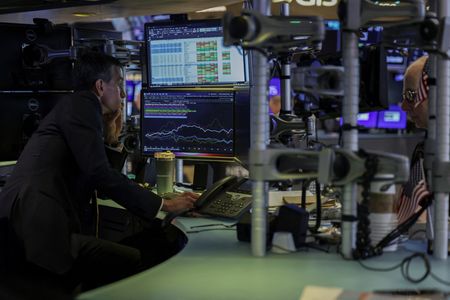

Wall Street investors remained cautious Friday morning, with stock market futures showing minimal activity as traders awaited key inflation data while keeping a close eye on developments in the Middle East.
A two-week ceasefire deal announced earlier this week between the United States and Iran has helped propel major market indices toward strong weekly performance. The S&P 500 appears headed for its largest weekly increase since November, while the Dow Jones is on pace for its most significant gain since June.
Market attention will center on the March Consumer Price Index report, set for release at 8:30 a.m. Eastern Time. The data is anticipated to reveal how rising energy costs from the Iran conflict have affected the American economy.
Economic forecasters surveyed by Reuters predict consumer prices experienced their steepest climb in almost four years during March, with annual CPI expected to reach 3.3%. Such figures could diminish expectations for Federal Reserve interest rate cuts this year.
Money market traders are currently not anticipating any policy loosening through 2026. Before the conflict erupted, they had projected two rate reductions, according to CME Group’s FedWatch Tool. During the height of tensions, some even increased bets on a possible rate hike in December.
UBS Global Wealth Management analysts stated, “While Fed officials expected higher oil prices to delay the anticipated decline in US inflation toward their 2% target, we continue to believe that the central bank remains on track to cut rates later this year.”
The analysts anticipate that “sequential core inflation to cool” in upcoming months as tariff impacts diminish and weakening labor demand could potentially drive unemployment higher, which might support the argument for rate reductions.
As of 4:45 a.m. Eastern Time, Dow E-mini contracts dropped 72 points or 0.15%, S&P 500 E-minis fell 5.75 points or 0.08%, and Nasdaq 100 E-minis declined 21.25 points or 0.08%.
Market participants continued monitoring Iran conflict developments, as the two-week ceasefire between America and Iran displayed signs of stress before the initial round of negotiations scheduled for Saturday.
Nevertheless, markets found reassurance in Israeli Prime Minister Benjamin Netanyahu’s statements indicating his pursuit of direct discussions with Beirut, which contributed to Thursday’s gains across Wall Street’s primary indices.
Following Friday’s market opening, traders will also monitor the preliminary April reading of the University of Michigan’s consumer sentiment survey.