
WASHINGTON — Global markets are facing an unsettling reminder of the economic turmoil that defined the 1970s.
Petroleum costs are climbing sharply amid Middle Eastern warfare, pushing up prices at gas pumps, for diesel, and aviation fuel while raising concerns about a return to stagflation — that damaging combination of rising prices and economic stagnation that plagued consumers fifty years ago.
However, both American and international economies have built stronger defenses against such disruptions compared to the era when Saudi Arabia and fellow Middle Eastern oil nations blocked supply lines to retaliate against nations backing Israel during the 1973 Yom Kippur conflict.
Following that crisis — and a second one sparked six years afterward by Iran’s revolution — nations pursued new strategies to boost energy efficiency, decrease reliance on Middle Eastern petroleum, build emergency fuel reserves, and develop alternative energy sources.
“We have decades of experience now dealing with these kinds of oil shocks,” said Amy Myers Jaffe, research professor at New York University’s Center for Global Affairs.
Naturally, the idea that today’s Iranian energy crisis might have been more severe offers little consolation to aggravated American drivers spending $4 or higher per gallon, European agricultural workers facing soaring fertilizer costs, and food vendors in India struggling to obtain sufficient cooking gas for their curries and samosas.
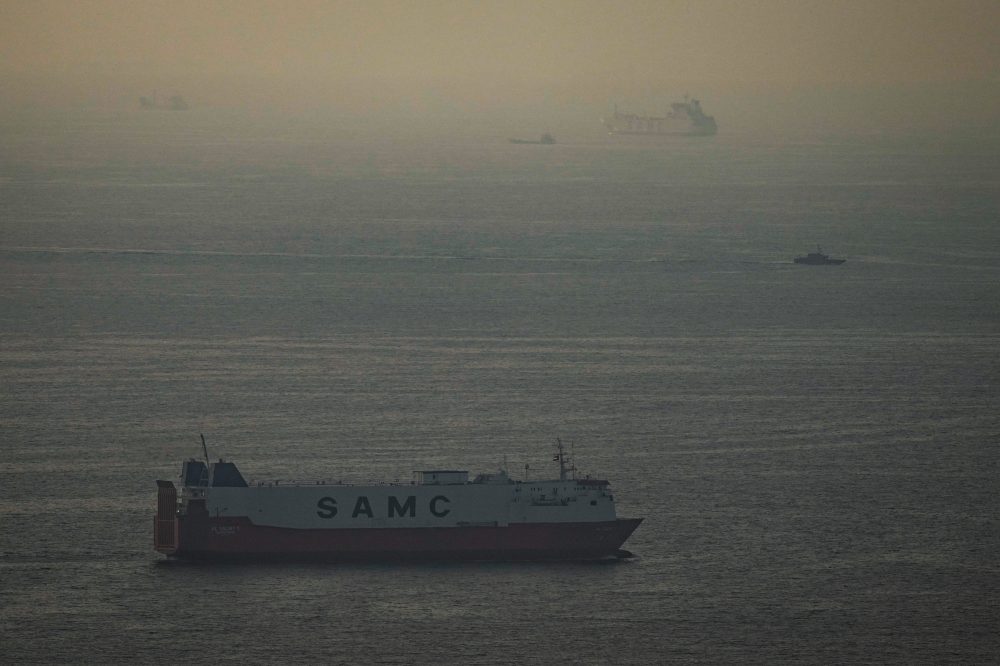
The current disruption’s magnitude is also without precedent. Following attacks by America and Israel that started February 28, Iran essentially blocked the Strait of Hormuz, which previously carried 20 million oil barrels daily — representing one-fifth of worldwide production.
Lutz Kilian, director of the Federal Reserve Bank of Dallas’ Center for Energy and the Economy, estimates that 5 million daily barrels can be redirected from the Persian Gulf to the Red Sea or continue moving through the Strait of Hormuz. However, this still leaves approximately 15 million barrels — 15% of global daily oil output — unavailable, compared to only 6% during the 1973 embargo and following Iraq’s Kuwait invasion in 1990.
Modifications implemented by America and other nations over five decades have reduced the economic damage from this conflict. In 1973, petroleum represented nearly half — 46% — of worldwide energy supplies. By 2023, oil’s portion had decreased to 30%, the International Energy Agency reports.
Global oil consumption remains at record levels: usage exceeded 100 million barrels daily last year, rising from under 60 million daily barrels in 1973. Yet a significantly larger portion of worldwide energy now comes from alternative sources — including natural gas, nuclear power, and solar — compared to five decades earlier.
America has particularly reduced its foreign oil dependency.
During the ’73 energy crisis, domestic production was declining while import reliance grew dangerously. However, fracking technology — injecting high-pressure water underground to extract previously inaccessible oil and gas from rock formations — revitalized U.S. energy output in the 21st century. By 2019, America had achieved net petroleum exporter status.
“The U.S. economy is much better positioned than it was in the 1970s,” when it was “particularly vulnerable to an oil price shock,” said Sam Ori, executive director of the University of Chicago’s Energy Policy Institute.
During the early ’70s, America generated approximately 20% of its electricity from oil, Ori noted. But legislation passed in 1978 banned petroleum use in power plants. Currently, the United States produces no electricity from oil — except for some generators in remote Alaskan locations.
The 1973 oil embargo served as an alarm, creating shortages that resulted in lengthy lines at American gas stations.
On November 25, 1973, President Richard Nixon addressed the nation on television, requesting American sacrifices. To preserve fuel, he encouraged gas stations to close pumps from Saturday evening through Sunday, hoping to discourage extended weekend travel.
He requested Congress lower maximum speed limits to 50 mph (legislators compromised at 55 mph) and eliminate decorative and most commercial lighting (they rejected that proposal). Nixon personally pledged to reduce White House Christmas lighting.
While those experiences may have permanently affected some people, Jaffe from New York University’s Center for Global Affairs believes that today, “a repeat of long gasoline lines, fuel rationing, and outright fuel shortages in the U.S seems highly unlikely.”
Other nations also implemented dramatic measures following the 1973 oil embargo.
Britain, facing both a coal strike and energy crisis, reduced the work week to three days to cut electricity usage. France mandated that offices extinguish lights at night.
Japan, almost completely reliant on imported oil, enacted multiple “sho-ene” laws — combining Japanese terms for “save” or “reduce” with “energy” — requiring efficiency improvements in shipping, construction, machinery, automobiles, and residences.
Japan also promoted liquefied natural gas usage and rapid nuclear power expansion, efforts hindered after a 2011 earthquake and tsunami damaged the Fukushima facility. Overall, Japan ranks 21st globally in per-capita energy consumption, according to International Energy Agency statistics, due to its efficiency campaigns and widespread public transportation use. The United States ranks 9th.
The American government began implementing fuel economy requirements in 1975. Vehicle fuel efficiency has improved from 13.1 miles per gallon for 1975 model year cars to 27.1 mpg for 2023 models, Environmental Protection Agency data shows. The World Bank credits most of the global economy’s reduced oil dependence to stricter vehicle fuel efficiency standards worldwide.
The ’70s crises also triggered searches for oil beyond the Middle East — Alaska’s Prudhoe Bay, North Sea deposits off Britain and Norway’s coasts, and Canada’s oil sands.
As fracking expanded, American oil production jumped from 5 million daily barrels in 2008 to 13.6 million daily barrels last year. During this same timeframe, U.S. natural gas production more than doubled.
Nations also began building oil reserves and established the Paris-based International Energy Agency in 1975 to coordinate energy shock responses. Last month, the agency’s 32 member nations agreed to release 400 million oil barrels to stabilize markets; this included 172 million barrels from the U.S. Strategic Petroleum Reserve, created in 1975.
Central banks like the Federal Reserve also gained valuable insights. During the ’70s, they lowered interest rates to shield the economy from oil shocks. By doing so, they ignored the danger from higher energy costs — and inflation, already elevated, worsened.
In a February 17 analysis — 11 days before America and Israel attacked Iran — Dallas Fed’s Kilian wrote that the Fed made mistakes by cutting rates to stimulate the economy during 1970s oil shocks: “What we can learn from the 1970s is that a well-intentioned policy of stimulating the economy by lowering interest rates has the potential of inadvertently reigniting inflation.”
Despite significant changes, the University of Chicago’s Ori warns: “Oil is still king, the No. 1 fuel in the U.S. economy.” Automobiles, aircraft, trucks, and ships obtain approximately 90% of their energy from petroleum. “The lifeblood of the economy – the transportation sector —is still overwhelmingly reliant on petroleum fuel, the price of which is set in a global market,” Ori said, “and a disruption anywhere affects the price everywhere.”
He also observes that President Donald Trump is reversing many policies designed to reduce America’s petroleum dependence and promote electric vehicle adoption.
Trump’s comprehensive tax legislation last year eliminated consumer credits up to $7,500 for EV purchases. He has announced plans to weaken American fuel economy standards and removed penalties on automakers failing to meet those requirements.
“You take all that together, and the fact is, the U.S. is going in the opposite direction of making big changes to further insulate the economy from oil shocks and oil price volatility,” Ori said.