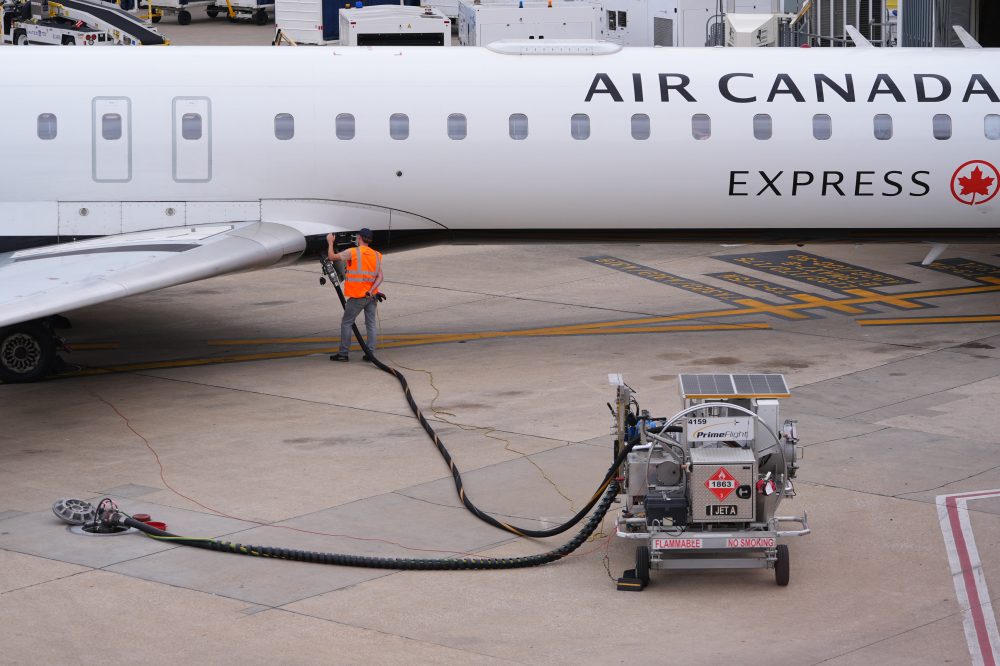
Canada’s flagship airline announced Friday it will halt flights to John F. Kennedy International Airport for almost five months this summer due to skyrocketing jet fuel expenses caused by the ongoing Iranian conflict.
The Montreal-headquartered carrier revealed that routes connecting Toronto and Montreal to JFK will be discontinued starting June 1, with service not resuming until October 25. However, flights to the New York area’s other major airports, LaGuardia and Newark, will remain operational.
The airline stated it plans to contact affected passengers to provide alternative travel arrangements.
“As jet fuel prices have doubled since the start of the Iran conflict and some lower profitability routes and flights are no longer economic, and we are making schedule adjustments accordingly,” a company representative explained Friday.
Industry data from Argus Media shows jet fuel prices hit $4.32 per gallon Thursday, a dramatic increase from $2.50 per gallon recorded the day before Iranian hostilities began.
Oil markets saw significant relief Friday, dropping over 10% after Iran announced the reopening of the Strait of Hormuz to commercial oil tankers transporting petroleum from the Persian Gulf to global markets.
Aviation fuel and workforce expenses represent airlines’ biggest annual operating costs. Delta Air Lines reported earlier this month that elevated fuel prices will increase their second-quarter expenses by $2 billion. Multiple carriers including JetBlue and United Airlines have implemented higher baggage fees to combat rising fuel expenses, while others are reducing flight schedules.
During an exclusive interview with the Associated Press Thursday, International Energy Agency Director Fatih Birol warned that Europe has “maybe six weeks” of jet fuel reserves remaining and characterized the situation as the world’s “largest energy crisis.”
The company that operates television shopping channels QVC and HSN has declared Chapter 11 bankruptcy protection as traditional home shopping networks face mounting challenges from modern digital competitors.
QVC Group submitted its bankruptcy petition to the U.S. Bankruptcy Court for the Southern District of Texas as these established TV retail giants find themselves losing customers to social media shopping on platforms like TikTok and online retailers such as Shein.
The bankruptcy filing excludes the company’s overseas operations, and executives emphasized they maintain more than $1 billion in available cash with sufficient resources to fulfill all business commitments.
According to QVC Group, all brand operations continue without interruption, including customer services in the United Kingdom, Germany, Japan, and Italy. The company pledged uninterrupted service to customers through all QVC, HSN, and Cornerstone Brands channels and platforms.
“Bankruptcy may allow the necessary restructuring to give QVC the room to operate with better financials. However, it does not solve the need to reinvent and become relevant,” said Neil Saunders, managing director of GlobalData, in a statement.
The company has been working to reverse declining revenues for several years, with 2024 sales dropping nearly 30% from their 2020 high of over $14 billion. Stock prices tell a similar story of decline, falling from more than $900 per share ten years ago to under $3 this week.
Company officials expect to complete the bankruptcy restructuring process within approximately 90 days.
Investment firms made a massive $760 million wager against oil prices just 20 minutes before Iran’s foreign minister declared the Strait of Hormuz open to commercial vessels on Friday, marking another instance of suspiciously timed commodity trades during Middle East tensions.
The enormous bet has sparked fresh concerns among U.S. lawmakers and legal analysts that some traders may be gaining unfair advantages in volatile derivatives markets through advance knowledge of diplomatic and military decisions.
Market data from LSEG shows that between 12:24 and 12:25 GMT, investors dumped a combined 7,990 lots of Brent crude futures contracts. At prevailing prices, these transactions totaled approximately $760 million in value.
Twenty minutes later at 12:45 GMT, Iran’s foreign minister posted on social media platform X that commercial ship passage through the Strait of Hormuz would remain completely open during the ceasefire period, consistent with the Lebanon ceasefire agreement.
Oil prices plummeted as much as 11% within minutes of the announcement, generating substantial profits for those who had sold futures contracts shortly before.
This incident follows a pattern of well-timed oil trades preceding major Middle East developments. Reuters previously reported that approximately $950 million in bets occurred just hours before the U.S. and Iran announced a two-week ceasefire on April 7. Similarly, on March 23, investors sold $500 million worth of oil futures merely 15 minutes before President Donald Trump announced he would postpone attacks on Iran’s energy facilities, causing crude prices to drop 15%.
A source familiar with the matter revealed Wednesday that the U.S. Commodity Futures Trading Commission is actively investigating multiple oil futures transactions, including the March 23 and April 7 trades, that occurred shortly before Trump administration policy announcements regarding the Iran conflict.
The recurring pattern of large-scale oil trades immediately preceding major geopolitical announcements has heightened scrutiny of potential insider trading in commodity markets during times of international crisis.
A California biotechnology company experienced a strong first day on Wall Street Friday, with its stock price climbing 33% during its initial public offering on the Nasdaq exchange, bringing the company’s market value to $1.53 billion.
Alamar Biosciences, headquartered in Fremont, California, saw its shares begin trading at $22.60 each, well above the initial offering price of $17 per share.
The biotech firm completed an expanded public offering, selling approximately 11.3 million shares at the highest end of its projected price range between $15 and $17 per share, generating $191.3 million in proceeds.
Established in 2018, the company specializes in creating technology that can identify minute levels of protein biomarkers present in blood samples, which supports medical research and diagnostic applications for various diseases.
JACKSON, Miss. — Business owner Brandi Carter depends on reliable wine shipments for her livelihood.
Carter operates Levure Bottle Shop in Jackson, Mississippi, where she specializes in selling natural wines distributed through the state’s alcohol control system to retail stores, restaurants and bars. However, warehouse complications have created significant shipping delays, forcing Carter and numerous other business owners to watch their stock levels drop while sales decline as they await new deliveries.
The business owner, who also manages beverage operations for a Jackson restaurant, reports experiencing these setbacks since February and feels powerless as customer traffic decreases.
“I’ve just reached acceptance that this is our new normal, and it’s awful,” Carter said Wednesday.
Mississippi operates under a unique system where the state’s Alcoholic Beverage Control department — part of the Mississippi Department of Revenue — handles wine and liquor distribution to retail businesses. This differs from most other states where private companies manage alcohol distribution, Carter explained.
Statistics from the Mississippi Department of Revenue show that during the week of April 12, more than 172,000 cases awaited delivery, with businesses experiencing an average 17-day wait for their orders.
These figures represent an improvement from the week of March 1, when the bottleneck reached its worst point this year. At that time, over 220,000 cases were pending delivery with an average completion time of 25 days.
By comparison, the week of January 11 saw just over 51,000 cases pending with only a three-day wait period, according to department records.
Carter reports the current backlog has created wait times of four to five weeks, compared to the previous timeframe of several days to two weeks before problems began.
The distribution problems originated in January when the state’s four-decade-old warehouse transitioned from an outdated conveyor belt system to a pallet-based operation, according to Mississippi Department of Revenue officials. Technical difficulties with the new warehouse management system caused the delays, the department stated.
“The computer program that they implemented for the warehouse wasn’t working effectively with the ordering side,” Carter said. “So the first big chunk was the biggest problem, because things were being marked as shipped, but they weren’t shipped.”
Department officials say the technical problems have been fixed and the warehouse is now running at maximum capacity, with backlogged orders being processed as retail demand increases.
“While capacity at the existing facility has been a challenge for well over five years, there is not an alcohol shortage,” the department said. “As retail ordering stabilizes, we anticipate shipments returning to normal volume within the coming weeks.”
State lawmakers considered legislation that would have temporarily permitted out-of-state distributors to sell and deliver alcohol directly to retailers. The proposed law included a two-year sunset clause, but failed to gain approval before the legislative session concluded.
A replacement warehouse scheduled for completion by year’s end will have the capacity to store and distribute more than double the current facility’s volume, revenue department officials announced.
Josh Sorrell, who owns Spillway Wine and Spirits in Brandon, says his daily orders have been reduced from 600 cases to just 100 cases. He estimates that 30% to 40% of his regular daily orders remain unavailable.
Sorrell thinks reinstalling the conveyor belt system would solve the issue and has requested that Mississippi Gov. Tate Reeves declare a state of emergency.
Should the delays persist, Sorrell worries his business will struggle during the busy end-of-year period when he generates much of his annual revenue.
“As it gets busier, we’re gonna crumble,” he said. “I mean, it’s going to be really hard at 100 cases a day to stock up for a full October, November, December.”
Customers are now visiting multiple stores searching for specific products and often leave empty-handed, Sorrell noted.
“It’s frustrating to lose people at the door who are looking for a specific product that I can’t even get from the state,” he said.
Customer Lauren Roberts experienced this firsthand Thursday when she visited Sorrell’s store seeking Soda Jerk’s orange cream shots, but found them sold out, just like at her usual supermarket. She settled for a different beverage for an upcoming family gathering.
“We’re having a little get-together this weekend because it’s my daughter’s prom and her boyfriend’s family’s coming,” Roberts said. “So everybody has their drink of choice, but me.”
Truist Financial Corporation delivered better-than-expected first-quarter earnings results on Friday, driven by impressive performance in its investment banking division and trading operations, alongside increased interest revenue.
The banking sector has seen a surge in investment banking revenue as corporations move forward with merger and acquisition strategies, despite periodic market uncertainty that many believe will be temporary and won’t significantly impact major business deals.
Volatile market conditions, sparked by technology stock declines related to artificial intelligence concerns and ongoing Middle East conflicts, have actually benefited trading departments. These divisions have experienced increased client transactions as investors adjust their portfolios and seek protection against emerging market risks.
The financial institution saw investment banking and trading revenue jump 36.3% during the quarter, with projections showing a 20% year-over-year increase expected by 2026.
“Our debt capital markets has been a strong contributer for a long time. I think M&A will be a bigger part of the growth going forward, we’ve invested a lot in that area,” Truist CEO Bill Rogers said in a call with analysts.
Stock prices for the nation’s ninth-largest bank by total assets rose 1.5% following the earnings announcement.
Increased borrowing activity from both business and individual customers has boosted loan demand throughout the banking industry, helping to maintain lending profit margins that serve as a crucial revenue source for American financial institutions.
The bank recorded a 2.5% increase in net interest income, reaching $3.64 billion for the first quarter.
The company posted earnings of $1.09 per share for the three-month period ending March 31, beating analyst predictions of 99 cents per share based on LSEG data.
“The uplift in the full-year 2026 share repurchase program to $5 billion from $4 billion, and the establishment of a long-term ROTCE target of 16% to 18% should favorably impact investor sentiment in 2026,” RBC Capital Markets analysts said in a note.
These financial results align with similar performance patterns seen at major Wall Street institutions including JPMorgan Chase, Bank of America, and Citigroup.
TORONTO – New home construction across Canada took an unexpected downturn last month, with March figures showing a 6% drop compared to February, according to Friday’s report from the nation’s housing agency.
The Canada Mortgage and Housing Corporation (CMHC) released data showing the seasonally adjusted annual rate for new housing starts fell to 235,852 units, down from February’s revised figure of 250,961 units. The decline caught market analysts by surprise, as they had anticipated construction would climb to 255,000 units.
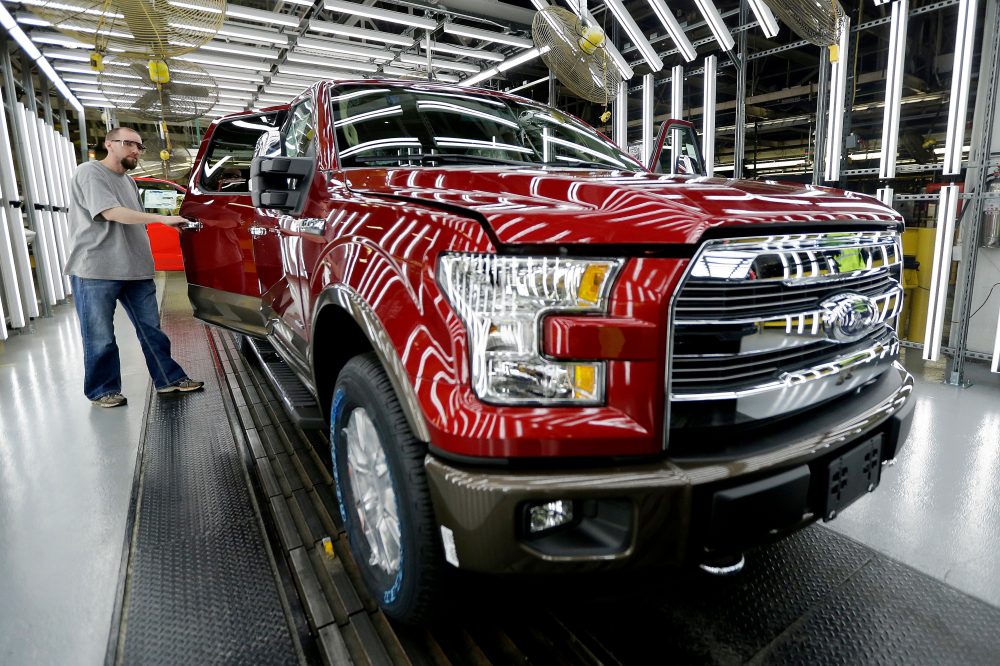
Ford Motor Company has announced a massive recall affecting nearly 1.4 million F-150 pickup trucks across the United States due to a dangerous transmission malfunction that could result in drivers losing control of their vehicles and potentially causing accidents.
Company officials have confirmed they are investigating two reported injuries and one crash that may be connected to this mechanical problem.
The safety recall affects F-150 light-duty trucks equipped with six-speed automatic transmissions that were manufactured from March 12, 2014, through August 18, 2017.
According to the National Highway Traffic Safety Administration’s official recall notice, affected pickup trucks may experience a faulty signal from the transmission range sensor to the powertrain control module. This malfunction can trigger an unexpected and temporary downshift into second gear, causing a sudden decrease in wheel speed that may result in rear tire sliding until the vehicle decelerates.
Ford has documented 444 warranty claims and 105 customer complaints potentially connected to this defect as of earlier this month.
Truck owners will receive recall notifications through the mail with instructions to schedule service appointments at Ford or Lincoln dealerships, where technicians will update the powertrain control module calibration free of charge.
Trade between Europe and the United States has experienced a dramatic downturn, with European exports declining by 26.4% in February, marking the second consecutive month of severe drops, according to new data from the European Union’s statistics office.
The February decline follows an even steeper 27.8% decrease in January, contributing to a 60% shrinkage in the EU’s trade surplus with America. These figures were released Friday by Eurostat, the bloc’s official data agency.
However, trade analysts suggest these numbers may present a skewed picture of the actual impact from President Trump’s tariff policies. The comparison period includes early 2025, when European companies rushed shipments to beat the March tariff deadline, creating artificially high baseline numbers. During January and February of last year, exports to America had surged by 16% and 22.4% respectively.
Determining the true effect of American tariffs remains challenging for economists. Many experts point to fourth-quarter 2025 data as providing a clearer assessment, though they note the euro’s 8.9% strengthening against the dollar has also hurt European competitiveness.
The final quarter of last year showed EU exports to America down 15% overall, with iron and steel shipments falling nearly 40% and chemical exports dropping between 60% and 80%. These declines occurred despite significant front-loading of shipments earlier in the year.
Vincent Stamer, an economist with Commerzbank, observed that European exports to other global markets actually grew by 6.1% during this period, but warned the situation could deteriorate further.
“Past episodes of tariff hikes have shown us that it takes trade flows two to three years to fully respond to new tariffs,” Stamer explained.
The economist also highlighted concerns about new tariffs affecting patented pharmaceuticals, a key European export sector. Commerzbank’s analysis suggests US tariffs could reduce eurozone economic output by 0.3% in 2026 alone.
European automakers saw mixed results despite benefiting from reduced US tariffs of 15% instead of 25% during the October-December period. Car exports still fell 22%, though this represented an improvement from the sharper declines seen in the second and third quarters.
Research from ING bank revealed that American chemical and transportation equipment exports to Europe also increased from early 2024 through late 2025. The data showed America’s share of total EU exports declined across all major European countries except France during this timeframe.
Surprisingly, some European industries managed growth despite facing steep tariffs. Aluminum exports rose 9% and copper products increased 15% in the year’s final quarter, even with 50% US tariffs in place.
European Aluminium, an industry association, explained the aluminum increase partly resulted from technical problems at an American facility. For copper, European Metals noted that insufficient US domestic production capacity drove prices high enough to make European exports profitable even with tariffs.
The maritime sector showed remarkable growth, with ship and boat exports more than tripling in both the third and fourth quarters.
Meyer Turku shipyard in Finland, part of the German Meyer family’s operations, reported that US tariffs had not created a “decisive impact” on their business. The facility delivered the massive cruise ship “Star of the Seas” to Royal Caribbean last year and secured shipbuilding contracts extending through 2036.
The European Boating Industry, representing yacht and pleasure boat manufacturers, noted sales to America spiked in June before declining, though not as dramatically as tariffs might have suggested. This pattern likely reflects deliveries of previously placed orders.
On February 20, the US Supreme Court overturned Trump’s comprehensive tariff program, which had been implemented under emergency powers legislation. However, within days, America imposed a new temporary global import fee and announced plans to rebuild tariffs similar to those negotiated with the EU previously.
Regions Financial Corporation announced Friday that its first-quarter earnings climbed 14% compared to the same period last year, benefiting from increased lending activity that followed Federal Reserve interest rate reductions.
The Federal Reserve decreased rates by 75 basis points during the latter half of 2025, which sparked increased borrowing and enhanced lending revenue for banks nationwide during the first quarter. Banking executives indicate they anticipate continued strong loan demand as reduced uncertainty around trade policies encourages businesses to seek more credit.
The bank’s net interest income – representing the gap between earnings from loans and costs paid on customer deposits – increased 4.5% year-over-year to reach $1.25 billion for the quarter.
Credit loss provisions decreased to $91 million from $124 million in the prior year period. The financial institution reported that overall loan quality is getting better as it continues working through previously identified problem loan portfolios.
“Growth in loans and deposits accelerated during the first quarter, credit metrics continued to improve and client sentiment remained generally optimistic across our footprint,” said CEO John Turner.
The bank noted that consumer financial health remained stable, and employment market conditions showed no signs of significant deterioration.
Solid results from investment banking and wealth advisory services also contributed to Regions’ quarterly performance, with fee-based income climbing 6% to $625 million.
Net earnings totaled $559 million, equivalent to 62 cents per share, up from $490 million or 51 cents per share in the same quarter last year.
The bank also disclosed approximately $12.8 billion in exposure to non-depository financial institutions, an area drawing increased regulatory attention due to potential risks in the private lending sector.
Regions stated it maintains protective measures for its private credit exposure, which represents 14% of its non-depository financial institution portfolio.
Swedish electric vehicle manufacturer Polestar announced Friday that its fourth-quarter earnings showed significant improvement, with revenue climbing dramatically and financial losses decreasing substantially compared to the previous year.
The automaker reported that revenue soared 54% to reach $887 million during the final three months of 2025, ending December 31. Meanwhile, the company’s net losses decreased to $799 million, a notable improvement from the $1.18 billion loss recorded during the same period in 2024.
Over the past year, Polestar has concentrated its efforts on European markets, where consumer appetite for electric vehicles remains robust, while stepping back from other key markets including the United States where sales have been disappointing.
Global uncertainties stemming from Middle Eastern conflicts and the impact of President Donald Trump’s tariff strategies have also disrupted Polestar’s international growth objectives, reinforcing its decision to prioritize European operations.
Chief Executive Officer Michael Lohscheller warned that market conditions may become increasingly difficult “amid ongoing geopolitical developments.”
The company declined to offer detailed financial projections beyond its earlier announcement regarding retail sales volume growth, which is anticipated to rise at low-double-digit percentages.
Polestar has implemented aggressive cost-reduction measures, including workforce reductions, streamlined manufacturing operations, and supply chain restructuring. Employment levels dropped to 1,686 workers by the end of 2025, down from 2,547 employees at the conclusion of 2024.
The electric vehicle maker plans to release first-quarter financial data on May 7. Company cash reserves stood at approximately $1.16 billion at year-end 2025.
Fourth-quarter adjusted gross margin reached 1.9%, marking a substantial turnaround from the negative 39% recorded in 2024.
Wall Street is experiencing a remarkable comeback as major stock indexes climb to unprecedented levels, with investors now shifting their attention to what’s expected to be a strong corporate earnings season.
The easing of tensions between the United States and Iran has sparked a powerful market rally this month, pushing key stock benchmarks to fresh record territory. On Wednesday, the S&P 500 achieved its first record closing high since January 27, while the Nasdaq Composite reached its first all-time closing peak since October 29.
Market participants are now preparing for a busy week of first-quarter earnings reports, with approximately 20% of S&P 500 companies scheduled to release their financial results. Analysts anticipate these reports will provide strong support for the current bullish market sentiment.
Chuck Carlson, chief executive officer at Horizon Investment Services, acknowledged ongoing uncertainties while noting a shift in investor focus. “We’re certainly not out of the woods” from war-related developments that could cause daily market swings, Carlson explained. “But I think the market has shifted its attention now …toward corporate profits and how stocks respond to those profits.”
However, some market experts remain cautious about potential challenges ahead. Oil prices continue to trade at elevated levels, with U.S. crude hovering around $94 per barrel Thursday, compared to $67 in late February before military strikes on Iran began. This sustained increase in energy costs could lead to higher inflation and rising Treasury yields, potentially creating headwinds for equities.
Michael Mullaney, director of global markets research at Boston Partners, expressed skepticism about the market’s optimistic outlook. “The stock market is treating what has happened over the last six weeks as if it has just woken up from a bad dream,” Mullaney observed. “Like … there are no further ramifications or repercussions from this. Which I don’t agree with.”
The speed of the market’s recovery has been particularly striking. After declining 9% from its January peak following the start of the conflict, the S&P 500 has surged 11% since hitting its recent low on March 30, closing this week above the 7,000 level for the first time.
According to research from Bespoke Investment Group examining S&P 500 pullbacks of 5% to 10% since 1928, the index had never before returned to all-time highs in just 11 trading sessions, as it accomplished on Wednesday.
Jim Reid, head of macro and thematic research at Deutsche Bank, highlighted the unprecedented nature of this rally. “The velocity of this ascent has been nothing short of astonishing,” Reid noted in a research report.
Technology stocks, which have been leading the three-year bull market, experienced significant declines during the initial downturn but have since rebounded strongly. Companies like Alphabet and Meta Platforms have performed particularly well in the recent recovery, with the broader technology sector also outpacing other industries. The Nasdaq concluded Thursday with its 12th consecutive daily gain, marking the first such streak since the 2009 recovery that followed a sharp market decline.
Jeff Weniger, head of equity strategy at WisdomTree, views the broad participation in the rally as a positive sign. “If you are looking for broad participation in the market and you are making new highs and your generals are now coming back to life a little bit, I say that is probably something that is pretty healthy,” Weniger commented.
Some investors are monitoring signs of excessive market speculation, including the dramatic surge in Allbirds shares after the footwear company announced plans to pivot toward AI computing infrastructure.
Tesla is scheduled to report earnings on Wednesday, becoming the first of the “Magnificent Seven” megacap companies to announce results for the recently completed quarter. Other notable companies reporting include aircraft manufacturer Boeing, chip maker Intel, and consumer goods giant Procter & Gamble. Major technology companies including Microsoft, Alphabet, and Meta are expected to release their earnings the following week.
According to LSEG IBES projections, S&P 500 earnings are anticipated to increase approximately 14% in the first quarter compared to the same period last year. Major financial institutions began the reporting season this week, announcing substantial gains in trading revenues following a turbulent first quarter. These banks expressed caution regarding economic risks while indicating that consumers and households remain resilient.
Anthony Saglimbene, chief market strategist at Ameriprise, provided insight into consumer conditions based on early banking results. “The American consumer, while facing real pressure, has not broken based on early Q1 bank earnings,” Saglimbene wrote in a market commentary.
Interest rate policy will receive significant attention on Tuesday when Kevin Warsh, President Donald Trump’s nominee to lead the Federal Reserve, appears before Congress for confirmation hearings. While Trump has criticized current Fed Chair Jerome Powell for not reducing rates more aggressively, the war’s potential inflationary impact has led markets to essentially eliminate expectations for rate cuts this year.
Additional insight into the conflict’s economic consequences may emerge with Tuesday’s release of March retail sales data. With gasoline prices reaching $4 per gallon following the outbreak of hostilities, investors are keen to assess the impact on consumer spending patterns.
Robert Pavlik, senior portfolio manager at Dakota Wealth Management, expressed concern about the sustainability of current economic conditions. “I suspect these prices aren’t dropping down anytime soon and that is going to have an effect on discretionary spending going forward,” Pavlik said. “So the claim that the U.S. economy is in good shape is in my opinion near sighted.”
The conclusion of tax filing season may signal the start of another surge in speculative stock trading, according to investment analysts who monitor individual investor behavior.
Vanda Research, which specializes in tracking self-directed retail investors, reports early indicators of renewed interest in so-called meme stocks – companies whose share prices skyrocket based on social media hype rather than actual business performance.
With investors now less focused on Middle Eastern conflicts, “and this group of people can focus on what to do with their tax refunds, we’re starting to see some early indications of another meme-stock summer,” explained Viraj Patel, who serves as global macro strategist at Vanda.
The most dramatic example occurred Wednesday when Allbirds stock exploded upward by 500% after the former shoe company announced plans to transform into an artificial intelligence computing infrastructure business.
Individual investors showed strong appetite for the concept and the company’s planned rebrand to NewBird AI. Despite losing nearly 36% of value Thursday to close at $10.91 per share, the stock still trades far above its yearly low of just $2.15.
According to Vanda’s calculations, retail investors purchased a record $5.2 million worth of Allbirds shares Wednesday, exceeding even the $5 million in trading volume during the company’s 2021 public debut when its environmentally-conscious footwear drove investor interest.
“We’ve seen this playbook before – retail stepping in aggressively when a ‘non-tech’ company pivots toward AI,” Vanda analysts noted in Thursday research.
Patel emphasized that signs of broader meme stock activity extend beyond single company movements. He highlighted evidence of retail investors aggressively purchasing longtime popular stocks including Tesla, Palantir Technologies, and quantum computing company IonQ.
“These are retail favorites; meme stocks that capture the imagination of the individual trader,” Patel stated.
Social networking company Myseum provided another example Thursday, with shares climbing 150% after announcing its own artificial intelligence pivot.
Earlier this year, Algorhythm Holdings briefly became a favorite among speculative traders. The company, which operated as karaoke machine seller Singing Machine Co just one year prior, saw shares temporarily quadruple to $4 in February based on claims it could increase customer freight volumes by 300% to 400% “without a corresponding increase in operational headcount.”
Meme stock trading became a significant market force during early pandemic months when homebound investors turned to stock trading for entertainment and potential profits. However, most companies caught in speculative trading waves have failed to maintain elevated valuations.
Opendoor Technologies, among last year’s meme stock darlings, currently trades around $5.20 per share – less than half its 52-week peak of $10.87. Beyond Meat, another former meme trading target, has fallen to just 79 cents per share from its yearly high of $7.69.
The appearance of new meme stocks and companies promoting market buzzwords frequently raises concerns about excessive speculation.
This week’s Allbirds volatility reminded some observers of December 2017, when Long Island Iced Tea shares nearly tripled after the company announced a blockchain pivot during bitcoin’s price surge.
The renamed Long Blockchain Corporation eventually sold its beverage operations in 2019 following bitcoin’s decline and receiving delisting warnings from Nasdaq.
Some market participants, however, view current rallies as supported by improving corporate earnings forecasts and ongoing fear of missing gains during the three-year bull market.
“We are going to always see froth around the edges, and all too often they coincide with market rallies,” said Art Hogan, market strategist at B. Riley Wealth. “There’s a cohort of investors who sadly always seem to want to chase the most speculative names in the market.”
PARIS – France’s Finance Minister Roland Lescure expressed concerns this week about Europe’s limited presence in the digital currency market, urging the continent’s financial institutions to develop more euro-backed cryptocurrency options.
Speaking at a cryptocurrency conference in Paris on Friday, Lescure described the current disparity between euro-pegged and dollar-pegged digital currencies as unsatisfactory, given the small market share held by European alternatives.
Financial institutions across the globe are testing stablecoins – digital currencies engineered to hold steady values by being backed by traditional money. This experimentation has accelerated since former President Donald Trump enacted legislation last year that created regulatory framework for these digital assets.
Ten major European banking institutions, including ING, UniCredit, and BNP Paribas, established a joint venture last year with plans to introduce a euro-backed stablecoin during the latter half of 2026. This collaborative effort aims to challenge American supremacy in digital payment systems.
Lescure voiced support for this banking alliance, stating: “That is what we need and that is what we want.” He further emphasized his position by saying: “I also strongly encourage banks to further explore the launch of tokenised deposits.”
The market size difference is striking – Tether, the world’s leading stablecoin, reports over $185 billion worth of dollar-backed tokens currently circulating. Meanwhile, Societe Generale’s euro-pegged alternative, which debuted in 2023, has only 107 million euros in circulation.
A German medical packaging manufacturer has turned down an acquisition offer from an American competitor, according to industry sources familiar with the negotiations.
Gerresheimer declined the takeover proposal from US-based Silgan, and discussions between the two companies have ceased entirely, sources revealed.
The company’s stock initially dropped 5.4% following news of the rejected bid, though shares later recovered and moved slightly higher.
According to one insider, Gerresheimer is prioritizing the resolution of internal accounting issues and the sale of its American subsidiary Centor rather than pursuing acquisition talks.
In March, reports indicated that Silgan had expressed interest in acquiring Gerresheimer through a preliminary offer valued at 41 euros ($48.31) per share, representing more than twice the company’s current stock price.
When contacted for comment, a Gerresheimer representative stated the company does not address market speculation. Silgan has not responded to requests for comment.
Three French telecommunications giants have submitted an enhanced joint proposal worth 20.35 billion euros ($24 billion) to acquire SFR, setting up a potential showdown with European Union competition authorities.
The consortium of Bouygues Telecom, Free (owned by Iliad), and Orange delivered their improved offer on Friday to purchase most of Altice France’s telecommunications assets. This represents a significant increase from their previous 17 billion euro proposal that Altice rejected in October.
EU competition watchdogs have historically maintained strict policies requiring four separate operators in each national market, pushing back against industry consolidation efforts aimed at competing with larger American and Asian telecommunications companies.
According to an Orange representative, each company’s acquisition of SFR assets will undergo individual antitrust examination. A European Commission representative confirmed they have not yet received official notification of the proposed transaction.
“If a transaction constitutes a merger and has an EU dimension, it is always up to the companies to notify it to the Commission,” the spokesperson added.
The potential acquisition of SFR, controlled by billionaire Patrick Drahi, could dramatically reshape France’s highly competitive telecommunications sector. French carriers have engaged in prolonged pricing battles for years, creating pressure on profit margins and revenue expansion.
EU antitrust officials have historically implemented strict conditions and complete prohibitions on telecommunications mergers attempting to reduce mobile network operators from four to three within individual country markets, prioritizing competition protection and preventing price increases.
However, a 2024 EU competitiveness assessment recommended regulators reconsider their approach, which has created a fragmented industry, and instead focus on helping companies achieve greater scale to compete internationally with American and Chinese competitors.
Industry executives have similarly advocated for the EU to support mergers by evaluating deals across regional rather than national boundaries and considering investment commitments.
Should the Altice France asset acquisition proceed, it would likely undergo European Commission review, which allows 25 working days for initial assessment after filing. The Commission may extend this period by 35 working days to evaluate proposed remedies or address member state requests to handle the case.
While most mergers receive approval, the Commission occasionally initiates comprehensive second-phase investigations lasting up to 90 additional working days, potentially extending to 105 days.
The French government will hold significant influence in any deal discussions, as it represents Orange’s largest shareholder. Through its board position, the government can impact negotiations, particularly regarding employment protection and national interests.
Finance Minister Roland Lescure has indicated he will remain “extremely vigilant,” especially concerning pricing and service quality standards.
France currently operates with four telecommunications providers, with Orange holding market leadership. This structure would limit Orange to acquiring only the smallest portion of SFR, which serves 19 million mobile customers and over 6 million fiber subscribers.
The French telecommunications landscape has experienced numerous changes, including France Telecom’s acquisition of Orange in 2000. In 2014, Vivendi sold SFR to Drahi’s Numericable for 13.4 billion euros in cash plus a 20% ownership stake, creating Altice France.
Altice completed debt restructuring last year, resulting in Drahi maintaining 55% control of Altice France while creditors hold 45%. Bouygues Telecom, seeking the largest share of Altice’s operations, has grown through acquiring La Poste Telecom, adding 2.3 million customers in 2024.
Iliad launched in the French market in 2012 with its budget Free brand, triggering intense price competition. The three carriers have proposed acquiring most SFR operations, excluding fiber asset stakes and holdings in French overseas territories.
Global financial markets are showing signs of optimism this week as President Donald Trump expresses confidence that the conflict in Iran could conclude soon, with diplomatic discussions potentially resuming over the weekend.
However, this positive sentiment faces challenges from upcoming economic data expected to reveal sluggish business performance and mounting inflationary pressures, along with what could be an intense congressional examination of the Federal Reserve’s nominee for chair.
Kevin Warsh, Trump’s selection to head the Federal Reserve and a former Fed governor, will face lawmakers during his confirmation hearing on April 21, giving investors insight into the administration’s monetary policy direction.
Warsh enters a challenging environment as he works toward Trump’s goal of reduced interest rates, complicated by energy price increases from the Iran conflict that are raising inflation worries. Market expectations for rate cuts have shifted dramatically since the war began in late February, moving from anticipating two quarter-point reductions by December to expecting virtually no cuts.
Trump has publicly criticized current Fed Chair Jerome Powell for insufficient rate reductions. This week, he intensified his pressure tactics by threatening to remove Powell from his Federal Reserve board position if he refuses to step down when his chairmanship expires on May 15.
Meanwhile, Tesla leads a busy schedule of U.S. corporate earnings reports, while March retail sales figures may reveal whether rising prices are dampening consumer purchases.
Iran continues to dominate market concerns as the United States and Pakistan promote the possibility of an agreement to resolve the conflict and reopen the vital Strait of Hormuz shipping route.
Stock markets, particularly in America, are anticipating a positive resolution. The S&P 500 has recovered to record territory, and despite Japan’s significant dependence on energy imports, the Nikkei has also reached record levels.
Market participants are betting that peace would restore the pre-conflict environment where robust earnings supported equity values.
Oil markets show more skepticism. While Brent crude prices sit below $100 per barrel, they remain 33% higher than late February levels. Physical crude prices for immediate delivery have reached unprecedented highs.
If diplomatic efforts fail to reopen the Strait, energy costs will stay elevated, compelling central banks to maintain high borrowing rates and potentially damaging corporate profits.
The upcoming week provides initial insights into how businesses worldwide managed as the Iran war reached its one-month milestone in April. March surveys indicated sharp increases in input costs and declining business activity as companies dealt with unstable energy markets, disrupted supply networks, and rapidly changing news developments.
While oil prices have moderated somewhat, the risk of global inflation remains present though reduced.
First-quarter earnings reports, especially from energy-import-dependent Europe, show airlines, retailers, and manufacturers facing significant uncertainty that could impact profitability.
The United States, being a net energy producer, enjoys some protection but cannot escape the impact of higher fuel costs. Investors will closely examine price and employment data in upcoming purchasing managers’ indices for indicators of economic strain.
Inflation data from Japan, Britain, New Zealand, and Canada are also expected to show concerning trends.
Emerging Asian central banks face their own pressures. China will announce its loan prime rate on April 20, though experts predict the central bank will maintain current benchmarks through year-end as economic growth resumes. Even with anticipated cooling due to Middle East crisis effects on corporate earnings and international demand, Asia’s largest economy remains in better position than many others.
Bank Indonesia, meeting April 22, must support a rupiah that recently hit record lows. The central bank’s governor indicated policy adjustments are needed to maintain financial market stability. The Philippines’ central bank, convening April 23, has cautioned about spillover effects after March inflation accelerated beyond policymakers’ target range.
Turkey’s central bank conducts one of its most important policy meetings Wednesday, testing its dedication to conventional monetary policy.
Given Turkey’s heavy reliance on imported energy, the nation has suffered severely from the Iran war’s economic consequences. It spent nearly $50 billion in reserves last month to stabilize the lira and became one of few countries to receive a credit rating outlook downgrade.
Prospects for lasting ceasefire will influence discussions. However, with inflation projected to reach nearly 30% by year-end according to economists, major financial institutions including JPMorgan and Bank of America anticipate rate increases of 300 basis points, returning to a punishing 40% level.
Smartphone sales in India experienced their worst quarterly performance in six years during the first three months of 2026, declining 3% compared to the same period last year, according to new research released Friday by Counterpoint Research.
The decline comes as manufacturers have raised prices on more than 80 smartphone models by an average of 15%, with analysts predicting additional price increases of 15% to 20% in the upcoming second quarter.
Senior analyst Prachir Singh explained the market challenges, stating: “The market is facing a clear affordability squeeze, driven by sharp memory-led cost inflation and currency pressures that have forced OEMs to raise prices across key models.”
The outlook for India’s smartphone industry remains concerning, with research director Tarun Pathak warning: “India’s smartphone market is expected to remain under pressure in the near term, with Q2 2026 likely to see a double-digit decline.”
Despite the overall market struggles, Vivo maintained its position as the leading smartphone brand with 21% market share, while Samsung and Oppo followed in second and third place respectively.
Apple managed to capture 9% of the market, benefiting from continued consumer interest in the iPhone 17 series. Meanwhile, Google emerged as the fastest-growing premium smartphone brand, recording a 39% increase in shipments compared to the previous year, largely attributed to artificial intelligence-powered features in their devices.
Deutsche Bank has revised its Federal Reserve outlook, now predicting the central bank will maintain current interest rates throughout 2026 without any reductions.
The financial institution previously anticipated a quarter-point rate decrease in September but has shifted its position due to several economic pressures. Bank analysts point to inflation concerns stemming from oil price increases related to Middle East conflicts, continued strong economic performance, and competitive employment conditions that make rate cuts unlikely.
According to Deutsche Bank strategists writing in a Thursday analysis, any rate reductions this year would need to coincide with cooling job market conditions and declining inflation rates.
Wall Street remains divided on Fed policy direction. While financial firms like J.P. Morgan and HSBC have eliminated expectations for rate cuts this year, other major institutions including Goldman Sachs, Morgan Stanley, and BofA Global Research continue to forecast two rate decreases starting in September.
Federal Reserve officials have recently highlighted how Middle Eastern conflicts have intensified inflationary pressures, creating uncertainty that complicates the central bank’s ability to communicate future policy decisions clearly.
At its March policy session, the Fed maintained its benchmark interest rate target between 3.5% and 3.75%, while projecting one potential rate reduction later this year. The central bank’s next meeting is scheduled for April 28-29.
Market data from LSEG indicates nearly 69% probability that the Federal Reserve will avoid rate cuts through the end of 2026.
“A rate hike this year is no longer a trivial possibility, but we do not expect such conditions to manifest in 2026,” Deutsche Bank stated.
HONG KONG (AP) — Markets across Asia declined Friday despite Wall Street achieving another record-breaking session, as traders monitored developments in potential ceasefire extension discussions between the United States and Iran regarding the ongoing conflict set to expire next week.
Petroleum prices dropped Friday while U.S. market futures showed modest gains.
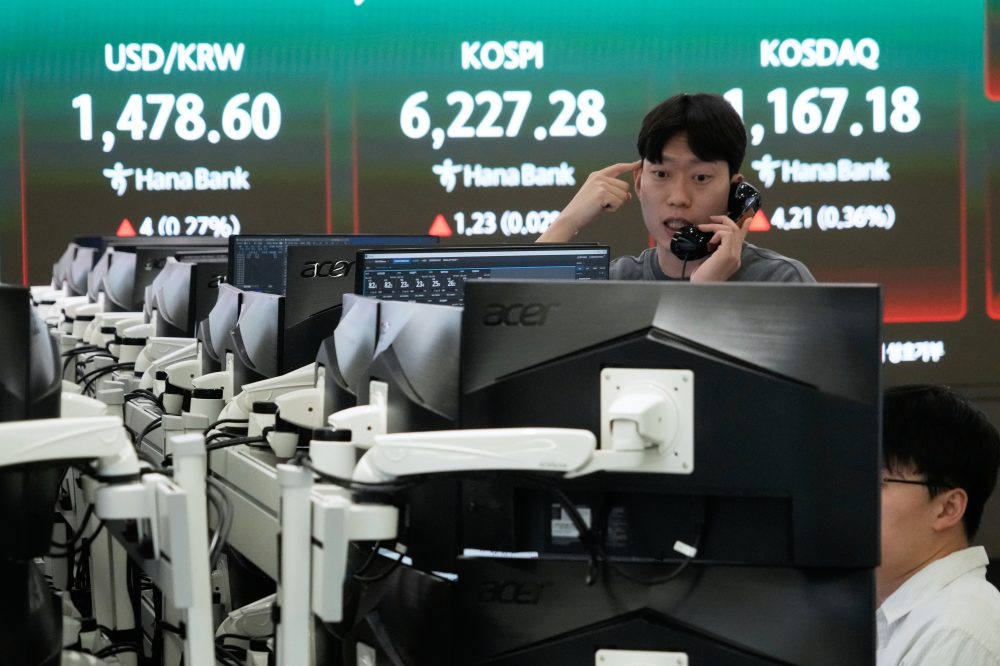
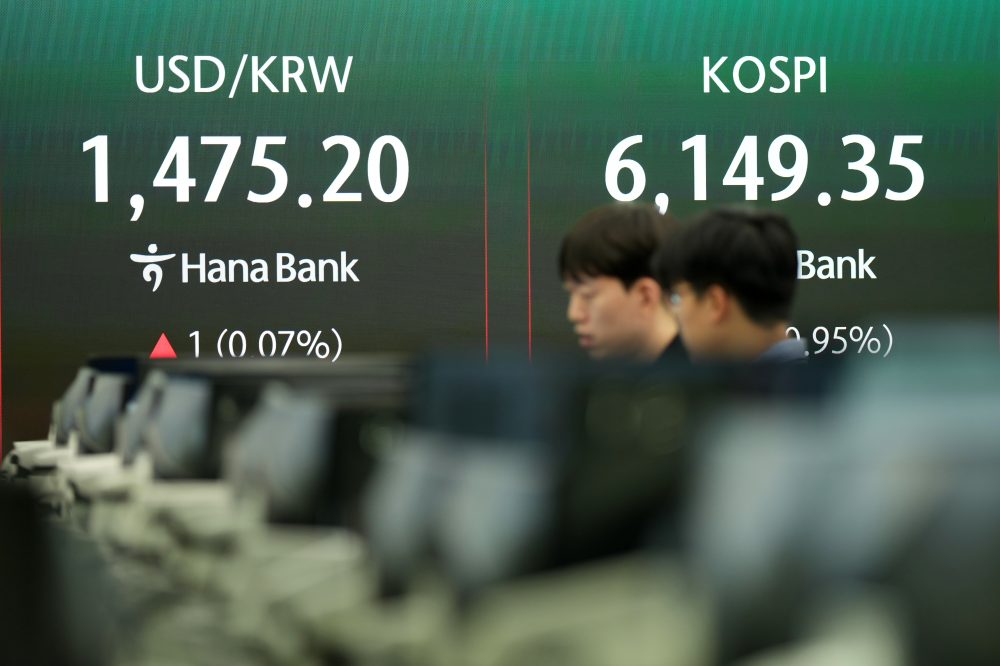
Japan’s Nikkei 225 declined 1% to close at 58,930.87, falling from Thursday’s record peak. South Korea’s Kospi dropped 0.6% to 6,191.19. The Hang Seng in Hong Kong slipped 1% to 26,126.86, and Shanghai’s Composite index dipped 0.1% to 4,051.45.
The S&P/ASX 200 in Australia decreased 0.3%, and Taiwan’s Taiex fell 0.5%.
President Donald Trump indicated Thursday his willingness to consider prolonging the two-week Iran war ceasefire, while Iran’s United Nations representative expressed that Tehran remains “cautiously optimistic” about ongoing U.S. negotiations.
With growing confidence about a potential ceasefire extension, petroleum prices declined early Friday after Thursday’s increases. Brent crude, the global benchmark, fell 1.1% to $98.31 per barrel. The commodity had jumped approximately 40% since the Iran conflict began in late February. U.S. benchmark crude dropped 1.4% to $89.90 per barrel.
Worldwide energy concerns are escalating due to the Iran war’s effects, with the Strait of Hormuz staying mostly blocked as the United States maintains a naval blockade on Iranian ports. The International Energy Agency’s director informed The Associated Press Thursday that Europe has “maybe six weeks or so” of aviation fuel reserves left and cautioned about upcoming flight cancellations “soon.”
Thursday saw Wall Street achieve another milestone as the S&P 500 benchmark rose 0.3% to close at 7,041.28, one day after surpassing its previous January record. The Dow Jones Industrial Average increased 0.2% to 48,578.72, while the technology-heavy Nasdaq composite climbed 0.4% to 24,102.70.
PepsiCo stock jumped 2.3% following the company’s announcement of quarterly earnings that exceeded expectations. Transportation firm J.B. Hunt Transport Services surged 6.3% also due to results that beat forecasts.
In commodity trading, precious metals posted gains. Gold increased 0.1% to $4,814.60 per ounce, and silver advanced 0.4% to $79.04 per ounce.
Currency markets saw the U.S. dollar strengthen to 159.43 Japanese yen from 159.17 yen. The euro declined to $1.1778 from $1.1781.
LONDON, April 17 – The ongoing Middle East conflict serves as the most recent example of how natural resources are transforming international politics, positioning currencies from resource-rich nations like Norway, Canada, Australia, and New Zealand to potentially surpass their larger counterparts.
These resource-backed currencies – termed as such because of their strong ties to their nations’ primary export materials – feature two standout winners among 10 advanced economies: Norway’s crown and Australia’s dollar.
Year-to-date, both currencies have climbed more than 7% against the U.S. dollar as the conflict triggers what experts describe as history’s most severe global energy crisis, creating ripple effects across world economies.
Investment professionals anticipate even greater gains ahead as an increasingly divided world order – accelerated by America’s isolationist approach and China’s growing influence – pushes countries to prioritize energy independence and secure materials crucial for artificial intelligence development and environmental transitions.
Multi-asset strategist Manish Kabra from Societe Generale highlighted a “big disconnect” between commodity currencies’ relative weakness and surging commodity indices in recent years, suggesting significant upward potential for these currencies.
Since the Middle East crisis began, Kabra has adjusted his strategy by reducing euro holdings while increasing investments in all four commodity currencies with equal weighting.
“The strategic and geopolitical focus on commodities has yet to be priced into these four commodity currencies,” Kabra said.
Lauren van Biljon, senior portfolio manager at Allspring Global Investments, recently established a long position on Norway’s crown versus the British pound – essentially betting the Norwegian currency will gain value.
As a leading oil and gas supplier, Norway serves as a crucial component of Europe’s energy independence, especially as the continent moves away from Russian energy sources following the Ukraine conflict.
Van Biljon explained that the shift toward commodity currencies motivated her decision, along with expectations that Norway’s central bank will maintain aggressive policies due to rising energy prices.
Rabobank analysts predicted euro weakness against the crown in a recent report and recommended selling sterling for Norwegian currency.
Currently trading around 9.37 per dollar, the crown sits near its highest levels since 2022.
Australia, Canada, and Norway all maintain top-tier AAA sovereign debt ratings and export more energy than they consume. Combined with increased commodity focus, these factors offer investors concerned about dollar dominance alternatives beyond the euro and Chinese yuan, according to market analysts.
Investment firm Ninety One described an emerging commodity landscape characterized by political fragmentation, electrification trends, supply limitations, regional energy markets, and restructured global supply networks in research published last week.
This transformation may explain the remarkable performance of broad commodity markets this year.
Commodities lead all asset classes in 2024, gaining approximately 42% compared to last year’s 6% increase, Bank of America data reveals.
Oil prices have experienced dramatic swings due to the Iran situation and trade near $100 per barrel, while copper reached six-week highs. Gold, despite recent declines, remains roughly 50% higher than a year ago.
SocGen’s Kabra pointed to the U.S. government’s November decision to classify copper as essential for economic and national security as evidence of commodities’ growing geopolitical importance.
However, commodity currencies face the same concerns about war’s economic impact that have affected other currencies, and the dollar’s recent safe-haven resurgence has somewhat diminished their attractiveness.
Though initially underperforming against the dollar when the conflict started, the Canadian, New Zealand, and Australian currencies are rebounding on ceasefire optimism.
Australia, a mining giant and major coal and liquefied natural gas exporter, depends on imports for refined petroleum products.
“Most important in the here and now is energy independence and energy security,” said Malin Rosengren, portfolio manager at RBC BlueBay Asset Management, noting Australia’s vulnerability in this area.
“And then the second leg of that will be the medium-term growth impact, in terms of how we’re looking at the impact of commodities on FX.”
Even with Middle East conflict resolution, energy costs are expected to remain elevated for an extended period. Energy supply chains won’t immediately normalize, and infrastructure repairs will require time.
This situation creates opportunities for commodity currency investments, according to Van Luu, global head of solutions strategy at Russell Investments.
“If the oil prices are $85 to $100 instead of $65, then energy exporters in politically stable countries, if you consider Norway and Canada in that camp, should do better,” he said.
Luu confirmed maintaining his exposure to these currencies.
Regardless of current peace negotiation outcomes, commodity currencies should remain attractive investments, said Andreas Koenig, head of global foreign exchange at Europe’s largest asset manager Amundi.
While global instability has highlighted these currencies, they’re also positioned to benefit from returning stability.
“They are still high beta currencies, and they profit from risk on,” he said.
Wipro, one of India’s major information technology companies, experienced a significant stock decline on Friday following the release of disappointing financial projections. The company’s shares dropped 2.9% after management issued a cautious revenue forecast for the current quarter.
The stock performance made Wipro the worst performer on both India’s technology sector index and the country’s primary Nifty 50 benchmark. Investors expressed concern over the company’s growth prospects and potential profit margin challenges based on the subdued outlook provided by the fourth-largest IT services firm in India.
The market reaction highlights broader worries within India’s technology sector about maintaining growth momentum amid challenging global economic conditions.
Chinese manufacturers are feeling the economic pinch from the ongoing conflict in Iran, with many reporting significant increases in production costs and declining profit margins at the country’s premier trade showcase.
At the Canton Fair in Guangzhou, China’s most significant trade exhibition, factory owners described the challenging business environment they now face. Shao Haixia, who runs Xiatao Plastic Industry, said her company has experienced a 20% spike in raw material expenses since the Iran conflict began, costs she hasn’t been able to fully transfer to international clients.
Her 27-year-old manufacturing operation, which produces electrical appliance components exclusively for overseas markets using materials from domestic refiners, has seen profit margins cut in half to just 5%-6%.
“We’ve had to re-quote prices and clients are still considering it,” Shao explained. “For foreign trade companies like us, things are difficult. We just hope the war will end as soon as possible.”
The Canton Fair features 32,000 exhibiting companies displaying their products to international buyers across a space exceeding 200 football fields in size.
Prior to the conflict, China’s export industry had been celebrating its resilience, having successfully navigated President Trump’s tariff increases by expanding into new markets and achieving a record trade surplus last year equivalent to the Netherlands’ entire GDP.
However, the energy crisis and elevated commodity prices are now increasing manufacturing costs across China, the world’s largest production hub, putting pressure on already narrow profit margins at factories that employ hundreds of millions of workers.
Simultaneously, global purchasing power is declining, as recent trade statistics from Beijing demonstrated, highlighting China’s heavy dependence on exports for economic expansion.
Among the most concerned exhibitors was Liang Su, who oversees operations at rice cooker and kettle manufacturer Weking. His production has dropped by half due to slower order volumes and surging costs for plastic, copper, and aluminum materials. Despite implementing a 15% price increase, Liang is currently operating at a loss.
“If the fighting keeps going, it’s not just us — Europe’s economy is in bad shape. Southeast Asia’s economy was already weak to begin with. Now the U.S. dollar has fallen as well,” Liang stated.
Should the conflict continue, his next step would be to “cut everything that can be cut,” including workforce reductions, he indicated.
Steven Shen, who operates a company manufacturing industrial blowers, vacuums, and hair dryers, expressed more optimism since he’s successfully transferred higher costs for fibers, metals, and plastics to customers. Without these price adjustments, rising material expenses and a strengthening yuan would have eliminated his company’s entire profit margin.
“It’s not just us, our competitors are also raising prices — so I think it’s okay,” Shen commented.
Taimu Electrical, which produces low-voltage circuit breakers and related products, faces more direct consequences as it had projected first-half Middle East sales reaching 30 million yuan ($4.4 million), according to sales director Wang Yuqing.
“Since the war, our sales in the Middle East have basically been on hold,” Wang reported.
Jojo Lei, home appliances unit manager at Golden Field Industrial, which manufactures ovens and computer accessories, said overall input costs have risen 7%-8%. However, his company plans to absorb these increases for at least six months to maintain orders and customer relationships.
Lei doesn’t anticipate a complete collapse in global demand, but if that scenario occurs, his backup plan involves accelerating production relocation to Southeast Asia, where U.S. tariffs are lower and labor costs are cheaper than in China.
Golden Field currently faces nearly 40% tariffs on U.S. sales, following a turbulent 2025 when Trump increased tariffs above 100% before Beijing responded with retaliatory measures and he partially reversed them.
Lei remains hopeful that Trump’s planned visit to China next month might indicate “somewhat lower” tariffs, though he acknowledges that “the U.S. side is full of uncertainty.”
Shao, the plastics factory manager, believes a Trump visit would signal improving stability in Washington-Beijing relations.
“If he really comes to China, for foreign trade companies like ours it would be a welcome sign, almost like the arrival of spring,” Shao said.
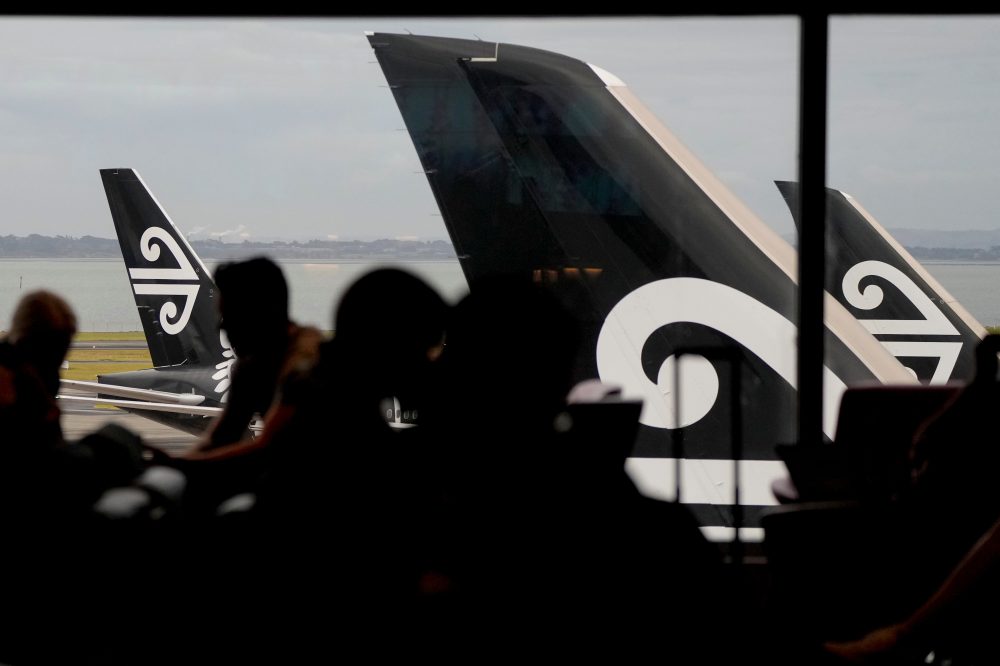
WELLINGTON, New Zealand — For economy passengers enduring marathon flights, getting quality rest has long seemed impossible. Air New Zealand plans to change that with an innovative solution featuring triple-stacked sleeping pods, though passengers must follow strict guidelines including wearing provided footwear.
Starting in November, the carrier will launch bookings for its Skynest sleeping compartments, offering four-hour rest periods that the company claims will be the world’s first horizontal sleeping option for budget travelers. However, the close quarters mean passengers face rules against eating, wearing strong fragrances, and sharing spaces.
These curtained sleeping areas will become available to economy and premium economy passengers aboard Air New Zealand’s newest Boeing 787-9 Dreamliner jets. The aircraft will operate the Auckland-New York route, among the globe’s most grueling commercial journeys, forcing economy travelers to remain seated upright for 16 to 18 hours.
Travelers can reserve a four-hour slot in these private, curtained compartments for an additional 495 New Zealand dollars ($291) beyond their standard ticket price. The six sleeping units are configured in triple-level arrangements between passenger sections, creating close contact that prompted the airline to establish behavior guidelines.
Food consumption inside the pods is prohibited, and children or additional occupants cannot use the facilities.
“That means solo snoozes only please, no musical nests or tag-teaming,” Air New Zealand’s website says. Addressing hygiene concerns, the airline promises that provided pillows, blankets and linens “are all refreshed” after each four-hour session.
Passengers must switch to airline-provided socks before entering pods, secure safety belts over their bedding, and avoid applying strong-scented “perfumes or potions.” At the conclusion of their rest period, gradual lighting changes will wake sleepers, or flight crew will intervene if passengers don’t wake up promptly.
Each sleeping space measures approximately 80 inches (203 cm) in length, similar to standard beds, though the pods lack sufficient height for sitting upright and entry “requires bending, kneeling, crawling, or climbing into the space,” according to the aircraft specifications. The bunks measure 25 inches (64 cm) wide at shoulder level, narrowing to 16 inches (41 cm) at the feet.
While convertible seating that transforms into beds has existed for business and first-class passengers, Air New Zealand believes its horizontal sleeping option for economy travelers represents a global innovation.
This new service from New Zealand’s flag carrier reflects the aviation industry’s push to market seat enhancements and additional services to budget travelers. Air New Zealand initially revealed plans for economy sleeping accommodations in 2020.
The airline has raised ticket prices and eliminated certain domestic routes due to rising jet fuel expenses amid Middle Eastern conflicts. In March, the company paused its financial projections citing fuel cost uncertainty and indicated additional route modifications might occur.
For passengers on this extended journey, quality sleep may finally be achievable, though they should anticipate snoring from fellow travelers, prompting the airline to supply earplugs.
“Statistically, someone’s going to do it,” Air New Zealand’s website reads. “It might be you.”
A California-based unmanned aircraft manufacturer completed a successful stock market launch Thursday, securing $320 million through its initial public offering by setting share prices at $20 each.
AEVEX, headquartered in Solana Beach, California, offered 16 million shares to investors, staying within their projected pricing window of $18 to $21 per share.
Defense technology firms are aggressively pursuing funding through stock markets, taking advantage of heightened investor interest driven by Middle Eastern conflicts and increased military spending nationwide.
Investment firms are showing greater interest in companies like AEVEX as they seek protection against worldwide uncertainty and geopolitical tensions.
The ongoing conflict in Ukraine has highlighted the essential nature of unmanned military technology, as modern combat increasingly relies on drone warfare. Ukraine alone manufactured approximately 4 million drones in 2025, according to information in AEVEX’s filing documents.
Meanwhile, aerospace component manufacturer Arxis saw its stock price jump 36% during its Thursday debut on the Nasdaq exchange.
AEVEX specializes in providing aerial intelligence gathering, surveillance, and reconnaissance services to the United States government and partner nations. The military contractor’s product line features unmanned aircraft capable of delivering weapons, explosive devices, and precision strikes on designated targets.
Goldman Sachs, BofA Securities, and Jefferies served as the primary underwriters for the offering. AEVEX plans to begin trading Friday on the New York Stock Exchange using the ticker symbol “AVEX.”
The U.S. dollar is poised for its second straight week of decline as currency traders respond to diplomatic developments in the Middle East, including a ceasefire agreement and potential peace negotiations.
A 10-day truce between Lebanon and Israel became effective Thursday, while President Donald Trump indicated that upcoming discussions with Iran may occur over the weekend.
Negotiators from the United States and Iran have reportedly lowered expectations for a broad peace agreement, instead pursuing a temporary understanding aimed at preventing renewed hostilities. Nuclear issues continue to present significant challenges in the diplomatic process.
Currency trading in Asian markets remained relatively stable as investors waited for additional information. The euro held steady against the dollar at $1.1783, marking its third consecutive week of gains, while the British pound traded at $1.3526.
Both European currencies have essentially recovered from losses caused by the Iran conflict, reaching levels not seen in seven weeks.
The dollar index, which tracks the greenback’s performance against six major currencies, remained unchanged at 98.212. The measure is experiencing its second week of losses, erasing most war-related gains as ceasefire optimism diminishes appetite for safe-haven investments.
“The markets are in a bit of a consolidation phase because they have already priced in some optimism about the ceasefire being extended earlier in the week,” said Sim Moh Siong, FX strategist at OCBC.
“You will need the next catalyst to provide a more directional move. It’s no longer a one-way street for the dollar from here.”
The Australian dollar remained near four-year peaks at $0.7163, supported by positive risk sentiment. New Zealand’s currency declined 0.06% to $0.5888.
The dollar gained slightly against the Japanese yen, reaching 159.26. Bank of Japan Governor Kazuo Ueda stated Thursday that decisions regarding interest rate increases must consider the country’s currently low real interest rates.
Financial markets are closely monitoring how central banks will address inflation pressures stemming from the conflict, with monetary authorities maintaining cautious approaches.
U.S. Treasury yields remained stable Friday following gains in the previous session, as elevated oil prices sustained inflation concerns. The two-year yield stood at 3.7758%, while the 10-year benchmark yield held at 4.3132%.
Federal funds futures indicate market expectations that the Federal Reserve will maintain current interest rates throughout the year.
Group of Seven finance ministers and central bank leaders have committed to taking action if needed to address economic and inflation risks from Middle East conflict-related energy price volatility and supply disruptions, according to French Finance Minister Roland Lescure’s Thursday statement.
European Central Bank officials echoed this cautious approach, downplaying expectations for rate increases this month and emphasizing the need for additional economic data before making policy changes.
Weekly unemployment benefit applications in the United States dropped more than anticipated, indicating continued labor market stability. This development supports the Fed’s position to maintain unchanged rates while assessing war-related inflation impacts.
“Hiking into a negative supply shock cannot compensate for energy-driven inflation in the near term and risks exacerbating growth headwinds,” ANZ noted in a research report.
Japanese officials announced Friday they will award Sony up to 60 billion yen (approximately $380 million) in government subsidies to support construction of an image sensor manufacturing facility in Kumamoto prefecture, located in western Japan.
Industry Minister Ryosei Akazawa revealed the subsidy details during a Friday press conference, emphasizing the strategic importance of these components. The minister stated that image sensors will be “indispensable for autonomous driving and physical AI” and expressed hopes that “a stable supply of image sensors… will be secured.”
The electronics giant has established itself as a dominant force in the image sensor market, particularly for smartphone cameras, while also maintaining strong positions across entertainment sectors including gaming, film production, music, and animation.
The current exchange rate stands at $1 equals 159.22 yen.
Crude oil markets experienced significant drops Friday morning as investors showed optimism about potential resolution to Middle East conflicts that have severely impacted global energy supplies.
Brent crude futures dropped $1.34 per barrel, representing a 1.35% decrease to $98.05, while U.S. West Texas Intermediate crude saw an even steeper decline of $1.65 per barrel, falling 1.74% to $93.40 during early trading hours.
The market movement comes amid growing hopes for diplomatic progress, including a 10-day ceasefire agreement between Lebanon and Israel that has already begun, and potential discussions between the United States and Iran over the weekend.
President Trump addressed reporters Thursday evening outside the White House, revealing that Iran has proposed abandoning nuclear weapons development for over two decades as part of ongoing negotiations.
“We’re going to see what happens. But I think we’re very close to making a deal with Iran,” Trump stated.
The current Iran conflict, which Trump and Israel initiated in late February, has resulted in a seven-week blockade of the Strait of Hormuz, cutting off approximately 20% of global oil supplies. Energy analysts from ING calculate that this closure has disrupted roughly 13 million barrels of daily oil flow.
Oil markets saw dramatic increases throughout March, rising 50% in what analysts called a record surge, only recently falling back below the $100 per barrel threshold while remaining in the $90 range this week.
According to Iranian sources who spoke with Reuters Thursday, both American and Iranian negotiators have adjusted their goals, now focusing on a temporary agreement to prevent renewed hostilities rather than pursuing a comprehensive peace settlement.
Israel’s military operations in Lebanon have presented a significant challenge to Trump’s efforts to broker a peace agreement and conclude the Iranian conflict.
California’s top prosecutor spoke with NPR about this week’s court decision involving entertainment giant Live Nation.
Attorney General Rob Bonta participated in an interview with NPR host Mary Louise Kelly on Wednesday, discussing the outcome of the Live Nation legal proceedings that concluded earlier that day.
The conversation with California’s chief legal officer focused on the implications of the court’s ruling in the closely-watched case against the major concert and ticketing company.
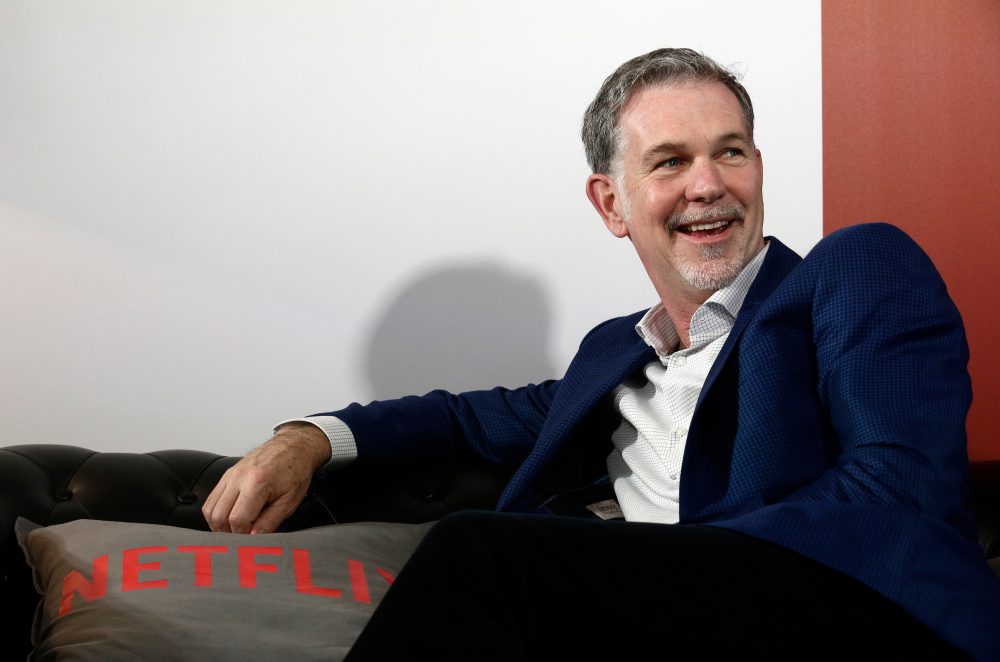
The co-founder who helped build Netflix into a streaming powerhouse will leave the company’s board of directors this summer, the entertainment giant announced Thursday.
Reed Hastings, who also served as the company’s chairman, will depart when his board term concludes in June. The executive plans to dedicate his time to charitable endeavors and new projects.
Hastings led Netflix as chief executive officer for more than two decades before stepping down in 2023. He originally assumed the CEO position in the late 1990s, taking over from Marc Randolph, his friend and co-founding partner.
In a company statement, Hastings reflected on his tenure: “My real contribution at Netflix wasn’t a single decision; it was a focus on member joy, building a culture that others could inherit and improve, and building a company that could be both beloved by members and wildly successful for generations to come.”
The streaming service revealed Hastings’ exit alongside its quarterly financial results on Thursday. This marks the first earnings announcement since Netflix abandoned its February bid to acquire Warner Bros. Discovery’s studio operations and streaming platform.
Following the quarterly report, Netflix stock dropped almost 9% to $98.32 during after-hours trading. The decline came as the company’s future projections failed to meet investor expectations, despite posting solid quarterly performance numbers.
Gas prices in California have skyrocketed to unprecedented levels as fuel shortages intensify across the Golden State due to ongoing Middle East conflicts that have effectively shut down a crucial shipping route for global oil supplies.
Drivers throughout California are now spending an average of $5.86 per gallon at the pump as of Thursday, making it the most expensive state for gasoline in the country. This price point sits well above the national average of $4.09 per gallon, according to data from the American Automobile Association.
The state’s fuel reserves have dropped to their lowest point since record-keeping began, with gasoline stockpiles averaging just 9.44 million barrels during the four-week period ending April 10. This figure represents the smallest inventory in the California Energy Commission’s database, which extends back to 2005.
Energy experts are sounding alarms that the situation may deteriorate further as California depends heavily on fuel imports from Asian refineries, which process Middle Eastern crude oil before shipping finished products to the West Coast.
“The Energy Commission is in close communication with all in-state refiners to ensure adequate transportation fuels supply during this volatile period of supply contraction due to the effective closing of the Strait of Hormuz,” stated agency spokesperson Niki Woodard.
The Strait of Hormuz, now closed due to the Iranian conflict, serves as a vital passageway for approximately one-fifth of the world’s oil and gas shipments. California’s geographic isolation from major U.S. fuel pipeline networks makes it particularly susceptible to supply disruptions from this region.
Current gas prices reflect a 26% jump since the Iranian war began, according to AAA statistics. California’s elevated fuel costs stem from multiple factors including state taxes and the expense of producing the state’s specialized gasoline formula designed to combat smog pollution that historically plagued the Los Angeles area.
University of Southern California professor Michael Mische warned in a recent analysis that the complete impact of reduced fuel imports has not yet reached California’s distribution system. Since shipping refined petroleum products from Asia typically requires several weeks, the worst effects may still be ahead.
“Over the next one to two weeks, gasoline imports are expected to drop off sharply,” Mische’s analysis indicated. “This will mark the point at which the import shock becomes fully visible in terminal supply and, ultimately, at the gas pump.”
Susan Bell from Rystad Energy echoed these concerns, predicting that California’s gasoline stockpiles could continue shrinking over the coming weeks.
The state’s vulnerability has increased in recent years as California transitioned from a major oil producer to becoming more reliant on imported crude and refined products. Two refineries representing roughly 20% of the state’s refining capacity have permanently shut down, further straining the supply chain.
California’s crude oil reserves currently stand at 10.09 million barrels, representing a decline of more than 23% compared to the same period last year, according to California Energy Commission data.
Despite the challenging circumstances, Woodard expressed cautious optimism about near-term supplies. “We are not predicting a near-term supply challenge,” she said, noting that refineries are actively seeking alternative sources for imported crude and gasoline to replace lost Middle Eastern shipments.
State officials project that current inventory levels should remain adequate through mid-May. California residents consume approximately 36 million gallons of gasoline daily.
EagleRock Land submitted paperwork Thursday to become a publicly traded company, marking another energy firm’s attempt to enter the stock market during challenging times for the sector.
The company generates income by collecting royalty payments and fees from oil and natural gas operations conducted on properties under its control.
This public offering announcement arrives during a period when energy companies have largely avoided going public due to years of investor hesitancy toward the sector. However, recent spikes in oil prices, fueled by conflicts in the Middle East and potential disruptions in the Strait of Hormuz shipping lanes, appear to be rekindling investor appetite for energy investments.
Major financial institutions including Goldman Sachs, Barclays, J.P. Morgan, Piper Sandler and Raymond James will serve as the lead underwriters managing the stock offering.
The company plans to trade its shares on the New York Stock Exchange using the ticker symbol “EROK” once the offering is completed.
Reed Hastings, the co-founder and chairman of Netflix, will step away from the streaming giant he helped create nearly three decades ago when his term expires in June.
The company announced Thursday in a letter to shareholders that Hastings will not seek re-election at the upcoming annual meeting, choosing instead to dedicate his time to charitable work and other ventures.
Netflix emphasized in its 14-page investor communication that the company’s core objective stays “ambitious and unchanged” — delivering entertainment globally through movies and series that appeal to diverse audiences, cultures, and languages.
The streaming service recently benefited from a $2.8 billion termination payment following the collapse of a major deal involving Warner Bros movie studio and HBO, though officials have not disclosed specific plans for those funds. This windfall helped boost earnings per share to $1.23 in the latest quarter, nearly doubling the 66-cent figure from the same period last year.
First-quarter revenue reached $12.25 billion, marking a 16% jump from the previous year and slightly surpassing Wall Street projections of $12.18 billion.
Having previously described the Warner Bros acquisition as a “nice to have, not need to have” opportunity to investors, Netflix outlined several areas for future expansion.
The company highlighted its growing investments in diverse entertainment formats, including video podcasts and live programming such as Japan’s World Baseball Classic coverage, which are driving increased viewer engagement. Netflix plans to leverage advanced technology to enhance user experience and boost revenue generation, with advertising income projected to double and reach $3 billion by 2026.
The Delaware State Housing Authority announced Tuesday a comprehensive overhaul of its home mortgage assistance program, introducing new loan options and expanded financial support for prospective homeowners.
Officials revealed the updated Delaware Mortgage Program will maintain its competitive interest rates while broadening assistance opportunities for down payments and closing costs, specifically targeting households with low to moderate incomes.
The housing authority’s announcement, made on April 16, 2026, from Dover, highlighted the program’s rebrand alongside the introduction of additional loan products designed to provide increased flexibility for first-time homebuyers.
The enhanced mortgage lending initiative represents DSHA’s effort to make homeownership more accessible across Delaware by expanding the range of financial assistance available to qualifying families.
A federal jury has reached a verdict that Live Nation and Ticketmaster function as a monopoly, determining that the entertainment giants have been suppressing competitive practices and inflating costs for consumers attending live events.
The companies, which joined forces through a merger in 2010, now face the next phase of legal proceedings as Washington D.C. and 33 states must present arguments supporting specific penalties and corrective measures.
However, music fans hoping for immediate ticket price relief may need to wait. The implementation of any remedies could face delays if Live Nation chooses to challenge the decision through an appeals process.
Industry analysts indicate that predicting the long-term effects on ticket pricing remains difficult, even with this legal victory against the entertainment conglomerate.
A growing number of American businesses are making dramatic shifts toward artificial intelligence and technology sectors, hoping to capture investor enthusiasm for these hot markets.
The latest example came when footwear manufacturer Allbirds announced its transformation into NewBird AI, focusing on AI computing instead of shoes. The company’s stock price skyrocketed more than 600% following the announcement. Social media company Myseum followed suit, seeing its shares climb nearly 150% after incorporating “AI” into its corporate name.
This pattern of corporate reinvention has become increasingly common as Wall Street’s appetite for technology investments continues growing. Several notable American companies have made similar strategic pivots in recent years.
Michael Saylor’s MicroStrategy began as a financial data analysis software company before becoming one of the largest corporate bitcoin holders in 2021, eventually shortening its name to Strategy. The company experienced massive stock gains exceeding 300% in both 2023 and 2024 as bitcoin values doubled, though shares have since fallen more than 70% from their November 2024 peak.
The cryptocurrency mining sector has seen particularly dramatic transformations. CoreWeave started as an ethereum mining operation in 2017 but closed that business and relaunched as a cloud infrastructure provider. The company went public on Nasdaq in April 2025 with a $23 billion valuation, surging over 85% in its first year and gaining 64% in 2026.
Other former crypto miners have followed similar paths. Applied Blockchain rebranded as Applied Digital in early 2023, shifting focus to data center hosting. HUT 8 has also expanded into data center operations while maintaining some mining activities. Applied Digital’s stock performance has remained relatively flat, but Hut 8 has posted annual gains since 2023 due to both rising bitcoin prices and increased data center demand.
Core Scientific emerged from bankruptcy in January 2024 and quickly embraced the AI trend, partnering with CoreWeave to repurpose its bitcoin mining infrastructure. The company’s shareholders rejected a CoreWeave acquisition offer last year.
President Donald Trump’s media company, Trump Media & Technology, originally operated as the parent company of the Truth Social platform. The firm expanded into digital finance last year by establishing a bitcoin treasury and creating a partnership with Crypto.com through a blank-check acquisition. Despite considering spinning off the platform as a separate public company in December 2025, which triggered significant daily stock gains, the company’s value dropped by more than half in 2025.
Dominari Holdings began life as Alkido Pharma before restructuring in December 2022 to move from healthcare into finance. The company later established American Data Centers, which included Donald Trump Jr. and Eric Trump among its members, capitalizing on demand for high-performance computing infrastructure.
The Singing Machine Company, known for karaoke products, acquired AI logistics firm SemiCab in September 2024 and transformed into Algorhythm Holdings. While the stock dropped over 37% that month, it had gained more than 42% in August 2024. The company completed the sale of its karaoke business for $4.5 million in August 2025, though it recorded losses in both 2024 and 2025.
JanOne divested its Arca recycling operations in March 2023 to concentrate on biopharmaceuticals but later acquired ALT 5 Sigma in 2024 to enter the cryptocurrency market. This move drove the stock up more than 800% that year, marking the company’s best performance on record. ALT 5 Sigma has been purchasing tokens from Trump’s World Liberty Financial but faces challenges from volatile investor interest in cryptocurrency investments.
Some transformations date back to earlier technology booms. Diagnostic equipment manufacturer Bioptix announced its rebranding to Riot Blockchain in October 2017 during cryptocurrency’s emergence. The stock surged over 500% in the following three months and closed 2017 with gains exceeding 730%, the company’s second-largest annual increase ever. The firm now operates under the name Riot Platforms.
Long Island Iced Tea became Long Blockchain Corp in December 2017, nearly tripling its share price by shifting from beverage production to blockchain technology. The company sold its drink-related assets in 2019, months after receiving a Nasdaq delisting notice.
Even established companies joined the trend. Photography giant Eastman Kodak launched “KODAKCoin” cryptocurrency for photographers in January 2018 while maintaining its core imaging business. The announcement sent shares soaring 156% that month, representing the second-largest monthly gain in company history.
The parent company of television shopping networks QVC and HSN is preparing to seek Chapter 11 bankruptcy protection as traditional home shopping channels struggle against modern digital competitors.
QVC Group disclosed in a Securities and Exchange Commission filing this week that it plans to file for bankruptcy protection in the U.S. Bankruptcy Court for the Southern District of Texas following negotiations with creditors on a restructuring deal.
The West Chester, Pennsylvania-based company hopes to complete the bankruptcy process by late summer, though officials acknowledge uncertainty about securing adequate funding. The company cited substantial expenses related to bankruptcy preparations.
“We cannot assure that cash on hand, cash flow from operations will be sufficient to continue to fund our operations,” company officials stated in the filing.
QVC Group has battled declining revenue for several years, with 2024 sales falling nearly 30% from the company’s 2020 peak of over $14 billion. Stock prices have plummeted from more than $900 per share ten years ago to under $3 this week.
Joseph Myron Segel established QVC in 1986, with the acronym representing Quality Value Convenience. The network developed a loyal customer base primarily consisting of women over 50, according to Lawrence Duke, a clinical marketing professor at LeBow College of Business. Duke explained that QVC thrived on repeat purchases from dedicated viewers, but this demographic is aging and declining.
Meanwhile, competition has intensified dramatically. Consumers are canceling cable subscriptions and moving away from scheduled television programming, Duke observed. Traditional TV shopping has been displaced by live shopping platforms like TikTok Shop, where social media influencers with massive followings promote products to their audiences on Instagram and YouTube. Budget-friendly online retailers such as Shein and Temu are also capturing increased market share.
Despite QVC’s efforts to boost digital sales and strengthen its social media presence, these initiatives have proven insufficient to reverse the company’s fortunes.
“QVC competes in a crowded marketplace where attention is fragmented and switching costs are low,” Duke explained.
NEW CASTLE – State officials have unveiled an enhanced online platform designed to streamline how Delaware employers report their new hires to government agencies.
The Delaware Department of Health and Social Services’ Division of Child Support Services worked with technology partner YoungWilliams to create the upgraded State Directory of New Hire Reporting website.
The refreshed platform offers employers a more user-friendly interface that meets full accessibility standards under the Americans with Disabilities Act. Officials say the improvements will make the process of reporting both new hires and rehired workers simpler and faster for businesses statewide.
The modernized system represents part of ongoing efforts by state agencies to digitize services and improve the experience for Delaware employers who must comply with federal reporting requirements.
Home loan rates have fallen for the second consecutive week, providing some relief for potential buyers during the traditionally active spring housing period.
Freddie Mac reported Thursday that 30-year fixed mortgage rates decreased to 6.3% from the previous week’s 6.37%. This represents a significant improvement from the 6.83% rate recorded one year ago.
The current rate marks the lowest point since March 19, when it stood at 6.22%.
Homeowners looking to refinance also saw improved conditions, as 15-year fixed mortgage rates fell to 5.65% from 5.74% the previous week. Freddie Mac noted this compares favorably to the 6.03% rate from the same period last year.
Home loan rates fluctuate based on multiple economic factors, including Federal Reserve policy decisions and bond market expectations regarding economic growth and inflation trends.
Earlier this year in late February, 30-year mortgage rates briefly dipped below 6% for the first time since late 2022. However, rates began rising last month when conflict with Iran caused energy costs to spike, raising inflation concerns. This development increased yields on 10-year Treasury bonds, which lenders reference when setting home loan prices.
Thursday’s midday bond trading showed the 10-year Treasury yield at 4.29%, up slightly from 4.28% one week prior. This contrasts with the 3.97% yield recorded in late February, before the Iranian conflict began.
Bond yields started declining last week following a two-week ceasefire agreement between the U.S. and Iran. Pakistan’s military leadership met with Iranian parliamentary officials Thursday as part of ongoing efforts to extend the temporary truce.
The conflict has intensified concerns about inflation and economic direction while consumer confidence in employment markets weakens. Combined with mortgage rate increases over the past seven weeks, these factors have cooled the traditional spring homebuying period.
“The ceasefire announcement earlier this month may have temporarily eased mortgage rates; however, right now, the outlook for the spring market is still unclear,” Lisa Sturtevant, chief economist at Bright MLS, said in an email. “Mortgage rates are probably going to remain volatile as there is still significant uncertainty about a long-term resolution of the conflict with Iran.”
The housing market has struggled since 2022, when mortgage rates started climbing from pandemic-era lows. Previously owned home sales remained virtually unchanged last year, hitting a three-decade low. Sales have continued to lag this year, with January, February, and March all showing declines compared to the same months in the previous year.
Workers at a CVS Health distribution facility in Fredericksburg, Virginia are preparing for a potential work stoppage next month after voting to authorize strike action.
Over 500 drivers and warehouse employees represented by Teamsters Local 592 approved the strike authorization for May 1st, according to union officials who announced the decision Thursday.
The labor dispute centers around contract negotiations, with workers rejecting what they describe as the company’s demands for benefit reductions. Union representatives say CVS is seeking to cut affordable healthcare coverage and other essential benefits.
“If CVS keeps pushing concessions and refusing to take bargaining seriously, we will be forced on the picket line May 1,” stated Chris Donald, a 38-year-old warehouse employee and Local 592 member.
Jim Smith, who serves as president of Teamsters Local 592, expressed strong opposition to the company’s negotiating position. “CVS is choosing greed over its workforce. We will not accept a concessionary contract and we will fight to protect every benefit our members have earned,” Smith declared.
The Fredericksburg facility serves CVS locations throughout the Mid-Atlantic area, including stores in Washington D.C. and Baltimore. Union officials warn that a work stoppage could significantly impact supply chains across the region.
CVS responded to the strike threat by telling Reuters that no walkout is immediately expected and that negotiations with the union remain ongoing. The healthcare giant expressed optimism about reaching a resolution.
Company representatives said they believe an agreement can be achieved that addresses “workplace safety and competitive wages and benefits.”
CVS also indicated it has backup plans ready to maintain product deliveries to stores and pharmacies, stating the company can rapidly restock any items affected by potential supply disruptions.
The Teamsters union had not provided additional comment when contacted by Reuters.
LAS VEGAS (AP) — Paramount Pictures showcased its future film projects to cinema operators Thursday during CinemaCon in Las Vegas, as the studio navigates controversy surrounding its massive acquisition deal with Warner Bros.
David Ellison’s Paramount Skydance finalized an agreement in late February worth $111 billion to purchase Warner Bros. Discovery, creating significant buzz at the industry gathering as attendees speculate about potential impacts on the struggling theater exhibition sector.
During Warner Bros.’ extensive Tuesday presentation lasting more than two hours, no speakers addressed the Paramount situation directly. However, multiple filmmakers who appeared at the event were among thousands of industry professionals who signed a public letter condemning the merger, including Denis Villeneuve and J.J. Abrams. Amazon MGM was the sole studio to acknowledge the deal at all, making a lighthearted reference in a promotional video for the upcoming “Spaceballs” sequel.
Director James Cameron stands as one of the rare filmmakers endorsing the transaction, expressing confidence in a Paramount-controlled Warner Bros. Cameron is co-directing Paramount’s forthcoming concert documentary “Billie Eilish — Hit Me Hard and Soft: The Tour (Live in 3D).” Speaking with The Associated Press recently, Cameron described Ellison as a “natural born storyteller” who “really cares about movies.”
“He’s the right man for the job to run a major studio, and now it looks like he’s going to have two of them, you know, swept under his leadership, which doesn’t bother me at all,” Cameron stated.
Following Paramount’s recent $8 billion Skydance merger completed just months earlier, the company committed to distributing 15 theatrical releases during 2026. Ellison has announced plans for 30 annual theater releases once the Warner Bros. and Paramount combination is complete. The transaction requires shareholder approval later this month plus government oversight at both state and federal levels. The U.S. Justice Department must still evaluate this major consolidation that could grant Paramount enhanced pricing control over films and additional services, potentially harming consumers.
In Securities and Exchange Commission filings, Paramount stated, “Our priority is to build a vibrant, healthy business and industry — one that supports Hollywood and creative, benefits consumers, encourages competition, and strengthens the overall job market.”
Company officials have indicated plans to achieve approximately $6 billion in savings through workforce reductions in “duplicative operations.”
Paramount leadership contends that joining forces with Warner will enable competition with larger competitors, especially in streaming services, while providing expanded content collections for subscribers. The century-old Warner Bros. possesses an extensive film catalog featuring “Harry Potter,” “Superman” and “Barbie.”
Democratic Senator Cory Booker conducted a focused hearing Wednesday in Washington, D.C., examining possible anti-competitive consequences of combining two major Hollywood studios.
Actor Mark Ruffalo, among the merger’s most vocal opponents, warned that “tens of thousands of workers will be left poorer, along with the audiences we serve.”
Oscar winner David Borenstein, who recently received recognition for his documentary “Mr. Nobody Against Putin,” expressed concern about diminished documentary filmmaking opportunities, “because a small number of distributors have consolidated power and decided to feed audiences a narrow and politically safe diet of content.” Although neither Paramount nor Warner Bros. are recognized primarily for documentary distribution, WBD properties CNN and HBO maintain strong non-fiction programming.
At CinemaCon, Paramount will likely focus attention on upcoming film releases. The studio has already achieved success this year with “Scream 7,” which has earned more than $212 million globally.
Accomack County employees in Virginia now have the opportunity to enroll in their workplace benefits for the upcoming 2026 year.
The county has launched its annual benefits enrollment process, allowing staff members to review and choose from available healthcare plans and other employee benefit options.
During this enrollment window, county workers can make changes to their current benefit selections or sign up for new coverage that will take effect in 2026.
Employees are encouraged to carefully review all available options to ensure they select the benefits package that best meets their individual and family needs for the coming year.
Student transportation technology firm Zum has secured a major financial boost with a $100 million investment from private equity giant TPG, the company announced Thursday.
The funding deal places Zum’s value at approximately $1.7 billion, representing growth from its previous $1.3 billion valuation during last year’s Series E funding round. The company says it has now achieved breakeven status for adjusted earnings before interest, taxes, depreciation, and amortization.
TPG’s investment comes through its Rise Fund, which focuses on impact investing that seeks both financial returns and measurable social and environmental benefits. This brings Zum’s total fundraising to $430 million since its inception.
Ritu Narayan established Zum in 2016 to transform America’s fragmented student transportation infrastructure through modern technology solutions, including electric vehicle fleets, optimized routing systems, and real-time tracking capabilities. The platform currently supports over 4,500 schools spanning 17 states.
“Our ultimate goal is to bring (Zum) to all 26 million students who are taking the student transportation platform every single day,” Narayan explained during a Reuters interview.
“And the school districts see reduced absences and improved learning outcomes … We’d consider that student transportation is not just about transportation. It’s about access to education,” she added.
According to Narayan, the fresh capital will fuel expansion into new states and advance development of the company’s recently launched Connected Mobility Experience platform. She noted that acquisitions remain possible, along with potential plans for going public, though organic growth takes precedence.
TPG Rise Funds managing partner Steve Ellis highlighted the market opportunity, stating: “This business … is operating in a very large, $50-billion highly fragmented market. None of the existing legacy operators have built a modern, fully integrated technology stack … It creates a real right to win.”
As part of the investment agreement, Ellis will take a seat on Zum’s board of directors.
The Bank of New York Mellon Corporation announced Thursday that first-quarter earnings climbed substantially, with the global custodian bank benefiting from increased fee income and rising client asset valuations.
Market volatility stemming from Middle Eastern conflicts and declining artificial intelligence software stocks has led investors and fund managers to adjust their portfolios, creating more business activity for the bank.
During a media briefing, Chief Executive Officer Robin Vince noted that market risk tolerance appears to be recovering despite economic uncertainty, though he cautioned that sustained high energy costs could affect both commodity prices and lending expenses.
The financial institution, which generates substantial revenue from protecting and managing client investments, reported that assets under custody and administration increased 12% compared to the previous year, reaching $59.4 trillion by March 31. Meanwhile, assets under management totaled $2.1 trillion.
Fee-based revenue, representing the bank’s primary income source, increased 11% during the quarter to $3.77 billion, supported by stronger market performance and ongoing client participation.
Net interest income – the difference between what the bank earns on assets versus what it pays on liabilities – jumped 18% to $1.37 billion, helped by better returns on reinvested matured assets.
Vince explained that the net interest income growth wasn’t related to interest rate changes or yield curve shifts.
“It’s actually been a story for us more of volumes,” he stated.
Under Vince’s leadership, the company has focused on operational efficiency and technology investments to enhance performance and promote expansion. Return on tangible common equity – a measure of profitability using concrete assets – improved to 29.3% this quarter from 24.2% one year ago.
The bank reported net earnings of $1.63 billion, equivalent to $2.24 per share, compared to $1.22 billion or $1.58 per share in the same period last year. Total revenue reached a record $5.4 billion, representing a 13% year-over-year increase.
“BNY is firing on all cylinders thanks to both the environment and the ongoing benefits of investments in both efficiency and a business model more conducive to reliable growth,” analysts from Truist wrote in their assessment.
Company stock prices rose 1% during morning trading sessions.
WASHINGTON — New applications for unemployment benefits decreased last week, maintaining levels consistent with recent years despite ongoing global economic instability from the Iran conflict.
Weekly unemployment claims dropped by 11,000 to 207,000 for the week ending April 11, down from the prior week’s total of 218,000, according to Thursday’s Labor Department data. The figure came in below analyst expectations of 217,000 new claims as surveyed by FactSet, though it remains within typical ranges seen over recent years.
Weekly unemployment applications serve as a key indicator of U.S. layoff activity and provide near real-time insight into labor market conditions.
The ongoing Iran conflict, now entering its seventh week, continues creating significant uncertainty regarding impacts on both domestic and international economic conditions, despite a ceasefire agreement reached between Iran and the United States last week.
American financial markets have shown recovery in recent weeks, with oil prices stabilizing around $92 per barrel. While this represents improvement from last week’s $112 level, prices remain 37% above pre-war levels. Elevated gasoline costs continue creating financial pressure for both businesses and consumers.
March consumer prices jumped 3.3% compared to the same month last year, driven by the steepest monthly gas price increase in six decades, the Labor Department announced Friday. This marks a significant rise from February’s 2.4% annual rate and represents the highest yearly increase since May 2024. Month-over-month, prices climbed 0.9% from February to March, the largest such jump in nearly four years.
These developments occur as U.S. inflation already exceeds the Federal Reserve’s 2% goal, reducing prospects for interest rate reductions from central bank policymakers in the near term.
Federal Reserve officials implemented three rate increases to conclude 2025 due to concerns about labor market weakness but have avoided further rate cuts this year.
Earlier this month, the Labor Department revealed that U.S. employers surprisingly added 178,000 new positions in March, pushing the unemployment rate down to 4.3%. This followed February’s unexpected loss of 92,000 jobs. Revisions have also reduced December and January payroll figures by 69,000 positions combined, indicating continued labor market pressures.
Several major corporations have announced recent job cuts, including Morgan Stanley, Block, UPS, and Amazon.
Weekly unemployment benefit applications have remained relatively stable within a 200,000 to 250,000 range since the U.S. economy recovered from the pandemic recession. However, hiring activity began declining approximately two years ago and slowed further in 2025 due to President Donald Trump’s unpredictable tariff implementations, federal workforce reductions, and persistent effects of elevated interest rates designed to combat inflation.
Employers created fewer than 200,000 positions last year, compared to approximately 1.5 million in 2024, according to FactSet data.
The American employment landscape appears trapped in what economists describe as a “low-hire, low-fire” situation that maintains historically low unemployment rates while making job searches challenging for those seeking employment.
Thursday’s Labor Department data showed the four-week moving average of unemployment claims, which smooths weekly fluctuations, increased by 500 to 209,750.
The total number of Americans receiving unemployment benefits for the week ending April 4 rose by 31,000 to 1.82 million, matching analyst projections.
WASHINGTON – Fewer Americans applied for unemployment benefits last week, signaling that the job market continues to show resilience even as ongoing Middle East conflicts create uncertainty for employers nationwide.
New filings for unemployment assistance decreased by 11,000 to reach a seasonally adjusted total of 207,000 for the week ending April 11, according to Thursday’s report from the Labor Department. Economic forecasters had predicted the figure would be 215,000.
The weekly totals have stayed within the 201,000-230,000 bracket throughout this year. Although job cuts remain minimal, rising oil costs linked to the U.S.-Israel conflict with Iran may be discouraging companies from expanding their workforce.
A Federal Reserve report released Wednesday revealed that “several districts noted increased demand for temporary or contract workers, as firms remained cautious about committing to permanent hires.” The assessment, compiled from early April data, also highlighted how the Middle East situation “was cited as a major source of uncertainty that complicated decision-making around hiring, pricing and capital investment, with many firms adopting a wait-and-see posture.”
Petroleum costs have jumped over 35% since hostilities began in late February. These elevated energy prices contributed to higher costs for both consumers and businesses in March, according to recent government statistics. President Donald Trump has established a blockade of the Strait of Hormuz, stopping maritime commerce to and from Iran.
Even before the conflict erupted, the employment landscape had entered a cautious phase, which analysts attribute to uncertainty surrounding Trump’s extensive import duties and large-scale deportation initiatives. The Middle East crisis has simply added another element of unpredictability for business leaders, experts noted.
The count of individuals collecting unemployment assistance beyond their first week, which serves as an indicator of hiring activity, rose by 31,000 to a seasonally adjusted 1.818 million for the week ending April 4, the report indicated.
These ongoing benefit claims have declined from the elevated numbers seen last year, partly because recipients are reaching the end of their eligibility period, which is capped at 26 weeks in most jurisdictions. The statistics do not account for certain unemployed younger workers who may have minimal or no employment background. Finding work remains difficult for this demographic.
Unemployment benefit applications decreased across the nation last week, signaling that job market stability continues even as Middle East tensions create economic uncertainty for employers hesitant to expand their workforce.
New filings for state unemployment assistance fell by 11,000 to a seasonally adjusted 207,000 during the week ending April 11, according to Thursday’s Labor Department report. Economic forecasters had predicted 215,000 applications for that period.
Application numbers have stayed within the 201,000-230,000 range throughout this year. Although job cuts remain minimal, rising oil costs from the U.S.-Israel conflict with Iran may be discouraging companies from adding staff.
Wednesday’s Federal Reserve Beige Book revealed that “several districts noted increased demand for temporary or contract workers, as firms remained cautious about committing to permanent hires.” The analysis, compiled from early April data, also found the Middle East situation “was cited as a major source of uncertainty that complicated decision-making around hiring, pricing and capital investment, with many firms adopting a wait-and-see posture.”
Petroleum costs have jumped over 35% since fighting began in late February. These elevated energy prices pushed up both consumer and business costs in March, according to recent government statistics. President Donald Trump has established a blockade of the Strait of Hormuz, stopping maritime commerce with Iran.
Employment conditions were already stagnant before the conflict started, which economists attribute to uncertainty from Trump’s extensive import duties and large-scale deportation efforts. The Middle East crisis has added another layer of business uncertainty, economic analysts noted.
Continuing unemployment benefit recipients, which indicates hiring activity, rose by 31,000 to a seasonally adjusted 1.818 million for the week ending April 4, the report indicated.
These ongoing claims have decreased from last year’s elevated numbers, partly because people are using up their benefit eligibility, which is capped at 26 weeks in most states. The statistics exclude some jobless young people who often lack substantial employment history. Finding work remains difficult for this demographic.
The president of the Federal Reserve Bank of New York issued a warning Thursday that the ongoing Middle East conflict is already contributing to rising prices across the economy, creating new challenges for the central bank’s efforts to control inflation.
John Williams told attendees at the Federal Home Loan Bank of New York’s 2026 Member Symposium that “Developments in the Middle East are driving significant increases in energy prices, which are already lifting overall inflation.”
Williams explained that if the conflict ends quickly, energy costs should decline. However, he cautioned that a prolonged war “could also result in a large supply shock with pronounced effects that simultaneously raises inflation—through a surge in intermediate costs and commodity prices—and dampens economic activity.”
The Fed official emphasized that this economic impact “has begun to play out already,” pointing to emerging evidence of supply chain problems and rising fuel expenses that are translating into “higher airfares, groceries, fertilizer, and other consumer products.”
Despite these concerning developments, Williams reaffirmed his “unwavering commitment” to bringing inflation back to the Fed’s target level. While avoiding specific predictions about future interest rate decisions, he noted that current monetary policy “is well positioned to balance the risks to our maximum employment and price stability goals” during these “unusual set of circumstances.”
Williams’ Thursday statements aligned with his recent position that the central bank is taking a cautious approach while monitoring how the conflict and resulting energy price spikes will affect the broader economy.
The Federal Reserve maintained its benchmark interest rate at 3.5% to 3.75% during its March meeting and projected one potential rate cut later this year. The central bank’s next policy meeting is scheduled for April 28-29, with no rate changes anticipated.
Recent comments from Fed officials have provided little concrete direction on interest rate policy, though Cleveland Fed President Beth Hammack told CNBC Tuesday that the central bank could either raise or lower rates depending on economic conditions.
The energy price surge stemming from the Middle East war launched by President Donald Trump and Israel is adding to inflation pressures that were already elevated due to the president’s extensive import tariffs on American consumers.
Federal Reserve policymakers are monitoring whether the price increases will be temporary or if they will drive up broader inflation measures. The central bank faces a potential dilemma where high inflation might warrant rate increases, while those same elevated prices could reduce consumer demand, suggesting the need for lower rates.
In his presentation, Williams projected that inflation will likely climb to 2.75% to 3% this year before falling back to the 2% target by 2027. He forecast unemployment will reach 4.25% to 4.5% this year, with economic growth between 2% and 2.5%.
Auto manufacturer Stellantis announced Thursday it has entered into a five-year collaboration with tech giant Microsoft to advance artificial intelligence, cybersecurity, and engineering technologies as the company works to compete with technology-focused competitors.
The automotive industry has increasingly prioritized software and data services in their long-term business plans, particularly as Chinese car manufacturers rapidly develop new features to attract customers both domestically and internationally.
Traditional automakers, who have frequently faced challenges in developing software and technology capabilities independently, are turning more often to partnerships with technology companies to access specialized knowledge and accelerate development timelines.
“Through our collaboration with Microsoft, we are accelerating our AI momentum across the enterprise,” said Stellantis Chief Engineering and Technology Officer Ned Curic in a joint statement.
The companies did not disclose financial terms of the agreement.
Stellantis has previously utilized technology partnerships to advance its software goals and create more customized driver experiences, though the company has discontinued some initiatives to concentrate on improving fundamental vehicle sales and quality.
Last year, Reuters reported that Stellantis was ending its in-vehicle software partnership with Amazon.
This new Microsoft collaboration expands upon an existing business relationship between the companies, who have previously collaborated on connected vehicle platforms and digital automotive services.
According to the announcement, combined teams will develop more than 100 artificial intelligence projects spanning product development and validation, predictive maintenance and testing, plus accelerated deployment of digital features and services.
The collaboration will also help the manufacturer of Jeep and Peugeot vehicles enhance its worldwide cyber defense operations using AI-powered analytics to prevent cyber attacks and safeguard vehicles, customer information, and global operations.
The cyber protection center will encompass IT infrastructure, connected automobiles, production facilities, and digital products, integrating security measures throughout mobile applications and vehicle-based services.
Through this partnership, Stellantis plans to modernize its IT systems using Microsoft’s Azure cloud technology, aiming to decrease its data center requirements by 60% before 2029.
PURCHASE, N.Y. — The snack giant PepsiCo saw a significant boost in consumer demand during the first quarter after implementing strategic price reductions and launching new product lines.
The company reported Thursday that first-quarter revenue climbed 8.5% to reach $19.44 billion for the January through March period, compared to the same timeframe last year. The Purchase, New York-based corporation exceeded analyst expectations of $18.95 billion, according to FactSet polling data.
The beverage and snack manufacturer started reducing costs on budget-friendly brands including Chester’s and Santitas during spring of last year, aiming to regain customers frustrated by consecutive years of rising prices. Following pressure from Elliott Investment Management, an activist investment firm, PepsiCo committed to speeding up these cost reductions.
In February, timed with Super Bowl marketing, the company announced price decreases of up to 15% on major chip brands including Lay’s, Doritos, Cheetos and Tostitos. A Michigan Walmart location demonstrated this strategy Thursday, displaying a 9.25-ounce Doritos package with a rollback price of $3.97, reduced from the previous $4.48.
The corporation also highlighted that innovative products are drawing shoppers, including Cheetos NKD and Doritos NKD varieties featuring no artificial additives, plus enhanced snacks such as Smartfood FiberPop and Doritos Protein.
Quarterly net earnings increased 27% to $2.33 billion. When accounting for one-time adjustments, per-share earnings reached $1.61, surpassing Wall Street’s projected $1.54 per share.
PepsiCo stock showed no movement in pre-market trading sessions.
America’s biggest financial institutions presented contrasting results this week, with turbulent markets connected to Middle Eastern conflicts boosting trading activity during the first quarter while casting uncertainty over future deal-making activities.
Financial sector earnings receive widespread attention beyond Wall Street because they provide immediate insights into how American families and companies are managing elevated loan costs, financial pressures, and economic uncertainty.
Here are the major developments from first-quarter reports released by leading U.S. financial institutions, which typically influence the broader corporate earnings period:
TRADERS CAPITALIZE ON MARKET CHAOS
The quarter proved exceptionally turbulent for financial markets, driven by declining global technology shares amid artificial intelligence disruption concerns, the Iran conflict, and anxiety surrounding the private credit industry.
Wall Street trading operations became the primary beneficiaries of market disruption that affected nearly every investment category, encompassing stocks, bonds, and raw materials.
DEALMAKING RECOVERY REMAINS UNCERTAIN
For several years, leading Wall Street firms have anticipated a recovery in deal-making activity from its downturn. In 2026, this began showing promise with numerous large transactions and Elon Musk’s SpaceX planning what could become the largest initial public offering in history this summer.
Nevertheless, unstable markets have reduced this optimism, with experts noting an irregular outlook for transactions if the conflict continues.
“The banks were understandably reticent to be too bullish in their outlook statements, given the range of possible outcomes to the Middle Eastern conflict and the peace talks,” Russ Mould, investment director at AJ Bell, told Reuters.
LENDING AND CREDIT DEVELOPMENTS UNDER SCRUTINY
Interest earnings increased among the four largest U.S. banks during the first quarter as borrowing demand recovered.
Customers became more willing to take on new debt, though indicators of weakening employment markets and unclear Federal Reserve interest rate direction will likely maintain bank caution.
Credit quality stayed generally steady, with financial institutions reporting only minor adjustments despite investor monitoring for stress indicators, particularly regarding banks’ private credit operations. This stability also encouraged lending growth throughout the industry, since increasing credit losses usually cause lenders to restrict lending.
“Private credit is still just a smaller part of the overall credit spectrum. While there are some major headlines, the banks are in great shape to weather what’s going on,” said Macrae Sykes, portfolio manager at Gabelli Funds, which holds several large-cap bank stocks.
PERFORMANCE VERSUS ANALYST PREDICTIONS
Earnings improved and exceeded analyst forecasts at all six major banks, supported by strong trading and deal-making performance.
SHARE PRICE MOVEMENT
A benchmark measuring large bank stocks declined 1.8% this year through April 14, while the broader S&P 500 index gained 2%, reflecting concerns about private credit and economic uncertainty.
Individual bank performance included JPMorgan exceeding profit expectations with record trading revenue and strong dealmaking, Bank of America surpassing estimates through trading and investment banking gains, Wells Fargo falling short on interest income expectations, Citigroup beating estimates as market volatility increased trading revenue, Goldman Sachs exceeding profit forecasts despite weak fixed income trading, and Morgan Stanley surpassing estimates with record trading revenue and dealmaking improvements.
Investment hedge funds are experiencing their strongest monthly performance in more than ten years, recovering from market declines in March that were sparked by Middle East warfare, according to a new quarterly industry analysis from Goldman Sachs.
The investment bank’s latest report to clients reveals several notable findings about hedge fund performance:
Stock-picking funds that use both long and short investment strategies have climbed 7.7% through Tuesday of this month, marking their strongest monthly showing since Goldman began monitoring this data in early 2016.
For the year overall, these long-short equity funds have recorded approximately 6.7% in gains, with investment managers focusing on Asia and China markets showing the strongest results. Long positions generate profits when asset prices increase, while short positions make money when values fall.
Across all investment approaches, hedge funds averaged 1.6% gains during the first three months of the year, despite suffering a 1.8% decline in March when macro trading strategies faced significant losses amid market instability.
Throughout the March quarter, equity long-short hedge funds investing across multiple sectors received their largest capital inflows since 2022, supported by positive investor sentiment as fund allocators and limited partners continued backing money managers despite recent performance challenges.
During March’s market turbulence, hedge funds experienced only 35% of the losses seen in traditional portfolios balanced with 60% stocks and 40% bonds, performing well compared to standard industry measures.
The gap between winning and losing individual hedge funds widened in March to its highest level in three years, showing increased dispersion as market volatility intensified.
During the quarter, equity long-short funds achieved what traders call “alpha” returns – profits generated through skilled trading rather than general market increases. Market-neutral funds posted 10.3% gains, healthcare-focused funds surged 33.6%, and Asia-oriented funds climbed 28.1%.
German shoppers are turning their attention to Chinese electric vehicle manufacturer BYD as fuel costs continue climbing, new marketplace data reveals.
Online car platform Carwow reports that BYD emerged as one of Germany’s fastest-expanding automotive brands during the first three months of the year, with consumer inquiries about the Chinese electric vehicle company jumping 135% during that timeframe.
German buyers showed particular enthusiasm for BYD’s electric sport utility vehicles and the budget-friendly Dolphin compact car, creating competitive pressure on European automakers to develop more cost-effective options.
According to Carwow’s analysis, Chinese automotive brands are positioned to benefit from elevated gasoline prices linked to Middle Eastern tensions and increasing costs for new vehicles. The Chinese-owned manufacturer MG also experienced growth on the platform.
“Affordable electric cars with short delivery times are thus becoming significantly more attractive — an environment in which Chinese manufacturers, in particular, are capitalising on their strengths and noticeably gaining market share,” the company said.
The marketplace data indicates that overall interest in battery-powered vehicles climbed approximately 184% during the opening quarter compared to the preceding three-month period.
This growing consumer interest is translating into actual sales figures in Germany’s market, where domestic European brands maintain dominance.
Official registration data from Germany’s KBA automotive authority shows BYD’s March registrations skyrocketed 327%, resulting in a 1.2% market share for that month. However, this remains significantly below Volkswagen’s 17.9% share and other established German manufacturers.
After minimal adoption of Chinese vehicle models in recent quarters, independent automotive analyst Matthias Schmidt noted that the first quarter “provided the first genuine signs that private uptake is starting to bite.”
Schmidt emphasized that German automakers are responding aggressively “with an accelerating product cadence, particularly in the second half of the year.”
The world’s leading contract semiconductor manufacturer delivered exceptional financial results Thursday, with Taiwan Semiconductor Manufacturing Corp. announcing first-quarter earnings that soared 58% above last year’s figures, powered by unprecedented artificial intelligence market growth.
The Taiwanese technology giant, which serves as a critical supplier to tech heavyweights Apple and Nvidia, posted record quarterly earnings of 572.5 billion new Taiwan dollars ($18.1 billion) during the January through March period, surpassing Wall Street projections.
The company’s earnings climbed 58.3% compared to the 361.6 billion new Taiwan dollars ($11.5 billion) recorded in the same quarter last year, while also showing a 13.2% increase from the final quarter of 2023.
Quarterly sales rose 8.4% from the preceding three-month period to reach $35.9 billion, according to company statements. Looking ahead, TSMC projects revenue will climb further to between $39 billion and $40.2 billion during the current April-June timeframe.
The semiconductor manufacturer continues expanding production facilities across the United States, Japan and Taiwan to meet soaring AI chip demand, with particular emphasis on advanced 3-nanometer processors essential for smartphones and artificial intelligence applications.
“AI-related demand continues to be extremely robust,” stated C.C. Wei, TSMC’s CEO and chairman, during Thursday’s earnings presentation. “Our conviction in the multi-year AI megatrend remains high, and we believe the demand for semiconductors will continue to be very fundamental.”
However, the company expressed concerns about potential disruptions from the ongoing Iranian conflict, which has elevated global supply chain expenses and threatened access to critical manufacturing materials including helium gas needed for chip production.
Chief Financial Officer Wendell Huang acknowledged that escalating costs related to the Iranian situation could impact profit margins, though he noted the company has “prepared safety stock inventory on hand” for helium and other materials, expecting “any near-term impact” on manufacturing operations to be minimal.
TSMC has committed substantial resources toward expanding production capabilities both domestically and internationally, including $165 billion allocated for new Arizona manufacturing facilities. Company officials indicated Thursday that capital investments over the next three years will be “significantly higher” than recent spending levels to accommodate growing customer requirements.
The chipmaker previously announced plans to increase its capital expenditure from approximately $40 billion in 2025 to between $52 billion and $56 billion this year, with Thursday’s update suggesting 2026 spending will trend toward the upper range of those projections.
Six decades after creating the sports drink category, Gatorade is making a strategic shift away from its traditional athlete-focused marketing approach.
Parent company PepsiCo announced Thursday that the iconic brand plans to expand its appeal to everyday consumers seeking hydration solutions for activities like air travel, casual walks, or even hangover recovery. The company will introduce updated packaging that emphasizes the scientific research and specific benefits behind Gatorade’s drink and powder formulations.
This strategic move comes as American consumers increasingly gravitate toward beverages marketed for health benefits. Food and beverage analyst Jack Doggett from consulting firm Mintel found that 60% of sports drink purchasers aren’t competitive athletes but seek functional ingredients such as electrolytes for hydration and carbohydrates for energy.
“People are using these drinks more for wellness and daily maintenance,” Doggett said. “It’s easy to say that the wellness consumer is the young consumer, but older generations are also drinking these drinks for hydration.”
Market data from research firm Circana shows sports drink mix sales, including products from Liquid I.V., Skratch Labs and Gatorade, jumped nearly 20% in the year ending March 22. Meanwhile, bottled water sales remained stagnant during the same timeframe.
The expanding market has attracted numerous competitors, with PepsiCo’s U.S. beverages president Mike Del Pozzo noting that 150 new brands have entered the hydration space recently.
“That puts a lot of risk on the category and pressure from a credibility perspective,” Del Pozzo said. “Some that are coming in are building on the science that we created. And we’re like, ‘Well, geez, we should be doing that. We should be talking more overtly about the science and the business and why we believe we’re future-forward.’”
Moving forward, Gatorade will prominently label products claiming superior or faster hydration compared to water. The company plans to launch Gatorade Longer Lasting next year, combining glycerin and electrolytes to extend hydration beyond what water alone provides.
PepsiCo’s strategy mirrors competitor moves in the beverage industry. Coca-Cola’s Powerade updated its packaging in 2023 with brighter designs highlighting increased electrolyte content. Last fall, Powerade launched Power Water, a sugar-free, electrolyte-enhanced beverage targeting non-athletes.
Liquid I.V., originally launched as a sports drink mix in 2012, transformed into a wellness and hydration brand after Unilever’s 2020 acquisition. LMNT also targeted casual consumers last fall with a smaller 12-ounce version of its sparkling electrolyte beverage.
Ernst & Young Americas beverage sector leader Sean Harapko explained that today’s crowded marketplace requires companies to clearly articulate their product benefits. Americans pursuing healthier lifestyles gather information from multiple sources and create personalized definitions of wellness, he noted.
Gatorade’s origin story dates to 1965, when University of Florida football coach approached Dr. Robert Cade, a physician and professor, about players losing significant weight during games without urinating. Cade discovered the athletes were sweating out electrolytes—minerals including sodium, potassium and magnesium—disrupting their body’s chemical balance.
Cade developed Gatorade using salt for electrolyte replacement, sugar for energy enhancement, and lemon juice for taste. Quaker Oats purchased Gatorade’s parent company in 1983 and established the Gatorade Sports Science Institute two years later. PepsiCo acquired ownership when it bought Quaker Oats in 2000.
Del Pozzo emphasized that Gatorade will maintain its commitment to athletic performance. Gatorade Thirst Quencher contains 48 grams of sugar and 18% of daily recommended carbohydrates that athletes require for sustained energy. However, he highlighted that Gatorade Lower Sugar, launched last month with 75% reduced sugar content, ranks among the company’s most successful recent releases.
Del Pozzo said lower-sugar formulations for non-athletes and the elimination of artificial colors are attracting new customers to the brand.
“I think there were people that said, ‘I didn’t exercise or I’m not out in the heat or I am not sweating.’ The reality is, everybody is sweating and dehydrated from the moment they wake up and many just don’t know it,” he said.
However, Travis Masterson, an assistant professor at Pennsylvania State University’s College of Health and Human Development, argues that typical non-athletes obtain adequate sodium through regular diet. While athletes under physical stress sometimes need hydration reminders, average individuals can rely on natural thirst signals, he explained.
“Gatorade 100% has a place, but is it going to be necessary for everybody? Do you need to hydrate faster or longer?” he said. “The average person doesn’t need all the extra stuff.”
PepsiCo exceeded Wall Street expectations for quarterly earnings on Thursday, maintaining its yearly projections after implementing strategic price reductions on major snack products that successfully boosted consumer demand across the United States, while also benefiting from robust sales in energy beverages and prebiotic soft drinks.
The food and beverage corporation reported that first-quarter earnings climbed 8.5% to reach $19.44 billion, surpassing analyst forecasts of $18.94 billion based on LSEG data compilation.
Sales volume increased within the North American food division, fueled by the strategic price reductions and the company’s emphasis on promoting artificial flavor-free and color-free formulations in popular brands including Lay’s, Doritos and Cheetos.
On Thursday, the corporation also revealed plans to relaunch its Gatorade energy drink lineup with updated formulations featuring reduced sugar content, plus a new product containing a specialized electrolyte mixture designed to extend hydration benefits, which will launch nationwide later this year.
In February, PepsiCo reduced retail prices on products like Lay’s and Doritos by as much as 15% in an effort to regain retail shelf space after facing consumer resistance following multiple quarters of price increases.
The corporation’s crucial North American food segment has faced challenges in recent years as financially pressured shoppers have gravitated toward lower-priced alternatives or opted for healthier food choices.
PepsiCo is also reducing its product portfolio and closing certain manufacturing facilities to streamline its North American distribution network and control expenses.
The North American food division experienced 2% volume growth during the three-month reporting period, an improvement from the 1% decline recorded in the previous quarter.
A major Indian pharmaceutical company has set an ambitious goal to distribute 1.5 million units of generic weight-loss and diabetes medications across more than 75 nations during its initial year of global expansion, according to a company executive.
Hetero Labs, based in Hyderabad and among India’s largest privately-owned drug manufacturers, introduced its injectable semaglutide products last month using the brand names Truglyx, Rolmodl and Moto G. The company’s export strategy focuses on markets throughout Africa, Asia and the Middle East.
The active compound semaglutide, which is found in Novo Nordisk’s popular Wegovy and Ozempic medications, lost patent protection in India this past March. This development has allowed at least twelve domestic pharmaceutical companies to enter the market, with some offering price reductions as steep as 70 percent.
Managing Director Vamsi Krishna Bandi explained the company’s approach during a March interview, stating that while Hetero typically doesn’t enter markets first, they focus on international market development before launching domestically in India this April.
Industry experts project the worldwide obesity medication market could grow to approximately $100 billion by 2030.
“We are generally not first in the market. But when we come in, we come in with an extreme supply efficiency,” Bandi explained. He noted that monthly pricing between $40 and $60 represents a “sweet spot” particularly for developing nations.
The company, which has built its reputation on affordable HIV medications, will initially focus on smaller markets including Kenya, Uganda, Cambodia and Vietnam. Later expansion plans include larger markets such as Indonesia, Saudi Arabia and North African countries.
Hetero is also pursuing entry into the Canadian market for generic weight-loss medications, pending regulatory clearance.
“Canada is the biggest market, but that is having its own regulatory challenges, so hopefully in the next 12 to 18 months those will open,” Bandi said.
In comparison, larger competitor Dr Reddy’s has announced plans to sell 12 million pen units during its first year, while smaller company MSN Laboratories expects to sell 100,000 units in its inaugural year within India.
A Brazilian financial technology company that handles payments for major global brands is making a significant push into Southeast Asian markets as part of its worldwide expansion strategy.
Ebanx, which processes cross-border transactions for companies including Uber and Shein in developing markets, announced immediate operations launching in Thailand, Indonesia and Turkey. The firm also revealed intentions to begin services in Malaysia and Vietnam during the upcoming quarter.
The payments company has been steadily growing its presence beyond Brazil with backing from private equity investors Advent International and FTV Capital. International operations now generate 65% of the company’s gross profits in 2025, a dramatic increase from just 32% in 2021. Non-Latin American markets account for 20% of total profits.
“When a global merchant taps its global payment partner, coverage is a crucial factor,” said Joao Del Valle, Ebanx’s chief executive and co-founder, during a recent interview.
The targeted regions represent a combined population exceeding half a billion people who have demonstrated growing adoption of digital commerce platforms, according to company analysis.
“In most of these countries, credit card penetration is very low,” Del Valle explained. “So the client, our global merchant, needs help.”
Established in Curitiba during the early 2010s, Ebanx achieved ‘unicorn’ designation in 2019 when its valuation surpassed $1 billion. The company currently serves markets throughout Latin America and has been expanding into Asia and Africa since 2022, including operations in India, the Philippines and South Africa.
Del Valle indicated the firm aims to launch in additional territories by early 2027, particularly targeting Middle Eastern and Asian markets. The company does not publicly release figures for its total payment processing volume.
Eduardo de Abreu, serving as Chief Product Officer, will oversee Asian operations from a newly established Singapore headquarters that opened last month. This facility will function as a regional hub for client relationships, though Ebanx does not provide payment services within Singapore itself.
The current expansion will be funded through existing company reserves, the CEO confirmed.
Ebanx’s most recent funding round in 2021 brought in $430 million from Advent, though the company did not reveal its valuation at that time.
A potential initial public offering on the New York Stock Exchange remains under consideration within a two-year timeframe, contingent on favorable market conditions, Del Valle noted.
French beverage giant Pernod Ricard confirmed Thursday that merger negotiations with American whiskey producer Brown-Forman remain active, according to statements made during a financial conference call.
Chief Financial Officer Helene de Tissot confirmed to industry analysts that discussions are “ongoing” but indicated the company would not provide additional updates on the potential deal.
The merger effort faces new challenges after American spirits company Sazerac submitted a competing $15 billion acquisition offer for Brown-Forman, according to sources familiar with the negotiations who spoke Wednesday. This development adds complexity to Pernod Ricard’s pursuit of the company that produces Jack Daniel’s whiskey.
Swedish private equity company EQT has launched a new effort to sell the Chinese operations of contact lens manufacturer Ginko International, seeking a purchase price of no less than $1 billion, according to three individuals familiar with the transaction.
The Stockholm-based investment firm had previously arranged to divest the business to American buyout company Advent International in 2023, but that buyer ultimately chose to abandon the transaction and pay termination fees for reasons that were not disclosed, according to multiple sources briefed on the situation.
Bloomberg had previously reported that the failed Advent deal would have valued Ginko at more than $1.1 billion.
Investment banks Goldman Sachs and JPMorgan, serving as EQT’s financial advisors, are now reaching out to prospective purchasers including industry competitors and other investment firms, one source revealed. All individuals providing information requested anonymity due to the sensitive nature of the discussions.
The timeline for initial bid submissions has not been established, according to two people involved in the process.
Representatives from EQT and both investment banks refused to provide comment. Advent International and Ginko did not respond to requests for statements.
Ginko, which was established in Taiwan, manufactures traditional contact lenses, daily disposable lenses, and cleaning solutions, with mainland China serving as its primary sales territory based on company information.
The business operates its main facilities from Danyang in southeastern China while maintaining its sales operations center in Shanghai.
Manufacturing takes place at locations in both Danyang and Taiwan, according to the company’s online presence.
EQT acquired its stake in Ginko during 2022 through Baring Private Equity Asia, which became part of EQT following a merger completed later that same year.
Spanish fashion retailer Inditex, the parent company of popular clothing brand Zara, announced Wednesday evening that cybercriminals had breached customer transaction databases maintained by an outside technology vendor.
Company officials emphasized that the compromised databases did not store sensitive personal information such as customer addresses, login passwords, or banking card numbers. Following discovery of the breach, Inditex immediately implemented emergency security measures and began alerting appropriate regulatory agencies.
According to the retailer’s statement, the cyber attack “stems from a security incident that affected a former technology provider and has impacted several companies operating internationally.” When asked for additional details about the breach, a company representative refused to provide further comment.
The incident highlights ongoing cybersecurity challenges facing major international retailers as they rely increasingly on third-party service providers to manage customer data and business operations.
The tech giant Samsung Electronics has filed a legal petition with a South Korean court seeking to prevent its workers’ unions from moving forward with planned strike action, according to a Thursday report from MoneyToday.
Last month, union members at the company cast ballots approving potential strike action and issued warnings of an 18-day work stoppage beginning May 21 if management and union representatives cannot reach an agreement on wage increases.
The labor organizations are also preparing for a large-scale demonstration scheduled for April 23.
Company representatives from Samsung were not available to provide statements when contacted for comment.
According to Automotive News, Michael Orange, the executive who managed Hyundai Motor’s sales operations throughout the company’s seven U.S. regional markets, departed his position on Tuesday.
When contacted for comment regarding Orange’s departure from the South Korean automaker, company representatives were not immediately available to provide a statement.
French beverage giant Pernod Ricard delivered quarterly sales results that exceeded analyst predictions on Tuesday, but the company cautioned that ongoing conflict in Iran is creating headwinds for its annual performance through reduced tourism and weakened travel retail operations.
The spirits manufacturer, currently engaged in merger discussions with American competitor Brown-Forman, announced quarterly revenue of 1.95 billion euros ($2.30 billion) for the period ending March 31, representing a modest 0.1% increase on a like-for-like basis.
Industry analysts had anticipated a 0.7% drop in sales, making the actual results a positive surprise for the company behind popular brands including Absolut vodka and Martell cognac.
The quarterly performance marked a significant turnaround from the previous quarter’s 5% decline, driven by recovering markets in India and improved global travel retail sales. However, these gains were partially offset by continued sluggish consumer spending in key markets including the United States and China.
Looking ahead, Pernod Ricard, which ranks as the world’s second-largest Western spirits company after Diageo, projected that organic net sales would fall between 3% and 4% for fiscal year 2026.
Despite near-term challenges and an industry-wide downturn in alcohol consumption, the company maintained its longer-term growth projections, reaffirming expectations for sales increases of 3% to 6% annually from 2027 through 2029.
Taiwan Semiconductor Manufacturing Company delivered exceptional financial results Thursday, announcing that first-quarter earnings climbed 58% to reach an all-time high, surpassing Wall Street predictions.
The Taiwanese company, which serves as the primary contract manufacturer for computer chips worldwide and counts tech giants Nvidia and Apple among its major clients, reported net earnings of T$572.5 billion (equivalent to $18.2 billion) for the January through March period.
These impressive results significantly exceeded the T$543.3 billion projection from LSEG SmartEstimate, a forecasting system that gives greater weight to predictions from historically accurate financial analysts.
The semiconductor giant’s outstanding performance reflects the massive global demand for advanced processors used in artificial intelligence applications, positioning the company to capitalize on the ongoing AI technology boom.
The Netherlands-based digital mapping company TomTom announced Thursday that its first quarter profits significantly exceeded expectations, even as the company experienced declining revenue following a major internal restructuring.
The company’s earnings before interest and taxes reached 13.8 million euros (approximately $16.3 million), surpassing analyst predictions of 7 million euros and nearly tripling last year’s first quarter figure of 5.7 million euros.
According to TomTom, the improved profitability resulted from enhanced profit margins and reduced operational costs following the completion of a company-wide reorganization in the previous year.
The digital mapping firm, which provides services to major clients including Microsoft, Uber, and Volkswagen, saw its revenue decline as anticipated due to transitions between existing and new customer contracts, which the company expects will continue to impact earnings throughout the year.
First quarter revenue fell to 129.2 million euros, down from 140.4 million euros in the same period last year, though the figure aligned closely with analyst forecasts of 130 million euros.
The company maintained its revenue projections for 2026, indicating confidence in its long-term business strategy despite the current transitional challenges.
HONG KONG — Markets throughout Asia experienced widespread gains Thursday as investors responded positively to Wall Street’s record performance and anticipation that a ceasefire in the Iran conflict could be extended.
Japan’s Nikkei 225 surged 2.4% to reach 59,549.59, while South Korea’s Kospi advanced 2% to 6,215.38.
The Hang Seng in Hong Kong increased 1.2% to 26,269.99, and China’s Shanghai Composite climbed 0.6% to 4,050.42. Chinese officials announced Thursday that the nation’s economy expanded 5% during the first quarter, showing improvement from the prior three-month period. Although analysts believe China has weathered early effects from the Iran conflict, some caution that the country’s enormous export sector may face greater challenges in upcoming months due to slowing worldwide economic activity.
Taiwan’s Taiex advanced 0.9%, though Australia’s S&P/ASX 200 dipped slightly by 0.1%.
Regional officials informed The Associated Press Wednesday that the United States and Iran had reached an “in principle agreement” to prolong a two-week ceasefire arrangement set to expire next week, with both sides advancing toward additional negotiations.
However, U.S. Treasury Secretary Scott Bessent cautioned that Washington was preparing secondary sanctions against entities conducting business with Iran — potentially including Chinese companies purchasing Iranian oil — to increase economic pressure on Tehran.
Crude oil markets showed stability early Thursday. Brent crude, used as the global benchmark, rose marginally by less than 0.1% to $94.94 per barrel. U.S. benchmark crude increased 0.4% to $91.66 per barrel.
Energy prices have skyrocketed since the Iran conflict erupted in late February. The Strait of Hormuz, a vital shipping channel through which approximately one-fifth of global oil normally flows, has remained mostly shut. The United States implemented a naval blockade at Iranian ports this week to pressure Tehran into reopening the waterway and accepting negotiations.
“The key upside risk for the market is that peace talks between the US and Iran break down,” ING Bank strategists Warren Patterson and Ewa Manthey wrote in a note Thursday. “This isn’t an unrealistic scenario, given that US and Iranian demands remain fairly wide apart.”
Wednesday saw Wall Street achieve record levels amid growing confidence about progress toward a longer-term ceasefire in the Iran war. The S&P 500 benchmark climbed 0.8% to 7,022.95, surpassing its previous record established in January.
The Nasdaq composite jumped 1.6% to 24,016.02, while the Dow Jones Industrial Average slipped 0.2% to 48,463.72.
Bank of America shares increased 1.8% after reporting quarterly earnings that exceeded expectations, with CEO Brian Moynihan noting indicators of a “resilient American economy” including strong consumer spending patterns. Morgan Stanley shares gained 4.5% following similarly strong quarterly performance.
Allbirds, the San Francisco-based footwear company, saw its stock price explode 582% to nearly $17 after announcing a pivot to artificial intelligence and plans to rebrand as NewBird AI.
In commodity trading, precious metals posted gains. Gold prices advanced 0.5% Thursday to $4,846.40 per ounce, while silver climbed 1.3% to $80.62 per ounce.
Currency markets showed the U.S. dollar declining to 158.58 Japanese yen from 159 yen. The euro strengthened to $1.1814, up from $1.1799.
The artificial intelligence company that created ChatGPT is making a strategic pivot toward corporate clients as it battles competitor Anthropic for dominance in the workplace AI market.
OpenAI Chief Financial Officer Sarah Friar, who uses the same ChatGPT technology that helps her cook tilapia at home to summarize work emails and Slack messages, says the company is betting its future on professional applications rather than consumer products.
The San Francisco-based firm plans to unveil a new AI system designed specifically for “high-value professional work” as competition intensifies with Anthropic for business customers seeking AI workplace assistants.
“You’ll see a new model coming from us in short order. We feel very excited about it,” Friar told The Associated Press in an interview.
Despite having more than 900 million weekly ChatGPT users, approximately 95% “don’t pay anything” for the service, according to Friar. While these free interactions build user dependency, they also drain expensive computing resources, making corporate customers essential for covering operational costs.
Both OpenAI, worth $852 billion, and Anthropic, valued at $380 billion, currently spend more than they earn. This financial reality has sparked intense rivalry between the private AI research companies as they prepare for potential public stock offerings.
The emphasis on business products has led OpenAI to discontinue some consumer projects, including the Sora AI video creation app.
“I think it was a little heartbreaking, but we’re like, OK, it’s not the main event right now,” Friar explained. “We need to make sure that our new model that’s coming has enough compute.”
OpenAI’s upcoming system, internally called “Spud,” promises to be the company’s “smartest model yet” with “stronger reasoning, better understanding of intent and dependencies, better follow-through and more reliable output in production.” This represents OpenAI’s response to Anthropic’s new Claude Mythos, which Anthropic describes as so advanced that it’s restricting access to select customers due to its ability to exceed human cybersecurity professionals in identifying computer vulnerabilities.
Friar, previously CEO of neighborhood platform Nextdoor and hired as CFO in 2024, reports that business clients represented about 20% of OpenAI’s income when she joined. That figure has now reached 40% and is projected to hit 50% by year-end.
This represents a dramatic change from late last year when co-founder and CEO Sam Altman was promoting a now-canceled Sora collaboration with Disney, developing advertising plans for ChatGPT, and considering adult content features for paying subscribers.
Altman recently acknowledged on the “Mostly Human” podcast that better focus was necessary, a view Friar supports.
“Tech companies, when they’re growing, it’s just this natural thing that happens. There’s so many cool things you could do,” she said, noting that companies can perform “really badly” when spread too thin, while “great companies are very good at, in a reasonable period of time, kind of doing that winnowing down and refocusing and it’s super painful.”
The strategic shift was highlighted by hiring former Slack CEO Denise Dresser as OpenAI’s first chief revenue officer three months ago.
In a recent AP interview, Dresser said she’s concentrated on meeting corporate executives and establishing OpenAI as the preferred platform for businesses implementing AI agents to automate computer-based tasks.
“It’s really clear to me that companies are past the experimentation phase and they’re into using AI to do real work,” Dresser stated. “Leaders at companies are recognizing that AI is probably the most consequential shift of their lifetime.”
However, business leaders also have alternatives, particularly Anthropic’s Claude system, which has gained popularity among software developers. Established in 2021 by former OpenAI executives who emphasized AI safety, Anthropic has marketed itself as the more responsible AI provider. This positioning gained attention when the Trump administration penalized the startup following a military contract dispute, allowing Altman to secure OpenAI’s own Pentagon agreement.
Public interest in Anthropic has grown, with the company reporting $30 billion in annualized revenue, exceeding OpenAI’s disclosed figures, though the companies use different measurement methods. Friar and Dresser declined to share OpenAI’s current sales numbers but suggested Anthropic’s figure is misleading because it doesn’t account for revenue shared with cloud providers Amazon and Google.
The competition remains close and tied to stock market performance and economic conditions.
“They’re likely quite close,” said Luke Emberson, a researcher at nonprofit Epoch AI. “Certainly the trends show Anthropic is growing much faster than OpenAI. If that continues, they’re likely to cross soon.”
This urgency prompted Dresser to send employees a Sunday memo, first reported by The Verge, acknowledging that Anthropic’s programming focus “gave them an early wedge” while expressing confidence in OpenAI’s “real structural advantage” as AI adoption spreads beyond software developers and OpenAI expands computing capacity.
“Their story is built on fear, restriction, and the idea that a small group of elites should control AI,” Dresser’s memo said about Anthropic. “Our positive message will win over time: build powerful systems, put in the right safeguards, expand access, and help people do more.”
Critics of AI financial sustainability find both companies’ trajectories concerning as smaller startups increasingly rely on their tools. Anthropic has already implemented usage limits on heavy users, creating hour-long waits for Claude access, while both companies offer premium tiers favoring paying customers, according to author and AI critic Ed Zitron.
“It’s what I call the subprime AI crisis,” Zitron said. “People built their lives and they built their businesses on top of these companies that, as they try and save money, will start turning the screws.”
AI supporters and critics agree the technology is expensive, though whether the cost of power-hungry AI computers is justified remains uncertain.
“People will say, well, ‘Once they go public, they’re safe.’ That’s not true,” Zitron said. “Public companies can and will die, especially ones that are dependent on $100 billion to $200 billion every year or so, just to keep breathing.”
The newly appointed leader of the European Banking Authority announced that financial institutions across Europe possess adequate strength to manage ongoing geopolitical tensions and economic pressures, though he cautioned they must ready themselves for emerging challenges including cybersecurity threats from artificial intelligence.
François-Louis Michaud, who officially began his role as head of the European banking oversight agency on Thursday, addressed concerns about the banking sector’s stability during a press briefing. His remarks came as financial markets face pressure from conflicts involving the United States and Israel’s military actions against Iran.
The banking sector’s capacity to handle major disruptions has become a focal point as global tensions mount. Last month, the European Central Bank issued warnings that financial markets were not adequately accounting for the strain that geopolitical uncertainties place on the banking system, noting these risks have become the primary worry for central banking officials.
European Central Bank officials have designated improving banks’ ability to handle geopolitical pressures as a top objective for this year, with plans to conduct comprehensive stress evaluations of the continent’s largest financial institutions.
During his briefing, Michaud expressed confidence in the sector’s current position, stating banks were “resilient enough” to manage geopolitical dangers. He noted that financial institutions maintain substantial capital reserves and cash flow protections.
“We also know that what’s coming next will not be very much like what we’ve been seeing in the past, and we need to be prepared for that,” he added.
Banking supervisors are increasingly focused on cybersecurity concerns as regulatory officials wrestle with challenges posed by new artificial intelligence technology. Specifically, cybersecurity specialists have raised alarms about Anthropic’s Mythos AI model, warning it could enable sophisticated cyber attacks against banking operations. American officials held emergency discussions with bank executives last week regarding this threat, while the European Central Bank plans to assess how prepared banks are for such risks.
When questioned about Anthropic’s latest technology, Michaud emphasized that evaluating both dangers and benefits from new technological developments ranks among his agency’s top concerns.
“At every board meeting that we have, we have a very thorough discussion about risks, and we discuss precisely that type of thing: cyber threats, what we see from the different parts of the sector, et cetera. So it’s front and centre. We’re constantly discussing it,” he said.
European Union officials are working to shield the region’s financial sector from vulnerabilities related to dependence on outside technology companies.
Michaud also addressed concerns about private lending markets, stating that this sector does not pose widespread risks to European banking institutions. Worries about inadequate lending practices in the less transparent private credit industry have created market volatility over the past six months, with regulators concerned about connections between these markets and traditional, more heavily regulated financial services.
Chinese economic data released Thursday showed the nation’s economy expanded at a 5% annual rate during the first three months of 2024, demonstrating resilience against early effects from the ongoing Iran conflict.
The quarterly figures, which cover the period when the Iran war commenced, exceeded analyst predictions and marked an improvement over the 4.5% expansion recorded in the final quarter of last year.
Financial experts believe China can withstand immediate economic disruptions from the seven-week-old conflict, though rising energy costs and global inflation concerns pose challenges. Extended warfare could eventually harm international demand for Chinese manufactured goods.
This week, the International Monetary Fund revised China’s economic outlook downward, projecting 4.4% growth for 2026. Chinese officials established a growth target between 4.5% and 5% for this year, representing the nation’s most modest goal since 1991.
“China can likely weather short term disruptions, but a protracted war and higher for longer energy prices would likely start to bite into growth by the second half of the year,” said Lynn Song, chief economist for Greater China at Dutch bank ING.
China’s struggling property market has dampened business and consumer confidence over recent years, yet the country met its approximate 5% growth objective in 2023. Strong export performance drove the trade surplus to nearly $1.2 trillion despite increased tariffs imposed by President Donald Trump.
“The lack of a speedy resolution to the Iran war is likely to dent global growth, which will negatively impact other economies’ ability to absorb Chinese exports,” said Eswar Prasad, a professor of economics and trade policy at Cornell University.
Export data released Tuesday revealed a 2.5% year-over-year increase in March shipments, representing a notable deceleration from the prior two months’ performance.
“At a time when all countries are trying to protect their firms, households and economies from the fallout of the Iran war, the appetite for Chinese imports is clearly shrinking,” he said.
Economic analysts suggest China could still reach its annual growth objectives through government stimulus measures, though additional challenges remain. Increased public investment might maintain overall growth figures, but without stronger consumer spending, such policies could worsen deflationary trends and increase export dependency, according to Prasad.
Representatives working for Elon Musk have contacted major semiconductor equipment companies regarding his planned Terafab artificial intelligence chip manufacturing complex, according to a Wednesday report from Bloomberg News.
The outreach included contact with several prominent industry suppliers such as Applied Materials, Tokyo Electron, and Lam Research for the ambitious project that involves both SpaceX and Tesla.
Reuters was unable to independently confirm the Bloomberg report at the time of publication.
The United States reached a historic milestone last week, coming closer than ever to becoming a net oil exporter since the World War Two era, as international demand for American crude oil reached extraordinary levels.
The surge comes as the ongoing conflict involving Iran and Israel has created massive disruptions in global energy markets. Iranian threats to maritime traffic have effectively blocked approximately 20% of the world’s oil and gas shipments from moving through the crucial Strait of Hormuz passage.
This disruption has forced refineries across Asia and Europe to seek alternative oil sources wherever available, dramatically increasing demand for American crude from the world’s top oil-producing nation.
According to federal data released Wednesday, the gap between oil imports and exports shrank to just 66,000 barrels daily last week – the smallest margin recorded since tracking began in 2001. Meanwhile, American oil exports jumped to 5.2 million barrels per day, marking the highest level in seven months.
Historical records show the last time America was a net oil exporter on an annual basis was 1943.
Janiv Shah, vice president of oil markets at Rystad, explained that the surge in American crude exports demonstrates how buyers from the Atlantic Basin and Asia are casting wider nets for available supplies, with regional price differences justifying transportation costs.
Some countries, including Greece, have purchased American crude for the first time ever in recent months.
Shipping data from Kpler reveals that roughly 2.4 million barrels daily, representing 47% of American exports last week, were destined for Europe. About 1.49 million barrels per day, or 37%, headed toward Asia – an increase from 30% the previous year.
Major purchasing countries included the Netherlands, Japan, France, Germany, and South Korea. Additionally, a tanker carrying 500,000 barrels signaled its destination as Turkey, which would represent the first American oil shipment to that country in at least twelve months.
While exports soared, American oil imports fell by more than 1 million barrels daily to 5.3 million barrels per day last week. The country continues importing substantial amounts of crude because domestic refineries are configured to process heavier, more sulfur-rich grades rather than the lighter, sweeter crude America produces.
The Middle Eastern supply crisis drove the price difference between Brent crude futures and West Texas Intermediate crude futures to as high as $20.69 per barrel last month. This gap reduced American buyers’ interest in imports while making domestic crude more appealing to European and Asian refineries.
Physical crude oil prices for immediate European delivery reached record highs near $150 per barrel Monday, with African crude also hitting new peaks.
Industry experts warn that American exports are approaching maximum capacity limits. Kpler analyst Matt Smith projects exports will reach approximately 5.2 million barrels daily for April, noting that monthly export levels are testing capacity constraints.
Traders and analysts estimate America can export up to 6 million barrels daily, though limitations include pipeline capacity and vessel availability. The country’s export record stands at 5.6 million barrels per day, achieved in 2023.
“The market is already testing the export ceiling with 5.2 million bpd exported last week. Every incremental barrel from here costs more in freight and logistics than the last one,” said Bekzod Zukhritdinov, a Dubai-based oil trader.
Shah noted that releasing medium sour crude from the Strategic Petroleum Reserve could push more light, low-sulfur American crude grades toward export markets. However, he cautioned that tanker shortages and elevated freight costs could limit export demand.
Rohit Rathod, a senior analyst at Vortexa, reported that approximately 80 empty supertankers were traveling toward the Gulf of Mexico as of Wednesday, likely planning to collect crude shipments during April and May.
SYDNEY – Australia’s job market demonstrated consistent growth last month as employers added nearly 18,000 new positions, according to employment data released Thursday by the Australian Bureau of Statistics.
The March employment figures showed a net gain of 17,900 jobs compared to February’s revised increase of 49,600 positions. This growth aligned closely with economic forecasts that predicted approximately 20,000 new jobs for the month.
The most significant development was a substantial surge in full-time employment, which expanded by 52,500 positions after experiencing a notable decline the previous month.
Australia’s unemployment rate remained unchanged at 4.3% in March, matching analyst expectations. Meanwhile, workforce participation decreased slightly from 66.9% to 66.8%. Total hours worked across the economy increased by 0.5% during the reporting period.
Connecticut-based aerospace components manufacturer Arxis announced Wednesday it successfully completed its initial public stock offering, generating $1.13 billion by setting share prices at $28 each.
The Bloomfield company offered 40.5 million shares in an expanded public sale, pricing them at the highest end of their projected range between $25 and $28 per share.
This public debut reflects a broader trend of aerospace industry suppliers turning to stock markets for capital to finance growth and satisfy increasing orders from both commercial airline and military defense clients, as investor interest in industrial sector listings continues to remain robust.
Additionally, escalating global conflicts, particularly in Ukraine and the Middle East, have transformed the landscape for aerospace and defense equipment demand, as nations increase military expenditures and investors gravitate toward resilient industrial companies better positioned to weather international instability.
The company specializes in manufacturing electronic and mechanical parts including seals, gaskets, and metallized fabrics for aerospace and defense sectors, along with medical technology and specialized industrial applications.
Operating under private equity firm Arcline’s control, Arxis has grown significantly through more than 30 corporate acquisitions beginning in 2019, notably including its $1.8 billion acquisition of competitor Kaman during 2024.
Trading will commence Thursday on the Nasdaq exchange using the ticker symbol “ARXS.”
Goldman Sachs, Morgan Stanley, and Jefferies served as primary underwriters for the stock offering.
Global crude markets experienced a downturn during Thursday’s early trading session as diplomatic optimism regarding potential US-Iran negotiations took precedence over ongoing supply chain worries.
Brent crude futures decreased by 44 cents, representing a 0.5% decline to $94.49 per barrel at 0021 GMT. Meanwhile, US West Texas Intermediate crude futures fell 70 cents, or 0.8%, reaching $90.59 per barrel.
Wednesday’s trading session saw both benchmark prices close with minimal changes.
On Wednesday, White House officials voiced positive expectations regarding potential diplomatic resolution to end the Iranian conflict, while simultaneously cautioning about escalating economic sanctions against Tehran should it continue its current stance.
A Tehran-informed source revealed to Reuters that Iranian leadership might permit unrestricted vessel passage through the Omani portion of the Strait of Hormuz should successful negotiations prevent further military escalation.
Toshitaka Tazawa, a Fujitomi Securities analyst, noted: “While there are hopes for de-escalation, many investors remain sceptical, given that U.S.-Iran talks have repeatedly broken down even after appearing to make progress.”
Tazawa further stated: “Until a peace deal is reached and free navigation through the strait is restored, WTI prices are expected to continue fluctuating between $80 and $100.”
The ongoing US-Israeli military engagement with Iran has created unprecedented disruptions to international oil and natural gas distribution networks, primarily due to Iranian interference with maritime traffic through the strategic waterway, which facilitates approximately 20% of global oil and liquefied natural gas transportation.
American and Iranian representatives are considering returning to Pakistan for additional diplomatic discussions potentially this weekend, following Sunday’s inconclusive negotiation session. Pakistan’s military leadership arrived in Tehran Wednesday in an effort to mediate and prevent conflict renewal.
American forces have implemented a naval blockade targeting Iranian port departures, which military officials report has completely suspended the country’s maritime commercial activities.
Treasury Secretary Scott Bessent announced Wednesday that Washington would discontinue exemptions previously permitting Iranian and Russian oil purchases without triggering US sanctions.
Additionally, the US Energy Information Administration reported Wednesday that domestic crude reserves decreased by 913,000 barrels to 463.8 million barrels during the week ending April 10, contrasting with Reuters poll analyst predictions of a 154,000-barrel increase.
Concert fans who have long griped about excessive Ticketmaster charges may finally have reason to celebrate after a federal jury determined Wednesday that parent company Live Nation has been operating an illegal monopoly across major entertainment venues nationwide.
However, music lovers shouldn’t expect cheaper ticket prices anytime soon.
The federal jury in New York concluded that Ticketmaster had illegally overcharged patrons $1.72 per ticket across 22 states, potentially forcing Live Nation to reimburse hundreds of millions of dollars to customers.
The legal battle began under former President Joe Biden’s administration, with federal prosecutors claiming Live Nation stifled competition and prevented venues from working with multiple ticketing companies. When President Donald Trump took office, his administration chose to settle the federal claims for $280 million, though the agreement still requires judicial approval. While some states joined the federal settlement, over 30 states continued pursuing the case in court.
“The jury’s verdict is not the last word on this matter,” Live Nation stated Wednesday following the decision.
While the ruling won’t immediately benefit concertgoers, state officials see it as progress toward creating genuine market competition that could eventually reduce ticket costs.
Syracuse University law professor Shubha Ghosh, who specializes in technology and antitrust matters, explained the potential impact: “There might be a few extra dollars that will come trickle down at consumers who bought tickets through Live Nation. Whether ticket prices will go down in the long run, I think it largely depends.”
The case now moves to the penalty phase, where Live Nation could face sanctions beyond monetary damages. Potential consequences might include forcing the company to divest some of its venue holdings. The entertainment conglomerate owns or controls booking for hundreds of venues nationwide, while its Ticketmaster division dominates global ticket sales for live entertainment.
Live Nation continues to deny monopolistic practices and expects the final outcome to mirror its federal settlement once appeals conclude and remedies are determined.
U.S. District Judge Arun Subramanian has instructed legal teams to submit a proposed timeline for proceedings by next week.
Following Wednesday’s verdict, six Democratic senators sent a letter to Judge Subramanian requesting thorough examination of the Trump administration’s settlement proposal before approval.
The federal agreement includes service fee limits at certain amphitheaters and provisions allowing promoters and venues to utilize Ticketmaster rivals like SeatGeek, Eventbrite, and AXS. However, it stops short of separating Ticketmaster from Live Nation, which was originally sought in the Justice Department’s 2024 lawsuit.
Senators Amy Klobuchar, Elizabeth Warren, Cory Booker, Richard Blumenthal, Mazie Hirono, and Peter Welch contend the agreement was “negotiated under suspicious circumstances” and fails to adequately restore competition or protect consumers, artists, and independent venues.
The Justice Department has characterized the settlement as a “win-win for everybody,” while Live Nation expressed satisfaction with terms that expand access for competing promoters.
SINGAPORE, April 16 – Financial markets across Asia showed strong performance during Thursday’s early trading session as investors became increasingly optimistic about potential diplomatic breakthroughs between Iran and the United States, while also anticipating key economic reports and crucial corporate earnings announcements.
The MSCI Asia-Pacific index excluding Japan climbed 0.3%, positioning the indicator for its third straight day of positive movement. Japan’s Nikkei index jumped 1.5%, and S&P 500 e-mini futures edged up 0.1%.
During Wednesday’s trading in the United States, the S&P 500 increased 0.8% while the Nasdaq Composite surged 1.6%, driven by impressive quarterly results from Bank of America and Morgan Stanley that propelled both indices to new record levels. Among the roughly 6% of companies that have released quarterly results so far, 84% have surpassed analyst forecasts.
Goldman Sachs analysts expressed confidence in their research notes, stating “We remain constructive overall” regarding emerging market equities because “underlying profit growth is likely to be strong.”
The analysts noted that regional earnings would be “driven by AI-related demand, which should be relatively insulated from the direct impacts of the oil shock.”
Upcoming economic releases include employment figures from Australia and gross domestic product data from China. Taiwan Semiconductor Manufacturing Co (TSMC), a crucial player in the artificial intelligence industry, is scheduled to announce quarterly results, with analysts projecting a 50% jump in net earnings as demand for sophisticated semiconductors continues to accelerate.
Crude oil markets saw Brent prices open 0.4% lower at $94.55 per barrel following reports from a Tehran-briefed source who indicated Iran might consider permitting vessels to navigate safely through the Omani portion of the Strait of Hormuz without threat of attack, as part of negotiation proposals presented to the United States.
Gold recovered 0.8% to reach $4,829.24, while cryptocurrency markets showed mixed results with bitcoin remaining unchanged at $74,832.83 and ether declining 0.1% to $2,360.71.
Credit rating firm S&P Global has cut the Australian Securities Exchange’s issuer rating from “AA-/A-1+” to “A+/A-1” on Thursday, following a regulatory probe that uncovered serious governance and risk oversight deficiencies at the country’s primary stock market operator.
The rating reduction highlights ASX’s recent pattern of operational failures, including repeated system outages, a failed technology modernization project called CHESS, and settlement system breakdowns in 2024.
These operational problems have drawn sharp criticism from regulators who cite poor governance practices, insufficient risk oversight, and an organizational culture that appears to favor immediate profits over maintaining essential market infrastructure.
The Australian Securities and Investments Commission (ASIC) had earlier criticized ASX for focusing too heavily on delivering returns to shareholders while neglecting the maintenance and improvement of vital market systems.
S&P cautioned that ASX could face another rating cut if the agency determines that risk management practices, particularly regarding clearinghouse operations and related financial protections, worsen over the coming two years.
The rating firm indicated that an upgrade would most likely require ASX to successfully complete its governance and risk management improvement initiatives, though S&P considers this unlikely within the next 24 months.
Responding to the downgrade, ASX stated it was “committed to addressing the ASIC Inquiry’s interim and final reports by implementing our Commitments Plan.”
Following a 10-month investigation, ASIC concluded in its recently published final report that ASX had relied on short-term “tactical solutions” to address problems instead of tackling the underlying causes, which were primarily technology-related.
Despite the downgrade, S&P changed its outlook for ASX from “negative” to “stable,” noting that the company will maintain its market-leading position over the next two years and continue serving as a crucial part of Australia’s financial infrastructure.
The rating agency also lowered the long-term issue rating on ASX’s debt instruments from “AA-” to “A+.”
ASX shares gained up to 1.3% during early trading sessions, performing better than Australia’s broader S&P/ASX 200 index, which rose 0.2%.
A key technology executive at Ford Motor Company is stepping down after spending nearly five years helping transform the automaker’s approach to electric vehicles and digital innovation.
Doug Field, who serves as Ford’s chief EV, digital, and design officer, will depart the company next month, Ford announced Wednesday. Field, who previously worked at both Tesla and Apple, expressed his eagerness to share his accumulated expertise with others in future endeavors.
Ford brought Field aboard in 2021 to spearhead cutting-edge technology initiatives. CEO Jim Farley had described Field’s recruitment as a pivotal “watershed” moment that would revolutionize how Ford develops contemporary vehicles.
Traditional Detroit automakers have increasingly turned to Silicon Valley talent to modernize their corporate cultures, aiming to accelerate innovation, attract consumers with fresh features and updates, and potentially generate subscription revenue streams.
During Field’s tenure, shifting government policies and weaker-than-expected electric vehicle demand dramatically altered automaker strategies. Several programs under Field’s leadership were ultimately scrapped, including multiple next-generation EV projects and sophisticated electrical architecture designed to function as the central “brain” for future vehicles.
“The whole journey here has not been about the products for me,” Field explained to reporters Wednesday. “The journey here has been about building the team, building the set of capabilities, helping build the culture.”
Ford took a massive $19.5 billion writedown in December when it abandoned various electric vehicle initiatives.
Field’s most enduring contribution will likely be Ford’s upcoming affordable EV lineup, beginning with a $30,000 pickup truck scheduled for next year’s release. Working alongside Tesla alumnus Alan Clarke, Field guided efforts to manufacture U.S.-built vehicles capable of competing with Chinese automaker offerings.
Clarke will now assume leadership of that initiative and has been appointed to head advanced development projects, Ford announced.
Farley praised Field for attracting technology talent to Ford and implementing cultural shifts that reduced complexity while speeding up decision-making processes. “His influence will be felt for years to come,” Farley stated.
Ford is merging Field’s advanced technology division with the global industrialization team overseen by Chief Operating Officer Kumar Galhotra. The automaker has repeatedly attempted to separate its electric and gasoline vehicle operations, reporting their finances independently, though many organizational elements have since been reunited.
The company stated that consolidating these teams will better position Ford for upcoming product, software, and service launches, describing the period as among the most intensive in company history. Galhotra will oversee the newly formed product creation and industrialization group.
Ford plans to update 80% of its North American vehicle lineup by volume and 70% of its global portfolio by volume before 2029.
Apartment building employees throughout New York City have given the green light for their first work stoppage in more than three decades following failed contract discussions centered on healthcare benefits and retirement plans.
The potential strike would impact approximately 1.5 million residents living in rental units, cooperatives, and condominiums citywide, according to union 32BJ SEIU. Building occupants might find themselves handling door duties, package management, hallway cleaning, sidewalk maintenance, and garbage removal.
Should negotiators fail to reach an agreement, the work stoppage could commence at midnight Monday when their current labor agreement ends.
According to the union, property owners are attempting to burden 34,000 employees who are already finding it difficult to live in the expensive metropolitan region on wages averaging approximately $62,000 annually for door staff, with varying pay scales for different positions. Property owners, working through the Realty Advisory Board on Labor Relations, are demanding workers begin contributing to health insurance costs and want newly hired employees placed in a different job category that union officials say would offer reduced compensation.
“The owners’ association wants to cut costs on the backs of workers,” stated Union President Manny Pastreich.
“We won’t allow it!” Pastreich declared before Wednesday afternoon’s demonstration and authorization vote. He stressed that the city “is becoming more unaffordable for working people every day,” while property owners have raised rental prices in recent years, particularly for market-rate units in Manhattan.
While opposing management’s healthcare and hiring proposals, union representatives are seeking enhanced retirement benefits and salary increases, though they haven’t yet specified exact wage demands.
The Realty Advisory Board maintains that building owners face their own financial pressures, especially given Mayor Zohran Mamdani’s efforts to implement rent freezes on the city’s approximately one million rent-stabilized units. The board points out that most American workers contribute to their health benefit costs.
“Without meaningful movement to address costs … the long-term sustainability of the industry and its workforce is at risk,” Board President Howard Rothschild stated. He urged negotiations for “a contract that reflects these realities and supports a viable path forward.”
Mamdani and fellow Democratic officials participated in the union’s Wednesday protest along Manhattan’s Park Avenue, known for its upscale apartment buildings featuring door staff and support personnel.
Beyond the traditional image of formally dressed attendants, these positions encompass various responsibilities including building security for residences housing hundreds of tenants, managing the surge in package and food deliveries since the pandemic, and assisting residents with mobility equipment navigate lobby steps. Some workers also handle cleaning duties, snow removal, and moving refuse containers from basement storage areas for collection.
Building superintendents manage maintenance and repair work in structures that may date back over 100 years.
Several building management companies have already informed residents they may need to delay renovation projects, relocations, and large deliveries while limiting visitor access and package deliveries should a strike occur.
The union’s previous work stoppage occurred in 1991 and lasted 12 days. Since then, the organization has occasionally authorized strike action but ultimately reached contract settlements.
Wall Street celebrated record-breaking performance Wednesday as both major stock indexes closed at all-time highs, driven by investor optimism about potential peace developments in Middle East conflicts.
The technology-heavy Nasdaq and broader S&P 500 index both achieved historic closing levels as market participants evaluated the latest developments in U.S.-Iran tensions while also digesting quarterly corporate earnings reports.
Several key factors influenced Wednesday’s market activity:
President Donald Trump indicated that military action against Iran may be approaching its end as diplomatic efforts continue to advance peace negotiations. Meanwhile, the International Monetary Fund warned nations against implementing widespread fuel subsidies as a response to war-related energy market disruptions.
Major financial institutions delivered strong quarterly results, with Bank of America exceeding profit forecasts thanks to increased trading revenue from market volatility. Similarly, Morgan Stanley surpassed earnings expectations, benefiting from robust deal-making activity and record-setting equity trading income.
Federal Reserve official Beth Hammack from Cleveland stated that while she sees no immediate necessity for interest rate adjustments, both rate decreases and increases remain possible in future policy decisions.
Technology shares provided significant momentum for the day’s gains, helping drive the S&P 500 to its record finish. European markets showed more cautious trading as investors there continued monitoring Middle East developments alongside earnings news.
Among the S&P 500’s eleven major sectors, four finished in positive territory with technology leading the advance. The S&P 500 Software & Services index stood out with a remarkable 4.3% gain, recovering from months of weakness related to artificial intelligence disruption concerns.
Currency markets remained relatively stable with the dollar showing minimal movement in range-bound trading. Treasury bond yields climbed as investors considered Trump’s statements about potential conflict resolution.
Commodity markets showed mixed results, with U.S. crude oil prices finishing essentially unchanged and international Brent crude posting modest gains. Gold prices declined as traders assessed the latest signals from U.S.-Iran diplomatic developments.
In an unusual corporate development, footwear company Allbirds saw its stock price surge 582.3% after announcing a dramatic business pivot from shoe manufacturing to artificial intelligence computing infrastructure. The San Francisco company revealed plans for a $50 million convertible financing deal with institutional investors to purchase graphics processing units.
Political tensions emerged as Trump threatened to remove Federal Reserve Chair Jerome Powell from his Board of Governors position if Powell doesn’t voluntarily step down when his leadership term expires May 15. These ongoing conflicts with Powell, including a criminal investigation, could potentially complicate Senate confirmation proceedings for Trump’s Fed nominee Kevin Warsh.
Market analysts noted the significance of achieving record highs during an active geopolitical crisis, suggesting traders have become more confident about pricing in reduced escalation risks in the near term.
Looking ahead, investors will monitor Middle East developments, energy market movements, Trump’s social media communications, weekly unemployment claims, March industrial production data, and earnings reports from major companies including Netflix, U.S. Bancorp, Travelers Companies, and PepsiCo.
Wall Street’s tech-heavy Nasdaq index soared to unprecedented heights on Wednesday, marking its first record-breaking performance since late October as investors showed renewed enthusiasm for technology companies.
The Nasdaq Composite climbed 1.6% during trading, reaching an intraday peak above 24,020 points before closing at a new record level. This milestone surpassed the previous benchmark of 24,019.99 established on October 29, when artificial intelligence giant Nvidia first achieved a $5 trillion market value.
Technology companies had experienced significant sell-offs in recent months due to investor worries about inflated stock prices, artificial intelligence’s potential to disrupt traditional business models, and questions about whether massive tech investments would deliver adequate profits.
Concerns deepened in early February when Anthropic unveiled new AI capabilities, raising fears that established software companies could face unprecedented challenges from emerging technologies.
By late March, the Nasdaq had officially entered correction territory with a 10% decline from its previous high, coinciding with escalating Middle East tensions that drove oil prices higher and sparked inflation concerns that complicated Federal Reserve policy decisions.
Recent diplomatic developments, including a ceasefire agreement between the United States and Iran along with ongoing peace negotiations, have restored investor confidence and renewed interest in the major technology and artificial intelligence companies that powered last year’s market gains.
Semiconductor manufacturers have emerged as standout performers this year, ranking among the top percentage gainers within the S&P 500. Within the so-called “Magnificent Seven” tech giants, Amazon has particularly impressed investors with its artificial intelligence expansion strategy.
This technology stock revival comes as companies prepare to report quarterly earnings, with analysts projecting that S&P 500 information technology sector profits will surge 46.2% compared to earlier forecasts of 35.8% growth at the year’s start. According to LSEG data through April 10, this would represent the largest profit growth of any market sector.
President Donald Trump granted multiple permits Wednesday to enable oil and petroleum product transportation across the U.S.-Canada border, according to White House documentation.
Among the approvals, Bakken Pipeline Company received authorization to build new pipeline infrastructure in Burke County, North Dakota.
Additional permits were granted for ongoing operations and upkeep of current pipeline systems located at border crossings in North Dakota and Michigan.
The White House released details on four specific permits:
• A presidential permit allowing Bakken Pipeline Company LP to build, connect, operate and maintain pipeline infrastructure in Burke County, North Dakota
• A presidential permit for Bakken Pipeline Company to operate and maintain current pipeline infrastructure in Burke County, North Dakota
• A presidential permit for Enbridge Energy to operate and maintain existing pipeline infrastructure in St. Clair County, Michigan
• A presidential permit for Enbridge Energy to operate and maintain existing pipeline infrastructure in Pembina County, North Dakota
A Maryland nuclear reactor development company with backing from Amazon announced Wednesday its plans to go public with a stock offering that could reach a $7.51 billion company valuation.
X-Energy disclosed it aims to raise as much as $814.3 million through the sale of approximately 42.9 million shares, with each share expected to be priced in the $16 to $19 range.
The company plans to trade its Class A common shares on the Nasdaq stock exchange using the ticker symbol “XE.”
Several major financial institutions will handle the public offering, including J.P.Morgan, Morgan Stanley, Jefferies, Moelis & Co, Cantor Fitzgerald, Guggenheim Securities, Nomura Securities and TD Securities serving as underwriters.
A sustainable shoe company that once attracted tech executives and Hollywood celebrities is making a surprising transformation into the artificial intelligence sector.
Allbirds announced Wednesday it has secured a binding agreement with an undisclosed institutional investor for $50 million to completely transform its operations toward AI infrastructure services. The San Francisco company will adopt the name NewBird AI and plans to invest the funding in graphics processing units (GPUs). The deal is anticipated to finalize in the second quarter of this year.
“The rise of AI development and adoption has created unprecedented structural demand for specialized, high-performance compute that the market is struggling to meet,” the company said in the release. “NewBird AI is being built to help close that gap.”
The radical business transformation has left industry experts questioning the strategy.
“On the surface, it’s a strange pivot,” said AI infrastructure expert Bill Kleyman. “I’ve been in this industry a while, and a company like Allbirds moving from shoes into AI infrastructure is not a very natural adjacency.”
The company’s plan to become a “GPU-as-a-service” operation that leases computational resources to AI firms remains vague. This business model involves providing access to massive quantities of graphics processors and specialized AI chips from manufacturers like Nvidia or AMD, typically housed in large data centers operated by cloud computing leaders such as Amazon or Oracle.
Managing physical AI infrastructure “requires access to GPUs in a constrained market, long-term power agreements, advanced cooling strategies, and a credible operating model,” explained Kleyman, who serves as CEO and co-founder of Apolo.us.
This announcement follows Allbirds’ sale of its intellectual property and select assets to American Exchange Group for $39 million more than two weeks ago. American Exchange Group specializes in accessories design, licensing and manufacturing, owning retail brands including Aerosoles, White Mountain, Jonathan Adler and Ed Hardy.
The current situation represents a steep decline from Allbirds’ $4 billion valuation peak in late 2021. The company previously announced it would skip its scheduled March 31 quarterly earnings report.
This development represents a complete reversal from the company’s 2015 founding by former soccer professional Tim Brown and renewable resources specialist Joey Zwillinger. Their original goal focused on manufacturing footwear using natural materials instead of synthetic alternatives. The company introduced its signature wool runner shoe in 2016. However, the brand expanded too aggressively, similar to other online companies that opened brick-and-mortar locations, while consumer enthusiasm waned.
In February, the brand closed most remaining physical locations to concentrate on online sales, retail partnerships and international distribution. Currently, it maintains two outlet locations in the United States and two regular stores in London.
Allbirds stock jumped over 600% following Wednesday’s announcement, trading near $18 in late afternoon sessions. The stock was valued at $3 just days earlier and previously reached $520 per share.
Kleyman characterized the stock surge as “more like initial excitement and speculative momentum tied to anything AI rather than validation of execution.”
Kleyman also observed that $50 million represents modest funding for entering an infrastructure-intensive market and noted the widespread desire among companies to associate with AI.
“Some of those shifts are real and strategic,” he said. “Others feel more reactive. In this case, I think it’s fair to say it can come across as a bit desperate. The underlying business struggled, and AI presents a compelling narrative reset.”
A New York jury delivered a major blow to the entertainment industry giant Live Nation on Wednesday, determining that the company and its Ticketmaster division unlawfully controlled portions of the live entertainment market, according to New York Attorney General Letitia James.
The verdict sent Live Nation’s stock tumbling 6.3% during afternoon trading, while rival companies saw their shares climb. Vivid Seats jumped 9.3% and StubHub increased 3.5% following news of the decision, which was initially reported by Bloomberg News.
As the globe’s biggest live entertainment corporation, Live Nation now faces additional court proceedings to determine what steps must be implemented to restore fair competition in the marketplace. The company has drawn sustained backlash from concert-goers and politicians regarding excessive ticketing fees and questionable resale policies.
While Live Nation reached an agreement with federal authorities last month through a Department of Justice settlement, Wednesday’s jury decision represents a significant victory for New York and several other states that chose to pursue their case independently.
“This is a landmark victory to protect New Yorkers from harmful monopolies,” James declared in a statement posted on social media platform X.
Representatives from Live Nation did not provide an immediate response when contacted for comment regarding the jury’s decision.
Nevada Attorney General Aaron Ford announced Wednesday that the popular gaming platform Roblox has agreed to pay over $12 million and strengthen child safety measures in what officials are calling a groundbreaking settlement.
“This settlement will create a safer environment for our children online, and I hope that it will serve as a bellwether for how online interactive platforms allow our state’s youth to use their products,” Ford, a Democrat, stated during the announcement.
The online gaming service, which attracts nearly half of all American children under 16, will distribute $10 million across three years to support organizations like the Boys & Girls Club and other offline youth activities, according to Ford. Additional funds will establish a law enforcement liaison role dedicated to addressing platform safety issues and will support a digital safety awareness initiative.
This agreement, reached to avoid court proceedings, mandates stronger safeguards for underage users, including mandatory age verification for all accounts and limitations on evening notifications sent to minors. The company currently faces legal challenges in Texas and Kentucky over allegations of inadequate child protection measures.
“Roblox is proud to have worked alongside Attorney General Ford to reach this landmark agreement, which builds on our work to establish a new standard for digital safety,” stated Matt Kaufman, the company’s Chief Safety Officer.
Kaufman emphasized that the deal establishes a framework for collaboration between technology companies and government officials to safeguard children online.
This development follows recent legal action against social media corporations regarding their impact on young people. Just last month, courts held Meta and YouTube responsible for creating platforms designed to captivate young users without considering their welfare.
Under the new terms, Roblox will deploy facial recognition technology to estimate user ages and restrict younger players’ communication to peers in similar age brackets. Adults and users under 16 will be prohibited from chatting unless they have established a verified friendship, Ford explained. Verified friends can only be added through QR codes or phone contacts to ensure children know the person offline. The company will also monitor user behavior to detect age misrepresentation.
The platform will establish dedicated children’s accounts for users under 16, blocking access to mature content and offering games reviewed for age-appropriateness. The settlement also extends parental supervision tools to all users under 16, expanding beyond the previous limit of 13 years old.
Donch’e King, a supervising criminal investigator with the attorney general’s office, noted that approximately 500,000 online predators target children at any time across various platforms. Most predatory interactions happen through chat features and direct messaging, he explained. King encouraged parents to have open conversations with their children about online platforms and to contact law enforcement with any concerns.
“Protecting Nevada’s children is not an option; it’s our duty,” King declared.
NEW YORK — After four days of deliberation, a federal jury in Manhattan has determined that entertainment powerhouse Live Nation and its Ticketmaster division operated an illegal monopoly in the concert venue industry, delivering a significant defeat to the company in a multi-state legal challenge.
The Wednesday verdict concluded a closely monitored trial that provided an unprecedented look into the business practices of a company that dominates live entertainment across America and internationally.
Live Nation Entertainment maintains ownership, operational control, booking authority, or financial stakes in hundreds of performance venues nationwide. Meanwhile, its Ticketmaster division holds the distinction of being the globe’s biggest ticket distributor for live entertainment events.
The civil litigation, originally spearheaded by federal authorities, alleged that Live Nation leveraged its extensive influence to eliminate competition through tactics such as preventing venues from working with multiple ticket distribution companies.
During closing statements, states’ attorney Jeffrey Kessler declared, “It is time to hold them accountable,” characterizing Live Nation as a “monopolistic bully” that inflated costs for concert-goers.
Company representatives contested the monopoly allegations, arguing that performers, athletic organizations, and venue operators determine pricing and ticketing procedures. Defense attorney David Marriott emphasized that the company’s market position resulted from superior performance and dedication.
“Success is not against the antitrust laws in the United States,” Marriott stated during his closing remarks.
Ticketmaster began operations in 1976 before combining with Live Nation in 2010. According to Kessler’s testimony, the merged entity now commands 86% of the concert ticketing market and 73% of all live event ticketing when sporting events are included.
The ticketing company has faced criticism from fans and performers for years. Rock band Pearl Jam challenged the organization during the 1990s, even submitting an antitrust complaint to the Justice Department, which chose not to pursue legal action at that time.
Years later, the Justice Department, supported by numerous states, filed the current lawsuit under former President Joe Biden’s Democratic administration. Early in the trial proceedings, President Donald Trump’s Republican administration announced a settlement agreement with Live Nation.
The settlement agreement established service fee limits at certain amphitheaters and introduced additional ticketing alternatives for promoters and venues, potentially enabling them to work with Ticketmaster rivals like SeatGeek or AXS, though not mandating such partnerships. However, the agreement does not require Live Nation to separate from Ticketmaster.
Several states accepted the settlement terms, but over 30 continued with the trial, arguing that federal negotiators had not secured sufficient concessions from Live Nation.
The legal proceedings brought Live Nation CEO Michael Rapino to testify, where he faced questioning about various issues including the company’s 2022 Taylor Swift ticketing crisis. Rapino attributed the problems to a cyberattack.
The trial also revealed internal communications from a Live Nation executive who described certain prices as “outrageous,” called customers “so stupid,” and bragged that the company was “robbing them blind, baby.” Executive Benjamin Baker offered an apology during his testimony, acknowledging the messages were “very immature and unacceptable.”
A major spirits company has made a massive takeover bid for the owner of one of America’s most famous whiskey brands, according to a new report.
The Wall Street Journal reported Wednesday that Sazerac, a private liquor company, has submitted an acquisition proposal worth roughly $15 billion for Brown-Forman, the corporation behind Jack Daniel’s Tennessee whiskey.
The newspaper cited sources with direct knowledge of the potential deal in its reporting. The proposed transaction would represent one of the largest acquisitions in the spirits industry if completed.
Brown-Forman, which has owned the Jack Daniel’s brand for decades, has not publicly responded to the reported offer. Sazerac is known for owning numerous spirit brands and distilleries across the United States.
Wall Street celebrated a milestone Wednesday as the S&P 500 index achieved a new intraday peak, marking its first record since the outbreak of the U.S.-Iran war, fueled by optimism about potential diplomatic breakthroughs and strong corporate profit projections.
The achievement of a new market high during ongoing international tensions represents a notable change in investor sentiment, with traders showing increased confidence that the conflict may not escalate further in the immediate future.
President Donald Trump indicated that diplomatic discussions with Iran aimed at ending the hostilities might restart and potentially yield an agreement, following the breakdown of negotiations in Islamabad over the weekend.
Stock markets experienced significant declines last month when the conflict erupted on February 28, creating massive disruption in oil markets and raising fresh worries about rising prices and Federal Reserve interest rate policies.
The benchmark S&P 500 dropped as much as 9% following the start of hostilities, though it avoided entering correction territory. Both the Nasdaq and Dow Jones Industrial Average did enter corrections, typically defined as a decline of at least 10% from recent peaks.
Investor confidence has also been bolstered by anticipations of a solid corporate earnings period. Banking industry leaders reported that American consumers have maintained their spending power despite oil price volatility, while the outlook for mergers and public offerings remains strong.
Market researchers project that S&P 500 member companies will generate collective profits of $605.1 billion during the first quarter, an increase from the $598.7 billion predicted when the quarter began, based on LSEG data compilation.
Multiple investment firms have treated the recent market decline as a chance to purchase stocks at reduced prices, as the international crisis brought company valuations to more attractive levels.
However, the possibility of renewed conflict escalation remains a concern, with any new developments potentially challenging the market’s recently restored optimism.
Additionally, if geopolitical risks diminish, other worries that influenced markets before the war may resurface, especially anxieties about disruptions related to artificial intelligence technology.
Investment firms specializing in private credit have also been dealing with withdrawal pressures as anxious investors seek to exit their positions.
Morgan Stanley’s financial chief believes the investment bank will see its capital requirements stay level or decrease slightly following revisions to federal banking regulations, marking a victory for the financial institution’s extensive lobbying campaign.
Chief Financial Officer Sharon Yeshaya shared this assessment with Reuters following the bank’s quarterly earnings announcement, noting the potential for what she called a “neutral to modestly positive” capital release under the updated rules.
“We expect, or would think that right now, we’d be neutral to modestly positive in terms of a capital release. But the exact math of that will really depend on certain clarifications and what comes out of the final model proposals,” Yeshaya explained after the earnings disclosure.
The Federal Reserve announced last month that major banks would see reduced capital level requirements under revised versions of Basel III regulations and global systemically important bank surcharge rules, potentially freeing up billions for loans, shareholder dividends, and stock repurchases.
Yeshaya indicated that while updated Basel proposals might increase Morgan Stanley’s risk-weighted assets, modifications to surcharges applied to globally important banks would prove “noticeably positive.” She said this buffer would drop from 3.5% to approximately 2.2%.
The banking executive noted that regulatory changes affecting how short-term wholesale funding gets treated under global bank surcharges should benefit both Morgan Stanley and competitor Goldman Sachs.
She praised the Fed’s comprehensive approach to evaluating capital regulations, including modifications to annual stress testing procedures, saying “is something that has helped us.”
Morgan Stanley exceeded Wall Street profit projections for the first quarter on Wednesday, benefiting from increased dealmaking activity and achieving record equities trading revenue. The strong performance sent share prices climbing roughly 6%.
These regulatory changes represent the outcome of years of Wall Street advocacy to modify rules implemented following the 2008 financial crisis. Banks have argued these regulations are overly restrictive and harm lending and economic growth.
Yeshaya, who assumed the CFO role in 2021 after leading investor relations, has emerged as one of Morgan Stanley’s most knowledgeable executives regarding capital regulations and has actively participated in lobbying efforts, according to public documentation.
The investment bank allocated $5 million toward Washington lobbying activities in 2024, representing its highest annual spending on such efforts, transparency group OpenSecrets reported.
Federal Reserve meeting records show Yeshaya, frequently accompanied by other Morgan Stanley leadership, held at least twelve meetings with central bank officials including governors Michelle Bowman, Christopher Waller, and Jerome Powell, plus Fed staff members. These discussions began after Governor Michael Barr introduced initial proposals in 2023 that would have significantly increased capital requirements.
During these sessions, bank representatives addressed Basel regulations and specific concerns including wholesale funding’s impact on global bank surcharges, rule interactions, and annual stress testing procedures, according to official records. Yeshaya also presented at a capital conference organized by Bowman last year.
The CFO, who started her 25-year Morgan Stanley career as a summer intern in 2000, is considered by some within the organization as a potential future chief executive.
Speaking during Wednesday’s earnings discussion, Yeshaya said banks would continue providing regulatory feedback and acknowledged possible future adjustments, but added “not everyone’s going to get everything they want.”
Market turbulence during the first three months of the year proved highly profitable for major Wall Street banks, with Bank of America achieving a remarkable milestone by posting zero daily trading losses throughout the entire quarter.
The Charlotte-based bank announced Wednesday that its equity trading division generated $2.8 billion in revenue during the first quarter, representing a 30% increase compared to the same period last year. Bank executives revealed this marked the institution’s most successful quarter ever for stock sales and trading operations.
Morgan Stanley also capitalized on the volatile market conditions, with their equity trading arm producing $5.15 billion in revenue—a 25% year-over-year gain. The investment bank’s bond trading operations performed even better, climbing 29% to reach $3.36 billion in revenue.
The financial giant achieved record-breaking results across all business segments, reporting net income of $5.6 billion and earnings per share of $3.43, both figures representing 30% increases from the previous year.
These impressive outcomes mirror similar results from other major financial institutions including Goldman Sachs and JPMorgan Chase. While market fluctuations often create anxiety for individual investors, sophisticated trading operations can capitalize on such movements, generating increased commission and fee income through heightened trading activity.
Bank of America CEO Brian Moynihan acknowledged the strong performance while expressing caution about future challenges. He stated the bank remains “watchful of evolving risks,” specifically citing geopolitical tensions across the Middle East and Ukraine, along with sudden spikes in energy costs.
During a media briefing, Bank of America leadership emphasized that despite significant market swings throughout the quarter, their trading operations maintained profitability every single day without exception.
Both institutions saw substantial growth in their investment banking divisions as well. Morgan Stanley’s advisory revenue nearly doubled, jumping from $563 million to $978 million compared to last year. Both banks are currently providing guidance to major companies preparing for public offerings this year, including Elon Musk’s SpaceX venture.
Bank of America’s consumer banking division, traditionally the company’s primary profit center, generated $3.1 billion in earnings. The bank reported growth in both customer deposits and loan portfolios, while credit and debit card spending among clients increased 7% from the previous year. Notably, the institution observed double-digit growth in debit card purchases for gasoline and energy products, mirroring trends reported by Wells Fargo executives earlier this week.
Despite rising energy costs affecting consumers nationwide, Bank of America leadership indicated they see no signs of weakening among American consumers.
“The main thing that we’re always looking for is unemployment, and that remains at 4.3%,” explained Alastair Borthwick, the bank’s Chief Financial Officer. “So that’s supporting the consumer at this point.”
European Union officials are demanding that Meta Platforms undo restrictions they claim unfairly block competing artificial intelligence companies from full WhatsApp integration.
The European Commission announced Wednesday that Meta’s solution of imposing fees on third-party AI services to access WhatsApp fails to address antitrust concerns adequately.
The commission launched its probe last year amid worries that WhatsApp was preventing rival artificial intelligence firms from providing their digital assistants through the messaging service.
Regulators determined that Meta’s March decision to implement charges for third-party AI access essentially mirrors the previous outright prohibition.
“Replacing the legal ban with pricing that has a similar effect does not change our preliminary view that Meta’s conduct appears to be an abuse of its dominant position, that may seriously harm competition on the market for AI assistants,” Teresa Ribera, the commission’s executive vice president overseeing competition, said in a statement.
The December investigation focused on updated terms that prevented AI chatbot providers from utilizing communication tools to interact with users.
Brussels plans to issue a directive requiring Meta to restore third-party chatbot access under the original conditions while the case remains under review.
Meta responded by arguing the commission’s ruling forces the company to offer services without compensation, essentially subsidizing competitors rather than promoting fair competition.
The company explained this could result in scenarios where “a small bakery in France paying to use the service to take croissant orders will be picking up the tab for OpenAI,” referring to one of its rivals. “Small European businesses shouldn’t foot OpenAI’s bill.”
LONDON — Britain’s national broadcasting service announced Wednesday it will eliminate as many as 2,000 positions during the next two years as part of efforts to reduce spending by 10% of its yearly budget, equivalent to 500 million pounds or $677 million.
The workforce reduction marks the most significant downsizing at the British Broadcasting Corporation in more than ten years, according to company officials who briefed employees during a staff meeting.
“I know this creates real uncertainty, but we wanted to be open about the challenge,” interim Director-General Rhodri Talfan Davies wrote in an email to employees.
Davies explained that rising costs, declining license fee revenues, reduced commercial earnings, and an unstable worldwide economy necessitated the personnel reductions.
Earlier this year, the broadcasting company acknowledged facing “substantial financial pressures” and outlined goals to reduce approximately one-tenth of its budget by 2029. Most of the workforce cuts will occur during the upcoming fiscal year starting April 1, 2027.
The downsizing announcement comes just before former Google executive Matt Brittin assumes the director-general position next month.
Brittin will replace Tim Davie and news chief Deborah Turness, who both stepped down following controversy over misleading editing in a documentary about President Donald Trump’s January 6, 2021 speech before supporters attacked the U.S. Capitol.
Trump has filed a $10 billion defamation lawsuit against the BBC.
The broadcasting organization serves as both a cherished and frequently criticized cultural cornerstone, supported through yearly license fees of 180 pounds ($244) that all U.K. households must pay if they watch live television or any BBC programming.
Critics of the fee system, including competing commercial networks, have become more vocal during the streaming era, as many viewers no longer own traditional television sets or follow conventional viewing schedules.
Britain’s center-left Labour government has promised to provide “sustainable and fair” funding for the BBC, though officials haven’t eliminated the possibility of replacing the license fee structure with alternative financing methods.
Established in 1922 as a radio service with the mission to “inform, educate and entertain,” the BBC now manages 15 national and regional television networks across the U.K., multiple international channels, 10 nationwide radio stations, numerous local radio outlets, the worldwide World Service radio network, and comprehensive digital content including the iPlayer streaming platform.
Stock values for popular retail trading platforms Robinhood and Webull climbed significantly on Wednesday following federal regulatory approval of new day-trading rules that benefit smaller investors.
The Securities and Exchange Commission gave the green light Tuesday evening to a Financial Industry Regulatory Authority proposal that eliminates restrictions previously limiting accounts with less than $25,000 to just three trades during any five-day period.
This regulatory change will reduce obstacles for everyday investors, enabling them to execute unlimited daily trades under updated margin requirement guidelines.
Anthony Denier, who serves as group president and U.S. CEO at Webull, commented on the development: “The shift in intraday margin rules represents a meaningful evolution in how active traders can participate in the markets.”
Individual retail investors have become an increasingly significant market presence in recent years, driven by the introduction of zero-commission trading and easy-to-use mobile applications that have opened stock market participation to younger generations.
Under the regulatory overhaul, current day-trading margin rules will be substituted with updated intraday margin standards.
When these new guidelines take effect, individual investors will gain the ability to execute trades continuously throughout market hours without needing to maintain the previous $25,000 account minimum.
The updated margin criteria will mandate that customers maintain sufficient equity in their margin accounts to cover their current market risk exposure.
Supporters of this regulatory modification had advocated for scrapping the $25,000 minimum balance rule, contending it gave unfair advantages to wealthy investors while creating unnecessary obstacles for those with smaller portfolios.
Financial industry experts characterized this development as significantly beneficial for retail brokerage firms and expect it to generate increased trading activity moving forward.
Northland analyst Mike Grondahl explained the business impact: “Long story short, more day trading equates to more orders per user per day which is a direct benefit to revenue generation.”
He added: “This new ruling should also boost engagement and retention as day traders typically log in more, trade more frequently, and are stickier than standard users.”
The updated system will become operational following FINRA’s publication of the final regulatory framework.
Delaware officials have rolled out a new digital mapping system that pinpoints dozens of census areas potentially eligible for the state’s next phase of Opportunity Zone designations.
The Delaware Division of Small Business recently introduced the interactive tool, which identifies 61 specific census tracts throughout the First State that could qualify for nomination in the upcoming round of Opportunity Zone selections.
Users can navigate the mapping platform to view currently designated opportunity zones alongside a specialized overlay feature that distinguishes between rural and urban census tracts meeting eligibility criteria for future consideration.
The web-based tool provides residents, businesses, and investors with a comprehensive view of both existing economic development zones and areas that may soon join the program designed to encourage investment in underserved communities.
Defense contractor Leidos Holdings announced Wednesday it will separate its security and automation divisions to create a new partnership with security imaging company Analogic Corporation.
Analogic, which is owned by investment firm Altaris, specializes in magnetic resonance imaging technology and airport baggage screening systems.
The arrangement will see Leidos transfer its security enterprise solutions, ports and borders, and industrial automation divisions to the new entity. These operations include approximately 1,500 workers and are projected to generate $625 million in revenue by 2026.
According to Leidos, the merger is designed to speed up development of security technologies and promote advancement toward artificial intelligence-based and three-dimensional imaging systems.
The Virginia-based defense contractor will maintain a 41.5% ownership interest in the combined company when the transaction completes. The new entity will continue operating under the Analogic name as a private company with current CEO Tom Ripp remaining in charge.
“This transaction expands our product portfolio and sales channels, enabling us to support global customers across the full lifecycle of security screening,” Ripp said in a separate release.
The companies expect to finalize the deal during the second half of 2026.
International staffing firm Robert Walters experienced its smallest quarterly revenue decline in almost three years, suggesting the challenging hiring market may be starting to turn around.
The London-based recruitment company announced Wednesday that first-quarter net fee income dropped just 2% to 65.2 million pounds ($88.39 million) for the period ending March 31. This marks a significant improvement after experiencing double-digit percentage drops for 11 straight quarters spanning nearly three years.
Company stock jumped 4% following the announcement, as investors welcomed signs of stabilization in key markets despite ongoing challenges in European regions, particularly France and the Netherlands.
Chief Executive Toby Fowlston highlighted emerging positive trends in several geographic areas during an interview, specifically mentioning the United States, Britain, and Spain as bright spots.
“I think what quarter one is showing us – and again, it is early days – that perhaps there is more confidence returning in some of our markets now in the permanent sector,” Fowlston stated.
The company’s largest market, Japan, returned to positive growth during the quarter, providing a significant boost to overall performance. Robert Walters generates 42% of its annual revenue from the Asia Pacific region, giving it a different market exposure than many competitors.
This geographic diversity appears to be paying dividends compared to rivals focused more heavily on European markets. Competitor PageGroup issued warnings Tuesday about an increasingly uncertain business environment for the remainder of the year, citing conflicts in the Middle East along with economic weakness in Germany and France.
Robert Walters downplayed concerns about Middle Eastern tensions affecting its business, noting that region represents only 2% of its total portfolio, limiting potential impact from ongoing conflicts involving Iran.
Financial analysts at Panmure Liberum described the quarterly update as encouraging, particularly noting the company’s continued focus on managing costs during the difficult hiring environment.
The recruitment firm specializes in placing professionals in finance, accounting, and corporate positions across multiple industries. Fowlston observed that greater confidence among job candidates is beginning to drive increased hiring activity, as workers who remained in their positions during the COVID-19 pandemic are now more willing to explore new opportunities.
Robert Walters maintained its guidance projections through 2026 unchanged following the quarterly results.
Industry watchers will get additional perspective Thursday when larger competitor Hays releases its third-quarter business update.
Shoppers seeking a compact luxury SUV often find themselves choosing between two standout models: the Audi Q5 and BMW X3. Both vehicles deliver practical dimensions, upscale interiors, and an accessible entry point into luxury SUV ownership. Last year brought comprehensive redesigns to both models, with the BMW receiving dramatic styling changes both inside and outside, while Audi focused primarily on upgrading the Q5’s interior technology features.
Automotive experts at Edmunds recently conducted a detailed comparison to determine which vehicle delivers superior value. Their analysis examined performance specifications, comfort levels, technology offerings, and pricing structures across both standard models.
Under the hood, both SUVs feature turbocharged 2.0-liter four-cylinder engines as standard equipment. Audi holds a slight power advantage with 268 horsepower versus BMW’s 255 horsepower output. However, real-world driving performance proves nearly identical between the two vehicles, with both providing adequate acceleration for highway merging and passing maneuvers.
Fuel efficiency creates a clear distinction between the competitors. The Q5 achieves an EPA-estimated 24 miles per gallon in combined driving conditions, while the X3 30 xDrive delivers significantly better economy at 29 mpg combined.
Ride quality remains comfortable in both vehicles, though each maintains the firm, controlled feel typical of German engineering. BMW’s M Sport package can enhance handling characteristics while potentially compromising ride smoothness. The Q5 Prestige trim level includes air suspension technology that provides the smoothest ride experience while allowing adjustable ride height.
Interior space favors the Audi, particularly for rear passengers who benefit from additional legroom and reclining seatbacks – a feature unavailable in the BMW’s fixed rear seats. Both vehicles earned praise for supportive front seats with extensive adjustment capabilities.
Storage capacity appears to favor the BMW on paper, but testing revealed similar real-world cargo capacity between both models. The Q5’s sliding rear seats can create additional cargo space when needed, though this reduces passenger legroom.
Technology systems in both vehicles center around large touchscreen displays that integrate climate control functions, requiring multiple steps for adjustments that previously used simple buttons. Despite this complexity, experts found both systems highly capable and user-friendly.
Connectivity features match closely between the models, with both offering wireless device charging, USB-C ports throughout the cabin, and wireless smartphone integration. Standard navigation systems and digital instrument clusters complete the technology packages.
Safety assistance features overlap significantly, including collision warning, automatic emergency braking, lane keeping assistance, and blind-spot monitoring. The Q5 includes adaptive cruise control as standard equipment, while BMW charges extra for this feature. However, the X3 offers hands-free driving assistance for low-speed traffic situations up to 40 mph, which Audi doesn’t currently provide.
Pricing initially favors the BMW at $52,650 compared to the Q5’s $54,095 base price, including delivery charges. However, the Audi includes several features that require additional cost in the BMW, such as all-wheel drive, panoramic sunroof, leather seating, adaptive cruise control, and smartphone key functionality.
The comparison concludes with nearly identical overall ratings, though the X3 edges ahead slightly in expert scoring. Buyers prioritizing comfort should consider the Q5, while those seeking maximum value may prefer the BMW’s feature-per-dollar ratio.
WASHINGTON – Confidence among America’s homebuilders has plummeted to its lowest level in seven months, according to new data released Wednesday. The decline comes as the ongoing conflict with Iran continues to drive up construction material prices and mortgage rates while creating broader economic uncertainty.
The National Association of Home Builders/Wells Fargo Housing Market Index fell four points to reach 34 this month – the weakest reading since September 2025. The index has now remained below the critical 50-point threshold for two full years. Industry analysts had predicted a smaller decline to 37.
“The year started with hopes for housing momentum growth, but risks with respect to the Iran war, energy costs, and declines for consumer confidence have slowed the market,” said NAHB Chairman Bill Owens.
The U.S.-Israel conflict with Iran has caused mortgage rates to climb after they had dropped considerably early this year due to expanded mortgage-backed securities purchases by government-sponsored entities Freddie Mac and Fannie Mae. Since mortgage rates typically follow U.S. Treasury yields, the Middle East tensions have sparked inflation concerns that pushed rates higher.
Federal data released last week revealed that monthly consumer prices rose by the largest margin in nearly four years during March. Consumer confidence also crashed to historic lows in April.
The benchmark 30-year fixed mortgage rate stood at 5.98% in late February just before the war began. By early April, it had surged to 6.46% and averaged 6.37% last week, according to Freddie Mac statistics. This decline in builder sentiment follows recent reports showing existing home sales dropped to a nine-month low in March.
NAHB chief economist Robert Dietz noted that 62% of builders have experienced suppliers raising building material prices due to increased fuel costs for gas and diesel. International oil prices have climbed more than 35% since the conflict started.
“Energy costs make up approximately 4% of residential construction material input and service costs,” said Dietz. “With near-term economic risks elevated, 70% of builders reported challenges pricing homes given uncertainty about material costs.”
These fuel-related cost pressures come on top of President Donald Trump’s broad tariffs on imported construction materials and appliances. Builders also face higher labor expenses as the Trump administration’s mass deportation efforts have reduced the available workforce.
As expenses mount, builders are reducing customer incentives. The percentage of builders cutting prices slightly decreased to 36% from 37% in March. Average price reductions fell to 5% from 6% the previous month. Sales incentive usage dropped to 60% from 64% in March.
The survey’s measurement of current sales conditions declined four points to 37, while future sales expectations fell seven points to 42. Prospective buyer traffic decreased three points to 22.