
The chief executive of USA Rare Earth is pushing back against congressional criticism of a controversial $1.6 billion federal investment deal, telling investors they have nothing to worry about despite unusual contract terms that have raised eyebrows on Capitol Hill.
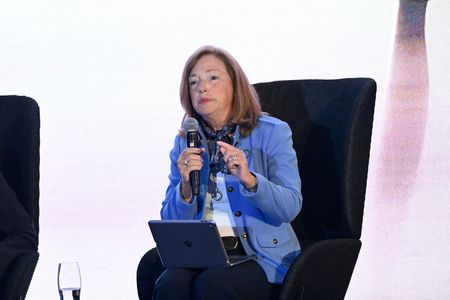
Barbara Humpton, who leads the mining company, dismissed shareholder concerns about the Commerce Department funding arrangement announced in January. The agreement allows the federal government to maintain an ownership stake in the company even if the promised funding never materializes or gets withdrawn later.
“Not at all,” Humpton responded when asked whether investors should be worried about the deal’s structure during a recent interview.
“With all of the work we’ve done to show our shareholders their path to the future and value creation, they’ll be delighted that we’ve had this engagement,” Humpton stated in her first public response to Democratic lawmakers’ concerns about the agreement, which is set to finalize by month’s end.
The massive funding package represents one of several strategic mineral investments made during the Trump administration’s final weeks, designed to strengthen American production of essential materials used in electronics, military equipment, and countless other products.
However, the deal’s negotiation process and terms have drawn sharp criticism from congressional Democrats. They’ve highlighted concerning connections between USA Rare Earth and Cantor Fitzgerald, the investment firm formerly run by Commerce Secretary Howard Lutnick and now operated by his sons.
A leading House Democrat described the arrangement as “highly concerning” in correspondence to Lutnick last month, calling it “deeply strange” that Washington would keep its ownership interest regardless of whether funding actually flows to the company.
The controversy signals the type of investigations Democrats might launch if they regain congressional control following upcoming elections, as legislators examine how federal financing and equity positions are being used to restructure mineral supply chains.
Federal dollars from the deal will support development of a mining operation in Sierra Blanca, Texas, projected to begin operations by 2028, along with a magnet production facility in Stillwater, Oklahoma, scheduled to open this year.
Humpton, a former Siemens executive, defended her company’s partnership with Cantor Fitzgerald during Commerce Department negotiations, noting the investment firm assisted with the company’s public stock offering in March 2025.
“Our best move was to go with the team who knew us,” Humpton explained.
Critics have questioned the economic viability of the Texas mining site, which the company admits contains relatively low concentrations of rare earth elements compared to competing operations worldwide.
This geological limitation poses potential economic challenges, though the deposit does contain valuable heavy rare earth elements needed for extreme high-temperature applications, making it attractive to certain industrial customers.
A comprehensive feasibility analysis for the mine – typically required by most investors – won’t be completed until year’s end, adding to questions about the project’s financial prospects.
When confronted about negative reactions to the Texas mining plans, Humpton referenced pop star Taylor Swift: “Haters gonna hate.”
“Sheer grade is not the determining factor,” Humpton argued. “The true factor is the recoverable heavy-rare-earth components.”
The mining operation is expected to extract yttrium, a specialized metal used in high-performance alloys and among the heavy rare earth materials that China has restricted from export.
“We weren’t even tuned in to the critical need for yttrium until we did our work with the Department of Commerce,” Humpton revealed. “Commerce made it clear that this is the number-one demand from the semiconductor field.”