
Chile’s government-owned copper mining corporation Codelco has been penalized by workplace safety officials following a fatal underground incident at its El Teniente facility last year, with three subcontracting companies receiving even steeper financial sanctions, according to regulatory documents obtained through public information requests.
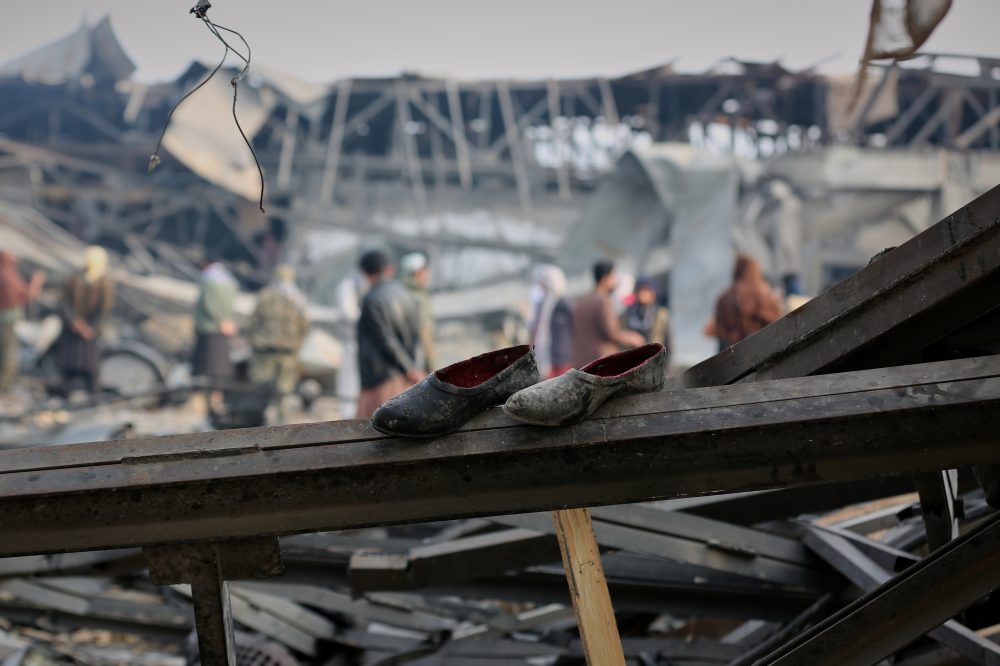
The penalties, which had not been previously made public, were issued in the months after a July 31 underground seismic event caused a catastrophic rock collapse at El Teniente, the planet’s biggest underground copper mining operation. The disaster claimed the lives of six contract employees and left others wounded.
The documentation was secured from Chile’s labor department via freedom of information filings. Under Chilean law, these financial penalties are communicated directly to companies and may be contested or reduced through administrative processes, though they typically aren’t announced publicly.
Following the incident, then-Labor Minister Giorgio Boccardo announced that his department and the mining oversight agency, Sernageomin, would probe what triggered the accident and determine if workplace safety regulations were violated.
The underground tremor, registering approximately 4.3 on the seismic scale, forced a complete suspension of all subterranean activities at the massive mining facility while rescue operations and safety evaluations took place.
The incident resulted in substantial financial losses for Codelco. Company officials stated that halting underground work at El Teniente and the gradual resumption of operations reduced copper production by tens of thousands of metric tons, affecting deliveries during a period when global supplies were already constrained.
The tragedy also highlighted the geological dangers confronting Chile’s older underground mining facilities.
The documentation reveals that the three subcontracting firms received combined penalties totaling approximately $87,000, while Codelco faced roughly $20,000 in fines. This disparity reflects Chile’s shared-responsibility system for outsourced operations.
Although the primary company – Codelco – may face sanctions for broad safety shortcomings, subcontractors maintain direct accountability as employers for incident reporting, hazard evaluation, employee assignments and other regulatory obligations under Chilean employment law.
In one violation, workplace inspectors determined that Codelco lacked comprehensive written protocols detailing how seismic alerts were utilized to determine whether operations should cease or be limited.
Following the accident, regulators also discovered that Codelco breached employment regulations when workers were discovered accessing, or preparing to access, underground sections while the facility-wide shutdown was still active, according to separate penalty documentation.
Under Chilean employment regulations, certain severe or fatal workplace violations can result in fines up to 150 UTM, a Chilean inflation-adjusted tax measurement, equivalent to roughly $11,000 at present rates, per violation. The regulatory body imposed a 340 UTM fine, approximately $26,000 in current values, on a company following a deadly construction site collapse in 2007.
Worker advocacy groups and occupational safety experts have raised concerns about whether such modest penalties provide sufficient deterrent effect for large corporations.
“It is essential to raise the size of fines in order to effectively deter companies from violating mining safety regulations,” stated a Chilean House of Representatives investigative commission report in 2011 following a mining catastrophe.
Legislative proposals since that time to increase penalties for serious or fatal workplace incidents have failed to advance.
Following the collapse, Codelco announced it had strengthened safety protocols for resuming operations at El Teniente, incorporating safety meetings at shift beginnings, enhancing underground communications, increasing monitoring of employee locations and reassessing protective gear.
The company later revealed that an independent review panel headed by a former Anglo American CEO was analyzing what led to the incident and whether wider management or workplace issues contributed.
In a response to media inquiries, Codelco stated that its seismic warning response system was operational on the day of the incident, and that it had contested the labor ministry’s fine.
The company added that there was an “ongoing legal proceeding related to the oversight of worker entry during the work stoppage” and that it was awaiting authorities’ determination.
Codelco announced in August that El Teniente facility manager Andres Music would step down from his position, and in February revealed the exit of three senior executives following an internal review that discovered inconsistencies and cover-up activities related to a separate rock collapse at the facility several years prior.
Among the three penalized contracting companies, Zublin, a subsidiary of Strabag, was sanctioned for failing to notify authorities of a worker’s death within the required 24-hour period. Inspectors determined that while the company learned of the fatality within two hours, it didn’t contact labor officials until the next evening.
Prompt reporting is vital to establish emergency safety protocols to safeguard remaining employees, the documentation stated.
The Austrian corporation did not provide an immediate response to requests for comment.
A division of Chilean construction company SalfaCorp also received sanctions after one of its employees perished in the mine’s Andesita section. Inspectors found the company failed to promptly notify authorities of the fatal incident, among other violations.
The records additionally noted that Salfa’s hazard evaluation didn’t properly consider seismic risks and that the company didn’t do enough to safeguard workers’ safety.
SalfaCorp did not provide an immediate response to requests for comment.
Chile’s labor oversight agency also penalized Constructora Gardilcic, the privately-held contractor whose employees were killed and injured in the mine’s Recursos Norte section.
Inspectors found the company filed late accident reports, delayed submitting injury documentation and demonstrated inadequate safety planning.
Officials also determined Gardilcic failed to properly assess the danger of explosive rock bursts beyond designated hazard areas and assigned some workers to positions they weren’t qualified to perform.
Gardilcic did not provide an immediate response to requests for comment.
Codelco has stated that the sections most severely affected by the incident will continue under strict limitations while criminal, regulatory and technical investigations proceed.
The corporation has committed to a phased, regulator-approved reopening, creating uncertainty about when the complete facility can return to standard operations.