
Chinese automotive manufacturers experienced a dramatic increase in overseas vehicle sales during March, according to data released Friday by an industry trade group, as companies intensify their international expansion efforts.
The China Association of Automobile Manufacturers reported that passenger vehicle exports climbed 82.4% compared to the same period last year, reaching approximately 748,000 units. This represents a significant increase from February’s export total of 586,000 vehicles.
Electric and hybrid passenger vehicles showed even more impressive growth, with exports skyrocketing over 140% year-over-year in March to 363,000 units. This figure also marked a 31% increase from February’s approximately 276,000 exported electric and hybrid vehicles.
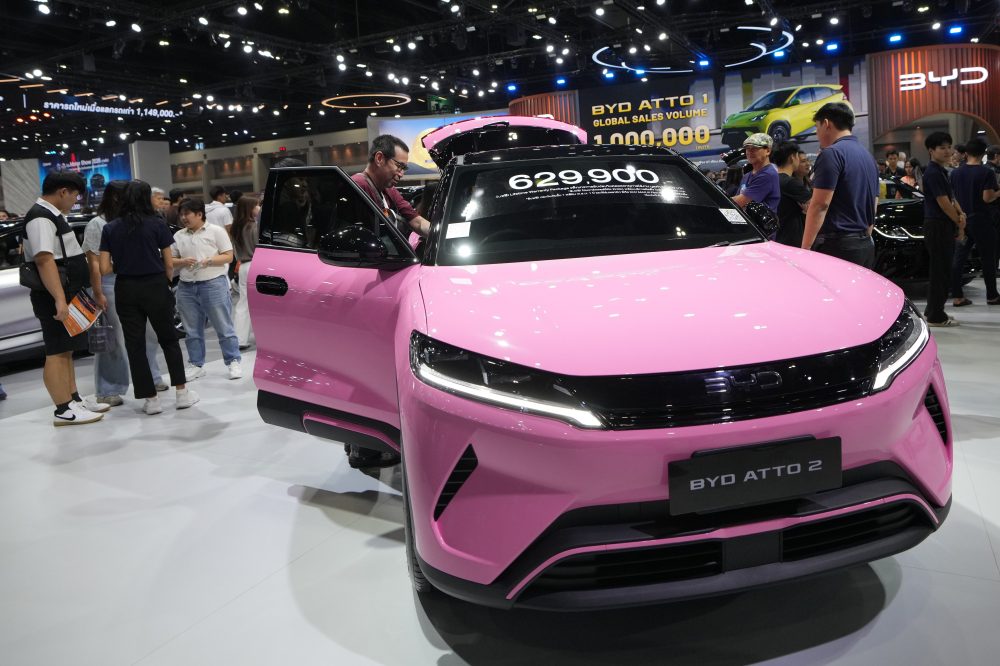
Major Chinese manufacturers like BYD and Geely Auto have intensified their international sales strategies, including establishing manufacturing operations beyond China’s borders. Industry observers anticipate that global energy disruptions and elevated fuel costs stemming from the Iran conflict may encourage more consumers to consider switching to electric vehicles.
Chinese automotive brands have successfully penetrated markets across Europe, Latin America, and Southeast Asia in recent months.
“The impact of the Iran conflict hasn’t fully shown up in March data yet, but it can act as a trigger,” said Chris Liu, a Shanghai-based senior analyst at advisory group Omdia.
“In many markets that are structurally well suited for EVs, adoption has been slow simply because consumers lacked urgency,” he said. “A sharp rise in fuel prices changes that.”
This international expansion comes as Chinese automakers face challenges in their home market, where domestic vehicle sales have been hurt by reduced government incentives for electric vehicle purchases this year.
Intense competition among automotive brands within China, combined with a struggling real estate sector that has dampened consumer appetite for major purchases, has also affected domestic manufacturers.
Home market passenger vehicle sales dropped 19.2% in March compared to the previous year, totaling nearly 1.7 million units. This marked the fifth straight month of declining domestic sales, based on industry association figures.
UBS automotive analyst Paul Gong expects the domestic sales downturn to be temporary and believes strong international sales growth could compensate for weaker home market performance.
“For the overall industry, the overseas market’s sales volume growth is more than enough to offset domestic decline on a full-year basis,” said Gong, head of China autos research at UBS investment bank.
He forecasts that Chinese automakers’ international passenger vehicle sales could increase by 20% or more this year compared to 2023.