The coffee giant has pulled the plug on an artificial intelligence inventory management system this week, just nine months after rolling it out to all North American locations, according to company documents obtained by Reuters and confirmed by two sources familiar with the matter.
The technology was implemented as part of CEO Brian Niccol’s strategy to address ongoing product shortages that he has identified as a factor damaging the company’s sales performance.
An internal company communication from Monday stated: “Starting today, Automated Counting will be retired. Beverage components and milk will now be counted the same way you count other inventory categories in your coffeehouse.”
The artificial intelligence application, which was created to give Starbucks better insight into store-level shortages, regularly made errors in counting and identifying products, including mixing up different types of milk or completely overlooking items, as Reuters previously documented in February. Company footage demonstrated the system’s failure to detect a peppermint syrup bottle while successfully counting other bottles nearby.
When previously questioned about the technology, Starbucks had maintained that implementing the tool resulted in better product availability at store locations, which represents a key performance indicator in Niccol’s company-wide improvement initiative.
In response to Reuters’ inquiry on Thursday, Starbucks explained that ending the program for milk and beverage products resulted from choosing to “standardize how inventory is counted across coffeehouses as we continue to focus on consistency and execution at scale.” The company added it is pursuing more regular daily deliveries to locations along with ongoing supply chain enhancements.
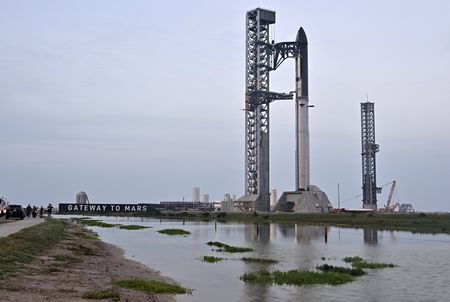
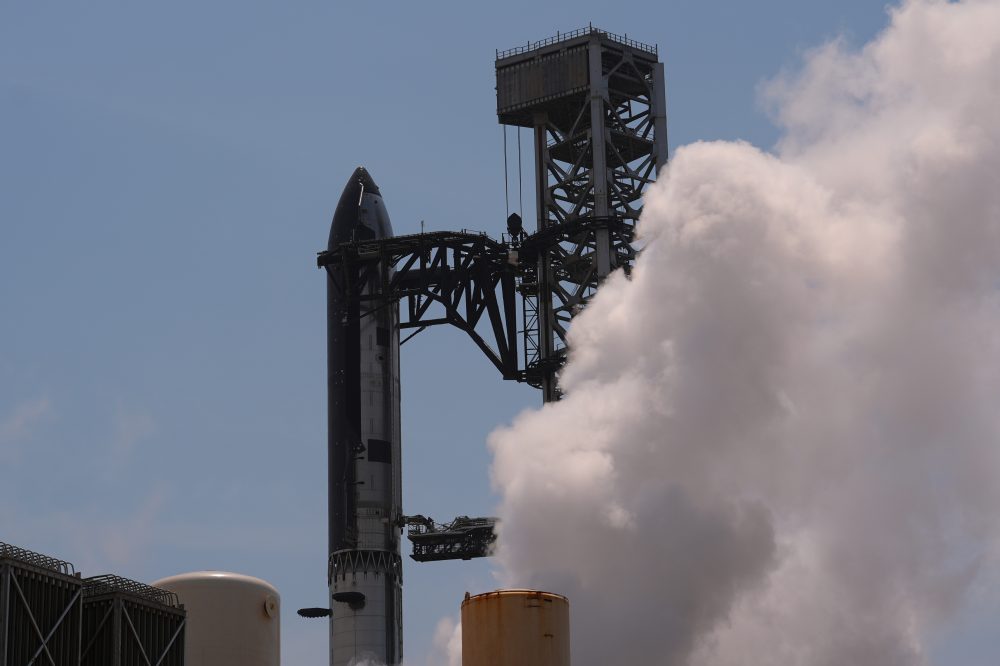
Elon Musk has submitted paperwork for what could become history’s largest initial public offering, seeking to take his rocket company SpaceX public with massive financial backing for his interplanetary ambitions.
The filing, spanning over 250 pages, reveals expenditures on a scale that exceeds some nations’ entire economic output, with plans to expand even further as Musk works toward his goal of transporting humans to other worlds. The public stock offering is expected to raise approximately $75 billion to fund these ambitious space exploration projects.
If successful, this IPO would break all previous records and could potentially make Musk, who already holds the title of world’s wealthiest individual and maintains significant ownership in SpaceX, the planet’s first trillionaire.
The filing reads almost like science fiction as Musk outlines his vision for using rocket technology to prevent human extinction by establishing humanity as a multi-planet civilization.
His roadmap includes initial missions to the moon, followed by potential Mars expeditions, with the ultimate objective of establishing a permanent settlement housing one million residents on the red planet.
Here’s an examination of the remarkable figures underlying Musk’s extraordinary vision.
SpaceX is anticipated to achieve this valuation following its public debut, scheduled for next month. Currently, Nvidia holds the position as the world’s most valuable publicly traded corporation at approximately $5.4 trillion. Nvidia went public in January 1999 and first achieved a market value exceeding $2 trillion in March 2024.
This represents SpaceX’s financial shortfall for the complete 2025 fiscal year. Tesla, Musk’s electric car manufacturer, became publicly traded in 2010 but didn’t achieve yearly profitability until 2020.
This figure represents Elon Musk’s total wealth as of May 20, based on Forbes calculations. Musk maintains substantial shareholdings in SpaceX and is positioned to gain hundreds of billions more through a Tesla compensation agreement, provided he achieves specific financial and operational targets.
Musk controls this percentage of voting authority at SpaceX through his ownership of over 90% of the company’s Class B stock, which provides holders with 10 votes per share. Additionally, he holds a 12% position in Class A shares, which carry single voting rights.
This is the required number of people Musk must establish in a Martian settlement to qualify for a portion of his SpaceX compensation deal. Currently, no technology exists to transport even a single person to Mars, much less one million individuals.
SpaceX must reach this maximum market value for Musk to collect his complete compensation package. He will receive payments incrementally as the company’s market value hits specific benchmarks. For context, Trump’s proposed defense spending for fiscal year 2027 totals $1.5 trillion.
SpaceX currently operates roughly this many Starlink satellites in space. For comparison, UPS reports operating 135,000 delivery vehicles of various types in its fleet, while Delta Air Lines maintains over 1,200 aircraft when including regional partners.
Musk must retain his SpaceX shares for this duration before selling or transferring them. This restriction, known as a lock-up period, prevents company insiders from immediately selling their holdings or cashing out. Other major SpaceX investors face a 180-day waiting period.
The company’s total expenditures in 2025 across all divisions, encompassing rockets, satellites and artificial intelligence development. The connectivity division, which includes Starlink satellites, accounted for the largest portion at slightly under $11.4 billion.
SpaceX purchased this amount in Cybertrucks during 2025 from Tesla, Musk’s other publicly traded enterprise. With a base Cybertruck priced at $69,990, this $131 million expenditure equals 1,871 vehicles. The interconnected nature of Musk’s companies has sparked discussion about a potential Tesla-SpaceX merger.
A San Francisco artificial intelligence company has reached a massive $4.65 billion valuation after securing $355 million in fresh investment funding, according to the company’s CEO Erik Bernhardsson.
Modal Labs finds itself at the center of two major trends reshaping the AI industry this year: the explosion in artificial intelligence-powered coding and the growing shortage of computing resources needed to power these advanced tools.
The company specializes in helping AI businesses obtain the computer chips necessary to operate AI applications, a process known as inference. Modal Labs also offers a testing environment where software developers can check AI-generated code before integrating it into their final products.
Redpoint Ventures and General Catalyst spearheaded the Series C funding round, with General Catalyst securing a board position. The new $4.65 billion company value represents a significant jump from Modal’s $1.1 billion valuation from last fall.
According to Bernhardsson, the dramatic increase reflects Modal’s explosive revenue growth over the past six months as more businesses incorporate AI-generated code into their operations. The company now generates approximately $300 million in annual revenue, a substantial increase from the $60 million annual rate recorded in September.
“Coding for the last six months has been driving everything,” Bernhardsson explained on Tuesday, noting that Modal’s client base includes biotechnology firms, hedge funds and two weather-forecasting companies.
However, the same period has brought challenges as computing resources have become both more expensive and harder to obtain. Bernhardsson said the company expanded its search and discovered computing providers it had never encountered before. Modal now partners with 13 cloud service companies, compared to just five in the previous year.
The funding round occurred in two separate phases. Initial investors contributed at a $2.5 billion company valuation, but additional investor interest prompted Modal to raise a second portion at the higher $4.65 billion valuation. Accel and Menlo Ventures participated in the second funding phase.
Energy company Devon Energy announced Thursday it has purchased 16,300 acres of undeveloped land in New Mexico’s Delaware Basin core area for approximately $2.6 billion through a federal lease agreement, bolstering its presence in America’s leading shale production region.
The acquisition represents another significant move for Devon to expand its Delaware Basin holdings, which is part of the larger Permian Basin stretching across West Texas and New Mexico. This purchase comes just weeks after the company completed its $58 billion merger with Coterra Energy. Devon’s stock price dropped 1.6% during afternoon trading as several analysts raised concerns about the high cost of the federal lease.
According to Devon, the deal brings approximately 400 net drilling sites when calculated using two-mile laterals. This calculation suggests a cost of roughly $6.5 million for each net drilling location, a figure that surprised two industry analysts.
“While we understand the need to continue bolstering inventory… we believe investors will be surprised by the sticker price,” said Matt Portillo, an analyst with TPH & Co, in a research note.
RBC Capital Markets analyst Scott Hanold described the price as “eye watering compared to historical M&A in the Permian” in his analysis.
The newly acquired land borders Devon’s current operations, allowing the company to utilize existing infrastructure and drill extended laterals, according to the company’s statement.
Hanold noted that the leases cover primarily three undeveloped sections of the basin, with one located near Devon’s top-performing asset.
These U.S. Bureau of Land Management leases include an 87.5% net revenue interest and 10-year terms covering all depths. Devon stated these arrangements provide better terms and reduced royalty payments compared to typical state or private leases in the area.
The company plans to finance the purchase using existing cash reserves. Devon reported $1.8 billion in total cash at the conclusion of the first quarter.
Agricultural machinery manufacturer Deere maintained its annual earnings outlook despite surpassing second-quarter profit projections on Thursday, as the company continues grappling with persistently soft demand for large farming equipment.
Equipment manufacturers including Deere have struggled with subdued interest in new agricultural machinery in recent years, as poor crop prices and increased operational expenses have prompted farmers to delay replacing their existing equipment.
Projections show U.S. net farm income, a key indicator of agricultural sector health, is anticipated to decline 0.7% in 2026.
Company shares dropped 7.5% to their lowest point in four months and appeared headed for their steepest single-day decline in four years.
“While encouraged by the upside to the construction segment, investors are still looking for signs of recovery in the agriculture segments, which remains a mixed bag globally,” Oppenheimer analyst Kristen Owen said.
The company maintained its annual net income projection at $4.5 billion to $5 billion, primarily due to continued weakness in farm equipment sales. Deere executive Christopher Seibert attributed this to “elevated and volatile input costs” for farmers due to the U.S.-Israel war with Iran.
This development overshadowed an otherwise solid second quarter where both earnings and sales exceeded analyst predictions, driven by stronger demand for the company’s smaller agricultural and construction machinery.
The construction division has emerged as a standout performer, capitalizing on AI-driven data center expansion.
The company now anticipates construction segment annual revenue will increase 20%, higher than its previous 15% growth projection, with yearly operating margins of 10%-12%, up from the earlier estimate of 9%-11%.
Quarterly earnings reached $6.55 per share, beating the average analyst expectation of $5.70 per share according to LSEG data. Quarterly sales of $11.78 billion exceeded the projected $11.54 billion.
The company received a $272 million tariff refund this quarter, though it anticipates the annual impact will remain consistent with previous expectations.
Home loan rates across the United States reached their peak level in nearly nine months this week, increasing borrowing expenses for potential homebuyers during the spring season when housing activity typically reaches its annual high.
Freddie Mac reported Thursday that 30-year fixed mortgage rates increased to 6.51%, up from the previous week’s 6.36%. While this represents a significant jump, current rates still sit lower than the 6.86% recorded one year ago.
Rising mortgage rates can increase monthly payments by hundreds of dollars for borrowers, which decreases how much home they can afford to purchase.
Just in late February, 30-year mortgage rates had dropped below the 6% mark for the first time since late 2022. Since then, rates have remained above that level and now sit at their highest point since August 28, when they reached 6.56%.
Rates for 15-year fixed mortgages, which homeowners often choose when refinancing, also increased this week. These rates jumped to 5.85% from 5.71% the previous week. Freddie Mac noted this compares to 6.01% one year ago.
Several elements affect mortgage rates, including Federal Reserve policy choices and bond market investors’ economic and inflation forecasts. Home loan pricing typically tracks the 10-year Treasury yield, which lenders use as a benchmark.
Rates have generally moved upward since the conflict with Iran started. Energy markets have been disrupted by the Strait of Hormuz closure, causing crude oil prices to surge significantly and driving inflation concerns.
Projections of rising oil costs and concerns about expanding government debt have increased yields on long-term bonds.
Thursday’s midday bond market trading showed the 10-year Treasury note yield at 4.6%. This compares to 4.47% one week earlier and just 3.97% in late February before the war began.
Though current long-term mortgage rates remain below last year’s levels, their recent climb has contributed to slower sales during this spring’s homebuying period.
Last month’s sales of existing homes across the country stayed essentially unchanged after declining year-over-year during the first quarter, continuing a national housing downturn that started in 2022 when mortgage rates began rising from pandemic-era record lows.
Federal authorities on Thursday granted final permission for the Dakota Access oil pipeline to keep running through its controversial Missouri River crossing, marking the end of a nearly decade-long battle that began with major demonstrations on North Dakota’s plains.
The U.S. Army Corps of Engineers’ approval of the crucial easement allows the pipeline to continue operations while implementing additional requirements for leak detection systems and groundwater oversight, among other measures. This decision concludes a prolonged legal and regulatory battle that originated from demonstrations in 2016 and 2017, although additional court challenges concerning the pipeline are expected.
The multistate $3.8 billion pipeline has transported oil since June 2017, moving crude from North Dakota’s Bakken oil field to an Illinois terminal. The system moves approximately 4% of America’s daily oil production, equivalent to roughly 540,000 barrels per day.
Assistant Secretary of the Army for Civil Works Adam Telle stated the Corps is “decisively putting years of delays to rest and moving out to safely execute this crossing beneath Lake Oahe.”
The pipeline runs beneath the river upstream from the Standing Rock Sioux Tribe’s reservation, which spans both Dakotas. The tribe has consistently fought the pipeline, concerned about potential spills that could pollute their water sources. During 2016 and 2017, thousands gathered for months-long demonstrations near the river crossing location.
The demonstrations led to hundreds of arrests and numerous criminal cases and civil suits, with some proceedings still active, including legal action that could affect environmental organization Greenpeace’s future operations.
Last December, the Corps published its final environmental impact assessment almost six years after a federal judge mandated a more thorough examination of the pipeline’s river crossing. The document supported granting the crossing easement while requiring operational modifications.
New requirements include improved leak detection and monitoring technology, expanded water monitoring for both groundwater and surface sources, and independent expert assessment of detection systems, according to the Corps. Additional conditions mandate studies of ground subsidence conducted alongside affected tribal communities.
The Corps considered multiple alternatives, including removing or abandoning the river crossing section or redirecting the route northward. Officials stated their choice “best balances public safety, protection of environmental resources, and leak detection and response considerations while meeting the project’s purpose and need.”
Pipeline developer Energy Transfer praised the ruling, emphasizing the pipeline’s safe operation for nearly a decade and its importance to national energy infrastructure.
Company spokesperson Vicki Granado expressed gratitude, saying “We want to thank the Corps for the tremendous amount of time and effort put in by so many to bring this matter to a thoughtful close.”
The Associated Press contacted tribal media representatives through text messages and emails and left a voicemail at tribal headquarters. No immediate response was received Thursday.
North Dakota Republican Gov. Kelly Armstrong, Interior Secretary and former North Dakota governor Doug Burgum and U.S. Senators John Hoeven and Kevin Cramer each welcomed the decision to ensure the pipeline continues operating.
The Corps made their announcement while officials and oil industry leaders were meeting for a trade conference in Bismarck.
Energy Transfer and Enbridge are beginning preliminary work on a project to transport approximately 250,000 daily barrels of light Canadian crude through the Dakota Access Pipeline using another pipeline and constructing a 56-mile connector, company representatives confirmed. Enbridge plans to make a final decision around mid-2026.
Bond market investors are demanding varying risk premiums from U.S. private lending companies, with smaller firms facing significantly higher costs compared to their larger counterparts, according to a new financial analysis.
This pricing gap demonstrates increasing investor selectivity in a marketplace experiencing heightened borrower difficulties following years of high interest rate environments.
Business development companies, which primarily provide loans to middle-market businesses and frequently raise funds through public bond offerings, are now being evaluated more rigorously based on their portfolio strength, operational size, and capital access capabilities.
According to LSEG data, BCP Investment Corp recorded the highest weighted average option-adjusted spreads at 680 basis points, with Prospect Capital Corp following at 449 basis points, Trinity Capital Inc at 403 basis points, and Fidus Investment Corp at 392 basis points.
Option-adjusted spreads represent the additional return investors require above Treasury securities after accounting for features like call options. Elevated spreads may indicate market appetite or concerns regarding credit worthiness and funding risks.
Meanwhile, major firms such as Ares Capital Corp, Blackstone Secured Lending Fund, Blue Owl Capital Corp, and Golub Capital BDC maintained spreads ranging approximately between 150 and 200 basis points.
This spread differential has expanded throughout the current year, as investors begin distinguishing between companies with greater exposure to artificial intelligence disruption within software-as-a-service businesses.
“There’s dispersion in BDC equity, but it’s still limited in BDC bonds given strong demand for carry in this environment,” stated Aditya Aney, co-founder of Andromeda Capital Management in London.
“However, we think this will change over the coming months triggered by downgrades, higher or more volatile rates and greater focus on sector (SaaS) exposures,” he added.
The financial review examined 884 bonds from 41 business development companies, focusing on bond offerings of at least $50 million with available comparison data. Company-level spreads were determined by weighting individual bond spreads according to issue size.
Trinity Capital’s weighted average spread expanded by 140 basis points, while Fidus increased 92 basis points and Prospect Capital rose 85 basis points. BlackRock TCP Capital’s spread climbed 40 basis points, with Goldman Sachs BDC, Golub Capital, Blue Owl Technology Finance, and Blue Owl Capital experiencing increases between 20 and 31 basis points.
Ares Capital’s spread remained relatively stable, while Sixth Street Specialty Lending, Hercules Capital, and Morgan Stanley Direct Lending demonstrated slight improvements.
This selective approach occurs amid deteriorating private credit market conditions.
Default rates among U.S. private credit borrowers monitored by Fitch Ratings reached 6% during the 12-month period ending in April, marking the highest level since tracking began in August 2024.
Additionally, Fitch revised its outlook on Goldman Sachs BDC to negative, pointing to recent portfolio credit weakening and insufficient asset-coverage protection.
The popular music streaming platform announced Thursday it has reached an agreement with Universal Music Group that will enable paying customers to generate artificial intelligence-powered song covers and remixes, representing the service’s initial foray into allowing user-generated AI content.
Following the announcement, the company’s stock price jumped approximately 16%.
Neither organization revealed monetary details of their partnership or specified which recording artists would be included in the upcoming feature during Thursday’s joint statement. Universal Music represents major performers such as Taylor Swift, Ariana Grande, Drake and Billie Eilish.
This development places the streaming service in more direct rivalry with emerging companies like Udio and Suno that offer AI-driven music production capabilities.
According to both companies, the upcoming feature will generate additional revenue streams for recording artists and composers beyond their current earnings from the platform, including royalty payments.
“What we’re building is grounded in consent, credit and compensation for the artists and songwriters that take part,” stated Spotify Co-CEO Alex Norström.
Leading recording companies have been pursuing fresh licensing agreements to protect their extensive music libraries as artificially generated music becomes more widespread and listeners find it increasingly difficult to distinguish from human-created compositions.
In the previous year, Udio negotiated agreements with UMG and Warner Music Group to resolve copyright disputes, while Suno achieved a settlement with WMG.
However, both AI music enterprises are currently defending against class action litigation from over 1,800 independent musicians, who claim the companies’ conduct “were an attack” on the music industry’s “most vulnerable and valuable members.”
The streaming platform has previously rolled out multiple AI-enhanced music discovery tools designed to increase user retention and participation, including voice capabilities for its customized music feature AI DJ and the ability to create playlists through natural-language requests.
Stock prices for the German footwear company Birkenstock climbed almost 17% on Thursday following the announcement of a $250 million share repurchase program through an accelerated buyback agreement, coming after a recent drop in share value.
This announcement follows just days after a significant stock decline caused by reduced quarterly growth numbers and an unmodified annual forecast, raising concerns about where the brand fits between high-end luxury and mainstream consumer markets.
Chief Executive Oliver Reichert explained that the share buyback decision demonstrates leadership’s belief that current stock prices don’t accurately represent the company’s actual business performance.
“Short-term market dynamics have resulted in what we believe is a strong disconnect between our share price and the strength of our underlying fundamentals,” Reichert stated, further explaining that using available funds for share repurchases represented the “most attractive use of capital” given current market conditions.
Stock prices reached $38.66 during trading, positioning the company for its strongest single-day performance since going public in 2023, though still significantly lower than the peak price of $64.70 reached in August 2024.
Previously, Birkenstock had announced plans to buy back approximately $200 million in shares during fiscal year 2026, with CFO Ivica Krolo indicating last week that company leadership was evaluating the best approach for deploying available capital after losing an earlier chance to complete a buyback during a secondary stock offering, which had been successfully executed in 2025.
The footwear maker confirmed its projected annual revenue growth target of 13% to 15% using constant currency calculations.
Company officials expect the accelerated share repurchase program to conclude by June 30.
Kontoor Brands announced Thursday that it has reached an agreement to transfer ownership of its Lee denim brand to Authentic Brands Group in a transaction valued at up to $1 billion, allowing the clothing manufacturer to concentrate on more successful brands like Wrangler.
The transaction structure includes an upfront payment of $750 million plus an additional $250 million contingent payment based on the brand’s future success under new management, according to Kontoor’s announcement.
Kontoor’s stock price rose 1% during premarket trading following the news.
Since its 2019 separation from VF Corp, the company has struggled with Lee’s performance, which has consistently lagged behind Wrangler’s market success.
The Lee brand has encountered inconsistent consumer demand, especially within U.S. markets, while competing against strong rivals in the middle-market denim category.
Kontoor initiated efforts to sell the Lee division during its first quarter, seeking to concentrate resources on brands that better match strategic growth opportunities, company officials stated.
Authentic Brands manages a collection of fashion and lifestyle companies including Reebok and Guess, and announced Wednesday that Matt Maddox would become its new chief executive officer, with Jamie Salter moving to executive chairman.
Company founder Salter informed CNBC that he anticipates bringing the company to public markets sometime in the coming 12 months.
According to company information, Authentic achieves approximately $38 billion in “systemwide retail sales” mainly through licensing brand intellectual property of challenged companies to business partners.
Morgan Stanley will provide financial advisory services to Kontoor, with Foley & Lardner handling legal representation.
Kontoor’s board unanimously endorsed the transaction, which requires regulatory clearance and is scheduled to finalize during the latter half of 2026.
SALISBURY, Md. — Salisbury’s Housing and Community Development Department will organize its second annual Youth Business Fair this Saturday, June 6, running from noon until 3 p.m. at The Centre at Salisbury. The no-cost event represents part of the City’s ongoing commitment to youth development, economic opportunities, and initiatives designed to cultivate future entrepreneurs and small business leaders in the area.
The Housing and Community Development Department’s Community Relations Team is coordinating the Youth Business Fair, which provides young business owners between 8 and 18 years old an opportunity to display their enterprises, merchandise, and concepts in a public commercial environment.
The fair celebrates the ingenuity and inventiveness of Salisbury’s young people while promoting entrepreneurial spirit, leadership development, and community economic expansion. By offering early introduction to business ownership and financial education concepts, the event delivers practical learning opportunities that go beyond traditional classroom instruction.
Young vendors will interact face-to-face with buyers, develop self-assurance, and acquire real-world knowledge about running a business.
“This marks our second time organizing the Youth Business Fair, and I’m delighted to stage the event at such a prominent venue,” stated Rachel Manning, Community Relations Manager. “I’m particularly eager to witness all these amazing young business owners present their concepts. Please join us and show your support for Salisbury’s youth on June 6th.”
“The Youth Business Fair demonstrates how Salisbury continues backing our community’s future,” commented Mayor Taylor. “These young business owners embody creativity, persistence, and forward-thinking, and we’re honored to champion them and their ventures!”
Salisbury officials are encouraging community members to visit the event, connect with young sellers, and back local business development. Programs like the Youth Business Fair build stronger ties among residents, families, and community groups while generating valuable chances for young people to develop skills, advance, and thrive.
Further event information will be distributed via the City of Salisbury’s Community Relations social media platforms and official website.
Stephanie Bernaba describes herself as someone who is “not the best person with bugs and stuff,” so she never expected to transform into an adventure-seeking parent.
However, the 47-year-old mother of three has embraced outdoor activities as rising gas prices and travel expenses make distant vacations increasingly costly. Instead of the far-off destinations her family once visited, Bernaba has been directing them toward nearby coastal areas, cycling paths, and nature trails close to their coastal Rhode Island residence.
“I’ve been trying to do more of that because one, it’s quality time. Two, it’s fresh air. And three, we’re not spending an arm and a leg,” she said.
This type of adjustment is influencing the summer vacation season, which traditionally kicks off in America with the extended Memorial Day weekend. Elevated fuel costs stemming from the Iran war and additional inflationary forces are driving up transportation expenses across the board as people worldwide make their travel arrangements.
The U.S. Travel Association anticipates yearly travel expenditures will increase by just 1% this year, driven mainly by domestic recreational travel even though the FIFA World Cup provides international soccer enthusiasts with motivation to visit America. Flight costs have risen globally alongside jet fuel prices as the conflict limits worldwide oil availability.
Choosing nearby destinations may not provide relief from higher costs. The nonprofit Institute on Taxation and Economic Policy calculated that Americans would spend a combined additional $3.5 billion on fuel during the holiday weekend. Regular gasoline averaged $4.56 per gallon nationwide on Thursday, up from $3.18 twelve months ago, motor club AAA reported.
Additional travel-related costs have increased as well. Recent consumer price data revealed flight prices jumped 20.7% in April compared to the previous year, local transportation like buses and subways increased 5.6%, accommodation expenses rose 4.3%, and restaurant meals became 3.6% more expensive.
Even with higher prices, industry predictions indicate Americans remain eager to travel, though they may replace extended trips with brief getaways, select closer destinations, and find cost-cutting methods like preparing their own meals or using public transportation instead of personal vehicles.
AAA forecasted that 45 million Americans would journey at least 50 miles from their homes between Thursday and Monday. The Transportation Security Administration announced it anticipates screening 18.3 million travelers from Thursday through next Wednesday.
Numerous families are organizing summer getaways while making compromises like briefer stays or less expensive accommodations, Bank of America analysts noted. Mastercard indicated in a recent study that customers seemed increasingly value-conscious and were modifying their destinations and schedules rather than canceling trips entirely.
“Generally, it’s certainly more of a demand reshuffling than a demand softening,” David Tinsley, a senior economist at Bank of America Institute, said.
For the Bernaba household, this has resulted in exchanging an extensive vacation for a brief nearby trip this summer. Their reduced itinerary remains expensive: over $400 for ferry transportation to Martha’s Vineyard for their vehicle and family members, plus approximately $800 nightly for each of the two hotel rooms their family of five requires.
A second family that had intended to accompany them withdrew after learning the costs.
“The pinch is being felt all the way around,” Bernaba said.
Experts have progressively characterized travel expenditures as “K-shaped,” with wealthy families maintaining their spending while lower-income households reduce expenses or avoid travel completely. Bank of America found that families with limited incomes were much more likely to indicate having no summer vacation plans this year.
Vacationers face additional challenges beyond financial concerns.
Airlines worldwide have eliminated flights and reduced schedules to conserve fuel and operational expenses, providing travelers with fewer choices. Recent government shutdowns that created significant flight delays and extended security wait times likely remain in travelers’ memories. Middle Eastern conflicts and broader international tensions create additional worry, particularly for those considering overseas trips.
The multiple elements affecting travel currently have made trip planning more mentally demanding and may be steering people toward simpler and more reachable vacations that seem easier to coordinate, said Marta Soligo, a tourism sociologist at the University of Nevada, Las Vegas.
“The key word here is unpredictability,” Soligo said. “Tourists don’t like unpredictability.”
Jim Wang, a personal finance blogger residing in Maryland with his spouse and four children, explained his family’s initial plan to visit Spain for a complete solar eclipse in August started falling apart once they examined the details.
In addition to thousands of dollars for airfare, the journey would have involved multiple flight connections, plus vehicle rental to reach northern Spain, where the eclipse’s path of totality was expected.
“It’s like, ‘Oh, I don’t know if I want to see the eclipse that much,’” Wang said.
Wang’s family instead plans to visit the Lake Tahoe region between California and Nevada this summer, where they can use a relative’s cabin at no cost, explore hiking trails, and experience a relaxed atmosphere with limited cellular coverage. His spouse’s parents and sister plan to join them.
“We’re still going to travel. It’ll just be different,” Wang said. “The vacations are no longer as grand for the adults. But for our kids, it’s still exciting.”
Nancy McGehee, a Virginia Tech hospitality professor who researches consumer behavior, noted that travelers are placing greater emphasis on the “why than the where” regarding vacations.
“What we’re seeing is people are saying, ‘Alright, we can’t do that big splashy trip we wanted to do, but what else can we do?’” McGehee said. “It’s more quality over quantity that we’re seeing people go for.”
Back in Rhode Island, Bernaba has come to terms with the fact that travel may appear different for her family for some time.
“I think that’s probably why my mind has gone to doing more nature-y things,” she said. “Let’s learn how to use the earth to enjoy ourselves because that’s not going to cost as much money.”
The number of Americans seeking unemployment benefits declined last week, continuing a trend of minimal layoffs even as various economic challenges create uncertainty nationwide.
New claims for jobless benefits dropped by 3,000 to reach 209,000 for the week that concluded May 16, according to Thursday’s report from the Labor Department. This figure came in below expectations, as analysts from FactSet had predicted 213,000 new claims.
These weekly unemployment filings serve as a reliable gauge for tracking layoffs across the country and provide nearly immediate insight into job market conditions.
While layoffs remain at historically minimal levels, economists describe the current employment landscape as a “low-hire, low-fire” environment. This situation has maintained unemployment at 4.3%, though individuals who lose their jobs face significant challenges finding new positions.
Although employers added an unexpected 115,000 positions in April, the Iran war has created substantial uncertainty regarding the overall economy and job market prospects.
The closure of the Strait of Hormuz, a critical passage for one-fifth of global oil shipments, continues to impact markets. Oil prices have surged over 50% since the conflict began in late February, pushing average gasoline costs nationwide to $4.56 per gallon from under $3. These elevated expenses strain consumer budgets and may discourage companies from expanding their workforce.
Government statistics released last week indicated consumer-level inflation increased 3.8% compared to April 2025, marking the largest rise in three years. Food costs have also climbed, though analysts suggest they may not yet fully reflect the energy price increases stemming from the Iran conflict.
Additional data revealed wholesale prices jumped 6% year-over-year, reaching the highest level in more than three years. The producer price index from the Labor Department, which measures inflation before it affects consumers, rose 1.4% between March and April, representing the largest monthly increase in over four years.
These developments occur while inflation already exceeds the Federal Reserve’s 2% target. During its latest meeting, the Fed maintained its benchmark rate unchanged, pointing to Middle East instability and persistent inflation as sources of economic uncertainty.
While reduced interest rates typically stimulate economic growth and job creation, they also tend to fuel inflation, prompting several Federal Reserve officials to suggest they might support a rate increase this year.
Additionally, the ongoing artificial intelligence expansion and associated investment requirements could transform or eliminate certain positions.
Several major corporations have recently announced workforce reductions, including Verizon, UPS, Amazon, Disney and Walmart.
Weekly unemployment applications have remained relatively stable, typically falling between 200,000 and 250,000 since the economy recovered from the pandemic downturn. However, hiring activity began declining approximately two years ago and slowed further in 2025 due to President Donald Trump’s unpredictable tariff policies, federal workforce reductions, and ongoing effects of elevated interest rates designed to combat inflation.
Companies added fewer than 200,000 positions last year, a significant decrease from roughly 1.5 million in 2024, according to FactSet data.
Thursday’s Labor Department report indicated the four-week moving average for jobless claims, which smooths out weekly fluctuations, decreased by 1,500 to 202,500.
The overall count of Americans receiving unemployment benefits for the week ending May 9 increased by 6,000 to 1.78 million.
Recent quarterly financial reports from the nation’s largest technology companies have provided investors with compelling reasons to maintain their focus on artificial intelligence investments, boosting stock markets even amid significant oil market disruptions that have raised concerns about economic expansion.
The group known as the Magnificent Seven – consisting of Alphabet, Apple, Microsoft, Amazon.com, Meta Platforms, Tesla, and Nvidia – recently completed their earnings announcements with Nvidia being the final company to report.
The chipmaker continues to demonstrate exceptional expansion rates that far exceed its peers within this elite group. Nvidia’s revenue surge has been powered by strong demand for artificial intelligence infrastructure, solidifying its position as the globe’s most valuable corporation by market capitalization.
In contrast, other members of this technology collective are growing at more moderate rates, though all are planning to invest billions of dollars in their artificial intelligence initiatives with expectations of generating substantial returns in future years.
To support their ambitious AI goals, these seven companies have increasingly relied on bond market financing. Debt issuance from the group has risen dramatically, with bond sales reaching $134 billion in the current year compared to the previous year’s total of $87.5 billion, based on Dealogic data.
This year’s increase has been led by Alphabet, Amazon and Meta – organizations that are central to the competition for developing AI infrastructure including data centers.
Following a mixed beginning to the year and market fluctuations related to Middle East tensions, technology stock prices have recovered their upward trajectory. Market participants are placing bets on the technology’s future potential, despite concerns about how quickly companies will see returns on their investments.
The competitive landscape has shown some movement, with Alphabet nearly surpassing Nvidia as the world’s most valuable company after surprising Wall Street with cloud business growth that exceeded larger competitors, though it has since fallen back.
Growth in earnings for the Magnificent Seven is projected to become more stable approaching 2027, while the group is still anticipated to perform better than the overall S&P 500 index, according to research from Tajinder Dhillon, head of earnings research at LSEG.
This pattern supports the perspective among optimistic investors that the market’s focus on large technology stocks is supported by solid business fundamentals rather than speculation.
“There’s no reason for investors to do anything differently because the current, concentrated makeup of the indexes has worked in their favor,” said Isabelle Freidheim, founder and managing partner at Athena Capital.
Capital expenditure across S&P 500 companies is anticipated to increase significantly over the coming years, creating questions about how much money will be left for returning cash to shareholders.
Investment spending at S&P 500 companies is projected to rise 33% in 2026, while stock buybacks are expected to increase only 3%, according to Goldman data.
Financial regulators in Hong Kong and Singapore are demanding answers from Standard Chartered following controversial remarks by CEO Bill Winters about replacing workers with artificial intelligence, according to a Bloomberg News report released Thursday.
Winters had described the bank’s strategy to substitute “lower-value human capital” with technological solutions, comments that drew immediate attention from regulatory authorities in both financial centers.
The Monetary Authority of Singapore addressed Winters’ statements during meetings on Wednesday, while Hong Kong’s monetary authority requested the bank provide clarification about the CEO’s remarks, Bloomberg reported, citing sources with knowledge of the discussions.
Both regulatory bodies questioned Standard Chartered about potential workforce reductions in their respective regions, with Hong Kong officials specifically asking whether the bank was using artificial intelligence as justification for eliminating positions, according to the report.
When contacted by Reuters, a spokesperson for Singapore’s Monetary Authority stated that the agency “regularly engages with major banks in Singapore on key aspects of their business.”
Hong Kong’s monetary authority spokesperson told Reuters: “The HKMA regularly engages with authorized institutions on a wide range of matters. We do not comment on day-to-day supervisory dialogues or speculative media reports.”
This regulatory attention follows Standard Chartered’s Tuesday announcement revealing plans to eliminate more than 7,000 positions over the next four years. Winters’ controversial phrasing about human capital prompted the CEO to later address employee concerns about job security.
The incident has sparked broader discussions among major financial institutions about AI’s role in banking. HSBC CEO Georges Elhedery commented that disruptive technology would eliminate some positions while creating others, encouraging employees to welcome change instead of fighting it.
Meanwhile, JPMorgan CEO Jamie Dimon revealed in a Bloomberg News interview that his bank intends to increase hiring of AI experts while reducing recruitment of conventional banking professionals.
Commercial fishing operations across the globe are feeling the pinch as skyrocketing diesel costs force vessel operators to dramatically reduce their time on the water this spring.
In Kennebunk, Maine, Captain Chris Welch has been forced to alter his lobster fishing routine due to escalating fuel expenses. Where he once checked and refreshed his traps every four to five days, Welch now extends that cycle to seven to 10 days to save on diesel costs.
“It cuts into your profitability at the end of the day,” Welch explained while refueling his boat, Quality Time, during a rainy afternoon at Kennebunk’s harbor. “We are having to pay much more attention to our bottom line.”
Welch’s situation reflects a global trend affecting fishing communities from Maine’s coastline to South Korea and the Netherlands, where rising fuel expenses linked to the U.S.-Israeli conflict with Iran are forcing fishing vessels to remain at dock longer, according to interviews with multiple fishermen and industry representatives worldwide.
This widespread impact could worsen the Iran conflict’s existing threats to global food security, as blocked Middle Eastern shipments have already caused fertilizer price increases that are influencing farmers’ planting decisions.
Manuel Barange, who heads the United Nations Food and Agriculture Organization’s Fisheries and Aquaculture Division, noted that while fuel price increases haven’t historically affected worldwide fish harvests significantly, extended periods of high costs could intensify industry pressure and alter market conditions.
The fuel price crisis presents additional challenges for consumers and businesses, creating political risks for President Donald Trump’s Republican party as it attempts to maintain narrow Congressional control in November’s midterm elections.
Trump has actively pursued the commercial fishing sector as supporters, signing an executive order last year designed to reduce regulatory burdens and promote technological advancement to boost global competitiveness.
Welch expressed uncertainty about how Maine’s decreased seafood production might influence summer lobster pricing when tourists arrive, since dealers who purchase and transport lobsters to restaurants are also struggling with higher fuel expenses they may not be able to absorb.
“This affects us every day,” he stated.
Current diesel prices have reached $5.65 per gallon this week, jumping from $3.55 twelve months ago and approaching the 2022 record of $5.82, based on AAA’s Fuel Prices tracking system.
Fuel represents a primary cost for fishing operations, with some vessels requiring tens of thousands of gallons to fill their tanks.
Gulf Coast shrimp boat operators can no longer afford to fill their 15,000-gallon fuel tanks and are canceling fishing expeditions, according to Deborah Long, who serves as media liaison for the Southern Shrimp Alliance.
The U.S. shrimp sector was already under pressure from imported competition before fuel costs increased, with industry value dropping 50% from 2021 to 2023, a March National Oceanic and Atmospheric Administration report showed.
“That jump in price has taken away their entire margin,” Long noted.
Alaskan fishing operations are experiencing similar difficulties.
Fuel expenses can represent up to 40% of a fishing expedition’s total costs, explained Linda Behnken, a Sitka fisherman who also directs the Alaska Longline Fishermen’s Association.
“It went up over a dollar a gallon from one week to the next and right before everybody was filling up with full tanks to start the season,” Behnken said. “That’s a really big impact on the cost of operation.”
Currently, halibut and sablefish prices remain high enough to justify regular fishing trips, Behnken reported. However, when the less profitable salmon season begins in July, diesel expenses may make leaving port financially unviable.
Fishing crews also confront additional inflation-driven cost increases for supplies like bait and rope, said Sonny Beal, who leads the Maine Lobstermen’s Association.
“A lot of us are spending fewer days on the water,” he observed.
International fishing communities are experiencing comparable impacts. In South Korea’s South Gyeongsang province, fishing expeditions targeting anchovy, gizzard shad, yellowtail and mackerel have decreased by more than 30% since the conflict started, reported Lee Gi-sam, secretary general for the national fishermen’s alliance.
Indonesian fishing boats are largely remaining in port because fish prices aren’t sufficient to generate profits amid rising diesel costs, said Akhiq Falih Al Arif, a boat owner along the north coast of Pati regency in Central Java.
Boats currently at sea will continue fishing, but those returning to port won’t venture out again due to high fuel prices, explained Muhammad Billahmar, secretary general of the Indonesian tuna association.
European fishing fleets have also suffered, with the Dutch Fishers Union reporting that half their vessels remained docked instead of fishing just weeks after the war began.
The nation’s largest retailer posted another period of strong financial performance as rapid shipping and competitive pricing attracted customers from all economic backgrounds.
However, similar to other major retail chains reporting earnings this week, the company expressed caution about upcoming months due to prevailing economic uncertainties. The retailer issued projections for the next quarter on Thursday that fell short of analyst expectations.
The retail giant has attracted many Americans who are becoming more selective with their spending as rising costs have reduced purchasing power, especially following the start of the Iran conflict in late February. Customer traffic at the stores serves as an indicator of consumer spending patterns given the company’s enormous customer reach. Weekly, more than 150 million shoppers visit either the website or physical locations, the company reports.
The retailer’s commitment to competitive pricing, enhanced product selection, and quicker delivery has expanded its customer base to include higher-income shoppers, with the most significant market share increases coming from families earning more than $100,000 annually. This trend occurs as lower-income consumers become more established in what economists describe as a K-shaped economic recovery.
“Our results reflect our continued focus on delivering across the enterprise — better shopping experiences, a broader assortment, and faster delivery,” CEO John Furner said in a statement Thursday.
Still, American retailers have spent recent months managing an unpredictable economic climate, initially dealing with President Donald Trump’s trade policies, and currently facing the effects of rising fuel costs due to the conflict. Regular gasoline prices have climbed higher this week and continued increasing overnight. Fuel prices stand 40% higher than they were during the same period last year.
According to early financial reports from retailers such as Target and Home Depot, consumers remain cautious but continue purchasing, supported by larger tax refunds, economists noted. However, there’s widespread concern that once these benefits end, shoppers will reduce their spending.
Target announced its biggest increase in comparable sales in four years on Wednesday, though a conservative outlook overshadowed strong evidence that changes under the company’s new leadership are connecting with shoppers. Target increased its yearly revenue projections, but the improved sales forecasts remained below first-quarter performance given significant economic uncertainty.
The country’s two biggest home improvement chains, Home Depot and Lowe’s, reported this week increased sales from contractors and homeowners purchasing spring merchandise. However, leadership from both companies noted that customers continue hesitating on larger optional home improvement projects.
“I think, overall, this has been the most difficult housing market that that I’ve faced in this business since the financial crisis,” Lowe’s CEO Marvin Ellison told analysts on Wednesday.
The Arkansas-based retailer reported first-quarter profits of $5.33 billion, or 67 cents for the period ending April 30. Adjusted earnings per share reached 66 cents, matching analyst predictions of 66 cents, according to FactSet.
During the previous year’s quarter, the company recorded net profits of $4.48 billion, or 56 cents per share.
Revenue increased 7.3% to $177.75 billion during the fiscal first quarter, exceeding analyst forecasts of $174.84 billion.
Comparable sales at domestic stores, including online purchases, grew 4.1% during the three-month period ending April 30. This represents a decrease from the 4.6% increase recorded in the fourth quarter.
The company stated Thursday that shoppers are experiencing some economic strain, but sales performance has remained strong and the company achieved one of its best quarters for market share growth.
For the upcoming quarter, the retailer anticipates sales will increase 4% to 5% compared to the same timeframe last year. This projects revenue between $182.8 billion and $184.59 billion. The company also forecasts earnings per share between 72 cents and 74 cents. Analysts had projected earnings of 75 cents per share on revenue of $186.2 billion, according to FactSet.
For the full year, the company maintained its February guidance of earnings per share between $2.75 and $2.85, with sales growth between 3.5% and 4.5%, totaling between $731.1 billion and $738.2 billion.
Financial analysts have been expecting annual profits of $2.92 per share on sales of $749.01 billion.
WASHINGTON — Since President Donald Trump issued an executive order a year ago aimed at establishing a deep-sea mining industry in the United States, companies have successfully secured millions in investor funding, experienced significant stock value increases, and witnessed federal agencies accelerating permit approval procedures.
An Associated Press investigation found that no fewer than nine companies are currently negotiating with federal authorities for rights to extract seabed minerals. Ocean floor areas spanning from American Samoa to Alaska may be put up for mining auction during the summer months and continuing into autumn.
This flurry of activity indicates the United States could soon authorize the first commercial seabed mining operations — a milestone that has never been achieved in international waters.
However, an examination of several participating companies shows questionable performance histories and backgrounds marked by litigation, while critical questions about mineral processing and refinement methods have yet to be resolved. Industry observers express doubt that the anticipated profits will ever come to fruition.
The ocean floor’s most sought-after materials are fist-sized formations called polymetallic nodules, which developed over millions of years from decomposed shark teeth and shell remains. These formations contain valuable concentrations of manganese, copper, nickel and cobalt, plus certain rare earth elements. Scientists estimate trillions of these nodules exist on the international seabed in the region between Mexico and Hawaii.
Closer to coastlines, companies have suggested extracting ocean sediments to obtain titanium, zirconium and phosphorites.
Trump’s April 2025 executive order praised seafloor minerals as essential to America’s economic future and reducing trade dependence on China, while instructing federal agencies to accelerate permit approvals.
Two federal agencies will oversee regulations: the National Oceanic and Atmospheric Administration and the Bureau of Ocean Energy Management. NOAA has not previously authorized any commercial seabed mining operations; BOEM’s only experience dates back more than 60 years to a brief mining venture in California waters.
In June, Interior Secretary Doug Burgum issued instructions for his team to “speed up” offshore critical mineral development. The department subsequently announced evaluations of seabed mining in Alaskan, Virginia, American Samoa and Northern Mariana Islands waters. According to budget documents, the first lease auction could occur as soon as August.
NOAA has reduced processing timeframes for companies seeking commercial permits and aims to handle 16 applications during the upcoming fiscal year.
Current applicants include a company that previously specialized in underwater treasure hunting and a startup that emerged from efforts to locate Amelia Earhart’s missing aircraft.
The roster also features The Metals Company, widely considered the industry leader. If approved, the company claims it could begin commercial seafloor mining operations before next year ends. It represents one of the few firms to conduct equipment testing in deep-water environments — successfully extracting 3,000 metric tons of nodules during a 2022 trial run.
The company maintains strong connections to the Trump administration. CEO Gerard Barron reports being present at the White House when Trump signed the executive order and has subsequently received invitations to address three congressional hearings.
A spokesperson for The Metals Company denied any unfair advantages, stating the firm is well-positioned to meet U.S. strategic objectives following 15 years of preparation and testing.
Odyssey Marine Exploration began operations in the 1990s focused on locating sunken treasure and selling recovered artifacts. The organization asserts it has discovered more shipwrecks than any other entity worldwide.
Odyssey encountered difficulties in 2007 after discovering an underwater wreck containing silver and gold coins that the company transported to the United States. Spain’s government later claimed ownership of the treasure, leading to an extended legal battle during which Odyssey shifted focus toward seafloor minerals.
In December, BOEM revealed that Odyssey had requested the agency initiate regulatory procedures for potential mining operations off Virginia’s coast.
Startup company Impossible Metals has targeted seafloor nodules in U.S. waters adjacent to American Samoa and the Northern Mariana Islands, despite increasing opposition from area residents and officials. The firm promotes itself as the most environmentally responsible deep-sea mining operation.
Additional companies seeking U.S. authorization include American Metal Resources, SeaX, Deep Sea Minerals Corp., and Deep Sea Rare Minerals, which was scheduled to rebrand as Eco Minerals this week.
Multiple analysts and investors doubt the financial viability of deep-sea mining. Ian Lange, a professor of mineral economics at the Colorado School of Mines, noted that deep-sea mining supporters appear to ignore more cost-effective and accessible land-based mineral sources. He questioned market demand strength, pointing to fully permitted but inactive copper mines in Michigan and Wyoming, plus an idle cobalt mine in Idaho.
In evaluating The Metals Company’s project economics, the firm projected reaching profitability in its eighth year of commercial seabed mining — coincidentally the same year it estimated the mineral reserves would be “all mined.”
“No one goes into a project saying, ‘In the best-case scenario, we’ll break even,’” said mining consultant Steven Emerman.
The Metals Company stated it had finalized mining plans and seafloor surveys covering the project’s first eight years, noting that costs for additional seafloor mineral surveying, sampling and analysis would be better managed once operations commenced. The company explained that extracting the four minerals found in polymetallic nodules would require at least three land-based mines, making the project more resistant to economic challenges and shifting metal demand.
Despite Trump’s emphasis on trade independence, the United States lacks major processing facilities for nickel, manganese or cobalt.
In the immediate future, companies must depend on existing international supply chains. The Metals Company has investigated processing options in Japan, South Korea and Indonesia.
However, depending on foreign partners could create numerous legal challenges for deep-sea mining companies. Most other nations involved in deep-sea mining have obligations to the International Seabed Authority and could face lawsuits for assisting U.S. efforts to access the global seabed.
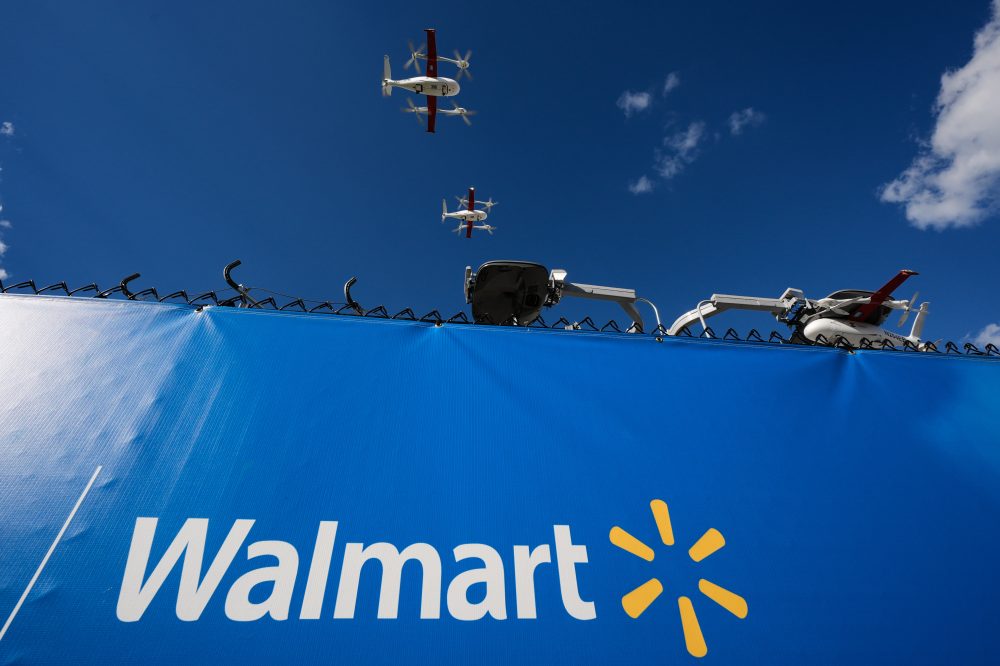
The nation’s largest retailer maintained its yearly financial projections on Thursday, counting on continued demand from budget-conscious shoppers seeking affordable groceries and growth in online sales amid challenging economic conditions across the United States.
The retail giant has maintained low prices on food and essential items as household budgets remain tight, with gas prices climbing above $4 per gallon nationwide and inflation staying high.
Retailers across the country have reported increasing strain on consumer spending this year, with consumer confidence dropping to record lows in May and inflation posting its biggest increase in three years.
The Iran war has also driven up costs for certain raw materials including resin and packaging materials, adding additional pressure to supply chains still recovering from extensive import tariffs imposed last year.
The company kept its annual net sales growth target at 3.5% to 4.5% and adjusted earnings per share between $2.75 and $2.85. Industry analysts had previously described this outlook as conservative in February, anticipating the retailer would increase these projections throughout the year.
CAUTIOUS SECOND QUARTER
Although the retailer has remained largely protected from weak spending impacts so far, the company under CEO John Furner expressed caution regarding second-quarter expectations, projecting sales and profits below analyst estimates.
Increased fuel expenses affected the company’s operating income by approximately 250 basis points, and the retailer said it worked to absorb these costs in its delivery operations to maintain low prices.
“While consumers are telling us they’re feeling some pressure, sales strength has persisted and we saw one of our strongest quarters of share gains,” the company said.
Smaller competitor Target increased its annual sales outlook based on its emerging turnaround strategy, though executives urged caution, while grocery chains Kroger and Albertsons offered conservative yearly projections.
The retail giant, which exceeded first-quarter comparable sales expectations, has been drawing more affluent customers seeking convenience and enrolling in its delivery programs.
Online sales surged 26% in the first quarter and its share of total sales increased significantly compared to the previous year.
The company’s U.S. gross profit rose 29 basis points, supported by increases in membership revenue and advertising.
“Our results reflect our continued focus on delivering across the enterprise — better shopping experiences, a broader assortment, and faster delivery,” Furner said.
The retailer’s first-quarter total U.S. comparable sales, excluding fuel, increased 4.1%, compared with analyst estimates of a 3.8% rise, according to data compiled by LSEG.
The company projects second-quarter net sales to grow 4% to 5%, compared with estimates of a 5.09% increase and adjusted earnings per share of 72 cents to 74 cents, versus expectations of 75 cents.
An American artificial intelligence company is setting up shop in Milan this month as it continues expanding across Europe to meet growing demand for AI technology.
Anthropic, the AI startup established in 2021 by brother and sister team Dario and Daniela Amodei, announced plans to significantly grow its international staff by three times to handle increased interest in its Claude AI language models beyond American borders. The company already operates European locations in Dublin, Zurich, Paris, and Munich, plus a London facility with approximately 200 employees.
“After France and Germany, Italy is a natural next step,” Chris Ciauri, Anthropic’s managing director of international, said in an interview published by Italy’s Il Corriere della Sera.
The move reflects a broader trend as businesses throughout Europe hurry to implement AI technologies to improve efficiency, while government officials work to establish regulations for the rapidly evolving field.
Daniela Amodei emphasized that lawmakers should take proactive steps to prevent repeating the regulatory delays that occurred with social media companies, where protective measures came well after widespread public use.
The company has had disagreements with the Trump administration, particularly regarding its insistence on maintaining restrictions that prevent its AI models from being used for military applications like autonomous weapon targeting or domestic surveillance operations.
Target is implementing a new business strategy focused on attracting young families as the retail giant works to reverse a prolonged period of declining sales and compete with budget retailers like Walmart and TJX that have drawn away customers in recent years.
The retail chain believes it can gain a competitive advantage by attracting new parents and maintaining their loyalty as their children grow up. While Walmart dominates as the preferred destination for everyday family essentials like milk, bread and diapers, Target aims to position itself as the go-to store for more specialized products including baby clothing, toy collections and vitamin supplements.
On Wednesday, the company announced its first strong quarterly earnings in twelve months. During a conference call following the earnings release, Cara Sylvester, Target’s chief merchandising officer, revealed that the company has introduced 2,000 new products to its baby section this year, specifically targeting busy families.
The retailer saw sales increase by 5.6% compared to the previous year and raised its net sales growth projection to 4%, doubling the previous forecast. New CEO Michael Fiddelke is committing $2 billion to improve the product selection, renovate stores and increase staffing levels.
However, retailers continue to face significant challenges as the Iran war has driven up inflation and made consumers more cautious about spending. Target’s stock price dropped 5% following the earnings report.
“I continue to expect share losses in some of these categories, like apparel and home, as competition remains quite strong,” said Mari Shor, senior equities analyst at Target shareholder Columbia Threadneedle.
The company has broadened its toy selection while introducing 1,500 health and wellness items, including family-focused products such as First Day vitamins for kids and teens, and Tubby Todd baby body lotion.
“Attempting to build a relationship with busy families could prove to be helpful in re-establishing a longer-term relationship with their customer base,” said Morningstar analyst Brett Husslein.
According to Husslein, Target has struggled in recent years to establish itself as the primary destination for any specific product category or customer demographic, losing budget-minded shoppers to stores like Walmart while failing to attract younger, affluent consumers seeking clothing and accessories.
Research from a 2025 survey conducted by 84.51, a retail analytics company owned by Kroger Co., indicates that people typically become more price-sensitive and appreciate the convenience of one-stop shopping after having children.
Fiddelke, whose hiring last year faced some doubt, told media this week that Target’s recovery strategy depends on combining “style, design and value.”
Since taking charge, Fiddelke has reorganized company management, including bringing in former Walmart executive Jeff England to oversee Target’s supply chain operations.
The retailer’s new baby product lineup includes both budget-friendly options such as store-brand baby wipes, food and shampoo, as well as premium brands like Bugaboo, whose strollers can exceed $2,000.
Target has established “baby boutiques” in 200 locations, allowing parents to test strollers, examine bassinets outside their packaging and consult with shopping specialists.
Given that Walmart remains the more affordable choice overall, Target’s success “will be vitally dependent on its ability to consistently execute … through store experience and merchandise assortment,” Husslein noted.
A new artificial intelligence chatbot from the company behind SpaceX is struggling to win over what could be one of its biggest potential customers – the federal government.
Records from federal agencies reveal that Grok, developed by the AI startup xAI, appears in just three instances out of more than 400 documented government artificial intelligence applications that identify specific technology vendors. Meanwhile, competing products dominate the landscape, with 234 applications using technology from OpenAI including ChatGPT, 33 utilizing products from Alphabet, and 26 employing Anthropic’s Claude system.
The disappointing performance comes as SpaceX prepares what it describes as the largest initial public offering in history, banking heavily on capturing a significant portion of what the company estimates as a multi-trillion-dollar artificial intelligence services market through xAI.
Federal inventory documents compiled by the Office of Management and Budget paint a picture of limited government interest in Grok, despite the chatbot being offered to agencies at deeply discounted rates of 42 cents per agency for eight months. This pricing strategy mirrors tactics used by technology companies to encourage initial adoption before transitioning to higher-cost contracts.
“The goal is to encourage adoption so that federal employees eventually can’t imagine doing their jobs without generative AI,” explained Valerie Wirtschafter, who researches AI adoption in the federal government at the Brookings Institution.
The lackluster government reception creates uncertainty around SpaceX’s projected $1.75 trillion IPO valuation. Company filings indicate expectations for substantially higher revenue from building AI solutions for large organizations – a market opportunity valued at $26.5 trillion – compared to other business segments.
Industry experts view the federal government’s lukewarm response as a warning sign for broader market acceptance. “It suggests the model lacks the security rigor required at the federal level, which will be a red flag” for corporate buyers, said Vineet Jain, co-founder and CEO of enterprise software company Egnyte. “Without government validation, the $1.75 trillion valuation looks less like a floor and more like a high ceiling.”
The chief executive of SpaceX has publicly championed Grok’s potential for federal applications and advocated for widespread government adoption. In September, announcing Grok’s arrangement with the General Services Administration, he expressed his team’s desire to collaborate with the current administration to “rapidly deploy AI throughout the government for the benefit of the country.”
His Department of Government Efficiency actively pushed Grok adoption, including directing Department of Homeland Security officials to use the system despite lacking proper approval for the agency’s operations.
Government usage data shows Grok being employed for basic functions at agencies like the Office of Personnel Management and Department of Health and Human Services, including document drafting and social media posting. An OPM spokesperson noted that Microsoft Copilot remains the agency’s most frequently used AI tool.
More advanced AI applications also show minimal Grok presence. Only three references appear in specialized deployment data, showing “limited test or pilot capacity” usage at the Energy Department’s Lawrence Livermore National Laboratory and the Election Assistance Commission. OpenAI and Microsoft combined account for 140 such applications.
While the Pentagon maintains a $200 million contract with xAI and has added Grok to its unclassified AI platform, internal preferences lean toward competitors. A Pentagon source with direct knowledge reported that many staff members favor alternative AI tools over Grok.
At the Defense Advanced Research Projects Agency, the Pentagon’s research division, different AI systems serve specific purposes: one company’s product handles engineering analysis while another manages coding and research tasks. The source indicated Grok sees limited use because it’s “just not the best model out there.”
xAI recently began pursuing enhanced government authorization through partnership with the Department of Agriculture, though three USDA information technology professionals reported no awareness of Grok usage within their organization. The department stated it was “proud to sponsor Grok” but didn’t address questions about actual utilization.
Recent setbacks include xAI losing a bid to develop a Grok-powered solution for the Department of Veterans Affairs, with sources indicating the chatbot failed to meet departmental requirements.
Corporate adoption mirrors the government struggles. Web traffic monitoring firm Netskope, which tracks AI usage among thousands of business customers, reported that Grok has “failed to gain significant traction” in corporate environments. Updated figures show enterprise usage declining to 2 out of every 1,000 users from a previous peak of 5 per 1,000 users.
Netskope executive Ray Canzanese noted that even active Grok users spend significantly less time with the chatbot compared to competitors – roughly half the engagement time of ChatGPT users. “The Grok usage data told him the chatbot “is just not going to enter the mainstream for corporate America,” he concluded.
The three co-founders of an artificial intelligence startup are considering strategies to follow China’s directive to reverse Meta’s acquisition worth more than $2 billion, according to a Bloomberg News report published Thursday.
Co-founders Xiao Hong, Ji Yichao and Zhang Tao are examining various approaches, including securing approximately $1 billion from outside investors to repurchase their company, the report stated, citing sources with knowledge of the situation.
The trio is in talks about a financing round that would establish the company’s worth at a comparable level to what Meta originally paid for the Singapore-based startup, according to the report.
Reuters was unable to immediately confirm the Bloomberg report. The company did not provide an immediate response to Reuters’ request for comment.
The co-founders might contribute their own funds to cover any remaining financial shortfall, the report indicated.
This approach could transform the startup into a joint venture with prospective investors and potentially lead to a public stock offering in Hong Kong.
Meta had revealed the acquisition in late December as part of efforts to enhance sophisticated AI capabilities throughout its various platforms. China quickly initiated an investigation into whether the transaction breached investment regulations and prevented two of the startup’s co-founders from departing the country.
Last month, Beijing instructed the California-based tech giant to reverse the purchase as part of increased oversight of American investments in cutting-edge Chinese technology companies amid escalating U.S.-China technology disputes.
The startup creates versatile AI systems that operate as virtual workers, autonomously performing duties including research and process automation with limited human oversight.
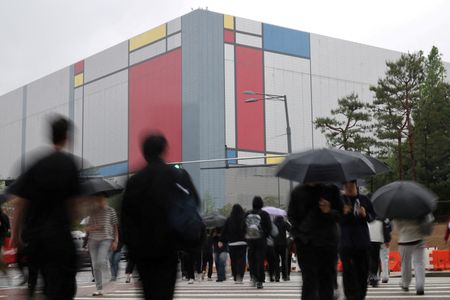
Workers and local residents near Samsung Electronics’ massive semiconductor facility outside Seoul are experiencing mixed emotions following a last-minute wage agreement that averted a potential strike.
The facility represents Samsung’s biggest chip manufacturing location, producing semiconductors that have seen tremendous demand due to artificial intelligence growth and delivering unprecedented profits – while simultaneously fueling worker demands for better compensation.
The preliminary wage agreement has brought comfort to South Korea, considering Samsung’s critical role in the nation’s economy, and has raised optimism among local businesses surrounding the manufacturing site.
Lee Se-hee, who operates an upscale restaurant in Pyeongtaek, a city with approximately 650,000 residents, expressed hope about the outcome. “If employees receive performance bonuses as a result of this general strike, I think restaurants near Samsung will benefit greatly, including through company dinners and group meals,” Lee Se-hee said.
However, the agreement has revealed significant workplace divisions, as memory chip department employees are positioned to earn bonuses of approximately $416,000, creating concerns that staff in less profitable areas will be overlooked.
A foundry engineer working in the logic chip-focused division at the Pyeongtaek location expressed frustration. “It’s a huge disappointment,” the engineer stated.
The engineer, who requested anonymity due to the sensitive nature of the topic, added, “It looks like those who can switch to SK Hynix will keep applying, while others will try to transfer internally to the memory division.”
Workers at competing semiconductor company SK Hynix earned three times more in performance compensation last year compared to Samsung employees, a gap that contributed to Samsung worker dissatisfaction and departures to SK Hynix.
“The memory colleagues seem to be satisfied with the total amount, but a bit disappointed because they were paid in stock,” the engineer noted, referencing Samsung’s strategy to distribute much of the performance bonuses through company shares.
The Samsung facility in Pyeongtaek employs roughly 14,000 people, though a local property professional suggested limited economic impact for the city since many employees don’t reside locally and bonuses will primarily come as stock.
Kim Suk-joon, 66, described the situation from a contractor perspective. “For local subcontractors, this strike-and-bonus deal is like watching someone else’s feast,” Kim Suk-joon said.
A worker in Samsung’s contract manufacturing division said he would likely support the agreement despite its heavy favor toward the memory business.
“We were all in the same position, so it feels a bit unfair that only the memory division is getting that much,” said the employee, who also chose to remain anonymous.
Jang Sung-hyun, 47, employed by a Samsung contractor, expressed relief that the strike threat had passed while worrying about potential excessive costs for the company.
“Weren’t they basically holding the public and companies hostage for the sake of their own performance bonuses?” Jang Sung-hyun questioned.
On a union discussion platform, several members posted encouraging comments, commending union leadership for resisting intense pressure from both corporate management and government officials to reach an agreement.
One message on the Selunion forum read, “Some may be satisfied, and others may be unhappy, but you truly went through a lot. Thank you for your hard work.”
Stock prices for European space industry companies experienced dramatic increases on Thursday, driven by investor enthusiasm following Elon Musk’s SpaceX announcement of plans to go public through a stock market listing.
French satellite operator Eutelsat saw its stock price climb 10% during morning trading hours, while German satellite manufacturer OHB experienced a 12% increase and Luxembourg-based SES recorded gains of 3.5%.
The weekly performance has been even more impressive, with Eutelsat climbing 20% and OHB surging 32% over the course of the week. According to one trader who spoke with Reuters, the positive momentum for European satellite companies stems directly from SpaceX’s initial public offering filing submitted on Wednesday.
Public libraries nationwide are experiencing difficulties acquiring new materials after the country’s biggest book distributor ceased operations earlier this year.
The shutdown has created significant supply chain challenges for libraries attempting to stock their shelves with fresh reading materials for patrons.
Retailers across the country are experiencing unexpected supply shortages of hacky sacks as the classic 1990s toy experiences a dramatic resurgence in demand. The sudden spike in popularity has been attributed to recent viral social media content that has reintroduced the game to a new generation.
Multiple vendors are struggling to keep up with the unprecedented demand for the small bean-filled bags that were a staple of ’90s culture. The shortage highlights how quickly social media trends can impact retail markets and consumer behavior.
Investment managers gathered at a major Hong Kong conference this week to share their top stock picks for 2024, with artificial intelligence infrastructure and Generation Z consumer trends taking center stage.
At the annual Sohn Investment Conference in Hong Kong, hedge fund leaders outlined their strategies for capitalizing on the technology surge and evolving spending patterns among younger consumers. The event serves as a platform where investment firms present their most promising investment opportunities.
The conference comes as semiconductor stocks have driven strong performance in Asian markets this year, outpacing their Western counterparts amid continued AI enthusiasm.
Kenny Zhang, who serves as chief investment officer at Valliance Asset Management, highlighted U.S. AI data center company CoreWeave as a key opportunity. The company supplies technology firms with computing hardware and cloud services using advanced chips from leading manufacturers.
Zhang predicted a fundamental shift in how businesses operate, suggesting that artificial intelligence will enable companies worldwide to outsource intellectual work to digital assistants. “If we think chips are replacing people, how do we make the digital people happy? … You need a company like Coreweave,” Zhang explained during his presentation.
His Hong Kong-based firm projects CoreWeave’s annual revenue could surge to $55 billion by 2028, a massive jump from $1 billion recorded in early 2024.
Other investment managers are focusing on supply chain bottlenecks created by the AI boom. CloudAlpha Capital, another Hong Kong-based hedge fund, identified printed circuit boards as facing the most acute shortages across semiconductor supply chains.
The firm favors Taiwan’s Compeq Manufacturing, a leading circuit board producer. Chris Wang, founding partner and co-chief investment officer at CloudAlpha, warned that even major chip manufacturer operations could face circuit board capacity constraints over the next one to three years.
Wang sees potential for Compeq’s stock to be revalued higher, noting the company supplies major technology brands and is expanding production while trading at less than 15 times valuation.
Keyrock Capital Management is backing Japan’s Kandenko, an electrical engineering company, expecting it to benefit significantly from construction activity related to new AI data center development.
Beyond technology investments, several funds are targeting shifts in consumer behavior, particularly among younger demographics.
Jun Y. Oh from Washington-based Griet Capital endorsed Thai pet food manufacturer i-Tail Corp, pointing to fundamental changes in how people view their animals. “The way people think about pets is very different from our parents,” Oh observed.
He cited striking statistics from South Korea, where pet stroller sales exceeded baby stroller sales last year. Oh noted that Generation Z consumers spend over $6,000 annually on their pets, roughly 2.5 times more than baby boomers.
Hong Kong’s Kaleido Capital Partners is similarly focused on youth-oriented food products. The firm sees continued growth potential for South Korean instant noodle producer Samyang Foods, driven by expanding international sales in Europe and the United States, along with improving profit margins.
The investment firms did not reveal whether they currently hold positions in the companies they recommended during the conference presentations.
Advanced Micro Devices announced Thursday it plans to pour more than $10 billion into Taiwan’s artificial intelligence sector while expanding strategic alliances to boost its manufacturing operations.
The American semiconductor company revealed it will partner with Taiwanese companies ASE and SPIL to create more energy-efficient technology for artificial intelligence systems and processors, according to a company statement.
TOKYO (AP) — April trade figures from Japan’s Finance Ministry revealed a substantial 14.8% increase in exports compared to the same period last year, demonstrating the nation’s continued commercial strength amid concerns about energy supply disruptions stemming from conflict in Iran.
The export growth exceeded projections, marking the eighth consecutive month of increases as semiconductor shipments experienced a dramatic surge of nearly 42% in value year-over-year. The explosive growth in demand for computer chips and related technology infrastructure supporting artificial intelligence development has created significant profits for numerous Asian technology manufacturers.
Import figures also showed growth, climbing 9.7% compared to the previous year.
Japan’s trade position moved into positive territory with a surplus of 301.9 billion yen ($1.9 billion), contrasting with a deficit during the same month in the prior year. The nation had previously recorded a surplus approaching 643 billion yen in March.
Additional export categories that boosted April’s performance included medical equipment, paper products, and electrical machinery.
Trade with China showed exports increasing 15.5% while U.S.-bound exports grew 9.5%. Import data revealed a 15% rise from China and a significant 23% jump from the United States.
Despite overall import growth, Japan experienced a dramatic decline in oil imports, falling nearly 50% by value from the previous year, while liquefied natural gas imports decreased 20%. These reductions stem from restricted access through the Strait of Hormuz, the primary shipping channel for Persian Gulf exports, due to Iranian conflict.
Given Japan’s near-total dependence on oil imports, Prime Minister Sanae Takaichi has attempted to address supply shortages by authorizing releases from strategic petroleum reserves. Nevertheless, reduced availability has driven up costs and affected production of petroleum-derived products including naphtha.
Brent crude prices, which stood at $70 per barrel before the Iranian conflict began, have surged beyond $100, while Japan’s weakening currency has made dollar-denominated oil purchases even more expensive.
Technology stocks powered Asian markets to significant gains Thursday, following a rebound on Wall Street driven by artificial intelligence momentum and declining oil prices.
The rally received a major boost from chipmaker Nvidia’s impressive quarterly results, showing profits that skyrocketed over 200% compared to the same period last year, with revenue climbing 85% during the February-April timeframe.
The company has emerged as a major winner in the artificial intelligence boom, benefiting from strong demand for its advanced AI processors. While Nvidia’s stock climbed 1.3% on Wednesday ahead of the earnings announcement, shares dropped 1.3% in after-hours trading following the results.
South Korea’s Kospi index led regional gains with a remarkable 6.7% jump to 7,688.43, driven by heavy buying in technology companies including Samsung Electronics, which rose 6.3%. SK Hynix, a memory chip manufacturer that collaborates with Nvidia, saw shares leap 9.5%.
Taiwan’s Taiex, dominated by technology stocks, climbed 3.3% as major semiconductor producer TSMC advanced 2.3%.
Tokyo’s Nikkei 225 posted a strong 3.5% increase, reaching 61,877.89.
Chinese markets showed more restrained growth, with Hong Kong’s Hang Seng gaining 0.2% to 25,702.46, while the Shanghai Composite index rose 0.4% to 4,179.16.
Australia’s S&P/ASX 200 advanced 1.3% to 8,606.70.
Energy prices moved higher early Thursday after Brent crude tumbled 5% the previous day. Brent, the global benchmark, increased 48 cents to $105.50 per barrel, while U.S. crude added 52 cents to $98.78 per barrel.
Brent continues trading well above its approximately $70 level from before the conflict with Iran. Energy prices have fluctuated based on changing expectations about whether the United States and Iran might reach a deal enabling full resumption of oil shipments from the Persian Gulf to global markets.
Wednesday saw U.S. markets recover, with the S&P 500 rising 1.1% for its first gain in four sessions, closing at 7,432.97. The Dow Jones Industrial Average increased 1.3% to 50,009.35 while the Nasdaq composite surged 1.5% to 26,270.36.
Equities benefited from declining bond yields, as the 10-year Treasury yield dropped to 4.57% from Tuesday’s close of 4.67%. This represents a substantial shift in a market where movements are typically measured in tiny fractions.
The 10-year Treasury yield had been climbing from below 4% before the conflict with Iran started, along with other global government bond yields, due to concerns that ongoing fighting will maintain elevated oil prices and other factors. Inflation worries decrease the likelihood of Federal Reserve rate cuts this year and increase risks that global central banks may need to raise rates in 2026.
Elevated yields constrain economic growth and pressure prices for stocks, digital currencies and various other investments. Beyond increasing mortgage costs, they could also limit corporate borrowing for artificial intelligence data center construction that has recently supported U.S. economic expansion.
As yields retreated, technology companies helped drive Wall Street’s advance.
Leading technology gainers included Advanced Micro Devices, which jumped 8.1%, and Intel, which rose 7.4%.
Smaller companies often experience greater benefits from lower yields than larger competitors since many rely on borrowing for growth. The Russell 2000 index tracking the smallest U.S. companies surged 2.6%, more than twice the S&P 500’s gain, which tracks the largest U.S. corporations.
Red Robin Gourmet Burgers soared 18.2%, and Cava Group gained 3.1% after delivering stronger-than-anticipated profit results that boosted confidence in consumer spending power despite elevated fuel costs and economic pessimism.
Most major U.S. corporations have delivered better early 2026 profits than analysts predicted, helping drive stocks to record levels. Share prices typically track corporate earnings trends over extended periods.
Among Wall Street’s declining stocks was Target, which dropped 3.9% despite the retailer posting better profit and revenue results than analysts forecasted. A new CEO, Michael Fiddelke, is working to revitalize the company and increase sales.
In early Thursday currency trading, the U.S. dollar weakened to 158.85 Japanese yen from 158.92 yen. The euro strengthened to $1.1631 from $1.1624.
Australia’s job market delivered surprising weakness in April, with employment numbers dropping while unemployment surged to levels not seen since late 2021, potentially indicating the labor market may be cooling enough to prevent immediate interest rate increases.
The disappointing employment figures caused financial markets to reduce expectations for a rate increase next month to just 10%, down from 20% previously, after the central bank implemented three consecutive rate hikes this year in efforts to control inflation. Prospects for an August rate adjustment are now considered unlikely.
Australia’s currency declined 0.2% to $0.7136, while three-year government bond yields dropped 13.8 basis points to 4.568%, continuing earlier downward movement.
Data released by the Australian Bureau of Statistics revealed net employment decreased by 18,600 positions in April compared to March, which saw a revised increase of 23,300 jobs. This result fell significantly short of market predictions calling for a 15,000 job gain. Full-time positions declined by 10,700 following a substantial increase in the prior month.
Unemployment climbed to 4.5%, marking the highest level since November 2021, while economists had anticipated the rate would remain steady at 4.3%. The participation rate decreased slightly to 66.7%. Despite the employment decline, hours worked increased a robust 0.8%.
“Compared to what we usually see in April, more people remained unemployed this month,” said Sean Crick, ABS head of labour statistics.
“A drop in female employment drove the overall fall in employment … This is the first fall in female employment since August 2025.”
The central bank has implemented three interest rate increases this year, bringing rates to 4.35% to address a war-related global energy crisis, completely reversing policy easing measures from the previous year. Annual inflation rose to 4.6% in March, significantly exceeding the target range of 2%-3%.
The employment market has demonstrated remarkable strength, leading the central bank board to determine that additional loosening would be necessary to address the deteriorating inflation outlook.
An ANZ survey indicated Australian job advertisements decreased 0.8% in April, marking the second consecutive month of declines, while a National Australia Bank business survey showed its employment index dropped significantly to just +1 in April from +6.
The artificial intelligence chipmaker Nvidia delivered quarterly financial results that dramatically exceeded Wall Street forecasts once more, powered by enormous demand for its advanced AI processors. The technology giant announced Wednesday that it generated $58.32 billion in earnings, equivalent to $2.39 per share, during the February through April quarter. This represents a significant increase from the $18.78 billion, or 76 cents per share, recorded in the corresponding quarter last year. When one-time charges are excluded, Nvidia posted earnings of $1.76 per share. The company’s revenue surged 85% to $81.62 billion compared to $44.01 billion in the prior year period. Financial analysts had projected earnings of $1.75 per share and revenue of $78.91 billion on average, based on FactSet polling data.
Wall Street stocks rebounded Wednesday as bond market tensions subsided and oil prices retreated from recent gains. The S&P 500 index rose 1.1% for its first positive session in four trading days, approaching the record high established last week. The Dow Jones Industrial Average gained 1.3%, while the Nasdaq composite index advanced 1.5%. Equity markets received support from declining bond yields, which ended their recent sharp increases tied to inflation concerns. The benchmark 10-year Treasury yield dropped back under 4.60% as Brent crude oil prices fell more than 5%.
Elon Musk unveiled plans Wednesday for what could become one of the largest public stock offerings in history for his aerospace company, despite the firm currently posting billions in annual losses. Wednesday’s regulatory filing revealed that his SpaceX recorded $2.6 billion in operational losses last year against $18.7 billion in revenue, with losses continuing to accumulate in early 2025. Nevertheless, the planned initial public offering is anticipated to rank among the largest on record, potentially exceeding the current record holder, Saudi Aramco, the petroleum company that went public seven years ago. The stock sale might also elevate Musk, a major shareholder who established SpaceX in 2002, to become the world’s first trillionaire. Forbes currently estimates his wealth at $839 billion.
Media heir James Murdoch has finalized an agreement with the digital media company Vox Media to purchase New York magazine, the Vox Media Podcast Network and the Vox editorial brand. The transaction with the liberal-oriented Vox represents a significant step toward building his independent media empire for the 53-year-old younger son of Rupert Murdoch, who previously controlled New York Magazine from 1976 to 1991. The deal follows less than a year after the Murdoch family settled arrangements for control of the 95-year-old media mogul’s empire following his eventual death. The agreement’s financial details, with completion expected in the coming weeks, remain undisclosed.
Young single women from Generation Z are surpassing their male counterparts in home purchasing rates. These women comprised 35% of all homebuyers within their generation, compared to 18% for single Gen Z men, based on National Association of Realtors survey information. The research examined homebuyers from July 2024 through June 2025. Single women across all age groups constituted a quarter of homebuyers, while single men represented 11%. This pattern demonstrates that single women continue choosing homeownership and successfully addressing affordability obstacles at higher rates than single men. However, older generations and married couples still comprise the majority of overall homebuyers.
Canadian mining company Sherritt International Corp. has entered into a preliminary agreement with Gillon Capital LLC. Gillon operates as a family office connected to a former adviser of U.S. President Donald Trump. The arrangement would enable Gillon to acquire a controlling interest in Sherritt as it manages sanctions affecting its Cuban operations. This announcement follows Sherritt’s Tuesday statement that it abandoned plans to dissolve its Cuban joint venture, reversing last week’s decision amid expanded U.S. sanctions on the nation. Gillon serves as the family office for the Washburne family. Ray Washburne received a Trump appointment to lead the U.S. development bank from 2017 to 2019 and subsequently served on the president’s intelligence advisory board.
Target, which launched a turnaround strategy under new leadership earlier this year, posted its largest quarterly sales increase for a key metric in four years. The retail company initiated a $6 billion plan earlier this year to reverse three straight years of sales declines. CEO Michael Fiddelke expressed cautious optimism about the results. Fiddelke assumed the chief executive role in February. The company is renovating stores and working to restore its reputation for offering fashionable, affordable apparel. Target ranks among the first major retailers to announce financial results for the February-April period. Analysts will monitor executive commentary regarding potential consumer behavior changes due to rising gasoline costs.
A House committee examined the Transportation Security Administration’s future as the Trump administration promotes replacing TSA officers with private contractors. House Committee on Homeland Security members conducted a hearing on TSA modernization approaches nearly 25 years after its establishment following the Sept. 11 attacks. They demonstrated bipartisan support for guaranteeing TSA worker compensation during future government shutdowns and providing them with current technology. However, concerns about TSA officer morale following unpaid work during recent shutdowns and Trump’s proposal to replace workers at 250 smaller airports dominated discussions about improved equipment and stable funding.
An Australian mining company announced Thursday it has formed a partnership with a United States-based mineral processing firm to enhance rare earth element production outside of China.
Ionic Rare Earths revealed its collaboration with Nth Cycle, a critical mineral refining company, designed to bolster rare earth processing capabilities in America and other international markets.
The partnership will see Nth Cycle providing its specialized recycling and processing technology to enhance Ionic Rare Earths’ mining operations.
“Nth Cycle’s technology pathway not only lowers costs, but also addresses critical supply chain vulnerabilities, exactly the kind of partnership that can make ex-China refining viable,” said IonicRE Executive Chairman Brett Lynch.
Following the announcement, IonicRE stock prices climbed 4.5% to A$0.345 during morning trading sessions, putting the company on pace for its strongest single-day performance in a week if the upward trend continues.
Global stock markets posted gains Thursday as technology sector developments boosted investor confidence, with Nvidia’s strong earnings report and Samsung’s strike resolution driving chipmaker shares higher.
Asian markets outside Japan saw broad increases of 1.2% according to MSCI’s regional index, ending a four-day losing streak. South Korea’s KOSPI jumped more than 4% on the positive news.
Oil markets also moved higher, with Brent crude futures gaining 0.7% to reach $105.76 per barrel during Asian trading. The increase came after three large tankers successfully navigated the Strait of Hormuz on Wednesday, while Iran maintained control over the strategic waterway.
U.S. markets had posted solid gains the previous day, with the S&P 500 advancing 1.1% and the Nasdaq climbing 1.5% following three consecutive days of declines. The rally came as President Donald Trump indicated the United States remained prepared for additional military action against Iran if Tehran rejected peace negotiations, though he suggested Washington might wait several days to “get the right answers.”
“Oil prices declined and other major markets rallied, as investors took comfort from headlines quoting Trump saying the U.S. was in the ‘final stages’ with Iran,” analysts from Westpac wrote in a research report.
Technology stocks received a boost after Nvidia exceeded revenue expectations in its Wednesday forecast. CEO Jensen Huang worked to convince investors that the world’s most valuable company could maintain explosive growth in artificial intelligence chip demand.
“The chip landscape remains Nvidia’s world with everybody else paying rent, as more sovereigns and enterprises wait in line for Nvidia’s chips,” said Dan Ives, global head of technology research at Wedbush Securities in New York.
Despite the positive forecast, Nvidia shares dropped 1.1% in after-hours trading, while S&P 500 e-mini futures declined 0.5%.
“The market’s reaction was relatively muted by its own lofty standards,” said Tony Sycamore, market analyst at IG in Sydney. “The lack of any China sales in the outlook and guidance that was only modestly ahead of expectations left some investors wanting a bit more fireworks.”
Samsung Electronics shares soared more than 6% in Seoul after the company’s union announced it would halt planned industrial action following a preliminary wage agreement. The move prevented a strike by nearly 48,000 workers that could have disrupted South Korea’s economy and worldwide semiconductor supply chains.
Japan’s Nikkei 225 index rose 1.9% even as S&P Global’s preliminary manufacturing activity index showed slower expansion, falling to 54.5 in May from 55.1 the prior month.
Japanese export data provided additional economic encouragement, with April shipments increasing 14.8% compared to the same period last year. The finance ministry figures marked the eighth consecutive month of export growth, easing concerns about global economic stagnation.
Australian markets gained 1.5% despite mixed economic indicators. Preliminary service sector activity slowed to 47.7 in May from 50.7 in April, while manufacturing activity remained steady at 50.2, just above the threshold indicating expansion.
The 10-year U.S. Treasury yield increased 1.9 basis points to 4.588%, continuing its upward trend after breaking a three-day decline Wednesday. Federal Reserve meeting minutes from April 28-29 revealed heightened inflation concerns among policymakers, with more officials considering potential interest rate increases.
Cryptocurrency markets showed minor declines, with Bitcoin falling 0.3% to $77,453.44 and ether dropping 0.3% to $2,127.53.
A new IPO filing from SpaceX has pulled back the curtain on the vast web of business relationships connecting Elon Musk’s various companies, revealing billions of dollars in transactions that span everything from vehicle purchases to shared aircraft arrangements.
The Wednesday filing disclosed previously unknown details about how the billionaire’s enterprises have evolved into an interconnected network of commercial deals, financial commitments and operational partnerships across artificial intelligence, transportation, communications and infrastructure sectors.
The documents show rapidly growing business between SpaceX, electric vehicle manufacturer Tesla, AI company xAI and social media platform X as SpaceX prepares for a public offering that could reach a $1.75 trillion valuation.
Combined purchases by SpaceX and its xAI division from Tesla totaled approximately $650 million last year, with xAI alone acquiring $506 million worth of Megapack battery systems from the electric vehicle company.
SpaceX’s commercial spending reached $144 million on various goods and services, including $131 million for Tesla’s stainless-steel Cybertrucks purchased at retail prices – enough to acquire over 1,000 vehicles.
The filing also showed Tesla, which traditionally spends minimal amounts on conventional marketing, paid $4 million for advertising on X during 2025.
Aircraft sharing agreements between Tesla and Musk personally were also revealed, along with security service payments to a private company under Musk’s ownership.
Tesla holds nearly 19 million shares of SpaceX Class A stock, representing under 1% ownership following the planned offering, after investing $2 billion in SpaceX this year.
The two companies are collaborating on an ambitious multibillion-dollar initiative called the Terafab, a semiconductor manufacturing project that demonstrates the growing integration between Musk’s ventures in AI and computing infrastructure.
Tesla is constructing a solar manufacturing facility designed to reach 100 gigawatts of annual domestic production capacity, intended to provide specialized solar equipment for SpaceX’s proposed network of orbital AI data centers.
The revelations arrive as investors examine governance practices, investment decisions and business overlap among Musk-controlled entities more closely, particularly as SpaceX diversifies from rockets and satellite internet into AI infrastructure and computing services.
The filing uncovered over $20 billion in related-party AI infrastructure lease commitments connected to equipment deals between xAI subsidiaries and private investment company Valor Equity Partners, whose founder Antonio Gracias serves on SpaceX’s board.
Some Valor AI infrastructure lease deals were classified as “failed sale-leaseback” transactions, forcing SpaceX to record billions in associated commitments as debt on its financial statements.
Valor Equity Partners did not respond immediately to requests for comment.
SpaceX indicated that payment and performance responsibilities under these agreements were backed by SpaceX or its subsidiaries. The company reported paying $885 million under these arrangements in 2025 and an additional $857 million during just the first two months of 2026.
Additional operational connections among Musk-affiliated businesses were disclosed, including lease payments from xAI to Musk Industries LLC, a private entity owned by Musk, and construction services provided by The Boring Company in Texas for SpaceX projects.
Crude oil prices recovered Thursday after experiencing two consecutive days of declines, driven by ongoing supply worries stemming from unclear prospects for ending the Iran conflict and significant inventory reductions that have sparked fears about depleting global reserves.
Brent crude futures climbed 81 cents, representing a 0.77% increase to reach $105.83 per barrel by 0055 GMT, while U.S. West Texas Intermediate futures gained 97 cents, up 0.99% to $99.23.
Both oil benchmarks had fallen more than 5.6% Wednesday following comments from U.S. President Donald Trump indicating that discussions with Iran had reached their final phases, though he also issued warnings of additional military action should Iran reject a peace agreement.
Iran responded with warnings against further military strikes and revealed measures strengthening its grip on the vital Strait of Hormuz shipping lane, which previously transported oil and liquefied natural gas equivalent to roughly 20% of worldwide consumption before becoming largely inaccessible due to the conflict.
“The sharp drop in oil prices appears to be pricing in the possibility of a breakthrough in the talks,” said Yang An, analyst at Haitong Futures.
“However, if Trump insists on making no concessions to Iran, an agreement seems unlikely, and the final outcome of the negotiations could reverse sharply,” Yang said.
Iran revealed Wednesday the creation of a new “Persian Gulf Strait Authority,” declaring the establishment of a “controlled maritime zone” within the Strait of Hormuz.
The nation shut down the strait as retaliation for attacks by the U.S. and Israel that initiated the war on February 28. While most combat operations have ceased following an April ceasefire, Iran continues restricting passage through Hormuz as the U.S. maintains a coastal blockade.
Supply disruptions from the critical Middle Eastern region due to the ongoing conflict have compelled nations to rapidly deplete their commercial and strategic reserves, creating alarm about potential exhaustion of these stockpiles.
The U.S. Energy Information Administration reported Wednesday that the nation removed almost 10 million barrels from its Strategic Petroleum Reserve during the previous week, marking the largest withdrawal ever recorded.
The EIA additionally reported that commercial crude stockpiles decreased by 7.9 million barrels to 445 million barrels last week, exceeding analysts’ projections in a Reuters survey that anticipated a 2.9 million-barrel reduction.
Gasoline stockpiles declined by 1.5 million barrels, while distillate inventories increased by 372,000 barrels.
“The drawdown in oil inventories will make it difficult for oil prices to remain low,” said Mingyu Gao, chief researcher for energy and chemicals at China Futures.
“With the Strait of Hormuz blocked, global refined-product and onshore crude inventories are expected to fall below their lowest levels for this time of year in the past five years by late May and late June,” Gao said.
The American dollar retreated from a six-week high Thursday as markets responded to growing optimism that Washington may be close to reaching an agreement with Tehran to resolve ongoing Middle Eastern conflicts.
U.S. President Donald Trump indicated that diplomatic talks have reached their final phases, though he also cautioned about potential military action should Iran reject a negotiated settlement.
Currency markets saw the dollar weaken against the Japanese yen for the first time in eight trading days on Wednesday, with the exchange rate dropping slightly to 158.905 yen during early Thursday sessions. This movement pulled the dollar back from the 160 yen threshold that market experts consider a potential catalyst for Japanese government currency intervention.
The European currency remained stable at $1.1626 Thursday, recovering after reaching its lowest point since April 7 at $1.1583 during the previous trading session.
The dollar index, which tracks the American currency’s performance against six major international currencies including the euro and yen, held steady at 99.128 after reaching 99.472 Wednesday – its strongest position since April 7.
“The ‘safe haven’ flows reversed because of positive news about the Iran war,” Joseph Capurso, head of FX at Commonwealth Bank of Australia, wrote in a client note.
He added that “while the U.S. has domestic political incentives to seek peace, we would not be surprised if President Trump chooses military escalation to gain leverage in negotiations.”
The Australian dollar declined 0.1% to $0.7147 as traders awaited local employment data scheduled for release later Thursday.
The British pound showed minimal movement at $1.3430.
Bitcoin remained unchanged at approximately $77,650.
Australia’s financial oversight agency issued warnings Thursday about mounting international private credit dangers that could affect the nation’s financial institutions, prompting enhanced monitoring efforts.
The Australian Prudential Regulation Authority (APRA) released a report to financial institutions stating that while private credit represents a smaller segment domestically, local institutions face exposure to international pressures through various pathways.
APRA noted it has strengthened supervision of banks, insurance companies and superannuation trustees as international political conflicts, artificial intelligence advances and increasing complexity in worldwide financial markets continue transforming the risk landscape.
“Among the areas we are most focused on are rapid developments in AI, which are outpacing the ability of many entities to manage the risks, and potential impacts on Australia’s financial system flowing from the war in the Middle East and other geopolitical volatility,” APRA Chair John Lonsdale said.
Financial experts have indicated that Asia-Pacific banking institutions, including Australian lenders, might need to increase their short-term loan loss reserves as the Iran conflict creates darker economic outlooks in a region heavily dependent on Middle Eastern oil supplies.
The nation’s largest lender, Commonwealth Bank of Australia, has allocated additional funds to prepare for conflict-related risks. The remaining three major banks, National Australia Bank, Westpac and ANZ Group, have increased provisioning by A$757 million ($541.03 million) to address potential bad debts stemming from the war.
APRA stated Australia’s financial framework remains well-equipped to support the economy through volatile periods, with banks and insurers maintaining robust liquidity positions. Stress evaluations also demonstrated the system could endure various “severe but plausible” disruptions.
Japan’s export sector continued its impressive streak in April, with government figures released Thursday showing an eighth consecutive month of growth amid persistent global supply chain challenges stemming from the U.S.-Israeli conflict with Iran.
The data comes after Tuesday’s economic report revealed Japan’s economy expanded at an annualized rate of 2.1% during the first quarter of 2026, surpassing expectations thanks to strong export performance and consumer spending, though analysts warn the current quarter may present greater challenges.
April’s export figures climbed 14.8% compared to the same period last year, significantly outperforming the 9.3% growth that market analysts had predicted and building on March’s revised 11.5% increase.
Trade with the United States saw exports climb 9.5% year-over-year, while shipments to China jumped 15.5%, according to the government data.
Import activity also strengthened, rising 9.7% from the previous year and beating the anticipated 8.3% gain. This growth occurred despite crude oil imports plummeting 64%, representing the sharpest decline since 1980, according to a finance ministry official. Increased crude oil purchases from the United States helped partially balance this drop.
The trade figures resulted in Japan recording a surplus of 301.9 billion yen ($1.90 billion), a stark contrast to forecasts that had predicted a 29.7 billion yen deficit.
While the blockade of the Strait of Hormuz has driven up energy prices and created supply chain bottlenecks for petroleum and other materials, Japan’s export performance has remained steady as manufacturers continue operating with existing stock levels, bolstered by the nation’s substantial strategic oil reserves.
However, analysts warn that continued disruptions to Middle Eastern shipping lanes could eventually impact both import and export activity by increasing manufacturing costs and dampening global demand, especially in energy-dependent industries such as chemicals.
An artificial intelligence startup based in San Francisco is approaching a significant financial milestone as it prepares to report its first quarterly profit, according to a source with knowledge of the company’s finances.
Anthropic has informed potential investors through recent fundraising documents that revenue for the June quarter may hit at least $10.9 billion, representing more than twice the $4.8 billion the company generated during the recently completed March quarter, the source revealed while requesting anonymity.
This revenue surge is expected to drive the company’s second-quarter operating profit to approximately $559 million, the source indicated.
The financial details were initially reported by The Wall Street Journal on Wednesday.
These impressive numbers highlight the growing appetite for Anthropic’s Claude AI technology, which software developers are increasingly using for computer programming tasks, while some businesses are implementing the company’s advanced Mythos model to identify security weaknesses in their systems.
Such profitability stands out in an AI sector that continues to struggle with the technology’s substantial operational expenses.
The industry’s massive computing requirements were further illustrated Wednesday through SpaceX’s initial public offering documents, which revealed details about AI-related costs at the space and AI company owned by Elon Musk.
According to the filing, Anthropic has committed to paying SpaceX $1.25 billion monthly through May 2029 for computing services that will utilize both of SpaceX’s AI training facilities, known as Colossus and Colossus II.
The agreements include termination clauses allowing either company to end the arrangement with 90 days’ advance notice, and the filing noted that payments would be adjusted during capacity increases scheduled for this month and next.
Musk announced on X that SpaceX was exploring opportunities with additional companies to “offer AI compute as a service at significant scale,” which could help offset losses in the company’s AI division.
SpaceX’s AI operations reported approximately $2.5 billion in losses during the March quarter, despite generating $818 million in segment revenue, according to the IPO documentation.
WASHINGTON, May 20 – Nexstar Media Group filed a request with a federal appeals court on Wednesday evening, asking judges to speed up their examination of a court ruling that put the brakes on its acquisition of competing broadcaster Tegna. The company argues the postponement has resulted in tens of millions of dollars in lost operational savings that cannot be recovered.
On April 17, a judge in California issued a temporary halt to the $6.2 billion transaction after facing opposition from twelve state attorneys general along with DirecTV.
If completed, the acquisition would form the nation’s most extensive broadcast station network, with programming reaching 80% of American households. Nexstar is pushing for the appeals court to set oral arguments for August regarding the proposed transaction.
A recent survey conducted by Reuters indicates that approximately one-third of Japanese businesses have either implemented or are exploring the use of artificial intelligence-powered robotics technology.
The research, released Thursday, shows that manufacturers of transportation equipment and automobiles are at the forefront of this technological adoption trend.
Japanese officials view the integration of AI robotics in business operations as essential for addressing the nation’s ongoing workforce shortages while maintaining its status as a premier supplier of industrial robotics worldwide.
Japan houses major robotics companies including Fanuc, Yaskawa Electric and Kawasaki Heavy Industries, establishing the country as a dominant force in traditional industrial robotics manufacturing.
However, the nation now encounters increased competition from China and the United States in the development of AI-enhanced robots, which possess autonomous capabilities to assess their surroundings and make independent decisions, moving beyond simple repetitive programming.
Survey results indicate that 4% of participating companies currently utilize AI robots, while 5% have definite deployment plans and 25% are evaluating potential implementation. The remaining 66% reported no current plans for AI robot adoption.
Transportation equipment manufacturers demonstrate the highest adoption rates, with 80% either currently using or investigating AI robot implementation. Conversely, 94% of wholesale sector respondents indicated no intentions to deploy AI robotics.
Among companies that are using, planning to use, or considering AI robots, 71% identified manufacturing as their primary application, 19% selected hazardous task operations, and 11% chose customer service functions. Respondents were permitted to select multiple applications.
The polling was executed by Nikkei Research on behalf of Reuters between May 1-15. Researchers contacted 492 companies, receiving responses from 220 businesses under anonymity agreements.
The survey also addressed government recommendations encouraging publicly traded companies to utilize their appreciated financial holdings more effectively for growth initiatives. Sixty percent of respondents believed individual companies should maintain decision-making authority on asset utilization, while 44% suggested corporate size should influence policy application.
Additionally, 24% indicated that maintaining certain financial asset levels remains necessary to enable salary increases. Multiple responses were allowed for this question.
Last month, the Financial Services Agency and the Tokyo Stock Exchange developed a preliminary revision to Japan’s corporate governance standards, requiring companies to demonstrate efficient asset utilization for growth purposes.
Japanese companies with capital exceeding 1 billion yen ($6.9 million), excluding financial and insurance sectors, held cash and deposits totaling 83 trillion yen in 2024, representing a 54% increase from ten years prior, prompting discussions about improved asset deployment for economic growth.
“What the draft revision is calling for is to make checks and explain if business resources are at appropriate levels. A rise and fall in cash and deposits itself should not come under scrutiny,” an official at a ceramics maker wrote in the survey.
The proposed revision also encourages listed companies to file securities reports at least three weeks before shareholder meetings.
In the previous year, approximately 58% of companies with March fiscal year-ends submitted securities reports prior to general shareholder meetings, but 80% of those submissions occurred just one or two days before the meetings.
When asked about the feasibility of submitting securities reports three weeks ahead of shareholder meetings, 33% described meeting this timeline as challenging and burdensome, while 26% indicated they would need to implement measures such as rescheduling shareholder meeting dates to meet the requirement.
Media heir James Murdoch has completed a major acquisition deal to purchase New York magazine, the Vox Media Podcast Network, and the Vox editorial brand from digital media company Vox Media, vowing to support “ambitious journalism and agenda-setting conversations.”
This acquisition marks a significant step for the 53-year-old son of media mogul Rupert Murdoch as he builds his own media holdings. Notably, his father previously owned New York Magazine between 1976 and 1991. The transaction comes after recent family agreements regarding control of the elder Murdoch’s media empire, which will maintain Fox News’ conservative direction under his chosen successor, Lachlan Murdoch.
The transaction, set to finalize in the coming weeks, will see James Murdoch’s investment firm Lupa Systems take control of approximately half of Vox Media’s operations. While neither company revealed the purchase price, The New York Times reported sources indicating the deal exceeded $300 million. The purchased properties will function as a Lupa subsidiary operating under the Vox Media name.
The acquisition excludes several Vox properties including Eater, Popsugar, SB Nation, The Dodo, and The Verge. However, it encompasses New York magazine’s various sections including The Cut, Vulture, Intelligencer, The Strategist, Curbed, and Grub Street.
The deal also incorporates the Vox Media Podcast Network, home to highly successful programs such as “Criminal” and “Pivot” featuring Kara Swisher and Scott Galloway. According to Vox’s announcement, this network “has been the fastest growing business within Vox Media and will immediately put Lupa at the top of the podcast field.”
James Murdoch, who previously served as CEO of 21st Century Fox before leaving the News Corporation board in 2020 due to disagreements over editorial direction, is recognized for holding more liberal political views than his father. In last year’s family settlement, James and his two elder sisters, Prudence MacLeod and Elisabeth Murdoch, relinquished control claims over Fox in return for stock worth $3.3 billion at the time.
That agreement established a trust giving Lachlan Murdoch control of Fox Corp., alongside his younger sisters Grace and Chloe.
Discussing the Vox acquisition, James Murdoch stated the purchase “aligns well with our existing holdings and investments and reflects both our interest in the forward edge of culture and our deep commitment to ambitious journalism and agenda-setting conversations.
It will allow us to apply new tools across the businesses we are building, adding substantial production, distribution, and editorial capability to our group,” Murdoch explained.
Jim Bankoff, current Vox chairman and CEO, will head the restructured Vox Media as CEO of the new entity once the deal closes.
“We are incredibly proud to have built and scaled several of the leading media properties of this generation,” Bankoff stated. “Together under Lupa’s stewardship we are primed to be the best home for talent and the most dynamic media company of this new era.”
New York magazine’s editor-in-chief David Haskell informed subscribers via email that Lupa represents the publication’s sixth ownership change since 1968.
Haskell assured readers the magazine would maintain “the fearless, independent journalism that you expect from us.”
“We will continue to create news cycles, start conversations, contribute to the most important debates in politics and society, identify and explore what’s most interesting in contemporary culture, and always do our best to challenge our readers, surprise them, and help them make sense of the modern world,” Haskell promised.
Elon Musk disclosed Wednesday his intentions to launch one of the largest public stock offerings in history for his aerospace company, despite the firm hemorrhaging billions in losses annually.
Documents filed Wednesday reveal that Musk’s SpaceX suffered operational losses of $2.6 billion during the previous year against revenues of $18.7 billion, with red ink continuing to flow in early months of this year.
While the filing doesn’t specify an exact fundraising target, industry estimates suggest Musk aims to collect approximately $75 billion. Such a massive offering would dwarf the existing record held by Saudi Aramco, the petroleum company that raised $26 billion when it went public seven years ago.
Space Exploration Technologies Corp., SpaceX’s official name, states the capital will support ambitious projects aimed at establishing human presence on the moon and potentially Mars as part of efforts to transform humanity into an intergalactic civilization facing potential extinction-level events.
“We do not want humans to have the same fate as dinosaurs,” the filing stated.
The public offering could potentially elevate Musk, who established SpaceX in 2002 and remains a major stakeholder, to become the planet’s first trillionaire. Forbes currently estimates Musk’s wealth at $839 billion.
Beyond manufacturing reusable rockets for astronaut transport, SpaceX operates various business divisions with mixed performance records and uncertain prospects.
Financial documents indicate Starlink, the globe’s largest satellite internet provider, serves as a significant profit center, producing $4.4 billion in operational earnings last year. This division operates 10,000 low-orbit satellites delivering internet access to 10 million customers across 150 countries and territories.
However, two recently acquired Musk ventures now under SpaceX ownership are struggling financially — his social media platform X, previously known as Twitter, and his artificial intelligence company, xAI. Some SpaceX shareholders have criticized these acquisitions as rescue operations for failing enterprises.
The filing indicates the AI division alone lost $6.4 billion operationally last year.
SpaceX’s core rocket manufacturing and launch operations have benefited significantly from substantial government contracts, raising questions about potential future complications. Due to Musk’s tight connections with the current administration, ethics experts and oversight groups question whether he receives preferential treatment in securing taxpayer funding and if this advantage might disappear when the administration changes.
According to USAspending.gov, SpaceX has secured government contracts totaling $6 billion from NASA, the Defense Department, and other federal agencies over the past five years. Company filings note that one-fifth of last year’s revenue came from federal government sources.
Musk contributed more to the current president’s campaign than any other donor and continues supporting the administration despite occasional tensions following his leadership of the government efficiency initiative known as DOGE early last year.
Filing documents also demonstrate Musk will maintain significant corporate control.
The paperwork shows Musk and select other investors will receive special stock classes providing 10 votes per share owned. These stakeholders will possess power to elect most board members, among other privileges.
“This will limit or preclude your ability to influence corporate matters and the election of our directors,” SpaceX cautioned potential investors.
The company can begin presenting the offering to investors through traditional Wall Street “road show” presentations starting 15 days after publishing its prospectus, which falls on June 4.
A Toronto-based mining company has reached a preliminary agreement to transfer majority ownership to an investment firm with ties to a former adviser of U.S. President Donald Trump, as the miner works to address sanctions affecting its Cuban operations.
Sherritt International Corp. announced Wednesday that it has entered into a non-binding deal with Gillon Capital LLC, which would grant Gillon the opportunity to acquire a controlling 55% ownership position in the mining firm.
This development follows Sherritt’s Tuesday announcement that it was abandoning plans to dissolve its Cuban joint venture operations, a reversal of its previous week’s decision made in response to heightened U.S. sanctions against the island nation.
Under the proposed private placement arrangement, Gillon would receive a warrant enabling it to purchase sufficient shares for majority control. Sherritt indicated that if finalized, Gillon’s purchase price would be below the company’s May 15 closing share value.
The mining company, which has operated on the island for 32 years, halted direct involvement in its Moa joint venture in Cuba this month following increased U.S. pressure on the Caribbean nation.
Gillon serves as the family investment office for the Washburne family. Ray Washburne received a Trump administration appointment to lead the U.S. development bank known as Overseas Private Investment Corporation from 2017 to 2019. He subsequently joined the president’s intelligence advisory board. Washburne served as vice chairman of the Trump Victory Committee in 2016 and has been a significant Republican fundraiser.
Gillon did not provide an immediate response to requests for comment.
Regarding the agreement, Sherritt confirmed that U.S. State and Treasury Departments have indicated no objection to Gillon’s negotiations with the company, though any final deal would need their authorization.
“Sherritt has engaged constructively with the United States Department of State, which has confirmed that the Department of State and Department of Treasury do not object to Gillon Capital’s engagement in negotiations with the Corporation and, based on the information provided to date, do not consider such negotiations to be contrary to U.S. law,” Sherritt said in a statement.
The semiconductor giant Nvidia delivered quarterly financial results that topped Wall Street predictions, driven by robust demand for its advanced artificial intelligence processors.
The technology company announced Wednesday that it generated $58.32 billion in earnings, equivalent to $2.39 per share, during the February through April timeframe, compared to $18.78 billion, or 76 cents per share, during the corresponding period last year. When adjusted for one-time expenses, the company posted earnings of $1.76 per share.
Total revenue climbed 85% to reach $81.62 billion, up from $44.01 billion in the prior year.
Wall Street experts had predicted earnings of $1.75 per share and revenue totaling $78.91 billion, based on FactSet polling data. The chip manufacturer has consistently outperformed analyst forecasts that influence investor sentiment ever since its premium processors became the preferred foundation for AI development three years ago.
“The buildout of AI factories — the largest infrastructure expansion in human history — is accelerating at extraordinary speed,” said CEO Jensen Huang in a statement.
Looking ahead to the upcoming quarter, the company projects revenue will reach approximately $91 billion. Wall Street analysts are anticipating $87.29 billion.
Stock prices for the Santa Clara, California-headquartered corporation fell modestly in after-hours trading to $222.12, following a regular session close of $223.47. Based on Wednesday’s closing price, the company maintained a market capitalization of $5.4 trillion.
Financial markets experienced a dramatic surge Wednesday as investor optimism mounted over the possibility of an imminent peace agreement between the United States and Iran, while technology giant Nvidia saw its shares fluctuate in extended trading following quarterly earnings.
Market analyst Jamie McGeever noted that equities climbed while petroleum prices and government bond yields declined sharply amid speculation that diplomatic progress could ease regional tensions.
In his market analysis, McGeever examined President Donald Trump’s shifting stance on monetary policy. As inflation pressures mount and borrowing costs rise, Trump has moderated his previous demands for incoming Fed Chair Kevin Warsh to implement interest rate reductions.
The trading session delivered broad-based gains across major indices, with U.S. markets posting advances of 1% or higher and Brazilian markets jumping 2%. Asian markets showed mixed results while European exchanges gained 1%, with British markets leading at 1.5%.
Within individual sectors, technology shares advanced 2% while consumer discretionary stocks climbed 2.5%. Energy companies bucked the trend, falling 2.6% as crude oil prices tumbled. Aviation stocks soared 9% and semiconductor shares gained 4.5%, though Nvidia experienced volatile after-hours trading following its earnings release.
Currency markets saw the dollar weaken 0.2% against a basket of major currencies, while Australian, New Zealand, and South African currencies posted the strongest gains among developed and emerging market currencies respectively.
Government bond markets rallied significantly, with 10-year Treasury yields dropping 10 basis points despite a disappointing 20-year bond auction. British government bond yields posted double-digit declines across all maturities.
Commodity markets reflected geopolitical optimism as crude oil prices plunged 5.5%, even as U.S. petroleum inventories showed a sharp decline.
Regarding potential diplomatic breakthroughs, Trump indicated negotiations have reached the “final stages,” though market observers noted similar claims have emerged previously without resolution. Wednesday’s market action suggested investors believe this round of discussions may yield different results.
The petroleum price collapse, Treasury market rally, and equity gains that ended a three-day losing streak demonstrated significant pent-up demand for risk assets. However, analysts cautioned that failed negotiations combined with disappointing technology earnings could create market volatility.
Consumer spending resilience remained a focal point as major retailers reported quarterly results. Target delivered strong performance and doubled its sales growth projections while expressing caution about future conditions. TJX, which operates discount retailer TJ Maxx, raised its outlook as budget-conscious consumers sought value deals, suggesting shoppers are becoming more selective with spending.
In international monetary policy discussions, U.S. Treasury Secretary Scott Bessent offered pointed commentary about Japanese central banking independence during a Reuters interview in Paris. Regarding Bank of Japan Governor Kazuo Ueda, Bessent stated he would “undoubtedly do a great job if they will give him the room to do what he will do.”
This apparent criticism of Prime Minister Sanae Takaichi highlighted ongoing global debates about central bank autonomy and their ability to operate without political interference, a discussion particularly relevant in current U.S. policy circles.
Looking ahead, market participants will monitor Middle East developments closely while awaiting key economic data including manufacturing surveys from Japan, Europe, Britain, and the United States. Additional focus will center on employment data from Australia, trade figures from New Zealand and Japan, and speeches from Bank of England officials.
Domestic economic indicators will include weekly unemployment claims and the Philadelphia Federal Reserve’s regional manufacturing index, while the Treasury Department conducts a $19 billion auction of inflation-protected securities. Walmart’s earnings report will provide additional insight into consumer spending patterns.
Elon Musk’s space exploration company SpaceX revealed its initial public offering documents on Wednesday, providing the first public look at the financials of a business that has transformed rocket technology while setting its sights on Mars colonization and artificial intelligence ventures in space.
The stock market debut is expected to become the first trillion-dollar U.S. public offering and may pave the way for several major IPOs in the coming months, potentially including technology companies OpenAI and Anthropic. The public sale would instantly establish SpaceX among the world’s most valuable publicly traded corporations, marking the second company in Elon Musk’s extensive business portfolio to exceed $1 trillion in market value.
Since its establishment in 2002, SpaceX has evolved into the globe’s biggest space enterprise by deploying thousands of Starlink internet satellites. The company’s groundbreaking approach to reusable rocket technology has reshaped space economics, leaving rivals such as Jeff Bezos’ Blue Origin working to catch up.
Although SpaceX built its reputation through rocket construction and satellite launches, the majority of its $18.67 billion in revenue last year originated from its Starlink satellite internet operations, with much of its projected growth tied to artificial intelligence ventures. According to the filing, its developing xAI division continues to operate at a loss.
A successful public offering could establish a record-breaking company valuation of $1.75 trillion, potentially positioning its founder to become history’s first trillionaire, proving the worth of years spent challenging conventional wisdom through developing rockets capable of landing and flying multiple times.
The regulatory filing arrives during an important week for the rocket manufacturer, as it prepares for a test flight of its next-generation Starship rocket.
Musk’s ambitions for lunar and Mars missions, along with expanding the Starlink satellite internet service, rely on this new rocket. The test launch, initially planned for Tuesday, is now anticipated later this week.
The board has granted Musk authority over the company while linking much of his pay to ambitious goals of creating a permanent human settlement on Mars and constructing space data centers with computing power equivalent to 100 terawatts, or 100,000 one-gigawatt nuclear reactors, Reuters previously reported.
SpaceX hopes to begin trading its shares as soon as June 12, with a roadshow launch planned for June 4 and the share sale potentially starting June 11, Reuters reported last week.
Musk’s celebrity status as CEO may carry more weight with certain investors than SpaceX’s core business metrics, analysts and academics noted, since no comparable companies exist for valuation benchmarking.
The company stated it was pursuing a potential total market worth $28.5 trillion across its various businesses, with most of that possible revenue connected to AI.
These numbers, revealed publicly for the first time in its S-1 regulatory document, support Reuters’ earlier reporting, demonstrating SpaceX’s reliance on Starlink-generated revenue while believing its future success depends on artificial intelligence and related infrastructure operations that currently lose money.
The $1.75 trillion valuation goal, if reached, would surpass Saudi Aramco’s 2019 offering, which established a record for the world’s largest IPO when it launched on Riyadh’s exchange valued at $1.7 trillion. SpaceX had intended to raise more than $75 billion in the offering, Reuters previously reported.
The magnitude of this offering has highlighted the growing interconnected nature of Musk’s business empire, frequently called the “Muskonomy,” which encompasses leading electric vehicle manufacturer Tesla, along with his artificial intelligence and brain-chip implant ventures.
SpaceX combined with Musk’s artificial intelligence startup xAI in a transaction that assigned the rocket company a $1 trillion value and the Grok chatbot developer a $250 billion value.
Worries about Musk’s capacity to manage multiple companies with combined market values exceeding trillions could affect investor confidence, analysts suggested.
The competition to commercialize space has grown more intense as private companies led by SpaceX and Blue Origin work to reduce launch expenses, establish satellite networks and obtain government contracts.
Previously controlled by government agencies like NASA and Russia’s Roscosmos, the industry now attracts billions in private investment.
SpaceX’s income comes primarily from Starlink, the world’s biggest satellite operator. The network of approximately 10,000 satellites provides broadband internet to consumers, governments and business customers. However, the company’s growing presence in aviation, maritime and enterprise markets is helping transform expensive space projects into a steady revenue source.
Prominent AI companies, including OpenAI and Anthropic, are also considering potential public listings later in 2026. Interest in SpaceX’s listing could affect the timing and demand for other upcoming IPOs.
SpaceX intends to reserve a substantial portion of shares for individual investors and will host approximately 1,500 of them at a June event following the IPO roadshow launch, Reuters reported in April.
The company expects to trade on the Nasdaq using the ticker symbol ‘SPCX.’
Goldman Sachs, Morgan Stanley, Bank of America, Citigroup and J.P. Morgan serve as the bookrunners.
The Interior Department announced Wednesday that a federal oil and gas lease auction covering lands in New Mexico and Texas has broken all previous records, bringing in $4 billion in winning bids.
The astronomical total far surpassed any previous onshore federal oil and gas lease auction, coming at a time when the Iran war has reduced global oil supplies and increased demand for American crude.
According to the Western Energy Alliance trade group, the previous record for a Bureau of Land Management oil and gas lease auction was $972 million in 2018.
Wednesday’s auction involved 74 parcels spanning 33,530 acres, with most of the land located in New Mexico’s Permian basin, which ranks as the country’s top oil-producing region.
Officials said the record-breaking results demonstrate robust industry interest in drilling opportunities on federal property.
“This over $4 billion lease sale is another sign that President Trump’s American Energy Dominance Agenda is delivering results,” Interior Secretary Doug Burgum said in a statement. “By cutting costs and removing barriers to development, we are unleashing American energy, strengthening national security, creating jobs and generating significant revenue for taxpayers and local communities.”
The most expensive single parcel sold for $405.8 million and covered 1,280 acres in Lea County. The highest per-acre price reached $357,129 for a 640-acre tract, also located in Lea County.
The Interior Department has not released the identities of the successful bidders.
Three decades of tight controls on extracting valuable metals such as gold in Montana may be coming to an end, coinciding with a resurgence of the mining sector across the United States.
The company that owns TurboTax announced Wednesday it will eliminate nearly 3,000 positions worldwide while raising its yearly financial projections, as it concentrates more heavily on artificial intelligence-driven financial software during a period of strong customer demand.
The workforce reduction, which represents 17% of global staff and was first reported by Reuters earlier Wednesday, aims to simplify the company’s organizational framework and focus on key priorities including AI initiatives, according to a company-wide message from CEO Sasan Goodarzi.
The tax and accounting software company said it anticipates restructuring costs between $300 million and $340 million related to the layoffs, which will be recorded in the fourth quarter. Company records show it employed approximately 18,200 people across seven countries as of July 31, 2025.
The company has increased its yearly revenue projection to between $21.34 billion and $21.37 billion, higher than its earlier estimate of $21 billion to $21.19 billion.
Annual adjusted profit predictions were also raised to a range of $23.80 to $23.85 per share, compared to the previous forecast of $22.98 to $23.18 per share.
The most recent tax filing season boosted the company’s February-April revenue by 10% to $8.56 billion compared to the same period last year, although this figure came in below the average analyst prediction of $8.61 billion according to LSEG data.
The company’s TurboTax Live service, which links taxpayers with professional advisors, has gained traction and may help address investor worries about generative AI technology potentially threatening the company’s profitable consumer tax business.
Collaborations with AI firms, including a long-term agreement with Anthropic revealed in February, form the cornerstone of the company’s plan to integrate AI capabilities throughout its platforms while incorporating its customized tax, financial, accounting and marketing services into AI applications.
WASHINGTON – The Federal Reserve announced Wednesday a new proposal that would create restricted payment accounts designed specifically for fintech companies and similar firms.
The central bank’s plan would grant these companies access to the Fed’s payment system infrastructure while withholding certain privileges typically reserved for traditional banking institutions. Under the proposal, these limited accounts would exclude access to intraday credit facilities and the Fed’s discount window. Additionally, companies holding these accounts would not receive interest payments on funds kept with the Federal Reserve.
According to the Fed’s announcement, this initiative builds upon previous research the central bank conducted regarding these streamlined account types. The effort represents the Fed’s attempt to find a middle ground between expanding access to its payment infrastructure while maintaining appropriate risk management within the financial system.
A major British theatre company that operates venues worldwide is being positioned for a potential sale, according to four sources with knowledge of the situation.
ATG Entertainment, formerly called Ambassador Theatre Group, is in the preliminary phases of sale preparation by its private equity owner, marking a potential turnaround for an entertainment sector severely impacted by pandemic-related shutdowns.
Providence Equity Partners has engaged in recent discussions with advisers regarding the sale of its majority ownership in London’s biggest theatre operator, which presents hit shows such as The Book of Mormon, Wicked and The Lion King, three sources revealed.
The company could fetch a price exceeding 4 billion pounds ($5.38 billion), according to a fourth source, based on recent financial performance and comparable valuations of industry competitors like Live Nation.
Two sources indicated that a formal auction process might begin during the latter half of this year, though they requested anonymity due to the confidential nature of the discussions. No final determination has been reached, the sources noted.
Neither Providence nor ATG Entertainment provided responses to requests for comment.
Providence gained control of ATG Entertainment in 2013 through a 350 million pound acquisition, according to media reports from that period. A minority investment was made by another firm in 2024, based on news reports at the time.
According to company filings, ATG Entertainment manages and owns over 70 performance spaces throughout the United Kingdom, United States, Germany and Spain, serving more than 18 million patrons annually. Its U.S. operations include Broadway theaters such as the Lyric, the Hudson and Al Hirschfeld.
The European aircraft manufacturer has notified select customers about additional delays affecting A350 aircraft deliveries planned for later this decade, according to three industry sources who spoke about fresh concerns regarding production at a U.S. components facility the company recently purchased.
According to the sources, the setbacks primarily stem from continued challenges in obtaining essential fuselage components from the former Spirit AeroSystems facility located in Kinston, North Carolina.
Additionally, cargo doors manufactured by the company in Spain for the upcoming A350 Freighter are experiencing some production issues, the sources noted.
The aircraft manufacturer stated it does not provide commentary on delivery schedules.
A company spokesperson confirmed that the A350 Freighter’s inaugural flight, scheduled for later this year, and its initial delivery planned for 2027 continue as planned.
The company acquired the Kinston manufacturing facility, alongside Spirit’s Belfast-based wing production plant for the smaller A220 aircraft, last year when most of the supplier company returned to its previous parent company Boeing.
The 500,000-square-foot Kinston location, equipped with robotics, produces composite panels for the long-range A350’s upper fuselage section and manufactures a carbon-fiber spar, or structural beam, for each wing.
Industry sources indicated the ownership transfer has been complicated partly by workforce challenges, with some workers choosing to return to former Spirit operations now under Boeing.
“The transition hasn’t gone smoothly,” a senior aerospace source shared.
The aircraft manufacturer informed analysts last month that no unexpected problems were discovered at Kinston, though CFO Thomas Toepfer emphasized the logistical challenges involved in deploying European specialists to assist with production increases.
Major chocolate manufacturers are bringing real cocoa back to their products following a dramatic 70% drop in bean prices from record highs reached in late 2024.
The price decline has prompted companies to reverse course from last year’s trend of smaller candy bars, additional wafers, and cocoa-light alternatives that emerged when bean costs soared above $12,000 per metric ton due to weather problems and crop disease.
Confectionery giant Hershey has announced plans to increase cocoa content in its chocolate alternatives, which the company labels as chocolate candy. Following criticism from the grandson of Reese’s founder over recipe changes to classic Reese’s items, Hershey committed to restoring original formulas for all Hershey’s and Reese’s products starting next year.
Industry experts predict other manufacturers will follow this trend. Independent consultant Roger Bradshaw stated: “Absolutely it makes sense to switch back to real chocolate at current cocoa price levels.”
When contacted for comment, snack producer Mondelez did not respond regarding recipe modifications, while Nestle provided no immediate statement. Ferrero indicated its formulations aren’t influenced by temporary ingredient price changes but declined to discuss cocoa usage adjustments.
The dramatic price swing occurred after cocoa costs nearly tripled in 2024, forcing manufacturers to reduce bar sizes, incorporate more nuts and fruit, and develop cocoa-free alternatives. Companies also depleted cocoa reserves, increased consumer prices, and invested in products like ChoViva, a chocolate substitute made from sunflower seeds and oats created by German startup Planet A Foods through its collaboration with Barry Callebaut, the world’s largest chocolate manufacturer and cocoa processor.
These industry changes triggered a significant decline in cocoa demand that analysts believe caused the 70% price drop from late 2024 peaks. Veteran analyst and cocoa expert Steve Wateridge projects demand could reach nine-year lows in the 12 months ending in September, though he expects recovery beginning in the year’s second half.
“The factors that pushed us to these price lows are all likely to unwind,” Wateridge explained.
Price changes typically take about 10 months to reach retail chocolate prices because manufacturers secure purchase agreements months ahead and maintain substantial inventories. Supermarkets and retailers have pressured chocolate makers for lower prices since mid-2025, with some companies responding.
Mondelez reported reducing European chocolate prices last month and observing increased sales volumes. Barry Callebaut, whose ingredients appear in 25% of global chocolates, anticipates volume growth of 1% to 5% in the six months through August compared to the previous year, based on first-half financial results.
The company, which provides chocolate for Nestle’s Kit Kat bars and The Magnum Ice Cream Company, notes that current cocoa prices make traditional chocolate production less expensive than creating chocolate-flavored alternatives using vegetable fat instead of cocoa butter.
This shift means “some customers (are) going back to chocolate,” Chief Executive Hein Schumacher said in April, without identifying specific companies.
Legislative changes are also driving the return to cocoa in certain regions. Brazil, ranking as the world’s sixth-largest chocolate consumer per capita, enacted legislation this month requiring products labeled as dark chocolate to contain minimum 35% cocoa solids. This regulation aligns Brazil more closely with European and North American markets by strengthening cocoa content standards.
The transition back to traditional chocolate would benefit nearly 2 million impoverished cocoa farmers in leading producers Ivory Coast and Ghana, as increased demand should support bean prices. However, returning to pre-rally volume levels will require time.
“I expect it will take 2.5 years to get back to where we were before 2023/24” regarding demand, said a veteran cocoa consultant and former trader who requested anonymity. This timeline reflects various trends including Gen Z’s openness to innovations like cocoa-free chocolate and weight-loss medications’ impact on eating patterns.
Nevertheless, chocolate makers remain concerned about potential price increases, suggesting some alternatives will persist. These products maintain profitability in mass-market segments, according to Vontobel analyst Jean-Philippe Bertschy.
Meta’s chief executive Mark Zuckerberg informed staff members through an internal company message on Wednesday that he doesn’t anticipate additional widespread job eliminations for the remainder of this year, according to a copy of the communication obtained by Reuters.
The statement came on the same day the social media giant behind Facebook completed a sweeping organizational overhaul, eliminating 10% of its global workforce while reassigning 7,000 workers to artificial intelligence-focused divisions.
The French video game publisher Ubisoft delivered sobering financial news Wednesday, projecting continued losses and declining revenue following what executives described as a record-breaking annual deficit.
The gaming company disclosed an International Financial Reporting Standards operating deficit of 1.3 billion euros ($1.40 billion) for the fiscal year ending March 2026. During a media briefing, Chief Financial Officer Frederic Duguet characterized this figure as unprecedented for the company. Meanwhile, net bookings dropped 17.4% to reach 1.53 billion euros.
Looking ahead to fiscal year 2026-27, Ubisoft projected revenue will decline between 8% and 9%, accompanied by a high single-digit operating loss margin and potential cash expenditures reaching 500 million euros. Company officials anticipate returning to profitability and positive free cash flow during 2027-28, banking on an improved game release schedule and expansion of live-service, online multiplayer titles designed to generate ongoing player spending similar to Riot Games “League of Legends.”
The publisher has faced mounting challenges stemming from disappointing game launches, production delays, and a January reorganization that negatively impacted stock prices. Management indicated the company maintains sufficient cash reserves for immediate debt obligations and is currently negotiating with financial institutions to refinance upcoming payment deadlines.
In a significant leadership development, the company announced that Nicolo Laurent, the former chief executive of Tencent-owned Riot Games, will join Vantage Studios as a special adviser. Vantage Studios represents a joint venture between Tencent and Ubisoft focused on managing the publisher’s most valuable gaming properties.
For the upcoming first quarter, Ubisoft forecasts net bookings of approximately 250 million euros, timed with the launch of “Assassin’s Creed Black Flag Resynced,” an updated version of the popular 2013 Caribbean-themed adventure.
As part of its cost-reduction strategy, the publisher eliminated roughly 1,200 positions during the previous year, bringing total employment to about 16,600 workers. The company also reduced fixed expenses by 118 million euros to 1.435 billion euros in 2025-26, with plans to further decrease costs to 1.25 billion euros by March 2028 as it works to achieve financial stability.
A federal appeals court has dismissed allegations that Amazon knowingly assisted overseas fur manufacturers in avoiding import duties and fees through its online marketplace.
The 2nd U.S. Circuit Court of Appeals determined on Wednesday that there was insufficient evidence showing Amazon was aware that international manufacturers were deliberately understating shipment values to pay reduced tariffs, or that they were bypassing U.S. Fish and Wildlife Service inspection requirements by omitting necessary documentation and using ports not monitored by the agency.
The lawsuit was brought by Mike Henig, who operates Henig Furs from Montgomery, Alabama. Henig alleged that Amazon should have recognized that overseas manufacturers were offering products at unusually low prices by illegally avoiding import duties and fees from 2007 through 2024, violating the False Claims Act by depriving the federal government of revenue.
However, the appeals court based in New York determined there could be legitimate reasons for the reduced pricing, including operational efficiencies or reduced labor expenses.
Circuit Judge Jose Cabranes, writing for the unanimous three-member panel, stated that “Below-market prices alone are therefore insufficient in this case to show that Amazon was aware of a substantial risk that the foreign manufacturers were submitting false claims.” The ruling confirmed a lower court’s dismissal from January 2025.
The Seattle-based online retailer frequently faces legal challenges from customers and businesses attempting to hold it accountable for actions taken by third-party sellers using its platform.
In 2025, the company’s revenue exceeded that of Walmart, which had long held the position as the world’s top retailer by revenue.
Representatives for Henig did not respond immediately to requests for comment. Amazon and its legal team also did not provide immediate responses to similar inquiries.
This case represents one of several tariff-related legal challenges facing Amazon.
Just last Friday, consumers initiated a proposed class action lawsuit alleging that Amazon failed to reimburse customers for increased costs that stemmed from tariffs later deemed unlawful by the U.S. Supreme Court during President Donald Trump’s administration. Similar legal actions have been filed against numerous other major companies including Costco, FedEx and Nike.
Media investor James Murdoch announced Wednesday his plans to purchase three key divisions of Vox Media through his investment company Lupa Systems, in a deal valued at more than $300 million according to sources familiar with the transaction.
The acquisition encompasses New York Magazine along with its digital publications, the Vox news platform, and an extensive podcast network that collectively attract tens of millions of readers and listeners, the digital media company confirmed.
Through Lupa Systems, Murdoch will gain ownership of one of the industry’s most well-known magazine brands and a substantial podcasting operation during a period when digital media companies are seeking new opportunities for expansion.
The purchase also covers the Vox news platform, which creates content in various formats including video, written articles and podcasts like “Today, Explained” and “America, Actually.”
“This acquisition reflects both our interest in the forward edge of culture and our deep commitment to ambitious journalism,” James Murdoch stated. He is the younger son of media mogul Rupert Murdoch.
James has developed Lupa Systems as a media and technology company independent from the conservative media empire that includes Fox News and News Corp, which has been headed by his father Rupert and is now under his brother Lachlan’s control.
According to a source close to the deal who spoke with Reuters, the Vox acquisition is worth over $300 million. The New York Times initially reported the transaction on Wednesday.
Vox Media CEO Jim Bankoff will move to Lupa Systems while maintaining his leadership role over the brands under the Vox Media name, he informed company employees in a memo. He noted the deal should finalize within four to six weeks.
New York Magazine’s portfolio features The Cut, Vulture and Intelligencer, attracting a digital readership in the tens of millions along with over 400,000 paying subscribers.
The Vox Media podcast network hosts approximately 50 programs, including “Pivot” featuring Kara Swisher and Scott Galloway, as well as the crime podcast “Criminal.”
Several other Vox Media properties including Eater, Popsugar and The Verge are not part of this deal. Those brands, together with SB Nation and The Dodo, will form a separate independent company operating under a different corporate identity.
The chief executive of Germany’s Volkswagen addressed employee concerns Wednesday, denying current negotiations with Chinese manufacturers regarding the company’s European manufacturing facilities that are dealing with excess production capacity.
CEO Oliver Blume spoke to workers during a general assembly in Wolfsburg, attempting to address growing speculation about the future of the automaker’s German operations. The company faces mounting pressure from declining profits, reduced demand, and fierce competition, forcing Europe’s largest car manufacturer to consider downsizing its extensive facility network.
“We still have excess capacity at our plants in Europe and Germany. We need to address this in order to remain competitive,” Blume told the assembly, emphasizing there were “currently no plans or discussions with Chinese manufacturers.”
The automotive giant has undergone three years of cost reduction measures, including eliminating 50,000 positions in Germany and implementing cuts across its Audi and Porsche divisions. Blume indicated these measures have strengthened the company for challenging times marked by high tariffs and changing markets.
The CEO warned that European sales would not return to pre-pandemic levels and acknowledged that the company’s traditional approach of manufacturing vehicles in Germany for global export is shifting toward localized production in key markets such as China, where Volkswagen operates through partnerships with local companies.
The automaker has committed to preventing factory shutdowns through agreements with German labor unions and the company’s influential works council.
Last month, Blume mentioned potential solutions including contracts with defense companies or Chinese facility-sharing arrangements, which sparked media speculation about possible partnerships similar to recent agreements between Stellantis and Chinese automakers.
Government officials in Lower Saxony and Saxony have shown support for plant partnerships with Chinese companies, concerned about protecting local industry. However, critics worry that such collaborations could assist Chinese automakers like BYD and Chery in expanding their European market presence.
The company is proceeding with negotiations to sell its northern Germany facility in Osnabrueck to a defense partner. Volkswagen reports achieving cost reductions exceeding 20% on average last year at its Wolfsburg, Emden, and Zwickau plants.
Works council head Daniela Cavallo urged an end to speculation about the German facilities’ future, telling thousands of workers at the assembly: “One gets the impression that Volkswagen is almost a takeover target and needs to be rescued.”
Cavallo encouraged management to concentrate on product success rather than “the umpteenth debate about alleged plant closures or supposed talks with third parties regarding alternative uses for our plants.”
A leading Brazilian food delivery service has taken legal action against a Chinese-owned competitor, accusing the company of engaging in corporate espionage to gain unfair business advantages.
The company iFood, which is owned by Dutch investment group Prosus, filed the legal complaint in a Sao Paulo business court against Keeta, which is controlled by Chinese group Meituan. Court documents reviewed by Reuters show iFood is seeking a court order requiring its competitor to modify its business operations and pay moral damages totaling 1 million reais, along with additional compensation amounts to be decided later.
According to the legal filing, iFood claims that consulting companies contacted its workers in an attempt to acquire sensitive company information in return for “significant compensation.”
Responding to the allegations, Keeta issued a statement saying the company supports an open and competitive marketplace while following all regulatory requirements. The firm rejected claims that it hired outside parties to contact individuals for such activities and stated it has not been formally notified of the legal action.
The lawsuit details how iFood discovered a former worker who had agreed to one of these arrangements and participated in video meetings while still employed at the company. This discovery prompted a police inquiry that included searching and confiscating electronic equipment.
iFood stated that these investigative steps led to obtaining records demonstrating that accounts connected to the Meituan domain had participated in the communications.
Keeta entered Brazil’s food delivery sector, which iFood dominates, roughly one year ago with an initial investment of about $1 billion.
Philip Morris International announced Wednesday that company veteran Massimo Andolina will take over as chief financial officer beginning August 1st, replacing Emmanuel Babeau in the role.
Babeau, who has held the CFO position since May 2020, will continue working with the tobacco company through March 31, 2027, serving as a strategic advisor to CEO Jacek Olczak.
The leadership transition occurs during a pivotal time as Philip Morris accelerates its transformation away from traditional cigarettes toward smoke-free alternatives, facing increased competition from competitors like British American Tobacco’s Velo nicotine pouches.
Andolina brings extensive company experience to his new role, having started with Philip Morris in 2008 as director of global operations before advancing to his most recent position as president of the Europe region.
During Babeau’s leadership, he guided the company through significant changes including the 2022 purchase of competitor Swedish Match. Before joining Philip Morris, Babeau had worked at Pernod Ricard and spent more than ten years with Schneider Electric.
The company recently reduced its annual earnings projections in April due to regulatory questions surrounding its Zyn nicotine pouches and heightened competition within the tobacco industry.
Software company Intuit plans to eliminate approximately 3,000 positions worldwide, representing roughly 17% of its total workforce, as the company works to streamline its operations and concentrate on artificial intelligence development, according to an internal company document obtained by Reuters on Wednesday.
Company leader Sasan Goodarzi communicated the decision to employees through an email message sent earlier Wednesday, explaining that decreasing operational complexity and creating a more straightforward organizational structure would enable the company to develop superior products, the document revealed along with information from a knowledgeable source.
The software firm, which was set to announce its third-quarter financial results later Wednesday, had not responded to requests for comment at the time of the report.
This workforce reduction adds Intuit to an expanding roster of corporations that have implemented job eliminations throughout this year, with several attributing the cuts to improved operational efficiency achieved through AI technology, including companies led by Jack Dorsey such as Block, along with Amazon and Pinterest.
In his message to employees, Goodarzi explained that the workforce reduction would enable Intuit to concentrate more effectively on the company’s major strategic priorities, particularly initiatives to incorporate AI technology throughout its service offerings.
The organization has established long-term agreements with AI development companies Anthropic and OpenAI to incorporate their artificial intelligence systems into Intuit’s software while adding the company’s specialized tax, financial, accounting and marketing features to Claude and ChatGPT platforms.
Affected employees in the United States will have their final work day on July 31 and will be provided with 16 weeks of standard compensation plus an additional two weeks for each year of service with Intuit as part of their departure benefits, Wednesday’s internal document indicated.
According to the company’s annual filing, Intuit employed approximately 18,200 people across seven nations as of July 31, 2025.
Technology sector workers in Silicon Valley have expressed mounting anxiety about AI-related job displacement in recent months following workforce reductions by more than 140 technology companies that eliminated over 111,000 positions this year, based on data from Layoffs.fyi, a platform that monitors industry-wide job cuts. The previous year’s total reached approximately 124,636.
During the World Economic Forum’s January annual gathering, two business leaders informed Reuters that artificial intelligence would serve as justification for companies that had already decided to implement layoffs.
With tax filing season behind us, many people won’t give taxes another thought until next spring. Financial experts warn this approach could cost you money and suggest year-round tax planning strategies that could boost your long-term wealth.
Here are six areas where taxpayers commonly make mistakes and key questions to consider throughout the year.
Many people fall into “same as last year” habits when it comes to tax decisions. However, tax results depend on constantly changing factors including earnings, market conditions, tax regulations, interest rates, and personal situations.
Consider these scenarios:
1. Home office deduction: The calculation method can vary. One approach is based on square footage, but allocating based on number of rooms might be better. The method chosen last year may not be optimal this year.
2. Vehicle expenses: The choice between standard mileage and actual expenses can change if driving patterns or vehicle costs change.
3. Standard versus itemized deduction: This should be calculated every year. Taxpayers can — and should — choose the better option annually. For example, a year with significant charitable giving, mortgage interest, or taxes paid may favor itemizing, while another year may not.
“Given my situation this year, what approach produces the best tax outcome for me?” is the key question to consider.
Once tax returns are filed, most opportunities for optimization have passed. Effective tax management requires ongoing attention throughout the year, not just annual preparation.
Important areas for continuous planning include:
4. Retirement contributions –Rothversus traditional: Choosing between a Roth 401(k) and a traditional 401(k) is fundamentally a tax decision: Should you pay taxes now (Roth), or defer taxes (traditional)? The right answer depends on both current and expected future tax rates.
5. Charitable-giving strategy: The tax benefit depends heavily on how you give. Donating appreciated securities instead of cash can eliminate capital gains tax. Bunching contributions into a single year can increase the likelihood of itemizing—at least every other year.
6. Bonus and supplemental income withholding: Bonuses are often withheld at flat rates that may not reflect actual tax liability. This can create either cash flow drag or underpayment risk.
7. Investment decisions: Realizing gains, harvesting losses, and holding periods all affect after-tax returns.
Ask yourself: “What decisions throughout the year will improve my after-tax outcome?”
Many people view tax refunds as a positive outcome. However, refunds simply indicate you overpaid throughout the year, essentially providing the government with an interest-free loan. Those funds could have been invested or used elsewhere during the year.
Consider: “Am I aligning my tax payments with my actual liability?”
Smart cash flow management is an essential component of effective tax planning.
Tax implications should influence decisions, not control them. While a deduction reduces expense costs, it doesn’t eliminate them entirely. Spending $1,000 to save $300 in taxes still results in a net outflow of $700.
This principle particularly applies to charitable contributions and investment decisions made for tax reasons rather than economic merit.
Ask: “Does this decision make sense on its own, before considering taxes?”
While tax software has become more user-friendly, it hasn’t eliminated the need for professional expertise.
Complex situations for taxpayers often involve:
8. Capital gains and losses coordination
9. Multi-account asset location
10. Timing decisions across tax years
11. Interactions between income, deductions, and credits
Mistakes or missed opportunities can be subtle but expensive over time.
Consider: “What is the long-term cost of suboptimal tax decisions?”
Some of the most valuable tax strategies begin with simple questions, many of which initially seem unlikely.
For example, can I deduct my pet expenses? Usually no. But in specific cases, such as a legitimate service animal, these expenses may qualify as medical deductions.
The key is not whether a question leads to a “yes,” but whether it uncovers possibilities or clarifies boundaries.
Ask: “Is there any situation where this could apply to me?”
Effective tax planning isn’t about pursuing every possible deduction or reducing a single year’s tax bill. The goal is maximizing after-tax wealth over the long term.
The most valuable approaches:
12. Challenge assumptions
13. Focus on strategy, not just transactions
14. Integrate taxes into broader financial decisions
Shifting from “What can I write off?” to “How should I plan?” can significantly improve long-term financial outcomes. This strategic approach is where thoughtful tax planning delivers its greatest value.
This article was provided to The Associated Press by Morningstar.
Sheryl Rowling, CPA, is an editorial director, financial adviser for Morningstar.
An artificial intelligence cloud computing company announced Wednesday it has secured a significant contract with a major high-speed trading firm.
Lamda, which received backing from chip manufacturer Nvidia and secured $1.5 billion in funding last year following an agreement to supply Microsoft with chip access, revealed the new partnership with Hudson River Trading. The arrangement will provide the trading company with access to over 1,000 of the newest “Blackwell” chip systems from Nvidia.
The trading firm generated $12.3 billion in trading revenues last year, according to reports from last month. Neither company revealed the monetary value of their new agreement.
According to Stephen Balaban, who serves as co-founder and chief technology officer at Lamda, the contract involves chip systems that his company had already acquired and set up in their data center facilities, rather than requiring new chip purchases.
While Hudson River Trading maintains a significant relationship with Alphabet’s Google Cloud services, the firm has only publicly disclosed using Nvidia’s chips through Google’s platform, not Google’s proprietary AI chip technology. Balaban explained that the widespread availability of Nvidia’s AI chips has made them particularly attractive to major clients.
“It’s the only product that’s available in every one of the major cloud providers,” Balaban stated.
U.S. stock market futures moved upward Wednesday morning as semiconductor companies recovered ahead of Nvidia’s highly anticipated quarterly earnings announcement, with investors treating the report as a critical measure of artificial intelligence market strength while worrying about rising government bond yields.
Nvidia, currently the globe’s highest-valued corporation and central figure in the worldwide artificial intelligence expansion, increased 1.9% in early trading before market opening, with quarterly financial results scheduled for release after trading closes.
Market participants will analyze the figures for indications that demand for AI technology infrastructure continues at levels sufficient to justify high stock prices throughout the technology and artificial intelligence sectors.
“There’s a lot riding as ever on Nvidia. It always gets the top billing whenever it rolls around and certainly is the last big event of the season,” said Chris Beauchamp, chief market analyst, IG Group.
“It does feel like this is still a market that very much wants to rally … we’ll just have to see whether Nvidia can keep stoking the fuel for the fire and keep the party going.”
The wider semiconductor industry also moved higher Wednesday, contributing to increases in stock futures overall. Marvell Technology jumped 4.7%, Intel climbed 4.2% and Micron Technology increased 3.9%, while the iShares Semiconductor ETF advanced 2.2%.
As of 7:25 a.m. ET, Dow E-minis had gained 107 points, or 0.22%, while S&P 500 E-minis rose 26.5 points, or 0.36%. Nasdaq 100 E-minis increased 193.5 points, or 0.67%.
American equities have faced downward pressure recently as declining global bond markets pushed yields upward.
The standard 10-year Treasury yield, which reached a 16-month peak of 4.687% during the prior session, dropped to 4.6393% Wednesday.
Market participants have increased expectations that the U.S. Federal Reserve might implement interest rate increases at year’s end as Middle Eastern conflict drives oil prices higher, reigniting concerns about inflation.
Brent crude futures fell 3.3% to $108.38 per barrel after U.S. President Donald Trump repeated that the conflict with Iran would conclude “very quickly.” However, investors stayed wary about peace negotiation outcomes as Middle Eastern supply disruptions persisted.
Market watchers are also expecting the Fed’s most recent meeting minutes — set for release later Wednesday — for insights into policymaker perspectives, as anticipation for rate increases continues building.
Markets currently estimate over 40% probability of a 25-basis-point rate increase in December, based on CME’s FedWatch tool. Expectations for a 50-basis-point rise that month have grown to 13.2%, up from 4.2% one week prior.
In other company movements, Vans owner VF Corp increased 5.7% as fourth-quarter revenue exceeded Wall Street projections.
Retailer Target rose 1.9% after doubling its yearly sales growth projection, while home improvement company Lowe’s declined 3% as the firm maintained its full-year outlook.
The home improvement giant Lowe’s reaffirmed its yearly projections on Wednesday, echoing concerns from competitor Home Depot about difficulties facing the U.S. housing sector as hesitant consumers delay major do-it-yourself renovation projects.
Consumer confidence dropped to an unprecedented low in early May, while mortgage rates climbed to 6.46% last month. The Iran conflict contributed to rising oil costs and Treasury yields, adding strain to a housing market already burdened by high property values.
Lowe’s stock declined approximately 2% during premarket hours Wednesday. The company’s shares have dropped over 9% year-to-date.
According to eMarketer analyst Zak Stambor, home retailers like Lowe’s face reduced renovation demand due to historically low housing turnover rates. However, the maintained projections suggest confidence that professional contractor strength can balance weaker do-it-yourself performance.
Data from the National Association of Realtors this month revealed properties remain on the market longer compared to the same timeframe last year.
Similar to Home Depot, Lowe’s surpassed first-quarter revenue projections due to consistent professional customer demand.
The retailer has focused investments on its professional segment, which serves small and medium contractors, carpenters and builders through expanded product selections and job-site delivery options.
CEO Marvin Ellison stated, “Strong spring execution and continued momentum in Pro, Appliances, Online, and Home Services supported a solid start to the year …”
For fiscal 2026, the company anticipates comparable sales ranging from flat to a 2% increase, with adjusted earnings projected between $12.25 and $12.75.
First-quarter revenue reached $23.08 billion, exceeding analyst predictions of $22.97 billion based on LSEG data.
Store visits increased roughly 2% during the first quarter, according to analytics firm Placer.ai.
The company reported quarterly adjusted earnings of $3.03 per share and recorded $96 million in pre-tax costs from recent purchases of Foundation Building Materials and Artisan Design Group. Analysts had projected adjusted earnings of $2.97 per share.
Two popular three-row family SUVs have earned recognition as top choices from automotive experts for several years running. These vehicles offer spacious seating arrangements, sophisticated styling, abundant standard features, and price points that could save buyers thousands compared to competitors. However, choosing between the Kia Telluride and Hyundai Palisade presents challenges since both share mechanical components and numerous similarities. The decision has become more complex following complete redesigns of both models.
The 2026 Palisade received a comprehensive refresh featuring updated exterior styling, advanced technology additions, and a new hybrid engine option delivering fuel economy in the mid-30s range. Kia implemented similar updates for the newly launched 2027 Telluride. Despite these similarities, important distinctions exist between these SUVs that potential buyers should understand. Automotive testing specialists have evaluated both vehicles to determine which better serves family transportation needs.
While both SUVs maintain similar overall exterior measurements, their interior configurations differ notably. The Palisade provides additional front-seat legroom and offers an optional front passenger seat featuring deep recline capability and an integrated footrest resembling premium lounge furniture. These luxury-style seats are also available for second-row captain’s chair positions. Though the Telluride delivers comfortable and attractive interior space, it cannot match the Palisade’s potential for premium comfort in front and middle seating areas.
Cargo capacity specifications favor the Telluride for space behind the third row. However, real-world testing revealed limitations when loading hard-shell luggage that interfered with rear door operation. The Palisade’s available power-adjustable third row provided an advantage here, allowing seats to slide forward sufficiently to accommodate full-size suitcases.
Interior materials and atmosphere quality remain comparable between both vehicles. The Telluride features a modern design theme emphasizing straight lines and sharp angles. The Palisade draws inspiration from earlier eras with gentle curves and rounded elements reminiscent of mid-century modern aesthetics. Both include standard synthetic leather with premium genuine leather available as upgrades. While personal preferences will vary, the Palisade gains a narrow advantage for superior practical functionality and uncompromised luxury appointments.
Winner: Palisade
Standard engine configurations differ between models, with the Telluride featuring a 274-horsepower turbocharged four-cylinder while the Palisade begins with a 287-horsepower V6. Despite the V6’s superior power ratings, testing demonstrates the four-cylinder Telluride actually delivers stronger performance for highway acceleration and passing maneuvers. Track testing showed the Palisade required 8.8 seconds for zero-to-60 acceleration, while the Telluride completed the sprint in 8.1 seconds.
Both models now offer optional hybrid systems combining turbocharged four-cylinder engines with electric components to generate 329 horsepower while improving fuel efficiency. The front-wheel drive Telluride Hybrid achieves an EPA-estimated 35 mpg combined rating, slightly ahead of the Palisade Hybrid’s 34 mpg figure. The hybrid variants also demonstrate impressive acceleration, with both completing zero-to-60 runs in approximately 7 seconds during testing.
Winner: Telluride
Technology offerings showcase forward-thinking design with impressive display arrays, charging capabilities, and connectivity features. Both vehicles include dual 12.3-inch screens – one serving as digital instrumentation and another providing touchscreen infotainment and climate controls. Apple CarPlay and Android Auto smartphone integration comes standard on both, though the Telluride includes two wireless charging pads as standard equipment, providing greater convenience for simultaneous device charging.
Safety and driver assistance technologies remain virtually identical across both models. Standard equipment includes blind-spot monitoring, adaptive cruise control with stop-and-go capability, and lane centering assistance for reduced driver fatigue during highway travel or heavy traffic conditions. While drivers must maintain steering wheel contact, these systems significantly ease highway driving demands.
Winner: tie
Pricing for the Palisade begins at $41,035 including destination charges, with hybrid versions adding $4,725. The Telluride starts at $40,735 including destination fees, requiring a $7,300 premium for hybrid capability. While the standard Telluride costs slightly less than its competitor, the price difference between entry-level hybrid models is substantial.
The Palisade Hybrid costs less and includes standard second-row captain’s chairs with optional bench seating for eight passengers. The Telluride Hybrid limits capacity to seven passengers with standard captain’s chairs only. Both vehicles include five-year comprehensive warranties and eight-year powertrain coverage.
Winner: Palisade
Distinctive styling, strong value propositions, and available hybrid efficiency make both the Palisade and Telluride excellent choices for family-oriented three-row SUV buyers. When selecting between these closely matched vehicles, the Palisade’s enhanced luxury character and more affordable hybrid pricing provide a slight competitive advantage.
This story was provided to The Associated Press by the automotive website Edmunds. Dan Frio is a contributor at Edmunds.
The retail giant Target announced Wednesday that it achieved its strongest quarterly performance in four years, posting significant gains in comparable store sales during the first quarter.
The Minneapolis-based company saw comparable sales increase by 5.6% during the three-month period ending May 2, representing growth across stores and digital platforms that have been operational for at least a year. This marked a dramatic turnaround from the decline experienced during the same period last year and represents the strongest performance since early 2022.
Customer purchases increased across all six major merchandise categories at the discount retailer, contributing to results that exceeded Wall Street expectations. The positive momentum prompted Target to increase its annual revenue projections for the remainder of the year.
Stock prices climbed more than 1% in pre-market trading Wednesday following the announcement.
Michael Fiddelke, who took over as CEO in February after spending two decades with the company, expressed cautious optimism about the retailer’s ongoing transformation efforts.
“We’re encouraged to see a strong guest response so far,” Fiddelke stated during a Tuesday briefing with reporters. He added: “We’re maintaining a cautious outlook given the work we know we have in front of us and ongoing uncertainty in the macroeconomic environment.”
In March, Fiddelke and his executive team unveiled a comprehensive $6 billion strategy aimed at ending three consecutive years of sales declines. The plan focuses on store renovations, restoring the company’s reputation for trendy yet affordable fashion, and enhancing staffing levels and employee development programs.
Company leadership highlighted successful partnerships with brands such as Roller Rabbit, an apparel and home goods brand known for its whimsical, block-print designs, which proved popular with customers. Additionally, an expanded inventory of toys priced below $10 performed well, according to Fiddelke.
As one of the first major retailers to release earnings covering the February through April timeframe, Target’s results will be closely watched by industry analysts. Experts are particularly interested in executive commentary regarding potential changes in consumer behavior due to rising gasoline costs related to the Iran war.
The discount chain had been facing challenges well before the current conflict, losing market position to competitor Walmart. Shoppers had criticized stores for appearing disorganized and losing the fashionable yet budget-friendly appeal that once earned Target the affectionate nickname “Tarzhay.”
Under Fiddelke’s leadership, several strategic changes have been implemented to attract customers back to the brand. He reorganized the executive leadership structure, boosted investment in store personnel, and reduced operations at distribution centers and regional headquarters. On Tuesday, the company announced the hiring of a former Walmart executive to lead supply chain operations, addressing inventory management issues that have negatively impacted sales.
The retailer has also concentrated on revitalizing product categories where it lost market position, particularly home goods and apparel. According to company statements from early March, 75% of decorative home accessories, including pillows and candles, will feature new designs.
Beyond operational challenges, Target has faced reputational difficulties over the past two years. The company’s decision to scale back diversity, equity and inclusion programs resulted in public demonstrations and customer boycotts.
The retailer faced additional controversy this year when Minneapolis, where Target maintains its corporate headquarters, became the focus of an immigration enforcement campaign. Community advocates pressured the company to publicly oppose the Trump administration’s deployment of federal agents to the city, particularly after two protest participants were killed.
During a March interview with The Associated Press, Fiddelke confirmed that boycotts had affected Target’s sales performance. However, he noted Tuesday that increased customer traffic during the first quarter was consistent across different geographic regions and customer demographics.
For the quarter ending May 2, Target reported earnings of $781 million, equivalent to $1.71 per share. This compares to $1.04 billion, or $2.27 per share, during the corresponding period last year.
Adjusted earnings came in at $1.71 per share.
Total revenue increased 6.7% to reach $25.44 billion.
Wall Street analysts had projected earnings of $1.47 per share on revenue of $24.7 billion, according to FactSet data.
Looking ahead to the full year, Target indicated it expects earnings per share to approach the upper range of its March guidance of $7.50 to $8.50. Analyst consensus stands at $8.12 per share for the year, based on FactSet projections.
The company revised its annual net sales growth expectation upward to 4%, an increase from the previously forecasted 2%. This adjustment would result in total sales of $108.97 billion.
Industry analysts anticipate annual sales of $107.15 billion for the year, according to FactSet estimates.
American corporations are turning to convertible bonds in record numbers as artificial intelligence companies drive unprecedented demand for financing instruments that can transform into company stock during market upswings.
Convertible bond issuance in the United States hit approximately $34 billion during the opening four months of 2026, representing more than twice the volume from the corresponding timeframe in the previous year, data from Bank of America Global Research and Barclays Research shows. This aggressive start positions the market to exceed last year’s annual record of more than $120 billion.
About half of this year’s bond offerings connect to artificial intelligence in some capacity, highlighting how the technology sector is simultaneously addressing corporate capital requirements and investor enthusiasm. Organizations are utilizing convertible financing to support data center construction, electrical infrastructure projects, and cloud service expansion, while simultaneously refinancing debt originally issued during the pandemic period.
“A lot of it is to build out capital expenditure, particularly AI, and that’s unusual and not something we’ve seen in previous cycles,” said Michael Youngworth, managing director and head of global convertibles at Bank of America Securities.
Major transactions include Oracle’s $5 billion fundraising effort, a $4 billion issuance from cloud infrastructure firm CoreWeave, and $2.6 billion raised by Australia-based data center company IREN Limited.
Energy providers and semiconductor manufacturers have similarly accessed this market: NextEra Energy secured $2.3 billion while On Semiconductor collected $1.3 billion.
Industry analysts note that refinancing activities are also driving growth, as organizations replace convertible bonds originally issued during the 2020-2021 pandemic surge, which are now nearing their standard five to six-year maturity periods. Recent refinancing examples include Duke Energy’s $1.5 billion deal and Microchip Technology’s $900 million offering.
Within today’s elevated interest rate climate, where conventional lending carries high costs and stock offerings reduce existing shareholder value, convertible instruments have gained special appeal for AI-centered companies funding substantial investments.
These financial instruments provide fixed interest payments similar to standard debt but allow conversion to company shares when stock prices exceed a specified threshold. This conversion mechanism essentially includes a stock purchase option, which increases in worth alongside equity market volatility and larger stock price movements.
The potential for such returns enables these bonds to sell at lower interest rates than traditional debt. Health technology firm Tempus AI, which applies artificial intelligence to examine clinical and genetic healthcare data, raised $400 million through a six-year convertible offering zero interest payments and no principal growth at maturity.
These bonds will transform into stock ownership if share prices reach $69.26, representing roughly 40% above the stock’s value when the offering launched in May.
The combined attractiveness of convertibles has maintained investor interest throughout this unpredictable, high-rate period. Standard 10-year U.S. Treasury yields have reached 16-month peaks, increasing borrowing expenses across fixed-income markets.
Hedge funds and major asset management firms control the convertible investor landscape, with hedge funds attempting to profit from relative value opportunities within the volatility assumptions built into convertibles, explained Venu Krishna, managing director and head of U.S. equity strategy at Barclays.
Long-term investors are “buying for exposure to semiconductors – the hottest part of the market right now, driven by AI capital spending,” Krishna said.
This investor appetite has attracted a broader spectrum of companies to the market, including organizations with riskier financial profiles than the prominent names leading AI expansion.
In January, WhiteFiber raised $230 million through a five-year convertible bond sale, with funds primarily designated for data center expansion.
The company, which completed its public offering in August 2025, carries a negative forward price-to-earnings ratio of approximately 36. Nevertheless, its share price suggests an enterprise value of roughly 19 times forward earnings before interest, taxes, depreciation, and amortization, according to LSEG data, exceeding peer companies and indicating investor expectations for substantial future growth.
Stock values have climbed nearly 60% during 2026.
“The market has performed quite well and demand has improved, and all this has allowed corporates to come to the convert space at very attractive terms,” said Youngworth. Companies are not necessarily seeking financing for specific requirements, “but because money is cheap.”
OSBORN, Mo. (AP) — Local entrepreneurs in Kansas City are preparing special treats and merchandise to welcome supporters of defending World Cup champions Argentina and Algeria when they arrive for the tournament’s opening match on June 16.
Businesses like Hen House Markets and Betty Rae’s Ice Cream are among numerous small enterprises looking to increase sales and join the excitement as Kansas City serves as a host city for one of the planet’s most popular sporting competitions.
The grocery chain is developing tasting experiences based on countries visiting the Midwest during the summer tournament, while Betty Rae’s has created special flavors targeting supporters of teams that will compete at Arrowhead Stadium and establish training facilities in the region.
“I mean, anything that puts Kansas City on a stage is exciting for us. If Kansas City wins, we feel like we win,” said Matt Shatto, the owner of Betty Rae’s, which has been voted the city’s top ice cream shop for most of the past decade.
“There’s a lot of thought and conversation about how many people are going to come, and for us, it’s not about the people that are coming, necessarily,” Shatto said. “Our job at the end of the day is to take care of our customers. For those that can’t go to the World Cup games or FanFest, we want to bring those festivities to them in their local neighborhood through our scoop shops.”
Argentine supporters, including those following Lionel Messi, can enjoy a frozen interpretation of alfajores, the cookie-style treat beloved in Argentina. Betty Rae’s version incorporates a dulce de leche foundation with traditional pastry pieces blended throughout.
Fans from Algeria can sample a baklava-inspired creation featuring honey ice cream combined with phyllo dough and almonds.
“We have a number of interesting flavors that we’re going to be bringing out,” Shatto said.
Small enterprises routinely attempt to benefit from major athletic competitions that draw visitors nationally and internationally, whether it’s the Super Bowl or Olympic Games. While the World Cup began in 1930, this tournament stands apart as the first co-hosted by three countries: the United States, Mexico and Canada. FIFA anticipates generating record revenues exceeding $11 billion through an expanded 48-team structure, ticket purchases, corporate partnerships and merchandise deals.
Kansas City officials project more than 600,000 visitors throughout the summer tournament period, creating opportunities for enterprises of all sizes to profit.
Hen House, which is also stocking official World Cup products, and Betty Rae’s decided to develop flavors representing tournament participants. Shatto Milk Co., which continues traditional glass-bottle home deliveries, has introduced nine special flavors honoring teams coming to the Heartland.
Examples include orange chocolate representing Curacao, chai latte for England, and butter pecan celebrating the Netherlands.
“The restaurants and grocery stores are really on the bandwagon, and other people and other companies want to join in the fun,” said Barbara Shatto, whose family operates the century-old dairy farm that forms the company’s foundation. She is Matt Shatto’s mother.
“To have the World Cup being in Kansas City is tremendous for the economy,” she said, “but more, we can meet new friends from other countries and share things that we do in America. For just a little farm like us, they can learn how we make milk, butter, cheese and ice cream, and we can celebrate and learn from them.”
Sandlot Goods, a Kansas City company producing clothing and retro-style products, has launched its Summer of Soccer collection featuring shirts displaying “Kansas City” in the colors of Argentina, Algeria, England and the Netherlands—the four countries establishing training bases locally.
Three KC perhaps best represents the small businesses embracing World Cup excitement. Mathematics instructor Brendan Curran operates this clothing venture single-handedly, and his soccer-themed designs initially sold online have been adopted by multiple physical stores across the region.
“Shops were pretty pleased with the first run of shirts and they have ordered more, so that bodes well as the World Cup approaches,” Curran said. “I would love for visitors to pick up a piece of Kansas City while they are here.”
Young women in Generation Z are purchasing homes at significantly higher rates than men their age, according to new research from the National Association of Realtors.
Data shows single women represented 35% of all Gen Z homebuyers, while single men made up just 18% of purchases in their age group. The findings come from a survey examining home purchases between July 2024 and June 2025.
The study looked at buyers across multiple age groups, from Gen Z (ages 18-26) to the Silent Generation (ages 80-100). No other generation showed such a large gap between single women and men buying homes.
Generation Z buyers, defined as those born between 1999 and 2011, still represent only 4% of total home purchases during the survey period. The data also reveals that first-time buyers of all ages have dropped to their lowest share since record-keeping began in 1981.
First-time purchasers typically lack equity from selling a previous property to help with down payments. Bri LaFluer experienced this challenge firsthand when she bought her home in 2023 at age 24, after saving half her income while working two jobs.
“I’ve always been a really independent person and I just wanted my own place to have peace and quiet by myself,” said LaFluer, now 27.
LaFluer began house hunting in 2021, but extremely low mortgage rates created fierce competition that drove up prices. She eventually purchased a three-bedroom, 1.5-bathroom house built in 1900 in Baldwinsville, N.Y., about 15 miles from Syracuse, for $175,000.
“I feel like it was meant to be and this just ended up being the perfect house for me and my dogs,” she said.
Working as a content creator for a video game company, LaFluer lived with her mother while paying modest rent, which accelerated her ability to save $20,000 for a down payment.
Young adults seeking homeownership encounter several financial obstacles: they’re typically early in their careers with peak earning years still ahead, often unmarried, and may carry student debt burdens.
Gen Z buyers reported the lowest median annual income at $76,000 as of 2024, compared to all other generational groups, according to the association’s data.
Years of rapidly increasing home values have made affordability even more challenging. Although price growth has decelerated and some metropolitan areas have seen decreases, most markets continue experiencing upward price pressure. The national median home sale price reached $417,700 last month, representing a 0.9% increase from the previous year.
However, Gen Z purchasers are more likely to receive family financial support and often research community grants or assistance programs for first-time buyers. One in ten used funds from their 401(k) retirement accounts for down payments.
Some buyers rely entirely on personal savings efforts.
Mariah Berry took this approach while her college classmates enjoyed typical post-graduation activities.
“I did not go out and was driving an old beat-up car,” said Berry, a social media content creator. “It was not fun.”
Berry’s frugal lifestyle enabled her to purchase a two-bedroom, one-bathroom home in Charleston, Tennessee, a small community about 45 miles from Chattanooga, in 2023 at age 23.
While Berry had long desired homeownership, the goal became more pressing after she and her boyfriend spent time in temporary rentals or staying with friends.
Berry acquired her unit in a ranch-style duplex for $218,000, financing the remaining balance after a $7,000 down payment with a 30-year mortgage at 6% interest.
“I do think it’s pretty frickin’ awesome that I’m a homeowner and that I became a homeowner at 23,” she said. “I will say that after I put in the offer, I wanted to puke. I was like, ‘Oh my God, did I do the right thing?’”
Berry is now considering purchasing the duplex’s other half.
“That could be a good opportunity for us to have and like rent out half of it,” she said.
The survey findings reflect a broader pattern of single women achieving homeownership at higher rates than single men.
Across all generations, single women comprised 25% of all buyers during the July 2024-June 2025 timeframe. Single men represented 11% of total purchases.
This trend dates back at least to 1981. During the mid-2000s housing boom in 2006, single women reached their highest share at 22% of purchases. Single men peaked at 12% in 2010.
Researchers say multiple factors contribute to why single women consistently outnumber single men in homeownership across age groups.
Women currently exceed men in college enrollment, potentially leading to higher earning potential, explained Jessica Lautz, the association’s deputy chief economist.
Women also demonstrate strong motivation for homeownership as a means of securing independence, something historically difficult to achieve alone.
“It wasn’t until the 1970s where women were legally protected to have a mortgage on their own,” Lautz said. “And they have embraced this and been very strongly embracing this.”
WASHINGTON – Federal Reserve officials are showing their deepest disagreements in decades over interest rate policy, with a detailed account of their disputes set to be revealed Wednesday as Kevin Warsh prepares to take over as the new Fed chair.
The upcoming release of meeting notes from the April 28-29 Federal Reserve session will highlight the sharp split between two camps of officials that Warsh will inherit – one growing group concerned about rising prices from the Iran conflict and opposed to any rate reductions, and another shrinking faction still supporting lower borrowing costs.
Warsh, who will be installed as Fed chair during a White House ceremony on Friday hosted by President Donald Trump, has said he welcomes a “good family fight” and has previously argued for reduced interest rates. Trump, who selected Warsh for the position, has been vocal about wanting significant rate cuts, though he has recently tempered those expectations.
At their most recent gathering, the Federal Open Market Committee kept the benchmark interest rate steady between 3.50% and 3.75%, but saw four members vote against the decision – the highest number of dissenting votes since 1992.
The disagreements went in different directions. Governor Stephen Miran, another Trump selection who will step down Friday to make room for Warsh, once again voted for a rate reduction. Three other officials, however, objected to keeping language in the policy statement that hints at possible future rate cuts.
Those three officials – along with others who have spoken since the meeting – point to inflation running significantly above the Fed’s 2% goal and likely to worsen due to expanding price pressures from the U.S-Israeli-led conflict with Iran. The war has pushed oil prices up more than 50%, and recent consumer and wholesale price data show inflationary pressures spreading beyond energy.
They also highlight steady unemployment levels and two months of better-than-expected job growth as evidence the labor market remains strong without needing lower rates for support.
Wednesday’s minutes will particularly focus on the section describing policy discussions among committee members. The March meeting notes, for example, revealed more officials believed there was justification for “two-sided description of the Committee’s future interest rate decisions in the postmeeting statement,” suggesting more members thought rate increases might be needed if inflation stayed elevated.
“While Wednesday’s minutes are somewhat stale in light of the solid April jobs report and last week’s elevated inflation readings, they will nonetheless be useful for benchmarking the evolving size of the group advocating for more neutral forward guidance,” Deutsche Bank analysts wrote ahead of the release.
“As a reminder, three officials dissented to the slight easing bias in the forward guidance language of the April FOMC meeting statement. Since that meeting, the Fedspeak has moved in a somewhat more hawkish direction.”
Following eight years under Chair Jerome Powell’s leadership, Warsh will lead his first Fed meeting on June 16-17 with no anticipated rate changes, particularly not reductions.
Bond markets in the U.S. and worldwide increasingly expect the Fed and other major central banks will raise rates soon to combat war-related inflation. The 2-year U.S. Treasury yield, which reflects Fed policy expectations, has surged from just under 3.40% on February 27 – the day before U.S. and Israeli airstrikes on Iran began – to a 15-month peak above 4.10% on Tuesday.
A Reuters survey released Tuesday showed economists have significantly shifted away from earlier expectations for rate cuts this year, with less than half now predicting a reduction by December, down from two-thirds just one month ago. About half expect no rate changes this year, while some respondents forecast at least one rate increase.
International investors have intensified their withdrawal from Asian stock markets during May as concerns mount over war-related inflation and rising borrowing costs affecting company profits throughout the region.
Overseas investors have pulled out a net $24.75 billion from regional stock markets this month, with a historic $17.27 billion in shares sold during the past week alone, according to LSEG data from exchanges in South Korea, Taiwan, Thailand, India, Indonesia, Vietnam and the Philippines.
The 30-year U.S. Treasury yield reached its peak level since 2007 this week, creating additional strain on Asian stock markets as elevated long-term borrowing costs hurt company valuations, especially in growth-focused markets.
“Higher yields could increase pressure on equities as tighter financial conditions could weigh on valuations, particularly in growth sectors,” said Paolo Broccardo, CEO at BankPro, in a note.
South Korean equities experienced a historic $13.14 billion in foreign money outflows during the past week. During the same period, investors also pulled $2.88 billion from Taiwanese shares, $1.35 billion from Indian markets, and $184 million from Indonesian stocks.
“Mainland China H-share, Hong Kong, Korea and Taiwan equities are traditionally most sensitive to an increase in yields,” said Herald van der Linde, head of equity strategy for Asia Pacific at HSBC.
“30% of Asian funds’ exposure is to a handful of stocks in Korea and Taiwan. Any de-risking may cause more volatility in these markets,” HSBC’s Linde said.
Despite the broader trend, Indonesian and Thai markets have still drawn $511 million and $215 million in foreign investment respectively during May.
Investment firms maintained their commitment to technology and semiconductor companies during April’s market rally, according to new research from data platform Hazeltree released Wednesday. The findings show hedge funds concentrated on businesses with solid fundamentals as the S&P 500 soared more than 10% during the month.
The April positioning data reveals several key trends among institutional investors:
• Large-cap technology companies Meta and Amazon.com saw increases exceeding 5% in the number of investment funds maintaining long positions month-over-month, according to Hazeltree’s analysis
• While Nvidia saw a 4.5% decrease in fund holdings, the company continued to be the preferred long position within the semiconductor industry
• Investment funds holding net long positions in Philadelphia Semiconductor Index companies increased to 57% in April, up from 53% the previous month
• Within the U.S. semiconductor space, the highest concentration of long positions remained in Nvidia, with Broadcom and Lam Research following as the next most popular holdings
• For short positions, ON Semiconductor attracted the most hedge fund interest, with Microchip Technology and Monolithic Power Systems ranking second and third respectively
The Korean automaker announced Wednesday it will recall 54,337 vehicles across the United States due to fire hazards caused by overheating hybrid components, according to the U.S. National Highway Traffic Safety Administration.
The safety recall affects specific 2024-2026 Elantra Hybrid models experiencing problems with their hybrid power control systems.
Federal safety officials explained that excessive heat buildup in the hybrid power control unit during high electrical demand situations can prevent vehicles from starting properly or force them into a limited-power operating mode.
The agency warned that in certain situations, the excessive heat could result in localized heat damage to the system and its internal parts.
Vehicle owners won’t face any costs for the repair, as authorized service centers will install updated software at no charge to customers, according to the federal safety administration.
Nearly 48,000 workers at Samsung Electronics are preparing to launch an 18-day work stoppage beginning Thursday after negotiations over bonus payments broke down with company leadership. The South Korean government is now considering whether to invoke an emergency arbitration measure to prevent the massive labor action.
The planned walkout could have major ramifications for South Korea’s economy and worldwide memory chip availability, prompting officials to signal over the weekend that an emergency order remains a possibility.
GOVERNMENT RESPONSE
A South Korean government official stated Wednesday that discussions about emergency arbitration are happening too early and that opportunities for continued dialogue still exist.
The administration is viewed as supportive of workers, given that President Lee Jae Myung previously worked as a young laborer and suffered workplace injuries.
However, Lee commented Wednesday that a particular union was “crossing the line” by demanding a portion of a company’s operating profits before income taxes are even paid.
“There is a role for the government when anyone crosses the line to make sure they conduct themselves responsibly for the good of the larger community,” he stated during a cabinet meeting.
EMERGENCY ORDER DETAILS
South Korea has used emergency arbitration orders only four times in its modern history. Such an order would suspend the strike for 30 days and mandate that both parties continue negotiations through the government’s National Labor Relations Commission.
Officials can implement this measure if they believe a strike would cause “significant injury to the national economy.”
Should the commission determine that mediation efforts have failed, the process moves to arbitration under a different panel that will hear arguments from both sides before issuing a binding ruling.
Those who refuse to follow the order could face up to two years imprisonment or a 20 million won ($13,300) penalty.
The measure was last used in 2005 when Korean Air pilots stopped working but accepted a compromise wage increase after four days.
SAMSUNG STRIKE CONSEQUENCES
Samsung represents nearly 25% of the nation’s exports. As the world’s top memory chip manufacturer, any production interruptions could affect global supply during a period when artificial intelligence demand has created shortages.
In the most severe scenario, the strike could reduce a projected 2.0% growth rate for South Korea’s economy this year by 0.5 percentage points, according to an unnamed official from the country’s central bank.
South Korean authorities have also indicated that major production disruptions at Samsung Electronics could result in losses of up to 1 trillion won ($665 million) daily for the company.
POLITICAL IMPLICATIONS
South Koreans will vote on June 3 to choose mayors and governors nationwide, and the strike could influence competitive districts. Lee’s liberal party is currently expected to perform well.
The liberals are concerned about potentially losing support from labor groups, their traditional base. Lee also hopes to win the moderate Gyeonggi province, which has experienced economic growth due to tens of thousands employed at Samsung operations there.
Samsung’s union, established only two years ago, has no ties to South Korea’s main labor organizations, but some larger and more aggressive unions have promised to show solidarity.
Beijing’s Ministry of Commerce announced Wednesday that the United States and China have reached an understanding to reduce agricultural trade tariffs as part of a comprehensive trade agreement, though the statement left many implementation questions unresolved.
Following last week’s meeting between President Donald Trump and President Xi Jinping in Beijing, the White House reported that China committed to purchasing $17 billion in American agricultural products annually, in addition to an existing multi-billion-dollar soybean agreement.
This purchasing commitment would restore Chinese imports of American agricultural goods to near-record levels, but meeting this target would likely necessitate Beijing removing tariffs implemented during the trade conflict.
According to the Ministry of Commerce, both nations “in principle agreed to include relevant [agricultural] products in the reciprocal tariff reduction framework, while also setting guiding goals to expand two-way trade in agricultural products,” in a statement that largely mirrored Saturday’s announcement.
The ministry’s statement failed to specify which products might be covered or reference the $17 billion purchasing commitment.
Beijing’s official statements typically contain less detail than Washington’s versions. China purchased 12 million tons of soybeans in late last year following an October summit agreement, though it never publicly confirmed this commitment.
The announcement also mentioned a trade board that will be established to identify and monitor $30 billion in goods eligible for tariff reductions to historical lows or below.
“We think the Chinese side will focus those reductions on U.S. agricultural products,” stated Even Rogers Pay, a director at Trivium China.
“The $17 billion purchase agreement and 25 million metric tons soybean deal, together, would roughly total out to just over $30 billion.”
The ministry also confirmed that China has renewed American beef company certifications, as Reuters previously reported, and will restart poultry imports from certain American states that experienced avian influenza outbreaks.
Additionally, China indicated it would address agricultural biotechnology concerns raised by Washington, without providing further specifics.
Two prominent healthcare investment firms are joining forces in what the Financial Times reports could become the largest healthcare sector investment management company worldwide.
According to the Wednesday Financial Times report, London-based Global Healthcare Opportunities and Singapore’s CBC Group plan to combine operations, creating a $21 billion investment powerhouse with more than 200 professionals spanning North America, Europe and Asia-Pacific regions.
Reuters was unable to independently confirm the merger details, and both Global Healthcare Opportunities and CBC Group have not yet responded to requests for comment.
Global Healthcare Opportunities operates as one of Europe’s most substantial healthcare private equity funds from its London headquarters, managing over 9 billion euros (approximately $10.44 billion) in assets according to company information. CBC Group, based in Singapore, holds the position as Asia’s premier healthcare-focused asset management firm with roughly $10.5 billion under management.
The Financial Times reported that Fu Wei, CBC’s chief executive who will co-lead the merged entity alongside Global Healthcare Opportunities co-founder Mike Mortimer, believes the combination will help healthcare companies navigate artificial intelligence disruption.
“This gives the healthcare sector the reason to be the most defensive sector. An ageing population would lead to more unknown diseases and the need for more new drugs. Healthcare is therefore an evergreen sector and will continuously be more defensive,” Wei told the Financial Times.
The healthcare industry has become increasingly important to private credit markets in recent years, representing approximately 20% of direct lending transactions in 2024, according to Prospect Capital citing PitchBook information from the previous year.
Markets across Asia continued their downward slide Wednesday as concerns over rising interest rates weighed heavily on investor sentiment, with all eyes turning to upcoming earnings from tech giant Nvidia.
Bond markets worldwide remained under pressure as traders increased expectations that the Federal Reserve might raise interest rates this year. The 10-year Treasury yield reached a 16-month peak of 4.687% overnight, while the 30-year yield climbed to 5.198% – levels not witnessed since 2007.
European markets appeared headed for a negative opening, with futures contracts down 0.7% across the region. Nasdaq futures declined 0.1% while S&P 500 futures dropped 0.2%.
Oil markets saw modest declines Wednesday, with Brent crude falling 0.5% but remaining above $110 per barrel at $110.7. The Strait of Hormuz remained effectively closed and U.S. President Donald Trump said he might need to strike Iran again, a day after he said he was postponing an imminent attack to allow for more negotiations with Tehran.
Meanwhile in Beijing, less than a week after Trump’s high-profile visit, Chinese leader Xi Jinping held talks with Russian President Vladimir Putin, saying it was imperative to stop the war in the Middle East.
MSCI’s broadest index of Asia-Pacific shares outside Japan declined 0.7% Wednesday, marking its fourth consecutive day of losses, while Japan’s Nikkei dropped 1.5% for its fifth straight session in the red.
South Korea’s KOSPI tumbled 1.7%. Samsung Electronics fell 1.4% after its union announced plans to proceed with an 18-day strike starting Thursday, potentially disrupting global semiconductor supplies.
China’s blue-chip CSI300 index remained unchanged, while Hong Kong’s Hang Seng index slid 0.6%.
“At this point of time, it remains my base case that we are seeing a corrective pullback after an absolutely phenomenal rally,” said Tony Sycamore, analyst at IG. “The U.S. yields obviously are creating some rumbles in the market and now attracting a lot of attention.
“Nvidia could come out and absolutely exceed expectations … but I don’t think so. I think the ability for Nvidia to just absolutely shoot the lights out and shock everybody like it has done, I don’t think that’s in its book of tricks anymore.”
The chipmaking giant will announce first quarter earnings after the market close on Wednesday. Expectations, as always, are sky-high. Revenue is projected to increase by almost 80% to nearly $79 billion, according to the median forecast in an LSEG survey of analysts.
Treasury bonds continued to nurse losses in Asian trading, with the benchmark U.S. 10-year note yield holding steady at 4.6613%, having surged 21 basis points over the past three sessions. The 30-year yield remained flat at 5.1795% following a 17 basis point jump since last Thursday.
The dollar maintained its position near a six-week high against major currencies. It held steady at 158.95 yen, having gained for seven consecutive sessions that reversed most of the intervention-driven losses on April 30 when Japanese authorities stepped into the market to safeguard the yen at the 160 mark.
The euro last traded at $1.1597, having touched its lowest level since April 8 overnight. The British pound was at $1.3391, not far from the six-week low it reached earlier this week.
Gold prices fell 0.4% to $4,463 an ounce, the lowest since the end of March as the U.S. dollar strengthened.
Electric vehicle purchases across Europe have experienced a dramatic increase as escalating fuel costs tied to the conflict in Iran drive consumers toward battery-powered alternatives, according to exclusive data shared with Reuters. This trend is delivering a welcome boost to automotive manufacturers who had been struggling with disappointing EV sales.
While fully electric vehicle sales increased by 30% throughout Europe in 2025, the adoption rate had previously fallen short of industry projections. Major automakers including Volkswagen and Stellantis, Fiat’s parent company, had made substantial investments anticipating much stronger EV demand but were forced to write down billions in assets over the past year.
Consumer purchasing decisions have been dramatically altered by rising international oil costs, which climbed well beyond $100 per barrel following U.S. and Israeli military strikes against Iran in late February. These attacks sparked broader regional conflict and created significant energy supply disruptions.
“This isn’t a blip, it’s an inflection point,” said Gurjeet Grewal, CEO of UK-based Octopus Electric Vehicles, which registered a 95% year-on-year increase in demand for new EVs and 160% rise for used EVs in April.
Britain, as an energy importing nation, has faced particular exposure to rising inflation and food costs.
Throughout Europe, information shared with Reuters by research organization New Automotive and industry association E-Mobility Europe revealed that new EV registrations climbed 34% compared to the previous year in April.
The statistics encompass 16 markets representing over 80% of European Union and European Free Trade Association vehicle sales.
The data revealed robust EV expansion in Denmark and the Netherlands, where electric vehicles already enjoy popularity, as well as in markets like Italy, where EV adoption has been sluggish.
Erik Severinson, Chief Commercial Officer at Volvo Cars, reported that the Swedish manufacturer’s orders have increased, particularly for its entry-level compact EX30 electric SUV “where customers are most sensitive to increase in oil prices”.
“We are also seeing increased customer enquiries in our fully-electric cars even in southern European markets where EV penetration is comparatively lower,” Severinsson said.
French automaker Renault reported that 50% of its registrations in Britain during April were EVs, with EV-related inquiries on its UK website climbing 48% since the Iran war began. April registrations, which follow orders, represent the first month to completely capture the conflict’s impact.
“Interest in Renault’s EV range has undergone a seismic shift,” said Renault UK managing director Adam Wood.
An anonymous source at the company indicated that Renault was working to boost production levels.
Markus Haupt, CEO of Seat/Cupra, both Volkswagen subsidiaries, noted in early May that his German sales team reported EVs comprising nearly 60% of orders, significantly exceeding their 25% target.
“We have a production budget for this year,” Haupt said. “But maybe we’ll need to increase the amount of EVs.”
Digital marketplaces have similarly witnessed increased searches for both new and used EVs, with a notable spike in interest for Chinese brands offering more budget-friendly options.
Since the conflict started, German marketplace Carwow reported its share of EV inquiries rose to 75% from approximately 40%, while traditional gasoline vehicle inquiries dropped to 16% from 33%.
“What is striking is the strong momentum of Chinese manufacturers,” said Carwow Germany Managing Director Philipp Sayler von Amende. Prominent names like BYD have evolved from “niche brands” to among the most desired.
Carwow indicated that purchase inquiries for BYD on its platform surged by an enormous 25,000% in the first quarter, while Leapmotor inquiries jumped 436% and Xpeng climbed 153%.
Competing online marketplace OLX reported customer inquiries for EVs on its French platform increased 80% since the war commenced.
During previous fuel price spikes dating to the 1970s, consumers typically shifted to more efficient vehicles but returned to less efficient models when pump prices decreased.
This situation may prove different, industry experts suggested.
“The Iran conflict has fundamentally reshaped how people think about energy security in their daily lives,” said OLX CEO Christian Gisy. “Europeans have shifted from ‘maybe someday’ to ‘right now’ on electric vehicles.”
China’s Commerce Ministry announced Wednesday that the country plans to purchase 200 Boeing aircraft while pursuing an extension of its trade deal with the United States that was originally negotiated in Kuala Lumpur last year.
According to the ministry’s statement, the United States will guarantee supply chains for aircraft engine parts and components as part of the Boeing purchase agreement.
The ministry further indicated that both nations will pursue mutual tariff reductions affecting $30 billion or more in goods from each country. Officials emphasized that American tariffs imposed on Chinese products cannot surpass the limits established in the original Kuala Lumpur agreement.
SEOUL, South Korea — Wage negotiations between Samsung Electronics and its union collapsed Wednesday, setting the stage for a major work stoppage that could impact worldwide semiconductor production and South Korea’s economy.
The union representing approximately 74,000 Samsung employees announced plans for an 18-day strike beginning Thursday after last-ditch talks failed to produce an agreement. Union representatives argue the electronics manufacturer has not provided fair compensation despite record profits driven by artificial intelligence demand.
Government authorities have warned they may use emergency powers to force a resolution at Samsung, where workers claim adequate pay increases have been denied despite the company’s financial success.
Following Wednesday’s unsuccessful negotiations, union leader Choi Seung-ho informed media that the strike would proceed as planned.
Each side blamed the other for the breakdown in discussions. Choi claimed management rejected a government-brokered proposal, though he declined to reveal specifics. Company officials countered that union demands for worker compensation at unprofitable divisions were unreasonable.
While both parties indicated willingness to continue negotiations, it remained uncertain whether additional talks would occur.
Samsung produces smartphones, consumer electronics and semiconductors on a global scale.
The electronics giant and its competitor SK Hynix manufacture roughly two-thirds of worldwide memory chips, which are experiencing increased demand due to AI applications. Samsung reported last month that its January-March operating profit surged eight times to reach a record 57.2 trillion won ($38 billion).
Union representatives want Samsung to establish a compensation framework allocating 15% of yearly operating profits to worker bonuses while eliminating current bonus limits of 50% of annual wages. Company leadership considers these demands unrealistic given the semiconductor industry’s volatile cycles.
Prime Minister Kim Min-seok, the nation’s second-ranking official behind President Lee Jae Myung, warned in a Sunday television address that the strike could inflict up to 100 trillion won ($66 billion) in economic harm by disrupting Samsung’s intricate chip manufacturing operations.
A regional court Monday approved part of Samsung’s injunction request against the planned strike, ordering the union to maintain specific staffing requirements to protect equipment and materials while ensuring operational safety. The Suwon District Court also prohibited union members from taking over critical facilities and offices.
Markets across Asia declined Wednesday, mirroring Wall Street’s downturn as climbing government bond yields applied increasing pressure to equities and other investments, weakening the artificial intelligence-fueled surge in tech stocks.
Government bond yields have been rising as the conflict with Iran continues, heightening concerns about sustained elevated inflation.
Japan’s Nikkei 225 declined 1.2% to close at 59,834.15.
Japan’s 10-year government bond yield dropped to just under 2.8% but stayed near its highest point since 1997. The dollar traded at 159.00 Japanese yen, slightly down from 159.09 yen.
The euro declined to $1.1601 from $1.1608.
Markets in China also dropped, with Hong Kong’s Hang Seng falling 0.6% to 25,635.82. The Shanghai Composite index declined 0.5% to 4,148.16.
Australia’s S&P/ASX 200 fell 0.8% to 8,533.60.
South Korea’s Kospi managed a 0.3% gain to 7,292.41 following widespread selling the previous day. Taiwan’s Taiex rose 0.4%.
American futures showed little movement after the S&P 500 dropped 0.7% Tuesday, ending at 7,353.61 for its third consecutive decline since reaching its most recent record high.
The Dow Jones Industrial Average fell 0.6% to 49,363.88, while the Nasdaq composite declined 0.8% to 25,870.71.
Technology shares are struggling after massive gains driven by artificial intelligence enthusiasm that skeptics argue inflated their valuations excessively.
At the same time, petroleum prices have been fluctuating amid uncertainty over how long the Iran conflict will keep the Strait of Hormuz blocked to oil tankers.
Wednesday’s focus will center on the latest quarterly earnings from the chip company. The corporation has repeatedly exceeded analyst projections each quarter and delivered growth forecasts that have consistently surpassed Wall Street expectations.
Its performance could decide whether technology equities and the broader American stock market can sustain their upward momentum. The chip company dropped 0.8% Tuesday and was among the heaviest drags on the S&P 500 due to its massive market value.
The cybersecurity and cloud computing company plummeted 6.3% for one of Tuesday’s steepest declines after announcing plans to raise $2.6 billion through a convertible note offering.
The home improvement retailer gained 0.9% after reversing an early decline following its earnings announcement. Its earnings and sales slightly exceeded analyst forecasts, though a key retail metric examining performance at locations operating more than one year fell short of some analyst predictions.
“Home Depot saw similar demand from its customers as it did throughout last year despite greater consumer uncertainty and housing affordability pressure,” said CEO Ted Decker.
Numerous major American corporations have delivered better-than-anticipated earnings for the recent quarter, partly due to customers maintaining spending levels despite elevated fuel costs and other headwinds. This has helped push American stock indices to new highs, but unrest in bond markets poses a threat to this trend.
The 10-year Treasury yield climbed to 4.66% from 4.61% late Monday and from under 4% before the Iran conflict started. This represents a significant increase and is part of a global rise making stock valuations appear more expensive and potentially slowing economic growth.
Elevated yields can increase borrowing costs for home loans and corporate financing for artificial intelligence data center construction, which has been a major economic growth driver.
Yields increased even as petroleum prices declined.
Early Wednesday, American benchmark crude oil was down 45 cents at $103.70 per barrel. Brent crude, the global standard, lost 50 cents to $110.78 per barrel.
The average gasoline price per gallon rose again overnight to $4.53, according to the AAA motor club, representing approximately 43% more than the cost one year ago.
Australia’s upcoming tax reform package is expected to dramatically alter how investors approach the market, with dividend-paying established companies likely to gain favor over growth-focused stocks, according to fund managers.
The center-left Labor government’s budget proposal would eliminate the current 50% capital gains discount for assets held longer than one year, replacing it with taxes on inflation-adjusted gains. Beginning in July 2027, a 30% minimum tax on net capital gains would take effect.
This represents a fundamental change in Australian investment behavior. The planned capital gains tax increases, designed as part of broader measures to reduce property speculation, would apply to stocks and bonds starting mid-next year, potentially driving investors to prioritize income over capital appreciation and altering investment fund flows.
“Investors are likely to herd into low-risk, boring investments that generate income rather than capital appreciation,” said Dion Hershan, executive chairman at Yarra Capital Management, which has A$20 billion under management.
“The capital will shift from investments that will help to create jobs and grow GDP to ones that harvest what already exists,” Hershan added.
The modifications may reduce the attractiveness of primarily smaller companies that don’t pay dividends, as investors would face taxation on stock price increases upon selling, analysts noted.
Treasurer Jim Chalmers has positioned the tax restructuring as an equity measure, aimed at reducing tax advantages for property investors to assist younger first-time homebuyers in accessing the housing market.
However, Australia’s substantial dividend framework will remain unchanged, allowing companies to transfer tax credits on previously-taxed earnings to shareholders.
“Corporate payout policies could swing even further in the direction of dividends, reducing reinvestment rates, and potentially lowering future growth for the economy,” Goldman Sachs analysts wrote in a research note.
UBS strategists indicated that investment managers and exchanges including ASX, AMP and Challenger, which regularly distribute dividends, might benefit positively while developers such as Stockland or Mirvac may encounter challenges.
Trading activity following the budget announcement suggests this rotation is beginning. The ASX Small Caps Index has declined 2.6%, performing worse than the broader S&P/ASX 200 and its financials sub-index, both falling 1.9%.
The tax modifications reach beyond stock markets. Australia will restrict negative gearing, which allows investors to deduct property losses from taxable income, to newly constructed homes to direct capital toward new housing supply.
This adjustment, analysts explained, will reduce landlords’ borrowing needs, causing Australia’s top four banks’ stock prices to drop 1.3% to 6% since the budget announcement, and may also impact property-related retailers like Harvey Norman.
The proposals must gain approval from Australia’s Senate, where the government requires crossbench backing, and with capital gains tax changes not beginning until 2027, investors have considerable time to adjust.
Since bond returns depend less on capital gains, fund managers anticipate money may move into debt markets and tax-advantaged retirement accounts.
“Strategies that deliver returns through carry, income, and relative value trading, such as fixed income and in particular active fixed income, could stand to benefit and therefore make up a greater share of investment portfolios,” said Kris Bernie, a portfolio manager at Kapstream Capital, a fixed income investment firm.
Demographic trends may strengthen this pattern, as aging investors increasingly prefer reliable cash flow, such as bond coupons, over unpredictable growth investments.
Not all observers believe the transition will be harmless.
Datt Capital’s chief investment officer Emanuel Datt warned it will drain the economy’s vitality and that a minimum 30% tax rate on discretionary trust income from July 1, 2028 could also damage investors.
“We anticipate a hollowing of the local market, as the Australian taxation environment is exceptionally onerous compared to larger global peers,” Datt said.
The artificial intelligence company OpenAI announced Wednesday it will establish its inaugural international applied AI research facility in Singapore, according to the city-state’s Ministry of Digital Development and Information.
The tech company plans to expand its Singapore workforce to approximately 200 employees over the coming years and has pledged an investment exceeding S$300 million, equivalent to $235 million USD, to support operations in the Southeast Asian nation.
The partnership between OpenAI and Singapore focuses on three key areas: advancing applied artificial intelligence innovation, developing AI expertise and talent, and ensuring AI technologies are available to individual citizens, businesses, and government agencies.
This expansion aligns with Singapore’s strategic initiative to leverage artificial intelligence for economic transformation, as the nation works to establish itself as a premier destination for top AI companies and talent in the region.
The chief executive of international banking corporation HSBC warned Wednesday that artificial intelligence technology will both eliminate existing positions and generate new employment opportunities within the financial services industry, while announcing the company’s commitment to retrain its workforce for this transition.
Georges Elhedery addressed investors during a company event, emphasizing that employees must welcome AI-driven transformation instead of opposing it and collaborate with management to navigate emerging technology.
“We all know generative AI will destroy certain jobs and will create new jobs,” Elhedery said.
“But my initial mission is I need 200,000 colleagues with us on this journey. However many will be left at the end of the journey isn’t the problem.
“The problem is how can we make sure that those 200,000 colleagues have been given all the capabilities, the training, the tools to make themselves future ready, be more productive versions of themselves.”
Elhedery stressed that HSBC workers must avoid being “not fighting us, not disenfranchised, not anxious, overwhelmed, and resisting the change.”
The head of Europe’s largest banking institution made these remarks one day following competitor Standard Chartered’s announcement of plans to eliminate thousands of positions over the coming years, marking the first major global bank to openly disclose artificial intelligence’s workforce impact.
During Standard Chartered’s investor presentation, chief executive Bill Winters explained the institution’s intention to substitute “lower-value human capital” with technological solutions and other investments.
Winters noted the affected positions were primarily those without direct customer interaction.
The emerging market-focused financial institution announced plans to reduce corporate function roles by 15% before 2030, which Reuters calculations indicate would eliminate over 7,000 positions from the more than 52,000 employees in such departments.
These statements from both HSBC and Standard Chartered demonstrate how leading global financial institutions are becoming increasingly focused on cost management while working to incorporate advanced AI systems and defend against growing cybersecurity risks. Japanese banking company Mizuho announced in March plans for up to 5,000 position cuts spanning ten years.
HSBC, which named David Rice as its inaugural chief AI officer in March, has identified artificial intelligence as central to the institution’s broader strategic objective of improving returns through savings achieved by automating and streamlining operational processes.
The financial institution is implementing AI technology across various departments and business units to simplify operations and customize content for clients, according to Elhedery.
Company investor materials indicate that customer onboarding and Know Your Customer procedures, financial risk assessment and monitoring, contact centers, and wealth management services are all undergoing AI-driven updates.
Workers at Samsung Electronics in South Korea will move forward with a strike scheduled for Thursday after wage negotiations collapsed, according to a union representative who spoke on Wednesday.
The labor organization representing Samsung Electronics employees announced the work stoppage will proceed as planned following unsuccessful government-facilitated discussions aimed at reaching a compensation agreement.
The union leader confirmed that efforts to resolve the pay dispute through mediated talks were unsuccessful, leading to the decision to continue with the planned labor action.
The American dollar maintained strength near its highest level in six weeks on Wednesday as markets grapple with the possibility of elevated interest rates needed to combat inflation stemming from the Iran conflict, driving the Japanese yen back toward levels that prompt intervention.
Market sentiment has been dampened by uncertainty surrounding when the Middle East conflict might conclude, sparking concerns about inflation and causing a worldwide bond market selloff. The 30-year U.S. Treasury bond yield reached its peak level since 2007.
President Donald Trump indicated the United States might need to take military action against Iran once more, while also suggesting Iran seeks an agreement to conclude the conflict that has disrupted markets and caused energy costs to surge.
The euro was trading at $1.1608, after reaching its weakest position since April 8 during the prior trading session. The British pound stood at $1.3398, close to the six-week low it hit earlier this week.
The Australian dollar, commonly viewed as a measure of market risk appetite, declined 0.14% to $0.7097, while the New Zealand dollar dropped 0.24% to $0.5822.
Measured against a collection of major currencies, the dollar held steady at 99.306. The currency index has gained more than 1% during May due to safe-haven buying and market expectations that the Federal Reserve may raise rates before year-end.
Market participants now see greater than 50% odds of a rate increase in December, according to CME FedWatch data, representing a dramatic shift from the two rate reductions anticipated before the conflict began. Investment professionals will focus on the Fed’s meeting minutes scheduled for release later Wednesday.
Carol Kong, a currency strategist at Commonwealth Bank of Australia, anticipates the minutes will take a hawkish stance, potentially driving the dollar higher. She noted that additional Fed policymakers have expressed concerns about elevated U.S. inflation following the central bank’s April meeting.
“We continue to expect the FOMC to start a tightening cycle in December,” Kong said.
The delicate ceasefire established in April has largely remained intact, though markets continue to worry as the Strait of Hormuz — a crucial pathway for worldwide oil and commodity shipments — remains essentially blocked.
Brent crude futures traded at $110.8 per barrel during early sessions, significantly above pre-war levels from late February.
The dollar’s strength has driven the yen back toward the 160-per-dollar threshold that prompted Japanese authorities to conduct their first currency intervention in almost two years last month.
Tokyo intervened multiple times to halt the yen’s decline during late April and early May, according to sources who spoke with Reuters, though the yen’s recovery proved short-lived. The currency last traded at 159.03 per U.S. dollar, its weakest position since April 30.
“Near term, excessive volatility is key while 160/161 remains the line to watch,” said Christopher Wong, currency strategist at OCBC.
“Intervention risk should make markets more cautious about chasing dollar/yen higher, but unless U.S. Treasury yields and the broad USD soften, official action may only temporarily slow the move rather than reverse it,” he said.
Chinese authorities decided Wednesday to maintain their primary lending rates at existing levels, marking a full year without changes to these critical financial benchmarks.
The move aligned with forecasts from financial experts who anticipated no adjustments to the rates that help guide borrowing costs throughout the nation’s economy.
Officials kept the one-year loan prime rate steady at 3.00%, while the five-year rate remained at 3.50%. A recent poll of 20 market analysts conducted this week showed unanimous agreement that both rates would stay unchanged.
The decision reflects policymakers’ cautious approach despite economic headwinds. Sufficient cash flow between banks and recent central bank communications indicate officials see no immediate need for rate reductions, even as economic growth faces pressure.
Recent data showed China’s economic expansion slowed in April, with factory production declining and consumer spending dropping to levels not seen in over three years. The world’s second-largest economy continues grappling with elevated energy prices stemming from the Iran conflict and persistent weakness in domestic consumer activity.
The seven-day reverse repo rate, which influences loan prime rate decisions, has remained stable throughout this year.
Financial analysts offered varying perspectives on the central bank’s strategy. TD Securities noted: “We foresee the PBOC being more hesitant to cut rates to stimulate growth after the surge in producer prices, which may reflect a more worrying inflation backdrop.”
The firm added: “We expect targeted fiscal stimulus from Beijing, especially on infrastructure investment rather than large-scale measures.”
Huatai Securities observed significant changes in official language, noting the central bank introduced new phrasing in its quarterly policy report. For the first time, officials described their approach as “targeted and effective” before referring to “moderately loose” monetary policy, while highlighting the importance of strengthening “the economy’s endogenous growth drivers.” These adjustments suggest reduced likelihood of widespread policy easing measures.
Samsung Electronics and its workers’ union returned to the negotiating table Wednesday as time runs short to prevent a massive work stoppage that could impact the technology giant and create ripple effects across worldwide supply networks.
With pressure mounting from South Korean officials and industry leaders, both parties are working to reach an agreement on bonus compensation issues before approximately 48,000 employees begin their planned 18-day work stoppage Thursday.
Extended negotiations lasting over 15 hours on Tuesday failed to yield a resolution, with the parties unable to close the divide on what government mediator Park Su-keun described late Tuesday as “the most important issue,” though he did not provide additional details.
A federal regulatory agency has taken legal action against Minnesota’s groundbreaking legislation that would completely prohibit prediction market operations within state borders.
The U.S. Commodity Futures Trading Commission filed the lawsuit on Tuesday, one day following Minnesota Governor Tim Walz’s signing of the legislation. The Democratic governor approved a measure that will criminalize the operation, hosting, or promotion of prediction markets starting August 1.
These digital platforms enable users to earn money by making predictions about various events, including sporting competitions and political elections. The industry has become the focal point of disputes regarding state gaming authorities’ authority to oversee the multi-billion dollar prediction market sector.
Kalshi, recently valued at $22 billion during a funding round, has been engaged in multiple legal battles with states that allege the company operates an unlawful, unlicensed betting service that permits gambling by adults under 21 years old.
During President Donald Trump’s administration, the CFTC has aligned with these companies’ stance that event contracts traded on prediction markets fall solely within the federal agency’s regulatory authority over “swaps,” which are derivative contract instruments.
In the Tuesday filing, the CFTC contended that Minnesota’s unprecedented legislation violates constitutional principles by creating state-level criminal penalties for operating derivatives markets that federal law governs.
“This Minnesota law turns lawful operators and participants in prediction markets into felons overnight,” CFTC Chairman Michael Selig said in a statement.
Minnesota Attorney General Keith Ellison, a Democrat, in a statement said his office was reviewing the lawsuit and would respond in court. He said he was concerned about the harms prediction markets pose to Minnesotans.
“Prediction markets are designed to be addictive and prey especially on young people and low-income folks,” Ellison said. “They help the ultra-rich get richer and the rest of us get poorer.”
A Polymarket spokesperson said in a statement that the CFTC’s case demonstrated how Minnesota’s law “runs counter to the federal government’s established framework for regulating prediction markets.”
Kalshi spokesperson Elisabeth Diana said: “Outside of this ban being unenforceable, it’s also a terrible idea for the citizens of Minnesota because it reduces competition and drives activity offshore.”
The federal agency has initiated legal proceedings against multiple states to prevent enforcement actions against prediction market companies. The commission recently secured a judicial ruling preventing Arizona from pursuing criminal charges against the New York-based Kalshi.
Nevada remains the sole state that has obtained a court-enforced prohibition against Kalshi that is currently in effect. Massachusetts’ supreme court is deliberating whether to maintain a temporarily suspended injunction that would prevent Kalshi from offering sports betting contracts within that state.
Hotel operators and labor unions in New York City have successfully negotiated an eight-year contract covering approximately 25,000 employees, preventing a potential work stoppage that could have created chaos during the FIFA World Cup, according to the president of the Hotel Association of New York City.
Following weeks of intensive bargaining sessions, Vijay Dandapani, who serves as the association’s president and chief executive, described the sentiment among hotel owners as “overall positive,” despite making substantial compromises during negotiations.
“We came a long way from where things were,” Dandapani said.
Although FIFA, the international soccer organization, did not participate in the discussions, the anticipated arrival of soccer fans significantly increased pressure on both sides to reach an agreement. Union organizers had threatened a work stoppage and encouraged tourists to boycott certain hotels.
Dandapani characterized the possibility of a walkout as a “very real threat,” pointing to similar labor disputes that have occurred in cities such as Los Angeles and Boston.
Specific details regarding wages and benefits in the new contract were not immediately disclosed. Dandapani clarified that a figure of approximately $200,000 represents compensation levels at the contract’s conclusion, rather than starting wages.
Hotel management approached the negotiations seeking to maintain financial viability, contending that New York’s hospitality sector has not completely bounced back from pandemic impacts. Room occupancy continues to lag behind 2019 figures, while inflation-adjusted rates remain below previous levels, according to Dandapani.
He additionally pointed to external challenges, including the conflict in Iran, trade tariffs and visa complications.
The agreement comes after the city withdrew a proposed regulation that hotel operators claimed would have dramatically increased labor expenses by restricting housekeepers’ room assignments and mandating double wages beyond specific limits. Industry representatives estimated this measure could have increased payroll costs by roughly 40%.
While the new contract will increase operational expenses, hotel operators anticipate that tourist activity and significant events will help offset these costs.
“We believe strongly in the New York City market,” Dandapani said, while emphasizing that the city must work to reduce business operating costs.
The iconic gelatin brand famous for its vibrant artificial colors is introducing a natural alternative to satisfy growing consumer preferences for cleaner ingredients.
Kraft Heinz Co. announced Tuesday the launch of Jell-O Simply, a collection of ready-to-eat gelatin products that eliminates synthetic colors and artificial sweeteners. The company reports these new offerings contain at least 25% less sugar compared to traditional varieties.
Three flavors are currently available in retail locations: orange, raspberry lemonade and blueberry. According to Kathryn O’Brien, Kraft Heinz’s head of marketing for desserts, the vibrant colors come from natural sources including vegetable juice, fruit juice and turmeric root extract.
The company plans to broaden the Jell-O Simply product line in August with vanilla and chocolate instant pudding options, plus banana and strawberry gelatin mixes. This expansion represents part of the food manufacturer’s wider shift toward natural ingredients.
Market data from NielsenIQ shows the challenges facing artificially-colored products like traditional Jell-O. Sales of prepared gelatin have dropped 21% in the past four years, while gelatin mix sales declined 4% during the same period, reflecting consumer demand for more natural food options.
Government pressure has also influenced the industry’s move away from artificial additives. The U.S. Food and Drug Administration recently prohibited Red 3 dye from American food products during the final weeks of the Biden administration. Subsequently, Trump administration officials encouraged manufacturers to voluntarily eliminate other petroleum-derived artificial colors.
Retail pressure is adding to this trend, with Target announcing in February its decision to discontinue cereals containing synthetic colors by summer.
Kraft Heinz committed last summer to eliminating artificial dyes from all U.S. products by 2027. The company stated that 90% of its American products already exclude synthetic dyes, noting it removed artificial colors from macaroni and cheese in 2016. However, brands including Jell-O, Kool-Aid and Crystal Light still contain these additives.
O’Brien characterized Jell-O Simply as a “meaningful evolution” for the brand that has existed for 125 years. She emphasized that the product maintains the familiar jiggle, taste and bright appearance consumers expect.
“We know families are looking for treats that strike the right balance between great taste and ingredients they can feel good about, and they don’t want to sacrifice the brands they know and love to get there,” O’Brien said in a statement.
The Jell-O Simply line will become a permanent fixture in the company’s product range, remaining available even after artificial colors are eliminated from standard Jell-O products next year. Traditional Jell-O varieties may continue to include artificial sweeteners, differentiating them from the Simply line.
Both product lines share gelatin as their main ingredient, a colorless and tasteless substance created from animal collagen. The Michigan State University Center for Research on Ingredient Safety explains that collagen comes from skin, bones and connective tissues of animals such as cows, pigs or fish.
Consumers will pay a premium for the natural alternative, similar to other products like Lay’s Simply Cheetos. A four-pack of Jell-O Simply costs $3.99, representing a 46-cent increase over regular Jell-O four-packs, according to company pricing.
American chipmaker Analog Devices announced Tuesday its plans to purchase Empower Semiconductor in a $1.5 billion cash transaction, strengthening its artificial intelligence power management capabilities.
Both companies stated the acquisition will help improve power delivery systems for artificial intelligence and other demanding computing applications, where power limitations often create bottlenecks.
Key transaction details include:
• Empower CEO Tim Phillips explained his company was established to address “the hardest problem in AI power delivery,” referring to power bottlenecks that limit AI performance. “Our technology enables the power density, speed and efficiency required by AI processors to reach their full potential,” Phillips stated.
• The acquisition is anticipated to finalize during the latter half of 2026, pending regulatory approval.
• After completion, Phillips will remain at Analog Devices to oversee integrated voltage regulator technology initiatives.
• PJT Partners serves as financial advisor to Analog Devices, while Barclays advises Empower Semiconductor on the transaction.
• Analog Devices stock prices rose 1.2% in after-hours trading following the announcement.
A California federal court has thrown out Elon Musk’s massive $150 billion legal challenge against artificial intelligence company OpenAI, with jurors determining the billionaire entrepreneur filed his case too late.
The nine-person jury in Oakland reached their unanimous decision in under two hours following a three-week trial. US District Judge Yvonne Gonzalez Rogers immediately accepted the jury’s recommendation and dismissed the lawsuit due to statute of limitations issues.
Musk’s legal challenge centered on allegations that CEO Sam Altman and OpenAI President Greg Brockman violated their fiduciary responsibilities by shifting away from the company’s founding nonprofit goals toward a commercial, profit-focused business model backed by Microsoft.
The lawsuit claimed Altman broke a nonprofit agreement after Musk contributed $38 million to OpenAI. Musk contended that Altman took his financial support while secretly planning to convert the organization into a money-making enterprise aimed at personal enrichment instead of creating artificial intelligence to help humanity.
OpenAI’s attorneys successfully demonstrated that Musk had been aware of the company’s intentions to transition to a for-profit model for years before he finally brought the lawsuit in 2024.
The court decision clears away a major legal hurdle for OpenAI as the company moves toward a highly anticipated stock market debut that could potentially place the firm’s worth at approximately $1 trillion.
After the ruling, Musk took to social media platform X to denounce the court’s decision, calling the dismissal a “calendar technicality.” His lawyer, Marc Toberoff, announced plans to challenge the ruling in the Ninth Circuit appeals court.
Musk continued his criticism of Altman and Brockman in another X post, writing: “Altman & Brockman did in fact enrich themselves by stealing a charity. The only question is WHEN they did it! Creating a precedent to loot charities is incredibly destructive to charitable giving in America.”
NEW YORK (AP) — While the bond market typically operates as Wall Street’s quieter sector, where changes are measured in tiny fractions, the warning signs it produces can be strong enough to influence stock markets and have previously persuaded President Donald Trump and other global leaders to retreat from their most aggressive policies.
The market is generating significant activity once more.
Global bond markets have experienced yield increases reaching levels unseen for years, and in certain instances, for decades. Among the numerous factors driving this trend are oil prices and questions about whether they will remain elevated due to the Iran conflict. Concerns regarding substantial and expanding debt burdens for the U.S. government and other nations are also affecting bond markets.
These climbing yields are creating downward pressure on stock markets following their surge to record highs driven by enthusiasm over substantial corporate earnings and artificial intelligence technology prospects. They are also weighing down economies worldwide. Here’s an examination of current developments and how the situation evolved:
In the United States, the bond market’s central component has reached its highest yield in over twelve months. The 10-year Treasury yield, which indicates the interest rate investors demand from the U.S. government before lending money for ten years, has exceeded 4.60%. This represents an increase from under 4% prior to the Iran conflict’s start in late February, marking a significant shift for the bond market.
Additional yield categories are climbing even higher. The 30-year U.S. Treasury yield has surged well beyond 5% and returned to 2007 levels, preceding the 2008 financial crisis that drove yields plummeting toward zero globally.
In Japan, the 10-year government bond yield has returned to 1990s levels.
As the U.S. and other governments face increased borrowing costs, individuals and companies lacking the authority to repay debts through taxation experience similar effects.
For numerous U.S. families, this impact appears most clearly in mortgage rates. These rates have increased alongside Treasury yields since the Iran conflict began, with the average 30-year fixed mortgage rate persistently staying above 6%, departing from its general decline before the Iran conflict.
Elevated yields also increase borrowing costs for U.S. companies seeking to construct facilities and expand operations. This poses particular risks currently, as substantial data center investments supporting AI represent a significant driver of U.S. economic growth.
Should higher yields discourage companies from borrowing for additional data center construction, this could weaken the economy while U.S. households express existing concerns about inflation and tariffs.
Economic deceleration represents one reason higher yields create stock market pressure. It threatens company profit levels, which form the stock market’s foundation.
Elevated yields affect the stock market through additional channels. When Treasury securities offer increased interest payments, they can attract investors away from riskier investments. What justification exists for paying record stock prices when government bonds provide enhanced returns with relative security?
For Michael Wilson and fellow strategists at Morgan Stanley, the 10-year U.S. Treasury yield surpassing 4.50% represented a significant milestone. Beyond this threshold, rates “could serve as more of a noticeable headwind” for stocks.
Stock prices face downward pressure from high bond yields, as do gold, bitcoin, and numerous other investments.
Rising yields force the U.S. and other governments to increase interest payments on their debts. This creates difficulties when government debt loads worldwide are expanding as spending far exceeds revenue.
This explains why yield increases can alarm politicians more than stock market fluctuations.
The bond market contributed to making Liz Truss the United Kingdom’s briefest-serving prime minister in 2022, when it rejected her proposal to reduce taxes and increase spending without funding mechanisms.
Last year, Trump indicated the bond market may have influenced his decision to postpone many proposed tariffs, noting that investors appeared “were getting a little queasy.”
While Trump remains notoriously unpredictable, bond yields may have increased sufficiently that “this is the first time we may be close to the point that markets could force Trump’s hand” regarding Iran conflict resolution, according to Tobin Marcus at Wolfe Research.
Yes, but limitations exist. The Fed controls only one bond market segment: the federal funds rate, covering overnight loans. Beyond this, investors rather than the Fed determine yields for 2-, 10- and 30-year Treasurys.
Naturally, the Fed’s federal funds rate setting influences other bond market areas. However, investors also consider future economic and inflation directions when determining required interest rates for government lending.
Currently, the U.S. economy appears sufficiently robust and inflation presents enough concern that investors demand higher yields. Data revealed U.S. employers added more workers last month than economists anticipated, while inflation increased beyond predictions.
Due to such information and oil price concerns, investors expect the Fed will likely maintain the federal funds rate this year. Should the Fed act, expectations favor rate increases over cuts, according to CME Group data. This occurs despite Trump’s calls for lower rates and his appointee now leading the Fed as chair.
If the Fed reduced interest rates regardless, this could trigger concerns about wavering commitment to controlling inflation. This could drive the 10-year Treasury yield even higher.
A healthcare artificial intelligence company announced Tuesday it has reached a $7 billion valuation following a successful $70 million funding round, with General Catalyst leading the investment.
Commure, based in California, develops AI technology that handles administrative tasks throughout healthcare systems without requiring human supervision. The funding round also included investments from Sequoia Capital, Morgan Stanley and Kirkland & Ellis.
The type of AI technology Commure uses, known as agentic AI, can make independent decisions and take action rather than simply responding to user commands. This autonomous capability has made it highly attractive to venture capital investors who are backing companies using the technology to make business operations more efficient.
According to the company, its revenue cycle management system currently handles more than 85% of tasks without any human involvement. The platform is currently operating within over 500 healthcare organizations across 3,000 different locations.
The revenue cycle management process involves handling patient billing and tracking payments within healthcare facilities.
Company officials stated the new investment will be used to expand their revenue cycle and practice management systems, while also growing their AI technology infrastructure into healthcare markets worldwide.