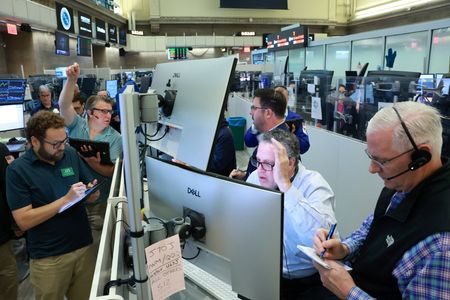
Electronics giant Best Buy delivered stronger-than-expected first-quarter results on Thursday and issued an optimistic sales forecast for the upcoming quarter, driven by consistent consumer appetite for laptops and smartphones along with expansion in advertising and marketplace operations.
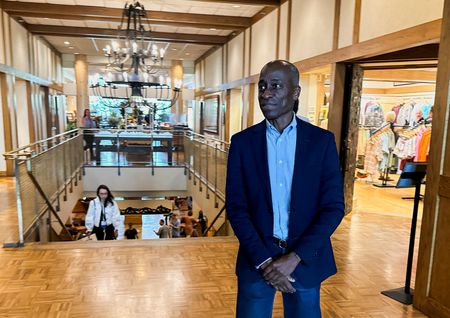
The retailer announced that CEO Corie Barry will depart at the end of October, with company veteran Jason Bonfig taking over leadership. Bonfig is anticipated to prioritize growth in the company’s higher-profit advertising and marketplace segments.
Best Buy’s stock price, which has declined roughly 10% over the previous year, jumped more than 6% in pre-market trading following the earnings announcement.
The electronics chain has intensified its focus on services like Geek Squad technical support and premium memberships as customers continue upgrading and replacing essential technology devices while remaining cautious about major purchases.
“We’ve been scaling new profit streams like Best Buy Ads and Marketplace that we expect to provide considerable benefit over time,” Barry stated.
Sales on a comparable basis increased 2% during the quarter that concluded May 3, recovering from a 0.7% decrease in the same period last year and surpassing analyst projections of approximately 1%, based on LSEG data.
CFO Matt Bilunas noted that May sales growth reached a high-single-digit rate but anticipates a slowdown to roughly 1% for the second quarter following last year’s robust Nintendo Switch 2 launch. This projection still exceeds analyst expectations of a 0.4% decline.
The company reaffirmed its fiscal 2027 guidance for comparable sales ranging from a 1% decrease to a 1% increase, with adjusted earnings per share projected between $6.30 and $6.60.
Future CEO Bonfig detailed strategies to concentrate on the company’s retail, media and technology platform, broaden marketplace reach, and improve customer service experiences.
These initiatives come as consumer spending patterns remain unpredictable and the company depends heavily on electronics replacement cycles.
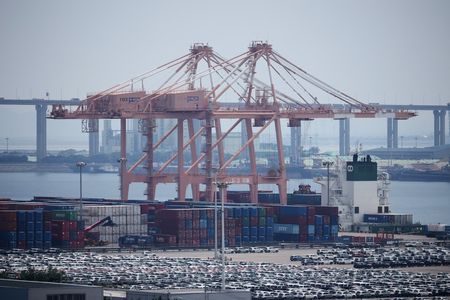
Best Buy has also increased imports of computers and other electronic devices to counter rising memory costs, as global shortages linked to artificial intelligence demand push up component pricing.
The retailer posted first-quarter earnings of $1.28 per share, surpassing analyst estimates of $1.23 per share.
A Swedish investment firm has announced a collaboration with Alphabet’s Google Cloud division to accelerate artificial intelligence adoption across more than 300 businesses in its portfolio, the companies revealed on Thursday.
The partnership will provide EQT’s portfolio businesses, which operate across industries ranging from enterprise software to healthcare, with access to artificial intelligence development tools including the Gemini Enterprise Agent platform for building applications, along with cybersecurity solutions.
Additionally, these businesses will receive priority access to select Google Cloud artificial intelligence products as they become available in the future, according to a joint statement from the companies.
As organizations rush to incorporate AI technology into their daily operations, the need for skilled engineers and consultants who can implement and customize these systems has skyrocketed. These types of partnerships also assist AI technology creators in growing their client base.
Engineers from Google will collaborate directly with EQT’s artificial intelligence transformation unit, which employs approximately 85 specialists. EQT and the companies it invests in will also gain access to Google Cloud’s extensive partner ecosystem, featuring more than 330,000 experts from consulting firms including Accenture, Deloitte and KPMG.
In April, Google established comparable AI implementation agreements with investment firms Vista Equity Partners and Thoma Bravo, both of which focus on software companies.
These arrangements also provide software businesses within the portfolios of EQT, Thoma Bravo and Vista the opportunity to market their own solutions through Google Cloud’s digital marketplace to other organizations.
Additional major private investment companies, including Blackstone and TPG, are pursuing independent collaborations with OpenAI and Anthropic to bring their technologies to hundreds of additional organizations.
Bert Janssens, who serves as EQT’s co-head of private capital in Europe and North America, stated the agreement would assist “management teams future-proof their businesses and be more competitive in an increasingly AI-driven economy”.
Technology giant IBM announced Thursday a massive $5 billion investment in a new program designed to help businesses protect open-source software from growing cyber threats.
The program, named Project Lightwell, aims to establish a central security clearinghouse for freely available software code, creating a framework for managing risks throughout the software supply chain.
Freely available software code that can be used and modified by anyone powers the technology infrastructure of most businesses today. However, its widespread adoption has created attractive targets for cybercriminals, especially as artificial intelligence makes it simpler for malicious actors to discover and take advantage of security weaknesses.
IBM and its hybrid cloud division Red Hat have tested the program with several major companies, including Bank of America, JPMorgan Chase and Visa, to improve how the system detects and resolves security gaps in complex business software environments.
The service will become available “as a commercial offering in the next 30 days,” IBM’s senior vice president of software, Rob Thomas, told Reuters.
According to Thomas, the subscription-based service, likely priced based on the number of software packages used, will provide customers with a “stamp of approval from the clearinghouse that their open source is safe to use in production.”
Project Lightwell will function as a central platform where businesses can privately report security vulnerabilities, obtain tested solutions and distribute those fixes to the wider open-source community.
Built to protect software throughout its entire lifecycle from development to production use, the system will enable companies to integrate verified security updates directly into their current technology infrastructure.
Project Lightwell extends Red Hat’s established method of securing software within its own systems to encompass a wider range of independent open-source elements, including code libraries and AI frameworks.
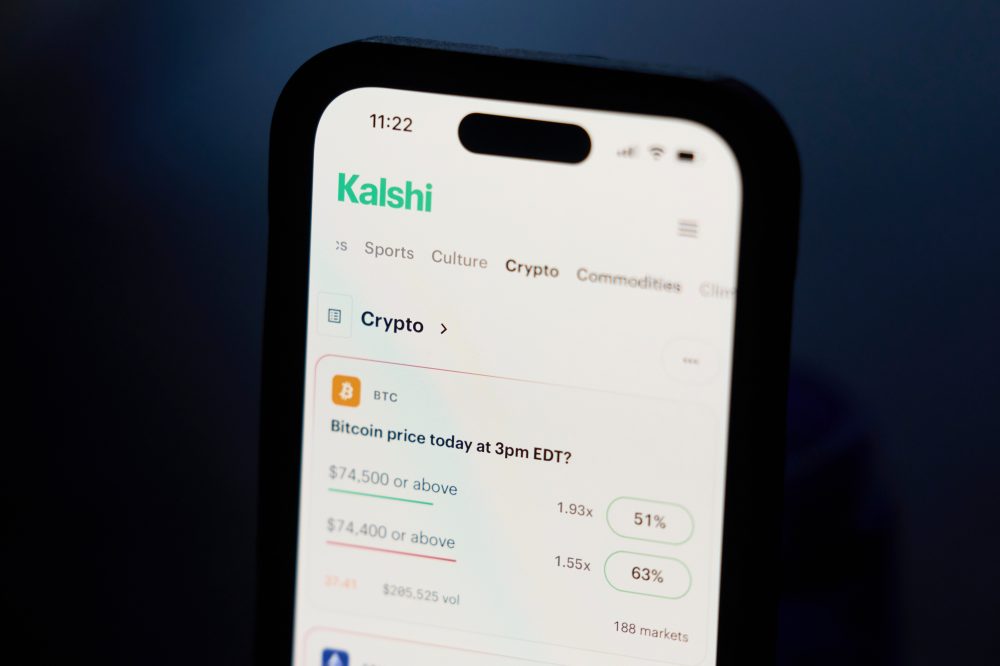
Sports betting and prediction market companies are using internet slang and viral content to attract young users, according to a new analysis of their marketing strategies.
Platforms like Kalshi and Polymarket regularly post content using phrases like “Wait he’s goated” and “The league is cooked” – language designed to appeal to younger internet users. These posts expose teens and young adults to prediction markets where people can bet money on real-world events.
Companies maintain users’ interest through what they describe as low-risk, casual betting opportunities that experts say feel more like entertainment than potentially harmful financial decisions.
Both prediction markets and sports betting apps accept users beginning at age 18, matching stock market investing requirements but three years younger than traditional gambling age limits in most states. Researchers say this age gap is significant because young adults remain susceptible to developing gambling problems and addiction.
Two senators introduced new legislation last week targeting this issue. The bill from a Republican senator from Alabama and a Democratic senator from Connecticut would prohibit social media companies and advertisers from displaying sports betting advertisements to minors. The Democratic senator stated that sportsbooks and prediction markets are “treating young people like a gold rush, flooding the internet with advertisements and promotions to hook them on gambling when they’re young.”
The meme-focused marketing represents a calculated effort to reach younger demographics, according to the founder of Memelord Technologies.
“If you want to attract a younger audience, you’re going to use memes. You’re going to use unhinged humor,” he explained. “You’re going to try to get in front of them by any means necessary.”
Recent advertisements from these platforms feature influencers in extreme situations, animals in business attire, and popular meme formats. These ads also appear in mobile games and other online spaces frequented by young people.
A spokesperson for Kalshi told reporters that memes represent “just a part of corporate branding nowadays” and aren’t specifically targeting younger viewers. The company reports its average user age is 33. Polymarket did not respond to requests for comment.
Research shows that approximately 30% of American adults under 30 placed sports bets within the past year, according to a summer survey. About 20% of Americans under 30 – including 21% of men and 16% of women in that age bracket – wagered online during that timeframe, rising from 7% three years prior.
Prediction markets attempt to separate themselves from gambling by claiming users make predictions about event outcomes rather than placing bets. Federal regulation allows them to bypass state gambling restrictions and age requirements.
Some online sports betting platforms also welcome 18-year-old users, including platforms that don’t require payment to participate. Many operate under sweepstakes models, making them available to users 18 and older across numerous states. While payment isn’t technically mandatory, users often need to pay for real money rewards.
A popular YouTuber who investigates internet fraud and has over 4 million subscribers said companies target young users to build lasting customer relationships.
“If you’re one of these platforms, you are incentivized to try to target them as soon as you can get them as a customer, so you can be the first kind of business they engage with in that space,” he explained. Platforms also offer small minimum bets to “lower the friction of getting involved” since “the hardest wager to get is the first wager.”
This approach creates serious risks for young people, according to a financial educator and author. She noted that age 18 marks the most crucial time for establishing financial stability and building wealth, but gambling and prediction trading can create a “cycle of addiction and debt.”
Dangerous financial habits like sports betting get reinforced by winning excitement or simple enjoyment. Gaming elements including leaderboards, contests, rewards, and video game features are embedded in some betting platforms, keeping users engaged longer and more intensively, said a game designer and author.
One platform features bright colors and interactive artwork. Users can create personal avatars, write profile descriptions displaying their statistics, gain followers, communicate with others, climb leaderboards, and collect achievement badges.
That company stated it offers a “fun, social and rewarding experience” for users competing in free games while “taking measures to ensure this activity is done responsibly.” The average age of paying users is 26, according to the company.
The platform’s “social gaming experience” provides numerous “no-cost avenues for users to participate in predictions and engage in friendly competition,” their statement continued.
Both major prediction market platforms feature leaderboards and comment sections allowing user interaction through text and animated images.
The Kalshi spokesperson said these features help users make informed trading decisions. The company has declined proposals for additional gaming elements like on-screen celebrations when users complete trades. It has implemented safety measures to prevent underage access, including requiring live selfies for account approval and using facial recognition for login verification.
Whether intentional or not, betting platforms and prediction markets expose young users to “highly stimulating, highly novel, highly intense things,” according to an addiction psychiatrist and co-director of a university gambling studies program.
“A young brain that’s not fully formed — that’s going to leave a significant mark,” he warned. “And that brain is going to want it again.”
American and Mexican trade officials kicked off formal negotiations Thursday in Mexico City aimed at revising the North American trade agreement, with Washington pushing for tougher regional content standards that would include specific U.S. minimum requirements for vehicles manufactured in Mexico.
According to two sources with knowledge of the American negotiating stance, the proposed changes to the U.S.-Mexico-Canada Agreement (USMCA) include this new automotive standard, though the exact percentage being sought remains undisclosed.
The modification represents a notable departure from the current USMCA framework. The existing six-year-old agreement, along with its predecessor, has fostered a deeply interconnected regional marketplace that supports approximately $1.6 trillion in annual three-way commerce. However, the pact’s continuation depends on the outcome of negotiations scheduled over the next several months.
Under present rules, North American-manufactured vehicles must contain 40% to 45% of their value from higher-wage production facilities, primarily those in the U.S. or Canada. This requirement applies to essential components such as engines, transmissions, body panels and chassis parts.
The current negotiations deliberately exclude Canada, with American and Mexican representatives planning three separate bilateral discussion rounds extending through late July, according to Wednesday’s announcement from the U.S. Trade Representative’s office. The present round of talks in Mexico City concludes Friday.
U.S. Trade Representative Jamieson Greer expressed his intentions Tuesday to enhance North American content regulations to strengthen American manufacturing capabilities.
“I think that over the course of these negotiations, we are going to be talking about rules of origin in a way that enhances U.S. content in these goods,” Greer said.
The discussions face additional complexity due to the Trump administration’s worldwide tariffs of 25% on automobiles and automotive components, plus 50% on steel, aluminum and copper, effectively terminating three decades of tariff-free North American commerce.
Greer indicated Washington plans to maintain some tariffs on Mexican and Canadian industrial products, though potentially at reduced rates.
Dan Ujczo, an attorney with Canadian oil and gas producer Cenovus Energy who focuses on North American trade matters, remains hopeful that the U.S. and Mexico, and ultimately Canada, can resolve their disagreements to update and extend the trade agreement with enhanced regional content standards and increased protections against non-market economies like China.
“The end game continues to be that Canada and Mexico have to be able to walk away with the most preferential access to the United States of any countries in the world in the medium term to long term,” Ujczo said.
Barry Zekelman, CEO of steel tube manufacturer Zekelman Industries, revealed that steel producers were informed Wednesday that USTR negotiators will advocate for requiring Mexican and Canadian steel receiving preferential American tariff treatment to be melted and poured within North America.
No such provision exists in the current USMCA, and Zekelman explained to Reuters that this change would curtail the influx of Chinese steel components entering Mexican manufacturing facilities.
According to Zekelman, USTR also seeks Mexico’s agreement to align with American tariffs on steel imports and steel-derivative products from nations outside North America.
“What they’re going to do now is start to close all of the loopholes that still exist,” he added.
European Union technology regulators have imposed a €200 million ($232 million) penalty on the Chinese online shopping platform Temu for inadequately preventing the sale of prohibited merchandise, officials announced Thursday.
The substantial fine stems from the initial phase of an extensive investigation conducted under the Digital Services Act, legislation that mandates major online platforms take stronger action against illegal and dangerous content.
EU authorities launched their probe into Temu after receiving complaints from BEUC, a pan-European consumer advocacy group, along with 17 of its member organizations across different countries.
According to the European Commission, the EU’s executive branch, Temu failed to properly identify, analyze, and evaluate the systematic dangers posed by illegal merchandise on its marketplace and the potential harm to European consumers.
Regulators also criticized the company for inadequately examining how its recommendation algorithms and marketing programs involving affiliated social media personalities might increase the likelihood of illegal product sales.
The Commission has given Temu until August 28 to submit a comprehensive compliance plan, which officials will review before determining whether the company has sufficiently addressed DSA requirements within two months.
“This is about risk management. It is very much a cornerstone of our DSA,” EU tech chief Henna Virkkunen told reporters. “With this decision we are sending a very strong message to Temu.”
Virkkunen indicated that investigators will continue examining whether Temu’s platform design promotes addictive behavior, along with conducting broader evaluations of illegal product sales and data access for recommendation systems and researchers.
Under DSA regulations, companies can face penalties reaching up to 6% of their worldwide annual revenue for violations.
This marks the second major fine issued under the Digital Services Act, following a €120 million penalty imposed on Elon Musk’s social media platform X last December.
A senior executive at JPMorgan Asset Management warned Thursday that America’s currency is positioned for long-term decline as concerns mount over the nation’s rising debt burden.
Despite gaining approximately 1.8% since late February when the Iran conflict began, the dollar faces fundamental challenges that could undermine its strength over time, according to Patrick Thomson, CEO EMEA at JPMorgan Asset Management.
Speaking at an ICMA conference in London, Thomson acknowledged the continued dominance of US Treasury securities while expressing concerns about America’s financial foundation.
“The hegemony of the U.S. Treasury is still alive and well…but we look at the fiscal balance and trade and the ability to pay back that debt,” Thomson stated during the panel discussion.
Thomson emphasized that America’s mounting fiscal challenges present serious long-term risks for the currency’s stability.
“There is an argument to say over the long term the U.S. dollar will weaken. The dynamic of the fiscal position in the U.S. is creating that level of debt that is not sustainable in the long run,” he explained.
The executive also suggested that Europe might emerge as an alternative destination for investors seeking secure assets in the future.
The American petroleum giant Chevron has submitted a formal application to acquire a controlling 70% ownership stake in an offshore energy block situated west of Greece, according to an announcement from the Greek energy ministry on Thursday.
The proposed acquisition would transfer the majority share from Greece’s Helleniq Energy to the U.S. oil company, pending official approval of the request.
The globe’s wealthiest families are reducing their holdings in U.S. dollar investments as international tensions and increasing government debt prompt a reassessment of investment strategies, according to a new UBS analysis released Thursday.
Nearly two-thirds of family offices polled by the Swiss financial institution anticipate that trust in the dollar as a primary reserve currency will decline throughout the coming year, the study revealed. The research took place from January through late March, prior to the dollar’s recent strong performance against other currencies.
Key findings from UBS’s Global Family Office Report 2026 include:
The currency’s decline during the year preceding the study led numerous family offices to examine their investment portfolios, with nearly half determining they held too much exposure to U.S. currency across various asset categories, noted UBS strategist Maximilian Kunkel.
Intentions to decrease holdings in dollar-based investments represent a broader reconsideration of U.S.-focused portfolios, UBS discovered. Family offices are planning to increase emerging market equities and infrastructure investments while reducing real estate positions.
“For the first time, we are feeling that family offices want to build up in Asia Pacific and, to a certain degree, also in Western Europe,” UBS executive Benjamin Cavalli said. “That mainly affects family offices outside the United States, but we are also seeing signs that a very limited part of the de-dollarisation move is coming from U.S. family offices.”
International conflicts have become the primary worry by a significant margin, leading family offices to combine investment allocation changes with multishoring approaches, UBS reported. Multishoring means establishing family office operations across multiple jurisdictions.
UBS conducted the survey among 307 clients globally. The participating families maintained an average net worth of $2.7 billion.
American investment giant KKR & Co announced Thursday its plans to establish a new office in Milan, marking a significant expansion of the private equity firm’s operations in Italy following major deals in telecommunications and energy sectors.
The investment firm has made substantial commitments to Italian markets in recent years, including leading a consortium that acquired Telecom Italia’s fixed-line network infrastructure for €19 billion ($22 billion). Additionally, KKR secured a 30% ownership stake in Eni’s biofuel division Enilive, valued at approximately €3.6 billion.
According to the company’s announcement, the Milan location will oversee KKR’s comprehensive business operations throughout Italy, encompassing private equity investments, real assets management, credit services, insurance products, and private wealth management.
The office will operate under the leadership of Marco Fontana, who serves as a partner within KKR’s infrastructure division. Meanwhile, Nicolo Della Casa, a director from the private equity team, will oversee the firm’s private equity investment activities throughout Italy.
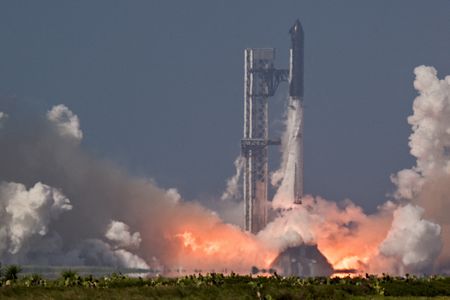
SpaceX CEO Elon Musk clarified Thursday that his IPO-bound company has only committed to a six-month lease arrangement for its Colossus AI training facility with Anthropic, contradicting earlier reports that suggested a multi-year agreement.
“SpaceX has not committed to leasing Colossus for years, although it’s possible that may be what happens,” Musk wrote in a post on X.
The tech billionaire explained that the current arrangement is structured as a 180-day lease, with both parties able to provide 90-day cancellation notice following that initial period.
“The short term was our request, not Anthropic’s. We won’t leave them hanging and will provide a reasonable off-ramp, but if compute gets super tight I said we might need it back at some point,” he stated.
The chief executive of Boeing says China’s agreement to purchase 200 aircraft during a recent presidential visit represents just the opening portion of what could become a significantly larger transaction.
Kelly Ortberg, Boeing’s CEO, addressed investor concerns about the deal’s size during a U.S. conference on Wednesday, noting that some had anticipated a package involving roughly 500 aircraft based on discussions prior to the meeting between the U.S. President Donald Trump and Chinese leader Xi Jinping this month.
Ortberg described his journey to China with Trump as “super successful,” explaining that it reopened China’s market to Boeing’s narrowbody aircraft for the first time in almost ten years following an effective purchasing freeze caused by trade disputes between the two nations.
“It’s a good start. And I’m very confident that keeping that market open, that’s an initial tranche of aircraft, and there will be more to come,” Ortberg stated.
According to a source with knowledge of the situation, the 200-aircraft commitment represents a completely new agreement and doesn’t include any previously undisclosed orders, though delivery timelines remain unconfirmed.
The aircraft are anticipated to go mainly to China’s three major state-controlled carriers: Air China, China Eastern Airlines and China Southern Airlines, the source noted while requesting anonymity since the details haven’t been publicly disclosed.
Boeing chose not to provide additional comments beyond Ortberg’s statements. China’s commerce ministry and the state-controlled airlines didn’t immediately respond to requests for comment.
Ortberg explained that after the Chinese government makes a commitment to purchase narrowbody planes, it distributes them among individual airlines, following which Boeing works out specific orders with each carrier separately.
“The initial commitment of 200 will turn into an order later on in the year,” he said. “I never had a plan to go to China and return with a packet full of 500 orders.”
Trump indicated following his China visit that Boeing purchases could potentially reach 750 aircraft.
China plans to acquire several hundred additional Boeing jets but won’t reveal the complete order simultaneously, choosing instead to announce commitments gradually, the source revealed.
China might later agree to buy an additional 300 to 500 aircraft, possibly bringing the total to as many as 700 planes, according to the source.
However, this would depend on Boeing meeting its responsibility to provide essential spare parts for jets currently operating with Chinese airlines, which have faced difficulties obtaining components during trade tensions between the two countries, the source explained.
China’s commerce ministry verified the 200-jet agreement last week, although it didn’t specify the aircraft types. The ministry noted that the U.S. would guarantee supplies of aircraft engine parts and components — a requirement the source characterized as essential for any future purchases.
Trump had warned last year about potentially implementing export restrictions on Boeing aircraft parts as part of Washington’s response to limits on rare earth mineral exports.
American travelers visiting China will soon find it easier to make digital purchases thanks to a new partnership between PayPal and Chinese technology company Tencent.
The arrangement will enable PayPal account holders from the United States to conduct transactions using QR code scanning technology through Tencent’s WeChat Pay platform, which operates an extensive network of merchants throughout China. According to Tencent’s announcement, the service will initially launch for U.S. customers before expanding to additional countries.
This development addresses a growing need as digital transactions have become the standard payment method across China, making the change particularly beneficial for international visitors navigating the country’s cashless economy.
WeChat Pay, along with Ant Group’s Alipay from the Alibaba business network, dominates China’s digital payment landscape and can be found everywhere from taxi services to dining establishments.
According to Gary Ng, a senior economist for Asia Pacific at French bank Natixis, simplifying digital payment access for tourists supports China’s broader strategy to increase international visitor numbers.
Government statistics reveal that tourism accounted for more than 4% of China’s economic output in 2024.
China has recently eliminated visa requirements for travelers from multiple nations, including the U.K., Spain and Australia. However, this policy change has not been applied to U.S. travelers, who must still obtain visas before entering China, with exceptions only for brief transit stops when continuing to other destinations.
International visitor numbers dropped dramatically during the COVID-19 pandemic as China restricted most foreign entry and implemented strict quarantine measures in numerous locations.
However, tourism has rebounded significantly, with foreign arrivals excluding those from Hong Kong and Taiwan exceeding 35 million last year, surpassing the nearly 32 million visitors recorded in 2019.
Ng noted that the PayPal integration reflects a worldwide movement toward connecting payment systems through compatible international QR code technology.
Ivan Su, a senior equity analyst at Morningstar, suggested the QR code partnership with PayPal may have minimal immediate impact on Tencent’s overall performance due to the relatively small number of U.S. visitors currently traveling to China.
WeChat Pay has permitted users to connect foreign bank cards to their accounts since 2019. Tencent also announced it will waive transaction fees for new users linking international bank cards to WeChat as an incentive to encourage broader adoption of this payment method.
According to Tencent’s data, transactions made by foreign travelers in China increased by nearly 80% year-over-year during the January-April period.
Taiwan’s Vice Premier Cheng Li-chiun announced Thursday that while the United States continues to consider semiconductor tariffs under national security provisions, no specific timeline has been established for their implementation.
Speaking from Taipei, Cheng explained that Taiwan has already negotiated protective measures through a bilateral trade agreement signed in January. Under this arrangement, the island nation secured most-favored-nation status for its semiconductor exports, ensuring preferential treatment even if future tariffs are imposed.
The January trade deal includes immediate benefits for Taiwan, with the U.S. eliminating or reducing certain tariffs to 15% on various Taiwanese products. These reductions cover automotive components, aircraft parts, wood products, and steel, according to Federal Register documentation. The tariff adjustments take effect retroactively from May 1 and were scheduled for official publication Thursday in U.S. time.
Cheng emphasized that Taiwan’s advance negotiations have locked in favorable terms regardless of when Section 232 semiconductor tariffs might be implemented. Section 232 refers to U.S. national security investigations targeting critical imports including computer chips and pharmaceutical products.
“That means that no matter when the U.S. proposes Section 232 semiconductor tariffs, it must grant corresponding preferential treatment to Taiwanese businesses investing in the U.S.,” Cheng stated.
The Vice Premier noted that these protective arrangements will remain in place despite ongoing U.S. discussions about potential semiconductor tariffs. She confirmed that American officials have repeatedly suggested such measures might be forthcoming, but emphasized Taiwan’s secured position through the January agreement.
Taiwan plays a crucial role in global semiconductor manufacturing and serves as headquarters for TSMC, the world’s largest contract chipmaker. TSMC is currently investing $165 billion to construct manufacturing facilities in Arizona.
Job seekers who make it past the initial application stage may find themselves facing an unexpected interviewer: artificial intelligence.
As employers struggle with an overwhelming number of AI-created applications from easy-apply platforms, many are deploying their own artificial intelligence solutions. These companies now rely on automated chatbots to conduct candidate screenings through telephone conversations, text exchanges, or video sessions featuring digital avatars.
While recruitment teams have utilized AI-powered evaluation systems for several years, their adoption has accelerated alongside technological developments.
The shift toward automated interviews leaves many job candidates feeling uncomfortable, though experts believe this approach will continue growing. Research from hiring platform Glasshouse indicates increasing numbers of job hunters encounter AI-based interviews. However, significant portions of applicants abandon the process entirely when faced with these digital screenings, potentially indicating discomfort or revealing candidates with questionable intentions.
Career professionals offer guidance for navigating these technological interviews successfully.
Amanda Augustine, a career coach at Careerminds, which assists companies in supporting displaced employees with resume development and job hunting services, emphasizes that core interview principles remain unchanged regardless of format.
Before any interview, candidates should thoroughly examine job requirements, investigate the company, and identify what employers seek.
“The more prepared you are, the easier it will be to tailor your responses, even when you’re interacting with AI instead of a person,” she advised.
First encounters with AI interviews can feel disturbing or uncomfortable for inexperienced candidates.
During a demonstration interview arranged by Netherlands-based TestGorilla, a company offering recruitment technology platforms, the process began with two question sets evaluating problem-solving abilities and professional background. This was followed by interaction with an AI-generated female avatar.
“My goal is to learn more about you and the experiences, skills and competencies that you might bring to this role,” it said, adding that I should plan to spend about two minutes to answer each of three questions.
Unlike human interactions, no informal conversation or relationship-building occurred. Smiling or attempting to create connection served no purpose.
Industry specialists recommend thorough preparation to overcome these challenges.
“You need to practice out loud,” said Priya Rathod, workplace trends editor at online job board Indeed. “And when I say practice out loud, I mean, say the actual answers out loud,” because the chatbot needs to record what you’re saying, she said.
Remember that you’re delivering information to technology rather than engaging in dialogue.
“You have to be particularly descriptive and a very clear communicator in your language so that they can pick up on things that a regular interviewer might pick up through your facial expressions and tone,” Rathod said.
An AI interviewer “cares less about my tone and more about what it is that I’m saying,” she added.
Online interview simulation tools provide valuable preparation opportunities, with numerous options available. These platforms record responses and deliver immediate feedback regarding content, presentation, and timing. They also familiarize users with speaking to cameras, managing time constraints, and delivering structured answers without natural conversational flow, Augustine explained.
During the demonstration interview for a communications position, the AI posed challenging questions.
One inquiry focused on how I incorporate AI into my “workflow,” requesting examples of both achievements and setbacks. When I mentioned time savings through an AI transcription service for interviews and recordings, the system summarized my response and asked if I wanted additional comments. I remained uncertain about answer adequacy.
TestGorilla’s evaluation rated my performance “below average” on this question, noting I provided “no concrete metric” such as time saved. “The improvement claim is therefore vague,” it determined.
AI interviewers focus on “behavioral questions” seeking candidate examples of handling specific workplace scenarios, complete with numerical data and measurements, Rathod explained.
“Those are the kinds of questions that AI relies heavily on. And the trap that we see a lot of people falling into is giving really vague answers,” she said.
Candidates should continue using established techniques like the STAR approach — representing situation, task, action, result.
Prepare to discuss particular workplace circumstances and assigned responsibilities, actions taken, and outcomes achieved, Rathod recommended.
“You want to use numbers as much as possible. Even if you’re not in a revenue driving role, there are ways in which you can say (how) you influenced something or impacted something within a group,” she said.
Physical workspace arrangement remains important even for AI-conducted video interviews rather than human interactions.
Check audio and visual equipment beforehand. Ensure adequate lighting illuminates your face properly. Position your laptop at eye level to avoid looking downward at the camera.
“Small adjustments, such as using a stack of books or a ring light, can make a noticeable difference in how polished and professional you present,” Augustine said.
Job candidates might consider using AI assistance for generating responses, reasoning that easy accessibility and non-human interaction make detection impossible.
“That’s a big no-no because it’s pretty obvious” to both the AI interviewing tool and anyone who might review the recording, said Rathod. Using AI for your answers “can sometimes immediately disqualify you.”
When experiencing difficulty responding, candidates can request clarification or question repetition.
Some questions deliberately test for AI assistance usage. TestGorilla’s head of marketing, Mehak Chowdhary, said it sometimes poses simple questions worded in a very convoluted way.
“We do that intentionally to understand whether you are running an AI alongside, because the AI will then try and optimize for the length of the question,” she said. “But if you know your skill set, you will understand what’s being asked.
“And we strongly recommend candidates put the AI devices aside. This is a test of your capability.”
Federal Reserve Vice Chair Philip Jefferson declared Thursday that bringing inflation back to the central bank’s 2% goal should be the primary priority, citing the strength and durability of America’s employment sector during current economic challenges.
Speaking during a question-and-answer session following his presentation at a Tokyo conference organized by the BOJ and its research institute, Jefferson outlined his policy approach.
“When I’m thinking about my policy decision meeting by meeting, I’m absolutely focused on price stability, but by mandate I also need to keep in mind what’s happening in the labour market,” Jefferson explained.
“The U.S. labour market has been very resilient to the current shock. Given that resiliency, it seems appropriate that the focus will be on returning inflation to 2%,” he stated.
These remarks represent Jefferson’s initial public statements following Kevin Warsh’s installation as the Fed’s new chair last Friday.
Jefferson acknowledged the complexity of predicting future interest rate decisions, noting the unpredictable nature of current economic disruptions.
“What all segments of society are noticing is increasing energy and gasoline prices in particular. We are sensitive to how that’s impacting the lives of everyday people,” he commented.
The Fed official highlighted a unique economic situation where artificial intelligence investments are driving growth even as energy-related disruptions create obstacles.
“The energy shock is a headwind for growth, but we are still having growth during this episode,” Jefferson observed. “In terms of monetary policy communication, the emphasis has been on monitoring the second-round effect associated with supply shocks and a surge in investment demand.”
In his formal conference presentation, Jefferson indicated that current monetary policy settings are appropriate given continued inflation risks.
Regarding the upcoming Federal Open Market Committee gathering scheduled for June 16-17, Jefferson remained noncommittal about future actions.
“I have not prejudged the next meeting and look forward to engaging with my colleagues about the policy necessary to best achieve our dual-mandate goals,” he said.
A major South Korean technology company announced Wednesday that wage negotiations with its workers’ union have collapsed despite government intervention to help broker a deal.
Kakao Corp revealed that second-round discussions mediated by government officials failed to produce an agreement on employee compensation. The company stated it remains committed to continuing efforts to find common ground with union representatives.
Following the unsuccessful talks, a union representative confirmed to Reuters via text message that workers will proceed with their planned strike action in June.
Workers at Kakao Corp and four related companies, including headquarters operations, Kakao Pay Corp and Kakao Enterprise, had previously approved strike authorization through a formal vote.
The union has not disclosed exactly how many members from the main company and its four affiliates will join the work stoppage. However, approximately 700 union members gathered at a demonstration on May 20, according to a union leader.
In a statement released earlier this month, the union criticized management for providing “excessive bonuses” exclusively to executives while the company achieved record-breaking revenue and profits in recent years.
Union representatives also accused the company of failing to address concerns about overtime policies and showing a lack of genuine commitment during bargaining sessions.
Kakao Corp responded in its own statement, asserting that it had engaged in good-faith negotiations with the union regarding the 2026 wage agreement but could not come to terms on how to structure employee compensation.
A federal commodities regulator is requesting a judge cancel a $5 million fine it levied against a digital currency trading platform owned by twin brothers Tyler and Cameron Winklevoss, who contributed to President Donald Trump’s 2024 campaign.
The U.S. Commodity Futures Trading Commission stated Wednesday that regulators should not have charged the Winklevoss brothers’ Gemini Trust Company with providing false information related to its bitcoin futures operations.
Gemini resolved the CFTC allegations in January 2025 during the closing days of President Joe Biden’s term, paying the $5 million fine and accepting an order prohibiting the firm from providing false or deceptive information to the CFTC.
However, both Gemini and the CFTC now concur the agreement should be canceled, pointing to the CFTC’s revised approach to cryptocurrency enforcement under Trump.
Each Winklevoss brother contributed $1 million in bitcoin to his 2024 election campaign.
In joint court documents, the CFTC and Gemini argued the settlement should be reversed and that the CFTC had “resorted to inappropriate tactics” to file a lawsuit and “extract a settlement from Gemini.”
The CFTC and Gemini stated that the agency, during the Biden administration, filed suit against Gemini using a whistleblower report that lacked credibility, and that Gemini was actually defrauded by the company’s former chief operating officer and two clients who obtained illegitimate rebates from Gemini.
Instead of probing the fraud committed against Gemini, the CFTC investigated Gemini for supposedly making deceptive statements about its bitcoin futures trading operations’ integrity, the joint court filing stated.
During the case proceedings, regulators improperly used their authority by informing Gemini it would not gain approval for a new prediction market platform while the CFTC’s enforcement proceeding was active, the court filing indicated. Gemini obtained approval for its prediction market service, named Gemini Titan, in December 2025.
The court filing did not specify whether Gemini would receive a refund for the $5 million penalty it has already paid. Gemini did not respond immediately to a comment request late Wednesday.
The Winklevoss twins initially became publicly known after filing suit against Mark Zuckerberg, claiming he took their concept for Facebook. They reached a settlement in 2008 for cash and stock.
Trump’s original choice to head the CFTC, Brian Quintenz, alleged last year that Tyler Winklevoss lobbied the White House to delay his nomination due to the CFTC lawsuit. Trump eventually withdrew Quintenz’s nomination and appointed Michael Selig as the CFTC’s new chair.
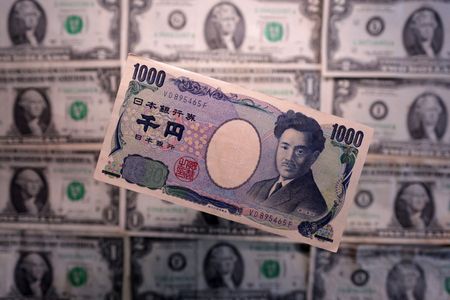
The American dollar maintained strength close to its highest point in a week on Thursday following reports that the United States conducted fresh military strikes against Iran at a military facility, according to a Reuters report. At the same time, Japan’s currency declined toward levels that prompted central bank action last month.
The military action has created complications for ongoing diplomatic discussions between Washington and Tehran. On Wednesday, President Donald Trump expressed dissatisfaction with potential Iranian agreements, stating he was “not satisfied” regarding any deal with Iran. He also rejected claims from Iranian state media suggesting Iran and Oman would share control of Strait of Hormuz shipping as part of peace negotiations.
Energy prices climbed while the dollar found support as investors lost confidence in quick diplomatic solutions. Market watchers increasingly anticipate the American currency will continue rising as the Federal Reserve prioritizes fighting inflation amid higher energy costs.
“Geopolitics and the subsequent inflation risks remain a key concern,” wrote Alex Saunders, Citi’s head of global quant macro strategy. “We continue to see a trim in the USD underweight.”
European currencies declined against the dollar, with the euro dropping slightly to $1.1620 and the British pound falling 0.1% to $1.34176.
Currencies sensitive to market risk also weakened, including the Australian dollar which fell 0.2% to $0.71305, while New Zealand’s currency remained mostly unchanged at $0.58965.
The dollar index, tracking the greenback’s performance against six major trading partners, held steady at 99.288, approaching its strongest position since May 22.
Financial markets are now awaiting today’s release of the Federal Reserve’s preferred inflation measurement, the core PCE deflator, which will influence future interest rate expectations.
Japan’s yen declined as low as 159.60 against the dollar Thursday, marking its weakest level since April 30 and approaching the 160 threshold that triggered Japanese government market intervention last month.
While that intervention provided temporary relief for policymakers, questions remain about its long-term effectiveness, according to Tony Sycamore, a market analyst at IG.
“The broader question is whether it was worth it for what essentially amounts to just a single month’s relief. And furthermore, will authorities have the stomach to write a similar-sized cheque if the 160 level is breached again in the coming sessions?” he said.
Financial markets are currently pricing approximately a 70% probability of a quarter-point interest rate increase at the Bank of Japan’s June 15-16 policy meeting, according to LSEG data.
Stock markets throughout Asia displayed caution Thursday after reports emerged of another U.S. military action in Iran, dampening investor hopes for an immediate resolution to regional tensions. Meanwhile, anticipated U.S. inflation figures posed additional concerns for bond markets and interest rate policies.
Energy prices surged 2% while Treasury bond yields climbed higher as the military action sent mixed messages about ongoing negotiations. This came after President Donald Trump rejected an Iranian announcement regarding a potential agreement to reopen shipping lanes through the Strait of Hormuz.
“Over the next 2 weeks, we expect either a deal for a new ceasefire, or the current ceasefire will have collapsed with active hostilities resuming,” said Madison Cartwright, a senior geo-economics analyst at CBA.
Cartwright estimated a 70% likelihood that negotiators would reach an agreement, though he warned that the shipping corridor’s future remained uncertain.
“Insurance through the strait has become prohibitively expensive and it’s unclear how and at what price insurance will be made available,” he added. “It is also not clear if Iran will charge a toll, or a toll by another name.”
Given that shipping traffic through the waterway remains severely limited, Brent crude prices climbed 2.3% to reach $96.50 per barrel, while U.S. crude increased 2.2% to $90.59.
Ten-year Treasury note yields rose 2 basis points to 4.502% as concerns about sustained high oil prices maintained upward pressure on inflation forecasts.
The uncertainty also slowed the technology sector’s recent market gains, with Japan’s Nikkei declining 0.2% and South Korean markets remaining unchanged. MSCI’s comprehensive Asia-Pacific stock index excluding Japan fell 0.1%.
Japanese media indicated the government intends to issue “bridging bonds” to finance major programs designed to stimulate investment in economic growth and security initiatives.
European market futures showed weakness, with EUROSTOXX 50 and DAX futures both dropping 0.2%, while FTSE futures declined 0.3%. S&P 500 and Nasdaq futures gained 0.1%.
Market attention now turns to upcoming U.S. personal consumption expenditure data, which contains the Federal Reserve’s preferred inflation measurements.
Energy price impacts are projected to push headline PCE to a three-year peak of 3.8%, while core inflation is expected to increase 0.3% to an annual rate of 3.3%, significantly exceeding the Fed’s 2% objective.
The inflation acceleration has prompted additional Fed officials to advocate for abandoning the central bank’s accommodative stance or even considering rate increases.
“With inflation well above target but the growth impact of the conflict still uncertain, the Fed faces genuine two-sided risk,” argued analysts at NAB in a note.
“We see that uncertainty as the argument for holding rates through end-2027, whereas a firming in services core inflation would sharpen the case for higher-for-longer and a sharp moderation would shift attention to the emerging growth headwinds.”
Financial markets suggest equal odds for a quarter-point federal funds rate increase to 3.75-4.0% by year’s end.
Evolving Fed policy expectations have strengthened the U.S. dollar, which traded at 99.291 against major currencies, remaining stable for the week.
The dollar reached a four-week high against the yen at 159.57, approaching the 160.00 level that has previously prompted Japanese currency market intervention.
The euro declined slightly to $1.1620, though it maintains support from expectations that the European Central Bank will raise rates at its June meeting.
During Thursday remarks, ECB Chief Economist Philip Lane stressed the critical need to prevent energy price spikes from creating higher inflation expectations.
In commodities trading, gold dropped 0.3% to $4,445 per ounce, continuing to provide limited appeal as either a safe-haven investment or inflation protection.
A significant restructuring is underway in Australia’s private healthcare sector as HealthCo Healthcare & Wellness REIT announced Thursday that a nonprofit organization will assume control of a hospital previously managed by a troubled healthcare company.
The arrangement involves Mount Private Hospital, which will transition to management by Bethesda Health Care beginning in the first quarter of fiscal year 2027. The facility is currently part of a network owned by one of Australia’s major private hospital operators, which entered receivership twelve months ago.
Key elements of the transition include:
• The current hospital operator manages 38 facilities across Australia and has been under receivership for one year
• Mount Private Hospital is among 11 facilities in the network owned by Unlisted Healthcare Fund and HealthCo Healthcare
• Bethesda Health Care, operating as a nonprofit private hospital company, will assume operations under a new extended lease arrangement
• The Western Australia state government will serve as guarantor and provide financial support to facilitate the operational transfer
• State health authorities plan to utilize the facility for procedures including elective surgeries to reduce public healthcare waiting lists
• Officials have granted due diligence periods to potential operators, including Calvary Health Care, for 27 additional hospitals in the network
• New lease agreements are already established for 10 other facilities with Healthe Care, Acurio Health, and KnG Healthcare operating in Victoria, New South Wales, and Queensland respectively
South Korean exports are anticipated to climb for a twelfth consecutive month in May, fueled by worldwide artificial intelligence investment that has sparked increased demand for semiconductors, according to a new Reuters survey released Thursday.
Nine economists surveyed predicted that exports from Asia’s fourth-largest economy would increase 48.4% compared to the same period last year. The country’s trade performance serves as an important indicator for global commerce trends.
The projected growth rate would represent a slight uptick from April’s 48.0% increase, though it falls short of March’s 50.2% surge, which marked the highest level recorded since August 1988. Export growth has been sustained since June 2025, with double-digit increases documented since December.
“It is in line with projection that export growth will accelerate in the second quarter from the first quarter, but the pace is even stronger,” said Stephen Lee, an economist at Meritz Securities in Seoul.
Data from the first 20 days of May revealed exports jumped 64.8% year-over-year, with semiconductor sales more than tripling during that period.
“The export boom will continue for a significant period of time on the global manufacturing cycle being robust despite high oil prices and the boom in chip exports,” said Park Sang-hyun, an economist at iM Securities.
The survey also indicated imports would likely grow 21.5% this month compared to last year, representing an acceleration from April’s 16.7% gain and marking the fastest pace since August 2022.
Consumer inflation is expected to reach 3.0% in May, up from 2.6% in April, which would represent the quickest year-over-year growth since March 2024.
Official trade data for May will be released by South Korea on Monday, June 1, at 9 a.m. local time.
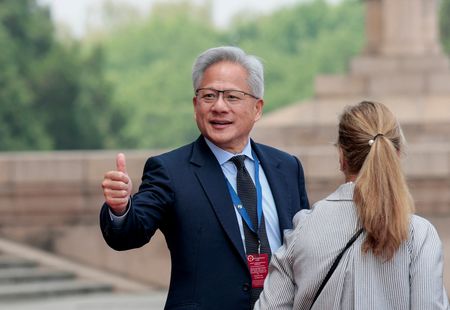
The chief executive of technology giant Nvidia has reportedly accepted a position on the advisory board of a Chinese university, according to a Financial Times report published Wednesday.
Sources familiar with the situation told the publication that the CEO has agreed to join the advisory board at Tsinghua University School of Economics and Management in Beijing. The board is currently led by Apple’s Tim Cook as chair.
The technology executive recently accompanied U.S. President Donald Trump during a visit to China, according to the report.
Neither Nvidia nor the Beijing university immediately provided responses when contacted by Reuters for verification of the report. Reuters was unable to independently confirm the information at the time of publication.
Federal Reserve Vice Chair Philip Jefferson declared Wednesday that the nation’s monetary policy stance is appropriately calibrated as inflation concerns persist.
Speaking at the 2026 Bank of Japan-Institute for Monetary and Economic Studies Conference in Tokyo, Jefferson indicated the federal funds target rate range of 3.5% to 3.75% positions the central bank favorably “to respond to economic developments based on the incoming data, the evolving outlook, and the balance of risks.”
The Fed’s second-highest official refrained from previewing future rate decisions, stating regarding the June 16-17 Federal Open Market Committee meeting: “I have not prejudged the next meeting and look forward to engaging with my colleagues about the policy necessary to best achieve our dual-mandate goals.”
These remarks marked Jefferson’s initial public statements following Kevin Warsh’s swearing-in as Fed chair last Friday, replacing Jerome Powell, who remains as a governor temporarily.
Warsh, previously known for hawkish positions, has shown keen interest in rate reductions while pursuing the Fed’s leadership role, though analysts doubt such moves this year given inflation increases linked to President Donald Trump’s import tax policies and Middle East conflict.
In his address, Jefferson acknowledged that despite America’s significant oil production, the country remains vulnerable to energy market disruptions caused by ongoing warfare. While he anticipates inflation pressures will diminish later this year, he cautioned about potential upward risks to this projection.
Jefferson characterized the U.S. economy as performing strongly alongside a steady employment market marked by minimal hiring and layoff activity. He noted employment-related risks lean toward potential weakening.
Federal authorities have filed charges against a Google software engineer accused of exploiting confidential company data to place lucrative wagers on a prediction betting platform, according to court documents made public Wednesday.
Michele Spagnuolo, a 36-year-old Italian citizen, is accused of leveraging inside knowledge to wager on Google’s annual most-searched rankings through Polymarket, generating $1.2 million in winnings, prosecutors allege.
Court filings indicate Spagnuolo placed bets on unlikely candidates such as indie pop artist D4vd, who gained massive search traffic following his arrest in connection with a teenage girl’s murder. D4vd ultimately became the year’s most-searched individual when Google released its statistics on December 4, but Spagnuolo had allegedly placed his wager on November 27 using confidential data.
The D4vd bet proved especially lucrative since betting markets assigned virtually no chance that the musician would top Google’s search rankings, according to prosecutors.
Using the username “AlphaRaccoon,” Spagnuolo also allegedly exploited insider data for additional wagers tied to Google’s search statistics. In October, he bet on rapper Kendrick Lamar topping the most-searched list, at a time when Google’s internal metrics showed Lamar leading in search volume.
Spagnuolo resides in Switzerland, according to the federal complaint filed in Manhattan court. Reuters was unable to immediately locate legal representation for the defendant.
U.S. Attorney for the Southern District of New York Jay Clayton stated that prosecutors will aggressively pursue corporate employees who exploit confidential business data for betting market profits.
“Insider trading compromises the integrity of our markets, and the American people want this greed-driven conduct investigated and prosecuted,” Clayton said.
Google confirmed it is cooperating with law enforcement and emphasized that using confidential information for betting purposes violates company policy. A Google spokesperson said Spagnuolo has been suspended pending the investigation.
This case follows April charges against a U.S. Army soldier accused of using classified intelligence to place Polymarket bets regarding the potential capture of Venezuelan leader Nicolas Maduro.
Crude oil prices experienced a significant surge on Thursday, climbing more than $1 per barrel as markets reacted to recent U.S. military action against Iranian targets, even as diplomatic discussions continue between the two countries.
West Texas Intermediate crude futures jumped $1.42, representing a 1.6% increase, reaching $90.10 per barrel by 2328 GMT. This sharp rise followed a substantial 5.55% decline in the prior trading session.
The price volatility reflects market concerns over potential supply disruptions as military tensions persist alongside ongoing peace negotiations between Washington and Tehran.
Federal prosecutors have brought criminal charges against an employee of Google for allegedly earning $1.2 million through trading activities on the Polymarket platform.
This represents the second documented instance where federal authorities have pursued criminal prosecution against an individual suspected of leveraging insider knowledge to generate substantial profits on a prediction market platform.
The Department of Defense revealed Wednesday it has signed a massive five-year software contract worth $9.69 billion designed to bring together Microsoft and other enterprise software licenses that have been spread across military branches, intelligence agencies, and the U.S. Coast Guard under one unified agreement, according to officials.
This cost-reduction initiative provides Microsoft with a guaranteed enterprise-wide presence throughout the U.S. armed forces while eliminating redundant expenditures that officials say had steadily grown over years of scattered, independent purchasing practices.
The agreement, known as the Core Enterprise Technology Agreement, does not represent additional spending since multiple Pentagon software contracts were set to renew at the same time. The funding comes from current budgets already being utilized to buy Microsoft 365 subscriptions — which include email, Word, Excel, PowerPoint and other applications — as well as cloud subscriptions and on-premises licensing, bringing them together under one umbrella where the department’s complete purchasing power can be leveraged to reduce expenses.
The Federal Reserve’s internal oversight office announced Wednesday it is conducting a review of procedures used by the central bank’s Board of Governors when reappointing regional Federal Reserve presidents and their second-in-command officers to five-year terms.
According to a press release from the Inspector General, the examination will determine whether the Washington-based board’s procedures “to approve the reappointment of Reserve Bank presidents and first vice presidents aligns with relevant Federal Reserve Administrative Manual requirements and leading practices.”
The oversight office also indicated it would evaluate “the quality and completeness of executive performance evaluations and other potentially relevant information necessary to assess the merits of a reappointment.”
The IG did not respond immediately to requests for additional details about the investigation or its timing.
Scrutiny of the reappointment procedures has intensified following U.S. President Donald Trump’s aggressive pressure campaign against the Fed, with some observers fearing it could be used to push out regional policymakers who declined to back his demands for interest rate cuts.
This investigation represents one of several reviews the IG is pursuing, including a high-profile examination launched late last year into cost overruns associated with the renovation of the Fed’s headquarters in Washington. That investigation, which the government has since closed and turned over to the Fed’s IG, became a major flashpoint between the central bank, then-Fed chief Jerome Powell, and the Trump administration.
The IG has maintained for some time a separate examination into how Fed regional bank presidents and their seconds-in-command are selected. That process has been criticized for its opacity and limited opportunity for public comment.
The 12 regional Fed banks are quasi-private institutions overseen by local boards drawn from the private sector. Those boards select new presidents subject to the approval of the central bank. The regional bank presidents help set monetary policy, collect local economic intelligence and provide services to the financial sector.
They undergo a reappointment process every five years for new terms that in almost all cases sees them retaining their jobs.
The most recent reappointment cycle concluded late last year, with the Fed’s board unanimously approving the 11 officials up for reappointment. It also reappointed the Atlanta Fed’s first vice president, Cheryl Venable, who is serving as acting president until it finds a successor for Raphael Bostic, who retired earlier this year.
The previous reappointment cycle occurred before a trading controversy at the central bank that led to the departure of several of its policymakers. The Fed was criticized in some quarters for not spotting the financial issues during the reappraisal period, although then-Fed Governor Lael Brainard described the review process as “rigorous.”
Global equity markets achieved fresh record highs Wednesday as investors navigated mixed developments regarding possible U.S.-Iran diplomatic negotiations while preparing for Thursday’s critical U.S. inflation report.
Major American markets including the S&P 500, U.S. dollar, and Treasury bonds showed minimal movement as traders processed contradictory information about potential peace negotiations between Washington and Tehran.
Market analyst Jamie McGeever examined parallels between today’s artificial intelligence investment surge – described as the biggest on record – and the internet bubble of the late 1990s. While acknowledging increasing risks, McGeever suggested that a market collapse may not be immediate or certain.
Conflicting reports emerged Wednesday regarding diplomatic progress. Iranian state television referenced an unofficial agreement framework that would potentially reopen the Strait of Hormuz within 30 days. However, U.S. officials dismissed this as a “complete fabrication.” Despite the contradictions, markets responded as though negotiations were advancing, with oil prices dropping below $100 per barrel and stocks maintaining record levels.
Thursday brings the release of April’s Personal Consumption Expenditures inflation data, marking the first significant inflation report during Kevin Warsh’s tenure at the Federal Reserve. Economic forecasters anticipate headline annual PCE inflation will climb to 3.8%, matching headline Consumer Price Index figures, while core annual rates are expected to reach 3.3% – significantly above the 2.8% core CPI reading.
Speculation about resolving the U.S.-Iran conflict has reduced oil prices, bond yields, and Federal Reserve rate expectations, though traders still assign equal odds to a rate increase before year’s end.
Wednesday’s market performance showed South Korea surging 3% to new highs while China declined 1%. European markets remained flat with the UK gaining 0.1%. Wall Street presented mixed results as the Dow Jones and Russell 2000 posted new records while the S&P 500 and Nasdaq stayed essentially unchanged.
Individual stock movements varied significantly, with consumer discretionary sectors rising 1.9% while energy fell 1.5%. Notable decliners included Zscaler dropping 31%, Qualcomm falling 9%, and JPMorgan Chase down 2.4%. Gainers featured United Airlines climbing 6% and Procter & Gamble advancing 3%.
Currency markets saw the dollar index hold steady while New Zealand’s dollar led major currency gains with a 1% increase. The Japanese yen reached four-week lows, returning to levels that might prompt intervention.
Central banking developments globally showed increasing hawkish sentiment. New Zealand’s Reserve Bank maintained current rates in a split decision signaling potential future increases, following rate hikes in Australia and Norway. This trend reflects similar hawkish guidance from European Central Bank officials and shifting Federal Reserve tone.
Emerging market central banks also tightened policy, with Sri Lanka surprising markets with a 100 basis point increase this week, while Brazil’s easing trajectory faced complications from persistent inflation pressures.
Thursday’s calendar includes potential Middle East developments, South Korea’s interest rate decision, speeches from Bank of Japan and European Central Bank officials, eurozone confidence data, Canadian current account figures, U.S. jobless claims, PCE inflation data, durable goods orders, GDP estimates, Treasury auctions, and Federal Reserve official remarks.
MEXICO CITY, May 27 – Latin America’s leading telecommunications company America Movil has revealed its business strategy extending to 2028, projecting consistent financial expansion while maintaining capital investments at roughly $7 billion annually, based on information from a J.P. Morgan analyst note.
The company’s investor presentation took place behind closed doors without media access. A company spokesperson did not provide immediate confirmation of the reported financial projections when contacted for comment.
During the New York investor meeting, America Movil forecasted annual service revenue growth averaging between 4.0% and 5.0% from 2026 through 2028. The company also expects earnings before interest, taxes, depreciation and amortization to climb by 4.5% to 6.0% each year during this timeframe.
The telecommunications leader intends to maintain its yearly capital expenditures near $7 billion, representing a total investment of $21 billion across the three-year span. Company leadership explained this spending level is achievable since America Movil has largely finished acquiring expensive radio spectrum licenses needed for its 5G infrastructure.
This consistent investment approach is projected to produce substantial cash flow, which the company plans to allocate toward corporate acquisitions, debt reduction, and shareholder returns.
Leadership confirmed they are pursuing potential acquisition targets, specifically noting interest in financially distressed internet service providers operating in Brazil and telecommunications companies located in Eastern European nations including Serbia and Slovenia.
Regarding major markets such as Brazil and Colombia, company executives expressed an “aspiration to join the club of 50,” describing their long-range objective of reaching 50% profit margins in these regions.
Technology giant HP exceeded Wall Street projections for quarterly earnings and revenue on Wednesday, powered by robust sales of artificial intelligence-enhanced computers and ongoing Windows 11 system upgrades.
Computer manufacturers like HP, Dell Technologies and China’s Lenovo Group are dealing with a memory chip shortage as data center construction absorbs available supply and drives up costs for smartphones and computers.
This supply shortage is encouraging some businesses to purchase higher-profit premium equipment during the Windows 11 upgrade period, following Microsoft’s decision to discontinue Windows 10 support in October of last year.
A week ago, competitor Lenovo announced an unexpected 27% increase in fourth-quarter revenue, as robust consumer interest in computers ahead of possible price increases helped the world’s top computer manufacturer grow its market position.
HP’s quarterly revenue increased 9% to $14.41 billion compared to the same period last year, surpassing the LSEG-compiled analyst consensus of $14.07 billion. The company’s adjusted earnings per share of 86 cents also exceeded projections of 71 cents for the quarter that concluded April 30.
Company stock climbed as high as 15% in after-hours trading following the announcement. The shares were most recently trading up approximately 1%.
“During the second quarter, we continued executing our future of work strategy through intelligent devices, edge AI, and connected experiences while navigating rising commodity costs,” HP interim CEO Bruce Broussard said in a statement.
The corporation’s “future of work” approach emphasizes AI-enhanced computers, hybrid workplace tools and office software.
HP announced it now anticipates fiscal 2026 adjusted EPS of $2.90 to $3.10, compared with previous projections of $2.90 to $3.20.
The company forecasts third-quarter adjusted EPS between 61 cents and 71 cents, with the midpoint slightly exceeding analyst expectations of 64 cents.
A top Federal Reserve official warned Wednesday that interest rates could go up if inflation doesn’t start moving in the right direction.
Federal Reserve Governor Lisa Cook told an economic policy conference at Stanford that while she currently supports maintaining steady interest rates, several factors are pushing prices higher and forcing the central bank to consider tougher action.
“I see elevated risks to both sides of our mandate, and from a risk-management perspective, I currently believe that the right course of action is to hold rates steady,” Cook stated during her prepared remarks at the AI policy forum at Stanford’s Institute for Economic Policy Research.
However, Cook expressed concern that inflation is “clearly moving in the wrong direction.” She pointed to several causes: tariffs implemented last year, oil price increases since the Iran war began on February 28, and rising demand for computer chips and software as companies invest heavily in artificial intelligence data centers.
The Fed official noted that while tariff effects should diminish soon, the combination of energy costs and AI-related investment is creating upward pressure on construction worker wages and overall prices.
Cook acknowledged that inflation has remained above the Federal Reserve’s 2% target for five consecutive years, raising concerns it could become embedded in how businesses set prices and wages.
“I want to be clear about my risk assessment: The risks remain tilted toward higher inflation,” she explained. “I am prepared to raise rates, if the expected disinflation does not appear in a timely manner.”
Cook, who faced an unsuccessful removal attempt by President Donald Trump last year in a case currently before the Supreme Court, joined the majority vote last month to maintain the policy rate between 3.50% and 3.75%.
Her stance on potential rate increases could create complications for new Fed Chair Kevin Warsh, whom Trump appointed with expectations of lowering interest rates once the Iran war concludes and energy costs decrease. Several other Fed policymakers have similarly indicated they might support rate increases.
Regarding artificial intelligence’s economic impact, Cook expressed optimism about AI boosting growth and productivity through rapid business adoption. However, she cautioned that job losses might occur before employment gains materialize, creating risks for the currently stable job market.
Despite these concerns, Cook believes the labor market will maintain stability without requiring interest rate cuts, though she indicated readiness to reduce rates if employment conditions worsen. April’s unemployment rate stood at 4.3%.
Private equity giant Carlyle believes defense sector investments offer boundless opportunities as nations worldwide boost their military budgets, according to Chief Executive Harvey Schwartz.
Speaking at the Bernstein Strategic Decisions Conference in New York on Wednesday, Schwartz described the potential market for the company’s newly established defense-focused division as having no limits.
“The total addressable market for a new dedicated unit that the firm set up to invest in that sector is unlimited, because everywhere you go everybody’s increasing their defense budgets by 1%, 2%, 5%,” Schwartz explained.
He characterized the trend as a worldwide occurrence during his remarks at the conference.
According to a company statement, the specialized unit will focus on investments across aerospace, defense, and industrial companies.
Schwartz has emphasized Carlyle’s Washington, D.C. origins as a competitive edge over rival private capital firms based in New York while working to navigate the company through internal challenges and broader industry difficulties.
Data from the Stockholm International Peace Research Institute shows worldwide military spending hit $2.89 trillion in 2025, pushing defense expenditures as a percentage of global economic output to levels not seen since 2009.
The abundance of potential investment opportunities in the sector means “we’re saying ‘no’ to a lot of transactions of the smaller ticket size,” according to Schwartz.
He noted that the new specialized unit could enable the firm to pursue transactions valued at $200 million to $300 million.
Energy markets experienced significant volatility Wednesday as crude oil values declined while investors monitored ongoing tensions surrounding the Strait of Hormuz and potential diplomatic developments between Washington and Tehran.
Brent crude prices decreased approximately 1.5% to around $98 per barrel, while US West Texas Intermediate saw a steeper decline of roughly 2% to about $92. These drops reversed some of Tuesday’s gains that followed American military strikes against Iranian positions.
The market retreat occurred as investors searched for indications that diplomatic discussions between Washington and Tehran might yield an agreement to reopen the strategic waterway, despite Iran’s allegations that the United States breached ceasefire terms and Washington’s assertion that its military actions were defensive in nature. This crucial passage connects the Gulf to the Arabian Sea and serves as one of the planet’s most vital energy corridors, facilitating the transport of substantial quantities of crude oil and liquefied natural gas from Gulf nations to Asian, European, and other global markets.
Recent movement of liquefied natural gas vessels through the waterway has sparked cautious optimism that shipping activity might begin recovering. Previous Reuters coverage indicated that oil and liquefied natural gas carriers had departed Hormuz bound for Pakistan and China, while additional vessel movements demonstrated modest but noticeable signs of renewed passage.
Energy markets continue to exhibit extreme sensitivity to each military and diplomatic development. Oil values had surged 4% Tuesday following fresh American strikes in Iran that diminished expectations for rapid route reopening. Prices had previously declined when President Donald Trump indicated that US-Iran negotiations were approaching completion, demonstrating how rapidly traders alternate between escalation concerns and deal optimism.
Extended disruption would impact far beyond fuel costs. Energy expenses influence transportation, electricity, food manufacturing, and fertilizer pricing, with Gulf exporters maintaining central roles in worldwide supply chains. Dallas Federal Reserve President Lorie Logan cautioned Wednesday that if the waterway remains blocked, global consumers may need to curtail oil and natural gas consumption to align with available supplies.
Currently, energy markets are responding less to already-lost shipments than to upcoming developments from the region: mine removal operations, vessel traffic, ceasefire negotiations, or additional military action.
The head of the American Booksellers Association, Allison Hill, frequently encounters people who offer condolences when they discover her profession.
“It’s all so funny,” she says. “When I tell them I run the trade association for independent stores, they’ll say, ‘It’s just so sad that they’re disappearing.’ I don’t think they’re really keeping track, or they just know about a store that closed or heard about one closing.”
While popular culture continues to portray bookstore closures as inevitable – even referenced in “The Devil Wears Prada 2” where a character mourns that bookstores are “getting downsized and consolidated” – the reality shows a different story. The downturn actually concluded years ago, with recent data from the American Booksellers Association revealing independent bookstore growth at levels not witnessed this century.
ABA membership increased by more than 500 in the past year, reaching 3,417 members operating 3,783 locations. This represents nearly three times the membership from ten years ago and marks the highest participation since the late 1990s. New establishments include diverse formats – traditional shops like Hey Books! in San Diego, traveling operations like the Wandering Quills Bookshop in Westerville, Ohio, and temporary locations like Banyan Books in St. Petersburg, Florida.
Numerous new members capitalize on the current popularity of romance, fantasy and romantasy genres, such as the Spicy Librarian in Denver or the Flutter Romance Bookstore in Austin, Texas, which describes itself as a place “Where butterflies begin. And every story ends in happily-ever-after.”
Independent bookselling attracts idealists rather than profit-seekers, drawing young people with purpose, retirees seeking new adventures, and mid-career professionals wanting change. “I think people want to realign their lives with their values,” Hill explains.
Kelley Hartnett, a 55-year-old marketing consultant and copywriter from Wentzville, Missouri, fulfilled her longtime dream of operating a bookstore despite her husband’s worries about competing with Amazon. She launched Double Dog Bookshop in 2025 as a mobile operation, traveling in a converted cargo trailer with two Australian Cattle Dog mutts, before establishing a permanent downtown location.
“For me, Double Dog is about maybe 50% books and 50% community,” says Hartnett, who seeks larger space to accommodate customers who want to gather and “just be.”
“People are craving connection, especially in-person connection,” she said. “People are over the internet and virtual meetings and algorithms. They’re not the same as having a human to human connection. It feels really healing.”
While Hill can laugh about misconceptions regarding bookselling’s demise, she acknowledges the industry remains “precarious” despite its health. Operating expenses remain elevated, and budget reductions affecting schools and libraries reduce their purchases from local establishments.
Independent operators also express concerns about Barnes & Noble, a former rival that once appeared threatened itself.
The chain store giant dominated sales during the 1980s and 1990s, widely blamed for forcing hundreds or possibly thousands of independent stores to close. However, Amazon overtook Barnes & Noble by the 2010s, forcing the chain to close locations rather than expand and struggle to find buyers before Elliott Management Corp. acquired it in 2019.
Under CEO James Daunt’s direction, Barnes & Noble has resumed expansion, adding over 100 locations in the past two years. In Chicago, the owner of decade-old Volume Books attributed her closure to a new Barnes & Noble, while Hill noted that “even a small decrease in sales can make or break a bookstore’s year in an industry with paper-thin margins.”
Daunt rejects suggestions that he targets independent sellers, claiming such behavior isn’t in his “DNA.”
“I’m an independent seller myself,” he says, referencing his founding of Daunt Books in London. He mentions customers who patronize both his store and British chain Waterstones, where he also serves as managing director. “I never thought of the market as finite.”
The owners of The Book Loft Oak Park, another Chicago-area establishment that opened last summer, admit some anxiety about an upcoming nearby Barnes & Noble. However, Heather Nelson and Sophie Schauer Eldred hope the stores will complement each other.
“We’re hoping people whose curiosity is piqued by the new Barnes and Noble will walk down the street,” Schauer Eldred said, “and pop into our bookstore.”
American Airlines plans to maintain its current annual profit projections despite facing a significant increase in fuel expenses, according to company leadership speaking at an investor event Wednesday.
Chief Executive Officer Robert Isom told attendees at a Bernstein investor conference that the airline is “not making any changes” to its financial outlook, even though elevated fuel costs are projected to increase expenses by $4 billion to $5 billion during the current year.
The executive noted there was “no doubt” that travel patterns show a K-shaped recovery, with affluent passengers traveling at higher rates compared to middle- and lower-income customers.
However, Isom reported that travel is expanding across all income levels, with the airline approximately 80% booked for the second quarter, business travel increasing 13% compared to the previous year, and leisure travel demand described as “incredibly” robust.
Company stock prices climbed roughly 1% during afternoon trading sessions.
The airline previously reduced its 2026 profit projections last month when jet fuel expenses climbed, announcing expectations for fuel costs to increase by more than $4 billion annually. The company now forecasts 2026 results between a 40-cent per share loss and a $1.10 per share profit, compared to earlier projections of $1.70 to $2.70 per share profit.
Isom projected second-quarter revenue would climb 15% from the same period last year with approximately 5% capacity expansion, suggesting around 10% unit revenue growth.
The carrier has consistently lagged behind competitors Delta Air Lines and United Airlines in profitability metrics for several years, creating concerns among labor unions and shareholders.
To address this performance gap, the airline has increased spending on premium services and customer improvements as part of efforts to boost revenue streams.
The company is expanding premium offerings, with Isom stating that premium seating capacity would expand at double the pace of standard cabin seating, while lie-flat seats would grow nearly 50% during the next three years.
According to Isom, the airline’s financial recovery hinges on revenue performance. He said the company anticipates maintaining much of its recent revenue gains through premium upgrades, sales and distribution modifications, stronger hub operations, and baggage fee income.
While maintaining projections that span from losses to profits, Isom expressed confidence that the airline would “repeat the profitability we had last year.”
Domestic carriers are also receiving benefits from a more constrained market following the departure of a major discount airline, which removed low-cost capacity and supported fare levels in certain markets. The ultra-low-cost carrier, known for aggressive pricing, stopped operations earlier this month after unsuccessful attempts to secure creditor backing for a government assistance package.
Isom reported that the airline experienced a temporary increase in basic economy fare purchases following the competitor’s exit, though this impact has since stabilized. He noted the defunct carrier represented approximately 1.5% of market share at the time of closure.
Challenges facing ultra-low-cost airlines stem from increasing operational expenses and broader efforts by major network carriers to compete across multiple fare categories through basic economy options, customer loyalty programs, airport lounges, and premium cabin services, according to Isom.
The executive clarified he was “not out here declaring ULCCs are dead,” but emphasized that the airline’s size, route network, and service offerings provide competitive advantages as consumers continue investing in travel experiences.
A major French technology consulting firm says artificial intelligence is creating new revenue streams and expanding business opportunities, countering investor fears that AI might hurt the company’s traditional services.
During a presentation to investors on Thursday, Capgemini executives explained that clients are approaching artificial intelligence differently than typical technology projects, viewing it as company-wide operational changes rather than simple IT improvements.
“Now the net result is a more resilient, more diversified Capgemini, one with stronger client intimacy,” CEO Aiman Ezzat said at the company’s Capital Markets Day event.
The presentation aimed to address widespread concerns among investors that AI technology might reduce the need for external technology contractors by automating programming tasks and other technical services. Instead, company leaders argued the technology is broadening the types of projects they can pursue with existing clients.
Chief Technology Officer Franck Greverie highlighted the company’s growing opportunities during the investor event.
“We’ve seen an explosion of our business opportunities over the last few months. And our pipeline of business opportunities already exceeds $12 billion,” Greverie told attendees.
An executive from OpenAI also participated in the presentation, describing how businesses are evolving their AI usage. Nate Harbacek, OpenAI’s vice president of global business, said companies are transitioning from “individual use and amazement to real enterprise deployment and scale,” where “entire workflows” would be “re-architected”.
The consulting firm, which belongs to OpenAI’s Frontier Alliance as a founding member, also discussed targeting demand for “sovereign” artificial intelligence systems designed to comply with local data protection, regulatory requirements and hosting preferences.
Ezzat explained that the company is collaborating with Amazon Web Services, Google Cloud and Microsoft to develop region-specific cloud and artificial intelligence solutions, responding to increasing demands from companies and governments for greater control over where essential systems operate.
Royal Caribbean has abandoned its plans for a massive water park development along Mexico’s Caribbean coastline after facing government rejection and widespread environmental concerns, President Claudia Sheinbaum announced on Wednesday.
The cruise line’s withdrawal of its “Perfect Day” mega-tourism development comes after Mexican officials turned down the proposal amid fierce public opposition over the potential environmental damage to an untouched stretch of Mexico’s coast.
The controversy surrounding the large-scale tourism project highlighted growing tensions between development interests and environmental protection efforts in Mexico’s coastal regions.
A recent analysis shows that President Donald Trump’s decision to suspend century-old shipping restrictions has failed to meaningfully reduce gasoline costs for American consumers, despite oil industry participation in the program.
In March, the president temporarily lifted requirements under the Jones Act, which mandates that vessels moving goods between U.S. ports must be American-built, American-owned, and staffed by American crews.
The century-old legislation was designed to bolster the domestic shipping sector and protect national security interests, though it has historically increased transportation expenses for domestic fuel movement.
The presidential action was intended to ease fuel transportation along American coastlines, particularly shipping products from Gulf Coast refineries to Eastern and Western regions that depend on imports because they lack adequate local refining capacity and pipeline infrastructure.
This suspension marks the most extensive Jones Act waiver ever implemented and provides a practical examination of whether relaxing these regulations can lower fuel transportation expenses.
Fuel costs have surged since the U.S.-Israeli conflict with Iran started in late February, prompting the administration to pursue multiple strategies to address rising prices that contribute to inflation. High gasoline costs could damage Republican prospects as they seek to maintain congressional control in November’s midterm voting.
According to AAA, nationwide gasoline averaged $4.49 per gallon on Tuesday, up from below $3 before the conflict began. California drivers faced even steeper costs at $6.11 per gallon on average.
“This waiver is not delivering on what (Trump) was told it would do: lower prices at the pump, and materially increase the flow of product across the country,” said Jennifer Carpenter, president of the pro-Jones Act group American Maritime Partnership.
White House officials stated that information gathered since implementing the Jones Act suspension demonstrated that substantially more supply reached U.S. ports more quickly. Administration representatives expressed satisfaction with the waiver’s performance and informed the petroleum industry they would consider future extensions if circumstances warrant, according to two sources.
Federal records indicate that during the waiver’s initial two months, refiners including Valero and Phillips 66 utilized the exemption approximately 50 times, transporting 2.6 million barrels of crude oil and 7.5 million barrels of gasoline, diesel and jet fuel.
However, these quantities represented only a small portion of daily U.S. consumption, while costs for available foreign-flagged vessels remained elevated because numerous ships were stuck in the Strait of Hormuz.
“Freight rates are much, much higher than they typically would be,” said Ryan Kellogg, an energy policy professor at the University of Chicago. “International vessels were just really hard to get.”
Critics of the Jones Act argue the law creates operational inefficiencies, and point to waiver usage as evidence of demand for additional tanker capacity.
“The fact that waivers have been used 50 times to move energy suggests that this was the best option, and if this didn’t exist, a more expensive, costlier option would have had to be used,” said Colin Grabow at the conservative think tank Cato Institute, which has long called for the law to be repealed.
California, America’s largest oil and fuel importing state, received more than 60% of gasoline and blendstock shipments moved under the waivers — approximately 3 million barrels, equivalent to 2.1 million gallons daily. This amount represents roughly 6% of the 36 million gallons California residents consume each day.
International vessels also delivered gasoline to Alaska, Florida, South Carolina and Oregon, according to data. Total shipments reached about 84,000 barrels daily, a small fraction of the 8.75 million barrels consumed nationwide each day.
Transportation via international vessel from the U.S. Gulf Coast to the West Coast would have reduced costs by approximately 6.6 cents per gallon, or 1% of California’s current prices, compared to using a Jones Act tanker, according to price reporting firm Argus. On the East Coast, strong demand for foreign ships bound for Asia actually made Jones Act tankers the more economical option.
Industry experts predicted companies will likely increase waiver usage in upcoming weeks as international tanker rates decline.
The suspension also seemed to alter shipping patterns, creating concerns about limited U.S. tanker availability. At least one American tanker carried Alaskan crude to South Korea in April, marking its first documented international trip since 2014. Valero recently sought a Jones Act tanker for fuel transport to Mexico, two sources reported.
Industry sources identified this as a potential unintended result of the waiver: Foreign vessels undercutting domestic routes could push more U.S. ships toward international business, creating strain on domestic tanker supply. Tax uncertainty surrounding waiver voyages also discouraged companies from hiring foreign tankers for U.S. routes, according to a shipping source.
Bank of America’s chief executive Brian Moynihan announced Wednesday that the financial institution anticipates a 15% surge in trading revenue during the second quarter compared to the same period last year, when markets experienced turbulence due to elevated U.S. tariff policies.
Speaking at a financial conference, Moynihan cautioned about year-over-year comparisons, stating: “Got to be careful year over year. You got to remember last year was liberation quarter, so some of these numbers will look big.”
The reference points to President Donald Trump’s implementation of comprehensive global import tariffs in April 2025, which he dubbed “Liberation Day.” The Supreme Court later overturned most of these tariffs earlier this year.
Regarding the bank’s investment banking division, Moynihan described it as being in “pretty good shape” and projected wealth management revenue growth in the low teens percentage range when compared to the previous year.
Global dealmaking activity has recently recovered following a significant decline in the weeks after the Iran war began, as businesses and investors move past market uncertainty to pursue major transactions.
The CEO noted that the initial public offering pipeline remains robust with elevated activity levels.
Financial markets are generating excitement over the anticipated debut of Elon Musk’s rocket and satellite company, SpaceX, expected next month. This blockbuster public offering could potentially trigger additional IPOs from artificial intelligence-focused enterprises.
Moynihan indicated that net interest income – representing the gap between earnings from loans and payments on deposits – may reach the higher end of the 6% to 8% projected range for this year.
The financial institution increased its 2026 net interest income growth projection to 6% to 8%, up from the previous 5% to 7% forecast issued in April.
American banking institutions have gained advantages from the repricing of fixed-rate assets and securities portfolios over time into higher-yielding investments.
The CEO reported that consumer spending patterns and credit quality continue showing strength as employment remains stable despite inflationary pressures and elevated interest rates.
According to Bank of America’s internal data, total credit and debit card spending per household increased 4.8% in April year-over-year, rising from the 4.3% growth recorded in March compared to the previous year.
The Trump administration’s trade office announced Wednesday that it will begin the first of three negotiating sessions with Mexico this week to overhaul the North American trade pact, while notably excluding Canada from the discussions.
According to a statement from the U.S. Trade Representative’s office, Deputy U.S. Trade Representative Jeffrey Goettman will head bilateral discussions in Mexico City on Thursday and Friday, concentrating on “economic security and rules of origin for key industrial goods.”
The trade office outlined that the United States and Mexico will conduct a second negotiating session in Washington on June 16-17, targeting agriculture and “a level playing field,” followed by a third round of discussions in Mexico City during the week of July 20.
“The negotiations will focus on ensuring that the USMCA benefits U.S. manufacturers, farmers, ranchers, workers, and service suppliers, and businesses of all sizes, including our small and medium-sized enterprises,” the trade office stated.
During the first Trump presidency, three-way negotiating sessions included both Mexico and Canada to establish the current USMCA, which superseded the 1994 North American Free Trade Agreement in 2020.
However, the trade office’s announcement made no reference to bilateral discussions with Canada. Limited conversations have occurred between U.S. Trade Representative Jamieson Greer and his Canadian counterpart, Canada-U.S. Trade Minister Dominic LeBlanc, since early March, with no official start to a U.S.-Canada negotiating framework.
During remarks Tuesday in Washington, Greer indicated the United States faces “significant” trade disagreements with Ottawa that will prove challenging to resolve, particularly noting that Canada has refused to accept U.S. President Donald Trump’s tariff implementation on Canadian vehicles, steel and aluminum, and has not negotiated trade compromises like other major trading partners Japan, South Korea, Taiwan, Britain and the European Union.
Greer criticized Canada for responding to U.S. actions with retaliatory tariffs on U.S. vehicles, steel and aluminum, pointing out that only Canada and China had retaliated against U.S. tariffs. Multiple Canadian provinces have also removed U.S. liquor products from retail shelves.
On Wednesday, Canadian Prime Minister Mark Carney revealed that Canada’s military was in negotiations to purchase Swedish early warning radar aircraft from Saab instead of buying from U.S.-based Boeing.
Greer stated the United States plans to maintain certain tariff levels on both Mexican and Canadian products under USMCA, which together with NAFTA, established a North American duty-free trade zone for over thirty years that supported nearly $1.6 trillion in three-way commerce.
He indicated both countries could receive favorable treatment if agreements can be reached to shield the North American region from external products, including those from China, through increased tariffs and strengthened rules of origin for automobiles and industrial products.
Greer explained the rules of origin would aim to promote increased production, though he did not provide specific details regarding U.S. requirements.
“I think that over the course of these negotiations, we are going to be talking about rules of origin in a way that enhances U.S. content in these goods,” Greer commented regarding the Mexico discussions.
Corporate executives at America’s largest companies received substantial pay increases in 2025, with the typical chief executive earning $17.7 million – a jump of nearly 6% from the previous year. Company boards justified these increases by pointing to improved profits and rising stock values, while structuring packages to encourage executives to remain and continue generating shareholder returns.
Meanwhile, the typical employee at S&P 500 companies brought home $89,744, representing a 4.7% increase compared to the prior year. Although this raise exceeded inflation rates for 2025, many employees continued struggling with accumulated price increases from recent years, forcing them to reduce spending and rely on credit cards for basic expenses.
The compensation analysis from The Associated Press examined data from Equilar covering 337 executives at S&P 500 firms who completed at least two consecutive full fiscal years and filed required documents between January 1 and April 30.
The survey revealed that at half of the examined companies, a median-wage employee would need 200 years to match their CEO’s single-year earnings – an increase from 192 years in the previous survey. Federal regulations have mandated disclosure of these pay ratios since 2018.
The most dramatic disparities appeared at companies offering CEOs substantial one-time stock grants, and typically occurred in industries known for lower wages. Coca-Cola’s chief executive earned nearly 1,739 times the $17,947 median worker salary. At retailer TJX Cos., the CEO’s compensation was approximately 1,774 times the median employee pay.
Sarah Anderson, who directs the Global Economy Project at the progressive Institute for Policy Studies, noted in an email that there are ballot initiative campaigns in San Francisco and Los Angeles to raise taxes on companies with sizable gaps between CEO and worker pay.
“At a time when working families are struggling with rising costs, it’s obscene to see CEO pay continuing to skyrocket,” Anderson wrote.
According to Labor Department figures, overall compensation for private-sector employees across the United States increased 3.4% throughout 2025. The typical American worker earns $67,000 annually, rising to $96,000 when including benefits like healthcare and insurance coverage.
Modern executive compensation extends far beyond traditional salary, bonuses and perks, which now represent only small portions of total packages. Responding to shareholder demands, many corporations have linked CEO pay more closely to company performance. Consequently, stock awards comprise large portions of compensation packages, often requiring executives to wait years before accessing the money and only if specific targets are achieved – typically higher stock prices, increased market value, or better operating profits. When CEOs meet these benchmarks, companies frequently provide additional one-time incentives to prevent departures to competitors.
Shareholders can express opinions on executive compensation through “say on pay” votes during annual meetings, though these votes carry no binding authority and most plans receive overwhelming approval. Companies in this year’s analysis averaged approximately 90% “yes” votes.
As CEO compensation has expanded dramatically over recent decades, criticism of these substantial payouts has primarily emerged from worker advocacy groups and certain congressional members.
Elon Musk’s pay package is so extraordinary that even the pope weighed in.
Musk, the CEO of Tesla, received compensation valued at $132.3 billion, all in the form of stock awards. To actually get the shares, Musk must meet ambitious targets over the next 10 years for the company’s market value and Tesla’s electric vehicles, as well as his futuristic goals of developing a fleet of robotaxis and an army of humanoid robots.
Tesla did not immediately respond to a request for comment.
Shankh Mitra of Welltower received the second-largest compensation package in the survey at $821.1 million, the bulk of it in stock awards. Since October 2020, when he became CEO of the healthcare real estate investment trust, and October 2025, Welltower’s stock price tripled. Mitra can only receive the full compensation, beyond a $110,000 annual salary, after a 10-year period.
CEO Hock Tan’s pay package at Broadcom, valued at $205.3 million, covers the years 2028-2030 — companies assign a value at the time the package is awarded — and is tied to Tan’s ability to greatly increase the revenue Broadcom generates from artificial intelligence, making it one of the few companies at this time to use AI as a benchmark in its compensation plans.
“Use of AI considerations or metrics in incentive plans has not yet taken hold as a majority practice,” said Kelly Malafis, founding partner at Compensation Advisory Partners, in an email, although she expects that could change going forward.
David Zaslav was at the center of a takeover battle that ended with him selling Warner Bros. to Paramount Skydance for $31 a share, up from $12.54 before reports of Paramount’s interest in a deal came out. For negotiating the deal at a premium and also exceeding certain financial and strategic goals, Warner gave Zaslav a pay package valued at $165 million, fourth largest in the survey. Since becoming CEO in 2007, Zaslav’s compensation has totaled $1.1 billion, according to Equilar.
CEOs of three the nation’s biggest banks got rewarded for yearslong efforts to retool their companies and revive a stagnant stock price.
Goldman Sachs’ David Solomon’s pay package totaled almost $119 million — including stock valued at $80 million he can receive after five years. Goldman’s board pointed to the 57% gain in the company’s shares, as well as a hefty increase in its earnings per share. Solomon also sold off the company’s Apple Card portfolio after an unsuccessful effort to expand Goldman’s consumer-focused business.
Jane Fraser of Citigroup received a pay package valued at $95.8 million — tops among the 27 women CEOs in this year’s survey and the highest-ever for a woman CEO in the survey’s history. Fraser received a one-time award valued at $25 million in restricted stock and options after being elected Citi’s chairman. She also got a one-time award for overseeing a wholesale reorganization of Citi into a leaner company, including laying off thousands of workers.
Overall, the median compensation for women CEOs in the survey fell 2.6% to $18.1 million, compared to a 6.4% increase for their male counterparts to $17.7 billion.
Wells Fargo gave CEO Charles Scharf a pay package worth $94.5 million after his yearslong effort to lead the bank back from a scandal involving fake bank accounts that landed Wells under federal supervision. And new scandals emerged along the way. The Federal Reserve finally let Wells leave the penalty box last year.
In his last year as CEO of the conglomerate Berkshire Hathaway, Warren Buffett received compensation worth $389,488 — down 4% from the year prior.
Meta Platforms CEO Mark Zuckerberg’s compensation was valued at $25.1 million and almost all of it involved costs for the company to provide security for him and his family, as well as the use of corporate aircraft.
Jensen Huang of Nvidia, the most valuable publicly traded company, got a pay package valued at $36.3 million. He didn’t make the AP survey because Nvidia filed its proxy after April 30.
NEW YORK – Wall Street analysts anticipate the S&P 500 will conclude 2026 with modest gains above current record territory, though ongoing Middle East conflict poses risks through potential energy price spikes and inflation pressures.
A Reuters survey of 47 market professionals conducted between May 15-26 projects the benchmark index will reach 7,620 by year’s end, marking a 1.3% climb from Tuesday’s closing price of 7,519.12. Looking ahead to mid-2027, these experts predict the index could hit 8,050.
This represents a slight upward revision from February’s poll, when a comparable group of analysts targeted 7,500 for the year-end close.
Recent weeks have seen the S&P 500 achieve multiple record highs, buoyed by robust first-quarter corporate earnings and optimism about continued strong performance throughout the year. Hope for diplomatic progress in ending the U.S.-Israel conflict with Iran has also supported market sentiment.
Anthony Saglimbene, chief market strategist at Ameriprise, noted the positive momentum: “We have strong AI secular tailwinds that were confirmed through the earnings we saw, and it helped stocks recover off the March lows.”
However, he cautioned about emerging headwinds: “What’s different now is we have higher energy prices, rates moving higher, and we are seeing inflation becoming more entrenched.” Saglimbene maintains a 7,500 year-end projection for the S&P 500.
Peace negotiations have faced significant obstacles. Iran accused the United States Tuesday of ceasefire violations following strikes near the strategically important Strait of Hormuz.
Inflation concerns stemming from the conflict have driven bond yields substantially higher recently, increasingly influencing interest rate expectations. Futures markets now factor in the possibility of a Federal Reserve rate increase later in 2026, contrasting sharply with earlier expectations for investor-friendly rate reductions.
Despite these concerns, most survey participants don’t anticipate an immediate market downturn. Among 13 respondents to an additional question, nine deemed an S&P 500 correction unlikely over the next three months, while only four considered it probable.
Both the Nasdaq Composite and Dow Jones Industrial Average experienced corrections in March, declining at least 10% from their respective peaks.
The poll projects the Dow will finish 2026 at 52,500, compared to Tuesday’s close of 50,461.68.
Strong corporate earnings and renewed artificial intelligence sector enthusiasm have enabled investors to largely overlook surging oil prices, military conflicts, and other negative influences.
Semiconductor companies have posted dramatic gains since January, with a chip industry index climbing more than 80% from December’s end.
AI leader Nvidia recently projected second-quarter revenue exceeding Wall Street expectations while announcing an $80 billion stock buyback initiative. CEO Jensen Huang sought to reassure investors about the world’s most valuable company’s ability to sustain explosive growth.
Profit growth expectations for 2026 have surged from 16% in early January to nearly 25% last week, according to LSEG data. The last time annual earnings growth reached such levels was 2021, following early pandemic disruptions, noted Tajinder Dhillon, head of earnings research at LSEG.
Chris Zaccarelli, chief investment officer at Northlight Asset Management, emphasized the AI investment cycle’s impact: “Whether or not the investment in AI ultimately pays off… most – if not all – major companies are racing to get ahead of, and better understand, the new technology, and that AI arms race will likely lead to higher prices in the short run.” He forecasts the S&P 500 will reach 8,300 by year-end.
A biotechnology company announced Wednesday it has landed a massive financing agreement worth as much as $1.3 billion to help bring a new eczema treatment to market.
Apogee Therapeutics revealed the partnership with Blackstone Life Sciences will fund advanced development and possible commercialization of zumilokibart, an experimental medication for treating eczema. However, company stock prices dropped nearly 12% in early trading following the announcement.
The financing package combines up to $800 million through a royalty arrangement with access to as much as $500 million in senior debt funding.
Zumilokibart represents Apogee’s primary drug candidate and targets moderate-to-severe atopic dermatitis, a persistent skin condition that causes inflammation and irritation.
The company simultaneously released findings from a mid-stage clinical trial involving 346 adult participants. Results showed the experimental treatment successfully met both primary and secondary study objectives.
Trial data revealed that 65.9% of patients receiving the medium dosage and 61.6% of those getting the higher dose experienced at least a 75% reduction in eczema severity after 16 weeks of treatment. By comparison, only 23.4% of participants taking a placebo showed similar improvement.
Citi analyst Geoff Meacham noted that the weaker performance of the high dose compared to the medium dose created somewhat mixed results that could negatively impact stock performance.
Truist analyst Danielle Brill suggested the stock decline might also stem from the royalty deal with Blackstone, which effectively eliminates Apogee as a potential merger and acquisition target.
Company officials plan to move forward with the medium dose formulation into late-stage clinical studies during the latter half of 2026.
Mizuho analyst Joseph Catanzaro praised the medium-dose findings, saying the results combined with less frequent maintenance dosing requirements demonstrate the drug’s potential to become best-in-class for both effectiveness and patient convenience.
Should zumilokibart receive FDA approval, Apogee would gain access to an additional $400 million in royalty funding.
“This is the largest royalty financing for a pre-Phase 3 program to date,” said Kiran Reddy, senior managing director at Blackstone Life Sciences.
A European semiconductor company experienced a dramatic stock surge Wednesday, with shares of X-FAB climbing as much as 76% in what analysts describe as a retail investor-driven rally sparked by social media activity.
The remarkable price jump appears linked to a viral post on platform X from an account called Serenity, which promoted X-FAB as an “interesting long idea” connected to photonics and power semiconductors, according to market traders.
“It’s being pushed on X,” explained Stephane Ekolo, an equity strategist with TFS Derivatives in London.
Company representatives from X-FAB were not immediately available to provide commentary on the stock movement.
The Serenity account, which also operates under the handle @aleabitoreddit, has previously influenced major stock movements, including sharp increases in UK computer hardware company Raspberry Pi during February. The account’s following has expanded dramatically from approximately 58,000 to more than 411,000 followers since that time.
Trading data suggests retail investors dominated the activity, with X-FAB becoming one of the most actively traded securities on Germany’s Tradegate platform, ranking second only to U.S. chipmaker Micron Technology and surpassing Germany’s Infineon in volume.
The Paris-listed company’s market capitalization briefly reached approximately 2.06 billion euros ($2.4 billion), representing roughly three times its valuation from early 2026. By 1127 GMT, the stock had settled to a 35% gain after giving back some of its earlier advances.
This surge occurs within a broader semiconductor sector rally driven by expectations that artificial intelligence technology will sustain strong demand for chips.
On the same day, SK Hynix achieved a market value exceeding $1 trillion for the first time, joining fellow memory chip manufacturers Samsung Electronics and Micron in reaching that milestone.
A Taiwanese company that manufactures batteries announced Wednesday it will become publicly traded through a $3.8 billion merger with Translational Development Acquisition Corp, a special purpose acquisition company.
ProLogium Technology plans to use the funding from this transaction to increase manufacturing of its fourth-generation solid-state batteries and build a new gigafactory in Dunkirk, France.
The merger will also enable ProLogium to enter expanding markets including data centers, aerospace, robotics and defense sectors.
The company expects to break ground on its Dunkirk manufacturing plant in late 2026, with full-scale production and product deliveries starting in the second quarter of 2029.
ProLogium, established in 2006, specializes in lithium ceramic batteries designed for electric vehicles and has delivered more than 2.4 million battery cells to clients since 2013.
A special purpose acquisition company, or SPAC, operates as a shell corporation that gathers capital through an initial public offering to combine with a private company, enabling that business to go public without conducting a conventional IPO.
The transaction is anticipated to finalize in the second half of 2026. Once completed, the merged entity will trade on the Nasdaq exchange using the ticker symbol “PRLG”.
Cohen & Company Markets served as ProLogium’s advisor for the transaction, while BTIG provided advisory services to TDAC. Crédit Agricole Corporate and Investment Bank worked as the placement agent for ProLogium.
American PayPal customers can now shop throughout China using WeChat Pay’s extensive merchant network thanks to a new partnership announced by Tencent Financial Technology on Wednesday.
The collaboration connects Tencent’s international payment platform TenPay Global with PayPal World, according to Tencent Financial Technology vice president Daniel Hong, who made the announcement through a company social media post. The service will gradually expand to include PayPal users from additional countries in upcoming phases.
To encourage adoption of international bank cards through WeChat Pay, the company is providing various incentives, including waiving fees temporarily until 2026. Additionally, Tencent plans to broaden language options and provide enhanced local support for international visitors in Shenzhen before the Asia-Pacific Economic Cooperation (APEC) meeting scheduled for November.
China’s digital payment landscape is largely controlled by two major players: Ant Group’s Alipay and Tencent’s WeChat Pay. These platforms facilitate daily transactions across retail stores, transportation systems, and various services throughout what has become the world’s biggest mobile payments marketplace.
Purchasing a new vehicle represents a significant financial commitment, particularly as living expenses continue to climb. The challenge becomes even more pronounced when considering that new car prices average nearly $50,000 in 2026. Automotive specialists at the research firm have identified five budget-friendly options available this year.
Although budget vehicles won’t include premium features like high-performance engines or luxury leather interiors, these five models provide solid value with reasonable equipment packages. Testing evaluations show each vehicle achieved average or superior ratings. Additionally, all models deliver excellent fuel efficiency, reducing costs at the gas pump. Pricing information includes destination charges.
Hyundai’s compact crossover represents the most affordable new vehicle option for 2026. While the base SE configuration lacks some equipment found in other entry-level models, it includes an 8-inch display screen with wireless smartphone integration for both Apple and Android devices. Evaluators noted the crossover features a practical cabin with user-friendly controls. Buyers also receive extensive warranty coverage and achieve an EPA-rated 31 mpg in mixed driving conditions. However, four-wheel drive capability isn’t offered. Overall evaluation rating: 6/10
2026 Venue starting price: $22,650
Chevrolet’s compact crossover also seats five passengers and serves as the brand’s smallest and most economical offering. Similar to the Venue, it operates exclusively with front-wheel drive, with no four-wheel drive option available. Testers highlighted the impressive interior room despite the vehicle’s compact exterior dimensions. The cabin features an intuitive 8-inch display with wireless phone connectivity in the base LS model, while upgraded versions receive an 11-inch screen. EPA fuel economy reaches 30 mpg in combined driving. Overall evaluation rating: 7/10
2026 Trax starting price: $23,495
This manufacturer’s most economical compact car comes in both sedan and newly introduced hatchback configurations for 2026. Reviewers commended the vehicle’s spacious rear passenger area and comprehensive standard equipment list. Even the entry-level LX model features a large 12.3-inch display and adaptive speed control. The interior design appears upscale, resembling vehicles from higher price categories. Fuel efficiency reaches an EPA-estimated 33 mpg in combined conditions. Overall evaluation rating: 7.5/10
2026 K4 sedan starting price: $23,535
The compact sedan receives a complete redesign for 2026, featuring updated styling and interior improvements. This small car showcases a striking appearance and comprehensive safety technology. The base S model includes adaptive speed control, blind spot monitoring, and lane departure prevention. Testing revealed comfortable seating, generous cargo space, and an updated 12.3-inch touchscreen system. The vehicle achieves up to 33 mpg combined according to EPA estimates. However, acceleration performance lags behind competitors. Overall evaluation rating: 6.2/10
2026 Sentra starting price: $23,845
Rounding out the five most affordable new cars is this manufacturer’s compact sedan. It features one of the segment’s most spacious interiors, ample trunk capacity, and comprehensive warranty protection. The base SE trim provides essential features plus conveniences like wireless smartphone connectivity. However, its standard 8-inch screen is smaller than competitors’ displays. EPA estimates indicate fuel economy up to 35 mpg in mixed driving conditions. Overall evaluation rating: 6.8/10
2026 Elantra starting price: $23,870
These budget-friendly vehicles offer surprising value compared to basic economy cars of previous generations. Unlike older models that featured manual windows and optional air conditioning, today’s affordable cars include stylish designs, advanced technology, and comprehensive safety equipment.
A German industrial manufacturer and an American satellite company have announced a partnership to create space technology and satellite systems for European defense, weather monitoring, and security purposes, according to a joint announcement made Wednesday.
The collaboration between Schaeffler and the U.S.-based satellite operator Spire Global involves a memorandum of understanding to develop these technologies specifically for European applications. Both companies stated their goal is to establish an independent European space hardware and mission operation by 2030.
Spire Global, which operates satellites to deliver data analysis and software services, maintains manufacturing capabilities that allow production of 300 to 400 satellites annually through its facilities located in both the United States and Europe.
The German company, which manufactures machinery and automotive components, has identified space and defense sectors as central elements in its strategic plan extending to 2035.
“As a motion technology company, Schaeffler is ideally positioned to enter the new space sector,” CEO Klaus Rosenfeld said in the statement.
According to both companies, this alliance is designed to speed up Schaeffler’s entrance into space industry markets while simultaneously expanding Spire’s operations and influence within Germany.
Interest rates for America’s most common home loan climbed to their highest point in nine months during the week ending May 22, according to new data released Wednesday by the Mortgage Bankers Association.
The 30-year fixed mortgage rate increased by 9 basis points to reach 6.65%, marking the steepest level since August 2025. That was before the Federal Reserve initiated a sequence of rate reductions aimed at preventing additional weakening in employment markets.
Employment conditions have steadied since then, with joblessness remaining at the same 4.3% level recorded last August.
However, price increases have accelerated, with consumer costs jumping 3.8% in April compared to the previous year, up from 2.9% in August. Growing numbers of Fed officials indicate they might need to consider rate increases, concerned that rising costs may not be limited to temporary energy price spikes but could prove more lasting.
Home loan applications fell 8.5% compared to the prior week, the MBA reported, with refinancing activity accounting for much of the decrease.
The recent mortgage rate increase occurred as Kevin Warsh assumed leadership of the Federal Reserve, replacing Jerome Powell, whom President Donald Trump had repeatedly criticized for maintaining elevated interest rates. Following Warsh’s swearing-in ceremony at the White House, Trump stated his expectation for rates to decline.
However, financial markets are currently factoring in the potential for a Fed rate increase before the year concludes.
Home loan rates maintain a loose connection to the Fed’s short-term policy rate, but they track the 10-year Treasury yield much more directly.
Government bond yields have decreased this week amid optimism about a potential agreement to reopen the Strait of Hormuz.
Prediction trading platforms are aggressively pursuing Wall Street’s biggest players as they seek to expand beyond their retail investor base, potentially reshaping how traditional finance operates despite ongoing challenges in achieving widespread adoption.
These betting markets have seen tremendous growth and popularity in the last year among individual traders, but now they’re focusing on the profitable segment of well-funded financial institutions and investment firms capable of executing massive trades.
“Hedge funds need a more nuanced and surgical way to express their views in other derivative markets that they can’t access in traditional financial venues,” said Asaf Meir, CEO of Solidus Labs, which is a trade surveillance partner for Kalshi. Meir added that a lot of hedge funds and institutional investors are looking closely at opportunities to execute trades on prediction markets.
According to Andy Ross, head of institutional business at Kalshi, the platform recently completed its first customized block trade and is actively pursuing even bigger institutions. The company has seen its annualized trading volumes more than triple in the last six months to reach $178 billion, while institutional investor trading volumes jumped 800% during the same period.
Ross explained that this growth has come mainly from increased participation by major asset managers, hedge funds, prime brokerages and other financial institutions. These high-value clients typically purchase contracts linked to scheduled monthly events, such as employment data releases.
Asset managers using platforms like Kalshi often manage their risk by taking opposing positions, frequently betting the other side of the same wager on the platform. According to Ross, some of these contracts can be worth millions of dollars.
“We’re seeing much more institutional interest in hedging the next few months,” said Ross.
However, Ross acknowledged that Kalshi remains in the beginning phases of attracting a broader institutional investor base and resolving liquidity issues on its platform.
“We’re in the foothills of this, but we’re climbing pretty fast here,” he said.
To attract and grow their institutional client base, prediction markets have begun establishing partnerships with prime brokers and other liquidity providers.
Clear Street, which serves as a broker for institutional investors and hedge funds, recently formed a partnership with Kalshi to provide customers access to event contracts. Proprietary trading firm Jump Trading has also been collaborating with institutional investors, including asset managers and hedge funds, to provide them access to these platforms, according to two sources familiar with the situation.
London-based futures and options broker Marex, which counts Jump as a client, recently began working with both Kalshi and competitor Polymarket to help develop infrastructure connecting investors to these exchanges, the sources indicated.
Polymarket did not respond to requests for comment for this story. On its website, it gives no comment on institutional growth on its platform.
Quantitative trading platforms and market-making firms are also seeking to capitalize on the expanding prediction markets business. A Reuters review found that AQR Capital Management, Susquehanna International Group and crypto exchange OKX are among several companies that have recently posted job listings for specialized prediction market traders on third-party websites. AQR declined to comment while Susquehanna and OKX did not respond to requests for comment.
“The ability to isolate a specific risk factor in real time with greater precision and without the noise of any other investment product is one of the primary selling points for prediction markets,” said Devin Ryan, head of financial technology research at Citizens JMP.
Multiple analysts and market specialists cautioned that prediction markets must resolve long-term liquidity issues on their platforms to attract major investment firms, since larger trades often overwhelm limited order books and cause sharper price movements.
“No hedge fund is going to go and route flow to a venue that has less than, at the very minimum, $10 million daily notional volume,” said Meir. “Institutional adoption means not a block trade every now and then. It means, for the type of flows I’m used to, it’s going to take a minute, but the market is working towards it, for sure.”
Edward Ridgely, co-founder and CEO of Stand, a platform that allows users to trade simultaneously on Kalshi and Polymarket, noted that some of the top markets on Polymarket have only about $30 million of total liquidity. As a result, if a large institutional investor invested several million dollars in a specific market, it would cause dramatic price swings in that market.
“What we’ve seen on our end are people like individual traders who don’t have quite the same bankroll or account size that I think normal institutions do,” Ridgely said. “There’s institutional interest, but there’s not institutional activity.”
Kalshi stated it is working to address client liquidity concerns by bringing more institutions onto its platform.
Some believe these efforts will ultimately succeed.
“They are increasingly being treated as a legitimate alternative asset class,” Toni Gemayel, head of prediction markets at Coinbase, told Reuters. “Institutions are using these markets to hedge against specific risks that traditional instruments might only capture indirectly.”
Major investment firms and index funds are building up cash reserves and getting ready to sell portions of their current large-company stock holdings as they prepare for the anticipated public stock offerings from SpaceX and OpenAI, according to financial analysts.
Passive investment funds may be required to reduce their positions in other big-name stocks when these newly public companies get added to their investment portfolios, according to John Flood, managing director, Global Banking & Markets, FICC & Equities at Goldman Sachs, in a May 22 client note.
“Investors are increasingly focused on the impact of potential large IPOs in the pipeline. Ahead of each of the four largest IPOs during the past few decades, U.S. equity mutual funds increased their cash balances,” Flood stated.
These strategic moves by major asset management companies coincide with new regulations from prominent market indexes including the Nasdaq 100 and S&P 500 that are designed to accelerate how quickly newly traded large companies can join these benchmark indexes.
SpaceX’s anticipated record-setting public offering would likely fall under these updated regulations, as the company aims for approximately $1.75 trillion in market value for its stock debut — positioning it as the seventh-largest American corporation by current market prices.
Artificial intelligence companies OpenAI and Anthropic are also looking to enter public trading in upcoming months and would probably qualify for expedited benchmark inclusion based on their recent company valuations. Reuters previously reported that OpenAI might pursue a valuation of roughly $1 trillion or higher when it goes public, while Anthropic is currently negotiating a funding round that could value the company at close to $1 trillion.
Market experts monitoring major indexes noted that strong individual investor cash reserves will likely contribute to excitement around new public stock launches.
“The capacity, as well as the willingness to invest into equities remains strong,” Deutsche Bank analysts wrote in a Tuesday client note, explaining this was supported by “huge household cash balances accumulated during the pandemic.”
Getting accepted into benchmark indexes such as the Nasdaq 100 or S&P 500 provides companies with greater access to well-funded institutional investors who typically purchase substantial stakes for their index funds, expanding their investor base and enhancing trading activity over time.
For company leadership and initial investors, improved trading liquidity could lessen the market disruption from major stock sales after lockup restrictions end, usually 90 to 180 days following a public offering. However, this doesn’t completely shield against significant insider selling that might pressure stock prices.
Flood explained that major public offerings receiving fast-track inclusion in key indexes would initially represent small portions of the benchmarks, though this influence would expand as the company’s available shares increase.
In Tuesday’s analysis, Deutsche Bank analysts noted: “Even the largest expected IPO amounts equal a little over 0.1% of the current S&P 500 market cap.”
Stock market futures showed strong gains Wednesday morning as artificial intelligence enthusiasm continued to drive investor confidence, while market participants expressed measured hope regarding potential diplomatic progress between the U.S. and Iran.
Despite recent U.S. military actions near the Strait of Hormuz, which Iran described as a “gross violation” of the ceasefire agreement, a delicate truce between Tehran and Washington has held.
UBS analysts cautioned that Middle East developments and elevated bond yields could challenge the current market rally. “The evolving situation in the Middle East and still-elevated bond yields may put the global stock rally to the test. Bouts of market volatility remain likely, as investors react to fresh headlines,” they noted.
However, the analysts remained optimistic about future prospects, stating: “But we also think strong earnings should support further gains for equities over the medium term, and we see attractive opportunities across regions.”
Pre-market trading at 4:42 a.m. ET showed the Dow E-minis climbing 195 points or 0.39%, while S&P 500 E-minis advanced 21 points or 0.28%, and Nasdaq 100 E-minis gained 134 points or 0.45%.
Tuesday’s session saw both the S&P 500 and Nasdaq reach new record peaks, powered by renewed artificial intelligence confidence as Micron achieved a historic milestone by surpassing $1 trillion in market capitalization for the first time.
The memory chipmaker’s shares continued their momentum with a 4.6% gain in pre-market activity. Related companies including Sandisk, Western Digital and Seagate Technology each rose more than 1.3%.
Wall Street’s rally has been supported by robust earnings performance and projections of approximately 29% year-over-year growth in the first quarter, with the blue-chip Dow Jones index finally joining other major benchmarks in setting a new record on Friday.
Goldman Sachs increased its year-end 2026 target for the S&P 500 to 8,000 from 7,600, pointing to sustained corporate earnings strength as justification for the upgrade.
Market attention will shift Thursday to the personal consumption expenditures (PCE) index release. This key Federal Reserve inflation gauge may offer new insights into monetary policy direction under new chair Kevin Warsh.
Current money market pricing suggests the Fed will maintain current interest rates through year-end, though some traders are factoring in a potential 25 basis point increase in December.
Individual stock movements included Zscaler, which plummeted 21.5% after the cloud security company forecast fourth-quarter revenue below analyst expectations.
GlobalFoundries declined 6.6% following Bloomberg News reports that majority stakeholder Mubadala Investment Company plans to raise $1.91 billion through an unregistered block sale of company shares.
Banks throughout the eurozone must significantly increase their cybersecurity investments to defend against artificial intelligence models capable of identifying software vulnerabilities, according to the European Central Bank’s departing Vice President Luis de Guindos, who spoke to reporters on Wednesday.
“We have to understand much better the potential implications of these new models and to try to put in place the systems and cybersecurity patches that can address that situation,” de Guindos told reporters.
The banking official emphasized the urgent need for financial institutions to recognize this growing threat and act accordingly.
“And (we have) to try to start to enhance the awareness of the financial institutions of the banks about the need of additional cybersecurity investment, because it’s going to be something that is going to be quite structural in the near future,” he stated.
The Dutch paint manufacturer behind the Dulux brand has turned down a substantial buyout proposal from two industry competitors, the company announced Wednesday.
AkzoNobel declined a cash offer worth €73 ($85) per share from Nippon Paint and Sherwin-Williams, calling the bid inadequate despite representing a 39% markup over the company’s previous closing stock price of €52.52.
The rejection sent AkzoNobel shares soaring 16% higher, with stock prices climbing to €61 by 0813 GMT, marking what could be the company’s strongest trading performance since October 2008.
Company leadership cited several concerns with the joint proposal, stating it failed to properly value the business, lacked certainty around regulatory approval processes, and would have divided the company between the two potential buyers.
The proposed arrangement would have seen Nippon Paint take control of AkzoNobel while keeping its decorative paints and industrial coatings operations, then transfer the automotive, marine and powder coatings segments to Sherwin-Williams.
AkzoNobel’s board remains committed to its previously announced combination with U.S. coatings manufacturer Axalta, which the company views as a better strategic option.
“Neither proposal qualified as a ‘potentially superior’ offer, compared to the Axalta merger,” a company spokesperson told Reuters.
The Axalta deal would establish a combined coatings enterprise valued at $25 billion, with AkzoNobel CEO Greg Poux-Guillaume leading the merged organization.
Plans call for the new entity to maintain dual stock listings in Amsterdam and New York, with completion expected between late 2026 and early 2027. The companies project $600 million in yearly cost reductions within three years of finalizing the combination.
Investment firm KBC noted in an investor communication that “Akzo considers its own merger proposal with Axalta to be superior and pushes ahead on this track.”
The retail and technology giant Amazon poured more than £15 billion ($20 billion) into its British operations during 2025, the company announced Wednesday from London. This substantial spending keeps Amazon moving toward its goal of investing £40 billion in the United Kingdom over three years ending in 2027.
The 2025 investments covered several major areas, including opening new operational facilities, expanding studio production spaces and office locations, plus beginning trials for drone delivery services.
In its yearly report on UK economic impact and tax payments, Amazon revealed additional financial details:
• The company’s UK activities generated total revenues exceeding £30 billion in 2025.
• Amazon paid more than £1.3 billion in various taxes, representing an increase of over 20% compared to 2024. These tax payments encompassed corporation tax, business rates, national insurance contributions and digital services tax.
• The company’s UK workforce stands at approximately 75,000 employees, placing Amazon among the nation’s top 10 private sector employers.
• Britain ranks as Amazon’s third-largest market worldwide, trailing only the United States and Germany.
China’s market oversight authority has imposed a financial penalty of 900,000 yuan ($133,000) on Luxshare Precision Industry for improperly executing a business acquisition involving Wingtech Technology operations, according to an official announcement released Wednesday.
The State Administration for Market Regulation revealed that Luxshare, which serves as a major Apple supplier, did not properly notify authorities about its purchase of portions of Wingtech’s operations completed in January 2025.
Regulatory officials launched their inquiry in September 2025 following Luxshare’s own disclosure of the transaction in February of that year.
The business deal centered on Luxshare obtaining complete ownership of specific electronics manufacturing divisions from the Chinese semiconductor company Wingtech through three subsidiary companies.
According to the regulatory agency, the acquisition satisfied the requirements for mandatory merger notifications but proceeded without obtaining necessary antitrust clearance first, creating a violation of China’s competition laws.
The regulator noted that Luxshare received a lighter financial penalty because the company voluntarily disclosed the violation and implemented measures to enhance regulatory compliance going forward.
Australia’s major banking institutions are confronting their most challenging operating environment in decades as mortgage market disruptions and economic headwinds drive investors away from what were once considered reliable stock picks.
The nation’s banking sector had previously outpaced the broader market by approximately double in 2025, attracting investors with dependable dividend payments while benefiting from record-breaking property values and strong credit performance.
Banking shares have faced mounting pressure since the start of the Iran conflict, with oil supply concerns raising economic growth worries, and the decline accelerated this month following modifications to housing tax regulations.
From late February through recent trading, National Australia Bank has dropped 23%, Westpac has fallen nearly 14.5%, ANZ has declined 11.2%, and Commonwealth Bank has decreased 5.6% — placing them among Asia’s worst-performing banking securities.
This downturn signals a cyclical shift for Australia’s major financial institutions as they confront the possibility of additional weakness in the A$2.4 trillion ($1.7 trillion) home loan market.
Mortgage market expansion difficulties coincide with monetary policy challenges, as the central bank implemented its third rate increase this year in May, bringing borrowing costs back to post-pandemic peaks.
“Aside from COVID, we cannot recall a time in the past 25 years when the operating conditions for banks have shifted so quickly,” Morgan Stanley’s Australian banking analyst Richard Wiles said.
“Three RBA rate hikes, proposed changes to property-related tax concessions in the federal budget, and the potential direct and indirect effects of the global energy shock have created a far more uncertain outlook for the Australian banks.”
Property-related tax concession modifications targeting real estate investors, announced earlier this month, are anticipated to reduce mortgage lending activity and weaken home loan demand while pressuring bank profit margins, according to industry analysts.
Morgan Stanley projects Australian housing prices could decrease between 5% and 10%, representing the sector’s steepest drop in four decades, potentially reducing mortgage expansion to approximately 3%-4% next year from the current 7.5%.
The mortgage business challenges follow the country’s leading banks allocating A$955 million collectively for loan-loss provisions, citing indirect costs from the Iran conflict.
Home loans represent roughly 60% of the “Big Four” Australian lenders’ total credit portfolios, based on regulatory information, and have gained increasing importance for earnings as these institutions pull back from wealth management, financial advisory services, and international assets. Australian banks face greater housing market exposure than international counterparts, where mortgages typically comprise 40%-50% of loan books, analysts note.
CBA leads the home lending market with a 25% share, followed by Westpac, NAB, and ANZ, according to their most recent financial reports. All four institutions declined to provide commentary regarding mortgage slowdown impacts when approached.
K2 Asset Management Managing Director George Boubouras noted the mounting difficulties reveal insufficient revenue diversification at Australian lenders compared to global competitors in sectors like investment banking, research, and equity trading.
Major U.S. banks have seen their stock prices recover from late February declines triggered by the conflict.
“This puts an over-reliance on domestic housing for Aussie banks,” he said, adding that the changes to property-related tax concessions would tighten lending standards and increase capital costs.
With mortgage expansion slowing, banks show limited interest in aggressive pricing competition. Financial institutions are expected to concentrate more heavily on expense reduction to preserve margins as credit demand weakens.
“It is a bit of a zero-sum game in Australia if you try to win with price, and they’ve all learnt the hard way,” said Andrew Martin, co-chief executive of fund manager Alphinity, which owns shares in the four major banks.
Macquarie analysts have reduced earnings per share projections for the banking sector by up to 2% in 2027, and between 2% and 4% in 2028. They also lowered the banks’ price target recommendations by up to 4%.
Several Australian banks have initiated workforce reductions, offshore operations transfers, and technology updates — moves analysts expect to accelerate if revenue growth remains sluggish. These institutions are also streamlining systems and expanding automation to decrease operational expenses.
International ownership of Australia’s major banks has increased over the past two years, with overseas investors now controlling roughly one-quarter to one-third of shares. This foreign interest helped make CBA the world’s most valuable lender last year.
“We’re cautious on the outlook. They still look pretty full from a valuation perspective,” said Andy Forster, senior investment officer at Argo Investments, which owns shares in the four banks.
“Dividends probably can be protected, but there’s a little bit of risk there … definitely don’t feel like they’re going to grow.”
Italian competition authorities announced Wednesday they have launched an investigation into pharmaceutical company Biogen and its Italian subsidiary over accusations of market dominance abuse.
According to regulators, both companies are suspected of working to prevent competitor Sandoz from marketing multiple sclerosis treatments containing the active ingredient natalizumab.
Officials conducted searches at Biogen’s Italian headquarters with assistance from Italy’s financial police, the regulatory agency reported.
Company representatives from Biogen could not be reached for immediate response to the allegations.
SpaceX’s latest Starship test flight on Friday demonstrated sufficient advancement to maintain investor enthusiasm for Elon Musk’s anticipated $1.75 trillion public stock offering, despite the rocket’s reusability goals remaining incomplete.
The Starship vehicle plays a crucial role in reducing SpaceX’s launch expenses, growing its Starlink satellite operations — the company’s primary revenue source — and enabling future projects including space-based computing, orbital AI data-center satellite deployment, and human expeditions to the moon and Mars.
“SpaceX did not need perfection from this Starship flight. It needed proof that the upgraded vehicle is moving in the right direction, and that is largely what investors saw,” said Mark Vena, CEO at SmartTech Research.
The aerospace company has invested over $15 billion in developing what it anticipates will become a completely reusable rocket system capable of transporting significantly larger cargo loads than current launch platforms.
Friday’s test marked SpaceX’s 12th Starship prototype flight since 2023 and the inaugural launch of its V3 version, achieving success in most objectives. The vehicle successfully released a group of simulated satellites and performed a controlled ocean landing in the Indian Ocean. However, the mission fell short of achieving a controlled Super Heavy booster recovery, with the component crashing into the Gulf of Mexico.
According to Vena, even an incomplete test can enhance the investment appeal when it shows measurable advancement toward complete reusability.
Investment professionals, market analysts, and portfolio managers express strong optimism about the public offering, wagering that Musk, recognized for transforming risky engineering ventures into market-leading enterprises, will fulfill the ambitious commitments outlined in SpaceX’s public offering documents.
“Full reusability is the key to unlocking dramatically lower launch costs,” said James Bruegger, chief investment officer at British investment firm Seraphim Space. “That’s where the real value lies.”
The company has cautioned that development delays or cost overruns could impede the deployment of advanced satellites and AI infrastructure by increasing expenses, reflecting concerns from some investors that Starship might become caught in repeated repair cycles and new malfunctions, never fully demonstrating a complete operational system.
“What we saw with the Starship launch is that it reduced the bear case risk that the Starship is stuck in a failure loop. So it doesn’t completely eliminate the execution risk,” said Jesse Nacht, a research associate at MarketVector Indexes. “Unless something were seriously catastrophic, I don’t think it would change expectations all too much.”
Antoine Grenier, partner and head of space consulting at Analysys Mason, described the outcome as “lukewarm success” and possibly the optimal result.
“Total failure would have been problematic, total success would have triggered enormous IPO excitement,” he said.
Grenier noted that the seven-month interval since the previous test meant SpaceX needed to conduct a launch before the public offering because avoiding it “would have raised more questions” for investors assessing the company’s development timeline.
The investor presentation for the highly anticipated public offering is scheduled for June 4, and if completed successfully, the stock sale could generate up to $80 billion, establishing it as the largest in history.
Investment professionals increasingly view SpaceX beyond its launch and satellite operations, seeing it as a potential AI infrastructure provider.
On Tuesday, Musk supported xAI’s development path, emphasizing that the three-year-old company remains in early stages compared to competitors OpenAI and Anthropic, while promising that its models “will be great.”
Currently, market analysts indicate SpaceX remains far from demonstrating Starship’s ability to function dependably and cost-effectively at large scale.
“Obviously, SpaceX will need to demonstrate a successful launch, payload deployment, orbits and touchdown of the booster and the vehicle in order to enable deployment of the system at scale to construct a megaconstellation of orbital data centers,” said Austin Moeller, managing director of equity research at Canaccord Genuity.
Hong Kong has claimed the top position as the world’s premier destination for managing international wealth, displacing Switzerland from a role it has long held, according to a new report from Boston Consulting Group released Wednesday.
The Asian financial center now manages $2.95 trillion in offshore assets for wealthy clients worldwide, just edging out Switzerland’s $2.94 trillion, marking the first time the European nation has lost its leading position in cross-border wealth management, according to BCG’s 2026 Global Wealth Report.
Hong Kong’s rise was fueled by an influx of Chinese capital and a surge in initial public offerings during 2025, establishing the territory as a massive offshore financial hub.
“Hong Kong is cementing its role as China’s gateway to global markets, though that same concentration ties its trajectory tightly to economic and regulatory developments on the mainland,” the authors said.
The momentum appears likely to continue, with both Hong Kong and Singapore expected to expand their cross-border wealth operations by approximately 9% each year through 2030. Switzerland, meanwhile, is projected to grow at a more modest 6% annually during the same timeframe.
Worldwide, cross-border wealth expanded by 8.4% to reach $15.7 trillion in the past year, powered by robust financial markets and increasing client demand for geographic asset diversification. This growth concentrated heavily among the world’s top 10 financial centers, BCG reported.
However, Switzerland’s broader client base spanning multiple regions may provide stability advantages compared to Asian centers that rely heavily on Chinese economic growth, the report noted.
“Geopolitical uncertainty reaffirms Switzerland’s role as a core global booking centre, attracting flight-to-safety flows from more volatile regions such as the Middle East,” BCG said.
Financial industry sources have indicated that wealthy Middle Eastern clients have been moving assets to Switzerland amid ongoing regional conflicts.
Michael Kahlich, who co-authored the BCG report, emphasized that geographic proximity to clients drives success in wealth management. “What ultimately matters is client proximity,” said Kahlich, noting that two distinct regional hubs are emerging globally – Singapore and Hong Kong serving Asia, while Switzerland, the UK, and the U.S. cater to Western markets.
Recognizing the importance of client access, Swiss financial institutions have established significant operations in major Asian centers, Kahlich noted. “UBS is number one in wealth management in both Singapore and Hong Kong,” he said.
Electric and hybrid vehicle sales powered European auto market growth in April, while traditional gas and diesel car purchases declined, according to new data from the European Automobile Manufacturers’ Association released Wednesday.
Vehicle registrations across the European Union, Britain and the European Free Trade Association climbed 7% in April to reach 1,152,315 units. For the first four months of the year, total registrations were up 4.8% compared to the same period last year.
Electric vehicles, including battery-electric, plug-in hybrid and hybrid models, saw registrations jump approximately 21% and accounted for more than two-thirds of all vehicle registrations. Meanwhile, gasoline and diesel vehicle sales dropped roughly 15% and 17% respectively.
The data reinforces how government incentives, subsidies and rising fuel prices are steering consumers toward cleaner vehicles, particularly in Europe’s largest automotive markets.
This transition is also changing the competitive landscape among car manufacturers.
Tesla saw its third consecutive month of recovery, with April registrations climbing 46.5% to 10,654 units following more than a year of sales declines. However, the American electric vehicle maker still trailed China’s BYD, which recorded a 114.5% surge to 27,008 vehicle registrations.
Chinese manufacturer Chery experienced explosive growth with registrations soaring about 322%. Traditional automakers showed varying performance: Volkswagen increased 3.5%, Stellantis gained 6.7%, Bayerische Motoren Werke rose 2.4% and Mercedes-Benz grew 7%, while Renault dropped 3.6%.
During the first four months of 2024, Italy, France and Germany emerged as the strongest markets for battery-electric vehicles, posting registration increases of approximately 73%, 48% and 41% respectively.
Technology stocks powered gains across Asian markets Wednesday while crude oil prices declined following another record-setting session on Wall Street.
South Korea’s Kospi soared nearly 5% and Taiwan’s main index also posted strong gains as artificial intelligence enthusiasm sparked heavy investment in semiconductor manufacturers and other tech firms.
Tokyo’s Nikkei 225 benefited from technology sector strength, advancing 1.3% to close at 65,816.62. The index crossed above 66,000 during trading for the first time ever.
Shares of computer chip equipment manufacturer Tokyo Electron surged 5.9% while testing equipment producer Advantest climbed 5.7%.
The technology rally followed Micron Technology’s dramatic 19.3% surge, which provided the biggest boost to the S&P 500 after UBS analysts led by Timothy Arcuri increased their 12-month stock price target to $1,625 from $535. Micron finished trading at $895.88.
The analysts predict ongoing robust demand for computer memory products. Micron’s shares have more than tripled this year and the company recently joined the exclusive $1 trillion market value club alongside Nvidia, Apple and Microsoft, each of which has exceeded $3 trillion in value.
Investment enthusiasm for AI technology has driven stock prices in South Korea and Taiwan to new peaks throughout this year.
Seoul’s Kospi climbed 4.9% to reach 8,457.09, establishing a new all-time record as Samsung Electronics shares jumped 7%.
Taiwan’s Taiex advanced 2.7%.
Other Asian markets showed mixed results, with Hong Kong’s Hang Seng declining 0.7% to 25,426.92 and Shanghai’s Composite index falling 0.2% to 4,136.87.
Australia’s S&P/ASX 200 managed a slight 0.1% gain to 8,662.10.
Tuesday’s U.S. trading session produced fresh records as the S&P 500 gained 0.6% to 7,519.12 following the Memorial Day holiday break, reaching a new all-time peak. The Nasdaq composite jumped 1.2% to establish its own record at 26,656.18, while the Dow Jones Industrial Average slipped 0.2% to 50,461.68.
American markets were recovering ground lost to international peers the previous day, when President Donald Trump indicated that discussions were “proceeding nicely” with Iran regarding ending their conflict.
However, uncertainty persists as military operations continue in the area. Financial markets have previously rallied on expectations of a war resolution with Iran, only to see hostilities persist.
Crude oil prices have dominated financial market movements since the United States and Israel launched attacks against Iran in late February. The resulting conflict has shut down the Strait of Hormuz and trapped oil tankers in the Persian Gulf rather than delivering crude to global customers. This situation has elevated oil costs and triggered widespread inflation concerns worldwide.
Expectations for an agreement to restore oil flow patterns boosted shares of companies facing substantial fuel expenses. United Airlines gained 6%, while Norwegian Cruise Line Holdings advanced 4.9%.
Despite market gains, American households remain pessimistic about economic conditions due to rising inflation, with Tuesday’s report showing consumer confidence declining slightly in May, though results exceeded economists’ worst-case projections. This followed Friday’s data indicating U.S. consumer sentiment reached its lowest point on record.
Early Wednesday trading saw Brent crude, the global benchmark, drop 94 cents to $95.73 per barrel. U.S. crude oil prices fell $1.35 to $92.54 per barrel.
Declining oil costs contributed to lower yields in U.S. bond markets, reducing pressure on Wall Street. The 10-year Treasury yield decreased to 4.48% from Friday’s close of 4.56%.
Currency markets showed the U.S. dollar weakening to 159.28 Japanese yen from 159.30 yen. The euro strengthened to $1.1636 from $1.1631.
A major investment firm executive expressed support for large-scale mergers within the mining sector, arguing that bigger companies would attract more mainstream investors and have greater capacity to handle complex projects essential for new supply development.
Speaking at the Australian Financial Review conference in Perth on Wednesday, Olivia Markham highlighted scale as a significant challenge for the mining industry when compared to sectors like technology.
“When you speak to a U.S. generalist investor, they want a large liquid equities to invest in. Bigger companies have better access to capital, they typically trade at a better multiple, and I think within the context of the mining sector, bigger companies have also got the teams and the people to go and build all these complex projects,” she stated.
Markham noted that while the industry has already experienced merger activity, she believes additional consolidation would be beneficial.
“We’ve had a wave of M&A, but I see merit in more,” she commented.
“If there are sensible deals to be done that can make companies bigger, I see merit in doing that,” she continued.
The comments come after two major mining companies, Glencore and Rio Tinto, considered a potential merger earlier this year that would have created a $240 billion entity, combining Glencore’s marketing operations and copper holdings with Rio Tinto’s operational capabilities to meet growing copper demand.
Rio Tinto ultimately declined the proposal, stating insufficient cost benefits at the time. However, industry observers suggest Glencore CEO Gary Nagle remains interested in the Anglo-Australian company and might pursue renewed discussions if the Swiss miner’s stock performance continues to exceed Rio Tinto’s.
BlackRock maintains ownership positions in both companies as well as top global miner BHP.
Crude oil markets experienced a downturn Wednesday as investors monitored diplomatic developments between the United States and Iran following escalating tensions that have disrupted efforts to reopen a crucial shipping route.
Brent crude futures dropped $1.42, representing a 1.43% decline to $98.16 per barrel at 0253 GMT. Meanwhile, U.S. West Texas Intermediate crude decreased $1.66, falling 1.77% to $92.23 per barrel.
The energy markets had surged Tuesday following U.S. military operations targeting Iranian positions, dampening weekend optimism that both nations might reach a resolution to end ongoing hostilities.
Iranian officials stated Tuesday that American forces had broken a ceasefire agreement by conducting strikes near the disputed Strait of Hormuz. U.S. officials characterized their military actions as defensive measures.
After an April ceasefire concluded three months of conflict, representatives from both countries suggested they were making headway in discussions about reopening the Strait, which serves as a vital passage for international oil and gas shipments. However, escalating tensions now jeopardize those diplomatic efforts.
Tensions increased further when Israel intensified bombing operations in Lebanon Tuesday, adding additional strain to regional peace initiatives.
Despite these setbacks, reports that several LNG tankers have successfully navigated through the strait recently have boosted hopes that the waterway could reopen in the near future, potentially increasing global energy supplies.
Memory chip manufacturer SK Hynix achieved a historic $1 trillion market valuation Wednesday, becoming the latest semiconductor company to reach this significant milestone amid an artificial intelligence-fueled market surge.
The South Korean company’s stock price soared by as much as 14.9%, pushing its market capitalization to a record 1,680 trillion won ($1.12 trillion) and helping drive the country’s main stock index to an all-time high.
SK Hynix now joins its competitors Samsung Electronics and Micron Technology in the exclusive trillion-dollar club. Samsung first crossed this threshold on May 6, while Micron achieved the milestone just one day before SK Hynix on Tuesday.
The remarkable growth stems from intense demand for advanced memory chips essential for AI processing systems, including those created by companies like Nvidia. This heightened demand has created supply shortages and pushed prices significantly higher, creating substantial profits for leading semiconductor manufacturers.
Memory chip pricing has experienced dramatic increases, doubling during the first quarter compared to the previous period. Industry forecasts predict prices could climb an additional 63% in the current quarter as AI data center requirements strain supplies typically allocated for smartphones, laptops, and vehicles.
This achievement makes South Korea notable as the first nation outside the United States to have multiple companies reach trillion-dollar valuations. Only three Asian corporations have joined this exclusive group, including TSMC.
The semiconductor rally propelled South Korea’s main stock index up as much as 5.09% to 8,457.09, setting a new record. The rapid gains were so significant they triggered automatic trading restrictions designed to temporarily pause algorithmic transactions.
Samsung and SK Hynix now represent half of the index’s total market value following Wednesday’s surge. The benchmark index has become the world’s top performer during the global AI boom, climbing 91% this year after gaining 76% in the previous year.
“We expect memory chip demand to continue exceeding supply by 2028 to keep price levels high,” Kim Young-gun, an analyst at Mirae Asset Securities in Seoul, said in a report, raising target prices for SK Hynix and Samsung by 18.8% and 14.6% to 3.8 million won per share and 550,000 won, respectively.
SK Hynix shares were trading around 2.3 million won on Wednesday.
Samsung’s stock also climbed as much as 8% to 323,000 won Wednesday, reaching a fresh record high. The gains came as unionized workers in South Korea approved a tentative wage agreement, preventing a potential strike that could have disrupted global chip production.
Investment firm UBS announced Tuesday it had more than tripled its price target for Micron, citing “the structural changes AI has driven to the entire memory complex.”
Year-to-date performance has been exceptional across all three companies: Samsung shares have increased 149%, SK Hynix has gained 215%, and Micron has surged 245%.
Recent weeks have seen American retail investors pour billions into a new exchange-traded fund providing exposure to Samsung and SK Hynix stocks.
New South Korean leveraged ETFs connected to both semiconductor companies experienced strong debuts Wednesday, posting double-digit gains as chip stocks continued their rally.
The Korea Financial Investment Association’s educational website temporarily went offline Wednesday as investors rushed to complete required courses for trading leveraged ETFs, according to local media reports.
Investment banking giant Goldman Sachs announced Tuesday it has boosted its year-end 2026 projection for the S&P 500 stock index to 8,000, marking an increase from its earlier forecast of 7,600.
The financial firm attributed the revised outlook to improved earnings projections after companies delivered an exceptionally strong first-quarter reporting period.
According to the brokerage, ongoing earnings expansion is expected to drive additional gains in the stock market.
The chief executive of Nvidia declared Wednesday that Taiwan serves as the central hub of the artificial intelligence revolution and predicted the island nation will remain the globe’s primary technology production center for years ahead.
Jensen Huang made these remarks during a celebration event in Taipei announcing the semiconductor company’s upcoming Taiwan headquarters facility. He revealed that construction will commence this year, with the facility expected to begin operations in 2030.
Employees represented by unions at Samsung Electronics have voted to accept a disputed compensation package that prevents a potential 18-day work stoppage while creating significant wage disparities across different divisions of the technology giant.
Representatives from two labor unions announced Wednesday that 74% of the 62,616 employees who participated in the vote supported the compensation agreement.
Samsung’s stock price jumped 6% following the news, with additional gains driven by investor enthusiasm surrounding artificial intelligence technology that has boosted semiconductor company valuations.
The settlement, brokered by government mediators following five months of contentious negotiations, has brought widespread relief throughout South Korea, where Samsung represents approximately 25% of the nation’s total exports.
Developed amid intense pressure to match the exceptionally high compensation packages offered by competing chipmaker SK Hynix, the agreement primarily favors employees working in the company’s memory chip operations, which have experienced significant profit growth due to massive global AI investments. Some employees in this division are expected to earn bonuses approaching $416,000 during the current year.
Employees in Samsung’s additional chip manufacturing units will earn smaller but still significant bonuses, while workers in consumer electronics departments will receive considerably less compensation in comparison.
“The atmosphere is pretty gloomy and many of us lost motivation,” said one chip foundry worker in Pyeongtaek, declining to be identified.
“It really is an ironic situation — being depressed despite receiving more money.”
According to the settlement terms, all semiconductor workers will earn a standard cash bonus equivalent to 50% of their yearly wages. Samsung will additionally allocate 10.5% of its chip division’s operating profits for special bonuses, distributed as company stock. One-third of these shares become tradable immediately, another third becomes available after one year, and the final portion after two years.
Bonus distributions depend on Samsung achieving specific profit targets. The company must generate more than 200 trillion won in yearly operating profits from 2026 through 2028, and 100 trillion won per year from 2029 through 2035.
Samsung’s annual profits for this year are projected to reach 300 trillion won ($200 billion), representing the company’s highest earnings ever and far exceeding its previous record of 58.9 trillion won established in 2018.
Major international corporations anticipate that artificial intelligence will speed up innovation and intellectual property development at their Indian technology facilities, highlighting the nation’s expanding role as a center for technological advancement as AI transforms workplace operations.
Leaders from companies including Epsilon (part of Publicis Groupe), Kimberly-Clark, and Daimler Truck informed Reuters that automation is enabling employees at their global capability centres to shift away from basic tasks and concentrate on sophisticated projects while developing proprietary technologies.
“The number of IPs, the patents and the trade secrets created by (GCCs in India) is already increasing,” Radhakrishnan Kodakkal, head of Daimler Truck Innovation Center India, said at a Reuters summit. “AI would accelerate it.”
India’s technology centers have evolved significantly from their original purpose as affordable back-office operations, transforming into innovation hubs for international businesses. However, AI capabilities that can increasingly perform tasks like software development have raised questions about the future direction of these facilities.
Despite global economic uncertainty, India’s substantial pool of AI-trained professionals and competitive cost structure continue attracting investment to these centers.
According to a study by Nasscom and consultancy Zinnov, Indian global capability centres earned approximately $98.4 billion in revenue during the previous fiscal year, reaching industry forecasts four years earlier than expected.
Another Nasscom study indicated patent applications in India increased by 11.3% to more than 90,000 during fiscal 2024, with nearly half originating from multinational corporations, although it didn’t specify contributions from global capability centres.
Company leaders noted that Indian centers’ contributions are likely underrepresented, since much of their intellectual property gets filed through parent companies in the United States and Europe.
“At Kimberly-Clark, we do not do any patent filing from India. Whatever we do, we do through (the) U.S. because of the difficulty here,” said Deena Dayalan, global head of digital operations and cloud transformation at the consumer goods maker.
Dayalan explained that patent applications in India require five to six months, roughly twice the duration needed in the U.S. The approval process takes several additional years, he noted.
According to Nasscom, India employs significantly fewer patent examiners compared to the U.S., causing processing delays. The industry organization has also stated that expensive legal fees and unclear procedures discourage companies from filing patents domestically.
“At the Indian Patent Office, backlog and manpower shortages have long slowed the pace of examination and grant,” said Harsh Kaushik, a New Delhi-based IP lawyer.
However, he noted that recent efforts to digitize more Patent Office operations and implement centralized application distribution have streamlined the filing process. The office has also increased video hearing usage, making the system more accessible for applicants.
Company executives also emphasized that the solid infrastructure established by Indian global capability centres would support continued expansion in high-value activities.
“I see more and more IP work happening (here),” said Pratik Nath, managing director of Epsilon India.
NEW YORK — Donald E. Newhouse, who led one of America’s largest family-owned publishing companies and previously served as board chairman of The Associated Press, has passed away at age 96, according to his family. He died Tuesday at his residence in New Jersey.
Throughout his lengthy career, Newhouse held the position of president at the Star-Ledger in Newark, New Jersey, and led Advance Publications’ newspaper division, guiding the organization through the transition to digital media.
“You reveled in his company. He filled you with energy and humor when you felt doubtful and weak,” said Anna Wintour, the global editorial director of Vogue and Conde Nast’s chief content officer.
“He was scrupulous about not interfering in editorial business, but if you turned to him for counsel, he invariably offered judicious advice,” she said in an obituary released Tuesday night by the Newhouse family.
A New York resident, Newhouse managed the 35 newspapers under Advance Publications for almost five decades. The media company was established by his father, Samuel Irving Newhouse Sr., in 1922. His elder brother, S.I. Newhouse Jr., led the company and managed Conde Nast magazines until his death in 2017.
Louis D. Boccardi, retired president and CEO of the AP, described Newhouse as an exceptional chairman for the cooperative.
“His voice was never the loudest in the room, but it was often the wisest,” Boccardi said. Newhouse was naturally private, but behind that exterior, Boccardi said, was a generous individual who felt comfortable anywhere and remained curious about everything.
“He could come across as self-effacing and deferential, but in Don’s skilled hands those were qualities that made him an enormously strong and effective leader,” Boccardi said. “You don’t often see the adjective ‘warm’ attached to a titan of industry, but it applied to him.”
Born in 1929, Newhouse was recognized for avoiding public attention. When a reporter once asked him to identify the biggest risks he had taken during his career, he responded: “Inviting your questions.”
The typically private Newhouse did emerge publicly when he assumed leadership of the Newspaper Association of America from 1993 to 1994 and later became chairman of the AP board of directors from 1997 to 2002. He had been an AP board member for nine years prior to becoming chairman.
“He was a smart and shrewd businessman but as thoughtful and kind a man as you’ll find. Being in his presence was always a joy,” said Doug Clifton, editor of one of Newhouse’s papers, The Plain Dealer in Cleveland, from 1999 to 2007.
Newhouse studied at Syracuse University but left before graduating to join the family’s newspaper enterprise. He made regular visits to his publications but delegated operational authority to his publishers.
“Each of our newspapers operates independently, with publishers who are strong, who set policy for their individual organizations and who have the authority and responsibility of carrying out the policies they set,” he said in 1993 when assuming leadership of the newspaper association.
Newhouse was recognized for investing resources to ensure papers obtained the finest stories. Jim Willse, editor of The Star-Ledger in Newark, N.J., from 1995 until 2010, said he would provide “us all the resources we needed to make The Ledger really special.” Willse said Newhouse had a passion for newspapers and those who worked in journalism.
“He especially enjoyed it when we’d have a story about some politician caught with his hand in the cookie jar, or a spicy feature about stuffed shirts behaving badly,” Willse said.
Newhouse’s strategy of investing in quality journalism while maintaining editorial independence resulted in numerous achievements, including several Pulitzer Prizes.
Many of those publications were able to flourish and stay profitable due to their market dominance, but Newhouse acknowledged his awareness of what he termed the “dramatically changing media landscape” and evolving news consumption habits.
“The 15th-century revolution was epitomized by the printing of the Gutenberg Bible; ours by Ted Turner’s cable news network and by web-based news sites — news in real time from anywhere to everywhere,” he said in 2004 at the rededication of a communications school named after his father at Syracuse University.
Three years later, he told one of his papers, The Post-Standard of Syracuse, N.Y., that newspapers can survive “by producing content that is relevant, interesting, accurate and entertaining for newspapers and the internet.”
However, the publications eventually faced financial difficulties.
Advance was recognized in the industry for a commitment that non-union employees would retain employment despite economic challenges or technological changes. In 2009, the company announced this guarantee would be eliminated.
The company also shifted away from daily publication for several papers. In 2012, it announced that the Post-Standard; The Times-Picayune in New Orleans, Louisiana; the Patriot-News in Harrisburg, Pennsylvania and the Birmingham News, the Press-Register of Mobile and The Huntsville Times, all in Alabama, would end daily publication and would only offer print editions on Wednesdays, Fridays and Sundays. These changes resulted in hundreds of job cuts.
“His conservative approach left both the papers and its employees somewhat unprepared for the realities of the internet,” said Thomas Maier, who wrote a 1994 biography of the family.
Newhouse’s eldest son, Steven, led the company’s expansion into Internet and mobile platforms. Steven Newhouse currently serves as co-president of Advance Publications.
“My dad spent his life in the newspaper business and was devoted to it, built it up and enjoyed many good years. When it became more challenging, he was first in line to work through, finding solutions to keep the local journalism franchise going,” he said.
Newhouse is also survived by another son, Michael, daughter Katherine Mele and grandchildren. His wife, Susan, died in 2015.
Consumer price increases in Australia came in below expectations during April, helped by government reductions to fuel taxes, according to new data released Wednesday. However, underlying inflation measures continued climbing as elevated oil costs impacted the broader economy.
The Australian Bureau of Statistics reported its monthly consumer price index climbed 0.4% in April compared to the prior month, while the yearly rate dropped to 4.2% from the previous 4.6%.
Economists had projected a monthly increase of 0.6% and an annual rate of 4.4%.
The trimmed mean core inflation gauge rose 0.3% for the month, meeting expectations while pushing the annual rate to 3.4% – the highest level since late 2024 and well above the Reserve Bank of Australia’s target range of 2% to 3%.
The softer headline numbers caused the Australian dollar to drop 0.1% to $0.7157, while three-year bond futures gained 5 ticks to 95.49. Markets reduced the probability of a fourth rate increase from the RBA in August to 40% from 51%.
“We expect headline inflation to peak at 4.9% in Q2 before falling below the 3% ceiling of the RBA’s target band in mid-2027,” said Harry McAuley, economist for Oxford Economics Australia.
“Considered alongside the jump in the unemployment rate in March, we are firm on our view that the rate hike cycle is on hold.”
The central bank has implemented three rate increases this year, bringing rates to 4.35% to combat an energy shock driven by war, completely unwinding policy easing from 2025. Central banks globally have adopted more aggressive stances, with the European Central Bank expected to raise rates next month and the Federal Reserve considering abandoning its easing position.
Unemployment unexpectedly rose to a 4-1/2 year peak of 4.5% in April, potentially indicating the job market may be softening enough to prevent additional rate hikes. Financial markets are pricing in one additional increase to 4.6% after the RBA indicated it now has room to evaluate how the Iran conflict develops.
The United States has targeted boats and missile installations in Iran while Tehran has accused Washington of breaking a delicate ceasefire that has lasted nearly seven weeks. Oil and gas shipments through the Strait of Hormuz – which handles 20% of global energy transport – have been reduced to minimal levels.
Wednesday’s data revealed automotive fuel costs dropped 7% during the month after surging 32.8% previously, as the government cut fuel excise taxes in half starting in April.
Elevated oil prices were impacting products and services with significant freight and transportation expenses. Postal service prices surged 12.4% while new home construction costs increased 4.7% compared to the previous year.
Union workers at Samsung Electronics in South Korea have voted to accept a proposed wage agreement on Wednesday, preventing a potential work stoppage that could have disrupted worldwide semiconductor production and harmed South Korea’s economic stability.
Approximately 74% of the 62,616 employees who participated in the voting process supported the proposed agreement, according to union officials.
The vote concluded a contentious five-month disagreement regarding performance bonuses connected to the company’s thriving artificial intelligence chip operations, which had caused significant divisions among employees at the technology giant.
Union representatives and company management had previously reached a preliminary accord last Wednesday after emergency intervention by South Korea’s Labour Minister, occurring just hours before organized workers were set to begin their planned work stoppage.
However, a smaller union representing the corporation’s consumer electronics employees announced on Tuesday that it had petitioned a South Korean court to prevent voting on a wage agreement that mainly advantages their counterparts in the company’s semiconductor operations.
According to the approved agreement’s provisions, Samsung will establish a new decade-long special performance bonus program for its semiconductor operations, along with an average salary increase of 6.2%.
Currency markets watched the Japanese yen closely on Wednesday as it traded near weakness levels that have previously prompted government action, while investors evaluated potential escalation risks in the Iran conflict.
The yen edged slightly higher to 159.20 against the U.S. dollar during early Asian trading, but stayed dangerously close to the 160 threshold that many analysts consider a trigger point for official intervention to strengthen Japan’s currency.
Market uncertainty intensified following U.S. military action against Iran, which dampened hopes for a quick resolution to hostilities and the reopening of the strategically important Strait of Hormuz shipping route.
U.S. Secretary of State Marco Rubio indicated that reaching a negotiated settlement to end the conflict could “take a few days.”
Bank of Japan Governor Kazuo Ueda adopted a more aggressive stance on Wednesday, warning that war-related oil price shocks might persist in an economic climate already marked by elevated inflation expectations and increasing wages.
Financial markets are currently pricing in approximately 70% probability for a quarter-point interest rate increase when the Bank of Japan meets June 15-16.
Matthew Ryan, head of market strategy at Ebury, noted the competing pressures facing Japan’s currency. “While the threat of further intervention and growing bets in favour of a June hike from the Bank of Japan should be supporting the yen, Japan’s high exposure to the energy crisis is keeping the currency under pressure,” he explained.
Ryan added that upcoming Tokyo consumer price data on Friday will receive significant attention from traders. “We doubt that anything will derail a June hike from the BOJ at this stage, although a soft set of figures here could ease bets for tightening beyond then.”
The U.S. dollar remained relatively stable against other major currencies after gaining 0.15% the previous day, as measured by the dollar index which tracks performance against six rival currencies including the yen.
Other Pacific currencies showed mixed movements, with the Australian dollar rising 0.15% to $0.7177 ahead of important consumer price data that could influence interest rate expectations. The New Zealand dollar recovered with a 0.16% gain to $0.5846 after declining 0.6% on Tuesday, with the Reserve Bank expected to maintain current rates despite some economists predicting potential increases by September’s end.
The euro showed little movement, holding steady at $1.1638 against the dollar.
Despite Wall Street reaching new peaks, two out of three Americans are reducing their spending as economic pressures mount, according to recent survey data.
Consumer confidence took a hit this month, dropping as fuel costs remained elevated and inflation continued to burden households. This economic reality stands in stark contrast to the stock market’s climb toward record territory. The Conference Board reported Tuesday that its consumer confidence measure fell 0.7 points to 93.1 in May, marking the first drop following three consecutive months of improvement. Public opinion polling indicates Americans have grown critical of President Trump’s economic approach, which could spell trouble for Republicans as midterm elections approach. Fuel costs have jumped to a national average of $4.49 per gallon from $2.98 just before the conflict started in late February, staying at or above $4.50 per gallon throughout most of May.
In corporate news, PayPal finds itself battling to protect its digital payment territory as competitors chip away at its market position. The payment processing pioneer, operating for nearly three decades, faces mounting pressure from Apple, Shopify, and emerging buy-now-pay-later platforms including Affirm and Klarna. The company’s shares have dropped almost 40% over the last year and approximately 80% across five years. Leadership changes include a new CEO and restructuring into three separate business divisions. Industry analysts worry that PayPal failed to capitalize on its established reputation, creating openings for rivals to capture market territory. Company officials plan to brief investors on recovery plans in the near future.
Transportation workers in Massachusetts achieved a groundbreaking victory as drivers for ride-sharing platforms including Uber and Lyft established the nation’s first statewide union for such services. Labor organizers hailed this achievement as the most significant private-sector unionization success since Ford automotive workers organized in 1941. Drivers cite increasing expenses for fuel, insurance, and vehicle upkeep, combined with unexpected account suspensions, as factors creating financial hardship. Union supporters also point to growing concerns about autonomous vehicle technology threatening employment. This success may serve as a blueprint for similar organizing efforts underway in California and Illinois.
Political tensions emerge among Democrats regarding personal stock transactions as the party develops its anti-corruption platform against President Donald Trump for upcoming midterm races. Primary contests nationwide feature Democrats questioning opponents’ individual trades and personal wealth to establish credibility with voters. Public polling reveals widespread disapproval of insider trading in government and support for stronger anti-corruption measures. These discussions have blurred traditional party divisions, with some moderate members challenging progressive opponents over previous stock transactions. Progressive members question whether Democrats recently emphasizing this issue are genuinely committed to addressing money’s influence in politics.
Ferrari introduced its inaugural fully electric vehicle to Italy’s President and Pope Leo XIV on Tuesday, though the launch received mixed reactions from automotive experts and financial markets. The luxury carmaker’s new Luce EV debuted as other premium brands scale back their electrification goals due to declining demand in certain global markets. The Luce delivers 1,000 horsepower, accelerates to 100 kilometers per hour in 2.5 seconds, and provides over 530 kilometers of range using four electric motors, one per wheel.
Energy company BP removed its chairman citing significant concerns about governance standards, oversight, and conduct issues. Albert Manifold’s departure came suddenly and without warning, despite his appointment just last year. The board appointed member Ian Tyler as temporary chair Tuesday, taking effect immediately, while beginning the search for a permanent replacement. Manifold assumed the role in October, succeeding Helge Lund, after serving as CEO of CRH plc from January 2014 through December 2024. London-based BP ranks among the world’s five largest oil exploration and production companies by revenue and profit.
Wall Street extended its record-setting streak Tuesday as trading resumed following Monday’s holiday, with markets catching up to global gains from the previous day when President Donald Trump indicated negotiations with Iran were progressing well toward ending their conflict. The S&P 500 advanced 0.6% to establish a new all-time high, while the Nasdaq composite surged 1.2% to its own record. The Dow Jones Industrial Average slipped 0.2% from its peak. Micron Technology drove gains, with shares more than tripling year-to-date, as the company joins Wall Street’s latest $1 trillion valuation club. Bond market activity showed Treasury yields declining.
The Congressional Black Caucus urged major American corporations to resist Republican-led redistricting initiatives aimed at eliminating majority-Black congressional districts. A letter distributed Tuesday to over 250 companies asks them to denounce what lawmakers characterize as attempts to suppress Black voting power. Multiple states have moved to eliminate districts represented by Black Democratic members following a recent Supreme Court decision that significantly weakened Voting Rights Act protections. President Donald Trump initiated the redistricting campaign by encouraging Texas legislators to redraw maps favoring Republican candidates.
Financial advisors suggest that overly conservative retirement spending may actually harm retirees’ financial security and quality of life. Many Americans struggle with determining appropriate retirement income levels after being responsible for both building savings and managing withdrawals. The fear of running out of money often leads to excessive caution that may prevent retirees from enjoying their savings. Financial experts recommend that retirees establish personal goals to motivate appropriate spending, similar to how goals motivated saving during working years.
NEW YORK, May 26 – Major stock indices reached unprecedented closing levels on Tuesday, driven by enthusiasm surrounding artificial intelligence technology that helped overcome concerns about ongoing Middle East diplomatic efforts and recent military actions involving Iran.
Technology companies focused on semiconductors powered the market gains, with Micron experiencing a remarkable 19% surge that pushed the company’s market capitalization to $1 trillion for the first time. This milestone came after UBS analysts raised their price target for the stock from $535 to $1,625.
Strong corporate earnings reports and renewed investor confidence in artificial intelligence investments have propelled equity markets upward despite international tensions with Iran. Market participants are now focusing on potential public offerings from major private AI companies, including SpaceX.
“For those of us that have been working that long, the tech rallies we’ve been seeing this year are reminiscent of the boom at the end of the 1990s,” said Chris Zaccarelli, chief investment officer for Northlight Asset Management.
“It’s also possible that some of the lessons that were learned after the tech bubble burst over 25 years ago will prevent the same thing from happening again.”
Investors found reassurance in statements from U.S. Secretary of State Marco Rubio, who indicated that reaching an agreement with Tehran to end hostilities could “take a few days.” Meanwhile, Iran’s Tasnim news agency reported that Tehran is pursuing the release of $24 billion in frozen Iranian assets held overseas.
“Even though we don’t have an end of the war yet, there’s a very high likelihood the situation will resolve itself in a peaceful fashion sooner rather than later,” said Adam Sarhan, chief executive of 50 Park Investments.
“But the reality is that earnings are expected to grow even with high inflation. The economy is still growing, and the market is a mirror of the economy to a large extent.”
The Dow Jones Industrial Average dropped 118.02 points, or 0.23%, closing at 50,461.68. The S&P 500 climbed 45.65 points, or 0.61%, finishing at 7,519.12, while the Nasdaq Composite jumped 312.21 points, or 1.19%, to end at 26,656.18.
All three major indices – the S&P 500, Nasdaq, and Russell 2000 – achieved intraday record highs during Tuesday’s session, highlighting the momentum behind the current market advance.
Oil prices surged approximately 4% following U.S. military operations in Iran, creating additional uncertainty about prospects for a swift resolution to the conflict and potential impacts on shipping through the Strait of Hormuz.
Qualcomm shares climbed nearly 4.5% after reports emerged that the company secured a chip supply agreement with ByteDance, TikTok’s parent company. Marvell Technology finished 6% higher, while the Philadelphia SE Semiconductor Index achieved a new all-time high with a 5.5% gain.
As the current earnings season nears completion, first-quarter profit growth is projected at 29% compared to the same period last year, significantly higher than the 16.1% estimate from a month earlier, according to LSEG data released Friday.
On the New York Stock Exchange, advancing stocks outnumbered declining ones by a 2.47-to-1 margin. The exchange recorded 627 new highs against 90 new lows.
Nasdaq trading showed 3,078 stocks rising while 1,785 declined, with advancing issues leading by a 1.72-to-1 ratio.
The S&P 500 registered 42 new 52-week highs and one new low, while the Nasdaq Composite logged 185 new highs and 70 new lows.
Trading volume across U.S. exchanges totaled 18.85 billion shares, compared to the 18.71 billion average over the past 20 trading sessions.
Cybersecurity company Zscaler announced Tuesday that its projected fourth-quarter earnings would fall short of Wall Street expectations, as the firm grapples with mounting competition in the cloud security sector and more cautious business spending on security technologies.
The company’s stock price tumbled 15% during after-hours trading following the announcement, which highlighted the increasingly competitive landscape in cybersecurity services.
Zscaler operates primarily in the Secure Access Service Edge market, known as SASE, which merges network infrastructure and security functions into one unified platform designed to connect users, devices and applications regardless of location.
The SASE sector represents one of cybersecurity’s most rapidly expanding areas, fueled by ongoing cloud migration and the artificial intelligence revolution that continues reshaping network security frameworks.
However, Zscaler must contend with pressure from bigger competitors like Palo Alto Networks, which are aggressively pursuing greater market control through their own comprehensive platform solutions.
For the upcoming fourth quarter, the cloud security provider anticipates revenue ranging from $875 million to $878 million, falling below the $878.6 million average projection from analysts surveyed by LSEG.
The company does expect to exceed profit expectations, projecting adjusted earnings of $1.08 to $1.09 per share for the fourth quarter, surpassing analyst estimates of $1.03.
Zscaler’s third-quarter performance showed revenue of $850.5 million, which topped analyst predictions of $835.4 million.
During the third quarter, the company’s total operational costs climbed approximately 25% to $687.5 million, up from $547.5 million during the same period last year.
Athletic apparel company Lululemon Athletica is close to reaching a settlement agreement with company founder Chip Wilson that would resolve their ongoing proxy battle, according to sources with knowledge of the negotiations.
The proposed agreement under discussion would expand the company’s board of directors by adding two individuals chosen by Wilson, with plans to identify an additional mutually acceptable director at a later time, sources who are not authorized to speak publicly about the private negotiations revealed. The deal would also provide Wilson with regular access to incoming chief executive officer Heidi O’Neill, according to the sources.
Wilson, who established the company in 1998 and currently holds an 8.6% ownership stake, would agree to refrain from publicly or privately criticizing Lululemon for approximately two years under the proposed terms. His ownership percentage would also be limited to roughly 10%, the sources indicated.
However, sources emphasized that reaching a final agreement is not certain.
Neither company representatives nor Wilson were available for immediate comment.
These latest negotiations follow the recent collapse of earlier attempts to resolve what has become one of this year’s most notable proxy battles. After those talks failed, both sides exchanged sharp criticisms. The company stated in a regulatory filing last week that Wilson, who departed Lululemon’s board in 2015, holds “outdated perspectives” regarding the company’s strategic direction and has “troubling conflicts of interest.”
For several months, Wilson has voiced criticism of the company, claiming it has lost its “cool” factor and expressing concerns about current management practices.
Wilson initiated a proxy fight late last year and has spent recent months attempting to convince shareholders to support his three director candidates rather than the company’s three board members up for election at next month’s annual shareholder meeting.
The athletic wear company has experienced declining sales in North America, with its stock price dropping more than 60% over the past year as it faces increased competition from brands like Alo and Vuori.
With a market valuation approaching $15 billion, the company’s stock recently traded around $127, significantly down from its peak near $510 reached in late 2023.
Despite these challenges, the company has been preparing for a new phase by naming O’Neill, who developed Nike’s women’s business division, as its new CEO. The board has also welcomed former Levi Strauss CEO Chip Bergh and former Unilever chief growth and marketing officer Esi Eggleston Bracey as new directors.
Teri List, previously chief financial officer at Gap, joined the board in 2024. Directors David Mussafer and Shane Grant are scheduled to leave the board at the upcoming annual meeting.
O’Neill, who has a noncompete clause with Nike, is set to begin her role in September after being unanimously selected by the board, according to sources familiar with the selection process and investors who requested anonymity.
Major U.S. stock indexes climbed to record territory Tuesday as enthusiasm for artificial intelligence technology overshadowed worries about Middle East diplomatic efforts, which have been complicated by recent American military actions against Iran.
Technology companies focused on semiconductors drove the market gains, with Micron Technology surging over 19% to reach a $1 trillion market capitalization for the first time. The rally came after UBS analysts boosted their price target for the stock from $535 to $1,625.
Strong corporate earnings and renewed investor confidence in AI-related investments have pushed American stock markets higher despite ongoing tensions with Iran. Market participants are now watching for initial public offerings from major private artificial intelligence companies, including SpaceX.
“For those of us that have been working that long, the tech rallies we’ve been seeing this year are reminiscent of the boom at the end of the 1990s,” said Chris Zaccarelli, chief investment officer for Northlight Asset Management.
“It’s also possible that some of the lessons that were learned after the tech bubble burst over 25 years ago will prevent the same thing from happening again.”
Investors found encouragement in statements from U.S. Secretary of State Marco Rubio, who indicated that an agreement with Tehran to stop the conflict could “take a few days.” Meanwhile, Iran’s Tasnim news agency reported that Tehran is pursuing the release of $24 billion in Iranian assets frozen internationally.
“Even though we don’t have an end of the war yet, there’s a very high likelihood the situation will resolve itself in a peaceful fashion sooner rather than later,” said Adam Sarhan, chief executive of 50 Park Investments.
“But the reality is that earnings are expected to grow even with high inflation. The economy is still growing, and the market is a mirror of the economy to a large extent.”
By 2:13 p.m. EDT, the Dow Jones Industrial Average dropped 175.28 points, or 0.35%, to 50,404.42. The S&P 500 climbed 40.23 points, or 0.54%, to 7,513.70, while the Nasdaq Composite advanced 265.39 points, or 1.01%, to 26,609.36.
The S&P 500, Nasdaq, and Russell 2000 all achieved new intraday peaks Tuesday, highlighting the momentum behind the current market upswing.
Oil prices also moved higher, with Brent crude futures jumping approximately 4% Tuesday following U.S. military strikes in Iran. The action has increased uncertainty about whether negotiators can quickly reach an agreement to end the conflict and restore normal shipping through the Strait of Hormuz.
Other technology stocks also posted gains, with Qualcomm climbing 3.6% after Bloomberg News reported the company secured a chip supply agreement with TikTok owner ByteDance. Marvell Technology increased 6%, while the Philadelphia SE Semiconductor Index rose 5% to reach an all-time high.
The S&P 500 information technology sector led all categories with a 1.5% increase.
As the quarterly earnings reporting period nears completion, first-quarter profit growth is projected to reach 29% compared to the same period last year, up from the 16.1% estimate from a month earlier, according to LSEG data from Friday.
On the New York Stock Exchange, stocks moving higher outnumbered those declining by a 2.27-to-1 margin. The exchange saw 504 new highs and 82 new lows.
Nasdaq trading showed 3,040 stocks rising and 1,761 falling, with advancing issues leading decliners by a 1.73-to-1 ratio.
The S&P 500 registered 40 new 52-week highs and one new low, while the Nasdaq Composite recorded 174 new highs and 65 new lows.
Commercial shrimp fishing operations along the Gulf Coast are appealing to federal lawmakers for assistance as they face a perfect storm of rising fuel expenses and ongoing pressure from less expensive foreign competition.
The shrinking community of shrimp boat operators who remain active in the industry are experiencing severe financial strain as gasoline prices continue to climb while they battle against an influx of lower-cost imported seafood flooding the market.
These economic pressures have forced some fishers to seek alternative employment to supplement their income, highlighting the precarious state of an industry that has already seen significant consolidation in recent years.
The nation’s highest court on Tuesday turned down Meta’s request to block a legal challenge claiming the company’s Facebook and Instagram platforms damage teenage users’ wellbeing, marking another setback for social media giants facing mounting legal pressure.
Meta Platforms Inc. had sought Supreme Court intervention after Vermont’s top court permitted a 2023 lawsuit brought by the state’s attorney general to proceed. The tech giant confronts comparable legal actions from multiple states nationwide, all claiming the company deliberately created habit-forming platform elements.
The corporation maintained it should not face litigation in Vermont’s courts since neither the business nor its app development has direct connections to that state. Vermont responded that the platforms’ substantial teenage user base within state borders provides adequate legal grounds for court authority.
In a standard brief order without explanation, the Supreme Court refused to consider the appeal. This ruling follows previous courtroom defeats for Meta and YouTube in social media dependency cases in California and New Mexico.
These legal challenges emerged following a multi-state investigation led by attorneys general from both political parties, including Vermont. Media coverage highlighting Meta’s internal research revealed the corporation understood Instagram’s potential negative effects on adolescents, particularly teenage girls, regarding mental wellness and self-image concerns. Company research indicated that 13.5% of teen girls reported Instagram worsened suicidal thoughts, while 17% said the platform aggravated eating disorder symptoms.
Data from the Pew Research Center shows nearly every teenager between 13 and 17 years old in America uses social media platforms, with approximately one-third reporting “almost constant” usage.
Meta has responded by stating it has already rolled out numerous resources designed to help teenagers and their families, and indicated willingness to collaborate with states on establishing youth social media usage guidelines.
WASHINGTON – Federal aviation authorities announced Tuesday they are seeking a $165,000 penalty against Alaska Airlines for reportedly permitting passengers who appeared intoxicated to board aircraft.
According to the Federal Aviation Administration, the violations allegedly happened across 11 separate flights spanning from February 2024 through February 2025. Federal rules strictly forbid airlines from allowing anyone who seems to be under the influence to board planes, the agency noted.
Alaska Airlines had not provided a response to requests for comment as of Tuesday.
Ride-share drivers working for companies like Uber and Lyft in Massachusetts achieved a historic milestone Tuesday by establishing the nation’s first statewide union for app-based transportation workers, representing a significant breakthrough in efforts to organize gig economy employees.
This groundbreaking achievement could serve as a blueprint for similar organizing campaigns underway in states like California and Illinois, where labor advocates are increasingly focusing on app-based industries as workers also face concerns about the rapid advancement of autonomous driving technology.
Currently, Massachusetts does not allow fully autonomous commercial rides operating without human supervision.
The union certification was made possible following voter approval of a 2024 ballot initiative that established an unprecedented system enabling ride-share drivers to form unions and engage in collective bargaining while maintaining their status as independent contractors. Union organizers indicate the group could eventually include nearly 70,000 drivers across the state.
With drivers holding signs and chanting in front of the Massachusetts State House’s distinctive gold dome, labor representatives characterized this achievement as the most significant private-sector organizing success since autoworkers at Ford formed their union in 1941.
Jean Fredo, an Uber driver with more than seven years of experience, expressed hope that unionization would deliver improved wages, enhanced protection against unexpected account suspensions, and greater job security for drivers.
“With the union, it will not feel like we’re working for nothing,” he said in French through a translator. “Now the money will not only stay in the billionaire’s pockets. The money will actually come to the workers who work very hard.”
Fredo explained that while he initially valued the flexibility and schedule control that came with driving for Uber, allowing him to remain available for his family, conditions gradually deteriorated. He found himself putting in longer shifts while earning less as fuel and vehicle maintenance expenses increased.
Workers can also suddenly lose platform access with minimal notice or appeal options, he noted.
“I live with stress — always scared to lose my app,” Fredo said. “This is not a way to live.”
Upon learning about the organizing campaign, Fredo immediately participated and subsequently helped recruit hundreds of additional drivers at airports and meeting locations throughout the Boston region.
During the celebration, Fredo raised his fists triumphantly while displaying a photograph of his family to the assembled crowd.
“This is my family,” he said. “I’m fighting for a better life for them — just like everyone else is fighting for their families. My dream is to save and send my kids to college, and I believe we will get there.”
Advocates point to increasing vehicle expenses, unpredictable compensation, and unclear app algorithms as sources of driver dissatisfaction, particularly among those working extended hours while covering their own fuel, insurance, maintenance, and vehicle depreciation costs. Both Uber and Lyft maintain that drivers appreciate the flexibility of app-based employment and have resisted initiatives that might reclassify workers or modify the industry’s operating structure.
The union drive has developed alongside the accelerating growth of self-driving vehicle technology. While Massachusetts permits autonomous vehicle testing on public streets, existing rules mandate a licensed human operator remain in the vehicle. Completely driverless commercial services without human supervision are prohibited throughout the state.
Waymo has launched driverless taxi services in cities such as San Francisco, Los Angeles, and Phoenix. This expansion has faced criticism regarding traffic interference, safety reviews, and problems with stuck or malfunctioning vehicles, while also increasing concerns among ride-hailing drivers about their employment prospects.
Julie Blust of the App Drivers Union noted that drivers nationwide maintain regular communication about evolving industry conditions, including autonomous vehicle expansion in California.
“We now know what’s happening there,” she said. “Drivers are seeing pay go down, and there are real concerns about safety and job security as automatic vehicles expand.”
Union organizers increasingly view collective bargaining as a method for drivers to jointly address the growth of autonomous vehicle companies, she explained.
“Drivers now have an official organization and can speak with one voice about what’s happening in this industry,” Blust said. “We cannot let billions of dollars leave Massachusetts and go to Silicon Valley. That money feeds people’s families, that money pays the rent. That money goes into small businesses.”
The negotiation process is occurring as Massachusetts officials review comprehensive new ride-hailing regulations proposed this spring covering safety requirements, driver supervision, and electric vehicle fleet proposals. Shortly before the union certification, Uber cautioned in a blog post that certain proposals might increase costs and limit driver flexibility, while supporters argued the changes aim to improve safety and oversight.
In a Tuesday email statement, Uber indicated it would collaborate with the union and state officials as negotiations proceed.
“As we enter this next phase, we will work closely with the ADU, our broader driver community, and the Department of Labor Relations,” the company said. “Together, we will ensure that driver flexibility and hard-won benefits remain the foundation of our progress.”
Lyft also announced plans to participate in the new bargaining framework.
“As this new process moves forward, we’re committed to engaging in good faith,” the company said in a statement. “Lyft does well when drivers do well, and we’ll stay focused on helping drivers succeed while keeping rideshare affordable and dependable for everyone who counts on it.”
Middle and high school students from across the First State brought home impressive achievements from the 2026 Business Professionals of America National Leadership Conference, which took place in Nashville this month.
With backing from Delaware Department of Education personnel, the BPA program provides students with valuable chances to put their technical skills to work, develop their leadership abilities, and participate in practical, career-focused educational experiences that connect directly with real-world applications.
App-based transportation drivers in Massachusetts have achieved a historic milestone by establishing the nation’s first officially recognized ride-share union, according to state officials and labor organizers.
The Massachusetts Department of Labor Relations granted certification to the newly created App Drivers Union on Friday, authorizing it to represent approximately 70,000 ride-share drivers who work as independent contractors throughout the state for companies including Uber and Lyft.
At a Tuesday rally in Boston featuring drivers and labor advocates, Massachusetts Governor Maura Healey, a Democrat, declared: “It changes the game for ride-share workers across this country.”
This certification became possible after Massachusetts voters endorsed a ballot initiative in November 2024 that established an innovative legal structure enabling drivers working for app-based companies to organize and engage in collective bargaining regarding compensation and benefits.
The ballot victory concluded a prolonged national dispute over the employment classification of ride-share drivers and whether they should receive the benefits and wage safeguards typically afforded to employees rather than independent contractors.
Federal labor law under the National Labor Relations Act does not grant organizing rights to Uber and Lyft drivers since it only applies to traditional employees.
However, the Massachusetts legislation permitted drivers to establish a union after gathering signatures from a minimum of 25% of active drivers statewide—a threshold that union organizers successfully achieved. The union receives support from 32BJ SEIU, a Service Employees International Union affiliate, along with the International Association of Machinists and Aerospace Workers.
IAM President Brian Bryant addressed Tuesday’s rally, stating: “The workers who built these billion-dollar corporations deserve a union contract and a seat at the table.”
Bryant and fellow union officials highlighted Massachusetts as a significant labor achievement while organizing campaigns advance in additional states.
California ride-share drivers obtained unionization rights through legislation that Democratic Governor Gavin Newsom signed in October. Illinois is currently considering comparable legislation.
Neither Lyft nor Uber opposed the Massachusetts ballot initiative. Lyft announced Tuesday its commitment to participating constructively as the Massachusetts process continues.
“Lyft does well when drivers do well, and we’ll stay focused on helping drivers succeed while keeping rideshare affordable and dependable for everyone who counts on it,” the company stated.
Uber declined to provide comment when contacted.
Prior to the 2024 vote, Massachusetts Attorney General Andrea Joy Campbell negotiated an agreement with Uber and Lyft mandating they implement a $32.50 per hour minimum wage standard for Massachusetts drivers and pay $175 million to settle allegations they incorrectly classified drivers as independent contractors instead of employees under state regulations.
WASHINGTON, May 26 – Federal banking regulators under Republican President Trump are implementing the most extensive changes to financial institution oversight since the 2008 financial crisis. The agencies argue that bank examiners have become overly focused on procedural matters and minor violations, and should instead concentrate on significant financial threats. However, critics contend these modifications will collectively undermine the financial system’s stability.
SHIFTING FOCUS TO ‘MATERIAL’ THREATS
The Federal Reserve, Office of the Comptroller of the Currency (OCC), and Federal Deposit Insurance Corporation (FDIC) have collectively elevated the bar for supervisory findings by directing examiners toward “material financial risks” rather than documentation and procedural matters that don’t present immediate dangers to a bank’s safety and stability.
Within this transformation, the agencies have ceased monitoring reputational risk, a measure that financial institutions had long criticized for providing examiners excessive discretion to penalize them based on subjective criteria. Trump has also personally criticized banks for using reputational risk management as justification to refuse services to conservatives, allegations the banks reject.
Critics argue the modifications have diminished examiners’ authority to address issues that may not constitute material financial risks initially, but could eventually create problems – including control failures, governance concerns, or other procedural matters.
LIMITING ‘MRA’ DIRECTIVE USAGE
To guarantee examiners concentrate on material threats, the agencies have limited the application of “matters requiring attention (MRAs),” confidential orders requiring banks to address issues or potentially face enforcement action.
For more than ten years, MRAs have served as examiners’ main instrument for overseeing banks, but financial institutions claim they are often applied to trivial matters. Examiners may now only issue MRAs for material financial risks. For other concerns, they can provide non-binding “observations,” according to the agencies.
When a bank voluntarily identifies an issue that would typically have resulted in an MRA and starts addressing it, bank examiners have been instructed to provide an observation instead.
The OCC and FDIC have also suggested regulations that would limit the definition of “unsafe and unsound” practices that examiners should monitor.
ELIMINATING REDUNDANCY, DEPENDING ON BANKS’ INTERNAL AUDITING
Banking regulators have instructed examiners to coordinate more effectively with one another to reduce redundant efforts. The Fed has instructed staff to depend to the “fullest extent possible” on examination work conducted by other agencies when they serve as the bank’s primary supervisor, and to perform their own examinations only when it isn’t “reasonably possible” to rely on another agency’s work.
Likewise, the Fed has informed examiners that as long as a bank’s internal audit function is adequate, they should depend on those auditors’ conclusions to determine whether an issue has been resolved, rather than performing their own evaluation.
PRIVATE RATING SYSTEMS
All three agencies are also restructuring the private rating system examiners use to evaluate banks, where institutions with poor scores may face penalties or operational restrictions. The “CAMELS” rating assesses banks across multiple factors, but the industry has criticized the framework as overly subjective. Regulators have suggested updating these measures to re-emphasize financial risk factors while de-emphasizing what banks describe as more vague elements such as management quality.
MODIFYING THE APPEALS SYSTEM
The FDIC and OCC are restructuring their process for reviewing bank appeals regarding issues like MRAs, regulatory ratings, and other matters to make them more organized, independent, and transparent, the agencies state. Banks claim the current appeals process lacks transparency, with excessive involvement from examiners who made the initial decision. Both agencies have established new, independent bodies to resolve disputes.
At the Fed, banks have been informed that if they believe their examiners aren’t following the new standards, they should report this to senior Fed personnel.
Another supervisory method being phased out is the “horizontal review,” where bank examiners investigate a group of similar banks regarding the same issue. Banks had long criticized such reviews as potentially becoming fishing expeditions, with examiners searching for problems without specific cause. The new Fed guidelines direct staff to stop horizontal reviews of large banks unless Fed leadership deems them critically necessary.
American consumer confidence took a hit this month as fuel costs remained steep and rising prices continued to strain household budgets, creating a stark disconnect with Wall Street’s strong performance that has pushed markets close to all-time highs.
The Conference Board reported that its monthly consumer confidence measure dropped by 0.7 points to reach 93.1 in May, marking the first monthly decrease following three consecutive months of improvement.
This decline mirrors findings from the University of Michigan’s separate consumer sentiment survey, which hit an all-time low this month. Rising fuel costs combined with increased food expenses have intensified inflationary pressures, which have grown faster than typical wage increases in recent months, effectively reducing the buying power of most Americans. Public opinion polling indicates Americans have grown increasingly critical of President Trump’s economic policies, a trend that could spell trouble for Republicans as they approach the midterm elections.
Fuel costs have jumped dramatically to a national average of $4.49 per gallon, up from $2.98 just before the conflict started in late February, and prices have remained at or above $4.50 per gallon throughout nearly all of May.
The digital payment giant that pioneered online transactions is now fighting to maintain its position against an army of competitors threatening its dominance.
PayPal, which helped create the online checkout process almost 30 years ago, is confronting unprecedented challenges as its primary revenue source — customers using its platform for online purchases — shows minimal expansion. Company leadership has issued stark warnings to shareholders that major overhauls will be necessary to address mounting difficulties.
The payment processor that became synonymous with early internet commerce success has watched competitors steadily erode its market position. Apple, Shopify, installment payment providers such as Affirm and Klarna, along with person-to-person transfer applications like Cash App and Zelle, have significantly impacted PayPal’s dominance, especially over the last five years.
These competitive pressures have devastated PayPal’s market value, with shares dropping almost 40% over the past year. The stock, which surged during the pandemic when Americans shifted to online shopping for essentials, has crashed approximately 80% over five years as Wall Street grew concerned that PayPal squandered opportunities to capitalize on its brand recognition and market leadership, allowing rivals to claim territory that may prove difficult to reclaim.
Wall Street’s worries center not on current profitability, though PayPal has cautioned that 2026 earnings will decline from the prior year. Instead, concerns focus on the company’s ability to expand and protect its market position amid intensifying competition.
The company’s first-quarter financial results revealed that branded checkout — PayPal’s most lucrative segment by profit margin — expanded merely 2%. Despite company explanations citing European market slowdowns and reduced discretionary spending, such minimal growth in a rapidly expanding sector spooked investors, sending shares down nearly 8%.
These business pressures triggered significant executive changes. The board removed CEO Alex Chriss in February, installing Enrique Lores, HP Inc.’s former president and CEO who also served on PayPal’s board. Lores unveiled a cost-reduction strategy involving company reorganization into three units and increased artificial intelligence integration. During May’s shareholder gathering, he promised to present investors with the turnaround strategy “in a few months.”
Apple and its Apple Pay platform represent PayPal’s most formidable challenge. Apple launched Apple Pay in 2014, enabling customers to save virtual payment cards on their devices for online transactions. The technology company also built contactless payment capabilities into iPhones and Apple Watches, allowing users to complete in-store purchases.
While PayPal established itself through checkout buttons across merchant websites, this functionality has lost relevance as consumers can save payment details on their phones and complete transactions using fingerprints or facial recognition, industry experts noted.
This shift has caused users to move away from PayPal as their preferred payment option. In 2019, PayPal commanded approximately 9% of U.S. and global e-commerce, while Apple Pay held 3% market share, according to UBS analysts. Six years later, Apple has surpassed PayPal as the leading checkout choice, with market share projected to grow further as Apple extends Apple Pay access to non-iOS users.
The rising popularity of installment payment companies like Klarna and Affirm also poses challenges. Although PayPal now provides similar services through its pay-in-four option and extended monthly payment plans, it trails major competitors including Affirm, which was established by PayPal founder Max Levchin.
“PayPal has had a lot of trouble evolving from being just a way to pay on your desktop computer,” said Sanjay Sakhrani, an analyst who covers credit cards and payment methods at investment bank Keefe Bruyette & Woods.
Looking ahead, investors fear that continued underperformance in the branded checkout division could create additional problems for PayPal. Wall Street analysts have speculated whether Venmo or Braintree might be separated from the parent company, pointing out that Lores previously oversaw HP’s division into two distinct companies.
PayPal’s stock experienced a brief surge earlier this year following unverified reports that payment company Stripe was considering acquiring all or portions of PayPal.
The popular cookie brand is joining forces with the world-famous K-pop group BTS for a marketing collaboration that taps into consumers’ increasing appetite for international flavors.
The parent company of the cookie brand, Mondelez, announced Tuesday that BTS-inspired cookies will launch online June 1 and arrive in retail locations June 8. The special edition treats feature purple wafers as a tribute to the musical group’s iconic color and will be available in over 80 global markets, representing the brand’s largest collaboration ever.
The musical group created 13 unique designs for the wafer surfaces, featuring the seven band members’ names and a drawing of the light stick that supporters wave during BTS performances.
The cream filling inside the sandwich cookies was developed to replicate the flavor of hotteok, a sweet Korean street snack consisting of warm pancakes filled with brown sugar.
“For Oreo to be the first snacking brand we’ve collaborated with globally is a huge honor. We ate them as kids, we eat them in the studio and now Oreo is helping us share a taste of home with the world,” BTS said in a statement.
The BTS-themed cookies will have a limited production run. The Chicago-headquartered company Mondelez declined to reveal the quantity being manufactured.
The company’s chief marketing and sales officer, Martin Renaud, explained that the BTS cookies achieve a careful balance between honoring Korean traditions and cuisine while maintaining the brand’s established taste profile.
“You want to be authentic, you want to be differentiated and live an experience. But when you are Oreo, you need to be pleasing a large group of people,” Renaud told The Associated Press. “You cannot come up with something that will be liked only by 20% of the population because it would alienate some of our customers.”
According to Renaud, the company invested approximately two years in creating the BTS cookie, ultimately testing three potential flavors before choosing hotteok.
“I think Korean food is an incredible cuisine. I’m French, maybe I should not say that, but I believe it,” Renaud joked.
The BTS cookies debut during a period when shoppers are showing greater enthusiasm for trying new and genuine international cuisines and tastes. Food and beverage consulting firm Datassential reports that U.S. dining establishments offering global flavors — particularly Asian and South American varieties — have been expanding their market presence since 2019. Meanwhile in Europe, West African restaurants are experiencing growing popularity.
Social media platforms are driving this international flavor movement. More than 11,700 TikTok videos currently use the hashtag “hotteok.” Exploring global foods or attempting to prepare them offers a low-risk and affordable method to experience different cultures, according to Russell Zwanka, who leads the food marketing program at Western Michigan University.
“You can experience the world without spending $2,000 on a ticket,” Zwanka said.
Food delivery apps and specialty markets like the Asian supermarket chain H Mart have simplified access to international cuisine for consumers, he noted.
“People have a much more proactive stance on trying to find flavors they can attribute to certain regions of the world,” Zwanka said. “I think that’s beautiful. It’s way the world should be.”
The cookie brand has previously collaborated with Coca-Cola, singer and actress Selena Gomez, and the K-pop girl band Blackpink, among other partnerships. The company also releases region-specific limited flavors, such as cherry sakura in Japan and red bean paste in China.
BTS has extensive experience with food industry partnerships. The group collaborated with McDonalds in 2021 for a worldwide meal campaign across 50 countries. BTS also joined with Korean food manufacturers Paldo and Hy to create Arih, a product line of noodles and beverages available at Walmart.
Renaud noted that collaborations and creative, unique flavors help the cookie brand attract consumers beyond traditional family demographics.
“We want to be making sure we also keep our older children and Gen Zs and keep the brand up to date,” he said.
The company is currently developing future partnerships, though Renaud indicated they may not match the scale of the BTS collaboration.
“We’re not obsessed to be more, more, more, more, markets. I think if we can, yes, let’s go for it,” he said. “But the key point is we need to be really resonating with the local culture.”
A Colorado-based mining company announced plans Tuesday to go public with a potential valuation reaching $2.32 billion as it seeks funding to reopen mineral extraction operations in Idaho.
Sunshine Silver Mining & Refining Company, headquartered in Denver, plans to sell 20 million shares at prices ranging from $13.50 to $16.50 per share, which could generate up to $330 million in proceeds. The funds would support efforts to restart an Idaho facility that previously extracted silver, antimony and additional minerals.
The company plans to begin trading on the New York Stock Exchange using the ticker symbol “SSMR.”
Three major financial institutions – Morgan Stanley, Scotiabank and BMO Capital Markets – will serve as the primary underwriters managing the stock offering.
A Florida-based insurance company announced Tuesday its plans to go public with a potential company valuation reaching $1.16 billion, as it looks to benefit from improved market conditions following recent state reforms.
Safepoint, headquartered in Tampa, along with some of its financial backers, plans to generate as much as $283.3 million through the sale of 16.7 million shares, with each share expected to cost between $15 and $17.
The Sunshine State has historically presented challenges for property insurance companies due to frequent lawsuits and vulnerability to natural catastrophes, but conditions have improved after legislative changes implemented in 2022.
These regulatory changes have led to a substantial reduction in the number of litigation-related claims, which has attracted new companies to enter the insurance marketplace.
Established in 2013, Safepoint operates as a property and casualty insurance provider that specializes in serving coastal regions including Florida and Louisiana.
Investment manager I Squared Capital announced Tuesday its acquisition of 10 data center facilities from Cogent Fiber in a $225 million cash transaction, representing the firm’s continued investment in artificial intelligence infrastructure.
The investment company revealed plans to utilize these properties as the foundation for a new U.S. data center operating platform, with an additional $1 billion commitment planned for improvements, expansion projects, and future acquisitions.
This transaction, covering nine different locations, highlights the industry’s movement away from large, centralized data centers designed for model training toward facilities positioned closer to end-users for AI inference operations.
The difference between model training and inference represents the contrast between “learning” and “doing.”
“Location, power, and connectivity are the three variables that determine a data center’s long-term value, and these facilities have all three in markets where new supply is severely constrained,” stated Gautam Bhandari, co-founder and managing partner at I Squared Capital.
The transaction encompasses approximately 53 megawatts of power capacity and roughly 259,000 square feet of colocation space spread across nine U.S. markets, including Chicago, Atlanta and Houston.
Cogent Fiber operates as an indirect wholly owned subsidiary of internet service provider Cogent Communications Holdings. The parent company’s stock has declined nearly 16% in 2026.
I Squared Capital focuses on investing in and managing digital infrastructure, with data centers among its key areas of interest.
In the previous month, the investment manager reached an agreement to acquire a majority ownership position in Elea, recognized as one of Brazil’s largest carrier-neutral data center platforms.
A Chinese self-driving car company says a government safety investigation has not disrupted its business operations, even as the review was triggered by problems with a competitor’s autonomous vehicles.
Pony.ai’s leadership announced Tuesday that the company has successfully navigated a national safety evaluation that began after rival firm Baidu’s Apollo Go robotaxis unexpectedly shut down while operating on streets in Wuhan during late March, according to Bloomberg’s reporting.
The government examination centers on how companies and municipal governments guarantee safe autonomous driving operations, explained James Peng, who co-founded Pony.ai and serves as its chief executive officer. Speaking with Reuters, Peng confirmed that his Guangzhou-headquartered firm has finished all required assessments and its operations “has not been impacted.”
Peng emphasized that the safety evaluation did not involve revoking existing permits, allowing the company to remain “in the process of launching into more cities” while planning fleet growth.
The autonomous vehicle firm announced plans to increase its robotaxi fleet to 3,500 vehicles before year-end, up from its current count of more than 1,700 cars. This represents a 16.7% increase from its previous goal of 3,000 vehicles, the company stated.
Financial projections also improved, with the company now anticipating full-year robotaxi revenue to surpass 3.5 times 2025 levels, higher than its earlier prediction of 3 times growth.
First quarter results showed the company’s best performance yet for its primary robotaxi business, with revenue climbing nearly five times to $8.6 million during the three-month period. Overall company revenue jumped 145% compared to the previous year, reaching $34.3 million.
“The whole industry still faces a lot of uncertainties, but at least we see strong momentum in fleet deployment both domestically and internationally,” Peng stated.
However, the company’s financial losses expanded to $53.5 million in the first quarter, compared to $37.4 million during the same period last year. The firm did achieve its first profitable quarter in Q4, mainly due to investment returns.
Pony.ai joins domestic competitors Baidu and WeRide in operating some of the world’s largest robotaxi services while working to establish international operations.
According to Counterpoint senior analyst Murtuza Ali, major cities throughout Europe, Asia, and the Middle East will likely see American, Chinese and regional companies competing for testing opportunities, service launches and market dominance.
The United Kingdom may become a significant competitive arena, with Baidu examining possibilities through partnerships with Uber and Lyft, while Alphabet’s Waymo and British startup Wayve also pursue that market.
When asked about UK opportunities, Peng called it “a very interesting market” but said his company is evaluating the possibility while “not confirming anything yet.”
Television broadcasting company Tegna announced Tuesday the selection of Patrick Paolini, a longtime Fox television executive, as its new chief executive officer while the company navigates legal obstacles preventing a massive merger deal.
The new CEO brings over 30 years of local television broadcasting leadership to his role at Tegna, most recently working at Fox Television Stations where he has overseen advertising sales operations as executive vice president starting in 2023.
Key details about the leadership change:
• Paolini assumes the CEO position beginning June 1, where he will oversee day-to-day business operations and local news programming while answering to Tegna’s board of directors.
• His previous role included overseeing Fox’s Washington, D.C. television properties — WTTG FOX 5 and WDCA FOX 5 Plus.
• “He brings deep expertise in the broadcast television industry, major-market station management, and high-quality local news, along with a proven track record of driving revenue growth across linear and digital platforms,” Tegna’s board of directors said.
• The new executive replaces Mike Steib, whose background includes leadership roles at online art marketplace Artsy and digital media firm XO Group.
• The previous week, Nexstar petitioned a federal appeals court to expedite review of a lower court’s decision halting the merger, claiming the postponement has resulted in tens of millions in unrecoverable financial losses.
• Tegna controls 64 local television stations across 51 markets nationwide, and combining with Nexstar would establish the nation’s largest broadcast station network, serving 80% of American homes.
British petroleum company BP has dismissed its chairman following what the company described as significant concerns regarding “important governance standards, oversight and conduct.”
The removal was sudden and came as a surprise, given that Albert Manifold had only been named to the role last year.
On Tuesday, BP’s board immediately installed Ian Tyler as interim chair, effective right away.
The energy firm announced it would start searching for a permanent replacement.
Headquartered in London, BP ranks among the world’s five largest oil production and exploration corporations by both revenue and profit, earning it “supermajor” status.
The energy giant operates in approximately 60 nations worldwide.
Stock prices dropped 6% in pre-market trading on the New York Stock Exchange.
A leading French financial institution is reinforcing its digital security infrastructure as artificial intelligence technology creates new challenges for cybersecurity professionals, according to the bank’s top technology executive.
Marc Camus, chief information officer at the French bank, explained that financial institutions across Europe are worried about falling behind American banks in accessing cutting-edge AI-powered cybersecurity tools, which could create significant operational gaps.
The executive emphasized that the velocity and magnitude of AI systems’ ability to detect security weaknesses represents a major transformation for cybersecurity professionals, noting that the current challenge is fundamentally practical in nature.
“There is a lot of noise in the market on Mythos and the fact that Mythos is accessible or not accessible for some banks, particularly European banks,” Camus stated on Tuesday during a joint media briefing with French startup Mistral.
The Mythos model from Anthropic, introduced in April, was created to detect system vulnerabilities with extraordinary speed and scope, sparking concerns that such technology might enable broader cyber threats against banking institutions.
“The game changer is the speed at which we have to address vulnerabilities and the scale. There are lots of them discovered at once,” Camus explained.
“So we need to prepare ourselves for that and that’s something we are really working on very, very hard,” he continued.
Security professionals now must handle and resolve numerous vulnerabilities simultaneously.
The bank and Mistral announced they have broadened a collaboration that started in 2023, during the startup’s early development phase.
Corentin Petit, Mistral’s global head of solutions, indicated the company was concentrating on performance measures important to regulated sectors like banking.
“We will optimise on benchmarks that matter for our customers in the industry,” Petit commented regarding Mythos, noting additional information would be provided later.
The bank employs Mistral technology for internal systems and customer virtual assistants in France and Belgium, plus compliance operations at its Belgian Fortis division, according to Sophie Heller, chief transformation officer at the bank’s retail and consumer division.
Within the investment banking section, additional implementations assist with document processing, equity analysis and internal information access for thousands of employees, said Charles Holive, chief AI officer at the division.
Engineers and data specialists from Mistral work directly alongside bank teams to jointly develop and expand these initiatives.
The chief executive of JW Therapeutics stated Tuesday that China’s pharmaceutical sector remains unaffected by the government’s increased oversight of technology-related business deals.
International pharmaceutical companies are increasingly looking to China-developed experimental treatments as they work to reduce expenses before patent protections expire, with industry experts forecasting biotech licensing agreements could reach new highs this year.
However, Chinese authorities recently forced U.S. technology company Meta to reverse its acquisition of artificial intelligence company Manus, valued at more than $2 billion, as part of stricter reviews of American investments in Chinese companies working on advanced technologies. This action has created concerns across multiple industries.
“For us, everything is business as usual. Our cross-border collaborations, especially in CGT (cell and gene therapies), are particularly dependent on international cooperation. So far, I have not seen any impact,” Chief Executive Leo Tian told Reuters.
The company, whose majority owner is American pharmaceutical firm Bristol Myers Squibb through its subsidiary Juno Therapeutics, focuses on cell immunotherapy treatments. Tian noted that JW was “actively seeking cooperations” with international companies for products in its development pipeline.
Previous reporting indicated that China’s decision to block Meta’s purchase of Manus could increase risks for international investors considering investments in advanced technology companies with Chinese connections.
Energy company BP announced Tuesday the immediate termination of Chairman Albert Manifold, stating the decision was based on what the company called “unacceptable” governance oversight and conduct issues.
Manifold had taken on the chairman position in October, though his appointment came with less support than typically seen for such roles. During his tenure, he had been advocating for the company to accelerate its return to oil and gas investment strategies.
The oil and gas giant has named Ian Tyler to serve as temporary chairman as the company begins its search process for a permanent leader to fill the position.
A German gas engine manufacturer announced Tuesday its plans to go public on US stock exchanges, seeking a company valuation of as much as $20.25 billion as it capitalizes on investor interest in businesses that support artificial intelligence infrastructure.
Innio, headquartered in Munich, Germany, plans to raise up to $2.03 billion through its stock market debut by selling 75 million shares at a price range of $24 to $27 each. The offering is being conducted by AI Alpine, the company’s main shareholder, which is jointly owned by investment funds operated by Advent International and Abu Dhabi Investment Authority.
While investors continue to express concerns about artificial intelligence’s potential to disrupt various industries, attention has turned to the “picks and shovels” that support the technology’s expansion, including power infrastructure and data center supply chains.
The company produces gas engines through its Jenbacher and Waukesha product lines for essential infrastructure including data centers, and has experienced growth from increased electricity needs connected to AI development.
Equipment orders for data centers increased approximately 16 times from 2020 to 2025 for the company.
American private equity firm Advent International separated General Electric’s distributed power division to create Innio as an independent entity through a $3.25 billion transaction in 2018. The sovereign wealth fund ADIA acquired a minority ownership position in the company in 2023.
During Advent’s ownership period, Innio has expanded its presence in North America, increasing investments in US-based manufacturing and assembly operations.
Goldman Sachs, J.P. Morgan and Morgan Stanley serve as the primary underwriters for the stock offering. The company plans to trade on the Nasdaq exchange using the ticker symbol “INIO.”