
WASHINGTON — Since President Donald Trump issued an executive order a year ago aimed at establishing a deep-sea mining industry in the United States, companies have successfully secured millions in investor funding, experienced significant stock value increases, and witnessed federal agencies accelerating permit approval procedures.
An Associated Press investigation found that no fewer than nine companies are currently negotiating with federal authorities for rights to extract seabed minerals. Ocean floor areas spanning from American Samoa to Alaska may be put up for mining auction during the summer months and continuing into autumn.
This flurry of activity indicates the United States could soon authorize the first commercial seabed mining operations — a milestone that has never been achieved in international waters.
However, an examination of several participating companies shows questionable performance histories and backgrounds marked by litigation, while critical questions about mineral processing and refinement methods have yet to be resolved. Industry observers express doubt that the anticipated profits will ever come to fruition.
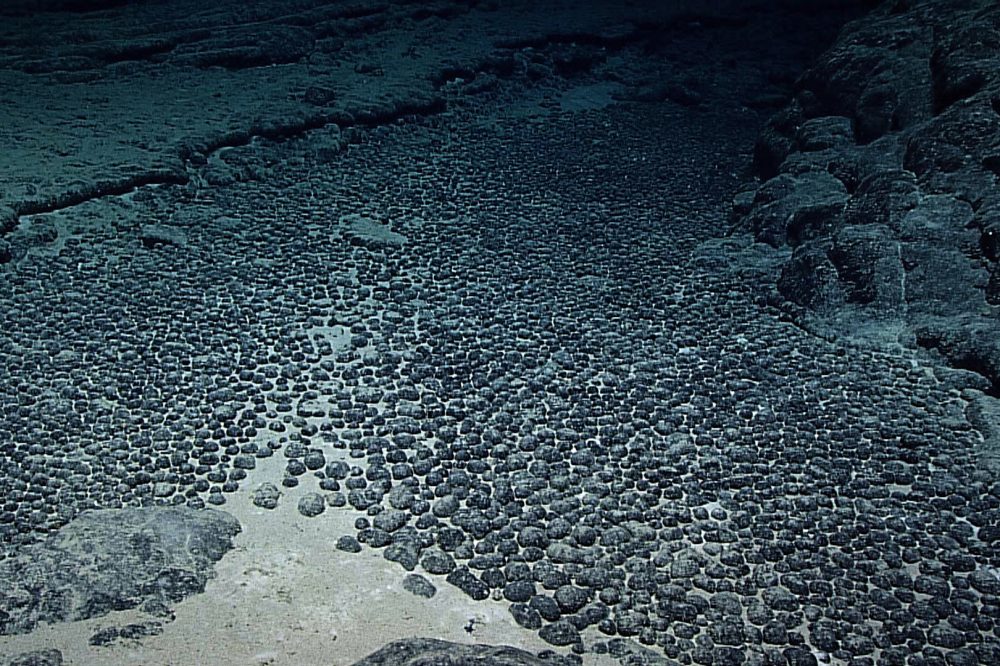
The ocean floor’s most sought-after materials are fist-sized formations called polymetallic nodules, which developed over millions of years from decomposed shark teeth and shell remains. These formations contain valuable concentrations of manganese, copper, nickel and cobalt, plus certain rare earth elements. Scientists estimate trillions of these nodules exist on the international seabed in the region between Mexico and Hawaii.
Closer to coastlines, companies have suggested extracting ocean sediments to obtain titanium, zirconium and phosphorites.
Trump’s April 2025 executive order praised seafloor minerals as essential to America’s economic future and reducing trade dependence on China, while instructing federal agencies to accelerate permit approvals.
Two federal agencies will oversee regulations: the National Oceanic and Atmospheric Administration and the Bureau of Ocean Energy Management. NOAA has not previously authorized any commercial seabed mining operations; BOEM’s only experience dates back more than 60 years to a brief mining venture in California waters.
In June, Interior Secretary Doug Burgum issued instructions for his team to “speed up” offshore critical mineral development. The department subsequently announced evaluations of seabed mining in Alaskan, Virginia, American Samoa and Northern Mariana Islands waters. According to budget documents, the first lease auction could occur as soon as August.
NOAA has reduced processing timeframes for companies seeking commercial permits and aims to handle 16 applications during the upcoming fiscal year.
Current applicants include a company that previously specialized in underwater treasure hunting and a startup that emerged from efforts to locate Amelia Earhart’s missing aircraft.
The roster also features The Metals Company, widely considered the industry leader. If approved, the company claims it could begin commercial seafloor mining operations before next year ends. It represents one of the few firms to conduct equipment testing in deep-water environments — successfully extracting 3,000 metric tons of nodules during a 2022 trial run.
The company maintains strong connections to the Trump administration. CEO Gerard Barron reports being present at the White House when Trump signed the executive order and has subsequently received invitations to address three congressional hearings.
A spokesperson for The Metals Company denied any unfair advantages, stating the firm is well-positioned to meet U.S. strategic objectives following 15 years of preparation and testing.
Odyssey Marine Exploration began operations in the 1990s focused on locating sunken treasure and selling recovered artifacts. The organization asserts it has discovered more shipwrecks than any other entity worldwide.
Odyssey encountered difficulties in 2007 after discovering an underwater wreck containing silver and gold coins that the company transported to the United States. Spain’s government later claimed ownership of the treasure, leading to an extended legal battle during which Odyssey shifted focus toward seafloor minerals.
In December, BOEM revealed that Odyssey had requested the agency initiate regulatory procedures for potential mining operations off Virginia’s coast.
Startup company Impossible Metals has targeted seafloor nodules in U.S. waters adjacent to American Samoa and the Northern Mariana Islands, despite increasing opposition from area residents and officials. The firm promotes itself as the most environmentally responsible deep-sea mining operation.
Additional companies seeking U.S. authorization include American Metal Resources, SeaX, Deep Sea Minerals Corp., and Deep Sea Rare Minerals, which was scheduled to rebrand as Eco Minerals this week.
Multiple analysts and investors doubt the financial viability of deep-sea mining. Ian Lange, a professor of mineral economics at the Colorado School of Mines, noted that deep-sea mining supporters appear to ignore more cost-effective and accessible land-based mineral sources. He questioned market demand strength, pointing to fully permitted but inactive copper mines in Michigan and Wyoming, plus an idle cobalt mine in Idaho.
In evaluating The Metals Company’s project economics, the firm projected reaching profitability in its eighth year of commercial seabed mining — coincidentally the same year it estimated the mineral reserves would be “all mined.”
“No one goes into a project saying, ‘In the best-case scenario, we’ll break even,’” said mining consultant Steven Emerman.
The Metals Company stated it had finalized mining plans and seafloor surveys covering the project’s first eight years, noting that costs for additional seafloor mineral surveying, sampling and analysis would be better managed once operations commenced. The company explained that extracting the four minerals found in polymetallic nodules would require at least three land-based mines, making the project more resistant to economic challenges and shifting metal demand.
Despite Trump’s emphasis on trade independence, the United States lacks major processing facilities for nickel, manganese or cobalt.
In the immediate future, companies must depend on existing international supply chains. The Metals Company has investigated processing options in Japan, South Korea and Indonesia.
However, depending on foreign partners could create numerous legal challenges for deep-sea mining companies. Most other nations involved in deep-sea mining have obligations to the International Seabed Authority and could face lawsuits for assisting U.S. efforts to access the global seabed.