Category: Business

  • AI Investment Boom Drives European Tech Stocks to Record Highs

    AI Investment Boom Drives European Tech Stocks to Record Highs

    European technology stocks experienced dramatic gains Wednesday as investors rushed to buy shares in companies positioned to profit from the growing artificial intelligence investment wave, following strong earnings reports and record-breaking performance by their American counterparts.

    ASM International, which manufactures computer chip equipment, saw its stock price jump 9% to reach an all-time high after the company projected second-quarter sales far exceeding what market analysts had anticipated, with experts pointing to strong AI-related demand driving the optimistic forecast.

    Swiss engineering firm ABB also reached a new stock price record after increasing its annual outlook, stating that surging demand from data centers and other electrification business segments helped counterbalance growing concerns related to the Iran conflict.

    The impressive performance of European semiconductor companies and other firms expected to benefit from AI infrastructure development follows similar success seen in the Philadelphia SOX index, which serves as the primary U.S. benchmark for the technology sector.

    That American index has posted gains for 15 straight trading sessions—marking the longest winning streak since at least 2014—climbing 35% during that timeframe, representing its best performance in approximately 24 years.

    Investment bank Barclays noted that an extended period of weak investment activity in developed markets is now shifting toward an AI-driven recovery, boosting demand for semiconductors and supporting infrastructure.

    The British bank anticipates investment growth will accelerate starting in 2026 as artificial intelligence projects expand, combined with increased spending on defense, energy security and supply-chain protection.

    “While AI spending has lifted U.S. corporate capex cycle higher, investments are yet to pick up meaningfully in Europe. We think the U.S.-Iran war should add further impetus to the theme,” wrote Barclays strategist Emmanuel Cau.

    “AI/Hyperscaler spending continues to drive strong earnings uplift in Semis, Electricals and boosting infrastructure names despite elevated valuations/positioning,” he continued.

    German semiconductor manufacturers and suppliers including Aixtron, Infineon and Siltronic posted gains ranging from 2.2% to 3.1%, while ASML, STMicroelectronics and BESI increased between 1.5% and 2.3%.

    ASML, recognized as the world’s leading supplier of chip manufacturing equipment, reported better-than-expected earnings last week and increased its 2026 revenue projections as artificial intelligence drives up demand for its products.

    Other companies in the engineering and electrical equipment sectors also performed well, with Schneider Electric and Legrand posting gains of 1.5% and 2% respectively.

    The overall European technology index climbed 1.2%, ranking among the top performers within the broader STOXX 600.

  • AT&T Surpasses Wireless Growth Projections Through Service Bundle Strategy

    AT&T Surpasses Wireless Growth Projections Through Service Bundle Strategy

    Telecommunications giant AT&T exceeded wireless subscriber growth projections for the first quarter, driven by successful customer adoption of combined wireless and high-speed fiber internet packages.

    The company’s stock price climbed 1% during Wednesday’s premarket trading session following the announcement.

    Wireless carriers continue battling intensely for market share, offering enhanced device subsidies, plan discounts, and expanding network infrastructure investments to secure and maintain their customer base.

    A significant convergence trend emerged as approximately 42% of AT&T customers who subscribe to home internet services also chose wireless plans from the company, creating what industry analysts consider a crucial competitive advantage.

    Similar to competitor T-Mobile, AT&T continued offering device subsidies during the first quarter for Apple’s newest iPhone models as wireless providers intensified their competition through attractive promotional deals.

    The telecommunications provider reported gaining 294,000 net monthly postpaid wireless subscribers during the quarter, surpassing the 272,000 additions that FactSet-surveyed analysts had anticipated.

    AT&T implemented strategic pricing adjustments, increasing costs for its entry-level and premium wireless plans while reducing prices for mid-tier options, which analysts interpret as an effort to guide customers toward middle-range services without triggering industry-wide price competition.

    Quarterly revenue increased approximately 3% to reach $31.5 billion, exceeding LSEG estimates of $31.25 billion.

    Beginning this quarter, AT&T restructured its business divisions to emphasize core growth sectors.

    The newly formed advanced connectivity division, which encompasses domestic 5G and fiber operations, achieved roughly 5% revenue growth due to increased wireless device sales and contributions from the fiber business acquisition from Lumen.

    AT&T’s adjusted earnings reached 57 cents per share for the quarter, surpassing analyst expectations of 55 cents.

  • Software Companies Face Investor Doubts Despite Strong Growth Projections

    Software Companies Face Investor Doubts Despite Strong Growth Projections

    Major software companies are gearing up to announce what could be their strongest quarterly performance in years, yet industry analysts warn that even impressive numbers may not calm growing investor anxiety about artificial intelligence reshaping the technology landscape.

    Tech executives, including Salesforce CEO Marc Benioff, have been working to convince shareholders that their companies’ unique data assets, extensive business expertise, and custom AI solutions will maintain customer relationships despite emerging AI competitors like Anthropic targeting legal, marketing, and customer service sectors.

    However, these reassurances haven’t prevented a significant market downturn in the technology sector. Software and services stocks have dropped approximately 16% since January began, creating a stark contrast with the S&P 500’s 3.2% increase during the same period.

    The earnings season for major cloud-based software companies begins Wednesday with ServiceNow’s report, followed by expected announcements from Workday and Salesforce in May.

    Financial analysts anticipate Salesforce will announce first-quarter revenue growth of 12.5%, reaching $9.83 billion and marking the company’s strongest expansion in 13 quarters, based on LSEG polling data.

    Despite this revenue success, profit margins at Salesforce—which has aggressively embraced AI through its Agentforce autonomous platform—are projected to slow to nearly three-year lows due to rising operational expenses.

    ServiceNow is forecast to demonstrate even stronger quarterly revenue expansion at 21.1%, while Workday’s growth is expected to reach 12.4%.

    “From a short-term stock market perspective, nothing (software) companies report this quarter or next quarter can really refute that long-term bear case,” said Joe Maginot, portfolio manager at Madison Investments.

    “It’s this more existential question on how things will evolve over the coming three, four, five years and even longer,” Maginot explained.

    Industry observers anticipate software companies will use their earnings presentations to demonstrate more clearly how artificial intelligence is driving revenue increases, expanding customer adoption, and improving client retention rates.

    “The opportunity is there for many incumbents to be successful, especially as the rollout of AI in enterprise is going to take many years,” Bernstein analysts said.

  • Apple’s Control-First Strategy May Hinder Success in Fast-Moving AI Revolution

    Apple’s Control-First Strategy May Hinder Success in Fast-Moving AI Revolution

    The tech giant Apple constructed its massive success through maintaining strict oversight of its products and services.

    Over many years, the corporation’s carefully controlled environment—featuring specialized processors, exclusive software systems, and carefully selected applications—produced gadgets that users found both secure and simple to operate.

    This strategy transformed the iPhone into history’s most profitable consumer device, bringing in almost $210 billion in sales during the previous year. The approach also positioned Apple as the globe’s highest-valued corporation throughout much of the last ten years, until artificial intelligence chip manufacturer Nvidia surpassed it in 2024.

    However, as future Apple leader John Ternus prepares to replace Tim Cook this autumn, he must address a crucial question regarding the company’s future in the artificial intelligence era, which will challenge Apple’s traditional method of controlling which applications and services can access its technology.

    The present artificial intelligence revolution has flourished primarily through open collaboration: rapid development cycles, widespread access for programmers, and technologies that function across multiple systems.

    Organizations like OpenAI, Google, and Meta have introduced models that occasionally develop in unexpected ways but show constant and visible enhancement, drawing developers and customers at speeds that traditional product development cannot match.

    Apple has predictably taken a more careful approach. Cook, who has faithfully maintained Apple founder Steve Jobs’ philosophy, has stressed privacy and excellence that require strict oversight.

    This careful approach has built user confidence but has also exposed the company to antitrust scrutiny domestically and internationally, including legal disputes with “Fortnite” developer Epic Games and new European Union regulations forcing Apple to permit greater competition on its platforms.

    This conflict has grown more intense with artificial intelligence, as the technology boom tends to favor rapid development and testing.

    “By choosing a hardware leader in John Ternus, Apple may be signaling that it still believes the future of AI will run through tightly integrated devices, not just software,” said Timothy Hubbard, assistant professor of management at the University of Notre Dame’s Mendoza College of Business.

    “That could be smart, but it also raises a deeper risk: the very strengths that made Apple dominant — their discipline, polish, and control — could become constraints if the next era rewards openness and faster iteration. That rapid innovation is where Apple started, and maybe that’s where the company needs to return.”

    Beginning with Jobs, who revitalized a struggling Apple during the late 1990s, followed by Cook, who transformed Apple’s services division into a $110 billion yearly revenue generator, the Cupertino, California company has demonstrated that close integration creates loyal customers and lasting profitability.

    Currently, Ternus faces his greatest obstacle: incorporating artificial intelligence into Apple’s secure ecosystem while a more open methodology gains global momentum.

    OpenClaw serves as one illustration—this program can manage multiple AI “agents” capable of performing complicated tasks typically done by people and has gained widespread adoption in China, with users from students to elderly individuals.

    However, OpenClaw also demonstrates the dangers of openness. The program remains unfinished, contains security flaws, and can perform concerning actions, such as revealing personal financial data online. These issues represent exactly the problems Apple has traditionally worked to prevent.

    Ternus has stated clearly in media discussions that Apple focuses on delivering finished products rather than experimental technologies like OpenClaw that create buzz but don’t become essential tools like the iPhone.

    Apple has shown some readiness to utilize artificial intelligence technology created by competitors when necessary. In January, the company made an agreement with Google to incorporate its Gemini AI systems to enhance its Siri digital assistant.

    Notre Dame’s Hubbard suggested Apple might follow Nvidia’s example. Recently, Nvidia announced plans to adapt OpenClaw’s open-source program into a product called NemoClaw, which will include protective measures and restrictions allowing the OpenClaw method to function in corporate settings.

    Gene Munster, a veteran Apple analyst and investor at Deepwater Asset Management, believes Ternus’ emphasis on excellence could help him change Apple’s story similarly to how Cook demonstrated through the services business expansion that Apple’s financial success extends beyond the iPhone.

    “Staying true to Apple’s culture should allow Apple to pursue AI more aggressively without compromising on quality,” Munster wrote in a note to clients.

  • Aviation Experts Warn of Industry Ripple Effects if Spirit Airlines Shuts Down

    The aviation industry could face significant disruption if Spirit Airlines decides to permanently cease operations, according to industry analysts monitoring the budget carrier’s financial struggles.

    While the low-cost airline has not announced any plans for liquidation, Spirit has entered bankruptcy protection proceedings on two separate occasions. Aviation experts are now warning that escalating fuel expenses could force the company to shut down permanently.

    The potential closure of Spirit would mark a major shift in the domestic airline landscape, as the carrier has been a significant player in the budget travel market. Industry observers are closely watching how rising operational costs continue to pressure the airline’s business model.

    Should Spirit ultimately decide to liquidate its assets, the move could create a domino effect throughout the aviation sector, potentially affecting everything from route availability to ticket pricing across competing airlines.

  • South Korean Display Giant Plans $745M Investment in Advanced Screen Technology

    South Korean Display Giant Plans $745M Investment in Advanced Screen Technology

    A major South Korean display manufacturer announced Wednesday its intention to spend nearly three-quarters of a billion dollars on advanced screen technology infrastructure.

    LG Display revealed plans to allocate 1.1 trillion won, equivalent to $744.94 million, toward developing facilities for organic light-emitting diode displays, commonly known as OLED technology. The company stated this substantial investment aims to strengthen its position in the competitive display technology market.

    The display manufacturer indicated the financial commitment will span approximately two years, beginning in April 2026 and concluding by June 2028.

    OLED technology represents a significant advancement in display manufacturing, offering improved picture quality and energy efficiency compared to traditional screen technologies.

  • Wall Street Futures Rise as Trump Delays Iran Military Action Indefinitely

    Wall Street Futures Rise as Trump Delays Iran Military Action Indefinitely

    Financial markets showed optimism Wednesday morning following President Donald Trump’s announcement that he would indefinitely postpone military action against Iran, though questions persist about whether Iran and Israel will maintain the ceasefire.

    As of 4:37 a.m. Eastern Time, Dow futures increased by 171 points or 0.35%, while S&P 500 futures advanced 31 points or 0.44%. Nasdaq 100 futures climbed 155.5 points or 0.58%.

    The positive market response reflects investors’ eagerness for stabilizing news, with many believing the worst uncertainty may be behind them, even as inflation concerns linger.

    Both the S&P 500 and Nasdaq Composite reached new record levels recently, despite oil prices hovering around $100 per barrel.

    Kyle Rodda, a senior financial market analyst at Capital.com, expressed caution about the situation’s stability. “The peace process is looking wobbly again as some of the difficult realities of the war come to the fore,” Rodda stated.
    “The risk is (that) Iran’s domestic political dynamics and strategic tensions between the U.S. and Iran — not to mention Israel — maintain an inertia towards escalation,” he added.

    In a social media post, Trump explained that the United States had accepted a request from Pakistani intermediaries “to hold our Attack on the Country of Iran until such time as their leaders and representatives can come up with a unified proposal … and discussions are concluded, one way or the other.”

    Meanwhile, investors prepared to examine new quarterly earnings reports, including results from aircraft manufacturer Boeing and medical equipment company Boston Scientific, both releasing figures before markets opened.

    Boeing stock increased 2.6% in pre-market activity, while Boston Scientific climbed 1.2%.

    Electric vehicle leader Tesla, semiconductor company Texas Instruments, and Southwest Airlines were scheduled to announce earnings after market closure.

    Corporate earnings results have so far bolstered investor confidence regarding American consumer spending, which drives economic growth. Goldman Sachs data shows S&P 500 earnings per share projections for 2026 and 2027 have increased 4% since late January.

    Adobe stock jumped 2.8% following the company’s announcement of a stock buyback program valued at up to $25 billion.

    Cryptocurrency-related companies also posted gains, with Coinbase Global rising 4% and Strategy climbing 5.6%.

  • Australian Medical Device Giant Suffers Historic Stock Plunge Amid Global Conflicts

    Australian Medical Device Giant Suffers Historic Stock Plunge Amid Global Conflicts

    Shares of Cochlear, an Australian hearing implant manufacturer, plummeted by nearly 41% on Wednesday in what marked the company’s steepest single-day decline on record. The dramatic drop followed the medical device maker’s announcement of severely reduced annual profit projections due to challenging market conditions and disruptions stemming from ongoing Middle East conflicts.

    This earnings warning joins a growing list of similar announcements from companies across Australia and New Zealand, as the effects of Middle East warfare continue to disrupt global supply chains, drive up inflation, weaken consumer confidence, and alter corporate investment patterns.

    The hearing implant specialist now projects underlying net profits between A$290 million and A$330 million ($207.61 million-$236.25 million) for the 2026 fiscal year, representing a dramatic reduction from earlier estimates of A$435 million to A$460 million.

    This revised forecast falls significantly below market expectations, with the midpoint missing analyst consensus projections of A$402.5 million by a substantial margin.

    Cochlear’s stock price, which previously held the distinction of being among the most expensive on Australia’s stock exchange, dropped 40.7% to close at A$99.58, marking its lowest closing value since March 2016.

    According to the company, market demand in developed nations has weakened considerably since January due to limited hospital capacity, reduced medical referrals, and declining consumer confidence. These factors have particularly impacted the United States market, where patients are postponing elective medical procedures and surgical interventions.

    “Tough times for developed world insurers translate to volume delays, at the very least, the question for us and the market is whether the issues outlined today are structural,” Jefferies analysts noted in their research report.

    “Our recent discussions with U.S. Cochlear implant clinics highlight that public and private health insurers are under increasing pressure, leading to volume delays for providers,” the analysts added.

    While demand in emerging markets has remained relatively stable, Cochlear warned that Middle East conflicts are likely to result in canceled orders and potential delivery delays to certain regions.

    The company anticipates second-half sales growth of just 2% to 6% on a constant currency basis, reflecting the combined impact of weakened developed market performance and Middle East uncertainties.

    Cochlear also disclosed potential financial impacts including up to A$10 million in receivables provisions for the year and approximately A$25 million in second-half losses due to Australian dollar strength against other currencies.

  • Tech Mahindra Surpasses Revenue Expectations with Strong Growth Across Segments

    Tech Mahindra Surpasses Revenue Expectations with Strong Growth Across Segments

    Indian information technology services giant Tech Mahindra exceeded Wall Street expectations for quarterly revenue on Wednesday, marking the company’s strongest performance in more than a year with growth spanning nearly all business divisions.

    The company reported consolidated revenue of 150.76 billion rupees ($1.61 billion) for the quarter ending March 31, representing a 12.6% increase compared to the same period last year. This marked Tech Mahindra’s first double-digit revenue expansion since March 2023, surpassing analyst projections of 147.77 billion rupees according to LSEG data.

    Following the earnings announcement, Tech Mahindra’s stock price recovered from earlier losses, closing flat at 1,501.80 rupees after being down 6% prior to the results release.

    The Pune-headquartered company saw particularly strong performance in its core communications division, which accounts for approximately one-third of total revenue and expanded 5.6% year-over-year. This growth occurred despite concerns from competitor HCLTech about reduced discretionary spending among telecommunications clients.

    Currency fluctuations provided additional support to earnings, as the Indian rupee weakened 4% against the U.S. dollar during the quarter. Software services firms typically benefit from rupee depreciation since they invoice clients in foreign currencies.

    Geographically, the Americas region delivered 7.7% revenue growth, while European markets contributed 7.4% expansion compared to the previous year.

    Net profit climbed 16% to 13.54 billion rupees, though this figure fell short of analyst expectations of 14.92 billion rupees.

    Tech Mahindra secured $1.07 billion in new contract bookings for the fourth quarter, a significant increase from $798 million in the same period last year. Notable wins included a five-year agreement with European telecommunications provider Orange Business.

    The results contrast with mixed performance across India’s IT sector, where industry leader Tata Consultancy Services beat earnings expectations but recorded a rare annual revenue decline in dollar terms. Meanwhile, competitors Wipro and HCLTech fell short of estimates due to delayed project launches, reduced client spending, and customer-related challenges.

  • German Telecom Giant’s Stock Drops Amid Reports of Massive T-Mobile Merger Talks

    German Telecom Giant’s Stock Drops Amid Reports of Massive T-Mobile Merger Talks

    BERLIN, April 22 – Stock prices for Deutsche Telekom dropped 1.5% on Wednesday following news reports about possible merger discussions with T-Mobile US, a deal that could become the largest public company merger in history.

    Two sources with knowledge of the situation confirmed to Reuters that preliminary discussions are underway. Deutsche Telekom, which currently owns a controlling 53% interest in T-Mobile, declined to provide comment on Wednesday morning.

    The merger speculation was initially disclosed by Bloomberg.

    If completed, this transaction would require approval from Germany, Deutsche Telekom’s largest shareholder, and would establish the globe’s most valuable wireless communications company by market worth, operating across both American and European markets.

    T-Mobile currently carries a market valuation of approximately $218 billion, compared to Deutsche Telekom’s $166 billion valuation.

    According to Bloomberg’s reporting, the preliminary concept involves establishing a new parent company that would make stock offers to acquire both businesses, with existing shareholders maintaining ownership and the combined entity trading on both American and European exchanges.

    Germany’s ownership is divided roughly equally between the federal government and state-owned development bank KfW, whose ownership percentage would likely decrease in a combined company.

    According to an anonymous source familiar with the negotiations, the merger would establish a massive corporation with enhanced financial flexibility, potentially facilitating future acquisition opportunities.

    Over the past twelve months, T-Mobile’s share price has declined by 25%, while Deutsche Telekom’s stock has fallen 10%.

  • Mississippi Liquor Stores Face Shortages Due to Warehouse Delays

    Mississippi Liquor Stores Face Shortages Due to Warehouse Delays

    Liquor retailers across Mississippi are facing empty shelves as operational delays at the state’s single alcohol distribution center create widespread supply shortages.

    The distribution problems at Mississippi’s lone warehouse facility are preventing retail establishments from receiving new shipments of beer, wine, and spirits, leaving many stores unable to meet customer demand.

    Store owners throughout the state report difficulty maintaining adequate inventory levels as the warehouse struggles to process and distribute products in a timely manner.

  • British Aerospace Supplier Raises 2026 Outlook on Strong Aircraft Demand

    British Aerospace Supplier Raises 2026 Outlook on Strong Aircraft Demand

    A British aerospace and defense company announced Wednesday it anticipates 2026 results will be “comfortably better” than previously projected, following robust first-quarter performance driven by surging aircraft manufacturing demand.

    Senior Plc’s upgraded outlook comes as the engineering firm operates under a proposed $1.89 billion acquisition by investment groups Tinicum and Blackstone.

    The company’s improved prospects stem from heightened commercial aircraft manufacturing as major clients like Boeing accelerate production schedules, combined with increased defense expenditures and improved contract pricing.

    Financial highlights from the quarter ending March 2026 show group revenues climbed 2.5% when adjusted for currency fluctuations. The aerospace segment delivered particularly strong results with quarterly sales jumping 9.7%, benefiting from expansion across commercial aviation sectors including large aircraft, regional carriers, and business jets, plus solid defense contract performance.

    Conversely, the company’s Flexonics industrial division experienced a 6.2% revenue decline due to reduced petrochemical sector activity, though land vehicle demand surpassed management projections, according to Senior’s statement.

    Despite continuing global political tensions and economic uncertainties, the company maintains confidence that full-year results will surpass earlier forecasts.

  • Asian Markets Show Mixed Results as Trump Extends Iran Ceasefire

    Asian Markets Show Mixed Results as Trump Extends Iran Ceasefire

    TOKYO (AP) — Stock markets across Asia showed varied performance during Wednesday’s trading session, with investors maintaining a watchful stance on developments between the United States and Iran following President Donald Trump’s extension of a ceasefire that had been scheduled to end.

    Japan’s primary Nikkei 225 index climbed 0.3% to reach 59,530.64. Meanwhile, Australia’s S&P/ASX 200 fell 1.2% to 8,841.00, and South Korea’s Kospi index increased 0.4% to 6,413.62.

    In other regional markets, Hong Kong’s Hang Seng index dropped 1.3% to 26,140.05, while China’s Shanghai Composite rose 0.3% to 4,096.59.

    U.S. markets also experienced volatility Tuesday, with the S&P 500 giving up early gains to close down 0.6% at 7,064.01 after Vice President JD Vance canceled his planned trip to Pakistan, where he was scheduled to head American negotiators in discussions with Iran regarding ceasefire extension.

    The Dow Jones Industrial Average fell 0.6% to 49,149.38, and the Nasdaq composite declined 0.6% to 24,259.96. Shortly after U.S. markets closed, Trump announced he would prolong the ceasefire to allow Iran additional time to present a proposal for ending the conflict.

    Energy markets continued to fluctuate Wednesday in Asian trading, with U.S. crude benchmark dropping 19 cents to $89.48 per barrel. International standard Brent crude decreased 12 cents to $98.36.

    These price movements remained more subdued compared to the dramatic volatility that shook Wall Street during earlier phases of the conflict, when Brent crude prices briefly exceeded $119 per barrel and the S&P 500 fell almost 10% from its previous record high.

    American equity markets continue trading close to their latest record levels achieved Friday, suggesting investors maintain hope that the United States and Iran will prevent an economic worst-case outcome.

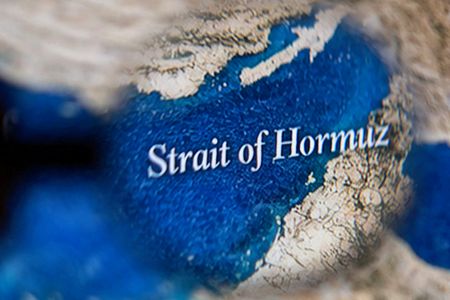
    Financial market anxiety has largely centered on potential disruptions to the Strait of Hormuz, a critical narrow passage near Iran’s coastline that oil tankers utilize when departing the Persian Gulf. Countries like Japan, which imports nearly all its petroleum and previously relied heavily on supplies through this strait, have begun releasing strategic oil reserves while exploring alternative shipping routes.

    “Trump’s decision essentially extends the uneasy status quo rather than resolving the conflict. While the pause has reduced immediate tail risks, the absence of a genuine breakthrough means traders remain inclined to tiptoe rather than trade with real conviction,” said Tim Waterer, chief market analyst at KCM Trade.

    Bond markets saw the 10-year Treasury yield rise to 4.31% from Monday’s close of 4.26%, with gains picking up momentum late in the trading day alongside oil price movements.

    Currency markets showed the U.S. dollar slightly weakening to 159.33 Japanese yen from 159.38 yen. The euro traded at $1.1740, down from $1.1744.

  • French Food Giant Danone Reports Slower Growth Amid Formula Recall, Middle East Conflict

    French Food Giant Danone Reports Slower Growth Amid Formula Recall, Middle East Conflict

    French food company Danone reported first-quarter revenue growth that exceeded analyst predictions but showed a significant deceleration from the prior quarter, as the company faced challenges from a European baby formula recall and Middle Eastern conflicts affecting its nutrition business.

    The multinational corporation, known for producing Activia yogurt, Aptamil baby formula, and Evian bottled water, achieved 2.7% sales growth during the quarter. Company executives described the current business climate as “volatile and uncertain” but emphasized that their health-oriented and scientifically-backed product lineup offered some stability.

    The company maintained its annual financial projections despite the quarterly challenges.

    Revenue for the three-month period totaled 6.708 billion euros (equivalent to $7.88 billion), representing like-for-like growth of 2.7% compared to analyst forecasts of 2.6%. However, this represented a notable decline from the 4.7% expansion recorded in the fourth quarter of 2025.

    Company leadership confirmed their 2026 financial outlook remains aligned with medium-term objectives, targeting like-for-like sales increases of 3-5% while expecting recurring operating income to outpace sales growth.

    The infant formula recall has impacted multiple major food manufacturers, including Danone and Nestle, due to potential contamination involving the cereulide toxin. Market analysts are closely monitoring the financial and brand reputation consequences for affected companies.

  • Asian Markets Show Mixed Results as US-Iran Diplomatic Talks Remain Uncertain

    Asian Markets Show Mixed Results as US-Iran Diplomatic Talks Remain Uncertain

    TOKYO — Financial markets across Asia showed varied performance Wednesday as traders closely monitored developments regarding potential diplomatic discussions between Washington and Tehran to resolve their ongoing conflict.

    Brent crude oil climbed marginally by one cent, reaching $98.51 per barrel, while U.S. benchmark crude decreased 0.4% to $89.29 per barrel.

    Reduced energy costs provide relief for businesses across various sectors. President Donald Trump announced he would continue the current ceasefire with Iran following Pakistan’s request, while waiting for a “unified proposal” from Tehran. American military forces maintained their naval blockade at Iranian ports.

    In market activity, Japan’s Nikkei 225 index rose 0.5% to close at 59,653.56, while South Korea’s Kospi index dropped 0.2% to 6,374.46.

    Australia’s S&P/ASX 200 declined 0.9% to 8,866.20.

    Hong Kong’s Hang Seng index fell 1.3% to 26,137.59, whereas the Shanghai Composite increased 0.1% to 4,090.24.

    Taiwan’s Taiex gained 1.1%.

    Tuesday’s U.S. trading session began positively following reports that diplomatic representatives were coordinating through unofficial channels to establish new negotiations between Washington and Iran.

    The S&P 500 eliminated early gains to close down 0.6% after Vice President JD Vance canceled his planned visit to Pakistan, where he was scheduled to head American negotiating teams for ceasefire extension talks with Iran.

    The Dow Jones Industrial Average fell 0.6%, wiping out an earlier 400-point increase, while the Nasdaq composite decreased 0.6%.

    Wednesday trading saw U.S. benchmark crude rise slightly by one cent to $91.29 per barrel. Brent crude increased 48 cents to $95.27, representing less than 1% growth following the previous day’s 4.6% decline. Although current prices remain elevated compared to the approximately $70 level before hostilities began in late February, they stay significantly below the $119 peak.

    Many Asian countries, particularly resource-limited Japan, rely heavily on the Strait of Hormuz, a critical shipping lane that serves as the primary route for Persian Gulf oil exports to reach global consumers. Disruptions in this waterway have restricted oil supplies to international markets, contributing to price increases.

    The International Monetary Fund projects global inflation will accelerate to 4.4% this year, up from 4.1% in 2025, revising its earlier prediction of a decrease to 3.8%. The IMF also reduced its global economic growth forecast Tuesday to 3.1% for this year, down from the 3.3% projection issued in January.

    Bond market activity showed Treasury yields declining as falling oil prices reduced inflationary pressures. The 10-year Treasury yield dropped to 4.25% from Monday’s close of 4.30%.

    Currency markets saw the U.S. dollar weaken to 159.27 Japanese yen from 159.38 yen. The euro traded at $1.1746, declining from $1.1744.

  • Middle East Conflict Driving Up Costs of Everyday Items Made with Petroleum

    Middle East Conflict Driving Up Costs of Everyday Items Made with Petroleum

    NEW YORK (AP) — The ongoing Middle East conflict is having an unexpected impact on everyday consumer goods, from children’s plush toys to clothing and medical supplies, as petroleum-based materials become increasingly expensive.

    Ricardo Venegas, CEO of Aleni Brands based in Fort Lauderdale, Florida, discovered this connection firsthand when his company’s stuffed animal products — including toys called Snuggle Glove, Bizzikins and Wobblies — faced rising production costs. These soft toys contain polyester and acrylic fibers that come from petroleum sources.

    Just three weeks into the conflict, Venegas received word from Chinese suppliers that material costs had jumped 10% to 15%. “I think this situation demonstrates how much oil permeates throughout our system, and we can’t get away from it,” Venegas explained. “Who would have thought that the price of a toy would have a direct relationship with oil?”

    The impact extends far beyond toys. According to the U.S. Department of Energy, petroleum-derived chemicals are components in over 6,000 everyday products. This includes computer keyboards, cosmetics, sports equipment, clothing, contact lenses, cleaning products, gum, footwear, art supplies, personal care items, pillows, medications, dental products, office supplies, umbrellas and musical instrument strings.

    While rising gas prices have been the most visible consequence of the conflict for consumers, the effects are spreading to other areas. Air travelers face higher ticket prices as airlines deal with increased jet fuel costs. Food and furniture prices may also climb due to higher diesel costs for trucking companies.

    However, petroleum’s role extends beyond fuel production. Oil gets processed into chemicals, waxes and other compounds that become essential ingredients in plastic and rubber products, as well as packaging materials. After eight weeks of global oil supply disruptions, manufacturing costs are rising across multiple industries, according to trade associations and individual companies.

    Venegas, who has three decades of experience in the toy business, plans to absorb the higher costs temporarily but anticipates raising customer prices by early 2027 if the conflict continues for another three to six months.

    Gernot Wagner, a climate economist at Columbia University’s School of Business, notes that while 85% of global oil use involves fuel, the remaining 15% goes into various consumer products.

    Oil consists primarily of hydrocarbon compounds containing carbon and hydrogen atoms. Processing facilities break these down into smaller chemical components called petrochemicals. Six key petrochemicals — ethylene, propylene, butylene, benzene, toluene and xylenes — serve as the foundation for plastics and synthetic materials like nylon and polyester, which manufacturers then use in countless products. Additional Department of Energy examples include car parts, writing instruments, home furnishings, gaming equipment, vision correction products, plant nutrients, sporting goods, medical devices, pest control products, watercraft, travel accessories, cleaning tools and beauty products.

    Andrew Walberer, a partner and global chemicals practice leader at strategy consultancy Kearney, explains that raw materials represent a significant portion of manufacturing expenses for companies producing carpets, apparel and tires.

    Using dress shirts as an example, Walberer calculates that materials comprise 27%-30% of manufacturing costs, while labor accounts for 10%-30%. The remainder covers marketing, distribution and administrative expenses.

    Industry analysts warn that if oil prices remain above $90 per barrel over the coming months, cost pressures will intensify throughout supply chains.

    Matt Priest, CEO of Footwear Distributors and Retailers of America, explains that most member companies maintain two to three months of finished product inventory, providing temporary protection against rising material costs.

    According to a recent trade organization report analyzing the U.S. footwear industry’s “exposure to oil prices & the impact on shoe costs,” approximately 70% of synthetic shoe materials are petroleum-based, with 30% of those material costs directly linked to oil price fluctuations.

    The FDRA study projects that increased petroleum costs could result in 1.5% to 3% higher shoe prices for consumers by late summer and fall, factoring in materials, factory energy and transportation expenses.

    Nate Herman, executive vice president of the American Apparel & Footwear Association, notes that by late April, U.S. shoe and clothing manufacturers must finalize supplier contracts — primarily with overseas companies — for polyester materials needed for holiday season merchandise.

    The price for one kilogram (slightly over two pounds) of polyester textile materials has risen from an average of 90 cents before the U.S. and Israel attacked Iran to $1.33 per kilogram, Herman reports. He estimates this will add 10 to 15 cents to each garment’s production cost.

    Some companies are implementing strategies to manage rising expenses. Lisa Lane, founder of Rinseroo, which produces portable shower attachments for cleaning and pet care, recently tripled her monthly orders from China after her manufacturer warned of a 30% price increase within 30 days. She had only a few days to decide on placing a three-month advance order.

    Rinseroo’s products contain petroleum derivatives including polyvinyl chloride, Lane explained. After ordering 240,000 units instead of her typical 80,000, she’s exploring ways to reduce other costs.
    Lane prefers not to raise prices for retailers since Rinseroo already did so last year to offset higher U.S. tariffs on Chinese imports. For instance, a pet bathing hose increased from $29.95 to $33.95 on retail websites. “We want to stay at that sweet spot where people want to continue to buy from us and feel like they’re getting a good value,” Lane stated.

    Gentell, a medical supply company selling wound care products like bandages and dressings to nursing homes and healthcare facilities, plans to implement a 15% price increase within weeks. CEO David Navazio points out that product adhesives depend on various petrochemicals.

    Considering both energy and material costs, Navazio estimates the company’s expenses are increasing by 20%. The Yardley, Pennsylvania-based company manufactures primarily in Toronto and also produces private label items for other firms, including a medical technology company that supplies retailers like CVS.

    Since bandages and dressings are essential medical supplies, Navazio doesn’t expect business to decline with higher prices. However, he’s uncertain whether costs will decrease once the conflict ends and oil shipments normalize.

    “In the past, I’ve seen transportation costs come down, but I’ve never seen prices of raw material come down,” he observed.

  • Indian Tech Giant HCLTech Stock Plunges 8% on Disappointing Earnings

    Indian Tech Giant HCLTech Stock Plunges 8% on Disappointing Earnings

    Indian technology services company HCLTech experienced a significant stock decline Wednesday morning, with shares dropping 8% following disappointing quarterly results and a cautious business outlook that underscores mounting challenges across India’s information technology sector.

    The company’s stock performance on April 22 marked its steepest single-day decline since January 2025, making it the worst performer on India’s Nifty IT sector index. HCLTech’s troubles stem from fourth-quarter earnings that fell short of analyst projections and revenue growth projections for fiscal year 2027 that came in below Wall Street expectations.

    The disappointing results reflect broader difficulties facing India’s massive information technology industry, valued at $315 billion, as corporate customers continue to limit their technology spending. This cautious approach by clients has created headwinds for major Indian IT service providers who rely heavily on international business contracts.

  • Texas-Based Convenience Store Chain Yesway Successfully Completes $280M IPO

    Texas-Based Convenience Store Chain Yesway Successfully Completes $280M IPO

    A Texas-based convenience store chain has successfully completed its debut on the stock market, securing $280 million through its initial public offering announced Tuesday.

    Yesway, headquartered in Fort Worth, Texas, issued 14 million shares priced at $20 each during the offering, which fell at the bottom of the company’s projected pricing range of $20 to $23 per share. The stock market debut gives the convenience store operator a total market value of $1.21 billion.

    The successful launch occurs during a period when the U.S. stock market is showing renewed interest in consumer-focused companies going public. Market activity had experienced a significant decline in 2025 following the implementation of strict import tariffs that created uncertainty in the retail sector.

    Several businesses have also moved quickly to launch their public offerings before Elon Musk’s SpaceX makes its highly anticipated market debut, seeking to avoid competing with what analysts expect will be one of the most watched stock launches in recent memory.

    The convenience store company had originally planned to go public starting in 2021, but delayed those intentions in late 2022 when economic instability made new stock offerings challenging.

    Established in 2015 through Brookwood Financial Partners, a private equity company based in Boston that focuses on real estate investments, Yesway has grown to become among the most rapidly expanding convenience store chains in America.

    The company currently operates more than 400 retail locations spread throughout nine states in the Midwest and Southwest regions of the country.

    Major financial institutions Morgan Stanley, J.P. Morgan, and Goldman Sachs served as the primary underwriters managing the stock offering. Trading of Yesway shares will commence Wednesday on the Nasdaq stock exchange using the trading symbol “YSWY.”

  • Crypto Investor Files Lawsuit Against Trump’s World Liberty Financial

    Crypto Investor Files Lawsuit Against Trump’s World Liberty Financial

    Cryptocurrency businessman Justin Sun announced Tuesday that he has initiated legal proceedings in California federal court against World Liberty Financial, the digital currency project backed by President Donald Trump, seeking to safeguard his investor rights related to WLFI tokens.

    Sun, who represents a significant financial stake in the World Liberty Financial cryptocurrency project, previously accused the company of covertly deploying mechanisms that allow them to freeze and limit individual investors’ WLFI token assets without consent.

  • SpaceX Prepares Historic IPO Amid AI Investments and Financial Challenges

    SpaceX Prepares Historic IPO Amid AI Investments and Financial Challenges

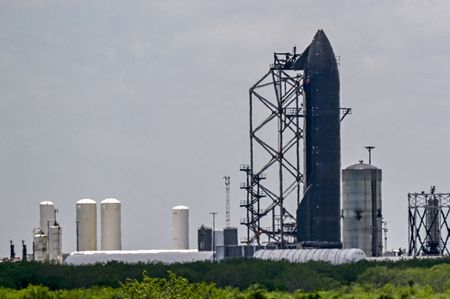
    Elon Musk’s space exploration company SpaceX experienced significant developments this week as it prepares for what analysts believe could become the biggest stock market debut ever recorded.

    The aerospace and satellite firm revealed an opportunity to purchase AI coding company Cursor for $60 billion, described strategies to secure lasting voting authority for Musk, and launched a three-day presentation to Wall Street analysts to justify its massive $1.75 trillion company valuation.

    The company aims to complete its public stock offering by late June while raising $75 billion in capital, despite internal documents revealing the business recorded substantial losses exceeding multiple billions in 2025, primarily due to significant artificial intelligence investments.

    Key developments from this week include:

    • AI Partnership: On Tuesday, SpaceX revealed it secured rights to either purchase code-development company Cursor for $60 billion later this year, or establish a partnership for $10 billion.

    • Leadership Control: Reuters disclosed Monday that SpaceX intends to provide Musk and select company insiders with enhanced voting shares that will maintain their influence over other stockholders following the public offering.

    • Financial Performance: The company reported a $4.94 billion consolidated deficit in 2025 against revenues of $18.67 billion. Following its merger with xAI earlier this year, SpaceX concluded 2025 holding approximately $24.8 billion in available funds, $92 billion in total assets, and $50.8 billion in outstanding debts. Capital expenditures grew nearly five times over two years, reaching $20.74 billion.

    • Wall Street Presentations: SpaceX began a three-day series of meetings with financial analysts this week to support the $1.75 trillion valuation it seeks through its stock market launch.

    • Investment Risks: The company cautioned potential investors that its goals to construct AI data centers in space and establish human communities on the moon and Mars depend on untested technologies that may never prove profitable, according to Tuesday reports from Reuters.

    • Executive Compensation: Musk received $54,080 in direct payment last year but could earn billions through stock ownership after the public offering. The Information revealed Musk purchased $1.4 billion worth of shares from company employees last year. SpaceX President Gwynne Shotwell received $85.8 million in total compensation, ranking among America’s highest-paid corporate leaders. Chief Financial Officer Bret Johnsen earned $9.8 million.

    • Market Index Changes: The massive public offering has prompted index companies to reconsider their methods for creating market benchmarks, with Morningstar Inc announcing its CRSP Market Indexes will implement an “alternative liquidity screen” to include SpaceX and similar large IPOs in their indexes more quickly.

    • Individual Investor Access: Musk plans to reserve approximately 30% of available shares for individual investors. Nearly 1,500 retail investors have received invitations to visit the company’s Starbase launch complex in Texas following the roadshow beginning June 8. International individual investor participation will expand to include the United Kingdom, European Union, Australia, Canada, Japan, and South Korea.

  • Japanese Finance Chief to Hold AI Security Talks with Major Banks

    Japanese Finance Chief to Hold AI Security Talks with Major Banks

    Finance Minister Satsuki Katayama of Japan is scheduled to convene discussions with the nation’s leading banking institutions as soon as this week regarding Anthropic PBC’s newest artificial intelligence system called Mythos, according to a Tuesday report from Bloomberg News that cited sources with knowledge of the planned meetings.

    The scheduled conversations will include representatives from Japan’s three largest financial institutions: Mitsubishi UFJ Financial Group Inc, Sumitomo Mitsui Financial Group Inc, and Mizuho Financial Group Inc, the Bloomberg report indicated.

    Bloomberg’s reporting did not provide details about the specific agenda for these meetings. The Mythos artificial intelligence system has generated alarm among financial regulators due to its remarkable capability to detect weaknesses in digital security systems and the possibility that it could be exploited for harmful purposes.

    Reuters noted they were unable to independently confirm the Bloomberg report at this time.

  • Consumer Spending Jumps 1.7% in March, Fueled by Rising Gas Costs

    Consumer Spending Jumps 1.7% in March, Fueled by Rising Gas Costs

    Consumer spending picked up pace in March compared to the previous month, but Americans found themselves shelling out significantly more money at gas stations across the country.

    Rising fuel costs stemming from the Iran conflict, which has now entered its eighth week, led to a substantial 1.7% increase in retail spending during March following a revised 0.7% uptick in February, the Commerce Department announced Tuesday. This data represents the initial glimpse into consumer behavior since the Iran war began impacting the economy.

    When gas purchases are removed from the equation, the spending increase drops to just 0.6%, boosted partially by government tax refund distributions and milder temperatures.

    Gas station revenues jumped by 15.5% during the month.

    Other retail sectors also saw gains, with department store sales climbing 4.2% and furniture plus home goods retailers experiencing a 2.2% boost. Internet-based sellers recorded a 1% improvement, while electronics and appliance merchants posted a 0.9% rise.

    This data provides only a limited view of consumer purchasing patterns and excludes categories such as travel and lodging. However, the single service sector included – dining establishments – showed a much smaller 0.1% gain.

    “It’s a blowout retail sales figure for March,” Heather Long, chief economist at Navy Federal Credit Union, wrote in a report. “Stripping out the big surge in spending on gas due to the Middle East conflict, it’s a solid but more modest 0.6% increase.”

    Long observed that tariff effects are evident in elevated electronics and appliance spending due to increased prices. The minimal restaurant growth might signal early consumer pullback as people allocate more money to fuel costs, she explained.

    “Overall, the American consumer is still healthy,” she added. “Extra income from tax refunds is helping many households weather this oil shock, but that extra money won’t last forever.”

    The Iran conflict commenced February 28 and has blocked the Strait of Hormuz, eliminating one-fifth of global oil supplies.

    Near the end of last month, American gas prices surpassed an average of $4 per gallon for the first time since 2022. AAA data shows the national regular gasoline average reached $4.02 on Tuesday—more than a dollar higher than pre-war levels on February 28.

    Economic experts had anticipated that unusually substantial tax refund amounts would stimulate spending early this year. However, escalating fuel prices are consuming that additional income.

    Consumers face pressure not only at gas pumps but are beginning to encounter unexpected expenses across various areas, including travel costs like increased baggage charges. They will probably see higher prices on numerous products as supply chain effects spread when companies transfer elevated transportation expenses to customers.

    The most significant monthly gas price surge in six decades triggered a sharp inflation spike last month, presenting major obstacles for Federal Reserve inflation-control efforts and amplifying considerable political challenges for the White House.

    Consumer prices increased 3.3% in March compared to the same period last year, the Labor Department reported earlier in April, rising dramatically from 2.4% in February and marking the largest annual increase since May 2024. Month-to-month, prices climbed 0.9% from February to March, the biggest such jump in almost four years.

    When removing unstable food and energy costs, core prices rose 2.6% in March year-over-year, up from February’s 2.5%.

    Major retail chains including Target and Walmart plan to announce their fiscal first-quarter financial results next month, providing additional insight into how the Iran conflict affects consumer spending.

    Before the war started, shoppers were already exercising caution. Bryan Eshelman, Americas retail leader and partner plus managing director at AlixPartners consultancy, observed his retail clients witnessing customers reducing spending even further now.

    “Particularly in the low-end economy, people are shifting from wants to needs,” he stated. He referenced recent March shoe shopping analysis by AlixPartners with the Footwear Distributors and Retailers of America trade organization, showing consumers prioritizing less specialized footwear and more versatile shoes for multiple occasions.

    “They know the prices are high, and they’re going to buy fewer pairs,” he explained.

    R.J. Hottovy, analytical research head at Placer.ai, pointed out that for seven consecutive weeks, customer traffic at essential retailers like grocery stores exceeded that of discretionary merchants. This pattern reversed during the April 6 week, aided by tax refund distributions and spring break plus Easter spending.

    Once data moves beyond Easter patterns, future store visits will depend largely on consumer confidence regarding overall economic conditions and fuel prices, Hottovy stated. The company monitors population movement through mobile phone data.

  • Nigerian Refinery Partners with Honeywell for Major Chemical Production Expansion

    Nigerian Refinery Partners with Honeywell for Major Chemical Production Expansion

    A major partnership between Nigeria’s massive Dangote oil refinery and American technology company Honeywell will significantly boost the African nation’s production of chemicals used in everyday products like plastic packaging and household detergents.

    The collaboration centers around Dangote’s $20 billion refinery complex and represents a strategic push to reduce Nigeria’s dependence on imported materials while establishing the country as a key manufacturing center across the region.

    Under the agreement announced Monday, Dangote will implement Honeywell UOP’s specialized Oleflex technology to manufacture an extra 750,000 metric tons annually of propylene at its Lekki facility. This chemical serves as a crucial component in plastics found in packaging materials, household items, and various industrial products.

    The refinery will simultaneously utilize additional Honeywell systems to generate 400,000 tons per year of linear alkylbenzene, commonly known as LAB, which forms an essential ingredient in detergents and cleaning solutions. When operating at full capacity, Dangote expects its LAB facility to become one of the largest such plants globally.

    Neither company revealed the financial terms of their arrangement.

    The $2 billion petrochemical facility at the Lekki site near Lagos sits adjacent to the primary refinery and maintains an 830,000 metric ton capacity. Operations at this plant commenced polypropylene production in March 2025, packaging the material in 25-kilogram bags for domestic distribution.

    This latest agreement builds upon an existing relationship between Dangote and Honeywell spanning several years, focused on the main refinery operations. The facility currently processes 650,000 barrels daily, but Dangote intends to leverage Honeywell’s technology to increase output to 1.4 million barrels per day by 2028. Company officials believe this expansion would establish it as the world’s largest refinery measured by processing volume.

  • Chinese Automaker Chery Developing Smaller Vehicles for European Market

    Chinese Automaker Chery Developing Smaller Vehicles for European Market

    Chinese automotive manufacturer Chery Automobile is developing compact vehicles to broaden its European market presence beyond its current SUV lineup, though development timelines remain uncertain, according to a senior company official.

    As China’s top automotive exporter, Chery operates multiple brand divisions including its namesake brand plus Omoda and Jaecoo, which spearhead the company’s European expansion efforts.

    The manufacturer introduced its Lepas brand in the previous year, featuring three SUV models in its current lineup. The latest addition, the L6, made its European debut this week at Milan Design Week.

    According to Peter Matkin, Chery’s Head of Engineering, the company initially concentrated on SUVs because those are “what everybody’s asking for” in both Chinese and international markets where the company sells vehicles.

    “Now my constant push … is that we’re missing 50% of the European market because all of our cars are 4.2, 4.3 meters (and) above, and we need to now compete in the below 4 meters,” Matkin explained to reporters following the vehicle presentation.

    The engineering executive confirmed that Chery is developing new vehicle architecture capable of supporting compact cars under four meters in length for future release.

    “We can’t do everything at once, but I can promise you that it will come very, very soon, very, very fast, I mean (we are) daily on this program,” Matkin stated, though he acknowledged uncertainty about specific launch dates. “We just started working on this now.”

    The automaker currently produces vehicles in Europe via a joint venture at a former Nissan manufacturing facility in Spain and seeks to broaden its regional production through partnerships that would provide access to additional existing manufacturing plants.

  • French Energy Giant Seeks Refund for US Wind Projects Under Trump

    French Energy Giant Seeks Refund for US Wind Projects Under Trump

    A major French energy company is working with the Trump administration to potentially recover money invested in U.S. offshore wind energy projects, as the new administration takes a hostile stance toward renewable energy development.

    Engie, the French utility giant, has put three offshore wind developments on hold and recorded financial losses for its Ocean Winds partnership since President Trump took office again, according to CEO Catherine MacGregor’s comments on Tuesday.

    Speaking at a media event in Paris, MacGregor indicated negotiations are ongoing. “We’ll see about these terms, an agreement is possible depending on the discussions,” she stated.

    The situation reflects broader industry challenges, as French oil company TotalEnergies has already shifted nearly $1 billion from offshore wind lease investments toward U.S. oil and gas operations instead.

    The Trump administration has openly criticized wind energy, with the president calling wind turbines unsightly, expensive and ineffective. His administration is prioritizing increased domestic fossil fuel production over renewable energy initiatives.

    Despite the current political climate, MacGregor expressed continued confidence in offshore wind technology. “Economically and also in terms of public acceptance, I strongly believe in offshore wind power. Of course, you have to plan the projects well, you have to involve the fishermen,” she explained.

    However, she acknowledged significant obstacles ahead for wind energy development in America, noting the absence of consistent policy direction.

    “New offshore wind projects are going to be complicated regardless of the administration,” MacGregor warned.

  • Apple Names John Ternus as New CEO to Replace Tim Cook in September

    Apple Names John Ternus as New CEO to Replace Tim Cook in September

    Apple has chosen a company insider to lead the tech giant into its next chapter, naming hardware engineering veteran John Ternus as its new chief executive officer.

    The longtime Apple employee will assume leadership responsibilities in September, replacing Tim Cook who transformed the company into a $4 trillion technology powerhouse during his decade-and-a-half tenure following Steve Jobs’ passing.

    Ternus brings a quarter-century of Apple experience to the top role. Since joining the Cupertino, California-based company 25 years ago, he has dedicated the last five years to directing the engineering operations behind Apple’s flagship products including the iPhone, iPad and Mac computers.

    Cook praised the leadership transition on Monday when Apple revealed the executive change, describing Ternus as “without question the right person to lead Apple into the future.”

    The timing of the announcement appears strategic, coming after Apple’s 50th anniversary milestone and before the company’s annual WWDC developers conference scheduled for June.

    Ternus faces significant challenges as he takes the helm during a critical period for Apple. Although Cook successfully guided the company through years of iPhone-driven growth, Apple has struggled to keep pace in the rapidly evolving artificial intelligence landscape. The company has encountered difficulties delivering on AI-powered features that were announced nearly two years ago.

    “The challenge for the new CEO is really to make sure Apple is able to crack AI as the new user interface and reinvent human machine interaction,” said Thomas Husson, an analyst with Forrester Research.

    Outside Apple’s ecosystem, Ternus remains relatively unknown to the public. His LinkedIn profile shows he began working at Apple in July 2001 and contains no public posts.

    Prior to Apple, Ternus worked for four years as a mechanical engineer at Virtual Research Systems. He earned his degree from the University of Pennsylvania in 1997, where he participated on the swim team and created a head-movement-controlled mechanical feeding device for quadriplegics as his senior project.

    Responding to his appointment, Ternus expressed gratitude in Apple’s official statement, saying he was “humbled to step into this role, and I promise to lead with the values and vision that have come to define this special place for half a century.”

  • Yelp Launches AI Assistant to Help Navigate Business Reviews

    Yelp Launches AI Assistant to Help Navigate Business Reviews

    SAN FRANCISCO (AP) — The popular review platform Yelp is rolling out artificial intelligence technology to help customers more easily navigate information compiled by fellow users.

    While Yelp’s community has always had access to browse through its massive collection of 330 million business reviews, users can often feel overwhelmed by the extensive feedback about restaurants, medical professionals, contractors, home repair services and countless other local businesses — an issue the newly launched chatbot assistant aims to address.

    As an example, when someone asks Yelp’s fresh AI assistant about pet-friendly coffee shops, the application will display suggestions along with pertinent user feedback.

    “This chatbot can really understand 500 reviews in a second whereas a consumer might say, ‘Well, I read the first five reviews, so I guess that’s good enough,’” said Yelp CEO Jeremy Stoppelman, who co-founded the company 22 years ago.

    Processing and summarizing large volumes of data into easily understood formats is already being accomplished by other prominent AI systems including OpenAI’s ChatGPT, Anthropic’s Claude, Perplexity’s search engine and Google’s artificial intelligence summaries.

    Yelp expects its chatbot to differentiate itself by referencing the specific reviews that informed its suggestions and findings. The San Francisco-headquartered business chose to develop an AI assistant that displays supporting evidence after research revealed most people are concerned about technology providing false information or made-up content.

    “People want AI chatbots to be transparent about where they are getting the data from, they want to see the reviews alongside the results when they’re doing local search,” said Craig Saldanha, Yelp’s chief product officer. “So we are trying to make sure the human connections stay front and center while AI handles all the drudgery of making those connections.”

    Yelp has been seeking momentum during an artificial intelligence surge that has more than doubled the tech-heavy Nasdaq composite index’s value while the company’s stock remains approximately at 2022 year-end levels, around the time OpenAI unveiled ChatGPT.

    Despite Yelp business evaluations remaining widely used by people seeking dining and shopping advice, the platform hasn’t managed to overcome consumers’ automatic tendency to use Google for nearly all their search needs.

    Google had already become the standard for online searches when Stoppelman and Russel Simmons created Yelp in 2004, though its local business information was frequently insufficient or incorrect.

    To address this gap, Google entered a two-year licensing deal to access Yelp’s review database. However, the collaboration collapsed when Google started consolidating various information on different subjects — including dining recommendations for specific areas — in ways that reduced users’ incentive to visit other websites.

    This trend has damaged Yelp and other free online platforms that generate revenue primarily through advertising; Yelp relies on Google for over 70% of its U.S. website visitors.

    The conflict intensified when Yelp charged Google with inappropriately using its business reviews and promoting its own services. These claims contributed to a Federal Trade Commission investigation that concluded with a 2013 agreement requiring only minor adjustments from Google.

    However, criticism of Google’s practices continued, leading to a U.S. Justice Department legal action that resulted in a 2024 ruling declaring the search giant an illegal monopoly. A federal judge rejected the government’s breakup proposal last year, instead mandating less severe modifications — a ruling influenced by the growing public reliance on chatbots rather than traditional search engines.

    Yelp is currently pursuing its own antitrust case against Google, with proceedings set for May 2028.

    As part of efforts to expand and grow its $1.5 billion annual revenue, Yelp is already providing some of its information to OpenAI for possible integration into ChatGPT while wagering that its chatbot’s focus on human connections will attract more users to its platform.

    “With this new technology, we really think you are going to be able to find that needle in a haystack and have a far more personalized experience,” Stoppelman said.

  • Crypto Entrepreneur Teams Up with Kalshi for New Investment Research Service

    Crypto Entrepreneur Teams Up with Kalshi for New Investment Research Service

    Cryptocurrency businessman Anthony Pompliano’s company ProCap Financial announced Tuesday a new collaboration with prediction market platform Kalshi to create specialized research services focused on betting markets for investors.

    This partnership emerges as prediction markets have gained significant popularity beyond their previous niche status, particularly following increased interest during the 2024 presidential election cycle, resulting in substantially higher trading activity and user participation.

    These platforms enable users to place “yes” or “no” wagers on various real-world outcomes, ranging from economic data releases to sporting event results. Supporters argue that pricing on these platforms provides more precise market sentiment readings compared to conventional polling methods.

    “We are getting a direct data pipeline from them (Kalshi), and then we are able to go and use our AI agents to look at the prediction market to come up with all kinds of interesting data points,” Pompliano explained to Reuters.

    “Some of them are investment ideas on prediction markets. Some of them are data points that suggest things in the stock market. Some of them are putting together equity data in prediction markets.”

    This new service will become part of ProCap’s financial research platform, which debuted earlier this month.

    ProCap’s research covers equities, thematic investment trends, and macroeconomic analysis across various sectors and investment categories, utilizing artificial intelligence tools to analyze information and generate reports.

    “Prediction markets turn uncertainty about real-world events into actionable signals,” stated Tarek Mansour, co-founder and CEO of Kalshi.

    “We’re partnering with ProCap Financial to bring wisdom-of-the-crowds intelligence directly to financial research, so both retail and institutional investors can benefit from this data and analysis.”

    According to ProCap, this represents Kalshi’s first arrangement to supply its information to a financial research company with paying customers.

  • Labor and Industry Groups Form Coalition to Push Shipbuilding Legislation

    Labor and Industry Groups Form Coalition to Push Shipbuilding Legislation

    A newly formed alliance of labor unions and shipbuilding companies announced Tuesday their joint effort to push Congress toward passing legislation designed to restore America’s domestic shipbuilding capabilities.

    The United States, once a dominant force in global shipbuilding, has fallen behind China in the maritime construction sector. The coalition is supporting the SHIPS for America Act, which was introduced last year with backing from both political parties and seeks to increase the number of American-built and American-flagged ships while training sailors and providing funding for domestic shipyard operations.

    Michael Wessel, who serves as president of the newly established USA Shipbuilding Coalition, emphasized the importance of rebuilding this sector. “Revitalizing this critical industry is paramount to protecting our national security, creating jobs, and growing our economy,” Wessel stated.

    The advocacy campaign emerges at a time when the SHIPS Act legislation has encountered obstacles related to financing questions and regulatory uncertainties that have slowed its progress through Congress.

    Wessel’s lobbying organization previously helped orchestrate a union-backed investigation by the U.S. Trade Representative using Section 301 of the Trade Act of 1974, which determined that China employs unfair strategies to control the maritime industry.

    This determination opened the door for implementing port charges and tariffs against China, though these measures were suspended following Chinese retaliation. The proposed SHIPS Act would use these fees, along with additional tonnage taxes on foreign ships, as funding sources for the planned revival of domestic shipbuilding.

    According to a coalition spokesperson, the group encompasses approximately twelve unions, associated companies, and shipyards, though the organization chose not to reveal its complete membership roster.

  • UnitedHealth Surpasses Profit Expectations, Boosts 2026 Financial Outlook

    UnitedHealth Surpasses Profit Expectations, Boosts 2026 Financial Outlook

    Healthcare giant UnitedHealth delivered better-than-expected first-quarter results on Tuesday, surpassing analyst predictions while boosting its financial outlook for 2026.

    The company’s stock jumped almost 6% in early trading following the announcement of stronger earnings and an improved annual forecast.

    UnitedHealth increased its projected 2026 adjusted earnings per share to above $18.25, marking a 50-cent improvement from its previous forecast of more than $17.75 per share. Wall Street analysts had anticipated earnings of $17.86 per share for 2026, based on LSEG data.

    For the first quarter, the healthcare conglomerate delivered adjusted earnings of $7.23 per share, significantly beating the analyst consensus of $6.57 per share by 66 cents.

    Chief Financial Officer Wayne DeVeydt emphasized the company’s cautious approach to future projections, prioritizing trust and transparency with investors.

    “You may say ‘it looks like you beat the quarter by more than that. Why not raise by more?’” DeVeydt explained. “We like to believe our execution is the primary driver, but we want to see if any of these trends change in April and May.”

    The positive results come as UnitedHealth works to restore investor confidence following a challenging period that included the tragic death of a senior executive, unexpected increases in medical expenses, federal investigations, and widespread public criticism of insurance industry practices. In January, the company projected its first revenue decline in decades.

    The healthcare sector has faced mounting pressure since mid-2023 due to increased demand for medical services through government-sponsored Medicare programs serving seniors and disabled individuals. Additionally, shifts in Medicaid enrollment patterns have left insurers covering patients who typically require more extensive medical care.

    UnitedHealth’s medical cost ratio—representing the portion of premium income spent on patient care—reached 83.9% in the first quarter, performing better than analysts’ projections of 85.70%.

    “We actually think we’re going to do a little bit better than we anticipated,” DeVeydt noted, adding that while the company expects to lose 1.3 million Medicaid enrollees, “Still losing membership, but retaining a little bit more than we thought.”

    However, the company’s Optum health services division continued to face headwinds, with operating income dropping 15% to $3.3 billion. This decline reflected higher medical costs and continued investments in operational improvements.

    Optum’s revenue decreased slightly by 0.2% as patient enrollment in coordinated care programs declined. DeVeydt characterized this reduction as strategic, resulting from the company’s decision to exit less profitable contracts. During a previous earnings call, UnitedHealth disclosed that Optum faces regulatory and financial challenges expected to cost $11 billion over three years.

    The Optum primary care division generated $24.1 billion in first-quarter revenue, while Optum Rx, the company’s pharmacy benefit management arm, saw revenue increase 2% to $35.7 billion.

    DeVeydt highlighted operational improvements at Optum, including revised appointment scheduling that boosted patient visits by 12% during the quarter. The company also expanded its hospital-based coordination services to facilitate at-home care, aiming to reduce costly hospital readmissions compared to nursing facility placements.

  • Global Condom Manufacturer Plans Major Price Hike Due to Middle East Conflict

    Global Condom Manufacturer Plans Major Price Hike Due to Middle East Conflict

    The world’s largest condom manufacturer announced Tuesday it will implement significant price increases as ongoing conflict in Iran creates major supply chain challenges for the Malaysian company.

    Karex Bhd, which manufactures more than 5 billion condoms each year, plans to implement price hikes between 20% and 30%, with CEO Goh Miah Kiat warning costs could climb even higher if disruptions continue.

    “The situation is definitely very fragile, prices are expensive… We have no choice but to transfer the costs right now to the customers,” Goh told Reuters during a Tuesday interview.

    The Malaysian-based manufacturer supplies major contraceptive brands including Durex and Trojan, along with providing products to government health systems like Britain’s NHS and United Nations global aid initiatives.

    According to Goh, the company has experienced increased expenses across all production materials since the Iran conflict started in late February. Manufacturing costs have risen for synthetic rubber and nitrile compounds used in condom production, as well as packaging supplies and lubricants including aluminum foils and silicone oil.

    The supply chain disruptions come as Karex faces unprecedented demand, with orders jumping approximately 30% this year. The CEO attributes the surge partly to shipping delays that have left customers operating with reduced inventory levels.

    Delivery times to key markets including Europe and the United States have nearly doubled, now requiring close to two months compared to the previous one-month timeframe.

    “We’re seeing a lot more condoms actually sitting on vessels that have not arrived at their destination but are highly required,” Goh explained, noting that developing nations are particularly affected by stock shortages due to extended shipping times.

    The manufacturer joins numerous other companies, including medical glove producers, preparing for continued supply chain obstacles as the Middle East conflict affects energy and petrochemical distribution from the region.

    Despite current challenges, Goh said Karex maintains sufficient supplies for the coming months and is working to increase production capacity to address growing global demand, which has been further strained by reduced foreign aid spending, particularly cuts made by the U.S. Agency for International Development last year.

  • Trump Trade Official: Mexican Industries Must Accept Permanent Tariffs

    Trump Trade Official: Mexican Industries Must Accept Permanent Tariffs

    U.S. Trade Representative Jamieson Greer delivered a stark message to Mexican business leaders this week: don’t expect upcoming trade negotiations to eliminate President Donald Trump’s tariffs on automotive and steel imports, according to four industry sources who attended the closed-door meetings.

    During Monday discussions in Mexico City with leaders from Mexico’s automotive and steel sectors, Greer made clear that tariff relief would not be part of the upcoming U.S.-Mexico-Canada Agreement renegotiation process, which faces a July 1 deadline for its six-year review.

    “Greer said tariffs are here to stay. President Trump likes them. We will never go back to a zero-tariff world,” revealed one meeting attendee, who requested anonymity due to the confidential nature of the talks.

    The trade representative also indicated to automotive industry representatives that U.S. officials are examining potential assistance measures for Mexico, though he provided no concrete details, the source added.

    This marks Greer’s first public indication that Mexican companies will need to adapt to ongoing tariff burdens even after this year’s trade agreement modifications are completed.

    Both Mexico and Canada had anticipated using the USMCA renegotiation process to secure relief from the substantial duties Trump implemented last year, which have created significant challenges for manufacturers operating within North America’s interconnected economy.

    A U.S. Trade Representative spokesperson refused to provide details about Greer’s private discussions.

    Greer’s meetings included representatives from the American Chamber of Commerce of Mexico, Mexico’s Business Coordinating Council, the Mexican Automotive Industry association, and the National Chamber of the Iron and Steel Industry, among other organizations.

    Mexican automotive and steel sectors maintain heavy reliance on U.S. markets, with over half of their exports heading north of the border, creating substantial vulnerability to tariff impacts.

    The USMCA and its NAFTA predecessor had established more than thirty years of duty-free automotive trade between the three nations, until Trump implemented a 25% levy on global car imports last year, citing national security concerns under Section 232 of the 1962 Trade Expansion Act.

    Trump has since negotiated reduced tariff rates with other trading partners: 15% duties on automotive imports from Japan, the European Union and South Korea, and 10% rates for Britain, creating a situation where some foreign vehicles face lower costs entering the U.S. market than Mexican-made cars.

    A second meeting participant, who attended Greer’s session with Mexico’s automotive industry, confirmed the trade representative’s message that some level of tariffs would remain regardless of the ongoing USMCA review. This source indicated potential automotive tariff reductions might occur to maintain Mexico’s competitiveness with other regions, but emphasized Greer’s insistence that zero-tariff levels would not return.

    The first source also disclosed that U.S. negotiators proposed during last week’s Washington meetings to modify origin rules requiring 100% North American sourcing for critical components including engines, major electronics and software. Current USMCA provisions mandate approximately 75% regional value content for vehicles, with specific U.S. or Canadian content requirements.

    Regarding steel tariffs, two sources confirmed Greer delivered similar permanent tariff messages to Mexico’s steel industry, which currently faces 50% U.S. duties on basic steel and aluminum products, plus 25% duties on derivative goods containing at least 15% of these metals by weight.

    Following Monday’s meetings, Greer and Mexican Economy Minister Marcelo Ebrard released a joint statement announcing formal bilateral negotiations beginning May 25 in Mexico City to address U.S.-Mexico USMCA issues.

    The statement outlined continued technical discussions this week covering economic security, enhanced origin rules for key industrial products, critical mineral cooperation, and bilateral trade disputes.

    Greer has championed Trump’s Section 232 tariffs as essential for restoring U.S. manufacturing employment after decades of factory relocations to Mexico, where labor costs remain significantly lower.

    Mexican President Claudia Sheinbaum stated Monday, before meeting with Greer, that Mexico aims to reach preliminary agreements on steel and automotive duties prior to completing the USMCA review process.

    Mexico’s automotive sector demonstrates heavy U.S. dependence, with American consumers purchasing 2.8 million of the 4 million vehicles Mexico produced in 2024, according to the Mexican Automotive Industry Association (AMIA). However, the industry has faced difficulties since Trump’s 25% tariff implementation in March 2025.

    Following three decades of expansion, vehicle exports to the U.S. declined nearly 3% in 2025, AMIA reported. Association president Rogelio Garza has warned the decline will accelerate this year if tariffs remain. Government data indicates Mexico eliminated approximately 60,000 automotive industry positions last year.

    “We cannot continue like this,” Garza previously told Reuters, highlighting Mexico’s sudden competitive disadvantage against key rivals.

  • Dollar Strengthens as Iran Peace Talks Face Critical Deadline

    Dollar Strengthens as Iran Peace Talks Face Critical Deadline

    Currency markets saw the American dollar climb Tuesday following Monday’s decline, as investors remained cautious about ongoing Middle East diplomatic efforts.

    Washington has expressed optimism that peace negotiations with Iran will proceed in Pakistan, though substantial obstacles persist with the conclusion of a two-week ceasefire drawing near.

    President Donald Trump declared the ceasefire with Iran on April 7. Though he hasn’t stated the precise expiration time, April 21 marks the two-week point, potentially ending Tuesday evening in America and Wednesday morning in Iran. Iranian military forces have indicated readiness to provide an “immediate and decisive response” to any renewed hostile actions from opponents.

    The dollar index, tracking the greenback’s performance against multiple currencies including the yen and euro, rose 0.15% to 98.24 following Monday’s 0.2% drop.

    The conflict with Iran has typically strengthened the dollar through safe-haven buying, while increasing Brent crude oil prices have pressured the euro and yen, given both regions’ heavy oil imports.

    “This binary backdrop of geopolitical risk is keeping a tight grip on forex and as long as talks are happening then the U.S. dollar should be on the backfoot,” stated Paul Mackel, HSBC’s global head of forex research, discussing mixed signals about de-escalation.

    “The opposite should also hold true.”

    Market watchers will also monitor the Senate confirmation hearing for Kevin Warsh, Trump’s Federal Reserve chair nominee, as crucial topics including monetary policy direction, Fed independence and balance sheet management take center stage.

    “Given the audience, it seems reasonable that Warsh may not sound overly dovish versus what is priced in our view, leaving aside his long-term view that AI productivity gains could support lower rates,” HSBC’s Mackel noted.

    EURO FOLLOWS NATURAL GAS PRICE MOVEMENTS

    The euro traded at $1.1782, declining approximately 0.2% for the day.

    The European currency has recently mirrored energy price fluctuations, especially natural gas costs, weakening when gas prices surge and strengthening when they fall.

    TRPC Natural Gas futures reached $68.20 on March 19, their peak since January 19, but have since dropped to approximately $39.

    The euro has strengthened since March 16 when it touched $1.1409, its weakest point since August 2025.

    Market participants continue pricing roughly two European Central Bank rate increases by year-end, though ECB President Christine Lagarde indicated the institution requires additional data before making definitive policy decisions. Experts anticipate the ECB will maintain current rates this month.

    CENTRAL BANK DECISIONS IN FOCUS

    The yen remained essentially flat at 158.80 per dollar, staying close to the critical 160 threshold that market participants view as the intervention trigger point.

    The Bank of Japan will likely postpone interest rate increases next week, according to five sources knowledgeable about internal discussions, as diminishing hopes for a swift Middle East conflict resolution maintain uncertainty around the nation’s economic and inflation projections.

    The New Zealand dollar traded at $0.5911, gaining 0.3%. New Zealand’s yearly inflation remained steady at 3.1% during the first quarter, exceeding the central bank’s target range and raising expectations for additional rate increases this year.

    Focus will turn to U.S. March retail sales data released later today, with economists forecasting a substantial 1.4% rise.

  • Delaware Company Exaggerated Mining Experience in Major Congo Deal

    Delaware Company Exaggerated Mining Experience in Major Congo Deal

    A Delaware-based company that played a central role in the Trump administration’s effort to obtain critical minerals from Congo has misrepresented its mining expertise, according to an investigation by Reuters.

    Virtus purchased Chemaf’s mining operations in March for $30 million from the company’s shareholders. The firm claimed on its website that it had an established presence in Congo through its operation of a copper and cobalt processing facility.

    Reuters discovered that Virtus never obtained ownership of the plant, which has remained dormant since 2012, based on corporate documents, court filings concerning the disputed plant sale, and statements from five sources with firsthand knowledge.

    The Chemaf acquisition marks the initial tangible investment stemming from the U.S.-Democratic Republic of Congo strategic minerals agreement established last year.

    The United States committed to assisting Congo in attracting American investment in its mining operations in return for priority access to essential minerals, as part of an effort to challenge China’s established control over Congo’s mining sector.

    A high-ranking Congolese official with knowledge of the approval process indicated that the security background of Virtus leadership influenced Kinshasa’s approval, given Washington’s role in mediating peace discussions between Congo and Rwanda.

    Virtus refused to provide official commentary regarding the scope of its mining industry experience for this report.

    Congo’s mining ministry and state-owned mining company Gécamines, which controls the lease for Chemaf’s operations, did not respond to inquiries about Virtus’ background in Congo or how the company presented its qualifications.

    The U.S. State Department expressed that it “fully supports” Virtus Minerals’ acquisition and development efforts.

    “This acquisition will serve as an initial flagship U.S. investment in the DRC, to showcase that the U.S. private sector interest is real and will catalyze further investment,” a spokesperson said.

    The spokesperson did not address questions about whether Virtus executives’ security backgrounds influenced Congo’s decision or if the agreement includes U.S. security assurances.

    An expert suggested that Virtus’ mining background raises concerns about the U.S.-DRC partnership’s transparency and whether proper vetting occurred.

    “It is essential that the DRC government satisfies itself that Virtus has the necessary technical, financial and operational capacity,” said Jean-Pierre Okenda, executive director of Sentinel of Natural Resources, an NGO promoting good governance and transparency in the mining sector.

    Congo generates over 70% of global cobalt production, an essential element in electric vehicle batteries, and possesses significant copper and lithium deposits.

    In April 2025, Virtus Minerals’ website featured a biography of CEO Phil Braun stating he “has established and operates the only American-owned copper and cobalt mining and processing company in the DRC through the subsidiary ROK Metals.”

    Reuters determined that ROK Metals, Virtus’ sole known presence in Congo, failed to acquire the long-dormant copper-cobalt processing facility it attempted to purchase in Likasi, located in southeastern Haut-Katanga province.

    Virtus operates under the leadership of Braun, a former U.S. Army Green Beret, and Andrew Powch, a former U.S. Navy officer. Braun did not respond to comment requests, while Powch declined to provide official statements regarding the article’s findings.

    Virtus’ leadership previously conducted business in Congo through Virtus Capital and Operations (VCO).

    Through mid-March, VCO’s website featured only one operational example: Congolese company ROK Metals. The ROK Metals reference disappeared from the website in mid-March, shortly after Reuters contacted Virtus for comment.

    ROK Metals sought to purchase the Likasi copper-cobalt processing plant that had been inactive since 2012 following its owner’s financial difficulties.

    A May 2024 court document from the Likasi tribunal overseeing the plant sale revealed the facility remained unsold, with multiple sale attempts delayed or canceled after bidders failed to provide complete payment.

    A senior judicial source informed Reuters that the plant continues under its original owner CAM Resources’ control and has never resumed operations.

    State-owned lender Sofide, CAM Resources’ primary creditor seeking repayment through a potential plant sale, confirmed to Reuters that the facility has not been sold and remains non-operational.

    Despite the unresolved ownership of the Likasi plant and its continued inactivity, Virtus and ROK Metals maintained their presentation of the site as an active operation.

    ROK Metals’ website continues to describe the company as “actively developing a copper/cobalt leaching beneficiation plant in Likasi, which is set to yield high-grade copper cathode production in the latter half of 2023.”

    In June 2024, USAID announced a $2 million grant to ROK Metals for increased production. A USAID announcement described ROK Metals as “a Congolese copper cathode processing plant in Likasi that has U.S. private sector investment.”

    Documentation reviewed by Reuters indicates the grant was suspended in August 2024. The document did not specify suspension reasons but noted that reinstatement required ROK Metals to demonstrate acquisition of the Likasi plant.

    A source with direct knowledge revealed the grant suspension occurred after USAID discovered ROK Metals did not own the plant, contrary to earlier claims made by company leadership.

    The U.S. State Department, which manages media inquiries for the now-defunct USAID, did not respond to requests regarding the agency’s interactions with ROK Metals.

    Five months following the suspension, correspondence shows Braun continued updating USAID officials about efforts to finalize the plant purchase.

    The source indicated no USAID funding was distributed, as ROK Metals had not acquired the plant before USAID’s dissolution in July 2025.

  • SpaceX CEO Elon Musk Expands Ownership With $1.4B Stock Purchase

    SpaceX CEO Elon Musk Expands Ownership With $1.4B Stock Purchase

    SpaceX CEO Elon Musk expanded his ownership in the rocket company during the past year by acquiring $1.4 billion worth of shares from existing and former workers, according to a Tuesday report from The Information.

    The transaction involved secondary stock purchases made through Musk’s trust and was revealed in a preliminary version of SpaceX’s private IPO filing documents, the publication stated.

    Additionally, SpaceX leadership last month greenlit a compensation package that could grant the tech billionaire an extra 60 million shares, contingent on the company achieving dramatic growth milestones. The plan requires SpaceX to expand its market value from the current $1.1 trillion to potentially $6.6 trillion while successfully executing an ambitious project to construct orbital data centers for artificial intelligence computing services, The Information reported.

    Under the proposed structure, these additional shares would become available to Musk as the company reaches successive $500 billion increases in market capitalization, according to the report.

    Reuters was unable to independently confirm these details immediately.

    SpaceX representatives did not provide an immediate response when contacted for comment.

    The aerospace manufacturer, which submitted confidential paperwork for a U.S. public offering in March, reportedly earned approximately $8 billion in profits during the previous year from total revenues ranging between $15 billion and $16 billion, Reuters disclosed in January.

    For its upcoming public debut, SpaceX intends to implement a two-tier voting system where Class B stockholders receive ten votes per share, Reuters reported Tuesday. This arrangement would consolidate control among Musk and select company insiders, while publicly traded Class A shares would carry standard single-vote rights.

  • Chinese Automaker Changan Sets Sights on Top-10 Global Status by 2030

    Chinese Automaker Changan Sets Sights on Top-10 Global Status by 2030

    A major Chinese automobile manufacturer has unveiled bold expansion plans that could reshape the global automotive landscape within the next six years.

    Changan, a state-owned car company, revealed Tuesday its intention to secure a position among the world’s top-10 automakers by 2030 through aggressive growth in international markets. The announcement comes as Chinese car manufacturers increasingly look beyond their domestic borders for expansion opportunities.

    The automaker has established a goal of reaching 5 million vehicle sales worldwide by 2030, with a floor target of 4 million units. Electric vehicles and plug-in hybrid models are expected to represent 60% of these sales.

    This ambitious projection was shared ahead of the upcoming Beijing auto show, highlighting the company’s confidence in its growth strategy.

    Currently ranking as the thirteenth-largest automaker globally, Changan achieved sales of 2.9 million vehicles in the previous year through its operations and partnerships with Ford and Mazda. If the company reaches its 5 million unit target, industry projections suggest it would climb to fifth place among global automakers based on current market standings.

    The manufacturer operates several brand names including Changan, Deepal, Nevo, and Avatr as part of its diverse portfolio.

    International expansion represents a key component of Changan’s strategy, with overseas sales targeted to reach between 1.4 million and 1.8 million vehicles by 2030. For comparison, the company sold 638,000 vehicles outside China in 2025.

    This international push reflects broader trends among Chinese automakers, who are pursuing overseas growth as their home market experiences slower expansion despite being the world’s largest automotive market.

    Other Chinese manufacturers have announced similarly aggressive targets this year. Geely has set a 2030 goal of 6.5 million vehicle sales, representing significant growth from its 4.2 million units sold in 2025. Meanwhile, BYD, China’s leading electric vehicle producer, has indicated to investors that it wants international sales to comprise half of its total volume by 2030.

    In addition to its sales ambitions, Changan outlined plans to introduce innovative battery technology in its future vehicles. The company will launch two fully electric sedan models in 2027 featuring sodium ion batteries provided by Chinese battery manufacturer CATL.

    Sodium ion battery technology offers significant cost advantages over traditional lithium ion batteries at scale, primarily because it utilizes salt as a key component, which is widely available and inexpensive to obtain.

    However, this technology currently faces limitations in energy density compared to lithium batteries, resulting in reduced driving range. Changan’s planned 2027 sedan models will offer approximately 400 kilometers or 249 miles of range per charge.

  • Volkswagen CEO Announces Plans to Slash Production by 1 Million More Vehicles

    Volkswagen CEO Announces Plans to Slash Production by 1 Million More Vehicles

    Volkswagen’s chief executive officer Oliver Blume announced Tuesday that the German automaker will slash its manufacturing capacity by an additional one million vehicles annually, according to an interview published in Manager Magazin, a business publication.

    “On the one hand, we’re investing heavily in products. At the same time, we’ve already taken extensive measures. We’re currently looking at cutting a further million units of capacity to reflect the global market situation,” Blume stated during the interview.

    The latest reduction brings Volkswagen’s total planned capacity cuts to three million vehicles, with the company targeting annual global production of nine million cars down from its original capacity of 12 million units, according to the CEO’s comments.

  • Police Want to Arrest BTS Music Company Founder Over Stock Trading Scheme

    Police Want to Arrest BTS Music Company Founder Over Stock Trading Scheme

    Law enforcement officials in South Korea have filed paperwork requesting the arrest of Bang Si-hyuk, who leads HYBE, the entertainment giant that manages worldwide K-pop phenomenon BTS.

    Authorities with the Seoul Metropolitan Police Agency accuse Bang of breaking financial regulations by providing false information to early investors before HYBE became a publicly traded company and directing them to transfer shares to a private investment firm connected to his business partners.

    Investigators claim that following HYBE’s public debut, the investment firm disposed of its holdings, with Bang collecting approximately 30% of the proceeds through a previously established shareholder deal, netting him around 190 billion won, equivalent to $129.1 million in unauthorized profits.

    Bang has consistently maintained his innocence regarding these allegations.

    HYBE released a statement Tuesday through Bang’s attorneys expressing disappointment: “We regret that a detention warrant has been sought despite our full and consistent cooperation with the investigation over an extended period.”

    The statement continued: “We will continue to cooperate with all legal procedures and make every effort to clearly explain our position.”

    Bang established HYBE, the entertainment empire responsible for launching the internationally acclaimed K-pop group BTS.

    Following news of the warrant request, HYBE’s stock price shifted direction and closed down 2.4%, while South Korea’s primary stock index KOSPI gained 2.7%.

    The National Police Agency verified that the American embassy in Seoul recently submitted correspondence requesting permission for Bang to visit the United States, despite travel restrictions currently in place due to the ongoing investigation.

    Police sources indicate the embassy’s letter requested a temporary lifting of the travel prohibition, referencing Bang’s planned attendance with other company leadership at a U.S. Independence Day celebration and discussions regarding BTS’s continuing world tour.

    Embassy officials in Seoul declined to provide additional comments on the matter.

    Bang has been prohibited from departing South Korea since August of last year.

    The Seoul Southern District Prosecutors’ Office will examine the warrant application, and should prosecutors move forward with detention proceedings, local court procedures typically schedule a hearing within two to three days to determine whether to authorize Bang’s arrest, according to regional media reports.

  • SpaceX IPO Filing Reveals Musk Will Keep Control Through Special Voting Shares

    SpaceX IPO Filing Reveals Musk Will Keep Control Through Special Voting Shares

    SpaceX founder Elon Musk will maintain his grip on the aerospace company even after it goes public, according to confidential IPO documents obtained by Reuters that reveal a special voting structure designed to keep control in the hands of company insiders.

    The rocket manufacturer submitted its IPO paperwork confidentially this month, outlining plans for what could become the biggest initial public offering ever recorded. SpaceX is seeking a market valuation of approximately $1.75 trillion while raising $75 billion from investors.

    According to the filing details, Musk will continue serving in his triple role as CEO, chief technical officer, and board chairman following the stock market launch. The company’s board will consist of nine members total.

    The documents reveal SpaceX will implement a two-tier share system where insiders receive Class B stock carrying 10 votes per share, while everyday investors get Class A shares with single voting rights. This arrangement ensures Musk and his inner circle retain decision-making authority despite selling ownership stakes to the public.

    While Musk’s official salary was just $54,080 in the previous year, his equity holdings are expected to generate billions in value once trading begins. Meanwhile, President and COO Gwynne Shotwell earned $85.8 million in total pay, and CFO Bret Johnsen received $9.8 million.

    Company leadership is courting Wall Street this week through a three-day analyst presentation series, beginning with facility tours and briefings at the Starbase launch site in Boca Chica, Texas.

    The filing also includes provisions that could restrict shareholder influence over board selections and legal challenges, pushing disputes into arbitration rather than traditional courts. Such governance structures are typical among tech companies led by their founders, though they reduce public investors’ ability to challenge management decisions.

    For the first time, investors can examine SpaceX’s financial position following Musk’s acquisition of his social media and AI venture xAI earlier this year. The merged entity finished 2025 holding $24.8 billion in cash, with $92 billion in total assets offset by $50.8 billion in liabilities.

    The company shifted to a $4.94 billion loss in 2025 on $18.67 billion in revenue, compared to an $791 million profit on $14.02 billion in sales the previous year. The 2023 figures showed a $4.63 billion loss on $10.4 billion in revenue.

    SpaceX’s red ink stems largely from massive AI infrastructure investments, with capital spending jumping nearly five times over two years to reach $20.74 billion in 2025. More than half of that expenditure went toward artificial intelligence projects.

    The profitable Starlink satellite internet division is helping fund this expansion, generating $4.42 billion in operating profits while representing less than 25% of total capital investments. AI segment spending alone surged from $5.6 billion to $12.7 billion year-over-year, driving overall capital expenditures above $20.7 billion.

    However, this investment level remains well below tech giants like Meta, which spent $72 billion on capital expenditures in 2025 despite having a similar $1.7 trillion market value.

    SpaceX has not yet responded to requests for comment regarding the IPO filing details.

  • JPMorgan Raises S&P 500 Forecast to 7,600 Amid AI Stock Surge

    JPMorgan Raises S&P 500 Forecast to 7,600 Amid AI Stock Surge

    Investment banking giant JPMorgan Chase has boosted its year-end projection for the S&P 500 stock index to 7,600 on Tuesday, pointing to strong artificial intelligence and technology sector earnings as key drivers behind the optimistic outlook.

    The updated forecast suggests potential gains of approximately 6.9% from Monday’s closing price of 7,109.14. This marks a reversal from last month when the Wall Street firm had reduced its target from 7,500 to 7,200.

    Along with the index target increase, JPMorgan elevated its annual earnings-per-share projection for the S&P 500 to $330, up from the previous $315 estimate. The firm also raised its 2027 earnings forecast to $385 per share from $355.

    Stock markets have recovered significantly from March lows following a ceasefire agreement in Middle East conflicts, contributing to improved investor confidence.

    “Given the sharp rally from recent lows and a geopolitical backdrop that, while significantly de-escalated, remains in flux, there is a meaningful risk that the market enters a short-term consolidation phase before resuming its upward trajectory,” JPMorgan analysts wrote in their research note.

    The investment firm indicated the index could potentially reach nearly 8,000 points by year’s end if Middle East tensions are quickly resolved.

    Artificial intelligence and technology stocks have shown powerful momentum, helping both the S&P 500 and Nasdaq reach record peaks last week amid expectations for strong first-quarter corporate earnings.

    “The emergence of Anthropic’s Mythos has helped reignite the bullish AI trade after a shaky start to the year,” JPMorgan stated.

    Earlier this month, AI company Anthropic introduced its ‘Claude Mythos’ artificial intelligence model but subsequently paused its rollout due to concerns about potential cybersecurity risks.

    JPMorgan analysts believe there’s additional room for earnings estimates to climb higher, noting that recent positive adjustments have been primarily focused on select technology companies and energy sector firms.

    “We expect the US to remain a core long-term holding in global portfolios due to its breakthrough innovation, overall superior growth, and capital returns, even though the diversification theme and repatriation flows out of the US are likely to persist in the background,” the firm concluded.

  • German Banking Chief Warns of AI Security Threats from New Anthropic Model

    German Banking Chief Warns of AI Security Threats from New Anthropic Model

    FRANKFURT, Germany – The head of Germany’s central banking system issued a warning Tuesday about cybersecurity threats posed by a cutting-edge artificial intelligence system developed by Anthropic.

    Bundesbank President Joachim Nagel expressed concerns that the company’s newest AI platform, known as Mythos, could create unprecedented digital security challenges for European financial institutions if it falls into the wrong hands.

    “Mythos is an AI model that appears capable of quickly identifying and exploiting security vulnerabilities in financial institutions’ software,” Nagel stated during his Tuesday address.

    The banking chief described the technology as having dual potential, explaining its capabilities could work both for and against financial security measures.

    “However, this AI model seems to be a double-edged sword, since it could be used not only to improve digital security systems, but also to leverage their vulnerabilities for malicious purposes,” Nagel continued.

    The German banking leader also emphasized the importance of ensuring fair access to such advanced technology across the financial sector to prevent any single institution from gaining an unfair advantage.

  • German Automakers Lose Ground to Local Brands in China’s Electric Vehicle Market

    German Automakers Lose Ground to Local Brands in China’s Electric Vehicle Market

    BEIJING – Four decades after Volkswagen made a splash at its debut Chinese automotive exhibition, the German manufacturer has watched its innovative reputation fade as domestic Chinese brands capture the attention of younger, technology-focused car buyers.

    The traditional combustion-engine reputation that “Made in Germany” once carried has diminished in influence within what is now the globe’s biggest automotive marketplace, where Chinese manufacturers are introducing eye-catching, budget-friendly electric cars that function like smartphones with wheels.

    “Maybe some younger customers perceive us as the brand for the parents,” Volkswagen brand’s China CEO Robert Cisek explained to Reuters.

    Caught off guard by Chinese brands’ rapid ascent, sales figures for Volkswagen and its luxury divisions Porsche and Audi, plus competitors BMW and Mercedes-Benz, have all declined sharply, forcing these companies to fight desperately to stop losses in a market that previously represented one-third of their total sales.

    Following 25 years as China’s top automotive manufacturer, Volkswagen fell behind electric vehicle leader BYD in 2024 and dropped to third position after Geely in 2025.

    The shift in China’s automotive landscape for these manufacturers – from a growth engine to a competitive battlefield – has been “beyond imagination,” Cisek noted.

    When Volkswagen participated in its inaugural Chinese auto exhibition in Shanghai during 1985, attendees were struck by the superior quality of the German company’s promotional materials.

    “We were met by an unimaginably huge crowd and our brochures flew off the shelves,” former CEO Carl Hahn, who led the company’s Chinese market entry, documented in his autobiography. “For people at that time, it was enough simply to marvel at the quality of the paper and print and to dream about owning a car.”

    Today, the German automotive corporation requires more than attractive printed materials to mount a recovery at this year’s Beijing Auto Show, beginning Friday.

    After excelling in traditional combustion-engine vehicle manufacturing, companies like Volkswagen now find themselves hurrying to compete in a marketplace where over 25% of new automobiles are completely electric.

    While China’s automotive sector expanded and local manufacturers introduced numerous consumer-oriented EVs, German carmakers surrendered market share. Combined, their sales dropped by 25% across five years to 3.9 million units in 2025, based on S&P Global Mobility statistics.

    The difficulties have grown more severe this year as Chinese manufacturers penetrate the luxury market segment, pursuing affluent buyers who previously desired German engineering excellence, industry experts noted.

    Operating from their distant corporate offices in Wolfsburg, Stuttgart and Munich, German automotive leaders misjudged Chinese manufacturers’ capacity to achieve EV development superiority so rapidly.

    “They didn’t see this big change coming, and they didn’t see the speed at which it came,” automotive consultant Felipe Munoz observed.

    Germany’s established automakers must revitalize their Chinese operations or become irrelevant in a nation that executives like Volkswagen CEO Oliver Blume consider essential for developing tomorrow’s vehicles.

    Under Blume’s leadership, Volkswagen Group intends to launch 20 “new energy vehicle” models in China this year, encompassing fully electric cars, plug-in hybrids and EVs with small combustion engines called range extenders.

    The corporation will unveil four new EVs in Beijing on Tuesday before the auto show begins, including mainstream models created with Chinese partners FAW and EV manufacturer Xpeng, plus the newest China-exclusive AUDI, a fresh brand where the luxury nameplate’s capitalized letters replace its globally recognized rings. This was co-developed with China’s SAIC.

    Yale Zhang, managing director at Shanghai-based research company Automotive Foresight, stated German brands are being “murdered” by their historical reputation and unwillingness to change quickly.

    “You can’t really rely on your chrome metal strips, your Napa leather seats and your ‘one-hundred-year’ history to convince the consumers,” Zhang explained.

    German manufacturers have sometimes hesitated to adopt technology from emerging Chinese competitors.

    Currently, Volkswagen, Mercedes and BMW are increasingly depending on Chinese suppliers to close the gap, including self-driving technology leader Momenta and vehicle software developer ECARX.

    Although “Made in Germany” continues as a globally respected symbol, younger buyers – including those in China – are more inclined to avoid German vehicles, according to consumer research by Berylls by AlixPartners conducted in January.

    “The good thing is, of course, there is this credibility when it comes to the Volkswagen’s safety, reliability and quality,” Cisek said. “At the same time, it’s also a little bit of a burden.”

  • French Tech Giant Atos Cuts Revenue Outlook After Sharp First Quarter Decline

    French Tech Giant Atos Cuts Revenue Outlook After Sharp First Quarter Decline

    French technology company Atos announced Tuesday it has adjusted its annual revenue projections after experiencing a significant decline in first-quarter performance, with organic revenue dropping 11% amid challenging market conditions.

    The IT services provider, which handles technology operations for Britain’s National Health Service and Olympic events, has revised its 2026 outlook to anticipate organic revenue will decline between 1% and 5%. This marks a shift from the company’s earlier projection of positive organic growth, though it had previously outlined a worst-case scenario involving a 5% decrease.

    During the first quarter, the company reported revenue of 1.64 billion euros ($1.93 billion), a figure that excludes the projected effects of recent asset sales.

    Company officials described a “softer-than-expected” revenue recovery in North America in their earnings report, noting that several clients have adopted a cautious stance while navigating current market uncertainties.

  • SpaceX President Gwynne Shotwell Made $85.8 Million Last Year, Filing Shows

    SpaceX President Gwynne Shotwell Made $85.8 Million Last Year, Filing Shows

    SpaceX President and Chief Operating Officer Gwynne Shotwell received $85.8 million in total compensation during the previous year, according to newly revealed company documents that rank her among America’s top-paid corporate executives.

    The bulk of Shotwell’s earnings came through stock options and awards rather than traditional salary, as she collected just $1 million in base pay, the SpaceX S-1 registration filing revealed.

    These financial disclosures surfaced as Elon Musk’s rocket company has quietly submitted paperwork for a potential initial public offering in the United States, setting the stage for what could become a record-setting stock market debut with an estimated valuation of approximately $1.75 trillion.

    By comparison, SpaceX Chief Financial Officer Bret Johnson received $9.8 million in total compensation, while CEO and majority owner Musk took home a modest $54,080 salary, the filing documents indicated.

    SpaceX representatives have not yet responded to requests for comment regarding the compensation data.

    The previously unreported salary information positions Shotwell ahead of several prominent technology industry leaders in terms of pay. Microsoft’s CEO Satya Nadella collected $79 million during 2024, while Apple’s Tim Cook received $75 million, based on executive compensation tracking data.

    Forbes estimates Shotwell’s personal wealth at $3.4 billion.

    While Musk serves as SpaceX’s most recognizable spokesperson, the 62-year-old Shotwell handles the company’s operational responsibilities on a daily basis.

    Her role encompasses transforming Musk’s ambitious concepts into tangible business results, including rocket production, satellite deployment, and securing contracts with commercial, government, and military clients.

    Shotwell became SpaceX’s seventh employee when she joined as vice president of business development in 2002, during the company’s early startup phase.

    She has played a crucial behind-the-scenes role in creating market demand for SpaceX’s reusable Falcon 9 rocket system and the Starlink satellite internet service, which currently provides the majority of the company’s income and profits.

    With a background in mechanical engineering, Shotwell started her professional career at Chrysler Motors before transitioning into the aerospace sector.

  • Pittsburgh Newspapers Make Dramatic Comeback After Near-Death Experience

    Pittsburgh Newspapers Make Dramatic Comeback After Near-Death Experience

    PITTSBURGH (AP) — Pittsburgh’s media scene experienced a dramatic revival this spring, bouncing back from what seemed like certain doom just weeks earlier.

    The historic Pittsburgh Post-Gazette found new life when its owners announced a sale to a nonprofit foundation committed to continuing operations. The publication, which existed before America’s Constitution was written, had been scheduled to shut down on May 3, potentially leaving Pittsburgh as the country’s biggest city without its own major newspaper.

    Just weeks before that announcement, the Pittsburgh City Paper also made a stunning comeback under new ownership, after its staff discovered on New Year’s Day that the alternative weekly was closing after three decades of operation.

    These developments stand out as rare bright spots in an industry that has faced devastating losses over the past twenty years — with newsrooms closing or drastically reducing staff, reporters losing jobs, and readers turning elsewhere for information. Nobody expects Pittsburgh’s media recovery to be simple, but the city’s brush with a complete news blackout may have helped prepare the community for change.

    “It’s human nature that sometimes you have to be shaken a bit to realize what’s important in your life,” said Halle Stockton, co-executive director and editor-in-chief of the digital news outlet Public Source.

    The Pittsburgh Gazette first published on July 29, 1786, becoming the inaugural newspaper west of the Allegheny Mountains. The publication underwent multiple name changes as the city’s newspaper market expanded and contracted, once supporting seven different papers at the start of the 1900s. Various iterations included The Commercial Gazette, the Gazette-Times, and briefly, the Pittsburgh Gazette and Manufacturing and Mercantile Advertiser.

    When the Pittsburgh Post shut down in 1927, a merger created the Post-Gazette, a name that has endured for nearly a century.

    The newspaper built a strong reputation over the decades, earning a Pulitzer Prize in 2019 for covering the Tree of Life synagogue shooting. “The Post-Gazette is really the paper of record for this city,” said Kevin Acklin, chief of staff to a former Pittsburgh mayor and former president of the Penguins hockey team. The city’s other major “paper of record,” The Pittsburgh Press, ceased operations in 1992 following a Teamsters Union strike.

    Labor disputes also plagued the Post-Gazette’s final years. Most staff members went on strike from 2022 through 2025, while the publication struggled to continue operating. Owner Block Communications, Inc. announced the closure on the same January day the U.S. Supreme Court rejected its appeal regarding a health benefits ruling that favored former strikers.

    Speculation about the newspaper’s fate continued for months afterward. Acklin collaborated with other investors during the winter to purchase the publication, but negotiations collapsed when Block demanded the union be excluded from any deal.

    A hint about the newspaper’s future emerged across town in mid-March for those paying close attention.

    “You thought we were dead and gone, didn’t you?” Ali Trachta, top editor at the Pittsburgh City Paper, wrote on the outlet’s revived website. “So did I. But, to be honest, only very briefly.” She revealed that the publication was resuming coverage of community news, politics, arts “and the creative, weird and uniquely Pittsburgh stories” that have characterized it since 1991.

    A new nonprofit called Local Matters, headed by a former Apple engineering manager, had assembled investors to acquire the City Paper. The publication planned to resume monthly print editions and launch a membership program for reader support. Most previous staff members would return. The paper had printed weekly until its former owner decided in 2025 to reduce print editions to just four per year.

    That previous owner was Block Communications.

    When Block announced the Post-Gazette sale last week, the buyer was also a nonprofit. The Venetoulis Institute for Local Journalism, which operates the successful digital publication The Baltimore Banner, purchased the Post-Gazette despite Block stating they weren’t the highest bidder. Many Pittsburgh residents had worried about a sale to a hedge fund known for gutting newspaper resources.

    Does this make Block, long viewed as a villain in local journalism circles, a hero in this situation?

    “For better or worse, the Blocks will never get credit for that,” said Andrew Conte, a journalism professor at Point Park University who runs Pittsburgh’s Center for Media Innovation. “But it does seem like they made an effort to come up with the best outcome they could as they were leaving Pittsburgh. They could have just walked away and said, ‘You know, we’re done.’”

    The real work now begins. Venetoulis officials didn’t respond to Associated Press inquiries. The institute’s benefactor, hotel magnate Stewart Bainum Jr., has announced plans to invest $30 million in both the Banner and Post-Gazette over five years. The Newspaper Guild of Pittsburgh expressed hope to participate in rebuilding efforts, though union involvement remains uncertain.

    “This is going to be one of the most closely-watched newspaper acquisitions in years,” said Tim Franklin, founding director of the Medill Local News Initiative at Northwestern University. “Can a money-losing newspaper with serious labor strife be saved and resurrected as a non-profit? If Stewart Bainum and his team pull this off — and I hope they do — it could be a model for the nation.”

    Other Pittsburgh news organizations had begun preparing to fill potential gaps in coverage and aren’t necessarily changing those plans despite the Post-Gazette sale.

    The Pittsburgh Tribune-Review will restart Sunday print editions in Pittsburgh on May 9 after stopping city printing a decade ago. The Trib also plans to hire approximately a dozen journalists to expand coverage of business, healthcare, transportation and education, according to CEO Jennifer Bertetto. Based in Greensburg, 30 miles east of Pittsburgh, some city residents consider the Trib an outsider.

    Stockton’s Public Source, established in 2011 primarily for investigative reporting, is expanding its focus. The organization has hosted town halls recently for residents to discuss their local news preferences and published a directory of 40 to 50 small regional outlets covering specialized topics like arts and business, or specific neighborhoods and communities.

    People previously unengaged with news were seeking alternatives. “People are actively interested in where they get their information and who they can trust for it,” Stockton said. “So we’re leaning into that.”

    With their careers uncertain for months, Post-Gazette content editor Erin Hebert and photographer Steve Mellon joined other journalists meeting regularly as the Pittsburgh Alliance for People-Empowered Reporting, or PAPER, exploring the possibility of creating a digital news site. Hebert said those plans remain undecided following recent developments.

    Conte can walk from the university to show office space designated for journalists from small, local publications. He hopes to persuade the Tribune-Review to print periodic inserts featuring top reporting from these outlets.

    The challenge facing news organizations in 2026 becomes clear when speaking with students in Conte’s journalism classes. When asked how many checked the Post-Gazette’s website that morning, only a few hands hesitantly rise.

    Instagram and TikTok often serve as their news sources. These platforms are more convenient and don’t have paywalls, said Gabriela Wait. The journalism students know to verify information with reliable sources when uncertain about content credibility. Many of their peers don’t follow this practice.

    Makenna Smith remembered her grandparents and parents reading newspapers during her childhood, staying informed and entertained. Few people her age maintain similar habits.

    A recent Pew Research Center study revealed declining public interest in news across all age groups. Pew discovered that 37% of Americans closely followed local news in 2016, dropping to 21% in 2025.

    For Conte, this emphasizes the importance of news organizations working together. As a former Trib reporter, he remembered intense rivalry with the Post-Gazette.

    “Literally, they were trying to kill each other,” he said. “I don’t think any of us want to go back to a point where we’re doing that. We’ve evolved. We’re trying to work together. Even if we’re competing for scoops and clicks and dollars, there’s also a benefit to having us get around the same table once a month.”

  • North Carolina Jury Holds Uber Responsible for Driver’s Inappropriate Contact

    North Carolina Jury Holds Uber Responsible for Driver’s Inappropriate Contact

    A Charlotte federal jury has determined that Uber must be held responsible for a driver’s inappropriate behavior toward a female passenger, awarding the woman $5,000 in damages on Monday.

    The incident involved a driver who touched the passenger’s inner thigh without permission and asked if he could “keep her” with him as she exited the vehicle’s front seat, according to court proceedings.

    Attorney Ellyn Hurd, representing the passenger, confirmed the jury’s decision in what serves as a test case among numerous sexual assault claims filed against the transportation company across various states.

    This marks the third such case to reach trial. Earlier this year, an Arizona federal jury ordered Uber to pay $8.5 million to a woman who alleged rape by a driver. Conversely, a California jury last year cleared Uber of liability in a separate assault allegation.

    In response to the North Carolina verdict, Uber emphasized the relatively modest financial award and noted the jury classified the incident as battery rather than sexual assault.

    “The jury’s award here should further bring these cases back to reality, as it represents a tiny fraction of previous demands,” Uber stated in an email, while indicating plans to appeal based on what they view as improper jury instructions regarding liability.

    Hurd believes the outcome favors other plaintiffs, noting that Uber itself chose this North Carolina case as their preferred test scenario.

    “This was a case that they thought going in that they were going to win,” Hurd explained. “They picked all the criteria — this is the case that they picked, that they wanted to try. And the jury believed the plaintiff and they lost.”

    These legal challenges emerge from ongoing concerns about Uber’s safety practices, including thousands of reported sexual assault incidents involving both riders and drivers. The company has historically argued it bears no responsibility for driver misconduct since drivers work as independent contractors rather than employees.

    However, U.S. District Judge Charles R. Breyer, who oversees this group of lawsuits, determined that Uber functions as a “common carrier” under North Carolina law, making it liable for driver actions. Breyer cited Uber’s public marketing as a transportation service and its operational control over rides and passenger safety.

    Unlike Florida and Texas, which have specifically excluded rideshare companies from common carrier liability, North Carolina has not created such exemptions, the judge noted.

    This ruling meant the jury only needed to determine whether the alleged incident occurred, Hurd said.

    Uber maintains the driver denied any inappropriate contact and points out the passenger never filed a police report, with the company only learning of the allegations when the lawsuit was filed three years afterward.

    Hurd countered that the absence of a police report doesn’t invalidate the claim. During the trial, which began Wednesday and concluded Monday, jurors heard testimony from the driver, the passenger, and friends who supported her account.

    Judge Breyer, based in San Francisco’s Northern District of California, is scheduled to oversee two additional sexual assault test cases against Uber, with the next trial set for mid-September in San Francisco.

  • Elon Musk’s SpaceX Courts Wall Street Analysts Ahead of Record-Breaking IPO

    Elon Musk’s SpaceX Courts Wall Street Analysts Ahead of Record-Breaking IPO

    Elon Musk’s space exploration company is taking major steps toward what could become the most significant initial public offering ever recorded, hosting exclusive analyst meetings this week at facilities in Texas and Tennessee, according to three sources with knowledge of the plans.

    The rocket and satellite manufacturer is conducting these private briefings with leading Wall Street aerospace and technology analysts as it seeks to secure $75 billion in funding, which would establish a new record for IPO size. Company leadership has set their sights on beginning public trading by the end of June.

    The series of presentations begins Tuesday with a full-day session and facility tour at the company’s Starbase rocket launch complex in Boca Chica, Texas, sources revealed.

    A different group of analysts representing major institutional investors, including large mutual funds and pension organizations, will participate in a separate Wednesday briefing at the same Texas location. Thursday’s agenda includes a visit to examine the company’s “Macrohard” initiative at its Colossus data processing facility in Memphis, Tennessee.

    Participants must give up their electronic devices to join these meetings, one source indicated. All three individuals provided information anonymously since these details have not been made public. SpaceX has not responded to requests for comment.

    These analyst presentations represent a typical component of the IPO timeline, where companies provide detailed briefings about their operations, financial projections, and strategic plans before going public.

    Several attending analysts have also received SpaceX’s confidential registration documents, though these papers contained minimal details, two sources noted.

    Standard IPO registration paperwork typically includes company operational descriptions, financial records, risk assessments, planned use of raised capital, and information about current major stakeholders.

    Approximately two weeks following these analyst sessions, SpaceX plans to conduct a specialized “modeling” session for selected Wall Street analysts, including some whose firms are involved in the transaction, according to two sources.

    During these modeling sessions, companies usually guide analysts through financial forecasts, business strategies, and other critical information that helps analysts develop earnings projections before the stock listing.

    SpaceX Chief Financial Officer Bret Johnsen faces the challenge of convincing top Wall Street analysts and potential investors that the company justifies a nearly incomprehensible $1.75 trillion valuation over the next two months.

    In February, Musk combined his artificial intelligence company xAI with SpaceX, creating a unified enterprise encompassing rockets, Starlink satellite services, the X social media network, and the Grok AI assistant.

    This merger established an unprecedented technology and aerospace combination, though it complicates SpaceX’s valuation process. To support the $75 billion fundraising goal and substantial company worth, at least one major institutional investor has adopted unconventional comparison methods, as previously reported.

    Instead of measuring SpaceX against traditional aerospace and telecommunications corporations like Boeing and AT&T, this investor has been comparing it to Palantir Technologies and artificial intelligence infrastructure firms such as GE Vernova and Vertiv, according to someone familiar with these valuation conversations.

    Musk also intends to benefit individual investors who have driven Tesla’s electric vehicle stock to extraordinary levels, with trading values resembling a technology company rather than a traditional automaker.

    He plans to reserve approximately 30% of SpaceX shares for individual investors, inviting 1,500 of them to tour Starbase following the roadshow beginning June 8, according to sources familiar with these arrangements.

    Musk is additionally making initial share purchases available to international individual investors from the United Kingdom, European Union, Australia, Canada, Japan, and South Korea.

    The transaction structure and exact percentage of individual investor allocation will be determined closer to the IPO launch date. Morgan Stanley, Bank of America, Citigroup, JPMorgan, and Goldman Sachs are serving as primary underwriters, with 16 additional banks handling smaller responsibilities across institutional, retail, and international markets.

  • Oil Prices Drop, Asian Markets Mixed as US-Iran Peace Talks Face Uncertainty

    Oil Prices Drop, Asian Markets Mixed as US-Iran Peace Talks Face Uncertainty

    Asian stock markets delivered mixed results Tuesday while oil prices declined following escalating tensions between the United States and Iran.

    Trading began sluggishly Tuesday after Wall Street posted modest losses, though U.S. futures showed slight gains.

    As uncertainty surrounds diplomatic negotiations between Iran and the U.S. to resolve the conflict, Brent crude oil prices stayed above $95 per barrel, dropping a modest 0.4% to $95.10. American benchmark crude declined 0.9% to $86.66 per barrel.

    Tokyo’s Nikkei 225 rose 1.1% to 59,485.54, boosted by technology companies including Tokyo Electron, which surged 4.4%. SoftBank Group Corp., the tech and energy conglomerate, gained 5.5%.

    South Korea’s Kospi surged 1.8% to 6,327.73 while Taiwan’s Taiex increased 1.7%.

    Hong Kong’s Hang Seng dropped 0.1% to 26,382.30 and Shanghai’s Composite index fell 0.3% to 4,068.28.

    Australia’s S&P/ASX 200 decreased 0.1% to 8,942.80.

    President Donald Trump criticized opponents after a second diplomatic session with Iran became uncertain due to the U.S. Navy’s capture of an Iranian cargo vessel. Trump announced Vice President JD Vance would travel to Islamabad, though Iranian officials made no promises for additional negotiations.

    Monday saw oil prices rise due to increased U.S.-Iran tensions, though the increases were smaller compared to earlier periods of the conflict. American stocks meanwhile pulled back slightly from their record-setting performance.

    Monday’s trading saw the S&P 500 decline 0.2% from its record high, while the Dow industrials dropped less than 0.1%. The Nasdaq composite decreased 0.3%.

    Concerns about oil supply disruptions from the Persian Gulf region, particularly if Iran continues preventing tankers from leaving the Strait of Hormuz, are affecting investor confidence.

    A critical deadline approaches Tuesday evening at 8 p.m. Eastern time, which corresponds to early Wednesday in Tehran, when the current ceasefire between the United States and Iran is set to end.

    “The current dynamic is one of a precarious balance of truce,” Mizuho Bank said in a commentary, so “as the ceasefire draws to its 2-week deadline, the all-consuming question is whether both sides can seize on the talks to land on a US-Iran deal that ends the war.”

    Currently, oil prices remain significantly below the $119 per barrel peak for Brent crude when concerns reached their highest point. The S&P 500 continues trading above pre-war levels.

    Monday’s Wall Street session saw United Airlines drop 2.8% and American Airlines fall 4.2% after American rejected merger discussions with United. Airline shares had climbed last week following reports of United’s interest in combining with its competitor.

    TopBuild, which distributes insulation and construction materials, jumped 19.4% on the positive side. QXO announced plans to acquire the company in a transaction worth approximately $17 billion, creating what it described as North America’s second-largest publicly traded building products distributor. QXO shares declined 3.1%.

    American corporations have reported strong earnings for the first quarter of 2026, providing market support.

    Major U.S. banks indicated last week their expectation that the American economy will maintain its strength, particularly due to robust consumer spending.

    Approximately 10% of S&P 500 companies have released their early 2026 results. Nearly 90% exceeded analyst profit projections, according to FactSet data.

    If remaining companies meet analyst forecasts, total earnings per share for S&P 500 firms are projected to increase 13% compared to the previous year.

    Companies reporting earnings this week include UnitedHealth Group on Tuesday, Tesla on Wednesday, and Procter & Gamble on Friday.

    In early Tuesday currency trading, the U.S. dollar strengthened to 158.98 Japanese yen from 158.82 yen. The euro weakened to $1.1782 from $1.1789.

  • Wall Street Activists Find Success in Japan After Years of Cold Reception

    Wall Street Activists Find Success in Japan After Years of Cold Reception

    Investment activists who were previously unwelcome in Japan are now committing to extended campaigns in the country, buoyed by recent victories in a marketplace that historically gave them an icy welcome.

    Elliott Investment Management, based in the United States, achieved a significant breakthrough against Toyota last month through public pressure tactics before reaching an agreement, demonstrating how these firms are adjusting their approaches to capitalize on opportunities created by government and regulatory demands for corporate changes.

    This increased activist presence contrasts sharply with conditions twenty years ago, when Warren Lichtenstein’s Steel Partners faced legal obstacles in their attempted acquisition of Bull-Dog Sauce, with a Japanese court labeling the hedge fund an “abusive acquirer.”

    “Activism has moderated how it conducts itself,” said Jeremy White, partner at law firm Morrison Foerster in Tokyo. “And the corporates have moderated in large part because of corporate governance reforms, with more independent directors, and an ethos of more accountability to shareholders.”

    The increasing activist involvement ensures continued pressure on corporations to transform and highlights Japan’s continued appeal to international capital despite rising geopolitical tensions.

    Elliott plans to expand its activist operations in Japan, according to two informed sources. The firm has recently revealed investments in air-conditioning manufacturer Daikin and shipping company Mitsui OSK Lines.

    The investment fund accepted a share tender offer from Toyota Industries at a price below what it considered the forklift manufacturer’s true value, but sources indicate Elliott views the negotiated price as beneficial for investors.

    According to one source, if Elliott accepted less than maximum value, the firm expects to recover more over the coming decade by establishing its Japanese presence.

    Elliott previously invested in SoftBank, which subsequently implemented share buybacks. The firm also pursued Toshiba, where former portfolio manager Nabeel Bhanji obtained a board position.

    “At Toshiba, they got someone on the board without putting things into the public domain. Now in Japan they’re a bit louder, putting out press releases and presentations,” said a shareholder adviser.

    Elliott brought on Aaron Tai from Cornwall Capital in 2023 to lead Japanese investments, with the San Francisco-based portfolio manager answering to Gordon Singer, son of founder Paul Singer.

    Paul Singer traveled to Japan last month for a conference, sources revealed, indicating Elliott’s growing focus on the Japanese market.

    Due to Elliott’s substantial resources, other international investors including traditional funds and hedge funds are prepared to support their initiatives, according to a hedge fund manager with Japanese investments.

    Activists typically focus on smaller Japanese companies requiring less capital investment, noted Travis Lundy, an analyst who writes for Smartkarma.

    “The distinguishing factor for Elliott is size – it has no business going after $300 million companies, because it’s not going to move the needle,” he said.

    Japan experienced a record number of activist campaigns last year, according to Jefferies brokerage data.

    Government-led corporate reform initiatives have prompted companies to dissolve cross-shareholding arrangements, divest non-essential assets, and execute share repurchases.

    The corporate governance framework debuted in 2015, with updates implemented this year, while the Tokyo stock exchange has intensified demands for improved capital utilization.

    “There remains an enormous amount of momentum and we’re coming to an inflection point where the upside of that is even bigger,” said Seth Fischer, founder of activist fund Oasis Management.

    Structural elements also support activist investing growth in Japan.

    Over half of publicly traded Japanese companies maintain some form of family control, with their priorities often conflicting with minority shareholder interests, explained Toby Rodes, co-founder of Kaname Capital.

    This arrangement has resulted in underutilized financial resources, stagnant employee compensation, and disappointing shareholder returns, he noted.

    “Japan will have decades of activism ahead,” he said.

    Some experts cautioned against excessive focus on shareholder profits.

    “The danger is the arrival of short-termism and financialisation where everything is about short-term profit,” said Ulrike Schaede, professor of Japanese business at the University of California San Diego.

    Others predicted activist involvement would become permanent in Japan.

    “Provided that they learn from each other and that they take a less confrontational and more Japan-attuned approach, I imagine that they will continue to be successful,” said White of Morrison Foerster.

  • Apple’s Incoming CEO John Ternus Brings Product-First Approach to AI Era

    Apple’s Incoming CEO John Ternus Brings Product-First Approach to AI Era

    When John Ternus becomes Apple’s new chief executive on September 1, his leadership philosophy can be understood by examining what he chooses not to release to the public.

    As competitors like Microsoft and Google invest hundreds of billions of dollars integrating artificial intelligence throughout their operations, the incoming leader of the globally recognized technology company approaches AI with calculated and methodical pragmatism.

    “We never think about shipping a technology,” the 50-year-old Ternus explained during a recent conversation with tech review platform Tom’s Guide regarding AI. “We always think about how can we leverage technology to ship amazing products.”

    This product-centered philosophy will prove crucial as Ternus replaces Tim Cook. His emphasis on creating exceptional devices positions him as a guardian of Apple’s core principles during a period when the Cupertino technology company has surrendered its position as the globe’s most valuable corporation to Nvidia.

    The company’s postponed launch of its redesigned Siri assistant and its dependence on Google for underlying AI capabilities have prompted industry analysts to scrutinize its approach to emerging technology.

    iPhone sales remain unaffected so far. However, technology specialists believe AI developments could trigger generational shifts that might challenge the smartphone’s dominant position in consumers’ daily routines.

    Competitors such as Samsung and OpenAI view Apple’s missteps as potential opportunities. Meta has also achieved early victories with its Ray-Ban smart eyewear featuring AI capabilities.

    “The question is whether he has the appetite for the kind of bold, occasionally uncomfortable decisions that defining a new platform requires,” explained Francisco Jeronimo, vice president of client devices at research company IDC.

    “Building great hardware is a well-defined problem. Building an AI platform that developers and enterprises genuinely adopt is a different challenge entirely.”

    Ternus brings 25 years of Apple experience to the executive role, beginning his career designing external monitors. He enters the position with extensive background as a hardware engineer who has consistently argued that superior devices provide the strongest competitive advantage.

    During a 2023 Reuters interview discussing new Apple products manufactured with recycled components, Ternus demonstrated thoughtful and deliberate communication, showing comprehensive understanding of both product construction and supply chain modifications needed to incorporate more recycled materials throughout Apple’s product range.

    This approach extends beyond professional settings. Speaking as the undergraduate commencement speaker at his former school, the University of Pennsylvania, in 2024, he advised graduates to “always assume you’re as smart as anyone else in the room, but never assume that you know as much as they do,” combining confidence with modest perspective.

    He also shared his perfectionist tendencies with the graduates, describing how he once spent late evening hours debating with a supplier about grooves on a screw for a monitor’s back panel. Though customers would rarely see this component, Ternus had observed it contained 35 grooves rather than Apple’s specified 25.

    “If you’re going to spend that much time on something, you should put in your very best effort.”

    Industry analysts describe Ternus as highly regarded within Apple and supported strongly throughout the organization. “Everyone loves him at Apple. All the execs I know speak very highly of him,” stated Ben Bajarin, an analyst with Creative Strategies.

    Through his device-focused priorities rather than pure software emphasis, the incoming CEO shares more similarities with Apple co-founder Steve Jobs than with Cook. Jobs similarly dismissed technology for its own merit, notably stating, “You’ve got to start with the customer experience and work back toward the technology – not the other way around.”

    Ternus, who collaborated with Jobs during his early Apple tenure, pledged Monday to continue leading with the “values and vision that have come to define this special place for half a century.”

    He has supervised development of Apple’s most significant hardware innovations, including the iPad and AirPods. Recent introductions include the ultra-thin iPhone Air and the MacBook Neo, a laptop beginning at $599, with pricing enabled by utilizing the same processor as the iPhone 16 Pro.

    One major challenge for Ternus involved transitioning Mac laptops to Apple-designed processors, concluding over ten years of Intel dependence and representing a significant gamble by the company frequently criticized for conservative strategies.

    This transition has enhanced Mac performance and battery longevity, generating renewed sales growth in recent periods.

    Reflecting on the slimmer, faster Mac computers these new processors enabled, Ternus told CNBC in 2023 that “it was almost like the laws of physics had changed.”

  • Asian Markets Rise on Iran Diplomacy Hopes; Fed Nominee Faces Senate Today

    Asian Markets Rise on Iran Diplomacy Hopes; Fed Nominee Faces Senate Today

    TOKYO – Asian financial markets showed signs of recovery during Tuesday morning trading sessions, buoyed by emerging reports suggesting Iran might participate in diplomatic discussions with the United States scheduled to take place in Pakistan. The optimism was further supported by renewed interest in artificial intelligence investments.

    Market participants are also closely monitoring today’s Senate confirmation proceedings for Kevin Warsh, whom President Donald Trump has selected to head the Federal Reserve. Trump has been vocal in his criticism of the Fed for not implementing rate cuts earlier and with greater intensity.

    The MSCI Asia-Pacific stock index excluding Japan climbed 0.9%, while South Korea’s Kospi surged 2.1% to reach a new all-time high – the first such milestone since the conflict with Iran commenced. S&P 500 electronic futures showed a modest 0.1% increase, though Brent crude oil prices declined 0.4% to settle at $95.09 per barrel.

    Japan’s Nikkei 225 advanced 1.2%, while Australian markets moved against the regional trend, dropping 0.3%.

    The fragile truce between Washington and Tehran has become increasingly strained following America’s announcement of seizing an Iranian cargo vessel, which prompted Tehran to threaten retaliatory measures. Iran initially declared it would boycott a second round of negotiations planned for the weekend, though a high-ranking official subsequently informed Reuters that the nation might still dispatch representatives to the anticipated Islamabad meetings.

    Contributing to the diplomatic uncertainty, Vice President JD Vance stayed within U.S. borders on Monday, according to a separate Reuters source, contradicting earlier reports suggesting he was already traveling to Pakistan for the discussions.

    The escalating tensions have driven oil prices higher overnight, as shipping activity through the strategically important Strait of Hormuz remains severely disrupted.

    “While potential talks in Islamabad remain likely, rhetoric from Washington and Tehran continued to point to fragile and strained negotiations,” analysts from Westpac wrote in a research report.

    During Monday’s U.S. trading session, the S&P 500 fell 0.2% amid concerns about the sustainability of the U.S.-Iran ceasefire, while the Nasdaq Composite ended its remarkable 13-session winning streak – the longest such run in over thirty years.

    Warsh’s Senate panel appearance is set to commence at 10 a.m. Eastern Time on Tuesday, with senators expected to focus heavily on his ability to maintain independence from the Trump administration. According to his prepared testimony, Warsh plans to state he is “committed to ensuring that the conduct of monetary policy remains strictly independent.” Economic experts indicate his views on the central bank’s quantitative easing policies will also face scrutiny.

    “In the past, Warsh was a vocal critic of the Fed’s ‘bloated’ balance sheet, as he called it, and argued that it creates a distortionary impact on asset prices,” explained Bansi Madhavani, senior economist at ANZ in London. “His preference for a smaller balance sheet is quite clear, but any guidance around what he thinks will be the optimal size, we think that will be relevant,” she noted during a podcast discussion.

    The U.S. dollar index, which tracks the greenback’s performance against six major currencies, remained stable at 98.08, staying within its recent weekly trading range.

    The euro was trading at $1.1782 while the British pound exchanged at $1.35225, both showing slight daily declines. The Australian dollar, sensitive to market risk sentiment, also weakened 0.1% to $0.7171 during early Asian trading.

    The benchmark 10-year U.S. Treasury yield increased by 0.8 basis points to reach 4.256%.

    Speculation about dollar devaluation remained subdued. Gold prices edged up 0.1% to $4,824.83 following a month of sideways movement. Digital currencies continued fluctuating within their established February trading ranges, with bitcoin declining 0.3% to $76,072.61 and ethereum falling 0.8% to $2,320.92.

  • US Dollar Weakens as Markets Watch Iran Peace Negotiations

    US Dollar Weakens as Markets Watch Iran Peace Negotiations

    Currency markets showed signs of uncertainty Tuesday as the US dollar experienced downward pressure while investors closely monitor ongoing diplomatic discussions between the United States and Iran.

    The current ceasefire is scheduled to end this week, leaving the future of peace negotiations in limbo as Tehran continues to deliberate its next steps in the diplomatic process after recent tensions escalated.

    Despite the uncertainty, market participants believe both nations have strong incentives to reach an agreement. President Donald Trump indicated that negotiations are progressing “relatively quickly” and would produce superior terms compared to earlier deals.

    Currency trading showed mixed results, with the euro positioned at $1.1782 and the British pound at $1.35225, both experiencing modest declines of approximately 0.1% during Tuesday’s session. The Australian dollar, known for its sensitivity to market risk, dropped 0.1% to $0.7171 in morning trading.

    The dollar index, which tracks the greenback’s performance against major currencies including the yen and euro, remained stable at 98.087 following Monday’s 0.2% decrease.

    “I think the talks between those two parties will be the key driver in the next 24 hours,” said Carol Kong, currency strategist at the Commonwealth Bank of Australia. “Markets are just in a wait-and-see mode.”

    Kong noted that while Trump seems motivated to secure an Iranian agreement and conclude the conflict swiftly, success hinges entirely on negotiation outcomes.

    “We still see two-sided risks to the U.S. dollar,” she added.

    The Japanese yen maintained its position at 158.955 against the dollar, remaining close to the critical 160 threshold that market participants view as a potential trigger point for government intervention.

    Sources with knowledge of Bank of Japan deliberations indicate the central bank will probably postpone interest rate increases at next week’s meeting, citing uncertainty about the Middle East situation’s impact on Japan’s economic and inflation projections.

    New Zealand’s currency gained 0.3% to trade at $0.59085 after inflation data showed the annual rate held steady at 3.1% during the first quarter, exceeding the central bank’s target range and raising expectations for additional rate increases this year.

    In domestic developments, Kevin Warsh, Trump’s Federal Reserve nominee, plans to assure senators during Tuesday’s confirmation hearing that he remains “committed to ensuring that the conduct of monetary policy remains strictly independent.”

    Market watchers are also anticipating US retail sales figures for March, with economists forecasting a substantial 1.4% monthly increase.

  • Bezos AI Startup Project Prometheus Seeks $10B, Could Hit $38B Value

    Bezos AI Startup Project Prometheus Seeks $10B, Could Hit $38B Value

    Amazon founder Jeff Bezos is on the verge of securing $10 billion in new funding for his artificial intelligence startup, potentially pushing the company’s worth to $38 billion, according to a Financial Times report released Monday.

    The venture, known as Project Prometheus, represents the latest example of massive investor interest in AI technology as companies across industries pour resources into artificial intelligence capabilities.

    Financial giants JPMorgan and BlackRock are reportedly participating in this funding round, though the deal has not yet been completed, sources told the Financial Times. The investment is expected to finalize in the near future.

    Project Prometheus specializes in developing artificial intelligence solutions for engineering and manufacturing applications, particularly in the computer, automotive, and aerospace industries, according to published reports.

    Bezos, who stepped down as Amazon CEO, serves as one of the initial backers of the company and has been spearheading the fundraising campaign alongside co-chief executive Vikram Bajaj. The startup was co-founded by Sherjil Ozair and William Guss.

    When contacted for comment, BlackRock declined to provide a statement. JPMorgan, along with the project’s co-founders Ozair and Guss, did not respond to requests for comment. Bezos was also unavailable for comment.

  • Satirical News Site The Onion Strikes Deal to Acquire Alex Jones’ Infowars

    Satirical news publication The Onion has announced it reached an agreement to acquire Infowars, the media platform owned by conspiracy theorist Alex Jones.

    The comedy website revealed its plans to purchase the controversial media company, with intentions to transform it into a satirical version of its current format if the deal receives necessary approvals.

    Under the proposed arrangement, The Onion would take control of Jones’ media empire and potentially convert the platform that has been known for promoting conspiracy theories into a parody operation.

    The acquisition represents an unusual turn for both organizations – The Onion gaining control of a serious conspiracy-focused outlet while Infowars would transition from its current format to becoming the subject of satire rather than producing controversial content.

    The deal still requires approval before The Onion can officially assume ownership and begin implementing its vision for the transformed platform.

  • Apple’s Tim Cook Announces CEO Departure, Hardware Chief to Take Over

    Apple’s Tim Cook Announces CEO Departure, Hardware Chief to Take Over

    The tech giant Apple announced that Chief Executive Officer Tim Cook will be leaving his leadership position, concluding an almost 15-year tenure that witnessed the company’s market worth climb by over $3.6 trillion throughout a period of remarkable success driven by iPhone sales.

    The 65-year-old Cook will transfer his executive responsibilities to John Ternus, Apple’s hardware engineering chief, effective September 1st, while continuing his association with the California-based tech company in the role of executive chairman. This leadership change mirrors similar moves by Amazon’s Jeff Bezos and Netflix’s Reed Hastings when they concluded their successful runs as chief executives.

    “It has been the greatest privilege of my life to be the CEO of Apple and to have been trusted to lead such an extraordinary company,” Cook said in a statement. “I love Apple with all of my being, and I am so grateful to have had the opportunity to work with a team of such ingenious, innovative, creative, and deeply caring people.”

    The 50-year-old Ternus brings 25 years of experience at Apple to his new position, having spent the last five years managing the engineering behind the iPhone, iPad and Mac product lines — experience that positioned him as a leading choice to replace Cook.

    “I am profoundly grateful for this opportunity to carry Apple’s mission forward,” Ternus said in a statement.

    This leadership change occurs during a crucial period for the technology company. The rise of artificial intelligence has created significant industry disruption not seen since the original iPhone launch in 2007. Apple has faced challenges in the AI space after difficulties delivering promised new AI-powered features that were announced almost two years ago.

    Recently, Apple partnered with Google — a frontrunner in artificial intelligence development — to enhance the iPhone’s Siri virtual assistant, making it more conversational and capable.

    Despite facing criticism that he didn’t possess the same visionary qualities as his predecessor, Cook successfully built upon the iPhone’s success and other innovations from the Steve Jobs era, elevating Apple to extraordinary levels of success far beyond what seemed possible when the company nearly faced bankruptcy in the 1990s.

  • Apple’s Tim Cook Announces Departure, Hardware Chief to Take Over

    Apple’s Tim Cook Announces Departure, Hardware Chief to Take Over

    After nearly 15 years leading Apple, CEO Tim Cook has announced his departure from the role he took over following Steve Jobs’ death. Cook, 65, will transfer his responsibilities to John Ternus, Apple’s hardware engineering chief, effective September 1st, while continuing with the Cupertino, California-based company in an executive chairman position.

    Cook’s leadership tenure witnessed Apple’s market capitalization grow by more than $3.6 trillion, primarily driven by the iPhone’s massive success. His transition follows a pattern similar to other tech giants like Amazon’s Jeff Bezos and Netflix’s Reed Hastings, who also moved to chairman roles after successful CEO runs.

    “It has been the greatest privilege of my life to be the CEO of Apple and to have been trusted to lead such an extraordinary company,” Cook said in a statement. “I love Apple with all of my being, and I am so grateful to have had the opportunity to work with a team of such ingenious, innovative, creative, and deeply caring people.”

    Ternus, 50, brings 25 years of Apple experience to the top role, with the last five years spent directing engineering for the iPhone, iPad, and Mac product lines. His extensive background in hardware development positioned him as the leading candidate for succession.

    “I am profoundly grateful for this opportunity to carry Apple’s mission forward,” Ternus said in a statement.

    The leadership change arrives during a challenging period for Apple as the company navigates the artificial intelligence revolution that has transformed the tech landscape since Jobs introduced the original iPhone in 2007. Apple has faced difficulties implementing AI features it promised nearly two years ago, eventually partnering with Google this year to enhance Siri’s conversational capabilities.

    Despite facing criticism that he lacked Jobs’ innovative vision, Cook successfully built upon his predecessor’s foundation, elevating Apple to unprecedented heights from a company that nearly faced bankruptcy in the 1990s.

  • Apple CEO Tim Cook Announces Retirement After Nearly 15 Years Leading Tech Giant

    Apple CEO Tim Cook Announces Retirement After Nearly 15 Years Leading Tech Giant

    NEW YORK, April 20 – Apple’s stock dropped slightly in after-hours trading Monday following news that CEO Tim Cook will retire from his leadership position after almost 15 years running the technology giant. The 65-year-old executive’s announcement caught investors off guard, with many questioning whether his replacement can continue the company’s remarkable growth trajectory.

    Cook will transition to executive chairman starting September 1st, passing leadership duties to John Ternus, Apple’s longtime hardware engineering chief. This leadership change comes as the iPhone manufacturer prepares for major industry shifts driven by artificial intelligence technology. Cook originally took the helm following Apple founder Steve Jobs’ departure, transforming the company into a worldwide technology leader producing hundreds of millions of devices each year.

    According to Apple’s official statement about Cook’s tenure: “Under Cook’s leadership Apple has grown from a market capitalization of approximately $350 billion to $4 trillion, representing a more than 1,000% increase, and yearly revenue has nearly quadrupled, from $108 billion in fiscal year 2011 to more than $416 billion in fiscal year 2025. … Apple operates over 500 retail stores and has more than doubled the number of countries in which its customers can visit an Apple Store. During his tenure, Apple has grown by more than 100,000 team members and increased its active installed base to more than 2.5 billion devices.”

    The leadership announcement means Apple’s upcoming earnings report scheduled for April 30th will receive heightened scrutiny from investors and analysts.

    Financial experts shared their perspectives on Cook’s departure:

    Rick Meckler from Cherry Lane Investments in New Vernon, New Jersey said: “Tim Cook did an amazing job. And I’m not surprised that the initial reaction is for the stock to be a little bit lower. But he will be executive chairman. I imagine he’ll still be part of the larger strategy of the company. He has been an incredibly successful CEO coming into a situation that you thought would be hard to replace the person before. I hate to see him leave the CEO spot, as an investor.”

    Art Hogan, chief market strategist at B. Riley Wealth Management in Boston, commented: “He would never leave if the numbers were going to be bad, so I think that that’s the important thing. They’re about to report numbers, and you know they’re going to be good. You know the guidance is going to be positive. And you know we’re going to start hearing more about how they are going to use artificial intelligence to improve their products. He’s been a transformational Apple CEO that’s always had a steady hand at the wheel. I think that will be his legacy. He had massive shoes to step into, and he was the right person for the job. That’s the way he’ll be remembered.”

    Tim Ghriskey, senior portfolio strategist at Ingalls & Snyder in New York, noted: “The company has done very well. And you know, its stock price, the value of the company, have increased dramatically. A lot of that is being in the right place at the right time, but I think they’ve made the right moves, and I think they’ve grown their user base. Earnings are upcoming, so he probably wanted to get it out there, so it didn’t become an issue in the earnings.”

    Jacob Bourne, an analyst at eMarketer in New York, observed: “This transition shouldn’t come as a shock, as Cook is at retirement age and Ternus has long been rumored as the successor. Cook staying on as CEO through September before continuing as executive chairman should provide some degree of reassurance to investors even as markets react negatively to the near-term uncertainty. Cook successfully steered Apple through multiple periods of turbulence, and handing the reins over during another turbulent moment, which includes supply chain disruptions, tariffs and the AI race, is notable timing, though a fresh CEO also brings the opportunity for fresh solutions. Ternus’ hardware engineering background signals that Apple’s commitment to consumer hardware isn’t going anywhere, even as the company works to close the gap on AI.”

  • Apple Promotes Hardware Chief John Ternus to CEO Role Starting September

    Apple Promotes Hardware Chief John Ternus to CEO Role Starting September

    The tech world received major news Monday when Apple announced that John Ternus, the company’s senior vice president of hardware engineering, will step into the chief executive role beginning September 1.

    This leadership transition signals a significant shift for one of the globe’s most influential technology companies, occurring as competitors increasingly focus on artificial intelligence products that could challenge Apple’s dominance in consumer electronics.

    Ternus brings more than two decades of experience within Apple to his new position. He originally came aboard the company’s product design division in 2001 and earned promotion to vice president of hardware engineering twelve years later in 2013.

    His ascent continued in 2021 when he joined Apple’s executive leadership team as senior vice president of hardware engineering, working directly under Cook’s supervision.

    Throughout his tenure, Ternus has supervised Apple’s major hardware initiatives across multiple product lines, including the iPhone, iPad, Mac computers, Apple Watch, and AirPods. His leadership has been particularly instrumental in revitalizing Mac computer sales, helping that product category gain increased market presence in recent years.

    Most recently, Ternus presented the company’s iPhone Air during last fall’s product announcement, representing the most significant iPhone redesign since 2017.

    The incoming CEO will assume his duties on September 1, taking over from Cook, who has guided Apple since 2011. Cook will remain with the company as executive chairman following the transition.

    At 50 years old, Ternus matches the same age Cook was when he succeeded Apple co-founder Steve Jobs in 2011. Ternus will also receive appointment to Apple’s board of directors effective September 1.

    Prior to his Apple career, Ternus worked as a mechanical engineer at Virtual Research Systems. He earned his bachelor’s degree in Mechanical Engineering from the University of Pennsylvania.

  • Tesla Reaches Settlement in Fatal Florida Teen Crash Lawsuit

    Tesla Reaches Settlement in Fatal Florida Teen Crash Lawsuit

    Electric vehicle manufacturer Tesla has reached a settlement agreement in a wrongful death case involving a fatal 2018 crash in Florida that claimed a teenager’s life, according to court documents.

    The legal resolution came just as the case was scheduled to go to trial today in Fort Lauderdale state court. Court filings from last week indicated that Tesla had agreed to settle the claims against the company, and a Sunday court order formally removed Tesla from the lawsuit.

    The tragic incident involved an 18-year-old driver operating a 2014 Tesla Model S at 116 mph around a curve with a posted speed limit of 25 mph. The driver lost control of the vehicle, which crashed into two concrete barriers, killing both the driver and a teenage passenger.

    Central to the lawsuit were allegations that a Tesla service technician had secretly deactivated speed-limiting technology that prevented the car from exceeding 85 mph. The driver’s parents claimed they were unaware this safety feature had been disabled, according to court records.

    Tesla consistently rejected any responsibility for the crash, arguing that the driver’s “reckless” behavior behind the wheel caused the accident “with or without a speed limiter.” Defense attorneys for the driver’s estate similarly disputed the allegations made against them.

    Neither Tesla representatives nor legal counsel for either side responded to requests for comment regarding the settlement. The financial terms of the agreement remain confidential, though a court official confirmed Monday that the case had been resolved.

    This settlement represents another in a series of legal resolutions for Tesla regarding vehicle crashes. The company settled a separate wrongful death case last year involving a 2021 incident near Dayton, Ohio, where a Tesla caught fire after crashing, killing the driver. Tesla denied fault in that case as well, and settlement details were not made public.

    However, Tesla has not been successful in all crash-related litigation. In February, a federal court in Florida rejected the company’s attempt to overturn a $243 million jury award stemming from a 2019 Autopilot-involved crash that killed a 22-year-old woman and seriously injured her boyfriend. Tesla is currently appealing that verdict.

  • Apple’s Tim Cook to Step Down as CEO, Hardware Chief Takes Over

    Apple’s longtime chief executive Tim Cook is preparing to transition out of his leadership position, marking the end of an era for the tech giant. The 65-year-old executive will pass the CEO torch to John Ternus, who currently oversees Apple’s hardware product development, effective September 1st.

    Cook won’t be leaving Apple entirely, however. He will continue his involvement with the technology company based in Cupertino, California, by taking on the role of executive chairman following the leadership change.

    Ternus, who will assume the top executive position, has been leading Apple’s hardware products division and will now guide the company’s overall strategic direction as it moves forward under new leadership.

  • Delaware AI Firm Removes 3M Dating App Photos After Federal Investigation

    Delaware AI Firm Removes 3M Dating App Photos After Federal Investigation

    A Delaware artificial intelligence firm has destroyed 3 million dating profile photographs and related facial recognition technology following a federal privacy investigation involving OkCupid users.

    Clarifai confirmed to federal regulators this month that it eliminated the user images and associated AI models after the Federal Trade Commission reached a settlement with the dating platform over privacy rule violations.

    The dating service reached an agreement with the FTC in late March for sharing user photographs and personal information to help develop Clarifai’s facial recognition systems back in 2014. Some Democratic lawmakers criticized the settlement as insufficient.

    According to documentation reviewed by Reuters, Clarifai provided written confirmation to federal regulators on April 7 that the data had been removed from their systems.

    The Delaware company also informed the office of Massachusetts Representative Lori Trahan on April 16 that it had eliminated all AI models created using the dating app data and had not distributed the information to other organizations, her office confirmed.

    Trahan, a Democrat, described the confirmation as “a step in the right direction,” while adding that “the FTC should have never settled for less in the first place.”

    “Misconduct by AI companies should never go unnoticed or unanswered, and I’ll continue plugging gaps left by this partisan FTC to ensure Americans’ privacy and safety comes first,” Trahan said in a statement.

    FTC spokesperson Joe Simonson responded: “This is a completely baseless issue manufactured by Democrats who do nothing but lie for a living.”

    Federal regulators lack the power to impose financial penalties for the violations identified in this case. Clarifai, which obtained the information after making a request to OkCupid, faced no accusations of misconduct.

    The company did not respond to inquiries about the number of AI models removed or their operational duration.

    The Delaware-based firm specializes in facial recognition software that can identify people in photographs and videos while analyzing characteristics like age, ethnicity, and gender, according to company information. Clarifai has secured government military contracts and received funding from technology giant Nvidia and other investors.

    Company founder Matthew Zeiler pursued the dating app data in 2014, when several OkCupid executives had financial stakes in Clarifai, court records show.

    “We’re collecting data now and just realized that OKCupid must have a HUGE amount of awesome data for this,” Zeiler wrote in an electronic message to OkCupid co-founder Maxwell Krohn.

    Federal regulators determined the information sharing violated OkCupid’s stated privacy practices and federal laws prohibiting misleading business conduct. OkCupid and its parent company Match Group, which operates Tinder and additional dating services, committed to accurately representing their privacy policies under the settlement terms.

    The federal investigation began after a New York Times report in 2019 during the previous Trump presidency.

  • Markets Show Resilience Despite Middle East Tensions and Oil Price Surge

    Markets Show Resilience Despite Middle East Tensions and Oil Price Surge

    Financial markets experienced mixed reactions Monday as tensions between the United States and Iran intensified and shipping through the Strait of Hormuz came to a halt, though relatively restrained market movements indicate investor optimism about potential diplomatic solutions.

    Crude oil prices climbed significantly during Monday’s trading session while major U.S. stock market benchmarks declined. The modest nature of these market shifts suggests traders remain hopeful that talks between the nations will restart and produce favorable outcomes.

    Market analyst Jamie McGeever noted in his commentary how the technology sector’s recent comeback has ironically highlighted the artificial intelligence challenges facing the industry, particularly risks related to market concentration and elevated energy expenses.

    Monday’s trading session brought notable developments across various asset classes. Asian markets posted gains with major indices rising approximately 0.5 percent, while European markets moved in the opposite direction with key benchmarks falling roughly 1 percent. Wall Street’s three primary indices declined, ending the Nasdaq’s remarkable 13-day winning streak, though the Russell 2000 managed a 0.5 percent gain to reach a new record high.

    Within the S&P 500, six sectors advanced while five retreated. Companies developing psychedelic medications saw their shares rally significantly. Apple’s stock dropped 1.5 percent in after-hours trading following news that Tim Cook would step down as chief executive, though the shares recovered most of their losses.

    Currency markets saw the dollar weaken slightly, with the Canadian dollar and Norwegian krone leading gains among major developed market currencies. The Indian rupee and South African rand were among the biggest decliners in emerging markets.

    Bond markets showed mixed activity as Japanese government bond yields fell, with 30-year rates hitting their lowest level in three weeks. British 10-year gilt yields increased by 7 basis points, while U.S. yields rose 2 basis points at the short end of the curve.

    Energy markets experienced the most dramatic moves, with Brent crude surging 5.6 percent and West Texas Intermediate jumping 6.9 percent. Despite these gains, both oil benchmarks remained well below the $100 per barrel threshold. Precious metals declined approximately 1 percent.

    The market’s resilience to ongoing Middle East conflicts continues to strengthen, defying expectations from when tensions first began escalating. Few would have predicted eight weeks ago that oil would remain under $100 per barrel while the S&P 500 and Nasdaq reached record highs, the VIX stayed below 20, and the 10-year Treasury yield held at 4.25 percent.

    Kevin Warsh, former Federal Reserve governor and nominee to replace Jerome Powell as Fed Chair, faces Senate confirmation hearings Tuesday. Warsh is expected to tell lawmakers he remains “committed to ensuring that the conduct of monetary policy remains strictly independent.”

    However, President Donald Trump, who selected Warsh for the position, has repeatedly expressed his preference for lower interest rates and shown less commitment to Fed independence. Senators are likely to press Warsh on how he would lead the central bank while resisting potential White House pressure.

    This week’s earnings spotlight shifts to technology companies, with IBM, Intel, and Tesla scheduled to release quarterly results. While the tech-heavy Nasdaq ended its historic 13-day winning streak Monday, the pullback from Friday’s record high amounted to just 0.3 percent.

    Concerns about capital expenditure returns, market concentration risks, rising energy costs, and Mythos security issues remain in the background for now. The upcoming earnings reports will provide early indicators of whether renewed artificial intelligence optimism is warranted.

    Looking ahead to Tuesday, market participants will monitor Middle East developments, energy market movements, New Zealand’s first-quarter inflation data, Taiwan’s March export orders, UK February employment figures, Germany’s April ZEW investor sentiment index, and U.S. March retail sales data.

  • Caesars Entertainment Extends Talks for Massive $18 Billion Buyout Deal

    Caesars Entertainment Extends Talks for Massive $18 Billion Buyout Deal

    Casino operator Caesars Entertainment has lengthened its exclusive negotiation window for a massive $18 billion acquisition deal with billionaire businessman Tilman Fertitta, according to a Bloomberg report released Monday.

    The news outlet cited sources with knowledge of the ongoing talks when reporting the extension of discussions between the gaming company and the potential buyer.

    The proposed buyout would represent one of the largest deals in the casino industry if completed.

  • Amazon Accused of Forcing Competitors to Raise Prices in Antitrust Lawsuit

    Amazon Accused of Forcing Competitors to Raise Prices in Antitrust Lawsuit

    California’s top legal official has accused Amazon of wielding its massive market influence to force competing retailers, including Walmart, to inflate prices on their own websites to prevent them from offering better deals than the online retail giant, according to court documents made public Monday.

    State Attorney General Rob Bonta filed the antitrust lawsuit against Amazon in San Francisco Superior Court two years ago, claiming the company broke California’s competition and fair business laws. While the case is set for trial next year, Bonta wants a judge to immediately halt what he calls Amazon’s illegal practices.

    The newly released court documents describe how the alleged price manipulation typically works: Amazon’s Seattle headquarters identifies products sold cheaper on rival websites, then demands vendors either raise those competing prices or face consequences like restricted promotional opportunities or complete removal from Amazon’s marketplace.

    One specific case outlined in the filing involves Amazon, clothing manufacturer Levi Strauss & Co., and Walmart working together to coordinate pricing on khaki pants. Amazon reportedly sent Levi Strauss links showing pants priced lower on Walmart’s website, expressing hope that the issue could be “resolved over the next few days.”

    Within 24 hours, Levi Strauss had contacted Walmart about raising the pants’ price back to $29.99, the court filing states.

    “This is about protecting Californians from paying more than they should for everyday products, especially at a time when affordability feels farther and farther out of reach,” Bonta, a Democrat, explained during a virtual press briefing Monday.

    Amazon’s representatives rejected Bonta’s legal motion as “a transparent attempt to distract from the weakness of its case” using what they called “supposedly ‘new’” evidence.

    “Amazon is consistently identified as America’s lowest-priced online retailer, and we’re proud of the low prices customers find when shopping in our store. Amazon looks forward to responding in court at the appropriate time,” the company stated.

    A Walmart representative responded via email that the company “does not comment on litigation in which we are not a party. We will always work hard on behalf of our customers to keep our prices low.”

    Levi Strauss has not yet provided a response to requests for comment.

    Bonta explained that his office is targeting Amazon specifically because “the unlawful conduct stems from and originates from Amazon,” though he hasn’t ruled out pursuing other retailers and suppliers later.

    The alleged price coordination scheme affects numerous product categories, including household decorations, gardening supplies, and pet products, according to the court filing.

    The court hearing for Bonta’s request for an immediate injunction is scheduled for July.

  • Budget Airlines Push for Tax Break to Combat Rising Fuel Costs

    Budget Airlines Push for Tax Break to Combat Rising Fuel Costs

    WASHINGTON – Top executives from five budget airline companies are scheduled to sit down with Transportation Secretary Sean Duffy on Tuesday, pushing for congressional action to temporarily eliminate federal taxes as fuel prices climb due to the ongoing Iran conflict.

    The Association of Value Airlines, which speaks for Spirit Airlines, Frontier Airlines, Allegiant Air, Sun Country and Avelo, recently sent a letter to congressional leadership requesting lawmakers approve legislation that would halt the 7.5% federal excise tax on airline tickets along with the $5.30 per segment fee. According to the association, eliminating these charges would help airlines recover approximately one-third of the additional expenses they’re facing from elevated jet fuel prices.

    The request comes as the aviation industry grapples with increased operational costs stemming from geopolitical tensions that have driven up energy prices worldwide.

  • Companies Rush to File Claims as Federal Tariff Refund Portal Goes Live

    Companies Rush to File Claims as Federal Tariff Refund Portal Goes Live

    A federal refund portal designed to help businesses recover tariffs that were illegally collected by the government became operational Monday, prompting thousands of companies nationwide to immediately submit their claims.

    Jay Foreman, who leads toymaker Basic Fun, described the early experience as positive despite some technical hiccups. His team assembled in what he called a “war room” at their Boca Raton, Florida office, preparing to begin submissions when the portal opened at 8 a.m. Eastern time.

    “So far, so good,” Foreman noted, explaining that while the system experienced some glitches, it avoided the complete crashes many had anticipated given the volume of expected users. The company needed to upload more than 500 files to the system, which allows batch submissions but sometimes rejects uploads when overloaded.

    “However, if you load too many or the system is too busy it will kick them back,” Foreman explained via email during the initial hours of operation. “We’ve got over 50% of our invoices loaded so far. We are hoping in the next few hours to have them all loaded. I’m very happy we got this process started early.”

    Many businesses had expressed doubts about whether the new portal, developed by U.S. Customs and Border Protection following a court mandate, could handle the expected demand for refunds potentially totaling $166 billion.

    Cassie Abel, who runs Idaho-based outdoor clothing company Wild Rye, expressed relief about the system’s performance. She hired a customs broker to handle her submission, paying $250 for the initial filing phase.

    “I’m relieved that the portal seems to be functioning properly,” Abel stated.

    The refund system stems from a February Supreme Court decision that invalidated tariffs implemented by former President Donald Trump under emergency authority legislation, delivering a significant legal setback to the Republican leader.

    According to customs agency documents filed in court, approximately 56,497 importers had completed preliminary requirements for electronic refunds as of April 9, representing claims worth $127 billion—more than three-quarters of the total eligible amount. The tariffs in question were paid by over 330,000 importers across 53 million shipments of foreign goods.

    While it remains uncertain whether early submission affects processing speed, many companies chose not to delay their filings.

    A Customs and Border Protection representative said Friday that officials developed a system designed to “efficiently process refunds, pursuant to court order, for importers and brokers who paid” the disputed duties.

    Rick Woldenberg, who heads educational toy company Learning Resources, reported hearing about temporary system crashes affecting some users, though he didn’t experience problems himself.

    “I think it was sort of like everyone was lined up to get Taylor Swift tickets — they all hit the button at once,” Woldenberg observed.

    Learning Resources participated in the original lawsuit that led to the tariff reversal and is pursuing approximately $10 million in refunds. The company submitted roughly 5,000 entries, with most being accepted by the system.

    Woldenberg expressed frustration about needing to file for reimbursement at all, questioning: “They have a ruling from the Supreme Court that says they over-collected taxes, so why do I have to tell them to send it back?”

    Despite his concerns, he praised the system’s smooth operation and the professionalism of customs officials.

    “The policies set at the top have nothing to do with the professionals who work in CBP, and those folks have done a good and earnest job,” Woldenberg said.

    Lynlee Brown, a global trade specialist at EY, reported that the firm’s clients generally found the system accepted most submissions without issues, though she noted the initial filings involved simpler, less complex cases.

    Brown explained that accepted entries move to an automated mass-processing stage designed to issue refunds within 60 to 90 days.

    “If an origin comes up that looks fishy,” she said, “that will probably go to a human for review.”

    This development represents the newest chapter in an extended dispute over emergency tariffs collected during the past year as Trump attempted to reshape American trade relationships. The frequently changing tariffs disrupted international commerce, forcing companies to relocate supply chains and determine responsibility for the additional taxes.

  • State of Delaware Holding Job Fair Friday at Del Tech Dover Campus

    State of Delaware Holding Job Fair Friday at Del Tech Dover Campus

    DOVER, Del. – State officials are rolling out their second major job recruitment event of the year this Friday, bringing together Delaware job seekers and government employers under one roof.

    Delaware’s Human Resources Department is teaming up with the Department of Labor to present a comprehensive career fair at the Terry Campus of Delaware Technical Community College in Dover on April 24, 2026.

    The recruitment event will span six hours, opening its doors at 10:00 a.m. and continuing through 4:00 p.m., providing ample opportunity for students and job hunters to explore state government career paths.

    Those interested in attending can secure their spot by registering through the state’s employment website at statejobs.delaware.gov, where the registration process is currently active.

    This marks the second statewide recruitment effort launched by Delaware officials this year as part of their continued push to fill government positions across various departments and agencies.

  • Hyundai CEO Says Automaker Can’t Fully Replace Middle East Sales Losses

    Hyundai CEO Says Automaker Can’t Fully Replace Middle East Sales Losses

    The chief executive of Hyundai Motor Company announced Monday that the automaker will be unable to completely compensate for declining sales in the Middle East, as production limitations prevent the company from swiftly redirecting vehicles to alternative markets.

    Speaking at Milan Design Week in Italy while presenting Hyundai’s latest Ioniq 3 electric vehicle, CEO Jose Munoz explained that the Middle East represents the South Korean manufacturer’s most profitable market, despite not generating substantial volume sales.

    The Spanish-born executive emphasized that the regional conflict significantly affects the company because automobiles manufactured for Middle Eastern customers cannot be easily sent to different destinations.

    “You cannot just simply derive cars that are meant to go from one market to another,” Munoz explained, pointing to varying technical specifications and government regulations between different regions.

    While Hyundai attempts to compensate for some Middle Eastern sales losses by redirecting vehicles to alternative markets, production capacity limitations restrict the company’s short-term options.

    “I can tell you that there are many volunteers now that try to get those cars,” the CEO noted. “One of the regions that can accommodate is the North America region. But there are more as well.”

    The global automotive giant, ranked third worldwide, had been steadily expanding throughout the region before the current crisis began, with strategies to increase sales across Gulf nations and portions of North Africa. Munoz said supply chain disruptions have worsened the demand decline, making recovery timelines dependent on conflict duration.

    “It needs some time to do that. It’s not as immediate as reroute the ships from one place to another,” he stated.

    The automaker, currently introducing new electric and hybrid vehicles worldwide, continues major investments in European and American manufacturing and supply networks, initiatives designed to support sustained growth through localized production rather than addressing temporary disruptions.

    Hyundai’s Middle Eastern expansion includes constructing a production facility in Saudi Arabia, initially scheduled to begin operations in the fourth quarter of 2024.

    “Hopefully we will still be able to open,” Munoz said, noting that the opening schedule now depends on regional developments.

  • Federal Prosecutors Launch Criminal Probe Into Major Beef Companies

    Federal Prosecutors Launch Criminal Probe Into Major Beef Companies

    Federal prosecutors have launched a criminal investigation into major beef processing companies over allegations of price manipulation, according to a Wall Street Journal report released Monday.

    The Justice Department’s antitrust division is examining whether large meat processing firms engaged in illegal conduct to artificially inflate beef prices for consumers nationwide.

    This criminal probe stems from former President Donald Trump’s accusations last year that meat processing companies were manipulating beef prices through coordinated efforts. Trump directed federal investigators to look into these claims.

    While the Justice Department previously acknowledged it was examining the beef industry following Trump’s directive, officials had not publicly revealed the investigation involved potential criminal charges, the Wall Street Journal reported.

    The investigation focuses on four dominant companies in the industry: Tyson Foods, Cargill, JBS USA, and National Beef Packing Company. These firms process approximately 85% of all grain-fed cattle in the United States, turning them into steaks, roasts, and other beef products sold in grocery stores across the country.

    Justice Department officials have not responded to requests for additional information about the ongoing investigation.

  • Brown-Forman Family Leans Toward French Company Over American Rival in Sale

    Brown-Forman Family Leans Toward French Company Over American Rival in Sale

    The controlling family behind Jack Daniel’s producer Brown-Forman reportedly prefers selling their company to French spirits giant Pernod Ricard rather than American competitor Sazerac, according to a source with knowledge of the discussions who spoke to Reuters on Monday.

    The family considers Pernod the more prestigious buyer, citing the French company’s collection of superior and well-known brands, the source revealed. The individual requested anonymity due to the confidential nature of the negotiations.

    According to the source, the proposed deal structure combining cash and stock would enable the family to maintain a significant ownership position and continue having influence within the merged organization. These benefits are seen as more valuable than what Sazerac’s offer would provide.

    Sazerac entered the bidding competition earlier this month as a new contender for Brown-Forman, following Pernod’s March announcement that it was engaged in merger discussions with the American whiskey producer.

    A second source informed Reuters that Pernod’s current proposal consists of 80% stock and 20% cash, though these terms could be modified during negotiations.

    All three companies – Pernod, Brown-Forman, and Sazerac – have refused to provide comments when contacted by Reuters regarding the potential acquisition.

  • Supreme Court Allows $12B Municipal Bond Lawsuit Against Major Banks to Continue

    Supreme Court Allows $12B Municipal Bond Lawsuit Against Major Banks to Continue

    The United States Supreme Court has refused to intervene in a massive lawsuit against eight major financial institutions, allowing cities nationwide to continue their $12 billion class-action case alleging interest rate manipulation.

    On Monday, the nation’s highest court rejected an appeal from Bank of America and seven other banking giants who were attempting to block municipalities including Baltimore, Philadelphia, and San Diego from pursuing their case as a unified class action.

    The municipalities claim these eight banks – which also include Barclays, Citigroup, JPMorgan Chase, and Goldman Sachs – worked together between 2008 and 2016 to manipulate interest rates on thousands of municipal bonds called variable-rate demand obligations.

    These particular bonds feature short-term interest rates that are typically adjusted on a weekly basis. According to the lawsuit, the alleged manipulation resulted in higher borrowing costs for cities, which reduced funding available for essential services including hospitals, schools, and other public facilities.

    The financial institutions had argued before a Manhattan federal court that each city should be forced to file separate individual lawsuits rather than joining forces in a group action. The banks have consistently maintained their innocence regarding any misconduct.

    In their Supreme Court appeal, the banks contended that federal district court judges must first settle disagreements between third-party experts regarding whether shared issues take precedence before permitting class-action status. They argued the 2nd U.S. Circuit Court of Appeals made an error last year when it upheld the certification of a national class representing municipal bond issuers.

    The banking institutions warned the Supreme Court that allowing the 2nd Circuit’s decision to stand would lead to excessively broad class actions, significantly increasing potential financial exposure and forcing settlements. The cities and other municipal bond issuers responded by arguing the banks were attempting to turn class certification proceedings into preliminary trials on the lawsuit’s underlying merits.

    The plaintiffs further argued there was no disagreement among appellate courts and that class certification decisions should prioritize whether shared questions can be addressed on a class-wide basis, rather than focusing on whether plaintiffs will ultimately succeed in their case.

  • Stock Markets Start Week Lower Amid Rising US-Iran Tensions

    Stock Markets Start Week Lower Amid Rising US-Iran Tensions

    Major stock market indexes began Monday trading with modest declines following a week of record-breaking gains, as rising tensions between the United States and Iran sparked investor concerns about threats to an unstable ceasefire.

    At the opening bell on Monday, the Dow Jones Industrial Average dropped 25.1 points, representing a 0.05% decrease to 49,422.37. The S&P 500 index declined by 9.0 points or 0.13% to reach 7,117.05, and the Nasdaq Composite saw a decrease of 51.0 points or 0.21% to close at 24,417.528.

    The subdued market opening comes after investors enjoyed significant gains during the previous week’s trading sessions. However, growing diplomatic tensions in the Middle East appear to be weighing on market sentiment as traders assess potential risks to regional stability.

  • Home Construction Industry Faces Tough Year as Costs Rise, Sales Drop

    Home Construction Industry Faces Tough Year as Costs Rise, Sales Drop

    Construction companies nationwide are preparing for another difficult year ahead as international conflicts and trade policies continue to drive up building costs while high mortgage rates keep potential buyers away from the market, industry experts report.

    The housing construction sector has faced declining sales for multiple quarters, with years of insufficient building due to worker shortages and restrictive zoning laws pushing home prices beyond many buyers’ reach. Recent trade policies and Middle Eastern conflicts have made these existing problems worse, according to industry analysts.

    Building material costs remain high following dramatic increases during the inflation surge that followed the pandemic.

    Financial analysts at Barclays cautioned that “eventual inflation in development costs — pipe, freight, and infrastructure facing new inflationary dynamics — will be difficult for builders to pass on, leading to further margin challenges and/or more reduction in starts.”

    Lennar’s Chief Executive Stuart Miller confirmed that trade policies and immigration challenges are increasing both material and labor expenses.

    “With affordability at stake, we have been working hard to push against and to manage these pressures through our trade partner relationships,” Miller stated during a company earnings discussion last month. “Nevertheless, the cost structure in the industry is pushing higher and is difficult to manage.”

    KB Home’s Chief Executive Robert McGibney similarly noted “some pressure on material costs from lumber.”

    Many construction companies have turned to offering incentives such as mortgage rate reductions to maintain sales numbers, and industry watchers predict this strategy will continue.

    A temporary drop in 30-year mortgage rates below 6% in late February, driven by cooling inflation and declining Treasury yields, didn’t last long as rates quickly returned to approximately 6.5% by early April, further limiting buyers’ purchasing power.

    The conflict between the U.S.-Israel alliance and Iran, which began on February 28, has dealt another setback to an already weak housing market recovery by pushing oil prices and bond yields higher.

    “With oil prices being higher, certainly, that can bleed into land development and vertical construction,” particularly since petroleum products are essential components in many home building materials, increasing overall costs, KB Home’s McGibney explained.

    “Geopolitical tensions, higher rates, and broader economic uncertainty are weighing on consumers in a vital period of the spring selling season,” stated Barclays analyst Matthew Bouley.

    Wells Fargo analyst Sam Reid shared similar concerns, pointing out that housing company stocks have underperformed the S&P 500 by 12 points since the conflict began.

    The timing is particularly problematic since homebuyer activity typically reaches its annual peak between March and June.

    Evercore ISI analyst Stephen Kim described this year’s spring selling period as “disappointing” thus far, with demand patterns performing worse than the same timeframe in 2024 and 2025.

    Both Lennar and KB Home reported spring sales figures that fell short of projections.

    “It is likely that builders begin another cycle of guidance reductions,” Bouley predicted. “Even if delivery guidances hold, we think there is (an) increasing risk of negative revisions later in the year.”

    DR Horton is scheduled to release earnings results on Tuesday, with PulteGroup following on Thursday, and NVR also expected to report this week.

  • Biogen Secures China Drug Rights in Massive $850M Partnership Deal

    Biogen Secures China Drug Rights in Massive $850M Partnership Deal

    A major pharmaceutical deal announced Monday could reshape treatment options for serious kidney diseases, as Massachusetts-based Biogen secured exclusive marketing rights for a promising experimental drug in Greater China through a partnership potentially worth $850 million.

    The agreement with Chinese biotechnology company TJ Biopharma grants Biogen complete worldwide control over felzartamab, an immune disease treatment currently undergoing advanced clinical testing. Biogen’s stock price climbed 1.3% during premarket trading following the announcement.

    TJ Biopharma will receive an immediate payment of $100 million, with the possibility of earning an additional $750 million through commercial success benchmarks and sales targets, along with ongoing royalty payments from Greater China sales.

    Felzartamab is currently being evaluated in final-phase clinical studies for treating IgA nephropathy and primary membranous nephropathy, both serious kidney conditions that can progress to complete organ failure if left untreated.

    Biogen originally obtained this drug through its $1.8 billion acquisition of Human Immunology Biosciences in 2024. Human Immunology had previously secured global development and marketing rights from MorphoSys, which is now part of pharmaceutical giant Novartis, though those rights excluded Greater China.

    As part of this new arrangement, Biogen will assume all financial obligations related to milestone payments and royalties owed to MorphoSys under the original licensing agreement.

    The partnership builds upon collaborative research efforts that began in April 2025, when TJ Biopharma joined Biogen-sponsored late-stage clinical trials testing felzartamab’s effectiveness against both kidney disease conditions.

    Chinese health authorities are currently reviewing the drug as a potential treatment for multiple myeloma, a form of blood cancer that affects bone marrow.

    Should regulatory approval be granted, Biogen plans to oversee manufacturing operations and marketing efforts throughout the Greater China region, while TJ Biopharma will continue producing the treatment for multiple myeloma applications at its manufacturing facility in Hangzhou.

  • McKesson Sells Part of Surgical Unit to Apollo for $1.25B Ahead of IPO

    McKesson Sells Part of Surgical Unit to Apollo for $1.25B Ahead of IPO

    Healthcare distribution giant McKesson announced Monday it has reached an agreement to sell a partial ownership stake in its medical-surgical division to Apollo Funds for $1.25 billion as the company moves forward with plans to take the unit public.

    The investment firm will purchase approximately 13% of the surgical supplies business through a convertible preferred equity deal, according to McKesson. This transaction puts the overall value of the medical-surgical division at around $13 billion, while McKesson maintains majority control of the operation.

    McKesson previously announced plans in 2023 to separate its medical-surgical solutions division, which provides surgical tools and related services, into a standalone company. This strategic move allows the pharmaceutical distributor to concentrate on its primary drug distribution operations.

    “Apollo’s experience in supporting complex carve-out and public market transactions will be additive as we position MMS for success,” McKesson CEO Brian Tyler stated regarding the partnership.

  • Blue Owl Capital Subsidiaries Purchase Healthcare Property Firm for $2.4B

    Blue Owl Capital Subsidiaries Purchase Healthcare Property Firm for $2.4B

    Subsidiaries of Blue Owl Capital’s property investment division announced Monday they have reached an agreement to purchase Sila Realty Trust, a healthcare property investment company, in a cash transaction worth approximately $2.4 billion.

    The purchasing entities will provide $30.38 for each outstanding share of the Tampa, Florida-based investment trust, representing a 19% increase over Sila’s April 17 closing price of $25.53, which was the trading day prior to Monday’s announcement.

    The Florida-based company controls 137 healthcare real estate assets and three undeveloped parcels spanning 65 markets throughout the United States.

    The acquisition represents the most recent purchase by Blue Owl’s real assets segment, which comprises approximately 25% of the New York-headquartered company’s total $307 billion in managed assets. The division also makes investments in manufacturing facilities, data centers, and credit arrangements backed by various properties.

    Shares of Blue Owl have declined more than 30% during 2024 and dropped beneath the initial public offering price from its 2021 market debut. The company was formed through the combination of private lending firm Owl Rock and Neuberger Berman’s Dyal Capital Partners unit.

    Major alternative investment companies have experienced stock volatility over the past year due to concerns that technology companies they invested in and provided loans to could face disruption from artificial intelligence developments. Additional worries have emerged regarding lending practices and future expansion opportunities.

    Blue Owl has experienced particularly significant declines following a 2023 proposal to combine a private credit investment vehicle with a publicly traded version, which created the possibility that affluent investors might face financial losses.

  • Venezuela Emerges as Bright Spot for Investors at IMF-World Bank Meetings

    Venezuela Emerges as Bright Spot for Investors at IMF-World Bank Meetings

    WASHINGTON – Venezuela became an unexpected source of investor enthusiasm during last week’s International Monetary Fund and World Bank meetings, despite the South American nation facing Western sanctions and carrying enormous debt burdens, according to financial professionals and government officials.

    Discussions about potential economic recovery for the former Socialist nation, whose previous President Nicolas Maduro was imprisoned in New York this past January, took center stage in private conversations throughout the Washington gatherings, meeting participants reported.

    “The permafrost is melting. And that is why investors are optimistic,” explained Rodrigo Olivares-Caminal, a Queen Mary University professor who provides debt advisory services to governments and participated in the Spring Meetings.

    While Venezuela wasn’t featured on any official meeting schedules beforehand, no fewer than six major financial institutions and organizations conducted well-attended investor briefings in the nation’s capital, including presentations by Bank of America, Barclays, JPMorgan and Morgan Stanley, according to three attendees and meeting schedules reviewed by news sources.

    In a significant development Thursday evening, both the IMF and World Bank announced they had reestablished relations with Caracas for the first time since 2019 – marking a crucial move toward international re-engagement that could unlock approximately $5 billion in IMF special drawing rights, which serve as reserve assets distributed by the Fund.

    MIDDLE EASTERN CONFLICT CAST SHADOW OVER DISCUSSIONS

    During other portions of last week’s Spring Meetings at the institutions’ Pennsylvania Avenue headquarters, declining economic projections took precedence in conversations, as international financial leadership reluctantly calculated the economic impact of Middle Eastern warfare.

    A significant portion of these costs stems from rising global oil prices that will fuel worldwide inflation.

    For Venezuela, which possesses the world’s largest confirmed oil reserves, elevated oil prices mean additional revenue that could assist in rebuilding infrastructure following years of insufficient investment.

    Last week’s most significant excitement, however, centered on Venezuela’s defaulted debt obligations.

    Six meeting participants who provided information, including bondholders and legal representatives, expressed hopes that improved U.S. relations would facilitate sovereign debt restructuring, potentially returning at least partial investments to creditors. Such an achievement would rank among history’s largest restructuring efforts.

    Venezuela and its state petroleum company PDVSA hold approximately $60 billion in outstanding defaulted bonds, though total external debt anticipated for restructuring reaches roughly $150-$170 billion when including additional energy company obligations, bilateral loans and arbitration settlements.

    The defaulted bonds have experienced significant gains since U.S. President Donald Trump returned to office early last year.

    This development had encouraged speculation about government change even before the January U.S. military action that resulted in Maduro’s capture.

    Subsequently, strengthened relationships between Trump’s administration and interim Venezuelan President Delcy Rodriguez have boosted market confidence, pushing certain bond prices to approximately decade-high levels.

    “I gave three different talks. All three were packed,” stated Juan S. Gonzalez, a Georgetown Americas Institute resident fellow who previously served as Deputy Assistant Secretary of State for the Western Hemisphere during 2016 and 2017.

    Gonzalez presented at Bank of America, JPMorgan and Eurasia Group events; a separate Morgan Stanley panel addressing debt restructuring that included Venezuela discussion also drew crowds of interested investors, three sources confirmed.

    A Barclays roundtable agenda reviewed by reporters included advisers to opposition leader Maria Corina Machado, who indicated she anticipates returning to Venezuela before 2026 ends and advocates for prompt elections.

    ESTABLISHING FOUNDATIONS

    Although markets anticipated the Fund’s acknowledgment, it enhanced positive sentiment because it should enable technical assistance and Article IV surveillance, which represents the Fund’s comprehensive economic analysis covering a nation’s financial condition, advantages and weaknesses.

    Future IMF economic evaluations can also establish sustainable debt levels.

    “Rejoining the IMF and getting access to the SDRs allows Delcy Rodriguez to lay the groundwork for debt restructuring,” Gonzalez explained.

    IMF Director Kristalina Georgieva indicated Friday that the Fund would likely offer Caracas a financial support program as part of renewed engagement, though she noted it represents “a very tough road” toward restoring macroeconomic and financial stability.

    Some market observers maintain equal caution. JPMorgan analysts noted that while arguments exist for Caracas pursuing rapid international bond restructuring, limited evidence suggests this is occurring.

    “While the bonded debt is the largest and most well-defined claim, we do not yet have any sense a narrow restructuring of bonded claims would move forward quickly and separately from a more comprehensive restructuring,” JPMorgan analysts stated.

  • German Union Opposes Italian Bank’s Takeover Bid for Commerzbank

    German Union Opposes Italian Bank’s Takeover Bid for Commerzbank

    FRANKFURT – A prominent German labor organization reaffirmed Monday its stance against allowing Italy’s UniCredit to acquire Commerzbank, as the Italian financial institution intensifies efforts to complete the purchase.

    On Monday morning, UniCredit presented arguments claiming Commerzbank lacks the capability to handle upcoming industry challenges without major restructuring, while detailing modifications the Italian bank believes would improve the German institution’s profitability.

    Kevin Voss, a representative from the Verdi union who serves on Commerzbank’s supervisory board, responded to UniCredit’s presentation with skepticism.

    “Today’s presentation by UniCredit didn’t particularly surprise us or convince us, because ultimately it just illustrates in visual form what they’ve been doing all along: announcing what amounts to a massive cutback and trying to sugarcoat it a bit,” Voss stated.

    Voss emphasized that maintaining autonomy would be “definitely the better path for the employees.”

  • Female Distillers Breaking Barriers in Male-Dominated Whiskey Industry

    Female Distillers Breaking Barriers in Male-Dominated Whiskey Industry

    SHOREHAM, Vt. — As a college freshman studying chemical engineering, Meghan Ireland had always been passionate about chemistry but never imagined she could apply her scientific knowledge to crafting whiskey.

    Everything changed when she discovered an article featuring a female chemical engineer who had become a master whiskey distiller. While her classmates pursued careers in plastics and pharmaceuticals, Ireland set her sights on the whiskey industry.

    “It was kind of like a connection of, ‘hey, I can see someone who looks like me, who has the same exact kind of education and background doing this job,’ and kind of opened it up as an option,” said Ireland, who now serves as chief blender for Vermont’s WhistlePig whiskey brand.

    Ireland represents a growing wave of women breaking into an industry historically dominated by men and not always open to newcomers. Female entrepreneurs are creating their own brands and pioneering innovative distilling and blending techniques as whiskey consumption among women continues to rise.

    However, skepticism persists among some male peers and customers who question whether these women even enjoy drinking whiskey.

    Becky Paskin, a U.K. journalist who founded the OurWhiskey Foundation to support women in the whiskey business, encountered this doubt while judging a whiskey competition.

    “It is a drink that comes with certain expectations around which gender drinks it and which gender makes it,” Paskin explained. “Barely any other drink or food falls under such scrutiny.”

    Part of Paskin’s mission involves creating appropriate imagery of women enjoying whiskey that avoids objectification or negative stereotypes.

    “The only images of women drinking whiskey were depicting them as being pregnant, drunk, naked; or pregnant, drunk and naked,” she noted.

    American whiskey production has traditionally been viewed as a man’s profession, associated with men savoring amber spirits in dimly lit, smoke-filled spaces. However, industry historians emphasize that women have always played crucial roles and were essential to the industry’s survival in America.

    According to bourbon expert Susan Reigler, the earliest distilling equipment was invented by Maria Hebraea, a 2nd-century alchemist. Initially, distilling was considered women’s domain since they handled home brewing, medicine preparation, and household management.

    During the 1800s in Kentucky, women operated distilleries, with Catherine Carpenter documenting the first recorded sour mash recipe, which became the standard American whiskey style. While women spearheaded the temperance movement in the 19th and 20th centuries, historian Fred Minnick’s book “Whiskey Women” suggests female bootleggers may have outnumbered males during Prohibition, partly because law enforcement was less likely to search women.

    Reigler reflects on the remarkable transformation of the U.S. whiskey industry, which was struggling when she began covering it from Louisville, Kentucky, in the 1990s. As producers worked to revitalize American interest in whiskey, she documented women’s contributions, from distillery wives making crucial marketing choices that boosted tourism to female bartenders creating innovative whiskey cocktails.

    The Kentucky Bourbon Trail, now replicated nationwide, was co-created by three women: Peggy Noe Stevens, the world’s first female Master Bourbon Taster at Woodford Reserve; Donna Nally from Maker’s Mark; and Doris Calhoun from Jim Beam, according to Reigler.

    “There have always been women in bourbon,” she emphasized. “But a lot of them have been behind the scenes.”

    At WhistlePig in Vermont, Ireland has maintained whiskey consistency since 2018 while overseeing experimental productions. Her debut innovation, Boss Hog VII, earned acclaim and awards for her decision to age it in Spanish oak and Brazilian teakwood barrels.

    Ireland believes increased female participation helps establish whiskey as “a drink for everyone.”

    “It can be enjoyed by everyone and it’s being made by females too,” she said.

    After decades as a food industry executive, Judy Hollis Jones entered the whiskey world by launching a Kentucky company in 2019. The transition reminded her of corporate boardrooms where she was frequently the sole woman present.

    Hollis Jones leads Buzzard’s Roost as president and CEO, a whiskey brand she co-founded with Master Blender Jason Brauner. She characterizes the whiskey business as challenging with ups and downs, but notes the steady increase in women attending tastings and tours, eager to explore whiskey culture.

    “I’ve had people say to me, ‘Oh, well, you don’t wear jeans, boots and a cowboy hat,’” she recalled. “And I said: ‘No, I don’t. And every bourbon drinker female does not. We are very wide range of people that love bourbon.’”

  • Supreme Court Reviews SEC’s Authority to Reclaim Illegal Wall Street Profits

    Supreme Court Reviews SEC’s Authority to Reclaim Illegal Wall Street Profits

    The nation’s highest court is preparing to examine a crucial enforcement tool used by federal securities regulators to combat financial fraud on Wall Street.

    At the center of Monday’s Supreme Court arguments is whether the Securities and Exchange Commission must demonstrate that investors suffered financial losses before it can force defendants to surrender profits obtained through illegal means — a process known as disgorgement.

    The case stems from an appeal by Ongkaruck Sripetch, who was directed by a court to return more than $3 million in illegal gains and interest connected to securities fraud. The Trump administration is supporting the SEC’s position in the dispute.

    While the SEC’s general authority to pursue disgorgement isn’t being questioned — courts have long acknowledged this power and Congress has codified it into federal statute — the specific issue centers on whether regulators must establish victim harm before seeking the return of illegally obtained money.

    The SEC has relied heavily on this enforcement mechanism in recent years. During fiscal 2025 under Trump, the agency collected approximately $1.4 billion through disgorgement, according to official figures that don’t include certain amounts. The previous year under President Biden, the SEC secured $6.1 billion via disgorgement, representing nearly three-quarters of all financial penalties imposed.

    In 2020, the SEC pursued disgorgement against Sripetch for profits it alleged he obtained fraudulently, including through a pump-and-dump operation where he artificially boosted penny stock prices before selling his holdings for profit.

    Sripetch acknowledged breaking securities laws and received a 21-month prison sentence in a related criminal proceeding. However, he’s contesting the disgorgement ruling, arguing that the SEC didn’t demonstrate his conduct caused stock values to decline or otherwise financially damaged investors.

    Justice Department attorneys have maintained in legal filings that the SEC doesn’t need to establish that fraud caused financial or “pecuniary” damage before seeking repayment through the courts.

    “Disgorgement is a remedy designed to strip ill-gotten profits from wrongdoers, not to compensate victims for their losses,” they stated in court documents.

    A federal judge in California supported the SEC’s broader understanding of its disgorgement authority in a decision that was confirmed last year by the 9th U.S. Circuit Court of Appeals in San Francisco.

    Federal appeals courts have reached different conclusions about whether the SEC must demonstrate victim financial harm as part of the remedy. Both the Trump administration and Sripetch asked the Supreme Court to review the matter to settle the disagreement among lower courts.

    The SEC’s $1.4 billion disgorgement total for fiscal 2025 doesn’t include certain payments obtained by other federal agencies or an $8 billion payment made in January 2025, during Trump’s second week back in office, from ongoing SEC litigation involving a Ponzi scheme. In addition to disgorgement, the SEC can also seek fines, sanctions and other penalties.

  • Tesla Used Offshore Tax Strategies Despite Musk’s Claims About ‘Shady’ Loopholes

    Tesla Used Offshore Tax Strategies Despite Musk’s Claims About ‘Shady’ Loopholes

    A comprehensive investigation by Reuters has uncovered that Tesla employed international tax strategies that likely saved the electric vehicle manufacturer more than $400 million in U.S. taxes, contradicting public statements by CEO Elon Musk about avoiding questionable tax practices.

    The Texas-based automaker reported owing zero federal taxes for 2025, according to its annual filing with U.S. regulators released in January. This continues a pattern spanning nearly two decades, during which Tesla has avoided paying federal taxes for all but one year despite generating $264 billion in U.S. revenue during that period.

    While Tesla’s tax-free status partially stems from deductions related to years of losses before the company became profitable, along with federal green energy incentives, Reuters discovered an additional factor: Tesla subsidiaries in the Netherlands and Singapore recorded $18 billion in profits that escaped taxation in those nations.

    The news agency examined thousands of pages of regulatory documents from Tesla and its subsidiaries across 14 countries in Europe, Asia, and North America. Reuters also conducted interviews with more than 20 financial analysts, automotive industry experts, academics, and tax professionals to reach its conclusions.

    These findings contrast sharply with Musk’s public position on tax avoidance. During a campaign event with then-candidate Donald Trump in Pennsylvania last October, the billionaire entrepreneur stated: “I’m often pitched on these loopholes. I’m like, ‘That sounds pretty shady. I don’t think we should do that.’”

    Tesla and Musk did not respond to multiple requests for comment from Reuters. The Internal Revenue Service also declined to provide a statement.

    The investigation found no evidence that Tesla violated any laws. The practice of profit shifting, while controversial, represents a common strategy used by multinational corporations to reduce tax burdens by moving earnings to jurisdictions with more favorable tax treatment.

    “It’s not the way the international tax system should work,” explained Stephen Shay, a former deputy assistant secretary for international tax affairs at the U.S. Treasury who now teaches at Boston College Law School.

    Tesla’s profit-shifting strategy appears to have originated from a decision made early in the previous decade to transfer intellectual property rights, including patents and technical knowledge, to foreign subsidiaries. This move effectively allowed income that would have been subject to U.S. taxation to be recorded in countries with lower tax rates.

    Corporate filings in Singapore reveal that Tesla Motors Singapore Holdings received approximately $18 billion in profits between 2023 and early 2025 from TM International, a Dutch subsidiary. TM International operates as a non-resident partnership under Dutch law, employs no staff, and pays no Dutch taxes.

    Tax experts consulted by Reuters concluded that this partnership structure serves primarily as a financial conduit for income generated through Tesla’s intellectual property rights that were moved offshore.

    “It’s entirely about shifting profits to low-tax jurisdictions,” said Reuven Avi-Yonah, a tax law professor at the University of Michigan.

    Tesla has reported significantly higher tax obligations in foreign countries compared to the United States, despite the U.S. market historically representing the majority of its sales and still accounting for roughly half of its revenue. Since its 2003 founding, Tesla has reported $6.4 billion in foreign tax liabilities compared to just $48 million in estimated U.S. federal taxes for 2023 – the only year the company reported any potential U.S. tax obligation.

    The profit-shifting mechanism likely traces back to a “cost-sharing arrangement” Tesla disclosed in its 2015 annual report, though the company provided no details about when this arrangement began or its intended purpose.

    Tesla’s European operations are managed through Tesla Motors Netherlands, located in a modest building in southeast Amsterdam that houses a showroom, repair facility, and offices. In 2023 and 2024, this subsidiary reported annual revenues of $28 billion, representing nearly 30% of Tesla’s total revenue each year.

    When a Reuters reporter visited the Amsterdam location, EU Finance Director Stephan Werkman explained that the corporate structure is controlled from Tesla’s headquarters. “Everything is decided in Austin,” Werkman said. “The tax structure is managed in the United States.”

    Tesla’s most recent annual report suggests the company may have recently altered its offshore arrangements. The filing indicates that more than 90% of Tesla’s global profits in 2025 were earned in the United States, a dramatic increase from the previous five years when the U.S. accounted for only 27% of global profits.

    Tax experts believe this shift could indicate Tesla has modified or discontinued the structure that previously allowed its Dutch and Singaporean subsidiaries to report billions in untaxed profits. However, they note that the existing arrangement has likely already reduced Tesla’s U.S. tax burden by at least $400 million, based on current corporate tax rates and the company’s profitability.

  • Wall Street Futures Drop as Middle East Crisis Dampens Market Rally

    Wall Street Futures Drop as Middle East Crisis Dampens Market Rally

    Wall Street futures traded lower Monday morning as escalating Middle East tensions put a damper on last week’s historic market surge, with investors becoming more cautious about taking risks.

    Markets had soared to new heights Friday when Iran initially opened the Strait of Hormuz, sparking massive buying across financial markets. Both the S&P 500 and Nasdaq reached record peaks for three straight trading sessions, posting their strongest weekly gains since May.

    But the celebration was short-lived. Iran quickly reversed course and closed the crucial shipping lane again after the United States announced it had captured an Iranian cargo vessel attempting to breach the blockade.

    On Monday, Iran’s foreign ministry declared there would be no second round of diplomatic talks with Washington, citing the blockade’s interference with negotiations and ongoing disagreements about Tehran’s nuclear activities.

    Energy markets reacted sharply to the renewed tensions, with oil prices surging 5% Monday morning. Major energy companies saw gains in early trading, including Exxon Mobil up 2%, Chevron rising 1.9%, and Occidental Petroleum climbing 2.5%.

    “Near-term escalation to gain an upper hand in negotiations cannot be ruled out,” said Mohit Kumar, an economist at Jefferies.

    “Our view remains that we are moving towards a deal. We are at a stage where it is not in the interest of either party to carry on with the war. The MAGA base of Trump does not want to continue, and Trump wants a deal. For IRGC, the objective is survival.”

    Early Monday morning futures showed widespread declines. Dow futures dropped 303 points or 0.61%, while S&P 500 futures fell 35.75 points or 0.50%. Nasdaq 100 futures decreased 140.5 points or 0.52%.

    The CBOE Volatility Index, commonly called Wall Street’s “fear gauge,” jumped 2.25 points to 19.73 after declining for eight consecutive sessions, reaching a one-week peak.

    Small-cap Russell 2000 futures slipped 0.9% despite the index achieving a record high Friday.

    Corporate earnings season will command attention this week as analysts examine how the Iran conflict affects company performance and broader economic conditions.

    Major defense contractors Lockheed Martin and RTX are set to report results this week, along with technology companies IBM and ServiceNow. Tesla will lead off earnings reports from the “Magnificent Seven” tech giants on Wednesday.

    In premarket trading, Marvell Technology jumped 6% following weekend reports that Google is negotiating with the semiconductor company to create two new chips designed for more efficient artificial intelligence processing.

    QXO shares fell 3.6% after the construction supply distributor announced a $17 billion acquisition deal Sunday to purchase building products company TopBuild.

  • Wall Street Firm Predicts AI Evolution Will Boost Computer Chip Market Beyond Graphics

    Wall Street Firm Predicts AI Evolution Will Boost Computer Chip Market Beyond Graphics

    Investment banking giant Morgan Stanley released analysis on Sunday suggesting that evolving artificial intelligence technology will expand semiconductor investment opportunities far beyond the graphics processing chips that have fueled the current AI surge.

    The financial services firm predicts that as artificial intelligence evolves from simple response generation to independent decision-making capabilities, computing demands will shift significantly toward central processing units and memory systems.

    “As AI transitions from generation to autonomous action, the computing bottleneck is shifting towards CPU and memory, driving a step-change in general-purpose compute intensity,” Morgan Stanley analysts wrote in their weekend research note, while emphasizing that graphics processor demand continues at high levels.

    The bank’s projections indicate that autonomous AI systems could contribute between $32.5 billion and $60 billion to a data center CPU marketplace already valued at over $100 billion by the end of this decade.

    This technological shift involves what experts call “agentic AI” – sophisticated systems capable of independent task planning and execution rather than simply responding to user commands. Morgan Stanley analysts believe future AI development will prioritize coordination capabilities over pure computational strength.

    Central processors are becoming essential control mechanisms for AI applications handling complex, multi-step operations. Meanwhile, memory component requirements are expected to surge dramatically, expanding AI-related spending across multiple technology sectors including chip manufacturing, memory production, and equipment suppliers.

    The investment firm suggests that companies operating in supply-limited market segments may gain enhanced pricing advantages as demand increases.

    Morgan Stanley identified several potential beneficiaries of this market evolution, including Nvidia, AMD, Intel and Arm for processors and accelerators; Micron, Samsung and SK Hynix for memory solutions; and TSMC and ASML for manufacturing and equipment needs.

  • Corporate Mergers Bounce Back After Iran Conflict Disrupted Markets

    Corporate Mergers Bounce Back After Iran Conflict Disrupted Markets

    LONDON, April 20 – Corporate merger and acquisition activity worldwide has made a strong comeback following a dramatic downturn that occurred in the weeks immediately after Iran war hostilities began, with businesses and financial backers moving forward on major deals despite market instability.

    Deal values announced internationally during March’s second week plummeted to approximately $39 billion as military actions by the United States and Israel against Iran created market turbulence. This represented the weakest weekly performance since last April’s “Liberation Day” tariff announcements caused similar disruption, based on LSEG financial data.

    The global transaction market has since staged a remarkable recovery, fueled by several massive business combinations including Pershing Square’s proposed $68 billion acquisition of Universal Music Group and the $45 billion merger between McCormick & Co and Unilever’s food division.

    During the four-week period starting March 15, worldwide merger and acquisition activity averaged approximately $117 billion per week, surpassing the roughly $93 billion weekly pace recorded during January and February, the financial data revealed.

    “CEO confidence has dropped a bit but the significance and the logic of those corporate transactions remains,” stated Guillermo Baygual, who serves as Citi’s global co-head of mergers and acquisitions.

    “The geopolitical dynamics, if anything, can add some uncertainty short term but in the long term they justify even more some of these needs to gain scale, to gain cost efficiency and capacity to finance the capex needs that are going to be almost imperative and to deliver further growth,” Baygual explained.

    Certain geographical areas have experienced greater impact from the regional instability. Merger activity targeting Gulf region companies totaled approximately $15 billion during 2026 thus far, representing a 65% decline compared to the same timeframe last year, even as deal announcements increased by 5%.

    February saw 70 transactions announced in the Gulf region according to LSEG, a monthly figure exceeded only once during the past five years. Following the conflict’s start in March, however, just 37 deals were revealed, marking the lowest monthly count since August 2025.

    Gulf-based companies have remained active as purchasers, though. Acquisition spending by Gulf entities reached $17.1 billion during the six weeks following the February 28 Iran war commencement. This amount represents a 244% increase from the six weeks preceding the conflict, though it remains 21% below the comparable 2025 period, LSEG reported.

    Despite fewer overall transactions globally, corporations continue pursuing significant transformational deals.

    Smaller transaction volumes have declined, potentially reflecting geopolitical tensions and broader economic conditions, according to Nimesh Khiroya, Goldman Sachs’ co-head of European, Middle Eastern and African mergers and acquisitions. He indicated the recovery stems from larger deals that were already under development.

    “Large deals would have been in development for a period of time and are not a response to the Middle East conflict,” Khiroya noted.

    Equity capital markets activity has decelerated following an exceptionally busy two-week period right after the conflict began, when nearly $50 billion in global transactions occurred, LSEG data indicated. Worldwide equity capital markets reached $215 billion through April 14, climbing 37% compared to last year’s equivalent timeframe.

    The week directly following the attacks became 2026’s busiest in terms of capital raised, as some companies and shareholders accessed equity investors before potential further market deterioration could limit fundraising capabilities, three equity advisors previously informed Reuters.

    From March 15 through the subsequent four weeks, global equity capital markets deals averaged around $11 billion weekly, declining from January’s $13 billion and February’s $18 billion levels. This reduction partly reflects decreased new share offerings triggered by the war and a typically quieter earnings reporting season, one advisor told Reuters.

    Current market indicators suggest conditions may support renewed deal activity. The CBOE Volatility Index, a widely monitored measure of investor concern, surged when the late February conflict erupted but has since declined below 20 in April. Trading below that 20 threshold typically signals more stable, less stressful market environments, dealmakers indicate.

    “Volatility has affected timing in some cases, but it has not fundamentally altered strategic intent, particularly for large, well‑financed transactions,” said Philipp Beck, UBS’s EMEA head of mergers and acquisitions.

    Long-term consequences remain uncertain after this week’s International Monetary Fund warning that worsening conflict could push the global economy toward recession.

    “If we get into a recessionary environment, people will need to run more scenarios, and that may delay a little bit some transactions,” Citi’s Baygual observed. “But equally, I can see how the next three years are going to be years of very strong activity, as the fundamentals driving M&A since last year remain.”

  • Companies Can Now Seek Refunds for Overturned Trump-Era Tariffs

    Companies Can Now Seek Refunds for Overturned Trump-Era Tariffs

    Starting Monday, companies that imported goods and paid tariffs during the Trump administration can begin the process of recovering their money after the Supreme Court determined those fees were illegally imposed.

    The federal government has been directed to reimburse approximately $160 billion that was improperly collected from importing businesses through the tariff system that was later overturned by the nation’s highest court.

  • Financial Watchdogs Track AI System That Could Threaten Banking Security

    Financial Watchdogs Track AI System That Could Threaten Banking Security

    Financial oversight agencies worldwide announced Monday they are tracking the progress of an advanced artificial intelligence system from Anthropic known as Mythos, amid warnings from specialists that the technology could potentially threaten banking stability.

    Specialists indicate that Mythos possesses extraordinary programming skills that could give it an unmatched capacity to discover security flaws in computer systems, leading to increased examination from regulatory bodies around the globe.

    “ASIC is closely monitoring these developments along with peer regulators to assess possible implications for the Australian market,” a spokesperson for the Australian Securities and Investments Commission (ASIC) said on Monday.

    “ASIC engages closely with other regulators, government agencies and the financial sector to understand and respond to changing technologies.”

    The securities commission stated it anticipated financial services license holders to “be on the front foot” to safeguard their customers and clients.

    Australia’s banking oversight body, the Australian Prudential Regulation Authority (APRA) indicated it would “continue to assess the implications of these technological advancements to ensure the ongoing safety and resilience of the financial system.”

    Meanwhile, South Korea’s Financial Supervisory Service (FSS) revealed Monday it conducted a session with cybersecurity executives from financial companies the previous Monday to examine potential Mythos-related threats.

    According to South Korea’s Yonhap news service, the nation’s Financial Services Commission (FSC) convened an urgent session last Wednesday with top cybersecurity officers from the FSS, banking institutions and insurance companies to evaluate the dangers, based on reports from unnamed industry insiders.

    The FSC did not respond immediately to requests for comment from Reuters.

  • American Investment Firm Eyes British Medical Company in Potential $800M Deal

    American Investment Firm Eyes British Medical Company in Potential $800M Deal

    A major American investment company is reportedly in discussions to purchase a British medical technology firm in what could become an $800 million transaction, according to Monday announcements.

    Boston-headquartered TA Associates is currently negotiating with Advanced Medical Solutions, a UK-based manufacturer of medical supplies, regarding a possible acquisition of the London-traded company.

    This potential buyout represents the latest example of American investment firms targeting British corporations, as they look to capitalize on comparatively lower stock valuations in the United Kingdom market.

    While Advanced Medical Solutions has confirmed the ongoing discussions, the company has not revealed specific financial terms being considered by TA Associates for the proposed acquisition.

    According to Sky News, which initially broke the story over the weekend, the American private equity company is reportedly preparing to propose 280 pence per share, which would place the healthcare manufacturer’s total value at approximately 600 million pounds, equivalent to roughly $809 million.

    British takeover regulations require TA Associates to either formally announce their intention to proceed with an offer or abandon their pursuit by May 16th.

    The targeted company specializes in creating and manufacturing wound-care dressing technologies and has previously drawn attention from other private equity investors, including Bridgepoint, based on industry reporting.

    TA Associates has demonstrated significant activity in British markets recently, including their $722 million purchase of UK-based data analytics company FD Technologies in the previous year.

  • Mercedes-Benz Partners with Samsung for Electric Vehicle Battery Supply

    Mercedes-Benz Partners with Samsung for Electric Vehicle Battery Supply

    A South Korean battery manufacturer has secured its inaugural supply contract with Mercedes-Benz, announcing Monday that it will provide power systems for the luxury automaker’s electric vehicle fleet.

    Samsung SDI revealed the multi-year partnership will involve delivering batteries with high-nickel NCM chemistry, which combines nickel, cobalt, and manganese components. These power units are designed for Mercedes-Benz’s upcoming generation of electric vehicles, according to company officials.

    The German automaker intends to integrate these battery systems into their forthcoming compact and mid-size electric sport utility vehicles and coupe offerings, Samsung SDI announced in their official statement.

    Financial terms of the agreement were not revealed by Samsung SDI representatives.

  • Toyota, Indonesia Explore Major Bioethanol Plant Partnership

    Toyota, Indonesia Explore Major Bioethanol Plant Partnership

    JAKARTA – Officials from Indonesia and Toyota Motor Asia announced Monday they are exploring a significant partnership to develop bioethanol production capabilities in the Southeast Asian nation.

    Deputy Investment Minister Todotua Pasaribu revealed that Pertamina’s renewable energy division is negotiating with Toyota Tsusho about establishing a bioethanol facility in Lampung province, located at Sumatra’s southern end.

    According to Pasaribu, the proposed facility would have annual production capacity of 60,000 kiloliters of bioethanol. Should negotiations succeed, plant construction could begin during the latter half of 2026, with operations potentially starting in 2028.

    The project would include developing a 6,000-hectare sorghum plantation – approximately 14,800 acres – to supply raw materials for the facility. Investment costs are projected between $200 million and $300 million, Pasaribu stated.

    Japan’s Research Association of Biomass Innovation for Next Generation Automobile Fuels (raBit) is participating in the discussions, according to the deputy minister.

    Masahiko Maeda, who serves as Toyota Motor Asia’s regional chief executive, indicated that Toyota vehicles would be able to utilize bioethanol from the proposed Lampung facility.

    However, Toyota Motor Asia executive vice president Pras Ganesh emphasized that negotiations remain ongoing and no final agreement has been established.

    The discussions align with Indonesia’s strategy to develop domestic bioethanol production using locally available resources including palm oil biomass, corn, and sorghum. This initiative aims to decrease the country’s dependence on imported fuels.

    Indonesian officials have established a mandate requiring 10% bioethanol content in gasoline beginning in 2028.

  • European Defense Stocks Tumble as Investors Question Military Technology Future

    European Defense Stocks Tumble as Investors Question Military Technology Future

    European defense company stocks are experiencing a significant downturn as investors reconsider their positions amid shifting perspectives on modern warfare technology and concerns about inflated stock prices.

    The MSCI Europe Aerospace and Defence Index plummeted 9.2% during March, marking its steepest monthly decline in half a decade as what was once a highly profitable investment strategy began to reverse course.

    Historically, defense sector stocks have surged during military conflicts – such as following Russia’s comprehensive attack on Ukraine in 2022 – or when former U.S. President Donald Trump demanded NATO members increase their military budgets.

    However, this pattern has not emerged since the Iran conflict started on February 28, even as Trump has continued criticizing NATO for insufficient support of U.S. military operations.

    “There has been quite a lot of de-grossing (trimming positions) as financial institutions and retail investors have looked to reduce exposure amid increased uncertainty,” said Martin Frandsen, portfolio manager at Principal Asset Management.

    Czech weapons manufacturer CSG has seen its stock value plummet nearly one-third since the conflict commenced, while German companies Rheinmetall and Renk have declined approximately 10%, and Swedish firm Saab has fallen about 12%.

    European defense stocks had been among the market’s top performers following Russia’s comprehensive Ukraine invasion in February 2022, climbing more than 450% compared to roughly 40% growth for the broader MSCI Europe index.

    The surge was driven by European government commitments to increase defense expenditures and Germany’s decision to relax fiscal constraints last year to accelerate its military modernization efforts.

    However, contract acquisitions have proceeded more slowly than anticipated by some investors, with agreements postponed or implemented in phases due to budget constraints in nations including France and Britain, according to Morgan Stanley research.

    Rheinmetall, which produces tanks, ammunition and air-defense equipment, stated it was “inevitable” that nations would increase air defense spending as the Iran conflict persists, yet this has not prevented the sector’s decline.

    While investors maintain general optimism, excitement has diminished and overcrowded bullish investments have been reduced, according to recent Citigroup analysis. Concentrated positioning can magnify price fluctuations when market sentiment shifts.

    “The start of the Iran war, the consequent sharp rise in energy prices and supply chain dislocations, seem to have shaken off all sorts of crowded trades,” said Louis-Vincent Gave, CEO at Gavekal Research.

    “So just as gold, silver, copper and other metals pulled back aggressively, so did defence stocks.”

    Stock valuations also contributed to the decline. When the war began, Europe’s aerospace and defense index was valued at approximately 29 times projected earnings, approaching a record level reached late last year.

    “A rise in defence budgets over the coming years was already priced into global defence stock prices,” said Hargreaves Lansdown equity analyst Aarin Chiekrie.

    “As a result, the recent pullback is partly due to growth expectations in the sector getting ahead of themselves.”

    The Iran conflict has emphasized both the expense and severity of contemporary warfare, with Gulf nations deploying hundreds of U.S.-manufactured Patriot anti-missile interceptors valued at approximately $4 million each.

    Simultaneously, the war has refocused attention on more affordable military technologies that have also become prominent in the Ukraine conflict, including attack drones and drone interceptors like the Ukrainian-designed system from Japan’s Terra Drone.

    “There is a shift in the ‘future of warfare’ question since the outbreak of the Iran conflict, with the growing role of new technologies like much cheaper drones bringing into question the demand for legacy more expensive platforms,” said Ciaran Callaghan, Amundi’s head of European equity research.

    Several European defense companies are making substantial investments in drone technology, along with surveillance and anti-drone systems.

    Rheinmetall, for instance, established an agreement with U.S.-based Anduril last year to collaboratively develop European versions of Anduril’s Barracuda and Fury drones.

    Despite the market correction, analysts maintain that the long-term prospects for European defense stocks remain strong, with government spending pledges continuing to grow and investment flows indicating strategic purchasing during price declines.

    LSEG data reveals net investments of $1.32 billion into the WisdomTree Europe Defence exchange-traded fund through 2026, including $377 million since the Iran war began.

    Two additional smaller defense ETFs, the iShares Europe Defence ETF and the HANetf Future of Defence ETFs, have collected a combined $355 million this year, with $124 million arriving since the conflict started.

    “The longer-term growth picture remains intact … driven by a need for countries around the globe to rebuild their capabilities after decades of underinvestment,” Hargreaves Lansdown’s Chiekrie said.

  • Tensions Between US and Iran Send Oil Prices, Stock Markets Soaring

    Tensions Between US and Iran Send Oil Prices, Stock Markets Soaring

    Crude oil values surged more than 5% Monday while Asian stock markets posted gains as continuing tensions between the United States and Iran kept commercial vessels from passing through the critical Strait of Hormuz.

    The vital Persian Gulf shipping route remained blocked after Iran backtracked on its decision to allow passage and President Donald Trump maintained that a U.S. Navy blockade of Iranian ports continues.

    U.S. benchmark crude jumped 5.6% to reach $87.20 per barrel, while Brent crude, the global benchmark, rose 5.3% to $95.16 per barrel.

    Even with fresh uncertainty about when vessels will resume carrying the enormous volumes of oil that flow from the Middle East to global markets, Asian stock indexes posted mostly positive results.

    Tokyo’s Nikkei 225 rose 1% to 59,045.45, while South Korea’s Kospi increased 1.1% to 6,260.92.

    Hong Kong’s Hang Seng climbed 0.8% to 26,373.71 and the Shanghai Composite index moved up 0.6% to 4,075.08.

    Australia’s S&P/ASX 200 remained nearly flat at 8,943.90.

    Taiwan’s Taiex surged 1.4%.

    “The problem for markets is not the absence of hope; it is the overpricing of it,” Stephen Innes of SPI Asset Management said in a commentary. “The latest move higher in equities has started to feel less like conviction and more like momentum feeding on itself.”

    Last Friday, petroleum prices had fallen back to levels seen in the early stages of the Iran conflict, and U.S. equity markets soared to new records after Iran announced the waterway was reopened for commercial tankers transporting crude from the Persian Gulf to global customers.

    Improved oil flow could ease cost pressures on gasoline and numerous other products that depend on vehicle transportation. Such relief might eventually help consumers pay less for credit card interest and home loan payments.

    The S&P 500 jumped 1.2% to reach a record high of 7,126.06, completing its third consecutive week of substantial gains – the longest such streak since Halloween.

    The Dow Jones Industrial Average soared 1.8% to 49,447.43. The Nasdaq composite advanced 1.5% to 24,468.48.

    U.S. equity markets have climbed more than 12% since reaching a low point in late March on expectations that the United States and Iran might prevent a worst-case economic scenario despite their ongoing conflict.

    Benchmark U.S. crude prices had tumbled 9.4% after Iran’s foreign minister, Abbas Araghchi, announced on X that transit for all commercial ships through the strait “is declared completely open” as a ceasefire appears to be maintaining stability in Lebanon.

    Brent crude dropped 9.1%.

    Following Araghchi’s statement, Trump posted on his social media platform that the U.S. Navy’s blockade of Iranian ports remained “in full force” until a war agreement is reached, though he also indicated that “should go very quickly in that most of the points are already negotiated.”

    President Donald Trump announced Sunday that the U.S. had captured an Iranian-flagged cargo vessel that attempted to bypass a naval blockade. Iran’s joint military command stated Tehran would respond soon and characterized the U.S. seizure as an act of piracy.

    A delicate, two-week ceasefire between the U.S. and Iran is scheduled to end Wednesday, while growing tensions in the Strait of Hormuz create uncertainty about future negotiations to conclude the war.

    Throughout the conflict, market attitudes have oscillated between hope and pessimism regarding when hostilities will cease and what economic damage the world will suffer. A positive beginning to the earnings reporting period for major U.S. corporations has provided additional support for stocks.

    In early Monday currency trading, the U.S. dollar strengthened to 158.90 Japanese yen from 158.79 yen. The euro gained to $1.1757 from $1.1742.

  • Wall Street Hits New Records as Investors Eye Major Corporate Earnings Reports

    Wall Street Hits New Records as Investors Eye Major Corporate Earnings Reports

    Wall Street investors are closely watching a busy week of corporate earnings reports as U.S. stock markets continue their remarkable climb to new record levels, shaking off concerns about international conflicts.

    Reduced worries about escalating U.S.-Iran tensions have driven a sharp market rally this month, with major stock indexes setting fresh records in recent trading sessions. The S&P 500 index achieved its first record closing on Wednesday since January 27, while the Nasdaq reached an all-time high close for the first time since October 29.

    Market participants are now focusing on what’s expected to be a strong first-quarter earnings season, which could provide additional support for the current bullish market sentiment. Almost 20% of companies in the S&P 500 are scheduled to release their quarterly results in the upcoming week.

    “We’re certainly not out of the woods” from war-related developments that could cause daily market swings, said Chuck Carlson, chief executive officer at Horizon Investment Services. “But I think the market has shifted its attention now …toward corporate profits and how stocks respond to those profits.”

    However, oil prices continue to trade at elevated levels. U.S. crude oil was trading around $85 per barrel on Friday, compared to $67 in late February before U.S.-Israeli military actions against Iran. The sustained higher oil prices could create challenges for stocks through increased inflation and rising Treasury yields, according to Michael Mullaney, director of global markets research at Boston Partners.

    “The stock market is treating what has happened over the last six weeks as if it has just woken up from a bad dream,” Mullaney said. “Like …there are no further ramifications or repercussions from this. Which I don’t agree with.”

    REMARKABLE RECOVERY TO NEW PEAKS

    After the conflict began, the S&P 500 declined 9% from its January high point. Since hitting a recent bottom on March 30, the index has surged 12%, finishing this week above 7,000 for the first time.

    Research from Bespoke Investment Group shows that among S&P 500 corrections of 5% to 10% dating back to 1928, the index had never previously recovered to record highs in just 11 trading days, which it accomplished on Wednesday.

    “The velocity of this ascent has been nothing short of astonishing,” Jim Reid, head of macro and thematic research at Deutsche Bank, said in a note.

    Several large-cap technology companies that have driven much of the three-year bull market were severely impacted during the initial decline. Some of these have excelled during the recent recovery, including Alphabet and Meta Platforms, while the broader technology sector has also outperformed.

    The Nasdaq concluded Friday with its 13th consecutive winning session, marking the first time this has occurred since 1992.

    “If you are looking for broad participation in the market and you are making new highs and your generals are now coming back to life a little bit, I say that is probably something that is pretty healthy,” said Jeff Weniger, head of equity strategy at WisdomTree.

    Market watchers are monitoring signs of excessive speculation, including the dramatic rise in Allbirds shares after the shoe company announced it was shifting to AI computing infrastructure.

    TESLA LEADS MAJOR EARNINGS WEEK

    Tesla will report results on Wednesday, becoming the first of the “Magnificent Seven” mega-cap stocks to announce quarterly results. Other notable companies reporting include aircraft manufacturer Boeing, chip company Intel, and consumer goods giant Procter & Gamble. Major players like Microsoft, Alphabet, and Meta are set to report the following week.

    Analysts expect S&P 500 earnings to increase approximately 14% in the first quarter compared to the same period last year, based on LSEG IBES data. Major banking institutions began the reporting season this week, showing strong trading revenue gains following a turbulent first quarter. These banks expressed caution about economic risks while noting that consumers and households remain resilient.

    “The American consumer, while facing real pressure, has not broken based on early Q1 bank earnings,” Anthony Saglimbene, chief market strategist at Ameriprise, said in a written commentary.

    Interest rate policy will be closely watched on Tuesday when Kevin Warsh, President Donald Trump’s nominee to head the Federal Reserve, testifies before Congress. While Trump has criticized current Fed Chair Jerome Powell for not reducing rates more aggressively, the war’s potential inflationary impact has led markets to essentially eliminate expectations for rate cuts this year.

    Additional information about the conflict’s economic impact may emerge with Tuesday’s retail sales data for March. With gasoline prices reaching $4 per gallon following the war, investors are keen to assess the effect on consumer spending patterns.

    “I suspect these prices aren’t dropping down anytime soon and that is going to have an effect on discretionary spending going forward,” said Robert Pavlik, senior portfolio manager at Dakota Wealth Management. “So the claim that the U.S. economy is in good shape is in my opinion near sighted.”

  • China Holds Interest Rates Steady for 11th Straight Month

    China Holds Interest Rates Steady for 11th Straight Month

    Chinese monetary authorities decided Monday to maintain their primary lending rates at existing levels for the 11th month in a row during April, matching what financial experts had anticipated.

    Officials kept the one-year loan prime rate at 3.00% while maintaining the five-year rate at 3.50%. A Reuters poll of 20 market analysts conducted the previous week showed unanimous agreement that both rates would remain unchanged.

    The decision comes as China’s economy demonstrates notable strength, with first-quarter growth reaching 5.0% annually – hitting the upper limit of the government’s yearly target range of 4.5% to 5.0%. This robust performance distinguishes China from many other Asian nations, supported by substantial strategic petroleum stockpiles and varied energy sources.

    Economic indicators suggest reduced necessity for additional monetary support measures. Strong growth at the year’s beginning combined with increasing inflation have lessened demands for fresh economic stimulus policies.

    Adding to economic pressures, Chinese manufacturing prices increased in March for the first time in over three years, signaling that Middle Eastern conflicts may be creating cost challenges for the world’s second-largest economy.

    Financial analysts expect policymakers to continue with selective easing measures rather than implementing widespread interest rate reductions. DBS economists noted: “With no clear signs of a sharp slowdown and credit demand yet to recover meaningfully, policymakers are likely to stay with targeted easing rather than shift toward broad-based rate cuts.”

    Societe Generale analysts provided additional perspective, stating: “Despite the strong first-quarter GDP, policymakers are likely to refrain from further easing at the late-April Politburo meeting, even amid the Middle East conflict.” They added: “Under a contained conflict scenario lasting only a few months, we do not expect additional fiscal stimulus this year and see scope for just one People’s Bank of China (PBOC) rate cut toward year-end.”

  • Australian Data Center Company Raises $1.07B for Sydney Expansion

    Australian Data Center Company Raises $1.07B for Sydney Expansion

    Australian data center company NEXTDC announced Monday its intention to secure A$1.5 billion ($1.07 billion) in funding to fast-track construction of its S4 Sydney facility and meet original project deadlines.

    Through an entitlement offering, current shareholders will have the opportunity to purchase new stock at A$12.70 per share, with approximately one new share available for every 5.4 shares currently held.

    Canadian investment firm La Caisse has pledged an additional A$700 million investment, building on the A$1 billion commitment it made earlier this month.

    CEO and Managing Director Craig Scroggie described the fundraising effort as significant for the company’s growth. “This is a unique opportunity to materially expand NEXTDC’s contracted capacity and de-risk the company’s Western Sydney developments ahead of potential strategic partnership transactions with private capital partners from 2027,” Scroggie stated.

    The data center company reported that its pro forma contracted utilization – representing total power capacity already committed by clients – increased approximately 60% to 667 megawatts as of March 31, compared to late December 2025 figures.

    NEXTDC has increased its fiscal 2026 capital spending projection by A$300 million, bringing the total range to between A$2.7 billion and A$3 billion. This adjustment reflects accelerated inventory development and equipment purchases for the S4 location.

    The S4 data center, situated in Horsley Park, is designed to support 350 megawatts of capacity, company information shows.

    Company officials indicated they remain open to exploring capital partnership arrangements with external investors for Western Sydney projects as development continues.

    Financial analysts from Citi viewed the equity fundraising and expanded hybrid financing positively, interpreting these moves as indicators of robust market demand and NEXTDC’s success in securing major hyperscale agreements.

  • Major Australian Bank Warns of $503M Loss Due to Middle East Conflict

    Major Australian Bank Warns of $503M Loss Due to Middle East Conflict

    Australia’s biggest commercial lender announced Monday it anticipates significant financial losses stemming from ongoing Middle East conflicts that are disrupting global markets.

    National Australia Bank revealed it expects to face credit losses totaling A$706 million (equivalent to $503 million USD) during the first six months of 2024, as tensions from the Iran conflict continue affecting worldwide economic stability.

    Bank officials stated they are now forecasting increased bad debt levels due to growing concerns about a potential economic downturn in Australia linked to Middle Eastern instability.

    The announcement sent NAB stock prices tumbling by as much as 3.8% during Monday trading, while Australia’s main stock index dropped 0.24% in early sessions. Banking sector stocks fell 0.67%, primarily driven by NAB’s decline.

    These projected losses represent a substantial jump from A$348 million recorded during the same period last year and A$485 million from the latter half of 2023.

    The financial institution plans to boost its reserve funds by A$300 million for the first half of fiscal 2026, which concluded in March. Complete results will be released May 1.

    Within that reserve increase, NAB is allocating an additional A$201 million specifically for transportation and farming industry clients, as fuel and diesel shortages persist and energy prices are expected to stay high for extended periods.

    The bank also expanded its safety net for construction and commercial property borrowers facing market pressures.

    NAB reported that second-quarter interest rate fluctuations, a declining New Zealand dollar, and increased provisioning will reduce the bank’s capital ratio by approximately 20 basis points as of March 31.

    To strengthen its financial position, NAB plans to offer a 1.5% discount on its first-half dividend reinvestment program, potentially raising up to A$1.8 billion.

    This marks the second major Australian bank to increase its loss provisions due to Middle East tensions, following Westpac’s similar announcement last week regarding rising credit impairment charges.

    Westpac cited concerns that higher inflation and elevated interest rates would create additional operational challenges for many customers.

    Additionally, NAB disclosed that its first-half earnings will include a A$949 million after-tax charge related to accelerated depreciation following changes to its software accounting policies.

  • Australian Fertility Company Turns Down Second Buyout Bid Worth $250M

    Australian Fertility Company Turns Down Second Buyout Bid Worth $250M

    An Australian fertility treatment company has turned down its second buyout proposal in less than six months, saying the latest bid falls short of the company’s true worth.

    Monash IVF announced Monday that it has declined an acquisition proposal from investment partners Genesis Capital and Washington H. Soul Pattinson’s investment division. The deal would have valued the fertility clinic operator at A$350.7 million, equivalent to about $250.36 million in U.S. currency.

    Company leadership stated that while they remain willing to consider a more attractive proposal, the current bid significantly undervalues their operations when compared to similar fertility industry deals across Australia.

    The investment group’s latest proposal offered A$0.90 for each share, which company officials described as considerably below market rates for comparable fertility service transactions. Trading closed Friday with shares gaining 0.7% to reach A$0.765.

    This marks the second time Monash IVF has declined an approach from the same investor consortium. The company previously rejected a November proposal that would have valued the business at A$311.7 million.

    “The Board, in consultation with its advisers, has formed the view that the revised Proposal in its current form undervalues the Company,” stated Chairman Richard Davis in an official company announcement.

  • Asian Airlines See Booking Boom as Travelers Avoid Middle East Routes

    Asian Airlines See Booking Boom as Travelers Avoid Middle East Routes

    Major carriers across Asia are witnessing unprecedented demand for flights to Europe as travelers increasingly avoid Middle Eastern connection points due to ongoing regional conflicts, according to industry reports released this week.

    Airlines including Cathay Pacific Airways from Hong Kong, Singapore Airlines, Korean Air Lines, and Australia’s Qantas Airways all announced strong performance numbers for European routes during March, despite facing doubled jet fuel costs.

    “We have … mounted additional flights and capacity to Europe in March and April to cater for an upsurge in market demand as passengers prioritised alternative routings,” stated Cathay Chief Customer and Commercial Officer Lavinia Lau on Friday.

    Lau indicated that robust demand patterns are anticipated to extend through April, driven by Easter holiday travel and growing numbers of long-distance bookings connecting through Hong Kong.

    Singapore Airlines experienced particularly dramatic growth, with European flight occupancy climbing to 93.5% in March compared to 79.7% during the same period last year. This increase stemmed partly from redirected Europe-bound passengers as Middle Eastern hub capacity declined, representing the most significant regional gain for the carrier.

    Prior to current conflicts, Emirates, Qatar Airways, and Etihad Airways collectively handled approximately one-third of all passenger traffic flowing between Europe and Asia, while managing over half of all travelers journeying from Europe to Australia, New Zealand, and Pacific Island destinations, according to aviation analytics company Cirium.

    While the three major Gulf airlines have been steadily rebuilding their operations, with each now operating at minimum 60% of pre-conflict flight schedules based on Flightradar24 tracking data, they face additional obstacles including Australia’s advisory warning citizens against traveling through or even making connections in Gulf states, which voids travel insurance coverage.

    Consequently, passengers must pay premium prices for flights that bypass Gulf region airports, Google Travel pricing data reveals.

    For economy-class round-trip tickets from Sydney to London departing next Saturday, Etihad’s Abu Dhabi route offers the lowest price at A$1,861 ($1,333.59). For travelers avoiding Middle Eastern connections, the most economical one-stop alternatives include United Airlines at A$3,144 via San Francisco and Thai Airways at A$3,901 through Bangkok.

    Bank of America financial analysts noted in a recent assessment that “tight pricing and share gains on Asia-Europe routes could persist for 6-12 months even after the end of the war given forward booking lags and traveler risk aversion.”

    Korean Air demonstrated strong European performance in preliminary first-quarter results, with operating income increasing 47.3% to 517 billion won ($349.38 million).

    The Seoul-headquartered airline credited this improvement partially to “increased demand between Europe and Asia due to the Middle East war,” with European passenger revenues climbing 18% year-over-year.

    Moving forward, Korean Air anticipates “strong transit demand” benefiting from reduced market capacity among Middle Eastern competitors.

    Qantas reported operational adjustments to capitalize on the traffic shift, reallocating aircraft from U.S. and domestic services to expand Paris and Rome flight offerings.

    “Qantas continues to see strong demand for international travel to Europe as customers seek alternative routes,” the carrier announced.

    Australia’s air traffic management authority, Airservices Australia, reported that Australia-Middle East traffic declined 77% year-over-year in March as services redirected through other metropolitan areas.

    “Asian gateways such as Singapore, Kuala Lumpur, Hong Kong, Tokyo, and Seoul are capturing much of this displaced demand and may emerge as alternative hubs and travel destinations,” Airservices stated.

  • U.S. Dollar Surges as Middle East Crisis Sparks Global Market Concerns

    U.S. Dollar Surges as Middle East Crisis Sparks Global Market Concerns

    TOKYO, April 20 – The American dollar surged to its strongest position in a week during Monday morning Asian market sessions as escalating Middle East conflicts prompted investors to seek safer financial havens.

    The dollar index, tracking the currency’s performance against six major international currencies, rose by as much as 0.3% to hit 98.485, marking its strongest showing since April 13. This upward movement erased previous declines that had pushed the currency to war-time lows on Friday when peace negotiations appeared promising.

    “Weekend developments may temper this optimism,” Westpac analysts noted in their latest research report.

    Sunday brought significant escalation when U.S. President Donald Trump announced that American military forces had intercepted an Iranian cargo vessel attempting to breach the blockade. Simultaneously, Iran declared it would skip the next round of peace discussions despite Trump’s warnings of potential renewed military strikes.

    Barclays researchers indicated their market sentiment analysis revealed continued investor preference for dollar holdings, suggesting potential for further declines if Middle Eastern stability returns.

    “Any (market) wobble would likely have less space to extend and may even prove opportune to re-establish short dollar exposures,” they stated in Sunday’s analysis. “The question here remains on whether this wobble is even worth trading given all the related noise and uncertainties.”

    The euro dropped 0.3% to $1.1731, while Britain’s pound experienced identical losses, falling to $1.3480.

    Compared to the Japanese yen, the dollar gained 0.2% reaching 158.945 yen, and strengthened 0.1% against China’s yuan to 6.8244 yuan in international trading.

    Australia’s dollar declined 0.6% to $0.7122, while New Zealand’s currency slipped 0.4% to $0.5856.

    Cryptocurrency markets also retreated, with Bitcoin falling 0.7% to $74,130.13 and Ethereum dropping 0.7% to $2,266.10.

  • Pharmaceutical Giant Eli Lilly Eyes $2B+ Deal for Kelonia Therapeutics

    Pharmaceutical Giant Eli Lilly Eyes $2B+ Deal for Kelonia Therapeutics

    Pharmaceutical giant Eli Lilly is reportedly nearing a major acquisition deal with Kelonia Therapeutics valued at more than $2 billion, according to a Sunday report from the Wall Street Journal.

    The negotiations are said to be in their final stages, though independent confirmation of the potential purchase agreement has not yet been obtained.

    The reported acquisition would represent a significant investment by Eli Lilly as the company continues to expand its therapeutic portfolio and market presence.

  • Companies Can Now Apply for Refunds on Unconstitutional Trump Tariffs

    Companies Can Now Apply for Refunds on Unconstitutional Trump Tariffs

    Companies across the country can now start requesting refunds for import duties that were ruled unconstitutional by the U.S. Supreme Court, with an online claims system launching Monday morning.

    The refund portal opens at 8 a.m. and will be managed by U.S. Customs and Border Protection, allowing importers and their representatives to file claims for tariffs they previously paid under policies the high court later invalidated.

    This marks the beginning of what officials describe as a complex reimbursement process that could eventually extend to everyday consumers who were charged these fees on international shipments.

    Businesses must file detailed declarations identifying merchandise for which they collectively paid billions in import duties that were later overturned by the courts. Once CBP reviews and approves a claim, companies should expect to wait 60 to 90 days before receiving their refunds, according to the agency.

    Officials plan to handle reimbursements in stages, prioritizing more recent tariff payments first. Various technical and administrative challenges could slow down applications, meaning any customer rebates from businesses would likely arrive gradually.

    The Supreme Court ruled 6-3 on February 20 that Trump exceeded his constitutional authority last April when he established new import tax rates on goods from nearly all other nations, declaring the U.S. trade deficit a national emergency under the International Emergency Economic Powers Act of 1977.

    While the Supreme Court majority didn’t specifically address refunds in their decision, a U.S. Court of International Trade judge ruled last month that companies affected by these emergency tariffs deserved reimbursement.

    Court documents filed by Customs and Border Protection reveal that more than 330,000 importers paid approximately $166 billion across over 53 million shipments.

    However, not every transaction qualifies for this initial phase of refunds, which only covers cases where tariffs were estimated but not finalized, or those within 80 days of final processing.

    Companies seeking refunds must register with CBP’s electronic payment platform. As of April 14, 56,497 importers had finished registration and were eligible for refunds totaling $127 billion, including interest, the agency reported.

    Meghann Supino, a partner at Ice Miller law firm, has counseled clients to meticulously document all form numbers submitted to CBP describing their imported merchandise and its value.

    “If there is an entry on that file that does not qualify, it may cause the entire entry to be rejected or that line item might be rejected by Customs,” she said.

    Supino believes Monday’s portal launch will demand both patience and careful attention to detail.

    “Like any electronic online program that goes live with a lot of interest, I would expect that there might be some hiccups with the program on Monday,” she said. “So we continue to ask everyone to be patient, because we think that patience will pay off.”

    Nghi Huynh, who leads transfer pricing at consulting firm Armanino, noted that most companies seeking refunds imported various products, and not all will immediately qualify for reimbursement.

    “It’s about having a clear process in place and keeping track of what’s been submitted and what’s been paid, so nothing falls through the cracks,” she said. “Each file can include thousands of entries, but accuracy is critical, as submissions can be rejected if formatting or data is incorrect.”

    Smaller companies have been particularly anxious to file their refund requests. Brad Jackson, who co-founded After Action Cigars in Rochester, Minnesota, said he began gathering documentation and preparing his submission as soon as CBP announced the launch date.

    His company brings in cigars and related products from Nicaragua and the Dominican Republic. Last year, the business paid $34,000 in tariffs and chose to absorb most of the expense rather than increase prices for customers, Jackson explained.

    After experiencing a two-week shipping delay last spring due to missing paperwork, he’s taking extra care with his refund documentation.

    “My main concern is the turnaround time,” Jackson said. “A refund process that takes several months to complete doesn’t solve the cash flow problem that it is supposed to fix.”

    Import duties are paid by the companies bringing goods into the country, and some pass these tax expenses to consumers through higher retail prices.

    Monday’s system will reimburse tariffs directly to the businesses that originally paid them, and these companies aren’t required to pass any refunds along to their customers. Meanwhile, class-action lawsuits targeting companies from Costco to eyewear manufacturer Essilor Luxottica are making their way through federal courts, seeking to force customer reimbursements.

    Consumers may have better luck getting refunds from shipping companies like FedEx and UPS, which collected tariffs directly from customers on international deliveries. FedEx has already committed to returning tariff refunds to customers once the company receives them from CBP.

    “Supporting our customers as they navigate regulatory changes remains our top priority,” FedEx said in a statement. “We are working with our customers as CBP begins processing refunds and plan to begin filing claims on April 20.”