
SEOUL, South Korea — Wage negotiations between Samsung Electronics and its union collapsed Wednesday, setting the stage for a major work stoppage that could impact worldwide semiconductor production and South Korea’s economy.
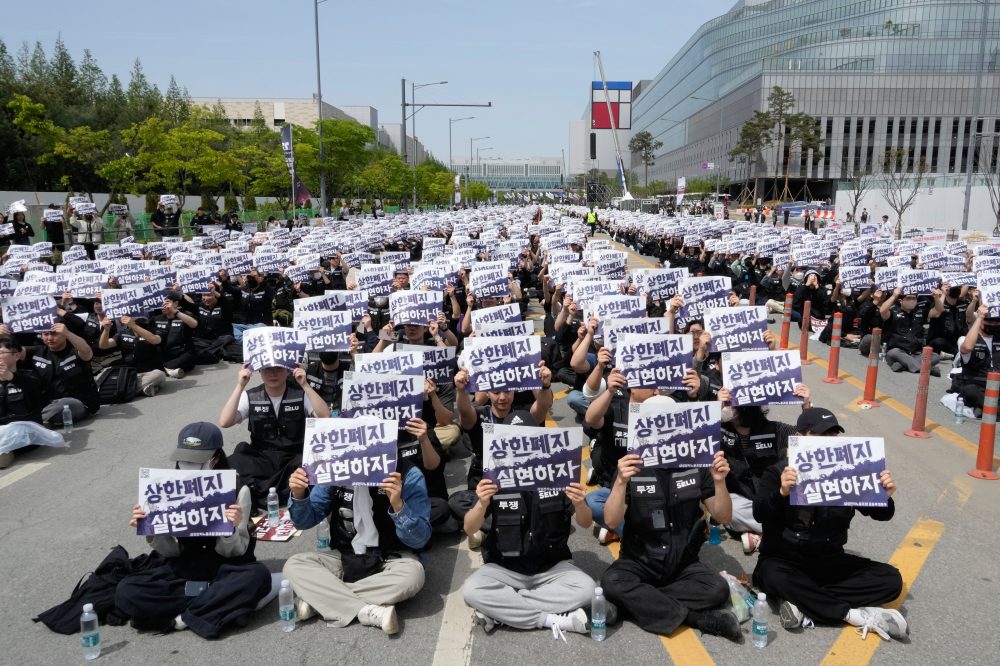
The union representing approximately 74,000 Samsung employees announced plans for an 18-day strike beginning Thursday after last-ditch talks failed to produce an agreement. Union representatives argue the electronics manufacturer has not provided fair compensation despite record profits driven by artificial intelligence demand.
Government authorities have warned they may use emergency powers to force a resolution at Samsung, where workers claim adequate pay increases have been denied despite the company’s financial success.
Following Wednesday’s unsuccessful negotiations, union leader Choi Seung-ho informed media that the strike would proceed as planned.
Each side blamed the other for the breakdown in discussions. Choi claimed management rejected a government-brokered proposal, though he declined to reveal specifics. Company officials countered that union demands for worker compensation at unprofitable divisions were unreasonable.
While both parties indicated willingness to continue negotiations, it remained uncertain whether additional talks would occur.
Samsung produces smartphones, consumer electronics and semiconductors on a global scale.
The electronics giant and its competitor SK Hynix manufacture roughly two-thirds of worldwide memory chips, which are experiencing increased demand due to AI applications. Samsung reported last month that its January-March operating profit surged eight times to reach a record 57.2 trillion won ($38 billion).
Union representatives want Samsung to establish a compensation framework allocating 15% of yearly operating profits to worker bonuses while eliminating current bonus limits of 50% of annual wages. Company leadership considers these demands unrealistic given the semiconductor industry’s volatile cycles.
Prime Minister Kim Min-seok, the nation’s second-ranking official behind President Lee Jae Myung, warned in a Sunday television address that the strike could inflict up to 100 trillion won ($66 billion) in economic harm by disrupting Samsung’s intricate chip manufacturing operations.
A regional court Monday approved part of Samsung’s injunction request against the planned strike, ordering the union to maintain specific staffing requirements to protect equipment and materials while ensuring operational safety. The Suwon District Court also prohibited union members from taking over critical facilities and offices.