
Markets across Asia declined Wednesday, mirroring Wall Street’s downturn as climbing government bond yields applied increasing pressure to equities and other investments, weakening the artificial intelligence-fueled surge in tech stocks.
Government bond yields have been rising as the conflict with Iran continues, heightening concerns about sustained elevated inflation.
Japan’s Nikkei 225 declined 1.2% to close at 59,834.15.
Japan’s 10-year government bond yield dropped to just under 2.8% but stayed near its highest point since 1997. The dollar traded at 159.00 Japanese yen, slightly down from 159.09 yen.
The euro declined to $1.1601 from $1.1608.
Markets in China also dropped, with Hong Kong’s Hang Seng falling 0.6% to 25,635.82. The Shanghai Composite index declined 0.5% to 4,148.16.
Australia’s S&P/ASX 200 fell 0.8% to 8,533.60.
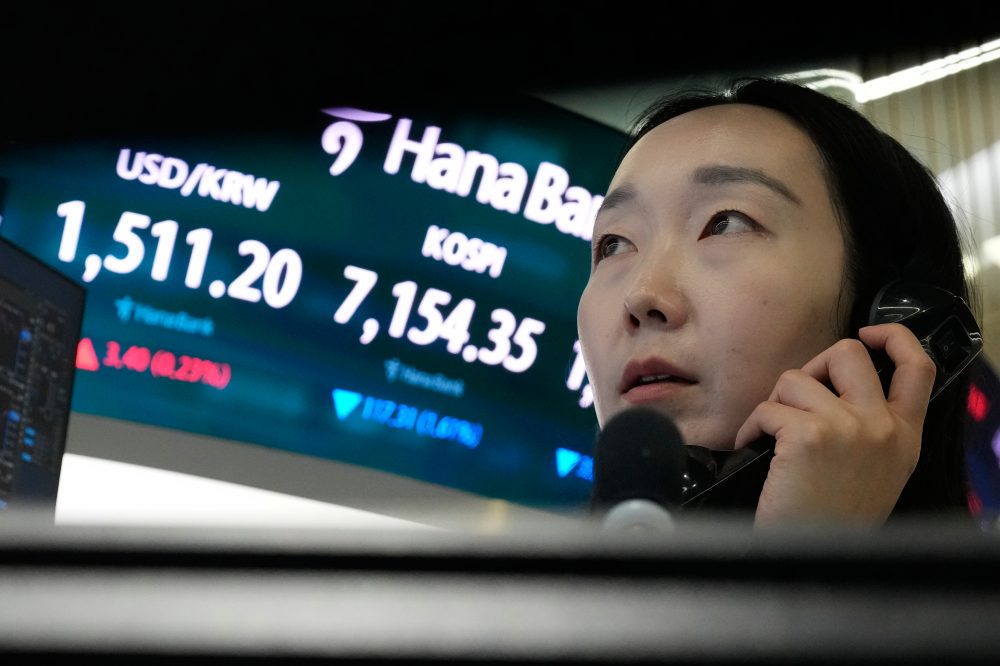
South Korea’s Kospi managed a 0.3% gain to 7,292.41 following widespread selling the previous day. Taiwan’s Taiex rose 0.4%.
American futures showed little movement after the S&P 500 dropped 0.7% Tuesday, ending at 7,353.61 for its third consecutive decline since reaching its most recent record high.
The Dow Jones Industrial Average fell 0.6% to 49,363.88, while the Nasdaq composite declined 0.8% to 25,870.71.
Technology shares are struggling after massive gains driven by artificial intelligence enthusiasm that skeptics argue inflated their valuations excessively.
At the same time, petroleum prices have been fluctuating amid uncertainty over how long the Iran conflict will keep the Strait of Hormuz blocked to oil tankers.
Wednesday’s focus will center on the latest quarterly earnings from the chip company. The corporation has repeatedly exceeded analyst projections each quarter and delivered growth forecasts that have consistently surpassed Wall Street expectations.
Its performance could decide whether technology equities and the broader American stock market can sustain their upward momentum. The chip company dropped 0.8% Tuesday and was among the heaviest drags on the S&P 500 due to its massive market value.
The cybersecurity and cloud computing company plummeted 6.3% for one of Tuesday’s steepest declines after announcing plans to raise $2.6 billion through a convertible note offering.
The home improvement retailer gained 0.9% after reversing an early decline following its earnings announcement. Its earnings and sales slightly exceeded analyst forecasts, though a key retail metric examining performance at locations operating more than one year fell short of some analyst predictions.
“Home Depot saw similar demand from its customers as it did throughout last year despite greater consumer uncertainty and housing affordability pressure,” said CEO Ted Decker.
Numerous major American corporations have delivered better-than-anticipated earnings for the recent quarter, partly due to customers maintaining spending levels despite elevated fuel costs and other headwinds. This has helped push American stock indices to new highs, but unrest in bond markets poses a threat to this trend.
The 10-year Treasury yield climbed to 4.66% from 4.61% late Monday and from under 4% before the Iran conflict started. This represents a significant increase and is part of a global rise making stock valuations appear more expensive and potentially slowing economic growth.
Elevated yields can increase borrowing costs for home loans and corporate financing for artificial intelligence data center construction, which has been a major economic growth driver.
Yields increased even as petroleum prices declined.
Early Wednesday, American benchmark crude oil was down 45 cents at $103.70 per barrel. Brent crude, the global standard, lost 50 cents to $110.78 per barrel.
The average gasoline price per gallon rose again overnight to $4.53, according to the AAA motor club, representing approximately 43% more than the cost one year ago.