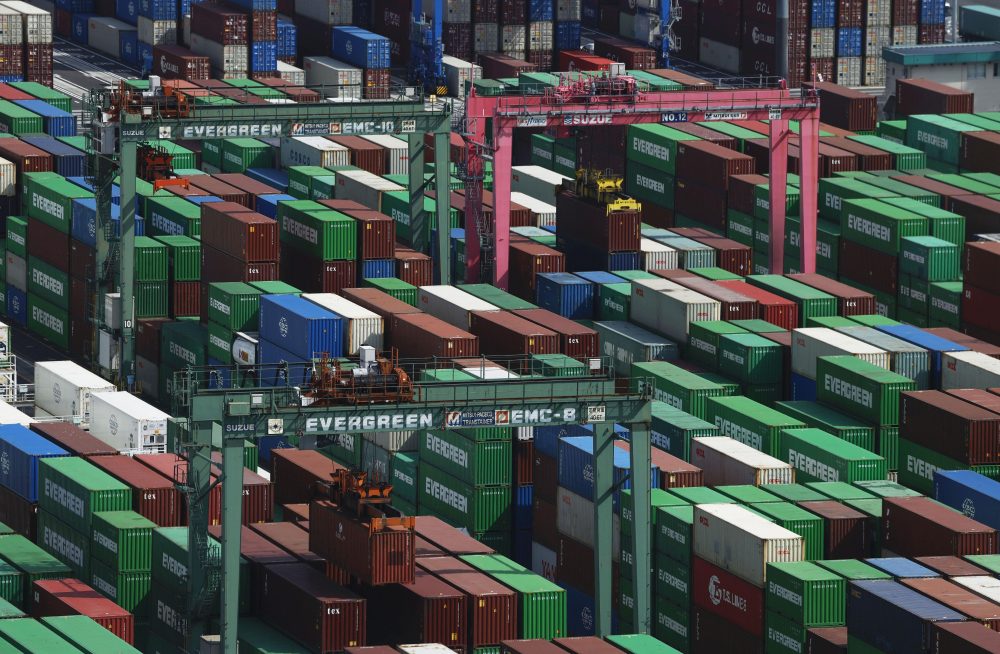

TOKYO (AP) — April trade figures from Japan’s Finance Ministry revealed a substantial 14.8% increase in exports compared to the same period last year, demonstrating the nation’s continued commercial strength amid concerns about energy supply disruptions stemming from conflict in Iran.
The export growth exceeded projections, marking the eighth consecutive month of increases as semiconductor shipments experienced a dramatic surge of nearly 42% in value year-over-year. The explosive growth in demand for computer chips and related technology infrastructure supporting artificial intelligence development has created significant profits for numerous Asian technology manufacturers.
Import figures also showed growth, climbing 9.7% compared to the previous year.
Japan’s trade position moved into positive territory with a surplus of 301.9 billion yen ($1.9 billion), contrasting with a deficit during the same month in the prior year. The nation had previously recorded a surplus approaching 643 billion yen in March.
Additional export categories that boosted April’s performance included medical equipment, paper products, and electrical machinery.
Trade with China showed exports increasing 15.5% while U.S.-bound exports grew 9.5%. Import data revealed a 15% rise from China and a significant 23% jump from the United States.
Despite overall import growth, Japan experienced a dramatic decline in oil imports, falling nearly 50% by value from the previous year, while liquefied natural gas imports decreased 20%. These reductions stem from restricted access through the Strait of Hormuz, the primary shipping channel for Persian Gulf exports, due to Iranian conflict.
Given Japan’s near-total dependence on oil imports, Prime Minister Sanae Takaichi has attempted to address supply shortages by authorizing releases from strategic petroleum reserves. Nevertheless, reduced availability has driven up costs and affected production of petroleum-derived products including naphtha.
Brent crude prices, which stood at $70 per barrel before the Iranian conflict began, have surged beyond $100, while Japan’s weakening currency has made dollar-denominated oil purchases even more expensive.