
The retail giant Target announced Wednesday that it achieved its strongest quarterly performance in four years, posting significant gains in comparable store sales during the first quarter.
The Minneapolis-based company saw comparable sales increase by 5.6% during the three-month period ending May 2, representing growth across stores and digital platforms that have been operational for at least a year. This marked a dramatic turnaround from the decline experienced during the same period last year and represents the strongest performance since early 2022.
Customer purchases increased across all six major merchandise categories at the discount retailer, contributing to results that exceeded Wall Street expectations. The positive momentum prompted Target to increase its annual revenue projections for the remainder of the year.
Stock prices climbed more than 1% in pre-market trading Wednesday following the announcement.
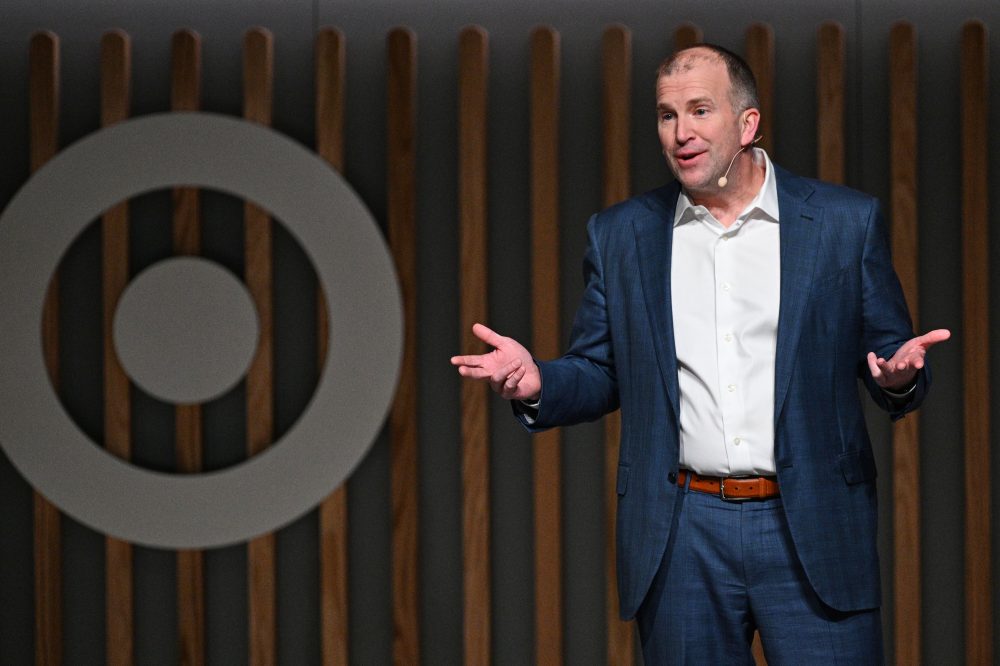
Michael Fiddelke, who took over as CEO in February after spending two decades with the company, expressed cautious optimism about the retailer’s ongoing transformation efforts.
“We’re encouraged to see a strong guest response so far,” Fiddelke stated during a Tuesday briefing with reporters. He added: “We’re maintaining a cautious outlook given the work we know we have in front of us and ongoing uncertainty in the macroeconomic environment.”
In March, Fiddelke and his executive team unveiled a comprehensive $6 billion strategy aimed at ending three consecutive years of sales declines. The plan focuses on store renovations, restoring the company’s reputation for trendy yet affordable fashion, and enhancing staffing levels and employee development programs.
Company leadership highlighted successful partnerships with brands such as Roller Rabbit, an apparel and home goods brand known for its whimsical, block-print designs, which proved popular with customers. Additionally, an expanded inventory of toys priced below $10 performed well, according to Fiddelke.
As one of the first major retailers to release earnings covering the February through April timeframe, Target’s results will be closely watched by industry analysts. Experts are particularly interested in executive commentary regarding potential changes in consumer behavior due to rising gasoline costs related to the Iran war.
The discount chain had been facing challenges well before the current conflict, losing market position to competitor Walmart. Shoppers had criticized stores for appearing disorganized and losing the fashionable yet budget-friendly appeal that once earned Target the affectionate nickname “Tarzhay.”
Under Fiddelke’s leadership, several strategic changes have been implemented to attract customers back to the brand. He reorganized the executive leadership structure, boosted investment in store personnel, and reduced operations at distribution centers and regional headquarters. On Tuesday, the company announced the hiring of a former Walmart executive to lead supply chain operations, addressing inventory management issues that have negatively impacted sales.
The retailer has also concentrated on revitalizing product categories where it lost market position, particularly home goods and apparel. According to company statements from early March, 75% of decorative home accessories, including pillows and candles, will feature new designs.
Beyond operational challenges, Target has faced reputational difficulties over the past two years. The company’s decision to scale back diversity, equity and inclusion programs resulted in public demonstrations and customer boycotts.
The retailer faced additional controversy this year when Minneapolis, where Target maintains its corporate headquarters, became the focus of an immigration enforcement campaign. Community advocates pressured the company to publicly oppose the Trump administration’s deployment of federal agents to the city, particularly after two protest participants were killed.
During a March interview with The Associated Press, Fiddelke confirmed that boycotts had affected Target’s sales performance. However, he noted Tuesday that increased customer traffic during the first quarter was consistent across different geographic regions and customer demographics.
For the quarter ending May 2, Target reported earnings of $781 million, equivalent to $1.71 per share. This compares to $1.04 billion, or $2.27 per share, during the corresponding period last year.
Adjusted earnings came in at $1.71 per share.
Total revenue increased 6.7% to reach $25.44 billion.
Wall Street analysts had projected earnings of $1.47 per share on revenue of $24.7 billion, according to FactSet data.
Looking ahead to the full year, Target indicated it expects earnings per share to approach the upper range of its March guidance of $7.50 to $8.50. Analyst consensus stands at $8.12 per share for the year, based on FactSet projections.
The company revised its annual net sales growth expectation upward to 4%, an increase from the previously forecasted 2%. This adjustment would result in total sales of $108.97 billion.
Industry analysts anticipate annual sales of $107.15 billion for the year, according to FactSet estimates.