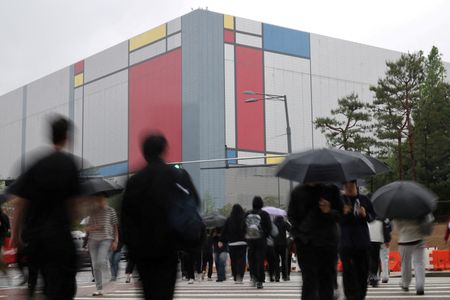

Workers and local residents near Samsung Electronics’ massive semiconductor facility outside Seoul are experiencing mixed emotions following a last-minute wage agreement that averted a potential strike.
The facility represents Samsung’s biggest chip manufacturing location, producing semiconductors that have seen tremendous demand due to artificial intelligence growth and delivering unprecedented profits – while simultaneously fueling worker demands for better compensation.
The preliminary wage agreement has brought comfort to South Korea, considering Samsung’s critical role in the nation’s economy, and has raised optimism among local businesses surrounding the manufacturing site.
Lee Se-hee, who operates an upscale restaurant in Pyeongtaek, a city with approximately 650,000 residents, expressed hope about the outcome. “If employees receive performance bonuses as a result of this general strike, I think restaurants near Samsung will benefit greatly, including through company dinners and group meals,” Lee Se-hee said.
However, the agreement has revealed significant workplace divisions, as memory chip department employees are positioned to earn bonuses of approximately $416,000, creating concerns that staff in less profitable areas will be overlooked.
A foundry engineer working in the logic chip-focused division at the Pyeongtaek location expressed frustration. “It’s a huge disappointment,” the engineer stated.
The engineer, who requested anonymity due to the sensitive nature of the topic, added, “It looks like those who can switch to SK Hynix will keep applying, while others will try to transfer internally to the memory division.”
Workers at competing semiconductor company SK Hynix earned three times more in performance compensation last year compared to Samsung employees, a gap that contributed to Samsung worker dissatisfaction and departures to SK Hynix.
“The memory colleagues seem to be satisfied with the total amount, but a bit disappointed because they were paid in stock,” the engineer noted, referencing Samsung’s strategy to distribute much of the performance bonuses through company shares.
The Samsung facility in Pyeongtaek employs roughly 14,000 people, though a local property professional suggested limited economic impact for the city since many employees don’t reside locally and bonuses will primarily come as stock.
Kim Suk-joon, 66, described the situation from a contractor perspective. “For local subcontractors, this strike-and-bonus deal is like watching someone else’s feast,” Kim Suk-joon said.
A worker in Samsung’s contract manufacturing division said he would likely support the agreement despite its heavy favor toward the memory business.
“We were all in the same position, so it feels a bit unfair that only the memory division is getting that much,” said the employee, who also chose to remain anonymous.
Jang Sung-hyun, 47, employed by a Samsung contractor, expressed relief that the strike threat had passed while worrying about potential excessive costs for the company.
“Weren’t they basically holding the public and companies hostage for the sake of their own performance bonuses?” Jang Sung-hyun questioned.
On a union discussion platform, several members posted encouraging comments, commending union leadership for resisting intense pressure from both corporate management and government officials to reach an agreement.
One message on the Selunion forum read, “Some may be satisfied, and others may be unhappy, but you truly went through a lot. Thank you for your hard work.”