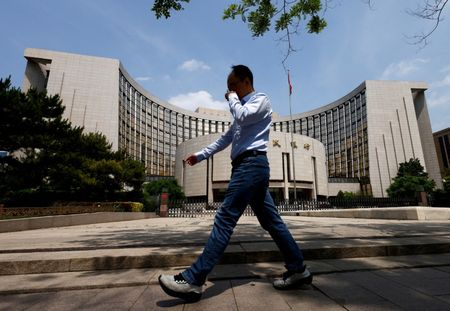

Chinese authorities decided Wednesday to maintain their primary lending rates at existing levels, marking a full year without changes to these critical financial benchmarks.
The move aligned with forecasts from financial experts who anticipated no adjustments to the rates that help guide borrowing costs throughout the nation’s economy.
Officials kept the one-year loan prime rate steady at 3.00%, while the five-year rate remained at 3.50%. A recent poll of 20 market analysts conducted this week showed unanimous agreement that both rates would stay unchanged.
The decision reflects policymakers’ cautious approach despite economic headwinds. Sufficient cash flow between banks and recent central bank communications indicate officials see no immediate need for rate reductions, even as economic growth faces pressure.
Recent data showed China’s economic expansion slowed in April, with factory production declining and consumer spending dropping to levels not seen in over three years. The world’s second-largest economy continues grappling with elevated energy prices stemming from the Iran conflict and persistent weakness in domestic consumer activity.
The seven-day reverse repo rate, which influences loan prime rate decisions, has remained stable throughout this year.
Financial analysts offered varying perspectives on the central bank’s strategy. TD Securities noted: “We foresee the PBOC being more hesitant to cut rates to stimulate growth after the surge in producer prices, which may reflect a more worrying inflation backdrop.”
The firm added: “We expect targeted fiscal stimulus from Beijing, especially on infrastructure investment rather than large-scale measures.”
Huatai Securities observed significant changes in official language, noting the central bank introduced new phrasing in its quarterly policy report. For the first time, officials described their approach as “targeted and effective” before referring to “moderately loose” monetary policy, while highlighting the importance of strengthening “the economy’s endogenous growth drivers.” These adjustments suggest reduced likelihood of widespread policy easing measures.