A major credit rating agency has shifted its outlook for a Goldman Sachs private lending fund to negative, expressing concerns about the fund’s financial stability.
Fitch Ratings announced Friday after market close that it changed the outlook for Goldman Sachs BDC while keeping the fund’s current lower-investment grade rating unchanged. However, the agency warned it could lower the rating further if the fund fails to strengthen its asset protection buffer.
“Fitch believes the asset coverage cushion is low given GSBD’s elevated risk profile as evidenced by recent credit deterioration in the portfolio,” the rating agency’s analysts stated.
Market watchers have been scrutinizing Goldman Sachs BDC and similar private lending funds called business development companies, which provide loans to mid-sized businesses. These funds face new pressures as artificial intelligence advances pose risks to software companies’ business operations.
The Goldman Sachs fund disclosed troubling trends in its latest quarterly report on May 8. The percentage of loans where borrowers have fallen significantly behind on payments climbed to 4.7% at amortized cost, up from 2.8% in the prior quarter.
Additionally, approximately 10% of the fund’s total interest and dividend earnings in the first quarter came from “payment-in-kind” arrangements, where borrowers can defer cash interest payments by adding them to the loan balance due at maturity.
“This elevated exposure could increase the risk of realized losses if portfolio companies ultimately default,” Fitch’s analysts observed.
Goldman Sachs responded to the rating agency’s announcement by emphasizing that Goldman Sachs BDC accounts for slightly more than 1.5% of the company’s total private credit assets under management.
The firm noted that 58% of the fund’s loan portfolio was originated after the current management team assumed control in March 2022.
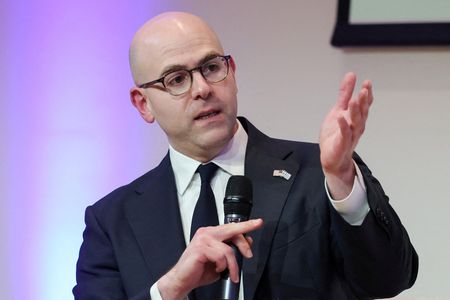
The remaining 42% represents “older positions that reflect the majority of current credit volatility — accounting for over 99.5% of our total non-accruals at cost,” explained Vivek Bantwal, global co-head of private credit for Goldman Sachs Asset Management.
Bantwal added that the fund’s internal restructuring teams are “deeply engaged with these borrowers to maximize recovery.”
Fitch observed that Goldman Sachs BDC’s debt levels rose during the first quarter, which it linked to unrealized losses on loans in the portfolio.
“We are comfortable with the leverage level at quarter end due to our visibility into near term repayments,” Bantwal responded.
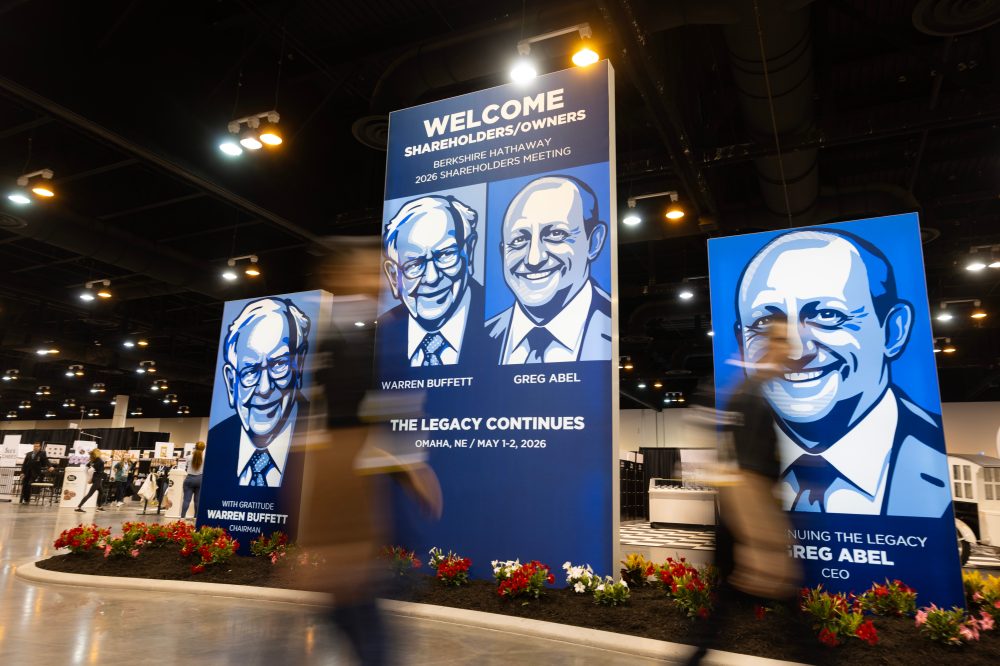
OMAHA, Neb. — The investment giant Berkshire Hathaway has dramatically expanded its holdings in Google’s parent company and purchased more than $2.6 billion in Delta Airlines shares as Greg Abel began his tenure as chief executive following his appointment to replace Warren Buffett earlier this year.
The investment conglomerate simultaneously sold off numerous holdings, including positions in Visa, Mastercard, Domino’s Pizza, Amazon and United Healthcare following the exit of Todd Combs late last year, who served as one of two portfolio investment managers that Buffett had brought on to assist with managing investments.
Throughout his career, Buffett maintained hesitancy about technology sector investments, explaining he lacked sufficient understanding to identify long-term successful companies in that space. However, Buffett did break from this approach during his final years by acquiring a substantial Apple position after recognizing consumer loyalty to the company’s iPhone and computer products.
Abel demonstrates greater willingness to embrace technology investments, with Berkshire’s Alphabet holdings reaching nearly 58 million shares valued at approximately $17 billion by March’s end. This represents a significant increase from the 17.8 million shares worth $5.6 billion held just three months prior.
The company acquired nearly 40 million Delta shares during the year’s opening quarter. Buffett previously experienced mixed results with airline sector investments, having purchased airline stocks multiple times before ultimately divesting those positions.
During a 2008 shareholder meeting, Buffett remarked that “if a farsighted capitalist had been present at Kitty Hawk, he would have done his successors a huge favor by shooting Orville down” due to the airline industry’s ongoing struggles to maintain competitive advantages since the Wright brothers’ first flight.
The company also initiated a new position in Macy’s valued at approximately $55 million as of March’s conclusion.
Berkshire maintains its policy of not discussing quarterly changes to its $280 billion investment portfolio to avoid revealing its trading strategies. Abel recently conducted his first annual shareholder meeting as chief executive while Buffett observed from the floor alongside other board members.
Numerous investors have historically monitored Berkshire’s holdings to replicate Buffett’s investment decisions. This pattern may shift until Abel develops his own track record as an investment manager, given his background primarily involves operating businesses such as Berkshire’s utility holdings.
Several stocks that Berkshire disclosed new positions in on Friday experienced price increases following the company’s regulatory filing with the Securities and Exchange Commission. Both Macy’s and Delta share prices rose after the disclosure, while Alphabet’s stock remained relatively unchanged.
The Omaha, Nebraska-headquartered company maintains ownership of numerous other enterprises including major insurance providers like Geico, BNSF railroad, large manufacturing operations like Precision Castparts and various retail and service companies featuring recognizable brands such as Helzberg Diamonds, See’s Candy and Dairy Queen.
The U.S. Federal Trade Commission has launched an antitrust investigation into Arm Holdings, the British semiconductor design company, according to a Bloomberg News report published Friday. The federal agency is examining whether the firm is attempting to create an illegal monopoly within segments of the chip industry.
Federal investigators are specifically reviewing whether Arm might refuse to honor or diminish licensing deals for its semiconductor blueprints that companies use to create central processing units, Bloomberg reported, citing sources with knowledge of the investigation.
The FTC informed Arm about the probe earlier this year and required the company to retain relevant documentation, the report stated.
Arm generates a substantial portion of its income by licensing its chip design technology to major corporations including Nvidia and Apple, then collecting royalty fees when those designs are implemented.
Neither Arm Holdings nor the Federal Trade Commission provided immediate responses to requests for comment from Reuters, which was unable to independently confirm the Bloomberg report.
International regulators are also examining Arm’s business operations.
South Korea’s competition authority conducted an investigation at Arm’s Seoul offices in November as part of continued oversight of the company’s licensing methods.
Alternative asset manager Ares Management revealed an expansion of its investment portfolio through new and enlarged positions in credit-focused funds during the first quarter of 2026, according to its quarterly disclosure filed with federal regulators on Friday.
The investment firm, which announced earlier this month that it secured a record-breaking $30 billion in fundraising during the opening quarter, established a new investment in medical device company Integer Holdings valued at $53.3 million by the end of March.
Additionally, Ares entered smaller initial positions in two business development companies: BlackRock TCP Capital and Carlyle Secured Lending.
The company expanded 17 existing investments, with many focused on business development companies that combine equity funding with borrowed capital to provide loans to smaller businesses. This investment sector has faced challenges recently due to questions about loan quality standards and worries that artificial intelligence technology could harm software companies that receive funding from these lenders. Among its increased holdings, Ares grew positions in Golub Capital BDC and Blue Owl Technology Finance, while also adding to its investment in its own business development company, Ares Capital Corp.
The firm’s sole divestment involved completely selling its position in New Mountain Finance, which had previously sold off $477 million worth of assets in February.
A Maryland-based financial institution established by former U.S. Representative John Delaney has submitted documentation on Friday for a public stock offering in the United States.
The resurgence in public offerings has boosted investor confidence, though unpredictable market conditions and global political tensions continue to make investors cautious, leading businesses to fast-track their stock debuts while favorable conditions persist.
The financial institution, Forbright, operates from Chevy Chase, Maryland, and was established by former U.S. Representative John Delaney. The company’s business activities include middle-market lending, digital consumer banking, strategic advisory and asset management services.
The company plans to begin trading on the Nasdaq Global Select Market using the ticker symbol ‘FRBT’.
Major investment firms including Goldman Sachs, J.P. Morgan and Barclays are serving as underwriters for the stock offering.
Warren Buffett’s investment giant Berkshire Hathaway revealed on Friday that it has made major changes to its stock portfolio, including purchasing a $2.65 billion stake in Delta Air Lines and acquiring a smaller position in Macy’s while divesting from numerous holdings such as Amazon.com and UnitedHealth Group.
These investment moves represent a broader reorganization of the company’s holdings following the recent exit of an investment manager who had assisted Berkshire Chairman Warren Buffett in deploying the company’s capital.
Regulatory documents show that Berkshire also completely eliminated its multi-billion dollar positions in payment processors Visa and Mastercard during the first quarter, along with disposing of a substantial holding in insurance brokerage Aon.
This quarter marked the first period with Greg Abel serving as Berkshire’s chief executive after taking over from Buffett, and represents the first complete quarter following the departure of Buffett protege Todd Combs, who left to join JPMorgan Chase where he will spearhead a new investment program.
The Associated Press completed a workforce reduction on Friday, cutting an undisclosed number of journalists based in the United States as part of an organizational shift away from traditional print media toward visual storytelling and alternative income streams.
Patrick Maks, a company spokesman, confirmed the staff reductions in an email statement, explaining they were part of a previously announced restructuring effort designed to better serve the organization’s primary clients.
“This is part of the restructuring we announced last month to align our operations with what our top customers need from us today,” Maks stated. The director of media relations and corporate communications declined to provide specific numbers or confirm whether additional cuts would follow.
“It’s never easy to part ways with valued colleagues — we are appreciative of their contributions to the AP and wish them all the best,” Maks wrote.
The workforce reductions had been anticipated following the news organization’s offer of voluntary departure packages to over 120 U.S.-based journalists approximately one month ago. The News Media Guild, which represents AP staff, reported that roughly 40 employees accepted those voluntary buyout offers.
Union representatives said they were not informed of the exact number of journalists affected by Friday’s layoffs, which marked the final workday for those let go.
Tony Winton, who serves as the guild’s administrator, said union officials received notification from an AP human resources representative shortly before 10 a.m. Friday announcing the implementation of layoffs with that day being the last day of employment. No additional details were shared, according to Winton.
“The Guild has asked the AP for details,” Winton said. “We will stand by our members and ensure that all contract rights under our collective bargaining agreement with AP are protected.”
In a previous interview, Julie Pace, who holds the positions of executive editor and senior vice president, indicated the organization aimed to reduce its worldwide workforce by under 5%. The company does not publicly disclose its total number of journalists.
Pace emphasized last month that the AP “is not in trouble.”
“We’re making these changes from a position of strength, but we’re doing so now to recognize our changing customer base,” she said.
The news organization has experienced a 25% drop in newspaper revenue over the past four years. Major newspaper companies Gannett and McClatchy ended their AP subscriptions in 2024.
The organization’s client base now consists primarily of broadcast outlets, digital platforms and technology firms. Kristin Heitmann, senior vice president and chief revenue officer, reported last month that income from technology companies had increased by 200% during the same timeframe.
President Yoweri Museveni announced Friday that Uganda has approved a license allowing Elon Musk’s satellite internet company Starlink to begin operations in the East African nation.
The satellite internet service, which is part of SpaceX, has been quickly growing its presence throughout Africa and currently provides service in more than a dozen African nations, including Somalia.
In a post on X, Museveni explained that he oversaw the signing of an “operational licence agreement between the Uganda Communications Commission and Starlink, marking an important step towards the commencement of their operations in Uganda.”
The Uganda Communications Commission serves as the nation’s regulatory body for the communications industry.
“I am pleased that Starlink has agreed to comply with Uganda’s laws and regulatory requirements as it prepares to begin service delivery in the country,” Museveni stated.
Citizens in Uganda have frequently voiced frustration over expensive and unreliable internet service from domestic providers, with many pointing to insufficient market competition as the cause.
Currently, a unit of South African telecom giant MTN Group controls most of Uganda’s data market, with its primary competitor being a unit of India’s Bharti Airtel.
Financial markets shifted their expectations Friday toward anticipating the Federal Reserve will increase interest rates possibly before 2024 concludes, following a series of inflation reports this week that came in above forecasts.
According to CME’s FedWatch tool, the likelihood of the Fed’s key interest rate rising by 25 basis points before January’s Federal Open Market Committee session reached approximately 60%, while traders view a December increase as essentially even odds.
The central bank under departing Chair Jerome Powell has maintained its policy rate between 3.50% and 3.75% since December. Even with inflation consistently exceeding the Fed’s 2% goal, officials have continued using policy statement language that implies their next action would likely be lowering rates.
An increasing number of policymakers have started advocating for a different approach, with three officials voting against April’s policy statement because it maintained language favoring easier monetary policy. Minutes from that session, scheduled for release Wednesday, could reveal how many additional officials were willing to support moving toward a neutral or more restrictive stance.
This week’s economic data provided little support for cutting rates in the near term. Inflation measurements at consumer and wholesale levels, along with import price figures, all surpassed economists’ already-high predictions. Additionally, retail sales information demonstrated that consumers remain financially stable despite facing elevated prices.
Furthermore, the inflationary pressures shown in the data reached their highest levels since the surge that followed the COVID-19 pandemic and appeared to spread beyond energy costs that were pushed up by the U.S.-Israeli-led war on Iran.
“The market narrative has shifted from stagflation to reflation due to rising inflation, strong spending and booming earnings,” Bank of America analysts wrote.
The sudden change in economic data and market predictions for the Fed’s actions appears likely to create a challenging communication issue for Warsh when he assumes leadership from Powell, whose chairmanship officially ends Friday.
President Donald Trump appointed Warsh, and Trump has consistently demanded lower interest rates while publicly criticizing Powell for failing to deliver them. The Senate confirmed Warsh this week, though his swearing-in ceremony has not been scheduled yet.
Warsh has contended that widespread adoption of artificial intelligence technology throughout the economy will boost U.S. productivity and reduce inflationary pressures, supporting the case for lower rates. However, during his confirmation hearing last month, he assured senators he made no commitments to Trump regarding rates, while promising to implement significant changes including enhanced cooperation with the administration on non-monetary policy issues.
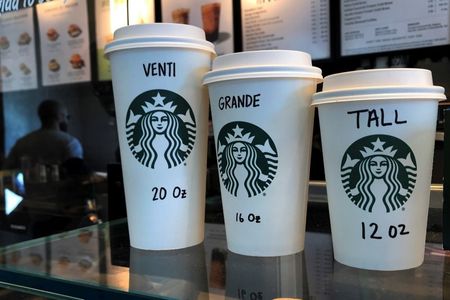
The coffee chain giant announced Friday that it will eliminate 300 corporate positions and shut down multiple regional offices as part of its continuing business restructuring efforts.
Store workers will not be impacted by these job cuts, according to company officials. The workforce reductions will target staff in administrative departments including marketing, human resources and supply chain management. International workers are not currently affected, though the company indicated it is examining its corporate organization structure beyond U.S. borders.
The coffee retailer revealed it will shutter underutilized facilities in Atlanta, Dallas, Chicago and additional cities. The Seattle-headquartered corporation recently revealed plans for a new corporate facility in Nashville, Tennessee, which is expected to house up to 2,000 workers over the next five years.
Company officials project these changes will generate $400 million in restructuring expenses, with $120 million allocated for employee severance packages.
The coffee company has been working to cut expenses and streamline operations under Chairman and CEO Brian Niccol, who came aboard in 2024. During the previous year, the business eliminated 2,000 corporate positions and shuttered hundreds of locations across the U.S., Canada and Europe.
Niccol stated last month that the streamlined organizational structure is enabling faster innovation within the company. The corporation is also putting money into its existing locations to enhance customer experiences. Plans include redesigning 1,000 U.S. locations this year to create a warmer, more inviting atmosphere, while also bringing on additional baristas to speed up service during peak hours.
These initiatives seem to be showing results. During the January-March timeframe, the company reported that U.S. same-store sales, measuring performance at locations operating for at least one year, increased by 7%. Niccol described this quarter as “the turn in our turnaround.”
“Our focus now is on sustaining our momentum and making our results repeatable and durable, all while delivering a healthy cost structure that supports profitable growth,” Niccol said during a conference call with investors. “It’s how we turn progress into consistent results.”
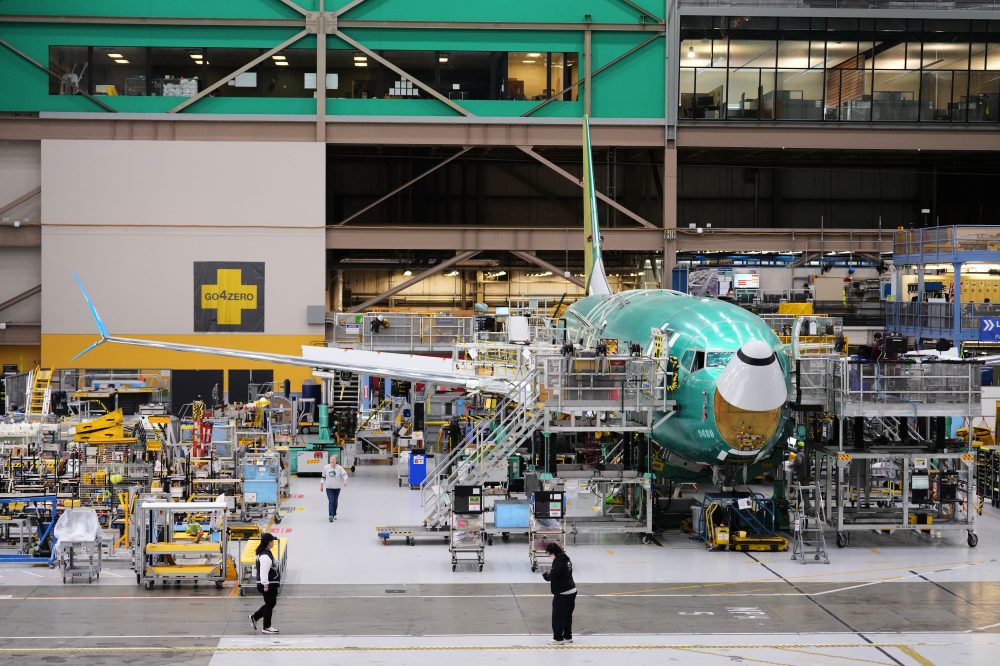
The aerospace giant Boeing is set to complete its first substantial transaction with China in almost ten years, involving the purchase of 200 aircraft, President Donald Trump announced to journalists aboard Air Force One on Friday. Trump revealed that this agreement emerged from his recent summit meetings with China’s President Xi Jinping and has the potential to expand to include as many as 750 aircraft.
Official details regarding the transaction have not been disclosed by the White House, and Boeing has remained silent on the matter. Boeing CEO Kelly Ortberg accompanied Trump on his Beijing visit, joining a substantial delegation of corporate executives looking to establish business relationships and sell their products in the Chinese market. This agreement represents a major victory for Boeing in reclaiming access to a market that previously played a crucial role in the company’s expansion strategy.
Trump additionally mentioned that General Electric would benefit from this arrangement, stating the company would provide between 400 and 450 engines for the aircraft. General Electric has not yet provided any statement regarding this arrangement.
During the previous month, Ortberg expressed optimism that any comprehensive U.S.-China trade agreement would incorporate aircraft sales, describing Trump’s scheduled meeting with Xi as a “meaningful opportunity” for Boeing when speaking to investors.
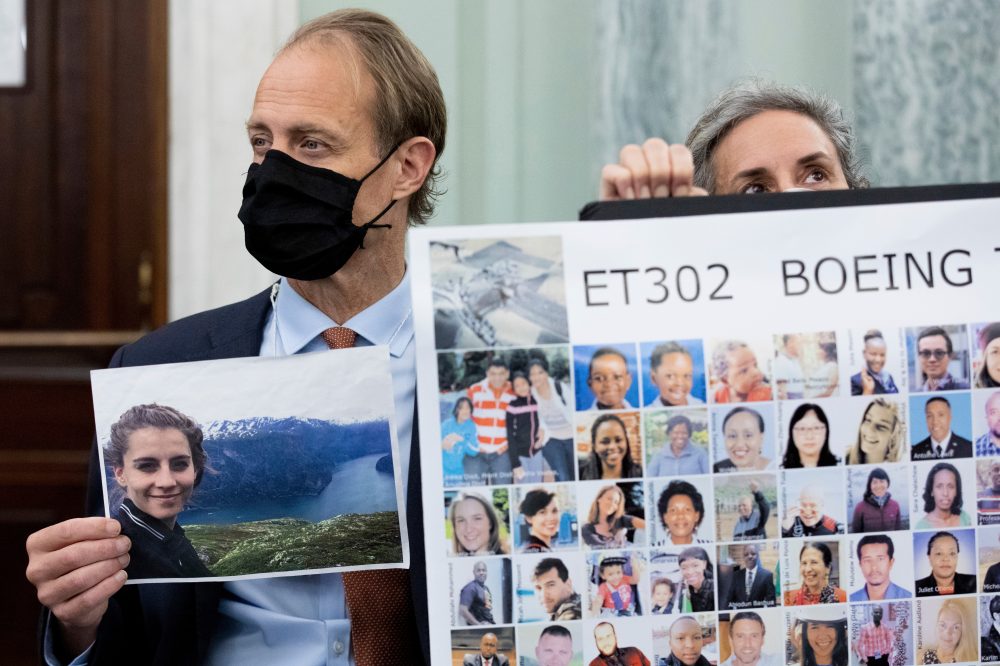
Ortberg assumed leadership in 2024, during what proved to be a devastating period for Boeing as the company faced increased examination over manufacturing and quality control issues while dealing with growing financial difficulties. In January 2024, a component called a door plug separated from a 737 Max aircraft shortly after departure from Portland, Oregon, which brought renewed attention to Boeing’s production methods.
Several months afterward, the U.S. Justice Department reopened criminal proceedings against Boeing related to two deadly Max aircraft accidents, though prosecutors subsequently negotiated a settlement with Boeing to drop the charges, requiring the company to pay an additional $1.1 billion in penalties, victim family compensation, and internal safety and quality enhancements.
Following this, an eight-week labor stoppage during the autumn by assembly workers who build the 737 Max in Washington state interrupted manufacturing operations and increased the company’s financial difficulties.
Investors continued their buying spree for the eighth consecutive week, pumping money into global stock funds through May 13 as enthusiasm for artificial intelligence technology propelled share prices higher and overshadowed inflation worries.
Investment data from LSEG Lipper revealed that investors purchased a net $39.15 billion worth of global equity funds, marking the biggest weekly investment since the $48.55 billion added during the week ending April 22.
Technology shares pushed the MSCI World Index to a new peak of 1,117.52 on Thursday, continuing their upward climb after Advanced Micro Devices and Microchip Technology projected robust demand for data-center semiconductors in recent days.
Analysis of 900 companies within the MSCI World Index by LSEG revealed that approximately 72% exceeded analysts’ profit forecasts for the first quarter.
American equity funds reversed course from the previous week’s $2.89 billion in net withdrawals, instead receiving $22.37 billion in weekly investments. Funds focused on Asian and European markets also attracted net additions of $7.62 billion and $6.29 billion respectively.
The technology sector captured a record-breaking $10.65 billion in investments. Metals and mining along with industrial sectors also experienced net purchases totaling $1.03 billion and $886 million respectively.
Bond funds worldwide drew $25.76 billion, representing the highest weekly total since early October 2025.
Investors favored short-term bond funds, euro-denominated bond funds, and corporate bond funds, which received net inflows of $2.93 billion, $2.83 billion, and $2.47 billion respectively.
Money market funds experienced the opposite trend, seeing $9.2 billion in net withdrawals following the previous week’s $149.98 billion in net purchases.
Precious metal funds including gold investments experienced renewed interest after two weeks of net selling, attracting $1.77 billion from investors.
Emerging market equity funds continued their decline for a third consecutive week with $3.18 billion in net outflows. However, emerging market bond funds maintained their positive streak with a sixth weekly inflow of $2.19 billion, according to data covering 28,893 funds.
The coffee chain giant revealed Friday morning it will eliminate 300 corporate positions across its U.S. regional support centers as the company works toward what it calls sustainable and profitable expansion.
As part of the restructuring, the Seattle-based company will merge several U.S. regional support centers and shut down facilities in Atlanta, Burbank, Chicago and Dallas. Leadership indicated they’re also examining their international support structure and anticipate additional workforce reductions beyond U.S. borders.
According to company officials, these changes represent part of a continuing initiative to “sharpen focus, prioritize work, reduce complexity, and lower costs.” The company emphasized that the restructuring will not affect its retail locations.
The coffee retailer has faced rising expenses in recent quarters as CEO Brian Niccol implements a transformation strategy centered on improving the customer experience, which has required significant investment in additional barista personnel. Company leadership highlighted last month what they described as a turning point in their recovery efforts, reporting the strongest revenue increases in over two years, though operational profit margins have dropped by nearly 50% since the transformation launched in late 2024.
The corporation expects to distribute approximately $120 million in separation packages to affected workers. Additionally, the company plans to reduce the recorded value of certain properties by $280 million, primarily affecting reserve and roastery sites along with select non-retail support facilities.
Last month, the company revealed plans for a $100 million investment to grow its Southeast operations, including opening a new support center in Nashville, Tennessee, where officials project housing 2,000 workers within five years.
Under an incentive program the company’s board approved last summer, senior executives could each receive $6 million in bonuses if specific cost-reduction targets are achieved by 2027.
Corporate staff have experienced multiple workforce reductions since the transformation initiative started, including the elimination of 1,100 corporate positions announced in February of last year.
Leading betting platforms Kalshi and Polymarket are grappling with a dramatic increase in questionable trading activity this year, as these investment venues gain widespread popularity while drawing intensified regulatory oversight.
The rise in dubious betting activity coincides with explosive growth in trading volumes across prediction markets, occurring as these platforms implement stricter measures to combat insider trading following criticism from federal lawmakers.
Beginning this year, Kalshi has examined and identified over 400 questionable trades, representing more than double the number of transactions the platform investigated throughout the previous year, according to two sources with knowledge of the situation. One source noted that several cases were reported to the derivatives regulator, the Commodity Futures Trading Commission, though specific details were not provided. The CFTC did not immediately respond to a request for comment.
Polymarket has experienced a comparable increase in suspicious trading volume since January, a third source revealed, declining to provide specific numbers.
However, detecting wrongdoing on these platforms presents unique challenges.
“In the world of corporate insider trading it is often relatively easy to identify the parties with access to material nonpublic information who might trade in violation of the law,” said Stanford Law School professor Joseph Grundfest, who is a former commissioner of the Securities and Exchange Commission. “But equivalent data is often very difficult or impossible to collect in connection with some prediction markets.”
The increase in suspicious activity comes as both platforms, established within the past ten years, experience unprecedented growth. Kalshi reported that its annualized trading volumes have increased more than threefold over six months to reach $178 billion, the company announced earlier in May. Polymarket’s monthly trading volumes across its international exchange and domestic platform reached approximately $10.3 billion in April, compared to $3.8 billion during the same month last year, based on Dune Analytics information.
Meanwhile, trading platforms are implementing additional protections and security measures to prevent unlawful activity, including recent policies barring federal employees from betting on political campaigns they support. Oversight of prediction markets is currently at the center of a regulatory dispute between the CFTC, which contends it should oversee them as derivatives markets, and individual states.
The growth in suspicious trading demonstrates that investors are prepared to accept significant risks for potential profits, analysts noted, given the substantial financial rewards possible from successful predictions about event outcomes.
Growing investor interest has boosted platform valuations significantly. Kalshi recently completed a $1 billion funding round that valued the startup at $22 billion, representing more than a tenfold increase in valuation within one year. Polymarket, which is working to launch its domestic exchange after experiencing delays earlier this year, has been negotiating to secure additional funding at a $15 billion valuation, according to a separate source familiar with the discussions.
Increased oversight of prediction markets follows other recent well-timed market positions on declining oil prices ahead of a significant Iran-policy announcement from the Trump administration.
Investors increasingly rely on prediction market platforms before making critical investment decisions, as these venues have sometimes proven accurate in forecasting outcomes related to events like economic policy announcements or elections, often outperforming traditional public opinion surveys.
These markets are platforms where participants purchase and sell binary ‘yes’ or ‘no’ contracts based on the outcomes of various events, including economic policies, elections, and sports competitions.
“Economically, the nature of these markets is such that they let you trade not on the market reaction to news, but on the actual news – so there’s less risk,” said Vincent Gregoire, a professor at business school HEC Montreal.
Kalshi was founded in 2018 by Massachusetts Institute of Technology classmates Tarek Mansour and Luana Lopes Lara. Polymarket, launched in 2020 by Shayne Coplan during the height of the pandemic, started as a crowdsourced forecasting experiment that has grown into a full-fledged event contracts exchange over the past few years, generating several billion dollars worth of trades every month.
Several recent high-profile insider trading incidents have intensified scrutiny of the platforms. A U.S. Army soldier was recently charged with winning $400,000 by using confidential information to place a bet on Polymarket on the removal of ousted Venezuelan President Nicolas Maduro. In April, Kalshi banned three U.S. congressional candidates for “political insider trading.”
CFTC Chair Michael Selig told lawmakers recently that his agency would aggressively prosecute insider trading. The CFTC in March began the process of crafting prediction market regulations.
Following lawmaker criticism, both Kalshi and Polymarket recently revised their policies to specify that certain types of betting, including wagers based on confidential information and illegal tips, would be prohibited on their platforms. Polymarket recently eliminated some war-related betting options and contracts after facing public criticism.
“If someone has insider information, they might be way more inclined to act on it on prediction markets than on equity markets,” said Charles Martineau, a professor at the University of Toronto’s business school.
Long-term Treasury yields reached their peak levels since May 2025 on Friday as energy prices spiked, raising concerns that continuing Middle East disruptions could drive inflation higher after data revealed April’s sharp increases.
Energy prices jumped 3% following comments from U.S. President Donald Trump indicating his patience with Iran is wearing thin, heightening worries about stalled negotiations to resolve ship attacks and seizures near the Strait of Hormuz.
Market participants were already shaken by this week’s robust inflation reports demonstrating that energy supply disruptions are appearing in certain inflation metrics. Consumer price increases hit their largest yearly rise in three years during the previous month, while producer price growth recorded its steepest climb in four years.
The 2-year Treasury note yield, which generally tracks Federal Reserve interest rate projections, increased 7 basis points to 4.062%. The yield touched 4.071%, marking the highest level since March 2025.
The benchmark 10-year Treasury note yield climbed 9.3 basis points to 4.552%, reaching 4.558% at its peak – the highest point since May 2025.
The 30-year Treasury bond yield advanced 8.6 basis points to 5.0992%, hitting 5.103% – also the highest since May 2025.
Stock prices for Gemini Space Station jumped more than 20% during premarket trading Friday after the cryptocurrency platform posted quarterly losses that were smaller than anticipated and received a $100 million cash injection from its founding brothers.
The New York-headquartered firm’s stock has struggled since its initial public offering, where shares were valued at $28 each. By Thursday’s close, the price had dropped to $5.26.
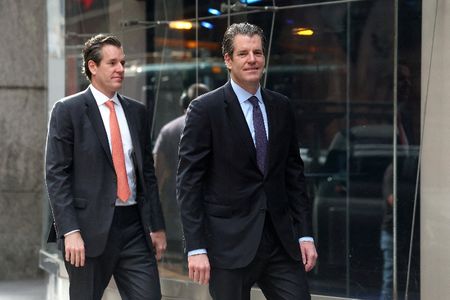
The financial boost, revealed Thursday evening, came from Winklevoss Capital Fund, which purchased shares at $14 each using bitcoin as payment. Cameron and Tyler Winklevoss own this fund, which operates as their family investment office and primary source for venture capital and cryptocurrency investments.
For the quarter ending March 31, the company reported a net loss of 93 cents per share, which beat analyst projections of $1.03 according to LSEG data. Revenue climbed 42% year-over-year to $50.3 million, boosted by increased income from services and OTC platform operations.
Market experts remain skeptical about the company’s prospects.
“Were it not for the founders’ $100 million strategic investment, we think Gemini would likely be down on the print as key metrics like user and revenue reacceleration fell well short of pre-IPO expectations,” Evercore analyst Adam Frisch said.
CEO Tyler Winklevoss stated the market has “significantly undervalued Gemini.”
The financial results come during a challenging period for the company. Both Gemini and the Winklevoss brothers are defending against a shareholder lawsuit claiming investors received misleading information about the company’s future prospects. The legal action points to strategic changes, workforce reductions, and leadership exits as factors that have hurt stock performance.
In February, the company announced plans to eliminate approximately 25% of its employees, shut down most overseas operations, and saw the departure of its chief operating, financial and legal officers. Danijela Stojanovic has been serving as temporary finance chief since that time.
According to Frisch, Gemini has not yet released revenue projections, which limits investor understanding of the company’s expansion into predictions and derivatives markets.
The Winklevoss brothers became widely known after taking legal action against Mark Zuckerberg, claiming he took their concept for Facebook. They reached a settlement in 2008 that included both cash and stock compensation.
An anonymous bidder shelled out more than $9 million for the chance to dine privately with NBA star Stephen Curry and investment legend Warren Buffett, with the 95-year-old business icon pledging to double the donation so both of their preferred charitable organizations will receive funding.
The eBay bidding concluded Thursday evening as part of an effort to bring back a fundraising tradition that Buffett had maintained for over twenty years, generating $53 million for San Francisco’s GLIDE Foundation, which serves the homeless population. This year’s revival also benefited Curry’s Eat.Learn.Play. Foundation, which he founded alongside his wife, Ayesha.
The unidentified auction winner bid exactly $9,000,100 to secure a private meal with Buffett and the Currys scheduled for next month in Omaha, Nebraska, where the renowned investor makes his home.
“We’re overwhelmed with gratitude for this opportunity, which reflects a shared belief that when different generations and institutions come together with purpose, we can create deeper and more lasting impact for the people who need it most,” the Currys said in a statement.
These charity lunch auctions began in 2000 and ran annually until the pandemic caused a temporary halt. Beginning in 2008, each successful bid to dine with the investment legend exceeded $1 million. Buffett ended the tradition after a record $19 million winning bid in 2022.
An attempt to continue the concept in 2024 featured software executive Marc Benioff and generated $1.5 million, though that iteration didn’t continue.
Earlier this year, Buffett contacted the Currys to invite them to participate in reviving the lunch auction. Curry had been sidelined for 27 games this season before returning to assist the Golden State Warriors in their final stretch.
After six decades at the helm, Buffett stepped away from his role as CEO of Berkshire Hathaway in January, though he continues as chairman. He recently experienced his first annual shareholder meeting as an attendee rather than the event’s leader on stage.
U.S. President Donald Trump announced Friday that China has committed to purchasing 200 Boeing aircraft, with the potential for acquiring up to 750 planes in total, according to statements made to reporters. The President noted that the aircraft would be equipped with General Electric engines.
Should this agreement reach completion, it would represent Boeing’s first significant contract with China in almost ten years. The American aircraft manufacturer has been largely excluded from what is considered the world’s second-largest aviation market due to ongoing trade disputes between Beijing and Washington.
This development would also provide a significant victory for Trump, whose assertive tariff strategies and additional trade measures have not yet substantially reduced the considerable U.S. trade deficit.
The chief executive of Nvidia recently experienced Beijing’s local cuisine firsthand during a culinary adventure through the Chinese capital — with mixed results that caught the attention of onlookers and social media users.
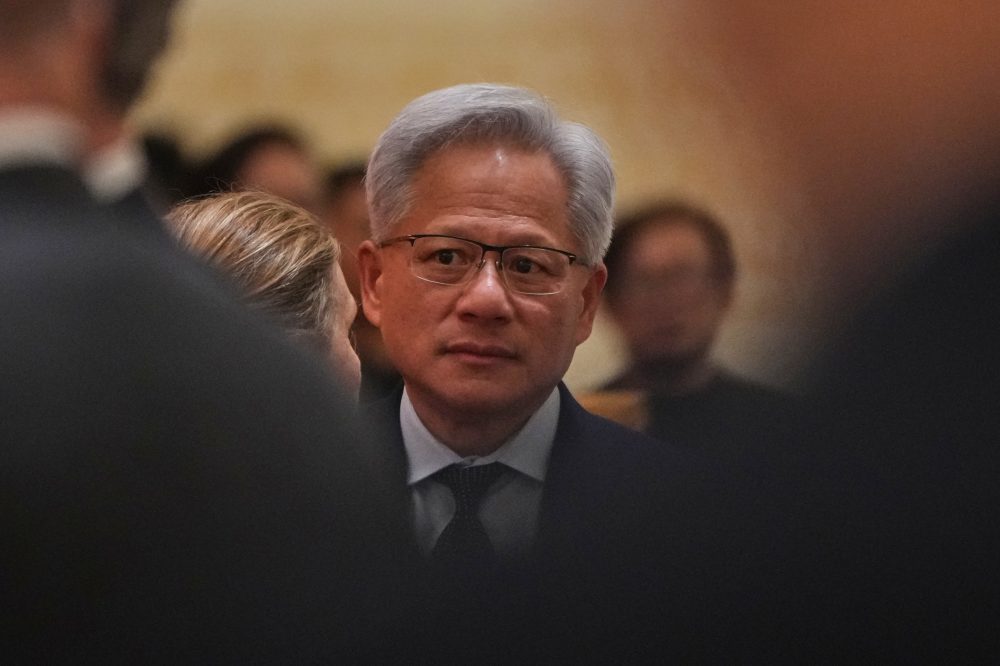
Jensen Huang was photographed by bystanders and news outlets at No. 69 Fangzhuanchang Noodles, where he sampled zhajiangmian, a regional noodle dish topped with a rich soybean-paste sauce combined with vegetables and meat.
“It’s so good,” he commented while eating from the bowl outside the restaurant’s front door, surrounded by curious spectators who recorded videos and snapped pictures of the tech executive.
However, when Huang tried douzhi’er — a traditional fermented soybean beverage with a tart flavor and grayish-green appearance — his facial expression told a different story. Clips showing his reaction became popular content on Weibo, China’s major social networking site, on Friday afternoon. The beverage represents a quintessential Beijing tradition, though it appeals to only certain palates.
Following the challenging drink experience, Huang promptly purchased a sweetened beverage from Mixue Bingcheng, a popular Chinese drink franchise, to cleanse his palate.
The Nvidia leader was exploring Nanluoguxiang, located in Beijing’s eastern section, an area famous for its characteristic traditional single-story residences known as hutongs. This neighborhood combines commercial establishments, dining venues, and residential spaces. While urban development has removed many of these historic structures over time, Beijing has maintained this particular area as a preserved cultural district.
Financial markets are grappling with mounting inflation pressures as ongoing Middle East conflicts continue to push energy prices higher and squeeze bond investors globally.
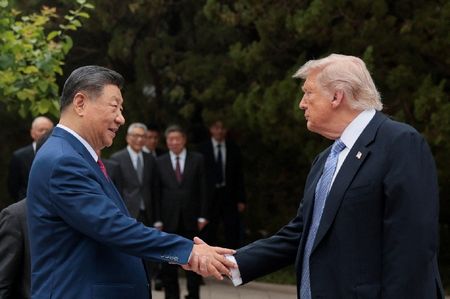
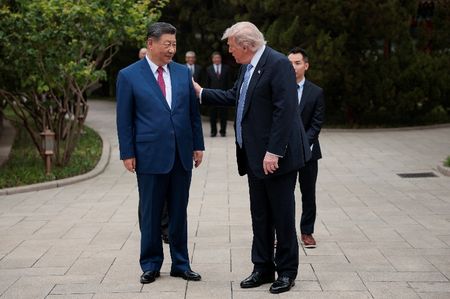
A highly anticipated meeting between U.S. President Donald Trump and Chinese leader Xi Jinping this week generated significant attention but delivered minimal concrete results. While the leaders exchanged diplomatic pleasantries and shared elaborate meals, substantive agreements remained elusive. The only notable outcomes were the completion of a Boeing contract that fell short of market expectations and discussions about potential agricultural purchases worth billions.
The ongoing Iran conflict, now in its 13th week, remains a critical concern for energy markets. Trump had previously described the month-long ceasefire as being “on life support” before Thursday’s discussions with Xi. Although both nations agreed the Strait of Hormuz should reopen completely and China pledged to avoid sending military equipment to Iran, Beijing stopped short of committing to pressure Tehran regarding the strait’s closure.
Oil prices maintained their position above $100 per barrel throughout the week, climbing approximately 3% by Friday morning as hopes for a swift conflict resolution diminished. Despite the high stakes, market reactions have remained relatively controlled.
The global energy situation has found a precarious equilibrium, with the U.S. and other nations increasing exports to offset Middle Eastern supply shortages. Countries worldwide have reduced their oil reserves while China has decreased its purchases, and Russia has expanded its energy exports to help fill the gap.
However, experts warn this stability may prove temporary as peak summer demand approaches. Recent reports indicate more tankers have been moving through the Strait of Hormuz with Tehran’s apparent approval, though this development may establish an unsustainable precedent that could spark future conflicts.
These energy market dynamics are creating significant headaches for inflation and bond markets worldwide. Both U.S. consumer and producer prices posted their largest increases in years during April, driven by the energy crisis. Even the “trimmed-mean” inflation measurement, which excludes extreme monthly price fluctuations, showed concerning growth.
This inflation trend presents particular challenges for incoming Federal Reserve Chair Kevin Warsh, who received Senate confirmation Wednesday. While he might favor more accommodative monetary policies aligned with President Trump’s preferences, current economic conditions make such moves difficult to justify. Although arguments for interest rate reductions still exist, this week’s inflation data weakened that position considerably.
Market observers now view a rate increase as more probable than a cut over the coming year, as the Fed may need to demonstrate its commitment to fighting inflation to preserve its credibility.
Bond markets worldwide have suffered under these conditions. This week’s 30-year bond auction produced yields of 5.046%, marking the highest level for that duration since August 2007. Short-term borrowing costs are also climbing steadily.
Rising yields extend beyond U.S. borders, affecting all Group of Seven economies as they confront increasing inflation pressures and additional economic stressors.
Britain faces particular vulnerability, with political instability driving long-term borrowing costs to nearly 30-year highs. Prime Minister Keir Starmer confronted resignation demands this week following his Labour Party’s significant losses in Thursday’s local elections. While Starmer has rejected these calls, the possibility of a leadership challenge persists.
Global stock markets largely ignored negative developments for most of the week, supported by continued positive artificial intelligence earnings reports. Major U.S. indices reached new record highs Wednesday, with momentum continuing Thursday amid a technology sector rally led by Nvidia after news that the U.S. had approved approximately 10 Chinese companies to purchase its H200 chips.
Technology-focused Asian markets also gained earlier in the week, with South Korea’s SK Hynix appearing positioned to join Samsung in the trillion-dollar market capitalization category. However, these gains faltered Friday as global bond market turmoil spread.
The sustainability of stock market gains remains questionable, though Nvidia’s upcoming earnings report next week could reignite artificial intelligence enthusiasm and overshadow other market concerns.
An artificial intelligence infrastructure company has announced a massive $2.5 billion partnership to develop one of Europe’s largest independent AI data facilities, according to a Friday announcement.
Argentum AI revealed the partnership with cloud gaming company Boosteroid and real estate firm DL Invest Group will create a 300-megawatt data center somewhere in Europe. The AI infrastructure provider shared details of the agreement with Reuters on Friday.
The arrangement calls for Argentum to install graphics processing unit infrastructure within the data center facility. The company anticipates utilizing tens of thousands of cutting-edge GPUs, with plans to incorporate Nvidia’s Blackwell systems down the road.
This partnership represents one of the region’s most significant independent artificial intelligence infrastructure ventures. The agreement reflects the technology sector’s urgent push to secure computing power as demand continues to skyrocket, creating opportunities for independent infrastructure companies like Argentum.
The three companies plan to make a formal public announcement of their collaboration later Friday.
Boosteroid currently operates dense GPU infrastructure across 29 data centers throughout Europe and the Americas.
Argentum indicated it is working with U.S. financial institutions and international investment banks to arrange large-scale financing options for massive AI infrastructure projects.
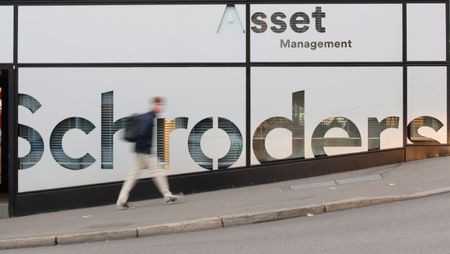
A major British investment firm is withdrawing from China’s massive fund management market, marking the first such exit since foreign companies were allowed to operate independently in the country.
Three sources familiar with the situation report that Schroders has struck an agreement to transfer its investment products to Neuberger Berman as part of its departure from Chinese operations. The decision follows shareholder approval last month of a massive 9.9 billion pound ($13.2 billion) sale of the historic London-based investment house to American rival Nuveen, creating what would become one of the globe’s largest active fund management companies.
Neuberger’s Chinese subsidiary will assume control of investment products previously managed by Shanghai-based Schroders Fund Management (China), which began operations in 2023, according to the sources.
The financial terms of the transfer agreement have not been disclosed. Sources indicate that Schroders is also looking for buyers interested in acquiring the fund management unit’s operating license, which would provide immediate access to China’s $5.6 trillion investment market. South Korean company Mirae Asset Financial Group is reportedly among the potential purchasers in discussions.
All sources requested anonymity because they lack authorization to discuss the matter publicly. Representatives from Schroders and Neuberger declined to provide statements, while Mirae did not respond to requests for comment.
Schroders received Chinese regulatory permission to establish its independent mutual fund operation in January 2023, during a period when Beijing was rapidly expanding foreign access to its multi-trillion-dollar financial sector.
The Chinese unit oversaw 1.7 billion yuan ($249.89 million) in mutual fund assets through the end of March, according to recent filings. This represents a small portion of the parent company’s $1.1 trillion in worldwide assets.
The exit will not impact Schroders’ two remaining Chinese partnerships, sources confirmed. These include a wealth management venture with state-owned Bank of Communications where Schroders maintains controlling interest, and a minority stake in Bank of Communications Schroders Fund Management.
China began permitting foreign companies to operate independent fund management businesses in 2020, opening the domestic market to global investment giants including BlackRock and Fidelity International. Schroders becomes the first to withdraw after establishing a wholly-owned operation.
London-traded Schroders shares declined 0.3% by 1020 GMT following the news.
Two major forces shaping the U.S. stock market will face scrutiny next week as semiconductor leader Nvidia and major retailers including Walmart release quarterly earnings reports, offering fresh insights into artificial intelligence growth and consumer spending under inflationary pressure.
Stock markets extended their upward momentum this week, with the benchmark S&P 500 and tech-focused Nasdaq Composite reaching new record highs. According to Allen Bond, portfolio manager at Jensen Investment Management, market movements have been influenced by developments in AI and rising energy costs from the conflict in Iran, operating on “almost parallel tracks.”
“There is not a lot of overlap in the two narratives, but one day to the next, the developments … can really drive the market,” Bond said.
The S&P 500 has surged approximately 18% from its late March yearly low and now shows gains exceeding 9% for 2026.
Following the significant rally, multiple investors indicated the market appeared ready for a pause. Some expressed concern that a relatively small number of stocks have powered recent advances, indicating the upward trend may be less solid than it appears. LSEG data shows only about 20% of S&P 500 companies have beaten the index’s performance since the March 30 low through Thursday morning.
“There are really a smaller set of names driving the overall index returns again,” said Patrick Ryan, chief investment strategist at Madison Investments. “It’s not necessarily a healthy market when you have that many stocks being left behind.”
Nvidia will announce results on Wednesday as an exceptionally robust first quarter for U.S. corporate earnings concludes.
Shares of Nvidia, the world’s largest company by market value, along with other chip manufacturers have pushed indexes higher in recent weeks. Nvidia stock has climbed more than 40% since the March bottom, while the Philadelphia SE semiconductor index has jumped about 70%, driven by intense demand for processors as technology companies invest heavily in data centers and AI-related infrastructure.
Nvidia’s artificial intelligence products have propelled its stock price up over 1,900% since the current bull market started in October 2022.
“What we need to see from Nvidia is evidence that justifies the increase in the stock price and justifies their position and their benefit from this increased spending in data centers,” Bond said. “The results will be looked at … as a signal into the health of the rest of the industry.”
One key question involves whether competitors are cutting into Nvidia’s market dominance, noted Yung-Yu Ma, chief investment strategist at PNC Financial Services Group.
“It’s probably going to be more a story of, is Nvidia able to defend its leadership position as well as it has been able to the past few years?” Ma said.
Next week also provides an update on the retail sector. Walmart, the world’s biggest retailer, releases quarterly figures on Thursday. Additional retailers reporting include Home Depot, Target and TJX Cos.
Investors have grown concerned that conflict-related inflation will begin impacting consumer spending, which represents more than two-thirds of the U.S. economy.
This week’s data revealed elevated monthly figures for both consumer and wholesale prices, with the Producer Price Index for April recording its steepest increase since March 2022. Earlier this month, the U.S. national average gasoline price exceeded $4.50 per gallon for the first time in nearly four years.
Investors will seek retailer perspectives on spending patterns and whether they have shifted in recent weeks, PNC’s Ma explained.
“At some point, these costs are going to catch up with consumers and are going to start to moderate spending,” Ma said. “That is probably what is more at stake for the retail earnings is, how resilient is the consumer?”
WASHINGTON – The newly confirmed Federal Reserve Chairman Kevin Warsh may find his ambitions to reduce the central bank’s market presence hampered by mounting federal debt and declining appeal of U.S. Treasury bonds, financial experts warn.
The U.S. Senate confirmed Warsh on Wednesday to succeed Fed Chair Jerome Powell. He has championed reducing the central bank’s involvement in markets and scaling back interventions as part of returning to traditional monetary policy approaches that he believes can better focus on inflation control while avoiding market distortions.
While appealing conceptually, this strategy might expose weaknesses in Treasury markets that could either drive up long-term borrowing costs – harming businesses, consumers and government finances – or force the Fed to intervene anyway to keep rates manageable, according to Hanno Lustig, a finance professor at Stanford University’s Graduate School of Business. Lustig’s latest research indicates that leading developed economies like the U.S. have lost their “convenience yield” – essentially lower borrowing rates for countries with risk-free status and independent central banks.
Speaking at a Stanford’s Hoover Institution conference, Lustig emphasized the need for transparency if Warsh and fellow Fed officials want to address this issue when bond yields react to fiscal pressures. “In order to have real price discovery in the Treasury market, we need a central bank that will not intervene,” he stated, rather than claiming market disruptions are temporary hiccups requiring Fed bond purchases.
Since his tenure as a Fed governor over ten years ago, Warsh has criticized how the central bank expanded its balance sheet during emergencies or banking stress periods without clear guidelines on which securities to purchase, in what amounts, or how to subsequently reduce holdings.
The Fed’s asset portfolio has fluctuated through a mix of financial experimentation – testing how much liquidity banks require before rates climb – and comprehensive responses to crises like the COVID-19 pandemic or the 2007-2009 recession and financial meltdown. Currently, the Fed maintains approximately $6.7 trillion in assets, reduced from roughly $9 trillion in 2022, though the total is gradually increasing again to maintain adequate bank reserves.
No widespread consensus exists regarding how Fed bond buying, termed “quantitative easing,” impacts the economy.
Typically, the U.S. central bank limits monetary policy actions to adjusting short-term interest rates that affect consumer and business lending costs. Elevated rates reduce spending when inflation accelerates, while lower rates stimulate spending during economic downturns.
When the policy rate reaches zero and cannot decrease further during economic disruptions, the Fed can deploy its theoretically limitless balance sheet – its money creation authority – for intervention. Purchased assets exit the system and are replaced with cash, helping reduce longer-term rates further to encourage spending and stimulate growth.
Fed officials and others generally acknowledge this approach works to some extent.
However, “they’re overdue for a discussion around how they use the balance sheet and under what circumstances,” said Ellen Meade, a former top Fed adviser who now teaches economics at Duke University. “That’s a nine-to-12-month process, with staff memos and briefings, committee discussions and then agreement.”
Attempting to simultaneously reduce holdings and maintain low rates might also require unusually close coordination with the U.S. Treasury, whose debt-issuance choices could affect rates as the Fed cuts its holdings.
In recent analysis, Bill Nelson, a former Fed staffer and current chief economist at the Bank Policy Institute, determined that if the central bank used regulatory and other modifications to shrink its balance sheet by an additional $2 trillion, the impact on policy rates would depend significantly on implementation methods and Treasury Department responses – potentially ranging from a 0.84-percentage-point rate reduction to a possible increase.
Not everyone views a large balance sheet as problematic as Warsh believes.
Fed Governor Christopher Waller, observing that substantial central bank asset holdings primarily provide adequate bank liquidity, called proposals to reduce holdings to levels where financial institutions compete for reserves “extremely inefficient and stupid.” A recent Brookings Institution survey of 29 top Fed and economic analysts found most respondents said the Fed’s balance sheet size “does not currently pose a problem for the growth or financial stability of the U.S. economy.”
Beyond these concerns, broader debt trends could create additional challenges as Warsh assumes leadership. The Congressional Budget Office projects a federal deficit equivalent to 5.8% of gross domestic product for fiscal year 2026 compared to a 50-year average of 3.8%, with increasing interest expenses driving it higher.
St. Louis Fed research also determined that U.S. Treasuries and bonds from other “risk-free” countries are losing their rate advantages. The study by YiLi Chien, an economist and senior policy advisor at the regional Fed bank, and Kevin Bloodworth, a research associate there, discovered that as the central bank began reducing its balance sheet in 2022, the convenience yield dropped approximately 40 basis points, requiring the U.S. to pay investors that much more for borrowing.
Warsh must determine how to offset this effect to further reduce holdings or justify it as the price of large deficits, which would approach the type of “mission creep” into fiscal matters he has opposed.
Jeffrey Lacker, who led the Richmond Fed during Warsh’s governorship, said Warsh’s balance sheet observations “resonates strongly” with those seeking more restrained central banking, but implementation requires discipline extending beyond Fed offices.
“I think for the Fed to back away from things that amount to debt management would clarify market participants’ expectations and would help make the Treasury market more resilient,” Lacker explained. It would also “aid in sort of the general process of the Treasury as it has to … face the music in essence.”
The space exploration company led by Elon Musk is preparing for what could become the largest initial public offering in United States history, with plans to seek a market valuation of approximately $1.75 trillion.
This potential stock market launch would significantly surpass previous record-setting IPOs from major companies like Alibaba, Visa, and Facebook (now known as Meta Platforms). Financial experts suggest this enormous valuation demonstrates the high expectations investors have for the aerospace and satellite business, though meeting those expectations may prove challenging.
Data comparisons show how this planned offering measures against other notable public market entries from recent years based on company valuations and financial fundamentals.
Many of the companies that previously went public had established larger revenue streams and more defined profit margins at the time of their debuts. Market analysts note that the proposed valuation for the rocket company largely represents what investors are willing to pay based on anticipated future expansion.
“All of these companies have had a compelling story for why rapid growth and big future profits might happen. But when a company goes public at such a high valuation, lots of things have to go right,” said Jay Ritter, a University of Florida professor who tracks U.S. IPOs.
“Revenue has to grow enormously, and costs have to grow more slowly. Most of the time, things don’t go according to plan.”
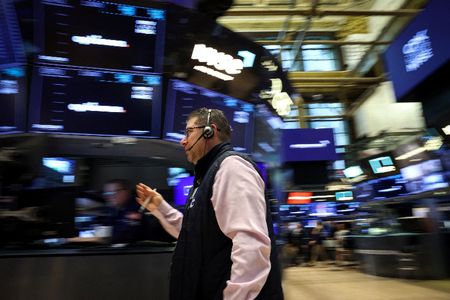
Stock market futures dropped significantly Friday morning as concerns about rising inflation linked to Middle East conflicts sent Treasury yields soaring and threatened to derail the recent technology-driven market surge.
Futures contracts for both the technology-heavy index and the broader market index fell more than 1% in pre-market trading, signaling potential trouble for the artificial intelligence boom that has powered recent gains.
The 10-year Treasury note yield climbed to 4.54%, marking its highest point since early June 2025. This benchmark rate influences borrowing costs worldwide and reflects growing investor anxiety about economic conditions.
Bond yields worldwide rose as mounting evidence of economic harm from the Iran war led traders to expect faster interest rate increases and slower economic growth ahead.
Market data shows the probability of the U.S. Federal Reserve raising rates by 25 basis points in December has more than doubled in the past week, now standing at approximately 40% according to the CMEGroup’s Fedwatch tool.
Oil prices surged nearly 3% to $109 per barrel as the Strait of Hormuz remained blocked, creating fresh worries about global energy supply disruptions.
“The longer the Middle East war drags on, the higher energy prices rise – fuelling inflation expectations and borrowing costs, and increasing the cost of building that extra data center,” said Ipek Ozkardeskaya, senior analyst at Swissquote Bank.
“This is a red flag that many tech investors have been ignoring, blinded by shiny earnings and even shinier earnings expectations.”
Early trading data at 05:38 a.m. ET showed the industrial average futures down 330 points or 0.66%, while the broader market index futures declined 80.75 points or 1.07%. Technology futures dropped 463.25 points or 1.56%.
This downturn comes after another day of record-breaking performance on Wall Street, where both major indexes reached new all-time highs. The industrial average crossed the 50,000 mark again, while the broader index surpassed 7,500 for the first time.
Earlier in the week, markets had seemed to brush aside inflation worries connected to the Iran conflict, with artificial intelligence excitement driving continued gains and keeping major indexes positioned for weekly increases.
Traders also monitored the conclusion of the U.S.-China summit on Friday, which ended without significant progress after talks covering topics including trade, tariffs, Iran and Taiwan.
Medical device company Dexcom rose 2% after announcing plans to add two independent board members and restructure a key committee in partnership with activist investor Elliott Investment Management.
Airline stocks declined broadly as climbing oil prices pressured the industry, with Delta Air Lines, United Airlines and Southwest Airlines falling between 1.3% and 1.5%, while Alaska Air shares dropped 1.8%.
A high-profile gathering of America’s leading corporate executives in Beijing this week yielded limited tangible business results, despite efforts to restore commercial relationships between the two economic superpowers.
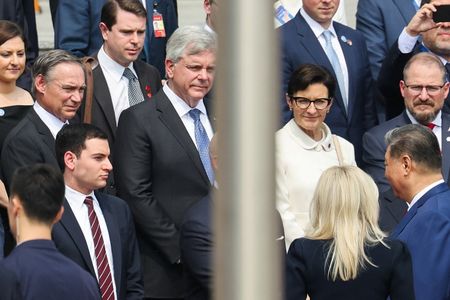
The business delegation, which accompanied U.S. President Donald Trump to China’s capital, included top leaders from major corporations such as Tesla, Nvidia, Apple, Meta, Boeing, Cargill and Goldman Sachs. The group participated in a leadership summit featuring elaborate hospitality, photo opportunities and diplomatic dining as they worked to rebuild ties with Chinese counterparts.
However, as Trump departed Beijing on Friday afternoon, concrete achievements for the accompanying business leaders remained unclear.
The participation of such influential American corporate figures highlights China’s continued significance as a market, despite ongoing political tensions surrounding trade disputes, artificial intelligence concerns and broader international relations challenges.
Direct discussions between American executives and Chinese government representatives and policy officials remain essential for understanding regulatory obstacles, securing business agreements and growing operations in the world’s second-largest economy.
This trip differed markedly from Trump’s previous presidential visit to Beijing in 2017, which brought a larger corporate delegation and resulted in agreements and memorandums worth $250 billion. Experts indicated this visit focused more on building political relationships than immediate transactions.
“Beijing never approaches a leadership summit of this sort from a purely transactional perspective,” said Feng Chucheng, founder and partner at Hutong Research, a Beijing-based strategic consultancy. “I wouldn’t use the size of deals to measure the outcome of the summit.”
“Its top priority is to find a mutually agreed ‘floor’ for the bilateral relationship and secure a set of guardrails to avoid uncontrolled, unexpected escalation,” Feng added.
Whether the positive atmosphere will translate into regulatory approvals, improved market access and investment opportunities remains uncertain, as companies confront broader operational difficulties in China beyond simple deal-making.
Several executives planned to stay in China for additional meetings with officials following Trump’s departure, and more business announcements could emerge in coming days.
One apparent agreement, based on Trump’s statements though not yet officially confirmed, involves China purchasing 200 Boeing aircraft. While this represents a concrete outcome, it falls short of the 500 planes originally anticipated and below the 300 aircraft purchased during the 2017 visit.
No progress was reported on China approving sales of Nvidia’s H200 AI chip, which ranks as the company’s second-most advanced artificial intelligence processor. The U.S. has already authorized sales of this chip to certain Chinese companies.
When Reuters repeatedly questioned him about signed deals and the H200 chip situation, Nvidia’s CEO Jensen Huang responded only: “I love China, had a great time.”
Huang was not originally listed on the White House delegation but joined the trip after Trump invited him aboard in Alaska during the journey to Beijing. His addition raised expectations that the visit might advance Nvidia’s stalled efforts to sell AI chips in China.
On Friday, Huang toured picturesque Beijing locations with his team, pausing to observe street performers and visiting a ground-floor establishment he had patronized during an earlier trip to the capital.
“The summit has much more on positive atmospherics than deliverables, or at least on what China will officially acknowledge,” said Han Shen Lin, the Shanghai-based China country director at U.S. consultancy firm The Asia Group.
“Nonetheless, if Beijing doesn’t give Trump enough ‘wins’ to take home, the risk is that in his disappointment, Trump steps back and lets his more hawkish administration drive the bilateral relationship. This will undoubtedly take us on the road to escalation,” Han added.
Young adults in their twenties are achieving homeownership at rates that exceed what millennials accomplished at the same age, defying expectations in today’s challenging real estate market.
Francisco Vazquez, 27, stands in front of his new home in Milwaukee, Wis. He was able to buy it after changing his career track and saving aggressively, including for one year while he lived rent free with his parents.
The current generation of twenty-something homebuyers demonstrates different characteristics compared to their predecessors. They are more frequently purchasing homes while unmarried and are less dependent on parental financial support to make their purchases possible.
This trend represents a notable shift in homebuying patterns, particularly given the obstacles young buyers face in today’s housing market, including elevated prices and interest rates that have made homeownership increasingly difficult to achieve.
WASHINGTON — Jerome Powell’s eight-year tenure as Federal Reserve chair began with concerns about sluggish inflation and high unemployment, but ends with the American economy fundamentally changed by pandemic-era price surges and political turbulence.
When Powell assumed leadership of the nation’s central bank eight years ago, economists fretted over persistently low inflation and interest rates, alongside insufficient job creation. Today, as he concludes his chairmanship, the economic landscape bears little resemblance to those earlier concerns.
Following the pandemic, consumer prices skyrocketed and have stayed above the Federal Reserve’s 2% goal for more than five years, frustrating voters and making housing, vehicles, and food increasingly expensive. The central bank’s primary short-term interest rate climbed to its highest point in twenty years during 2023, while joblessness dropped to levels not seen in fifty years.
Throughout this period, Powell weathered continuous personal criticism from President Donald Trump that started just months into his appointment. However, in January, he resisted an unusual legal probe by the Justice Department, establishing himself as among the few senior Washington officials willing to confront the Trump administration.
Powell indicated he plans to remain on the governing board until he feels confident the Fed’s autonomy is fully secured. His effectiveness in shielding the central bank from daily political pressures will define much of his institutional impact.
“It is not an unblemished record, but in an extremely challenging context, he’s performed exceedingly well,” said David Wilcox, a senior fellow at the Peterson Institute for International Economics and director of research at Bloomberg Economics. “And my overall assessment is that the country has been lucky indeed to have him as chair.”
Unlike numerous previous Fed leaders, Powell, 73, lacks formal economics training, having worked as an attorney and in financial services before joining the Fed’s board of governors in 2012. Known for his modest demeanor both publicly and privately, Powell typically introduces himself as “Jay” and would showcase his guitar abilities, developed while busking across Europe as a student, during the Fed’s holiday celebrations.
The post-pandemic inflation explosion will inevitably form a central component of Powell’s historical record, with consumer prices reaching a four-decade peak of 9.1% in June 2022.
Current price levels stand 27% above pre-pandemic figures from six years ago, representing a dramatic shift for a nation accustomed to minimal inflation for decades. Prices increased only 10% during the six years preceding the pandemic. Food costs have risen 30% compared to six years ago, after climbing just 3.6% in the six years before COVID arrived.
Powell and fellow Fed officials — along with most economic experts — initially characterized the inflation spike as “transitory,” attributing it to supply chain disruptions caused by the pandemic, as COVID shuttered manufacturing facilities and delayed port operations worldwide.
Their immediate focus centered on economic crisis support.
Through two March 2020 actions, they reduced their benchmark interest rate by 1.5 percentage points to nearly zero. The Fed additionally purchased substantial quantities of Treasury bonds and government-backed mortgage securities to lower long-term interest rates and implemented other measures to inject money into the financial system, maintaining credit market operations during pandemic upheaval.
In April 2020, Powell stated that the Fed would “continue to use these powers forcefully, proactively, and aggressively until we are confident that we are solidly on the road to recovery.”
Despite inflation surpassing the Fed’s 2% target throughout 2021, the central bank maintained its key interest rate near zero until March 2022, when inflation reached 6.9% according to the Fed’s preferred measurement.
The Fed’s hesitation in raising rates reflected traditional economic thinking that inflation from supply disruptions would prove temporary, and if a central bank increased borrowing costs to combat it, higher rates would simply damage the economy and increase unemployment as supply problems resolved.
Meanwhile, the Trump and Biden administrations injected approximately $5 trillion in government spending into the economy through multiple stimulus payments, small business support, and additional aid. This monetary flow sparked a spending surge precisely when supply chains couldn’t meet demand.
By maintaining its key rate near zero for an extended period, Powell’s detractors argue, the Fed amplified excessive spending and intensified inflation.
“Even though there was all the evidence there in the data that aggregate demand was going through the roof, they still said it was a transitory supply shock,” said Mickey Levy, a former top economist at Bank of America and a visiting fellow at the Hoover Institution. “The Fed contributed to that inflation and completely misread the tea leaves.”
As inflation spread to areas like apartment rentals and surveys revealed growing American concerns about its persistence, Powell changed course and supervised the most aggressive interest rate increases since the early 1980s to counter the price surge.
Nevertheless, many prominent economists, including former Treasury Secretary Larry Summers, feared that conquering inflation would necessitate a recession and sharp unemployment increases. Instead, inflation fell to 2.3% by September 2024, according to the Fed’s preferred measure, nearly achieving its 2% target.
By reducing inflation without severe economic disruption, Powell largely accomplished an elusive “soft landing.” Inflation subsequently rose after Trump implemented comprehensive tariffs last April.
Combating inflation represented a dramatic departure for a Fed chair who began his term emphasizing the Fed’s employment maximization mandate. Before the pandemic, Powell frequently praised the advantages of robust job markets for disadvantaged workers, earning recognition from many progressive economists.
However, some economists contend the Fed’s employment focus contributed to its delayed inflation response. In an August 2021 speech, Powell cited the then-elevated unemployment rate of 5.4% as justification for avoiding premature rate increases.
Many analysts still defend Powell’s employment mandate support. Julia Coronado, president of MacroPolicy Perspectives and a former Fed economist, argued Powell was correct to maintain low rates before the pandemic, even as unemployment steadily decreased, because inflation showed no signs of worsening.
“If you can actually push a little harder for a little longer with no consequences for inflation, then you should damn well do it,” she said. “He was absolutely right about that. He’s still right about that.”
Powell stated in late April that “overweighting the employment market” bore no responsibility for the inflation spike.
“It was a global shock that happened essentially very, very similarly all over the world,” he said.
Last July, in what may prove the most memorable image of his Fed leadership, Powell and Trump appeared before cameras wearing hard hats at the Fed’s extensive $2.5 billion building renovation site, which Trump had criticized as wasteful.
Trump alleged the project would cost even more — $3.1 billion — and presented Powell with a paper detailing the expenses. Powell retrieved his reading glasses and publicly corrected the president by pointing out that he had included a third building already renovated.
This moment exemplified Powell’s readiness to challenge Trump’s unprecedented attacks. Economists have historically supported Fed independence because it enables the central bank to implement difficult measures — such as aggressive interest rate increases to fight inflation — that politicians often resist due to their potential pain.
Powell benefited from extensive congressional relationship-building. Research by University of Maryland economist Thomas Drechsel found that Powell met with senators more than twice as frequently as his two predecessors, with meetings equally distributed between both parties.
During one visit, Powell even charmed North Carolina Republican Sen. Thom Tillis’ dog, a gesture that proved highly beneficial. Tillis essentially prevented Senate confirmation of Kevin Warsh, Trump’s choice to replace Powell, until the building project investigation was abandoned. The Justice Department ultimately discontinued its probe.
Even those who criticize Powell’s policy decisions acknowledge his Fed defense efforts.
“The big plus is the way he has protected central bank independence,” said Don Kohn, a former vice chair of the Fed. “That is the most important thing for the future of the Federal Reserve and for protecting the public interest in having an independent central bank.”
Powell hasn’t announced when he might leave the Fed, though he could continue on the governing board until January 2028.
“You want people to … set interest rates to benefit the general public,” Powell said at his final news conference, “and focus only on that and ignore political considerations. This isn’t bipartisan, this is nonpartisan.”
WASHINGTON — Jerome Powell’s eight-year tenure as Federal Reserve chair began with economists concerned about sluggish inflation, low interest rates, and insufficient employment opportunities for Americans.
As Powell concludes his leadership of the nation’s central bank following eight challenging years, the economic landscape has dramatically shifted: Post-pandemic inflation climbed to levels not seen in decades and has stayed above the Fed’s 2% goal for over five years, frustrating consumers facing higher costs for housing, vehicles, and food. The central bank’s benchmark short-term rate reached its highest point in twenty years during 2023, while joblessness dropped to levels not witnessed in fifty years.
Throughout his tenure, Powell weathered constant personal criticism from President Donald Trump that started just months into his role. However, this past January, he challenged an extraordinary legal probe by the Justice Department, establishing himself as among the few senior Washington officials willing to confront the Trump administration.
Powell stated his intention to remain on the governing board until he feels certain the Fed’s independence has been fully restored. His efforts to shield the central bank from political interference will define much of his tenure.
“It is not an unblemished record, but in an extremely challenging context, he’s performed exceedingly well,” said David Wilcox, a senior fellow at the Peterson Institute for International Economics and director of research at Bloomberg Economics. “And my overall assessment is that the country has been lucky indeed to have him as chair.”
Powell, 73, differs from many previous Fed chairs as he lacks formal economics training, having worked as an attorney and in financial services before joining the Fed’s board of governors in 2012. Known for his modest demeanor both publicly and privately, Powell typically introduces himself as “Jay” and would showcase his guitar abilities, developed during his college years busking across Europe, at the Fed’s annual holiday celebrations.
A defining element of Powell’s leadership will be the inflation surge following the pandemic, when consumer costs jumped to a four-decade peak of 9.1% in June 2022.
Current prices stand 27% above pre-pandemic levels from six years ago, representing a dramatic shift for a nation accustomed to minimal inflation for decades. Costs increased only 10% during the six years preceding the pandemic. Food prices have risen 30% compared to six years ago, after climbing just 3.6% in the six years before COVID arrived.
Powell and fellow Fed officials — along with most economists — initially characterized the inflation spike as “transitory,” attributing it to supply chain disruptions caused by the pandemic as COVID forced factory closures and port delays worldwide.
Despite inflation surging beyond the Fed’s 2% target throughout 2021, the central bank maintained its benchmark rate near zero until March 2022, when inflation reached 6.9% using the Fed’s preferred measurement.
The Fed’s hesitation to increase rates reflected conventional economic thinking that inflation from supply disruptions would be temporary, and raising borrowing costs to combat it would only damage the economy and increase unemployment as supply problems resolved themselves.
Simultaneously, the Trump and Biden administrations injected approximately $5 trillion in government spending through various stimulus payments, small business assistance, and other relief programs. This monetary influx drove a spending surge precisely when supply chains couldn’t meet the increased demand.
By maintaining near-zero rates for an extended period, Powell’s detractors argue, the Fed amplified excessive spending and intensified inflation.
“Even though there was all the evidence there in the data that aggregate demand was going through the roof, they still said it was a transitory supply shock,” said Mickey Levy, a former top economist at Bank of America and a visiting fellow at the Hoover Institution. “The Fed contributed to that inflation and completely misread the tea leaves.”
When inflation began affecting sectors like housing costs and surveys indicated growing public concern about its persistence, Powell changed course and supervised the most aggressive rate increases since the early 1980s to address rising prices.
Nevertheless, many prominent economists, including former Treasury Secretary Larry Summers, feared that conquering inflation would necessitate an economic downturn and substantial unemployment increases. Instead, inflation declined to 2.3% by September 2024 according to the Fed’s preferred gauge, approaching its 2% objective.
Through reducing inflation while avoiding severe economic contraction, Powell essentially accomplished the challenging “soft landing.” Inflation subsequently rose again after Trump implemented extensive tariffs last April.
Combating inflation marked a significant change for a Fed chair who initially prioritized the Fed’s employment mandate. Before the pandemic, Powell frequently praised the advantages of robust job markets for disadvantaged workers, earning recognition from progressive economists.
Some economists contend the Fed’s employment emphasis contributed to its delayed inflation response. During an August 2021 address, Powell cited the then-high unemployment rate of 5.4% as justification for postponing rate increases.
Many analysts still support Powell’s commitment to maximum employment. Julia Coronado, president of MacroPolicy Perspectives and former Fed economist, argued Powell correctly maintained low rates before the pandemic despite declining unemployment, since inflation showed no signs of worsening.
“If you can actually push a little harder for a little longer with no consequences for inflation, then you should damn well do it,” she said. “He was absolutely right about that. He’s still right about that.”
Last July, in what may become the most memorable image from his chairmanship, Powell and Trump appeared before cameras wearing hard hats at the Fed’s ongoing $2.5 billion building renovation site, which Trump had criticized as wasteful.
Trump alleged the project would cost more — $3.1 billion — and presented Powell with documentation of the expenses. Powell retrieved his reading glasses and publicly corrected the president, explaining that Trump had included a third building already completed.
This moment exemplified Powell’s readiness to challenge Trump’s extraordinary criticisms. Economists have historically supported Fed independence because it enables the central bank to implement difficult measures — like substantial rate increases to fight inflation — that politicians often resist due to their potential economic pain.
Powell gained from cultivating strong congressional relationships. Research by University of Maryland economist Thomas Drechsel found Powell met with senators more than double the frequency of his two predecessors, with meetings equally distributed between both parties.
Even those critical of some policy choices acknowledge Powell’s defense of the Fed.
“The big plus is the way he has protected central bank independence,” said Don Kohn, a former vice chair of the Fed. “That is the most important thing for the future of the Federal Reserve and for protecting the public interest in having an independent central bank.”
The world’s leading contract semiconductor manufacturer announced Friday its intention to divest up to 152 million shares of Vanguard International Semiconductor through a block transaction targeting financial institutional investors, thereby decreasing its ownership position in the chipmaker.
The Taiwan-based TSMC stated that the planned divestiture would lower its ownership in Vanguard International Semiconductor, known as VIS, to approximately 19% from its current level of around 27.1% calculated on a fully diluted basis. The semiconductor giant indicated it has no intentions to divest any additional VIS shares in the coming period.
A major healthcare company has finalized a $194 million sustainability-focused loan agreement with Singapore’s largest banking institution, linking portions of the financing to enhanced antibiotic management practices across multiple medical facilities.
IHH Healthcare announced Friday that it completed the S$250 million loan arrangement with DBS, which establishes performance benchmarks for four Singapore medical centers: Mount Elizabeth, Mount Elizabeth Novena, Gleneagles and Parkway East hospitals.
Under the agreement’s terms, these medical facilities must enhance their monitoring procedures to evaluate whether patients require continued antibiotic therapy within 72 hours of beginning treatment.
Both organizations stated that the initiative aims to reduce inappropriate antibiotic usage, which contributes to the development of drug-resistant bacterial strains and creates more challenging treatment scenarios for infections.
IHH Healthcare noted that this program aligns with Singapore’s broader national strategy to combat antimicrobial resistance.
A major Japanese manufacturer of memory chips announced Friday that it projects quarterly operating profits will reach 1.3 trillion yen ($8.20 billion) for the April through June period, as artificial intelligence applications drive unprecedented demand for semiconductor products.
Kioxia, which produces NAND flash memory chips, disclosed that its operating profits climbed 92.7% to 870.4 billion yen during the fiscal year that concluded in March, surpassing analyst projections.
The company revealed plans to offer American depositary shares on a United States stock exchange as part of efforts to expand its pool of investors.
Kioxia’s stock value has increased more than four times this year, pushing the company’s market value above major corporations including Sony and Fast Retailing, which owns the Uniqlo brand.
Other Asian semiconductor companies have also seen dramatic value increases, with South Korean manufacturer Samsung Electronics achieving a market valuation exceeding $1 trillion, while SK Hynix approaches the same benchmark.
The memory chip producer has navigated significant corporate changes in recent years, including its separation from scandal-plagued Toshiba through an acquisition led by Bain Capital, followed by its public listing in Tokyo during late 2024.
Companies in the memory chip sector typically require substantial capital investments and face exposure to unpredictable pricing fluctuations in the market.
International bond markets concluded a difficult week on Friday with widespread declines as mounting signs of economic disruption from the Iran war led investors to expect more aggressive interest rate increases and slower economic growth.
Treasury yields in the United States reached approximately one-year highs as market participants expect the Federal Reserve may need to raise borrowing costs to combat inflation driven by energy price spikes related to the Iran conflict.
European government bonds from Germany, Italy and France faced selling pressure during morning trading sessions, while bond yields in Japan climbed to unprecedented levels.
Italy’s 10-year government bond yields jumped nearly 9 basis points to approximately 3.87%, marking a weekly increase of almost 14 basis points, while Germany’s benchmark Bund yields climbed about 6 basis points to roughly 3.11%.
Economic data released this week demonstrated that consumers and companies are beginning to experience significant price increases due to the conflict, which has driven crude oil prices up more than 50%.
Shorter-term two-year yields, which respond most quickly to shifting expectations about inflation and monetary policy, posted the steepest gains this week, though longer-term bond yields have also begun climbing as investors worry about extended impacts from energy price shocks.
“It’s not just inflation, but also higher deficits that should be the focus,” Jefferies strategist Mohit Kumar said.
“We are likely to see a number of support measures for fuel subsidies announced in the coming months.”
Kumar predicted a steepening pattern in government bond yield curves, describing a market condition where longer-term bond yields increase faster than shorter-term rates.
The benchmark 10-year Treasury note was most recently trading at 4.53%, gaining 7.3 basis points for the session and near its peak since last June.
British government bond yields experienced volatile trading throughout the week, reaching multi-decade highs, as political pressure intensifies on Prime Minister Keir Starmer to step down following his Labour party’s significant defeats in local elections and the emergence of potential leadership rivals.
HONG KONG (AP) — Markets across Asia declined on Friday despite South Korea’s Kospi index achieving a historic peak before surrendering its advances, while investors monitored developments surrounding the Iran conflict and U.S. President Donald Trump’s Beijing summit with Chinese leader Xi Jinping.
American futures declined following Wall Street’s achievement of new record highs.
Japan’s Nikkei 225 dropped 1.2% to 61,880.04 despite earlier gains during the session. South Korea’s Kospi declined 3.2% to 7,727.34 after surpassing the 8,000 threshold for the first time and touching 8,046.78, driven partly by enthusiasm surrounding artificial intelligence developments.
The Hang Seng in Hong Kong decreased 0.9% to 26,145.66, while Shanghai’s Composite index gained 0.1% to 4,183.05.
The S&P/ASX 200 in Australia fell 0.1% to 8,629.70.
Taiwan’s Taiex declined 0.5%, while India’s Sensex rose 0.1%.
Trump is concluding his Chinese visit on Friday following multiple sessions with Xi that addressed topics including bilateral trade, expanded economic partnerships and Taiwan. Market participants are tracking updates on trade agreements covering American agricultural products like soybeans, beef and aircraft.
Despite positive sentiment regarding U.S.-China relations, some experts recommend approaching any agreements with caution. “Headline deals should be looked at with a healthy degree of scepticism,” wrote Leahy Fahy and Julian Evans-Pritchard, China economists at Capital Economics, in a Friday note.
Many of the announced projects and investments from U.S.-China agreements during Trump’s previous China visit in 2017 never came to fruition, they noted, as Washington-Beijing relations deteriorated significantly in subsequent years.
Trump also mentioned in an interview that China could purchase U.S. oil, more than a year after China essentially halted crude oil purchases from the United States following Trump’s implementation of significant trade tariffs last year.
Energy prices rose early Friday as U.S.-Iran negotiations on permanently ending the Iran war reached an impasse, and following the seizure of a vessel anchored near the United Arab Emirates and an attack on another cargo ship close to Oman.
Brent crude, the global benchmark, increased 1.3% to $107.06 per barrel. It was trading around $70 per barrel before the Iranian conflict began in late February.
U.S. benchmark crude rose 1.4% to $102.56 per barrel.
International energy transportation continues to face restrictions with the Strait of Hormuz, vital for worldwide oil and gas movement, remaining mostly blocked and as the U.S. established a naval blockade on Iranian ports since last month. The White House announced Thursday after bilateral discussions between Trump and Xi that both nations agreed the Strait of Hormuz must stay open.
On Thursday, Wall Street equities advanced with the S&P 500 benchmark climbing 0.8% to 7,501.24 and achieving a record high for the second straight day.
The Dow Jones Industrial Average increased more than 0.7% to 50,063.46, marking the first time it finished above 50,000 since the Iran war began. The tech-focused Nasdaq composite advanced 0.9% to 26,635.22.
Technology company Cisco Systems shares surged 13.4% after exceeding earnings expectations and announcing job cuts affecting fewer than 4,000 positions, while Nvidia gained 4.4% as investor optimism increased regarding updates on sales of its advanced H200 chips to Chinese companies as CEO Jensen Huang accompanied Trump to Beijing.
In currency markets, the U.S. dollar strengthened to 158.50 Japanese yen from 158.37 yen. The euro traded at $1.1651, declining from $1.1669.
Crude oil markets experienced significant gains exceeding 1% after President Donald Trump warned his patience with Iran is running short, while shipping concerns continue in the vital Strait of Hormuz waterway.
Brent crude futures climbed $1.32, representing a 1.25% increase to reach $107.04 per barrel by 0425 GMT. Meanwhile, U.S. West Texas Intermediate futures advanced $1.33, or 1.31%, settling at $102.50.
Weekly performance showed strong momentum, with Brent advancing nearly 6% and WTI surging more than 7%, driven by uncertainty surrounding the fragile ceasefire in the Iran conflict.
In a Thursday evening Fox News interview, Trump declared: “I am not going to be much more patient. They should make a deal.”
During a Friday morning Bloomberg interview, U.S. Trade Representative Jamieson Greer noted China’s pragmatic approach regarding Iran involvement, emphasizing China’s interest in maintaining open access through the Strait of Hormuz.
President Trump and China’s President Xi Jinping were scheduled to meet Friday, concluding a two-day state visit marked by ceremonial events and business agreements.
Vandana Hari, founder of oil market analysis provider Vanda Insights, explained: “With the Beijing summit not delivering any breakthrough on Iran, market focus is back on the deadlock and a blockaded Strait, with a tail risk of renewed military escalation.”
Regarding potential deals from the summit, Trump indicated China’s interest in purchasing American oil.
Recent shipping incidents near the Strait of Hormuz included Iranian personnel reportedly seizing a vessel off the United Arab Emirates and directing it toward Iranian waters Thursday. Additionally, an Indian cargo ship transporting livestock from Africa to the UAE sank Wednesday in waters near Oman’s coast.
The White House reported that Trump and Xi reached agreement on maintaining open shipping lanes.
Iran’s Revolutionary Guards reported 30 vessels crossed the Strait of Hormuz since Wednesday evening. While this represents a notable increase if verified, it remains well below the typical pre-war daily traffic of 140 ships.
Haitong Futures analyst Yang An identified supply constraints as the primary oil price driver.
“Oil prices swung several times yesterday but still closed near the day’s high,” he noted.
“Ships passing through the strait eased some market concerns, but not enough to change the strong trend driven by tight supply.”
A comprehensive overview of upcoming trading in European and international markets from Stella Qiu
Are stock market investors finally getting the message? Bond traders have been raising red flags for weeks — unchecked inflation suggests interest rate increases are back on the table.
The technology-driven market surge appears to be losing momentum. While Wall Street reached new record levels, boosted by a 4% surge in Nvidia after CEO Jensen Huang accompanied Trump on his trip to Beijing, Asian markets are showing widespread declines.
Japan’s Nikkei dropped more than 1% following producer price data that showed the largest increase in three years, strengthening expectations that the Bank of Japan will raise rates in June. South Korea’s KOSPI plummeted over 3%. European markets are facing approximately 1% losses at opening.
Adding to the concerns is the situation in the Strait of Hormuz. Iran reports roughly 30 vessels are passing through, but this represents only a fraction of typical pre-conflict shipping volumes. Trump, following discussions with Beijing, appears to be growing impatient with the situation.
Worries are mounting that the strait could remain restricted past June, depleting worldwide reserves and pushing the globe toward a serious energy crisis.
Sophisticated bond market investors appear to be preparing for trouble. Weak U.S. Treasury sales this week served as an early indicator, showing diminished investor interest just as inflation pressures increase.
The most recent 30-year bond auction settled at 5% for the first time since 2007. Yields reached 5.061% on Friday, marking a 10-month high. Even shorter-term bonds aren’t immune, with the two-year climbing to 4.055%, hitting a one-year peak.
With oil prices rising and consumer spending continuing, markets are quickly adjusting expectations for Federal Reserve policy. The likelihood of another rate increase this year has more than doubled within a week to 45%, even with Trump’s Fed leadership choice, Kevin Warsh.
Considering all factors, taking a cautious approach might be wise for investors entering the weekend.
Important developments that may impact markets on Friday:
— Trump scheduled to conclude his official visit to China
Labor representatives at Volkswagen have firmly rejected any possibility of shutting down German manufacturing facilities, maintaining their unwavering stance against plant closures while expressing willingness to consider alternative solutions for underutilized production sites.
The automaker is seeking ways to reduce surplus capacity across its German manufacturing network while avoiding facility shutdowns, which were prohibited under a 2024 restructuring agreement with labor unions. Potential alternatives being explored include defense industry partnerships and collaborative arrangements with Chinese companies.
Three key union figures – works council leader Daniela Cavallo, IG Metall union chief Christiane Benner, and regional union representative Thorsten Groeger – emphasized that the 2024 agreement protecting German facilities remains non-negotiable.
“The fundamental situation has not changed — nor have the red lines set by the employee side,” they stated. “With us as the general works council and IG Metall, there will be no plant closures.”
The German automaker has seen its profit margins decline due to sluggish consumer demand and expensive investments in electric vehicle technology. Additional pressures have mounted from intense Chinese competition, increased tariffs, and Middle Eastern conflicts that have raised operational costs and created market uncertainty.
Following another earnings decline early this year, CEO Oliver Blume intensified efforts to find additional cost savings.
Blume has suggested potential facility-sharing arrangements with Chinese partners to address the overcapacity issue, though no formal discussions have been announced. Meanwhile, negotiations continue regarding a potential sale of Volkswagen’s Osnabrueck facility to a defense contractor.
During a Financial Times conference in London this week, Volkswagen brand leader Thomas Schaefer indicated the company was working to manage excess production volumes and described facility closures as “the second-best option.”
The union representatives expressed openness to considering proposals from within the company or external partners, as long as these initiatives honor the commitments management made in 2024.
Cavallo, Benner and Groeger reiterated their core principles of maintaining quality employment, career advancement opportunities and job stability, vowing to vigorously oppose any measures that contradict these values both currently and going forward.
Larry Culp, the chief executive of GE Aerospace, was observed Friday exiting a meeting at the Beijing offices of China’s National Development and Reform Commission, the country’s influential economic planning body, a Reuters witness reported.
The executive’s meeting at the NDRC facility follows recent statements by U.S. President Donald Trump on Fox News regarding his Thursday discussions with Chinese leader Xi Jinping in Beijing. Trump announced that China had committed to purchasing 200 Boeing aircraft, marking the nation’s first acquisition of American-manufactured commercial planes in almost ten years.
Given GE Aerospace’s role as Boeing’s main engine provider, the company is positioned to benefit from this purchasing deal, though the agreement was smaller than the approximately 500 aircraft that market analysts had anticipated, leading to stock price declines for both firms.
Both Culp and Boeing CEO Kelly Ortberg are participating in a business group consisting of more than twelve American corporate leaders who are traveling with Trump during his initial state visit to China in nearly a decade.
GE Aerospace has not yet provided a response to inquiries about the specific purpose behind Culp’s meeting at the NDRC.
An Australian Federal Court judge delivered a stern rebuke to Tesla on Friday, expressing shock at what he called the electric vehicle manufacturer’s inadequate cooperation in a major class action lawsuit.
Justice Tom Thawley questioned whether the Elon Musk-led company was treating the legal discovery process with appropriate seriousness, cautioning Tesla it could face “a really bad time” if cooperation doesn’t improve.
The sharp criticism came after attorneys representing 10,000 Australian Tesla owners reported that the U.S.-based automaker had delivered only 2,000 documents following eight months of discovery proceedings.
Brisbane law firm JGA Saddler brought the legal action, alleging Tesla deceived Australian buyers regarding phantom braking issues, actual battery range capabilities and autonomous driving features.
Tesla has maintained it does not misrepresent its vehicles’ capabilities.
During Friday’s pre-trial proceedings, JGA Saddler attorney Rebecca Jancauskas explained the case necessitates Tesla providing documentation related to engineering software, computer systems and customer complaints from international markets, but materials received so far have been insufficient.
“From what we’re getting, we can’t brief our experts,” Jancauskas informed the court. “The paucity of discovery is what’s thrown a massive spanner in the works.”
Justice Thawley stated it was reasonable to expect comprehensive documentation from Tesla, noting the company could request redaction of confidential or sensitive materials.
“I find it gobsmacking that only 2,000 documents have been produced and I wonder whether the exercise has been treated seriously,” he said.
The judge added his belief that “one would need to get into engineering drawings and reports that had been made from others, and into investigations that may or may not have been undertaken.”
Tesla’s legal representative Imtiaz Ahmed explained the defense team had manually examined approximately 100,000 documents and still needed to review roughly 75,000 more. He said the automaker had concerns about revealing confidential and sensitive information, including individual names that opposing counsel might contact.
Thawley established a July 31 deadline for Tesla to complete its discovery obligations, warning that “if it’s inadequate, you can expect a really bad time, and I will get into what’s gone on and whether it’s been done appropriately.”
The judge set September 1 for the next case management hearing.
Workers at Samsung Electronics in South Korea announced Friday they will proceed with a planned work stoppage next week, despite the tech giant’s latest attempt to restart salary negotiations without preconditions. The news sent the company’s stock tumbling by as much as 5.9%.
Talks between the labor group and Samsung over compensation and bonus structures fell apart this week with government mediators involved, raising the stakes for a potential strike at the globe’s largest memory chip manufacturer.
Union representatives said Friday they would consider new discussions after June 7, but are moving ahead with their 18-day work stoppage beginning May 21 that threatens to interrupt chip manufacturing operations.
Market experts blamed the stock drop on mounting worries about how a strike might affect production capabilities and Samsung’s capacity to fulfill customer orders.
“There appears to be rising concerns over delivery reliability if the strike takes place and sentiment that rivals could benefit from the uncertainty,” said Ryu Young-ho, a senior analyst at NH Investment & Securities.
The likelihood of a work stoppage seemed to be growing since Samsung had not appeared to offer new proposals to workers, according to Ryu.
Samsung Electronics acknowledged in a public statement that it had proposed talks without conditions, but declined to elaborate further.
South Korea’s Labour Commission has urged both parties to participate in another government-facilitated negotiation session Saturday to prevent the strike from occurring.
The labor organization had previously stated it would only participate in discussions if Samsung presented a comprehensive proposal meeting worker demands by 0100 GMT Friday.
Frustrated by what they describe as a significant disparity in bonus compensation compared to competing chipmaker SK Hynix, union leaders have warned that more than 50,000 employees could leave their positions next week.
High-ranking South Korean officials, including the prime minister and finance minister, have expressed alarm that a Samsung work stoppage must be prevented, cautioning it could create substantial threats to economic expansion, export revenues and financial markets.
South Korean Industry Minister Kim Jung-kwan stated Thursday that a strike would inflict permanent economic harm and that emergency intervention might become necessary.
According to South Korean regulations, only the labour minister possesses emergency arbitration authority. Labour Minister Kim Young-hoon has emphasized the importance of continued dialogue between Samsung and its workers.
Investment bank JPMorgan released analysis suggesting the production consequences of a strike could exceed earlier projections, based on the union’s expectations of widespread worker participation.
JPMorgan calculated potential damage to Samsung’s operating profits at 21 trillion won to 31 trillion won ($14.08 billion to $20.79 billion), with sales losses potentially reaching approximately 4.5 trillion won.
Samsung Electronics stock was down 5.2% at 0305 GMT, while the benchmark KOSPI index fell 3.4%.
Federal authorities have reached a settlement agreement with an Indian energy mogul accused of misleading investors about a massive corruption scheme involving his company’s solar power operations, according to legal documents made public Thursday.
The Securities and Exchange Commission filed charges in late 2024 against Indian billionaire Gautam Adani and his nephew Sagar Adani, who both lead Adani Green Energy Limited. Regulators alleged the pair committed to paying Indian government officials hundreds of millions of dollars worth of bribes in return for energy purchase contracts at artificially high prices.
During this same period, the energy firm raised billions from Wall Street investors who were reportedly told the company maintained strong anti-corruption policies and received guarantees from top executives that no bribes would be paid.
Federal regulators stated these actions breached antifraud sections of U.S. securities regulations.
Settlement documents reveal Gautam Adani has agreed to pay $6 million in civil fines, while his nephew will pay $12 million. The proposed agreement does not require either party to admit wrongdoing.
The Adani Group rejected the accusations when they were first made, describing them as without merit. Legal representatives for both men did not respond to requests for comment Thursday.
Both individuals face criminal charges filed in late 2024 in New York for securities fraud and conspiracy to commit securities and wire fraud. The New York Times and Bloomberg reported Thursday that these criminal charges will likely be dismissed. Federal prosecutors in the Eastern District of New York did not respond to inquiries from The Associated Press.
The decision to dismiss charges appeared to be influenced by developments following President Donald Trump’s election to a second term and Gautam Adani’s public praise of the president.
In March 2025, Trump suspended enforcement of the Foreign Corrupt Practices Act, which prohibits overseas business bribes, leading some in India to believe the Adanis’ legal troubles were severely weakened.
Gautam Adani built his influence in the world’s largest country by developing a coal business empire during the 1990s.
The Adani Group eventually expanded into multiple sectors, making investments in critical areas including renewable energy, defense and agriculture.
Operating under the motto “Growth with Goodness,” the company developed a clean energy portfolio exceeding 20 gigawatts, featuring one of the globe’s largest solar installations in Tamil Nadu state.
The Adani Group previously aimed to become India’s dominant renewable energy company by 2030, planning to spend $70 billion on clean energy developments by 2032.
Adani’s strong connections to the government and Prime Minister Narendra Modi have drawn criticism, while U.S.-based Hindenburg Research has alleged the company engaged in “brazen stock manipulation” and “accounting fraud.”
The Adani Group dismissed these accusations as “a malicious combination of selective misinformation and stale, baseless and discredited allegations.”
Following the announcement of the Brooklyn case, Kenya’s president terminated multimillion-dollar agreements with the Adani Group covering airport upgrades and energy initiatives. Adani Green Energy pulled out of wind energy developments in Sri Lanka after the country requested price renegotiations. A major French oil company also halted new investments.
Industry experts believe a crucial element in Adani’s rapid expansion has been his ability to match his company’s objectives with the Modi administration’s goals. Critics claim he benefits from crony capitalism and receives special government treatment, including in contract awards, which the Adani Group has disputed.
Federal prosecutors are reportedly preparing to abandon criminal fraud charges against Gautam Adani, an Indian billionaire who has committed to a $10 billion investment in American economic projects, according to two individuals with knowledge of the situation.
On Thursday, Adani also settled a corresponding civil fraud case filed by the Securities and Exchange Commission concerning an alleged bribery operation targeting Indian government officials, pending judicial approval.
The potential abandonment of criminal charges follows a presentation by Adani’s attorney, Robert Giuffra, who also represents U.S. President Donald Trump personally. Giuffra informed Justice Department officials last month that Adani could not proceed with the investment while facing prosecution, according to one source.
Following Trump’s 2024 electoral victory, Adani had publicly committed to investing that sum and generating 15,000 American jobs.
According to the source, who requested anonymity, Giuffra devoted most of his 100-page presentation to challenging the case’s strength, arguing jurisdictional problems and insufficient evidence. Giuffra presented similar arguments in court documents for the related SEC case last month.
One source indicated that some prosecutors emphasized the $10 billion investment would not influence their case, though it remains uncertain whether others held different views.
The Justice Department has not yet responded to requests for comment.
Bloomberg News initially reported the Justice Department’s consideration of dismissing Adani’s case.
This represents another instance of Trump’s Justice Department moving to drop a prominent criminal case initiated by federal prosecutors under his Democratic predecessor, Joe Biden.
In November 2024, federal prosecutors in Brooklyn filed charges against Adani regarding an alleged conspiracy where he reportedly agreed to provide approximately $265 million in bribes to Indian government officials to secure approval for developing India’s largest solar energy facility.
Prosecutors alleged that Adani and his suspected accomplices obtained more than $3 billion through loans and bonds while concealing their corruption from financial institutions and investors.
The Adani Group has characterized the allegations as “baseless.”
Adani also confronted a related SEC civil fraud case, which the securities agency settled Thursday pending court approval, according to court documents. Sagar Adani, Gautam Adani’s nephew, also faced SEC civil allegations.
Both Adani and his nephew agreed to pay $18 million in civil penalties without admitting or denying wrongdoing, court records indicate.
Adani Green Energy stated that both individuals and the SEC had submitted documents to a New York court requesting entry of a final judgment, which awaits approval.
Last month, the Adanis’ legal team argued their clients disputed any credible evidence supporting the SEC’s alleged bribery conspiracy.
They contended that the Adanis’ non-involvement in the offering and the lack of fraudulent intent or negligence warranted dismissal.
They also described the SEC allegations as “impermissibly extraterritorial,” noting that the Adanis and all purported misconduct occurred in India, while the bonds never traded on American exchanges.
The 63-year-old Adani possesses a net worth of $82 billion according to Forbes magazine, ranking him among the world’s wealthiest individuals.
Toyota Motor has requested permission to construct a new vehicle assembly facility at its current Texas manufacturing site, with approximately $2 billion in planned investment, according to regulatory documents.
The proposed San Antonio project, which has been given the code name “Project Orca,” is scheduled to break ground by late 2026, with vehicle manufacturing expected to commence in 2030, based on documents submitted to the Texas Comptroller of Public Accounts.
The automaker’s investment plan allocates $1.05 billion toward building construction and facility enhancements, while $950 million will go toward purchasing machinery and equipment.
The expansion is projected to generate 2,000 new employment opportunities between 2028 and 2030.
“We regularly evaluate our manufacturing footprint to ensure we remain competitive and aligned with customer demand. This reflects our long-term commitment of investing in the North American region, local manufacturing/jobs, and suppliers,” Toyota said in a statement to Reuters.
U.S. Trade Representative Jamieson Greer reported Thursday that while China has made improvements in rare earth mineral exports to America, Beijing continues to cause delays in approving certain shipments.
Speaking during a Bloomberg Television interview, Greer explained that Chinese officials sometimes move slowly on export licenses, requiring U.S. officials to step in and advocate for American companies affected by the delays.
“I would give them a passing grade on this,” Greer stated.
“We’ve certainly seen the rare earths come back up to better levels. Sometimes it’s slow. There are times when we have to go and make our point,” he added.
Beijing implemented rare earth export restrictions in April 2025 as a response to tariffs imposed by U.S. President Donald Trump on Liberation Day. These controls remain in place and continue to limit certain rare earth exports, despite an October agreement where the White House claims China committed to allowing unrestricted shipment flows.
China’s Ministry of Foreign Affairs has not yet provided a response to requests for comment. Beijing has consistently justified its April 2025 export restrictions and maintains that it processes all qualified applications.
Greer is currently in China as part of Trump’s diplomatic team for discussions with Chinese President Xi Jinping.
According to Greer, the United States has recently taken delivery of multiple large yttrium shipments. This rare earth element is exclusively manufactured in China and has been scarce for over a year, creating supply problems for American semiconductor and aerospace sectors.
“Whenever we see an issue, we hear from specific companies, we engage with our Chinese counterparts and we find them to be constructive,” Greer commented.
Reuters previously reported in April that China had given approval for several substantial yttrium exports, though current levels still fall significantly short of previous export volumes.
A federal jury in Texas ruled Wednesday that Exxon Mobil did not defraud shareholders in connection with disclosures about its Canadian oil sands and Rocky Mountain gas operations.
The lawsuit, filed in 2016, accused Exxon of hiding that its Canadian bitumen operations were unprofitable, improperly handling carbon-cost calculations in reserve assessments, and postponing impairment charges related to Rocky Mountain dry gas assets.
According to court documents filed in Dallas federal court, shareholders who purchased Exxon common stock between February 24, 2016 and October 28, 2016 could not demonstrate that the company deceived them.
The plaintiffs argued they purchased Exxon stock at inflated prices because the energy company hid important details about its reserve assessments and financial reporting methods.
U.S. Trade Representative Jamieson Greer revealed during a Bloomberg TV interview on Friday that restrictions on advanced semiconductor exports to China did not feature prominently in recent diplomatic conversations with Chinese officials in Beijing.
These remarks indicate that any potential breakthrough allowing sales of advanced H200 processors to China remains uncertain, even though the CEO of a major chip manufacturer received a last-minute invitation to accompany U.S. President Donald Trump on his Beijing visit this week.
“This was not a major topic of discussion at the bilateral meeting. We did not talk about chip export controls at the meeting,” Greer stated, noting that “15 to 17” U.S. CEOs who attended Thursday’s meeting between Trump and Chinese President Xi Jinping discussed their respective companies’ concerns.
According to Reuters, approximately 10 Chinese companies received clearance to purchase H200 processors, including major technology firms Alibaba, Tencent and Bytedance, though no actual shipments have occurred. The Trump administration granted approval for H200 exports to China in December and imposed additional requirements in January.
Greer emphasized that accepting H200 imports would constitute a “sovereign decision” for China.
“They’re fluid, right? They change over time. It depends on what threats you see, what’s commercially available worldwide, what the Chinese can already do,” Greer explained.
“And so you want to make sure you strike a balance between national security, protecting high tech, but also making sure that we’re benefiting from overseas markets. And so those are the kinds of things that went into the H200 decision as to whether the Chinese are going to buy or not.”
Although Chinese artificial intelligence companies such as DeepSeek increasingly emphasize their use of domestically produced processors, American semiconductor restrictions continue to hinder Beijing’s efforts toward technological independence as domestic manufacturing facilities face challenges scaling production.
Shortages in computing capacity have compelled numerous Chinese AI companies to limit user access in recent months, while Chinese policymakers express concern about increasing reliance on American chips, viewing this as a potential supply chain weakness.
Conservative American legislators and former officials from the previous administration have contended that providing advanced AI processors to China would enable them to match American capabilities in cutting-edge artificial intelligence and support China’s military objectives.
“They’re making their own determinations. They’re very committed to domestic production,” Greer commented.
“They often see U.S. high tech sometimes as a threat to them because if we’re ahead of the game like we are on AI chips, sometimes they feel that can stop their own growth.”
Workers at Samsung Electronics in South Korea announced Friday that the technology giant has offered to restart labor discussions without any preconditions, following the breakdown of government-facilitated negotiations regarding compensation and bonus structures.
The labor organization indicated its willingness to engage in discussions after June 7, though it intends to proceed with a planned work stoppage beginning May 21 that could impact operations at the globe’s largest memory chip manufacturer.
Samsung Electronics released a statement verifying its proposal for talks without conditions, but did not offer additional details at the time.
The workers’ union had stated Thursday that it would participate in negotiations if the corporation presented a comprehensive proposal addressing worker concerns by 0100 GMT Friday.
Government leaders in South Korea, including the prime minister and finance minister, have expressed alarm that a work stoppage at Samsung must be prevented, cautioning it could create substantial threats to the nation’s economic expansion, export activity and financial markets.
Samsung Electronics stock prices dropped 2% during morning trading following the announcement of unconditional negotiation proposals, while the overall KOSPI index fell 1.1%.
The US dollar strengthened on Friday and is on track for its strongest weekly performance in more than two months, driven by mounting inflation concerns that are increasing speculation about a Federal Reserve interest rate increase this year.
Rising energy costs and ongoing shipping disruptions have intensified inflationary pressures, contributing to the greenback’s rally.
Financial markets are also closely monitoring the second day of crucial talks between US President Donald Trump and his Chinese counterpart Xi Jinping, as Trump pursues economic concessions from Beijing amid the ongoing Iran conflict.
According to US officials, the discussions have centered on both leaders’ mutual goal of reopening the critical Strait of Hormuz shipping route, which Iran has essentially blocked since hostilities began in late February. The talks also highlighted Xi’s apparent willingness to purchase American oil as a way to decrease China’s reliance on Middle Eastern energy sources.
While investor response to the summit has been relatively subdued as markets wait for additional details, the offshore yuan reached near its strongest position in over three years, trading at 6.7874 against the dollar.
“The meeting is broadly in line with market expectations and slightly constructive at the margin,” said Cliff Zhao, chief economist at CCB International.
“A better tone is helpful, but markets will still look for more clarity on trade, business access and specific policy arrangements.”
Across broader markets, the dollar gained momentum, climbing to a two-week peak of 98.98 against a collection of major currencies.
The dollar index is positioned to increase more than 1% for the week, marking its most significant gain since early March.
The dollar’s strength pushed the Japanese yen beyond 158 per dollar, keeping traders watchful for potential intervention from Tokyo. The yen was trading at 158.45 during early Asian sessions and appeared set to decline more than 1% for the week.
The euro dropped 0.04% to $1.1662, also moving toward a weekly decline exceeding 1%.
The dollar’s upward momentum has accelerated throughout the week, supported by indicators showing rising domestic inflation even as the US economy demonstrates resilience despite the continuing Middle East crisis.
Thursday’s economic data revealed that US retail sales continued to grow in April, while weekly unemployment claims figures suggested labor market stability.
Market participants now see a 44% probability that the Fed might increase rates in December, up significantly from the 22.5% chance calculated a week earlier, based on CME FedWatch tool data.
“While we are still cognizant of the softer domestic demand conditions that are being weighed down by rising energy costs, our U.S. CPI forecasts have been revised higher in 2026 again with risks still biased towards the upside,” said Alvin Liew, senior economist at UOB.
“We now expect an extended period of pause to cover the remainder of 2026 before the Fed resumes easing in 2027.”
Among other currencies, the British pound fell to a one-month low of $1.3385, having dropped 0.9% in the prior session following British health minister Wes Streeting’s resignation, which has intensified the political turmoil there.
“The prospect of a potentially disruptive leadership transition and yet another challenging fiscal backdrop heading into the autumn is likely to weigh on sentiment,” said Henry Cook, senior Europe economist at MUFG Bank.
“We see the balance of risks to the UK outlook as firmly skewed to the downside.”
The Australian dollar retreated from its recent four-year high due to the greenback’s strength, declining 0.04% to $0.7217.
We were unable to access the full content of this story due to technical restrictions on the source website. The article appears to be about a settlement between the U.S. Securities and Exchange Commission and an Indian billionaire, but specific details are not available at this time.
We apologize for the inconvenience and will update this story when more information becomes available.
A federal judge in San Francisco is requesting additional information before giving final approval to a massive $1.5 billion settlement between artificial intelligence company Anthropic and authors who claim the company improperly used their written works to develop its AI chatbot Claude.
During Thursday’s hearing, U.S. District Judge Araceli Martinez-Olguin withheld final approval while seeking more details about attorney compensation and payments to lead plaintiffs in what represents the largest known copyright settlement in U.S. history.
A now-retired judge had previously given preliminary approval to the agreement in September.
This lawsuit represents one of many filed by copyright holders, including writers and media companies, challenging how technology firms train their artificial intelligence systems, and marks the first significant U.S. case to reach a settlement.
During the proceedings, an attorney representing the authors revealed that copyright holders have filed claims covering more than 92% of the approximately 480,000 works covered by the settlement. However, the agreement has faced criticism from some authors who believe the settlement amount is insufficient, provides excessive compensation to attorneys, or improperly excludes certain copyright holders.
The authors initiated their lawsuit against Anthropic in 2024, claiming the company, which receives backing from Amazon and Alphabet, utilized unauthorized copies of their books to train Claude to interact with users.
In a previous ruling last June, Judge Alsup determined that Anthropic’s use of the authors’ works for training purposes constituted fair use, but concluded the company violated copyright by storing over 7 million unauthorized books in a “central library” that wasn’t exclusively designated for AI development. A trial had been set for December to establish damages for the alleged copyright infringement, with potential penalties reaching hundreds of billions of dollars.
Additional authors and publishers pursuing similar claims have initiated separate legal actions against Anthropic that remain active. On Wednesday, a coalition of more than 25 writers who chose not to participate in the settlement, including Dave Eggers and Vendela Vida, filed a fresh lawsuit against Anthropic in California.
The president of the Federal Reserve Bank of New York announced Thursday that he believes current interest rate policy should remain unchanged, even as Middle East conflicts create economic uncertainty.
Speaking at a New York event, the central bank official described monetary policy as being in a “good place” currently.
“I don’t see there’s any reason at all to raise rates right now or lower rates right now,” the Fed leader stated.
The remarks came during an address to the Conference of Business Economists, where the official largely repeated positions he has outlined in recent public statements.
The central banker emphasized the importance of maintaining stable inflation expectations, noting that while short-term forecasts have increased, longer-term projections remain steady, which he characterized as positive.
Regarding tariff impacts on inflation, the official said he believes most effects have already occurred, though he continues monitoring price pressure developments.
“We’re not seeing…unusual second-round effects or persistent effects. But we just have to keep watching,” he explained, citing stable inflation expectations and a job market that isn’t driving up price pressures.
The Fed official also addressed current stock market strength, saying it aligns with investor sentiment about economic prospects.
“There is optimism about higher productivity growth going forward, partly AI and other things,” he noted. “It’s not surprising that the stock market’s high” given how “bullish” people are about the future of the economy.
Market watchers currently anticipate the federal funds target rate will remain in its current 3.5% to 3.75% range in coming months.
While the Middle East conflict has triggered price pressure increases, the duration of these effects remains uncertain due to the ongoing nature of the situation.
A Chicago federal jury has decided to award $49.5 million to relatives of a 24-year-old humanitarian worker who perished in the Ethiopian Airlines Boeing 737 Max disaster in 2019 during her journey to her inaugural major work assignment.
Wednesday’s decision in federal court concludes one of the final wrongful death cases stemming from the catastrophe that claimed the lives of all 157 passengers and crew on Ethiopian Airlines Flight 302.
Samya Stumo, a Sheffield, Massachusetts native, had recently begun working with a humanitarian organization dedicated to improving healthcare infrastructure in developing nations. The 2015 University of Massachusetts Amherst alumna was en route to Uganda for her first significant project when the aircraft went down shortly after departing Addis Ababa on March 10, 2019.
Following the tragedy, a UMass spokesperson characterized her as an individual recognized “for engaging others by earning their respect, friendship and trust.”
The jury determined compensation of $21 million for Stumo’s pain, suffering and emotional trauma during the fatal flight, $16.5 million for her family’s loss of companionship, and $12 million for their grief, her estate’s legal representatives stated.
“We are gratified for the opportunity to try the compensatory damages case,” lawyers Shanin Specter and Elizabeth Crawford declared in a Wednesday evening statement announcing the decision.
This marks the second jury verdict connected to the Ethiopian Airlines tragedy. Boeing has negotiated confidential settlements before trial in the majority of numerous wrongful death claims filed regarding both the Ethiopian Airlines disaster and a comparable 737 Max accident five months prior near Indonesia’s coastline that collectively resulted in 346 fatalities.
The deadly accidents became a pivotal crisis for Boeing and its 737 Max aircraft program. Investigators determined that a flight-control mechanism continuously pushed the nose of the then-newly designed aircraft downward due to incorrect data from a single sensor, leaving pilots in both incidents unable to restore control.
This verdict comes after a November 2025 jury decision awarding $28.45 million to relatives of Shikha Garg, a United Nations environmental consultant who also perished in the 2019 accident. That proceeding represented the first civil jury trial arising from the disaster, with jurors likewise responsible solely for determining compensation since Boeing had acknowledged responsibility.
“We are deeply sorry to all who lost loved ones on Lion Air Flight 610 and Ethiopian Airlines Flight 302. While we have resolved nearly all of these claims through settlements, families are entitled to pursue their claims through the court process, and we respect their right to do so,” a Boeing spokesperson stated Thursday.
The Ethiopian Airlines accident led to a global suspension of 737 Max operations lasting over a year and sparked numerous investigations into Boeing’s safety practices and regulatory supervision.
Federal prosecutors subsequently accused Boeing of deceiving regulators regarding the Max’s flight-control technology, though in November, the federal judge in Texas handling the ongoing criminal matter approved a Justice Department motion to drop the charges. Prosecutors negotiated a deal with Boeing, mandating the corporation invest an additional $1 billion in penalties, family compensation and safety enhancements.
Stumo’s relatives have been among the most vocal family members demanding Boeing accountability and reforms to federal aviation supervision. Her father, Michael Stumo, has publicly challenged Boeing, regulators and Congress regarding what families considered failures that permitted the 737 Max to continue operating following the initial crash near Indonesia.
Stock markets around the globe surged to new record levels Thursday, with the Nasdaq and S&P 500 extending their remarkable run as investors showed continued enthusiasm for technology shares during ongoing diplomatic discussions between world leaders.
Market watchers are keeping close tabs on the U.S. bond market, where rising yields at both ends of the curve are creating concerns. The 30-year Treasury yield climbing above 5% has grabbed attention, but short-term borrowing costs are also jumping significantly. This presents challenges for the Treasury as it manages its debt obligations with a shorter maturity profile.
During diplomatic talks, Xi cautioned that poor handling of Taiwan issues could lead to a “dangerous” situation, according to reports from the summit.
Thursday’s market performance showed strong gains across multiple regions. The Nasdaq and S&P 500 hit fresh peaks, joined by Asian markets including the Nikkei, KOSPI, and MSCI All Country index. The Shanghai Composite reached an 11-year high, while European markets gained 0.8% and UK stocks rose 0.5%.
Individual company performances varied widely. Cerebras soared 90% on its Nasdaq debut, while Cisco jumped 13% and Ford climbed 7%. Nvidia added 4% to its value. On the downside, Qualcomm fell 6% and Boeing dropped 5%. Technology stocks led the advance with a 1.9% sector gain.
Currency markets saw the British pound as the biggest global decliner. The dollar index strengthened 0.4%, with the dollar-yen exchange rate moving back above 158 for the first time since recent intervention efforts. The dollar reached a new 3-year low against the Chinese yuan near 6.78, while hitting a record high against the Indian rupee.
Bond markets showed declining yields, with UK government bonds falling as much as 8 basis points at the long end and U.S. yields dropping 4 basis points. Yield curves flattened across markets.
In commodities, oil prices ended essentially unchanged while silver declined 5%.
Despite the celebration of new market highs, analysts are raising concerns about the narrow leadership driving these gains. Research from FTSE Russell reveals that nearly half of the FTSE All-World return in April came from just 13 stocks out of 4,250 total holdings, all connected to artificial intelligence themes.
Additional analysis shows that only 53% of S&P 500 companies are trading above their 200-day moving averages, compared to the typical 77% when the index reaches record territory. While this narrow breadth raises sustainability questions, some strategists note that such concentrated leadership can continue for extended periods.
The artificial intelligence boom is particularly evident in Asia, where major technology companies are expanding aggressively. Taiwanese semiconductor manufacturer TSMC announced Thursday that it’s rapidly increasing production capacity, while South Korea’s SK Hynix approaches a $1 trillion valuation.
These Asian technology giants, along with Samsung, are benefiting from massive overseas investment flows as they serve as key suppliers to major U.S. technology companies and provide hardware to Nvidia, currently the world’s most valuable corporation.
Political developments in the UK are also capturing market attention. Health minister Wes Streeting resigned Thursday and called for a leadership contest, increasing pressure on Prime Minister Keir Starmer. While Streeting didn’t formally trigger a contest and his intentions to participate remain unclear, the move suggests growing challenges to Starmer’s leadership.
Adding to the political uncertainty, Manchester Mayor Andy Burnham indicated he would seek a vacant parliamentary seat, potentially positioning himself to challenge Starmer’s leadership. The pound declined Thursday, though government bond yields also fell, creating mixed signals for UK assets.
Looking ahead, several factors could influence Friday’s trading including Middle East developments, energy market movements, ongoing summit discussions between world leaders, and various economic data releases from New Zealand, Japan, and the United States.
NEW YORK (AP) — Major corporations are increasingly mentioning artificial intelligence when announcing workforce reductions, creating anxiety among employees about the future of their careers.
This trend is causing concern across various industries, as workers worry about how quickly companies are embracing AI technology. Even when AI isn’t directly replacing human workers, some corporations have revealed staff cuts while shifting funds toward AI development or promoting new operational efficiencies — creating uncertainty about future employment opportunities and available positions.
However, company explanations often lack specificity. Artificial intelligence is seldom the only factor businesses mention when implementing workforce reductions, with most continuing to reference broader organizational changes or challenging economic conditions. Some company leaders have also indicated that while they’re reducing staff to reallocate resources currently, AI development and its requirements might create additional positions in the future. Nevertheless, determining whether this represents the actual motivation or simply messaging intended for investors remains difficult.
Here are several corporations that have revealed workforce cuts while referencing AI’s influence in their decisions.
This Wednesday, Cisco Systems revealed intentions to eliminate fewer than 4,000 positions, representing approximately 5% of its staff. This announcement coincided with the technology company reporting record third-quarter revenue, driven by increasing demand for its AI products and infrastructure.
In an internal communication, CEO Chuck Robbins informed staff that “the companies that will win in the AI era will be those with focus, urgency, and the discipline to continuously shift investment” — requiring “making hard decisions.” However, he indicated Cisco would assist affected workers in finding alternative opportunities, “whether internal or external.”
In February, financial services company Block decided to eliminate more than 4,000 positions from its workforce of over 10,000 employees. The company behind payment systems like Square and Cash App openly discussed restructuring to take advantage of AI opportunities.
“The core thesis is simple. Intelligence tools have changed what it means to build and run a company,” CEO Jack Dorsey wrote to shareholders during that period. “A significantly smaller team, using the tools we’re building, can do more and do it better.”
Technology companies aren’t alone in referencing AI when announcing job cuts. During January, chemical manufacturer Dow, Inc. revealed plans to eliminate approximately 4,500 positions as part of a broader effort to “streamline” operations. This initiative included increasing focus on AI and automation.
Also in January, Pinterest announced workforce reductions affecting less than 15% of its employees as the company shifts more resources toward AI. The image-sharing service described the cuts as part of wider “transformation initiatives” — including moving company resources to AI-focused positions and emphasizing AI-enhanced products.
Last autumn, Lufthansa Group indicated it would eliminate 4,000 positions by 2030 — citing AI adoption, digitalization, and consolidating operations among affiliated airlines.
Although not always explicitly connecting the technology to recent workforce reduction announcements, numerous other major corporations — including Meta, Microsoft and Amazon — are also eliminating thousands of positions while investing billions in AI development.
Meta, for instance, intends to eliminate approximately 8,000 workers, representing roughly 10% of its staff, beginning next week. When revealing the cuts last month, the Facebook parent company more generally referenced needs to balance certain investments and improve efficiency.
However, this decision comes as Meta continues increasing AI infrastructure spending and hiring expensive AI specialists. Earlier this year, CEO Mark Zuckerberg predicted 2026 as when “AI starts to dramatically change the way that we work.”
A Chicago federal jury has awarded $49.5 million in damages to the family of Samya Stumo, who died in the second of two deadly Boeing 737 MAX aircraft crashes that occurred within months of each other.
Stumo lost her life in the Ethiopian Airlines Flight 302 crash in 2019, which followed an earlier 737 MAX incident in 2018. The two accidents happened within a short timeframe and involved the same aircraft model.
The substantial monetary award represents compensation for the family’s loss in what became part of the broader legal fallout from the Boeing 737 MAX crashes that raised serious safety questions about the aircraft.
Federal Reserve Governor Stephen Miran announced Thursday his intention to step down from his position at the central bank when Kevin Warsh assumes the role of Fed chair.
Miran stated he will leave his position either on the day Warsh takes the oath of office or just prior to that ceremony. His departure becomes essential because the seven-member Federal Reserve board has no other vacant positions available for Warsh to occupy, and Miran’s official term concluded in January.
Through a correspondence addressed to President Donald Trump and made public by the Federal Reserve, Miran outlined his advocacy for reduced interest rates. These positions have become well-known through his numerous public statements and the opposing votes he cast at each Fed policy session since he became a board member last September during a break from his role in the Trump administration.
The U.S. Senate approved Warsh’s appointment to lead the Fed earlier this week, though officials have not yet set a date for his swearing-in ceremony.
OAKLAND, Calif. — Legal teams representing Elon Musk and OpenAI delivered closing arguments Thursday in a pivotal court case that may determine the trajectory of artificial intelligence development.
The Tesla CEO helped establish OpenAI when it began operations in 2015, the same company that would later develop ChatGPT. Following his $38 million investment during the organization’s initial phase, Musk filed legal action in 2024 claiming OpenAI CEO Sam Altman and his senior colleague secretly transformed the venture into a profit-driven enterprise.
Jurors must first determine whether Musk’s legal challenge was submitted within the required timeframe. While much courtroom testimony has focused on OpenAI’s formative period following its 2015 establishment, there exists a limited window for pursuing the breach of charitable trust and unjust enrichment allegations Musk has raised.
OpenAI’s legal team contends that Musk delayed too long and cannot seek damages for incidents occurring prior to August 2021.
In a court document filed last month, the judge stated that “if the jury finds that Musk failed to file his action within the statute of limitations, it is highly likely” she will “accept that finding and direct verdict to the defendants.”
Should jurors conclude the lawsuit was timely filed, they must then evaluate whether OpenAI operated under a “charitable trust” and if OpenAI along with its leadership violated that arrangement. Musk’s additional allegation requires the jury to assess whether Altman, Greg Brockman — co-founder and president — and OpenAI improperly benefited themselves at Musk’s cost.
Regarding Microsoft, which is also named as a defendant, jurors must determine if the technology giant assisted in facilitating any trust violation.
During Thursday morning proceedings, Musk’s legal representative, Steven Molo, informed jurors that the Tesla CEO is “sorry he could not be here.”
Musk is currently in China accompanying President Donald Trump and other notable technology industry leaders.
Cerebras Systems made an impressive entrance into public trading Thursday, with stock prices surging 89% beyond their initial public offering value during the company’s first day on U.S. exchanges.
The semiconductor company’s strong market performance resulted in a total valuation reaching $106.75 billion when calculated on a fully diluted basis, reflecting investor enthusiasm for the chip designer’s market prospects.
ROME – Technology company EdgeConneX has announced plans for a massive investment to construct data centers in northern Italy, according to an announcement from Prime Minister Giorgia Meloni’s office on Thursday.
The company intends to spend approximately 3 billion euros, equivalent to $3.5 billion, on the ambitious project, officials confirmed.
The facilities will be constructed in the Lombardy region of northern Italy, according to the statement released by the prime minister’s office.
There was some initial confusion about the investment amount when Industry Minister Adolfo Urso mentioned a figure of 6 billion euros earlier in the day.
However, Meloni’s office clarified the actual investment total. “The total investment amounts to around 3 billion euros,” the office stated.
The comprehensive development plan includes significant specifications and timeline details. “The project involves the construction, by 2031, of three state-of-the-art data centre campuses in the Lombardy Region, with over 300 megawatt of capacity and an expected 5 billion euros in additional indirect investments,” the official statement explained.
The project represents a major technology infrastructure investment for the region and could have substantial economic impact beyond the initial construction phase.
Nationwide home loan rates declined slightly this week, marking the first decrease following two consecutive weeks of upward movement.
The standard 30-year fixed mortgage rate decreased to 6.36% from the previous week’s 6.37%, according to Thursday’s report from mortgage buyer Freddie Mac. This represents a notable improvement from the 6.81% average recorded one year ago.
Rates for 15-year fixed mortgages, which are favored by homeowners looking to refinance existing loans, also declined this week. These rates dropped to 5.71% from 5.72% the previous week. Freddie Mac reported this rate stood at 5.92% twelve months ago.
Several factors impact mortgage rates, including the Federal Reserve’s interest rate policy decisions and bond market investors’ expectations for the economy and inflation.
The 30-year mortgage average had dipped below 6% in late February for the first time since late 2022, but has not returned to that level since.
Though mortgage rates remain lower than they were at this point last year, they have generally moved upward since the war with Iran began. The Strait of Hormuz closure has disrupted energy markets, causing crude oil prices to surge sharply and becoming a major inflation factor.
Higher oil price expectations have increased the yield on the U.S. 10-year Treasury note, which lenders reference when setting home loan prices.
Thursday’s midday bond market trading showed the 10-year Treasury yield at 4.44%. This yield was only 3.97% in late February, prior to the outbreak of war.
A federal court case that could determine OpenAI’s future reaches its conclusion Thursday as attorneys for Elon Musk prepare final arguments to persuade jurors that the artificial intelligence company’s executives violated their duty by converting the organization into a profit-making enterprise.
Final statements are set to begin in Oakland, California federal court for Musk’s legal action against OpenAI and CEO Sam Altman.
The billionaire entrepreneur has filed suit against OpenAI and Altman on grounds of charitable trust violations and unjust enrichment, claiming they engaged in “stealing a charity” by abandoning OpenAI’s original purpose of developing secure AI technology for humanity’s benefit.
The world’s wealthiest individual alleges that OpenAI’s leadership deceived him into contributing $38 million, then secretly established a commercial division alongside the original nonprofit structure while securing tens of billions in funding from Microsoft and other backers for expansion.
OpenAI maintains that operating as a for-profit company makes the organization more effective, with the nonprofit maintaining ownership shares in the corporation, and contends that Musk’s real desire was organizational control.
Musk demands approximately $150 billion in compensation from OpenAI and Microsoft, with funds directed to OpenAI’s nonprofit arm to advance charitable objectives. He additionally seeks removal of Altman and OpenAI President Greg Brockman from leadership positions. Microsoft has invested over $100 billion in its OpenAI partnership, according to company executive testimony.
OpenAI faces competition from AI firms including Anthropic and Musk’s smaller xAI venture, while considering a potential public stock offering that could reach $1 trillion in valuation.
Musk’s xAI operation now operates under his aerospace company SpaceX, which is also exploring a major public offering.
U.S. District Judge Yvonne Gonzalez Rogers presides over the proceedings.
The timing for the nine-member jury’s deliberation remains uncertain.
Should no decision emerge before Monday, the judge and legal teams will reconvene to address potential OpenAI restructuring and damage awards if Musk prevails.
Gonzalez Rogers will decide on remedies and will grant nothing if Musk’s case fails.
The proceedings occur during widespread public anxiety about AI integration into daily life.
Individuals employ AI for numerous applications including facial recognition, financial guidance, news reporting, medical assessment, and dangerous deepfake creation. Many express skepticism about the technology and fear potential job displacement.
The authenticity of both Altman’s and Musk’s stated positions regarding OpenAI and AI industry objectives has been a key trial focus, with both figures facing scrutiny.
Altman, Musk and others established OpenAI in 2015, though Musk departed the board in 2018.
OpenAI has attempted to demonstrate that Musk himself endorsed creating a for-profit division to secure funding for computational resources and compete with rivals like Google.
The company also claims Musk demanded exclusive control as a condition for continued backing. Musk’s 2023 attempt to acquire OpenAI through an xAI-led group has become another disputed issue, with OpenAI arguing it contradicts Musk’s lawsuit claims.
Musk’s legal team has worked to characterize Altman and Brockman as motivated by personal financial gain.
They presented evidence showing Altman held over $2 billion in stakes within companies conducting OpenAI business, while Brockman stated his OpenAI holdings were valued near $30 billion.
Musk’s attorneys have also depicted Altman as untrustworthy, referencing his 2023 removal by OpenAI’s board over candor concerns. Altman returned to his position within a week.
Former OpenAI Chief Scientist Ilya Sutskever provided testimony about collecting proof of Altman’s “consistent pattern of lying.”
Musk’s attorney also raised questions about potential conflicts of interest through Altman’s connections to OpenAI business partners.
Altman stated he holds no direct ownership in OpenAI, though he maintains investment in a fund with company stakes.
WASHINGTON — Weekly unemployment benefit applications climbed last week but continue to stay at historically low levels, even as the ongoing war in Iran creates economic uncertainty across the nation.
New claims for unemployment assistance during the week that concluded May 9 increased by 12,000, reaching 211,000, according to Thursday’s Labor Department data. This figure exceeded the 207,000 new claims that analysts from FactSet had predicted.
These weekly unemployment benefit applications serve as an indicator for U.S. job cuts and provide nearly real-time insight into employment market conditions.
Even with relatively minimal layoffs occurring, economists describe the current labor market as being trapped in a “low-hire, low-fire” situation. This dynamic has maintained the unemployment rate at a low 4.3%, though many jobless individuals face difficulties securing new positions.
While U.S. companies created an unexpected 115,000 new positions in April, the Iran war has introduced significant uncertainty regarding the overall U.S. economy and employment landscape.
The Strait of Hormuz, through which one-fifth of global oil passes, continues to be closed. Oil prices have surged more than 50% since the conflict began in late February, pushing the national average gasoline price to $4.53 per gallon from under $3. These elevated costs impact consumer spending and may discourage companies from expanding their workforce.
Government data released this week showed consumer-level inflation increased 3.8% compared to April 2025, marking the largest increase in three years. Food costs have also risen, though analysts suggest they may not yet fully reflect the energy price increases resulting from the Iran war.
A separate report this week indicated wholesale prices jumped 6% year-over-year, reaching the highest level in more than three years. The Labor Department’s producer price index — which measures inflation before reaching consumers — surged 1.4% between March and April, representing the largest monthly increase in over four years.
These developments occur while U.S. inflation already exceeds the Federal Reserve’s 2% target. Two weeks ago, the Fed decided to maintain its benchmark rate unchanged, pointing to economic uncertainty from Middle East instability and persistently high inflation.
While lower interest rates can stimulate economic growth and job creation, they also tend to fuel inflation, prompting several Federal Reserve policymakers to indicate openness to raising interest rates this year.
Additionally, the current artificial intelligence surge and the investment needed for its development could transform or eliminate certain job categories.
Several major corporations have recently announced job reductions, including Verizon, UPS, Amazon, Disney and Walmart.
Weekly unemployment assistance applications have remained steady within a range of mostly 200,000 to 250,000 since the U.S. economy recovered from the pandemic recession. However, job creation began declining approximately two years ago and decreased further in 2025 due to President Donald Trump’s unpredictable tariff implementations, his federal workforce reductions and the ongoing impact of elevated interest rates designed to combat inflation.
Companies created fewer than 200,000 positions last year, down from approximately 1.5 million in 2024, according to FactSet data.
Thursday’s Labor Department report indicated that the four-week moving average of unemployment claims, which smooths out weekly fluctuations, rose by 750 to 203,750.
The total number of Americans receiving unemployment benefits for the week ending May 2 increased by 24,000 to 1.78 million, matching analyst expectations.
Americans tightened their wallets in April as escalating gasoline costs linked to the Iran war reduced disposable income for discretionary purchases such as apparel and home goods.
Consumer retail spending increased by 0.5% in April, representing a decline from March’s adjusted growth rate of 1.6%, based on Commerce Department figures published Thursday. March had recorded the most significant monthly retail spending surge in over three years, primarily driven by rapidly climbing fuel costs.
When gasoline purchases are removed from the calculation, April retail spending climbed 0.3%. This represents a decrease from March’s 0.7% growth rate when fuel station transactions are excluded.
Consumer activity remained lackluster across several sectors.
Department store revenues dropped 3.2%, while furniture and home decoration retailers experienced a 2% decline. Building supplies and garden equipment businesses saw minimal growth of 0.1%. However, internet-based retailers experienced a 1.1% boost and electronics and appliance outlets recorded 1.4% sales growth.
This data provides only a limited view of consumer expenditure patterns and excludes categories such as tourism and lodging. Among service industries tracked, dining establishments showed a 0.6% uptick.
The Iran conflict that started in late February has resulted in the closure of the Strait of Hormuz, eliminating one-fifth of global daily petroleum supply. Regular gasoline prices climbed again Thursday night to $4.53 per gallon. This represents a $1.35 increase compared to the same period last year, based on motor club AAA data.
Economic analysts had anticipated that increased tax refunds would stimulate consumer activity early in the year. However, surging fuel costs have consumed larger portions of American household income since the conflict began, reducing funds available for restaurant meals, clothing purchases and other discretionary items.
Despite economic disruption from the Iran war, U.S. companies continued to hire workers last month, adding an unexpectedly robust 115,000 positions.
Nevertheless, troubling inflation indicators have emerged throughout this week.
The Labor Department announced Wednesday that the U.S. producer price index — measuring inflation before reaching consumers — surged 1.4% in April, marking the largest monthly increase in over four years. One day earlier, the closely monitored consumer price index rose 3.8% compared to April 2025 — representing the most significant annual increase in more than three years. These cost increases, primarily attributed to climbing energy expenses, have affected everything from airline tickets and luggage charges to personal care products.
A more comprehensive understanding of inflation’s impact on Americans may emerge next week when major U.S. retailers including Walmart and Target publish quarterly earnings reports.
WASHINGTON – Weekly unemployment benefit applications saw a modest uptick last week, though the job market continues to demonstrate resilience amid growing inflation pressures caused by escalating energy costs from international conflicts.
Applications for initial state unemployment assistance climbed by 12,000 to reach a seasonally adjusted 211,000 during the week ending May 9, according to Thursday’s report from the Labor Department. Economic forecasters surveyed by Reuters had anticipated 205,000 applications for that period.
The ongoing U.S.-Israel conflict with Iran has created disruptions to shipping routes through the Strait of Hormuz, driving up costs for various commodities beyond energy, including fertilizers, petrochemicals and aluminum.
Government data released Wednesday showed producer prices experienced their largest jump in four years during April. Industry experts worry that supply shortages and climbing inflation rates might trigger job cuts across certain sectors.
The count of individuals collecting unemployment assistance beyond their first week of benefits – which serves as an indicator of hiring activity – grew by 24,000 to reach a seasonally adjusted 1.782 million for the week concluding May 2, according to the claims data.
Last week’s government employment report revealed that nonfarm payrolls expanded by 115,000 positions in April, marking the second consecutive month of robust job growth. The overall unemployment rate remained steady at 4.3%.
WASHINGTON, May 14 – American consumers continued spending more at retail stores during April, though much of the increase stemmed from elevated prices rather than increased purchasing power, according to new federal data.
The Commerce Department’s Census Bureau reported Thursday that retail sales climbed 0.5% last month, following a revised 1.6% surge in March. The April figure matched predictions from economists surveyed by Reuters, who had anticipated a 0.5% gain after the previously announced 1.7% March increase.
The ongoing U.S.-Israeli conflict with Iran continues to fuel price increases across the economy. Federal officials announced earlier this week that consumer prices posted strong gains for the second consecutive month in April, with yearly inflation reaching its highest level in three years.
Energy costs particularly affected consumers, with gasoline prices jumping 12.3% during April, according to U.S. Energy Information Administration figures.
Despite surging fuel costs, Americans haven’t yet reduced spending in other categories, helped by more generous tax refunds this season. Internal Revenue Service records show the average refund increased by $323 through April 25 when compared to the same timeframe in 2025.
However, that financial buffer appears to be shrinking.
PNC Financial economists analyzed their internal records and found that “consumers are drawing down tax refunds more rapidly than last year, particularly among lower-income households,” while noting they observed “less of those refunds being used towards paying down credit card and other debt.”
Families with lower incomes typically allocate a larger portion of their budgets to gasoline compared to wealthier households. With consumer confidence hitting record lows in early May and inflation exceeding wage increases for the first time in three years, analysts worry spending could decline significantly this year.
When excluding automobiles, gasoline, building materials and food services, retail sales gained 0.5% in April after a revised 0.8% March increase. These core retail sales figures most closely mirror the consumer spending portion of gross domestic product calculations, and March had previously been reported as a 0.7% advance.
Consumer spending represents more than two-thirds of economic activity and grew at a 1.6% annualized pace during the first quarter, slower than the 1.9% rate recorded in the October-December period. This marks a continued deceleration from the 3.5% growth achieved in the third quarter of 2025.
A major Wall Street bank has climbed to the top of technology investment banking by placing early bets on startups that competitors might overlook.
JPMorgan’s approach became clear in 2017 when Pattern Group co-founders David Wright and Melanie Alder sought $10 million for their startup. Despite the relatively small amount for a bank managing $2.5 trillion in assets, JPMorgan dispatched a team to Lehi, Utah, for an in-person evaluation of the e-commerce business.
“We were literally in a warehouse with some desks next to it,” Pattern CFO Jason Beesley recalled. “They came and visited us and weren’t spooked by that.”
The investment in relationships proved profitable. Pattern’s annual revenue expanded from $100 million to $2.5 billion by last year, with JPMorgan serving as the exclusive banker for the company’s $225 million Series B funding in October 2021 and a $150 million revolving credit facility last year. The bank later co-managed Pattern’s September IPO alongside Goldman Sachs, raising $300 million and establishing a company valuation of approximately $2.5 billion. Pattern’s stock has climbed 27% since going public, with projected revenue of $3.3 billion this year.
“It’s very important for us to be able to say to our clients that ‘we’re going to be with you, no matter what your size is, and no matter what happens’,” explained Andrew Kresse, the bank’s co-head of innovation economy. “We’re not looking for only companies that want an IPO.”
This relationship-focused strategy has elevated JPMorgan to the number one position in technology investment banking during the first quarter, surpassing rival Goldman Sachs, according to Dealogic data covering equity and debt underwriting, lending and mergers and acquisitions.
Although Goldman maintained its leadership in tech M&A by total transaction value, JPMorgan excelled across other sectors, securing 16.7% of total tech investment banking fees in the first quarter, LSEG reported.
“JPMorgan has a best-in-class global investment bank that layers capital markets, lending and all the frills that go along with it. They deliver the whole firm to their clients,” noted Mike Mayo, head of U.S. large-cap bank research at Wells Fargo, placing JPMorgan among the industry’s top three investment banks alongside Goldman Sachs and Morgan Stanley.
The bank established its Innovation Economy banking division approximately ten years ago to focus on founder-led, high-growth, venture-backed startups in healthcare and technology sectors during earlier development stages. Following Silicon Valley Bank’s collapse in 2023 — which had previously dominated startup banking — JPMorgan quickly moved to acquire its clients and recruit personnel.
Since then, the bank has grown its technology investment banking team by hiring roughly a dozen senior bankers in 2025 and bringing in veteran dealmaker Kevin Brunner from Bank of America as global chairman of investment banking. JPMorgan is also recruiting Kaushik Banerjee and Homan Milani from Bank of America, who will join as managing directors in the technology investment banking group later this year.
The team faced significant challenges last year when it lost three global heads of technology banking in quick succession: Madhu Namburi departed for venture capital firm General Catalyst while Drago Rajkovic and Pankaj Goel both moved to Citigroup. The company announced Wednesday a leadership restructuring at the investment bank’s top level, promoting Dorothee Blessing, Kevin Foley and Jared Kaye to oversee global investment banking and former M&A head Anu Aiyengar to global chair of investment banking and M&A.
Not every IPO has matched Pattern’s success. As lead bank for Circle Internet Group’s public offering, JPMorgan faced criticism for potentially underpricing when the stablecoin issuer debuted at $31 per share and surged to $95 on its June 5 trading launch. This marked one of the first major IPOs following the Trump administration’s Liberation Day that had halted new listings for weeks, catching the industry off-guard with unexpected investor enthusiasm.
Currently, JPMorgan employs over 550 bankers serving innovation economy clients worldwide — 200 hired since 2023 — and collaborates with more than 11,000 startups and high-growth companies across 40 countries. Technology transactions alone represented 22% of the bank’s $3.2 billion in total investment banking fee revenue during the first quarter, making it the bank’s strongest performing sector, according to LSEG data.
By establishing early connections with startups and expanding relationships across lending, capital markets and advisory services, the bank aims to secure larger portions of major technology deals as these companies mature.
DoorDash exemplifies this approach. JPMorgan initiated work with the local commerce platform nearly ten years ago when its valuation remained under $1 billion. The bank supported its expansion, providing Chase cardholders with complimentary or discounted DashPass memberships in 2020 before managing the company’s public offering that same year. Recently, it advised on DoorDash’s $3.9 billion acquisition of London-based Deliveroo.
“We are uniquely positioned to support a company from its early days into becoming one of the most significant tech companies in the ecosystem,” stated John Simmons, co-head of global banking. DoorDash now maintains a market value of approximately $73 billion.
JPMorgan has also provided advisory services for several prominent technology transactions recently, including Palo Alto Networks’ roughly $25 billion acquisition of CyberArk, Salesforce’s $8 billion purchase of Informatica, and Global Payments’ $24.25 billion acquisition of Worldpay alongside the $13.5 billion sale of its Issuer Solutions business to FIS.
JPMorgan executives describe their methodology as distinct from traditional investment banking models that concentrate primarily on individual transactions.
Developing relationships early enables the bank to “build the trust necessary to help clients navigate complex transactions,” said Noah Wintroub, global chairman of investment banking.
Matt Kuta, a former F-15E fighter pilot and co-founder of Voyager Technologies, encountered JPMorgan CEO Jamie Dimon at the annual Army-Navy football game in December 2024. The Denver-based space technology company already maintained a commercial banking relationship, and Kuta mentioned their need for an investment bank.
Dimon connected him with Simmons, who played a key role in managing Voyager’s $383 million IPO last year, establishing a valuation of about $3.8 billion.
JPMorgan banker Kristina Nilsson facilitated one of Voyager’s recent partnerships by introducing CEO Dylan Taylor to Matthew Kinsella, CEO of quantum technology company Infleqtion. The companies revealed plans in November to incorporate Infleqtion’s Tiqker atomic clock into low-Earth orbit missions aboard the International Space Station and Starlab, the commercial space station Voyager is helping develop.
Taylor praised JPMorgan’s responsiveness and internal collaboration, mentioning that Dimon occasionally sends direct emails to check in.
“If I emailed Jamie right now … he probably wouldn’t respond within an hour, but he would respond later today,” Taylor said. “The fact that he even knows who I am is pretty unique.”
Major technology corporations have partnered with beloved children’s organizations including Sesame Street, Girl Scouts and Highlights magazine to deliver digital wellness education to young people – while simultaneously facing legal challenges over creating platforms that make it hard for kids to disconnect, according to public records and internal company communications.
These partnerships, funded with tens of millions of dollars from the technology firms, have reached hundreds of thousands of children and families through engaging content featuring beloved characters, vibrant publications and memorable music, company statements reveal.
The sponsorship arrangements between Alphabet’s Google and Meta of these educational initiatives have drawn sharp criticism from advocates who argue the companies are developing fresh approaches to foster social media dependency among children, especially by collaborating with organizations that target kids under 12 – an age medical professionals often consider too young for smartphone use.
These collaborations also undermine confidence in long-established organizations that families have trusted for child-rearing guidance, according to parent advocacy groups, as the technology companies battle numerous legal cases alleging they created habit-forming products that damaged young people’s mental health. One case that proceeded to trial resulted in a $6 million verdict against both companies.
“It’s like Sesame Street teaming up with Philip Morris to teach kids how to smoke cigarettes safely,” said Rose Bronstein, whose 15-year-old son died by suicide after he was bullied online. “How is it any different?”
The platforms operated by Meta and Google earn billions in advertising dollars from companies targeting minors. This financial motivation, according to critics, prevents the companies from providing impartial guidance about screen time.
“Their very business model relies on maximum time on device,” said Emily Boddy, co-lead of U.S. Smartphone Free Childhood, a parent group that advocates against phones in schools. “Their guidance or advice can’t be neutral, and we see that it’s not.”
Companies across industries, from beverage manufacturers to tobacco producers, have historically donated to “trusted institutions” to enhance their public image, according to Nora Kenworthy, a public health researcher at the University of Washington Bothell.
“It’s very much a reputation management strategy,” Kenworthy said.
An examination of thousands of pages of corporate documents released through litigation, along with company-funded educational materials and programs, shows that Meta’s approach of collaborating with external organizations to promote favorable technology messages began years ago as app criticism intensified.
A 2018 internal draft document shows user experience researchers discussing how to address claims that social media companies were “designing addictive products that can harm well‑being.” The researchers suggested consulting outside experts to identify Facebook features that might negatively impact users long-term.
Their brainstorming included: “Form an alliance where the third party can vouch for the thoroughness and relevance of our approach for targeting the ‘addiction’ claims.” Meta told Reuters it never implemented this concept.
Both companies did develop relationships with multiple organizations. Google provided funding to Sesame Street, Highlights and Girl Scouts. Meta also sponsored Girl Scouts.
Some materials promoted by Meta and Google do contain digital safety guidance, according to children’s media experts, including reminders about creating secure passwords and avoiding fraudulent schemes.
The companies refused to disclose their payment amounts to these organizations. However, Google announced in 2024 it would invest at least $20 million supporting groups promoting “digital well-being,” including Highlights Magazine and Sesame Workshop.
“We prioritize the well-being of our youngest users by building industry-leading safeguards and putting families in charge of their digital experiences – any suggestion otherwise is simply wrong,” a Google spokesperson told Reuters.
Sesame Workshop stated that Google had no authority over its digital wellness educational content, noting in a statement that Google executives provided input “prior to the start of content development.” Child development experts, parents and caregivers contributed to the actual materials, according to Sesame.
Meta stated it played a minimal role in creating the Girl Scout materials but expressed pride in its collaboration with online safety experts. A company spokesperson said the organization frequently partners with academics to research negative platform usage.
Highlights Magazine refused to answer detailed questions about its Google partnership. Spokesperson Melanie Bay said the publication creates products to help children “make thoughtful choices.”
The Girl Scouts digital safety program, funded by Meta’s Instagram, requires participants to complete age-appropriate lessons to earn a “digital leadership” badge.
One curriculum section targeting middle-school-aged scouts teaches girls to monitor their screen time. Participants are then encouraged to “create digital content to support a topic” they find meaningful.
Google began sponsoring its own Girl Scouts patch last year, called the “Be Internet Awesome Fun Patch,” connected to the company’s digital literacy program. Participants learn about online kindness, password security, and protecting personal information. The patch, displayed on the Girl Scouts website, shows both organizations’ logos.
“It’s almost priming them to desire to get on social media once they reach the minimum age,” said Brendesha Tynes, a children’s media researcher at the University of Southern California.
Girl Scouts did not respond to multiple requests for comment.
Google also provided Highlights magazine with at least $5 million. A 2024 special edition funded by Google contains instructions for creating a “sleeping bag” to store devices overnight. “Before you shut down for the night, put your device to bed,” the magazine advises.
This activity normalizes smartphone ownership for Highlights readers – aged six to 12 – at that young age, according to seven parents advocating for technology restrictions who reviewed the publication for Reuters.
Google distributed an additional 250,000 copies of the special Highlights edition to organizations including Save the Children and Reading is Fundamental.
A Google spokesperson described the company’s internet safety curriculum as “accredited and reputable,” stating that Google collaborated with safety organizations in its development. One partner is the Family Online Safety Institute, a non-profit receiving most of its funding from technology companies, including Google. Meta is not a member.
The institute confirmed in a statement that they reviewed the curriculum before its launch.
The educational programs funded by Google and Meta did address some negative effects of their applications, according to four children’s media researchers and pediatricians who spoke with Reuters.
Meta’s sponsored Girl Scouts curriculum for middle schoolers discusses how companies collect user information to market products or “influence you online.” A Scholastic activity sheet funded by Google teaches children how to respond to pop-up messages saying, “You’ve won a free smartphone! Click here to get it!”
This educational content benefits children and families, according to Tiffany Munzer, lead author of the American Academy of Pediatrics’ 2026 digital media guidelines, though she emphasized that companies must still eliminate features like algorithmic recommendations that make device disconnection difficult for kids.
“We can still call for better design of the actual product,” Munzer said, referring to digital apps.
Housing market activity in Canada experienced a slight uptick during April, with sales climbing marginally from the previous month while home values decreased modestly, according to Thursday’s report from the Canadian Real Estate Association.
The data reveals several key trends in the Canadian housing market:
• Monthly sales grew by 0.7% from March to April
• Year-over-year sales dropped 4% when comparing unadjusted figures
• The association’s Home Price Index declined 0.1% monthly and fell 4.2% compared to the same period last year
• New property listings jumped 4.1% from the previous month
• The ratio of sales to new listings decreased to 45.6% from March’s 47.1%, dropping further below historical averages
Shaun Cathcart, the organization’s senior economist, explained the market dynamics in a prepared statement: “While home sales were up only modestly from March to April, the small increase reflected a slow start to the month with a stronger handoff into May, alongside falling days on market and stabilizing prices.”
Cathcart also addressed broader economic factors affecting the housing sector: “This latest bout of global economic uncertainty and higher mortgage rates means the previously expected rebound in housing markets this year will continue to be muted, but it does not mean there will be no upward momentum at all.”
The sluggish performance early this year prompted the association to reduce its sales projections for 2026 last month.
Samsung Electronics has reached out to its South Korean workers’ union requesting renewed salary discussions following the breakdown of government-facilitated negotiations, according to a union official who referenced correspondence from the tech giant.
South Korea’s Labour Commission has also urged both parties to participate in another government-mediated negotiation session scheduled for Saturday, hoping to prevent the threatened extended work stoppage.
Union representative Choi Seung-ho responded to Samsung’s letter by stating: “There is no reason to continue the dialogue without institutionalisation and transparency.” His comment addressed the union’s push for changes to Samsung’s bonus payment system.
Choi subsequently shared a response he said was delivered to company leadership on Thursday, committing to participate in discussions if Samsung provides a comprehensive proposal addressing the union’s call for a clear and formalized profit-sharing arrangement.
The union declared that without a company response by 10 a.m. (0100 GMT) Friday, they would proceed with their planned work stoppage.
Frustrated by what they describe as a substantial disparity in bonus compensation compared to competitor SK Hynix, the union has warned of an 18-day strike beginning May 21 unless their requirements are satisfied.
Samsung Electronics released a statement acknowledging the conclusion of government-mediated proceedings while noting: “We will continue engaging in dialogue to ensure the 2026 wage negotiations are resolved smoothly.”
Finance Minister Koo Yun-cheol emphasized Thursday that preventing a strike was essential, warning it would pose considerable dangers to South Korea’s economic expansion, export performance, and financial markets.
The nation’s economy has grown increasingly reliant on thriving semiconductor exports. Computer chips represented 37% of the country’s exports in April, rising from 20% during the same period last year, based on official statistics.
JPMorgan analysts noted in their assessment that strike-related production disruptions might exceed earlier projections, given the union’s anticipation of widespread worker involvement.
The investment bank calculated potential damage to Samsung’s operating profit between 21 trillion won and 31 trillion won ($14.08 billion to $20.79 billion), with missed sales opportunities potentially reaching approximately 4.5 trillion won.
Industry sources told newspaper MoneyToday that Samsung began scaling back chip manufacturing Thursday in preparation for a potential strike.
Samsung confirmed in a statement: “Samsung is examining all possible options to ensure that production is not disrupted in the event of a strike.”
The Japanese automotive giant Honda announced Thursday it suffered a historic annual deficit of 423.9 billion yen ($2.7 billion), marking the company’s first full-year financial loss in its history due to substantial expenses tied to its electric vehicle initiatives influenced by President Donald Trump’s America-first policies.
The automaker revealed that expenses connected to its electric vehicle operations are projected to reach 2.5 trillion yen ($16 billion), with most of these costs occurring during the recently concluded fiscal year and the ongoing fiscal period.
Industry experts suggest Honda Motor Co. may have pursued overly aggressive expansion when consumer markets weren’t prepared for such rapid changes. Consequently, Honda scrapped numerous electric vehicle projects, including collaborative efforts with Sony Corp.
“EV demand has declined considerably, due to the rollback of environmental regulations in the U.S. and other factors,” Honda said in a statement.
The Trump administration has scaled back financial incentives for electric vehicles and restricted funding to states seeking to expand EV charging infrastructure, while gasoline costs have increased due to conflict in Iran.
Trump also prevented California’s strict electric vehicle requirements from taking effect last year, reversing momentum toward environmentally friendly automotive options.
Trump’s import duties on foreign automobiles and automotive components, though reduced to 15% from an original 25%, also contributed to Honda’s reduced earnings.
The Tokyo-headquartered company’s financial position received support from its robust motorcycle division, which helped Honda’s total revenue for the fiscal year ending in March increase 0.5% to 21.8 trillion yen ($138 billion).
Honda, manufacturer of the Accord sedan and Super Cub motorcycles, delivered 3.4 million automobiles globally during the fiscal year through March, a decrease from 3.7 million in the prior year.
The company sold 22.1 million motorcycles, an increase from 20 million the previous year. Honda maintains market leadership in motorcycles across several regions, including India.
Honda projects a return to profitability for the fiscal year concluding March 2027, estimating earnings of 260 billion yen ($1.7 billion).
Chief Executive Toshihiro Mibe presented a revised growth plan that maintains commitment to achieving carbon neutrality. However, he recognized the importance of developing hybrid and conventional gasoline-powered vehicles alongside electric options.
When a reporter questioned whether he might resign to accept accountability for the poor financial performance, a traditional practice in Japan, Mibe stated he preferred to implement the recovery strategy first.
“We will continue our research to develop future technologies including electric vehicle batteries,” he said. “We will get back on a growth track.”
The world’s largest contract electronics manufacturer posted stronger-than-expected earnings for the first quarter, with profits climbing 19% compared to the same three-month period last year, driven by robust worldwide appetite for artificial intelligence technology.
Foxconn, officially known as Hon Hai Precision Industry, announced Thursday that its January through March net earnings reached T$49.92 billion ($1.58 billion), surpassing analyst predictions of T$48.88 billion according to LSEG consensus estimates.
The Taiwan-based company, which serves as Nvidia’s primary server manufacturer and Apple’s leading iPhone assembler, maintained its earlier projection of “strong” revenue growth for the current year in its earnings statement. The firm also highlighted robust demand for AI servers, though it does not provide specific numerical forecasts.
The electronics giant had previously announced in April that its first-quarter revenue jumped 30% year-over-year.
While Foxconn assembles most Apple iPhones in China, the majority of devices sold in the United States are now manufactured in India. The company is currently constructing production facilities in Mexico and Texas dedicated to producing AI servers for Nvidia.
The manufacturer has been pursuing expansion into the electric vehicle sector, viewing it as a significant opportunity for future growth, though this venture has faced some challenges.
Last August, Foxconn announced the sale of a former automotive manufacturing facility in Lordstown, Ohio, for $375 million, including equipment. The company had acquired this plant in 2022 with plans to produce electric vehicles.
Company executives were scheduled to conduct an earnings conference call later Thursday in Taipei.
Foxconn’s stock has gained 6% year-to-date, though this performance trails the broader Taiwan market index, which has surged 44%.
Shares declined 2.6% Thursday prior to the earnings announcement.
Financial institutions throughout the Asia Pacific region may need to continue building up their loan loss reserves in the coming months as the Iran conflict creates economic uncertainty in an area heavily dependent on Middle Eastern oil, according to industry analysts.
Banking institutions in nations such as Australia, Singapore, and India have indicated potential credit impacts reaching hundreds of millions of dollars during their March quarter financial reports, citing indirect costs from the ongoing conflict.
These increasing credit loss reserves occur while financial institutions also confront prospects of sustained higher oil costs, disruptions to supply chains and trade, climbing interest rates, and deteriorating corporate financial health.
Although higher loss reserves wouldn’t create significant short-term damage given robust capital cushions, analysts caution that extended energy market disruptions could lead to real credit losses and force banks to strengthen their balance sheets.
“More Asian banks have increased provisions and forward-looking overlays to reflect the risks from the Iran war,” said Gary Ng, senior economist for Asia Pacific at Natixis CIB, though as yet there has not been a wave of credit defaults.
“The bottom line is that even if the war ends soon, energy prices may remain elevated due to supply destruction. Interest rates may not fall, which can hurt corporate repayment capacity and pressure credit demand,” he said.
Current credit loss provision amounts at Asia Pacific banks remain significantly smaller compared to the charges they absorbed during the COVID-induced economic disruptions five years ago.
Among Australia’s top four banking institutions, the combined A$957 million ($694.40 million) in reserves allocated for war-related risks represents 80% less than the buffer established in 2020. For eight major Asian banks, excluding China and Japan, the amount is 70% lower at $2.8 billion, based on calculations.
However, an increase in actual credit losses among Asian banks remains possible, Ng noted, though the scale will depend on how long the war continues, which has now entered its 11th week.
The conflict’s economic impact continues growing throughout the region. The Asian Development Bank reduced its growth projection for developing Asia and the Pacific to 4.7% this year and 4.8% in 2027, down from 5.1% for both years in previous forecasts.
The regional banking sector’s financial performance is expected to decline next quarter due to higher oil prices, weakening currencies, and rising bond yields, according to Interactive Brokers senior economist José Torres.
Commonwealth Bank of Australia, the country’s largest lender, lost nearly $22 billion in market value on Wednesday after allocating additional cash to prepare for risks connected to the Middle East conflict.
During the past two weeks, Australia’s three other major banks have increased provisioning by A$757 million ($549.13 million) to cover potential future bad debts resulting from the war.
Australian banks’ current provisions might prove insufficient if the turmoil creates credit market disruption, according to investment bank Jarden’s head of financial research Matthew Wilson.
“It’s all ahead of us. Banks are late cycle and we’ll see the real impact on the domestic economy via industrials and cyclicals in the next 6 months,” Wilson said, adding it was too early to tell if a credit market disruption was on the cards.
In Singapore, while all three major lenders maintain limited direct exposure to the Middle East with the region representing less than 3% of their total lending, No.2 lender OCBC allocated S$216 million ($170 million) in provisions.
United Overseas Bank CEO Wee Ee Cheong stated last week the bank’s direct exposure to the Middle East was “insignificant”, but warned that second-order effects could raise costs for small and medium-sized enterprise customers.
London-based HSBC and Standard Chartered, which generate most of their revenues in Asia, recorded $300 million and $190 million charges, respectively, during the March quarter citing caution.
“We think further provisions (at HSBC and StanChart) are not impossible, given the fluid nature of the ongoing conflicts,” said Kathy Chan, equity analyst at Morningstar, adding the two banks have been quite prudent in assessing risks.
In India, approximately half a dozen lenders, including HDFC Bank, Axis Bank, and Blackstone-backed Federal Bank, have established provision buffers, though they haven’t observed any decline in asset quality yet.
Australian bank stocks have experienced the largest decline in the Asian banking sector, with National Australia Bank falling 21.2% and Westpac dropping 12.4% since the U.S. and Israel’s war on Iran started on Feb. 28.
“The provisioning that has currently been made represents a conservative estimate of the effects to date,” said Angus Gluskie, managing director at Whitefield, which owns Australia’s big 4 bank stocks and manages A$1.5 billion in assets.
“If the issue can be quickly solved the provisions may be partly wound back. If the issue persists, the banks may need to provide more.”
Federal authorities have authorized roughly 10 Chinese companies to purchase Nvidia’s H200 artificial intelligence chips, but zero shipments have occurred thus far, according to three sources with knowledge of the situation. This leaves a significant technology transaction in uncertainty while the company’s chief executive seeks progress during a visit to China this week.
The CEO, who wasn’t originally part of a White House delegation traveling to Beijing, was added to the group following an invitation from President Donald Trump, one source revealed. Trump brought him aboard during a stop in Alaska while heading to meetings with Chinese President Xi Jinping, sparking optimism that the visit might resolve the stalled chip sales to China.
The situation underscores how tensions between the U.S. and China over technology are now disrupting even authorized commerce, placing the world’s most valuable company and leading chip manufacturer in a difficult position between competing national interests.
Prior to stricter U.S. export restrictions, Nvidia held approximately 95% of China’s advanced semiconductor market. China previously represented 13% of the company’s revenue, and the CEO has estimated that the country’s AI market alone could reach $50 billion in value this year.
The U.S. Commerce Department has given approval to around 10 Chinese corporations, including Alibaba, Tencent, ByteDance and JD.com, to buy Nvidia’s H200 semiconductors, the sources said, speaking anonymously due to the sensitive nature of the topic.
Several distributors including Lenovo and Foxconn have also received authorization, they indicated. Purchasers may buy either directly from Nvidia or through these intermediaries, with each approved customer allowed to acquire up to 75,000 chips according to U.S. licensing conditions, two sources noted.
The names of the authorized purchasers and details about their connections with Nvidia and approved distributors regarding the sought-after AI chip have not been disclosed before.
A Commerce Department representative, which manages export restrictions like those affecting H200 semiconductors, refused to provide comment.
China’s Ministry of Industry and Information Technology and the National Development and Reform Commission did not reply to comment requests.
Lenovo verified in a statement to Reuters that the company “is one of several companies approved to sell H200 in China as part of Nvidia’s export license.”
Nvidia, Alibaba, Tencent, ByteDance, JD.com and Foxconn did not reply to comment requests.
The CEO told state broadcaster CCTV on Thursday that he hoped Trump and Xi would build on their good relationship during talks in Beijing to improve two-way ties.
Even with U.S. authorization, transactions have stopped moving forward, as Chinese companies stepped back following direction from Beijing, one source indicated.
The change in China was partially caused by developments on the U.S. side, though what specifically changed is not clear, the person explained.
In Beijing, pressure is growing to block or carefully review the orders, a separate fourth source stated.
Commerce Secretary Howard Lutnick supported that assessment, telling a Senate hearing last month that “the Chinese central government has not let them, as of yet, buy the chips, because they’re trying to keep their investment focused on their own domestic industry.”
Beijing’s reluctance shows a strategic decision, as officials worry imports might undermine efforts to create domestic AI chips. Although China’s AI semiconductors still trail Nvidia, companies like DeepSeek increasingly promote their use of domestic chips including those made by Huawei.
Their shift to Huawei highlights Nvidia’s vulnerable position in China. The CEO has cautioned that U.S. export restrictions are weakening the company’s presence in the market, stating its share of AI accelerators in China has essentially dropped to zero.
The route to completing a sale has been blocked by complex requirements from both nations. U.S. regulations from January require Chinese purchasers to show they had established “sufficient security procedures” and would not use the chips for military applications.
Nvidia must also verify adequate inventory in the United States.
Trump negotiated an agreement where the U.S. would receive 25% of revenue from the chip sales — a framework requiring the chips to move through U.S. territory before shipping to China, since U.S. law doesn’t allow direct export fees.
The agreement has created concerns in Beijing about possible tampering or hidden security flaws, even though sources characterize it mainly as a way around legal limitations.
Review in China has also increased after the State Council released two recent supply chain security rules, leading to a government-wide push to find and remove potential foreign dependencies in critical technology infrastructure, the fourth source said.
The ongoing delay has pleased China hardliners in Washington, who reject Trump administration arguments that such sales would discourage Chinese competitors from narrowing the gap with U.S. chip designers.
“Any deal that allows Nvidia to sell more chips to China means fewer Nvidia chips for U.S. firms, and a smaller U.S. lead in AI over China,” said Chris McGuire, senior fellow for China and emerging technologies at the Council on Foreign Relations.
“It is remarkable that President Trump keeps getting convinced to put Nvidia’s interest ahead of America’s.”
The billionaire behind Tesla has experienced a complex relationship with China, oscillating between admiration and criticism from officials and citizens alike.
The tech entrepreneur has earned praise as an innovative leader while simultaneously facing backlash from Chinese authorities and consumers over mishandled customer service issues. Meanwhile, his SpaceX company and its Starlink satellite network have drawn concern from the People’s Liberation Army, and Tesla’s competitive edge against Chinese electric vehicle manufacturers continues to shrink.
The business magnate currently joins over a dozen chief executives and senior leaders traveling with U.S. President Donald Trump to Beijing for discussions with Xi Jinping. The group includes Apple’s Tim Cook and Nvidia boss Jensen Huang, with most delegates working to address tensions with Beijing. The world’s wealthiest individual has extensive experience navigating the complexities of Chinese business relationships.
Speaking to media while departing the Great Hall of the People on Thursday, Musk expressed his desire to achieve “many good things” in China.
Despite increasing competition from domestic electric vehicle manufacturers on both technology and pricing fronts, Tesla and its founder maintain significant influence in China. This stems partly from the alignment between Musk’s business interests and Beijing’s strategic goals, according to Kyle Chan, a fellow in Chinese technology at the Brookings Institution.
“When you look at Beijing’s tech priorities, many of them line up almost perfectly with Elon Musk’s,” Chan explained, highlighting electric vehicles, autonomous driving, artificial intelligence, humanoid robotics, brain-computer interfaces, and satellite technology.
Tesla’s autonomous driving capabilities continue to set industry benchmarks in China, Chan noted.
Chinese automaker Chery takes cues from both Tesla and Toyota, according to its chairman, Yin Tongyue, who spoke with Reuters last month. The company, now expanding into European markets, seeks to combine Tesla’s innovation emphasis with Toyota’s quality focus, Yin explained.
Tesla made history in 2018 as the first international automotive company permitted to establish manufacturing operations in China without requiring a domestic partnership.
The company delivered approximately 626,000 vehicles in China last year, ranking as the nation’s fifth-largest automaker by electric and plug-in hybrid sales, based on China Passenger Car Association data. Chinese markets generated roughly one-fifth of Tesla’s total revenue last year, company records show.
Tesla’s approach to vehicle design centered on battery optimization and software integration has become “definitely one of the biggest inspirations for many Chinese carmakers,” according to Felipe Munoz, an experienced automotive analyst.
While traditional manufacturers struggled with pandemic lockdowns and chip shortages, Chinese companies concentrated on analyzing Tesla’s vehicles and developing their own comparable models, Munoz explained.
Beijing has expressed strong opposition to other aspects of Musk’s corporate holdings. SpaceX’s dominant position in low-Earth orbit satellite services, offering cost-effective and dependable communications, along with its role in the Russia-Ukraine conflict, has concerned Beijing and motivated the development of domestic alternatives.
“The excellent performance of ‘Starlink’ satellites in this Russian-Ukrainian conflict will certainly prompt the U.S. and Western countries to use ‘Starlink’ extensively” in potential Asian conflicts, stated a September 2022 publication co-authored by researchers from a People’s Liberation Army engineering university.
Although his X social media platform remains blocked in China, Musk has attracted 2.3 million Weibo followers and has been celebrated on Chinese social platforms as “a pioneer,” “Brother Ma,” and a “global idol” during previous visits. Even Musk’s mother has gained celebrity status in China.
His current visit occurs as he pursues $2.9 billion in solar panel manufacturing equipment from Chinese suppliers, Reuters reported in March. This initiative may face complications as China considers restricting exports of advanced technologies to the United States.
Tesla also seeks regulatory approval to expand its Full Self-Driving assistance technology.
Musk has navigated Chinese markets cautiously, recognizing that the world’s largest automotive market and its extensive supply networks remain crucial for supporting his diverse business ventures spanning electric vehicles, solar energy, and space exploration.
Tesla faced pressure to apologize to Chinese customers in 2021 for inadequate response to consumer complaints. This followed an incident where a dissatisfied customer protested atop a Tesla vehicle at the Shanghai auto show over brake malfunction complaints, creating viral social media content and drawing state media criticism.
Chinese military facilities banned Tesla vehicles in 2021 due to security concerns regarding onboard cameras. This restriction remained until Musk’s 2024 China visit and subsequent auto industry association endorsement of Tesla’s data compliance measures.
The most significant long-term challenge to Musk’s Chinese popularity may emerge from the continued advancement of domestic automotive manufacturers.
“As Chinese companies catch up or even overtake Elon Musk’s tech empire, his stature in China may start to dim,” said Chang Yan, founder of Supercharged, a prominent Weibo electric vehicle blog.
“But he will likely remain an icon among China’s tech industry for what he’s accomplished.”
A major alliance of international investment powerhouses announced Thursday their intention to pursue infrastructure projects worth $30 billion throughout the Gulf Cooperation Council nations and Central Asia.
The collaboration brings together BlackRock’s GIP division, Singapore’s Temasek, Abu Dhabi’s newest wealth fund L’IMAD, and the state oil company ADNOC, according to a joint announcement from the firms.
The new partnership plans to secure both equity and debt financing to invest in new and existing infrastructure projects spanning energy, transportation, and logistics sectors.
The group also indicated it may pursue selected investment opportunities throughout the broader Middle East and North Africa region.
HONG KONG (AP) — Stock markets across Asia showed varied results Thursday following another record-breaking session on Wall Street, with traders carefully analyzing developments from the meeting between U.S. President Donald Trump and Chinese leader Xi Jinping in Beijing.
The two leaders convened at the Great Hall of the People for discussions covering U.S.-China relations and Taiwan, though market analysts anticipated no significant policy breakthroughs would emerge.
U.S. futures showed modest gains.
Japan’s Nikkei 225 index advanced 0.3% to 63,448.87, momentarily touching a fresh all-time intraday peak above 63,700, buoyed in part by strong corporate earnings. South Korea’s Kospi climbed 0.5% to 7,884.71, with technology sector shares providing support.
Hong Kong’s Hang Seng rose 0.7% to 26,584.88. The Shanghai Composite index declined 0.9% to 4,204.41.
Australia’s S&P/ASX 200 slipped less than 0.1% to 8,627.80.
Taiwan’s Taiex advanced 0.6%, while India’s Sensex gained 0.5%.
Energy prices continued their upward trajectory, with the Iran conflict showing no clear resolution after more than two months. Some market participants expressed optimism that the Trump-Xi discussions might yield progress, following statements from U.S. officials suggesting Beijing could leverage its strong economic relationship with Tehran to pressure Iran into reopening the Strait of Hormuz.
Brent crude, the international benchmark, increased 0.4% to $106.04 per barrel. Prices had traded around $70 per barrel before the Iranian conflict began in late February. The International Energy Agency reported Wednesday that supply disruptions from the strait were “depleting global oil inventories at a record pace.”
Benchmark U.S. crude also gained 0.4% to $101.43 per barrel.
Market participants are also monitoring developments regarding China’s purchases of Nvidia’s advanced H200 chips, following confirmation that Nvidia CEO Jensen Huang joined Trump’s China visit along with other prominent executives including Tesla’s Elon Musk and Apple’s Tim Cook.
Wednesday saw technology shares drive Wall Street higher. The benchmark S&P 500 rose 0.6% to 7,444.25, achieving another record high. The Dow Jones Industrial Average dipped 0.1% to 49,693.20, while the tech-heavy Nasdaq composite surged 1.2% to 26,402.34, setting its own milestone.
In bond markets, the yield on the U.S. 10-year Treasury declined slightly to 4.46% from 4.47%, though remaining well above the approximately 3.97% level seen before the Iran conflict commenced.
Wednesday’s economic data revealed that U.S. wholesale prices jumped in April, driven by energy market disruptions stemming from the Iran war. The U.S. Senate also confirmed Kevin Warsh, Trump’s nominee, to head the Federal Reserve on Wednesday. He will replace Jerome Powell, whom Trump had frequently criticized for insufficient rate reductions.
The U.S. dollar weakened to 157.85 Japanese yen from 157.86 yen. The euro traded at $1.1715, up from $1.1711.
Samsung Electronics has reached out to its South Korean workers’ union requesting renewed salary negotiations following the breakdown of government-facilitated discussions, according to a union official who referenced correspondence from the tech giant.
South Korea’s Labour Commission has encouraged both parties to participate in another government-mediated discussion session scheduled for Saturday, hoping to prevent a prolonged work stoppage.
Union representative Choi Seung-ho responded to the company’s letter by stating, “There is no reason to continue the dialogue without institutionalisation and transparency,” highlighting the union’s push for changes to Samsung’s bonus compensation system.
Samsung Electronics has not yet provided a response to requests for comment.
Frustrated by what they describe as a substantial difference in bonus compensation compared to rival chipmaker SK Hynix, the union has scheduled an 18-day work stoppage beginning May 21 unless their requests are fulfilled.
Finance Minister Koo Yun-cheol emphasized Thursday that preventing a strike is essential, warning it would pose serious threats to South Korea’s economic expansion, export performance and financial markets.
The nation’s economy has grown more reliant on thriving semiconductor exports. Computer chips represented 37% of the country’s export revenue in April, rising from 20% during the same period last year, based on official statistics.
SEOUL, May 14 – South Korean memory chip manufacturer SK Hynix is approaching a historic $1 trillion market valuation, following Samsung Electronics’ recent achievement of the same milestone, as artificial intelligence demand positions South Korea as a central player in Asia’s AI surge.
The company’s stock price has surged over 200% this year, building on an impressive 274% gain in 2025, fueled by AI-driven demand for standard memory chips and specialized high-bandwidth memory (HBM) chips that power AI servers.
Should SK Hynix reach the trillion-dollar mark alongside Samsung, South Korea would achieve the distinction of being the first nation beyond the United States to host multiple trillion-dollar corporations.
“The market is running on FOMO sentiments, especially on AI-related names in Japan and Korea,” said Fabien Yip, market analyst at IG in Sydney.
Samsung achieved Korea’s inaugural trillion-dollar company status earlier this month, though Taiwan’s TSMC maintains its position as Asia’s most valuable company with a market cap exceeding $1.83 trillion.
These three semiconductor manufacturers and their unprecedented earnings have highlighted their essential function in the worldwide AI infrastructure network.
South Korea’s primary KOSPI stock index has experienced dramatic growth, reaching all-time highs as international investors of all sizes have invested heavily in chip companies.
The index has gained more than 86% this year, following a 75% surge in 2025 that marked its best yearly showing since 1999. From the beginning of 2025, the KOSPI has led global major stock markets in performance.
SK Hynix, valued at under $100 billion just 16 months ago, now approaches the market capitalizations of retail behemoth Walmart and Berkshire Hathaway, the investment company of renowned investor Warren Buffett.
During Thursday’s trading, SK Hynix shares declined 0.48% while Samsung climbed over 3% to reach a new record, within a broader market that gained 0.9% and remained close to this week’s record peak. SK Hynix’s market capitalization stood at approximately $948 billion, calculated using Wednesday’s closing price and currency exchange rate.
Officials from three major U.S. public pension funds are raising alarm bells about SpaceX’s planned corporate governance structure, calling it “extreme” and urging changes before the company’s anticipated public stock offering.
In a letter sent Wednesday to SpaceX leadership, New York State Comptroller Thomas DiNapoli, New York City Comptroller Mark Levine, and California Public Employees’ Retirement System CEO Marcie Frost expressed strong objections to the company’s proposed setup.
“We are writing to express our serious concerns with the reported novel and extreme governance structure and provisions SpaceX is planning to disclose in its registration statement,” the officials wrote in their correspondence to Musk, which Reuters obtained.
The three pension leaders – who manage retirement funds representing some of the nation’s largest public pension systems – took issue with the extensive authority granted to Musk within the company’s structure. Their concerns include his voting control over company stock, his ability to veto his own removal as CEO, and various litigation protections, including required arbitration for shareholder disputes.
SpaceX’s public debut is projected to become the largest initial public offering on record, with the company seeking to raise $75 billion and achieve a $1.75 trillion market value.
The pension officials described the proposed structure as potentially “the most management-favorable governance structure ever brought to the U.S. public markets at this scale.” Their letter referenced reporting from Reuters and other news outlets about SpaceX’s confidential filing with securities regulators.
The letter also highlighted concerns about Musk’s involvement across multiple companies. His leadership roles at Tesla, X, xAI, the Boring Company and Neuralink, along with substantial compensation arrangements at SpaceX and Tesla, create a situation where these companies are “in the unusual position of essentially competing against one another” for his attention and focus.
“Long-term shareholders, under the reported governance structure, will have no independent board majority, no functioning derivative remedy and no entitlement to true judicial review through which to address the conflicts that this concentration of roles will inevitably produce,” the pension leaders stated.
These same officials have previously raised similar concerns about insider influence at other publicly traded companies, including Meta Platforms and Tesla.
SpaceX has not responded to requests for comment on the matter.
According to Reuters reporting, SpaceX has requested early inclusion in the Nasdaq 100 index, which could set a precedent for other technology companies with concentrated insider control.
Should SpaceX gain admission to major stock indexes, the New York and California pension systems would automatically acquire shares through their passive investment allocations.
The letter outlined numerous governance concerns beyond the dual-class share structure. Under the reported arrangement, Musk could only be removed from his CEO or chairman positions through a vote by Class B shareholders – votes he controls through his super-voting shares.
SpaceX also intends to adopt controlled-company status, which would allow it to avoid requirements for a majority-independent board or independent compensation and nominating committees while Musk serves in his multiple executive roles.
Additionally, the company has moved its incorporation to Texas, where recent legislation permits companies to require shareholders to own up to 3% of outstanding stock before pursuing derivative lawsuits. Given SpaceX’s expected valuation, this threshold would require billions of dollars in holdings – an amount likely only achievable by Musk himself, according to the pension officials.
SpaceX would also break new ground as the first major U.S. company to mandate arbitration for shareholder claims under federal securities laws within its corporate documents, removing the class-action options typically available to investors.
The pension leaders referenced Musk’s regulatory track record as part of their evaluation, including his 2018 SEC settlement regarding “funding secured” social media posts and a proposed $1.5 million settlement reached in May addressing allegations he failed to properly disclose his Twitter investment in 2022. They also mentioned a March jury decision finding him liable for defrauding Twitter shareholders during the acquisition, which Musk is currently appealing.
The letter raised additional concerns about transactions between related parties, noting SpaceX’s reported all-stock purchase of xAI in February and Tesla’s reported $2 billion investment in SpaceX during the first quarter – deals completed before SpaceX had public shareholders or an independent review process.
Combined, DiNapoli, Frost and Levine oversee retirement systems managing more than $1 trillion in assets.
In their correspondence, the pension leaders recommended several changes: implementing one-share, one-vote policies or establishing sunset provisions for super-voting shares within seven years; creating a majority-independent board and separating CEO and chairman roles; removing provisions that protect Musk from termination without his consent; eliminating mandatory arbitration; and requiring independent approval for related-party transactions involving Musk’s other companies.
“Precisely because SpaceX is poised to occupy a position of systemic importance in the public markets, and to become, through index inclusion, an unavoidable holding in our portfolios, its governance must at least adhere to the baseline protections upon which long-term institutional capital depends, rather than seeking to diminish them,” they concluded.
The three officials have requested a meeting with Musk and his advisers to discuss their concerns.
The world’s leading contract semiconductor manufacturer has significantly increased its forecast for the global chip industry, now predicting the market will reach $1.5 trillion by 2030, according to presentation materials released ahead of a technology symposium on Thursday.
TSMC’s new projection surpasses its earlier estimate of $1 trillion for the same timeframe, with artificial intelligence serving as the primary catalyst for this dramatic growth.
The company’s breakdown shows artificial intelligence and high-performance computing will dominate the market, representing 55% of the $1.5 trillion total. Mobile devices are anticipated to capture 20% of the market share, while automotive applications will account for 10%.
To meet this surging demand, TSMC announced plans to accelerate its expansion timeline for 2025 and 2026, with nine phases of wafer manufacturing facilities and advanced packaging operations scheduled for completion by 2026.
The semiconductor giant expects to dramatically increase production capacity for its cutting-edge 2-nanometer and next-generation A16 processors, targeting a compound annual growth rate of 70% between 2026 and 2028.
TSMC’s advanced packaging technology, known as CoWoS (Chip on Wafer on Substrate), is projected to grow at a compound annual rate exceeding 80% from 2022 through 2027. This packaging method is essential for AI processors, including those created by Nvidia.
The company forecasts that demand for AI accelerator wafers will multiply eleven times from 2022 to 2026.
International Expansion Plans
In Arizona, TSMC’s first manufacturing facility is already operational. The company plans to begin equipment installation for its second facility in the latter half of 2026, while construction continues on a third plant. Work on a fourth facility and the location’s first advanced packaging operation is set to commence this year.
TSMC projects Arizona production will increase 1.8 times year-over-year by 2026, achieving quality levels matching those at its Taiwan operations. The company has also acquired additional land in Arizona for future development.
In Japan, the first facility is currently producing 22-nanometer and 28-nanometer products at full capacity. Plans for the second Japanese plant have been enhanced to include 3-nanometer technology due to strong market demand.
Construction of TSMC’s German facility remains on schedule, with plans to manufacture 28-nanometer and 22-nanometer technologies initially, followed by 16-nanometer and 12-nanometer capabilities.
Asian financial markets posted strong gains Thursday as artificial intelligence enthusiasm continued to drive investor sentiment, while attention turned to a critical diplomatic meeting between U.S. President Donald Trump and China’s Xi Jinping.
The American president is entering a series of discussions with China’s leader in Beijing, seeking to achieve economic victories, preserve a delicate trade agreement, and address challenging issues including the Iran conflict and weapons sales to Taiwan.
According to Michael Strobaek, global chief investment officer at Lombard Odier, maintaining current conditions might be the best outcome possible from a Trump-Xi encounter.
“I think that, amid the uncertainties around the Middle East ceasefire, that may be enough for now,” said Strobaek, noting expectations are low and groundwork for any major diplomatic breakthroughs appears thin.
ARTIFICIAL INTELLIGENCE DRIVES MARKET GAINS
Asian equity markets demonstrated strong performance, with MSCI’s comprehensive Asia-Pacific index excluding Japan climbing 1.2%, remaining close to last week’s record high.
Japan’s Nikkei reached a fresh all-time high as information revealed AI-related demand helped boost Japanese company profits. Seoul’s KOSPI advanced 1.7%, bringing its 2026 performance to a remarkable 88%.
SK Hynix, among Asia’s leading AI-focused companies, approaches the $1 trillion market capitalization milestone, positioning itself to become South Korea’s second company after Samsung to achieve trillion-dollar status. SK Hynix shares have surged more than 200% this year.
European market indicators suggested a positive opening while U.S. stock futures gained 0.23%.
However, market experts warn that rising oil costs and stalled Middle East peace negotiations could revive inflation concerns.
“Markets are trying to run two playbooks at once: AI and earnings says buy growth, but geopolitics and energy priced are quietly re-writing the inflation trajectory in the background,” said Charu Chanana, chief investment strategist at Saxo.
“While today’s session may still follow the AI momentum, a macro reality check remains likely from the Trump-Xi meeting.”
Brent crude futures showed minimal movement at $105.76 per barrel during early trading, while U.S. West Texas Intermediate futures traded at $101.14 per barrel. Energy prices continue significantly above pre-conflict levels, stoking global inflation fears.
INFLATION FIGURES STRENGTHEN DOLLAR
Currency markets saw the U.S. dollar gain strength as traders anticipated the Federal Reserve’s next interest rate action would be an increase following unexpectedly high inflation readings this week.
U.S. producer prices recorded their largest increase since early 2022, after Tuesday’s consumer price information demonstrated annual inflation accelerated at its quickest rate in three years.
Elevated inflation and robust employment figures have prompted some market participants to consider the possibility of a rate increase during the first half of next year, despite many economists and analysts still viewing a rate reduction as the central bank’s probable next step.
The euro traded at $1.1716, approaching its weekly low. Sterling stood at $1.35282, positioning the dollar index, which tracks the U.S. currency against six others, at 98.458 in early sessions.
The yen traded at 157.88 per U.S. dollar, maintaining trader vigilance for potential Tokyo intervention following recent dramatic movements that sources indicate resulted from official action to support the weakened currency. The two-year yield reached 3.9708%, declining 1.9 basis points but remaining near the 1-1/2-month peak from the previous session. The benchmark 10-year yield stood at 4.4629%, having approached nearly a one-year high on Wednesday.
International airlines are seizing opportunities in India’s booming aviation sector as Air India struggles with massive flight reductions caused by Middle East conflicts and Pakistan’s airspace restrictions.
The ongoing Iran conflict and Pakistan’s ban on Indian carriers using its airspace have forced Air India to slash thousands of flights, creating openings for competitors like Lufthansa Group and Cathay Pacific to expand their presence in one of the world’s most rapidly expanding aviation markets.
Data from OAG reveals that foreign carriers now control 58.4% of India-origin international scheduled flights during March through May, compared to 51.2% during the same period last year. Meanwhile, Air India’s international departures from India dropped 17.5% year-over-year to 6,404 flights in the March-May timeframe, with the airline announcing additional cuts for June through August on Wednesday, affecting European and North American routes.
These setbacks represent a significant challenge to Air India’s goals of establishing itself as a major global carrier through fleet expansion with new widebody aircraft, cabin improvements, and additional direct connections to Europe and North America.
“The war has attacked every leg of Air India’s transformation plan,” stated Linus Benjamin Bauer, global managing partner at aviation consultancy BAA & Partners.
The Tata Group and Singapore Airlines-owned Air India has yet to achieve profitability since its government sale in 2022, with sources indicating the group expects record losses exceeding $2.12 billion for fiscal 2025-26. International operations generate more than 60% of the group’s revenue, according to a second source. Both sources requested anonymity as the financial information remains confidential.
In a May 1 staff communication, departing Air India CEO Campbell Wilson described how the “massive rise” in jet fuel costs “together with airspace closures and longer flying routes, has caused many of our international flights to become unprofitable.”
Pakistan’s airspace ban on Indian airlines, implemented in April 2025 due to diplomatic disputes, has forced expensive route changes. Air India declined to respond to inquiries from Reuters.
International air travel demand has surged in India, and despite frequent customer complaints about its aging fleet, Air India has traditionally been preferred for direct connections to key markets.
Air India’s scheduled European departures declined 5.1% year-over-year during March-May, while U.S. routes experienced a dramatic 77.4% drop in scheduled flights, according to Cirium route data.
While Emirates maintained steady operations with 2,196 India-origin flights in March-May, European carriers showed notable growth. Swiss, a Lufthansa subsidiary, increased its India departures by 39% to 247 flights during March-May, while Amsterdam-based KLM grew 19.5% to 294 scheduled flights.
Swiss’s expansion centered primarily on the Delhi-Zurich route, where scheduled flights jumped 76% to 155 during the period. The carrier added a second daily Delhi-Zurich service and reported “seeing very strong demand from India to Europe, and especially to the U.S.”
KLM confirmed increased Indian passenger traffic on its flights amid the Middle East crisis.
Cathay Pacific scheduled 588 India-to-Hong Kong flights during March-May, representing a 19% increase from the previous year. Cathay CEO Ronald Lam told Reuters in late March that numerous Indian travelers previously connecting through Middle Eastern hubs were now routing to the U.S. via Hong Kong.
However, bilateral aviation agreements may limit further expansion by foreign carriers, similar to restrictions that have constrained Gulf airlines’ growth in India.
Airlines are launching extensive marketing efforts to attract Indian customers, with German carrier Lufthansa illuminating Mumbai’s famous Sea Link bridge with its branding in March.
Air India’s challenges intensified when Dubai imposed daily flight limits on foreign carriers at its airports in March.
The Indian carrier has also encountered difficulties on U.S. routes, where some flight times have extended by nearly five hours due to airspace limitations.
On Wednesday, the airline suspended Delhi-Chicago service and reduced other U.S. routes for June-August. It had previously discontinued Delhi-Washington flights and services from Bengaluru and Mumbai to San Francisco since last year, allowing American Airlines and United Airlines to strengthen their India-U.S. market positions.
“Air India can still attract bookings when it offers lower fares,” explained Ravi Gosain, president of the Indian Association of Tour Operators. “But when its fares are similar to foreign airlines and routings are longer, passengers tend to prefer foreign carriers.”
The American dollar strengthened Thursday, supported by rising U.S. Treasury yields as investors bet the Federal Reserve will increase interest rates this year, while ongoing Middle East tensions between the U.S. and Iran prompted investors to seek safe-haven assets.
Market attention centered on a crucial summit between Donald Trump and China’s Xi Jinping taking place Thursday in Beijing, where the U.S. President seeks to achieve economic victories, preserve a delicate trade agreement and address challenging matters including the U.S.-Israeli conflict with Iran.
Before the summit, China’s offshore yuan maintained its position near a three-year high, trading at 6.7860 against the dollar with minimal movement.
Barclays analysts predicted the onshore yuan would remain stable in the short term, which would “also help ease the path of discussions between the U.S. and China.”
“However, pushback by the authorities, via fixings and intervention, suggests limited patience with rapid appreciation,” they added.
Currency traders have driven the yuan higher in anticipation of the Trump-Xi summit, expecting agreements between the world’s two biggest economies.
Across broader markets Thursday, the dollar maintained stability, keeping the euro unchanged at $1.1716 and positioned for a 0.57% weekly decline, its steepest drop in two months.
The British pound traded at $1.3527, heading toward an approximately 0.8% weekly loss, partly due to domestic political instability.
Measured against a currency basket, the U.S. dollar reached 98.46, climbing 0.63% for the week. It declined 0.04% versus the yen to 157.83, as traders watched for potential Japanese government intervention to support their weakening currency.
The dollar has gained momentum from emerging domestic inflation pressures, with Wednesday’s data revealing U.S. producer prices recorded their largest jump in four years during April.
This followed Tuesday’s numbers showing another substantial rise in consumer prices last month, pushing the annual inflation rate to its fastest pace in three years.
“The inflation data we received this week certainly won’t be welcomed by FOMC officials, including incoming Fed Chair Kevin Warsh,” said Carol Kong, a currency strategist at Commonwealth Bank of Australia.
The U.S. Senate confirmed Warsh as Fed Chair on Wednesday, placing the 56-year-old lawyer and financier in charge of the U.S. central bank.
“We forecast that the FOMC will have to start a tightening cycle from December this year, and we forecast three hikes in the cycle for now,” said Kong.
Markets now assign a 31.8% probability to a Fed rate increase in December, rising from just over 16% a week earlier, according to the CME FedWatch tool.
Shifting rate expectations and inflation concerns have pushed U.S. Treasury yields upward, with longer-term yields reaching their highest points since mid-2025 overnight.
The two-year yield stood at 3.9750%, near Wednesday’s 1-1/2-month peak, while the benchmark 10-year yield reached 4.4669%, approaching a one-year high from the previous session.
Among other currencies, the Australian dollar approached a four-year high at $0.7255, supported by expectations of aggressive domestic rate policies.
SEOUL, May 14 – South Korea’s Finance Minister Koo Yun-cheol warned Thursday that a planned work stoppage by Samsung Electronics employees could seriously damage the nation’s economic performance, export activity and financial markets.
The technology company and its labor union were unable to come to terms on salary negotiations Wednesday, leading organized workers to announce plans for an 18-day work stoppage beginning May 21.
Crude oil markets saw modest gains Thursday as traders looked ahead to a crucial diplomatic meeting between U.S. President Donald Trump and Chinese President Xi Jinping scheduled for later in the day, with ongoing tensions over the Iran conflict weighing on investor sentiment.
Brent crude futures climbed 13 cents, representing a 0.12% increase to reach $105.76 per barrel at 0015 GMT, while U.S. West Texas Intermediate futures gained 12 cents, also up 0.12%, to trade at $101.14.
The Thursday gains followed significant declines the previous day when both major oil benchmark contracts dropped amid investor concerns over potential U.S. interest rate increases. Brent crude futures tumbled more than $2 per barrel on Wednesday, while WTI futures decreased by over $1.
The U.S. president arrived in Beijing Wednesday evening and is scheduled for multiple discussions with Xi, seeking to achieve economic victories, preserve a delicate trade agreement, and address challenging topics including the Iran war and arms sales to Taiwan.
Although Trump has indicated he doesn’t believe Chinese assistance is necessary to conclude the Iran conflict, the president is still anticipated to request Xi’s help in ending the expensive and unpopular war. However, market experts believe he’s unlikely to receive the backing he seeks.
“Failure to make meaningful progress on reopening the strait could leave the US with few options other than renewed military action,” IG analyst Tony Sycamore said in a note.
Iran has apparently strengthened its grip on the Strait of Hormuz, establishing agreements with Iraq and Pakistan for shipping oil and liquefied natural gas from the area.
China remains Iran’s largest oil purchaser despite sanctions pressure from the Trump administration.
Over 80% of Iran’s exported oil headed to China in 2025, with Chinese independent refiners capitalizing on discounted U.S.-sanctioned crude.
Allegiant Air announced Wednesday that it has finalized its acquisition of Sun Country Airlines, completing a major consolidation between two budget carriers during a challenging period for low-cost aviation companies after Spirit Airlines recently ceased operations.
The Las Vegas-headquartered airline confirmed the transaction was completed following necessary regulatory clearances and shareholder approval. The acquisition, first revealed in January, carries a total value of approximately $1.5 billion when including debt obligations.
“Today marks a defining moment in Allegiant’s history as we officially join forces with Sun Country,” stated Allegiant CEO Gregory Anderson, noting that the merged carrier will be better positioned to provide expanded access to budget-friendly air travel.
The consolidation occurs while airlines and passengers face significant challenges from escalating jet fuel prices linked to Middle Eastern conflicts, resulting in increased ticket prices and additional fees industrywide. These cost pressures particularly impact budget carriers, which have limited capacity to offset rising operational expenses.
Spirit Airlines felt these pressures most severely. The ultra-low-cost airline ceased operations on May 2 after operating for 34 years, with its closure hastened by surging fuel costs following years of financial difficulties, substantial debt burdens, multiple reorganization attempts and persistent cash flow challenges.
In this challenging environment, Allegiant and Sun Country believe their combination provides additional revenue opportunities. Beyond passenger service, Sun Country contributes cargo operations for Amazon, along with charter services for athletic teams, gaming establishments and the U.S. Department of Defense.
The expanded airline network should provide passengers with increased travel options, particularly in smaller and medium-sized markets, utilizing approximately 195 aircraft to serve nearly 175 cities across more than 650 routes.
Travelers should not anticipate immediate operational changes. Both carriers will maintain separate operations for now, with customers continuing to book flights, check in and handle travel arrangements using existing systems.
The integration process will require significant time, according to Allegiant. Eventually, the unified company will operate under the Allegiant brand and maintain Las Vegas as its headquarters, while expanding service options and connections throughout the enlarged route network.
Minneapolis-St. Paul, currently Sun Country’s home base, will continue serving as a key operational hub for the airline.
NEW YORK, May 13 – The chief executive of GameStop, Ryan Cohen, delivered a message to eBay’s leadership on Wednesday, arguing the online marketplace shouldn’t turn down his massive $56 billion acquisition offer without proper consideration and that investors should have the opportunity to review it.
In correspondence addressed to eBay’s board chairman, Cohen indicated he had sought a meeting with the company’s directors, but his request was turned down, according to the letter obtained by Reuters.
Cohen’s communication came just one day following eBay’s Tuesday decision to turn down his combined stock and cash acquisition bid.
Air New Zealand announced Thursday it anticipates its largest annual pre-tax loss in four years, projecting deficits between NZ$340 million and NZ$390 million ($201.62 million-$231.27 million) as the prolonged Middle East conflict sends jet fuel costs soaring and compounds challenges from sluggish demand and aircraft limitations.
The national airline’s projection assumes jet fuel will average $145 per barrel during the second half of the year. This represents a dramatic reversal from the NZ$189 million profit the company reported last year.
The ongoing U.S.-Israeli conflict with Iran has significantly disrupted energy markets, causing crude oil prices to surge. This has driven jet fuel costs, which are refined from crude oil, to spike between $150-$200 per barrel, creating additional financial pressure on airlines where fuel represents up to 25% of operational costs.
The airline projects it will use approximately 4.1 million barrels during the January through June timeframe, pushing its fuel expenses to NZ$980 million in the financial year’s second half – a 32% increase from February projections.
This will drive the company’s total annual fuel costs to NZ$1.75 billion, up from NZ$1.48 billion spent in 2025.
“The scale and speed of recent movements in jet fuel prices and refining margins have created a material external shock for the global aviation sector,” the carrier said.
“If fuel prices stay at these elevated levels, the airline expects to announce further capacity updates in the coming weeks.”
The airline has already cut its overall network capacity three times and raised ticket prices. Despite these measures, declining booking trends and weak domestic and trans-Tasman travel demand continue to create headwinds.
Oil refining company HF Sinclair announced Wednesday that it has fired Chief Financial Officer Atanas Atanasov, who had been away from work since late February while the company’s audit committee investigated internal concerns.
This announcement follows Tuesday’s news that Chief Executive Officer Timothy Go left the company through a separation agreement after taking voluntary leave for almost three months.
The company launched an internal review in January to examine company procedures after Atanasov expressed worries about Go’s conduct and how it affected the company’s leadership culture for 2025 reporting requirements.
During the later phases of this review, additional issues emerged regarding Atanasov’s conduct and whether he could maintain effective working relationships with other management personnel.
HF Sinclair stated that Chief Accounting Officer Vivek Garg will remain in his position as interim CFO, a responsibility he has maintained since February.
The U.S. Senate voted Wednesday to confirm Kevin Warsh as the new chairman of the Federal Reserve. President Donald Trump selected the former Fed governor to take over from Jerome Powell, with hopes that Warsh can deliver the strong economic performance the president promised during his campaign.
Warsh assumes leadership of a central bank facing significant challenges as it grapples with economic consequences from the conflict between the U.S. and Israel against Iran that began on Feb. 28. This ongoing war has pushed energy costs higher and created additional obstacles for the Fed’s efforts to reduce inflation to its 2% goal.
However, Trump has called for lower interest rates, rather than the higher rates that economists say may be necessary to control inflation. While Warsh previously established himself as someone who favored aggressive action against inflation, he has recently shifted to support Trump’s perspective, contending that artificial intelligence and emerging technologies can drive productivity and economic expansion without triggering inflation.
Trump repeatedly criticized Powell for rejecting the significant rate reductions the president believes would stimulate economic growth. Additionally, his Justice Department initiated an investigation into the Fed that many viewed as an effort to remove Powell from his position. This legal controversy delayed Warsh’s confirmation process. Sen. Thom Tillis, a North Carolina Republican, stated he would vote against Warsh unless the Justice Department ended its investigation, which finally occurred last month.
In a rare decision, Powell announced he plans to stay on the Fed’s governing board for an indefinite period after Warsh assumes the chairman role, pointing to Trump’s “unprecedented” criticism of the central bank’s independence. While Powell’s chairmanship is concluding, his position as a Fed governor continues until 2028.
Powell’s decision to remain could create tension for Warsh, particularly if he attempts to persuade other Fed officials to support interest rate reductions.
Trump described Warsh as someone who looks like he comes from “central casting,” which provides insight into the president’s opinion of the 56-year-old’s appearance and traditional background. Warsh possesses many characteristics typical of a conventional choice to head the world’s most influential central bank, though he takes charge during an unusually turbulent period for the Fed as Trump has stated the new chairman must reduce its key rates to satisfy the White House.
Interest rate reductions of the magnitude Trump desires might provide short-term economic growth, but they also create risks of economic overheating when inflation remains high and cost of living concerns affect many Americans.
Warsh previously came close to being selected for the Senate-confirmed Fed Chair position in 2017, when Trump chose Powell to lead the central bank. Trump has subsequently stated that he received poor guidance about Powell.
Warsh holds educational credentials from Stanford University and Harvard University Law School. He is married to Jane Lauder, whose father is billionaire cosmetics heir Ronald Lauder, a significant Republican donor.
Senate Democrats have criticized Warsh for failing to completely disclose details about his personal wealth, which totals at least $100 million. His investment portfolio includes positions in Polymarket and SpaceX, though he has not revealed the extent of these holdings. He has committed to selling all such investments within 90 days of taking his oath.
At age 35, Warsh became the youngest member of the Fed’s seven-person board, holding that role from 2006 to 2011. He previously worked as an economic advisor in George W. Bush’s Republican administration and served as an investment banker at Morgan Stanley.
Warsh collaborated closely with then-Chair Ben Bernanke during 2008-09 as the central bank worked to address the financial crisis and the Great Recession. Bernanke later described in his autobiography that Warsh was “one of my closest advisers and confidants” and noted that his “political and markets savvy and many contacts on Wall Street would prove invaluable.”
Nevertheless, Warsh seemed at crucial times to misunderstand the severity of problems facing the U.S. economy as mortgage failures and job losses increased during the Great Recession. He advocated for the Fed to maintain higher benchmark rates when the economy faced risks of deflation and potential collapse.
Warsh expressed worries in 2008 that additional interest rate reductions by the Fed might trigger inflation. However, even after the Fed lowered its rate to nearly zero, inflation remained subdued.
He also opposed the Fed’s 2011 decision to buy $600 billion in Treasury bonds, a strategy to reduce long-term interest rates, though he eventually supported the measure at Bernanke’s request.
Warsh sometimes acted like a traditional Republican, stating in a 2010 address his opposition to ending “the creep of trade protectionism” which he called contrary to “pro-growth policies.” Trump has since transformed GOP philosophy by advocating for substantial increases in import taxes, implementing them unilaterally last year by declaring an economic emergency.
Warsh currently works as a visiting economics fellow at the Hoover Institution, a conservative research organization at Stanford University. He also teaches at the Stanford Graduate School of Business and serves as a partner at the Duquesne Family Office, which oversees the assets of billionaire investor Stanley Druckenmiller.
In what seemed like an intentional effort to secure the Fed position, Warsh attacked the Fed in media appearances, demanding “regime change” and condemning Powell for involvement in climate change and diversity, equity and inclusion issues, which Warsh claimed exceed the Fed’s authority.
During a CNBC interview last year, Warsh declared Fed policy “has been broken for quite a long time.”
“The central bank that sits there today is radically different than the central bank I joined in 2006,” he continued. By permitting inflation to rise dramatically in 2021-22, the Fed “brought about the greatest mistake in macroeconomic policy in 45 years, that divided the country.”
Ford Motor Company’s shares experienced their most significant one-day rally in roughly six years on Wednesday, climbing 13% as Wall Street showed strong enthusiasm for the automaker’s emerging energy storage division.
The dramatic stock movement followed analysis from Morgan Stanley that spotlighted information Ford had shared earlier this week about its energy storage subsidiary, which the company first unveiled in late 2021. Lisa Drake, a pivotal figure in Ford’s electric vehicle initiatives, leads the new division.
The energy storage venture emerged after Ford took a massive $19.5 billion writedown on its electric vehicle operations last December. The company decided to transform Kentucky facilities originally designated for electric vehicle battery manufacturing into energy storage production sites.
Ford’s energy storage operation will utilize LFP prismatic battery technology, which relies on iron-based chemistry. The products are designed to support data centers, utility companies, and major industrial and commercial clients.
Wall Street analysts highlighted Ford’s licensing partnership with CATL, a leading Chinese battery manufacturer, as a significant competitive edge. “We believe Ford’s relationship with CATL is an underappreciated strategic competitive advantage,” Morgan Stanley analysts stated, predicting the automaker will secure supply contracts with major commercial customers in the coming months.
The company plans to invest $2 billion in the energy storage business and anticipates beginning customer deliveries in late 2027. Ford projects it will deploy a minimum of 20 GWh on an annual basis.
Court documents revealed Tuesday that Sam Altman, the head of OpenAI, possesses investments exceeding $2 billion in firms that have conducted business with the artificial intelligence company, as he confronts accusations of conflicts of interest from multiple sources including state prosecutors and Elon Musk, along with a congressional probe.
The investment portfolio details emerged during Tuesday’s court proceedings for Musk’s legal action demanding $150 billion in damages and Altman’s dismissal from his leadership role and board position. Musk’s allegations encompass breach of charitable trust and unjust enrichment. Altman has denied these accusations and testified about removing himself from crucial negotiations involving companies where he held investments.
On the same day, ten state attorneys general requested the Securities and Exchange Commission examine OpenAI documents before an anticipated public stock offering, while the House Committee on Oversight and Government Reform recently sought information from Altman regarding OpenAI’s conflict-of-interest policies.
During Tuesday’s proceedings, Musk’s primary attorney Steven Molo presented documentation showing Altman’s ownership stakes in nine firms with OpenAI business relationships and their market valuations as of December 31, 2025.
While Altman lacks direct ownership in OpenAI, he has accumulated a $4 billion fortune through venture capital investments made before and during his OpenAI leadership, according to Forbes calculations. The companies with OpenAI partnerships included a $1.7 billion position in fusion energy firm Helion Energy, a $633 million stake in financial technology company Stripe, and $258 million in longevity pharmaceutical firm Retro Biosciences, all maintaining OpenAI agreements.
The filing also showed Altman had divested his Reddit holdings by late 2025. His Reddit investments were valued at over $600 million when the platform went public in 2024, based on SEC records from that period. Additional companies listed included semiconductor manufacturer Cerebras, workforce management software developer Degree, known as Lattice, artificial intelligence device creator Humane, AI software developer Software Applications and AI pharmaceutical firm Trialspark, now called Formation Bio.
Altman testified he maintained friendships with Helion’s founders and initially invested in 2015. The company, working to construct the world’s first fusion energy facility, currently generates no revenue but carries a private market valuation of $5.4 billion.
According to his testimony, Altman approached OpenAI’s board about partnering with Helion in late 2022 and endorsed it as a beneficial arrangement. Helion initially contracted to provide future energy for OpenAI in 2024. Altman resigned from Helion’s board in March 2026 as the companies pursued a broader partnership.
Regarding the 2024 agreement, Altman stated he was “recused from it on both sides” and did not execute the contract.
Molo argued Altman faced an “obvious conflict” while leading negotiations for a May 2024 content collaboration between OpenAI and Reddit.
“We decided that the board would approve any final terms,” Altman responded. “I had other people in the room with me. This was a well-discussed standard corporate recusal.” Molo also challenged Altman about a $10 billion computing agreement with Cerebras, where Altman maintains a $3.2 million stake.
The attorneys general from Alabama, Arkansas, Florida, Idaho, Iowa, Louisiana, Montana, Nebraska, Oklahoma, and West Virginia, all Republicans, informed the SEC that “Altman’s conduct to date raises serious legal questions and demands close scrutiny.” The SEC declined to provide comment.
Delaware’s Department of Transportation Secretary Shanté Hastings has named Lilia Montoya as the new Chief Executive Officer of the Delaware Transit Corporation (DTC), with her appointment taking effect July 4, 2026.
Montoya comes to Delaware with over 20 years of senior management experience in public transit systems, including expertise in operations oversight, organizational development, and strategic planning. Her career includes leadership roles with major transportation agencies including North County Transit District, Long Beach Transit, Los Angeles Metro, and the Los Angeles Unified School District.
The United States Senate approved Kevin Warsh on Wednesday to serve as the next chairman of the Federal Reserve, clearing the path for the former central bank official to assume leadership of the nation’s monetary policy.
The 56-year-old lawyer and financier will inherit significant economic challenges, including rising inflation pressures and financial markets uncertain about future interest rate policy direction. President Donald Trump has publicly advocated for reduced interest rates, while oil price increases linked to the Iran conflict have shifted investor sentiment toward potential rate hikes before year’s end. The central bank currently maintains short-term borrowing rates between 3.50% and 3.75%.
Tuesday’s Senate action confirmed Warsh for a 14-year Federal Reserve governor position before Wednesday’s chair approval for a four-year leadership term. Final paperwork from the Senate awaits White House approval for his official swearing-in ceremony. Jerome Powell’s chairmanship concludes this Friday.
The incoming chairman has outlined plans for significant changes at the Federal Reserve, describing his approach as “regime change.” His strategy includes strengthening collaboration with the Treasury Department and Trump administration on non-monetary matters while pursuing a reduced balance sheet, which he believes would enable lower policy rates.
Market analysts offered varied perspectives on Warsh’s confirmation:
Ryan Swift, chief U.S. bond strategist at BCA Research in Montreal, expressed concern about inflation expectations. “There is a big risk right now in terms of inflation expectations. If you look at something like a 10-year TIPS breakeven inflation rate, it’s still reasonably well-anchored and consistent with inflation returning to target over time. But it has been rising recently, and it’s certainly near the top end of that range since 2023,” Swift said. He warned that dovish statements from Warsh about rate cuts could destabilize bond markets and inflation expectations.
“Now that he is confirmed he has the job. I’d be pretty surprised if he starts arguing in favor of rate cuts anytime soon. I’d be pretty shocked if he does that, because I would say that’s it’s really hard to build an economic case for that argument,” Swift added.
Phil Blancato, chief market strategist at Osaic in New York, suggested investors view the confirmation as indicating a more inflation-focused Federal Reserve. “Markets are likely viewing Kevin Warsh’s confirmation as signaling a more inflation-focused Fed, given his long-standing criticism that policymakers stayed too loose for too long after the pandemic,” Blancato noted.
He added that Warsh’s leadership might favor reduced market intervention and a smaller Fed balance sheet, while Powell’s continued board presence could moderate abrupt policy changes. “The bigger market question is whether he governs independently or aligns more closely with White House pressure for lower rates, especially as Trump has publicly pushed for cuts,” Blancato said.
Chris Beauchamp, chief market analyst at IG Group in London, anticipated potential challenges ahead. “It’s going to be entertaining to say the least If Warsh has to end up raising rates at some point this year,” Beauchamp observed, noting that inflation data is putting officials on notice about returning price pressures.
Jim Baird, chief investment officer at Plante Moran Financial Advisors in Michigan, emphasized the complex environment Warsh faces. “As incoming chairman Warsh rolls up his sleeves to get to work, he has some challenges ahead of him. He’s not coming into a placid environment,” Baird said, highlighting inflation and employment balance challenges.
Baird noted that many inflation factors cannot be addressed simply through rate increases. “Raising rates isn’t going to lower global oil prices. You’ve got energy costs. You’ve got tariffs and the impact of a relatively tight labor market,” he explained.
Paul Nolte, senior wealth advisor at Murphy & Sylvest Wealth Management in Illinois, emphasized the importance of Warsh’s future actions over past statements. “The confirmation and the confirmation hearings are always interesting theater. I’m going to be a lot more interested to see what he has to say once he goes through the first meeting in June and has a press conference,” Nolte said.
Despite Warsh’s historically hawkish positions on balance sheet reduction and quantitative easing, Nolte believes he will follow economic data in making decisions. “I truly believe he is going to be, as many Fed governors, following the data,” he concluded.
Merger and acquisition activity in America’s upstream oil and gas industry reached $38 billion during the first quarter of this year, representing the strongest quarterly performance in two years, according to analytics firm Enverus announced Wednesday.
The surge was driven largely by the completion of a major merger between shale producer Devon and smaller competitor Coterra, which finalized their combination last week after revealing their consolidation plans in February. The transaction carried a $25 billion price tag and represented the majority of first-quarter deal activity.
The two energy companies have operations spanning several shale formations, including assets in the Delaware section of the Permian Basin across Texas and New Mexico, as well as Oklahoma’s Anadarko Basin.
Transaction activity experienced a significant decline in March as oil price fluctuations intensified following strikes by U.S. and Israeli forces against Iran in February, which sparked wider Middle East tensions and disrupted maritime traffic through the Strait of Hormuz.
From the conflict’s beginning on February 28, international Brent crude benchmark prices have fluctuated dramatically between a floor of $77.74 per barrel and a peak of $118.35.
Despite the March slowdown, elevated oil prices are expected to fuel renewed dealmaking by allowing more private exploration and production firms to pursue sales opportunities while supporting ongoing industry consolidation, Enverus reported.
“The market entered a temporary holding pattern as volatility clouded the outlook for oil prices, but the case for higher-for-longer oil prices is strengthening and creating the setup for an M&A rebound,” stated Andrew Dittmar, principal analyst at Enverus Intelligence Research.
“We are likely heading into another tsunami of consolidation as higher oil prices supercharge both private companies going to market and public E&P appetite for deals, both corporate consolidation and private asset sales,” he continued.
Additional significant transactions included Mitsubishi’s acquisition of Aethon Energy for $7.6 billion, representing the Japanese company’s largest transaction to date as it works to enhance its natural gas supply operations.
A rare triangular-shaped diamond weighing 5.5 carats has shattered auction records after selling for more than 13.5 million Swiss francs ($17.3 million) at a Geneva sale on Wednesday, according to Christie’s auction house.
Known as the “Ocean Dream,” the extraordinary gem was described as the largest fancy vivid blue-green diamond known to exist. The stone, which originated from Central Africa during the 1990s, commanded a record-breaking price for its category at auction.
The final sale price significantly exceeded Christie’s pre-auction projections of 7-10 million francs (approximately $9-13 million). According to Rahul Kadakia, president of Christie’s Asia Pacific, an unnamed private collector purchased the diamond after about 20 minutes of bidding, suggesting strong buyer interest.
The Wednesday sale represents more than double the approximately $8.5 million the same gem commanded when Christie’s previously sold it in 2014. The diamond had been showcased at the Smithsonian Splendour of Diamonds Exhibition in 2003 among other exceptional colored stones.
“A stellar result worthy of the world’s rarest blue-green diamond,” commented Tobias Kormind, managing director of online jeweler 77 Diamonds.
Meanwhile, a competing auction at Sotheby’s on Tuesday failed to find a buyer for a six-carat fancy vivid blue diamond from South Africa’s renowned Cullinan mine. The stone had been expected to sell for between 7.2 million and 9.6 million francs ($9.2 million to $12.3 million).
“Although the diamond didn’t find a buyer during the auction, we are now in conversations with several interested parties and are confident that it will find a new home soon,” Sotheby’s stated.
According to both auction houses, collectors are showing growing interest in rare colored diamonds, which represent only a small percentage of diamonds extracted worldwide.
The technology company Broadcom announced Wednesday it has taken European Union competition authorities to court, challenging their demands for confidential legal documents from the firm’s American attorneys.
The lawsuit, filed with the General Court in Luxembourg, which serves as Europe’s second-highest judicial body, centers on an ongoing investigation related to VMware, a company Broadcom purchased in 2023.
In a statement sent via email, Broadcom described the legal action as a procedural measure designed to safeguard its rights. “This filing is a procedural action solely to protect Broadcom’s rights under the long-recognized rules on legal professional privilege in non-EU countries, including the U.S.,” the company explained.
The firm emphasized its stance on attorney-client confidentiality, stating: “As a U.S.-headquartered company with global operations, Broadcom regards legal professional privilege as a fundamental right that must be protected and our action is narrowly tailored to address only this interest.” The company noted it continues to work with the European Commission on other information requests.
Attorney-client privilege serves to shield private conversations between legal counsel and clients when those discussions involve seeking or providing legal guidance. However, the application of these protections differs across various legal systems.
Within the European Union, such protections extend only to conversations between companies and outside legal counsel, excluding communications with internal attorneys.
The European Commission, which serves as the EU’s competition enforcement body, indicated its willingness to defend its actions in court proceedings.
Earlier this year in March, lobbying organization CISPE filed an EU competition complaint against Broadcom, urging regulators to halt the company’s decision to discontinue its VMware Cloud Service Provider programme across Europe.
CISPE, representing nearly 50 member organizations throughout Europe and including Microsoft and Amazon as associate participants, has previously challenged the Commission in court over its approval of the VMware acquisition. The group criticized Broadcom’s current legal challenge.
“Broadcom cannot demand complete disclosure from CISPE members affected by its practices while simultaneously maintaining opacity around its own internal communications and relevant evidence in the ongoing anti-trust investigation,” the organization stated.
Nearly 30,000 United Airlines flight attendants voted Tuesday to approve a groundbreaking five-year labor agreement that delivers their first salary increases in six years and establishes boarding compensation for pre-flight duties.
The contract provides an average 31% salary boost this summer, boarding compensation worth an additional 7% to 8% annually, and $741 million in back pay, the Association of Flight Attendants announced.
“The contract will immediately change the lives of United Flight Attendants, especially our thousands of new hires who have been hired since the pandemic,” said Ken Diaz, president of the union’s United chapter. “Our solidarity delivered the goods.”
Additional benefits include enhanced job protection, limitations on overnight flights, compensation for extended delays exceeding 2.5 hours, increased retirement contributions, 10 weeks of paid parental leave, and elimination of 24-hour standby reserve duty.
United CEO Scott Kirby and union representatives describe the mediated agreement as establishing new industry standards.
“The United Airlines Flight Attendant contract now leads the industry in total value for Flight Attendants — and it should,” said Sara Nelson, president of the AFA, which represents more than 55,000 flight attendants across 20 airlines.
Kirby praised the agreement on LinkedIn, stating United is “lucky to have the best flight attendants in the world to represent our airline!”
“I am very happy that they now have the industry-leading contract that they deserve,” he said.
Historically, airlines did not compensate flight attendants during passenger boarding, despite crew members helping travelers, managing seating conflicts, handling baggage issues, performing safety inspections, and preparing cabins for takeoff.
Delta Air Lines pioneered boarding compensation among U.S. carriers in 2022, with American Airlines and Alaska Airlines following suit.
The boarding pay issue gained international attention last August when approximately 10,000 Air Canada flight attendants staged a walkout, forcing the cancellation of over 3,100 flights. The strike concluded with an agreement that included passenger boarding compensation.
WASHINGTON — Following a turbulent 2025 that demonstrated the economic damage both nations could inflict through trade warfare, President Donald Trump and Chinese leader Xi Jinping are convening in Beijing to mend their fractured commercial relationship.
Ten years of economic conflict between these global superpowers has dramatically diminished bilateral trade from its peak during the 2000s and 2010s, compelling businesses to restructure their operations. Numerous American companies have relocated manufacturing from China to nations such as Vietnam and India, while Chinese businesses have pursued new markets across Europe and Southeast Asia.
However, both nations are discovering their continued interdependence. Wilbur Ross, who previously served as Commerce Secretary during Trump’s initial presidency, observed: “The idea of somehow China being totally independent of us and us being totally independent of China, I think, is a fiction.”
This week’s diplomatic meeting focuses primarily on maintaining economic stability, with only minor policy changes anticipated. Officials expect to extend a trade agreement reached last October, while China may reveal intentions to purchase American soybeans, beef, and Boeing aircraft. U.S. representatives have also suggested establishing a Board of Trade.
American agricultural producers, who lost access to Chinese soybean markets throughout most of 2025, are monitoring developments closely, alongside U.S. manufacturers who were denied access to China’s rare earth minerals essential for producing items ranging from smartphones to military aircraft.
In China, manufacturer Michael Lu anticipates the Xi-Trump meeting will generate encouraging developments. While returning to the robust trade levels of 15 years ago appears unlikely, Chinese factory operators expect at least modest progress. Lu, who founded and leads gift box manufacturer Brothersbox in Dongguan, stated: “The U.S. used to be a more stable market.”
Prior to Trump implementing levies on Chinese goods in 2018, average U.S. tariffs on China measured 3.1%. Currently, despite declining from triple-digit peaks reached last year, they remain at approximately 48%, according to Chad Bown from the Peterson Institute for International Economics.
In 2016, China ranked as America’s largest trading partner. Combined imports and exports between the countries represented over 13% of America’s global trade. By last year, China’s portion had dropped to 6.4%, with Mexico and Canada surpassing China as America’s primary trading partners.
The challenge with pre-Trump U.S.-China commerce was its severe imbalance, with China selling significantly more than it purchased. America’s trade deficit with China in goods and services reached $377 billion in 2018 before falling to $168 billion last year, the smallest since 2004.
Nevertheless, China achieved a record global trade surplus of $1.2 trillion last year by dramatically increasing exports to other regions, particularly Southeast Asia and Europe.
U.S. government data likely exaggerates the decline in bilateral trade. Many Chinese manufacturers have established operations in Southeast Asian nations like Vietnam and Thailand, shipping products to America while avoiding tariffs. The Trump administration seeks to address these “transshipments.”
As Chinese exports to America decreased last year, Southeast Asian imports surged dramatically — Vietnam increased 42%, Thailand rose 44%, and Indonesia climbed 24%.
Zongyuan Zoe Liu, senior fellow for China studies at the Council on Foreign Relations, explained: “It would be wrong to think that China is no longer relevant for the U.S. market. Chinese goods are still coming into the U.S.”
Velong Enterprises, established in China’s Guangdong province in 2002 and manufacturing kitchen gadgets and grilling equipment for Walmart and other American retailers, has diversified its supply chain since Trump’s first presidency by adding production facilities in Cambodia and India.
CEO and founder Jacob Rothman noted: “Most serious manufacturers did not simply ‘leave China.’ Instead, they built multi-country supply chains around China.”
The trade conflict has significantly impacted Appu Jacob Varghese, owner of Zion Foodtrucks near Colorado Springs, who imports Chinese equipment for his vehicles. “Last year,” Varghese said, “a lot of my hair turned white.”
Varghese struggled with Trump’s unpredictable tariff implementation, which fluctuated weekly and briefly reached 145%. Zion Foodtrucks depended on Chinese suppliers for cooking and fire-suppression systems in its $50,000 to $60,000 vehicles.
With customers signing fixed-price contracts for delivery within six weeks, Trump’s volatile tariffs created wildly fluctuating costs while preventing price increases. Though he survived the year, Varghese recognized the need for alternative suppliers. He now sources approximately half his cooking equipment from Vietnam and Thailand, obtaining fire-safety gear from American and Israeli companies.
While praising his Chinese suppliers, he doesn’t anticipate relying heavily on them again. Given tense Washington-Beijing relations, he said, “it’s too risky.”
Many American corporations are reducing Chinese dependence. Apple has transferred some iPhone production to India, while Nike has expanded Vietnamese manufacturing.
Sarah Tan, a Singapore-based Moody’s Analytics economist specializing in China, explained: “Trade tensions can flare up quite quickly, and that makes the U.S. firms hesitant to rely too heavily on Chinese supply.”
InStyler, a Los Angeles-area hair appliance company previously dependent entirely on Chinese suppliers, is moving some production to South Korea and France while considering Italy, Vietnam, and Mexico. CEO Dan Fugardi attributed these changes to developing luxury hotel products, noting “there’s a little bit of panache that goes with manufacturing in France.”
However, reducing Chinese reliance, he added, “doubles as an insurance plan so that we’re not caught with our pants down.”
The economic dispute has expanded beyond conventional tariffs and retaliatory measures.
America has prohibited advanced computer chip shipments to China, while China has periodically restricted rare earth mineral supplies crucial for electronics production.
Last year, China limited tungsten exports — a durable metal used in defense, aerospace, and medical devices that serves both military and civilian purposes. China controls approximately 80% of global tungsten production.
China also halted American soybean purchases, targeting Trump’s rural supporters. Though purchases resumed following October discussions, U.S. soybean exports to China still declined 75% in 2025.
These reciprocal actions demonstrated the mutual damage both countries could inflict. Current hopes center on Trump and Xi reducing tensions during this week’s Beijing meetings.
Former Commerce Secretary Ross concluded: “We are the No. 1 trading player. They are next in line. We have to coexist in some way. The question is, what will be the rules of the road, and who will benefit the most from those rules.”