
The chief executive of Germany’s Volkswagen addressed employee concerns Wednesday, denying current negotiations with Chinese manufacturers regarding the company’s European manufacturing facilities that are dealing with excess production capacity.
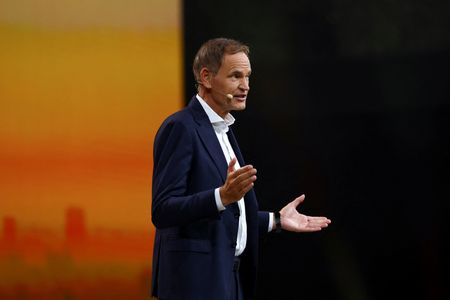
CEO Oliver Blume spoke to workers during a general assembly in Wolfsburg, attempting to address growing speculation about the future of the automaker’s German operations. The company faces mounting pressure from declining profits, reduced demand, and fierce competition, forcing Europe’s largest car manufacturer to consider downsizing its extensive facility network.
“We still have excess capacity at our plants in Europe and Germany. We need to address this in order to remain competitive,” Blume told the assembly, emphasizing there were “currently no plans or discussions with Chinese manufacturers.”
The automotive giant has undergone three years of cost reduction measures, including eliminating 50,000 positions in Germany and implementing cuts across its Audi and Porsche divisions. Blume indicated these measures have strengthened the company for challenging times marked by high tariffs and changing markets.
The CEO warned that European sales would not return to pre-pandemic levels and acknowledged that the company’s traditional approach of manufacturing vehicles in Germany for global export is shifting toward localized production in key markets such as China, where Volkswagen operates through partnerships with local companies.
The automaker has committed to preventing factory shutdowns through agreements with German labor unions and the company’s influential works council.
Last month, Blume mentioned potential solutions including contracts with defense companies or Chinese facility-sharing arrangements, which sparked media speculation about possible partnerships similar to recent agreements between Stellantis and Chinese automakers.
Government officials in Lower Saxony and Saxony have shown support for plant partnerships with Chinese companies, concerned about protecting local industry. However, critics worry that such collaborations could assist Chinese automakers like BYD and Chery in expanding their European market presence.
The company is proceeding with negotiations to sell its northern Germany facility in Osnabrueck to a defense partner. Volkswagen reports achieving cost reductions exceeding 20% on average last year at its Wolfsburg, Emden, and Zwickau plants.
Works council head Daniela Cavallo urged an end to speculation about the German facilities’ future, telling thousands of workers at the assembly: “One gets the impression that Volkswagen is almost a takeover target and needs to be rescued.”
Cavallo encouraged management to concentrate on product success rather than “the umpteenth debate about alleged plant closures or supposed talks with third parties regarding alternative uses for our plants.”