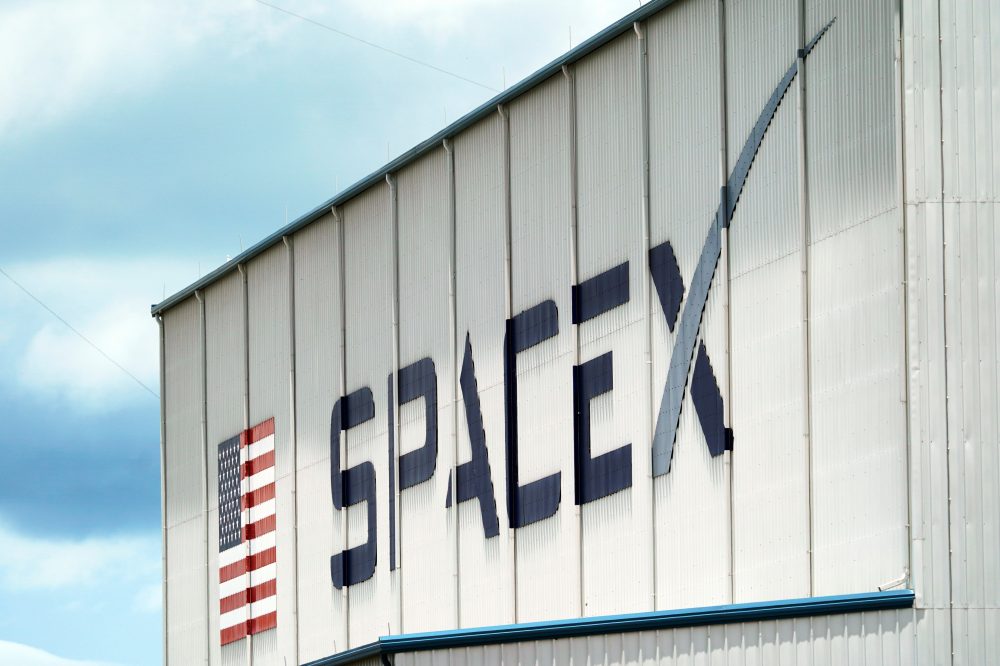

Elon Musk has submitted paperwork for what could become history’s largest initial public offering, seeking to take his rocket company SpaceX public with massive financial backing for his interplanetary ambitions.
The filing, spanning over 250 pages, reveals expenditures on a scale that exceeds some nations’ entire economic output, with plans to expand even further as Musk works toward his goal of transporting humans to other worlds. The public stock offering is expected to raise approximately $75 billion to fund these ambitious space exploration projects.
If successful, this IPO would break all previous records and could potentially make Musk, who already holds the title of world’s wealthiest individual and maintains significant ownership in SpaceX, the planet’s first trillionaire.
The filing reads almost like science fiction as Musk outlines his vision for using rocket technology to prevent human extinction by establishing humanity as a multi-planet civilization.
His roadmap includes initial missions to the moon, followed by potential Mars expeditions, with the ultimate objective of establishing a permanent settlement housing one million residents on the red planet.
Here’s an examination of the remarkable figures underlying Musk’s extraordinary vision.
SpaceX is anticipated to achieve this valuation following its public debut, scheduled for next month. Currently, Nvidia holds the position as the world’s most valuable publicly traded corporation at approximately $5.4 trillion. Nvidia went public in January 1999 and first achieved a market value exceeding $2 trillion in March 2024.
This represents SpaceX’s financial shortfall for the complete 2025 fiscal year. Tesla, Musk’s electric car manufacturer, became publicly traded in 2010 but didn’t achieve yearly profitability until 2020.
This figure represents Elon Musk’s total wealth as of May 20, based on Forbes calculations. Musk maintains substantial shareholdings in SpaceX and is positioned to gain hundreds of billions more through a Tesla compensation agreement, provided he achieves specific financial and operational targets.
Musk controls this percentage of voting authority at SpaceX through his ownership of over 90% of the company’s Class B stock, which provides holders with 10 votes per share. Additionally, he holds a 12% position in Class A shares, which carry single voting rights.
This is the required number of people Musk must establish in a Martian settlement to qualify for a portion of his SpaceX compensation deal. Currently, no technology exists to transport even a single person to Mars, much less one million individuals.
SpaceX must reach this maximum market value for Musk to collect his complete compensation package. He will receive payments incrementally as the company’s market value hits specific benchmarks. For context, Trump’s proposed defense spending for fiscal year 2027 totals $1.5 trillion.
SpaceX currently operates roughly this many Starlink satellites in space. For comparison, UPS reports operating 135,000 delivery vehicles of various types in its fleet, while Delta Air Lines maintains over 1,200 aircraft when including regional partners.
Musk must retain his SpaceX shares for this duration before selling or transferring them. This restriction, known as a lock-up period, prevents company insiders from immediately selling their holdings or cashing out. Other major SpaceX investors face a 180-day waiting period.
The company’s total expenditures in 2025 across all divisions, encompassing rockets, satellites and artificial intelligence development. The connectivity division, which includes Starlink satellites, accounted for the largest portion at slightly under $11.4 billion.
SpaceX purchased this amount in Cybertrucks during 2025 from Tesla, Musk’s other publicly traded enterprise. With a base Cybertruck priced at $69,990, this $131 million expenditure equals 1,871 vehicles. The interconnected nature of Musk’s companies has sparked discussion about a potential Tesla-SpaceX merger.