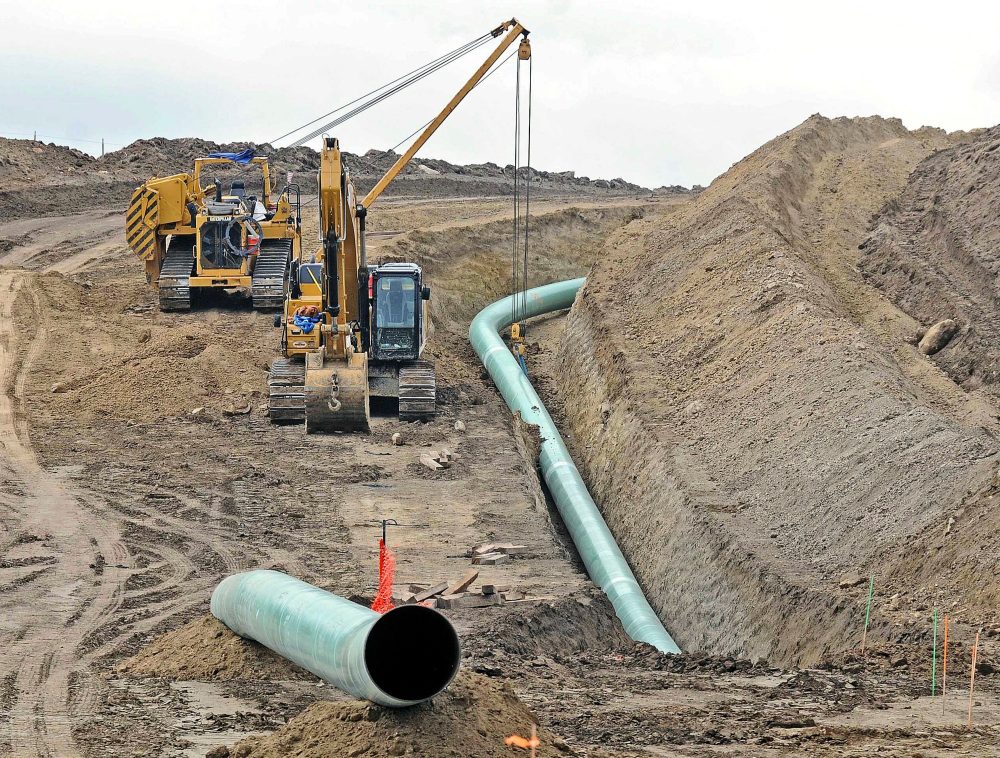

Federal authorities on Thursday granted final permission for the Dakota Access oil pipeline to keep running through its controversial Missouri River crossing, marking the end of a nearly decade-long battle that began with major demonstrations on North Dakota’s plains.
The U.S. Army Corps of Engineers’ approval of the crucial easement allows the pipeline to continue operations while implementing additional requirements for leak detection systems and groundwater oversight, among other measures. This decision concludes a prolonged legal and regulatory battle that originated from demonstrations in 2016 and 2017, although additional court challenges concerning the pipeline are expected.
The multistate $3.8 billion pipeline has transported oil since June 2017, moving crude from North Dakota’s Bakken oil field to an Illinois terminal. The system moves approximately 4% of America’s daily oil production, equivalent to roughly 540,000 barrels per day.
Assistant Secretary of the Army for Civil Works Adam Telle stated the Corps is “decisively putting years of delays to rest and moving out to safely execute this crossing beneath Lake Oahe.”
The pipeline runs beneath the river upstream from the Standing Rock Sioux Tribe’s reservation, which spans both Dakotas. The tribe has consistently fought the pipeline, concerned about potential spills that could pollute their water sources. During 2016 and 2017, thousands gathered for months-long demonstrations near the river crossing location.
The demonstrations led to hundreds of arrests and numerous criminal cases and civil suits, with some proceedings still active, including legal action that could affect environmental organization Greenpeace’s future operations.
Last December, the Corps published its final environmental impact assessment almost six years after a federal judge mandated a more thorough examination of the pipeline’s river crossing. The document supported granting the crossing easement while requiring operational modifications.
New requirements include improved leak detection and monitoring technology, expanded water monitoring for both groundwater and surface sources, and independent expert assessment of detection systems, according to the Corps. Additional conditions mandate studies of ground subsidence conducted alongside affected tribal communities.
The Corps considered multiple alternatives, including removing or abandoning the river crossing section or redirecting the route northward. Officials stated their choice “best balances public safety, protection of environmental resources, and leak detection and response considerations while meeting the project’s purpose and need.”
Pipeline developer Energy Transfer praised the ruling, emphasizing the pipeline’s safe operation for nearly a decade and its importance to national energy infrastructure.
Company spokesperson Vicki Granado expressed gratitude, saying “We want to thank the Corps for the tremendous amount of time and effort put in by so many to bring this matter to a thoughtful close.”
The Associated Press contacted tribal media representatives through text messages and emails and left a voicemail at tribal headquarters. No immediate response was received Thursday.
North Dakota Republican Gov. Kelly Armstrong, Interior Secretary and former North Dakota governor Doug Burgum and U.S. Senators John Hoeven and Kevin Cramer each welcomed the decision to ensure the pipeline continues operating.
The Corps made their announcement while officials and oil industry leaders were meeting for a trade conference in Bismarck.
Energy Transfer and Enbridge are beginning preliminary work on a project to transport approximately 250,000 daily barrels of light Canadian crude through the Dakota Access Pipeline using another pipeline and constructing a 56-mile connector, company representatives confirmed. Enbridge plans to make a final decision around mid-2026.