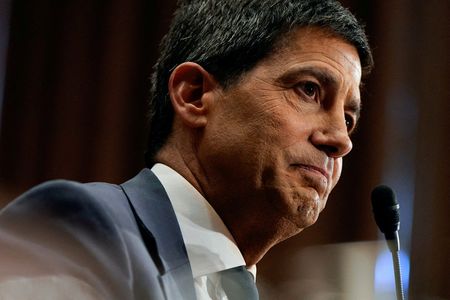

WASHINGTON – Federal Reserve officials are showing their deepest disagreements in decades over interest rate policy, with a detailed account of their disputes set to be revealed Wednesday as Kevin Warsh prepares to take over as the new Fed chair.
The upcoming release of meeting notes from the April 28-29 Federal Reserve session will highlight the sharp split between two camps of officials that Warsh will inherit – one growing group concerned about rising prices from the Iran conflict and opposed to any rate reductions, and another shrinking faction still supporting lower borrowing costs.
Warsh, who will be installed as Fed chair during a White House ceremony on Friday hosted by President Donald Trump, has said he welcomes a “good family fight” and has previously argued for reduced interest rates. Trump, who selected Warsh for the position, has been vocal about wanting significant rate cuts, though he has recently tempered those expectations.
At their most recent gathering, the Federal Open Market Committee kept the benchmark interest rate steady between 3.50% and 3.75%, but saw four members vote against the decision – the highest number of dissenting votes since 1992.
The disagreements went in different directions. Governor Stephen Miran, another Trump selection who will step down Friday to make room for Warsh, once again voted for a rate reduction. Three other officials, however, objected to keeping language in the policy statement that hints at possible future rate cuts.
Those three officials – along with others who have spoken since the meeting – point to inflation running significantly above the Fed’s 2% goal and likely to worsen due to expanding price pressures from the U.S-Israeli-led conflict with Iran. The war has pushed oil prices up more than 50%, and recent consumer and wholesale price data show inflationary pressures spreading beyond energy.
They also highlight steady unemployment levels and two months of better-than-expected job growth as evidence the labor market remains strong without needing lower rates for support.
Wednesday’s minutes will particularly focus on the section describing policy discussions among committee members. The March meeting notes, for example, revealed more officials believed there was justification for “two-sided description of the Committee’s future interest rate decisions in the postmeeting statement,” suggesting more members thought rate increases might be needed if inflation stayed elevated.
“While Wednesday’s minutes are somewhat stale in light of the solid April jobs report and last week’s elevated inflation readings, they will nonetheless be useful for benchmarking the evolving size of the group advocating for more neutral forward guidance,” Deutsche Bank analysts wrote ahead of the release.
“As a reminder, three officials dissented to the slight easing bias in the forward guidance language of the April FOMC meeting statement. Since that meeting, the Fedspeak has moved in a somewhat more hawkish direction.”
Following eight years under Chair Jerome Powell’s leadership, Warsh will lead his first Fed meeting on June 16-17 with no anticipated rate changes, particularly not reductions.
Bond markets in the U.S. and worldwide increasingly expect the Fed and other major central banks will raise rates soon to combat war-related inflation. The 2-year U.S. Treasury yield, which reflects Fed policy expectations, has surged from just under 3.40% on February 27 – the day before U.S. and Israeli airstrikes on Iran began – to a 15-month peak above 4.10% on Tuesday.
A Reuters survey released Tuesday showed economists have significantly shifted away from earlier expectations for rate cuts this year, with less than half now predicting a reduction by December, down from two-thirds just one month ago. About half expect no rate changes this year, while some respondents forecast at least one rate increase.