
Airbus and Boeing have each chartered one of the largest cargo planes on the planet in recent weeks to rush aircraft components to their production facilities — a clear sign that the aerospace industry is still wrestling with supply chain headaches.
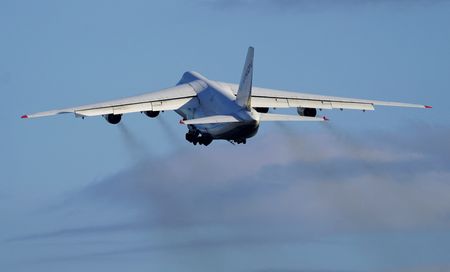
The aircraft being used is the Antonov An-124, a massive four-engine transport plane. According to three industry insiders and two regulatory filings, the jet has been used to airlift parts for Airbus’s A350 wide-body jetliner and the Boeing 767 airframe, which is built as a freighter or military refueling tanker. A similar flight carrying components for the Boeing 777 freighter took place earlier this year.
When asked about the arrangement, a Boeing spokesperson said the company uses “a variety of transportation methods to maintain stability in our production,” but did not specifically address the use of the An-124.
An Airbus spokesperson acknowledged that “we sometimes use the Antonov,” but stopped short of confirming whether any of those flights involved the A350 — its flagship wide-body jet that has already faced delivery setbacks.
The decision to move parts by air rather than by sea or truck is significant. Aerospace manufacturers typically rely on dedicated ocean freight, trucking routes, and converted cargo aircraft to move large components between facilities. Switching transportation methods adds expense and is generally a sign that stockpiles of spare parts have dwindled.
While analysts say aerospace supply chains have broadly improved since the COVID-19 pandemic — with overall aircraft deliveries climbing this year — concerns remain about the health of the aerostructures sector and other components such as cabin seats.
Two industry sources said Airbus’s choice to fly A350 parts was tied to problems at a former Spirit AeroSystems plant in Kinston, North Carolina. Airbus took over that facility last December as part of a joint restructuring of the supplier alongside Boeing. One source noted that when the takeover occurred, parts were being shipped by sea with a buffer stock of four sets on hand. That cushion has since evaporated, forcing the switch to air freight to prevent further delays.
Reuters reported in May that Airbus had already warned some airline customers about new A350 delivery delays later this decade, partly due to difficulties obtaining fuselage sections from the Kinston plant.
“Regarding Kinston, we are making progress towards separation from the previous owner and integration into the Airbus landscape. However it remains a complex multi-year journey to complete,” the Airbus spokesperson said.
Airbus also told analysts during a pre-results briefing on Wednesday that its financial assumptions regarding the cost of absorbing the former Spirit facilities had not changed for 2026.
On the Boeing side, U.S. regulatory filings show the company chartered the same Antonov aircraft in late June to transport two upper fuselage sections from a Daher Aerospace factory in Florida. Those parts would normally travel by road to Boeing’s plant in Everett, near Seattle.
In a June 22 letter to the U.S. Department of Transportation — reviewed by Reuters — Boeing described the parts as “urgently required for the production of the 767,” and warned that “those delays would impose a significant economic cost if not avoided.” Boeing submitted a follow-up letter on July 1 supporting another exemption for the Antonov to carry a similar Daher-made component.
Daher declined to comment on operational matters.
The 767 is no longer manufactured as a passenger aircraft but continues to serve as the basis for U.S. military aerial refueling tankers and is in the final phase of production as a commercial cargo plane.