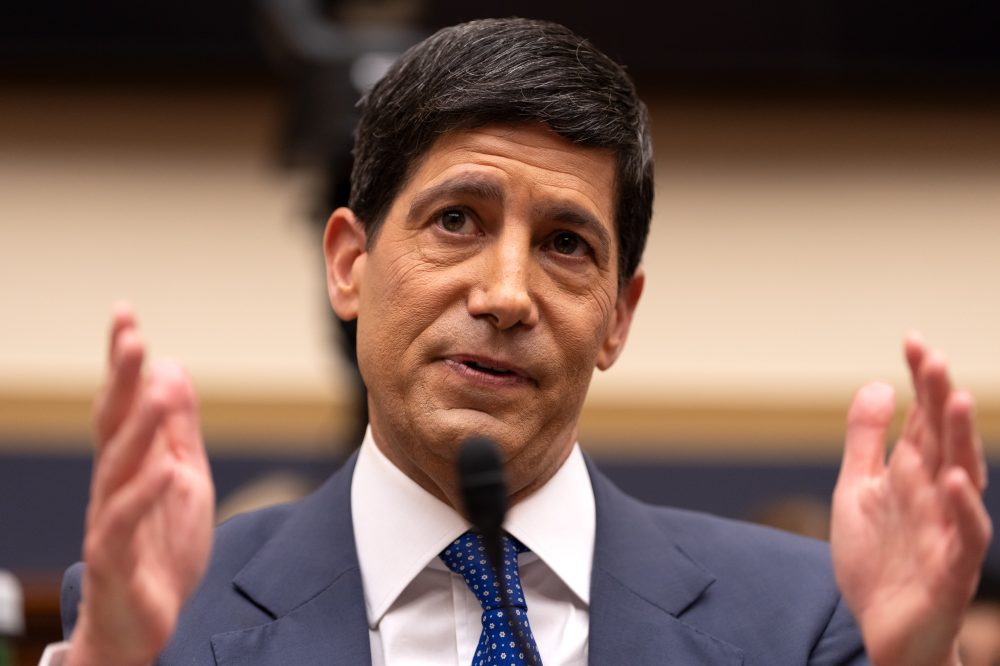

WASHINGTON — Federal Reserve Chair Kevin Warsh spent his second day of congressional testimony Wednesday largely avoiding direct answers to senators’ questions on topics ranging from artificial intelligence’s role in inflation to whether he has spoken with President Donald Trump since taking the job.
Warsh has signaled since assuming the role seven weeks ago that he intends to offer less forward guidance on interest rate decisions than previous Fed chairs. But that approach has left many economic observers frustrated, as he has also steered clear of explaining in broader terms how the central bank might respond to shifts in the economy.
When asked about the potential impact of large-scale AI infrastructure investment on prices, Warsh offered a nuanced but noncommittal response. “I don’t view a one-time change in prices as necessarily being inflationary, because I think there’s a supply response,” he said. “Will it increase measured prices over the course of the next 12 months? I suspect it will be. Whether that’s inflationary or not, that’s up to the Federal Reserve, and we’re going to have something to say about that.”
Warsh also played down encouraging inflation figures released Tuesday and Wednesday. A government report out Wednesday showed that wholesale prices rose more slowly in June. That followed Tuesday’s news that consumer prices actually dropped from May to June — the first such monthly decline in six years. On an annual basis, inflation eased to 3.5% last month, down from 4.2% in May.
Cooler inflation generally eases pressure on the Fed to raise its benchmark interest rate, which is used to slow down borrowing and consumer spending. Despite the positive trend, Warsh struck a cautious tone. “Any central banker would be happy to have data going in the right direction,” he acknowledged, but added that “these are all imperfect measures of the state of underlying inflation.” He said he is relying on a task force he established to evaluate the data sources the Fed currently uses.
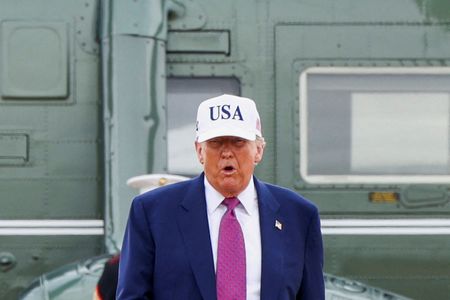
On the question of political independence, Warsh repeated his pledge to act free from outside pressure — including from Trump, who has frequently called for lower interest rates. However, when Sen. Chris Van Hollen, a Democrat from Maryland, asked whether Warsh had been in contact with Trump since his appointment, the Fed chair declined to give a direct answer.
“I don’t want to be in the business of sharing discussions that the president and I have,” Warsh said. He went on to add, “I will tell you what I’ve said to the president repeatedly and said to the Treasury secretary: they chose an independent guy to do the job and that’s exactly what I plan on doing.”
The hearing unfolded against a backdrop of concern over the Fed’s independence. Trump had repeatedly criticized Warsh’s predecessor, Jerome Powell, for not cutting rates aggressively enough. Trump’s administration also launched an inquiry into brief Senate testimony Powell gave regarding a Fed building renovation — a move that sparked widespread alarm about potential political interference with the central bank.