ANNAPOLIS, Maryland — The Maryland Department of Agriculture (MDA) is calling on those involved in the state’s seafood industry to make their voices heard at a series of upcoming public meetings.
Harvesters, processors, restaurant owners, distributors, and other stakeholders connected to Maryland’s seafood trade are all encouraged to attend and share their thoughts on what’s working — and what isn’t — when it comes to promoting and marketing the state’s seafood products.
The MDA is organizing these sessions in collaboration with the Maryland Department of Natural Resources. Officials say the meetings are designed to capture a wide range of perspectives from across the industry on both the hurdles and the possibilities tied to seafood marketing in Maryland.
Further details on meeting dates, times, and locations were expected to be released through official MDA channels.
Seventeen downtown organizations across the First State are now holding national designations after the Delaware on Main Street Program presented them with certificates of recognition.
The Delaware on Main Street Program, which operates within the Delaware Division of Small Business, awarded the certificates of accreditation or affiliation to the 17 community organizations on behalf of Main Street America.
A potentially historic heat wave is set to build across the Northeast and Mid-Atlantic beginning Wednesday and lasting into the holiday weekend, with dangerous heat and humidity creating a significant risk for heat-related illness.
Strong high pressure in the mid-levels of the atmosphere is developing across the Mississippi Valley, Great Lakes and Ohio Valley early this week. That ridge will expand eastward into the Mid-Atlantic by Wednesday and remain in place through at least Saturday. This setup will allow temperatures to surge well above normal, with some locations potentially challenging all-time record highs Thursday and Friday.
High temperatures are expected to climb into the mid and upper 90s on Wednesday before reaching the 100 to 105 degree range Thursday and Friday. Heat index values will likely range from 100 to 110 degrees Wednesday, then increase greater than 110 degrees by Thursday and Friday.
The most intense heat is expected Thursday and Friday as winds shift more west to northwest. That flow will allow for better mixing of the lower atmosphere, lowering dew points somewhat during the afternoon but also helping temperatures climb even higher. Downsloping winds off the Appalachians may add additional warming, making this the type of pattern capable of producing record-breaking heat across the region.
The National Weather Service has upgraded the Extreme Heat Watch to an Extreme Heat Warning for southeastern Pennsylvania, northern Delaware and portions of New Jersey from Wednesday afternoon through Saturday. This includes areas where confidence is highest that heat index values will reach dangerous levels over multiple days.
For far southern New Jersey, the New Jersey barrier islands and Delmarva, an Extreme Heat Watch remains in effect from Thursday afternoon through Saturday. Heat index values may approach 100 degrees on Wednesday, but the more dangerous heat is expected to arrive Thursday and continue into Saturday.
While temperatures may ease slightly by Saturday, the heat will still be dangerous. Highs are forecast to remain in the mid 90s to near 100 degrees, with heat index values around 100 to 110 degrees. Even if some locations fall short of warning criteria by Saturday, the cumulative impact of several days of extreme heat will increase the risk for heat exhaustion and heat stroke, especially with outdoor holiday events and travel underway.
Some relief is expected by Sunday and Monday as the ridge begins to weaken and retreat southwest. However, highs may still remain in the low to mid 90s, with heat index values in the mid 90s to low 100s. The pattern change may also bring increasing chances for showers and thunderstorms during the holiday weekend.
This will be a high-impact heat event. Limit time outdoors during the afternoon and early evening, drink plenty of water, check on vulnerable neighbors and relatives, and never leave children or pets inside vehicles. Outdoor workers and anyone attending holiday events should take frequent breaks in shade or air conditioning.
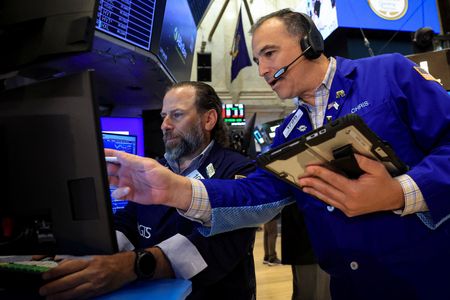
WASHINGTON — Despite the economic turbulence triggered by the ongoing Iran war, the U.S. job market is holding its ground. New federal data shows that job openings across the country remained at a robust 7.6 million in May, far exceeding analyst expectations of just 7 million openings.
The Bureau of Labor Statistics released the figures Tuesday, which also showed that layoffs increased somewhat during the month. Meanwhile, the number of workers voluntarily leaving their jobs — typically viewed as a signal that employees feel confident about finding new work — edged up only slightly.
The economic backdrop has been challenging. After the United States and Israel launched an attack on February 28th, Iran struck back by shutting down the Strait of Hormuz — a critical global shipping passage through which roughly one-fifth of the world’s oil and natural gas flows. That closure sent energy prices surging, adding more financial pressure on American families already struggling with the high cost of living.
Even so, the labor market has continued to recover from a difficult 2025. Over the first five months of this year, U.S. employers have been adding an average of nearly 114,000 jobs per month — a dramatic turnaround from 2025, when monthly job gains averaged just 9,700, the weakest hiring pace outside of a recession since 2002.
Analysts point to several factors that weighed on hiring last year, including high interest rates and uncertainty surrounding President Donald Trump’s economic policies. This year, Trump’s tax cuts and the country’s status as an energy producer have helped cushion the blow from the conflict abroad.
All eyes now turn to Thursday, when the Labor Department is set to release its June jobs report. Economists anticipate it will show that employers across the public and private sectors added roughly 100,000 positions, with the unemployment rate holding steady at 4.3%.
Experts note that the number of jobs needed each month to keep unemployment stable has dropped significantly. With baby boomers retiring in large numbers and fewer immigrants entering the workforce due to federal crackdown policies, there is less competition for available jobs. Economists suggest the so-called “break-even” hiring rate — the number of jobs needed just to keep unemployment from rising — could now be as low as zero per month, compared to roughly 150,000 a year ago.
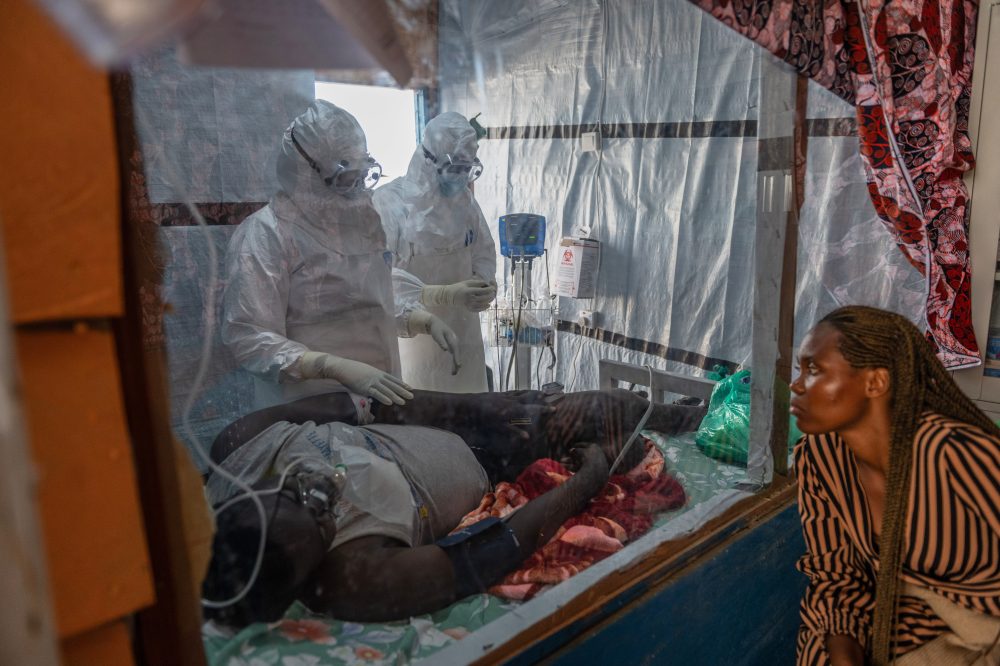
KINSHASA, Congo — Opposition groups and civil society organizations in Congo are speaking out against a newly imposed government ban on public demonstrations and mass gatherings in the capital and other regions far from the country’s growing Ebola crisis, claiming the move is designed to silence political opposition.
The ban was announced over the weekend as a deadly Ebola outbreak — caused by a strain with no approved treatment or vaccine — continues to worsen. So far, 1,307 people have been infected and 377 have died across three provinces in eastern Congo. Health officials fear this could become the deadliest Ebola outbreak in history.
On Saturday, Congo’s ministry of interior declared that gatherings and demonstrations were prohibited in the provinces of Kinshasa, Tshopo, Haut-Uele and Bas-Uele, citing concerns about the outbreak potentially spreading to new areas. None of those provinces currently have any confirmed Ebola cases.
In a separate development, the mayor of Goma — eastern Congo’s largest city, now under the control of the Rwanda-backed M23 rebel group — also issued a ban on public gatherings and demonstrations on Monday, including celebrations tied to sporting events. Congo is currently participating in its first World Cup in more than half a century.
Congo’s political opposition has called the ban unconstitutional. Prince Epenge, the spokesperson for the Lamuka coalition, stated that the ban appears aimed at stopping a planned demonstration in the capital, Kinshasa, scheduled for early next month. That protest was set to oppose proposed constitutional changes that would allow President Felix Tshisekedi to seek a third term in office.
Civil society organizations also issued a statement Monday condemning the ban, invoking the rights to free speech and freedom of assembly.
During a televised address Monday evening, Tshisekedi unveiled a $319 million plan to combat the Ebola outbreak. He urged citizens to follow health guidelines, report suspected cases, and reject misinformation — but made no direct mention of the gathering bans.
“Ebola is neither a rumor nor a source of shame,” Tshisekedi said. “It is a health emergency that demands responsibility, solidarity, and truth.”
Health workers operating in the affected areas of Ituri, North Kivu and South Kivu provinces have encountered skepticism from some residents, and there have been reports of attacks on medical personnel.
The virus has also crossed Congo’s borders, with cases confirmed in neighboring Uganda and one case reported in France involving a doctor who had recently returned from Congo.
On Tuesday, the United Nations released a report warning that if Ebola spreads to additional neighboring countries — including Rwanda and Angola — the economic toll on Africa could reach $3.6 billion, with as many as 328,000 jobs lost.
More than a month since the outbreak began, officials acknowledge that the response has not kept pace with the virus. Authorities have yet to identify the original patient and continue to struggle with contact tracing.
The World Health Organization has also raised alarms that ongoing rebel violence in eastern Congo is hampering efforts to contain the outbreak. In Ituri province, attacks by the Allied Democratic Force — a group with ties to the Islamic State — have cut off access to numerous villages and driven residents from their homes, adding pressure to already overcrowded displacement camps.
NAIROBI, Kenya — Inside Kenya’s largest mental health referral hospital, male patients are receiving an unexpected but powerful form of care: a free grooming session from two visiting barbers.
The moment the barbers begin setting up their equipment, a wave of excitement moves through the ward. Patients line up eagerly, each one looking forward to their turn in the chair.
Healthcare professionals say that personal grooming is a meaningful part of the healing process. One of the signs that someone may be struggling with mental illness is a loss of interest in their own hygiene and self-care.
Reliable data on mental illness in Kenya remains scarce, but the country’s 2015 Mental Health Policy estimated that roughly 25% of outpatients and 40% of inpatients across all health facilities experience some form of mental health condition.
Experts in the field say depression and anxiety are among the most frequently seen conditions, while substance use disorders — especially among men — continue to pose a significant challenge.
June is recognized as Men’s Mental Health Awareness Month. Francis Kabugua, a nursing officer at Mathari National Teaching and Referral Hospital in Nairobi, is urging men to talk openly about what they are going through rather than turning to alcohol or other substances as a way to cope.
“Among the things that you may see a person with depressive disorders is segregating themselves or separating themselves from the members of the family. They start also not providing for the family,” Kabugua said.
The free grooming program was created by Sheila Lugaliki, who founded a community-based organization called Uniquely Gifted. Lugaliki said her own experience as a patient in a psychiatric ward motivated her to launch the monthly service.
Her goal, she explained, is for each haircut to restore a sense of dignity, build confidence, and remind patients that they matter — rather than leaving them feeling forgotten.
“You find someone has been admitted for six months and yet no one has groomed their hair. How they look really does not reflect how they are feeling,” she said.
Psychiatric nurse Titus Enko echoed that sentiment, saying grooming directly supports patients’ self-esteem and plays a role in their broader recovery.
“More often we only think about medication, psychotherapy, and we tend to overlook the other part, which is the personal grooming. Many times, someone neglects themselves and they start not taking a shower or they don’t dress well. And personal grooming is an indication that someone is either doing good or they’re not doing okay,” Enko said.
As barbers worked their way through the ward, trimming beards and cutting hair, one patient captured the mood in a single word — he said the experience made him feel “alive.”
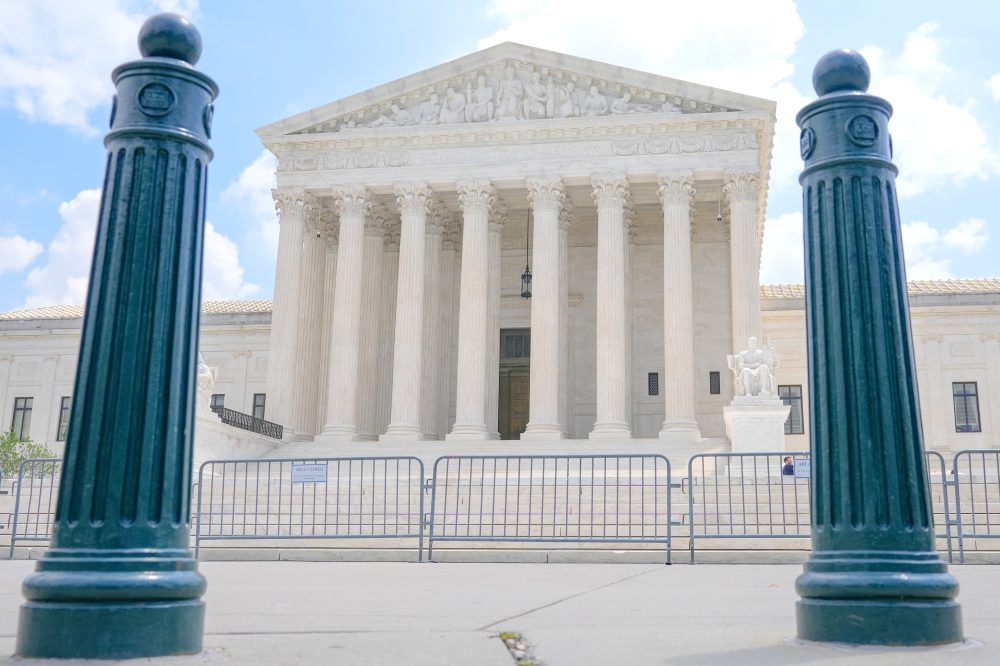
WASHINGTON — The U.S. Supreme Court ruled Tuesday that states have the right to prohibit transgender girls and women from participating on school athletic teams, marking yet another legal defeat for transgender Americans.
The court’s conservative majority determined that athletic bans enacted in Idaho and West Virginia do not conflict with the Constitution or Title IX — the federal law that forbids sex-based discrimination in educational settings.
More than two dozen other Republican-led states have passed similar bans, and legal experts expect Tuesday’s decision will apply to those laws as well.
Still unresolved are separate legal challenges to laws and regulations in Connecticut, California, and other states that allow transgender athletes to compete in accordance with their gender identity.
At the center of the West Virginia case is Becky Pepper-Jackson, a 16-year-old high school sophomore from Bridgeport, West Virginia. She has been on puberty-blocking medication, has publicly identified as a girl since the age of 8, and holds a West Virginia birth certificate that recognizes her as female. She is the only transgender person known to have sought to compete in girls’ sports in the state.
Pepper-Jackson’s athletic career has seen notable growth — she went from running near the back of the pack in middle school cross-country to winning a statewide shot put championship, finishing two feet ahead of the second-place competitor at last month’s West Virginia championship meet.
The Idaho case centers on Lindsay Hecox, who filed suit over that state’s first-in-the-nation ban after seeking to try out for the women’s track and cross-country teams at Boise State University. Her attorney, Kathleen Hartnett, told the court during January arguments that Hecox did not make either team because “she was too slow,” though she did compete in club-level soccer and running.
Well-known figures in women’s sports have taken opposing sides on the issue. Tennis legend Martina Navratilova, swimmers Summer Sanders and Donna de Varona, and beach volleyball player Kerri Walsh Jennings have voiced support for the state bans. Meanwhile, soccer stars Megan Rapinoe and Becky Sauerbrunn, along with basketball players Sue Bird and Breanna Stewart, have stood behind transgender athletes.
The court’s conservative wing has been steadily narrowing protections for transgender Americans. While the Supreme Court ruled in 2020 that LGBTQ employees are shielded from sex discrimination under federal civil rights law — finding that “sex plays an unmistakable role” when employers penalize transgender workers — the six conservative justices declined last year to extend that same reasoning when they upheld state bans on gender-affirming medical care for transgender minors.
States backing the athletic bans argued there is no basis for applying the workplace discrimination ruling to Title IX. Idaho’s state Solicitor General Alan Hurst argued that the law is “necessary for fair competition because, where sports are concerned, men and women are obviously not the same.”
Attorneys representing Pepper-Jackson acknowledged that such distinctions can be reasonable in general but contended that their client holds none of those physical advantages due to the particular circumstances of her early transition. In the Idaho case, Hecox’s legal team had asked the court to dismiss the matter entirely, since she had already pledged not to seek a spot on women’s teams.
NCAA president Charlie Baker told Congress in 2024 that he was aware of only 10 transgender athletes among more than half a million students competing on college sports teams. Despite those small numbers, the topic has taken on enormous political and cultural weight.
Following an executive order signed by President Donald Trump aimed at blocking transgender women from women’s sports, both the NCAA and the U.S. Olympic and Paralympic Committees moved to ban transgender women from competing in women’s athletic events.
Public opinion surveys show broad support for the restrictions. An Associated Press-NORC Center for Public Affairs Research poll from October 2025 found roughly 6 in 10 American adults either “strongly” or “somewhat” favored requiring transgender children and teenagers to compete only on teams matching the sex assigned at birth. About 2 in 10 were opposed, and approximately one-quarter had no opinion.
According to the Williams Institute at the UCLA School of Law, approximately 2.1 million adults — about 0.8% of the U.S. population — and 724,000 people between the ages of 13 and 17, or 3.3% of that age group, identify as transgender in the United States.
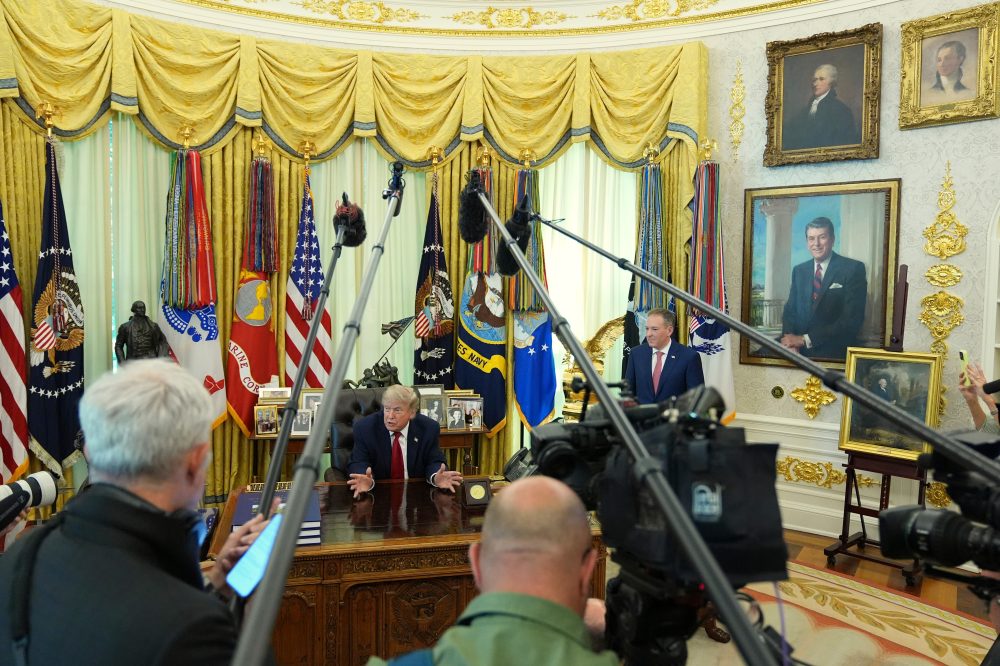
It has now been 123 days since the United States and Israel launched the Iran war, and the world is once again watching as another round of diplomatic talks takes shape. President Donald Trump and Iranian officials remain at odds over the terms and even the format of any communication going forward.
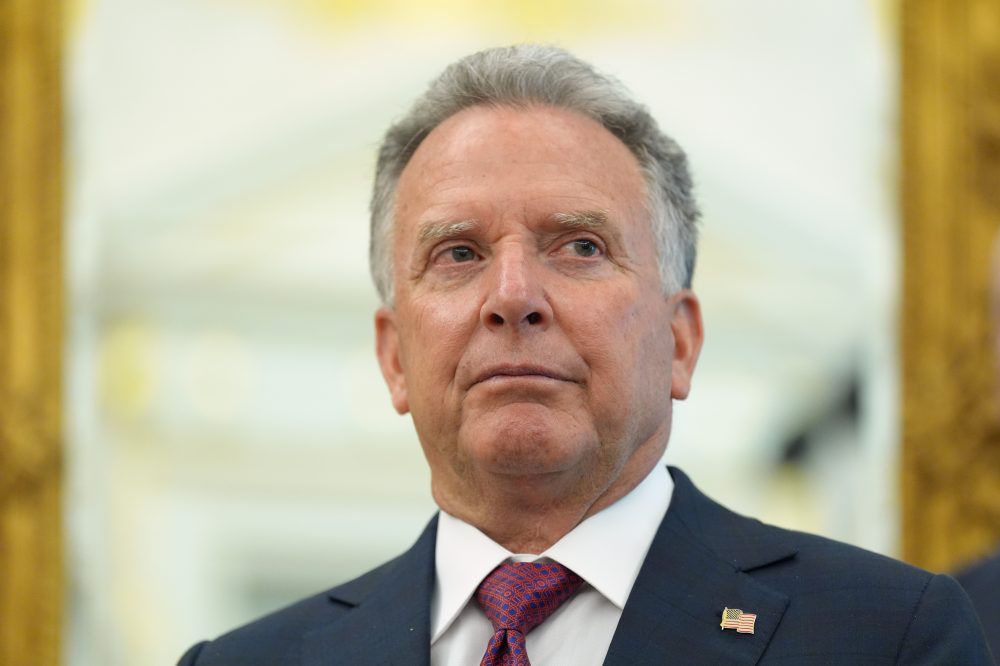
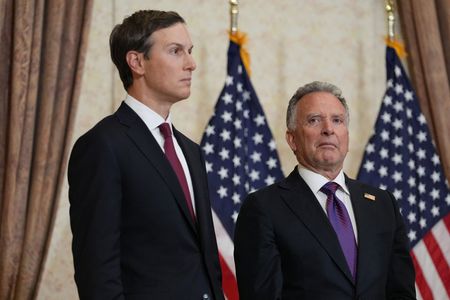
Trump’s special Mideast envoy Steve Witkoff and son-in-law Jared Kushner are scheduled to meet with Qatari mediators to discuss putting an initial deal into effect to end the war in Iran — this following additional military exchanges in the Persian Gulf. Rather than sitting down directly with Iranian diplomats, the American side will rely on go-betweens. Majed al-Ansari, a spokesman for Qatar’s Foreign Ministry, confirmed that arrangement.
Iran is also sending a delegation to Qatar but has made clear it has no intention of meeting with the American side at any level. Iran’s Foreign Ministry spokesman Esmail Baghaei made that statement, though it left open the possibility that messages could be relayed through Qatari channels.
Meanwhile, a new survey from The Associated Press-NORC Center for Public Affairs Research — conducted ahead of the nation’s 250th birthday — paints a divided picture of how Americans feel about the flag. About 7 in 10 Republicans and roughly 6 in 10 Americans aged 60 and older say they fly the flag at least during holidays. In contrast, about 6 in 10 Democrats and independents say they never display it — a figure that climbs to 75% among Democrats under the age of 45.
Racial differences are also stark. Only about 3 in 10 Black adults say they ever display the American flag, compared to approximately half of white and Hispanic adults. Whether people view the flag as a unifying or divisive symbol appears to reflect broader differences in how Americans view their country’s history and achievements. The survey included 2,596 adults and was conducted April 16 through 20.
On the legal front, the Supreme Court ruled Monday that the Federal Reserve holds a unique level of independence from the presidency — unlike other federal agencies. In a 5-4 decision, the court determined that the president cannot remove members of the Fed’s board of governors without sufficient cause. The ruling came amid an ongoing clash between the Fed and President Trump, who has repeatedly called on the central bank to cut its key interest rate to reduce borrowing costs for homeowners, businesses, and the government. Trump had sought to remove Fed governor Lisa Cook last August, accusing her of mortgage fraud — a charge she denies. While the court preserved the Fed’s independent structure, it has allowed the president to fire leaders of other agencies, such as the Federal Trade Commission, at will.
Also Monday, Trump announced he will nominate Keith Sonderling to serve as secretary of labor. Sonderling has been serving as the agency’s acting director for two months, following the resignation of Lori Chavez-DeRemer amid abuse-of-power allegations. Sonderling previously served as deputy labor secretary and as a Republican member of the Equal Employment Opportunity Commission. In a Truth Social post, Trump wrote: “Throughout his career, Keith has proven his dedication to delivering strong results for the Hardworking People of our Country, and I know he will do an incredible job in his new role.” The nomination still requires Senate confirmation. During Trump’s second term, Sonderling has also served as acting director of the U.S. Office of Government Ethics and the Institute of Museum and Library Services, one of several agencies Trump targeted for closure through an executive order.
The Supreme Court is also expected to rule this week on several other major cases, including the constitutionality of Trump’s executive order restricting birthright citizenship for children born to parents who are in the country illegally or on a temporary basis. Also pending are cases involving transgender girls and women playing on public school and college sports teams in West Virginia and Idaho, two election-related cases involving mailed ballot deadlines and limits on political party spending, and a dispute over so-called geofence warrants that use cellphone location data to identify individuals near crime scenes.
The United States Supreme Court has issued a ruling upholding bans that bar transgender athletes from taking part in women’s and girls’ sports competitions.
Justice Brett Kavanaugh, who has a longstanding personal involvement in coaching girls’ basketball teams — including teams on which his own daughters have played — authored the majority opinion for the court.
The Trump administration announced Tuesday that it is cutting off federal funding to New York’s Medicaid fraud unit, claiming the unit has fallen short on performance — a decision that could threaten the state’s ability to receive federal healthcare funding for low-income residents.
In a letter sent to Attorney General Letitia James, the U.S. Department of Health and Human Services stated that New York has trailed behind other large states in the number of criminal cases pursued in recent years.
James is responsible for overseeing the Medicaid Fraud Control Unit, which investigates and prosecutes fraud committed by healthcare providers.
While HHS acknowledged that the unit has performed well in civil cases and shown some recent improvement in criminal cases, the department concluded that the progress was insufficient and denied the unit its federal certification.
Vice President JD Vance is leading the interagency effort to crack down on fraud that resulted in this decision. The former Ohio senator is considered a potential contender for the Republican presidential nomination in 2028.
New York is not the only state facing this situation. Earlier this month, HHS also pulled funding from Hawaii’s Medicaid fraud unit. Hawaii has since requested that the decision be reconsidered.
States that lose their federally certified Medicaid fraud units risk losing access to their broader Medicaid funding altogether.
Approximately 6.4 million New Yorkers are currently enrolled in Medicaid, the federal-state health insurance program designed to assist low-income Americans.
Just last week, James announced the arrest of a man accused of carrying out a $9 million Medicaid fraud scheme. Her office also reported that the state recovered $627.8 million through Medicaid fraud cases between 2019 and 2025.
Ocean City, Maryland is welcoming summer with an action-packed July schedule, centered around the nation’s 250th birthday and a spirit of community celebration.
The coastal resort town announced its July calendar on June 30, 2026, highlighting a landmark Independence Day event on July 4th as the centerpiece of the month’s festivities.
The celebration is designed to honor the United States’ 250th anniversary while also spotlighting the best that Ocean City has to offer — bringing together locals and visitors in a star-spangled tribute to the country’s milestone birthday.
Organizers are encouraging everyone to come out, enjoy the summer sunshine, and be part of what promises to be a memorable month along the Maryland shore.
The Worcester County Board of Electrical Examiners has announced that its upcoming meeting, originally scheduled for July 14, 2026, will not take place.
The session had been planned for 3:00 p.m. at the Worcester County Government Center, Meeting Room 1102, located at 1 West Market Street in Snow Hill, Maryland.
An agenda for the July 14 date had been made available through the county. Residents seeking additional information can visit the Worcester County events calendar online.
A horse named C Millertimeagain picked up his sixth career win Monday evening at Harrington Raceway, taking the top spot in one of three Delaware Standardbred Breeders’ Fund (DSBF) divisions for 3-year-old male pacers.
The race, worth $20,000, was completed in a time of 1:51.4, with driver Corey Callahan guiding the gelding to victory. C Millertimeagain returned $2.10 to win bettors.
The horse is owned by Ervin Miller, James Frawley, and James Knowlton. C Millertimeagain is a gelding by Roddy’s Bags Again.
The race took place on Monday, June 29, as part of the ongoing DSBF stakes series at Harrington Raceway in Delaware.
Ja Morant is on his way to Portland after the Trail Blazers and Memphis Grizzlies finalized a trade on Monday. The deal gives the two-time All-Star a fresh start and allows Memphis to begin rebuilding. Portland is sending Jerami Grant and Kris Murray to the Grizzlies as part of the agreement. The move is considered a bold gamble by Portland and could signal more roster changes ahead. Morant joins a crowded point guard situation that already includes Jrue Holiday, Damian Lillard, and Scoot Henderson.
Paraguay Stuns Germany at 2026 World Cup
FOXBOROUGH, Mass. — In one of the biggest surprises of the 2026 World Cup, Paraguay defeated Germany 4-3 in a penalty shootout after the two teams played to a 1-1 draw through extra time. José Canale converted the decisive sudden-death penalty, while goalkeeper Orlando Gill came up with two crucial saves during the shootout. Paraguay grabbed the lead when Julio Enciso headed in a goal late in the first half, but Kai Havertz equalized in the 52nd minute for four-time champion Germany. Paraguay will now face the winner of Tuesday’s contest between France and Sweden in the round of 16 on Saturday in Philadelphia.
Morocco Eliminates Netherlands in Shootout
GUADALUPE, Mexico — Morocco advanced past the Netherlands with a 3-2 penalty shootout victory following a 1-1 draw, sending the Dutch to their earliest World Cup exit ever. Ismael Saibari scored the winning penalty, while goalkeeper Yassine Bounou made a critical save — batting away Crysencio Summerville’s attempt with his left hand — when the shootout was knotted at 2-2. The Netherlands had reached at least the round of 16 in each of their previous 11 World Cup appearances, including a semifinal run four years ago when Morocco also made a deep run. Morocco will take on Canada in the round of 16 on Saturday in Houston.
U.S. Team Riding High Heading Into Knockout Rounds
IRVINE, Calif. — The United States men’s national team is brimming with confidence as it heads into the World Cup knockout stage. U.S. captain Tim Ream acknowledged that his teammates are well aware of the historic opportunity before them on home soil. Rather than feeling weighed down by the heightened expectations, the Americans appear to be drawing energy from the moment. The U.S. enters as a heavy favorite against Bosnia-Herzegovina in the round of 32 — notable in itself, given that the team has won just one knockout-round match in its entire World Cup history.
Dangerous Heat Dome to Impact World Cup Host Cities
LOS ANGELES — As the World Cup moves into its knockout rounds, a hazardous heat dome is expected to blanket much of the central and eastern United States this week. Temperatures could feel as hot as 110 degrees Fahrenheit in some locations. Host cities including Boston, Philadelphia, and Kansas City, Missouri are all expected to see well above-average heat. Concerns are growing about the safety of both players and fans. Players will have access to medical personnel, three-minute cooling breaks during each half, and other protective measures. Fans are urged to stay hydrated, seek shade or air conditioning, and limit time in direct sunlight.
LeBron James Steals Spotlight as NBA Free Agency Opens
LeBron James is once again dominating the conversation as NBA free agency gets underway Tuesday evening. Sixteen years after his high-profile move to Miami, James’ next decision is drawing enormous attention. Retirement appears unlikely, meaning he could return for a record 24th NBA season. Possible destinations include staying with the Lakers, returning to Miami or Cleveland, or potentially joining Golden State. Draymond Green has already declined his player option with the Warriors, a move that some believe could be aimed at attracting James. Meanwhile, trades and signings are already reshaping rosters around the league with more moves expected in the days ahead.
Detroit Lions Release Cornerback Terrion Arnold After Arrest
The Detroit Lions announced Monday that they have cut cornerback Terrion Arnold from the roster. The move came just days after Arnold was arrested on allegations that he arranged the abduction and beating of three men whom prosecutors believe he suspected of stealing luxury items and $100,000 in cash from him. The team made the announcement via the X social media platform without providing a specific reason. The release came on the same day a Florida judge set Arnold’s bail at $1 million. Prosecutors allege the three victims were held at gunpoint and robbed inside a Tampa apartment back in February.
Former NBA Players Beasley and Davis Indicted in Gambling Probe
Former NBA players Malik Beasley and Ed Davis have been formally charged as part of the federal government’s ongoing gambling investigation. Authorities allege that Beasley deliberately altered his performance while playing for the Milwaukee Bucks in 2024 in order to benefit bets placed on his statistics, with Davis among those who profited. A total of six individuals were named in the indictment, which was filed in Brooklyn. Prosecutors say the scheme involved hundreds of thousands of dollars. Attorneys for Beasley and Davis had not yet issued any public response.
Serena Williams Returns to Wimbledon Centre Court
LONDON — Excitement is building at Wimbledon ahead of Serena Williams’ first singles appearance in nearly four years. The 44-year-old Williams is scheduled to face 20-year-old Australian Maya Joint on Tuesday in the third match on Centre Court. All England Club chief executive Sally Bolton expressed the widespread enthusiasm, saying, “I think everyone’s feeling the same way: Cannot wait to be watching Serena back on Centre Court again.” Bolton added, “She is such an icon of the sport and particularly here at the championship she’s one of our most special champions. So it really will be the ticket to have tomorrow when she walks back on Centre Court.”
Deion Sanders Says He Considers Himself Cancer-Free
BOULDER, Colo. — University of Colorado football coach Deion Sanders says he feels like a younger version of himself following surgery last year to remove his cancerous bladder. He credits robotic surgery — a less invasive procedure that rebuilt his bladder using a portion of his intestine — with his recovery. Sanders recently opened up about the experience, emphasizing the advantages of the surgical approach and how it accelerated his healing. He had missed football camps the previous year while undergoing cancer treatment. Now back on the field overseeing offseason workouts, Sanders says, “I consider myself cancer-free.”
Saudi Foreign Minister Prince Faisal bin Farhan touched down in Beijing on June 30 for a two-day official visit aimed at strengthening ties between the two nations, boosting economic cooperation, and addressing growing security concerns in the Middle East.
The visit was arranged at the invitation of Chinese Foreign Minister Wang Yi. Among the top priorities are advancing Saudi Arabia’s Vision 2030 development program and expanding the already substantial trade and investment relationship between the two countries.
Security in the region is expected to be a central topic of conversation. Ongoing tensions between the United States and Iran, along with recent disruptions in the Strait of Hormuz — a critical passageway for global energy supplies — have raised concerns about stability in the area. As one of the world’s top consumers of Middle Eastern energy, China has a strong interest in keeping that shipping route open and functioning.
On the economic front, officials from both sides are set to review a bilateral trade relationship valued at approximately $106.1 billion. Discussions will also touch on energy investments, industrial partnerships, and plans to better connect Saudi Vision 2030 with China’s Belt and Road Initiative — a sweeping global infrastructure and development strategy.
The talks are scheduled to wrap up on July 1.
This visit comes as the relationship between Riyadh and Beijing continues to deepen. China stands as Saudi Arabia’s largest trading partner, with total bilateral trade surpassing $107 billion. Joint efforts between the two nations have expanded across sectors including green energy, infrastructure development, and technology, all under the umbrella of their shared strategic frameworks.
American and Iranian officials are giving sharply different accounts of whether a high-stakes diplomatic meeting was scheduled to take place in Doha on Tuesday to work out the details of a recently signed memorandum of understanding aimed at ending the ongoing regional conflict.
President Donald Trump broke the news of the proposed talks in a Monday post on Truth Social, writing, “Iran has requested a meeting. It will take place tomorrow in Doha!” White House spokeswoman Karoline Leavitt later confirmed to Fox News that the administration intended to send senior envoys Steve Witkoff and Jared Kushner to attend what she called “high-level” meetings in the Qatari capital.
Tehran pushed back sharply, publicly disputing the American version of events and insisting no such meeting had been arranged. “No technical meetings of the working groups are planned for this week,” Deputy Foreign Minister Kazem Gharibabadi stated, according to Iranian state television. His reference to “this week” reflected the Iranian calendar, which runs through Friday.
Qatar has been playing a key mediating role in the ongoing diplomatic effort between Washington and Tehran, alongside Pakistan, as both nations work toward ending the Middle East conflict. The most recent round of formal negotiations took place in Switzerland on June 21 and brought together delegations from the United States, Iran, Qatar, and Pakistan.
The confusion over the Doha meeting emerged in the aftermath of renewed hostilities over the weekend in the Strait of Hormuz. Iran launched attacks against commercial ships, drawing retaliatory US military strikes, which were then followed by further Iranian military action. The back-and-forth fighting disrupted shipping traffic through the critical waterway, causing shipping companies to slow operations and reassess the risks. Both sides eventually agreed to stand down and return to the negotiating table.
Israeli officials are speaking out strongly against a rabbi who publicly cursed the country’s top military commander during an anti-conscription demonstration held Monday in Bnei Brak.
Rabbi Aryeh Yazdi drew immediate backlash after calling for IDF Chief of Staff Eyal Zamir’s memory to be “erased” and accusing the Israeli military of promoting behavior that violates Jewish religious law. His remarks came as hundreds of haredi, or ultra-Orthodox, men gathered to oppose mandatory military conscription.
Standing before the crowd, Yazdi declared, “The cursed chief of staff, may his name and memory be erased, sent a soldier to prison…” He went further, labeling Israel an “impure country” for maintaining an army that, in his words, “educates for the most severe offenses in the Torah.”
The phrase “may his name and memory be erased” holds deep and grave meaning in Jewish tradition — it is typically reserved for the worst enemies of the Jewish people and those considered to have committed the most serious offenses imaginable.
Gadi Eisenkot, head of Yashar!, wasted no time in denouncing the speech, describing it as “wild incitement” and “a reckless crossing of a red line that effectively endangers the lives of IDF commanders and soldiers.”
President Isaac Herzog also weighed in with a firm rebuke, stating, “Even in times of deep division, there is no place for curses, insults or degrading language, especially when it concerns the supreme commander of the IDF and our soldiers, our sons and daughters.”
Yazdi’s speech focused primarily on his opposition to requiring ultra-Orthodox men to serve in the Israeli military. Beyond criticizing Zamir for jailing a soldier, he argued that an army he believes promotes violations of Torah law makes Israel unworthy of being called a pure nation.
NICOSIA, Cyprus — Natural gas from two underwater deposits found by ExxonMobil in waters off Cyprus could be flowing to market as early as 2033, a top company official announced Tuesday. The development could help transform the eastern Mediterranean island into a key energy supplier for Europe.
ExxonMobil’s Vice President of Global Exploration John Ardill said the company and its consortium partner, QatarEnergy, believe the most practical route to market would be sending the gas through a pipeline to existing processing facilities in Egypt, where it could be liquefied and then exported. Other possibilities — such as building onshore infrastructure in Cyprus or a floating facility above the deposits — have been ruled out for now due to high costs.
“Everything you’ve seen between the government of Cyprus and the government of Egypt gives us a lot of confidence that there’s good government to government coordination, the agreements in place to leverage that eastern Mediterranean energy hub concept,” Ardill said.
His remarks came after ExxonMobil and QatarEnergy signed an agreement with Cyprus formally declaring the two deposits commercially viable. The fields — named Glaucus and Pegasus — sit within Block 10 of Cyprus’s exclusive economic zone and are estimated to contain a combined 7 trillion cubic feet of natural gas.
Ardill said the consortium is also looking to expand its footprint in the region, expressing interest in exploring a block on the southwestern edge of the exclusive economic zone that sits next to an area where the consortium already holds drilling licenses. He added that additional drilling at the Pegasus deposit is planned for around the end of this year to gather more critical data needed for the field’s development.
“So what we should tell ordinary people is we have been working very diligently together between government and investor to make these discoveries and we’re working very diligently to get the gas flowing for the people of Cyprus,” Ardill said.
Cyprus has been working to establish itself as a new energy source for Europe and beyond since natural gas was first discovered off its southern coast in 2011. Beyond ExxonMobil and QatarEnergy, two other consortiums hold exploration licenses in Cypriot waters.
A group made up of Italy’s Eni and French company TOTAL holds licenses for four blocks, with two deposits there estimated to hold a combined 5.6 trillion cubic feet of gas. Meanwhile, a partnership between Chevron, Dutch Shell, and Israeli NewMed holds a license for one block containing the Aphrodite deposit, the oldest discovery in the area, which also holds approximately 5.6 trillion cubic feet of gas.
Earlier this year, Eni’s Chief Operating Officer Guido Brusco said his company was close to making a final decision on developing the Cronos gas field, which could potentially deliver gas to European markets by late 2027 or early 2028.
As Delaware gets ready to mark a truly historic occasion — the 250th anniversary of American independence — the Delaware State Fire Marshal’s Office is sending a clear message to both residents and visitors: when it comes to fireworks, leave it to the experts.
The upcoming Semiquincentennial celebration is expected to bring record-breaking crowds to community events throughout the state. With that in mind, fire officials say they are closely monitoring what they describe as an elevated risk of preventable fire-related injuries and incidents tied to the holiday festivities.
The Delaware State Fire Marshal’s Office is encouraging everyone taking part in the Fourth of July celebrations to attend professionally organized fireworks displays rather than attempting to handle fireworks on their own.
The Andrew Carnegie Foundation on Tuesday unveiled its annual “Great Immigrants, Great Americans” roster for 2026, celebrating 25 individuals who made their way to the United States from nations across the globe.
This year’s honorees represent a broad spectrum of achievement, from corporate boardrooms and university lecture halls to concert stages and athletic competitions. Here is the complete 2026 class:
Iman Abuzeid, co-founder and CEO of Incredible Health, originally from Sudan
Sunil Amrith, the Renu and Anand Dhawan Professor of History at Yale University, originally from Kenya
Nikesh Arora, Chair and CEO of Palo Alto Networks, originally from India
Mahzarin Banaji, the Richard Clarke Cabot Professor of Social Ethics at Harvard University, originally from India
Sanjiv Chopra, professor of medicine at Harvard Medical School, originally from India
Ingrid Daubechies, James B. Duke Distinguished Professor Emeritus of Mathematics at Duke University, originally from Belgium
Hernan Diaz, Pulitzer Prize-winning author, originally from Argentina
Jane Fraser, Chair and CEO of Citi, originally from Scotland
Johannes Fruehauf, president and CEO of Biolabs and founder and chairman of LabCentral, originally from Germany
Gabriela Hearst, co-founder and creative director of fashion brand Gabriela Hearst, originally from Uruguay
Abbas Karimi, Paralympic swimmer, originally from Afghanistan
Reshma Kewalramani, President and CEO of Vertex, originally from India
Jeong Kim, Chair and Founder of Kiswe, originally from South Korea
Ling Ma, novelist and associate professor at the University of Chicago, originally from China
Cristian Măcelaru, conductor of the Cincinnati Symphony Orchestra, originally from Romania
Guadalupe Maravilla, visual artist, originally from El Salvador
Joel Mokyr, Robert H. Strotz Professor of Arts & Sciences at Northwestern University, originally from the Netherlands
Hiroshi Motomura, Susan Westerberg Prager Professor of Law and Faculty Co-Director of the Center for Immigration Law and Policy at UCLA School of Law, originally from Japan
Gregory Nagy, Francis Jones Professor of Classical Greek Literature and Professor of Comparative Literature at Harvard University, originally from Hungary
Antonio Neri, President and CEO of Hewlett Packard Enterprise, originally from Argentina
Cristina Rivera Garza, Pulitzer Prize-winning author, M.D. Anderson Professor in Hispanic Studies, and Director of the Creative Writing Program in Hispanic Studies at the University of Houston, originally from Mexico
James Robinson, professor in the Harris School of Public Policy and Department of Political Science at the University of Chicago, originally from England
Hock E. Tan, President and CEO of Broadcom Inc., originally from Malaysia
Omar Yaghi, Nobel Prize winner and James and Neeltje Tretter Chair Professor of Chemistry at the University of California, Berkeley, originally from Jordan
Michelle Zatlyn, co-founder, President and CEO of Cloudflare, originally from Canada
The Andrew Carnegie Foundation has revealed its 2026 class of “Great Immigrants, Great Americans” honorees, a group that includes Citi CEO Jane Fraser, Pulitzer Prize-winning authors Hernan Diaz and Cristina Rivera Garza, and fashion designer Gabriela Hearst. The foundation — which recently changed its name from the Carnegie Corporation of New York to better reflect its nonprofit identity and its ties to famed Scottish immigrant and industrialist Andrew Carnegie — made the announcement Tuesday, as immigration advocates voiced concerns about the direction of U.S. immigration policy following last week’s Supreme Court decisions.
Foundation President Dame Louise Richardson said the awards program, which launched in 2005, has never been intended as a political statement. Still, she acknowledged the timing carries weight.
“We’re not articulating it in response to this moment,” Richardson told The Associated Press. “But it seems especially important at this moment that we celebrate immigrants and their contributions and also that we present a view of immigrants different from the ones so often portrayed in the media.”
The broader immigration debate continues to play out at the highest levels of government. President Donald Trump’s administration is actively working to expand immigration enforcement while reducing the number of legal immigrants and asylum seekers allowed into the country. Meanwhile, Pope Leo XIV offered a contrasting perspective earlier this month during a visit to a site in Spain once at the center of the European migration crisis, declaring, “Human dignity has no passport and does not lose its value when crossing a border.”
Richardson — a naturalized U.S. citizen originally from Ireland — said the conversation around immigration has grown increasingly tense, particularly regarding legal immigration and skilled worker visas.
“That just strikes me as an act of self-harm on a national level,” she said, “because so many of these people are the engines of the economy.”
Among the honorees is Dr. Iman Abuzeid, co-founder and CEO of Incredible Health, an artificial intelligence-powered platform focused on healthcare careers. Originally from Sudan and now based in San Francisco, Abuzeid said the recognition feels like a tribute not just to her own journey, but to all those who supported her along the way.
“And if my story makes it feel like it’s more possible for someone else, then that’s probably the part that I care about the most,” she said.
Abuzeid said she deliberately chose the United States as her destination after living in Saudi Arabia, the United Arab Emirates, and completing medical school in England.
“It is the best country for what I’m trying to do,” she said. “I think if you’re ambitious and you’re willing to work hard and you’ve got some skills, it is probably the best country in the world for you.”
She said her experience as an immigrant gave her the courage to take risks and trust in her own abilities. That perspective has also shaped how she built Incredible Health, which serves both employers seeking healthcare workers and the workers themselves — roughly 20% of whom are immigrants. Her background, she said, has made her more sensitive to issues of bias in the workplace.
“I think being from Sudan does make me a little bit more attuned to topics like bias and diversity,” Abuzeid said. “Because we’re operating a marketplace at scale, we can see these patterns in our data where workers of certain last names were seeing bias against them. … So when we removed that, we were able to improve that part of the marketplace.”
Another honoree, Cristian Măcelaru, conductor of the Cincinnati Symphony Orchestra and a native of Romania, described immigration as a mutual opportunity — one that benefits both the immigrant and the country welcoming them.
“This is an opportunity we should hold dear,” he said. “It really makes for a unique kind of country.”
Măcelaru moved to Michigan at age 16 to study music at Interlochen Arts Academy. He said the immigrant experience never fully fades, even as one builds a new life.
“I’ve met so many incredible people that were supportive of my arrival to the United States and embracing of who I was,” he said. “But, at the same time, there is that nostalgia for what you’ve left behind that accompanies you on a daily basis. … The immigrant experience never leaves you.”
Măcelaru, who led the Orchestre National de France during the opening ceremony of the 2024 Paris Olympics — watched by more than a billion people worldwide — said cultural strength comes from embracing what others bring to the table.
“I think all of us actually love the cultures of different places,” he said. “It doesn’t matter where we are on the planet, you end up loving music that is from a different place. You end up loving food that is from a different country.”
Also honored is Gregory Nagy, Harvard University’s Francis Jones Professor of Classical Greek Literature and a professor of Comparative Literature. A native of Hungary, Nagy emigrated with his family as a child after World War II, first settling in Canada before moving to the United States when his father was invited to join Indiana University as a professor of classical piano.
“To have an influx of new cultures and new ways of looking at things — that variety is the human fabric,” Nagy said. “I’m just awestruck by how important the melting pot is.”
Nagy spent his formative years in Bloomington, Indiana, and takes pride in calling himself “a friendly Midwesterner.” His course on “The Ancient Greek Hero” has been taught for more than 50 years and is currently the longest-running class at Harvard. He draws on Danish philosopher Søren Kierkegaard’s concept of repetition — the idea that even repeating something changes it — to illustrate how cultures evolve through new influences.
He noted that the ancient Greek understanding of heroism more closely resembles modern comic book heroes than the idealized figures many Americans tend to admire. That evolution, he said, is driven by younger generations, much like the social changes that followed the election of Péter Magyar as Hungary’s prime minister in April.
“I was very fortunate to become an immigrant,” Nagy said. “And I was lucky enough to achieve puberty in Indiana, so that Americanizes you very well.”
Ford has issued a recall covering more than 741,000 vehicles in the United States after a transmission problem was found that could compromise the park system and raise the risk of crashes or injuries.
According to the National Highway Traffic Safety Administration, the recall covers select Ford F-150, Lincoln Aviator, Ford Explorer, Lincoln Navigator, and Ford Expedition vehicles with model years ranging from 2018 to 2021.
Federal safety regulators say the affected vehicles may experience a temporary, unintended engagement of the transmission parking pawl while the vehicle is still moving. This can happen when certain gear shifts are made, potentially causing damage to components within the park system.
When that park system damage occurs, the transmission’s ability to keep the vehicle stationary — particularly when the parking brake has not been applied — could be compromised. The NHTSA warns that a vehicle rolling unexpectedly while in “park” significantly increases the chance of a crash or personal injury.
Ford has reported awareness of 24 claims involving property damage and nine alleged injuries connected to this issue. Two of those injury claims involve allegations of emotional harm.
Owners of affected vehicles will be notified by mail and directed to bring their vehicle to a Ford or Lincoln dealership. Technicians will update the vehicle’s Powertrain Control Module to the most current software version. The transmission will also be inspected for park system damage, and any damaged components will be replaced at no cost to the owner.
For more information, vehicle owners can reach Ford’s customer service line at 1-866-436-7332 or contact the National Highway Traffic Safety Administration’s Vehicle Safety Hotline at 1-888-327-4236.
A federal judge has refused to throw out a lawsuit brought by dozens of state attorneys general against Meta Platforms, allowing claims to proceed that the company deliberately built Facebook and Instagram to hook children and then hid the damage it was causing.
U.S. District Judge Yvonne Gonzalez Rogers, based in Oakland, California, issued the ruling late Monday, rejecting Meta’s motion to dismiss. The judge allowed claims involving deception, unfair practices, and violations of the federal Children’s Online Privacy Protection Act to continue.
Judge Gonzalez Rogers went further, stating there was no dispute that Meta failed to meet the law’s requirements for notifying users and obtaining parental consent. On that specific point, she granted summary judgment in favor of the states — meaning that portion of the case is essentially already decided against Meta.
As of Tuesday, Meta had not responded to requests for comment on the ruling.
A left lane closure is in effect on W Market Street eastbound between S Mary Street and S James Street due to ongoing construction activity.
The closure is expected to remain in place until 4:30 PM. Drivers traveling through that stretch should anticipate possible delays and consider using alternate routes to avoid the affected area.
LONDON — The buzz at Wimbledon was undeniable Tuesday as fans gathered in anticipation of one of the most talked-about returns in recent tennis history — Serena Williams stepping back onto Centre Court.
Williams, 44, has not competed in a professional singles match since the 2022 U.S. Open, when she indicated she was stepping away from the sport. Her surprise entry as a wildcard at the All England Club has captured the imagination of fans and fellow players heading into the tournament.
“Everyone is so excited to see Serena back. She’s the best player there’s ever been,” said Lorraine, a fan from Ireland. “Even when we were travelling here, we heard so many people talking about her.”
Fellow Irish fan Diarmuid said the return gave spectators a rare chance to witness a true sporting champion. “She’s done everything and obviously loves it so much she wants to come back and play,” he said. He also pushed back on critics questioning her return: “I’ve heard some stuff online and people being negative that she doesn’t deserve it. They’re saying she’s too old or whatever. But she’s one of the greatest players we’ve ever had so anybody, whoever gets to see her play here is very lucky.”
Williams first appeared at Wimbledon in 1998 and claimed the last of her seven singles titles there a decade ago. She is also scheduled to compete in doubles alongside her older sister Venus at this year’s championships.
Regardless of how Tuesday’s match unfolds against 20-year-old Australian Maya Joint — the third match of the day on the tournament’s grandest stage — Williams’ presence alone promises to be an unforgettable moment in sports.
Still, some fans expressed doubt about whether Williams can hold her own in singles competition after such a long absence, particularly given she has only played two competitive grasscourt doubles matches leading up to Wimbledon. In 2022, also as a wildcard, she fell in the first round to Harmony Tan. Her last singles victory at Wimbledon came in 2019, when she reached the final before losing to Simona Halep.
“Obviously a big risk I guess is her age,” said Daniel, from south London. “Doubles is a little bit safer for her but singles is going to be unknown. But she’s got such a powerful game as long as her movement is still fairly good, I think she can still hit a few players off the court.”
Bianca, a fan from Brazil, was less optimistic: “I don’t think she’ll do well. I mean there’s a lot of routine, there’s a lot of practice leading up to this. If it gets to a very long match, probably she will get tired more easily than before, but maybe she can do it though.”
Others were confident that the Williams name alone carries enough weight to make a difference. Claire, from the Midlands area of England, put it simply: “She’s one of the Williams girls isn’t she. She’s still got strength.”
For Joint, facing Williams in only her second main draw appearance at the All England Club is the fulfillment of a lifelong dream. The American-born player spoke about the matchup on Friday.
“It’s an honour,” Joint said. “I always dreamed about playing Serena Williams, and if you’d told me 10 years ago that I’d be playing her first round at Wimbledon, that’s just crazy. I have so much respect for her, and she was one of my idols growing up. I’m really excited to have the opportunity to play against her.”
Motorists traveling southbound on Pennsylvania Avenue should plan for a lane restriction currently in place due to construction activity.
The right lane is closed along the southbound stretch of Pennsylvania Avenue between North Union Street and North Clayton Street. The closure is expected to remain in effect until 5 p.m.
Drivers in the area are encouraged to allow extra travel time or consider alternate routes to avoid potential delays.
For another year, the Texas Rangers stood apart from every other Major League Baseball franchise by choosing not to participate in LGBT Pride Month festivities that the league’s other 29 teams took part in during June.
Rather than joining in the widespread Pride celebrations, the Rangers organization held what they called a “Faith and Family Night” at Globe Life Field in Arlington, Texas. During the event, several players took the opportunity to share their personal faith testimonies with fans in attendance.
Republican Governor Greg Abbott voiced his support for the team’s decision on the social media platform X, writing: “In Texas, we don’t punish people for living out their faith. We protect that right.”
A newly released survey from the Pew Research Center offers a detailed look at how Americans feel about prayer in public schools — and the results show broad, but nuanced, support.
According to the poll, 78% of American adults believe public schools should permit students to pray voluntarily in student-led groups. Support is somewhat lower when it comes to authority figures leading the prayers: 57% of respondents said coaches should be allowed to lead their teams in prayer, while 46% said teachers should be permitted to lead their classes in prayer.
Despite that support, those who favor coaches and teachers leading prayer largely draw the line at forcing anyone to take part. A strong majority of that group said no student should ever be required to participate in school prayer.
The survey reflects the ongoing national conversation about the role of religion in public education and where Americans believe the boundaries should be drawn.
A Google-backed robotics startup has opened the doors to a large-scale robot training center and introduced a new humanoid robot, marking a significant step toward bringing these machines into everyday commercial use.
The Austin-based company, Apptronik, announced the launch of its new facility on Tuesday. Developed in partnership with Google DeepMind, the center is intended to bridge the gap between small-scale pilot programs and full production deployments of humanoid robots.
The facility, called Robot Park, spans nearly 90,000 square feet in Austin and is home to fleets of humanoid robots carrying out tasks in logistics, manufacturing, and retail settings. The work performed there generates training data used to power artificial intelligence models.
Alongside the facility announcement, Apptronik also unveiled Apollo 2, its newest humanoid robot. The machine is available in both a two-legged walking version and a wheeled version, and has already been in use as the company’s data collection platform for more than a year.
The data gathered at Robot Park feeds directly into Gemini Robotics, Google’s robotics AI model, as part of Apptronik’s ongoing research collaboration with Google DeepMind.
CEO Jeff Cardenas described the facility as a dual-purpose operation. “We have a factory that produces robots, we also have a factory that produces data,” he said, calling Robot Park the driving force behind developing production-ready AI models.
Cardenas confirmed that the company has built “hundreds” of Apollo 2 robots, though he declined to share specific deployment figures. He also offered a timeline for wider rollout, saying, “We’ll continue to pilot through this year, and then we’ll start to see real production versions … in 2027 and beyond.”
Apptronik previously announced a $520 million funding round in February, which placed the company’s valuation at roughly $5 billion.
Color-coded progress bars, digital trophies, and gentle nudges when you fall behind — these are the kinds of features you might expect from a smartphone game. But today, they’re just as likely to show up in the nutrition app on your phone.
The same engagement tricks that power online shopping platforms, sports betting sites, and even classroom apps have made their way into popular diet and calorie-tracking tools. Apps like MyFitnessPal and Noom rely heavily on these gaming-style elements to keep users logging meals and coming back daily. But as these apps grow in popularity, a number of researchers are sounding the alarm about potential downsides.
Isabella Anderberg, a psychologist at Flinders University in Adelaide, Australia, who studies digital dieting behavior, says that tracking calories can reinforce thought patterns connected to body dysmorphia and disordered eating.
“We do know that not everyone’s going to experience harm from using the apps, but there are certainly factors that might increase risk,” Anderberg said. “Approach with caution.”
That said, Anderberg acknowledges these tools do have their place. Health professionals she spoke with during her research noted that apps can be particularly useful as meal-planning aids for people managing chronic illnesses like heart disease and diabetes. Physical activity apps also serve a purpose by reminding people to stay active.
Plenty of users say they genuinely enjoy the experience. Features like streak notifications, for example, can feel motivating and rewarding.
Angela Drury, an English professor from Woodstock, Georgia, started using MyFitnessPal over a decade ago to monitor her protein, fat, carbohydrate, and calorie intake when she took up CrossFit. Over the years, she’s tried several other apps including Weight Watchers, Lose It, and now Nourish — a program covered by her insurance that also includes blood work and weekly sessions with a dietitian.
Drury says the apps have generally helped her stay focused on her fitness goals. She’s even been steered away from high-calorie meals after uploading photos of food she was considering eating. Getting a badge for keeping up a logging streak gives her a small sense of accomplishment — but a notification reminding her she skipped entering lunch hits differently.
“Then it felt like it was scolding me,” she said.
Most nutrition apps work by having users input their height, weight, age, and other personal data before setting a goal. The app then calculates a recommended daily calorie or macronutrient target and uses game-inspired features — badges, points, streaks, rewards, and push notifications — to encourage continued use. Many apps are free but offer paid premium tiers with additional features.
The Centers for Disease Control and others note that calorie needs vary from person to person based on age, sex, and physical activity level, and the CDC offers an online tool to help individuals calculate their personal needs.
One ongoing criticism of these apps is that their food databases are frequently inaccurate, with portion sizes and calorie counts that can differ widely from reality.
Courtney Simpson, a behavioral psychologist and director of eating disorders at the Evidence-Based Treatment Centers of Seattle, says some apps push users toward calorie goals that are dangerously low for any adult — setting them up not just for poor health, but for failure.
According to Simpson, the gaming features keep drawing people back to those unrealistic targets, which can generate feelings of shame and may actually fuel the binge eating or other behaviors users are trying to overcome.
“It’s not that gamification itself is bad. It’s about what it is promoting,” she said. “Is that actually going to be beneficial?”
MyFitnessPal and Noom did not respond to multiple requests for comment.
Anderberg added that people who already hold the belief that thinner is always better are more likely to misuse these apps. Obsessive tracking of calories and macronutrients can then spiral into negative emotions every time a daily goal goes unmet.
She encouraged users to be critical of what the apps tell them and to lean on their own intuition instead. Whether that means resting, recovering from an injury, or simply enjoying a treat — she says listening to your body matters.
“We are sort of losing that ability to read our body cues,” she said.
Simpson pointed out that using weight as the primary measure of health is not only an inaccurate approach, but it also increases the likelihood of repeatedly losing and regaining weight — a cycle that research links to worse health outcomes over time.
“If you really want lasting change, then you need to be doing behaviors that are feasible and sustainable for you over time,” she said.
Drury said she can understand how the apps might be harmful for someone already prone to disordered eating. For her, the key has been setting realistic expectations and paying attention to what her body is telling her.
“I’ve ultimately learned that you cannot starve yourself into being in the shape you want to be in,” she said.
In honor of America’s 250th birthday, a new series called “Faith and Freedom” has been produced to explore the deep ties between religious faith and the freedoms that define the United States.
This installment marks Part 14 of the ongoing audio series, which continues to highlight the role that faith has played throughout American history and its enduring connection to the nation’s founding ideals.
ROME — In his first major move to place a woman in a high-ranking position within the Vatican, Pope Leo XIV has appointed Italian Sister Alessandra Smerilli to lead the Holy See office that oversees issues related to migrants, the environment, and global development.
Smerilli, who holds a background in economics, has been serving as the second-in-command at the Dicastery for Promoting Integral Human Development. In her new role as prefect, she takes over from Canadian Cardinal Michael Czerny, who is retiring and turns 80 this month.
The appointment signals that Leo intends to continue a pattern established by his predecessor, Pope Francis, who made advancing women into top management roles within the Vatican a deliberate priority in response to growing calls for women to have greater decision-making authority in the Catholic Church.
At the same time, Leo is also following Francis’ approach by naming Cardinal Fabio Baggio as a “pro-prefect” of the same office, where Baggio currently serves as undersecretary. The dual appointments reflect the reality that some leadership functions within Vatican departments require an ordained priest and cardinal.
Baggio was additionally given responsibility for overseeing the Vatican’s Borgo Laudato Si environmental education center, located at Castel Gandolfo near Rome.
The Catholic Church limits ordination to men, and women within the church have long expressed frustration over what many describe as a secondary status — despite the fact that women carry out a significant portion of the church’s day-to-day work, including running schools and hospitals and passing the faith on to younger generations.
DUBAI, United Arab Emirates — Two American diplomatic representatives touched down in Qatar on Tuesday to meet with mediators about moving forward with an initial agreement to end the war with Iran, according to an official familiar with the discussions.
The trip involves Steve Witkoff, U.S. President Donald Trump’s special envoy to the Middle East, and Jared Kushner, his son-in-law. Their arrival comes on the heels of a tense weekend in the Persian Gulf, where both sides exchanged strikes as efforts continued to reopen the Strait of Hormuz to commercial shipping.
According to Majed al-Ansari, a spokesman for Qatar’s Foreign Ministry, the American envoys will not be sitting down directly with Iranian diplomats while in Doha, Qatar’s capital. Instead, Qatari mediators are acting as intermediaries, and no high-level officials from Iran are expected to participate.
“We’re not expecting any high-level Iranian officials at the moment, but as I said, the technical meetings are ongoing … and they haven’t stopped since then,” al-Ansari told reporters during a weekly press briefing.
Iran was also dispatching its own delegation to Qatar this week. However, Iran’s Foreign Ministry spokesman Esmail Baghaei stated Tuesday that Tehran had no plans to meet directly with American officials at any level in the near future.
“What will take place in Doha tomorrow is a discussion with the Qatari side about implementing parts of the memorandum of understanding, including the release of Iran’s blocked assets,” Baghaei told journalists at a separate briefing.
Despite both sides denying direct contact, the arrangement still allows for messages to be relayed through Qatari intermediaries.
Earlier this month, the U.S. and Iran reached an interim agreement requiring Tehran to dilute its stockpile of enriched uranium. The deal also lifts U.S.-backed oil sanctions, calls for open passage through the Strait of Hormuz, and gives both nations 60 days to work toward a broader, more comprehensive agreement.
Before the conflict began on February 28, roughly one-fifth of the world’s oil supply passed through the Strait of Hormuz. Iranian attacks and threats in the region brought cargo ships and tankers to a halt, triggering a global energy crisis.
The strait, which runs through waters claimed by both Iran and Oman, has long been recognized internationally as an open waterway.
Last week, both sides exchanged military strikes as efforts were underway to open Oman’s portion of the strait to two-way ship traffic. Those clashes raised fears that the broader peace negotiations could fall apart.
Iran attacked ships in the strait on two separate occasions — one of which was a tanker carrying Qatari crude oil — prompting retaliatory U.S. airstrikes. Iran also launched drone and missile attacks against Bahrain and Kuwait on Sunday.
This type of indirect diplomacy between the U.S. and Iran is not new, though two earlier rounds of negotiations broke down before erupting into the 12-day war Israel launched against Iran in 2025, and again during the most recent conflict.
ROME (AP) — Ancient Etruscan paintings that have been held in private hands for more than a century are now on public display in Italy, as the country’s Culture Ministry continues its aggressive push to reclaim major pieces of the nation’s cultural heritage.
The ministry announced back in May that it had purchased the fresco panels from members of the Torlonia family, one of Italy’s oldest noble families. The Torlonia family has long held one of the country’s most significant collections of antiquities, much of which has never been accessible to the public.
The Francois Tomb was first uncovered in 1857 by French archaeologist Alessandro Francois in Vulci, on land belonging to the Torlonia family. Two years later, in 1863, the frescoes were removed from the burial site and absorbed into the Torlonia collection. The contents of the tomb were divided among Francois, his colleagues, and the family.
Italy’s government has been working to gain control of the tomb since 1921, as part of a broader effort to return artifacts and antiquities to the Italian public — pieces that were acquired or looted during the surge of archaeological excavations throughout the 1800s and beyond.
The tomb’s contents are now on view at Rome’s Villa Giulia National Etruscan Museum, which opened the exhibit to the public on Wednesday. In addition to the fresco panels, the display includes jewels, Etruscan vases, and other items originally found inside the tomb. Those pieces, which are now held by museum collections around the world, were loaned to Italy specifically for this exhibition.
The tomb was reportedly purchased for 15 million euros, roughly $17 million, making it the Culture Ministry’s third major art acquisition of the year. Earlier in 2024, the ministry spent 14.9 million euros — about $16 million — on Antonello da Messina’s “Ecce Homo,” and $35 million on a rare Caravaggio portrait depicting Maffeo Barberini, who would later become Pope Urban VIII.
The purchases have been funded through the ministry’s annual acquisitions budget. Culture Minister Alessandro Giuli has made it a priority to focus spending on fewer, high-value cultural treasures rather than spreading funds across a larger number of lesser works, according to ministry officials.
Giuli described the tomb as a “fundamental” piece of Italian history, saying it is now being returned to the Italian people where it belongs.
The Supreme Court is set to issue its ruling Tuesday on President Donald Trump’s executive order that would strip citizenship from children born in the United States to parents who are in the country illegally or on a temporary basis.
The decision arrives on the last day of a Supreme Court term that has largely revolved around Trump’s sweeping assertions of presidential power — and the court has mostly ruled in his favor throughout.
Just a day earlier, on Monday, the court handed the president a significant victory by ruling he has the authority to dismiss the heads of independent federal agencies without cause. The one exception was Federal Reserve governor Lisa Cook, who will keep her position while she legally contests Trump’s attempt to remove her over allegations of mortgage fraud.
To understand the legal backdrop of the birthright citizenship debate, it helps to look at how other nations handle citizenship. Outside the Americas, most countries operate under the principle of jus sanguinis — Latin for “right of blood” — meaning a child inherits citizenship from their parents regardless of where they are born. No European Union member state, for instance, grants automatic and unconditional citizenship to children born to foreign nationals.
American law, however, has deep roots in English common law, which traditionally granted citizenship based on where a child was born — a concept known as jus soli, or “right of soil.” The United Kingdom itself moved away from that approach with the British Nationality Act of 1981, which now requires that at least one parent be a British citizen or hold “settled status” for a child born in the UK to receive citizenship.
When the justices take their seats at 10 a.m. ET Tuesday, they are expected to move directly into delivering the remaining opinions of the term. Opinions are typically announced starting with the most junior justice and working up in seniority, meaning Chief Justice John Roberts — who may be the author of the birthright citizenship ruling — would speak last.
On the question of firing agency heads, the court ruled that presidents may remove those officials freely, regardless of federal laws requiring cause for dismissal and a 91-year-old precedent that had constrained executive power in that area. The Federal Reserve was carved out as a special exception given its unique role in setting interest rates.
The six conservative justices formed the majority in overturning the court’s previous unanimous ruling known as Humphrey’s Executor, which had been designed in part to insulate agency decision-making from political pressure.
“We hold that such protection from removal is contrary to the separation of powers enshrined in the Constitution,” Chief Justice John Roberts wrote on behalf of the majority.
In addition to the birthright citizenship case, the court is also expected to rule on whether states may bar transgender athletes from competing on girls’ and women’s public school and college teams, and whether a federal law more than 50 years old that limits how much political parties can spend in coordination with congressional and presidential candidates should remain in place.
The oral arguments over birthright citizenship stretched more than two hours in a packed courtroom that included Trump himself — making him the first sitting president ever to attend Supreme Court arguments — along with actor Robert De Niro, who was seated in the section reserved for justices’ guests.
During those arguments, the administration’s top Supreme Court attorney, Solicitor General D. John Sauer, faced a steady stream of skeptical questions from the justices, who probed both the legal foundation of the order and its real-world implications.
Justice Ketanji Brown Jackson pressed on the practicalities of enforcement, asking, “Is this happening in the delivery room?” as she questioned how the government would actually determine who qualifies for citizenship at birth.
Chief Justice John Roberts suggested Sauer was leaning on narrow, unusual exceptions to citizenship law to build a sweeping argument about undocumented immigrants. “I’m not quite sure how you can get to that big group from such tiny and sort of idiosyncratic examples,” Roberts said.
Among all nine justices, Clarence Thomas appeared most likely to support the administration’s position.
For the first time since the Supreme Court struck down Roe v. Wade, the National Abortion Federation has staked out a bold policy position — and it goes further than many expected.
The NAF is urging Congress to make abortion legal all the way up to the moment of birth, with absolutely no restrictions in place.
NAF President Brittany Fonteno made the organization’s stance clear, stating: “We must resist the political compromise of viability and arbitrary gestational limits. People deserve abortion access throughout pregnancy, without government interference.”
Wall Street futures edged upward on Tuesday as traders wrapped up the last day of a quarter that produced some of the most impressive stock market gains in recent memory.
Several closely watched economic reports are expected to draw attention throughout the day, including the JOLTS job openings data and the Conference Board’s consumer confidence index.
Despite an unsettled global environment — marked by geopolitical tensions, a spike in oil prices, and worries about artificial intelligence spending — stock markets have managed to hold their ground.
Both the S&P 500 and the Nasdaq Composite are on track to record their strongest quarterly performance in six years. The blue-chip Dow Jones Industrial Average is also heading toward its largest quarterly gain since 2022.
However, recent softness in the market has put the S&P 500 and Nasdaq on course to break two consecutive months of gains in June. The Dow has fared comparatively better and appears set to notch a third straight month of positive returns.
Many analysts are looking to the approaching earnings season as a potential catalyst to lift stocks — particularly following last week’s sharp selloff in semiconductor and technology shares.
“Technology has been experiencing a period of June gloom, but that could easily reverse as earnings season approaches,” said Brian Levitt, chief global market strategist at Invesco.
Some market watchers, however, caution that any significant rally in the second half of the year may hinge on whether negotiations to resolve the U.S.-Iran conflict produce meaningful results.
According to data from LSEG, traders are currently pricing in at least one interest rate increase from the Federal Reserve before the end of 2026. Investors are also monitoring remarks from Fed Chair Kevin Warsh, who is scheduled to speak at a prominent economic conference in Portugal on Tuesday.
As of 7:15 a.m. ET, Dow E-minis had gained 107 points, or 0.2%. S&P 500 E-minis were up 15.75 points, or 0.21%, and Nasdaq 100 E-minis climbed 102.5 points, or 0.34%.
“Whether the price action is noise or signal will become clearer in the coming days — perhaps weeks — and will depend on a balance of geopolitical risks, U.S. rate uncertainty and the earnings outlook,” said Kyle Rodda, senior financial market analyst at Capital.com.
In premarket trading, shares of Concentrix tumbled 22.7% after the customer experience company slashed its forecasts for full-year revenue and adjusted profit. On the other end of the spectrum, AeroVironment surged 30% following a strong jump in quarterly revenue.
Shares of Morgan Stanley and Goldman Sachs slipped 1.2% and 0.5%, respectively, after brokerage firm Oppenheimer downgraded major Wall Street investment banks, urging investors to shift capital toward alternative asset managers instead.
American tennis star Amanda Anisimova wasted no time making her presence felt at Wimbledon, cruising past qualifier Lina Gjorcheska 6-3, 6-2 in the first round on Tuesday to advance to the next stage of the Grand Slam tournament.
Anisimova, who reached last year’s Wimbledon final only to fall to Iga Swiatek in a lopsided 6-0, 6-0 title match, showed absolutely no signs of that painful loss as she dominated play on Court Two against her North Macedonian challenger.
Gjorcheska made history just by taking the court, becoming the first player from North Macedonia to compete in a Grand Slam main draw. She put up a fight late in the match in an effort to extend the contest, but Anisimova proved too strong, wrapping up the victory in 61 minutes.
The American has been managing a wrist injury in recent weeks, but her performance gave little indication of any physical limitations. After the match, she acknowledged the challenge of facing a qualifier who had already built up match rhythm heading into the draw.
“It’s not easy playing a qualifier who has had a few matches under her belt,” Anisimova said. “She played great, we haven’t faced each other, so it was a tricky first round. I’m super excited to be back here.”
Anisimova also reflected on the positive feelings that returning to the prestigious grass-court tournament brought her. “When I got here I was filled with great memories and I’m trying to carry that vibe … trying to enjoy each day here,” she added.
Next up for Anisimova is a second-round matchup against either Petra Marcinko or Sofia Kenin.
Volkswagen chief executive Oliver Blume is spearheading what could be the most significant transformation in the German automaker’s history, as the company struggles to adapt to a rapidly changing global car market. Mounting pressure from Chinese competitors, international tariffs, and sluggish European demand have fundamentally disrupted the company’s business model.
The ongoing crisis has put Europe’s largest automaker under intense scrutiny. Analysts and investors have long pointed to the company’s complicated organizational structure, poor stock performance, and resistance from certain stakeholders to the kind of sweeping cost reductions now seen as necessary.
PARALYZED BY COMPLEXITY
Volkswagen’s ownership and governance structure is unlike anything else in the global auto industry. It combines the influence of powerful labor unions with the billionaire Porsche and Piech families, who control the majority of the company’s voting rights but hold less than half of its total equity. The 89-year-old company, which employs more than 657,000 people worldwide, operates a sprawling network of divisions, joint ventures, and other investments — a conglomerate structure that some investors argue is dragging down its overall valuation.
CHINA TROUBLES DEEPEN
The most glaring sign of Volkswagen’s struggles can be found in China, the world’s largest automobile market and a region that for years served as one of the company’s most important profit engines. That era has come to an end. Profits in China have collapsed by more than 80% over the past decade, shifting pressure to Europe — where car demand is not expected to recover to pre-COVID levels — and to the United States, where tariffs are costing the company billions of euros.
Competition within China has grown dramatically more intense. Volkswagen, which once held the top spot as China’s leading automaker, has now fallen to third place as homegrown rivals offering technologically advanced vehicles at competitive prices have taken significant market share.
Porsche, which Volkswagen took public in a landmark IPO four years ago, has been one of the most severely affected brands. The luxury automaker’s profit margins collapsed from 18% in the year of its stock listing to just 1.1% last year.
PROFITS SQUEEZED
Across the broader Volkswagen group, profit margins more than halved between 2021 and 2025. The decline reflects a combination of fiercer global competition, higher labor and energy costs, weak demand across Europe, and growing trade barriers in key markets. Despite remaining the world’s second-largest automaker by vehicles sold — behind Japan’s Toyota — Volkswagen now ranks among the weakest-performing mass-market manufacturers in terms of profitability.
STOCK AT ROCK BOTTOM
The turmoil has taken a heavy toll on Volkswagen’s share price, which has fallen to its lowest level since July 2010. The stock is now trading below where it stood during the Dieselgate scandal — widely regarded as the worst corporate crisis in the company’s history — raising fresh concerns about the road ahead for one of the world’s most recognized automotive brands.
Energy analysts have trimmed their oil price predictions for 2026 for the first time since the Iran conflict broke out, ending a five-month streak of upward revisions, according to a Reuters survey released Tuesday.
The monthly poll of 31 economists and analysts now places Brent crude at an average of $84.50 per barrel for 2026, a notable drop from the $90.44 forecast issued last month. U.S. crude is projected to average $79.49 per barrel, compared to May’s estimate of $84.63.
These latest adjustments represent a decline of more than 6% from May’s figures. Forecasts had been climbing steadily after the Iran conflict erupted at the end of February, which disrupted global oil supplies and pushed prices to multi-year highs.
Since those peaks — Brent surpassed $126 per barrel and WTI approached $120 — prices have dropped considerably as geopolitical tensions have eased and shipping through the Strait of Hormuz has resumed, reducing fears of prolonged supply disruptions.
“The bulk of the geopolitical risk premium has already unwound,” said UniCredit analyst Tobias Keller, noting that recovering oil flows from the Middle East and softer demand are likely to limit any further price increases.
On average, analysts in the poll expect Brent to ease from roughly $84 in the third quarter of 2026 to around $79 in the fourth quarter, then slide further to the mid-$70s by the middle of 2027. That said, some market observers warned that remaining geopolitical uncertainties could still prop up prices.
LBBW’s head of commodity research, Frank Schallenberger, pointed to the potential for a supply surplus: “If traffic through the Strait of Hormuz comes back to normal, we will go back to supply surplus on the oil markets. Therefore prices will continue to go down in the second half of 2026.”
During the height of the conflict, the closure of the Strait of Hormuz cut off nearly one-fifth of the world’s oil supply, draining inventories and pushing markets into a deficit in 2026.
Kim Fustier, head of European oil and gas research at HSBC, described the shifting balance: “Our 2026 balance estimates show a market in about a 2 million barrel per day deficit… and a return to a small surplus of about 1 million bpd in the fourth quarter of 2026, assuming Gulf production is restored to near normal.”
Many survey respondents anticipate that OPEC+ will keep gradually increasing output as the group tries to reclaim market share without triggering a sharp price collapse.
The International Energy Agency, in its first assessment of 2027, projected a significant supply glut, with global supply expected to grow by 8 million barrels per day while demand rises by only 2 million.
On the demand side, the poll found that oil consumption growth in 2026 is expected to fall by roughly 1.0 to 2.0 million barrels per day. Analysts attributed the slowdown largely to weaker buying from China, the world’s biggest oil-importing nation.
OPEC held its 2026 demand growth forecast steady at around 1.4 million barrels per day from February through April, then lowered it to approximately 1.2 million bpd in May and to below 1 million bpd in June.
Some poll participants, however, believe demand could pick up later due to improved affordability. Goldman Sachs pointed to a structural trend of global strategic stockpiling exceeding 1 million barrels per day in 2027 as a potential source of support.
Police in Monaco and France launched a manhunt Tuesday after a parcel bomb explosion in the wealthy principality left three people injured. Two sources told investigators the attack was directed at a Ukrainian-born oligarch living in Monaco.
Monaco prosecutor Stephane Thibault said the suspect is believed to have escaped on foot across the border into France following the Monday evening attack. Because Monaco is bordered by both the Mediterranean Sea and France, and there are no border checkpoints between the two countries, the suspect was able to flee without being stopped.
A source familiar with the investigation identified the man wounded in the blast as Ukrainian-born oligarch Vadym Yermolaiev. His partner, who was also injured in the attack, suffered serious wounds from the waist down. A police source confirmed the injured couple were Yermolaiev and his partner, and that a third person hurt in the explosion — less seriously — was his son.
Thibault declined to officially confirm the identities of the victims, noting they had not yet been interviewed by police. He did say the man had been living in Monaco since at least 2021. All three remained hospitalized, with the woman listed in critical condition and the man’s condition no longer considered critical.
Yermolaiev obtained Cypriot citizenship in 2019 and was placed under Ukrainian government sanctions in 2023. Ukrainian media have reported the sanctions were related to conducting business in Russian-occupied Crimea. The Ukrainian embassy in Paris said it was working to verify the identities and nationalities of those involved.
According to Thibault, the attacker left the parcel in front of a building shortly before the three residents — who live on the ground floor — arrived. The bomb detonated as they approached. The suspect faces charges of attempted murder.
“In coordination with the French authorities, we are pursuing efforts to identify and apprehend him. I hope that will happen quickly, given the resources we are deploying,” Thibault said at a press conference.
Prince Albert of Monaco called the bombing “an odious act” and said it came as a shock to everyone in the principality.
The attack comes amid a broader pattern of violence connected to Ukrainian political figures. In February, a suspect believed to be responsible for killing a former pro-Russian Ukrainian politician outside a school in a wealthy Madrid suburb in 2025 was arrested in Germany.
Drivers traveling along Dinahs Corner Road should be prepared for intermittent lane closures currently in effect between Pearson Corner Road and West Denny Road.
The lane restrictions are due to construction activity in the area. The closures are expected to remain in place until 6:00 PM.
Motorists are encouraged to allow extra travel time or consider using an alternate route to avoid potential delays in the area.
Drivers traveling along Harvest Drive between Wagon Wheel Drive and Wheatsheaf Drive should be prepared for intermittent lane closures as construction crews work in the area.
The lane restrictions are expected to remain in place until 5 PM. Motorists are encouraged to use caution when passing through the construction zone and to allow additional time for their commute.
Northbound travelers on US-301 are facing a lane restriction near the merge with DE-1 due to ongoing construction activity.
The left lane is currently closed at that location, creating potential slowdowns for drivers in the area. The closure is expected to remain in effect until 5 p.m.
Drivers are encouraged to allow extra travel time or consider alternate routes to avoid delays in the construction zone.
Drivers traveling along Nassau Road should be aware of an intermittent lane shift currently in effect between Coastal Highway (Route 1) and New Road.
The lane shift is expected to remain in place until 5 p.m. Motorists are urged to slow down and proceed with caution through the affected stretch of roadway.
No additional details regarding the cause of the lane shift were provided. Drivers are encouraged to allow extra time when traveling through the area and to watch for any traffic control personnel or signage.
Drivers traveling along West Harvest Drive should be prepared for slowdowns due to ongoing construction activity in the area.
Intermittent lane closures are in effect on West Harvest Drive from Wagon Wheel Drive to Wheatsheaf Drive. The closures are expected to remain in place until 5 PM.
Motorists are encouraged to use caution when passing through the construction zone and to allow additional time for their commute if traveling in that area.
WASHINGTON — The U.S. Supreme Court is preparing to hand down a decision Tuesday on whether laws in West Virginia and Idaho that prohibit transgender student athletes from competing on female sports teams at public schools and universities are legally valid. The ruling comes on the final day of the court’s current term, which got underway back in October.
Both states passed laws that classify athletic teams at public schools, including colleges and universities, based on what they call “biological sex,” and prohibit “students of the male sex” from joining female teams. Twenty-five additional states have enacted similar legislation.
Federal courts at the lower level had ruled in favor of the transgender students who filed lawsuits against the bans, finding the laws violated both the U.S. Constitution and a federal civil rights statute.
Republican President Donald Trump’s administration, which has pursued a series of restrictions on transgender rights, has taken the side of the states in this legal battle.
Supporters of the laws argue they are necessary to ensure fair and safe athletic competition for women and girls. Opponents, however, view the measures as part of a wider effort to strip transgender Americans of their rights.
The students who brought the legal challenges argued the bans amount to discrimination based on sex or transgender status, running afoul of the 14th Amendment’s equal protection guarantee as well as Title IX — the federal civil rights law that prohibits sex-based discrimination in educational settings.
This ruling follows another significant Supreme Court decision on transgender rights from last year, in which the justices allowed states to prohibit medical interventions such as puberty blockers and hormones for minors experiencing gender dysphoria — a clinical term describing the distress that can arise when a person’s gender identity does not align with their sex at birth.
The Supreme Court, which currently holds a 6-3 conservative majority, has consistently supported other transgender-related restrictions in recent rulings, including allowing a ban on transgender individuals serving in the military and blocking passport applicants from selecting a sex marker that reflects their gender identity.
In 2020, the court issued a landmark decision that extended workplace discrimination protections to transgender individuals under Title VII of the Civil Rights Act of 1964 — a law with language closely mirroring that of Title IX.
President Trump, since returning to office in January 2025, has taken an aggressive stance on transgender policy, signing multiple executive orders limiting transgender rights, including one specifically targeting sports participation. He has publicly rejected the gender identities of transgender people.
The West Virginia case centers on Becky Pepper-Jackson and her mother Heather Jackson. Pepper-Jackson is a high school student in Bridgeport, West Virginia, who competes in shot put and discus.
The Idaho case was brought by Lindsay Hecox, a transgender student who had previously taken part in soccer and running clubs at Boise State University. Hecox ultimately chose to stop participating in sports and sought to have the case dismissed, citing fears of harassment and what she described as growing intolerance toward transgender people. Her legal team argued that her withdrawal from sports made the case moot.
The court heard oral arguments in January. During those proceedings, the court’s conservative justices expressed reservations about imposing a nationwide standard, pointing to ongoing debate and scientific uncertainty about whether medications such as puberty blockers or gender-affirming hormones fully eliminate physiological advantages that may stem from male puberty.
An intermittent lane closure is currently in effect at the intersection of Haystack Lane and Wheatsheaf Drive as a result of construction work in the area.
The lane restriction is expected to continue until 5 PM. Drivers traveling through that area should anticipate possible delays and consider alternate routes if available.
Motorists are encouraged to slow down and use caution when passing through the construction zone.
JAKARTA, Indonesia — An Indonesian anti-corruption court handed down a 10-year prison sentence Tuesday to one of the men who helped build ride-hailing and payments powerhouse Gojek, finding him guilty of corruption tied to his time serving as the country’s education minister.
Nadiem Anwar Makarim, 41, was convicted of directing his ministry to purchase Google Chromebook laptops for use in schools during the COVID-19 pandemic — a decision that coincided with Google’s consideration of a major investment in Gojek’s parent company.
A five-judge panel at Jakarta’s Corruption Court ordered Makarim to repay 809 billion rupiah — roughly $45.2 million — which prosecutors said represented the value of Google’s investment in PT Aplikasi Karya Anak Bangsa. He was also hit with a fine of 1 billion rupiah, approximately $55,870. Prosecutors further argued the procurement decision resulted in $125 million in losses to the Indonesian government.
Presiding Judge Purwanto S. Abdullah delivered sharp words in announcing the verdict. “The defendant, as a minister who should serve as a role model, abused his authority. His actions were deliberate, structured and systematic,” Abdullah said. “As a high-ranking official, the defendant exacerbated the situation during the COVID-19 pandemic, when the education sector was already in crisis.”
Despite the conviction, the court stopped short of concluding that Makarim’s push for Chromebooks actually swayed Google’s investment decision. Three former Google executives who took the stand during the trial testified that the tech company’s investment in GoTo had nothing to do with the Indonesian government’s laptop purchasing choice.
The 10-year sentence was significantly lighter than the 18 years prosecutors had requested. Judges explained that they reduced the punishment in part because of Makarim’s age, noting that the sentence should not eliminate his opportunity for rehabilitation and the chance to one day contribute to society again. The time he has already served since his arrest in September will be credited toward the sentence.
The judges determined that Makarim’s decision to adopt ChromeOS and Chrome Education Upgrades — both products exclusively licensed through Google — was driven by a conflict of interest. They found he disregarded guidance from his own ministry’s legal team and ignored policies requiring preference for domestically made products.
“The defendant maintained the Chromebook policy by systematically removing officials who opposed it during his tenure as education and culture minister,” Judge Abdullah added.
Makarim was not the only one facing consequences. Two former education ministry officials and a former technology consultant were also detained alongside him and received sentences of up to four and a half years. A fifth individual connected to the case remains wanted by authorities and has not been apprehended.
The trial, which got underway in January, captured widespread public interest in Indonesia. Hearings were frequently attended by hundreds of motorcycle taxi drivers who came to show support for the man many credit with helping create their livelihood through Gojek.
One judge on the panel, Andi Saputra, broke from the majority in a dissenting opinion, arguing the evidence was insufficient and that Makarim should have been acquitted.
Makarim has maintained his innocence throughout the proceedings. After the verdict was read, he called the punishment excessive and announced his intention to appeal the decision.
At the grocery store, Jamie Corum sets a two-minute timer for her 10-year-old daughter to browse the aisles. Then she resets the clock to 10 minutes, giving her daughter the chance to pick one item — factoring in her budget and the tax she’ll need to pay.
Corum and her wife have made financial education a cornerstone of raising their three children, using hands-on activities to spark interest in topics like saving and budgeting.
“My goal is for them to have a healthy relationship with money and not have insecurities,” said Corum, a cybersecurity professional based in Austin, Texas.
Not every parent feels that confident tackling the subject. Money can be a tough topic — especially for adults who aren’t fully comfortable with it themselves. But Jennifer Seitz, director of education at Greenlight, a family personal finance app, says attitudes are shifting.
“This generation is really committed to doing better for their kids even though a majority of parents don’t feel equipped,” Seitz said.
A growing number of banking tools are now available to help families plan for their children’s financial futures, including kid-friendly debit cards with parental controls and apps that turn money management into a game.
Some parents are learning right alongside their children. Naseema McElroy, a nurse who became a money content creator, was inspired to tackle personal finance when her oldest daughter was just a year old. Her goal at the time was to pay off debt. As she gained knowledge, she began sharing it — first with friends, then with a much larger online audience.
“I started just from wanting to share the lessons that I was learning about money with my friends because I felt like we learn so late in life and then we all had daughters,” McElroy said.
Many parents are motivated to have these conversations precisely because they never received financial education growing up, Seitz added.
Here’s what experts recommend if you’re ready to start talking about money with your children:
Make money a normal topic at home. Financial conversations can feel awkward, particularly if they were off-limits in your own household growing up. But Carrie Joy Grimes, a personal finance expert and founder of WorkMoney, a personal finance nonprofit, says openness is essential.
“Have conversations about money in front of your kid to normalize it,” Grimes said.
In Corum’s household, money is woven into everyday life. “We talk about how we have a budget for the house, that everything that their mom and I bring into the house has an assignment, a job,” she said.
Use everyday moments as teaching opportunities. Courtney Pettway, CEO and founder of KidVestors, a financial literacy platform for children, recommends starting by discussing the cost of things. Ask questions like: What does this item cost? Why do you want it? Is it a need or a want? And if your child gets an allowance: How long would it take to save up for this?
Dinner conversations, trips to the store, travel, and clothes shopping can all become informal money lessons.
Let kids make their own spending choices. One of the most valuable personal finance skills is knowing how to make decisions with money. Grimes suggests giving children small amounts and letting them decide how to use it.
“I gave (my daughter) enough money that she could make choices with it. So she learned early on that she had enough she could save up for something, so she could say no to things and say yes to other things,” Grimes said. “Learning to say no, learning to hold money to yourself for long enough to get the thing you want, it’s a really hard skill.”
Bobbi Rebell, a consumer finance expert at BadCredit.org, a personal finance website, cautions parents not to pass judgment on how their children spend. Framing decisions as personal preferences rather than right or wrong will help build their confidence, she said.
Parents can also find free financial literacy worksheets for children through Hands on Banking, a free educational service provided by Wells Fargo.
Set savings goals and celebrate progress. For many kids, an allowance is their first real experience with money. Helping them set a savings goal — whether it’s a video game or a new bike — teaches the value of patience and planning.
“Recognizing the progress, seeing how close they’re getting to the goal, visualizing the end goal, and then really celebrating when they achieve that goal can help them learn that when they can make small financial goals a reality,” Seitz said.
Pettway suggests using tip jars as a simple, hands-on way to track savings. Encourage kids to divide any money they receive into three jars: one for saving, one for investing, and one for giving. Watching the jars fill up can motivate them to keep going.
Lindsay Bryan-Podvin, a financial therapist and founder of Mind Money Balance, a financial wellness service, also recommends involving children in bigger financial goals. If a child wants to attend an expensive summer sports camp, for example, encourage them to contribute a portion of the cost from their allowance or a summer job.
Treat mistakes as learning moments. Kids will inevitably make financial missteps — and that’s okay. Rebell says these moments are valuable teaching opportunities, but only if parents resist the urge to step in and fix everything.
“If you constantly bail them out, they’re not gonna learn to manage it,” Rebell said.
Bryan-Podvin adds that reacting with anger or frustration can damage trust and make children reluctant to come to their parents when things go wrong. Instead, she recommends a calmer approach: “Help them learn how to manage their emotions, help them think about how they might do things differently.”
Keep it fun and engaging. Money doesn’t have to feel like a chore. Corum, for instance, lets her daughter decide which school supplies to buy within a set budget, and gives her a portion of her allowance to spend on toys or non-essential items.
Corum also gave her children debit cards connected to a family personal finance app, which she uses to distribute allowances and keep tabs on spending. The kids have their own app portal where they can track purchases, save, invest, and explore personal finance topics at their own pace.
Among the most popular family finance apps currently available are Acorns Early, Greenlight, and BusyKid.
ATHENS, Greece — Four people found themselves trapped Tuesday after a four-story residential apartment building came crashing down in the Petralona district of Athens, according to the city’s fire brigade.
Emergency responders, including firefighters and police officers, were sent to the scene to assist with the rescue effort, which was still underway as of the latest update. The fire brigade released a statement confirming the operation was ongoing. Video footage aired by local media showed rescue personnel carefully making their way through the debris.
The building contained seven apartments, though the reason for its sudden collapse has not been determined. Local media reported that construction activity was taking place in a building next door at the time of the incident.
WASHINGTON — As the nation prepares to mark the 250th anniversary of American independence, President Donald Trump’s six so-called “Freedom Trucks” have fanned out across the country, from Washington State on the West Coast to North Carolina on the East Coast. Inside each truck, an AI-generated version of George Washington greets visitors with the words, “Thy rights are a gift from God,” under a ceiling bearing the phrase, “In God We Trust.”
The convoy of mobile museum trucks, deployed on the eve of the July 4th holiday commemorating the 1776 Declaration of Independence, is billed as a yearlong patriotic tribute to the American Revolution. Freedom 250 spokesperson Rachel Reisner described the effort as “sparking a unifying movement across all 50 states that celebrates the American spirit and showcases our nation at its best.”
However, the trucks have not been without controversy. In Massachusetts last month, local media reported that residents in one community objected to a scheduled Freedom Truck stop, prompting its cancellation. Detractors argue the exhibits present an overly religious interpretation of American history while sidestepping difficult chapters such as slavery and racial injustice.
Questions about funding have also emerged. The Institute of Museum and Library Services, an independent federal agency, provided a $14 million grant for the six trucks, which was paired with $10 million from Freedom 250. On March 3, a group of U.S. Senate Democrats sent a letter to Interior Secretary Doug Burgum questioning why government money was directed to what they called “a private entity that is unaccountable to the American people,” and whether those funds were being mixed with private donations “potentially raised from foreign sources.” According to Senate aides, no response has been received.
At the same time, House Democrats have been looking into whether congressional funds designated for “America 250” events have been redirected toward the White House’s Freedom 250 celebration.
At a House hearing, Democratic Representative Jared Huffman of California criticized the initiative, saying, “The soaring achievement of our secular enlightenment-based founding is obscured by a gauzy Christian nationalist fiction.”
Republicans pushed back on that characterization. Republican Bruce Westerman of Arkansas pointed to the Declaration of Independence’s preamble, which reads: “We hold these truths to be self-evident, that all men are created equal, that they are endowed by their Creator with certain unalienable Rights.”
In May, the group Public Employees for Environmental Responsibility filed a lawsuit against the U.S. Interior Department after the agency declined to respond to a Freedom of Information Act request seeking documents about Freedom 250’s funding and operations. Among the concerns raised were reports that federal employees were being used to promote a private organization, that funds were being directed toward a partisan agenda, and that access to Trump was being sold.
PEER senior counsel Aaron Lloyd told Reuters, “All these decisions on what events, what money to spend, the money comes in, where it goes out, it’s all in a black box. I want the government documents that explain what money went where.”
The White House did not directly address questions about the religious content in the truck exhibits. Spokesman Davis Ingle said in an emailed statement that “2026 will feature a renewal of patriotism and national pride.”
On May 17, one of the Freedom Trucks — its exterior painted with a depiction of the iconic “Washington Crossing the Delaware” painting — was parked near the U.S. Capitol as part of a daylong event called “Rededicate 250: A National Jubilee of Prayer, Praise & Thanksgiving.” A White House website also promotes a Freedom 250 “America Prays” page, encouraging visitors to set aside an hour each week to pray for the country, with pray.com listed as a participating organization.
The content inside the Freedom Trucks was developed by Hillsdale College, a private conservative Christian liberal arts institution, and PragerU, which is not an accredited university but rather a producer of what it calls “edu-tainment” content promoting Judeo-Christian values. PragerU has released videos including one examining how elections can be stolen, pointing to mail-in ballots — echoing claims that have been widely debunked — as well as a video questioning LGBTQ Pride Month celebrations. PragerU did not respond to requests for comment about its financial arrangements with Freedom 250.
Some historians have raised doubts about the religious framing of the anniversary events. Kate Carte, a history professor at Southern Methodist University who specializes in early American history, noted that both Protestant British loyalists and American “patriots” during the Revolution believed they were acting in accordance with their faith. But she stressed in a telephone interview that “the conflict between Britain and the colonies really had nothing to do with religion.” She also noted that America’s Founding Fathers “were very aware that religion could be really divisive” and chose not to establish a national religion as a result.
According to a 2023-2024 Pew Research Center study, 62% of U.S. adults identify as Christians, with evangelical Protestants making up 23% — the largest single group. About 29% of American adults have no religious affiliation, including atheists, agnostics, and 19% who describe themselves as “nothing in particular.”
Religion is not the only flashpoint surrounding the country’s semiquincentennial. The Trump administration has also faced legal challenges over its moves to remove interpretive exhibits from national parks, including material related to slavery and climate change.
Those who remember the U.S. bicentennial in 1976 describe it as a far less divisive event. Alan Spears, senior director of cultural resources at the National Parks Conservation Association, said that 50 years ago, public conversations about the contributions of Indigenous people, African Americans, and women were far less prominent. “The 1980s changed that,” Spears said, noting that the country moved away from presenting history as mainly “guys on horseback with swords.”
DOHA — U.S. envoy Steve Witkoff and Jared Kushner, President Donald Trump’s son-in-law, are set to travel to Doha, Qatar, where they will sit down with Qatari mediators to advance discussions surrounding U.S.-Iran nuclear negotiations, according to a spokesperson for Qatar’s foreign ministry.
Qatar’s foreign ministry spokesperson Majed Al Ansari addressed reporters at a media briefing on Tuesday, making clear that a high-level, face-to-face meeting between officials from Washington and Tehran is not on the agenda.
Al Ansari also addressed questions about Iranian funds, stating that Qatar has not transferred $6 billion in frozen Iranian assets to Tehran.
Additionally, Doha has been working in coordination with Oman — a nation located along the western coast of the Strait of Hormuz — to ensure safe passage for ships traveling through the critical waterway.
White House officials awarded a no-bid contract valued at up to $500 million for the construction of a ballroom in the East Wing, the Washington Post reported Tuesday, citing a copy of the contract agreement.
According to the report, the contract was issued through the Executive Residence, an office that operates outside the federal rules that typically require agencies to seek competitive bids and make contract details available to the public.
The Washington Post also reported that President Donald Trump was personally involved in negotiating certain costs associated with the ballroom project.
The contract was given to Clark Construction, a Virginia-based firm, which agreed to a 3% profit margin on its initial work on the East Wing, the newspaper reported.
Reuters, which first distributed the report, said it was unable to independently confirm the details. Neither the White House nor Clark Construction responded to requests for comment.
The ballroom project is one piece of a larger effort by Trump to reshape the look of Washington. Other elements of that plan include a 250-foot arch, a renovation of the National Mall reflecting pool, and a new promenade at the Lincoln Memorial.
Trump had previously stated that he and private donors would cover the cost of the ballroom, but he later turned to Congress seeking $1 billion in taxpayer funds for security-related upgrades. Senate Republicans, with November midterm elections in mind, rejected that request.
A landmark U.S. Supreme Court decision handed down Monday backing President Donald Trump’s removal of a Democratic member of the Federal Trade Commission is expected to have wide-reaching consequences for a number of other legal battles involving officials Trump dismissed from federal agencies.
CONSUMER PRODUCT SAFETY COMMISSION
Trump previously dismissed three Democratic commissioners from the nation’s top federal product safety watchdog agency. Those commissioners are protected under law from being removed unless there is evidence of “neglect of duty or malfeasance in office.” A federal judge had ruled Trump broke that law and ordered the commissioners returned to their posts, but the Supreme Court put that ruling on hold while an appeal moves forward.
The legal language protecting those commissioners is nearly the same as the wording at issue in the FTC case. The court’s conservative majority ruled Monday that requiring cause — such as “inefficiency, neglect of duty, or malfeasance in office” — to remove an FTC commissioner was unconstitutional, overturning a 1935 precedent. The Trump administration’s appeal in the consumer safety case remains pending, and the commission currently has only one member — a Republican — leaving it largely unable to carry out its normal functions.
LABOR BOARDS
Legal experts say the Supreme Court’s reasoning in the FTC case likely applies equally to members of federal boards that oversee labor relations in both the public and private sectors.
The laws protecting members of the Merit Systems Protection Board and the National Labor Relations Board from being fired without cause use the same or nearly identical language to the FTC law struck down Monday. A federal appeals court in Washington, D.C. ruled in December that those protections were invalid, and the dismissed board members have since taken their cases to the Supreme Court.
Monday’s ruling emphasized that officials who carry out federal laws must answer to the president. The former labor board officials have contended they function more like judges — deciding individual cases — rather than policy architects. They may still press that argument if the Supreme Court agrees to hear their cases, though Monday’s decision appeared to cast doubt on whether officials with so-called “quasi-judicial” roles are protected from being fired at will.
EQUAL EMPLOYMENT OPPORTUNITY COMMISSION
In another unprecedented move, Trump removed two commissioners from the EEOC, the agency responsible for enforcing workplace discrimination laws. One of those commissioners filed a lawsuit, which was put on hold while the Supreme Court considered the FTC case.
The firings left the five-member panel without the minimum three members needed to conduct official business for much of last year, until the U.S. Senate confirmed a Trump nominee in October.
Unlike many other agency members, EEOC commissioners have no explicit legal protection against removal. The commissioner who sued argued those protections are implied because the agency was designed to operate independently from the White House. But experts say that argument faces steep challenges in light of Monday’s ruling, which declared that “subordinates who exercise the President’s power are subject to removal by him.”
PRIVACY AND CIVIL LIBERTIES OVERSIGHT BOARD
Trump also targeted a lesser-known five-member panel responsible for reviewing U.S. surveillance programs for potential privacy and civil rights concerns. He removed all three Democratic members, leaving a lone Republican whose term ended in January of this year.
Like the EEOC, this surveillance board’s governing law includes no explicit removal protections for its members. Attorneys for the fired members could argue that the board’s national security role — including its regular access to classified documents — sets it apart from other agencies and warrants special protections.
In a separate ruling issued Monday, the Supreme Court upheld removal protections for members of the Federal Reserve’s governing board, pointing to the central bank’s unique constitutional and historical standing. Legal experts said that any effort to carve out exceptions to the FTC ruling will likely lean on that Fed decision as a model.
Most people think of retirement accounts as simple savings buckets — you put money in and wait. But according to financial planning experts, a smarter approach treats an IRA as something that evolves with you over your entire lifetime, from your first summer job as a teen all the way through your final years of retirement.
By thinking of retirement savings as a five-stage life cycle, investors can reduce what they hand over to the IRS and keep more money for themselves.
The single most powerful advantage in the tax code is time — and it can start working for young people earlier than most realize. If a child has earned income, whether from a summer job or working in a family business, they are already eligible to begin building their financial future.
Parents can encourage their teens to find employment or even hire them for legitimate work within their own business. In 2026, the standard deduction stands at $16,100, meaning most teenagers will earn below that threshold and owe zero in federal income tax. Additionally, children working in a parent’s unincorporated business are generally exempt from Social Security and Medicare taxes until they turn 18.
With that earned income, a child can contribute up to $7,500 — or the total amount they earned, whichever is lower — into a Roth IRA. Because they are in a 0% tax bracket, there is essentially no tax cost to making a Roth contribution, yet the long-term reward is enormous: decades of compounding growth where both the original investment and all earnings remain completely tax-free.
When a young adult lands their first professional job, their tax rate is typically the lowest it will ever be. That makes it the ideal moment to prioritize Roth contributions rather than chasing immediate tax deductions.
Early-career workers are advised to put money into a Roth IRA or a Roth 401(k), and at the very least, contribute enough to their employer’s plan to receive the full company match — essentially free money left on the table otherwise.
Paying a 10% or 12% tax rate now — which in 2026 applies to married couples with taxable income up to $100,800 — in exchange for completely tax-free withdrawals four decades down the road is considered a bargain. Workers are locking in a tax-free future while their tax rate is still at a discount.
Once workers reach their 40s and 50s, they typically hit their peak earning years. At this point, the math works in reverse. Rather than paying taxes now, the focus shifts to deferring taxes while income — and the tax rate on it — is at its highest.
Highly compensated workers are encouraged to redirect their attention to traditional IRAs and deductible 401(k)s. In 2026, investors can shelter up to $24,500 in a 401(k), or $32,500 for those over 50. Every dollar contributed lowers taxable income today at what is likely the highest marginal rate of their career.
The underlying bet is that a person’s tax bracket in retirement — once a regular paycheck disappears — will be lower than it is during their working years. Saving 37 cents on every dollar now, with the plan to pay it back at a reduced rate later, is the core of this strategy.
The stretch of time between leaving the workforce and the start of required minimum distributions — which now kick in at age 73 for most retirees — is considered a golden window for tax planning. Income often drops sharply during this period, placing retirees in an unusually low tax bracket.
Retirees are advised to take advantage of this low-income window by executing Roth conversions, shifting money from a traditional IRA into a Roth IRA and paying taxes at today’s reduced rates.
This approach shrinks the size of future required minimum distributions and creates two separate pools of money — one that is taxable and one that is entirely tax-free. Having both gives retirees flexibility to adapt to whatever tax law changes may come in the future.
In the final stage of retirement, the goal becomes maintaining the lowest possible average tax rate while also meeting charitable and family legacy goals.
The recommended approach is to draw strategically from both pools — using the traditional IRA for routine expenses and tapping the Roth for larger one-time costs, like a new vehicle or a major vacation, to avoid being bumped into a higher tax bracket.
There is also a charitable giving option available: qualified charitable distributions allow retirees who have reached age 70½ to satisfy their required minimum distributions without owing any tax on the amount given.
For those thinking about their heirs, leaving a Roth IRA to children gives them up to 10 years of continued tax-free growth. Meanwhile, leaving a traditional IRA to a charitable organization means the charity pays no tax on the distribution at all.
Retirement planning is not a one-time decision — it is a process that should adapt throughout life. By matching the type of retirement account you use to your current tax situation, you can make smarter financial moves at every stage and keep more of what you earn.
This article was provided by Morningstar. Sheryl Rowling, CPA, is an editorial director and financial adviser for Morningstar.
JOHANNESBURG — Thousands of people gathered across South Africa on Tuesday to demonstrate against illegal immigration, a day that several protest organizations had designated as a deadline for undocumented migrants to leave the country.
The groups organizing the demonstrations argue that illegal immigrants drive up unemployment among South African citizens by working for lower wages, and that they contribute to rising crime rates and other social problems.
South Africa’s government has not recognized the departure deadline set by the protest groups, making clear that only official authorities have the power to enforce immigration laws.
Among the most prominent organizations leading the demonstrations are March and March, Operation Dudula, and Progressive Forces. President Cyril Ramaphosa held a meeting Monday evening with leaders from some of these groups, urging them to keep their protests peaceful.
South African police responded by stationing hundreds of officers across major cities, including Johannesburg in Gauteng province and Durban in KwaZulu-Natal province, in anticipation of possible unrest.
Past demonstrations against illegal immigration in the country have turned violent, resulting in attacks on migrants and damage to businesses owned by foreign nationals.
Security forces and private firms were also deployed in the Eastern Cape province, where earlier protests had turned destructive — with public infrastructure damaged and foreign-owned shops forced to shut their doors.
Fear spread rapidly among migrant communities, particularly those from neighboring Zimbabwe and Malawi, with many crowding into embassies and consulates to seek help getting back to their home countries.
Traffic increased significantly in recent days at the Beitbridge border crossing with Zimbabwe, as buses carrying migrants departed South Africa. Thousands of Malawian nationals also returned home from a temporary repatriation center located in Durban.
Early Tuesday morning, crowds of demonstrators were spotted forming in parts of Durban, with additional reports of protesters gathering in the North West and Free State provinces.
In Johannesburg, some shops owned by foreign nationals closed their doors as protesters began to arrive in the area.
“Today is the last day,” said Nkele Thebe, a protester in Johannesburg. “After today, we’ll be dealing with our president and our nation. We don’t want an outsider to come interfere.”
Fellow protester Bongani Cindi pushed back against the idea that the movement is driven by hatred of foreigners, saying the groups are simply addressing real concerns.
“Our country has got a lot of problems. We have influx of illegal immigrants who are committing crimes that we can’t even take anymore. So we need them to leave us in peace, so we can sort our house. We are not fighting anyone,” Cindi said.
PODGORICA, Montenegro — A dangerous heat wave that has been scorching western Europe has now moved into the Balkans, and animal welfare advocates in the small nation of Montenegro are sounding the alarm over a long-standing problem with abandoned animals.
Multiple horses without owners have been spotted wandering the outskirts of Montenegro’s capital city, Podgorica, exposed to extreme heat with no shelter, water, or food available. Temperatures in the area have climbed to nearly 40 degrees Celsius — about 104 degrees Fahrenheit — leading activists to warn that the animals’ lives may be at risk.
Animal protection activist Marta Darmanovic pointed out just how close to civilization these animals are. “This is only 4 kilometers (2.4 miles) from the city center,” she said. “It is not in the middle of nowhere.”
Across Europe, the ongoing heat emergency has shattered temperature records in numerous countries, overwhelmed healthcare systems, and left residents struggling to find relief from the heat. In France, this week’s temperatures have already surpassed those recorded during a devastating 2003 heat wave that was linked to the deaths of 15,000 people, many of them elderly.
Back in Podgorica, the open land where the horses have congregated sits near an illegal dumping site and several informal, unregistered settlements. It remains unknown how the animals ended up there or whether anyone claims ownership of them.
Darmanovic was sharply critical of the country’s failure to build proper facilities for large animals. “It is simply unbelievable that a country does not have a shelter for large animals, for confiscated horses, confiscated livestock, stray livestock and wild animals,” she said. “Montenegro has effectively legalized animal abuse because it has failed to provide even minimum infrastructure needed for the regulations to be enforced.”
Montenegro, an Adriatic nation with a population of just 620,000, is working toward European Union membership by 2028. Countries seeking to join the EU are required to have animal welfare laws in place as part of the accession process.
Branko Kovacevic, who leads Podgorica’s Municipal Inspection Administration, acknowledged the situation and said the city has already set up shelters for dogs and cats. His agency, he said, is now trying to address the issue of large animals within the framework of existing regulations.
“Horses and some other abandoned domestic animals keep appearing,” Kovacevic said. “As far as the law allows us, we deal with the problem.”
He also acknowledged a troubling gap in responsibility, saying that “unfortunately, nobody is responsible” for ensuring these animals have access to food or water.
Although Montenegro and the broader Balkan region are more accustomed to hot summers than countries like France or Britain, officials have still urged residents to remain indoors and stay hydrated. Cooler temperatures are expected to arrive by Tuesday and Wednesday.
Meanwhile, in the eastern Croatian city of Osijek, zoo animals are getting a special treat to help them cope with the heat — ice cream made from fruit and meat. A zoo employee named Zeljko Busljeta told Croatian broadcaster HRT that the monkeys have been choosing to stay inside and rest during the hottest parts of the day.
“They like cold water melons, melons and grapes,” Busljeta said. “They also get lemonade and cold tea.”
The Trump administration is quietly putting together a plan to ban imports of foreign inverters — the devices that connect solar panels and battery systems to the power grid — amid growing fears that China could exploit them to disrupt electricity supplies across the country. Five people with knowledge of the effort confirmed the move to Reuters.
The rule under development by the U.S. Federal Communications Commission would cover new foreign models of inverters and could be made public before the year is out, according to the sources, who requested anonymity because the matter has not been officially announced.
Part of what pushed the Trump administration to revisit the idea was a decision made in May by the European Commission to prohibit Chinese-manufactured inverters from publicly funded energy projects, according to the same five sources. However, they noted the U.S. proposal could still be changed or dropped entirely.
The FCC and the White House both declined to offer any comment on the draft measure. The Chinese Embassy in Washington pushed back, saying it “firmly opposes the overstretching of the concept of national security and its unjustified suppression of Chinese companies,” and called on the U.S. to provide “a fair, just and non-discriminatory environment” for Chinese businesses.
This latest move reflects Washington’s renewed and more cautious approach to addressing technology-related threats from China — a shift that follows a period last year when President Donald Trump was pursuing a period of reduced tensions with Beijing.
During that stretch, the Trump administration took a notably softer line on China, in part because Beijing had aggressively wielded export controls over rare earth minerals.
China is the world’s top producer of inverters, with Sungrow Power Supply and Huawei among its leading manufacturers. Chinese companies have been expanding their foothold in Western markets by undercutting competitors on price.
Reuters previously reported that U.S. experts who examine grid-connected equipment for security vulnerabilities discovered unauthorized communication devices — not listed in product documentation — hidden inside some Chinese solar inverters.
Uri Sadot, CEO of energy security firm SolarDefend, described the stakes plainly: “Europe and America are waking up to the risk of losing sovereign control over their power systems through inverters.”
Huawei has already faced extensive U.S. sanctions in other sectors due to national security concerns and allegations of intellectual property theft.
Heather Conley, a Europe expert at the American Enterprise Institute, a conservative think tank based in Washington, said the measures could point to greater alignment between the U.S. and Europe on China policy. She noted that Group of Seven leaders agreed this month to work together to reduce dependence on China for critical minerals.
The U.S. Department of Defense is already prohibited from purchasing solar photovoltaic cells, modules, or inverters made by a foreign entity of concern — a category that includes Chinese companies — under the National Defense Authorization Act for fiscal year 2026.
The Trump administration had previously explored banning Chinese inverters, according to nine people familiar with the situation. Last summer, the White House’s National Energy Dominance Council directed the Commerce Department to fast-track such a ban, but that effort lost momentum, three of the sources said.
Efforts to ease tensions with Beijing led the Commerce Department to set aside a range of punitive actions targeting Chinese technology, Reuters has reported, including measures aimed at Chinese-made drones and routers.
The Commerce Department did not respond to requests for comment.
The FCC later moved forward on its own, issuing bans on new foreign models of drones and routers in December and March, respectively. Those bans allow companies to seek waivers to sell new equipment in the U.S. market, though none have been approved for Chinese firms so far.
The FCC told Reuters in a statement that those bans were “entirely country neutral and did not target any country in particular.”
In Europe, officials are weighing additional steps to strengthen security around inverters, including the possibility of designating certain suppliers as high-risk. If adopted as part of an updated Cybersecurity Act, some Chinese inverter suppliers could face being blacklisted. A European Commission spokesperson stressed that the act does not single out any specific country, but rather establishes a framework to identify nations that raise cybersecurity concerns.
The U.S. stock market enters the second half of 2026 with significant hurdles to clear if its current rally is going to hold, including whether artificial intelligence spending can sustain itself, whether companies can deliver on high profit expectations, and how a newly led Federal Reserve will handle inflation.
The S&P 500 benchmark index has risen more than 8% so far this year, pushing a bull run that has now lasted well over three years. The tech-focused Nasdaq Composite has climbed 11%. However, both indexes showed signs of weakness in June, reflecting growing investor anxiety about what lies ahead.
CAN AI SPENDING KEEP FUELING THE RALLY?
Enormous investment in artificial intelligence infrastructure has been a central driver of the market’s gains, lifting profit forecasts across a wide range of companies. According to JPMorgan, five companies — including Microsoft, Alphabet, and Amazon — are collectively projecting capital expenditures of roughly $730 billion this year.
“It is certainly priced in to the market that the level of capex that we’re seeing will continue for the foreseeable future,” said Nicolas Janvier, head of North American equities at Columbia Threadneedle Investments.
Some investors are concerned that major technology companies need to demonstrate adequate returns on their massive outlays. In the meantime, AI enthusiasm has powered sharp increases in semiconductor stocks and lifted other technology shares, as well as industrial and energy companies connected to data center construction and operations.
“The risk from the market’s perspective is the technicals are so crowded within those trades that anything that starts to sow some seeds of doubt in the narrative and you are at a somewhat vulnerable position,” said Garrett Melson, portfolio strategist with Natixis Investment Managers Solutions.
CAN COMPANIES MEET HIGH EARNINGS EXPECTATIONS?
A strong first quarter for U.S. corporate profits has helped drive stock performance, and earnings are expected to remain robust. According to LSEG IBES, S&P 500 earnings are projected to grow by more than 26% in 2026.
“The main question is delivery of the earnings that are expected out of the S&P 500, but also the tech sector,” said David Bianco, Americas chief investment officer at DWS. “That’s one of those things that there can’t be any excuses.”
Strong earnings expectations aren’t limited to tech and AI. All 11 sectors within the S&P 500 are projected to post higher profits in 2026, with Janvier noting solid consumer spending even as “AI gets all the headlines.”
CAN THE MARKET HANDLE A WAVE OF MAJOR IPOs?
SpaceX recently went public, and AI companies Anthropic and OpenAI are expected to follow with their own initial public offerings in the coming months, creating a surge of high-profile new stocks for investors to consider.
Together, these large IPOs could represent a substantial amount of new equity for the market to absorb and are being watched as a possible indicator of market excess.
“It’s this test of risk appetite and liquidity, just how much dry powder is out there,” Bianco said.
HOW WILL THE NEW FED CHAIRMAN APPROACH INFLATION?
Kevin Warsh has taken over as chairman of the U.S. Federal Reserve, and his first meeting in the role already caught investors off guard with a hawkish stance that raised the possibility of near-term interest rate increases as policymakers focus on keeping inflation in check.
Interest rate decisions will influence Treasury yields, and bond market turbulence earlier this year already triggered episodes of stock selling. Higher interest rates increase borrowing costs and can also make bonds a more attractive alternative to stocks, putting downward pressure on equity prices.
“Valuations, I think, are justifiable,” said Noah Weisberger, chief U.S. equity strategist at BCA Research. “But that doesn’t mean the market’s not vulnerable to a re-rating of interest rates.”
COULD MIDTERM ELECTIONS SHAKE UP THE MARKET?
Congressional midterm elections have not been a major focus for markets so far this year, but political uncertainty could increase as November approaches. Historical data from CFRA going back to 1945 shows that midterm election years tend to produce the steepest intra-year market declines of any year in the four-year presidential cycle, with the S&P 500 averaging an 18% drop. Third quarters in midterm years have also historically produced negative average returns.
“Midterm years certainly are open to a little bit of turmoil leading up to the elections,” Melson of Natixis Investment Managers Solutions said.
President Donald Trump has pledged to make American prescription drug prices the lowest on the planet, but a closely watched government pilot program is revealing just how hard it may be to get the entire pharmaceutical industry on board.
The Trump administration managed to secure agreements with 17 of the world’s largest drugmakers, committing them to offer prices comparable to what other developed nations pay — a concept known as “most-favored-nation” pricing. But efforts to bring smaller and mid-sized companies into the fold have been slow, with industry lobbyists pointing to a lack of enthusiasm from those companies.
The White House says the deals already signed cover roughly 86% of the U.S. branded drug market by sales and could generate $64.3 billion in combined federal and state savings over the next decade — though analysts note that figure is speculative. About half of those projected savings would need to come from state governments, which have until September to decide whether to join the program.
The application window for the U.S. Centers for Medicare and Medicaid Services’ pilot — which covers more than 80 million low-income Americans through Medicaid — was extended twice from its original March 31 deadline before closing on June 11. Participating companies would agree to offer Medicaid drug prices in line with international rates for five years.
SMALLER COMPANIES SEE LITTLE INCENTIVE
Ionis Pharmaceuticals CEO Brett Monia told Reuters his company was invited to participate but decided against it. “We don’t have the breadth of drugs on the market that we can cut deals,” he said. “But at the end of the day, we don’t see the upside of cutting a deal.”
Monia noted that mid-sized companies like his are actually responsible for developing most new innovative medicines, but they operate under different business models than large pharmaceutical firms. Many rely on licensing arrangements with overseas partners to sell their drugs outside the United States, making international pricing comparisons more complicated.
Four industry lobbyists confirmed that based on feedback from pharmaceutical companies, mid-sized and smaller drugmakers have largely stayed on the sidelines. With fewer drugs in their portfolios than major competitors, cutting prices could significantly hurt their financial performance.
“There is no real upside,” one lobbyist said, speaking anonymously because they were not authorized to comment publicly. The lobbyist added that companies are likely to “steer away” from any voluntary program that limits their ability to set their own prices.
A spokesperson for CMS pushed back, saying drug manufacturers showed “robust interest” in the program and that the agency received a significant number of applications.
WHICH COMPANIES APPLIED?
Reuters contacted 19 of the next largest drug companies. Of those, only Japan’s Astellas confirmed it had applied. Astellas’ biggest product, a prostate cancer drug called Xtandi, was developed alongside Pfizer — which had already signed a deal with the administration. U.S. sales make up about 45% of Astellas’ 2025 revenue.
“We determined that this application represents the most constructive path forward in a complex and rapidly evolving policy environment,” an Astellas spokesperson said.
Germany’s Bayer and Japan’s Daiichi Sankyo said they were still weighing their options, even though the application deadline had already passed. The remaining 15 companies either declined to comment or did not respond.
Analysts have pointed out that the pilot’s real-world impact may be limited anyway, since Medicaid already receives discounts of more than 80% off list prices in some cases — potentially putting those prices close to what foreign countries already pay.
LEGAL CHALLENGES LOOM
Companies that choose not to join the Medicaid pilot could face two other CMS programs that may be mandatory, potentially setting drug prices for the larger Medicare program — which serves older Americans — as soon as October. Medicare drug spending runs roughly two to three times the size of the Medicaid program.
Industry groups PhRMA and BIO have argued these programs would be unlawful. BIO has written to CMS contending the programs exceed the agency’s legal authority and raise constitutional concerns — arguments similar to those it made against elements of former President Joe Biden’s Inflation Reduction Act, which also pushed for drug price reductions in Medicare.
Pharmaceutical pricing consultant Brian Reid said some companies may simply be waiting to see how the programs unfold and whether legal challenges gain traction before committing to any agreement.
“This is a pretty extraordinary use of CMS’s power that hasn’t quite been tested,” Reid said. “That’s not the same as saying legal challenges would succeed, but there’s certainly a lot of questions that have never been litigated before.”
OFF THE COAST OF NORTH CAROLINA — A voice with a distinct Southern drawl crackled over the radio: “Warship! Get out of our waters!”
Norwegian Lieutenant Thomas Johannsen and his crew were in the middle of a simulated boarding operation — a routine mission for their NATO maritime unit. With multiple war games underway in the same waters, the sailors were inadvertently picking up radio traffic from a nearby vessel unrelated to their exercise.
Johannsen switched to a clear channel and turned his attention to the cargo ship he was targeting. “Please stop your vessel and accept my boarding team,” he ordered.
Reuters was granted exclusive access to the NATO exercise last Friday, one of several U.S.-hosted military drills centered on defending the American homeland. The exercises were scheduled to align with the nation’s 250th anniversary celebration.
The timing came at a difficult moment for the alliance. The Trump administration has been openly questioning the worth of the 77-year-old NATO partnership, reassessing its military presence in Europe, and clashing with longtime allies.
During an Oval Office meeting last week with NATO Secretary General Mark Rutte, President Donald Trump publicly criticized Britain, Spain, Germany, and France for not providing enough support during the U.S. conflict with Iran. “We’re disappointed with most of them,” the president said.
David Cattler, who previously served as NATO’s intelligence chief during Trump’s first term, said the exercises carry a meaningful message about European nations’ capacity and commitment to defending both sides of the Atlantic. However, he expressed doubt that the drills would shift thinking inside the Pentagon. “It’s hard for me to see,” Cattler said.
AN UNEASY ALLIANCE
Trump has long argued that the United States bears a disproportionate share of the burden for European security — a position that has disrupted decades of bipartisan backing for NATO in Washington.
Speaking at NATO headquarters in mid-June, Defense Secretary Pete Hegseth announced a six-month Pentagon review that could result in a reduction of U.S. troops stationed in Europe. He criticized what he called “free riding” by alliance members and insisted the partnership must benefit both sides equally.
Tensions have been further strained by the conflict in Iran. An internal Pentagon email, reported by Reuters in April, raised the possibility of suspending Spain from the alliance after the country refused to allow U.S. military basing and overflight rights during operations against Tehran.
Despite that friction, Spanish Marines participated in the FLEETEX 250 exercises, conducting ship-to-shore amphibious operations. French Marines also took part in training drills, including exercises on heavy machine guns, at U.S. Marine Corps Base Camp Lejeune in North Carolina.
Defense analysts say the continued cooperation at the military working level shows that operational bonds between the U.S. and its allies remain intact, even as political tensions simmer above them. Exercises like these are planned months or even years in advance as part of standard military readiness.
“Absent any intervention that would tell them to stop, they’re gonna continue to do it,” said Mark Cancian, a retired U.S. Marine officer with the Center for Strategic and International Studies. “This is just NATO being NATO,” he added.
ALWAYS AT SEA
Reuters spent the day aboard Standing NATO Maritime Group One, led by British Commodore Maryla Ingham. The group includes frigates from Norway, Germany, Belgium, Denmark, the Netherlands, and Turkey. Journalists traveled to the area by helicopter, flown by the Canadian air force, landing on the ship’s flight deck roughly 40 nautical miles from the North Carolina shore.
Ingham noted that while her unit is accustomed to extended time at sea, they more typically operate in the frigid northern waters near the Arctic and the Baltic region, where they keep watch for Russian military activity. “This area doesn’t require as much patrolling because there isn’t as much threat here,” she said.
For Norwegian commanding officer Stian Buunk of the frigate Fridtjof Nansen, this marked his first time operating in American waters. Though his vessel is smaller than U.S. destroyers, it is well-armed — carrying air defense and anti-ship missiles, submarine-hunting torpedoes, and a 76mm deck gun.
The proximity to the U.S. Navy’s 2nd Fleet headquarters in Norfolk, Virginia, brought additional American military assets into the mix. “We had anti-air warfare exercises two days ago with F-18s. We had drones coming in,” Buunk said. “And that makes it very realistic.”
Anti-submarine warfare is one of Norway’s key contributions to NATO. One exercise involved deploying search-and-attack units to locate, track, and drive off a U.S. submarine. When asked how his ship fared, Buunk answered with measured confidence: “This ship is built for anti-submarine warfare. So, yah.”
Ingham highlighted that many European nations bring unique skills to NATO’s maritime operations. Belgium, for example, is recognized for its expertise in detecting and clearing underwater mines. “We are demonstrating both the flexibility in the reach of our unit, but also our ability to seamlessly operate alongside the Americans,” she said.
‘NO MORE GOAT’
The boarding exercise was built around a fictional scenario involving suspected smuggling aboard a cargo ship from a made-up country called Pyropia. The actual vessel used was a U.S. Navy training support ship.
Before boarding, Norwegian forces cleared their weapons to prevent any accidental discharge. Lieutenant Johannsen then radioed the vessel to ask whether anyone on board was carrying weapons or had any animals. The response from the U.S. ship was memorable: “We had a goat. But we eat goat. So now, no more goat.”
Lieutenant Erik Aasen, a navigation officer who led the boarding team, reported that the search turned up rifles, four bags of narcotics, and currency issued by the “National Bank of Garnet” — yet another fictional nation created for the exercise.
It was Aasen’s first boarding operation conducted outside Norwegian waters, and he called it a success. The highlight for him was the opportunity to work alongside American counterparts. U.S. forces “have a lot of other experiences,” he said.
Looking ahead, experts warned that if the Pentagon moves forward with plans to reduce NATO’s dependence on American troops, joint exercises like these could become less frequent. Still, Cancian expressed cautious optimism that Congress would help curb the impact, pointing to Republican resistance earlier this year when the Pentagon paused the deployment of thousands of rotational forces to Poland and the Baltic states. “The president can do it, but you know there’s clearly a political price,” he said.
The U.S. Supreme Court handed the Federal Reserve a victory Monday, but legal scholars are warning that the win may come with a significant cost — leaving the central bank as the last remaining agency shielded from the president’s power to fire its officials at will.
The court issued two separate rulings that together reshaped the landscape of federal agency independence. In one decision, the justices blocked President Donald Trump’s attempt to remove Federal Reserve Governor Lisa Cook, citing unproven allegations of mortgage fraud that she denied. In the other, the court sided with Trump’s firing of Federal Trade Commission member Rebecca Slaughter — overturning a 1935 legal precedent that had long protected leaders of independent regulatory agencies from presidential removal.
Columbia Law School professor Kathryn Judge, who focuses on the Fed and regulatory matters, said the outcome leaves the central bank in a precarious position. “Fed independence lives on but the foundation is much weaker than it has been over the past 90 years,” she said.
“In a very close, 5-4 opinion, the court says the Fed is different” from other agencies whose officials can now be dismissed at the president’s discretion, Judge said. “The Fed is now going to be forced to stand alone.”
She added: “It’s possible for the Fed to maintain its independence as the other independent agencies disappear. But it puts far more pressure on the Fed to justify its independence in the eyes of the public.”
The ruling in Cook’s favor also removes a potential threat hanging over new Fed Chairman Kevin Warsh, a Trump appointee who recently took the helm of the central bank. Trump has so far expressed confidence in Warsh, saying he trusts him to make the decisions he sees fit — a noticeably different tone from the president’s repeated criticism of former Fed Chair Jerome Powell, whom Trump nominated to the position in 2017.
Had the court ruled against Cook, Warsh and his fellow Fed policymakers could have faced immediate vulnerability if Trump’s supportive stance shifted. The ruling now sets a high bar for any future attempt to remove a Fed governor, requiring proof of serious misconduct with a direct connection — or “nexus” — to the person’s duties at the Fed.
Conservative Chief Justice John Roberts, who authored the ruling, wrote that without such guardrails, “any perceived or alleged misstep (past or present) could provide a ready pretext for a governor’s removal. Nothing could be more corrosive of the independence that Congress sought to preserve.”
However, in the Slaughter ruling, Roberts also wrote: “Subordinates who exercise the president’s power are subject to removal by him.”
When Congress created the Federal Reserve in 1913 through the Federal Reserve Act, it included language designed to protect the institution from political interference. The law requires that Fed governors only be removed “for cause,” though it did not spell out what that means or lay out any formal removal process.
Legal experts say the court’s decision to carve out an exception for the Fed while dismantling protections for other independent agencies raises a fundamental question about fairness and consistency. Former Fed vice chair for regulation Randal Quarles anticipated this tension in remarks made in April, warning that placing the Fed on its own island “will not be sustainable.”
“The Supreme Court says, ‘Look, here’s how the system is supposed to operate, the president has to be able to dismiss entities that execute executive power.’ But the Fed — we just say it’s magically different,” Quarles said. “At some point that is an unstable solution,” he added, predicting further legal challenges down the road.
The court justified its special treatment of the Fed in part by pointing to the warnings of Alexander Hamilton, one of the nation’s 18th-century founders, about the “calamities” of allowing politicians to influence monetary policy. The justices also cited the Fed’s unique hybrid structure — its Washington-based Board of Governors is appointed by the president with Senate confirmation, while the heads of its 12 regional reserve banks are selected by local boards of directors at what are essentially private regional institutions. The Fed also operates independently of congressional funding, earning its own revenue to cover expenses.
Despite Monday’s ruling, Cook’s situation is not entirely resolved. The court did not weigh in on the underlying substance of Trump’s mortgage fraud allegations against her — it only ruled that she may remain in her position while a court proceeding on the firing moves forward. Trump said Monday he plans to keep pushing the matter.
Cook released a statement after the decision, saying: “This was never about mortgage documents signed years before I became a Federal Reserve governor. It was an attempt to remove me on a manufactured pretext because I refused to bow to political pressure and continued to set interest rates based only on what would best serve the American people. Today’s ruling affirms a principle that has underpinned sound economic stewardship for generations.”
The Supreme Court is taking up a major legal question today: whether the Trump administration can move forward with its effort to end birthright citizenship in the United States.
While that case plays out before the nation’s highest court, the White House has also been pursuing a broad range of other actions aimed at reducing both illegal and legal immigration into the country.
A new report examines the full scope of what the administration has done as part of what appears to be a coordinated strategy to fundamentally change how the United States handles immigration at every level.
The effort spans multiple fronts and represents one of the most aggressive pushes to reshape American immigration policy in recent history.
The Japanese yen has tumbled past the 162-per-dollar threshold for the first time in roughly four decades, and analysts now believe Tokyo may be willing to absorb more weakness before stepping in — with the 165 level increasingly seen as the next trigger point for official currency intervention.
In contrast to previous episodes of dollar-selling by Japanese authorities, experts say the government appears reluctant to engage at current levels, believing any intervention at this stage would have only a limited effect.
Past attempts to prop up the yen have not managed to reverse its downward slide, and the situation is further complicated by a stubbornly strong dollar, fueled by high U.S. interest rates and global geopolitical tensions.
With those large-scale forces difficult to overcome, Japan’s approach to currency intervention appears to be changing, analysts say.
“Intervention is increasingly driven by speed and disorder rather than a fixed level as markets grow comfortable fading policy signals,” said Masahiko Loo, senior fixed income strategist at State Street Investment Management.
Loo identified the 163-165 range as the next key zone to monitor, adding: “Warnings have been front-run and lost their effectiveness, so shifting to strategic ambiguity helps restore the shock value of actual intervention.”
The dollar-yen exchange rate crossed the 162 mark on Tuesday despite the Bank of Japan’s most recent interest rate increase earlier this month. That move has essentially cancelled out the effects of Tokyo’s record intervention campaign in April and May, which totaled 11.7 trillion yen — roughly $72.2 billion — leaving markets confident the dollar could reach 165 before authorities act.
Finance Minister Satsuki Katayama repeated her warning that officials stand ready to respond to sharp currency movements, but verbal statements from her and other Japanese policymakers have recently failed to push the dollar-yen rate lower.
The yen’s decline picked up pace after fiscally dovish Sanae Takaichi rose to the premiership last October, and accelerated further as the war in Iran sent imported oil prices sharply higher, worsening Japan’s trade conditions.
The Bank of Japan’s rate hike this month came too late to meaningfully support the currency, which is now largely at the mercy of broad dollar strength and expectations for further rate increases by the Federal Reserve and other central banks.
“The best policy for Japan is for the BOJ to speed up its hike frequency to let the market know it is becoming more active in supporting the yen,” said Takuji Okubo, chief economist of Japan Macro Advisors. “And if that is not sufficient and the yen falls further toward 165, FX intervention will be sensible.”
When the dollar-yen rate climbed to 160.725 on April 30 — then a near two-year peak — Japan launched what is believed to have been multiple rounds of dollar-selling intervention, pushing the rate down to 155 by May 6. However, the effect faded quickly, with the pair steadily climbing back up while speculative bets against the yen built up to near a two-year high.
That buildup of bearish yen positions could actually benefit Tokyo if it decides to intervene, since traders betting against the yen would be forced to buy it back to close their positions.
“Given the accumulation of yen shorts, we would expect the impact to be significant if intervention were to be carried out,” said Hirofumi Suzuki, foreign exchange strategist at SMBC.
One potential game-changer would be coordinated action with the United States. Japanese officials have repeatedly pointed to a joint statement signed with Washington last September that opened the door to such cooperation in the event of excessive currency volatility.
“The probability of action rises materially and coordinated signalling with the U.S. Treasury cannot be ruled out — especially if a break above 163 triggers stop-driven momentum toward 165,” State Street’s Loo said.
Daisaku Ueno, chief FX strategist at Mitsubishi UFJ Morgan Stanley Securities, noted that the area around 169 yen — representing a 50% retracement of the move from the pre-Plaza Accord high of 262.80 in February 1985 to the record low of 75.31 in October 2011 — could serve as a near-term upside target for the dollar-yen pair. If that level is cleared, Ueno said, “no distinct psychological or technical milestones can be found on the upside until around the 260 yen mark.”
The next major test for currency markets will be U.S. labor data due Thursday, followed by a trading pause for the July 4 holiday. A stronger-than-expected jobs report would increase bets on an earlier Federal Reserve rate hike, further boosting the dollar. Japan has previously taken advantage of thin holiday trading to carry out currency intervention.
Still, Finance Minister Katayama may simply allow the dollar-yen rate to drift higher and “re-establish a new line in the sand around 165, 166,” according to Tony Sycamore, a market analyst at IG. “They don’t want to spend any yen right here right now, because they know they are fighting potentially higher rates in the U.S.,” Sycamore said. “They probably want to keep their powder dry.”
Drivers heading through the intersection of Centerville Road and Boxwood Road should be aware of a temporary lane restriction currently in effect.
The right turn lane at Boxwood Road is closed while crews perform signal service work at the intersection. Motorists are advised to allow extra travel time or consider alternate routes until the work is completed.
The closure is expected to remain in place until 8 a.m. No further details on the nature of the signal work were provided.
Good morning, Delmarva! We’re wrapping up June with a scorcher of a day. Expect mostly sunny skies and a high near 90°F this afternoon, with light south winds keeping things relatively calm at 0 to 10 mph. Make sure you’re staying hydrated and limiting time outdoors during peak afternoon heat if you can.
Tonight brings some relief as temperatures drop to a more comfortable 69°F under mostly clear skies — a pleasant night to open those windows!
Looking ahead to Wednesday, hold onto your hats because we’re cranking it up even further. A full sunny day will push temperatures close to 95°F, which could feel even hotter with humidity factored in. Heat safety will be critical — please check on elderly neighbors and keep pets indoors. Wednesday night stays warm, only cooling to around 76°F under mostly clear skies.
Bottom line: it’s a hot start to July Fourth week, Delmarva! Stay cool, stay safe, and keep it right here on TV Delmarva for your latest updates. See you tonight!
WASHINGTON — In a landmark ruling that legal scholars are calling a historic shift in American governance, the U.S. Supreme Court on Monday handed President Donald Trump sweeping authority to remove the heads of federal regulatory agencies, capping what experts describe as a decades-long conservative effort to tighten presidential control over the executive branch.
The 6-3 decision, driven by the court’s conservative majority, established that a president has the authority to remove agency officials who exercise executive power. Among those affected was Democratic Federal Trade Commission member Rebecca Slaughter, whose termination was upheld by the court even though federal law had provided her with protections against removal.
The court did draw one notable line, signaling that its ruling should not be interpreted as threatening the independence of the Federal Reserve. The justices described the nation’s central bank as having a unique historical standing, and in a separate case decided the same day, refused to allow Trump to remove Federal Reserve Governor Lisa Cook.
Legal experts said the FTC ruling delivered a devastating blow to what is commonly called the “administrative state” — the vast web of federal agencies that oversee critical areas of American life, including financial markets, air travel safety, and labor relations, which had until now largely operated free from direct presidential control.
The ruling is also being viewed as the high point of the “unitary executive” theory — a conservative legal doctrine that gained traction during the presidency of Republican Ronald Reagan in the 1980s. That theory holds that the president has sole authority over the entire executive branch of the federal government, including the power to hire and fire agency leaders at will.
University of North Carolina School of Law professor Michael Gerhardt described Monday’s FTC ruling as “the most significant decision expanding presidential power in decades.”
“This is definitely the biggest win yet for the unitary theory of the executive,” Gerhardt said, calling it “the culmination of years of planning by conservative groups.”
“The administrative state,” Gerhardt added, “just shrank to nearly a nullity.”
John Yoo, a professor at the University of California, Berkeley School of Law, noted that the ruling gives the president control over an administrative structure that was largely built and expanded by Democratic former Presidents Franklin Roosevelt, Lyndon Johnson, and Barack Obama.
“The presidency just gained the most constitutional power, at any one time, in Slaughter than in any other single case in Supreme Court history,” Yoo said, referring to the case by its name, Trump v. Slaughter. “There is no more independent administrative state.”
Slaughter, who was appointed by Democratic former President Joe Biden, was one of two Democratic FTC commissioners Trump moved to dismiss in March 2025 from the consumer protection and antitrust agency. Her term had been set to run through 2029.
In her legal challenge, Slaughter pointed to a 1914 law that only permitted a president to remove FTC commissioners for specific reasons — such as inefficiency, neglect of duty, or misconduct — not simply over policy disagreements. Comparable protections had shielded officials at more than two dozen other independent agencies, including the National Labor Relations Board and the Merit Systems Protection Board.
Lower courts had sided with Slaughter, upholding those job protections under a 1935 Supreme Court ruling in a case known as Humphrey’s Executor v. United States. That earlier decision had recognized Congress’s authority to shield leaders of certain regulatory agencies from being removed by the president at will.
In the Humphrey’s Executor ruling, the court had blocked President Roosevelt’s attempt to fire an FTC member over policy differences, reasoning that the FTC performed functions more similar to legislative and judicial work than purely executive duties. The Trump administration argued, however, that the modern FTC had grown far more powerful in the decades since that 1935 ruling, effectively making it obsolete.
The Supreme Court agreed Monday, overturning Humphrey’s Executor. The court’s three liberal justices dissented.
Christine Chabot, a professor at Marquette University Law School in Wisconsin, said, “The court’s decision to overrule Humphrey’s Executor is the biggest win to date for the ‘unitary executive’ theory.”
Erwin Chemerinsky, dean of the University of California, Berkeley Law School, predicted the ruling will lead to greater politicization of federal regulatory agencies that Congress had intended to be run by nonpartisan experts.
“I think agency independence is now gone,” Chemerinsky said. “Agencies, like cabinet departments, will need to do what the president wants.”
Analysts say the practical result may be wider swings in regulatory policy each time a presidential administration from one party replaces the other.
University of Illinois Chicago law professor Steve Schwinn, who was critical of the decision, said he expects it will produce the “hyper-politicization of previously independent federal agencies.”
“I fear that we as a people won’t fully appreciate the impacts for years or decades,” Schwinn said.
Skyrocketing stock valuations, wild swings in the worth of trillion-dollar companies, and sudden sharp market drops have sparked growing worry that portions of the U.S. stock market may be caught in a speculative bubble.
For some time, investors have been uneasy about the massive gains seen in artificial intelligence and semiconductor stocks, questioning whether Wall Street is building up another dangerous bubble like those seen in the past.
Those worries intensified last week when technology stocks took a steep dive, driven by concerns about debt-financed AI spending and fears that the Federal Reserve may keep interest rates elevated.
Markets have since stabilized, with investors pointing to positive sentiment, broader participation across sectors, and strong corporate earnings as reasons the rally could hold — but the unease has not gone away.
Warning Indicators on the Rise
“Looking through the lens of valuations, positioning, and sentiment … all measures of asymmetry and risk are flashing amber,” said Oliver Shale, investment specialist for the U.S. at Britain-based Ruffer.
Several valuation measures have climbed close to record highs, while certain gauges of investor mood are running hot.
“None of this is to say that the end is nigh, but that is a fragile setup for any market,” Shale added.
A proprietary risk tool from BofA Global Research — which scores assets on a scale from 0 to 1, with 1 representing extreme bubble-like behavior — currently sits at 0.91 for the PHLX Semiconductor Sector and 0.82 for the Technology Select Sector.
Valuation Concerns Mount
The overall value of the U.S. stock market has climbed to levels that have historically preceded major downturns, according to the so-called Buffett Indicator — a measure named after investor Warren Buffett.
That indicator, which compares the total value of U.S. stocks to the country’s gross domestic product, stood at 218% in the first quarter — just below the all-time record of 219% set the quarter before.
The S&P 500’s price-to-sales ratio is currently at 3.22, according to Tajinder Dhillon, head of earnings research at LSEG. That figure is well above the long-term historical average of 1.84, indicating that stocks are priced at a premium.
“Nearly every S&P 500 valuation metric is higher than it’s ever been except, possibly, PE ratios,” said Mark Spiegel, managing member and portfolio manager at Stanphyl Capital Partners.
While the S&P 500’s price-to-earnings ratio — the most commonly used measure of stock value — has not hit the extreme levels seen during past bubbles, some investors remain doubtful. Solid earnings growth has helped keep that number in check, but skeptics aren’t convinced.
“There’s a solid argument that the ‘E’ (earnings) in those ratios is an unsustainable bubble in itself,” Spiegel said.
The S&P 500’s price-to-earnings ratio currently stands at 20.2 times projected earnings over the next 12 months, compared with 25.2 during the height of the dotcom bubble, according to LSEG Datastream.
The explosion in demand for AI-related chips has created enormous profits for chipmakers, but questions linger about whether the companies spending billions to buy that technology will ever see a worthwhile return.
“The folks selling the picks and shovels are in incredibly good stead. Those buying them still have to prove that the billions and billions of dollars they’re spending is worth it,” said JJ Kinahan, head of retail expansion and alternative investment products at Cboe Global Markets.
Sentiment Signals Are Mixed
Measures of investor mood and market positioning are sending conflicting signals.
A June global fund manager survey from BofA showed investors are still leaning bullish, though the level of optimism dipped slightly compared to May.
The latest American Association of Individual Investors Sentiment Survey showed a notable drop in bearish views alongside a jump in bullish sentiment. The resulting bull-bear spread reached 8.8% — above its historical average of 6.5% for only the second time in 20 weeks. However, that figure remains well below the 44.2% peak, suggesting markets are not yet in a state of euphoria.
Some investors also find encouragement in a recent widening of market leadership. After the gap between the S&P 500 and its equal-weight version surged to around 14 percentage points in early 2026, it has since narrowed to roughly 3 points — a sign that more stocks across the market are participating in the rally, not just a handful of tech giants.
“A red flag is when sentiment and positioning is at extremes, and that’s not what we see now,” said Angelo Kourkafas, senior global investment strategist at Edward Jones.
While the market may not be sending full alarm signals just yet, Brian Jacobsen, chief economic strategist at Annex Wealth Management, urged investors to keep their portfolios diversified.
“It does look like too many people are assuming fat margins and high growth rates are here to stay, while I’m a bit more skeptical about that outlook,” Jacobsen said.
Samsung Electronics and SK Hynix are placing one of the largest bets in tech history on the continued surge in artificial intelligence, committing hundreds of billions of dollars to expand chip manufacturing — a move that has both excited investors and alarmed industry analysts.
The two companies, which together dominate global memory chip production, pledged a combined 3,200 trillion won, equivalent to roughly $2.07 trillion, toward expanding their operations. The package includes a brand-new chip manufacturing cluster in South Korea’s southwestern region valued at 800 trillion won, along with a collection of previously announced projects.
South Korean President Lee Jae Myung praised the chipmakers — reportedly offering a deep bow — after they threw their support behind the government’s semiconductor expansion agenda. The government’s goal is to double South Korea’s memory chip production capacity within five years.
Part of the plan calls for speeding up construction at the Yongin semiconductor cluster, cutting what had been projected as a 7-to-12-year timeline and bringing new manufacturing capacity online sooner.
South Korea has become a major beneficiary of the global AI investment wave, largely due to Samsung and SK Hynix’s strong foothold in high-bandwidth memory chips — a critical component in advanced AI processors. Demand from AI data center operators and consumer electronics companies, including Apple, has created a global shortage and driven chip prices sharply higher.
But analysts caution that chip factories take years to build and fully operate, meaning most of this new capacity won’t be available until well into the next decade.
Morningstar analyst Jing Jie Yu offered a measured take on the announcement. “We see memory pricing remaining a function of demand and supply, and accelerating capex over the next decade further increases the risk of an oversupply longer term,” he said, adding that the memory boom depends heavily on whether AI data center operators continue expanding at their current pace.
Lee Jong-ho, a professor in the Department of Electrical and Computer Engineering at Seoul National University, questioned whether the investment decisions were made too hastily. “It is the kind of investment that could determine a company’s future,” he said. “No one knows what the situation will look like three years from now. We need to respond quickly while demand is strong, but after that, demand is uncertain and decisions should be made cautiously.”
The current profitability of both companies’ memory divisions is a relatively new development, fueled by the AI boom and a chip shortage that nearly doubled prices in just the first quarter. The industry has a turbulent history — past downturns pushed SK Hynix close to bankruptcy in 2001 and caused both firms to post significant losses in 2023.
The push to build factories in the southwest has political undertones as well. In recent months, ruling party lawmakers and government officials began advocating for relocating some chip production to that region, which had largely been left out of South Korea’s industrial development. As recently as two months ago, SK Hynix Chairman Chey Tae-won expressed doubt about the idea when a lawmaker raised it. “I’m not sure semiconductors are necessarily the field you have to go into,” he said at the time. Neither company has explained what changed their position.
Both Samsung and SK Hynix said the government’s pledge to accelerate regulatory approvals made it possible to speed up construction at Yongin. Nomura analyst CW Chung suggested the southwest expansion may also serve as a hedge. “Investing in other regions could be a way of hedging the uncertainty surrounding the Yongin semiconductor cluster,” he said.
Analysts believe the companies will draw on lessons from previous industry downturns. CLSA senior analyst Sanjeev Rana acknowledged that “a downturn in the memory industry is clearly a risk to the plan,” but noted that “memory producers retain the flexibility to adjust their investment pace if signs of excess capacity emerge.”
Samsung’s portion of the plan calls for 2,100 trillion won in chip production investment through 2040, with the company noting that spending levels could be adjusted based on market conditions. The company previously halted construction of a chip plant in Pyeongtaek for nearly two years during a market slump before resuming work late last year.
During a Monday presentation attended by President Lee, SK Hynix Chairman Chey said the company would keep a close eye on demand as it determines the appropriate scale of investment, while noting that supply is still struggling to keep up with current demand.
South Korean presidential chief of staff Kang Hoon-sik said Monday that the government would fast-track approvals and aim to complete the new chip cluster before President Lee’s term concludes in 2030.
Koh Taebong, head of research at iM Securities, expressed confidence in the direction of the investment. “Yesterday’s message was that South Korea is serious about becoming one of the world’s top three AI powers. This isn’t just rhetoric — the government is committing to spending real money to make it happen,” he said.
A long-awaited federal program that directs Pell grant dollars toward short-term workforce training officially got underway on July 1, but the rollout is off to a slow start as most programs struggle to qualify.
While the funding is now technically available, only 11 states have put together the necessary guidelines and frameworks that allow colleges in their states to actually apply for the money.
The initiative was designed to help workers gain job skills through shorter, more focused training programs — rather than traditional multi-year degree paths — using federal financial aid that was previously unavailable for such courses.
Despite the program’s launch, many training programs across the country are finding it difficult to meet the requirements needed to access the new federal dollars, leaving the promise of expanded workforce education largely out of reach for now.
Not long ago, crime analysts were sounding alarms about what they called a “new normal” — a sustained period of higher violent crime across the United States. That concern now appears to have faded, as the country’s murder rate edges closer to breaking an all-time record low.
The turnaround represents a striking shift in the national conversation around public safety. Experts who had braced for long-term elevated homicide figures are instead watching the data trend in the opposite direction.
While concerns about violent crime surged in recent years, the latest figures suggest the country may be on the verge of reaching its lowest murder rate ever recorded.
ROME — Pope Leo XIV is making a direct, heartfelt appeal to a breakaway traditionalist Catholic organization, urging the group to abandon its plans to ordain new bishops without his approval — a move the pope described as a schismatic act and a “sin of extreme gravity.”
In a letter addressed to the Rev. Davide Pagliarani, the leader of the Society of St. Pius X, the pope wrote: “I plead with you and ask you with all my heart: please turn back!”
The letter was released just one day before the society had scheduled the consecration of four new bishops at its seminary located in Econe, Switzerland. According to Catholic Church law, proceeding with such consecrations without papal consent constitutes a schismatic act and automatically results in excommunication for the four new bishops as well as the bishop who performs the ceremony.
The Society of St. Pius X — commonly referred to as the SSPX — was established in opposition to the sweeping reforms introduced during the Second Vatican Council in the 1960s. That council transformed the Catholic Church in significant ways, including changing its relationship with other faiths and allowing Mass to be held in local languages rather than Latin.
This situation echoes a similar crisis from 1988, when SSPX founder Archbishop Marcel Lefebvre consecrated four bishops without the pope’s permission — a serious violation of church law. The Vatican responded by excommunicating Lefebvre and all four bishops. Despite that action, the group has never been granted official standing within the church.
Vatican officials have made clear that those involved in the upcoming ceremony face the same consequences.
In his letter, Leo also reiterated the Vatican’s willingness to engage in dialogue with the group and warned that moving forward with the consecrations would ultimately harm the SSPX’s own followers.
“I urge you to consider carefully the spiritual good of the faithful, because the schismatic act you are about to undertake would deprive them of the licit, and in some cases, even valid reception of the sacraments,” the pope wrote.
Even with its complicated legal standing in the church, the SSPX has continued to expand over the decades and now represents a significant challenge to the Vatican as an alternative, ultra-traditional Catholic institution operating outside of official church structures. According to the group’s own figures, the SSPX currently has two bishops, 751 priests, 264 seminarians, 145 religious brothers, 88 oblates, and 250 religious sisters drawn from 50 different countries.
MADRID — A sweeping effort by Spain to bring undocumented immigrants into legal standing has drawn an overwhelming response, with close to one million people applying for residency permits since the program launched earlier this year.
The application period, which was announced in January and opened in April, was set to wrap up on Tuesday. The initiative offers immigrants without legal documentation a one-year, renewable residence permit, provided they can show they have lived in Spain for at least five months and have no criminal history.
Spain’s government had originally projected that roughly half a million undocumented residents might take advantage of the opportunity. However, by June 12, more than 900,000 applications had already been submitted. Immigration experts and analysts say the final total is expected to surpass one million.
Spanish Prime Minister Pedro Sánchez, widely regarded as one of Europe’s leading progressive voices, described the initiative as “an act of justice and a necessity.” He argued that people already living and working in Spain should “do so under equal conditions” and contribute to the tax system.
The move stands in stark contrast to intensified deportation campaigns underway in other parts of the European Union and in the United States. While Spain has taken similar steps before, this latest round has sparked significant public debate and scrutiny within the country.
By mid-June, the government reported that around 300,000 applications had been successfully processed, with those individuals set to receive temporary work and residency permits. The government has three months from the June 30 deadline to work through all submitted applications, meaning the final processed count will be considerably higher.
Colombian nationals make up the largest share of applicants, according to government figures. Colombians represent one of Spain’s biggest immigrant communities, with nearly 980,000 Colombian-born residents living in the country, according to the National Statistics Institute. Moroccan nationals accounted for 14% of applicants, followed by Venezuelans at 10% and Peruvians at 9%.
Key areas of Spain’s economy — including agriculture, tourism, and the broader service industry — rely heavily on immigrant workers from Latin America and Africa.
Spain’s overall population has expanded significantly in recent decades. Of the country’s roughly 50 million residents, approximately 10 million — or about one in five people — were born outside Spain. Many come from Colombia, Venezuela, and Morocco, having left their home countries due to violence, political instability, or in search of better economic prospects.
This is not the first time Spain has undertaken a large-scale legalization effort. The country has done so five previous times. The first three occurred under Socialist Party Prime Minister Felipe González beginning in 1986, while conservative leader José Aznar’s government carried out two additional rounds in the 2000s. The 2005 effort, the second-largest of those previous measures, resulted in 576,500 immigrants receiving legal status — a number the current program has already far surpassed.
LONDON — Britain’s military is set for a dramatic technological overhaul, with autonomous fighter jets, pilotless submarines, and drone systems taking center stage in a new Defense Investment Plan unveiled Tuesday.
The announcement reflects how modern warfare has been reshaped by technology and comes after months of delays caused by disagreements between military leadership and Treasury officials over how much money should be committed to national defense.
Like other NATO member nations, the United Kingdom faces growing pressure to boost defense spending in response to an increasingly aggressive Russia and questions about the reliability of the United States as a security partner.
Former Defense Secretary John Healey stepped down on June 11, citing the government’s reluctance to spend adequately on the military during what he described as a period of “rising threats.” Healey had pushed for defense spending to reach 3% of the country’s GDP by 2030, pointing to a British intelligence assessment warning that Russia could launch an attack on a NATO member nation by that time. He argued that the Treasury’s proposed budget would only bring spending to 2.68% of GDP in 2030, following a rise to 2.6% the following year.
The government says the plan has been “refocused” in recent weeks under Healey’s replacement, Defense Secretary Dan Jarvis. The revised budget is slightly more than the 13.5 billion pounds — roughly $18 billion — that Healey was originally offered, though it reportedly falls well short of the 28 billion pounds, or about $37 billion, that defense officials had requested.
Prime Minister Keir Starmer stated that the plan will guarantee “our servicemen and women have the cutting-edge capabilities they need to deter evolving threats and keep the British people safe.” The complete document was scheduled for release later Tuesday.
The plan serves as a roadmap for reaching NATO’s target of spending 3.5% of GDP on defense by 2035. Britain’s military has been working to reverse years of reduced investment as Russia grows bolder — the country invaded neighboring Ukraine in 2022 and has increasingly tested European defenses through both open and covert means.
The United Kingdom has taken note of how drones have fundamentally changed the battlefield in Ukraine, where the country deploys roughly 200,000 drones each month to resist Russian forces. Britain intends to invest billions of pounds in drone technology across every branch of its military. Rather than building a new fleet of destroyers as previously planned, the Royal Navy will instead receive hybrid vessels designed to serve as command centers for drone operations.
U.S. President Donald Trump has repeatedly pressured Britain and other NATO allies to spend more on their own defense, long questioning the value of the alliance and arguing that the United States has been shouldering too much of the burden for European security.
The departures of Healey and junior Defense Minister Al Carns were part of a series of political setbacks that led Starmer to announce last week that he intends to resign as prime minister. He is expected to attend a NATO summit in Turkey on July 7 and 8 as one of his final acts in office.
Starmer’s likely successor, former Greater Manchester Mayor Andy Burnham, will face pressure to honor the commitments laid out in the defense plan.
Opposition Conservative Party defense spokesperson James Cartlidge criticized the announcement, calling it “too little, too late.” He added, “The plan is now almost a year overdue and only being rushed through because Keir Starmer is desperate for a legacy.”
A fire at a petrochemical plant in eastern India has left at least 20 people injured, five of them in critical condition, according to police.
The fire ignited Tuesday in a naphtha pipeline at a facility operated by Haldia Petrochemicals. The blaze quickly spread beyond the plant’s boundaries, reaching homes in West Bengal’s Purba Medinipur district — located roughly 130 kilometers, or about 80 miles, southwest of the state capital, Kolkata.
Twelve fire engines were deployed to battle the blaze and eventually bring it under control. Emergency crews rescued the injured and transported them to nearby medical facilities. Among those hurt were workers at the plant and at least two security guards, police said.
Footage captured at the scene showed firefighters spraying water on the burning pipeline as dense black smoke billowed into the air above the facility.
Naphtha, the substance involved in the pipeline fire, is a highly flammable petroleum-based product commonly used in the manufacturing of fuels and various chemicals.
Authorities have not yet determined what caused the fire. Haldia Petrochemicals released a statement confirming the company has launched an investigation into the incident.
Jerry Esters proudly hoists the American flag every day outside his Detroit home. Just a short distance away, Yvonne Pistochini says there is absolutely no circumstance under which she would display the Stars and Stripes where she lives.
Both are Black.
For Esters, the flag represents the doors of opportunity that allowed a great-great-grandson of enslaved people to build a successful life. Pistochini, 79, says simply that the America the flag represents is not the country she witnessed growing up.
A new survey from The Associated Press-NORC Center for Public Affairs Research, released ahead of the nation’s 250th birthday, reveals that Americans’ feelings about the flag are sharply divided along lines of politics, age, and race.
Republicans and older white adults are among the most likely groups to say they fly the flag, while younger Democrats and Black adults are among those most likely to say they never display it. These attitudes toward the flag — including whether it serves as a unifying or divisive symbol — reflect the broader, deep fault lines that exist in how Americans view their country’s history and achievements.
“A lot of Black Americans see the flag as a symbol of both inclusion and exclusion,” said Matthew Delmont, a professor of American history at Dartmouth College. “Black Americans, more so than white Americans, also understand the flag can be used to justify a version of patriotism that is rooted in exclusion, with the flag being used to say ‘you don’t belong here.’”
The poll surveyed 2,596 adults between April 16 and April 20. Results indicate that older white Americans — particularly those who identify as Republican — are more inclined to view the flag as a unifying symbol.
Roughly half of American adults said they display the flag at home for most of the year or at least during holidays. Around 7 in 10 Republicans and about 6 in 10 Americans aged 60 and older say they fly it at minimum during holidays.
By contrast, approximately 6 in 10 Democrats and independents say they “never” fly the U.S. flag. That figure climbs to 75% among Democrats under the age of 45.
Esters, a 64-year-old retired clay sculptor who worked for a Detroit automaker, flies three American flags outside his home on the city’s west side.
“When these homes were built, Black men like me, my mother and my family … we couldn’t even buy these homes,” he said. “To me, that’s one reason I fly the flag. We went through a lot to be able to own nice homes, and this is what we fought for.”
He also flies the flag in honor of Moriah Martin, his great-great-grandmother, who was born into slavery.
“I’m kind of living out her dreams — what I did for a living, having a business, having a nice home,” he said. “I think that’s the American way, but we got to fight for it and we, as Blacks, fought for it.”
According to the survey, Esters represents a minority viewpoint among Black adults. Only about 3 in 10 Black adults say they ever display the American flag, compared with roughly half of white and Hispanic adults.
Pistochini says today’s political divisions, unequal opportunities for people of color and the poor, and ongoing inequality are not what she believes the flag should represent. She also pushed back on the idea that flying a flag equals patriotism.
“Just because you fly a flag doesn’t make you a patriot,” Pistochini said. “If there was patriotism, we would not have all this. We can’t look at (what’s going on) and say this is America.”
Ben Gaskins, who chairs the political science department at Lewis & Clark College in Portland, Oregon, says the flag holds deep personal meaning for many Americans.
“It is those who are older people, who are white and people who are more conservative,” Gaskins said. “They take it as more central to their identity.”
Nancy Hansen, a 73-year-old retired Customs and Border Protection clerk from Culvertson, Montana, says she believes “you have to be for the country, no matter what” and that the flag means “freedom” to her.
“Freedom to live where we want to live, travel where we want to travel, raise our kids where we want to raise our kids,” said Hansen, who is white and identifies as Republican.
Each year around July 4th, the American Legion places flags outside homes and businesses in Culvertson, including outside Hansen’s home.
Linda and Greg Cunningham, a white conservative couple from Pontiac, Michigan, are going all out this summer. The outside of their home, located northwest of Detroit, is decorated in red, white, and blue, with an American flag flying atop a pole just steps from their front door.
“It’s no political thing, at all,” said Linda Cunningham, 63. “It’s our freedom. I love the American flag. I love the whole concept of it. I love America. I know there’s so much going on in the world, right now, and I know everyone has their own views, and I’m just sad that politics have to be brought into the flag.”
Among those who participated in the survey, 47% described the flag as a “more unifying” symbol. About 16% called it “more divisive,” while 36% said it was neither.
Only 22% of Black adults view the flag as a unifying symbol, compared with 55% of white adults and 42% of Hispanic adults.
“It’s a painful symbol. It’s a reminder of what we could be and how it’s failed to live up to that for Black people, for Indigenous people and people of color,” said Allison Wiltz, a Black author and founder of Writers and Editors of Color.
Paul Walthour, 71, occasionally flies the flag at his Minneapolis-area home on special occasions and holidays. He says when he’s at his cabin away from home, the flag goes up each morning and comes down at the end of the day.
“This is antiquated, perhaps,” said Walthour, who is white and a retired advertising agency creative director. “I feel it’s a symbol that you’re proud to be an American.”
Still, he added: “Unfortunately, I kind of think it’s kind of a symbol of dividing more than uniting. The people who fly it on the far right have one kind of feeling about it, and the people who fly it on the left have a different kind of feeling about it.”
The AP-NORC poll of 2,596 adults was conducted April 16-20 using a sample drawn from NORC’s probability-based AmeriSpeak Panel, designed to be representative of the U.S. population. The margin of sampling error for adults overall is plus or minus 2.6 percentage points.
The United Nations issued a stark warning Tuesday, saying an ongoing Ebola outbreak could inflict economic damage of as much as $3.6 billion across Africa while eliminating hundreds of thousands of jobs — potentially triggering a widespread development crisis.
Damien Mama, the United Nations Development Programme Resident Representative in the Democratic Republic of Congo, stressed that the window to act is now.
“If we have the resources and we step up, we can contain this outbreak and prevent further losses,” Mama said.
He cautioned that failure to respond adequately could have consequences far beyond the immediate health emergency.
“If we do not, this health emergency risks becoming a much deeper and prolonged development crisis across the region and potentially the continent,” he added.
A surge in copper prices to an all-time high earlier this year has strengthened the case for switching to aluminium, a cheaper and lighter alternative, across multiple industries.
Both metals are capable of conducting electricity and heat, but aluminium carries a significant price advantage — coming in at roughly one-quarter the cost of copper. The trade-off is efficiency: aluminium only delivers about 61% of copper’s conductivity, which means aluminium conductors need to be approximately 1.6 times larger to do the same job.
Industry insiders say companies typically begin seriously considering the swap when the price ratio between copper and aluminium reaches somewhere between 3.5 and 4.0. That ratio hit a record 4.3 back in January and currently sits around 4.2. Retooling operations comes with costs, so businesses only make the move after careful review.
Weight is another major factor. Copper is about 3.3 times heavier than aluminium, making the lighter metal especially appealing for the auto industry — particularly for electric vehicles, where shedding weight directly translates to longer driving range.
AUTO INDUSTRY
Swapping steel and iron for aluminium in car bodies and engine blocks has long been standard practice, but replacing copper wiring with aluminium is a newer development.
Italian sports car brand Ferrari, which already relies on aluminium for engines and chassis, began using aluminium wiring in its 296 model last year. Combined with reducing cable cross-sections, the change cut total wiring weight by 15% to 20%, the company said.
German automaker BMW told Reuters it first introduced aluminium conductors back in 2011 in its subcompact 1 Series, gradually expanding the substitution in hybrids and battery electric vehicles. Since rolling out its 6th generation eDrive technology last year, BMW now uses aluminium cables extensively in both high and low-voltage systems.
Stellantis, the world’s fourth largest automaker by sales, is also making the switch for wiring, according to an industry source. The company itself declined to comment.
Tesla has been a trailblazer in this space, pioneering the use of massive aluminium casting machines to produce simplified chassis components. The company began using aluminium for wiring in its Model Y in 2019 and has extended the practice to its Cybertruck.
Chinese EV manufacturers AVATR, XPeng, and Xiaomi are among those using aluminium electrical wiring in newer models to reduce costs and weight, according to U.S. consultancy Caresoft, which analyzes vehicle components. The three companies did not respond to requests for comment.
Toyota, the world’s top-selling automaker, said it continually evaluates materials and may adopt aluminium as a copper substitute depending on the specific use, but offered no additional details. Volkswagen, the world’s second largest automaker, said it has no broad plans to replace copper with aluminium for wiring, though it does use aluminium in select applications where it provides clear advantages.
ELECTRICAL CABLES AND GRID INFRASTRUCTURE
Significant aluminium substitution has already taken place in the cable industry, and further global investment in electrical grids of around €10 trillion is expected by 2030, according to Nexans, the world’s second largest cable manufacturer, based in France. The company anticipates strong growth for both metals, with copper holding its place for high-demand applications while aluminium is expected to claim a larger share of grid investment thanks to its cost and availability advantages.
Prysmian, the world’s largest electrical cable maker based in Italy, has seen steady substitution among its customers. The company currently uses aluminium for about 40% of its cable weight — up 3 percentage points over the past five years — with copper making up the remaining 60%. “Grid resilience and data centres are projecting strong growth in both categories,” Prysmian told Reuters.
In Australia, Energy Queensland’s Energex division has been replacing copper with aluminium across its 210,000-kilometer distribution network for many years, swapping out aging equipment as it reaches the end of its useful life. Spokesperson Emma Oliveri said, “Aluminium is more cost-effective, equally as durable, lighter and can span further when stringing power lines.”
HEATING AND AIR CONDITIONING
Japan’s Daikin Industries, the world’s largest air conditioning manufacturer, stated in its 2025 annual report that it was “maximizing cost reductions by switching from copper to aluminium,” though it declined to elaborate further.
U.S.-based Lennox International developed technology to swap out copper coils for aluminium in air conditioners, heat pumps, and evaporator coils. According to its website, the change reduces the risk of corrosion and can cut model weight by up to 50 pounds.
Also in the U.S., Carrier Global has used aluminium coil technology in all of its coastal air conditioning and heat pump models since 2023, citing improved resistance to corrosion.
GENEVA — The United Nations Human Rights Council has received a formal request for an urgent debate focused on the deteriorating situation in Sudan’s al-Obeid, a council spokesperson announced Tuesday.
Pascal Sim, a spokesperson for the council, told reporters at a press briefing in Geneva that the debate would most likely be held on Friday.
The request was submitted by several countries, including Britain and Germany, following reports that Sudan’s paramilitary Rapid Support Forces and their allies are concentrating troops around the city of al-Obeid. Officials warn the military buildup could lead to a further escalation of the ongoing conflict in the region.
Chinese food delivery giant Meituan announced Tuesday that it has released its next-generation artificial intelligence model, LongCat-2.0, and plans to make it open-source. The company claims the system is the world’s first trillion-parameter AI model that was both trained and operates entirely on a cluster of 50,000 Chinese-made chips.
Meituan, which is frequently compared to the American app DoorDash, is a relative newcomer to China’s competitive and heavily funded AI industry. Its rivals include DeepSeek and ByteDance’s Doubao. The LongCat team was established in 2023 and only rolled out its first model late in 2024.
The company has not yet explained how LongCat-2.0 will be folded into its current services, though earlier versions of the technology have already been put to work powering in-app AI assistants that suggest restaurants and hotels and handle tasks like placing food orders and booking accommodations. This approach is part of a broader “agentic commerce” movement that rival Alibaba has also been pushing this year.
With consumer spending sluggish and profit margins tightening, Meituan appears to be looking for new ways to generate revenue. In a post on LongCat’s official WeChat account, the company highlighted the model’s capacity to build a gaming website and write a full novel.
The development of LongCat-2.0 using entirely Chinese chips reflects a broader push within China’s tech sector toward self-reliance. Companies including DeepSeek, Alibaba, and ByteDance have all been working to cut their dependence on American chips following export restrictions put in place by Washington starting in 2022. Chinese chipmakers have moved swiftly to fill that void, picking up business through supply agreements with AI developers.
According to the company, LongCat-2.0 was built from the ground up using those 50,000 domestic chips and is capable of processing inputs of up to one million tokens, enabling it to work with extremely long documents. The model is designed with a focus on agentic coding — meaning it is built to handle real-world programming tasks with greater efficiency and reliability.
Meituan also noted that a preview version of the model had already become one of the three most-used models on OpenRouter, a widely used global AI marketplace.
The company claims LongCat-2.0 matched or outperformed several prominent proprietary AI models — including Google’s Gemini, OpenAI’s GPT-5.5, and Anthropic’s Claude Opus — on certain coding and agent performance tests.
“LongCat-2.0 has demonstrated that we now have the capability to train large-scale models on domestic computing clusters,” the company stated, though it declined to identify which chipmaker supplied the processors.
A senior U.S. military commander declared Tuesday that America will stand shoulder-to-shoulder with its European partners in protecting the Baltic region, as NATO announced a significant expansion of its command structure there.
U.S. General Chris Donahue, who serves as the American commander of NATO’s land forces in Europe, made the pledge during an official ceremony held in the Estonian town of Valga.
“You’re ready to do more and following words with action, and the United States will be there alongside you,” Donahue said at the event.
He added a pointed message about what real deterrence looks like: “That is how deterrence is built: Not with words from a podium, but with boots in the mud.”
Donahue, who also holds the title of chief of the U.S. Army in Europe and Africa, is set to step down from his position on Thursday.
Until now, NATO troops stationed in Lithuania, Latvia, Estonia, and northern Poland have all fallen under the authority of a single multinational headquarters located in the Polish city of Szczecin, in the country’s northwest. That command structure, known as the Multi-National Corps Northeast, was established in 2017 — three years after Russia seized Ukraine’s Crimea region.
By establishing a second command zone, NATO will be able to dedicate more military resources specifically to the Baltic states. Initially, two multinational divisions based in Estonia and Latvia will fall under the authority of the German Netherlands Corps, headquartered in the German city of Muenster.
A military official, speaking without attribution, said the second corps would give NATO the ability to bring in “mass at speed” when defending the Baltic region.
When fully operational, an army corps typically oversees three divisions — roughly 40,000 to 60,000 troops. During peacetime, it generally operates as a reduced command framework, with key capabilities such as artillery, air defense, and medical units in place to enable rapid troop deployment when necessary.
German Defence Minister Boris Pistorius attended the ceremony and described the restructuring as a powerful signal of the alliance’s resolve.
“It is a visible and strong demonstration of NATO’s unity, readiness, and of our collective determination to defend every inch of Allied territory,” Pistorius said in Valga.
The announcement comes as NATO has warned that Russia — which launched a full-scale invasion of Ukraine in 2022 — could potentially carry out a large-scale attack on allied territory as soon as 2029 if it maintains its current pace of military buildup. Russia’s government has denied any such intentions.
European nations have also faced mounting pressure to boost their own defense spending following repeated criticism from U.S. President Donald Trump, who has accused European members of the alliance of not contributing enough to collective security.
As black bear populations rise and their natural habitat continues to shrink, more people across the country are being forced to figure out how to live alongside these large wild animals.
With bears producing more offspring and having less wilderness to roam, human-bear encounters are becoming increasingly common — pushing communities to find new ways to coexist with their growing four-legged neighbors.
More than 150 years ago, two men broke a significant barrier in Athens, Georgia, becoming the first Black individuals ever elected to serve as legislators in that city.
Alfred Richardson and Madison Davis won their seats in 1868, a milestone that came during the Reconstruction era following the Civil War. However, the resistance and backlash directed at them did not fade quietly — its effects have carried forward through generations.
Today, advocates and historians are working to bring renewed attention to Richardson and Davis, hoping to ensure that their pioneering roles in American political history are not forgotten.
As the United States marks a major milestone — its 250th anniversary — one Milwaukee woman is offering a deeply personal take on what this moment means to her.
The woman, an education advocate whose parents came to the United States from Mexico, is reflecting on her relationship with America and what the country’s semiquincentennial celebration means through the lens of an immigrant family’s experience.
Her story highlights the complex and layered feelings that many Americans with immigrant backgrounds carry as the nation commemorates 250 years since its founding.
Listen to the Morning Delmarva Farm Report Update — June 30, 2026
DELMARVA — An Extreme Heat Warning is in effect across the Delmarva Peninsula from Tuesday, June 30 through July 4, covering a multi-day stretch of dangerous conditions over the Independence Day holiday weekend. The National Weather Service out of Mount Holly issued the warning early Tuesday morning. Farmers are advised to schedule their heaviest field work before midday and ensure livestock have adequate shade, water, and ventilation.
Crop Scouting
A Bayer agronomist is urging corn growers to scout their fields immediately. Doug George says June’s warm, humid weather pattern mirrors conditions from 2021 — a year that brought serious tar spot damage to corn across the region. The fungal disease thrives under heat and humidity, and George says early scouting is critical to catching it before it spreads.
Conservation
ShoreRivers has secured more than $3 million in grant funding from Maryland’s Chesapeake and Atlantic Coastal Bays Trust Fund. The project targets a Cecil County farm along Black Duck Creek, restoring 3 degraded stream segments totaling 3,770 feet. When complete, the project is expected to remove more than 4,138 pounds of nitrogen from the watershed each year.
Markets
Monday’s grain markets closed soft. July corn settled at $4.02/bu. July soybeans closed at $11.08¾. July Chicago wheat settled at $5.69½. At Laurel Grain Company in Laurel, Delaware, December corn is bid at $4.47/bu.
Forecast
Highs are expected near 90°F Tuesday under mostly sunny skies, with south winds to 10 mph. Wednesday temperatures surge to 95°F with sunny conditions. No rain is in the forecast.
This article is based on the Delmarva Farm Report Update Morning Edition, June 30, 2026. Hosted by Tom Bradley.
JAKARTA — A court in Indonesia delivered a guilty verdict Tuesday against Nadiem Makarim, the 41-year-old co-founder of technology firm Gojek and a former education minister, convicting him on corruption charges and sentencing him to 10 years behind bars.
Makarim has firmly denied any wrongdoing, arguing that the case brought against him was politically motivated. That claim has drawn backing from academics and human rights advocates.
The conviction could deal another blow to investor confidence in Indonesia, which has already seen its currency and stock market fall this year. Credit ratings agencies have cut their outlooks for the country, citing concerns over unpredictable policymaking and governance. Meanwhile, index provider MSCI is currently considering whether to downgrade Southeast Asia’s largest economy over concerns about market transparency.
Thai police announced Tuesday that an Australian man is facing murder and body concealment charges in connection with the death of a teenage girl in Pattaya, a well-known beach destination located roughly 150 kilometers (93 miles) east of Bangkok.
The victim, a 17-year-old girl, was reported missing on Friday. Investigators said surveillance footage captured her walking into a condominium alongside the suspect, identified as Simon Peter Carman, in the coastal resort city.
Local police said Carman was later recorded on security cameras leaving the same building by himself, carrying a large suitcase. Additional footage reportedly showed him loading the suitcase onto a motorbike before heading into a remote area near a railway line.
Authorities arrested Carman in the early hours of Saturday at a Bangkok airport, where he was about to board a flight to Perth, Australia. He was initially charged with raping a minor. Shortly after his arrest, police discovered the girl’s body inside the suitcase, which led to the additional charges of murder and concealment.
The premeditated murder charge carries a possible death penalty under Thai law.
Carman has denied all charges. He remains in custody and has been given access to an attorney. According to Kanoknan Sooksri, a Pattaya Police investigator handling the case, it is not yet known when Carman will appear before a court.
Video footage distributed by Thai media outlets allegedly shows Carman and the girl holding hands as they stepped into a condominium elevator in the early hours of Thursday morning. Separate footage shows him departing the building alone Thursday night with the dark-colored suitcase.
In another video circulated online by Thai media, Carman can be seen being questioned by police. During that questioning, he offered an explanation for his actions. “I was holding her down because she got crazy,” he told investigators. He also claimed the girl threatened him as he tried to hand her money, saying, “I had my wallet open to get the money out, and next thing there’s a knife to my face” — referring to an attempt to give her 500 baht, the equivalent of about $15.
Near the front lines of the war in Ukraine, birds have found an unexpected use for one of the conflict’s most modern tools — fiber-optic cable. Researchers say small nests woven together from these ultra-thin cables and dry grass reveal just how deeply the more than four-year-old war has changed the surrounding environment.
Along Ukraine’s roughly 1,200-kilometer (about 746-mile) front line, fiber-optic cables are widely used by both Ukrainian and Russian forces to steer aerial attack drones. Unlike radio-controlled drones, these cable-guided aircraft cannot be disrupted by electronic jamming. The cables, which can extend up to 20 kilometers in length, have ended up tangled in trees, spread across open fields, and draped over rooftops in front-line towns — shimmering in sunlight like enormous spider webs.
Wildlife has started incorporating these leftover materials into their homes. Yana Hrynko, a senior researcher at Kyiv’s War Museum, carefully examined two fragile nests that the Ukrainian armed forces sent to the museum directly from the battlefield.
“Objects such as bird nests with fragments of optic fibre demonstrate the change in the nature of war,” Hrynko said.
Russia launched its invasion of Ukraine in February 2022, relying heavily on tanks, armored vehicles, and artillery. In response, Ukraine invested heavily in drone technology to offset Russia’s edge in conventional weaponry, and drones have since become a defining feature of the fighting.
Hrynko noted that researchers have not yet been able to determine which bird species constructed the nests or how the birds managed to collect the long, thin cables. “The first nest mainly contains dry grass and fibre-optic cable. And it’s pretty tightly twisted,” she said.
Reuters journalists spoke with several Ukrainian soldiers serving in the front-line regions of Donetsk, Kharkiv, and Zaporizhzhia who had come across similar nests and shared photos and videos of them online.
One of the two nests will be kept permanently at the War Museum in Kyiv as part of its wartime collection. The other will be shipped to the Netherlands for scientific study before being returned, researchers said.
Auke-Florian Hiemstra, a 33-year-old biologist based in the Dutch city of Leiden who focuses on artificial materials used in bird nests, said Ukraine’s diverse bird population means many species could potentially be responsible for building the nests.
“We’re going to look for DNA traces still in a nest to determine who actually made the nest,” Hiemstra said. “I have never seen nests like this before — and I have seen many, many bird nests.”
Hiemstra said the effect of fiber-optic cable on birds is likely complicated. On one hand, birds could become dangerously tangled in the material. On the other, the cables might actually help reinforce the structure of the nest. “And by documenting this nest, we’re also documenting the impact of war on nature in Ukraine,” Hiemstra added.
LONDON — Britain’s competition watchdog has proposed new rules that would give app developers the ability to direct users to payment methods outside of Apple and Google’s app store platforms, a move intended to lower costs and increase competition in the digital marketplace.
The Competition and Markets Authority announced the proposals, which would lift current restrictions that block UK-based developers from sending users to off-platform payment options. Apple currently prohibits such practices entirely, while Google places significant limits on them.
Under the proposed framework, any fees that Apple or Google charge for allowing developers to redirect users in this way — a practice known as “steering” — would have to be fair and reasonable. The watchdog specified those fees should be lower than existing app store commission rates, with any resulting savings either passed along to consumers or put back into innovation.
The authority is also weighing whether to require Apple to open up its near-field communication technology to outside developers, which could enable contactless payment features to be built directly into iOS apps.
Google responded to the announcement by saying it had already taken steps in line with what regulators are now proposing. “We have already made the changes that the CMA is proposing today,” the company said in a written statement. Google pointed to updated Play Store policies introduced earlier this month that allow developers to direct users to complete purchases outside the platform, along with adjustments to how it structures its fees.
Apple had not responded to a request for comment at the time of this report.
Ford is pulling more than 741,000 vehicles off the road through a recall after federal safety regulators identified a transmission defect that can damage the park system, potentially causing vehicles to roll away on their own.
The U.S. National Highway Traffic Safety Administration announced Tuesday that the recall covers 741,195 vehicles, specifically certain 2018-2021 Navigator, Expedition, 2020-2021 Explorer, Lincoln Aviator, and 2021 F-150 models.
To fix the problem, dealers will update the vehicle’s software and inspect the transmission components, replacing any damaged parts at no charge to the owner, according to NHTSA.
In a separate action, Ford is also recalling 36,046 Bronco vehicles in the U.S. because of fender flares that were not properly secured during manufacturing. Those curved panels, which sit above the tires and wrap around the wheel arches, can break free from the vehicle while driving, creating a road hazard and raising the risk of a crash.
Dealers will inspect and either repair or replace the fender flares as needed, also at no cost to vehicle owners, NHTSA said.
If you own one of the affected vehicles, contact your local Ford or Lincoln dealer to schedule the free repair.
Political pressure is mounting on Japan’s central bank to pump the brakes on interest rate hikes, as the government of Prime Minister Sanae Takaichi works to place more dovish — or low-rate-friendly — policymakers inside the Bank of Japan, potentially reshaping the institution’s direction for years to come.
Though recent calls from Takaichi and her political allies to keep borrowing costs low are not expected to derail near-term rate hike plans, fresh appointments to the BOJ board could reignite older debates about whether Japan needs ongoing monetary stimulus to keep its economy growing.
The Takaichi administration stayed largely quiet as the BOJ moved forward with a June decision to raise interest rates to 1% — a 31-year high — partly out of concern about worsening a yen slide and irritating Washington.
However, Economy Minister Minoru Kiuchi, who was present at the June meeting, urged the central bank to take the government’s pro-growth initiatives into account when making future decisions — a clear sign of the administration’s unease about continued rate increases.
A draft of the Takaichi government’s first economic blueprint, expected to be finalized in July, calls for monetary policy to be aligned with government efforts to stimulate growth — signaling a preference for keeping interest rates low, according to a draft reviewed by Reuters.
For now, the government’s primary strategy appears to be gradually reshaping the BOJ’s leadership. Those changes are already being interpreted by observers as a signal that a more dovish era is coming.
Former BOJ board member Makoto Sakurai offered this assessment: “The Takaichi administration can’t openly criticise the BOJ’s monetary policy for fear of upending markets. But she can wield influence with personnel decisions. That’s a very powerful weapon.”
Takaichi, a well-known supporter of “Abenomics” — the economic strategy of the late Prime Minister Shinzo Abe — took office last October promising to revive Japan’s economy through major spending initiatives that would be easier to fund under low interest rates.
Her first pick for the BOJ board, Toichiro Asada, voted against the June rate hike. Her second appointee, Ayano Sato, joined the board this week and is also regarded as favoring loose monetary policy.
Two hawkish — or rate-hike-favoring — board members, Naoki Tamura and Hajime Takata, are set to see their five-year terms expire in July of next year, giving Takaichi an opportunity to fill more seats on the nine-member board with low-rate advocates.
The biggest turning point could come when BOJ Governor Kazuo Ueda’s term ends in early 2028. Ueda was selected by former Prime Minister Fumio Kishida with a clear directive to unwind the bank’s massive stimulus program.
Questions about Ueda’s health have already raised concerns about how firmly the BOJ can defend its independence. The 74-year-old governor missed the June meeting to receive medical treatment and has not made any public statements since being released from the hospital on June 19.
Whoever succeeds Ueda — likely someone chosen by Takaichi given her strong hold on power following a landslide election victory this year — may receive an entirely different set of marching orders. Some market observers point to former Deputy Governor Masazumi Wakatabe, a pro-stimulus academic with ties to Takaichi, as a leading candidate to take over.
Despite the political headwinds, the BOJ is pressing ahead with its inflation-fighting stance. Energy prices driven up by the war in Iran, combined with a weak yen pushing up the cost of imports, are adding to price pressures across Japan.
In a speech last week delivered by his deputy, Ueda reaffirmed the BOJ’s commitment to continued rate hikes, cautioning about the danger of inflation overshooting the bank’s 2% target.
Hawkish board member Tamura also called for rate increases roughly every few months, emphasizing the BOJ’s responsibility to keep prices stable.
A summary of the June meeting showed that some BOJ policymakers highlighted strong demand tied to artificial intelligence as a factor boosting both growth and inflation — further evidence of their intent to keep raising rates.
“Japan will likely see price rises broaden, which should remain the BOJ’s focus,” said a source familiar with the central bank’s thinking, speaking anonymously due to the sensitivity of the matter. “The BOJ’s policy approach stays unchanged.”
BOJ staff estimate that Japan’s neutral interest rate — the level that neither cools nor overheats the economy — falls somewhere between 1.1% and 2.5%, leaving room for additional hikes. Most analysts surveyed by Reuters expect the rate to reach 1.25% by the end of this year and 1.5% by the middle of next year.
Market dynamics may also help insulate the BOJ from political interference. The June rate hike has not succeeded in reversing the yen’s weakness, which has been squeezing household budgets by raising the price of imported goods. With the yen already near four-decade lows and the possibility of U.S. rate hikes strengthening the dollar further, resisting BOJ rate increases could carry serious economic consequences.
“If the Fed resumes rate hikes, that may force the BOJ to speed up rate hikes,” a second anonymous source said.
Still, political risk shadows all of these projections. Ryutaro Kono, chief Japan economist at BNP Paribas, expects the BOJ to raise rates again in October, citing the central bank’s own emphasis on robust AI-related demand as an inflationary driver.
“But we cannot deny the risk of political considerations delaying the rate-hike timing,” Kono said.
Beijing — China’s top diplomat is preparing to embark on a multi-country tour of northern Europe, according to a Chinese foreign ministry spokesperson.
Foreign Minister Wang Yi will travel to Denmark, Sweden, Finland, and Norway between July 2 and July 8, the spokesperson announced during a routine press briefing on Tuesday. During the visit, Wang Yi is expected to sit down for formal discussions with the foreign ministers of each country on his itinerary.
Venezuelan merchant Grian Serrano has lived through not one, but two of his country’s most devastating natural disasters — both striking the same coastal region of La Guaira.
The first was the catastrophic 1999 mudslides that tore through the area. The second came 26 years later, when two powerful earthquakes rocked the same region, burying Serrano, his 8-year-old son, and his 69-year-old mother beneath the rubble of their collapsed eight-story apartment building in the city of Caraballeda.
Now 46 years old and visibly bruised around his left eye and across much of his body, Serrano is recovering at his brother’s home in Caracas after the harrowing ordeal.
“It is a miracle from God,” he said, describing how he dug through wreckage in complete darkness using only his bare hands until two strangers came to help him pull his son and mother to safety.
The twin earthquakes, measuring magnitude 7.2 and 7.5, have claimed more than 1,700 lives and left more than 5,000 people injured, according to government figures. Hundreds of structures collapsed or sustained serious damage, with La Guaira bearing the brunt of the destruction. Notable damage was also reported in the capital city of Caracas and in the states of Carabobo, Miranda, Aragua, and Yaracuy.
La Guaira — formerly known as Vargas until 2019 — is Venezuela’s second-smallest state, yet one of its most vital. Situated roughly 30 kilometers, or about 19 miles, north of Caracas, it houses the nation’s primary international airport and its second-largest seaport. Its approximately 440,000 residents are mostly low-income and rely on tourism, trade, and employment connected to those transportation hubs.
As Serrano reflected on last week’s disaster, his mind drifted back to December 15, 1999, when he was jolted awake by a household employee’s screams after a nearby river overflowed following days of relentless rain. He watched from his window as the swollen river swept away trees, enormous boulders, and vehicles with people trapped inside, desperately banging on windows and crying out for help.
Acting on instinct, he grabbed his mother, sister, and nanny and climbed to the roof of his four-story apartment building. From that vantage point, they watched floodwaters swallow the lower floors as massive trees crashed into the building’s support columns, fearing it would crumble just as neighboring structures had. The danger finally passed at daybreak when the rain stopped and the water began to recede. Unable to wait any longer for rescuers to arrive, the family made their way on foot through mud, rocks, and fallen trees to his grandparents’ home in a nearby neighborhood.
That 1999 disaster, known as the “Vargas Tragedy,” killed 782 people, left another 2,000 missing, and affected roughly 250,000 residents, according to Ángel Rangel, who directed Venezuela’s Civil Protection agency and led rescue operations at the time.
Today, Serrano believes the region — wedged between the Caribbean Sea and the Ávila mountain range — is somehow cursed.
“It isn’t normal for such horrible things to happen in the same place,” he said.
Rangel, now working as a disaster specialist, offers a more technical explanation. The engineer pointed out that many of the buildings that fell in La Guaira were constructed on ground formed over centuries by sediment washing down from the surrounding mountains.
“That type of terrain is particularly risky for construction,” Rangel said, noting that building in such zones demands “strict adherence to seismic-resistant engineering standards” that were put in place following a major earthquake that hit Caracas in 1967.
A large number of the collapsed buildings in La Guaira date back to the 1970s, and it remains unknown whether they were built to meet those safety requirements.
Having lost his home and everything he owned, Serrano says he has no clear plan for what comes next — but his decision about where he will not live is firm.
“That’s twice now,” he said. “Sometimes I think if there’s a third time, it’s going to win the battle.”
BANGKOK (AP) — The war with Iran has sent energy prices surging across Asia, and nations throughout the region are scrambling to lock in more stable energy supplies — a response that experts say could seriously undercut global climate commitments.
While peace talks remain stalled, energy-hungry countries across Southeast Asia are looking at nuclear power options and planning renewable energy expansions. At the same time, many are pouring new money into coal as a safeguard against future supply disruptions.
Sandeep Pai at Duke University’s Nicholas Institute for Energy, Environment and Sustainability said the conflict has done nothing to loosen coal’s grip as a cornerstone of energy security in Southeast Asia.
Before the war, coal had been on a slow path toward retirement as governments worked to cut climate-damaging emissions and improve air quality. The conflict has thrown that trajectory into question.
“At the end of the day, energy security triumphs any other climate considerations,” Pai said.
In East Asia, both South Korea and Japan turned to coal to keep their power grids running after the war forced the closure of the Strait of Hormuz, cutting off key oil and gas shipping routes. Southeast Asian nations including Thailand, Vietnam, and the Philippines followed suit.
Pai noted that what began as an emergency response has since evolved into longer-term energy policies that have given coal a new lease on life.
The International Energy Agency projects global coal investment will climb to $180 billion in 2026 — the highest level since 2012.
Back in 2021, the United Nations declared coal was on its way out after nearly 200 countries agreed to phase it down. But when Russia invaded Ukraine in 2022 and disrupted natural gas supplies, European countries responded by burning more coal and constructing new fossil fuel pipelines and import terminals.
Michelle Manook of FutureCoal — formerly the World Coal Association, a group backed by the fossil fuel industry — said this second major energy disruption in under a decade is cementing coal’s role in Asia’s energy security strategy.
According to the Global Energy Monitor, global coal-fired power generation dipped 0.6% last year, but new coal power capacity actually grew by 3.5%.
Indonesia, the world’s top exporter of thermal coal and a key indicator for the fossil fuel sector, is rewriting its trade rules and introducing new taxes following a surge in coal prices to multi-year highs. But the country is also chasing ambitious solar energy targets, aiming to install 100 gigawatts of rooftop solar by 2034 — a massive jump from its current 1.3 gigawatts of capacity.
“Indonesia’s obviously tied to coal in so many ways, but it’s seen beyond that,” said Dave Jones of the energy think tank Ember, adding that renewables still lead growth in regional power generation.
Vietnam has also ramped up coal use but has pledged to put rooftop solar on 10% of public buildings and homes across the country by 2030.
The Philippines burned more coal after the war broke out and declared a national energy emergency. Officials considered lifting a ban on new coal plants but ultimately chose not to, though previously approved projects will still move forward. Meanwhile, Filipino consumers have been installing rooftop solar panels at record-breaking rates.
“This really doesn’t cancel out any of the green energy gains,” said Brenda Valerio of the nonprofit New Energy Nexus in the Philippines. “But it does really show that the energy transition is non-linear and contested.”
A large share of the liquified natural gas passing through the Strait of Hormuz was bound for South Korea and Japan — two countries that import nearly all of their energy. Facing a significant shortfall, South Korea pushed back the scheduled closure of three coal plants, a move that could slow its progress on climate goals. The country also ramped up output at its operating nuclear facilities and fast-tracked maintenance work at five reactors that had been taken offline.
Michiyo Miyamoto of the Institute for Energy Economics and Financial Analysis said Japan has been accelerating the restart of nuclear plants that were shut down following the 2011 Fukushima disaster. That catastrophe had led Japan to lean more heavily on coal after the plant shutdowns temporarily wiped out roughly a third of its total power generating capacity.
India, meanwhile, is planning to invest $3.9 billion in converting coal into industrial fuels and chemicals to replace goods it currently imports, keeping coal central to its energy strategy.
Luke Holt, the Asia-Pacific energy director at the consultancy firm Ramboll, said cutting emissions and reaching net-zero targets are long-term goals that demand sustained focus over many years.
“But we see that they are easily distracted,” he said. “We’ve had a number of shocks to the decarbonization plan.”
Cities across South Africa ground to a halt on Tuesday, with workers staying home, storefronts locked up, and public buses sitting empty, as anxiety grew that planned anti-immigrant demonstrations could turn violent.
Many immigrants from other African nations chose not to go to work, and thousands more had already packed up and left ahead of a deadline imposed by the protest organizers — a cutoff by which all undocumented migrants were told to be gone.
Most foreign nationals have taken that deadline as a direct physical threat. Historically, xenophobic demonstrations in South Africa have erupted into violent attacks on immigrants and their belongings, with little regard for whether those targeted entered the country legally or not.
In both Johannesburg, the country’s main city, and the port city of Durban, witnesses reported that landlords were forcing foreign tenants out of their homes, fearing their properties would be destroyed.
Standing near a group of roughly 100 people sleeping outside on a downtown Durban street, Mabako Majole, a leader within the Congolese community, described what was happening to those around him.
“All these people, they were chased out by their landlords,” Majole said. “All these people are legal. They have documents.”
Law enforcement officers and military personnel were sent into the streets of multiple cities to try to maintain peace during the marches, which were expected to draw large numbers of mostly low-income or unemployed South Africans.
“The state has the duty and obligation to ensure that those that are demonstrating do so peacefully,” Deputy National Commissioner for Policing Tebello Mosikili said at a news conference held Monday evening.
The wave of anti-immigrant sentiment, combined with what critics describe as a failure by police to protect attack victims, has damaged South Africa’s post-Mandela image as a champion of human rights and has put a strain on its relationships with neighboring African nations.
Several politicians have voiced sympathy with the demonstrators’ concerns, even while speaking out against violent behavior.
President Cyril Ramaphosa addressed the situation in a Monday statement, acknowledging the frustrations of South Africans while drawing a firm line. “South Africans’ … deep concerns about illegal immigration … are real and they deserve to be heard,” he said. “But the right to protest … does not allow people to threaten or intimidate others, or to engage in acts of vandalism or violence.”
The world’s central banking watchdog is raising red flags about the explosive growth in artificial intelligence spending — even as one of the tech world’s most powerful investors calls such concerns an offense against the very idea of AI itself.
In its most recent annual review of global financial conditions, the Basel-based Bank for International Settlements released a report Sunday that stopped short of questioning whether AI investment will ultimately pay off — but expressed serious concern about what happens when the spending wave finally peaks.
The backdrop is striking: even as military conflict between the U.S. and Israel against Iran continued in the background, American chipmaker stocks surged a record 75% during the second quarter of 2026. That rally was fueled by yet another round of upward revisions to capital spending forecasts from the largest technology companies, all racing to build out AI infrastructure — a race that has created supply bottlenecks and chip shortages along the way.
The surge pushed U.S. earnings growth projections for 2026 to nearly 25%. The five biggest technology hyperscalers are expected to collectively spend close to $1 trillion on AI infrastructure this year alone, and Goldman Sachs estimates the cumulative total could reach $7.6 trillion by 2031.
So is this a bubble?
Absolutely not, according to SoftBank chief Masayoshi Son, one of the technology sector’s most prominent and deep-pocketed supporters. Speaking just last week, Son made clear he considers the very question an insult to the potential of artificial intelligence.
“It’s blasphemy against AI if you say it’s a bubble,” Son said. “It’s just the beginning. AI’s potential will be unlocked.”
With hundreds of billions of dollars on the line should the AI boom continue, his confidence is perhaps understandable.
Still, other investors — perhaps worn down by years of debate — are starting to come around to the idea that the spending explosion and soaring stock prices may not represent the bubble they once worried about. A quarterly client survey released Tuesday by Deutsche Bank showed bubble risk perceptions for the so-called Magnificent Seven megacap stocks — the companies at the center of the AI spending wave — have fallen to their lowest level since 2021.
For the broader U.S. technology sector, however, bubble concerns remain as high as they’ve been over the past two years. That split may help explain why, even as chipmakers enjoyed their best quarter on record, June turned out to be the worst single month ever recorded for the Magnificent Seven group since it was first defined three years ago.
For many chipmaker companies, the financial results are very real. Micron Technology, now valued at $1.25 trillion, has seen its stock more than triple since March — but revenue estimates have climbed just as steeply, leaving its forward price-to-earnings ratio essentially unchanged for the year. At just eight times forward earnings, that valuation is less than half what it was two years ago.
While the near-tripling of still-loss-making Intel’s stock stands out as something of an exception, valuations for chipmakers such as Broadcom and Qualcomm remain within historically normal ranges.
Even so, it remains the job of financial stability monitors like the BIS to spell out what could go wrong — and their latest report does exactly that.
The BIS focused its concerns primarily on the long-term sustainability of the current investment pace, particularly given that a small number of firms are competing on the assumption that only a handful of players with the best technology will ultimately control the market.
That fierce rivalry, the watchdog cautioned, could push companies to pour money into AI projects whose returns are still far from guaranteed. If the promised payoffs don’t materialize, the entire sector could be left exposed.
With competitive pressure continuously driving capital spending higher, the BIS warned that the sector’s overall return on investment — after accounting for costs — could shrink or even go negative in a bad scenario.
“Disappointment in returns could trigger a sudden pullback in financing and turn the capex boom into a protracted investment bust, with potential knock-on effects on financial conditions,” the report stated.
The BIS also flagged supply shortages in power generation, electrical grid capacity, and memory chips as additional risks. These constraints could push companies into long-term supply contracts to lock in scarce resources — potentially leaving them overexposed if demand doesn’t hold up.
The report’s most striking warning, however, concerns the possibility that AI’s very success could undermine the economy that supports it. In an extreme scenario where AI proves as capable of replacing human labor as its most enthusiastic advocates believe, a growing share of national income could flow away from workers and into further AI investment. If taken far enough, workers’ share of the economy could approach zero — leaving too few people with enough purchasing power to sustain demand for what the economy produces.
Recognizing that problem in advance, the BIS suggests, rational companies would eventually stop investing further.
“Productivity stalls not because of technological limitation, but because the demand to justify further capacity expansion is missing. The demand bottleneck becomes the binding constraint,” the report concluded.
Blasphemy or not, the BIS is reminding the world that an enormous amount of money in today’s AI arms race is still being wagered on faith.
The opinions expressed are those of Reuters columnist Mike Dolan.
Switzerland’s government announced late Monday that it intends to take additional steps to back up commitments made in a preliminary tariff agreement reached with the United States last year. Those steps include making it easier to recognize American standards for automobiles and medical devices.
The country’s governing Federal Council said the measures are also designed to simplify recognition of U.S. conformity assessment organizations and streamline government procurement processes, all as Switzerland works toward a formal trade deal with Washington.
“This announcement further contributes to the stabilisation of bilateral economic relations between Switzerland and the United States and gives Swiss exporters greater planning certainty,” the Federal Council said in an official statement.
The government said it plans to carry out these measures through changes to existing regulations, and it expects the United States to follow through on its obligations under the November agreement as well.
The announcement coincided with the start of a trip to the United States, Canada, and Mexico by Swiss President Guy Parmelin, who also serves as the country’s economy minister. His visit runs through July 9, and he is scheduled to meet with U.S. Trade Representative Jamieson Greer during that time.
Switzerland faced some of the steepest U.S. tariffs in Europe last summer after President Donald Trump imposed a 39% duty on Swiss imports. The November agreement brought that rate down to 15%, matching the tariff rate applied to the European Union.
Negotiations to turn that preliminary agreement into a formal trade deal are still underway. According to a Swiss source with knowledge of the situation, a finalized deal is unlikely to be reached during Parmelin’s current visit.
A blanket 10% U.S. tariff put in place by the Trump administration in February — following a U.S. Supreme Court ruling that struck down some earlier tariffs — is set to expire on July 24. Many analysts expect it could be replaced with higher rates once it lapses.
BRUSSELS — The European Union’s side of a trade agreement reached with the United States will officially take effect on July 1, according to a formal regulatory filing from the EU.
The filing confirms that the new regulations will be in effect from July 1 through December 31, 2029. The document also noted that the European Commission may propose extending the agreement beyond that date if warranted.
As the filing stated, “Where appropriate, the Commission shall submit together with the comprehensive assessment a legislative proposal to extend the period of application of this Regulation.”
As part of the agreement, the EU committed to dropping import duties on U.S. industrial goods and offering preferential market access for American farm products. The deal also extends duty-free treatment of U.S. lobster imports — an arrangement that was originally negotiated during Trump’s first term in office.
The EU legislation includes built-in protections that would allow the bloc to pull back its concessions if the United States fails to hold up its end of the agreement. Those safeguards remain active throughout the deal’s lifespan, which runs through the close of 2029.