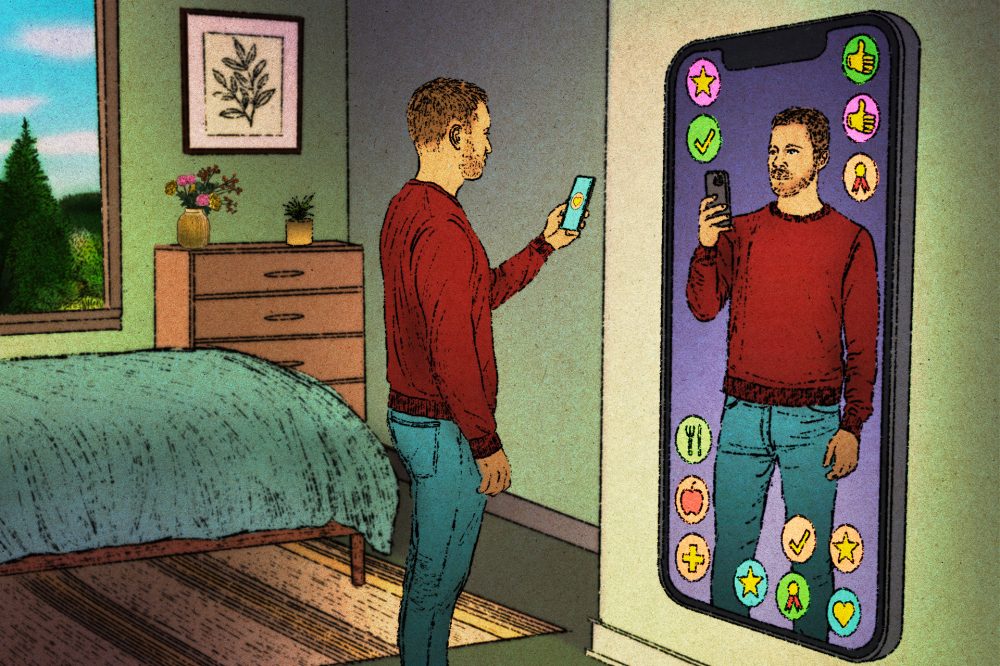

Color-coded progress bars, digital trophies, and gentle nudges when you fall behind — these are the kinds of features you might expect from a smartphone game. But today, they’re just as likely to show up in the nutrition app on your phone.
The same engagement tricks that power online shopping platforms, sports betting sites, and even classroom apps have made their way into popular diet and calorie-tracking tools. Apps like MyFitnessPal and Noom rely heavily on these gaming-style elements to keep users logging meals and coming back daily. But as these apps grow in popularity, a number of researchers are sounding the alarm about potential downsides.
Isabella Anderberg, a psychologist at Flinders University in Adelaide, Australia, who studies digital dieting behavior, says that tracking calories can reinforce thought patterns connected to body dysmorphia and disordered eating.
“We do know that not everyone’s going to experience harm from using the apps, but there are certainly factors that might increase risk,” Anderberg said. “Approach with caution.”
That said, Anderberg acknowledges these tools do have their place. Health professionals she spoke with during her research noted that apps can be particularly useful as meal-planning aids for people managing chronic illnesses like heart disease and diabetes. Physical activity apps also serve a purpose by reminding people to stay active.
Plenty of users say they genuinely enjoy the experience. Features like streak notifications, for example, can feel motivating and rewarding.
Angela Drury, an English professor from Woodstock, Georgia, started using MyFitnessPal over a decade ago to monitor her protein, fat, carbohydrate, and calorie intake when she took up CrossFit. Over the years, she’s tried several other apps including Weight Watchers, Lose It, and now Nourish — a program covered by her insurance that also includes blood work and weekly sessions with a dietitian.
Drury says the apps have generally helped her stay focused on her fitness goals. She’s even been steered away from high-calorie meals after uploading photos of food she was considering eating. Getting a badge for keeping up a logging streak gives her a small sense of accomplishment — but a notification reminding her she skipped entering lunch hits differently.
“Then it felt like it was scolding me,” she said.
Most nutrition apps work by having users input their height, weight, age, and other personal data before setting a goal. The app then calculates a recommended daily calorie or macronutrient target and uses game-inspired features — badges, points, streaks, rewards, and push notifications — to encourage continued use. Many apps are free but offer paid premium tiers with additional features.
The Centers for Disease Control and others note that calorie needs vary from person to person based on age, sex, and physical activity level, and the CDC offers an online tool to help individuals calculate their personal needs.
One ongoing criticism of these apps is that their food databases are frequently inaccurate, with portion sizes and calorie counts that can differ widely from reality.
Courtney Simpson, a behavioral psychologist and director of eating disorders at the Evidence-Based Treatment Centers of Seattle, says some apps push users toward calorie goals that are dangerously low for any adult — setting them up not just for poor health, but for failure.
According to Simpson, the gaming features keep drawing people back to those unrealistic targets, which can generate feelings of shame and may actually fuel the binge eating or other behaviors users are trying to overcome.
“It’s not that gamification itself is bad. It’s about what it is promoting,” she said. “Is that actually going to be beneficial?”
MyFitnessPal and Noom did not respond to multiple requests for comment.
Anderberg added that people who already hold the belief that thinner is always better are more likely to misuse these apps. Obsessive tracking of calories and macronutrients can then spiral into negative emotions every time a daily goal goes unmet.
She encouraged users to be critical of what the apps tell them and to lean on their own intuition instead. Whether that means resting, recovering from an injury, or simply enjoying a treat — she says listening to your body matters.
“We are sort of losing that ability to read our body cues,” she said.
Simpson pointed out that using weight as the primary measure of health is not only an inaccurate approach, but it also increases the likelihood of repeatedly losing and regaining weight — a cycle that research links to worse health outcomes over time.
“If you really want lasting change, then you need to be doing behaviors that are feasible and sustainable for you over time,” she said.
Drury said she can understand how the apps might be harmful for someone already prone to disordered eating. For her, the key has been setting realistic expectations and paying attention to what her body is telling her.
“I’ve ultimately learned that you cannot starve yourself into being in the shape you want to be in,” she said.