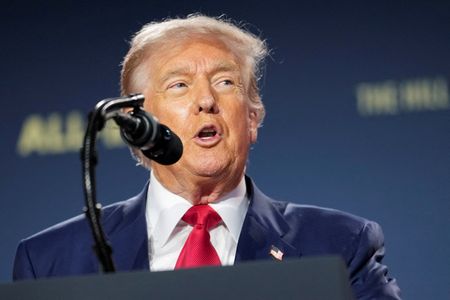
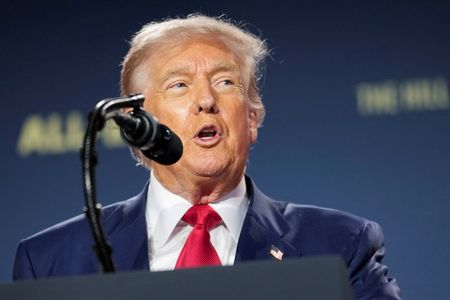
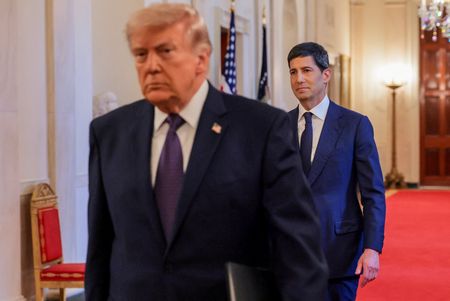
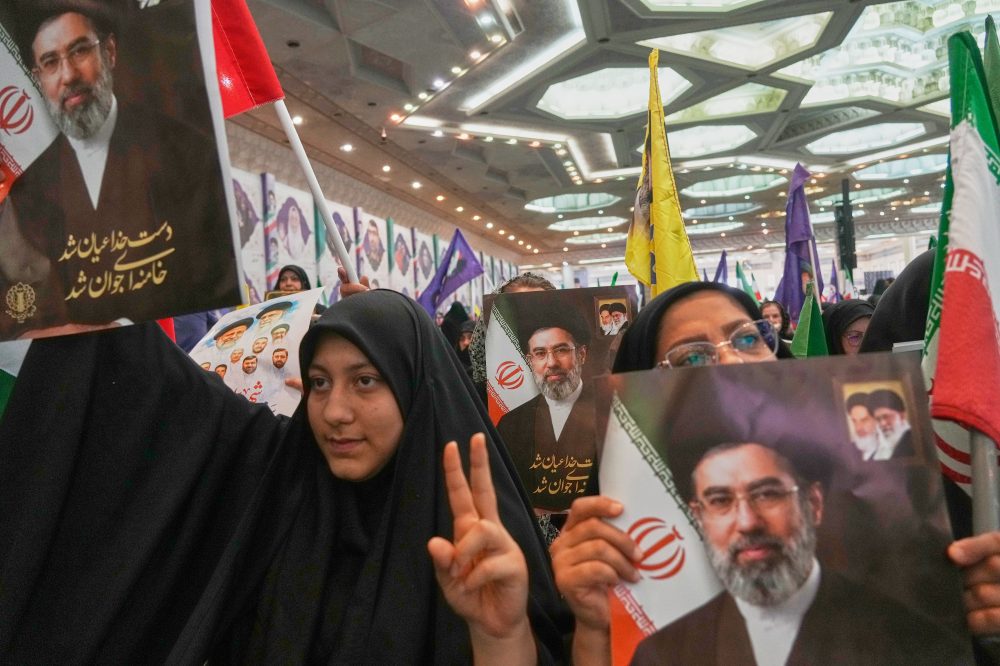
President Trump has made it clear that any potential agreement with Iran must meet his standards of being exceptional and significant, or no deal will be reached at all.
The president shared his position this morning through a Truth Social post as reports surface that some form of agreement may be developing – described as a potential Memorandum of Understanding that could require several days to finalize.
President Trump is criticizing those who oppose a potential agreement to resolve the current tensions with Iran.
Through his social media platform, the president states that those finding fault with the proposed arrangement lack understanding of the situation. Various conflicting reports have emerged regarding what terms have been settled.
The timeline and process for completing any agreement remains uncertain, as does when different components might go into effect. The president held discussions with Middle Eastern allies, including Israel, during the weekend. These details come from two regional officials and a U.S. official who requested anonymity due to the delicate nature of the ongoing negotiations.
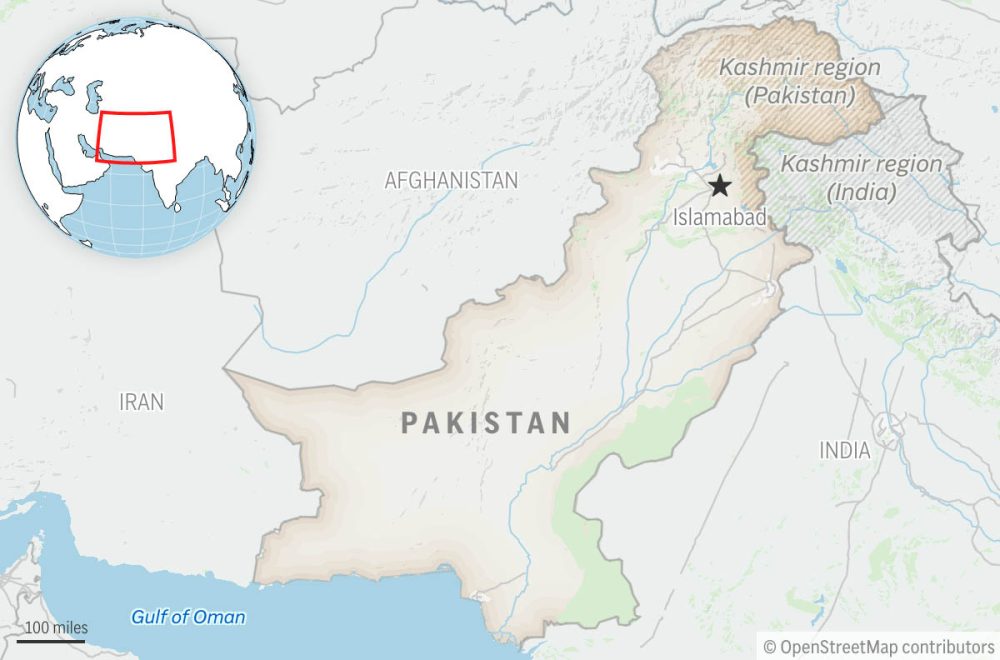
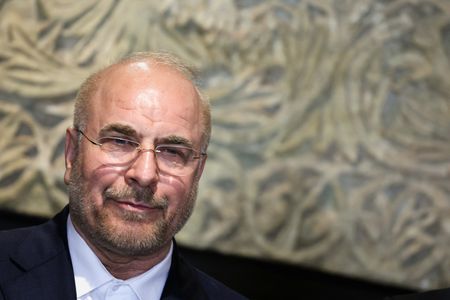
A delegation from Iran headed by parliament speaker Mohammad Bagher Qalibaf made the trip to Qatar on Monday as negotiations continue, although the specific topics for discussion were not immediately known. Qalibaf previously conducted significant direct negotiations with Vice President JD Vance in Pakistan last month.
Memorial Day represents a dual purpose in American culture – serving as a solemn tribute to military personnel who made the ultimate sacrifice while also marking the unofficial beginning of summer with extended weekends filled with travel and retail sales on everything from bedding to yard equipment.
Here’s an examination of this national holiday and its transformation over time:
Memorial Day Date
The observance occurs on the final Monday in May each year. In 2025, the holiday falls on May 25.
Purpose of Memorial Day
The day serves as a time for contemplation and honoring military personnel who lost their lives during their service to the United States, as documented by the Congressional Research Service.
Part of the observance includes the National Moment of Remembrance, which calls upon all Americans to stop their activities at 3 p.m. for a brief period of silence.
Historical Background
The holiday’s roots extend back to the American Civil War, a conflict that claimed the lives of over 600,000 military personnel from both Union and Confederate forces from 1861 through 1865.
The initial nationwide commemoration of what was originally known as Decoration Day took place on May 30, 1868, following a call from a Union veterans’ organization to place blooming flowers on military graves.
This tradition was already being practiced widely. Waterloo, New York, established a formal ceremony on May 5, 1866, and was subsequently recognized as the holiday’s official birthplace.
However, Boalsburg, Pennsylvania, claims its initial observance dates to October 1864, according to Library of Congress records. Additionally, women in certain Confederate states had begun decorating graves prior to the war’s conclusion.
David Blight, a Yale history professor, highlights May 1, 1865, when approximately 10,000 individuals, many of whom were Black, organized a parade, listened to speeches and honored Union soldiers’ graves in Charleston, South Carolina.
A group of 267 Union soldiers had perished at a Confederate prison facility and were initially placed in a mass burial site. Following the war’s end, Black church members relocated them to separate graves.
“What happened in Charleston does have the right to claim to be first, if that matters,” Blight told The Associated Press in 2011.
A messy and unsettled weather pattern will continue across the Mid-Atlantic and Delmarva region today as multiple fronts and areas of low pressure move through the area, bringing periods of showers, thunderstorms, patchy fog, and the potential for locally heavy rainfall.
Early this morning, a warm front began lifting northward across the region ahead of a strengthening area of low pressure tracking through the eastern Great Lakes and Ohio Valley. This setup has already produced areas of patchy fog, drizzle, low clouds, and light rain across portions of eastern Pennsylvania, New Jersey, Delaware, and Maryland.
As the warm front continues northward through the morning hours, a band of showers moving east out of western Pennsylvania and New York will begin interacting with the increasingly humid and unstable air mass across the region. This interaction could lead to the development of thunderstorms capable of producing torrential downpours and localized flooding concerns.
The first round of heavier showers and thunderstorms is expected to develop from the southern Poconos and Lehigh Valley eastward toward the Interstate 95 corridor during the late morning into early afternoon. Additional storms are then expected to redevelop later this afternoon and evening as a cold front sweeps through the region.
The greatest concern for Delmarva appears to arrive later today into tonight, when thunderstorms are forecast to intensify across southern New Jersey and the Delmarva Peninsula. Some of the stronger storms may produce gusty winds, frequent lightning, and pockets of heavy rainfall that could lead to poor drainage flooding in low-lying and urban areas.
Despite the clouds and rainfall, temperatures will still climb into the low to mid 70s this afternoon as warmer air spreads northward ahead of the cold front.
Patchy fog and low clouds may redevelop tonight behind the front as lingering moisture remains trapped near the surface.
Residents across the region are encouraged to remain weather aware through the day, especially during periods of heavy rain and thunderstorms that could quickly reduce visibility on area roadways.
A traffic collision has resulted in the closure of two lanes on Route 141 southbound at Market Street, according to transportation officials.
The crash is causing significant delays for drivers traveling through the area. Motorists are advised to seek alternative routes while emergency crews and transportation workers respond to the incident.
No additional details about the collision or timeline for reopening the lanes have been released at this time.
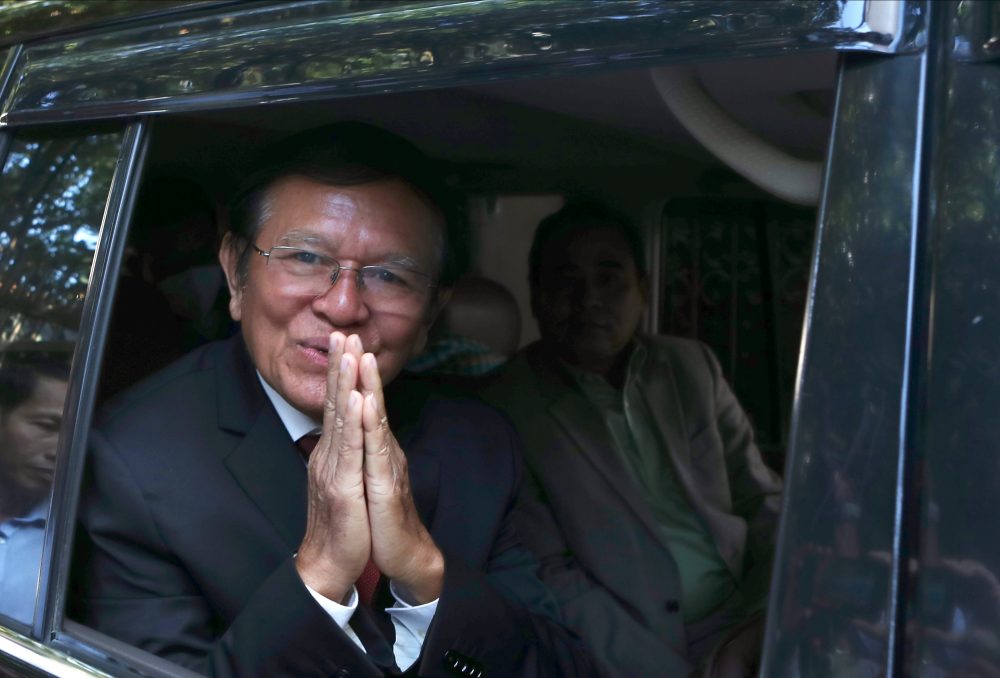
PHNOM PENH, Cambodia (AP) — A leading Cambodian opposition figure was freed from house arrest Monday after receiving a royal pardon that overturned his 27-year treason conviction, just one month following an appeals court’s decision to uphold both his guilty verdict and sentence.
The Senate president, Hun Sen, acting in place of King Norodom Sihamoni while the monarch receives medical care in China during an extended visit, granted the pardon that released Kem Sokha from his confinement.
In a post shared on Telegram, Prime Minister Hun Manet characterized the pardoning decision as a measure to promote national unity. Kem Sokha has not yet made any public statements regarding his release.
Political analysts suggest this development will have minimal impact on Cambodia’s political landscape, given that other prominent opposition leaders remain in exile while activists continue facing limitations on their freedom of expression and activities.
The opposition leader’s conviction came in 2023 after spending an extended period in pretrial custody. Authorities alleged he plotted with the United States to overthrow Cambodia’s ruling government. Prosecutors relied heavily on video footage showing him receiving political guidance from American pro-democracy organizations.
Kem Sokha has maintained his innocence throughout the legal proceedings, telling the appeals court last month that he had never conspired with any foreign country to cost the lives of Cambodian citizens or the loss of national territory.
His 2017 detention triggered a widespread government campaign targeting independent journalists and political adversaries, particularly affecting Kem Sokha’s well-supported Cambodia National Rescue Party.
Following his arrest in 2017, the Supreme Court disbanded the political party. This action enabled Hun Sen’s governing Cambodian People’s Party to claim every parliamentary position in the 2018 electoral contest.
When Kem Sokha faced arrest and conviction, Hun Sen held the prime minister’s office. In 2023, Hun Sen transitioned to Senate president while his son, Hun Manet, assumed the role of prime minister.
Throughout his 38-year tenure leading Cambodia, Hun Sen faced persistent allegations of weaponizing the court system against critics and political rivals. Despite government claims of upholding legal principles within a democratic electoral framework, the judiciary has repeatedly dismantled opposition parties viewed as threats and imprisoned or intimidated their leadership.
Critics maintain that conditions have shown little improvement under Hun Manet’s leadership.
At the end of April, the Phnom Penh Appeals Court upheld Kem Sokha’s 27-year punishment after a significantly delayed appeals hearing. The court imposed an additional restriction preventing him from international travel for five years beyond his sentence completion. The current status of this travel ban remains uncertain.
Earlier Monday, before the pardon announcement, Kem Sokha had received court approval to visit his sick 101-year-old mother.
While he avoided media interviews, his attorney shared social media footage showing him embracing his mother and expressing that if freed, he would join the Buddhist monkhood in her honor. He also stated he would not pursue retribution against those responsible for his imprisonment.
PLANO, Texas (AP) — Texas voters won’t catch much of the Republican U.S. Senate hopefuls in person on Monday. However, avoiding television and other screens is another story entirely.
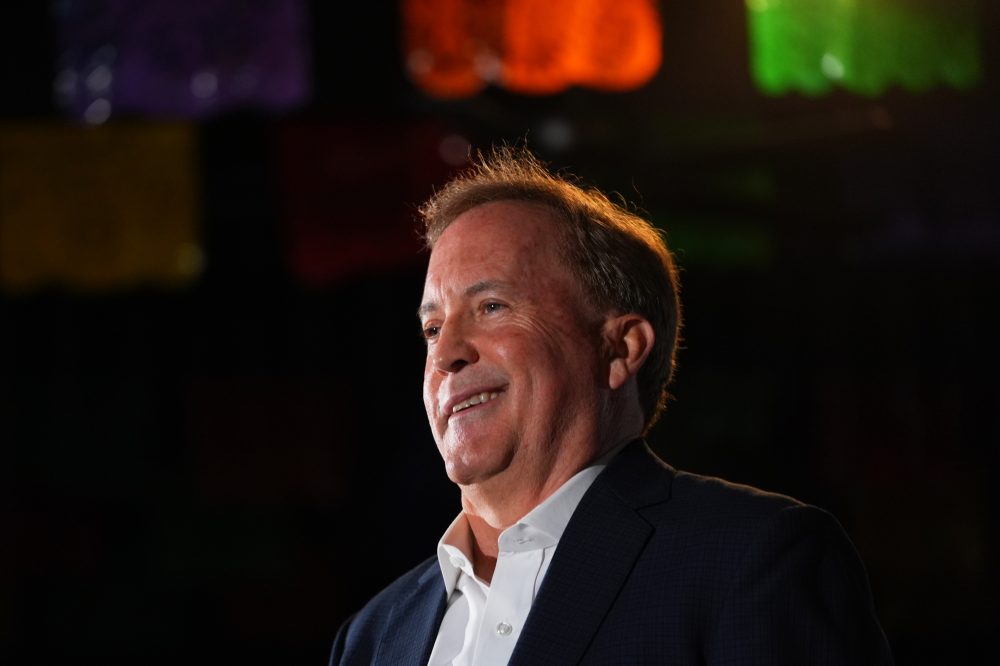
Neither Sen. John Cornyn nor state Attorney General Ken Paxton had any public campaign appearances on their calendars for the closing day of their extended battle lasting more than a year for the GOP nomination. Their competition for Tuesday’s runoff election persists as it has for months — fierce and relentless — through advertisements exceeding $109 million, with the majority coming from Cornyn’s campaign.
Cornyn has planned to host his yearly, non-campaign gathering in San Antonio honoring high school students who will attend the country’s service academies. The incumbent senator pursuing a fifth term conducted his final public campaign appearance in Corpus Christi on Friday, before Tuesday’s election.
Paxton concluded his campaign with events Thursday in the Austin region and San Antonio, choosing to allow his campaign and a super PAC to promote his central campaign theme: President Donald Trump’s endorsement of him on May 19.
Trump’s backing and simultaneous rejection of Cornyn, who has maintained a strained public connection with the president, occurred during the second day of early voting, which concluded Friday.
While both candidates remained out of public view during the weekend, Trump renewed his backing for Paxton on Sunday, while criticizing Cornyn as inadequately faithful to him.
Paxton, Trump wrote on social media, “was also very loyal to your favorite President, ME,” while describing Cornyn as “VERY disloyal to me.” This marked Trump’s harshest criticism of Cornyn, who had questioned his 2024 political comeback prospects, and mirrored the president’s criticism of Louisiana Sen. Bill Cassidy before his defeat in the May 15 GOP Senate primary.
After Trump’s demand for payback, Republican voters in Indiana and Kentucky have similarly selected GOP primary opponents over sitting Republican officials who have opposed the president or his policies.
For an election anticipated to attract only a small portion of Texas’ 18.7 million registered voters, both candidates’ campaigns and allied organizations continued flooding all Texans with advertisements, though Cornyn’s supporters spent more than Paxton’s.
“It’s just a slug fest, with the campaigns and third-party groups slugging it out,” said Wayne Hamilton, a former executive director of the Texas Republican Party.
Cornyn’s campaign combined with allied super PACs have significantly outspent pro-Paxton organizations throughout the past year, by nearly nine-to-one. However, this disparity has narrowed as the runoff has drawn closer. During the campaign’s final week, combined pro-Cornyn advertising expenditures were less than double Paxton’s group spending.
Cornyn’s network maintained advertisements targeting Paxton regarding ethical and personal issues that have followed him with minimal impact during the campaign. Cornyn’s campaign also revived an advertisement highlighting his record of supporting Trump’s legislative priorities in the Senate.
Paxton’s campaign and supporting organizations shifted midweek to exclusively running advertisements featuring Trump’s endorsement, although Paxton’s main super PAC, Lone Star Liberty Fund, started broadcasting one during the weekend designed to question state Rep. James Talarico, the Texas Democratic Senate nominee.
Former President Donald Trump announced Monday that he believes several Middle Eastern nations should be required to sign the Abraham Accords simultaneously as part of ongoing diplomatic efforts with Iran.
Speaking about weekend conversations with foreign leaders, Trump said he discussed the normalization agreements with officials from Qatar, Pakistan, Egypt, Jordan, and Turkey, along with representatives from Saudi Arabia and Bahrain, who have already signed the accords establishing diplomatic relations with Israel.
“I stated that, after all the work done by the United States to try and pull this very complex puzzle together, it should be mandatory that all of these Countries, at a minimum, simultaneously, sign onto the Abraham Accords,” Trump posted on his Truth Social platform Monday.
The former president indicated that these nations would welcome Iran’s participation in the accords following the completion of a peace agreement to end current conflicts.
While Trump described talks with Iran as “proceeding nicely,” he provided no timeline or details suggesting an agreement might be reached soon.
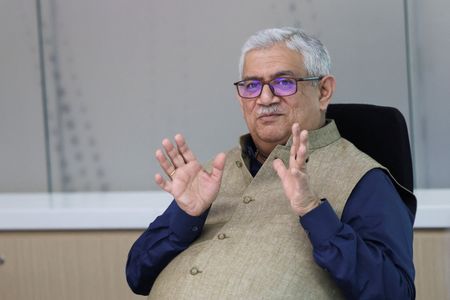
India must coordinate efforts between government, businesses and educational institutions to retrain workers if the nation wants to emerge as an artificial intelligence leader, according to a senior IBM executive who warns that AI technology poses risks to the country’s status as a major global services provider.
Speaking to Reuters on Monday, IBM India head Sandip Patel emphasized that the South Asian country’s substantial young population could provide a significant edge in the worldwide competition to embrace and profit from AI technology, which corporations believe can boost efficiency.
“That demographic dividend, that’s sitting here, unleashing that is a phenomenal opportunity,” Patel said. “You will be at a 350 million AI-trained workforce that can be deployed not just here, but can be doing work around the world.”
With more than half of India’s approximately 1.4 billion citizens younger than 30, the world’s most populated country possesses an enormous youthful labor force. The nation also graduates millions of engineers annually who now confront potential displacement from AI systems capable of automating activities such as computer programming.
IBM, which committed in December to training 5 million Indians in AI, cybersecurity and quantum computing before 2030, reports that roughly 30% of the country’s existing technology workers possess the AI capabilities that companies require. The corporation is collaborating with government officials on training programs.
Patel additionally stated that India would require enhanced intellectual property safeguards to become a leader in developing commercially viable technology, noting that businesses need stronger confidence that intellectual property created domestically would remain legally protected and profitable internationally.
IBM has been growing its operations in smaller cities closer to its recruitment areas and client locations, allowing the company to access talent beyond India’s overcrowded technology centers, according to Patel.
The corporation’s workforce in the southern city of Kochi has expanded to almost 4,000 workers over two years, and the company recently established operations in Lucknow.
A British mountaineer who recently achieved his 20th successful climb of Mount Everest is calling on expedition companies to more carefully evaluate the qualifications of those attempting the dangerous journey.
Kenton Cool, age 52, completed his latest ascent of the world’s tallest peak at 8,849 meters (29,032 feet) last week, setting a record for most summits by a non-Sherpa climber. Speaking from Kathmandu on Monday, he emphasized that expedition leaders need to be more selective about which climbers they accept for summit attempts.
“It is the operators who should be more diligent with who they allow to be with the team (of guides) that goes to the summit,” Cool stated, highlighting the importance of screening out climbers with insufficient experience.
This climbing season has already seen five fatalities on Everest, with several mountaineers requiring emergency rescue operations from the dangerous high-altitude area known as the “death zone” during their descent.
Cool believes the mountain itself isn’t inherently dangerous when proper protocols are followed, including working with qualified guides, using correct techniques, and implementing thorough preparation strategies.
“People should not die on Everest if they have good enough experience,” Cool explained.
The safety concerns have intensified following last week’s unprecedented milestone when 274 climbers successfully reached the summit on the same day – the highest single-day total ever recorded from Nepal’s side of the mountain.
This massive influx of climbers has reignited discussions about the dangers of overcrowding on Everest and renewed criticism that Nepal has previously encountered regarding mountain management.
The congestion often creates dangerous bottlenecks and extended waiting periods in the “death zone,” where oxygen levels fall far below what humans need to survive safely.
Nepalese authorities have recognized these hazards stemming from crowded conditions and inexperienced climbers, responding with stricter regulations and increased permit costs.
Cool, whose first Everest summit occurred in 2004, noted that mountaineering conditions have evolved significantly due to technological advances.
According to Cool, Sherpa guides now have better understanding of their clients, rope installation has become more systematic and reliable, and improvements in gear, communication systems, and weather prediction have enhanced safety.
While Cool acknowledged that passing other climbers at the congested Hillary Step bottleneck during summit attempts remains challenging due to crowds, he described the situation as ultimately manageable.
Earlier this season, a massive ice formation caused nearly two weeks of delays in opening the climbing route, leaving hundreds of mountaineers stranded at base camp throughout April.
However, Cool praised the skilled Sherpas from the “Icefall Doctors” team and the Expedition Operators Association of Nepal for completing rope installations to the summit on schedule despite the initial setbacks.
“It is much more professional than last year,” Cool concluded.
Provincial authorities in Pakistan report that a devastating suicide attack on a passenger train has claimed the lives of more than 30 individuals, marking another deadly incident in the country’s ongoing security crisis.
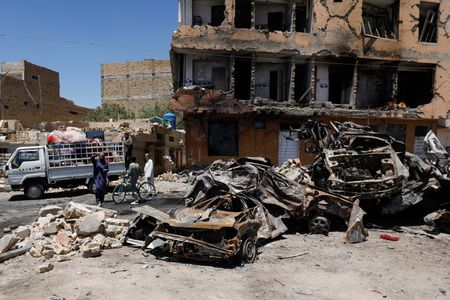
The attack occurred Sunday when a suicide bomber crashed a vehicle packed with explosives into a shuttle train in Quetta, the capital of southwestern Pakistan’s restive province. Two provincial officials, who requested anonymity because they lacked authorization to share the details publicly, confirmed Monday that fatalities had climbed beyond 30 from an initial count of 24.
The targeted train was transporting Pakistani security forces members and their relatives from Quetta’s military cantonment district. Passengers were connecting to the Jaffar Express for holiday travel to their hometowns for Eid al-Adha celebrations, according to an official.
The powerful blast caused the locomotive and three cars to derail, while two additional cars flipped over, Pakistan’s railways ministry reported. Photographs from the attack site revealed charred vehicles, overturned train cars, damaged homes, mangled metal and scattered wreckage along the railway line, with flames and smoke continuing to rise from the destruction.
The Baloch Liberation Army (BLA) has taken responsibility for the bombing, characterizing it as a suicide attack. Reuters was unable to independently confirm this claim.
Neither Pakistan’s civilian government nor its military leadership has issued an official casualty figure for the incident, which represents the most recent in an ongoing series of assaults targeting trains, security personnel and critical infrastructure.
The separatist organization has waged a multi-decade campaign over what it calls the unfair exploitation of natural resources in the mineral-wealthy province, arguing that residents are denied their rightful portion of the benefits.
The province shares borders with both Iran and Afghanistan and hosts Chinese development initiatives as well as the strategically important Gwadar deep-water port.
In a previous major incident last March, BLA fighters seized control of the same Jaffar Express while it carried army soldiers, holding hundreds of passengers captive before military forces ended the daylong siege. That confrontation resulted in 21 hostage deaths, four military casualties and the elimination of all 33 attackers.
Pakistani security forces announced earlier this year that they had eliminated 145 militants following coordinated strikes the group launched throughout the province that killed nearly 50 people.
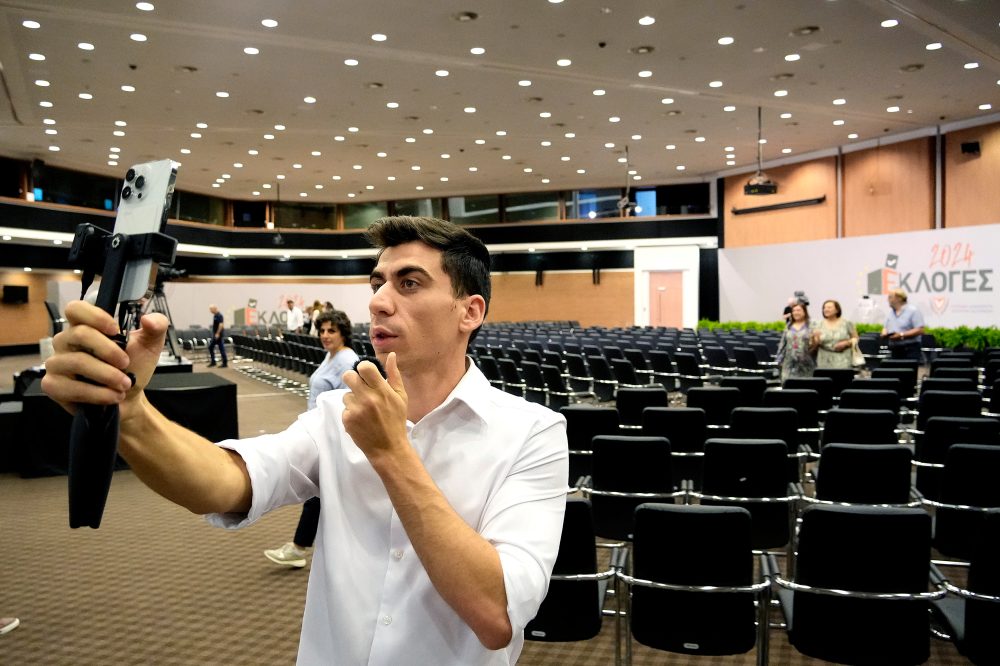
NICOSIA, Cyprus — A Cypriot social media influencer who transformed his internet fame into a rapid-fire political rise announced Monday he will retain his position in the European Parliament, turning down a seat he won in Cyprus’ national legislature.
Fidias Panayiotou, known simply as Fidias, told reporters ahead of a ceremonial event that staying in the European Parliament would benefit his Direct Democracy party. “I’ll stay in the European Parliament because it would be good for the Direct Democracy party to have a European Parliament member,” he stated.
“We could’ve done better but we’re happy with what has happened, this is a small victory,” he added.
The 26-year-old YouTuber and TikToker kept observers guessing about his political intentions throughout his campaign, creating widespread speculation about his plans.
Fidias established the Direct Democracy party just six months ago with the goal of disrupting Cyprus’ traditional political establishment both domestically and internationally. The party’s approach allows regular citizens to participate in policy development and apply online to become candidates.
In Sunday’s parliamentary contest, Direct Democracy secured 5.4% of votes cast and claimed four positions in the 56-seat House. While Fidias received the highest vote count among his party’s nominees, he passed his seat to the second-place finisher, Yiannis Laouris.
The outcome represents a significant achievement for an organization that rejected conventional voter outreach methods and policy presentations. However, the results disappointed compared to Fidias’ earlier performance when nearly 20% of voters supported him in the June 2024 European Parliament race, despite his refusal to take policy stances, make campaign pledges, or outline governing plans.
“It seems now that people are hungry not for political positions, but for true people that are not lying, (but) saying the truth,” he explained to The Associated Press following the 2024 election.
Fidias built his following through years of attention-grabbing video content, including footage of lavish spending sprees in Vietnam, surviving a week in an airport without money, and remaining buried underground for 10 days.
His online breakthrough occurred when he persistently sought and obtained an embrace from billionaire entrepreneur Elon Musk, who subsequently became a supporter.
Fidias has recognized that his internet stunts provided Cypriot voters—who have grown deeply frustrated with perceived corruption in a political system built on exchanging favors for votes over decades—a method to voice their dissatisfaction.
Using digital platforms as his main communication channel, Fidias has shared European Parliament operations with supporters, explained his voting decisions on various issues, and responded to increasing criticism from those who view him and his learning-as-he-goes approach as politically immature.
He has generated significant controversy for his apparent backing of discussions with Russia regarding the Ukraine conflict and for questioning the International Criminal Court’s characterization of Ukrainian children’s transfer to Russia as “unlawful deportation.”
Sunday’s parliamentary voting showed substantial gains for the ultranationalist National Popular Front, or ELAM, party, which captured nearly 11% of votes and eight seats—an increase from just under 7% and four seats in the prior election.
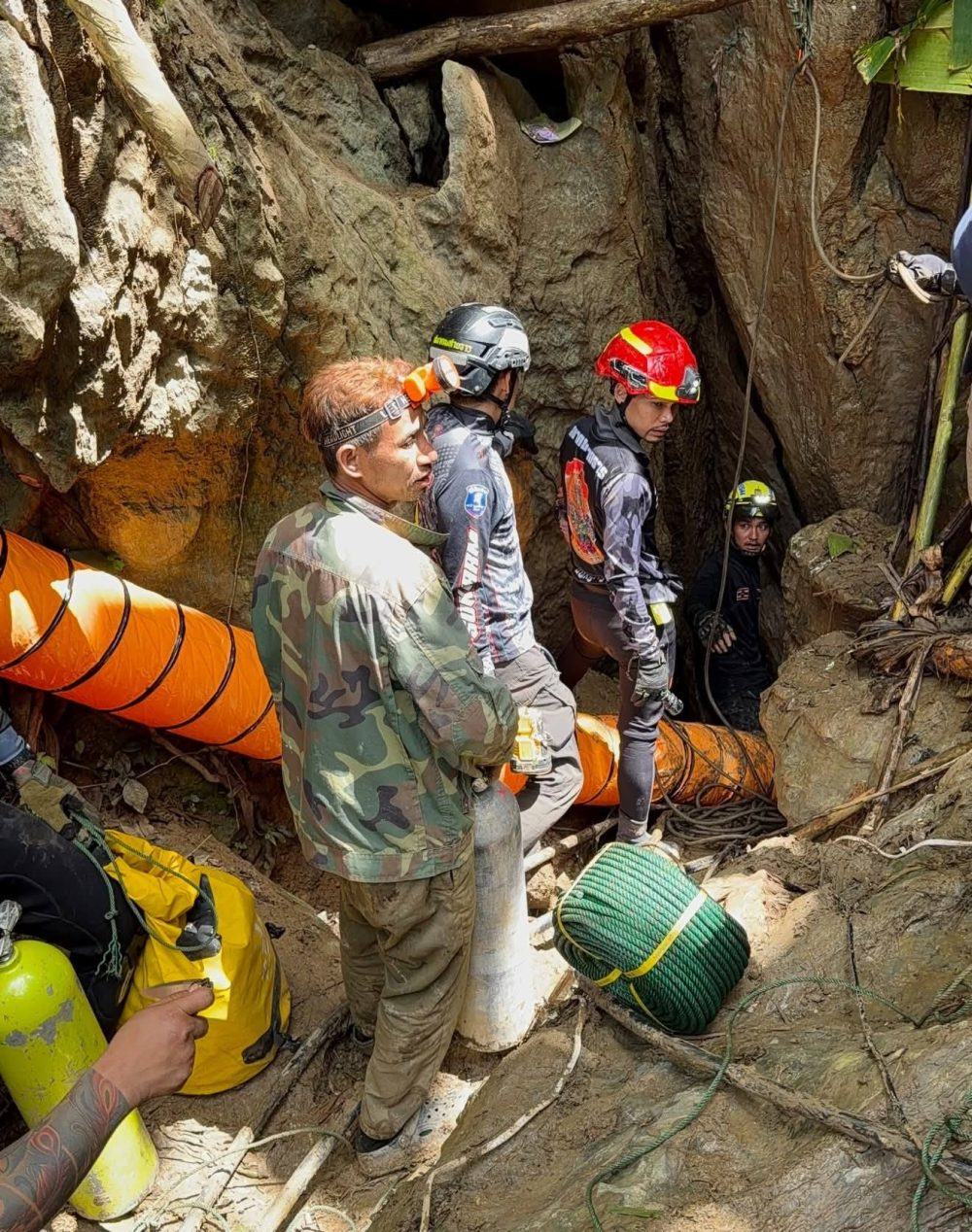
Emergency crews are working urgently against the clock to reach seven individuals who have remained stuck inside a cave in central Laos since the previous week.
The group of local residents from Xaisomboun province entered the cave on May 19 searching for gold, but intense rainfall caused flash flooding that sealed off their escape route, rescue teams from both Laos and Thailand reported.
On Monday, Bounkham Luanglath, who heads the Laos’ Rescue Volunteer for People, explained to The Associated Press that one member of the original group managed to get out before the entrance became blocked and notified emergency services. The condition of the seven individuals who remain trapped is currently unclear.
According to him, the cave consists of a tight passageway that local residents frequently visit while hunting for gold deposits. He noted that officials had consistently cautioned people not to enter the cave due to safety risks.
Lao National Radio, operated by the state, reported that rescue personnel from Thailand reached the location on Sunday to provide support. Diving teams have started making their way through the water-filled portions of the cave system toward the location where officials believe the group could be stranded.
The Ministry of Foreign Affairs of Laos refused to provide comment. The Southeast Asian country operates as a single-party communist government without organized political opposition, and officials frequently restrict information flow.
DALLAS (AP) — Following six years in the U.S. House and two failed Senate bids, Colin Allred says he regularly encounters voters who believe politicians are simply seeking personal financial gain in Washington.
“‘What about the stock trading in Congress? What about people getting rich in Congress?’” Allred reports hearing from constituents frequently. “And I have to say to them, you’re absolutely right about that, too. We need to be better.”
Allred is competing against Rep. Julie Johnson in Tuesday’s Democratic runoff for a Dallas-area House seat, joining numerous candidates attempting to tap into public frustration regarding congressional stock trading. Allred has criticized Johnson for transactions involving firms such as Palantir, a data analytics company connected to President Donald Trump’s administration.
Johnson explained that a financial manager handled her transactions and accused Allred of being “only out for himself.” She referenced financial disclosures showing Allred’s wealth nearly doubled while serving in Congress, though Allred maintained his assets were placed in a blind trust and the increase stemmed from his wife’s earnings as a law firm partner.
“To be clear, the sum total I made on that trade was only $90,” Johnson stated regarding her Palantir stock. “My opponent is trying to make it seem like it was hundreds or thousands.”
This contentious race reflects wider Democratic Party disagreements about money’s influence in politics. Previously championed mainly by progressive activists and reform advocates, claims that political opponents are corrupt or controlled by special interests have become standard in Democratic primaries. This increased scrutiny of lawmakers’ personal finances comes as the party seeks to strengthen its anti-corruption messaging against Trump and develop a reform agenda should Democrats gain control in the midterms.
Trump ran on pledges to “drain the swamp,” exploiting Americans’ distrust of Washington’s political establishment. With his family now benefiting financially during his return to the White House, Democrats are working to reclaim advantage on an issue that could resonate with voters.
“The difficulty is that right now, no party has the mantle on anti-corruption,” explained Daniel Lobo-Lewis, a Washington political consultant. “Many voters outside of the beltway see both parties as corrupt, because they see all politicians as bought by the donors or by their own self-interest.”
Lobo-Lewis and Nico Agosto established the Political Integrity Project last year to monitor stock trading and corporate donations by Congress members.
The group requests candidates sign an “integrity pledge” promising to avoid stock trading or corporate donations while serving in Congress and commit not to become lobbyists after leaving office. Approximately 90 challengers and seven current lawmakers have signed the pledge, all Democrats.
“If we want to, in any way, start rebuilding trust in our political institutions, it starts with no-brainer changes like this that have an approval rating above and beyond any other issue you could imagine,” Lobo-Lewis stated.
Congress has not yet passed a stock trading prohibition for members, although insider trading remains illegal for legislators as it is for everyone else. Multiple proposals exist on Capitol Hill but none have advanced.
A bipartisan measure to prohibit congressional stock trading failed to progress this year despite Trump’s endorsement during his State of the Union address. Democrats continue disagreeing over alleged loopholes in their competing proposals.
A competitive Democratic-leaning Utah congressional race has included attacks on candidates’ personal wealth. State Sen. Nate Blouin criticized his primary opponent, former Rep. Ben McAdams, for owning equity in a Utah data center company, and attacked other candidates for previous investments and employment.
McAdams said the equity worth several thousand dollars represented payment for previous contract work his government consulting firm completed while he was a private citizen. His campaign defended the data center project by noting it would use no water and operate on clean energy.
A McAdams spokesperson also alleged Blouin “is currently hiding his corporate donations” by removing them from campaign disclosure reports, which McAdams’ campaign claims “is not only deceitful, it breaks campaign finance law.”
In an interview, Blouin denied breaking the law and explained he removed the donations because he returned the money to each donor.
“It was actually quite uncomfortable to return some of those,” Blouin said, because some firms included local businesses and clean energy companies. “But there is a perception that campaign contributions from lobbyists and companies influence votes, and I think there is some truth to that.”
In a New York City congressional district encompassing both Wall Street and the Democratic Socialists of America’s headquarters, the city’s former comptroller, Brad Lander, has accused Rep. Dan Goldman of attempting to purchase another term by using personal wealth to match campaign contributions. Goldman, an heir to the Levi Strauss family fortune, says he placed all assets in a blind trust after taking office in 2023.
A Goldman spokesperson said Lander is “running a deceitful campaign based on absurd lies that Dan is beholden to special interests” and that Goldman has raised more campaign funds than Lander “without taking a dime of corporate PAC money.” Goldman has invested personal money in the race, the spokesperson said, “to ensure that the NY-10 voters can be sure that he is beholden only to them and his principles.”
Lander said Goldman’s spending is “not illegal, but it is certainly anti-democratic when a quarter-billionaire like Dan Goldman not only dumps millions of his own inherited wealth into his elections but also solicits money from the same forces who are rigging the economy and worsening the affordability crisis.”
Even lawmakers who support congressional stock trading bans are facing criticism.
Democratic Rep. Brad Sherman of California confronts multiple primary challengers who have criticized the congressman for owning stocks while serving in Congress. Sherman does not trade individual stocks and supports a trading ban.
“I only own three individual stocks which I inherited from my mother when she passed away, which were originally acquired by my grandmother,” Sherman explained. “I have never sold them because I made a promise to my constituents that I would not buy and sell individual stocks.”
One of Sherman’s primary challengers is Jake Levine, a former climate adviser to President Joe Biden, who signed the Political Integrity Project pledge. However, Sherman said Levine “refuses to disclose key elements of his $18 million stock portfolio, and actively bought and sold stocks while serving on the National Security Council.” Levine has stated he cannot disclose the portfolio because his family manages it and he has no oversight.
In the campaign to replace former House Speaker Nancy Pelosi, California State Sen. Scott Wiener has criticized his progressive opponent, Saikat Chakrabarti, regarding his personal wealth. Chakrabarti is a former software engineer who earned millions as an early Stripe employee. He later became Rep. Alexandria Ocasio-Cortez’s first chief of staff.
Wiener said Chakrabarti “has enormous investments” and “is trying to buy this seat” while “spreading bogus conspiracy theories” with his wealth. He criticized Chakrabarti for not revealing the past decade of stock trades.
“If you’re making a ban on stock trades a central part of your campaign — as Saikat is doing, running around saying that everyone under the sun is corrupt — how about you tell the voters about your own stock trading history,” Wiener said.
Chakrabarti responded that his wealth as a private citizen is irrelevant to his potential service in office and that he would place all assets in a blind trust if elected. He criticized Wiener for receiving support from super PACs funded by AI firm Anthropic and other major corporations.
“This is all part of a larger problem, which is just the whole idea of corruption in our politics,” Chakrabarti said. “If you’re in Congress, you sit on committees that oversee a lot of these industries, and it’s unethical to be using that insider information, that knowledge to make stock trades. But that doesn’t apply to a private citizen.”
Cambodia’s monarch has issued a royal pardon for former opposition leader Kem Sokha, who was serving time for a treason conviction, according to an official decree made public Monday.
The 72-year-old Kem Sokha, who helped establish the now-disbanded Cambodia National Rescue Party, had remained under house arrest following his treason conviction in March 2023. Authorities alleged he worked with foreign entities in a plot to remove then-premier Hun Sen from power.
Just last month, a Phnom Penh court confirmed his 27-year prison term and imposed a five-year travel restriction to take effect after his sentence concluded. The royal decree specified that the pardon covers only his original punishment.
Legal representatives for Kem Sokha could not be reached for immediate response regarding the pardon.
Kem Sokha’s prosecution stood out as one of the most high-profile cases in an extensive campaign against rivals of the Cambodian People’s Party, which has maintained control over Cambodia for more than 40 years.
American officials characterized his conviction as rooted in “fabricated conspiracy theories” when it was announced.
He remained one of the few opposition voices left in the Southeast Asian nation, as many others had fled following a 2017 Supreme Court decision that dissolved the CNRP.
Cambodia’s current administration, led by Hun Manet, the American- and British-educated son of the still-powerful former premier Hun Sen, rejects claims of political persecution and maintains that convicted individuals violated the law.
Hun Sen, who currently holds the position of senate president, executed the decree on behalf of King Norodom Sihamoni, who is receiving medical care for prostate cancer.
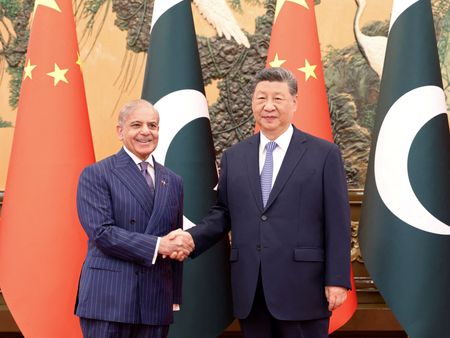
President Xi Jinping described China’s relationship with Pakistan as “unbreakable” during a Monday meeting with Prime Minister Shehbaz Sharif in Beijing, as both nations work to strengthen their comprehensive partnership.
The Chinese president greeted the Pakistani leader as an “old friend” during ceremonies at Beijing’s Great Hall of the People, noting that both nations have “understood, trusted and supported each other” for many decades.
Pakistan holds a special status among the select nations that China considers an “all-weather strategic partner,” a designation that encompasses extensive economic, trade and security collaboration.
However, recent attacks by Islamist militants targeting Chinese citizens and infrastructure projects in southwestern Pakistan have created tensions with Beijing, while Pakistan’s improved relations with Washington have added complexity to the bilateral relationship.
“No matter how the international situation changes, China always prioritises the development of China-Pakistan relations in its neighbourhood diplomacy,” Xi stated.
According to Chinese state broadcaster CCTV, China expressed interest in expanding cooperation with Pakistan across multiple sectors including agriculture, industry, artificial intelligence and talent development.
Beijing indicated its readiness to collaborate with Pakistan in building a stronger China-Pakistan community with shared objectives, CCTV reported. The Chinese leader stressed the importance of maintaining high-level diplomatic exchanges and reinforcing strategic communication.
Prime Minister Sharif responded by describing China and Pakistan as “iron brother” nations with a relationship that is “next to none.”
Sharif traveled to Beijing alongside Pakistan’s army chief, Asim Munir, who recently visited Tehran for discussions with Iranian leadership.
Following a fragile ceasefire in the Iran conflict established in April, Pakistan facilitated mediation discussions between Washington and Tehran, serving as an intermediary for proposals and communications between the two sides.
After several weeks of Pakistan’s diplomatic intervention, Washington has indicated advancement in negotiations with Tehran.
“I know that you have just returned from Iran and made positive efforts for the current peace. We still appreciate the constructive role played by Pakistan,” Xi remarked.
CCTV quoted Xi as saying both nations should pursue enhanced and more comprehensive security cooperation to support regional peace and stability, though he did not reference any particular conflict.
For Pakistan, involving China in its mediation activities holds significance given the close relationship between Beijing and Tehran.
In March, China and Pakistan released a joint initiative when their foreign ministers convened in Beijing, advocating for peace negotiations and the restoration of regular shipping operations in the Strait of Hormuz.
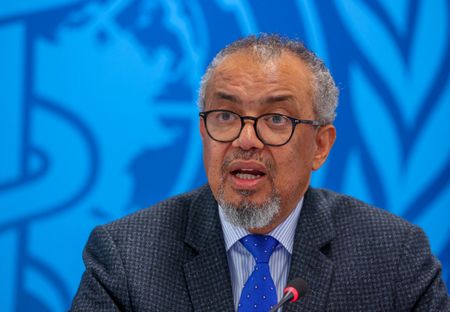
The World Health Organization’s director-general, Tedros Adhanom Ghebreyesus, announced Monday that 220 suspected deaths have been reported in the ongoing Ebola outbreak.
Speaking about the current situation, the WHO leader indicated that late identification of cases has left response teams “playing catch-up” as they work to address the crisis.
Palestinian medical authorities reported Monday that an Israeli helicopter attack on a displacement camp in southern Gaza resulted in the deaths of two civilians, including a young child, while injuring 17 others.
Health officials identified the victims as six-year-old Mennatallah Abu Libda and 31-year-old Hanan Mahmoud, who were killed when the strike hit tents housing displaced families in the Mawasi section of Khan Younis in Gaza’s southern region.
According to witnesses at the scene, the assault involved two military helicopters.
Israeli military officials had not provided a response regarding the incident at the time of this report.
The deadly strike occurred despite a ceasefire agreement negotiated by U.S. President Donald Trump in October, which has not succeeded in stopping Israeli military operations in Gaza. Negotiations between Israel and Hamas remain stalled over implementing the agreement’s second phase, which would require the militant organization to disarm and Israeli forces to withdraw.
Under the current truce terms, Israel maintains authority over more than half of Gaza’s territory, while Hamas retains control of a narrow coastal strip.
Gaza health authorities report that approximately 900 Palestinians have died in Israeli military actions since the ceasefire took effect, though these numbers do not separate militant fighters from non-combatants.
Israeli military sources indicate that four of their soldiers have been killed by militants during this same timeframe.
Hamas has not released casualty figures for its fighters. Israeli officials state that their continued strikes after the ceasefire are designed to prevent attacks and stop individuals from approaching the armistice boundary with Hamas.
The retail giant Target is reconsidering its artificial intelligence strategy as technology companies increasingly adopt pricing models that charge based on actual usage rather than flat subscription fees, according to the company’s India operations chief.
Companies like Anthropic and OpenAI are moving toward token-based billing systems that calculate costs based on how much customers actually use their services, marking a significant change in AI economics that’s driving up expenses for large businesses.
“It is forcing us to re-evaluate our strategy,” Target’s India President Andrea Zimmerman told Reuters on Monday, explaining that the company’s massive size means leadership must carefully weigh employee requirements against budget constraints.
Despite the pricing challenges, Zimmerman emphasized that Target is making “significant investments” to ensure workers have access to necessary technology tools.
“(AI pricing) sits at a technical debate at the highest level in both our architecture forums as well as in our senior leadership forums within technology,” she explained.
Target’s Indian operations center encompasses multiple business areas including merchandising, digital services, retail locations, and supply chain management, with approximately 5,600 employees. The Bengaluru facility houses roughly 40% of the Minneapolis-headquartered company’s technology workforce.
Within India, the retailer plans to increase investment in analytics departments to convert expanding data volumes into practical business insights more rapidly.
“We work to adapt really quickly when we see that consumer demand or sentiment start to shift,” Zimmerman noted.
The $57-billion company has faced challenges with three consecutive years of falling revenue as budget-minded customers have chosen less expensive shopping options.
Under new CEO Michael Fiddelke, Target intends to invest an extra $2 billion this year in opening new locations, renovating existing stores, and advancing AI projects.
“AI is fun, exciting and interesting to think about,” Zimmerman observed. “Change isn’t going to be immediate, and it is certainly not free.”
KYIV, Ukraine — The exiled opposition leader from Belarus traveled to Kyiv on Monday as Ukraine’s capital worked to recover from Russia’s most extensive missile bombardment this year, while international leaders monitored how much assistance the Belarusian government might offer to Moscow’s comprehensive invasion of Ukraine.
Opposition leader Sviatlana Tsikhanouskaya of Belarus reached Kyiv by rail for her inaugural trip to the Ukrainian capital, occurring one day after French President Emmanuel Macron conducted a telephone conversation with President Alexander Lukashenko, who has ruled Belarus with authoritarian control for over thirty years.
The French president “underscored the risks for Belarus of allowing itself to be dragged into Russia’s war of aggression in Ukraine,” according to a presidential aide in Macron’s office who spoke on condition of anonymity in accordance with the presidential palace’s practices.
Macron additionally held discussions on Sunday with Ukrainian President Volodymyr Zelenskyy, who has recently intensified warnings that Belarus might serve as a staging area for Russia to establish a new battlefront in northern Ukraine.
With the comprehensive invasion extending beyond four years, Russian forces remain engaged in a difficult and expensive campaign along the 1,250-kilometer (780-mile) battle line that primarily winds through eastern and southern Ukraine. Given the shortage of American-manufactured air defense missiles due to the Iran war, Ukrainian defenses face greater challenges stopping Russian projectiles.
American diplomatic initiatives to end the conflict have achieved minimal advancement and are currently at a standstill.
Sunday’s massive bombardment featured Russia’s advanced hypersonic Oreshnik ballistic missile, capable of carrying multiple warheads. Russian President Vladimir Putin has claimed it can strike targets at velocities reaching Mach 10.
Zelenskyy reported that Ukrainian intelligence agencies had been alerted by the United States and European nations that Russia was preparing to deploy an Oreshnik missile.
No fewer than 87 individuals sustained injuries in Kyiv, including three minors, during the attack, Zelenskyy announced Monday. Twenty-one people required hospitalization.
The fierce bombardment caused damage to structures throughout the city, including areas near government facilities, apartment buildings, educational institutions and a marketplace, Ukrainian officials reported. Broken glass remained scattered on walkways Monday.
Macron’s conversation with Lukashenko marked their first communication since 2022, shortly following Russia’s launch of the comprehensive invasion on Feb. 24, 2022, when Belarus’ administration permitted Moscow to utilize the nation’s land as a base for deploying forces into neighboring Ukraine.
A brief statement issued by the Belarusian presidential press office indicated the call occurred “on the French side’s initiative” and that both leaders addressed “regional issues” and Belarus’ relationships with the European Union and France.
Tsikhanouskaya, the exiled Belarusian opposition leader, stated Sunday that France aims to prevent Belarus from becoming involved in the Russia-Ukraine conflict.
“The main goal — to warn Lukashenko that dragging Belarus into the war would be unacceptable,” Tsikhanouskaya told The Associated Press.
“Lukashenko’s regime knows well what needs to be done to improve ties with the European Union, but it isn’t happening, instead hybrid attacks, nuclear blackmail and threats to the entire region continue,” she said.
Lukashenko depends on the Kremlin for affordable energy, financial assistance and additional support. Russia and Belarus conducted joint nuclear exercises last week.
Zelenskyy has consistently cautioned that Belarus might expand its assistance to Moscow.
The estranged spouse of a former Scottish First Minister admitted guilt Monday for stealing more than $540,000 from the Scottish National Party during his time as the organization’s top executive.
Peter Murrell, age 62, was taken into custody following his confession at Edinburgh’s High Court that he misappropriated the funds to purchase a recreational vehicle, two automobiles, and high-end merchandise.
Authorities first detained Murrell in April 2023 during a probe into the party’s financial dealings, with formal charges filed against him in April 2024.
The former First Minister, who was a commanding presence in Scottish politics for nearly ten years, was exonerated of any misconduct last year, roughly two years following her surprise departure from leading Scotland’s semi-autonomous administration. Her tenure in that position lasted eight years.
Murrell and the former leader announced their marital separation last year, ending approximately 15 years together as husband and wife.
The financial probe created uncertainty around the former First Minister for nearly two years and sparked concerns about party governance as authorities examined how more than $810,000 earmarked for Scottish independence efforts was utilized.
A former party financial officer was also exonerated. Both he and the former First Minister were detained and questioned approximately three years ago before being released pending further investigation.
The former leader transformed her party into Scotland’s dominant political force and reshaped it from a single-focus organization into a governing powerhouse with progressive social policies. She steered her party through three nationwide elections and two Scottish contests, while guiding Scotland during the health crisis and earning recognition for her clear and thoughtful public communications.
However, she stepped down while the party faced internal conflicts, without achieving her primary objective of securing independence from the United Kingdom for the nation of 5.5 million residents.
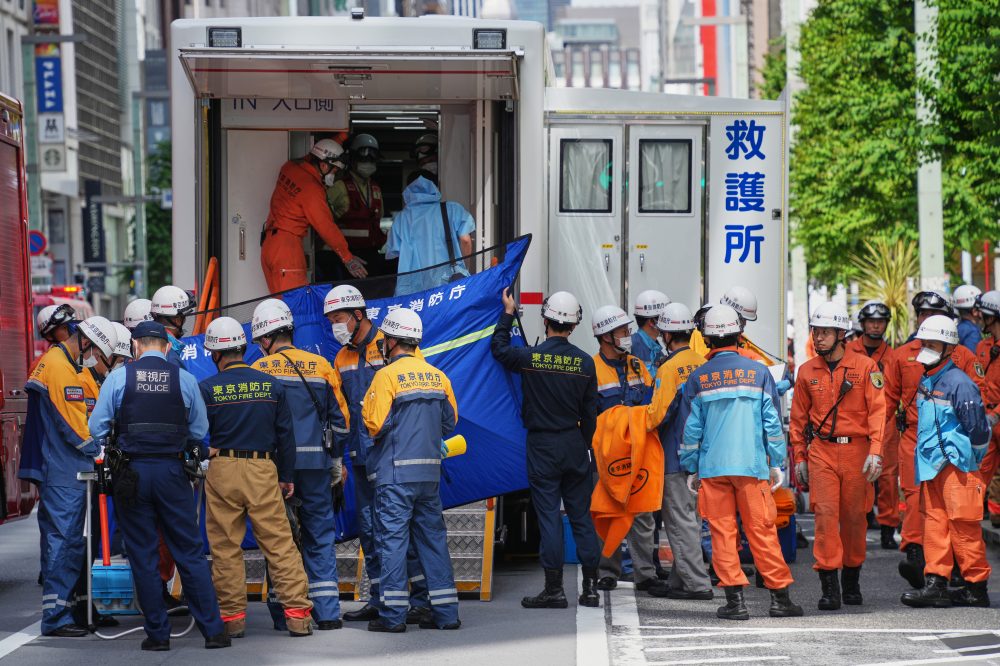
Emergency crews transported 25 individuals to area hospitals Monday following reports that someone released an unidentified chemical near an upscale Tokyo shopping center, according to local fire officials.
Officials with the Tokyo Fire Department reported that 26 individuals suddenly experienced throat irritation and felt sick close to the Ginza Six retail complex, with 25 requiring hospital treatment. Authorities described the symptoms as minor in severity.
Both fire and police departments confirmed an active investigation is taking place. According to the widely-read Yomiuri newspaper, law enforcement has found evidence of pepper spray residue on building walls.
Emergency response teams deployed numerous fire trucks and ambulances to the scene, leading to temporary street closures in the vicinity. News broadcasts captured images of first responders in protective gear helping victims, including some individuals being evacuated from the structure.
Yuzo Tsuda, a 78-year-old Tokyo resident, spoke with The Associated Press about his experience. He explained that after finishing lunch with companions, he approached the shopping center due to the visible emergency activity when he experienced sudden throat discomfort and began coughing. “The ache in his throat subsided about an hour later and he did not plan to go to the hospital,” Tsuda stated.
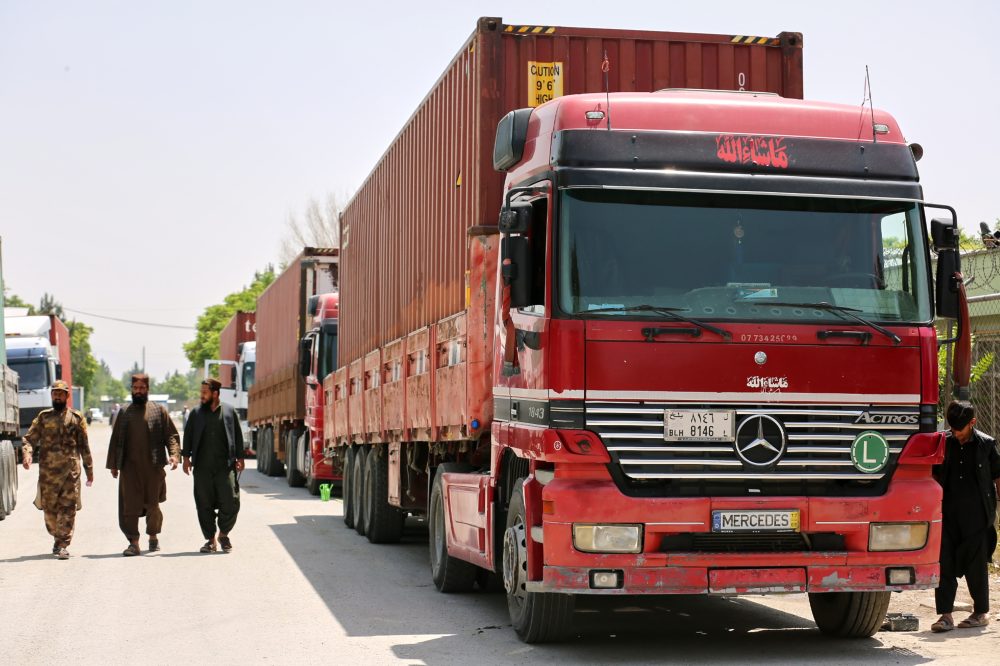
KABUL, Afghanistan — Afghanistan’s already fragile economy is facing a new crisis as conflict in the Strait of Hormuz has severed crucial supply lines, leaving businesses struggling and humanitarian aid organizations unable to deliver life-saving assistance.
The landlocked nation had already lost access to Pakistan’s key Karachi shipping hub when border disputes closed crossings between the two countries in late 2023. Afghan importers then shifted their operations to Iran’s Bandar Abbas port as an alternative route.
However, that backup plan quickly unraveled when warfare erupted in the strategic waterway, trapping hundreds of vessels and thousands of crew members. Simultaneously, thousands of containers destined for Afghanistan remained stranded in Pakistan.
The dual blockade has created a catastrophic situation for Afghan commerce and international relief efforts.
The World Food Program, which provides essential nutrition assistance including supplements for undernourished mothers and children plus fortified energy biscuits for students, has watched transportation expenses soar while supply deliveries ground to a halt.
According to the organization, most nutrition materials previously came through Pakistan. When that border shut down in October, shipments were redirected through Dubai and Iran by sea. However, that pathway became unusable as Tehran gained control over the strait while U.S. forces established blockades around Iranian ports.
Critical nutritional supplies steadily decreased before completely running out by mid-April.
“At a time when malnutrition is already at near-record levels, weakened and desperate mothers and children are being turned away from health clinics, as we have no food to give them,” said John Aylieff, WFP’s country director in Afghanistan.
The organization was already struggling with severe funding shortfalls, having received just 8% of its annual budget requirements this year.
“On top of a funding crisis, conflict in the Middle East and the closure of the border with Pakistan are choking WFP’s operations — blocking supply routes, driving up costs and straining markets at the worst possible time,” Aylieff said in emailed comments.
Relief supplies now must travel overland through Central Asian countries, completely avoiding ocean routes. This has caused WFP’s shipping expenses to triple, while supplement costs for malnourished mothers and children have increased by 35%, according to Aylieff.
When the Iran conflict began in late February, one of the organization’s shipments of fortified energy biscuits became stranded in the United Arab Emirates.
Rather than taking the direct route from Dubai through Iran into Afghanistan, the cargo has been forced onto an extremely lengthy detour through Saudi Arabia, Jordan, Syria, Turkey, Georgia, Azerbaijan and across the Caspian Sea into Turkmenistan, the organization reported.
That shipment has been in transit for three months.
Local businesses are equally devastated. Lutfullah Akbari, who operates a small Kabul company importing construction machinery, faces an impossible situation with his Chinese supplies trapped on vessels unable to pass through the Strait of Hormuz while logistics costs continue climbing.
“I have nothing else to use to continue my business here,” he said.
Akbari is now contemplating abandoning his cargo entirely if the waterway doesn’t reopen soon.
“The Iran-U.S. war has had a huge impact on my business,” he said. While other merchants have redirected shipments through Central Asia, the route is both longer and more costly.
“The logistics company now wants more than the value of our goods and the capital we had invested in them. We can’t afford it,” Akbari said.
“Even if I bring them here, I’ll have to sell them all at a loss. I can’t afford to lose twice.”
Gul Meer Amini, logistics director at freight company Etifaq Bamyan International Transport and Trade Forwarding, reported that the Iran conflict has dramatically inflated expenses. His company handles various cargo including humanitarian supplies.
Container rental fees that previously ranged from $3,000 to $3,600 per shipment have now jumped above $7,000. For certain goods, costs have exceeded $11,000, he noted.
“The impact is reaching all traders,” Amini said.
Mohammad Murtaza Ishaqzai, a Kabul electronics retailer, said shipping his Chinese merchandise through Iran previously cost between $1,100 and $1,500 before the conflict. Those expenses have now skyrocketed to more than $15,000.
“We can’t export and we can’t import,” he said, urging the Taliban government to settle its dispute with Pakistan to allow border commerce to restart.
If current conditions persist, he warned, “our business will be finished.”
Afghanistan’s Commerce and Trade Ministry spokesperson Abdul Salam Jawad noted that nationwide price increases have remained relatively modest at approximately 3%, due to ongoing commerce with Iran and sourcing many imports from Central Asia, Russia and China.
“The problem we faced was the restrictions on our imported goods and containers coming from other countries” via Iran, he said. “We are waiting for a solution to be found in the Strait of Hormuz so that we can export normally.”
Khan Jan Alokozai, senior adviser to Afghanistan’s Chamber of Commerce and Investment, said over 60% of Afghanistan’s trade now flows through Central Asia, helping to reduce the Iran conflict’s overall impact.
Food and fuel products are arriving through Central Asia and Russia, while significant trade is now being conducted via Turkey, with goods then transported by rail through Iran or Azerbaijan, Alokozai explained.
The former chief executive of Scotland’s National Party entered a guilty plea on Monday for stealing more than $540,000 from party coffers, acknowledging he redirected organizational funds to purchase vehicles, a recreational vehicle, and high-end merchandise.
Peter Murrell was previously married to the former party leader, who stepped down unexpectedly in 2023 just before being taken into custody during the financial investigation. She was exonerated of any criminal conduct in March of last year.
The law enforcement investigation and detention of the party’s most tenured leader created significant scandal for the independence-supporting organization that has controlled Scottish governance for much of the past twenty years.
Authorities had been examining the fate of donations collected by Scottish independence advocates in 2017 that were meant to be set aside but were reportedly diverted for alternative uses.
According to his written admission of guilt, Murrell acknowledged stealing £400,310.65 from the party spanning from August 12, 2010, through January 13, 2023, approximately £60,000 below the initial charges.
“Peter Murrell has shown utter contempt for the high public trust placed in him as the Chief Executive of a political party and his position in the wider political establishment in Scotland for many years,” said Police Scotland’s Assistant Chief Constable Stuart Houston.
“He abused his privileged position with access to Scottish National Party funds to divert cash into his own accounts and bankroll the lavish lifestyle he craved but could not afford.”
Court documents revealed he had purchased multiple automobiles and merchandise from premium retailers including Estee Lauder and Harrods using the stolen funds.
Murrell remains in jail custody awaiting his sentencing hearing scheduled for June 23.
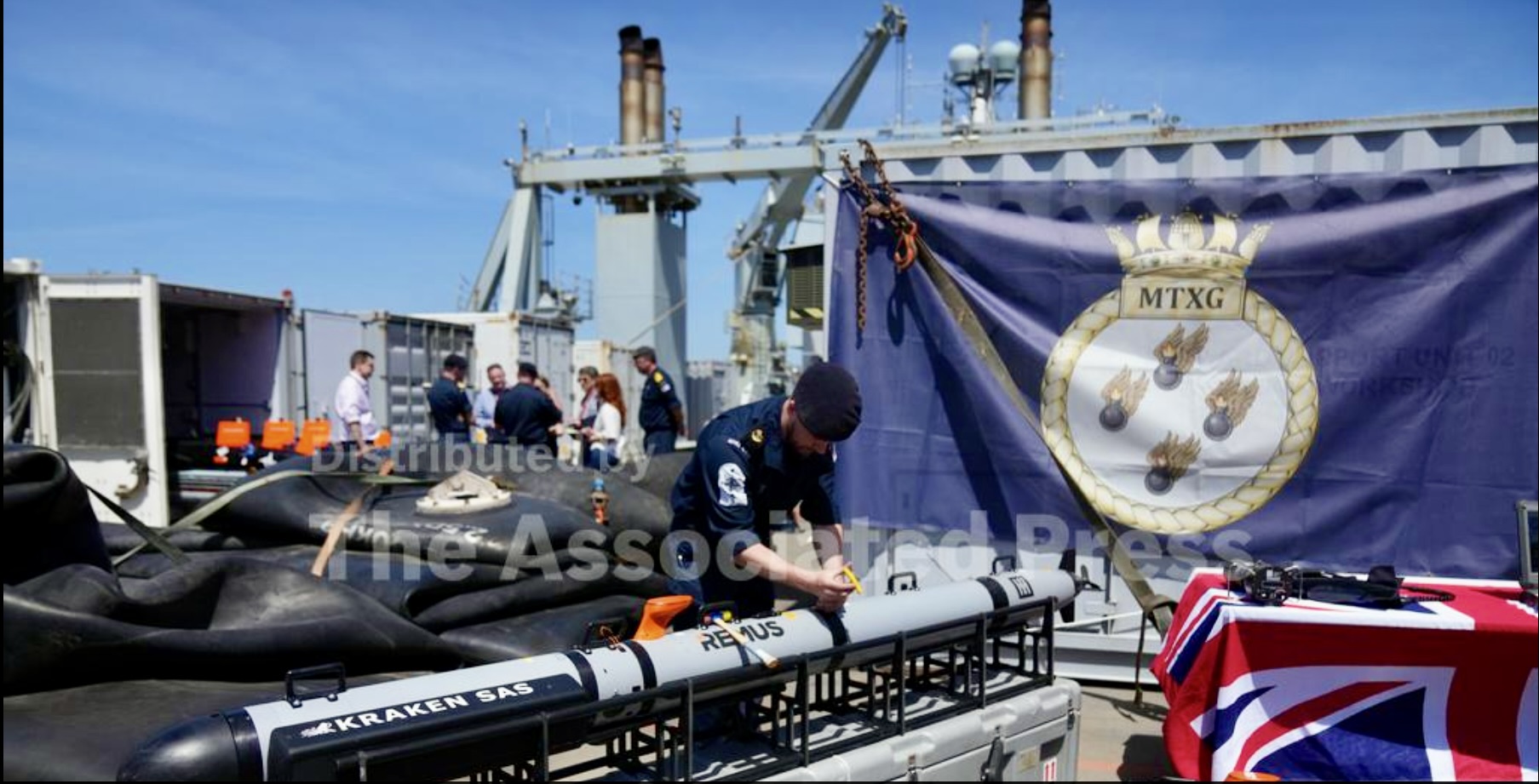
Russian investigators announced Monday they discovered multiple magnetic mines manufactured by NATO countries on a commercial tanker docked at the Baltic Sea port of Ust-Luga.
Divers conducting a hull inspection found the explosive devices attached to the tanker Arrhenius, which had sailed from Belgium’s Antwerp port to take on liquefied petroleum gas cargo, according to Russia’s Investigative Committee.
Russian authorities have enhanced security protocols at their ports following what they describe as suspected sabotage attempts targeting the country’s energy facilities.
The heightened security measures were implemented last year after Russia mandated underwater inspections of vessels following suspected attacks on four oil tankers. In February 2025, the Suezmax tanker Koala became grounded at Ust-Luga following an explosion in its engine compartment.
Ship tracking information from LSEG indicates the Arrhenius operates under Liberia’s flag and is operated by Maple Mariner Holding based in the UAE.
Svetlana Petrenko, a spokesperson for Russia’s Investigative Committee, confirmed the mines originated from a NATO member nation. She noted the ship docked at Ust-Luga on May 20 and was preparing to depart for the Turkish port of Samsun.
NATO officials were not immediately accessible for a response.
The explosive devices have been rendered safe, Petrenko confirmed.
“Based on initial investigative actions, it can already be concluded that the magnetic mines could not have been installed in Russia’s territorial waters,” Petrenko said.
The creator of a satirical social media presence that rapidly attracted more than 22 million Instagram followers in India claims he’s facing government retaliation and family intimidation after his content criticized Prime Minister Narendra Modi’s administration.
Abhijeet Dipke, who runs the “Cockroach Janta Party” account, says his content struck a chord with India’s younger generation by addressing issues like joblessness and educational scandals, including leaked examination materials.
“The government has taken down our iconic website,” Dipke stated on X, claiming that his X account had been restricted in India, his Instagram presence had been hacked, and his relatives had been intimidated.
Reuters was unable to confirm independently whether government officials ordered the website’s removal. Neither India’s home ministry nor IT department responded when asked for comment about any actions taken against the social media accounts or website.
The account’s rapid rise in popularity stands in sharp contrast to recent election successes by Modi’s Bharatiya Janata Party in important state races, strengthening the party’s position after governing nationally for over ten years.
The Internet Freedom Foundation, which advocates for digital rights, condemned what it called an arbitrary attempt to silence free expression through the alleged blocking of the X account.
Federal minister Kiren Rijiju, a prominent BJP official, responded to the controversy on social media by expressing sympathy for those who he suggested were gaining followers from foreign sources.
“Those who are heroes of the anti-India gang cannot be heroes of India,” Rijiju wrote on X without directly referencing the viral account. “We have complete faith in Indian democracy and Indian youth.”
In response to the minister’s comments, Dipke shared data about his Instagram audience demographics, stating, “More than 94% of the audience is from India.”
He also questioned on X, “Why is a union minister, Kiren Rijiju, labelling Indian youth as Pakistani?”
Research by polling organization CVoter revealed that the issues raised by the account connected with younger Indians, with over 60% of survey participants between ages 18 and 24 expressing worry about their prospects.
Sixty percent of those surveyed indicated the account captured their frustrations regarding joblessness and administrative problems such as leaked test materials, including a recent medical school entrance examination that impacted approximately 2.3 million test-takers.
Official statistics show that unemployment among India’s city-dwelling young people reaches 14%, significantly exceeding the national unemployment rate of roughly 5%.
Most survey participants believed government efforts to block such social media platforms would be unjustified.
Lawyer and activist Prashant Bhushan suggested the online movement might expand if it moves beyond digital platforms.
“If they want to take it forward, they will have to organise and mobilise on the ground,” he stated.
A leading artificial intelligence executive warned Monday that tech companies should not be left alone to develop AI technology, calling for increased supervision from government officials, religious leaders and community organizations.
Chris Olah, who co-founded the AI company Anthropic, made these remarks during a Vatican ceremony where the pope presented his first official letter about artificial intelligence. Olah cautioned there exists “a real possibility” that artificial intelligence will replace human workers “at very large scale.”
“If that happens, supporting those displaced will be a moral imperative of historic proportions,” Olah stated while seated next to the pope during the Vatican event on Monday.
The tech executive explained that his company and others face significant business pressures, international competition and personal motivations that may not align with what benefits society as a whole.
“Every frontier AI lab … operates inside a set of incentives and constraints that can sometimes conflict with doing the right thing,” Olah noted, emphasizing that even researchers with good intentions remain subject to these influences.
According to Olah, these competing interests make independent oversight from outside the tech industry crucial for responsible AI development.
Authorities have provided updated details about a Saturday shooting incident that took place in the area surrounding the White House, including revealing the name of the individual believed to be responsible for the gunfire.
WASHINGTON – President Donald Trump no longer has former Federal Reserve Chair Jerome Powell to blame for economic woes like rising mortgage rates and sluggish growth.
With Kevin Warsh now serving as the nation’s top central banker – cementing Trump’s control over key economic policy positions – the political calculus has changed completely. Unlike Powell, whom Trump claimed was forced upon him by advisers including former Treasury Secretary Stephen Mnuchin during his first term, Warsh represents Trump’s personal choice, making the president accountable for the outcomes.
Trump underscored this partnership during Warsh’s White House swearing-in ceremony Friday, attended by cabinet members, Supreme Court justices and senior advisers in a celebratory setting. The president told Warsh to “do your own thing and do a great job.”
“Kevin understands that when the economy is booming that is a good thing…we want it to boom…We don’t want to see it stifled,” Trump said.
MIDTERM ELECTIONS AT RISK
Despite winning reelection on promises to reduce costs and tackle “affordability” challenges for American families, Trump’s economic approval ratings have plummeted.
Consumer sentiment data released approximately 90 minutes before Warsh’s ceremony revealed widespread pessimism nationwide. Economic confidence among independents – crucial voters in the approaching midterm congressional races – and even Republicans dropped to the lowest point of Trump’s second presidency.
Thirty-year mortgage rates have climbed back above 6.5%, reaching a nine-month peak and continuing to burden a struggling housing sector. Overall prices have kept rising during Trump’s tenure, contradicting campaign promises of immediate reductions from “day one” of his presidency. Since March 2025, the inflation measure the Fed monitors for its 2% goal has jumped from 2.3% annually to 3.5%.
Average gasoline prices reached $4.55 per gallon Friday, compared to under $3 before Trump initiated strikes against Iran in late February.
How Warsh’s early performance as Fed chief might influence Trump’s Republican Party’s midterm chances remains uncertain and potentially problematic.
Rising inflation historically hurts incumbent parties when voters worry about finances, yet fighting it typically requires unpopular interest rate increases that Trump would certainly oppose.
Additionally, the Fed operates as a decentralized institution where new chairs must gradually establish authority while facing global scrutiny for signs of Trump’s interference.
“Powell was a really great scapegoat for Trump for issues that had nothing to do with Powell,” said Richard Stern, who studies economic policy at the conservative Advancing American Freedom think tank. Now “it’s going to be Trump’s economy…The big thing everybody was concerned with, the price increases, the affordability problem, all of that isn’t going to go away for years, many years, probably…And that’s independent of anything Trump is going to do or could do, and it’s independent of anything Warsh is going to do.”
Warsh, 56, brings experience as both a lawyer and financier who previously served as a Fed governor from 2006 to 2011. Since leaving, he has worked to position himself for a return as chair. His professional influences include legendary monetarist economist Milton Friedman and former Secretary of State George Shultz, while his partnership with Wall Street heavyweight Stanley Druckenmiller brought substantial wealth beyond his wife’s interest in the Estee Lauder cosmetics empire.
However, his personal and political connections to Trump ultimately secured his appointment, with the president expressing regret over choosing Powell instead of Warsh in 2017.
MANAGING A COMPLEX INSTITUTION
Powell has decided to remain as a Fed governor despite Trump’s previous attempts to undermine the Fed’s independence in setting monetary policy, creating another unusual element of Warsh’s early tenure leading the world’s most influential central bank.
While some Fed chairs have wielded significant power, including former leaders like Paul Volcker and Alan Greenspan, the U.S. central bank intentionally operates as an unwieldy system featuring a seven-member Board of Governors in Washington and 12 regional Fed bank presidents who all participate in policy discussions.
Recent years have seen chairs move toward building consensus. Warsh has indicated he prefers aggressive debate with more disagreement and readiness to potentially catch financial markets off-guard with policy changes, moving away from the forward guidance recently used to prepare the public.
Whether international investors welcome this approach remains questionable, but recent Fed meetings suggest his colleagues are prepared for the “family fight” Warsh said during confirmation hearings he enjoys.
April’s Fed meeting produced the most dissenting votes in over three decades, with meeting minutes showing most of Warsh’s new colleagues believe interest rates may need to increase – contrary to Trump’s recent expectations and what Warsh had previously argued for.
This divided group includes PhD economists with different technical expertise than Warsh, senior investment professionals with comparable market experience, and their former leader Powell. Among the six remaining governors, three were chosen by former President Joe Biden, including one, Lisa Cook, whom Trump is attempting to remove.
As they consider future policy directions, investors appear convinced that interest rates must rise given persistent inflation. Yields on long-term bonds that determine consumer borrowing costs are already climbing.
Lionel Messi exited his final club match before the upcoming World Cup on Sunday after appearing to experience discomfort in his thigh, though Inter Miami coach Guillermo Hoyos believes the issue was simply exhaustion from challenging playing conditions.
The eight-time Ballon d’Or recipient was removed from the game in the 73rd minute after grabbing the back of his thigh following one of his signature free kicks during Inter’s 6-4 victory over the Philadelphia Union in Miami.
“We don’t have a medical report on that yet, but we will have one shortly,” Hoyos told reporters when asked why the talismanic forward was taken off.
“He was genuinely suffering from fatigue in that regard; it is indeed fatigue. He was tired, the pitch was heavy and when in doubt, the standard approach is always to ensure you don’t take any risks.”
Major League Soccer is now taking a mid-season break for the World Cup, which will be co-hosted by the United States, Canada and Mexico from June 11 to July 19.
Argentina coach Lionel Scaloni announced a 55-man squad, including Messi, on May 11. He will need to reduce it to 26 before FIFA’s June 1 deadline.
Messi was highly influential as Argentina won the World Cup for a third time in Qatar four years ago. They open their title defence against Algeria in Kansas City on June 16.
Health officials in Uganda confirmed Monday that two additional people have contracted Ebola, pushing the total number of confirmed infections in the country to seven.
Every case connects to an ongoing outbreak in the neighboring Democratic Republic of Congo, which health authorities believe began days or weeks prior to Congo’s official declaration on May 15.
The initial case involved a 59-year-old man from Congo who was hospitalized in Uganda’s capital city on May 11 and passed away three days afterward, before medical staff realized he had contracted the virus. Two additional Congo citizens who received treatment in Uganda subsequently tested positive for the disease.
Uganda’s health department confirmed Saturday that the virus had spread locally for the first time, infecting a driver and medical worker who had contact with the Congo patient who died May 11. Two additional healthcare workers at a private medical facility in the capital have now tested positive, the health ministry announced Monday.
In Congo, the number of suspected cases has surpassed 900, concentrated primarily in the eastern region of Ituri province where the outbreak originated, officials reported Sunday. Efforts to contain the spread have faced significant obstacles including community fear, anger and frustration that have led to attacks on medical facilities, along with public distrust of government officials in an area that has long experienced armed conflict.
International health authorities have classified the outbreak as a global health emergency. The specific strain of Ebola virus causing this outbreak, known as the Bundibugyo type, currently has no authorized vaccine or treatment available.
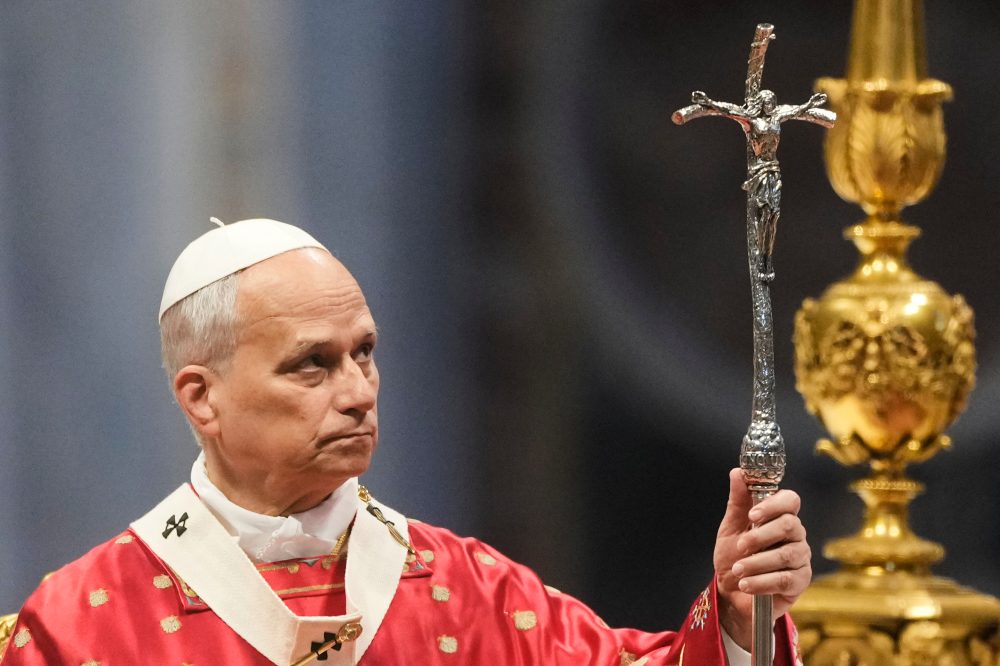
VATICAN CITY — The pontiff has released a comprehensive 83-page document addressing how artificial intelligence is transforming human society across multiple sectors.
The manifesto, titled “Magnifica Humanitas” (Magnificent Humanity), was made public on Monday and covers wide-ranging concerns about technology’s role in modern life.
Regarding false information, Pope Leo XIV stated that AI has become “a powerful amplifier” for disinformation by enabling the “manipulation of content, images and videos,” creating exposure to “biased or misleading perspectives.” The pope warned that democracy suffers when practicality — “what appears useful effective” — replaces truth. “Indifference to the truth leads, slowly but surely, to a descent to totalitarianism,” Pope Leo XIV stated.
The document emphasizes that digital platform controllers, including social media companies, wield influence that “should be constantly guided by the pursuit of truth or respect for human dignity.” The pope described the internet as needing to function as “a setting in which inner freedom and critical thought can mature,” rather than “an instrument of excessive distraction, homogenization or dominance.” He noted that communication shapes culture beyond merely sharing information.
On employment matters, Pope Leo XIV stressed that workplaces must prioritize “the protection of employment opportunities and the irreplaceable role of the individual.” He cautioned that “the pursuit of greater profits cannot justify choices that systematically sacrifice jobs, because the human person is an end, not a means, and the economic order must remain subordinate to human dignity and the common good.” The pope also emphasized that governments should create employment-friendly conditions “since it is a primary good for families and for societies.”
Concerning military applications, Pope Leo XIV warned that AI “can only bring conflict about more quickly and render it more impersonal.” He outlined specific standards for strike decisions, including clear responsibility chains that encompass “those who design, train, authorize and employ technology,” plus safeguards ensuring target selection distinguishes between fighters and civilians while considering effects on vulnerable populations. Essential requirements include accountability guarantees and preventing automated lethal force deployment. Pope Leo XIV advocated for international cooperation “to curb the technological arms race and ensure robust protection for civilians.”
The pope observed that global wealth “is increasingly concentrated in fewer hands, widening inequalities.” In today’s AI and robotics environment, relying only on market forces’ “invisible hand” is insufficient, Pope Leo XIV wrote, encouraging leaders to focus policies on “the common good” while promoting “dignified work, social inclusion and an equitable distribution of the benefits of innovation.”
Pope Leo XIV highlighted how digital networks — encompassing online platforms, messaging applications, and anonymous payment systems — facilitate human trafficking, which he characterized as “a contemporary form of slavery.” He cautioned that ignoring or accepting such practices risks involvement in “today’s sins, which are akin to those of the past when slavery was being concealed and justified.”
The environmental impact of AI infrastructure also drew attention, with Pope Leo XIV noting that data centers powering AI systems consume “enormous amounts of energy and water, significantly influencing carbon dioxide emissions.” As requirements grow, particularly for advanced language models, he urged development of environmentally responsible technological alternatives.
For youth protection, Pope Leo XIV proposed cooperation between policymakers, schools, and families to address the “culture of immediacy and hyperstimulation” from digital media. He stressed AI’s role in increasing risks to young people and cautioned against early access to personal mobile devices. “Online phenomena such as grooming, blackmail and the sexual exploitation of minors are not uncommon, and are made more insidious by the use of fake profiles, algorithms that facilitate dangerous contact, and AI tools capable of manipulating images and videos,” the pope stated.
VATICAN CITY (AP) — The Vatican’s leader issued a major call Monday for stronger oversight of artificial intelligence technology, urging developers to prioritize humanity’s welfare instead of financial gain in a comprehensive document addressing the future of human society.
Pope Leo XIV’s inaugural teaching letter, titled “Magnifica Humanitas” (Magnificent Humanity), has drawn significant attention since the first American-born Vatican leader declared artificial intelligence the greatest challenge confronting people today shortly after taking office.
The document strongly criticized the “culture of power” fueling competition in AI development, particularly in creating advanced remote warfare capabilities. The Vatican leader stated it was “not permissible” to allow AI systems to make irreversible, deadly decisions, creating another point of tension with the Trump administration’s efforts to reduce AI development restrictions.
Technology industry professionals, academic researchers, and Catholic ethics experts believe this document will serve as a crucial reference point in AI policy discussions for lawmakers, scientists, and the general public. The statement arrives as rapid technological advances raise concerns about AI replacing human employment and cognitive abilities.
“It lends itself to people who are at the forefront of these tools and able to see the incredible things that they’re able to do, to have questions about their own ‘What does it mean to be human?’” said Taylor Black, a Microsoft AI executive and director of Catholic University of America’s AI institute.
The Vatican leader presented the document at a Monday launch event featuring Anthropic’s co-founder, a company currently engaged in legal disputes with the Trump administration regarding access to its AI systems. The Vatican included Anthropic as part of its ongoing decade-long initiative to engage Silicon Valley companies in discussions about AI’s human impact.
However, the document repeatedly criticized the dangerous concentration of power and information control among a small number of private sector entities, particularly regarding risks to children and vulnerable populations, while demanding external regulatory oversight.
“It is not enough to invoke ethics in the abstract; robust legal frameworks, independent oversight, informed users and a political system that does not abdicate its responsibility are required,” he wrote. “A more moral AI is not enough if that morality is determined by a few.”
The Vatican leader made multiple appeals to AI developers and regulatory officials to pause and consider their actions’ implications. He encouraged them to apply ethical and spiritual principles when choosing to work for humanity’s benefit rather than personal gain or power.
AI competitors OpenAI and Anthropic rank as the second- and third-most valuable U.S. private companies, each worth hundreds of billions of dollars, exceeding many nations’ economic output.
In a systematic approach, the mathematics-educated Vatican leader examined Catholic social teaching history and applied its fundamental principles — justice, solidarity, work dignity, and universal resource distribution — to digital transformation.
“I am convinced that this will prove to be a defining document for our era, a profound and prophetic document,” said Paolo Carozza, law professor at Notre Dame Law School and chair of the Meta oversight board.
“Pope Leo is offering a clear, comprehensive, and coherent voice urging us to take responsibility for constructing a world in which technology will serve humans rather than degrade them,” he said.
In particularly forceful sections, the Vatican leader condemned how AI has accelerated war’s “normalization” by reducing sensitivity to its consequences. While not identifying specific conflicts, he referenced “opposing imperialisms, between powers that wish to preserve their supremacy, and those that aspire to seize that supremacy.”
He required transparency and accountability from AI developers to ensure clear command chains when ordering AI-assisted military strikes. The Vatican leader declared the Catholic Church’s “just war” doctrine, which establishes specific criteria for justified force, now “outdated” due to warfare’s technological evolution.
The document was signed May 15, marking 135 years since “Rerum Novarum” (Of New Things) publication, the most significant teaching document from the current leader’s inspiration and namesake, Pope Leo XIII. That earlier document addressed worker rights, capitalism’s limitations, and state and employer obligations during the Industrial Revolution.
That foundational text established modern Catholic social thought, and the current Vatican leader referenced it early in his tenure regarding the AI revolution, which he believes presents similar existential questions as the Industrial Revolution did over a century ago. “Magnifica Humanitas” continues a century-long tradition of Vatican leaders adapting “Rerum Novarum” to contemporary social issues, frequently emphasizing work’s dignity for human development.
AI generates both existential concerns and optimistic possibilities amid intensifying debates about whether it will enhance humanity or become a harmful force that diminishes human intelligence while eliminating millions of well-paying positions.
“The pursuit of greater profits cannot justify choices that systematically sacrifice jobs, because the human person is an end, not a means, and the economic order must remain subordinate to human dignity and the common good,” the Vatican leader wrote.
The document extended concerns about preserving human dignity in labor to include the first-ever Vatican apology for the Holy See’s role in legitimizing slavery.
Previous Vatican leaders have apologized for Christians’ participation in the trans-Atlantic slave trade. However, no Vatican leader has previously publicly acknowledged or apologized for the role Vatican leaders played in granting European rulers explicit permission to subjugate and enslave “infidels.”
Vatican representatives declined to identify specific contributors to the document. However, Vatican and church officials have maintained dialogue with Silicon Valley technology companies for ten years. Near the end of his leadership, Pope Francis increasingly spoke about AI and its human risks.
The decision to include Anthropic at the Vatican launch drew criticism from some who viewed it as Vatican endorsement of the AI company.
In February, the Trump administration prohibited all U.S. agencies from using Anthropic’s technology after the company refused to grant the U.S. military unrestricted access. Anthropic, which markets itself as the AI company prioritizing safety and risk reduction in its research, is currently pursuing legal action against the administration.
Brian Boyd, U.S. faith liaison for the nonprofit Future of Life Institute, interpreted Anthropic’s co-founder Christopher Olah’s inclusion as comparable to a Vatican audience with a world leader: recognition rather than endorsement.
“I think it’s more like a recognition of (how) this is an extremely powerful company that’s currently winning this race to replace human workers,” Boyd said.
Anthropic represents an “enormous corporation that is taking onto itself an enormous risk and responsibility,” Boyd continued, but noted the company has “demonstrated genuine goodwill and integrity and interest in dialogue.”
VATICAN CITY — In an unprecedented move Monday, Pope Leo XIV issued a formal apology acknowledging the Vatican’s direct participation in authorizing slavery, describing the church’s historical record as a “wound in Christian memory.”
While previous pontiffs have expressed regret for Christians’ participation in the slave trade, no pope had ever publicly recognized or apologized for how past papal leaders granted European rulers explicit permission to enslave and subjugate “infidels.”
The first pontiff born in the United States, whose ancestry includes both enslaved individuals and those who owned slaves, delivered this apology within his inaugural encyclical titled “Magnifica Humanitas” (Magnificent Humanity), published Monday.
This comprehensive document focuses on protecting humanity during an age of growing artificial intelligence dependence. The pontiff connected the historical slave trade to contemporary forms of exploitation and colonialism emerging from the digital age, including uncontrolled labor practices for obtaining rare minerals essential for AI technology.
Through this approach, the pope addressed longstanding appeals from Black American Catholics, advocates, and researchers who have demanded the Holy See acknowledge its direct involvement in colonial-era human trafficking.
“It is impossible not to feel deep sorrow when contemplating the immense suffering and humiliation endured by so many in stark contrast to their immeasurable dignity as persons infinitely loved by the Lord,” the pope wrote. “For this, in the name of the Church, I sincerely ask for pardon.”
While the Vatican has maintained it consistently recognized all humans’ inherent worth as God’s children, multiple 15th-century papal documents granted Portuguese rulers authority to conquer Africa and the Americas while enslaving non-Christians.
In 1452, Pope Nicholas V issued the papal bull Dum Diversas, granting Portugal’s king and his heirs authority “to invade, conquer, fight and subjugate” and seize all property — including territory — belonging to “Saracens, and pagans, and other infidels, and enemies of the name of Christ” worldwide.
This document also authorized the Portuguese “to reduce their persons to perpetual slavery.”
This bull, along with another issued three years afterward called Romanus Pontifex, established the foundation for the Doctrine of Discovery, the legal framework that justified colonial-era land seizures across Africa and the Americas.
According to the Rev. Christopher J. Kellerman, a Jesuit priest and author of “All Oppression Shall Cease: A History of Slavery, Abolitionism, and the Catholic Church,” Nicholas V’s authorizations to Portugal were reaffirmed or extended by Pope Callixtus III in 1456, Pope Sixtus IV in 1481, and Pope Leo X in 1514.
Spanish monarchs obtained similar rights for the Americas.
The Vatican officially rejected the Doctrine of Discovery in 2023, yet never formally canceled, nullified, or repudiated the original bulls. Vatican officials point to a subsequent 1537 bull, Sublimis Deus, which reaffirmed that Indigenous populations should retain their freedom and property rights and should not face enslavement.
In his encyclical, the current pope noted that his namesake, Pope Leo XIII, became the first pontiff to explicitly condemn slavery in 1888, though this occurred well after numerous nations had already abolished the practice. Prior to this, throughout ancient times and the medieval period, even church institutions maintained slaves.
Recognizing the Holy See’s direct involvement and the 15th-century papal documents, the pope wrote: “Already in the early modern period, the Apostolic See of Rome, responding to the requests of sovereigns, intervened several times in order to regulate and legitimize forms of subjugation, and, in certain cases, including the enslavement of ‘infidels.’”
The pontiff acknowledged that judging these historical decisions by contemporary moral standards would be inappropriate.
“Yet neither can we deny or diminish the delay with which both society and the church came to denounce the scourge of slavery,” he stated.
The pope emphasized that while the church has long championed every person’s inherent dignity as fundamental doctrine, “even if it took eighteen centuries for its full incompatibility with slavery to be explicitly recognized.”
“This constitutes a wound in Christian memory, one from which we cannot consider ourselves detached,” he declared.
The pope urged the church to strongly oppose all trafficking forms connected to the digital technological revolution “if we want to avoid the need to ask for pardon again in the future for having failed to respect the treasure of human dignity that is required by our faith.”
During a 1985 Cameroon visit, St. John Paul II sought African forgiveness for the slave trade on behalf of participating Christians, but did not address papal involvement. In 1992, while visiting Goree Island, Senegal — West Africa’s largest slave-trading center — he condemned slavery’s injustice, calling it a “tragedy of a civilization that called itself Christian.”
Genealogical research published by Henry Louis Gates Jr. reveals that 17 of the current pope’s American ancestors were Black, documented in census records as mulatto, Black, Creole, or free persons of color. Gates wrote in The New York Times that the pope’s family history encompasses both slaveholders and enslaved individuals.
Last month during an Angola visit, the pope prayed at a Catholic shrine situated at a former major African slave trade center during Portuguese colonial control. At the Sanctuary of Mama Muxima, he acknowledged the “sorrow and great suffering” Angolans experienced across centuries, though he did not specifically mention slavery.
Deadly flooding in China’s Chongqing municipality has claimed nine lives while 11 individuals remain unaccounted for after intense storms battered the region, according to state broadcaster CCTV’s Monday report.
Multiple communities and rural areas within the Yongchuan district experienced devastating impacts from intense precipitation that struck suddenly during Saturday night hours, according to earlier state media accounts. Officials had initially confirmed three fatalities on Sunday.
The intense precipitation triggered rapid flooding and slope failures throughout the region, prompting authorities to evacuate more than 2,000 local residents, according to the state-operated Xinhua news agency.
The latest casualties add to the dozens of fatalities recorded earlier in the week as a band of severe weather moved through extensive portions of central and southwestern China.
Health officials in Uganda announced Monday that two additional people have tested positive for Ebola, raising the nation’s confirmed case count to seven.
The latest patients are both healthcare workers employed at a private medical facility in the capital city, and both are Ugandan nationals, according to a statement from the health ministry.
“Both patients have been admitted to the designated treatment unit and are now receiving care,” the ministry said, adding that response teams were tracing all those who had been in contact with the two people.
On Saturday, Ugandan health authorities had announced three additional Ebola cases.
The source of the outbreak is located in the Ituri province of the neighboring Democratic Republic of Congo, which shares a border with Uganda.
Health officials with the World Health Organization have classified the outbreak of the uncommon Bundibugyo strain of Ebola as a public health emergency of international concern.
WHO chief Tedros Adhanom Ghebreyesus reported Sunday that the outbreak has generated more than 900 suspected cases to date, with 101 of those being confirmed infections.
Pope Leo released his inaugural major papal document Monday, calling for worldwide oversight to restrict artificial intelligence advancement, warning these technologies spread false information and could push humanity toward perpetual conflict.
The comprehensive encyclical, spanning nearly 43,000 words and titled “Magnifica Humanitas” (Magnificent Humanity), addresses multiple concerns about AI development and its impact on society.
Regarding artificial intelligence systems, the Pope expressed concern about corporate control, stating: “The main drivers of development are private, often transnational, parties that are endowed with resources and the capacity to intervene that surpass those of many Governments. Technological power thus takes on an unprecedented, predominantly ‘private’ aspect, which makes it even more challenging to discern, govern and direct such power toward the common good.”
He warned about concentrated power, noting: “When such power is concentrated in the hands of a few, it tends to become opaque and evade public oversight, increasing the risk of distorted forms of development that give rise to new dependencies, exclusions, manipulations and inequalities.”
The document emphasizes responsible development: “Calling for prudence, rigorous evaluation and even, at times, a slower pace in adopting AI does not mean opposing progress; instead, it is an exercise of responsible care for the human family.”
Pope Leo stressed the need for concrete action: “It is not enough to invoke ethics in the abstract; robust legal frameworks, independent oversight, informed users and a political system that does not abdicate its responsibility are required.”
On warfare applications, the encyclical states: “The digital revolution is changing the nature of conflict. Alongside conventional warfare, there are hybrid forms such as cyberattacks, information manipulation, campaigns of influence and the automation of strategic decisions.”
The Pope warned about blurred lines in military technology: “What is created for defense can be rapidly repurposed for offense, and the fine line between protection and aggression becomes blurred. While AI can enhance the defense and protection of civilians, it can also lower the threshold for the use of force, shield people from responsibility and foster a culture in which the enemy is reduced to a statistic and the victim to ‘collateral damage’.”
Addressing broader societal issues, the document states: “Democracy does not consist of rules and procedures alone, but above all of a solid concordance with the facts and a genuine commitment to the good of individuals and society as a whole. Indifference to the truth leads, slowly but surely, to a descent into totalitarianism.”
On employment concerns, Pope Leo noted: “The convergence of automation, robotics and AI is rapidly transforming the very structure of work. It is said that this will bring great improvements for everyone. In reality, however, the ‘new ways’ of working are not necessarily better.”
The encyclical emphasizes worker protection: “The protection of employment opportunities and the irreplaceable role of the individual must remain the general rule. The pursuit of greater profits cannot justify choices that systematically sacrifice jobs.”
Pope Leo has issued his inaugural major papal teaching document, calling on world governments to decelerate artificial intelligence advancement while warning these systems spread false information, fuel conflicts, and could push humanity toward perpetual warfare.
The pontiff, who has taken increasingly bold stances in recent months and faced criticism from U.S. President Donald Trump following his condemnation of the Iran war, delivered numerous passionate pleas to global leaders in the extensive document, known as an encyclical.
The first American pope advocated for preventing AI data ownership from remaining exclusively with private entities, protecting worker rights and children’s safety from the technology, and reducing competitive tensions among AI corporations.
“What is needed is a more active political involvement that is capable of slowing things down when everything is accelerating,” Leo stated in the document titled “Magnifica Humanitas” (Magnificent Humanity).
The pontiff demanded “robust legal frameworks, independent oversight, informed users and a political system that does not abdicate its responsibility.”
Encyclicals represent among the most significant forms of papal instruction to the Church’s 1.4 billion followers worldwide.
The eagerly awaited document released Monday, containing nearly 43,000 words, has been under development almost since Leo’s papal election just over a year ago.
While artificial intelligence served as the primary focus, the encyclical also condemned ongoing global conflicts, criticized the erosion of international organizations, and cautioned that weapons industry profits drive warfare.
“The past 60 years have been marked by conflicts of astonishing brutality, often affecting civilian populations on a massive scale,” Leo declared in the English version.
“Humanity is slipping into a violent culture of power, where peace no longer appears as a responsibility to be taken on, but as a fragile interval between conflicts,” he continued.
Leo delivered one of the most definitive papal rejections of just war theory, a principle the Church has employed since at least the fifth century to assess global conflicts.
This doctrine, which typically permits warfare only for defensive purposes against aggression, has been referenced by Trump administration officials, including Vice President JD Vance, a Catholic, to support the Iran war.
“The ‘just war’ theory which has all too often been used to justify any kind of war, is now outdated,” Leo declared.
“The use of force, violence and weapons reflects a relational poverty that always has disastrous consequences for civilian populations.”
The pope also worried that leaders might initiate conflicts to divert public attention from internal problems.
“We cannot rule out the possibility that some leaders may consider armed conflict as an effective way of diverting attention from domestic problems and a cynical tool for managing difficulties,” he wrote.
Regarding AI in military applications, the pope insisted any use “must be subject to the most rigorous ethical constraints” and declared it “not permissible” to allow AI systems to make deadly decisions.
Leo, the 14th pontiff to select that name, referenced centuries of previous papal social justice teachings before examining AI ethics.
He particularly mentioned his predecessor Leo XIII, who issued a renowned 1891 encyclical demanding improved wages and working conditions for laborers during the Industrial Revolution.
Leo XIV condemned what he termed “new forms of slavery” experienced by workers maintaining AI systems and factory employees producing technological devices like computers and smartphones that run AI.
“In some regions of the world, children and adolescents work in dangerous conditions, crushing the materials from which rare earth elements are extracted,” the pope wrote.
“The bodies of these people are scarred, injured and worn down so that computational flow may continue uninterruptedly,” he stated. “This reality deeply challenges the moral conscience of our time.”
The pontiff also recognized that the Catholic Church failed to strongly oppose transatlantic slavery until the 19th century, offering a personal apology.
“This constitutes a wound in Christian memory,” he wrote. “For this, in the name of the Church, I sincerely ask for pardon.”
Leo, who indicated at the document’s beginning his intention to address Catholics and all people of goodwill, said society must confront “crucial questions” about AI development and global leadership direction.
Referencing the biblical Tower of Babel story — where human pride drives attempts to build a tower reaching Heaven, provoking divine anger — the pope highlighted risks of any endeavor that “aspires to reach heaven without God’s blessing.”
“With the heart of a shepherd and a father, I ask everyone to abandon the construction of yet another Tower of Babel and to join forces in building up the common good,” the pope declared.
Leo encouraged the world to persist in addressing potential AI dangers.
“A subtle temptation may emerge, namely the thought that the problems are too big and we are too small, and that our choices, therefore, cannot make a difference,” he wrote.
“Certainly, not everyone has the same power to make a difference,” Leo concluded. “Yet, no one is without responsibility. We all have our own areas for action.”
Law enforcement officials in Greece detained 20 individuals on the island of Crete Monday, announcing they had broken up a criminal organization accused of stealing European Union agricultural subsidies in what represents the most recent development in an expanding fraud investigation that has created political turmoil for the government.
Police officials reported that the organization’s alleged ringleaders included two accountants along with government workers who helped farmers file paperwork to obtain EU agricultural funding through fraudulent land ownership claims.
Authorities stated that the criminal network generated illegal profits exceeding €3 million ($3.49 million) after beginning operations in 2019.
The Monday detentions represent the most recent developments in multiple local investigations connected to a broader examination by the European Public Prosecutor’s Office — an independent EU agency — into suspected criminal activity in Greece targeting the bloc’s financial resources.
During the previous year, European prosecutors brought charges against numerous Greek livestock farmers for falsifying grazing land ownership documents to obtain millions of euros in EU subsidies, allegedly with assistance from government employees and conservative politicians.
The fraud investigation has created significant political controversy in Greece, leading to parliamentary investigations — which reached no definitive conclusions — along with cabinet resignations and demands from opposition parties for early elections.
Following a request from the European chief prosecutor, parliament voted in April to remove parliamentary immunity from 13 lawmakers belonging to the ruling New Democracy party, allowing them to face investigation regarding their suspected involvement in related cases.
Prime Minister Kyriakos Mitsotakis called on EU prosecutors to quickly determine whether to formally charge the lawmakers, as he attempts to limit the political damage from the investigation ahead of the upcoming parliamentary election scheduled by spring 2027.
Good morning, Delmarva! Memorial Day is starting off quite soggy across our region. We’re waking up to patchy fog and scattered showers, but the good news is most of that early morning activity should wrap up by 7 AM.
Don’t put that umbrella away just yet, though! We’ll see showers and thunderstorms developing throughout the day as cloudy skies stick around. Temperatures will reach a comfortable 74 degrees with light southwest winds around 5 mph. There’s an 80% chance of rain today, but we’re not expecting heavy amounts – most areas will see less than a tenth of an inch.
Tonight, those storm chances continue with temperatures dropping to a mild 64 degrees. Tuesday looks a bit more promising! We’ll start with some lingering shower possibilities in the morning, then skies should gradually clear to mostly cloudy conditions. It’ll be a touch warmer too, with highs reaching 78 degrees. Tuesday night stays mostly cloudy with lows again around 64.
Stay safe out there today, and remember to keep those Memorial Day plans flexible! I’m your TV Delmarva meteorologist, keeping you weather-ready.
As fewer Americans choose to eat at restaurants, one establishment has created an unusual solution by letting customers decide their own meal prices.
The dining industry is facing challenges as consumers increasingly opt to stay home rather than dine out. In response, this restaurant has implemented a weekly special where patrons can determine what they’re willing to pay for their food.
This pay-what-you-want approach represents a creative strategy for restaurants struggling with declining customer traffic in today’s economic climate.
The California State University system is providing a preview of the challenges that emerge when university leadership pushes forward with technology adoption while the academic community remains unconvinced about its educational benefits.
The large public university system’s commitment to artificial intelligence is moving ahead despite reservations from both students and faculty members who question whether the technology will actually enhance learning outcomes.
This disconnect between administrative vision and campus sentiment illustrates the broader tensions facing higher education institutions as they navigate emerging technologies and their potential impact on teaching and learning.
The kidnapping of Elizabeth Smart when she was just 14 years old became a story followed around the globe. Following her rescue, Smart reveals she battled feelings of shame connected to her physical body.
Smart has found a path to healing through competitive bodybuilding, which has transformed how she views herself. The experience has given her a new sense of confidence and helped reshape her relationship with her body.
Smart remains active as an advocate, continuing her work supporting women and those who have experienced sexual violence. Her journey from trauma survivor to bodybuilding competitor represents a powerful story of reclaiming control and finding strength.
VILNIUS, Lithuania (AP) — Officials in Lithuania are investigating what they believe was a state-sponsored cyberattack that compromised more than 600,000 records from government databases.
On Friday, Lithuania’s general prosecutor’s office revealed that hackers gained access to property and business registry information by using stolen login credentials belonging to organizations with authorized access to the databases.
Adrijus Jusas, who led the State Enterprise Centre of Registers, stepped down from his position on Monday in the wake of the security breach.
In response to the incident, officials quickly put new cybersecurity protocols in place, which included shutting down accounts belonging to users under suspicion and requiring all users to create new login credentials, according to prosecutors.
While prosecutors indicated they believe another nation orchestrated the attack, they have not identified which country they suspect.
The breach has heightened concerns in Lithuania, a nation of 2.9 million people that faces ongoing threats from Russia’s hybrid warfare campaign targeting Europe, which encompasses sabotage operations, arson incidents, vandalism, and propaganda efforts.
On Sunday, opposition politician Laurynas Kasčiūnas posted on social media that he believes Russian intelligence services were behind the data theft, though he provided no supporting evidence for his assertion.
The politician expressed concern that the stolen information could include home addresses of intelligence operatives, service members, diplomatic staff, or elected officials, potentially enabling foreign actors to conduct surveillance or intimidation campaigns against these individuals.
DHAKA, Bangladesh (AP) — At least 15 people died and 10 others sustained injuries when a truck loaded with iron rods and carrying passengers flipped over on a main highway during the early morning hours Monday in central Bangladesh, according to police reports.
The accident occurred around 5 a.m. when the driver lost control of the vehicle in the Soratoil area of Tangail district, located 83 kilometers (52 miles) northwest of Dhaka, the country’s capital, according to local police chief Fuad Hossain.
The truck was transporting hitchhiking passengers and was en route from Dhaka to the northern part of the country as holiday travelers began their journeys before the Islamic festival Eid al-Adha scheduled for Thursday, Hossain explained. The vehicle rolled over, killing the victims instantly at the crash site, he reported.
According to the official, the majority of those aboard were day laborers making their way to reunite with family members for the religious celebration.
People who saw the accident told television news outlets that they hurried to the crash site after hearing the commotion and began helping to rescue passengers who had become trapped.
Traffic fatalities claim thousands of lives annually in this country of over 170 million residents due to poor enforcement of driving regulations, deteriorating roadway infrastructure and inexperienced drivers.
Memorial Day stands as an official American holiday dedicated to honoring military personnel who died in service, yet it has transformed into the unofficial beginning of summer featuring extended weekends filled with travel and sales on everything from bedding to gardening equipment.
Here’s how this significant holiday developed and changed over time:
The observance occurs on May’s final Monday. For this year, that date is May 25.
The day serves as a time for contemplation and honoring those who lost their lives during military service, as noted by the Congressional Research Service.
Part of the holiday includes the National Moment of Remembrance, which asks all Americans to stop at 3 p.m. for silent reflection.
The holiday’s roots extend back to the American Civil War, a conflict that claimed over 600,000 military lives from both Union and Confederate forces from 1861 through 1865.
The initial nationwide celebration of what was originally known as Decoration Day took place on May 30, 1868, following a Union veterans’ organization’s request to adorn military graves with blooming flowers.
This tradition had already become common practice. Waterloo, New York, started formal ceremonies on May 5, 1866, and later received recognition as the holiday’s official birthplace.
However, Boalsburg, Pennsylvania, claims its first ceremony occurred in October 1864, based on Library of Congress records. Additionally, women in certain Confederate states had decorated graves prior to the war’s conclusion.
David Blight, a Yale history professor, highlights May 1, 1865, when approximately 10,000 people, predominantly Black Americans, organized a parade, listened to speeches and honored Union graves in Charleston, South Carolina.
A total of 267 Union soldiers had perished at a Confederate prison facility and received burial in a collective grave. Following the war’s end, Black church members provided them with separate burial sites.
“What happened in Charleston does have the right to claim to be first, if that matters,” Blight told The Associated Press in 2011.
By 1869, The New York Times warned that the holiday risked becoming “sacrilegious” and losing its “sacred” nature if it emphasized spectacle, feasts and speeches over remembrance.
During an 1871 Decoration Day address at Arlington National Cemetery, abolitionist Frederick Douglass expressed worry that Americans were losing sight of the Civil War’s central issue: slavery.
“We must never forget that the loyal soldiers who rest beneath this sod flung themselves between the nation and the nation’s destroyers,” Douglass said.
His worries proved justified, according to Ben Railton, a professor of English and American studies at Fitchburg State University in Massachusetts.
Despite approximately 180,000 Black men fighting for the Union Army, the holiday became essentially “white Memorial Day” in numerous communities, particularly following the emergence of the Jim Crow South, Railton told the AP in 2023.
During the 1880s, then-President Grover Cleveland reportedly spent the holiday fishing, and “people were appalled,” Matthew Dennis, an emeritus history professor at the University of Oregon, told the AP.
However, when the Indianapolis 500 conducted its first race on May 30, 1911, an AP story omitted any reference to the holiday or related disputes.
Dennis explained that Memorial Day’s significance weakened somewhat following the establishment of Armistice Day, commemorating World War I’s conclusion on Nov. 11, 1918. Armistice Day achieved national holiday status by 1938 and received the new name Veterans Day in 1954.
In 1971, Congress shifted Memorial Day from its fixed May 30 date to the final Monday of May. Dennis noted that establishing the three-day weekend acknowledged Memorial Day’s evolution into a broader commemoration of the deceased and a leisure occasion.
One year afterward, Time Magazine observed that the holiday had transformed into “a three-day nationwide hootenanny that seems to have lost much of its original purpose.”
Even during the 1800s, cemetery ceremonies were accompanied by recreational activities including picnics and running competitions, Dennis noted.
The holiday also developed alongside baseball and automobiles, the five-day work schedule and summer holidays, according to the 2002 publication “A History of Memorial Day: Unity, Discord and the Pursuit of Happiness.”
During the mid-1900s, a limited number of businesses started opening in defiance of the holiday.
After the holiday switched to Monday, “the traditional barriers against doing business began to crumble,” authors Richard Harmond and Thomas Curran wrote.
Today, Memorial Day shopping events and travel have become firmly embedded in the country’s collective habits.
An opposition politician in Latvia announced Monday his efforts to establish a new four-party majority government following the breakdown of the current ruling coalition earlier this month due to national security disagreements.
The collapse occurred amid ongoing concerns about Russian drone violations in the Baltic region, as these NATO member nations continue supporting Ukraine while facing repeated airspace breaches during Ukraine’s expanded military operations against Russian targets near the Baltic Sea.
The current Prime Minister Evika Silina resigned following internal coalition disagreements about the government’s response to the drone violations, causing the government to fall apart just five months ahead of the planned general election.
“We have now reached a division plan,” stated Andris Kulbergs of the United List, who has received authorization from President Edgars Rinkevics to establish a new cabinet, during a news conference.
“The way we reached this solution, a division among four partners, was straightforward. We had to proceed based on the simplest possible principles – four partners, equal terms – and simply move forward from there,” he explained.
As head of the United List, which represents the parliament’s largest opposition group, Kulbergs would assume leadership if legislators approve his proposed centre-right cabinet. According to Rinkevics, parliamentary voting on the new government could occur within days.
Security matters are anticipated to continue as a primary focus for any new coalition led by Kulbergs, as the Baltic nations maintain their strong opposition to Russia and continue as vocal opponents of Moscow regarding the Ukrainian conflict.
The current administration under Silina will continue operating in a temporary capacity until a replacement government takes office.
Political instability in Senegal has intensified as the country’s National Assembly leader El Malick Ndiaye stepped down from his position on Sunday, just two days following the president’s decision to remove the prime minister from office.
Ndiaye, who holds a prominent position within the governing PASTEF party, characterized his departure as a personal choice, stating he was acting in the “higher interest of the nation” when explaining his decision to resign.
The resignation follows President Bassirou Diomaye Faye’s Friday dismissal of Prime Minister Ousmane Sonko and the dissolution of the entire government, marking the end of months of escalating friction between the two officials.
The relationship between Faye and Sonko, former political partners who rose to power as a team in 2024, has deteriorated amid increasing economic pressures related to national debt and domestic consequences stemming from the Iran war.
Parliamentary members are scheduled to meet Tuesday for votes on two key matters: restoring Sonko’s status as a legislator and selecting Ndiaye’s replacement to lead the National Assembly.
However, some opposition voices argue that returning Sonko to parliamentary status would violate legal requirements, pointing out that he has never previously served as a member of parliament.
The company behind the world’s biggest stablecoin announced Monday it will work with Georgia’s government to create a digital version of that nation’s currency, marking one of the first collaborative projects between a country and cryptocurrency firm to put a national currency into digital form.
Tether revealed the new cryptocurrency will be named ‘GEL₮’.
These digital currencies are a form of cryptocurrency that maintains value by being tied to traditional government-issued money. Crypto traders primarily use them, and their popularity has grown dramatically over the past several years.
Indian oil refineries have shifted their crude oil purchasing patterns, turning to suppliers in Latin America and Africa after Middle Eastern supply chains faced disruptions, according to trade data sources.
The world’s third-largest oil importing nation and consumer historically relied heavily on Middle Eastern crude until conflict erupted at the end of February. The Israeli-U.S. war on Iran has created shipping restrictions through the Strait of Hormuz, forcing refiners to seek alternative sources.
Trade data from Kpler reveals that during April and May, Indian refineries increased their purchases from Venezuela, Brazil, Angola and Nigeria to compensate for the supply gaps, while maintaining their Russian oil acquisitions.
In April, India halted purchases from Iraq due to suspended exports, but resumed Iranian oil imports for the first time in seven years after Washington issued a temporary waiver aimed at stabilizing global oil markets.
Russian oil imports to India dropped by approximately 29.4% from March levels to 1.6 million barrels daily, primarily due to Nayara Energy closing its 400,000-barrel-per-day refinery for scheduled maintenance.
May projections indicate India will receive roughly 1.9 million barrels per day from Russia and about 41,000 barrels per day from Iraq, according to preliminary Kpler data.
India’s total oil imports reached 4.57 million barrels daily in April, matching March levels but representing a 15.5% decrease compared to the previous year.
Imports from the United Arab Emirates surged in April to 669,700 barrels per day from March’s 230,600 barrels per day, while Saudi Arabian oil intake remained steady at approximately 619,500 barrels per day.
The UAE and Saudi Arabia maintain the only Gulf pipeline systems that can export crude oil without using the Strait of Hormuz, unlike Kuwait, Iraq, Qatar, and Bahrain, which depend on the waterway for shipments.
The Organization of the Petroleum Exporting Countries’ portion of India’s oil imports climbed to 45.2% in April from roughly 30% in March, with the UAE counted as a member during that period.
The UAE withdrew from OPEC in May, eliminating its obligation to follow oil production quotas.
Increased UAE imports helped prevent a larger drop in the Middle East’s share of India’s oil supply, while Russian oil’s portion fell to about 35% from nearly 50%.
Russia maintained its position as India’s primary oil supplier, with the UAE and Saudi Arabia following. Brazil ranked as the fourth-largest supplier, and Venezuela came in fifth. Data suggests Venezuela is positioned to become the fourth-largest supplier in May.
Listen to the Morning Delmarva Farm Report Update — May 25, 2026
DELMARVA — With June just a week away, dairy farmers across the country are preparing for National Dairy Month celebrations. Agricultural advocates are calling on dairy producers to explore creative approaches for reaching out to non-farming communities and highlighting the positive aspects of their industry.
The month-long observance presents an opportunity to celebrate dairy cattle, the dedicated individuals working in the field, and the quality products they produce. June represents an ideal opportunity to enjoy a variety of dairy products while also providing dairy producers with a chance to showcase their year-round efforts and educate the public about the dairy farming industry.
Markets
Corn at Laurel Grain Company in Laurel, Delaware is bringing $5.08/bu for July delivery. December corn there is $5.02/bu. Soybeans for July delivery are $11.37/bu, while November beans are $11.38/bu.
Forecast
Patchy fog is expected this morning with highs today near 69° and light southerly winds. It will stay mostly cloudy tonight with lows around 63° and patchy fog continuing. Tuesday expect partly sunny skies with patchy fog in the morning, highs reaching 72°. Wednesday brings a slight chance of rain showers with highs near 75°.
This article is based on the Delmarva Farm Report Update Morning Edition, May 25, 2026. Hosted by Tom Bradley.
CAIRO (AP) — An agreement appears to be taking shape between the United States and Iran to conclude their conflict and reopen the Strait of Hormuz, with U.S. President Donald Trump stating over the weekend that negotiations had been “largely completed.”
The timeline for finalizing the agreement and implementing its various components remains unclear. Trump made his comments following conversations with Middle Eastern allies, including a separate discussion with Israel. Information comes from two regional officials and a U.S. official who requested anonymity to discuss the delicate negotiations.
Here’s the current situation:
During the 12 weeks following the start of hostilities when the U.S. and Israel launched attacks on Iran that resulted in the deaths of senior officials including Supreme Leader Ayatollah Ali Khamenei, Tehran has maintained that any agreement must address ending combat on all battlefronts. This encompasses Lebanon, where the Iranian-supported Hezbollah militant organization has been engaged with Israel since the conflict’s second day.
A tentative ceasefire has remained in place since April 7. Concluding the war would reduce tensions across a region that witnessed Gulf safe havens and transportation centers like the United Arab Emirates hit by Iranian missiles and drones. This would permit global commerce, including approximately 20% of the world’s oil and natural gas supplies, to resume passage through the Strait of Hormuz. It would also enable reconstruction of energy and other critical infrastructure throughout the region.
Both regional officials indicated the preliminary agreement encompasses ending hostilities between Israel and Hezbollah, along with a pledge to avoid meddling in regional countries’ internal matters, including Iran. This represents a crucial reference to Iran’s backing of proxy forces, which also encompass the Houthi rebels in Yemen, Hamas militants in Gaza and Shiite armed groups in Iraq.
The U.S. seeks Israel to maintain freedom to respond to perceived Lebanese threats while Iran opposes this, one regional official noted. The U.S. official stated the agreement would ensure Israel’s right to act against immediate threats in self-defense.
Iran’s nuclear activities, missile capabilities and proxy support were the declared justifications for U.S. and Israeli strikes against Iran. However, Tehran’s retaliatory control over the Strait of Hormuz rapidly became a primary global concern as hundreds of vessels transporting oil, natural gas, fertilizer and other commodities became stranded.
According to the developing accord, the strait would progressively reopen alongside the U.S. ending its blockade of Iranian ports initiated on April 17, the regional officials reported. The blockade has restricted Iran’s capacity to export oil and generate desperately needed revenue for its struggling economy.
The U.S. would permit Iran to market its oil through sanctions exemptions, according to one official briefed on the discussions. Sanctions relief and the release of Iran’s billions in frozen assets would be negotiated during a 60-day timeframe, the official added.
Iran’s nuclear activities and international worries about its potential weapons development underpin all tensions, with the U.S. and Israel having contemplated highly sophisticated military operations to eliminate its highly enriched uranium.
Under the prospective agreement, Tehran would consent to surrender that stockpile of highly enriched uranium, according to regional officials. One official with direct negotiation knowledge said the method of Iran’s surrender would be determined through additional discussions during the 60-day period. Some would likely be diluted while the remainder transferred to a third nation, possibly Russia, the official noted. Russia has expressed willingness to accept it.
A U.S. official verified the 60-day timeframe and stated that without Iran surrendering its stockpile, sanctions relief would not occur.
Iran possesses 440.9 kilograms (972 pounds) of uranium enriched to 60% purity, representing a brief technical advancement from weapons-grade levels of 90%, according to the International Atomic Energy Agency.
Iran claims an “inalienable” right to nuclear technology while maintaining its program serves peaceful purposes. On Sunday, President Masoud Pezeshkian told state television they were prepared “to assure the world that we are not after a nuclear weapon.”
Trump posted on social media Sunday that “our relationship with Iran is becoming a much more professional and productive one. They must understand, however, that they cannot develop or procure a Nuclear Weapon or Bomb.”
Several matters have not been addressed in descriptions of the developing deal, including Iran’s uranium enrichment status.
Another concern is Iran’s missile program, which Israel particularly has aimed to eliminate.
While the United States and Israel began the war with declared goals of encouraging Iranians to challenge their government following nationwide demonstrations earlier in the year, any discussion of leadership change in Tehran seems to be excluded.
Regarding Iran’s previously stated negotiation objectives, there appears to be no reference to U.S. military withdrawal from the region, or compensation for war-related damages.
A leading electrical infrastructure company projects its data center operations in India will significantly outperform the company’s other business segments in the coming years, fueled by increasing artificial intelligence infrastructure requirements.
Currently representing 15% to 20% of the company’s Indian operations, the data center division is experiencing double-digit expansion rates and is expected to capture a substantially larger portion of overall business, according to Sumati Sahgal, vice-president for Secure Power and Data Centres, Greater India Zone, who spoke with Reuters on Friday.
“This business will contribute to a much faster pace of growth than what the rest of the core business sees,” Sahgal explained, noting that data centers and grid modernization would be among the company’s most robust growth areas.
Market research from Astute Analytica forecasts India’s data center sector will reach $31.36 billion by 2035, expanding at a compound annual growth rate of 13.37%.
Sahgal predicted India’s data center capacity could jump to 6-7 gigawatts by 2030, up from the current 1.5 gigawatts, with investment expanding beyond traditional hubs like Mumbai and Chennai into states such as Gujarat and Rajasthan as companies establish facilities closer to their customer base.
According to Sahgal, India is developing into both a consumption and production center for data center power and cooling systems, with demand originating from hyperscalers, colocation providers, and businesses seeking comprehensive infrastructure and services.
The French multinational provides essential data center infrastructure including UPS systems, switchgear, power distribution units, precision cooling, and energy management software, establishing it as a crucial supplier as artificial intelligence workloads increase requirements for dependable digital infrastructure.
The organization addresses comprehensive data center requirements, spanning power and cooling to software and services, while maintaining local manufacturing capabilities.
The company’s India-listed subsidiary produces electrical distribution equipment including transformers and switchgear, while its broader Indian operations encompass energy management, automation, and digital infrastructure.
Iran’s foreign ministry announced Monday that substantial progress has been achieved on various issues being discussed in potential talks with the United States, though officials stressed this doesn’t indicate an imminent agreement.
Foreign ministry spokesperson Esmaeil Baghaei clarified that Iran’s current diplomatic efforts center on ending warfare and do not involve nuclear matters at this time. He also reiterated concerns that shifting stances from U.S. officials continue to complicate any potential agreement.
The comments come as diplomatic discussions continue between the two nations, though the timeline for any formal agreement remains unclear.
Inter Miami’s team captain Lionel Messi was forced to leave the field early during Sunday night’s 6-4 home win against the Philadelphia Union after what appeared to be a left thigh injury.
The incident occurred in the 70th minute when the two-time consecutive MLS MVP was seen clutching the upper portion of his left thigh following a free kick attempt. The soccer legend from Argentina asked to be taken out of the game and walked to the locker room after Mateo Silvetti came in as his replacement.
The 28-year-old player, who leads the league with 20 goal contributions this season (12 goals and eight assists) across 14 games, was able to walk off the field without assistance. During his fourth campaign with Inter Miami, Messi has recorded 107 goal contributions (62 goals and 45 assists) over 67 appearances, starting 59 of those contests.
Team coach Guillermo Hoyos downplayed concerns about the substitution, though he acknowledged not having discussed the situation with Messi following the game’s conclusion.
“As far as I know, we don’t have a report on that yet, but he really was fatigued. It was fatigue,” Hoyos said after the match. “Yes, it was fatigue. He was tired, the field was heavy, and rather than doubt, you always say not to take the risk.”
Major League Soccer enters a six-week hiatus following Sunday’s games, with the FIFA World Cup scheduled to kick off June 11 and continue until July 19.
Messi is anticipated to represent Argentina, the current World Cup title holders, although the roster for this year’s tournament remains unannounced. Argentina’s opening Group J contest is set for June 16 against Algeria in Kansas City. The team will prepare for group competition with exhibition games against Honduras on June 6 at Texas A&M’s Kyle Field and Iceland on June 9 at Auburn’s Jordan-Hare Stadium.
Stock prices for a major German food delivery company reached their peak level in 18 months during Monday trading after news emerged of a potential takeover offer from Uber, with reports indicating the American company may be planning to increase its proposal.
The German firm’s stock price climbed 10% to reach 37 euros per share by 0705 GMT, marking the company’s strongest performance since the end of November 2024. This surge brought Delivery Hero’s total market value to €11.2 billion, equivalent to $13.04 billion.
The stock rally began after Delivery Hero announced it had received a preliminary acquisition proposal from Uber, while a Financial Times report suggested the U.S. competitor was weighing an increase to its initial offer.
MUSANZE, Rwanda — In the mist-shrouded forests of Rwanda’s Volcanoes National Park, a wildlife guide uses distinctive grunts and clicks to communicate with endangered golden monkeys, signaling his peaceful intentions through sounds they recognize.
Within this renowned African park, the challenging landscape of steep ridges and thick vegetation makes it difficult to spot even large mountain gorillas, which are also endangered. Scientists are now adopting innovative technology to better locate and safeguard these species.
The method, called environmental DNA or eDNA, enables researchers to identify wildlife through genetic traces such as hair or droppings found in soil and water sources. This approach minimizes the need for direct human contact during wildlife studies that often involve searching blindly through foggy conditions.
This technique, typically employed in ocean conservation efforts, was brought to the region by the African Wildlife Foundation working alongside Rwanda’s government. The goal is to create a comprehensive catalog of all species within the nation’s borders, supporting biodiversity protection efforts against threats from climate change and growing human populations.
“We selected eDNA as a new technology to bring solutions and to complement existing methods used in ecological monitoring,” said the foundation’s country manager for Rwanda, Patrick Nsabimana.
For many years, biodiversity tracking has depended on camera traps activated by animal movement and direct observations by park rangers.
However, this presents difficulties in challenging landscapes like the Virunga mountains, which form the core of Volcanoes National Park spanning parts of Rwanda, Uganda and Congo. Safety concerns in border regions can also restrict ranger access.
Nsabimana explained that eDNA offers an economical monitoring solution for vast ecosystems like Virunga. Researchers collect samples from areas such as downstream water sources that likely contain traces from animals living at higher elevations, then analyze them in laboratories.
“With one sample, you can detect multiple species, mammals, birds, amphibians and many others,” said Deogratias Tuyisingize, a Rwanda-based biodiversity researcher with the Dian Fossey Gorilla Fund that is also involved in the project.
He emphasized that combining conventional tracking methods with new technology is essential for comprehensive species monitoring. Due to the area’s steep valleys and mountain slopes, “we are sure we were missing some species.”
Project participants noted that improved knowledge of endangered species locations could enhance anti-poaching patrol efforts.
The capacity to create comprehensive biodiversity assessments is vital for conservation work, particularly as Rwanda expands certain national parks by restoring former farmland.
“We can see how species are colonizing these sites over time,” Tuyisingize said.
This enables conservationists to measure progress through the return of rare or threatened wildlife and provides early detection of invasive species.
However, the eDNA method has its constraints. It cannot accurately determine animal population sizes within an ecosystem, and DNA evidence may persist long after species have relocated.
Processing samples within Rwanda also presents challenges, as initial specimens from the project required shipment to Europe for testing.
Joshua Newton, who conducted research on eDNA for Curtin University’s Trace and Environmental DNA Laboratory, said challenges also include having cold storage to preserve DNA samples and ensuring samples are not contaminated.
Information shortfalls present another obstacle. Africa maintains relatively sparse genetic reference databases despite decades of conservation efforts across the continent, complicating efforts to match DNA samples with known species.
Most genetic reference libraries come from Europe and America, said James Munyawera, a lab specialist with the Dian Fossey Gorilla Fund.
Scientists are currently developing region-specific databases to address this gap.
The Volcanoes National Park initiative has also started educating local community members and rangers to participate in monitoring activities by gathering samples.
JAMUNDI, Colombia — Gladys Marín faces a difficult decision this Sunday. Though the polling station sits just across the street from her home in the small Colombian town of Potrerito, safety concerns may prevent her from casting her ballot in the country’s presidential election.
Marín’s residence sits within 100 meters of the local police station, which has repeatedly been targeted by explosive devices dropped from drones. Government officials attribute these assaults to rebel fighters who refused to accept a peace deal negotiated with the Colombian government ten years ago.
“You have to stay alert to what is happening, because we live very close to the police station,” Marín explained while speaking from her porch in the town located approximately 470 kilometers from Bogotá, the nation’s capital.
The South American nation will select its next president and vice president on May 31 in elections widely viewed as a judgment on President Gustavo Petro’s administration, particularly his divisive “total peace” program designed to establish negotiations with remaining insurgent organizations.
Most observers agree that violence from armed factions has intensified during Petro’s presidency.
Data from Colombia’s Electoral Observation Mission shows that 386 municipalities — roughly one-third of all local governments — face threats from illegal military organizations. Research from the Ideas for Peace Foundation indicates approximately 27,000 individuals remain armed across the nation.
In the nearby community of Robles within Jamundi municipality, makeshift barriers block roads approaching the police headquarters. Law enforcement personnel have fortified their positions behind sandbag and black fabric shelters, constantly monitoring the skies for incoming drone threats.
“You pass by the police station with this sense of dread, looking up, hoping you won’t run into a nasty surprise,” explained Eucaris Zamora, who was forced to abandon her residence after a cylinder bomb damaged it in October, leaving the structure partially demolished.
Guillermo Londoño, a regional security administrator in Valle del Cauca where Jamundi is situated, noted that criminal armed organizations have adopted coordinated “swarm-style” drone operations to increase destruction. This represents a change from earlier methods where attackers used single drones, reloaded them, and continued their offensive.
Explosive-carrying drones have transformed Colombia’s internal conflict dynamics since 2024, creating significant dangers for both civilians and military personnel, especially near the Venezuelan frontier, in northern Bolivar province, and along southwestern coastal regions.
The Defense Ministry documented 333 drone strikes in 2025, a sharp increase from 61 incidents in 2024. Military forces have logged 107 drone assaults this year alone, resulting in two soldier fatalities.
Regional authorities believe their area has suffered consequences from Petro’s “total peace” approach, which seeks to end one of the globe’s most enduring conflicts.
Petro admits the program has not succeeded in dismantling illegal networks as intended, and his willingness to engage with all groups has become more restrictive. He has suspended talks with certain organizations due to ongoing violence while maintaining communication with others.
A sharp division exists among presidential candidates. Some support continued negotiations with illegal groups, including Sen. Iván Cepeda from Petro’s political coalition. Others advocate abandoning such efforts in favor of military action, such as opposition Democratic Center Sen. Paloma Valencia and Abelardo de la Espriella, who describes himself as an admirer of Salvadoran President Nayib Bukele and promises aggressive action against armed groups.
Elizabeth Dickinson, a senior analyst at the International Crisis Group, warns violence could escalate if an aggressive candidate wins office.
“Right-wing candidates propose a ‘hard-line’ response that could exacerbate the violence, because the armed groups will respond to pressure from security forces with terror-style attacks, as they lack the means to respond symmetrically, army-to-army,” Dickinson stated.
Last December, gunmen terrorized the small southern community of Buenos Aires, attacking the police facility and injuring multiple officers while destroying a local bank and surrounding residences.
The destruction included the home of 89-year-old Celimo Enrique Aguilar.
“I haven’t lost faith that, someday, one might be able to live in peace,” he said.
PESHAWAR, Pakistan — Seventeen people died and five others sustained injuries when a fast-moving minibus collided with a stationary bus on a highway in northwestern Pakistan on Monday, according to police and emergency response officials.
The deadly collision happened close to Mardan in Khyber Pakhtunkhwa province as the minibus crashed into the parked vehicle, Shah Fahad, director-general of Rescue 1122 emergency services, reported. Initial investigations point to driver negligence as the probable cause of the tragedy, he stated.
The stationary vehicle had been transporting travelers headed for the picturesque Swat Valley.
Emergency responders and law enforcement transported both the deceased and wounded to a medical facility, Fahad reported.
Such traffic collisions occur frequently throughout Pakistan due to inadequate road systems, dangerous driving practices and insufficient enforcement of vehicle safety laws.
Mohammad Bagher Qalibaf has secured another term as Iran’s parliamentary speaker, according to a Monday report from the semi-official Fars news agency.
Qalibaf, who also serves as Iran’s chief negotiator in discussions with the United States, won reelection to the legislative leadership position.
While competing sports car manufacturers hesitate on their electric vehicle strategies, Ferrari is making a bold move forward by introducing its inaugural all-electric automobile on Monday, wagering that it can maintain driver appeal without the signature rumble of a traditional engine.
The Italian automaker’s four-door electric model, called the Luce — which translates to ‘light’ in Italian — will reach maximum speeds of 310 kph (193 mph) and carry a price point exceeding €500,000 ($586,000).
The development of the Luce involved collaboration with LoveFrom, the design studio of former Apple designer Jony Ive. Industry sources characterize the vehicle as substantial in size with styling that departs from Ferrari’s traditional aesthetic.
“It’s a risk and a bit of a bet,” said Phil Dunne, a managing director at consultancy Grant Thornton Stax. “But it’s a good thing to do because they are leading the way.”
The highly anticipated Luce will be revealed Monday in Rome, representing the culmination of extensive preparation spanning from early hybrid Formula One technology over ten years ago to road vehicles introduced since 2019.
The company announced last year that initial customer deliveries will commence in October.
Under CEO Benedetto Vigna’s leadership, Ferrari has made substantial investments in electric technology, including constructing a new “e-building” at the company’s famous Maranello, Italy facility.
The Luce debuts during a period of uncertainty surrounding electric sports vehicles.
Reuters previously reported that Ferrari has postponed its second electric model plans until at least 2028 because of insufficient demand. Additionally, Italian competitor Lamborghini scrapped its 2030 electric vehicle launch due to limited customer enthusiasm.
Felipe Munoz from Car Industry Analysis explained that Ferrari doesn’t anticipate the Luce becoming a high-volume seller, but views it as making a strategic statement while Chinese competitors dominate innovative EV development.
Chinese manufacturer BYD has created the Yangwang U9, an electric supercar capable of jumping and dancing movements.
“You might not need to have an EV supercar right now. But electrification is here for the long run, and Ferrari needs to make a move — it must define what luxury electrification looks like before someone else does,” Munoz said.
Ferrari faces the challenge of maintaining its brand essence while adopting completely new technology, as established high-performance manufacturers grapple with battery constraints including weight issues and the absence of sustained power delivery and emotional connection found in gasoline engines.
During Ferrari’s October technology preview for the Luce, the company revealed a custom-engineered audio system designed to enhance powertrain vibrations, creating a unique electric Ferrari acoustic experience rather than artificial engine sounds.
“The three things everybody always associates with Ferrari are how it looks, how it sounds, and how it feels,” said Grant Thornton Stax’s Dunne, adding that going electric means “they have to get those right in a different way”.
Ferrari has reduced its electrification ambitions. The company now targets fully electric vehicles comprising 20% of its model range by 2030, decreased from its original 40% objective. The manufacturer will continue producing hybrid and conventional internal combustion engine vehicles.
The Luce may enable Ferrari to attract younger affluent customers who show greater EV acceptance, while elevated gasoline costs related to the Iran conflict enhance electric vehicle attractiveness.
CEO Vigna announced in February that Ferrari planned to begin Luce pre-orders in March following “very positive” early customer responses.
Although not all Ferrari enthusiasts will embrace the change, the company expects younger buyers to show interest while traditional ultra-wealthy customers will still desire a Ferrari EV for their collection.
“It certainly won’t appeal to all of Ferrari’s customer base,” Dunne said. “But it will appeal to some.”
The legendary Italian automaker famous for its thunderous V8 and V12 engines has announced details about its inaugural fully electric vehicle, named the Luce.
The following timeline shows how the luxury sports car manufacturer reached this milestone, beginning with hybrid technology adoption in Formula One racing over ten years ago.
2014
Formula One racing introduced hybrid powertrains. Energy recovery systems during braking had been utilized since 2009.
MAY 2019
The company introduced the SF90 Stradale, delivering 1,000 horsepower with all-wheel drive as its first mass-market hybrid vehicle. A limited-run LaFerrari hybrid had debuted in 2013.
Additional hybrid vehicles followed in subsequent years, including the 296 series, the 849 Testarossa, and the exclusive F80 supercar with a €3.6 million ($4.2 million) price point.
SEPTEMBER 2021
Benedetto Vigna, a physicist with 25 years of experience at semiconductor company STMicroelectronics, assumed the CEO position to lead the company’s transition into electrification.
JUNE 2022
Vigna unveiled his inaugural long-term strategic plan, committing that electric vehicles would comprise 40% of the product lineup by 2030, responding to the European Union’s effective prohibition on new gasoline-powered car sales starting in 2035. He established 2025 as the target year for the brand’s first completely electric model.
JUNE 2024
Reuters published information about the company’s debut electric vehicle, reporting an expected price exceeding €500,000.
The manufacturer opened a new ‘e-building’ at its Maranello facility for producing electric vehicles and EV components, alongside hybrids and select traditional internal combustion models.
MAY 2025
The company announced its inaugural EV would debut through a three-phase reveal process ending with a global premiere in spring 2026. Client deliveries were scheduled to begin in October 2026.
JUNE 2025
Plans for a second electric vehicle originally scheduled for 2026 were postponed until at least 2028 due to insufficient demand for high-performance electric vehicles, according to Reuters.
OCTOBER 2025
The manufacturer revealed the technology powering its first electric model.
The four-door vehicle with seating for four-plus passengers will feature a custom-designed audio system that amplifies powertrain vibrations to generate an electric version of the signature roar.
An updated strategic plan revised the 2030 product mix to 20% electric vehicles, 40% hybrids, and 40% internal combustion engines. This adjusted the previous 2022 projections of 40% EVs, 40% hybrids, and 20% ICE models.
FEBRUARY 2026
Preview images of the first electric model were released, disclosing the name Luce, which translates to light in Italian. LoveFrom, the design firm co-founded by former Apple designer Jony Ive, participated in the project.
Vigna announced that pre-orders for the Luce would open in March following “very positive” customer reactions.
Workers equipped with metal detectors searched mountainous terrain in northern Sudan, hunting for gold deposits in conditions lacking even basic safety protections. One miner crouched down with a digging implement to probe the earth for valuable ore.
These unregulated workers operate at a small private gold extraction site in the northern community of Dalgo Mahas. This facility represents just one among thousands of small and artisanal mining operations spread throughout Sudan, forming part of an industry central to the destructive conflict that has occasionally driven regions of the nation toward starvation.
The precious metal emerged as a crucial revenue source for Sudan’s national treasury following the loss of more than two-thirds of oil income when South Sudan gained independence in 2011. Gold represented 70% of national income in the years following South Sudan’s separation, supplying the Sudanese administration with essential foreign currency.
Currently, gold sits at the heart of the continuing conflict between military forces and the paramilitary Rapid Support Forces. Substantial amounts of gold have been illegally transported from the country to fund paramilitary groups, who maintain control over gold-producing territories in Darfur and Kordofan regions, according to United Nations-commissioned experts.
The fighting has resulted in the deaths of at least 59,000 individuals, according to the Armed Conflict Location & Event Data Project, a U.S.-based war tracking group that says its toll is almost certainly an underestimate, given the difficulties in reporting.
The conflict also generated the globe’s most severe humanitarian catastrophe, compelling over 10 million individuals to abandon their residences. Numerous displaced persons entered the mining sector to support their families financially.
“Gold mining is the only thing I can rely on,” said Atta al-Khazin, a 28-year-old miner who abandoned his previous profession as a farmer. “Due to the high oil prices, agriculture no longer covered expenses.”
Zahir Adam, a 35-year-old father from the Darfur city of el-Fasher who worked in gold mining for more than a decade, said the sector has drawn many people since the war broke out over three years ago.
They had “no other option,” he said. “Many young people, and many families, depend on mining.”
Sudan extracted 70 tons of gold during the previous year, increasing from 64 tons in 2024, according to official figures, positioning it among Africa’s leading producers. Gold brought in approximately $1.8 billion in income during 2025, data from the state-run Sudanese Mineral Resources Company indicated.
Small-scale and artisanal gold extraction represents the bulk of gold recovered in the vast nation, where safety protocols are mostly disregarded.
Independent miners like those working in Dalgo Nahas typically remove the gold, then pulverize the raw material before adding poisonous mercury to form an amalgam. The mixture is subsequently heated, often using a stove, to eliminate the mercury and retrieve the gold.
This procedure, involving dangerous chemicals, also poses threats to residents living close to mining sites.
Government oversight does not extend to many of these operations. The U.N. panel of experts stated in their 2024 report that more than 50% of the gold mined in Sudan was not traded through formal channels but was smuggled out of the country.
Fatal mining cave-ins occur regularly in Sudan, where safety requirements are not broadly enforced. During the previous month, no fewer than seven miners perished in a mine collapse within the Red Sea province. Thirteen additional workers died in another collapse in South Kordofan province during January.
A civilian transitional government that ruled the country for over a year after the military overthrow of longtime dictator Omar al-Bashir in April 2019 attempted to regulate the crucial industry.
However, its efforts were aborted by a military coup in October 2021, and the war that began in 2023.
ANGELES, Philippines — Emergency crews recovered two construction workers from the debris of a collapsed nine-story hotel building early Monday morning in a northern Philippine city, raising the fatality count to three while 17 people remain unaccounted for, according to local authorities.
The first worker was found deceased, while rescue teams worked frantically in the pre-dawn hours attempting to save the second worker’s life inside an ambulance positioned near the massive debris field of concrete chunks, mangled steel rods, and twisted aluminum framework that once formed the structure in Angeles City, located in Pampanga Province. Medical personnel ultimately ceased their revival attempts and departed the scene.
This heartbreaking moment unfolded before a small gathering of reporters, including representatives from The Associated Press, who observed as hundreds of emergency responders — primarily firefighters and law enforcement — worked tirelessly for hours to free the two workers, who had been conscious but pinned beneath heavy concrete and metal beams.
Emergency teams attempted to deliver fluids and medications through IV lines to one of the pinned workers amid the wreckage in a frantic bid to sustain him through the intense summer temperatures, regional police chief Brig. Gen. Jess Mendez explained to the AP.
“He never made it despite all the efforts,” he said.
The third fatality involved a Malaysian visitor who had been staying at a nearby budget lodging facility that sustained partial damage from the cascade of falling debris. A second guest at the same establishment suffered injuries but successfully escaped, authorities reported.
Following the thunderous collapse of the incomplete structure after severe storm activity, Angeles City Mayor Carmelo Lazatin announced that search and rescue operations would continue rather than transitioning to body recovery mode.
“My best hope is that we can rescue more people alive,” Lazatin told the AP. “We don’t want to give the families of the trapped workers any bad news.”
Growing distress and concern grip the family members of those still buried, who maintain vigil in temporary shelters erected close to the wreckage site.
“I’m losing hope because of what I see— slow rescue work,” said Lea Mendoza Casilao, a 47-year-old sardine factory worker whose boyfriend, a mason, was among those still trapped in the rubble.
She had delivered a week’s worth of rice and canned fish for him at the job site, but explained they would never have their planned weekend meeting after the structure where he had been resting collapsed in the early Sunday morning hours.
Lazatin explained that rescue personnel were proceeding with extreme caution due to massive concrete sections being supported only by tangled aluminum framework that could potentially fall and endanger the rescue teams.
A total of 26 construction workers either escaped or were successfully extracted from the failing structure, where they had been sleeping on plywood sheets at ground level. Among the 17 workers who remain missing, one has been spotted but rescue teams have not yet been able to reach him, officials confirmed.
National police chief Gen. Jose Melencio Nartatez Jr. announced his department will assist with an “ongoing investigation to determine the cause of the incident and possible violations of safety and building regulations.”
Angeles City previously served as the location for one of America’s most significant Air Force installations beyond the continental United States, transforming Angeles and surrounding communities into major entertainment and business centers within the primary northern Philippine island of Luzon.
Clark Air Base, situated approximately 80 kilometers (50 miles) north of Manila, ceased operations in the early 1990s.
The former military installation has evolved into a thriving industrial and tourist destination known as the Clark Freeport Zone, and remains encircled by vestiges of the American military era including adult entertainment districts, drinking establishments, nightlife venues, tattoo parlors and affordable accommodations.
MELBOURNE, Australia — The leader of Australia’s primary domestic intelligence service testified Monday that he had redirected resources from counterterrorism operations to focus on espionage and foreign interference several years prior to a deadly shooting that claimed 15 lives at a Sydney Hanukkah event.
Mike Burgess, who heads the Australian Security Intelligence Organization known as ASIO, appeared before a comprehensive government investigation examining antisemitism’s growth in Australia leading up to the December 14 attack at Bondi Beach.
The intelligence agency lowered Australia’s National Terrorism Threat Level from “probable” to “possible” in November 2022 — placing it at the second-lowest rating on their five-level system — following the defeat of the Islamic State group in the Middle East and the end of their recruitment efforts.
Following this change, ASIO redirected attention toward foreign interference and espionage cases while maintaining adequate staffing for counterterrorism operations, according to Burgess.
“Because terrorism has the potential to cause people to lose their lives or get harmed, it always remained a priority for us. There was just less activity that we were investigating because the nature of the environment had changed and the number of tasks we were looking at had reduced,” Burgess testified.
“At the same time, every rock we lifted up we found espionage or foreign interference that needed to be inquired and investigated and so resources were moved over there,” he continued.
Following the Hamas-led assault on Israel on October 7, 2023, Burgess said he took the unusual step of issuing a public warning about how inflammatory rhetoric could spark violence — something no previous ASIO director had done.
“Before the Israeli government responded to that horrific attack, we saw the strong emotions appear in this country where we had people celebrating the Hamas terrorist attack,” Burgess stated.
The intelligence chief reported that threatening and intimidating conduct toward Jewish Australians continued through late 2023, especially in New South Wales, Victoria and Queensland. This behavior intensified to include targeting Jewish-owned businesses and religious sites by October 2024, he noted.
ASIO raised Australia’s terrorism threat level back to “probable” in August 2024.
The Royal Commission on Antisemitism and Social Cohesion, Australia’s most authoritative form of investigation, must deliver its findings to the government before the first anniversary of what became the country’s deadliest mass shooting since 1996.
Prosecutors claim the father-and-son shooters, Sajid and Naveed Akram, drew inspiration from IS and carried homemade IS banners to Bondi.
Both attackers sustained injuries during a police confrontation, with the father dying from his wounds, all within eight minutes of the shooting’s start. The son faces charges for terrorist activity, 15 murder counts and 40 attempted murder counts. He has not entered any pleas.
Richard Lancaster, who directs the legal team as Senior Counsel Assisting the Royal Commission, revealed that only four police officers were present when the attackers began firing on approximately 1,000 attendees.
In the first 29 seconds of gunfire, 10 people died and another was injured, Lancaster reported.
Eleven police officers arrived within five minutes, with three sustaining wounds, he added.
The Community Security Group, a Jewish safety organization, had asked the New South Wales Police Force to station officers at the waterfront park throughout the Hanukkah celebration, Lancaster explained. Instead, officers received orders to make periodic visits.
Law enforcement assigned the Hanukkah event the lowest security classification on their three-level system, with a local commander overseeing police deployment, Lancaster said.
In contrast, Jewish High Holy Days in September and October received top-level security status, with the specialized Police Force Major Events Group coordinating with the Police Force Counter Terrorism and Special Tactics Command.
“There is no evidence that any intelligence agency or law enforcement agency had any actual knowledge or specific information to suggest there might be an armed attack on the Hanukkah celebration,” Lancaster testified.
“In that sense, it was a surprise attack,” he concluded.
NEW DELHI (AP) — America’s top diplomat Marco Rubio traveled to India this week as both nations work to repair diplomatic relationships that have become strained while attempting to strengthen strategic and economic partnerships amid ongoing trade disputes.
During Sunday discussions with Indian Prime Minister Narendra Modi and Foreign Minister Subrahmanyam Jaishankar, Rubio emphasized collaboration in areas including trade, energy, defense and maritime security. The Secretary of State indicated both nations continue to share strategic goals and voiced confidence about reaching a comprehensive trade agreement.
The four-day diplomatic mission will also feature discussions with representatives from the Quadrilateral Security Dialogue, an Indo-Pacific partnership commonly referred to as the Quad.
Here’s the significance of Rubio’s diplomatic mission for India-U.S. relations:
Diplomatic ties between India and America have become tense in recent months following the Trump administration’s decision to implement significant tariffs on Indian exports, partially due to New Delhi’s ongoing Russian oil purchases. This action frustrated Indian leadership and raised questions within India’s government about America’s dependability as a partner.
Both nations subsequently negotiated a temporary trade agreement that reduced certain tariffs and increased Indian acquisitions of American products, including energy resources. However, negotiations for a comprehensive trade agreement remain incomplete.
Even with these diplomatic challenges, India and America are continuing to expand defense and technology partnerships, as Washington considers India crucial for balancing China’s power in the Indo-Pacific area.
In Sunday’s discussions with Jaishankar, Rubio characterized India as among America’s most vital strategic allies and expressed confidence that both countries would complete a bilateral trade agreement in the near future. Rubio also delivered an invitation from U.S. President Donald Trump for Modi to visit Washington this year.
Rubio’s diplomatic visit is also scheduled to feature Tuesday meetings with foreign ministers from India, Australia and Japan, which comprise the Quad alliance membership alongside America.
This partnership has emerged as an important forum for collaboration on maritime security, supply chains and regional strategy as China increases its military and economic presence throughout the Indo-Pacific.
The Quad has consistently condemned China’s behavior in the South China Sea, charging Beijing with militarizing contested waters. China’s government has responded by accusing the Quad of attempting to limit China’s growth and regional power.
Current trade disputes between Washington and New Delhi, combined with Trump’s recent China visit, have generated increased focus on this alliance.
Praveen Donthi, a senior analyst at the International Crisis Group, explained that India’s expanding global significance has been largely connected to its function in countering China’s regional power, and any modification in American policy toward Beijing might impact New Delhi’s strategic importance to Washington.
“If the U.S. changes its approach towards China, it will diminish India’s importance,” Donthi said.
The Iran conflict has intensified India’s energy challenges, creating concerns about shipments through the Strait of Hormuz, an essential pathway for the nation’s crude oil imports. Increasing fuel expenses have added economic pressure on India.
Jaishankar stated Sunday that India would continue increasing energy imports, including from America, while diversifying suppliers to maintain market stability and affordable pricing. He indicated New Delhi seeks energy markets to stay open and unrestricted to support worldwide economic expansion.
India’s acquisition of discounted Russian crude oil since the Ukraine conflict began has occasionally created tension with America.
Washington has encouraged India to boost purchases of American oil and gas as part of broader initiatives to diversify energy sources, with Rubio highlighting enhanced energy cooperation during New Delhi meetings.
Beyond official discussions, Rubio’s visit has also featured cultural activities.
He started the trip in Kolkata and toured the Missionaries of Charity headquarters established by Mother Teresa. He also participated in a gala reception in New Delhi celebrating the 250th anniversary of American independence.
Rubio’s schedule includes visits to Agra and Jaipur, two of India’s most popular tourist locations famous for monuments, forts and palaces.
International tensions surrounding the war in Iran, America’s strategic focus in Asia, and escalating disputes over Taiwan are expected to take center stage at Singapore’s premier defense conference this week.
The Shangri-La Dialogue, scheduled for May 29-31, brings together defense ministers, military leaders, intelligence officials, diplomats, policy experts and defense contractors for both public presentations and private discussions at the annual gathering.
Vietnam’s President To Lam will present Friday evening’s main address, but attention will center on U.S. Defense Secretary Pete Hegseth as he speaks amid ongoing efforts to resolve the Iranian conflict.
President Donald Trump announced Sunday that he had instructed his negotiators to avoid rushing into any agreement with Iran, as his administration tempered expectations for a quick resolution to the three-month conflict.
The American naval blockade of Iranian vessels in the Strait of Hormuz will “remain in full force and effect until an agreement is reached, certified, and signed,” Trump posted on Truth Social. Iran has effectively closed the strait since fighting began February 28, blocking a crucial shipping route that normally handles approximately 20 percent of worldwide oil and gas transport.
Regional partners are anticipated to closely watch Hegseth for indications that President Trump’s government is stretched too thin, drawn into Middle Eastern warfare, engaged in European disputes including German troop withdrawals, and therefore less focused on Asian concerns.
“There will likely be some continued anxiety over the unpredictability and volatility of U.S. policy, and the consequences for stability,” said Chong Ja Ian, a political scientist at the National University of Singapore.
“The most pressing issue for Asia would be the U.S.-Israel-Iran conflict and its effects on energy supply.”
The Iranian conflict has disrupted the worldwide economy through significantly increased oil costs that fuel inflation and stress supply networks for everything from fertilizer to food products, creating particular challenges for Asia’s import-reliant nations.
Uncertainty remains over China’s participation after Beijing declined to attend last year’s forum, allowing Washington to dominate the proceedings while China later criticized Hegseth for “vilifying” the country.
China’s defense ministry has not announced whether Defense Minister Dong Jun will participate or which other representatives might attend. The ministry did not reply to Reuters’ inquiry.
Hegseth’s appearance follows the recent summit between Chinese President Xi Jinping and Trump in Beijing, occurring during heightened Taiwan-related tensions.
China has intensified pressure on Taiwan through expanded military activities near the island, maintaining Taipei’s alertness for additional Chinese actions after the leadership meeting.
China considers democratically ruled Taiwan part of its territory, a stance Taiwan’s government disputes.
“In the aftermath of the summit, I suspect he will tread carefully on China,” said Bonnie Glaser, head of the Indo-Pacific Program of the German Marshall Fund think-tank, adding that Hegseth might further push allies and partners to spend more on defence.
Military representatives indicate the Chinese delegation will likely encounter direct questions about how extensive anti-corruption campaigns targeting senior officers are impacting Chinese military preparedness.
Experts anticipate discussions on how smaller nations manage U.S.-China competition, along with attention on maritime conflict zones in the South China Sea and Strait of Malacca, plus defense expenditures.
Vietnam’s Lam is expected to emphasize Hanoi’s neutral stance as it strengthens relationships with both Washington and Beijing while asserting its territorial claims against China.
Recently appointed to both Communist Party leadership and the presidency, Lam represents Vietnam’s most influential leader in recent decades and is positioned to assume a greater diplomatic presence.
WASHINGTON/ISLAMABAD, May 25 (Reuters) – America will either secure a favorable deal with Iran or handle the situation through alternative means, Secretary of State Marco Rubio announced Monday, while Washington tempered expectations for a quick resolution to the three-month conflict.
Speaking to the press in New Delhi, Rubio indicated that diplomatic efforts would be given full opportunity to work before considering other options, following President Donald Trump’s Sunday statement that he had instructed negotiators against rushing into any Iranian agreement.
“There was a pretty solid thing on the table in terms of their ability to open up the strait, get the strait open, enter into a very real, significant, time-limited negotiation on the nuclear matter, and hopefully we can pull it off,” Rubio stated.
The previous day, Trump posted on Truth Social that America’s naval blockade of Iranian vessels in the Strait of Hormuz would “remain in full force and effect until an agreement is reached, certified, and signed.”
“Both sides must take their time and get it right,” he continued.
Iranian officials have not yet responded publicly. However, the Tasnim news agency, which has connections to Iran’s Revolutionary Guards, reported that America continues to block certain aspects of a possible agreement, particularly Tehran’s request for unfrozen assets.
Energy markets responded positively Monday, with oil prices dropping 6% to two-week minimums as investors grew hopeful that Washington and Tehran were progressing toward a peaceful resolution.
Expectations for a quick agreement rose Saturday when Trump announced that both nations had “largely negotiated” a memorandum of understanding for a peace framework that would reopen the Strait of Hormuz.
Prior to the hostilities, this vital shipping channel handled one-fifth of worldwide oil and liquefied natural gas transportation.
Both nations continue disagreeing on several complex matters, including Iran’s nuclear program, Israel’s military operations in Lebanon against the Iranian-supported Hezbollah organization, and Tehran’s insistence on sanction removal and the release of billions in Iranian petroleum revenues held in international banks.
STICKING POINTS
A high-ranking Trump administration official described what he characterized as the current framework of negotiated issues.
The official, speaking without attribution, revealed that Iran had accepted “in principle” to reopen the Strait of Hormuz in return for America ending its naval blockade, and to eliminate Tehran’s weapons-grade uranium stockpile.
America believes Iran’s Supreme Leader Ayatollah Mojtaba Khamenei has approved the general structure of the agreement, the official noted.
Iranian officials have not immediately verified this or explained the meaning of an “in principle” commitment.
The American official explained that Washington envisions initially reopening the waterway and ending the naval blockade. Working out nuclear program specifics would require additional time.
The official disputed claims that Iran had rejected disposing of its enriched uranium reserves. “It’s a question about how,” the official explained.
Another senior administration official revealed Sunday that the proposed structure would allow negotiators 60 days to finalize an agreement.
Iranian sources previously informed Reuters that in subsequent phases, “feasible formulas” might be developed to address the enriched uranium stockpile disagreement, potentially including diluting the material under U.N. nuclear agency oversight.
Iran has consistently rejected American and Israeli claims of pursuing nuclear weapons, maintaining its right to enrich uranium for peaceful uses, though the concentration levels achieved exceed power generation requirements.
Trump, whose public support has suffered due to the conflict’s effect on American energy costs and who faces legislative attempts to limit his military authority, has consistently emphasized the possibility of an agreement to end the conflict that began February 28 between America and Israel.
A fragile ceasefire has remained in place since early April.
The president responded to those criticizing his negotiation approach and willingness to reach compromises with Iran.
“If I make a deal with Iran, it will be a good and proper one … So don’t listen to the losers, who are critical about something they know nothing about,” Trump wrote Sunday.
Any agreement strengthening the current unstable ceasefire would provide market relief but wouldn’t immediately resolve the worldwide energy crisis that has increased fuel, fertilizer, and food expenses.
The American-Israeli military campaign against Iran resulted in thousands of Iranian deaths before being halted in early April.
Israel has also caused thousands more casualties and displaced hundreds of thousands in Lebanon during its invasion targeting the militant organization Hezbollah. Iranian attacks on Israel and nearby Gulf nations have resulted in dozens of deaths.
Former workers at an Australian-based restaurant chain have taken legal action in Illinois, claiming the company violated federal employment laws when it abruptly shuttered all its Chicago-area locations last week.
The lawsuit targets Guzman y Gomez, a Mexican-themed fast-food company traded on the Sydney stock exchange that made headlines with a major public offering in 2024. The chain announced its complete withdrawal from the United States market last week, citing disappointing sales performance.
According to court documents filed Monday, the company permanently shuttered all six of its Chicagoland restaurants last Thursday, immediately ending employment for all workers without advance warning. Staff members only learned of the closures through an internal messaging system later that evening.
“GYG is aware of legal action filed in the United States, and we are confident we have met all of our legal obligations to our U.S. employees. We are not in a position to provide further comment on this matter,” a spokesperson told Reuters.
The legal complaint estimates that roughly 500 workers were impacted by the sudden restaurant closures, according to court filings.
Former employees are demanding 60 days worth of unpaid wages and benefits under both federal and state Worker Adjustment and Retraining Notification Acts, along with maximum civil penalties permitted under the legislation.
Despite the legal challenges, Guzman shares surged more than 10% when trading opened Monday, though gains were later erased. The stock was trading flat at A$19.805 at 0543 GMT, but remained 24% higher since the company announced its U.S. market exit on Friday.
A Chinese technology executive has emerged as a pivotal figure in her country’s quest for semiconductor independence, rising to prominence during more than two decades at one of the world’s largest telecommunications companies.
He Tingbo took control of Huawei’s semiconductor development operations in 2003, receiving a $400 million yearly budget and responsibilities that would eventually place her at the heart of China’s most significant technology initiative.
Now known within Chinese tech communities as Huawei’s “chip queen,” He has evolved into one of the corporation’s key leaders and represents China’s resolve to withstand American trade restrictions while establishing an independent semiconductor industry.
Currently serving as president of Huawei’s chip division and director of its Scientist Committee, He holds one of just two female positions on the company’s 17-person board of directors, sharing that distinction with Meng Wanzhou, who is both the founder’s daughter and the company’s rotating chairwoman.
During a Monday keynote presentation called “New Semiconductor Path in Practice” at the IEEE International Symposium on Circuits and Systems in Shanghai, He positioned herself at the center of worldwide discussions about the future of chip development beyond traditional scaling methods.
The semiconductor industry has historically advanced by making transistors smaller and fitting more components onto individual chips, creating faster, more affordable, and energy-efficient computers through what became known as Moore’s Law. However, as chip manufacturing reaches physical and atomic boundaries, this traditional approach has lost effectiveness, compelling companies to discover alternative performance enhancement strategies.
Huawei faced this challenge sooner and more severely than many competitors when U.S. trade restrictions starting in 2019 blocked access to crucial foreign chip technologies and cutting-edge manufacturing capabilities, jeopardizing operations spanning mobile devices to telecommunications infrastructure.
Additional American restrictions later placed many of Huawei’s domestic partners and rivals in comparable situations, amplifying the significance of post-Moore’s Law semiconductor innovations.
He unveiled what Huawei terms the Tau Scaling Law during Monday’s presentation, describing it as a guiding principle for chip advancement as traditional scaling methods diminish in effectiveness.
According to Huawei, her team has dedicated six years to implementing this approach and has successfully manufactured 381 chips using these methods in large-scale production.
This principle advocates for the semiconductor sector to redirect attention from transistor miniaturization toward accelerating transmission speeds throughout devices, circuits, chips, and computing systems.
He’s professional journey has mirrored Huawei’s international expansion, its challenging period under U.S. sanctions, and subsequent revival as the central force behind China’s ambition to become a technology powerhouse.
Born in 1969 in Changsha within Hunan province, she became a Huawei engineer in 1996 following completion of dual bachelor’s degrees in semiconductor physics and communication engineering, plus a master’s degree from Beijing University of Posts and Telecommunications.
The company officially created HiSilicon, its chip design division, in 2004, which He helped transform from a modest internal department into one of the globe’s most comprehensive semiconductor operations.
Through her guidance, Huawei developed expertise in system-on-chip design, optoelectronics, and advanced packaging technologies.
The company’s chip portfolio eventually encompassed smartphones, artificial intelligence, general-purpose processors, telecommunications, networking, and consumer electronics, contributing substantially to Huawei’s 2025 revenue of 880.9 billion yuan ($130 billion).
Following the implementation of sanctions, He became closely linked with Huawei’s internal resilience efforts. In a 2019 letter to HiSilicon staff that gained widespread attention, she described the unit as “building a backup lifeline for Huawei and for the whole country.”
TOKYO (AP) — Toshifumi Suzuki, the business executive who transformed 7-Eleven into a worldwide convenience store phenomenon, passed away at age 93.
The honorary adviser at Seven & i Holdings succumbed to heart failure on May 18 at his residence in Tokyo, according to a company announcement made Monday.
Suzuki established the Japanese division that runs the widespread 7-Eleven “conbini” locations, where customers can quickly purchase sandwiches, rice balls, beverages, snacks and ready-to-eat meals, access ATMs, settle utility payments and make photocopies.
With more than 80,000 locations across the globe, the 7-Eleven chain has become Japan’s largest convenience store network.
The enterprise launched in Japan through a licensing deal with the American 7-Eleven company in 1973. The inaugural Japanese location opened its doors the next year.
When The Southland Corp., the original 7-Eleven founder, encountered financial troubles, the Japanese firm purchased a controlling interest during the 1990s. By 2005, it had acquired complete ownership of the American operations.
In recent years, Canadian retail company Alimentation Couche-Tard, operator of the worldwide Circle K convenience chain, attempted to acquire Seven & i Holdings. However, the company abandoned these efforts in 2024, expressing disappointment with discussions that demonstrated “a lack of constructive engagement.”
Born in Nagano Prefecture in northern Japan in 1932, Suzuki earned his degree from the respected Chuo University in Tokyo.
Prior to entering the convenience store industry, he was employed at Ito-Yokado, a prominent Japanese retail company offering diverse merchandise including food items, beauty products and apparel, which is also under Seven and i Holdings ownership.
Beyond managing 7-Eleven operations, Suzuki orchestrated the purchase of Barney’s Japan in 2015 and incorporated banking services into the business empire.
He expressed his goal of offering customers what he described as a lifestyle shopping experience. Throughout the years, the retail conglomerate also acquired the Sogo and Seibu department store chains.
Suzuki assumed the role of chief executive at 7-Eleven Japan in 1978. He is broadly recognized for transforming Japanese consumer shopping habits. Convenience stores have pioneered the adoption of innovative retail technologies among Japanese retailers.
Private funeral arrangements are being conducted with family members, and the company respectfully requested no messages, floral arrangements or sympathy gifts. Plans for a public memorial service will be announced at a later date, the company stated.
Markets across Asia climbed to new heights Monday as speculation mounted about a possible agreement to resolve the Iran conflict and reopen the critical Strait of Hormuz shipping route, according to a global market analysis.
Tokyo and Taipei stock exchanges reached record levels while oil prices and the dollar declined as investors embraced a more optimistic outlook. However, uncertainty persists following President Trump’s comments downplaying the likelihood of an immediate resolution, as he revealed instructing his negotiators to avoid hastily entering any agreement with Iran despite mounting pressure for a solution.
Trading activity remained limited Monday with both British and American markets closed for holidays, leaving traders focused on developing news coverage.
The ongoing uncertainty surrounding potential negotiations has created anxiety among investors, though most maintain optimism that an agreement to conclude the nearly three-month conflict is inevitable rather than unlikely.
Market confidence received additional support from shipping reports indicating two liquefied natural gas vessels have departed the Strait of Hormuz, while a large tanker carrying Iraqi oil bound for China left the Gulf region Saturday after remaining stuck for almost three months.
However, analysts note that any resolution would not restore oil prices to pre-conflict levels, and energy supply networks will require significant time to normalize, ensuring that inflation concerns and expectations for extended higher interest rates will persist.
Financial markets now anticipate a 25-basis-point interest rate hike from the Federal Reserve in January 2027, representing a dramatic shift from the two rate reductions projected earlier this year before hostilities commenced.
Market watchers will be monitoring developments in negotiations between the United States and Iran as key factors that could impact trading Monday.
Iranian authorities carried out the execution of a man connected to nationwide anti-government demonstrations that took place in January, according to state media reports released Monday.
State media sources identified the executed individual as Abbas Akbari.
Taiwan’s top diplomat indicated Monday that his government would welcome a phone conversation between President Trump and Taiwan’s president, though he emphasized that no preparatory discussions have taken place between the two nations.
Such a conversation between the leaders would mark a historic first and could potentially strain relations between Washington and Beijing, which considers the democratically-run island nation part of its territory. Direct communication between American and Taiwanese presidents has been absent since Washington transferred its diplomatic recognition from Taipei to Beijing in 1979.
Last Wednesday, Trump reiterated his intention to have a conversation with Taiwan President Lai Ching-te, clearing up earlier uncertainty about whether his initial comments following a recent meeting with Chinese President Xi Jinping were made inadvertently.
During questioning by lawmakers in parliament, Taiwan Foreign Minister Lin Chia-lung explained that while Trump would need to initiate such contact, no bilateral discussions about arranging the call have occurred, though such preparations would be necessary if the conversation were to happen.
“If there were a phone call between the heads of state of the United States and Taiwan, I think we would view that very positively,” Lin said.
“I believe the president’s side is well prepared,” he added, referring to Lai. “But of course, this also depends on President Trump and how he might proactively bring it about.”
Last week, Lai indicated that if given the chance to speak with Trump, he would express concerns that China was threatening peace and that no nation has the authority to “annex” the island. Lai did not indicate whether any conversation had been arranged.
Reuters reported Friday that the U.S. and Taiwan have not established concrete arrangements for presidential discussions.
The situation affects a proposed $14 billion military equipment package for Taiwan, which Trump has indicated he has not yet decided upon. In December, Washington greenlit $11 billion worth of weapons for Taiwan, representing the largest such approval to date.
Officials from both Taipei and Washington have stated that U.S. policy regarding Taiwan has not changed following the Trump-Xi meeting.
The U.S. remains obligated under the 1979 Taiwan Relations Act to supply Taiwan with defensive capabilities.
Lai, who disputes Beijing’s territorial claims, has consistently proposed dialogue with China but has been rejected. Beijing labels him a “separatist”.
The Colorado Avalanche’s playoff troubles deepened Sunday night as they dropped into a 3-0 series deficit against the Vegas Golden Knights with a 5-3 defeat in the Western Conference finals, and now their top scorer Nathan MacKinnon may be sidelined with injury.
MacKinnon, who scored a league-leading 53 goals during the regular season, hurt his right leg in Sunday’s game after blocking a one-timer from Shea Theodore with his right knee late in the second period, with less than eight minutes remaining.
The star forward collapsed to the ice immediately and clutched his right leg after the puck struck the side of his right knee directly. Despite being down on the ice, he managed to clear the puck beyond the blue line but couldn’t stand up, prompting officials to halt play for medical attention.
MacKinnon left the ice on his own despite limping and tried to continue playing, taking two additional shifts before heading to the locker room late in the second period due to his injury.
During the final period, MacKinnon managed only one regular-strength shift, though he did participate in a power play situation and during a 6-on-5 scenario when Colorado pulled their goaltender in the final minutes.
Colorado goalie Scott Wedgewood praised MacKinnon’s determination after the game, saying: “You might have to kill him to get him off the ice. Just kind of the person he is, the competitor he is. He obviously proves that every time he’s on the ice. He wants to win more than anybody. Just another example.”
Head coach Jared Bednar provided no injury update during his post-game media session regarding MacKinnon’s availability for Tuesday’s Game 4, when Colorado will be fighting to avoid elimination.
The 30-year-old MacKinnon has recorded points in nine of Colorado’s 12 playoff contests, including an assist in the first period of Sunday’s game, bringing his postseason total to 15 points on seven goals and eight assists.
MacKinnon’s injury occurred in the same contest that saw star defenseman Cale Makar return to action after missing the series’ first two games due to an upper-body injury.
Miami completed a dominant three-game sweep of New York on Sunday when Heriberto Hernandez launched a dramatic walk-off grand slam in a 4-0 victory over the Mets.
The game-ending blast came after New York chose to intentionally walk Xavier Edwards, bringing Hernandez to the plate. He connected on a 0-1 changeup from Devin Williams (3-2), sending it just beyond the wall in right-center field. The dramatic finish marked the first walk-off grand slam to decide a scoreless game in major league baseball since Justin Maxwell accomplished the feat for the Royals on Sept. 22, 2013.
A.J. Ewing managed two hits for New York, but the Mets struggled throughout the series, managing just two runs on 11 hits across three games. The team has been outscored 28-14 while dropping five of their past six contests. Miami’s sweep represented their first series sweep since opening the season with three consecutive victories against Colorado.
Pete Fairbanks (2-2) surrendered one hit and issued one walk in the ninth inning, receiving defensive help from catcher Liam Hicks, who gunned down a baserunner attempting to steal. New York went 0-for-8 with runners in scoring position and left 10 men on base.
Orioles 5, Tigers 3 (Game 1)
Colton Cowser delivered a dramatic three-run homer with two outs in the ninth inning, powering Baltimore past visiting Detroit in the opener of a day-night doubleheader.
Jackson Holliday drew a one-out walk and swiped second base, followed by Leody Taveras earning a walk against Kenley Jansen (1-3). Following a flyout, both runners advanced on a double steal before Cowser connected for his second home run of the season. Gunnar Henderson also went deep for Baltimore.
Framber Valdez delivered six solid innings for Detroit. Matt Vierling collected three hits and plated the opening run for the Tigers.
Tigers 4, Orioles 1 (Game 2)
Troy Melton worked into the sixth inning in his season debut as Detroit snapped an eight-game losing streak by defeating host Baltimore, avoiding a sweep and splitting the doubleheader.
Dillon Dingler crushed a two-run homer in the first inning while Kevin McGonigle contributed two RBIs for the Tigers, who captured just their third victory in a 19-game span. Melton, activated Sunday following multiple rehabilitation assignments this spring, pitched 5 2/3 innings while allowing one run on two hits. Tyler Holton and Drew Anderson provided relief work in what became a combined three-hitter.
Trevor Rogers (2-6) gave up four runs on four hits across 4 2/3 innings. He hasn’t reached the sixth inning in his previous six outings. Baltimore designated hitter Adley Rutschman walked twice and scored the team’s only run.
Dodgers 5, Brewers 1
Andy Pages homered while Yoshinobu Yamamoto limited Milwaukee to one run over seven innings, leading visiting Los Angeles to victory in the series finale between division leaders.
Yamamoto (4-4) scattered seven hits while striking out three and walking one. Will Klein and Tanner Scott each contributed scoreless innings as the Dodgers’ bullpen extended their franchise record to 38 consecutive scoreless frames. The streak represents the longest in the majors since 2017 when Cleveland’s bullpen recorded 38 2/3 consecutive scoreless innings.
During Los Angeles’ four-run fourth inning, Pages’ homer followed Kyle Tucker’s two-run triple. Milwaukee starter Brandon Sproat (1-3) surrendered three runs on four hits in four-plus innings. He fanned seven but issued four walks, hit a batter and threw a wild pitch.
Twins 6, Red Sox 5
Brooks Lee snapped a tie with a two-run single in the sixth inning, propelling visiting Minnesota to victory and completing a three-game series sweep of Boston.
Lee finished 2-for-4 with a double, joining three other Twins with multiple hits. Orlando Arcia went 3-for-5 with a double and one run. Minnesota starter Bailey Ober (6-2) worked five innings while allowing four runs on seven hits with three strikeouts.
Masataka Yoshida and Willson Contreras both homered while Wilyer Abreu collected two doubles for Boston. Starter Sonny Gray allowed three runs on six hits in four innings, striking out four and walking two.
Pirates 4, Blue Jays 1
Esmerlyn Valdez connected for a two-run homer in his first career major league hit, helping visiting Pittsburgh defeat Toronto and salvage the series finale.
Pittsburgh right-hander Mitch Keller (5-2) delivered six solid innings, surrendering one run, four hits and three walks while striking out five. Spencer Horwitz and Oneil Cruz added solo homers while Gregory Soto navigated a hit-by-pitch and walk for his fifth save.
Ernie Clement extended his hitting streak to seven games with an RBI single to left in the fourth. Toronto lost starting pitcher Dylan Cease (two runs and four hits over 4 2/3 innings) in the fifth inning due to left hamstring discomfort before star Vladimir Guerrero Jr. departed in the bottom of the fifth after being struck on the right elbow by a pitch.
Yankees 2, Rays 0
Aaron Judge connected on a walk-off two-run homer with no outs in the ninth inning, lifting New York past visiting Tampa Bay.
New York halted a three-game slide and won for the fifth time in 15 games following a 16-3 surge. The Yankees also defeated Tampa Bay for the first time in five meetings this season, while the Rays suffered just their fifth loss in 27 games and saw a five-game winning streak end.
New York’s Ryan Weathers scattered four hits across seven innings. The left-hander struck out four and walked three. Tampa Bay starter Drew Rasmussen allowed five hits in seven frames. The right-hander fanned six and issued one walk.
Guardians 3, Phillies 1
Travis Bazzana launched a solo homer and collected three hits, while fellow rookie Parker Messick tossed 5 2/3 scoreless innings, lifting Cleveland over Philadelphia.
Steven Kwan recorded three hits as American League Central Division leader Cleveland won for the eighth time in nine games and improved to 14-4 since May 6. Messick (6-1) struck out six while lowering his ERA to 2.24, allowing five hits and two walks. The left-hander maintains a 0.60 ERA over 30 career interleague innings, the lowest in franchise history.
Andrew Painter (1-5) worked 6 1/3 innings for Philadelphia, surrendering two runs on six hits. The right-hander struck out three and walked two in his 10th major league appearance. Kyle Schwarber went 2-for-4, ending a 13 at-bat hitless streak that included 11 strikeouts, while Bryce Harper drove in Philadelphia’s run with a sacrifice fly.
Royals 8, Mariners 6
Salvador Perez went 3-for-4 with three RBIs as Kansas City defeated visiting Seattle.
Seth Lugo pitched 6 1/3 quality innings for the Royals, who won their second consecutive game following a 1-10 stretch. Maikel Garcia and Carter Jensen each drove in two runs.
Rookie Colt Emerson went 4-for-4 with three doubles while Julio Rodriguez homered for Seattle, which has dropped six of nine games. The contest stood at 8-3 before the Mariners scored three runs with two outs in the ninth.
Astros 8, Cubs 5
Nick Allen homered, singled twice, drove in two runs and scored twice, helping visiting Houston complete a three-game sweep of struggling Chicago.
Christian Walker homered for the third time in two games while Jake Meyers also went deep for Houston, which has won four of five. Astros starter Peter Lambert (3-4) surrendered three runs and five hits over five innings. The right-hander struck out five and walked four.
Michael Busch homered while Pedro Ramirez delivered an RBI double for his first MLB hit and later scored in the three-run second inning for the Cubs, who have dropped eight straight and 12 of 14. Chicago left-hander Shota Imanaga (4-5) allowed seven runs and seven hits in six innings, striking out six and walking one.
Nationals 2, Braves 1
Foster Griffin threw six scoreless innings while Nasim Nunez and Luis Garcia Jr. each drove in a run as visiting Washington defeated Atlanta.
Griffin (6-2) allowed just three hits, struck out six and walked one for the Nationals, who became the first team this season to capture a road series against Atlanta.
Ozzie Albies scored for Atlanta in the ninth on Nunez’s fielding error before Orlando Ribalta, Washington’s third pitcher of the inning, entered and recorded two outs for the save.
Diamondbacks 9, Rockies 1
Ketel Marte and Corbin Carroll spearheaded a 13-hit offensive explosion while Ryne Nelson dominated Colorado’s lineup in Phoenix.
Marte went 3-for-4 with three RBIs and three runs while Carroll finished 4-for-4 with two RBIs and two triples. Nelson (2-3) worked a career-high eight innings, striking out three and walking three, recording his first victory since April 8. Arizona’s Tommy Troy went 2-for-4 with two runs in his major league debut.
Colorado starter Jose Quintana exited in the second inning with what the team later described as left elbow discomfort. It marked just the second time in Quintana’s 15-year career he failed to pitch beyond the second inning. Jake McCarthy collected two hits for the Rockies, who suffered their fifth loss in six games.
Giants 8, White Sox 5
Rafael Devers blasted a grand slam while Casey Schmitt hit his third homer in four games as San Francisco outpowered visiting Chicago in the deciding game of their three-game interleague series.
Schmitt also doubled, scored three times and drove in three runs while Devers contributed five RBIs — four coming on his tie-breaking fifth-inning grand slam for the Giants. Robbie Ray lasted just four innings in his start due to seven walks. Keaton Winn (1-1) followed with two scoreless frames.
Chase Meidroth led off the game with his fourth homer while Miguel Vargas launched his 12th for the White Sox, who finished a 2-4 Western road trip. Chicago starter Noah Schultz (2-4) was charged with six runs on six hits in four-plus innings.
Athletics 5, Padres 2
Carlos Cortes opened Sunday’s game with a leadoff homer as the visiting Athletics salvaged the final game of their weekend series against San Diego.
Athletics star Nick Kurtz reached base three times on two hits and a walk, extending his on-base streak to 47 games, one shy of the club’s single-season record held by Mark McGwire (1996).
Ty France homered for the Padres, cutting the deficit to 4-2 in the seventh, but the Athletics added an insurance run in the ninth on Tyler Soderstrom’s RBI single.
Angels 2, Rangers 1
Donovan Walton scored on second baseman Justin Foscue’s throwing error in the bottom of the ninth as Los Angeles completed its first three-game series sweep of the season with a 2-1 victory over Texas in Anaheim, Calif.
Walton entered as a pinch runner for Jorge Soler, who singled against Gavin Collyer (1-1) with one out and advanced to second when Jo Adell was hit by a pitch. Oswald Peraza then grounded into a potential double play, but Walton scored on Foscue’s errant throw to first baseman Jake Burger.
Starter Reid Detmers turned in a commanding performance for the Angels, who have won three straight for the first time since April 4-6. Detmers allowed one hit — Burger’s leadoff homer in the second — while striking out a career-high 14 batters with zero walks over eight innings. He retired a career-high 21 consecutive batters after Burger’s homer.
Victor Wembanyama of San Antonio requested possession of the basketball during the closing moments of the opening half. He received it while standing 65 feet away from the rim.
Three Oklahoma City players stood between him and the basket. He dribbled three times. He earned three points.
And he accomplished it with remarkable ease.
The successful three-point shot from near midcourt as time expired in the first half generated perhaps the most thunderous cheers of his evening, though it represented just one of many instances where Wembanyama dominated Game 4 of the Western Conference finals on Sunday.
Despite sitting out most of the fourth quarter, he recorded 33 points, eight rebounds, five assists and three blocked shots while the Spurs defeated the Thunder 103-82 to even the Western Conference championship series at two victories each.
“The truth is that we had never been in this kind of situation before,” Wembanyama said. “It was our first deficit in a playoff series and we just responded. It was nothing amazing. It wasn’t magic. We just did what we needed to do.”
Put differently, he expressed no shock at the outcome. A squad that won 62 games during the regular season — and one that has now defeated Oklahoma City six times in nine meetings this year — should no longer be caught off guard by any development.
Game 5 takes place Tuesday in Oklahoma City.
Following San Antonio’s defeat in Game 3, Wembanyama accepted responsibility for the loss, stating that the Spurs were “going to see what we’re made of” in Game 4 and emphasizing his need to better involve his teammates.
He fulfilled those promises completely.
“I saw a lot and I’m not surprised,” Spurs coach Mitch Johnson said. “I think our competitive response all year has been pretty good — and he’s been at the forefront of that more often than not. I think tonight, not speaking for him, he felt an obligation to set a tone for us in a variety of ways.”
Wembanyama tallied 11 points during the opening quarter, added 11 more on 10 shooting attempts in the second quarter, and concluded that stretch with his buzzer-beating three-pointer before intermission.
On the defensive side, his performance may have been even more impressive.
The unanimous Defensive Player of the Year — who received recognition on Sunday evening as a first-team All-NBA selection for the first time — spearheaded a defensive performance that limited Oklahoma City to their lowest point total of the season while forcing a season-high-tying 20 turnovers.
Prior to Sunday, the Thunder had scored at least 108 points in every playoff contest.
“We’ve played 12 playoff games. When you play 12 playoff games, they’re not all going to be masterpieces,” Thunder coach Mark Daigneault said. “As much as you want to win, there’s nights where you just don’t have it for whatever reason.”
On Sunday, Wembanyama may have provided that reason. The Thunder were outscored by 29 points during his minutes on the court. They converted 18 of 41 attempts in the paint, with Wembanyama significantly impacting those shots, forcing more outside attempts — where they managed just 12 of 50.
When asked about how the Spurs contained the Thunder so effectively, he responded:
“I’m not going to get into details, but in general, being more disciplined and just trusting the game plan even more,” Wembanyama said.
The Spurs will travel to Oklahoma City on Monday for Tuesday’s game, with the victor moving within one win of reaching the NBA Finals. Wembanyama clearly understands that despite this significant victory, the challenge only intensifies moving forward.
“The series is far from over,” Wembanyama said. “We’ve got six more wins before we can rest.”
The Beatles legend’s contemplation of “Days We Left Behind” through his latest studio release and John Travolta’s tribute to 1960s aviation glamour highlight this week’s fresh entertainment options arriving on streaming platforms.
Entertainment reporters from The Associated Press have curated additional noteworthy releases: the second season of Netflix’s “Four Seasons” featuring Tina Fey debuts, Atlanta hip-hop artist Latto launches “Big Mama,” and Nicolas Cage appears in a fresh live-action production drawing from Spider-Man.
— In “Dead Man’s Wire,” available Thursday on Netflix, Bill Skarsgård portrays a troubled ordinary man who takes Dacre Montgomery’s mortgage industry worker captive. Film Writer Jake Coyle noted in his Associated Press review that “it plays a little loose with facts but the righteous rage of ‘Dog Day Afternoon’ is present enough in Gus Van Sant’s … thriller that’s as deeply 1970s as it is contemporary.”
— Following its Cannes Film Festival debut, John Travolta’s “Propeller One-Way Night Coach” arrives Friday, May 29 on Apple TV. Travolta serves as writer, director and narrator for this 60-minute tribute to 1960s air travel elegance, following a flight-obsessed child’s cross-country journey with his mother. The production, adapted from Travolta’s own novel, has garnered largely mixed critical reception.
— HBO Max presents “Miss You, Love You” on May 29, written and directed by Jim Rash, starring Allison Janney as a newly widowed woman forced to coordinate her husband’s memorial service alongside a stranger: her distant son’s assistant, portrayed by Andrew Rannells. HBO Max also debuts Charli xcx’s “The Moment” the same day, a self-referential mockumentary exploring Brat summer’s conclusion and extraordinary fame’s challenges.
— YouTube will host the streaming premiere of Markiplier’s “Iron Lung” on May 31. This indie horror game adaptation, independently funded and theatrically released, generated over $50 million in worldwide box office revenue.
— The former Beatle examines “Days We Left Behind” through his 18th studio effort, “The Boys of Dungeon Lane,” releasing Friday. This particularly nostalgic and contemplative piece from the collection contemplates a well-lived life’s early years — featuring gentle piano accompaniment and subtle vocal harmonies. The album’s appeal extends further with the debut collaboration between Macca and Ringo Starr, essential listening for Beatles enthusiasts. “The world around us wasn’t safe, the place was falling down/But it was my hometown/And it was home to us,” they perform together. The emotional impact could move listeners to tears, were it not such an infectious tune.
— The Atlanta hip-hop artist returns with “Big Mama.” The familiar title connects to her 2024 Grammy-nominated track from “Sugar Honey Iced Tea.” She’s labeled this upcoming release her “retirement album,” and if accurate, she’s concluding powerfully: “Somebody” delivers relaxed pop-trap vibes; “GOMF” (meaning “Get Out My Face”) reimagines the popular ’00s Soulja Boy track “Yahhh!” with Latto’s distinctive confidence. This collection serves romantic souls, ambitious women, and everyone between.
— Nicolas Cage headlines a fresh live-action production drawing from the Marvel character, presented with noir styling. Located in Depression-era New York’s harsh landscape, Cage portrays Ben Reilly, a private investigator bearing the burden of serving as the city’s sole masked vigilante battling widespread corruption. Audiences may select between monochrome and color presentations. “Spider-Noir” releases eight episodes Wednesday on Prime Video.
— Hulu’s chaotic crime-comedy “Deli Boys” continues with its second season Thursday. Pakistani American siblings, portrayed by Asif Ali and Saagar Shaikh, receive a deli chain inheritance following their father’s death, initially believing they’ve secured financial stability until discovering the establishments served as drug smuggling operations. Poorna Jagannathan portrays their aunt who has assumed control of the enterprise.
— Netflix launches “Four Seasons” Season 2 Thursday. The series follows a friend group managing relationships and life’s challenges. Tina Fey serves as co-creator and star alongside Colman Domingo, Will Forte, Kerri Kenney-Silver, Marco Calvani and Erika Henningsen. The show adapts Alan Alda’s 1981 film sharing the same title.
— “Criminal Minds: Evolution” Season 19 begins with dual episodes Thursday on Paramount+. The new installments feature imprisoned serial killer Elias Voit (Zach Gilford) assisting the BAU in tracking similar criminals while serving his life sentence. Season 19’s primary antagonist is a copycat killer who admires Voit. Original series veterans return, including Joe Mantegna, A.J. Cook, Aisha Tyler, Adam Rodriguez and Paget Brewster. Connor Storrie from “Heated Rivalry” will make a guest appearance.
— While filmmakers continue deliberating the next James Bond casting choice, global gamers can assume the role in “007 First Light.” Developer IO Interactive presents this as a beginning story, featuring Bond in his twenties as a fresh MI6 recruit pursuing a rogue operative. Anticipate numerous international settings, sophisticated weapons and equipment, stylish attire and naturally, an alluring romantic partner. Players can “go silent or go loud,” choosing stealthy mission approaches or aggressive combat tactics. IO’s expertise with the international “Hitman” franchise qualifies them for this project. Obtain your license to kill Wednesday on PlayStation 5, Xbox X/S, Switch 2 or PC.
— “Mina the Hollower” features a mouse skilled at tunneling, useful for escaping or ambushing the dangerous creatures inhabiting her eerie environment. She wields a whip for combat and can discover additional weapons and items enhancing her capabilities. The action unfolds in a vibrant, pixel-art 2D environment reminiscent of 1980s classics like “The Legend of Zelda.” Developer Yacht Club Games, creators of retro indie hit “Shovel Knight,” promises a “bone-chilling yet heartwarming tale inspired by Victorian Gothic horror.” Begin exploring Friday, May 29, on PlayStation 5, Xbox X/S, Switch, PC or Mac.
MECCA, Saudi Arabia — The sacred Hajj pilgrimage, considered one of Islam’s Five Pillars, officially commenced on Monday.
According to Saleh bin Saad Al-Murabba, commander of the Hajj passport forces, over 1.5 million worshippers from around the world have traveled to Saudi Arabia for this year’s pilgrimage. The religious gathering is occurring amid regional instability and a fragile ceasefire related to the Iran conflict.
Egyptian worshipper Samya Abdul Moneim expressed her deep gratitude for reaching the holy site, describing the pilgrimage as a once-in-a-lifetime obligation for Muslims who are financially and physically capable of making the journey.
“I am in a state of blessing and happiness,” she shared while in Mecca on Sunday. “It’s an indescribable feeling, truly. I mean, thank God, I am in a blessing.”
During the opening day, countless pilgrims traditionally gather at a massive tent encampment in the surrounding desert. Before this phase, worshippers have been walking around the cube-shaped Kaaba at the Grand Mosque despite oppressive temperatures. For the faithful, this pilgrimage represents a profound spiritual journey and an opportunity to seek divine forgiveness and cleansing from previous wrongdoings. The religious ceremonies span multiple days.
Many devotees spend years hoping, praying, and saving money while waiting for permits to undertake this sacred journey.
To combat the brutal heat during their religious observances, pilgrims have been carrying umbrellas for protection and using portable fans. Volunteers distribute water bottles to maintain hydration, while large cooling systems spray water mist throughout the area.
On Saturday, U.S. President Donald Trump announced that an agreement with Iran regarding the conflict, including reopening the Strait of Hormuz, has been “largely negotiated” following discussions with Israel and regional allies. He characterized it as a “Memorandum of Understanding pertaining to PEACE” that requires final approval from the United States, Iran, and other participating nations. This development followed a week during which the U.S. considered additional military action against Iran.
Prior to departing for the pilgrimage, some participants expressed reliance on their faith during these uncertain times and overwhelming appreciation for the chance to make the journey.
The Hajj unites vast numbers of Muslims from different races, ethnicities, languages, and economic backgrounds, fostering a powerful sense of community among participants.
Given current uncertainties and global tensions, officials in Indonesia, which has the world’s largest Muslim population, have stressed emergency preparedness for the pilgrimage season and directed that extra travel expenses should not burden Indonesian participants.
In India, home to a significant Muslim minority, pilgrimage preparations have continued normally, though elevated fuel costs have increased travel expenses for participants.
Reopening the strait would help alleviate a global energy crisis triggered by U.S. and Israeli strikes on Iran on February 28, which prompted Tehran to effectively block the waterway. Costs have surged for oil, gas, and related commodities, disrupting the global economy. The U.S. has maintained a blockade of Iranian ports for more than a month, and Trump stated Sunday that the blockade “will remain in full force and effect until an agreement is reached, certified, and signed.”
Following the U.S.-Israeli strikes, Iran conducted retaliatory attacks that expanded the conflict before a delicate ceasefire was established in April.
In Saudi Arabia, pilgrims have been performing the traditional circling of the Kaaba since arriving in Mecca in recent days. Those traveling to Mina will stay in the expansive tent city for prayer and worship.
On Tuesday, during what many consider the pilgrimage’s most significant moment, worshippers will gather on the plain of Arafat to praise God, seek forgiveness, and offer prayers. Many bring prayer requests from family and friends, raising their hands in worship with tears of devotion.
NEW YORK (AP) — Hidden within a massive warehouse in New York City, skilled craftspeople have spent years creating some of the most cherished children’s characters in entertainment history, working largely out of public view.
The famous puppet workshop established by the Muppets’ legendary creator is now pulling back the veil of secrecy for the first time.
For the first time ever, the renowned studio has begun welcoming visitors to its Queens facility through guided tours, giving enthusiasts the chance to witness puppet construction firsthand, observe puppeteering techniques, and capture memories alongside famous characters.
The workshop’s creative supervisor, Jason Weber, explained that these $150 tours represent a chance to honor the skilled workers who breathe life into these celebrated characters.
“There is a level of expertise here that we’re sharing. It’s not just going to a pop-up store or something like that,” he said during a recent visit. “Things are made one-of-a-kind, made by hand with artisans who have been trained for years and decades.”
Beyond creating Kermit, Miss Piggy and the Muppet family, the studio’s founder was also responsible for Big Bird, Cookie Monster and other beloved “Sesame Street” personalities, plus the “Fraggle Rock” cast. The visionary creator passed away in 1990.
The workshop began operations in Manhattan during the 1960s and has relocated several times throughout the city. The current Queens location has housed the operation since 2009. A second facility operates in Los Angeles, though it remains closed to public visits.
Saturday tours last 80 minutes and begin in a specially designed exhibition space featuring authentic show props and creations. This area serves as the only location where photography and videography are permitted, since much of the working studio contains ongoing projects or confidential materials.
Disney currently holds ownership of “The Muppets,” while Sesame maintains rights to Big Bird and other characters originally developed for the enduring television program, which produces episodes at a nearby studio.
The exhibition room showcases an Oscar the Grouch installation featuring the “Sesame Street” character positioned in his signature trash can amid piles of artificial refuse.
Additional highlights include an intimidating black throne from “The Dark Crystal,” the creator’s 1982 fantasy film, and a full-scale operational Junior Gorg puppet from “Fraggle Rock,” which demands several operators to control.
The production floor bustles with extraordinary creatures in different phases of completion. Drawers and containers fill nearly every available space, overflowing with vibrant furs, textured materials and pre-made puppet components, wardrobe pieces and accessories.
“Everything we do is custom. Everything we do is bespoke,” said Melissa Creighton, the shop’s director.
During a recent tour, team members were actively preparing costumes and components for various ongoing productions, including a “Fraggle Rock” musical scheduled to debut this month at a Times Square area theater.
Previous studio work includes the horror film “Five Nights at Freddy’s,” the children’s adventure “Where the Wild Things Are” and the 1990s television comedy “Dinosaurs.”
Senior puppet builder Sierra Schoening described her position at the studio as her ultimate career aspiration. She grew up loving “The Labyrinth,” the creator’s 1986 musical fantasy featuring David Bowie and Jennifer Connelly.
“I just really always wanted to know how those illusions were made,” Schoening said as she took a break from fashioning a set of new creations. “I know all the secret sauce, and I’m making the secret sauce now.”
Emergency crews in Southern California are racing against time to prevent a catastrophic blast from a compromised chemical storage tank that developed a crack over the weekend, forcing roughly 50,000 people to flee their homes.
The crisis began Thursday when the container started overheating and releasing vapors at a facility in Garden Grove, a community of approximately 170,000 people located about 40 miles south of downtown Los Angeles. Local and state emergency personnel are working frantically to avoid a disaster scenario, though no injuries have been documented so far.
Emergency responders have continuously doused the tank with water to lower the temperature of the chemicals inside. Internal temperatures climbed to 100 degrees Sunday, marking a 10-degree Fahrenheit jump from Saturday’s readings, Democratic state Sen. Tom Umberg reported.
Emergency crews discovered the tank had developed a crack over the weekend, which may reduce the likelihood of a catastrophic blast, and no hazardous chemicals appeared to have escaped, Orange County Fire Authority Capt. Wayhowe Huang reported.
“There’s still the danger of a possible explosion,” he said.
Gov. Gavin Newsom issued a state emergency declaration Saturday and requested President Donald Trump authorize federal emergency assistance to support local and state response efforts.
The container at GKN Aerospace Transparency Systems, a manufacturer of components for civilian and military aircraft, contains 6,000 to 7,000 gallons of methyl methacrylate, a substance used in plastic component production.
Air quality testing around the evacuation perimeter showed pollution levels remained within acceptable ranges, and specialized monitoring equipment is being deployed to detect any gas releases, state and federal environmental agencies reported Saturday.
The primary objective for emergency crews is cooling the chemical contents to prevent either a leak or explosion.
Unmanned aircraft are tracking temperatures every 10 minutes to detect any dangerous increases. Protective barriers have been installed to stop the chemical from entering storm water systems or reaching waterways and the nearby coastline if a spill occurs, Orange County Fire Authority division chief Craig Covey announced on social media.
When internal temperatures increase, methyl methacrylate transforms from liquid to gas form and builds pressure, Purdue University engineering professor Andrew Whelton explained, noting that the crack might allow product or pressure to escape, decreasing explosion risk.
“Think of a soda can. If you leave it in a hot car it can explode,” Whelton said. “But if you put a hole in the can, the product is released and the can itself doesn’t explode.”
Emergency personnel are hesitant to deliberately puncture the tank due to concerns that a spark could ignite the dangerous and combustible gas. The most catastrophic outcome would be an explosion spreading the chemical across a wide area while launching debris, he explained.
Overhead photographs captured by The Associated Press revealed deserted streets throughout the area Sunday, with multiple emergency shelters operating. At a high school in adjacent La Palma, evacuees rested in vehicles or on blankets and sleeping bags on the pavement.
Garden Grove borders Anaheim, which houses Disneyland’s two theme parks that remain outside the evacuation zone. Park representatives confirmed they are closely watching developments.
Contact with methyl methacrylate can result in severe breathing difficulties, nervous system issues, and irritation to skin, eyes, and throat, according to chemical safety documentation.
Whelton emphasized that if an explosion happens, authorities must perform comprehensive air quality testing specifically for methyl methacrylate rather than general volatile organic compound screening, as officials conducted following a 2023 train accident in East Palestine, Ohio, which released over 115,000 gallons of vinyl chloride after authorities deliberately opened five tank cars and burned the chemical.
Orange County health authorities noted the chemical has a distinctive odor that people may detect across a wide area without experiencing harm.
Several Garden Grove residents initiated a class-action federal lawsuit Saturday against GKN Aerospace Transparency Systems, the company operating the facility housing the tank. Legal representatives for the residents contended that property values in the surrounding neighborhood will inevitably suffer regardless of the outcome.
GKN Aerospace declined to address the lawsuit but has issued apologies to residents and businesses required to evacuate. The company stated Sunday it was “working around the clock to mitigate the risk of a leak.”
GKN Aerospace agreed in 2025 to pay state regulators more than $900,000 to settle violations involving recordkeeping, permitting issues and nitrogen oxide emissions, according to a report on the South Coast Air Quality Management District website.
America’s top diplomat issued a firm warning to Iran on Monday, declaring the United States will pursue either successful negotiations or handle the situation through “another way.”
Secretary of State Marco Rubio emphasized that diplomatic efforts will be given full opportunity to work before the nation considers “alternatives,” speaking to reporters during his visit to New Delhi.
According to Rubio, there appears to be “a pretty solid thing on the table in terms of their ability to open up the strait, get the strait open, enter into a very real, significant, time-limited negotiation on the nuclear matter, and hopefully we can pull it off.”
Eleven Australian aid workers have returned home following their detention by Israeli forces during an international humanitarian mission to Gaza, bringing with them disturbing accounts of their treatment while in custody.
The activists were part of a 430-person volunteer group from 40 nations operating 50 vessels that were stopped in international waters last week as they attempted to transport aid supplies to Gaza.
The returning Australians arrived at various airports over the weekend and Monday, landing in Sydney, Melbourne, and Brisbane after what organizers describe as a traumatic ordeal.
Documentary filmmaker and activist Juliet Lamont described her experience to reporters Monday, saying she endured physical violence and sexual assault during her capture.
“That was just the beginning of four days of absolute hell. I’ve looked into the eyes of the most soulless people in the universe, and nothing came back. These people need to be stopped,” Lamont said.
Fellow Australian activist Sam Woripa Watson reported suffering a broken rib along with multiple bruises and cuts. Watson also described witnessing other volunteers being subjected to tasers, rubber bullets, and stun grenades.
The flotilla’s organizing group, Global Sumud Flotilla, claims to have recorded evidence of at least 15 instances of sexual abuse. According to their statement, the most severe incidents occurred aboard an Israeli vessel that had been modified into a temporary detention facility using barbed wire and shipping containers.
Israeli prison authorities have categorically rejected all accusations of mistreatment, sexual assault, and abuse. Reuters was unable to independently confirm the activists’ claims.
The controversy has intensified international criticism of Israel, particularly after far-right Police Minister Itamar Ben-Gvir posted video footage showing him mocking detained activists who were restrained on the ground.
Australian Foreign Minister Penny Wong condemned the video as “shocking and unacceptable.” Australia previously imposed travel restrictions and financial penalties on Ben-Gvir last year due to his role in encouraging violence against Palestinians in the West Bank.
Markets across Asia experienced gains on Monday while petroleum prices dropped significantly following statements from U.S. President Donald Trump indicating that diplomatic efforts to conclude the conflict with Iran are advancing.
Japan’s primary Nikkei 225 index jumped 3.1% during morning sessions, reaching 65,321.56. Australia’s S&P/ASX 200 climbed 0.4% to 8,692.70, while the Shanghai Composite increased 0.4% to 4,127.53.
Markets remained closed in South Korea and Hong Kong due to holiday observances for Buddha’s birthday. U.S. trading will also be suspended Monday in observance of Memorial Day.
Trump characterized the diplomatic discussions with Iran as “proceeding in an orderly and constructive manner.” Additionally, regional officials informed The Associated Press on Sunday that the United States is approaching an agreement with Iran that would conclude the conflict, restore access to the Strait of Hormuz, and require Iran to surrender its reserves of highly enriched uranium.
The potential reopening of the Strait of Hormuz represents a crucial factor for petroleum market direction. The current blockade has stopped oil vessels from leaving the Persian Gulf and transporting crude to global customers. Japan, which relies on imports for nearly all its oil supply, receives most shipments through this waterway.
“Markets are rapidly transitioning from pricing geopolitical fear toward pricing a potential peace dividend as Hormuz reopening expectations pressure oil and the dollar lower,” analyst Stephen Innes said in a commentary.
During early Monday trading, benchmark U.S. crude dropped $4.35 to $92.25 per barrel. Brent crude, the global benchmark, fell $4.16 to $99.38 per barrel.
Currency markets saw the U.S. dollar weaken to 158.80 Japanese yen from 159.16 yen. The euro increased to $1.1641, rising from $1.1605.
Wall Street concluded Friday with stocks completing their eighth consecutive week of gains, marking the longest winning streak since 2023. This occurred despite survey data indicating U.S. consumers have grown more pessimistic about economic conditions.
The S&P 500 increased 0.4% and moved nearer to its record high established earlier in the week. The Dow Jones Industrial Average gained 0.6%, while the Nasdaq composite advanced 0.2%.
Strong earnings reports from U.S. corporations that exceeded analyst forecasts provided additional market support. However, concerns about inflation have driven bond yields upward globally.
The 10-year Treasury yield decreased slightly to 4.56% on Friday from Thursday’s 4.57%, though it remains significantly above the pre-war level of 3.97%.
Search and rescue operations continue in the Philippines after emergency crews recovered two additional bodies from a collapsed construction site, raising the fatality count to three people, authorities announced Monday.
Maria Leah Sajili, information officer at the regional Bureau of Fire Protection, confirmed in a telephone interview that one victim showed vital signs during extraction but subsequently passed away, while the second person went into cardiac arrest while still buried in the debris.
The multi-story structure under construction came down in Angeles, a city located north of Manila, the nation’s capital. Authorities have launched an investigation to determine what triggered the building’s collapse.
Emergency teams are working to extract another body from the wreckage, though Sajili noted it won’t be included in the official count until recovery is complete.
Thermal imaging equipment has detected breathing patterns and heartbeats underneath the collapsed structure, suggesting additional survivors may be trapped, according to Sajili.
Seventeen individuals remain unaccounted for, with the majority being construction workers who were documented as present at the worksite when the incident occurred, Sajili reported.
The first fatality was a 65-year-old Malaysian citizen whose remains were found Sunday in an adjacent hotel structure that was also impacted by the collapse.
Building permits showed the structure was approved as a nine-story condominium-hotel, but construction crews were adding a swimming pool to an unauthorized tenth level, officials revealed.
Angeles City Mayor Carmelo Lazatin informed media that local authorities are attempting to contact the property owner for answers, including verification of how many workers were present during the collapse.
Relatives of the missing workers have expressed mounting anger and impatience over the speed of rescue efforts.
Lea Casilao, who made the journey from Manila, said she simply wants consistent updates regarding her husband, a construction worker believed to be buried in the rubble.
“My youngest child keeps asking, but I do not have answers,” the 47-year-old said.
Lorena Angcao, 50, shared similar concerns, stating officials should provide regular information to waiting families.
Angcao explained that her brother and sister-in-law, who operated as vendors close to the construction site, are among the missing persons. “They can’t feel what we’re feeling,” she said.
Seven & I Holdings announced Monday that Toshifumi Suzuki, the company’s former chairman, passed away on May 18 at 93 years old.
Suzuki earned recognition as the pioneer behind Japan’s convenience store sector when he founded Seven-Eleven Japan in 1973. His leadership in developing the franchise business model fundamentally changed how Japan’s retail industry operated.
The business executive’s innovations in convenience retail helped reshape the commercial landscape throughout Japan during his career.
A major Hong Kong conglomerate announced Monday it will purchase Australia’s biggest medical imaging company in a deal worth $2.4 billion.
Jardine Matheson, a business empire that has operated for 190 years across property, retail, and automotive industries, revealed plans to buy I-MED Radiology Network for an enterprise value of A$3.4 billion ($2.43 billion).
The Hong Kong company will take complete ownership of I-MED from private equity firm Permira and additional shareholders who currently control the business.
The purchase agreement encompasses I-MED’s partial ownership in Harrison.ai, an Australian company that creates artificial intelligence technology for medical imaging, including brain and chest CT scan applications.
I-MED operates as Australia’s top medical imaging service provider, running more than 230 facilities throughout urban and rural locations in both Australia and New Zealand, according to the company’s website.
The Hong Kong conglomerate stated it will finance the complete transaction using available cash and borrowed funds, anticipating the deal will boost earnings once finalized.
Back in 2015, I-MED abandoned plans for a A$500 million stock market debut due to unstable conditions in worldwide financial markets, Reuters previously reported.
Chinese technology company Huawei Technologies announced Monday it anticipates creating advanced semiconductors by 2031 with transistor density matching 1.4-nanometre processes, even as U.S. trade restrictions continue to limit China’s ability to manufacture cutting-edge chips.
The announcement represents the most notable aspect of what Huawei terms the Tau Scaling Law, a fresh approach to semiconductor advancement as the industry moves beyond simply reducing transistor size.
He Tingbo, who leads Huawei’s semiconductor division and serves on its Scientist Committee, presented this new framework during a presentation called “New Semiconductor Path in Practice” at Monday’s 2026 IEEE International Symposium on Circuits and Systems (ISCAS) held in Shanghai, according to the company.
While Huawei has not released independent verification of performance metrics, the 1.4 nm goal carries importance since this measurement is anticipated to represent the global standard for cutting-edge chip manufacturing by decade’s end.
Industry observers generally believe China faces challenges reaching such technological levels through traditional production methods, as Washington has limited Chinese access to sophisticated lithography equipment and other essential semiconductor tools.
According to Huawei, the Tau Scaling Law concentrates on reducing the duration required for signals and information to travel within chips and computer systems. Should this approach succeed, it might provide the company with methods to enhance performance and chip capacity while working around limitations on China’s access to the most sophisticated semiconductor machinery.
The company stated that its upcoming Kirin processors, set for release in fall 2026, will be the initial products incorporating a connected design called LogicFolding, which Huawei claims will reduce internal chip wiring and significantly boost performance.
Huawei reported it has created and manufactured 381 different chips during the previous six years using the Tau Scaling Law principles, with applications spanning mobile devices and artificial intelligence computing.
Oklahoma City Thunder’s Most Valuable Player Shai Gilgeous-Alexander and Denver Nuggets’ Nikola Jokic earned every single first-team vote from the media panel, securing their spots on the All-NBA first team that was revealed Sunday evening.
Each player captured all 100 first-team votes from the media panel, earning them 500 total points apiece.
San Antonio Spurs’ Victor Wembanyama (498) received one second-place vote, preventing him from achieving unanimous status. Dallas Mavericks’ Luka Doncic (91 first-place votes, 482 points) and Detroit Pistons’ Cade Cunningham (60, 414) rounded out the first team.
Gilgeous-Alexander, who claimed his second consecutive MVP award this month, secured his fourth consecutive All-NBA first team spot. This season, he posted averages of 31.1 points, a personal-best 6.6 assists and 4.3 rebounds while connecting on 55.3% of his field goal attempts.
Jokic, who has earned MVP honors three times, placed second in voting behind Gilgeous-Alexander. The center claimed his sixth All-NBA first-team honor after posting 27.7 points per game and topping the league in both rebounds (12.9) and assists (career-high 10.7) per contest, becoming just the second player alongside Russell Westbrook to record triple-double averages across multiple seasons in NBA history.
Wembanyama secured his first All-NBA first-team recognition. He placed third in MVP balloting and earned unanimous Defensive Player of the Year recognition. Wembanyama posted career-high averages of 25.0 points and 11.5 rebounds while pacing the league with 3.1 blocks per contest.
Doncic and Cunningham each appeared in 64 contests — falling one game short of the 65-game minimum for awards consideration — but successfully appealed to remain eligible for honors. Doncic sat out two games after traveling to Slovenia for his daughter’s birth and suffered a hamstring injury in his 64th appearance, sidelining him for the remainder of the regular season, while Cunningham was absent for 11 games due to a collapsed lung.
Doncic topped the NBA in scoring (33.5) for the second time in his professional career while earning first-team All-NBA recognition for the sixth time and his first with the Lakers. His previous five selections came during his tenure with the Dallas Mavericks. He established a Lakers franchise record by connecting on 254 three-pointers while also contributing 8.3 assists and 7.7 rebounds per game.
Cunningham has emerged as the primary catalyst behind the Pistons’ improvement, as the team posted the Eastern Conference’s top regular season record. He captured his first All-NBA first-team selection by averaging 23.9 points, a career-high 9.9 assists and 5.5 rebounds.
Boston Celtics’ Jaylen Brown (384 points) earned 44 first-place votes while securing a second team position. His second team teammates included Los Angeles Clippers’ Kawhi Leonard (four, 277), Cleveland Cavaliers’ Donovan Mitchell (two, 276), Houston Rockets’ Kevin Durant (241 points) and New York Knicks’ Jalen Brunson (197).
The third team consists of Philadelphia 76ers’ Tyrese Maxey (168 points), Nuggets’ Jamal Murray (149), Atlanta Hawks’ Jalen Johnson (125), Pistons’ Jalen Duren (121) and Thunder’s Chet Holmgren (87).
Notable players who failed to make any team included Portland Trail Blazers’ Deni Avdija (26) and Knicks’ Karl-Anthony Towns (14).
Several players were ineligible due to failing to meet the 65-game requirement, including Lakers’ LeBron James, Milwaukee Bucks’ Giannis Antetokounmpo, Minnesota Timberwolves’ Anthony Edwards and Golden State Warriors’ Stephen Curry.
LAS VEGAS (AP) — A controversial ruling on what the Vegas Golden Knights believed was a legitimate goal created a pivotal momentum shift Sunday, allowing the Colorado Avalanche to build a commanding 3-0 advantage that proved significant in Game 3 of the Western Conference Final.
The sequence proved potentially decisive as the Avalanche work to overcome their 2-0 series disadvantage.
Vegas player Pavel Dorofeyev seemed to net a power-play score with 7:26 remaining in the opening period, but referees instantly nullified the goal and maintained their decision following video examination. The Golden Knights celebrated immediately despite the initial ruling being against them, going through their congratulatory routine while expecting the call to be reversed after official video analysis.
Referees determined on the ice that the puck deflected off Dorofeyev’s glove, as reported by the ESPN broadcast, and concluded the video evidence was not definitive enough to overturn.
Dorofeyev’s stick may have also been positioned above the crossbar, though it appeared to be approximately level with it.
Colorado capitalized on the momentum shift when Jack Drury broke free on a solo rush, using deceptive moves against Vegas netminder Carter Hart to net a short-handed score with 6:45 remaining, extending the lead to three goals.
GIBRALTAR (AP) — Hundreds of British naval personnel are standing by off Gibraltar’s coast, ready to deploy for a mine-clearing operation in the Strait of Hormuz that remains uncertain.
President Donald Trump has criticized allies for insufficient support during the U.S. conflict with Iran, as Iran’s control over the strategic waterway has disrupted global shipping and driven up energy costs. In March, Trump told NATO partners to “go get your own oil” and handle strait security independently.
At Gibraltar, the British Overseas Territory on the Iberian Peninsula’s southern edge, the Royal Navy is making preparations for exactly that mission — but only after peace negotiations conclude. Trump announced Saturday that an agreement with Iran has been “largely negotiated” following discussions with Israel and regional partners, though final details remain pending.
Britain’s Armed Forces Minister Al Carns brought reporters aboard the RFA Lyme Bay as preparations continue for a potential international mission, with the U.K. and France leading efforts to secure the waterway. During the visit, crews were loading the amphibious vessel with ammunition and sonar-equipped mine-hunting drones at the Mediterranean gateway.
The RFA Lyme Bay, carrying several hundred crew members, will soon leave Gibraltar to meet up with the destroyer HMS Dragon and allied vessels for air support before transiting the Suez Canal toward the Persian Gulf.
“Which other country can pull together 40 nations and come up with a solution to deal with a complex problem that we couldn’t predict because we weren’t involved?” Carns asked when questioned by The Associated Press about Trump’s expectations for Britain.
Following the February 28 launch of the U.S.-Israeli military action, Tehran responded by essentially shutting down the strait, a vital passage for regional oil, natural gas and fertilizer exports, creating worldwide economic disruption. Britain has particularly drawn Trump’s criticism, with the president calling the British fleet “toys” and describing Prime Minister Keir Starmer as “not Winston Churchill.”
According to Carns, more than 6,000 vessels have been prevented from transiting the strait since hostilities started.
Iranian mines could pose varied dangers
Iran may have deployed a “huge” array of mines across the strait, according to Cmdr. Gemma Britton, who leads the Royal Navy’s Mine and Threat Exploitation Group. These explosive devices could be rocket-powered, tethered by cables, or positioned on the ocean floor with triggers activated by sound, motion or light.
AP reporters were shown automated systems capable of scanning seabed and water column areas with sonar technology in roughly half the time required for manned vessels to survey and chart hazardous zones. These unmanned sonar-equipped craft generate images of underwater objects ranging from fishing equipment to infrastructure pipelines. These images help identify mines that can then be examined using sophisticated acoustic equipment and cameras, Britton explained.
Several systems aboard the RFA Lyme Bay can be transferred to smaller craft that launch and operate independently from the main vessel, which serves as a command ship positioned safely outside suspected mine areas, Britton noted. This approach minimizes personnel exposure to danger zones.
Traditional mine disposal involves a diver manually attaching explosive charges to mines before swimming to safety for detonation. However, the RFA Lyme Bay is testing a remote-controlled underwater vehicle that can place charges near mines and trigger them without human divers, Britton said.
The initial focus will be establishing a clear transit corridor through the strait to enable approximately 700 stranded ships to depart, she explained. Subsequently, crews would clear a reverse-direction lane for incoming vessels, though completely clearing the entire strait might require months or years.
Deployment remains uncertain
Whether mines actually exist in the strait — or whether British and allied forces will ultimately deploy — remains unclear.
A U.S. official, speaking anonymously about sensitive military information, told AP that American forces have neither located nor eliminated any mines in the strait, and no vessels have sustained mine damage. Commercial shipping has continued at reduced levels throughout the conflict.
When AP asked whether the British preparations were partially theatrical to please the U.S., Carns acknowledged some mines may have exploded or drifted away, but said such uncertainty fails to satisfy commercial insurance requirements. Insurance companies demand “absolute certainty” before authorizing renewed strait transit.
“That’s what this capability will provide,” he stated.
The multinational strait security operation would commence only after fighting ends.
“Final aspects and details of the Deal are currently being discussed, and will be announced shortly,” Trump posted Saturday on social media, without specifying timing.
Recent weeks have seen multiple claims of near-completed agreements.
“We don’t know when the Americans, Iranians and Israelis are going to come up with a suitable solution,” Carns said.
Until then, the RFA Lyme Bay and its personnel will remain on standby and be “really, really ready,” Carns added.
KUALA LUMPUR – A workplace tragedy at a Malaysian offshore oil facility has resulted in three fatalities and one injury during routine maintenance operations on Sunday, according to the state energy company.
The Malaysian state energy firm Petronas, formally known as Petroliam Nasional Berhad, announced Monday that the deadly incident took place at approximately 12:50 p.m. local time at the FSO Sepat facility located off the coast of Terengganu state on Malaysia’s eastern peninsula.
Company officials confirmed that three workers were declared deceased upon reaching the hospital, while a fourth employee who sustained injuries was transported for emergency medical care and continues to be monitored by medical staff.
“Investigations into the cause of the incident are ongoing in coordination with the relevant authorities,” the company stated in its official announcement.
The energy company declined to release additional information about the circumstances surrounding the tragedy.
According to Malaysia’s state news agency Bernama, the workers had entered a lifeboat positioned on the floating storage and offloading platform with plans to descend into ocean waters for maintenance duties. Local law enforcement sources told Bernama that the rope or connecting mechanism securing the lifeboat appears to have failed, resulting in the workers plunging into the water below.
The US dollar weakened during Monday’s Asian trading session as speculation about a potential agreement to reopen the Strait of Hormuz drove oil prices down below $100 per barrel, despite the Trump administration cautioning against expectations of a quick deal with Iran.
The dollar fell 0.2% against the yen to 158.87, while the euro climbed 0.3% to $1.1642 and the British pound increased 0.4% to $1.3485.
Trading volume remained light across the region as numerous global markets were closed for Monday holidays.
The Australian dollar rose 0.4% to $0.7160, while New Zealand’s currency added 0.5% to $0.5877.
“There are early signs that risk sentiment remains supported, early Sydney trade revealing a broad-based selloff in the USD, with ‘riskier’ currencies like the AUD benefitting as a result,” analysts from Westpac wrote in a research note.
Weekend developments suggested fragile optimism for a lasting peace agreement. U.S. President Donald Trump posted Saturday that a memorandum of understanding on a peace deal with Iran had been “largely negotiated,” with both nations and Pakistani mediators reporting advancement.
Nevertheless, the U.S. blockade on Iranian ships in the Strait of Hormuz would “remain in full force and effect until an agreement is reached, certified, and signed,” Trump posted on Truth Social Sunday. Iran’s government had not immediately responded.
Energy markets dropped sharply, with Brent crude falling 5.1% to $98.29 per barrel and U.S. West Texas Intermediate declining 5% to $91.76 per barrel.
Market participants showed cautious doubt about whether any agreement would hold.
“Markets have become conditioned to be incredibly patient on a tangible breakthrough, but the base case of a deal remains firm, with the weekend news providing further conviction, even if the timing remains unclear,” said Chris Weston, head of research at Pepperstone Group Ltd in Melbourne.
Bitcoin increased 0.6% to $77,043.60, while ether gained 0.4% to $2,099.77.
Star forward Wilfried Zaha has concluded his tenure with Charlotte FC, with both the player and organization announcing the departure on Sunday.
The forward’s loan agreement concludes on June 30, and Charlotte’s upcoming contest won’t occur until July 22 when they face Atlanta United following the World Cup break.
“The moment has come to say goodbye, but I just wanted to thank Charlotte, the city, for welcoming me and my family with open arms and allowing me to fall in love with the game again,” Zaha wrote on Instagram.
“There’s been many highs and many lows, but it’s about the journey in the end, and I loved every minute. … I’m going to miss you all dearly, but keep our relationships in my heart forever!!”
The 33-year-old forward recorded three goals and four assists across 13 appearances during the current campaign. In his inaugural season with Charlotte, he contributed 10 goals and 10 assists, helping the team secure a playoff berth.
“Wilfried has been an important part of Charlotte FC since his arrival on loan last winter and has played a key role in our attack since joining,” Charlotte general manager Zoran Krneta said in a statement. “Last season, Wilf helped us reach the top four in the Eastern Conference for the first time, and he approached every match with a hunger and desire to perform for our supporters.”
The forward was playing on loan from Turkish club Galatasaray.
Zaha was not selected for the Ivory Coast squad for the upcoming World Cup. He has recorded five goals in 36 international appearances for the Ivory Coast national team.
America’s premier racing events united in remembrance of Kyle Busch during Memorial Day weekend’s biggest motorsports celebrations, as both IndyCar and NASCAR paid special homage to the two-time champion who passed away unexpectedly on Thursday.
The 41-year-old racing star succumbed to complications from severe pneumonia and sepsis just three days ahead of both the Indianapolis 500 and NASCAR’s Coca-Cola 600, where he had been scheduled to compete.
During pre-race ceremonies, NASCAR CEO Steve O’Donnell delivered heartfelt remarks while standing alongside Busch’s wife Samantha and their children – 11-year-old Brexton and 4-year-old Lennix. O’Donnell declared that “Kyle Busch is NASCAR. He was one of a kind and there will never be another.”
The organization has announced plans to retire Busch’s iconic No. 8 until his son Brexton reaches racing age, with O’Donnell addressing the family directly during the ceremony.
“Samantha, I want you to know that this sport stands with you, and that you and your children are NASCAR family forever. And Brexton and Lennix, your dad loved you with all his heart. Everyone gathered here, everyone behind you, everybody watching on TV, and all those people up in that grandstand are your family — and we’ve got you,” O’Donnell stated.
Charlotte Motor Speedway organizers created a massive tribute featuring Busch’s number 8 and autograph displayed prominently on the frontstretch infield. Every competing vehicle in the 39-car lineup carried special Busch commemorative decals.
A particularly moving tribute occurred during the eighth lap, when both track announcers and television broadcasters observed complete silence in the driver’s honor.
While Busch had been piloting the No. 8 Chevrolet for Richard Childress Racing since 2023, his greatest achievements came during his tenure with Joe Gibbs Racing from 2008 through 2022, where he captured NASCAR Cup Series championships in 2015 and 2019 behind the wheel of the No. 18 Toyota.
Indianapolis Motor Speedway also incorporated memorial elements, including a special mention during opening ceremonies and Dale Coyne Racing’s decision to replicate Busch’s distinctive lettering style on Romain Grosjean’s No. 18 entry.
On the 18th lap of the Indianapolis 500, the facility’s electronic scoring display illuminated with Busch’s image and name, along with his birth and death years “1985-2026.”
Busch had previously conquered Indianapolis Motor Speedway twice, claiming NASCAR’s Brickyard 400 victories in both 2015 and 2016.
Felix Rosenqvist secured victory in the most narrow Indianapolis 500 finish ever recorded, overtaking David Malukas in a thrilling final-lap battle that ended with just 0.0233 seconds separating the two drivers.
The dramatic conclusion unfolded when Malukas appeared positioned for victory after surpassing race leader Marcus Armstrong following the final restart with one lap remaining. As Rosenqvist and Armstrong engaged in an intense side-by-side duel through the back stretch and into the closing turn, Rosenqvist managed to generate sufficient power to distance himself from Armstrong and slip behind Malukas before executing the winning maneuver in the last 50 feet. The previous record for the tightest finish occurred in 1992 when Al Unser Jr. defeated Scott Goodyear by 0.043 seconds across the yard of bricks.
NASCAR paid tribute to the late Kyle Busch during the Coca-Cola 600 at Charlotte Motor Speedway. NASCAR CEO Steve O’Donnell stood alongside Busch’s widow Samantha and their children, Brexton and Lennix, providing comfort during the ceremony. “We got you,” O’Donnell told the family before the race began. Former driver Kurt Busch and Kyle’s parents were also present for the tribute. The two-time Cup Series champion passed away Thursday at age 41 due to severe pneumonia that developed into sepsis. Memorial gestures included displaying a large No. 8 on the frontstretch grass, observing a moment of silence, and maintaining quiet during the eighth lap of the race.
At the CJ Cup Byron Nelson in McKinney, Texas, Wyndham Clark fired an impressive 11-under 60 to claim victory on Sunday, finishing three strokes ahead of Si Woo Kim and surpassing defending champion Scottie Scheffler after beginning the final day in a tie with the top-ranked local favorite. The 2023 U.S. Open winner, who completed the tournament at 30-under 254, seized the lead for the first time during the final round with an eagle on the par-5 12th hole and established two-shot advantages twice over the closing four holes with crucial birdie putts while posting 28 on the back nine. Both Kim and Scheffler finished with matching 65s.
Tennis star Novak Djokovic rallied from a set deficit to defeat French player Giovanni Mpetshi Perricard 5-7, 7-5, 6-1, 6-4 in the opening round of the French Open, marking his record 82nd Grand Slam tournament appearance. The evening crowd enthusiastically supported the possibility of an upset, though Djokovic hasn’t suffered a first-round Grand Slam defeat in two decades. Following two competitive sets, Mpetshi Perricard appeared to lose momentum. Djokovic wasn’t the only veteran player to advance at Roland Garros, as 36-year-old Marco Trungelliti defeated Kyrian Jacquet 6-4, 6-2, 6-2 after recently becoming the oldest man in the professional era to enter the top 100 rankings.
Ukrainian player Marta Kostyuk’s first-round French Open victory became emotionally challenging after learning beforehand that a missile nearly struck her parents’ residence in Ukraine. Kostyuk struggled to contain her emotions following her 6-2, 6-3 defeat of Oksana Selekhmeteva on Court Simonne-Mathieu during the opening day of the clay-court Grand Slam in western Paris, where temperatures reached 33 Celsius (91 Fahrenheit). Runner-up Alexander Zverev also progressed to the next round, while former U.S. Open champion Emma Raducanu and former French Open finalists Sloane Stephens and Sofia Kenin were eliminated.
Italian teenager Kimi Antonelli claimed his fourth consecutive Formula 1 victory at the Canadian Grand Prix in Montreal after Mercedes teammate George Russell suffered an engine failure. The title-contending Mercedes drivers delivered an exciting performance over 30 laps, exchanging the lead multiple times and nearly making contact before Russell encountered mechanical problems. This cleared the way for the 19-year-old Antonelli to win ahead of Ferrari’s Lewis Hamilton, who passed Red Bull’s Max Verstappen for second place with six laps remaining in cold and windy conditions at Circuit Gilles Villeneuve. Antonelli now holds a 43-point advantage over Russell in the championship standings.
The Premier League season concluded with West Ham facing relegation while Tottenham secured their top-flight status, as Pep Guardiola and Mohamed Salah bid emotional farewells following remarkable tenures in English football. Despite West Ham’s 3-0 victory over Leeds, they couldn’t escape the relegation zone because fourth-from-bottom Tottenham won 1-0 at home against Everton, maintaining a two-point cushion over West Ham. Guardiola’s ten-year period at Manchester City ended with a 2-1 defeat to Aston Villa. Salah received a standing ovation and kissed the Anfield pitch when substituted in his 442nd and final appearance for Liverpool during a 1-1 draw with Brentford.
Arsenal owner Stan Kroenke witnessed his team’s players celebrate with the Premier League trophy following their campaign-ending 2-1 victory at Crystal Palace. Captain Martin Odegaard gazed skyward and back at the trophy in amazement before leading his celebrating teammates in lifting it amid tickertape and fireworks inside Selhurst Park. Arsenal secured their first English league championship since 2004 with one match remaining after three consecutive runner-up campaigns. Kroenke traveled to London for the trophy presentation and watched the Palace match alongside his son, Josh.
Katherine Legge’s historic attempt to become the first woman to complete racing’s “Double” – covering 1,100 miles across two tracks in one day – ended prematurely when she crashed during the Indianapolis 500. The English driver completed only 17 of 200 scheduled laps at Indianapolis Motor Speedway before colliding with Ryan Hunter-Reay’s car, eliminating both vehicles from competition. Both drivers were examined and cleared at the track’s medical facility. Legge proceeded to Charlotte Motor Speedway for the Coca-Cola 600, where she started in 37th position.
New York Knicks guard Jalen Brunson remains focused on the immediate task rather than reflecting on his team’s 10-game winning streak or the prospect of reaching the NBA Finals, despite being one victory away from that goal. Brunson and his teammates are concentrating on the opening 12 minutes of Monday night’s Game 4 in the Eastern Conference finals against the Cleveland Cavaliers. This focused approach has propelled New York to a 10-game winning streak with an average victory margin of 22.5 points, putting them one win away from their first finals appearance since 1999. No NBA team has ever surrendered a 3-0 series lead, and the Knicks show no indication of becoming the first among 164 such series.
The WNBA reversed a technical foul penalty against Dallas Wings player Paige Bueckers on Sunday, two days after the controversial call was made during a game.
The incident occurred when Bueckers was attacking the basket during the third quarter and received a foul call from Indya Nivar. After the referee’s whistle, Bueckers clapped her hands three times, which resulted in the technical foul being assessed.
“I was hyped and showing passion and joy and I got penalized for that,” the second-year guard told reporters Saturday.
The league’s reversal spares Bueckers from paying a $500 penalty. The decision also preserves a friendly wager between Bueckers and teammate Alysha Clark, who bet that Bueckers could avoid receiving any technical fouls this season. Clark revealed she assisted in getting the call overturned.
“I gave her a little something to send in with it,” Clark said. “I just felt it wasn’t warranted. If I’m going to win money out of her I want it to be legit. I want to be able to sleep at night. I don’t want that it’s not deserving to get her money.”
While disagreeing with the original call, Bueckers recognized that league referees face a “really extremely hard job” and are working to maintain better game control compared to the previous season.
Nevertheless, she argued that players should have the freedom to display emotion during games.
“See that we were down a ton and we’re making a run, so we’re obviously going to be hyped up and showing a bunch of passion and joy and fire, like, that’s what basketball’s all about,” Bueckers said.
In Sunday’s action, Bueckers contributed 24 points as the Wings defeated the New York Liberty 91-76, improving their season record to 4-3.
Colombia’s three main presidential contenders brought their campaigns to a close Sunday with large-scale public events, setting the stage for the May 31 election that political experts believe will lead to several weeks of intense and divisive campaigning before a June 21 runoff vote.
According to the most recent polling data before the May 31 election, leftist politician Ivan Cepeda, 63, held a slim lead among the candidates. However, the same survey suggested he would be defeated in the June runoff against either of his conservative opponents. Previous polling had indicated he would prevail in a second-round contest.
Cepeda has committed to advancing the social reform agenda initiated by current President Gustavo Petro, but he faces scrutiny over the sitting president’s unsuccessful “total peace” strategy that seeks to resolve conflicts through dialogue with illegal armed organizations operating in the nation.
Opposition voices claim Cepeda maintains connections to former leaders of the disbanded FARC guerrilla movement, whose breakaway groups continue to play significant roles in the ongoing six-decade conflict that has included right-wing paramilitary forces, narcotics traffickers and resulted in over 450,000 deaths.
Running closely behind Cepeda in the polls was Abelardo De La Espriella, 47, a business executive and attorney who has promised to reduce taxes, boost investment in mining and energy sectors, and launch military operations against illegal armed organizations and drug trafficking networks.
De La Espriella has encountered criticism for his legal representation of disputed clients, including businessman Alex Saab, who stands accused of serving as a financial intermediary for Venezuela’s ousted president Nicolas Maduro. Saab was extradited to the U.S. last week to face criminal charges.
Running in third place in polling was Paloma Valencia, 48, whose platform includes expanding military forces, reducing government size and lowering tax rates. She has received endorsement from former President Alvaro Uribe.
“We can expect a fear-mongering campaign focused on each candidate’s worst attributes,” Sergio Guzman, director of consulting firm Colombia Risk Analysis, told Reuters.
According to Guzman, accusations like “corrupt, amoral, guerrillas, drug traffickers, and paramilitary sympathizers” will likely characterize the political discourse leading up to the runoff election.
The incoming president will confront significant challenges including restoring public safety, strengthening the nation’s financial position, addressing informal employment issues and tackling poverty and inequality.
Cepeda held his final campaign event in the Caribbean coastal city of Barranquilla, while De La Espriella chose Colombia’s second-biggest city and corporate hub Medellin, and Valencia concluded her campaign in the capital Bogota.
The captain of the Golden Knights, Mark Stone, will take the ice Sunday evening as Vegas hosts the Colorado Avalanche for Game 3 of the Western Conference finals in Las Vegas.
Vegas coach John Tortorella revealed the news roughly 2 1/2 hours before game time. The Golden Knights currently hold a 2-0 advantage in the series.
Stone has been sidelined for five consecutive games after suffering a lower-body injury on May 8 during Game 3 of the second-round matchup with the Anaheim Ducks.
Vegas defenseman Noah Hanifin expressed enthusiasm about Stone’s comeback, noting the veteran’s clutch performance with 92 points (44 goals, 48 assists) across 121 career playoff contests.
“It’s huge,” Hanifin said to reporters about Stone. “Obviously, his talent speaks for itself but just his character and leadership, just to have him back in the room and get his voice back, it’s going to be huge for our team.
“Anytime he comes back it’s like he didn’t miss a beat so we’re very excited to have him back in the lineup.”
Stone has compiled seven points (three goals, four assists) through nine playoff games.
The 34-year-old Stone achieved career-best numbers this season with 73 points (28 goals, 45 assists) and a plus-26 rating across 60 games.
Throughout 766 NHL contests with the Ottawa Senators (2012-19) and Golden Knights, Stone has accumulated 707 points (259 goals, 448 assists) with a plus-167 rating.
On the other side, Avalanche star defenseman Cale Makar’s availability remains uncertain as he will reportedly evaluate his condition before game time. He has sat out both opening games of the series due to an upper-body injury.
Colorado coach Jared Bednar remained tight-lipped about Makar’s status.
“You’ll have to wait and see,” Bednar said to reporters.
Makar has participated in nine playoff games this postseason, contributing four goals and one assist.
The 27-year-old Makar earned the Norris Trophy as the league’s top defenseman in 2021-22 and 2024-25, and has received another nomination this season.
He captured the Conn Smythe Trophy when the Avalanche won the Stanley Cup four years ago.
Makar has amassed 507 points (136 goals, 371 assists) across 470 career games during seven seasons with the Avalanche. He posted 20 goals and 59 assists in 75 games throughout the 2025-26 regular season.