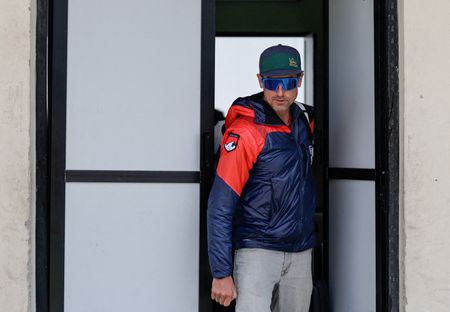

A British mountaineer who recently achieved his 20th successful climb of Mount Everest is calling on expedition companies to more carefully evaluate the qualifications of those attempting the dangerous journey.
Kenton Cool, age 52, completed his latest ascent of the world’s tallest peak at 8,849 meters (29,032 feet) last week, setting a record for most summits by a non-Sherpa climber. Speaking from Kathmandu on Monday, he emphasized that expedition leaders need to be more selective about which climbers they accept for summit attempts.
“It is the operators who should be more diligent with who they allow to be with the team (of guides) that goes to the summit,” Cool stated, highlighting the importance of screening out climbers with insufficient experience.
This climbing season has already seen five fatalities on Everest, with several mountaineers requiring emergency rescue operations from the dangerous high-altitude area known as the “death zone” during their descent.
Cool believes the mountain itself isn’t inherently dangerous when proper protocols are followed, including working with qualified guides, using correct techniques, and implementing thorough preparation strategies.
“People should not die on Everest if they have good enough experience,” Cool explained.
The safety concerns have intensified following last week’s unprecedented milestone when 274 climbers successfully reached the summit on the same day – the highest single-day total ever recorded from Nepal’s side of the mountain.
This massive influx of climbers has reignited discussions about the dangers of overcrowding on Everest and renewed criticism that Nepal has previously encountered regarding mountain management.
The congestion often creates dangerous bottlenecks and extended waiting periods in the “death zone,” where oxygen levels fall far below what humans need to survive safely.
Nepalese authorities have recognized these hazards stemming from crowded conditions and inexperienced climbers, responding with stricter regulations and increased permit costs.
Cool, whose first Everest summit occurred in 2004, noted that mountaineering conditions have evolved significantly due to technological advances.
According to Cool, Sherpa guides now have better understanding of their clients, rope installation has become more systematic and reliable, and improvements in gear, communication systems, and weather prediction have enhanced safety.
While Cool acknowledged that passing other climbers at the congested Hillary Step bottleneck during summit attempts remains challenging due to crowds, he described the situation as ultimately manageable.
Earlier this season, a massive ice formation caused nearly two weeks of delays in opening the climbing route, leaving hundreds of mountaineers stranded at base camp throughout April.
However, Cool praised the skilled Sherpas from the “Icefall Doctors” team and the Expedition Operators Association of Nepal for completing rope installations to the summit on schedule despite the initial setbacks.
“It is much more professional than last year,” Cool concluded.