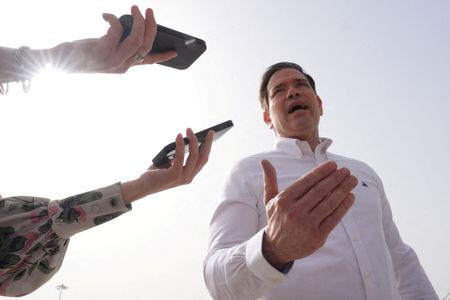

WASHINGTON/ISLAMABAD, May 25 (Reuters) – America will either secure a favorable deal with Iran or handle the situation through alternative means, Secretary of State Marco Rubio announced Monday, while Washington tempered expectations for a quick resolution to the three-month conflict.
Speaking to the press in New Delhi, Rubio indicated that diplomatic efforts would be given full opportunity to work before considering other options, following President Donald Trump’s Sunday statement that he had instructed negotiators against rushing into any Iranian agreement.
“There was a pretty solid thing on the table in terms of their ability to open up the strait, get the strait open, enter into a very real, significant, time-limited negotiation on the nuclear matter, and hopefully we can pull it off,” Rubio stated.
The previous day, Trump posted on Truth Social that America’s naval blockade of Iranian vessels in the Strait of Hormuz would “remain in full force and effect until an agreement is reached, certified, and signed.”
“Both sides must take their time and get it right,” he continued.
Iranian officials have not yet responded publicly. However, the Tasnim news agency, which has connections to Iran’s Revolutionary Guards, reported that America continues to block certain aspects of a possible agreement, particularly Tehran’s request for unfrozen assets.
Energy markets responded positively Monday, with oil prices dropping 6% to two-week minimums as investors grew hopeful that Washington and Tehran were progressing toward a peaceful resolution.
Expectations for a quick agreement rose Saturday when Trump announced that both nations had “largely negotiated” a memorandum of understanding for a peace framework that would reopen the Strait of Hormuz.
Prior to the hostilities, this vital shipping channel handled one-fifth of worldwide oil and liquefied natural gas transportation.
Both nations continue disagreeing on several complex matters, including Iran’s nuclear program, Israel’s military operations in Lebanon against the Iranian-supported Hezbollah organization, and Tehran’s insistence on sanction removal and the release of billions in Iranian petroleum revenues held in international banks.
STICKING POINTS
A high-ranking Trump administration official described what he characterized as the current framework of negotiated issues.
The official, speaking without attribution, revealed that Iran had accepted “in principle” to reopen the Strait of Hormuz in return for America ending its naval blockade, and to eliminate Tehran’s weapons-grade uranium stockpile.
America believes Iran’s Supreme Leader Ayatollah Mojtaba Khamenei has approved the general structure of the agreement, the official noted.
Iranian officials have not immediately verified this or explained the meaning of an “in principle” commitment.
The American official explained that Washington envisions initially reopening the waterway and ending the naval blockade. Working out nuclear program specifics would require additional time.
The official disputed claims that Iran had rejected disposing of its enriched uranium reserves. “It’s a question about how,” the official explained.
Another senior administration official revealed Sunday that the proposed structure would allow negotiators 60 days to finalize an agreement.
Iranian sources previously informed Reuters that in subsequent phases, “feasible formulas” might be developed to address the enriched uranium stockpile disagreement, potentially including diluting the material under U.N. nuclear agency oversight.
Iran has consistently rejected American and Israeli claims of pursuing nuclear weapons, maintaining its right to enrich uranium for peaceful uses, though the concentration levels achieved exceed power generation requirements.
Trump, whose public support has suffered due to the conflict’s effect on American energy costs and who faces legislative attempts to limit his military authority, has consistently emphasized the possibility of an agreement to end the conflict that began February 28 between America and Israel.
A fragile ceasefire has remained in place since early April.
The president responded to those criticizing his negotiation approach and willingness to reach compromises with Iran.
“If I make a deal with Iran, it will be a good and proper one … So don’t listen to the losers, who are critical about something they know nothing about,” Trump wrote Sunday.
Any agreement strengthening the current unstable ceasefire would provide market relief but wouldn’t immediately resolve the worldwide energy crisis that has increased fuel, fertilizer, and food expenses.
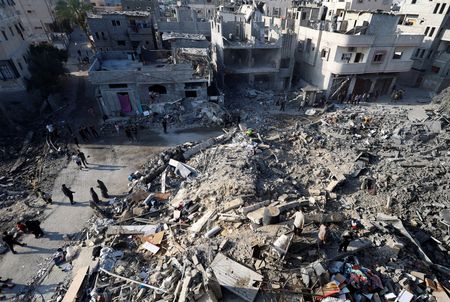
The American-Israeli military campaign against Iran resulted in thousands of Iranian deaths before being halted in early April.
Israel has also caused thousands more casualties and displaced hundreds of thousands in Lebanon during its invasion targeting the militant organization Hezbollah. Iranian attacks on Israel and nearby Gulf nations have resulted in dozens of deaths.