
WASHINGTON – President Donald Trump no longer has former Federal Reserve Chair Jerome Powell to blame for economic woes like rising mortgage rates and sluggish growth.
With Kevin Warsh now serving as the nation’s top central banker – cementing Trump’s control over key economic policy positions – the political calculus has changed completely. Unlike Powell, whom Trump claimed was forced upon him by advisers including former Treasury Secretary Stephen Mnuchin during his first term, Warsh represents Trump’s personal choice, making the president accountable for the outcomes.
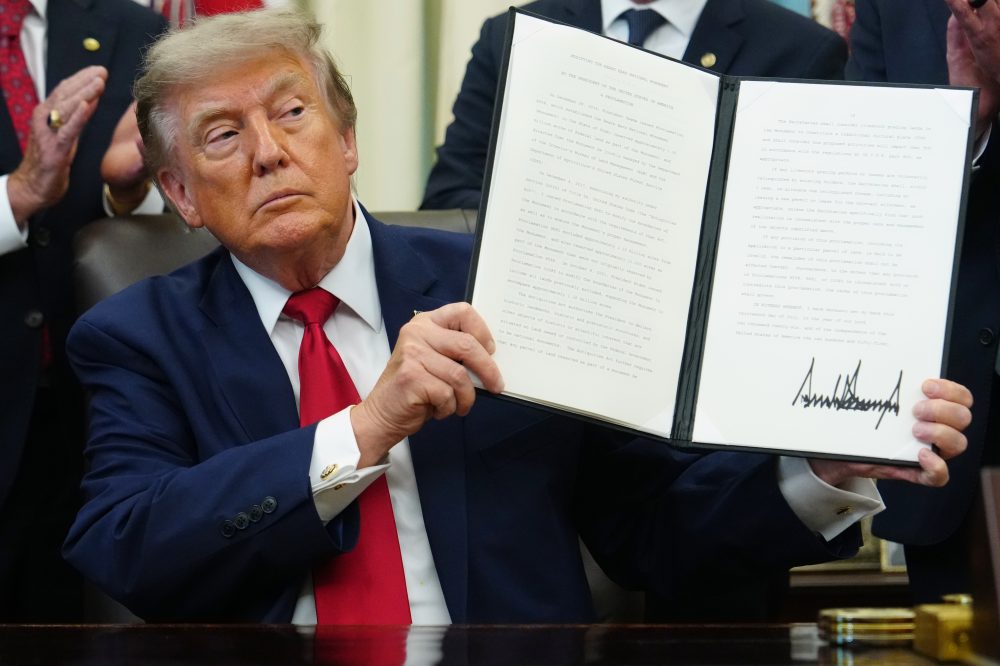
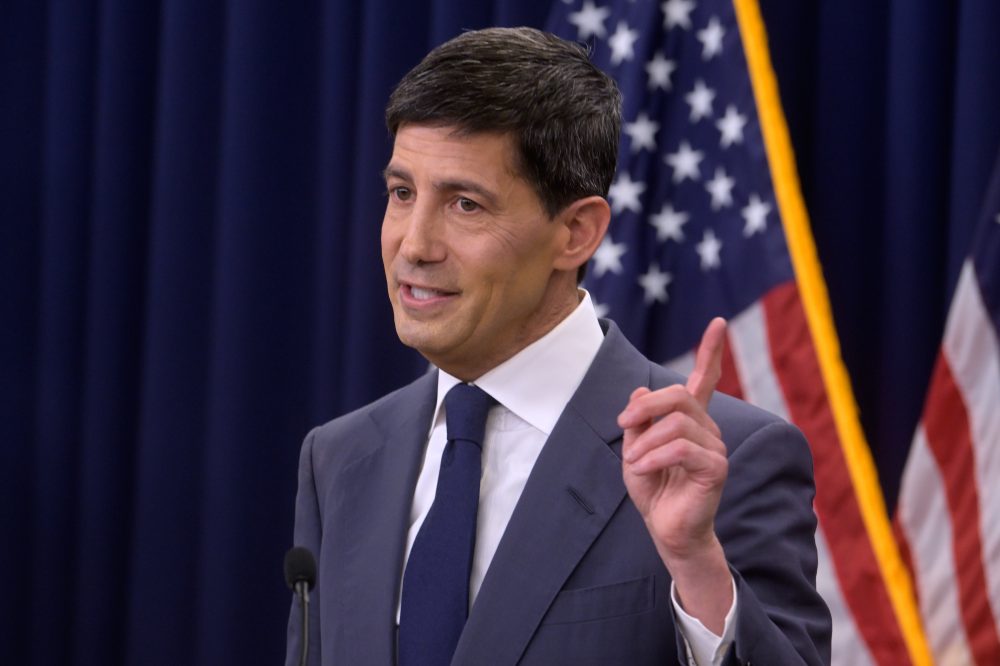
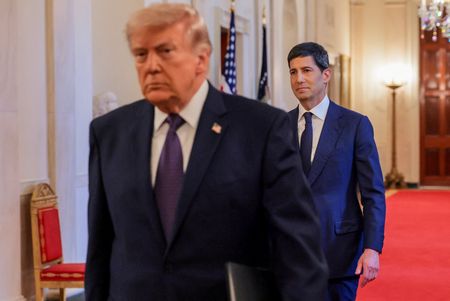
Trump underscored this partnership during Warsh’s White House swearing-in ceremony Friday, attended by cabinet members, Supreme Court justices and senior advisers in a celebratory setting. The president told Warsh to “do your own thing and do a great job.”
“Kevin understands that when the economy is booming that is a good thing…we want it to boom…We don’t want to see it stifled,” Trump said.
MIDTERM ELECTIONS AT RISK
Despite winning reelection on promises to reduce costs and tackle “affordability” challenges for American families, Trump’s economic approval ratings have plummeted.
Consumer sentiment data released approximately 90 minutes before Warsh’s ceremony revealed widespread pessimism nationwide. Economic confidence among independents – crucial voters in the approaching midterm congressional races – and even Republicans dropped to the lowest point of Trump’s second presidency.
Thirty-year mortgage rates have climbed back above 6.5%, reaching a nine-month peak and continuing to burden a struggling housing sector. Overall prices have kept rising during Trump’s tenure, contradicting campaign promises of immediate reductions from “day one” of his presidency. Since March 2025, the inflation measure the Fed monitors for its 2% goal has jumped from 2.3% annually to 3.5%.
Average gasoline prices reached $4.55 per gallon Friday, compared to under $3 before Trump initiated strikes against Iran in late February.
How Warsh’s early performance as Fed chief might influence Trump’s Republican Party’s midterm chances remains uncertain and potentially problematic.
Rising inflation historically hurts incumbent parties when voters worry about finances, yet fighting it typically requires unpopular interest rate increases that Trump would certainly oppose.
Additionally, the Fed operates as a decentralized institution where new chairs must gradually establish authority while facing global scrutiny for signs of Trump’s interference.
“Powell was a really great scapegoat for Trump for issues that had nothing to do with Powell,” said Richard Stern, who studies economic policy at the conservative Advancing American Freedom think tank. Now “it’s going to be Trump’s economy…The big thing everybody was concerned with, the price increases, the affordability problem, all of that isn’t going to go away for years, many years, probably…And that’s independent of anything Trump is going to do or could do, and it’s independent of anything Warsh is going to do.”
Warsh, 56, brings experience as both a lawyer and financier who previously served as a Fed governor from 2006 to 2011. Since leaving, he has worked to position himself for a return as chair. His professional influences include legendary monetarist economist Milton Friedman and former Secretary of State George Shultz, while his partnership with Wall Street heavyweight Stanley Druckenmiller brought substantial wealth beyond his wife’s interest in the Estee Lauder cosmetics empire.
However, his personal and political connections to Trump ultimately secured his appointment, with the president expressing regret over choosing Powell instead of Warsh in 2017.
MANAGING A COMPLEX INSTITUTION
Powell has decided to remain as a Fed governor despite Trump’s previous attempts to undermine the Fed’s independence in setting monetary policy, creating another unusual element of Warsh’s early tenure leading the world’s most influential central bank.
While some Fed chairs have wielded significant power, including former leaders like Paul Volcker and Alan Greenspan, the U.S. central bank intentionally operates as an unwieldy system featuring a seven-member Board of Governors in Washington and 12 regional Fed bank presidents who all participate in policy discussions.
Recent years have seen chairs move toward building consensus. Warsh has indicated he prefers aggressive debate with more disagreement and readiness to potentially catch financial markets off-guard with policy changes, moving away from the forward guidance recently used to prepare the public.
Whether international investors welcome this approach remains questionable, but recent Fed meetings suggest his colleagues are prepared for the “family fight” Warsh said during confirmation hearings he enjoys.
April’s Fed meeting produced the most dissenting votes in over three decades, with meeting minutes showing most of Warsh’s new colleagues believe interest rates may need to increase – contrary to Trump’s recent expectations and what Warsh had previously argued for.
This divided group includes PhD economists with different technical expertise than Warsh, senior investment professionals with comparable market experience, and their former leader Powell. Among the six remaining governors, three were chosen by former President Joe Biden, including one, Lisa Cook, whom Trump is attempting to remove.
As they consider future policy directions, investors appear convinced that interest rates must rise given persistent inflation. Yields on long-term bonds that determine consumer borrowing costs are already climbing.