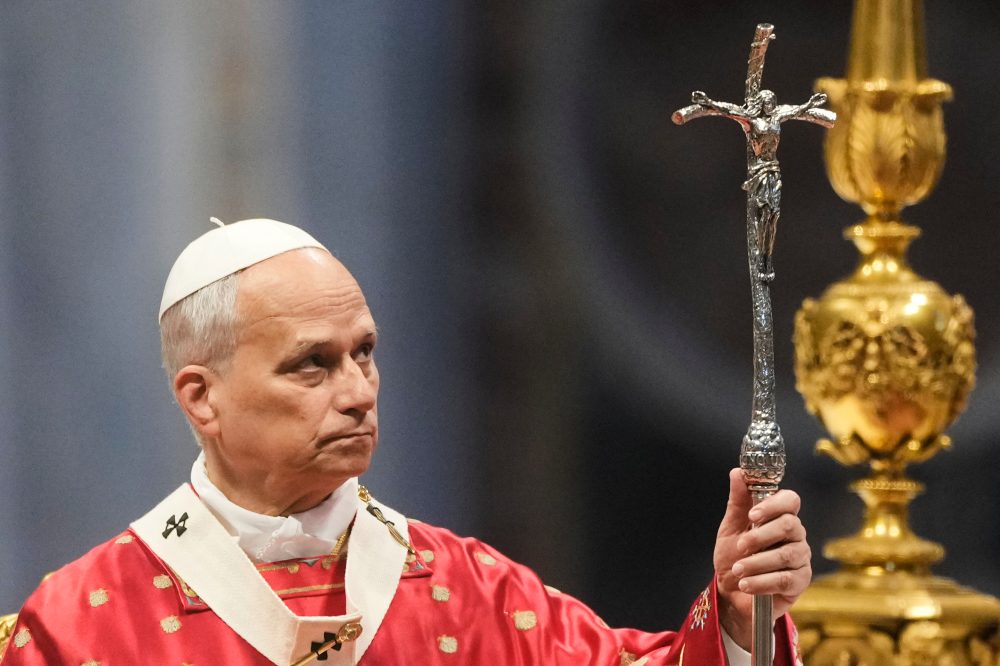

VATICAN CITY — In an unprecedented move Monday, Pope Leo XIV issued a formal apology acknowledging the Vatican’s direct participation in authorizing slavery, describing the church’s historical record as a “wound in Christian memory.”
While previous pontiffs have expressed regret for Christians’ participation in the slave trade, no pope had ever publicly recognized or apologized for how past papal leaders granted European rulers explicit permission to enslave and subjugate “infidels.”
The first pontiff born in the United States, whose ancestry includes both enslaved individuals and those who owned slaves, delivered this apology within his inaugural encyclical titled “Magnifica Humanitas” (Magnificent Humanity), published Monday.
This comprehensive document focuses on protecting humanity during an age of growing artificial intelligence dependence. The pontiff connected the historical slave trade to contemporary forms of exploitation and colonialism emerging from the digital age, including uncontrolled labor practices for obtaining rare minerals essential for AI technology.
Through this approach, the pope addressed longstanding appeals from Black American Catholics, advocates, and researchers who have demanded the Holy See acknowledge its direct involvement in colonial-era human trafficking.
“It is impossible not to feel deep sorrow when contemplating the immense suffering and humiliation endured by so many in stark contrast to their immeasurable dignity as persons infinitely loved by the Lord,” the pope wrote. “For this, in the name of the Church, I sincerely ask for pardon.”
While the Vatican has maintained it consistently recognized all humans’ inherent worth as God’s children, multiple 15th-century papal documents granted Portuguese rulers authority to conquer Africa and the Americas while enslaving non-Christians.
In 1452, Pope Nicholas V issued the papal bull Dum Diversas, granting Portugal’s king and his heirs authority “to invade, conquer, fight and subjugate” and seize all property — including territory — belonging to “Saracens, and pagans, and other infidels, and enemies of the name of Christ” worldwide.
This document also authorized the Portuguese “to reduce their persons to perpetual slavery.”
This bull, along with another issued three years afterward called Romanus Pontifex, established the foundation for the Doctrine of Discovery, the legal framework that justified colonial-era land seizures across Africa and the Americas.
According to the Rev. Christopher J. Kellerman, a Jesuit priest and author of “All Oppression Shall Cease: A History of Slavery, Abolitionism, and the Catholic Church,” Nicholas V’s authorizations to Portugal were reaffirmed or extended by Pope Callixtus III in 1456, Pope Sixtus IV in 1481, and Pope Leo X in 1514.
Spanish monarchs obtained similar rights for the Americas.
The Vatican officially rejected the Doctrine of Discovery in 2023, yet never formally canceled, nullified, or repudiated the original bulls. Vatican officials point to a subsequent 1537 bull, Sublimis Deus, which reaffirmed that Indigenous populations should retain their freedom and property rights and should not face enslavement.
In his encyclical, the current pope noted that his namesake, Pope Leo XIII, became the first pontiff to explicitly condemn slavery in 1888, though this occurred well after numerous nations had already abolished the practice. Prior to this, throughout ancient times and the medieval period, even church institutions maintained slaves.
Recognizing the Holy See’s direct involvement and the 15th-century papal documents, the pope wrote: “Already in the early modern period, the Apostolic See of Rome, responding to the requests of sovereigns, intervened several times in order to regulate and legitimize forms of subjugation, and, in certain cases, including the enslavement of ‘infidels.’”
The pontiff acknowledged that judging these historical decisions by contemporary moral standards would be inappropriate.
“Yet neither can we deny or diminish the delay with which both society and the church came to denounce the scourge of slavery,” he stated.
The pope emphasized that while the church has long championed every person’s inherent dignity as fundamental doctrine, “even if it took eighteen centuries for its full incompatibility with slavery to be explicitly recognized.”
“This constitutes a wound in Christian memory, one from which we cannot consider ourselves detached,” he declared.
The pope urged the church to strongly oppose all trafficking forms connected to the digital technological revolution “if we want to avoid the need to ask for pardon again in the future for having failed to respect the treasure of human dignity that is required by our faith.”
During a 1985 Cameroon visit, St. John Paul II sought African forgiveness for the slave trade on behalf of participating Christians, but did not address papal involvement. In 1992, while visiting Goree Island, Senegal — West Africa’s largest slave-trading center — he condemned slavery’s injustice, calling it a “tragedy of a civilization that called itself Christian.”
Genealogical research published by Henry Louis Gates Jr. reveals that 17 of the current pope’s American ancestors were Black, documented in census records as mulatto, Black, Creole, or free persons of color. Gates wrote in The New York Times that the pope’s family history encompasses both slaveholders and enslaved individuals.
Last month during an Angola visit, the pope prayed at a Catholic shrine situated at a former major African slave trade center during Portuguese colonial control. At the Sanctuary of Mama Muxima, he acknowledged the “sorrow and great suffering” Angolans experienced across centuries, though he did not specifically mention slavery.