Star forward Wilfried Zaha has concluded his tenure with Charlotte FC, with both the player and organization announcing the departure on Sunday.
The forward’s loan agreement concludes on June 30, and Charlotte’s upcoming contest won’t occur until July 22 when they face Atlanta United following the World Cup break.
“The moment has come to say goodbye, but I just wanted to thank Charlotte, the city, for welcoming me and my family with open arms and allowing me to fall in love with the game again,” Zaha wrote on Instagram.
“There’s been many highs and many lows, but it’s about the journey in the end, and I loved every minute. … I’m going to miss you all dearly, but keep our relationships in my heart forever!!”
The 33-year-old forward recorded three goals and four assists across 13 appearances during the current campaign. In his inaugural season with Charlotte, he contributed 10 goals and 10 assists, helping the team secure a playoff berth.
“Wilfried has been an important part of Charlotte FC since his arrival on loan last winter and has played a key role in our attack since joining,” Charlotte general manager Zoran Krneta said in a statement. “Last season, Wilf helped us reach the top four in the Eastern Conference for the first time, and he approached every match with a hunger and desire to perform for our supporters.”
The forward was playing on loan from Turkish club Galatasaray.
Zaha was not selected for the Ivory Coast squad for the upcoming World Cup. He has recorded five goals in 36 international appearances for the Ivory Coast national team.
America’s premier racing events united in remembrance of Kyle Busch during Memorial Day weekend’s biggest motorsports celebrations, as both IndyCar and NASCAR paid special homage to the two-time champion who passed away unexpectedly on Thursday.
The 41-year-old racing star succumbed to complications from severe pneumonia and sepsis just three days ahead of both the Indianapolis 500 and NASCAR’s Coca-Cola 600, where he had been scheduled to compete.
During pre-race ceremonies, NASCAR CEO Steve O’Donnell delivered heartfelt remarks while standing alongside Busch’s wife Samantha and their children – 11-year-old Brexton and 4-year-old Lennix. O’Donnell declared that “Kyle Busch is NASCAR. He was one of a kind and there will never be another.”
The organization has announced plans to retire Busch’s iconic No. 8 until his son Brexton reaches racing age, with O’Donnell addressing the family directly during the ceremony.
“Samantha, I want you to know that this sport stands with you, and that you and your children are NASCAR family forever. And Brexton and Lennix, your dad loved you with all his heart. Everyone gathered here, everyone behind you, everybody watching on TV, and all those people up in that grandstand are your family — and we’ve got you,” O’Donnell stated.
Charlotte Motor Speedway organizers created a massive tribute featuring Busch’s number 8 and autograph displayed prominently on the frontstretch infield. Every competing vehicle in the 39-car lineup carried special Busch commemorative decals.
A particularly moving tribute occurred during the eighth lap, when both track announcers and television broadcasters observed complete silence in the driver’s honor.
While Busch had been piloting the No. 8 Chevrolet for Richard Childress Racing since 2023, his greatest achievements came during his tenure with Joe Gibbs Racing from 2008 through 2022, where he captured NASCAR Cup Series championships in 2015 and 2019 behind the wheel of the No. 18 Toyota.
Indianapolis Motor Speedway also incorporated memorial elements, including a special mention during opening ceremonies and Dale Coyne Racing’s decision to replicate Busch’s distinctive lettering style on Romain Grosjean’s No. 18 entry.
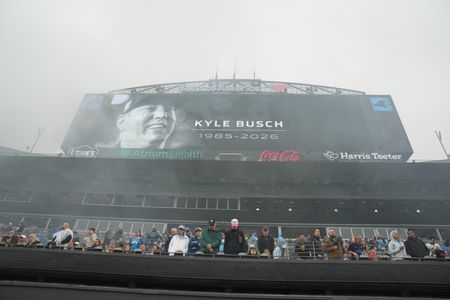
On the 18th lap of the Indianapolis 500, the facility’s electronic scoring display illuminated with Busch’s image and name, along with his birth and death years “1985-2026.”
Busch had previously conquered Indianapolis Motor Speedway twice, claiming NASCAR’s Brickyard 400 victories in both 2015 and 2016.
Felix Rosenqvist secured victory in the most narrow Indianapolis 500 finish ever recorded, overtaking David Malukas in a thrilling final-lap battle that ended with just 0.0233 seconds separating the two drivers.
The dramatic conclusion unfolded when Malukas appeared positioned for victory after surpassing race leader Marcus Armstrong following the final restart with one lap remaining. As Rosenqvist and Armstrong engaged in an intense side-by-side duel through the back stretch and into the closing turn, Rosenqvist managed to generate sufficient power to distance himself from Armstrong and slip behind Malukas before executing the winning maneuver in the last 50 feet. The previous record for the tightest finish occurred in 1992 when Al Unser Jr. defeated Scott Goodyear by 0.043 seconds across the yard of bricks.
NASCAR paid tribute to the late Kyle Busch during the Coca-Cola 600 at Charlotte Motor Speedway. NASCAR CEO Steve O’Donnell stood alongside Busch’s widow Samantha and their children, Brexton and Lennix, providing comfort during the ceremony. “We got you,” O’Donnell told the family before the race began. Former driver Kurt Busch and Kyle’s parents were also present for the tribute. The two-time Cup Series champion passed away Thursday at age 41 due to severe pneumonia that developed into sepsis. Memorial gestures included displaying a large No. 8 on the frontstretch grass, observing a moment of silence, and maintaining quiet during the eighth lap of the race.
At the CJ Cup Byron Nelson in McKinney, Texas, Wyndham Clark fired an impressive 11-under 60 to claim victory on Sunday, finishing three strokes ahead of Si Woo Kim and surpassing defending champion Scottie Scheffler after beginning the final day in a tie with the top-ranked local favorite. The 2023 U.S. Open winner, who completed the tournament at 30-under 254, seized the lead for the first time during the final round with an eagle on the par-5 12th hole and established two-shot advantages twice over the closing four holes with crucial birdie putts while posting 28 on the back nine. Both Kim and Scheffler finished with matching 65s.
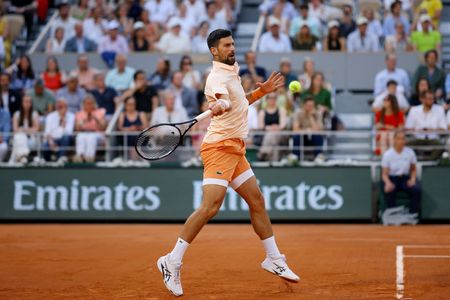
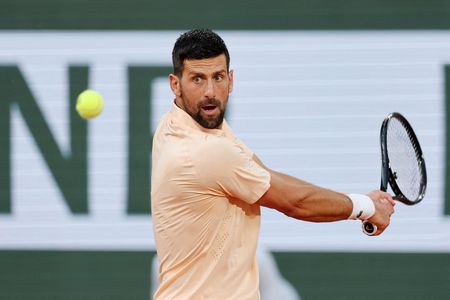
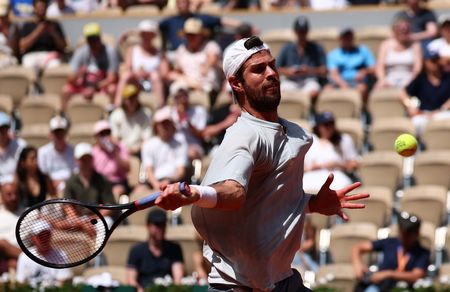
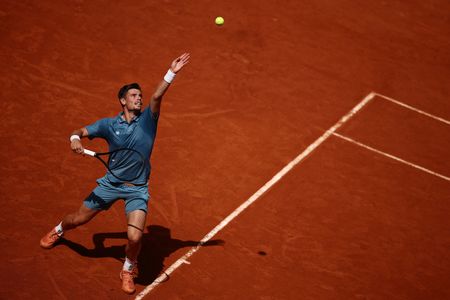
Tennis star Novak Djokovic rallied from a set deficit to defeat French player Giovanni Mpetshi Perricard 5-7, 7-5, 6-1, 6-4 in the opening round of the French Open, marking his record 82nd Grand Slam tournament appearance. The evening crowd enthusiastically supported the possibility of an upset, though Djokovic hasn’t suffered a first-round Grand Slam defeat in two decades. Following two competitive sets, Mpetshi Perricard appeared to lose momentum. Djokovic wasn’t the only veteran player to advance at Roland Garros, as 36-year-old Marco Trungelliti defeated Kyrian Jacquet 6-4, 6-2, 6-2 after recently becoming the oldest man in the professional era to enter the top 100 rankings.
Ukrainian player Marta Kostyuk’s first-round French Open victory became emotionally challenging after learning beforehand that a missile nearly struck her parents’ residence in Ukraine. Kostyuk struggled to contain her emotions following her 6-2, 6-3 defeat of Oksana Selekhmeteva on Court Simonne-Mathieu during the opening day of the clay-court Grand Slam in western Paris, where temperatures reached 33 Celsius (91 Fahrenheit). Runner-up Alexander Zverev also progressed to the next round, while former U.S. Open champion Emma Raducanu and former French Open finalists Sloane Stephens and Sofia Kenin were eliminated.
Italian teenager Kimi Antonelli claimed his fourth consecutive Formula 1 victory at the Canadian Grand Prix in Montreal after Mercedes teammate George Russell suffered an engine failure. The title-contending Mercedes drivers delivered an exciting performance over 30 laps, exchanging the lead multiple times and nearly making contact before Russell encountered mechanical problems. This cleared the way for the 19-year-old Antonelli to win ahead of Ferrari’s Lewis Hamilton, who passed Red Bull’s Max Verstappen for second place with six laps remaining in cold and windy conditions at Circuit Gilles Villeneuve. Antonelli now holds a 43-point advantage over Russell in the championship standings.
The Premier League season concluded with West Ham facing relegation while Tottenham secured their top-flight status, as Pep Guardiola and Mohamed Salah bid emotional farewells following remarkable tenures in English football. Despite West Ham’s 3-0 victory over Leeds, they couldn’t escape the relegation zone because fourth-from-bottom Tottenham won 1-0 at home against Everton, maintaining a two-point cushion over West Ham. Guardiola’s ten-year period at Manchester City ended with a 2-1 defeat to Aston Villa. Salah received a standing ovation and kissed the Anfield pitch when substituted in his 442nd and final appearance for Liverpool during a 1-1 draw with Brentford.
Arsenal owner Stan Kroenke witnessed his team’s players celebrate with the Premier League trophy following their campaign-ending 2-1 victory at Crystal Palace. Captain Martin Odegaard gazed skyward and back at the trophy in amazement before leading his celebrating teammates in lifting it amid tickertape and fireworks inside Selhurst Park. Arsenal secured their first English league championship since 2004 with one match remaining after three consecutive runner-up campaigns. Kroenke traveled to London for the trophy presentation and watched the Palace match alongside his son, Josh.
Katherine Legge’s historic attempt to become the first woman to complete racing’s “Double” – covering 1,100 miles across two tracks in one day – ended prematurely when she crashed during the Indianapolis 500. The English driver completed only 17 of 200 scheduled laps at Indianapolis Motor Speedway before colliding with Ryan Hunter-Reay’s car, eliminating both vehicles from competition. Both drivers were examined and cleared at the track’s medical facility. Legge proceeded to Charlotte Motor Speedway for the Coca-Cola 600, where she started in 37th position.
New York Knicks guard Jalen Brunson remains focused on the immediate task rather than reflecting on his team’s 10-game winning streak or the prospect of reaching the NBA Finals, despite being one victory away from that goal. Brunson and his teammates are concentrating on the opening 12 minutes of Monday night’s Game 4 in the Eastern Conference finals against the Cleveland Cavaliers. This focused approach has propelled New York to a 10-game winning streak with an average victory margin of 22.5 points, putting them one win away from their first finals appearance since 1999. No NBA team has ever surrendered a 3-0 series lead, and the Knicks show no indication of becoming the first among 164 such series.
The WNBA reversed a technical foul penalty against Dallas Wings player Paige Bueckers on Sunday, two days after the controversial call was made during a game.
The incident occurred when Bueckers was attacking the basket during the third quarter and received a foul call from Indya Nivar. After the referee’s whistle, Bueckers clapped her hands three times, which resulted in the technical foul being assessed.
“I was hyped and showing passion and joy and I got penalized for that,” the second-year guard told reporters Saturday.
The league’s reversal spares Bueckers from paying a $500 penalty. The decision also preserves a friendly wager between Bueckers and teammate Alysha Clark, who bet that Bueckers could avoid receiving any technical fouls this season. Clark revealed she assisted in getting the call overturned.
“I gave her a little something to send in with it,” Clark said. “I just felt it wasn’t warranted. If I’m going to win money out of her I want it to be legit. I want to be able to sleep at night. I don’t want that it’s not deserving to get her money.”
While disagreeing with the original call, Bueckers recognized that league referees face a “really extremely hard job” and are working to maintain better game control compared to the previous season.
Nevertheless, she argued that players should have the freedom to display emotion during games.
“See that we were down a ton and we’re making a run, so we’re obviously going to be hyped up and showing a bunch of passion and joy and fire, like, that’s what basketball’s all about,” Bueckers said.
In Sunday’s action, Bueckers contributed 24 points as the Wings defeated the New York Liberty 91-76, improving their season record to 4-3.
Colombia’s three main presidential contenders brought their campaigns to a close Sunday with large-scale public events, setting the stage for the May 31 election that political experts believe will lead to several weeks of intense and divisive campaigning before a June 21 runoff vote.
According to the most recent polling data before the May 31 election, leftist politician Ivan Cepeda, 63, held a slim lead among the candidates. However, the same survey suggested he would be defeated in the June runoff against either of his conservative opponents. Previous polling had indicated he would prevail in a second-round contest.
Cepeda has committed to advancing the social reform agenda initiated by current President Gustavo Petro, but he faces scrutiny over the sitting president’s unsuccessful “total peace” strategy that seeks to resolve conflicts through dialogue with illegal armed organizations operating in the nation.
Opposition voices claim Cepeda maintains connections to former leaders of the disbanded FARC guerrilla movement, whose breakaway groups continue to play significant roles in the ongoing six-decade conflict that has included right-wing paramilitary forces, narcotics traffickers and resulted in over 450,000 deaths.
Running closely behind Cepeda in the polls was Abelardo De La Espriella, 47, a business executive and attorney who has promised to reduce taxes, boost investment in mining and energy sectors, and launch military operations against illegal armed organizations and drug trafficking networks.
De La Espriella has encountered criticism for his legal representation of disputed clients, including businessman Alex Saab, who stands accused of serving as a financial intermediary for Venezuela’s ousted president Nicolas Maduro. Saab was extradited to the U.S. last week to face criminal charges.
Running in third place in polling was Paloma Valencia, 48, whose platform includes expanding military forces, reducing government size and lowering tax rates. She has received endorsement from former President Alvaro Uribe.
“We can expect a fear-mongering campaign focused on each candidate’s worst attributes,” Sergio Guzman, director of consulting firm Colombia Risk Analysis, told Reuters.
According to Guzman, accusations like “corrupt, amoral, guerrillas, drug traffickers, and paramilitary sympathizers” will likely characterize the political discourse leading up to the runoff election.
The incoming president will confront significant challenges including restoring public safety, strengthening the nation’s financial position, addressing informal employment issues and tackling poverty and inequality.
Cepeda held his final campaign event in the Caribbean coastal city of Barranquilla, while De La Espriella chose Colombia’s second-biggest city and corporate hub Medellin, and Valencia concluded her campaign in the capital Bogota.
The captain of the Golden Knights, Mark Stone, will take the ice Sunday evening as Vegas hosts the Colorado Avalanche for Game 3 of the Western Conference finals in Las Vegas.
Vegas coach John Tortorella revealed the news roughly 2 1/2 hours before game time. The Golden Knights currently hold a 2-0 advantage in the series.
Stone has been sidelined for five consecutive games after suffering a lower-body injury on May 8 during Game 3 of the second-round matchup with the Anaheim Ducks.
Vegas defenseman Noah Hanifin expressed enthusiasm about Stone’s comeback, noting the veteran’s clutch performance with 92 points (44 goals, 48 assists) across 121 career playoff contests.
“It’s huge,” Hanifin said to reporters about Stone. “Obviously, his talent speaks for itself but just his character and leadership, just to have him back in the room and get his voice back, it’s going to be huge for our team.
“Anytime he comes back it’s like he didn’t miss a beat so we’re very excited to have him back in the lineup.”
Stone has compiled seven points (three goals, four assists) through nine playoff games.
The 34-year-old Stone achieved career-best numbers this season with 73 points (28 goals, 45 assists) and a plus-26 rating across 60 games.
Throughout 766 NHL contests with the Ottawa Senators (2012-19) and Golden Knights, Stone has accumulated 707 points (259 goals, 448 assists) with a plus-167 rating.
On the other side, Avalanche star defenseman Cale Makar’s availability remains uncertain as he will reportedly evaluate his condition before game time. He has sat out both opening games of the series due to an upper-body injury.
Colorado coach Jared Bednar remained tight-lipped about Makar’s status.
“You’ll have to wait and see,” Bednar said to reporters.
Makar has participated in nine playoff games this postseason, contributing four goals and one assist.
The 27-year-old Makar earned the Norris Trophy as the league’s top defenseman in 2021-22 and 2024-25, and has received another nomination this season.
He captured the Conn Smythe Trophy when the Avalanche won the Stanley Cup four years ago.
Makar has amassed 507 points (136 goals, 371 assists) across 470 career games during seven seasons with the Avalanche. He posted 20 goals and 59 assists in 75 games throughout the 2025-26 regular season.
Financial markets displayed cautious optimism Monday morning as potential progress toward ending the conflict with Iran boosted investor confidence, though uncertainty about the timeline for reopening critical shipping lanes tempered the enthusiasm.
Stock futures climbed while crude oil prices and the U.S. dollar weakened following signals that diplomatic efforts might resolve the nearly three-month conflict that has disrupted global energy markets and reshaped economic forecasts due to inflation concerns. The standoff has effectively blocked the strait that serves as a passage for a significant portion of worldwide energy supplies.
On Sunday, U.S. President Donald Trump advised his negotiating team against rushing into any agreement with Iran, as his administration sought to manage expectations about quick resolution prospects.
This came after Trump indicated just one day prior that the United States and Iran had “largely negotiated” a memorandum of understanding regarding a peace agreement that would restore access to the waterway, which previously handled one-fifth of international oil and liquefied natural gas transportation before hostilities began.
Energy markets responded dramatically, with crude oil hitting two-week lows at the start of trading. Brent crude futures dropped more than 4% to $98.83 per barrel, while U.S. West Texas Intermediate fell over 4% to $92.03 per barrel.
Currency markets also shifted as the euro gained 0.37% to $1.1646, and the Japanese yen strengthened to 158.85 against the U.S. dollar during early trading sessions, as the safe-haven dollar retreated from recent highs.
Technology-heavy Nasdaq futures advanced 0.89% while S&P futures increased 0.6%.
Nick Twidale, chief market analyst at ATFX Global, anticipates markets will embrace additional risk Monday but expects restraint until concrete confirmation emerges about the Strait of Hormuz reopening.
“We will need to see an agreement out in place in the coming sessions as we know there are still some major sticking points,” he said.
Asian markets prepared for strong Monday performance, with Japan’s Nikkei positioned for significant gains.
Commonwealth Bank of Australia strategists identified the most crucial concerns for financial markets in a research note, focusing on the timing of the Strait of Hormuz reopening.
“Under what conditions the Strait will re‑open and how long it will take to repair production facilities and infrastructure to ramp up production of energy and other goods to pre‑war levels,” they said.
Detainees at a correctional facility in Venezuela’s Barinas region climbed onto the building’s roof Sunday in a dramatic demonstration against alleged violence by guards and administrative misconduct.
The inmates set mattresses ablaze during their rooftop demonstration and demanded the dismissal of the facility’s administrator, claiming guards had fired weapons at unarmed detainees.
“We want justice. They are shooting us, the guards and the wardens,” one detainee stated in footage distributed by the Venezuelan Prison Observatory, a local advocacy organization, on X. The video showed an individual with what appeared to be a gunshot injury to his torso.
The demonstrating prisoners maintained they were conducting a peaceful protest when correctional staff discharged firearms, resulting in injuries to some detainees.
Government officials in Venezuela have not yet provided a response to inquiries about the incident.
In footage circulated by the advocacy group, detainees demanded the dismissal of the newly installed facility administrator Elvis Macuare Guerrero. The prisoners alleged their garments had been confiscated, family visits had been prohibited, and they faced coercion to participate in narcotics trafficking.
Relatives of the detainees confronted National Guard personnel equipped with protective shields outside the facility, attempting without success to prevent their entry. These family members reported to the advocacy organization that they heard shouting and explosive sounds shortly after the officers went inside.
The advocacy organization stated it was recording the incidents and would submit reports to human rights monitoring agencies.
Venezuela’s correctional system has drawn international attention as the administration of interim President Delcy Rodriguez enacted legislation to free hundreds of individuals classified as political detainees. The U.S. launched an operation against Caracas in January, resulting in the capture of then-President Nicolas Maduro.
Motorists are being advised to find alternate routes as a portion of Marsh Road remains blocked to traffic.
The roadway is currently shut down between I-95 and Carr Road, according to traffic officials. Additionally, drivers cannot access the entrance ramp from Marsh Road to southbound I-95.
No timeline has been provided for when the roadway will reopen to normal traffic flow.
KINSHASA, Congo — Medical workers at a Congo hospital scrambled to evacuate Ebola patients Sunday night after furious men broke into the facility demanding the remains of deceased relatives, amid sounds of gunfire in the surrounding area.
The assault on Monbgwalu General Hospital left casualties unknown, according to Dr. Richard Lokudu, the facility’s medical director, who spoke with The Associated Press. The intruders insisted on receiving two bodies of family members who had died.
“There was gunfire and the medics were trying to evacuate the patients and the staff,” Lokudu explained during a phone interview.
“Monbgwalu General Hospital is on general alert,” he stated, noting he lacked additional information about the developing crisis.
This incident represents the third assault in seven days targeting medical centers where healthcare workers battle limited resources while treating potential Ebola patients, highlighting the difficulties surrounding this outbreak that the World Health Organization has labeled a public health emergency of international concern.
Remains of Ebola victims carry extreme infection risks and can trigger additional transmission when families handle burial preparations and hold funeral ceremonies.
Congo’s government has ordered that burial procedures for suspected victims be handled by officials when feasible, a policy that has sparked resistance from grieving families and communities. Friday brought new restrictions as authorities prohibited funeral gatherings and assemblies exceeding 50 people across northeastern Congo to limit viral transmission.
Saturday saw Mongbwalu residents attack and burn down a tent facility established by Doctors Without Borders for treating suspected and confirmed Ebola patients.
That assault resulted in 18 individuals with suspected infections fleeing the site, with their current whereabouts unknown, Lokudu had reported previously.
Thursday witnessed another treatment facility destroyed by fire in Rwampara after relatives were prohibited from claiming a local man’s body who allegedly died from Ebola.
The World Health Organization has elevated the outbreak’s threat level to “very high” for Congo, upgrading from the previous “high” classification, while maintaining that global spread probability remains minimal.
Sunday morning brought updated figures from Congo’s Ministry of Communication via X, reporting 904 suspected Ebola cases, predominantly in northeastern Ituri Province — a substantial increase from the previously reported total exceeding 700 suspected infections.
The ministry listed total suspected Ebola fatalities at 119, though regional breakdowns totaled 220 deaths. Officials were unavailable to clarify this numerical inconsistency.
No vaccine exists for the Bundibugyo virus, an uncommon Ebola strain that circulated undetected for weeks throughout Ituri after the initial reported death in late April in Bunia, the provincial capital, while authorities tested unsuccessfully for a more prevalent Ebola variant.
The International Federation of Red Cross and Red Crescent Societies announced Saturday that three volunteers had perished from the outbreak in Mongbwalu. The organization believes these healthcare workers became infected March 27 while handling corpses during a humanitarian operation unconnected to Ebola.
If verified, this information would dramatically alter the outbreak’s established timeline.
WASHINGTON — A 21-year-old individual identified as Nasire Best opened fire in the direction of a White House security checkpoint on Saturday night, prompting Secret Service personnel to discharge their weapons in response, the District of Columbia Metropolitan Police Department reported. During the exchange of gunfire, an innocent bystander sustained injuries.
The incident represents a photo collection assembled by Associated Press photo editors.
Delaware’s governor has directed that flags be displayed at half-staff across all state properties this Memorial Day to pay tribute to fallen military service members.
Governor Matt Meyer issued the order requiring flags at state buildings and facilities to be lowered beginning at sunrise on Monday, May 25, 2026, and kept at half-staff until noon. The directive follows the U.S. Flag Code guidelines for Memorial Day observance.
The flag order serves as a tribute to all military personnel who made the ultimate sacrifice while serving the United States.
New Zealand announced Monday it will impose stricter English language standards for certain work visa categories while creating new philanthropic opportunities for investor visa holders, according to Immigration Minister Erica Stanford.
The policy updates take effect June 1 and affect the Accredited Employer Work Visa program and the Active Investor Plus Visa Growth category. Officials are also working to launch two additional skilled residence programs in August.
Under the revised rules, English proficiency requirements for the Accredited Employer Work Visa will now include skill level 3 positions in areas like hospitality and skilled trades. This brings those roles in line with standards already required for skill levels 4 and 5.
“Being able to communicate in basic, everyday English ensures that workers understand their rights and engage effectively at work and in the community while they are here,” Stanford stated.
The English language mandate does not affect Global Workforce Seasonal Visa or Peak Seasonal Visa candidates, and existing workers seeking job changes are also exempt from the requirement.
Meanwhile, applicants for the Active Investor Plus Visa Growth category will now have the option to direct up to 20% of their investment total toward charitable contributions. This allows up to NZ$1 million ($587,600) of the required NZ$5 million minimum investment to go to philanthropic causes, with remaining funds still required to go toward higher-growth investments.
PARIS, May 24 – The opening day of the French Open tennis tournament on Sunday brought dramatic matches and surprising results across the courts in Paris (all times listed in GMT):
2134 DJOKOVIC ADVANCES PAST PERRICARD
Third-seeded Serbian player Novak Djokovic managed to defeat French competitor Giovanni Mpetshi Perricard in four sets, winning 5-7 7-5 6-1 6-4 during first-round action.
1854 BASAVAREDDY UPSETS FRITZ
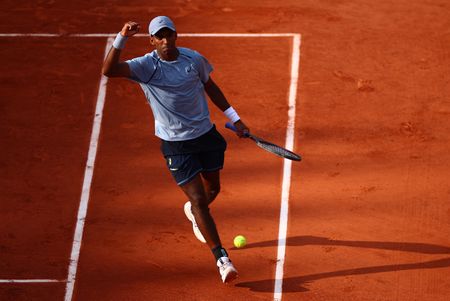
In a major surprise, American Taylor Fritz, seeded seventh, fell to compatriot Nishesh Basavareddy, who holds the 148th world ranking. The 21-year-old wildcard entry secured victory with scores of 7-6(5) 7-6(5) 6-7(9) 6-1 in their opening-round encounter.
1749 FONSECA ADVANCES TO ROUND TWO
19-year-old Brazilian player Joao Fonseca dominated his opening match against Luka Pavlovic, winning 7-6(6) 6-4 6-2. The 28th-seeded player, who made it to round three in the previous year’s tournament, will next meet Croatia’s Dino Prizmic.
1730 RADUCANU ELIMINATED BY SIERRA
Emma Raducanu from Britain, who claimed the 2021 U.S. Open title, was defeated by Argentina’s Solana Sierra with scores of 6-0 7-6(4).
1548 ANDREEVA DEFEATS FERRO
Eighth-seeded Russian player Mirra Andreeva, who reached the semi-finals in 2024, secured a straightforward 6-3 6-3 victory against French player Fiona Ferro.
1514 BAPTISTE ELIMINATES FORMER TITLEHOLDER KREJCIKOVA
26th-seeded American Hailey Baptiste mounted a comeback after dropping the first set to defeat Barbora Krejcikova, the 2021 French Open winner and 2024 Wimbledon champion, with scores of 6-7(7) 7-6(6) 6-2.
1414 ZVEREV OVERPOWERS BONZI
Second-seeded German Alexander Zverev launched his campaign for his maiden Grand Slam championship with a commanding straight-set victory over French player Benjamin Bonzi, 6-3 6-4 6-2.
The three-time Grand Slam finalist, who reached the Roland Garros final in 2024, may see increased opportunities with defending two-time champion Carlos Alcaraz absent due to a wrist injury.
Nevertheless, the 29-year-old confronts significant competition, particularly from world number one Jannik Sinner, who has been in exceptional form.
1205 KHACHANOV DEFEATS GEA
13th-seeded Russian Karen Khachanov eliminated French wildcard entry Arthur Gea with scores of 6-3 7-6(3) 6-0.
1142 BENCIC OVERWHELMS KRAUS
Swiss 11th seed Belinda Bencic handled Austria’s Sinja Kraus with ease, securing a 6-2 6-3 win on Court Philippe-Chatrier.
The Tokyo 2020 Olympic gold medalist hopes for an extended tournament run this year, having never advanced past the third round at Roland Garros previously.
0909 COMPETITION BEGINS
Matches commenced under clear, sunny conditions, with temperatures at Roland Garros reaching approximately 28 degrees Celsius. Public weather service Meteo France predicted temperatures would climb to 34 degrees later in the day.
Former Olympic champion Belinda Bencic, holding the 11th seed, faced Austrian qualifier Sinja Kraus in the opening match on Court Philippe Chatrier.
Crude oil markets experienced significant declines on Monday, with prices falling to their lowest levels in two weeks as investors responded to growing expectations that the United States and Iran may be advancing toward a diplomatic agreement, despite ongoing disagreements on critical matters such as blockades affecting the Strait of Hormuz that continue to limit Middle Eastern oil supplies.
Brent crude futures dropped $4.71, representing a 4.55% decline to $98.83 per barrel by 2234 GMT, while U.S. West Texas Intermediate decreased $4.57, or 4.73%, reaching $92.03 per barrel.
Earlier during trading, both oil benchmarks reached their weakest levels since May 7.
Over the weekend, U.S. President Donald Trump announced that Washington and Iran had “largely negotiated” a memorandum of understanding regarding a peace agreement that would result in the reopening of the Strait of Hormuz, a waterway that previously handled one-fifth of worldwide oil and liquefied natural gas shipments before the current conflict.
Nevertheless, significant disagreements persist between the nations on various challenging matters, with Trump stating on Sunday that he had instructed his negotiating team not to rush into any agreement with Iran.
MST Marquee analyst Saul Kavonic commented: “Notwithstanding all the caveats and risks that remain to the peace deal and Strait of Hormuz, there is now some light at the end of the tunnel, which will bring some near-term oil price relief.”
Market experts anticipate that normalizing oil transportation through the strait and repairing damaged energy infrastructure will require several months to complete.
Emergency officials have declared a state of emergency in a California community where a dangerous chemical tank malfunction at an aerospace manufacturing facility threatens thousands of residents.
The crisis centers around a 34,000-gallon industrial tank that has developed cracks and is overheating at GKN Aerospace in Garden Grove. The compromised container poses serious risks of either releasing hazardous chemicals or potentially exploding.
Authorities have ordered 50,000 people to leave their homes as a precautionary measure while emergency crews work to address the situation. Aerial footage from May 23, 2026, shows water being continuously sprayed onto the problematic tank in an effort to cool it down and prevent a catastrophic failure.
The aerospace plant’s malfunctioning equipment has created an urgent public safety situation that continues to develop as officials monitor the tank’s condition and work to protect nearby communities from potential chemical exposure or blast damage.
CLEVELAND (AP) — With the New York Knicks riding a remarkable 10-game winning streak and standing just one victory away from the NBA Finals, Jalen Brunson refuses to get ahead of himself or dwell on past successes.
Instead, Brunson and his teammates are laser-focused on the opening moments of Monday night’s Game 4 in the Eastern Conference finals against the Cleveland Cavaliers.
“So you have the first possession, the first quarter, and then you have the end of the first half and you go on,” Brunson explained following Saturday’s 121-108 win. “You just continue to just deal with what’s in front of you and just have your teammates’ back. Make sure everyone’s on the same page, making sure that everyone’s holding each other accountable. That’s just the most important thing right now.”
This tunnel-vision mentality has propelled New York to their current 10-game victory run, with the team dominating opponents by an average of 22.5 points per game. The Knicks now sit one win away from reaching their first championship series since 1999.
Throughout NBA history, no team has ever overcome a 3-0 series deficit, and New York shows no indication of becoming the first squad to surrender such an advantage across 164 attempts.
Each time observers believe the Knicks have reached their ceiling, the team discovers another level. Forward OG Anunoby, who sat out the final two contests of the Philadelphia series with a strained right hamstring, contributed 21 points, seven rebounds and four assists in Saturday’s triumph.
During the current winning streak, Anunoby ranks second on the team in scoring, putting up 19.8 points across eight games.
Brunson has been posting 29 points per game in this series and 27.8 throughout the playoffs, while Karl-Anthony Towns is recording a double-double with 16.8 points and 10.3 rebounds, plus 6.1 assists.
According to Brunson, the team’s depth and preparedness philosophy has been evident throughout the series.
“We have a bunch of individuals in that we locker room who work really hard and they’re very psychotic about their work and the things they do, and making sure that they’re ready physically and mentally so when their number’s called and then when there’s time to go out there, they’re ready,” Brunson noted. “We have a lot of real professionals on our roster.”
New York has controlled the series momentum ever since mounting a comeback from a 22-point fourth-quarter deficit to beat Cleveland 115-104 in the opener. Towns emphasized that despite their commanding position, the Knicks maintain the same urgency they had at the series start.
“We’ve got to come out with that same desperation as Game 1. What got us here as a team, we’ve won all these games in a row as a team, we’ve had this winning streak as a team. As long as we stay together, we stay unified, we always have felt that the sky’s the limit for us,” he stated.
The scheduling disparity shows Cleveland preparing for their 14th contest since April 29, compared to New York’s ninth game in that span.
The Cavaliers are struggling from beyond the arc at just 29.4% and have converted 50 of 74 free throw attempts. While Donovan Mitchell continues averaging 26 points in the series, he appears to lack the explosive speed displayed in earlier playoff rounds.
Coach Kenny Atkinson hopes his squad can discover enough energy to prevent a sweep, but acknowledges his players are exhausted after surviving back-to-back seven-game series against Toronto and Detroit to reach their first Eastern Conference final in eight years.
“I said it before this series, the rest disadvantage is real. It’s massive, right? And it plays into it. I don’t think anybody has a grip on what that really means saying, ‘Well why are you shooting so below expected? Is that a part of it?’ I don’t know. I don’t have that answer,” he admitted.
Colorado Rockies pitcher Jose Quintana was forced to leave Sunday’s game against the Arizona Diamondbacks after experiencing discomfort in his left elbow, cutting his outing short in the second inning.
The 37-year-old left-handed pitcher departed the game with one out remaining in the bottom of the second frame while his team was already trailing 5-0 on the road.
Team officials later confirmed that Quintana was dealing with left elbow discomfort that prompted his early departure.
The veteran pitcher’s exit came suddenly, with no relief pitcher warming up in the bullpen at the time. Medical staff visited the mound after Quintana allowed a hard-hit ground-rule double to Ketel Marte, and the starter left the field moments later.
This marks another injury setback for Quintana, who missed several weeks earlier this season due to a hamstring injury that kept him sidelined from March into April. His performance on Sunday was challenging, as he surrendered six earned runs on six hits, pushing his season earned run average up to 5.27.
Blas Castano took over pitching duties for Colorado, throwing 3 2/3 innings in relief following Quintana’s departure.
MONTREAL, May 24 – Championship frontrunner Kimi Antonelli secured his fourth consecutive Formula One victory on Sunday at the Canadian Grand Prix after his Mercedes teammate George Russell was forced to withdraw due to a power unit malfunction before reaching the race’s midpoint.
Russell, who began the race from the front position, had been engaged in an exciting duel with Antonelli for the top spot before his car came to a stop alongside the track during lap 30 of the 68-lap event at Montreal’s Circuit Gilles Villeneuve.
Lewis Hamilton of Ferrari claimed the runner-up position, finishing 10.7 seconds behind the 19-year-old Italian driver, while Red Bull’s Max Verstappen secured third place for his first podium finish of the current season.
Following the race, Antonelli expanded his championship advantage over Russell from 18 points to 43 points after completing five grand prix events, with Mercedes claiming victory in all races as well as three Saturday sprint competitions.
PARIS, May 24 – Novak Djokovic launched his pursuit of a historic 25th Grand Slam championship by setting a new record and overcoming an early challenge, defeating Giovanni Mpetshi Perricard 5-7 7-5 6-1 6-4 in Sunday’s French Open first round.
The Serbian tennis star surpassed Roger Federer’s record for most Grand Slam men’s singles tournament appearances, reaching 82 total competitions, though he struggled early at Court Philippe Chatrier after competing in just one clay court match this season.
His lack of recent clay court practice became evident when Mpetshi Perricard secured a 6-5 advantage in the first set, then sealed it with a powerful ace to become the first player in 17 years to win an opening set against Djokovic in Roland Garros’s first round.
“Congratulations to Giovanni,” Djokovic said in French. “I played him for the first time and it’s practically impossible to see where he will serve. It’s something I’ve seen maybe one or two times in my career, with Reilly Opelka or Ivo Karlovic.
“In a match like that, you have to stay focused and wait for an opportunity. It was a bit difficult, but in the end, I found my best tennis and best return game at the right moment.”
The tournament’s third seed managed to handle more of Mpetshi Perricard’s baseline power and finally capitalized on his 10th break opportunity in the second set to even the match, with the 39-year-old gradually increasing his intensity to dominate the third set.
After Mpetshi Perricard needed medical attention for wrist and arm problems and managed to recover an early break in the fourth set, Djokovic regained the lead at 4-3 and secured his opening victory in his 22nd consecutive Grand Slam tournament appearance.
Following his victory, Djokovic performed a small celebratory dance before acknowledging his supporters in the crowd.
“Beautiful atmosphere, it gives me a lot of sensations on the court,” he said.
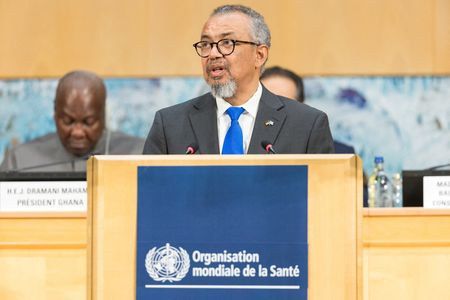
The World Health Organization’s top official reported Sunday that health authorities have documented more than 900 suspected Ebola cases in the Democratic Republic of Congo, with 101 of those cases receiving laboratory confirmation.
WHO Chief Tedros Adhanom Ghebreyesus made the announcement on Sunday, providing an update on the ongoing health situation in the central African nation.
The National Weather Service office in Mount Holly, New Jersey has issued a rip current advisory that went into effect Friday at 5:39 PM and will remain active until Saturday at 8:00 PM.
Beach visitors are urged to use extreme caution when entering ocean waters during this time period due to the elevated risk of dangerous rip currents.
Rip currents are powerful, narrow channels of fast-moving water that can quickly pull swimmers away from shore and into deeper waters, making them extremely hazardous for beachgoers of all swimming abilities.
A small aircraft accident in northern Israel’s Jezreel Valley claimed the lives of two retired Israeli Air Force officers on Sunday morning, according to emergency services and local media outlets.
Officials identified the victims as Lt. Col. (res.) Yuval (Eyal) Inbar, 50, a former squadron commander, and retired Lt. Col. Itai Talmi, 70, who also served as an Air Force officer and later worked as a captain for El Al.
The fatal accident happened during the morning hours of May 24, 2026, when the small plane went down in farming fields close to Tel Adashim in northern Israel.
According to Magen David Adom, both men, described as being around 50 years of age, sustained life-threatening injuries when their small plane crashed. Emergency medical teams rushed both victims to HaEmek Medical Center in Afula while performing life-saving procedures, but hospital staff ultimately declared them deceased.
Emergency services received the initial report at 9:06 a.m. through Magen David Adom’s 101 emergency dispatch center serving the Gilboa region.
First responders reported that crews who reached the crash site discovered the plane severely damaged in an open field close to the moshav.
Magen David Adom motorcycle unit paramedic Maor Atadgi described the emergency response to Ynet.
“This is a difficult incident. We arrived at the scene with ambulances, intensive care units, and motorcycles as an immediate response. They led us through the area to the crashed plane, which had severe metal damage, and nearby were 2 men who were unconscious, without a pulse, and not breathing.”
Atadgi continued, “We immediately began advanced resuscitation efforts and evacuated them in MDA intensive care units to the hospital while their condition was critical.”
Authorities continued investigating the crash circumstances and gathering additional information throughout Sunday.
A fatal shooting at a San Diego Islamic Center has intensified national discussions about political violence, bias crimes, and extremism in America – a country already rattled by antisemitic incidents, threats against government officials, the murder of conservative activist Charlie Kirk, and multiple attempts to harm President Donald Trump.
The San Diego incident on May 18, 2026, claimed three lives at the mosque, including security guard Amin Abdullah, who officials and community leaders say prevented a larger tragedy by confronting the assailants and activating security measures that protected children inside the building. The two assailants, reported as 17-year-old Cain Clark and 18-year-old Caleb Vazquez, subsequently died from what appeared to be self-inflicted gunshot wounds. Law enforcement officials are investigating the incident as a bias crime while examining evidence of internet-based radicalization and white supremacist beliefs.
This incident occurred less than twelve months after a string of attacks that have intensified worries about whether ideological and political violence is becoming more common, more visible, or simply harder to control in an age of fractured media landscapes, internet extremism, and eroding faith in institutions.
In May 2025, two Israeli Embassy personnel, Yaron Lischinsky and Sarah Milgrim, were fatally shot outside the Capital Jewish Museum in Washington, DC. The following month in Boulder, Colorado, an individual attacked participants in a demonstration calling for the release of Israeli hostages held in Gaza, wounding multiple people in what federal investigators classified as a targeted terrorist act and potential bias crime.
These incidents were followed in September 2025 by the murder of Charlie Kirk, founder of Turning Point USA and one of America’s most prominent conservative activists. Kirk was fatally shot while delivering remarks at Utah Valley University, in what Utah Gov. Spencer Cox described as a political assassination. Prosecutors subsequently filed aggravated murder charges against Tyler Robinson, stating that sentencing could be enhanced because Kirk was allegedly targeted for his political views.
American institutions faced additional pressure in April 2026, when Cole Tomas Allen was federally indicted on charges including attempted assassination of President Trump following an armed incident at the White House Correspondents’ Dinner in Washington. This episode came after the July 13, 2024, assassination attempt in Butler, Pennsylvania, where Trump sustained injuries, one rally participant died, and several others were wounded.
The accumulation of these incidents doesn’t indicate they stem from one organized movement. The motivations, ideological foundations, and operational methods vary. Some attacks have targeted Jewish individuals or Israelis. Others have focused on Muslims. Still others have involved politicians, public personalities, or government institutions. However, the repeated occurrence of violence across ideological and community boundaries has generated a broader sense of national insecurity.
John King, a technology strategist and former US government communications engineer who worked on mission-critical command-and-control communications systems supporting senior national leadership, explained that today’s climate results from multiple intersecting pressures, including diminishing institutional confidence, fragmented media environments, economic and cultural concerns, and the rapid pace at which digital platforms distribute information.
“What makes the current period unique is the interaction between technology and politics,” King told The Media Line. “Artificial intelligence, deepfakes, automated influence campaigns, and algorithmically amplified misinformation can accelerate polarization by making it more difficult for citizens to distinguish fact from manipulation. While political disagreement has always been part of American democracy, the velocity and scale of modern information systems can intensify tensions and shorten the time available for reflection and verification,” he explained.
These recent incidents also coincide with elevated levels of documented hostility toward religious minorities. Both Jewish and Muslim communities have reported increasing fear, threats, and attacks since the Gaza conflict began, while civil rights organizations have cautioned that bias crimes and hate incidents are increasingly connected to international conflicts, domestic political discourse, and online radicalization. These statistics also have methodological limitations: advocacy organizations track reported incidents and complaints, while official hate-crime statistics rely on law-enforcement reporting, which remains incomplete and voluntary.
Joe Young, director of the Patterson School of Diplomacy at the University of Kentucky, believes the recent violence is concerning but should be viewed within historical perspective.
“These violent events are disturbing,” Young told The Media Line. “And I think connected to larger polarization processes in the country. With that said, the amount of violence we are witnessing is not as bad as the 1960s and 1860s. So not historically large numbers of events,” he noted.
This historical context is significant. America has experienced periods of far more sustained political violence, including the Civil War period, Reconstruction, the assassinations and racial violence of the 1960s, and previous waves of extremist activity. However, the current era is distinctive in how domestic anger is channeled through digital platforms, partisan identities, and global conflicts that are quickly incorporated into American public discourse.
King explained that antisemitic attacks, anti-Muslim violence, and politically motivated violence often stem from different ideologies and grievances, but can still function within a shared environment of polarization, distrust, and radicalization. He identified social media platforms as a crucial component of that environment because they can expose individuals to grievance-focused content that reinforces existing beliefs and separates them from alternative viewpoints.
“Whether the underlying ideology is political, religious, ethnic, or conspiratorial, the mechanisms of radicalization often follow similar patterns: the creation of in-group and out-group identities, the amplification of perceived threats, and the gradual dehumanization of others,” King stated.
Young made a comparable observation in more straightforward terms, explaining that perpetrators of political violence often identify an enemy responsible for their grievances.
“Most perpetrators of political violence identify some other for why their current situation is bad,” Young said. “For some people in the US, it could be Jews. For some, Muslims. Or maybe even ICE or members of the current administration. Unfortunately, there are lots of people in the country that someone blames for the challenges we face,” he added.
The Gaza conflict has become one of the most obvious examples of how international events can impact domestic tensions. The killing of the two Israeli Embassy staff members in Washington and the Boulder attack against a group supporting hostages demonstrated how Middle Eastern events can translate into violence against civilians or community members in America who have no direct connection to the conflict. Meanwhile, the San Diego mosque attack highlighted that Muslims are also victims of radicalized violence, particularly from far-right or white supremacist networks.
“Events in the Middle East can also have a direct impact on domestic tensions within the United States,” King said. “Conflicts involving Israel, Gaza, Iran, or other regional actors frequently generate strong emotional reactions that can spill into local communities far removed from the conflict itself. Unfortunately, this can increase hostility toward Jewish, Muslim, Arab, or other communities who have no connection to acts of violence overseas,” he explained.
King warned that the greater risk is that different forms of extremism can start to reinforce each other, with each incident deepening fear and mistrust and creating a cycle where one act of violence is used to justify another. For democratic societies, he said, the challenge is maintaining the distinction between legitimate political or religious disagreement and intimidation or violence.
Young also connected the Gaza conflict to radicalization, while distinguishing between different ideological sources of violence.
“The war in Gaza has certainly radicalized some on the left,” Young said. “We have seen attacks in the US and abroad on civilians unconnected to the war. It’s not clear why this mosque in particular was targeted in San Diego. But it seems the teens were flirting with far-right/Nazi propaganda,” he added.
The San Diego incident has attracted particular attention because of the alleged role of online environments. According to reporting based on law enforcement sources, the attackers connected online, left writings expressing hatred toward multiple groups, and referenced white supremacist and neo-Nazi concepts. The case fits a broader pattern where young attackers absorb ideological material, tactical inspiration, and performative models of violence from digital subcultures.
Young said the internet has made it simpler for isolated individuals to find each other, but he cautioned against characterizing online radicalization as a completely new phenomenon.
“In the San Diego case, these teens met online and planned their violence online,” Young said. “With that said, we saw similar violent events in the US before these online spaces existed. I think what’s different is that it is easier to find like-minded individuals. But as I said, it still happened before these online spaces, the internet, and social media,” he added.
King characterized the same issue as a matter of speed and scale, rather than direct causation. He said digital platforms accelerate the distribution of emotionally charged content and can immerse users in simplified narratives of heroes, villains, victims, and enemies. Most people exposed to such material never become violent, he said, but vulnerable individuals may be repeatedly exposed to extreme messaging, conspiracy theories, dehumanizing language, or calls for retaliation.
“The danger is not that technology directly causes violence, but that it can accelerate radicalization, reinforce grievances, and lower the barriers between online hostility and real-world action,” King said.
The attacks on Trump and the murder of Kirk have added another dimension to the debate because they directly target political leadership and political expression. For many Americans, Kirk’s assassination represented a breakdown in the boundary between political hostility and physical violence. But Young argued that assassination attempts against presidents and public figures, however disturbing, are not without precedent in American history.
“I don’t think these are particularly unique or different from the past,” Young said. “These types of assassinations are horrible, but almost every modern us president has been a target, and some have been killed. Four US presidents have been killed in office, and Reagan, Trump, and Teddy Roosevelt were shot and injured but survived,” he added.
This perspective doesn’t minimize the danger, but it complicates the narrative that America is entering a completely unprecedented era. What appears different is not only the violence itself, but the surrounding ecosystem: the immediate circulation of images, conspiracies, and accusations; the use of attacks to mobilize supporters; and the speed with which one incident becomes absorbed into broader partisan narratives.
The institutional challenge is therefore dual. Authorities must prevent attacks by lone actors or small cells that may radicalize quickly and leave few traditional warning signs. At the same time, political leaders, media platforms, schools, religious institutions, and civil society organizations must address the conditions that make violence appear legitimate to a small minority.
King said American institutions have become more aware of threats linked to political violence, hate crimes, and domestic extremism, and that attacks are sometimes disrupted before they occur. But he also warned that traditional security models were largely designed to identify organized groups and coordinated plots, while modern radicalization can develop quickly, often online, and involve individuals with little or no connection to formal extremist organizations.
“The challenge going forward is developing approaches that address not only physical security threats but also the social and technological conditions that can contribute to extremism,” King said. “The long-term objective is not merely to stop individual attacks, but to strengthen societal resilience before violence becomes an option for vulnerable individuals,” he added.
The question of political responsibility is more divisive. Both experts argued that rhetoric from leaders matters, though Young placed particular responsibility on the current president.
“Elites could certainly tone down the rhetoric,” Young said. “Political opponents aren’t enemies. We are all Americans. We all want what’s best for the country, but offer different ways to get there. Unfortunately, our current president is the one who could be the most effective at lowering the political temperature but has not shown a willingness or ability to do so,” he added.
King, without focusing on one political figure, said public language can either contain or intensify a volatile environment.
“Political restraint from public figures is also urgent,” King said. “Leaders cannot control every unstable individual, but they can either lower the temperature or inflame it. Language that dehumanizes opponents, religious communities, immigrants, or political adversaries creates a permissive environment for intimidation and violence. Responsible leadership requires making clear that disagreement is legitimate, but violence and collective blame are not,” he added.
The policy responses are difficult because they touch some of the most polarized areas of American life: guns, speech, policing, online surveillance, hate-crime enforcement, and civil liberties.
King argued that immediate security measures are necessary, but insufficient without longer-term social repair.
“Realistic solutions need to operate on several levels at the same time,” King said. “There is no single policy lever that will solve political violence, antisemitism, anti-Muslim hatred, or extremist radicalization,” he added.
In the near term, King said stronger security for vulnerable religious and community institutions is essential, including better threat reporting channels, closer coordination with law enforcement and practical security support for synagogues, mosques, schools and public venues. But he also emphasized that such measures must remain within constitutional limits and respect free speech and civil liberties.
He pointed to education and community engagement as longer-term tools to rebuild trust before the next crisis.
“Once violence happens, everyone becomes reactive,” King said. “The harder but more effective work is creating relationships in advance so that communities can respond together rather than retreat into fear and suspicion,” he added.
King also identified gun policy as one of the most politically difficult issues in any discussion of violence prevention, given the reality of widespread firearm access and deep constitutional, cultural and partisan divisions in America. Measures such as stronger background checks, red-flag laws and restrictions on access for individuals who present credible threats may be practical from a prevention standpoint, he said, but remain politically difficult.
America is not witnessing political violence on the scale of its most violent historical periods. But the current wave has exposed a dangerous convergence: heavily armed individuals, online radicalization, global conflicts imported into domestic identity politics, and public rhetoric that often treats opponents not as rivals but as existential threats.
The San Diego mosque shooting, the antisemitic attacks connected to the Israel-Gaza war, the assassination of Kirk and the attempted attacks on Trump do not form one single story. They are different events with different victims, ideologies and perpetrators. But together, they point to the same national vulnerability: a society struggling to maintain democratic disagreement without allowing grievance, identity and political fear to become a pathway to violence.
Pakistan’s Federal Shariat Court has overturned legislation that removed criminal penalties for attempted suicide, determining the changes conflict with Islamic principles.
The court made this decision after reviewing multiple petitions challenging the law that Parliament enacted.
In 2022, the National Assembly modified the Pakistan Penal Code by eliminating attempted suicide from criminal offenses. The amended law prohibited legal prosecution of individuals who attempted suicide.
The Federal Shariat Court explained in its decision that governments must safeguard citizens’ lives and emphasized that criminalizing suicide attempts previously served to discourage such actions and prevent them through fear of prosecution.
The court determined that mental illness alone does not justify eliminating this law.
During proceedings, government representatives cited World Health Organization statistics showing millions of annual suicide deaths globally, with mental illness being the leading factor.
The federal government maintained that the law’s main purpose was recognizing that people who attempt suicide typically experience psychological problems or mental health issues.
Government officials additionally argued that since suicide attempters are victims themselves, these situations should be addressed medically rather than legally, without criminal prosecution.
Officials contended that people in these circumstances often face mental, economic, and social pressures, requiring medical care instead of punishment.
However, the Federal Shariat Court countered that suicide and attempted suicide stem from factors beyond just mental illness or psychological distress.
These factors may encompass suicide attempts for terrorist purposes, hunger strikes seeking political or economic benefits, public self-immolation using kerosene, and sometimes suicide attempts influenced by internet content or mobile apps.
The court noted that while each suicide attempter faces unique circumstances, removing criminal status from all suicide attempts regardless of motivation is inappropriate.
The court pointed out that Pakistan’s Constitution already contains provisions for helping individuals with mental disabilities.
The Federal Shariat Court also consulted the Council of Islamic Ideology, which declared suicide a serious sin requiring discouragement.
Tanzeela Javed, an Islamabad-based clinical psychiatrist, told The Media Line “In most cases, attempted suicide is associated with treatable mental health conditions such as depression, anxiety disorders, trauma-related disorders, or acute psychosocial stressors like financial hardship or relationship breakdown.”
She added “Prevention strategies are never purely medical; they also require social support systems, crisis services, and responsible public policy. The most effective frameworks internationally tend to treat suicide prevention as a public health priority while still ensuring appropriate safeguards in exceptional contexts”.
Javed emphasized, “Ultimately, the clinical goal is not punishment, but risk reduction, treatment access, and preservation of life through early and non-judgmental intervention.”
An innocent person caught in gunfire during a deadly confrontation at a White House security checkpoint continues to recover in serious but stable condition as of Sunday.
According to the Secret Service, the unidentified bystander sustained a gunshot injury that officials described as non-life-threatening. Officials have not disclosed the circumstances surrounding how the person was wounded.
Law enforcement agencies have provided limited information regarding the Saturday evening incident. The District of Columbia Metropolitan Police Department reported that the gunman, 21-year-old Nasire Best from Dundalk, Maryland, began firing rounds at a White House security checkpoint before Secret Service personnel responded with deadly force. Best was transported to a medical facility where he was declared deceased.
President Donald Trump was inside the White House when the gunfire erupted.
This marks the third shooting incident involving the president within the last month, following an armed individual who attacked the White House Correspondents’ Association Dinner in April carrying firearms and blades, and another shooting where Secret Service agents wounded a gunman who fired at them near the Washington Monument earlier this month.
Through a Truth Social message, Trump characterized the Saturday shooter as having a “possible obsession with our Country’s most cherished structure.” He also leveraged the incident to advocate for the ballroom construction project he wants built where the White House’s former East Wing once stood, stating the shooting “goes to show how important it is, for all future Presidents, to get, what will be, the most safe and secure space of its kind ever built in Washington, D.C.” Trump is requesting $1 billion from Congress for White House campus security enhancements, including the proposed ballroom.
Court documents from the District of Columbia reveal Best had previously encountered law enforcement at the White House. He was taken into custody last July for trying to breach White House property at a separate checkpoint. He ignored officers’ orders to halt, declared himself to be Jesus Christ and expressed a desire to be detained.
Best competed in track and field events at Dundalk High School, earning his diploma in 2023.
A woman claiming to be Best’s mother spoke with The Washington Post, saying she discovered the shooting through social media and struggled to accept the news. She defended her son, stating he “was never violent, regardless of what people are posting.”
Prime Minister Benjamin Netanyahu is organizing a restricted security cabinet session for Sunday night to address a developing agreement between the United States and Iran, as Israeli leadership expresses worries about specific terms in the proposed memorandum of understanding that could halt hostilities with Hezbollah and postpone comprehensive nuclear discussions.
A representative for one of the ministers scheduled to attend the session confirmed the meeting to The Times of Israel, noting that a specific time has not been established.
Based on reports from Kan, Netanyahu has expressed worry about at least two components of the proposed deal: a mandate to cease military actions against Lebanon and the deferral of meaningful talks about Iran’s nuclear program to a later phase of negotiations.
The memorandum of understanding being considered would extend the ceasefire for 60 days and mandate that Iran reopen the Strait of Hormuz, while the United States would terminate its naval blockade. Throughout the 60-day timeframe, the US would consider removing sanctions against Iran, while American forces would stay in the area until negotiations are completed.
Hostilities between Israel and Hezbollah would cease under the agreement, though Israel would maintain the capability to respond with military force if Hezbollah initiates attacks.
Israel was excluded from Saturday’s “phone summit” that included the United States and leaders from Saudi Arabia, Qatar, the UAE, Bahrain, Kuwait, Oman, Egypt, Jordan, and Turkey discussing the revised memorandum of understanding. Reuters indicated that Pakistan also joined the call.
Israeli broadcaster N12 stated that Netanyahu considers the proposal potentially detrimental to Israel. An Israeli official mentioned in the coverage said US special envoy Steve Witkoff strongly backed the agreement and “wants a deal at almost any price, and is placing immense pressure on Trump not to resume the war.”
Two American officials informed The New York Times that Iran had consented as part of the developing arrangement to surrender its stockpile of highly enriched uranium.
The coverage indicated that the proposal does not detail how Tehran would give up the material, and talks on implementation were delayed to the subsequent round of nuclear negotiations.
The coverage stated that Iran initially opposed including uranium provisions in the first stage of the agreement, but American officials communicated through intermediaries that military operations would continue without such an understanding.
Los Angeles Dodgers versatile player Enrique Hernandez will take the field Monday for his first game of the season following his recovery from left elbow surgery.
The 34-year-old had the surgical procedure in November after being sidelined for two months during the 2025 season because of elbow problems. Hernandez returned to the Dodgers organization by signing a one-year deal valued at $4.5 million in February.
The surgical recovery kept Hernandez from representing Puerto Rico during the World Baseball Classic in March.
Monday’s starting lineup against the Colorado Rockies is expected to include Hernandez.
Dodgers manager Dave Roberts spoke with reporters Sunday about Hernandez’s return, saying: “There’s a different energy with (Hernandez). There’s a levity. There’s an intensity. There’s a good worker in there, a winning player. So I’m looking forward to having that edge.”
Hernandez’s return comes at a crucial time as third baseman Max Muncy has been dealing with right wrist discomfort following a hit-by-pitch from Milwaukee Brewers left-hander Aaron Ashby on Friday.
Muncy remained out of action Saturday and Sunday and faces additional medical testing if his wrist continues to cause problems Monday.
The 35-year-old Muncy has posted a .258 batting average this season with 12 home runs and 19 RBIs across 48 games.
Last season, Hernandez recorded a .203 batting average with 10 homers and 35 RBIs in 92 games. Throughout his 12 major league seasons, including nine with the Dodgers across two different periods, Hernandez maintains a career .236 batting average with 130 home runs and 470 RBIs in 1,275 games.
Hernandez has built his reputation on postseason performance, delivering 16 home runs and 42 RBIs in 103 career playoff games while contributing to the Dodgers’ World Series championships in 2020, 2024 and 2025.
During his time with the Boston Red Sox in 2021, Hernandez connected for five home runs in the postseason as the team advanced to the American League Championship Series before losing to the Houston Astros.
Emergency responders battling to prevent a dangerous chemical explosion in Southern California received encouraging news Sunday when specialists discovered what appears to be a crack in the pressurized tank.
The container holds methyl methacrylate, a combustible substance used in plastic production and manufacturing processes. Officials have warned since Friday that the tank could burst, releasing as much as 7,000 gallons of poisonous material, or detonate and threaten additional storage units at the GKN Aerospace facility.
Evacuation directives went into effect Friday for Garden Grove residents, a community located approximately 30 miles south of Los Angeles. The mandatory evacuation zone encompasses tens of thousands of people.
TJ McGovern, interim fire chief of the Orange County Fire Authority, announced through a social media video that expert teams Saturday evening identified “a potential crack in the tank, which could potentially be relieving some of the pressure in there.”
McGovern characterized finding the possible fissure as “positive intel.”
Emergency officials continue working to confirm whether the suspected crack has actually decreased tank pressure, according to an Orange County Fire Authority spokesperson who spoke with Reuters. Reducing internal pressure would help prevent a catastrophic blast, the spokesperson explained.
While authorities currently concentrate on pressure monitoring, the spokesperson noted the crack might eventually enable officials to slowly remove the hazardous chemicals.
Craig Covey, division chief of the Orange County Fire Authority, reported Saturday that the tank’s interior temperature was climbing approximately one degree hourly and had peaked at 90 degrees. However, EPA Administrator Lee Zeldin stated early Sunday on CNN’s “State of the Union” that local teams were working to maintain tank stability by keeping temperatures below 85 degrees Fahrenheit.
“I’m being told this morning that the most likely scenario is one of a low-volume release, where the local authorities are going to be able to monitor, neutralize and contain the threat,” Zeldin told CNN.
Response teams prepared for potential spillage by identifying methods to construct barriers and redirect the liquid into containment areas at the industrial location, preventing it from reaching storm drainage systems, waterways or coastal areas, Covey explained.
Public health authorities expressed concerns that chemical vapors could trigger serious breathing complications during extended exposure. Environmental monitoring equipment positioned throughout Garden Grove detected no hazardous substances or contaminants Sunday, the EPA reported.
Detection devices placed near the tank have not registered any airborne chemical releases, the fire authority spokesperson confirmed.
Neither the Orange County Fire Authority nor the Garden Grove mayor’s office responded to Sunday comment requests. Saturday briefings revealed firefighters were investigating whether increased cooling water flow could slow internal chemical reactions sufficiently to lower pressure and avoid explosion.
The emergency situation started Thursday at the GKN Aerospace plant, which manufactures and tests aircraft windows and canopies for civilian and military aviation, the company’s website states.
California Governor Gavin Newsom declared a state of emergency for Orange County on Saturday.
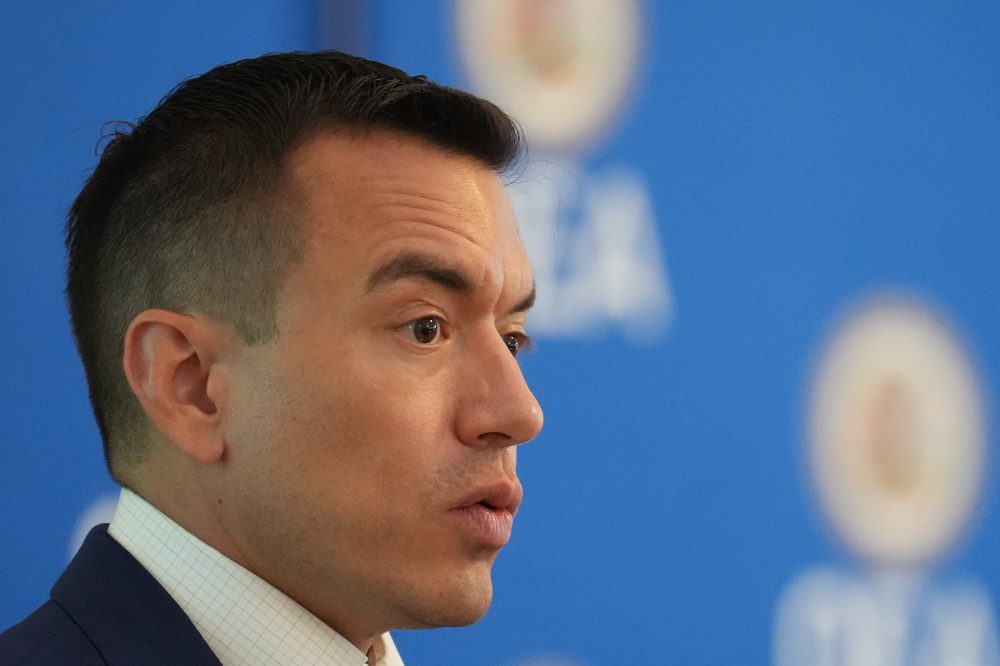
During his annual State of the Union speech on Sunday, Ecuador’s President Daniel Noboa highlighted his administration’s crime-fighting initiatives backed by the United States while also pointing to improvements in economic measures.
Speaking before the National Assembly in Quito, the capital city, Noboa pointed to the transfer of twelve crime leaders to the U.S. and the confiscation of nearly 300 tons of illegal drugs as proof of what he called a strong and successful strategy against organized crime, which remains the primary worry for citizens of Ecuador during this decade.
“We will seek them out, find them and extradite them,” Noboa declared regarding wanted criminals, emphasizing that the South American nation cannot progress “if families live in fear” because of organized crime.
The country has faced challenges controlling drug-related violence beginning in 2021 as competing cartels form alliances with neighborhood gangs and fight over control of trafficking routes and coastal ports for moving cocaine. Ecuador sits between Colombia and Peru, which are the world’s leading cocaine-producing nations.
According to the Ministry of the Interior, Ecuador experienced its worst homicide rate in decades last year with 50 killings for every 100,000 people.
To address this crisis, Noboa, who won reelection last year for a four-year period, has implemented emergency powers allowing military forces to execute various anti-crime tactics, including combined patrols with law enforcement and searches of properties without warrants. Earlier this year, Ecuador’s armed forces also conducted a joint mission with U.S. military against a training facility reportedly operated by Colombian drug dealers, striking the location using drones, helicopters and boats.
Civil society organizations have criticized Noboa, arguing his aggressive tactics have not succeeded in lowering crime rates while endangering innocent people.
Glaedys González, who analyzes the Andean region for the International Crisis Group, stated Sunday that Noboa may have presented an overly positive view of the nation’s security situation in his address, but “progress on violence is far from being achieved.”
“It is evident that the situation in Ecuador has reached unprecedented levels,” González said.
During Sunday’s address, Noboa also highlighted economic improvements, informing legislators that poverty decreased from 26% to 21.4% in 2025 while severe poverty fell from 10.4% to 8.4%.
Noboa initially won office in 2023 through a special election that occurred after former President Guillermo Lasso disbanded the National Assembly and cut short his own presidency.
Emergency officials in Southern California continue working around the clock to address a critical situation involving a compromised chemical storage container at an aerospace company that has forced tens of thousands from their homes.
The container at GKN Aerospace holds approximately 6,000 to 7,000 gallons of methyl methacrylate, a dangerous substance used in manufacturing plastic components. The vessel became overheated last week and started releasing toxic fumes into the surrounding air in Garden Grove, located in Orange County. Weekend reports from officials indicated the container could discharge its entire contents or potentially detonate if temperatures continue rising.
While no one has been hurt, evacuation orders affected more than 50,000 people throughout the Memorial Day holiday weekend. Emergency responders have been continuously dousing the container with water to lower the temperature of the heating chemicals and avoid a potential blast.
The substance methyl methacrylate appears as a clear, combustible liquid utilized in creating resins, plastics and dental prosthetics, and falls under federal hazardous material regulations. According to the Environmental Protection Agency, the compound can cause irritation to respiratory systems, eyes and skin, while higher concentrations may lead to impaired breathing capacity, lightheadedness and cognitive issues. Air quality testing conducted around the evacuation area has shown pollution levels remain within acceptable ranges.
Officials report the container’s release valves have malfunctioned, creating uncertainty about how to handle the chemical contents while overheating dangers persist. Local emergency management warned that without intervention, the situation could result in either a massive chemical discharge or an explosion.
Emergency crews have concentrated efforts on maintaining the container temperature below 85 degrees Fahrenheit to reduce internal pressure. EPA chief Lee Zeldin stated Sunday that the most probable outcome involves a “low-volume release” of the tank’s materials, allowing officials to “monitor, neutralize, and contain the threat.”
Rising internal temperatures would create pressure buildup as the methyl methacrylate transforms from liquid to gas form, heightening explosion risks that could ignite additional containers at the location.
An explosion releasing the chemical airborne would spread it across a broader area and could generate dangerous inhalation vapors, warned Orange County’s top health officer, Dr. Regina Chinsio-Kwong.
Dr. Chinsio-Kwong explained that inhaling the vapor could irritate eyes, nasal passages and lungs, potentially causing throat soreness, burning eyes and dizziness. She noted the chemical produces a fruit-like smell, though detecting the odor doesn’t necessarily indicate health consequences will occur.
Extended exposure to methyl methacrylate can lead to severe breathing complications or loss of consciousness. The evacuation area sits west of Anaheim, where Disneyland’s two entertainment parks operate without evacuation requirements. Dr. Chinsio-Kwong assured that individuals beyond the evacuation boundary face no health concerns.
Sunday reports from officials suggested the container may have developed a fracture, which could reduce explosion probability. Orange County Fire Authority Capt. Wayhowe Huang reported emergency teams discovered the potential crack during overnight operations. Despite the crack, he said the container showed no signs of releasing toxic material into the environment.
Zeldin indicated a controlled, small-scale chemical release would enable officials to monitor the situation and reduce container pressure. GKN Aerospace announced Sunday afternoon its continued cooperation with local emergency services, stating “the situation remains ongoing.”
Ireland’s center-right ruling Fine Gael party and the smaller center-left Social Democrats each secured victories in Sunday’s by-elections, while a figure identified by courts as leading a notorious criminal organization failed once again to win office.
The outcomes represented a setback for the left-wing nationalist Sinn Fein party, which has emerged as one of Ireland’s three major political forces and had aimed to capture a seat in the Dublin Central district where party leader Mary Lou McDonald currently serves as a representative.
The weak performance by Fianna Fail, the other party in the governing coalition, across both contests may intensify criticism of Prime Minister Micheal Martin from members of his own party.
Daniel Ennis of the Social Democrats claimed victory in Dublin, building on the party’s success from the general election held 18 months earlier when it expanded its representation from six to 11 seats in the 174-member legislative body.
The party now holds the position as parliament’s fourth-largest faction, achieving this status just over ten years since its establishment.
The results indicated that the Social Democrats attracted some progressive voters who previously supported Sinn Fein, though the main opposition party also saw erosion of its traditional working-class base to increasingly popular right-wing candidates, continuing a trend from 2024.
Gerry Hutch, identified by an Irish court in 2023 as leading a prominent criminal organization in Ireland, secured 11% of initial preference votes to finish in fourth place. Running on a platform that included anti-immigration positions, Hutch barely failed to secure one of four Dublin Central seats during the 2024 general election.
In media statements, Hutch has rejected claims that he leads a criminal enterprise.
Sean Kyne, a former junior minister representing Fine Gael, achieved the rare distinction of becoming just the fourth government party candidate to win a by-election since 1982. His success in the western Galway county preserved the coalition’s substantial parliamentary majority.
Independent Ireland, a recently formed rural-oriented right-wing party that prominently backed recent public demonstrations against rising fuel costs, posed the strongest challenge to Kyne.
The election results highlighted the divided state of Ireland’s voting public, with four parties spanning the political spectrum engaged in tight competition for the two available seats.
Uber’s board of directors gathered on Saturday to consider increasing their acquisition proposal for German food delivery company Delivery Hero, following rejection from a significant shareholder, according to a Financial Times report published Sunday.
The initial offer from Uber would have placed Delivery Hero’s value at more than 11.5 billion euros, equivalent to approximately $13.39 billion. However, a major shareholder turned down this proposal, prompting the ride-sharing company’s board to explore a higher bid.
Reuters has not been able to independently confirm the Financial Times report at this time.
Chicago Cubs right-handed pitcher Edward Cabrera has been added to the 15-day injured list Sunday after developing a blister on the middle finger of his throwing hand.
The Cubs made the roster move effective Thursday and brought up left-handed pitcher Jordan Wicks from Triple-A Iowa as Cabrera’s replacement. Chicago entered Sunday’s matchup with the Houston Astros holding a 29-23 record but sitting in third place within the National League Central division while enduring a seven-game skid.
The 28-year-old Cabrera has posted a 3-2 record with a 4.00 ERA across 10 starts this season.
Chicago’s pitching staff continues to face injury challenges, with left-hander Matthew Boyd still recovering from left knee surgery performed on May 7. Boyd completed a simulated multi-inning session from the mound Friday and is expected to face live hitters during batting practice this week while the team plays a four-game series in Pittsburgh.
The Cubs have already ruled out right-hander Cade Horton for the season following elbow surgery, while left-hander Justin Steele may not return from his left flexor strain until after the All-Star break.
Wicks compiled a 0-1 record with a 6.28 ERA in eight appearances for Chicago last season and was 0-2 with a 4.44 ERA in seven Triple-A starts this year.
American tennis player Taylor Fritz experienced a surprising early exit from the French Open on Sunday, falling to compatriot Nishesh Basavareddy in a first-round upset that highlighted his ongoing struggles following injury.
The seventh-seeded Fritz lost 7-6(5) 7-6(5) 6-7(9) 6-1 to the 21-year-old wildcard entry on Court Suzanne Lenglen in Paris, marking another disappointing result in what has been a challenging clay court campaign disrupted by physical setbacks.
Fritz had been sidelined for two months with a knee problem and only returned to competition last week in Geneva, where he also suffered an opening-round loss. The rust from his extended absence was evident as he struggled against Basavareddy’s varied tactical approach.
The match began competitively with both players trading games in the opening set before Basavareddy claimed it in a closely contested tiebreaker. Fritz appeared to find his rhythm early in the second set but quickly lost momentum when his opponent broke serve and began implementing effective drop shots that created difficulties throughout the contest.
Facing the prospect of consecutive first-round exits at Roland Garros, Fritz watched as the world number 148 Basavareddy delivered powerful serves in the second-set tiebreak to establish a commanding two-set advantage.
The third set remained on serve through 12 games, with Fritz showing emotion by screaming after winning the tiebreak and saving a match point to extend the contest. However, Basavareddy maintained his composure and dominated the final set to secure his first victory over a top-10 opponent.
Basavareddy will advance to face either Alexander Shevchenko or Alex Michelsen in the second round of the tournament.
WASHINGTON — President Donald Trump’s developing agreement to conclude the Iran conflict is facing sharp pushback from Republican colleagues who support tougher measures against Tehran’s leadership and worry about missing a chance to weaken a long-standing Middle Eastern adversary.
The agreement that the Republican president described as “largely negotiated” has prompted various legislators, former administration officials, and conservative policy experts to publicly question whether the currently understood terms would make the entire conflict meaningless.
Sen. Ted Cruz, R-Texas, characterized the president’s choice to attack Iran as the “most consequential” decision of his second term and urged against easing pressure now.
“If the result of all that is to be an Iranian regime — still run by Islamists who chant ‘death to America’ — now receiving billions of dollars, being able to enrich uranium & develop nuclear weapons, and having effective control over the Strait of Hormuz, then that outcome would be a disastrous mistake,” Cruz posted Saturday on the social media platform X. His comments came after Trump’s briefing following conversations with Israeli leadership and other regional U.S. partners.
Sen. Lindsey Graham, R-S.C., who maintains close ties with Trump, criticized any agreement that would leave Iran viewed as a regional powerhouse while maintaining its capacity to target Gulf oil facilities.
Sen. Roger Wicker, chairman of the Senate Armed Services Committee, challenged the wisdom of a suggested 60-day ceasefire, calling it a “disaster.”
“Everything accomplished by Operation Epic Fury would be for naught!” stated Wicker, R-Miss.
Trump, who frequently emphasizes his deal-making skills and dislikes appearing disadvantaged in negotiations, rejected criticism of an agreement he said was not “even fully negotiated yet.”
“So don’t listen to the losers, who are critical about something they know nothing about,” he posted on his social media platform.
Trump described the agreement he and his team are developing as “THE EXACT OPPOSITE” of a nuclear deal Iran signed during the Democratic Obama administration. Trump withdrew from that arrangement and has been working to establish a replacement.
“Both sides must take their time and get it right. There can be no mistakes!” Trump stated.
He noted that a U.S. military blockade of Iranian ports would continue “in full force and effect until an agreement is reached, certified, and signed.”
Trump also received backing from some Capitol Hill members.
GOP Sen. Rand Paul of Kentucky, frequently at odds with the president, supported the White House’s strategy.
“War virtually always ends with negotiations,” Paul posted on X. “Critics of President Trump’s peace negotiations should give President Trump the space to find an American First solution.”
According to the framework, the conflict would conclude with Iran reopening the strait and surrendering its highly enriched uranium reserves, with specific details and schedules to be determined during a subsequent 60-day period, regional officials informed The Associated Press on Sunday.
Polling indicates the conflict, which started when the United States and Israel launched attacks on Iran on Feb. 28, lacks public support and has cost U.S. taxpayers a minimum of $29 billion as of this month. Thirteen military personnel have died during the operation.
Trump originally predicted the conflict would end within four to six weeks, but the standoff persists. Iran’s blockade of the strait, which handles approximately 20% of worldwide energy shipments, has disrupted the global economy and driven up gasoline and commodity prices.
Mike Pompeo, one of Trump’s first-term secretaries of state, claimed on Saturday that the developing agreement appeared similar to the Obama-era deal from which Trump withdrew.
“Not remotely America First,” Pompeo posted on X, triggering a profanity-filled response from Steven Cheung, the White House director of communications.
John Bolton, a national security adviser during the first term who has become a presidential critic, suggested the emerging plan details appeared to benefit the Iranian government.
“If news reports about the impending Iran deal are correct, the ayatollahs will have won a significant victory,” Bolton wrote Sunday on X. “They will be back on the road to nuclear weapons, supporting global terrorism and repressing their own people.”
Secretary of State Marco Rubio responded on Sunday during a diplomatic visit to India, telling reporters at a press briefing that no president has taken a firmer stance against Iran than Trump.
“His commitment to that principle that they’ll never have a nuclear weapon shouldn’t be questioned by anybody,” Rubio stated. “And the idea that somehow this president, given everything he’s already proven he’s willing to do, is going to somehow agree to a deal that ultimately winds up putting Iran in a stronger position when it comes to nuclear ambitions is absurd. That’s just not going to happen.”
Republican Rep. Thomas Massie of Kentucky, a Trump opponent who had supported legislation to limit the president’s war powers against Iran, told NBC’s “Meet the Press” on Sunday that while the terms remain unclear, “if Lindsey Graham and Ted Cuz are crashing out last night, I’d say it’s probably a pretty good deal.”
Massie will depart Congress in January after angering Trump and losing his GOP primary last week to a Trump-endorsed opponent.
STAROBILSK, Russian-controlled Ukraine, May 24 (TV Delmarva) — Investigation teams spent Sunday examining the destroyed remains of a dormitory building following what Russian officials describe as a deadly Ukrainian drone assault in the Luhansk region, an area under Russian occupation during the ongoing four-year conflict.
Officials reported that rescue operations ended late Saturday evening, with the final casualty count from the attack on the educational facility reaching 21 victims, including numerous young women.
The structure’s front wall showed massive damage with large openings and shattered glass throughout. Debris consisting of bent metal pieces and broken concrete scattered around what had been the building’s central yard, while damaged furniture and classroom equipment remained stacked inside.
An investigator wearing safety equipment studied metal fragments and other wreckage arranged on a protective covering while personnel from Russia’s Investigative Committee gathered evidence from Friday’s incident.
Reuters covered this story from Starobilsk during an official press tour arranged by Russia’s Foreign Ministry on May 24, 2026.
Ukrainian military officials rejected claims of responsibility for the strike, stating they had targeted a specialized drone operations unit in the vicinity and maintained adherence to international humanitarian standards.
Reuters could not independently confirm the details of what occurred.
“Three waves of UAVs (drones) 10-15 minutes apart,” Russia’s Human Rights Commissioner, Yana Lantrova, told journalists outside the damaged structure while a group displayed photographs of the deceased.
“Sixteen UAVs in total. They waited for the children to run out. They fired directly at the children.”
The educational institution, located in eastern Luhansk region and annexed by Russia months following the Kremlin’s February 2022 invasion of Ukraine, displayed official Russian government emblems.
Posted on one interior wall were guidelines for responding to “the threat of terrorism.”
Russian President Vladimir Putin directed his armed forces to develop retaliatory options against Ukraine following the incident.
Less than 24 hours later, during the early hours of Sunday, Russia launched an assault on Kyiv and nearby regions using hundreds of drones and missiles in what represented one of the most intense bombardments of the capital since the conflict began.
The nighttime attack resulted in four deaths and included the deployment of a Russian Oreshnik hypersonic missile targeting an area south of Kyiv.
British racing driver Katherine Legge’s bid to complete one of motorsports’ most challenging feats came to an abrupt halt Sunday when she was involved in a crash during the Indianapolis 500, ending her participation after only 18 laps.
The 45-year-old was attempting the demanding “double” – racing in both the Indy 500 and the NASCAR Coca-Cola 600 on the same Memorial Day weekend, covering a total of 1,100 miles with minimal time between events.
The incident occurred as Legge navigated Turn 2 at Indianapolis Motor Speedway. Ryan Hunter-Reay lost control of his Chevrolet and hit the wall, creating smoke that obscured Legge’s vision. When she finally spotted Hunter-Reay’s damaged vehicle, she was forced to make a sudden maneuver to the left to avoid contact, but the evasive action sent her spinning into the infield barrier.
“He came back up the track, so last minute I had to go left. It just wasn’t enough time to avoid,” Legge explained after the crash.
Both drivers walked away from their damaged vehicles without assistance and were evaluated at the medical facility with no injuries reported. Legge was driving the No. 11 Chevrolet for HMD Motorsports with A.J. Foyt Racing.
Despite the setback, Legge remained committed to attempting the second half of her ambitious plan, traveling to Charlotte to compete in the evening NASCAR race from the 37th starting position.
“Desperately frustrating,” she said about the early end to her Indy 500 run. “To be taken out by something not in your control, it would be slightly better to be taken out by something in your control … we were looking forward to a long day, 1,100 miles.”
The crash left Legge with limited time to shift her focus and equipment for the NASCAR event. “I need to have an attitude adjustment, because right now I’m pissed,” she admitted. “And disappointed. I need to get on that plane and try and get into the right mindset.”
Legge was the sole female competitor in this year’s Indianapolis 500 field. She became the sixth driver to attempt the Memorial Day weekend double since John Andretti pioneered the concept in 1994 for AJ Foyt Racing. Andretti managed a 10th-place finish at Indianapolis but encountered engine problems after 220 laps at Charlotte.
“Very few drivers ever get the opportunity to attempt the ‘double,’ and I do not take that opportunity lightly,” Legge had said before the weekend. “This challenge is about pushing through perceived limits … and trying to do something unique.”
Only Tony Stewart has successfully completed both races on the lead lap in the same day, accomplishing the feat in 2001.
Weather conditions forced the cancellation of Sunday’s final game between the St. Louis Cardinals and Cincinnati Reds at Cincinnati, marking the second weather-related postponement of the weekend series.
The canceled contest will be rescheduled as part of a split-doubleheader on August 17th.
Friday’s series opener also fell victim to bad weather conditions. The National League Central division teams responded by playing two games on Saturday, with St. Louis dominating the opening contest 8-1 before Cincinnati fought back to win the nightcap 7-6 in an 11-inning thriller.
St. Louis enters Monday’s three-game road series against the Milwaukee Brewers having dropped three of their previous four contests.
Meanwhile, Cincinnati has captured three victories in their last four outings. The Reds begin a three-game road series against the New York Mets on Monday.
Two Toronto Blue Jays stars were forced to leave Sunday’s matchup against the Pittsburgh Pirates during the fifth inning after suffering separate injuries.
Right-handed pitcher Dylan Cease departed the contest with what team officials described as “mild left hamstring discomfort” while Toronto trailed 2-1. Mason Fluharty stepped in to replace Cease, who had recorded eight strikeouts and allowed four hits and two runs with one walk over 4 2/3 innings of work.
Meanwhile, Vladimir Guerrero Jr. exited after taking a pitch from Mitch Keller that struck his right elbow. The first baseman immediately headed to the clubhouse while Lenyn Sosa entered the game as a pinch runner.
Medical tests later revealed that Guerrero sustained a right elbow contusion, though team officials confirmed that X-ray results came back negative.
Prior to his injury, Guerrero had drawn two walks and crossed home plate once during the contest.
Eight Arab-Islamic nations issued a harsh rebuke on Sunday against Israeli police minister Itamar Ben-Gvir for his conduct toward humanitarian workers who were detained while attempting to deliver aid to Gaza.
The controversy erupted after Ben-Gvir shared a video showing him mocking activists who were restrained on the ground during their detention. Several of the detained individuals, who had been part of a flotilla seeking to transport humanitarian supplies to Gaza, have since claimed they suffered physical abuse while in custody – allegations that Israel’s prison service has rejected.
In their joint statement, the foreign ministers from Saudi Arabia, Egypt, Jordan, Qatar, the United Arab Emirates, Turkey, Indonesia and Pakistan declared: “Ben-Gvir’s deliberate public humiliation of detainees is a disgraceful assault on human dignity and a clear violation of Israel’s obligations under international law, including international humanitarian law, and international human rights law.”
Drivers heading north on Route 1 should expect significant delays this evening as heavy traffic volume creates bottlenecks along a busy stretch of Coastal Highway.
The backup extends from Tower Road to Houston Street, with motorists facing delays of 15 to 20 minutes due to the high volume of vehicles in the area.
Travelers are advised to plan extra time for their commute or consider alternate routes if possible while traffic conditions remain congested along this section of the northbound lanes.
Tampa Bay Rays outfielder Jonny DeLuca has been sidelined with a right hamstring strain, landing him on the 10-day injured list as of Sunday.
The roster move takes effect retroactively from Saturday.
DeLuca suffered the hamstring injury while running out an infield single during the seventh inning of Tampa Bay’s 4-2 win against the New York Yankees on Friday, experiencing a pull in the muscle during the play.
This season, DeLuca has posted a .269 batting average along with two home runs and 19 RBIs across 41 games. The 27-year-old player holds career statistics of a .244 batting average with 10 home runs and 60 RBIs over 192 games between his time with the Los Angeles Dodgers and Rays.
To fill the roster vacancy, the Rays brought up outfielder Victor Mesa Jr. from Triple-A Durham on Sunday.
The 24-year-old Mesa posted a .188 batting average with one home run and six RBIs during 16 games with the Miami Marlins last season. This year in the minor leagues, he has been performing well with a .350 batting average, three home runs, and nine RBIs across 21 games at two different levels.
Nigerian President Bola Tinubu secured his party’s nomination for the upcoming presidential election after winning Saturday’s primary by an overwhelming margin, according to results released Sunday.
The All Progressives Congress party conducted its presidential primary following an unexpected challenge from Stanley Osifo. Tinubu dominated the voting, capturing close to 11 million votes while Osifo received only 16,500.
The president has earned praise from international investors following his implementation of significant economic reforms, which included eliminating fuel and electricity subsidies, dismantling foreign exchange restrictions, and restructuring the nation’s tax system.
Tinubu’s path to re-election became clearer when an opposition alliance aimed at presenting a unified candidate against him fell apart earlier this month.
The president assumed office in 2023 following his victory over two primary opponents, who later contested the election results in court claiming fraud. Tinubu maintained that his victory was legitimate.
PARIS, May 24 – Key results and action from Sunday’s opening day of the French Open tennis tournament (all times GMT):
1730 RADUCANU ELIMINATED BY SIERRA
Emma Raducanu of Britain, who won the 2021 U.S. Open title, was defeated by Argentina’s Solana Sierra in straight sets, 6-0 7-6(4).
1548 ANDREEVA DEFEATS FERRO
Eighth-seeded Mirra Andreeva from Russia, who reached the 2024 French Open semifinals, secured a straightforward 6-3 6-3 victory against France’s Fiona Ferro.
1514 BAPTISTE UPSETS FORMER TITLEHOLDER KREJCIKOVA
Hailey Baptiste, the 26th seed from the United States, staged a comeback from one set behind to defeat Barbora Krejcikova 6-7(7) 7-6(6) 6-2. Krejcikova captured the 2021 French Open crown and won Wimbledon in 2024.
1414 ZVEREV OVERPOWERS BONZI
Second-seeded Alexander Zverev of Germany launched his pursuit of his first Grand Slam championship with a commanding straight-set triumph over France’s Benjamin Bonzi, winning 6-3 6-4 6-2.
The three-time Grand Slam finalist, who reached the Roland Garros final in 2024, may see an opening with defending two-time champion Carlos Alcaraz absent due to a wrist injury.
Nevertheless, the 29-year-old German confronts a tough path ahead, particularly with world number one Jannik Sinner playing at an exceptional level.
1205 KHACHANOV DISPATCHES GEA
Thirteenth-seeded Karen Khachanov of Russia eliminated French wildcard recipient Arthur Gea with a 6-3 7-6(3) 6-0 victory.
1142 BENCIC ADVANCES PAST KRAUS
Switzerland’s Belinda Bencic, seeded 11th, handled Austria’s Sinja Kraus with ease, winning 6-2 6-3 on Court Philippe-Chatrier.
The Tokyo 2020 Olympic gold medalist hopes for an extended tournament run this year, as she has never advanced past the third round at Roland Garros.
0909 COMPETITION BEGINS
Tournament play commenced under bright sunshine, with temperatures at Roland Garros reaching approximately 28 degrees Celsius and public weather service Meteo France predicting highs of 34 degrees later Sunday.
Former Olympic champion Belinda Bencic, the 11th seed, faced Austrian qualifier Sinja Kraus in the opening match on Court Philippe Chatrier.
Supporters of the Los Angeles Angels are delivering an unmistakable demand to owner Arte Moreno: it’s time to sell the franchise.
Coordinated through social media platforms including Instagram pages like Angels Boycott and Angels Central, supporters have organized demonstrations at Angel Stadium in recent weeks. These protests are set to reach their peak during Sunday’s nationally televised matchup against the Texas Rangers on Peacock, broadcast from Anaheim, California.
Friday saw Angels supporters encouraged to dress entirely in black while making their voices heard. Saturday brought more than 100 demonstrators to the stadium’s main entrance ahead of the Angels-Rangers contest to voice opposition to Moreno’s leadership.
This followed Thursday’s demonstration by supporters in an otherwise vacant upper section, who gained attention through the trending shirtless “tarps off” movement. Stadium-wide chants of “Sell the Team” and profane expressions targeting Moreno have become commonplace.
Angels supporters cite numerous grievances with the organization, primarily centered on team performance. The franchise hasn’t posted a winning season since 2015 (85-77), and they’re currently under their sixth manager, Kurt Suzuki, since Mike Scioscia’s departure following the 2018 campaign.
The Angels currently hold Major League Baseball’s worst record at 19-34 entering Sunday’s action.
The Angels Central social media page released this statement regarding their movement:
“The chants will continue all season long because this is no longer just about wins and losses. It’s about accountability, leadership, and the future of the franchise. We are not rooting for wins anymore, we are rooting for change.
“For the first time in a long time, Angels fans are united behind one common goal, change in ownership. And the frustration is directed at the person that is responsible for holding this organization hostage. Arte Moreno.”
The franchise entered the American League in 1961 under entertainer Gene Autry’s ownership. Following his 1998 passing, his widow Jackie Autry assumed control of the organization.
The Walt Disney Company held ownership until 2003, transferring the Angels to Moreno after the team captured its sole World Series championship in 2002.
Moreno purchased the franchise for $183.5 million, with Forbes now estimating its worth at $2.8 billion, ranking 11th among MLB franchises in value.
During August 2022, Moreno announced initial steps toward selling the organization. With multiple potential buyers expressing interest, a transaction appeared imminent.
However, the following January saw Moreno declare the team had “unfinished business” and removed it from the market.
After serving as a consistent playoff contender throughout the 2000s’ first decade, the Angels have reached the postseason only once since 2009, suffering a three-game sweep by the Kansas City Royals in the 2014 American League Division Series.
Those three contests represent the entirety of Mike Trout’s playoff experience, despite the three-time American League MVP’s stellar career.
The Angels face multiple organizational challenges.
Primarily, Moreno has faced criticism for failing to invest in free agents to complement two generational talents — Trout and Shohei Ohtani, who earned five MVP awards combined while wearing Angels uniforms. When Moreno did make significant financial commitments, the investments proved unsuccessful.
Prior to the 2012 season, the Angels committed to a 10-year, $240 million contract with 32-year-old Albert Pujols, whose production with the Angels fell far short of his initial 11 seasons with the St. Louis Cardinals.
Following Anthony Rendon’s 2019 World Series victory with the Washington Nationals, the Angels signed him to a seven-year, $245 million deal. He’s no longer with the organization — an arrangement was reached for deferred payments to fulfill his contract’s final year — appearing in just 257 games. He contributed 22 home runs and 125 RBIs. During his 146 games with Washington in 2019, he recorded 34 homers and 126 RBIs.
Beyond on-field matters, the Angels and Anaheim — which owns Angel Stadium — continue negotiations regarding stadium lease terms and facility improvements.
The current lease extends through 2032, with the organization seeking renovations to the venue that opened in 1966 and lacks modern stadium amenities. It ranks as the fourth-oldest facility in the majors.
Anaheim mayor Ashleigh Aitken has notified Moreno that the team must abandon its Los Angeles branding and return to the Anaheim Angels name — used from 1997-2004 — before meaningful discussions can proceed.
The California state Assembly unanimously approved legislation titled the “Home Run for Anaheim Act,” mandating the team restore its former name as a prerequisite for any future stadium development, lease, or sale agreements. The measure awaits state Senate consideration.
Congressional members appeared on Sunday television programs with starkly contrasting opinions about a potential agreement to resolve the Iran conflict, with party affiliation largely determining their positions on the deal reportedly being negotiated by President Donald Trump.
Maryland Democratic Senator Chris Van Hollen, who serves on the Senate Foreign Relations Committee, criticized the reported framework as resembling nothing more than “the pre-war status quo” with Iran. Speaking on “Fox News Sunday,” Van Hollen stated: “I think this was a blunder. When you’re digging a hole, you should stop digging, and that sounds like maybe what we’re doing finally.”
New York Republican Representative Mike Lawler, a member of the House Foreign Affairs Committee, offered praise for Trump’s negotiation strategy with Iran. During his appearance on CBS’s “Face the Nation,” Lawler commented: “I think on the whole what the administration has been able to do for the first time in 47 years is force the remnants of this regime into a negotiation, a real negotiation.”
New Jersey Democratic Senator Cory Booker delivered harsh criticism of Trump’s handling of the negotiations during CNN’s “State of the Union” program. Booker argued Trump was being “played as a fool” in negotiations, saying: “He’s got us in a situation that’s worse than it was before, a more extreme regime. (The) Strait of Hormuz now is a leveraging point for them. This weak nation has put America in a stalemate.”
Tennessee Republican Senator Bill Hagerty expressed confidence that any agreement would include “strict” conditions preventing Iran from developing nuclear weapons. On Fox News’s “Sunday Briefing,” Hagerty said: “I think they’ll be very enforceable. And remember … President Trump has used military force to basically annihilate the economic, technological, and military capacity of the Iranian regime. They’re in a fundamentally different place.”
North Carolina Republican Senator Thom Tillis, known for frequently criticizing Trump, questioned the administration’s apparent policy change on CNN’s “State of the Union.” Tillis noted: “We were told about 11 weeks ago, by (U.S. Defense Secretary Pete) Hegseth and the Department of Defense, that they had obliterated Iran’s defenses and it was just a matter of time before we had the nuclear material. Now we’re talking about a posture where we may accept the nuclear material remaining in Iran. How does that make sense at all?”
Star slugger Juan Soto was pulled from the New York Mets’ starting roster for Sunday’s matchup against the Miami Marlins after falling ill.
Manager Carlos Mendoza revealed that Soto arrived at the stadium Sunday morning suffering from a fever and body aches.
“Soto’s ill, so he is out of the lineup,” Mendoza told reporters before the game. “He’s been battling the past three days, show up with fever today, body aches, didn’t have much sleep. Hopefully he recovers.”
“There’s a lot of people for the past week have been dealing with this. Kind of a like a flu going around,” Mendoza added.
The team had planned to use Soto as their designated hitter batting third in the order. MJ Melendez will now take over the DH role instead.
The 27-year-old Soto connected for a solo home run during New York’s 2-1 defeat to Miami on Friday. The four-time All-Star and 2020 National League batting champion currently leads the team with 10 home runs while posting 21 RBIs and maintaining a .294 batting average across 37 games this season.
Professional golfer Tiger Woods has returned to Switzerland aboard his $50 million private aircraft on Sunday, where he is expected to continue his recovery program.
According to Celebplanes.com, Woods’ Gulfstream V departed Saturday evening from Stuart, Florida, completing a nearly nine-hour flight to Zurich.
The New York Post captured images on May 14 showing Woods exiting a private aircraft at Palm Beach International Airport, located approximately 45 miles from his Jupiter Island, Florida residence. Woods had previously been receiving treatment in Switzerland, traveling there shortly after facing misdemeanor DUI charges stemming from a rollover accident near his home on March 27.
On April 1, Florida’s Martin County Court Judge Darren Steele approved a travel request filed by Woods’ legal representative, Douglas Duncan, who argued the 50-year-old golf champion required an “intensive, highly individualized and medically integrated program” away from media and public scrutiny.
Woods, 50, had recently come back to the United States, apparently to support his girlfriend, Vanessa Trump, 48, following her breast cancer diagnosis. Trump has described Woods as “her strength” while facing her medical challenge.
Trump, who was previously married to Donald Trump Jr., shared news of her diagnosis through social media on Thursday.
“Tiger has been very supportive of Vanessa through all of this and is really just focused on being there for her,” a source told the New York Post. “He’s proud of how positive she’s stayed and how she’s handling everything so far. She’s been so strong and he truly believes she’s going to be OK. He’s just trying to support her however he can right now.”
Regarding Woods’ situation, he is reportedly receiving “intense” psychological care at a Swiss rehabilitation facility to address what has been described as his painkiller dependency.
After the Florida incident, Woods — who has captured 15 major championships among his 82 professional wins — announced he would skip the Masters Tournament in Augusta, Georgia. He also withdrew his name from consideration for captain of the United States’ 2027 Ryder Cup team.
China successfully sent three astronauts into orbit Sunday evening aboard the Shenzhou 23 spacecraft, with one crew member planned to remain at the space station for a full year.
The rocket lifted off from the Jiuquan Satellite Launch Center located in China’s northwest region. This highly anticipated mission occurs as the nation works toward achieving its first human moon landing by 2030.
The three-person crew consists of mission commander Zhu Yangzhu, Zhang Zhiyuan, and Lai Ka-ying, who Chinese officials also refer to as Li Jiaying when using the Mandarin version of her name.
Lai represents a historic milestone as the first astronaut from Hong Kong to participate in a space mission. Born and educated in Hong Kong, she holds a doctorate in computer forensics.
According to state media reports, the team will undertake numerous scientific and practical experiments during their mission. They will also perform a crew changeover with the Shenzhou 21 astronauts, who have been living aboard the Tiangong space station for over 200 days.
One crew member from the Shenzhou 23 mission will remain at the orbital facility for twelve months, marking one of the longest individual space missions ever attempted. State media indicated this extended stay aims to “explore human adaptability and performance limits” during prolonged periods in space.
China continues expanding its space exploration efforts, with astronauts completing numerous missions to the Tiangong facility. The nation developed its own space station after being barred from participating in the International Space Station due to American national security concerns.
The United States remains China’s primary competitor in space exploration, with NASA targeting 2028 for returning astronauts to the moon’s surface.
China’s Tiangong station, meaning “Heavenly Palace,” welcomed its first crew in 2021. The previous year saw an emergency rescue mission within the Shenzhou program, translated as “Divine Vessel,” which brought home astronauts whose return vehicle had been damaged.
Approximately 2,000 demonstrators marched through Bilbao, Spain on Sunday, expressing outrage over how Basque police officers handled activists returning from a Gaza aid mission who had been held in Israeli custody.
The controversy erupted Saturday at Bilbao airport when a family member of one of six returning activists attempted to reach them, but was forcibly stopped by an officer, sparking confrontations between both groups, according to footage from state broadcaster TVE.
Video evidence revealed officers using batons to strike individuals and forcing others to the ground while bystanders shouted in disapproval. Prior to the altercation, the activists had apparently blocked passenger exits, prompting police intervention to relocate them.
The Basque regional police department announced Sunday that it has opened an inquiry to assess whether officers followed proper protocols. Reuters has contacted the Spanish government seeking their response.
During Sunday’s demonstration, pro-Palestinian marchers displayed signs criticizing the Basque police department and claiming the regional government was cooperating with Zionism.
The activists had been freed from Israeli custody following their detention aboard a flotilla attempting to deliver humanitarian supplies to Gaza. Event organizers claimed Friday that the activists faced mistreatment during Israeli detention, with multiple individuals requiring hospitalization for injuries and no fewer than 15 alleging sexual violence, including rape.
Israel’s prison service rejected these accusations, and Reuters could not independently confirm the activists’ allegations.
Spain joined other Western nations Thursday in expressing outrage after Israeli minister Itamar Ben-Gvir shared a video of himself ridiculing the activists while they were restrained on a prison floor.
Francesca Albanese, a UN expert on the Palestinian territories, has urged accountability for those involved in the Bilbao airport incident, while Amnesty International has called for a comprehensive investigation.
The Israeli Embassy in Spain has requested an “explanation” from the Spanish government regarding the airport events.
A vehicle accident has resulted in lane restrictions on northbound Interstate 95 at the Route 141 overpass, according to traffic officials.
Two right lanes are currently blocked to traffic as emergency crews respond to the crash scene. The lane closures are causing traffic backups for northbound travelers in the area.
Drivers are advised to use caution when traveling through the area and to consider alternative routes if possible to avoid delays. The duration of the lane closures has not yet been determined as crews continue working to clear the incident.
Fire attacks on Ebola treatment facilities in eastern Congo demonstrate how health officials confront multiple severe challenges — including community resistance — while attempting to contain an outbreak of an infectious disease that has been designated a global health emergency.
The destruction of treatment centers in two communities at the outbreak’s center reflects frustration in an area plagued by violence from armed rebel groups, massive population displacement, governmental breakdown and international aid reductions that experts say have weakened health facilities in at-risk communities.
“A devastating set of emergencies are converging,” said the Physicians for Human Rights nonprofit.
Here’s an examination of the ongoing crises in eastern Congo that have created one of the world’s most severe humanitarian disasters, and how they are now impacting efforts to combat a rare strain of Ebola:
Eastern Congo has experienced violence from dozens of different rebel groups for years, some with connections to foreign nations or Islamic State.
The Rwanda-backed M23 rebels maintain control over portions of the region. Although the Congolese government retains significant control over northeastern Ituri Province, where the Ebola outbreak is centered, that authority remains fragile. The Allied Democratic Forces, a Ugandan Islamist organization connected to Islamic State, ranks among the dominant rebel groups there and has conducted violent attacks on civilian populations.
Prior to the outbreak, Doctors Without Borders reported in their evaluation of Ituri’s situation that security had deteriorated recently, forcing medical personnel to evacuate and creating overwhelmed healthcare facilities with “catastrophic” conditions in certain areas.
Almost 1 million residents in Ituri have been forced from their homes due to conflict, according to the United Nations humanitarian office.
This means the current Ebola outbreak is “unfolding in communities already facing insecurity, displacement and fragile health care systems,” said Gabriela Arenas, Regional Operations Coordinator at the International Federation of Red Cross and Red Crescent Societies.
There’s significant worry that the disease could reach the large displacement camps near the city of Bunia, where initial cases were identified.
Officials have reported over 700 suspected Ebola cases and more than 170 suspected deaths, primarily in Ituri. However, cases have emerged in two additional eastern provinces, North Kivu and South Kivu, where M23 maintains control, and also in neighboring Uganda.
This means portions of the Congo outbreak are being handled by the government while other areas are managed by rebel authorities, with various aid organizations providing assistance.
Health experts indicate that international aid reductions last year by the United States and other wealthy countries were catastrophic for eastern Congo due to its numerous challenges.
The reductions “reduced the capacity to detect and respond to infectious disease outbreaks,” said Thomas McHale, public health director at Physicians for Human Rights. Congo has experienced more than a dozen previous Ebola outbreaks.
Relief organizations combating this outbreak report lacking necessary equipment, including face shields and protective suits for health workers, testing supplies, and body bags plus other materials required to safely handle victims’ remains, which can be extremely contagious.
“We have made requests to different partners, but we have not yet really received anything,” said Julienne Lusenge, president of Women’s Solidarity for Inclusive Peace and Development, an aid group operating a small hospital near Bunia.
“We only have hand sanitizer and a few masks for the nurses.”
The Bundibugyo strain of Ebola virus causing the outbreak has no approved vaccine or treatment.
The destruction of two treatment centers by residents in the Rwampara and Mongbwalu areas — which report the highest case numbers — demonstrates how community opposition is further hampering response efforts.
Colin Thomas-Jensen, director of impact at the Aurora Humanitarian Initiative, suggested the attacks may reflect the “built-in skepticism and anger” of eastern Congo residents regarding how their region has been handled, enduring years of violence from foreign-connected rebel groups and failures by their government and international peacekeepers to provide protection.
Another source of frustration involves strict procedures surrounding burial of suspected Ebola victims, which authorities are overseeing wherever possible to prevent additional disease transmission when families handle bodies and people gather for funerals.
The initial burning of an Ebola center in Rwampara involved local youth attempting to recover their deceased friend’s body, according to witnesses and police. The witnesses reported the crowd accused the foreign aid organization of deceiving them about Ebola.
Officials in northeastern Congo have prohibited funeral wakes and gatherings exceeding 50 people to limit transmission, with armed soldiers and police now protecting some burials conducted by aid workers.
Israel’s Prime Minister conveyed to the U.S. President during a Saturday phone conversation that his nation would continue operating freely against security threats in Lebanon, according to an Israeli government source.
The discussion occurred as the President revealed that Washington and Iran had “largely negotiated” a memorandum of understanding regarding a peace agreement that would restore access to the Strait of Hormuz, a crucial maritime route that has been essentially blocked since the U.S. and Israel began their military campaign against Iran in February.
“In last night’s conversation with President Trump, the Prime Minister emphasized that Israel will maintain freedom of action against threats in all arenas, including Lebanon, and President Trump reiterated and supported this principle,” the Israeli political source told Reuters on Sunday, asking not to be named.
Hope increased for a possible resolution to the three-month conflict after the President announced that Pakistan was helping broker an emerging deal to restore navigation through the Strait of Hormuz.
Iran’s Fars news agency reported the proposed agreement includes provisions preventing the U.S. and its partners from attacking Iran or its allies, while Iran would commit to avoiding preemptive strikes against them.
A prominent Israeli politician expressed opposition to accepting any ceasefire in Lebanon, where Israeli forces have deployed to combat the Iranian-supported Hezbollah militia, as part of negotiations with Iran.
The Israeli source indicated that the U.S. continues briefing Israel on the ongoing diplomatic talks with Iran.
“President Trump made it clear that he will stand firm in negotiations on his consistent demand for the dismantling of the Iranian nuclear program and the removal of all enriched uranium from its territory,” the source said, “and that he will not sign a final agreement without these conditions being met”.
The President posted on Truth Social that his conversation with Israel’s leader had proceeded “very well”.
PARIS, May 24 – Monday’s opening round action at the French Open features several marquee matchups, including four-time winner Iga Swiatek, second-ranked Elena Rybakina, and recent Italian Open victor Elina Svitolina among the featured competitors.
Additionally, past winner Stan Wawrinka and French favorite Gael Monfils are set to make their final appearances at Roland Garros before hanging up their rackets.
FEATURED MEN’S SHOWDOWN: GASTON VERSUS MONFILS
The evening session on Court Philippe-Chatrier will showcase an intriguing battle between two French competitors – one seeking to establish himself while the other enjoys his final moments on this grand stage.
Hugo Gaston, positioned beyond the top 100 in rankings, will deploy his signature arsenal of unconventional tactics against one of France’s most captivating performers of recent decades, the 39-year-old Monfils.
While the 25-year-old Gaston may not possess elite ranking status, his inventive style, clever drop shots, and tactical diversity have consistently challenged superior opponents, especially on clay surfaces where he excels.
Standing opposite him is Monfils, who may have lost some of his spectacular athletic abilities from earlier years but retains sufficient determination during his farewell campaign to pose a legitimate threat.
The seasoned player, who has accepted his retirement choice with tranquility, is savoring each moment of his concluding season while maintaining his fierce competitive spirit.
“Since I have been able to voice my desire to retire from tennis, and it was important to me, I have been feeling well,” Monfils said.
“I feel immensely lucky to be able to say goodbye, to hit the balls with all the players, and to be able to compete on a few games with all those young players.
“I’m a competitor, which is why I try to push myself in some of the games. But I’m really enjoying myself and I feel lucky that I’m able to be on tour one last season with great players.”
PREMIER WOMEN’S ENCOUNTER: JONES AGAINST SWIATEK
Previous Roland Garros winner Swiatek enters her preferred venue in an unusual position – sitting third in world rankings and without a clay championship since her previous victory here in 2024.
The Polish player, who has never been eliminated prior to the fourth round at Roland Garros, achieved only one semifinal showing on clay this season in Rome and acknowledges adopting a “humble” mindset.
Known for emphasizing the psychological elements of competition, Swiatek’s clay season difficulties have subjected her to heightened examination – a sharp difference from her commanding 2024 run when she felt freed from outside pressures.
“Last year I felt like I needed to really work more in a tennis way than mental (aspects) on these tournaments, but I felt a lot of pressure, a lot. Everybody was just looking at my claycourt results and judging,” she said.
“But in 2024, every day I just enjoyed. I really didn’t feel any kind of pressure from the outside. Maybe I was really focused just on myself and I was really in the zone, in my own bubble, and went for it.”
Currently Swiatek understands she must remain “willing to fight for every match” while confronting what she recognizes as constantly evolving difficulties.
“Honestly, every year is different, no matter if you’re dominating the court or not, there are different obstacles to face,” she said.
“So it’s more I need to adjust to that and not really the results or tennis itself.”
Her opponent will be Australian wildcard recipient Emerson Jones, who is participating in her first main draw at Roland Garros.
MONDAY’S FRENCH OPEN SCHEDULE (seeding indicated by prefix number):
COURT PHILIPPE-CHATRIER (starting at 1000 GMT)
Emerson Jones (Australia) v 3-Iga Swiatek (Poland)
Veronika Erjavec (Slovenia) v 2-Elena Rybakina (Kazakhstan)
32-Ugo Humbert (France) v Adrian Mannarino (France)
Hugo Gaston (France) v Gael Monfils (France)
COURT SUZANNE LENGLEN (starting at 0900 GMT)
22-Arthur Rinderknech (France) v Jurij Rodionov (Austria)
7-Elina Svitolina (Ukraine) v Anna Bondar (Hungary)
Tessah Rajaonah (France) v 6-Amanda Anisimova (U.S.)
Daniel Merida (Spain) v 5-Ben Shelton (U.S.)
COURT SIMONNE MATHIEU (starting at 0900 GMT)
13-Jasmine Paolini (Italy) v Dayana Yastremska (Ukraine)
Stan Wawrinka (Switzerland) v Jesper De Jong (Netherlands)
15-Casper Ruud (Norway) v Roman Safiullin (Russia)
Anastasia Zakharova (Russia) v 10-Karolina Muchova (Czech Republic)
Transportation officials have shut down a stretch of Sandbox Road following a vehicle accident in the area.
The roadway closure affects traffic between Deer Valley Road and McCauley Pond Road as emergency responders work at the crash scene.
Motorists are advised to seek alternate routes while the road remains blocked. No timeline has been provided for when the thoroughfare will reopen to normal traffic flow.
The New York Knicks stand just one victory from the NBA Finals, riding a historic 10-game playoff winning streak that has rewritten the record books.
This remarkable run has broken both franchise and league records for dominance.
After falling behind Atlanta 2-1 in the opening round, the Knicks have been unstoppable, capturing 10 straight wins. They rallied to take the final three contests against the Hawks, then dominated Philadelphia with a complete sweep in Round 2, and currently hold a commanding 3-0 advantage over Cleveland in the Eastern Conference finals.
While the victories appear effortless, Knicks coach Mike Brown emphasized that “there’s nothing easy about this” and acknowledged that having “a little bit of luck” helps as well.
“They’re doing the things I always talk about: they’re holding each other accountable, they’re believing in the process, they’re playing with a competitive spirit that is unmatched,” Brown said. “If you do those things while focusing on the detail and communicating and bringing energy and effort you have a chance to string some games together.”
Here’s an examination of the statistics behind this month-long dominance by the Knicks:
During these 10 straight playoff victories, the Knicks have outscored their opponents by a total of 225 points. No team in NBA history has ever achieved such a dominant margin during any 10-game stretch in either regular season or postseason play.
Prior to this playoff campaign, the Knicks’ most dominant 10-game winning streak occurred from Oct. 24 through Nov. 11, 1969, when they outscored opponents by 168 points. That team captured the NBA championship.
The previous record for the most dominant 10-game playoff winning streak belonged to the 2016-17 Golden State Warriors, who outscored their opponents by 171 points during their championship run. Mike Brown, currently the Knicks’ head coach, served as an assistant coach on that Warriors team.
Before this streak, the NBA record for point differential across any 10-game span was held by the Milwaukee Bucks during the 1973-74 season with a 214-point margin. However, the Bucks went 9-1 in those contests. The previous record for the most dominant 10-game winning streak also belonged to Milwaukee, who outscored opponents by 212 points from Feb. 11 through Feb. 24, 1971.
New York’s current 10-game winning streak ranks as the fifth-longest in a single postseason.
Golden State opened the 2017 playoffs with 15 consecutive wins. San Antonio captured 12 straight in the 1999 playoffs, while the Los Angeles Lakers achieved 11-game playoff winning streaks twice — in 1989, when Detroit swept them in the NBA Finals, and in 2001 when they defeated Philadelphia for the championship.
The Knicks now join Boston (2024), Cleveland (2016 and 2017), San Antonio (2012) and New Jersey (2003) as teams with 10-game winning streaks within the same postseason.
Before this year, the Knicks’ longest playoff winning streak within a single season was six games in 1999.
New York has tallied 1,222 points during their winning streak. The Knicks become the eighth team to score that many points across a 10-game postseason span.
Among the previous seven teams, five claimed NBA championships — Golden State in 2017, the Lakers in 1987, the Lakers in 1985, Philadelphia in 1967 and Boston in 1959.
The two that fell short were Denver in 1985 and San Antonio in 1983.
The Knicks are converting 53.8% of their shots during this 10-game run, the highest percentage in the NBA since this streak started on April 25.
Oklahoma City ranks second at 50.1% since that date. No other team in the league has shot above 50% during these past four weeks.
New York has captured five straight playoff road games — matching the longest such streak in franchise history. Last season’s Knicks also achieved a five-game road winning streak.
However, all five victories in this current Knicks’ streak have been decided by double digits — tying the longest such streak in NBA playoff history.
Miami won five consecutive road games by double digits in 2013, and Golden State accomplished the same feat in 2017. Both teams won NBA titles in those respective seasons.
Breta Meria Conole spent over twenty years confined in a state mental health facility. Yet the circumstances behind her lengthy stay remain an unsolved puzzle for her family.
Debby Hannigan, Conole’s great grandniece, spent years attempting to obtain her ancestor’s medical files, believing they could provide insight into hereditary mental health conditions affecting her family, including her eldest daughter’s struggle with depression.
Hannigan made two separate requests to New York state for the documents. During her second attempt, she provided a letter from her daughter’s therapist stating the information would assist them “to know their family medical history better.” Both requests were denied.
This situation reflects a widespread problem.
Family members across the country have been advocating for legislative changes in New York and elsewhere that would permit access to mental health documentation of ancestors who died long ago. These efforts have led to policy modifications in certain states, including Massachusetts and Washington, though progress remains sluggish or nonexistent in other areas.
“It really does piss me off that we couldn’t just say, ‘Hey, we’re the descendants, here’s the proof, now tell us what you know!’” expressed Doug Clarke of Alfred, New York, who was unsuccessful in obtaining his great-grandfather’s records. These documents could potentially explain the depression and bipolar syndrome present in his family’s current generation, he noted.
The following examines this issue and current efforts to address it.
During the 1800s, America experienced significant growth in state facilities designed to house individuals with mental illness; by 1890, every state operated at least one such institution. These were termed lunatic or insane asylums, though admission criteria varied widely from “brain fever” and “grief and anxiety” to “laziness,” “religious excitement” and “desertion by husband,” based on historical documentation.
While conditions differed between facilities, certain asylums developed reputations as harsh, overcrowded storage facilities where patients faced neglect and physical restraints. These asylums eventually evolved into psychiatric hospitals, though treatment methods didn’t always improve: during the 1900s, they became locations for now-debunked procedures including lobotomies and induced comas.
However, hospital personnel frequently maintained detailed documentation, including comprehensive patient descriptions and symptom records. They also captured photographs and gathered additional materials, according to Dr. Laurence Guttmacher, who previously served as clinical director at Rochester Psychiatric Center, one of New York’s state hospitals.
Documentation at various facilities may have suffered damage, destruction or loss over time. Additionally, remaining records might lack proper organization or cataloging. Nevertheless, substantial information still remains available, Guttmacher explained.
“We had this incredibly rich trove of records” at the Rochester hospital, he stated.
These documents have attracted attention from individuals whose families face ongoing challenges with depression, suicide or related conditions.
“Would you want to know if your grandfather died of a heart attack?” asked Dr. Christine Moutier, chief medical officer for the American Foundation for Suicide Prevention. “It’s information that you can use to understand how vigilant to be.”
Countless patients died within state hospitals, with some buried in graves lacking identification markers. Certain families have been unable to determine when a relative passed away, much less the cause, said Alexandra Lord, a historian currently writing about suicide within her own family. She encountered difficulties accessing New York state documentation regarding her great-grandmother.
Guttmacher noted: “About twice a month I would get a request from a family member to get access to records, to try to learn the story of their families.” State authorities informed him he was prohibited from sharing such information.
Federal legislation passed in 1996 safeguards individual patient health information privacy, including diagnostic details and treatment received. This law, called HIPAA, maintains health information protection for five decades following death.
Various states maintain comparable regulations. Ohio legislation permits the nearest living family member of a deceased patient to request state mental health facility records, and anyone may request them fifty years after patient death. Maine similarly provides relatively straightforward access to records from that time period.
However, numerous other states maintain stricter policies. New York permits such records to remain sealed “in perpetuity,” according to a statement from New York’s Office of Mental Health. Documents may be released to patients and immediate family members, though typically not to more distant relatives. They have also been shared with medical professionals “with a justification,” and with historians who commit to not identifying individual patients, state officials indicate.
Massachusetts maintained similar restrictions, but advocacy efforts resulted in new legislation last year making state hospital records public after seventy-five years, plus records for individuals deceased at least fifty years.
This modification followed a commission report discussing state institutions’ history of mistreatment and neglect, including patient sterilizations at a Monson state hospital. Commission member Alex Green characterized the state’s record nondisclosure as a “cover-up” of decades of abuse endured by disabled individuals.
Currently, some are working toward changing New York’s legislation. This year, state Sen. Pat Fahy proposed a bill classifying records and information about patients deceased fifty years or longer as historical documents — removing them from privacy protection requirements.
Fahy highlighted New York’s psychiatric facilities’ own troubled past. She referenced the Willowbrook State School, a Staten Island facility where developmentally disabled children previously lived under terrible conditions.
“If the person is deceased, there should be an availability of these records to help give the family closure,” stated Fahy, a Democrat from the Albany area. “Learning from our history is one of the best ways to give us insight into how we do better in the future.”
Families do possess alternative pathways to information regarding ancestors’ mental health backgrounds, historians note.
Online platforms such as Ancestry.com offer — for a fee — access to historical records, including census data that can reveal whether someone resided in a state institution during census periods.
Veterans’ military pension files have included mental health information.
Historical newspapers contained numerous items about local residents, including when individuals were committed to state institutions.
There may be significantly more people interested in family mental health history than commonly understood, said Ryan Thibodeau, a St. John Fisher University researcher involved in efforts to modify New York’s law. During the 1950s, at America’s institutionalization peak, over 500,000 people resided in state hospitals.
Thousands of demonstrators filled Madrid’s city center Sunday, voicing their frustration over escalating housing prices that have pushed homeownership and rental costs beyond reach for many Spanish citizens, despite the nation’s recent economic growth. The problem is particularly acute in major urban centers like Madrid and Barcelona.
The housing affordability crisis poses a significant political challenge for Socialist Prime Minister Pedro Sánchez as he approaches the 2027 elections.
Spain has historically emphasized homeownership with limited public rental housing available. According to analysts, rental prices have climbed due to heightened demand from tourism growth and population increases tied to immigration.
Demonstrators carried signs and voiced chants emphasizing housing as a basic right. One sign displayed the message: “We want neighbors, not tourists.”
Among those marching was Estrella Baudu, a 28-year-old teacher currently residing with her grandmother. “The situation for many young people like me is quite complicated, and it is very difficult to find a rental home due to the prices and low salaries,” she said.
The housing demonstration occurred one day following a separate large-scale protest in Madrid targeting Sanchez, amid growing political tensions surrounding corruption accusations and general government dissatisfaction.
Home purchases have become financially impossible for many Spanish residents, with market forces and speculation inflating costs, particularly in major metropolitan areas and coastal regions.
In recent weeks, Spain’s government approved an extensive 7 billion euro ($8.23 billion) initiative aimed at constructing additional public housing over four years while providing assistance to young renters and prospective homebuyers who face the greatest burden from elevated housing expenses.
“The government may say it is taking measures, but the reality for those of us who rent is that we are receiving notices from our landlords who want to evict us,” said protester Fernando de los Santos, a 36-year-old university professor. “The only thing they offer us are abusive price increases.”
A related legislative measure that would have continued temporary rent controls failed to gain parliamentary approval, leaving the Sánchez administration vulnerable to additional housing-related criticism in the near term.
Spanish citizens have organized multiple street demonstrations nationwide in recent years to oppose high rental and purchase costs. A primary demand involves stricter regulation of tourist rental properties that have expanded throughout Spanish city centers, as the country welcomed a record 97 million international visitors last year.
Housing expenses increased nearly 13% compared to the previous year by late 2025, based on data from Eurostat, the EU statistics agency.
Spain’s central bank calculates that the Southern European country of 50 million residents faces a shortage of 700,000 homes when comparing housing demand to new construction rates.
KATHMANDU, Nepal — A veteran British mountaineering guide shows no signs of slowing down after achieving a remarkable milestone on the world’s tallest peak.
Kenton Cool, a climber from southwest England, reached Mount Everest’s summit for the 20th time this week, establishing a new record for most successful climbs by a non-Sherpa guide on the 8,849-meter (29,032-foot) mountain.
“Maybe another two or three more times,” Cool said when speaking with reporters following his flight from the mountain region to Kathmandu on Sunday.
The 52-year-old mountaineer had previously indicated last year that he planned to attempt Everest perhaps just once more before turning his attention to other, smaller peaks.
Cool joined hundreds of other climbers and their Sherpa guides who successfully reached the summit in recent days, despite delays created by a dangerous serac threatening the climbing route. The hazardous conditions forced mountaineers to attempt their climbs during a brief window of favorable weather, creating significant crowding at the top.
Wednesday saw 274 climbers reach the summit in a single day, establishing a new daily record for the popular southern route located in Nepal.
“We had no issues. We had no crowds, we had a great summit,” Cool explained, noting that his successful climb occurred on Friday.
While climbers can approach the summit from Nepal’s southern side or from the northern face in China’s Tibet region, Chinese officials have blocked access to their route this season. Nepal’s authorities granted climbing permits to 494 mountaineers, each accompanied by an equal number of Sherpa guides.
Veteran guide Kami Rita Sherpa, who holds climbing records of his own, has recommended limiting climber numbers due to excessive crowding this season.
Cool disagreed with restricting climber quantities, instead advocating for greater focus on the expertise and knowledge of permit holders attempting the mountain.
“It is the various companies being little more diligent on who they take, so they are making sure there is the experience of the climbers and then just being little more careful with when they want to climb,” he explained.
Nepal’s mountaineering officials are working to implement new rules that would require climbers to demonstrate previous experience, though current regulations only mandate payment of $15,000 permit fees.
Benin’s newly inaugurated president, Romuald Wadagni, promised during Sunday’s ceremony to tackle increasing security concerns and make sure economic progress reaches ordinary citizens in meaningful ways.
The Constitutional Court confirmed Sunday that Wadagni secured his victory on April 12, capturing more than 94% of votes cast against opponent Paul Hounkpe.
The incoming leader replaces Patrice Talon, who governed the West African country from 2016 and departed after completing two terms as required by the constitution.
At 49 years old, the former finance minister brings a decade of experience in that position and is anticipated to build upon Talon’s reform policies that produced consistent economic expansion and enhanced the nation’s business environment.
“Our economy has progressed. That’s a fact. But we all know that national growth only makes sense when it becomes visible in people’s everyday lives,” Wadagni stated during his swearing-in speech.
His administration plans to emphasize employment opportunities, availability of essential services, and social safety nets.
“The development of Benin must be experienced in every component of society and in every territory of the Republic,” he declared.
The new president also recognized growing security concerns, as extremist organizations spreading from the Sahel region have increased attacks in Benin’s northern areas over recent years.
“Benin will not yield to fear or complacency,” he stated, promising enhanced collaboration with neighboring nations confronting similar threats.
Representatives from Niger, Burkina Faso and Mali, the Sahel nations most affected by these security issues, attended the inauguration ceremony along with several other countries.
In an area where certain leaders have attempted to prolong their time in office, Wadagni emphasized his dedication to democratic principles.
“I will serve with the constant awareness that power is never a personal privilege,” he remarked.
The previous administration barely weathered an attempted coup in December, highlighting the unstable political and security conditions Wadagni inherits as he begins his presidency.
PARIS, May 24 – Action from the opening day of the French Open tennis tournament on Sunday (all times in GMT):
1205 KHACHANOV DEFEATS GEA
Russian player Karen Khachanov, seeded 13th, eliminated French wildcard Arthur Gea with scores of 6-3, 7-6(3), 6-0.
1142 BENCIC ADVANCES PAST KRAUS
Switzerland’s Belinda Bencic, the 11th seed, dominated Austria’s Sinja Kraus with a comfortable 6-2, 6-3 win on Court Philippe-Chatrier.
The Olympic gold medalist from Tokyo 2020 hopes to make a strong showing this year, as she has never advanced past the third round at Roland Garros.
0909 TOURNAMENT BEGINS
Competition commenced under bright sunshine, with temperatures at Roland Garros around 28 degrees Celsius and France’s national weather service predicting highs of 34 degrees later in the day.
Olympic champion Belinda Bencic, seeded 11th, faced Austrian qualifier Sinja Kraus in the opening match on Court Philippe Chatrier.
SUNDAY’S FRENCH OPEN MATCH SCHEDULE (numbers indicate tournament seeding):
COURT PHILIPPE CHATRIER (matches start at 1000 GMT)
Sinja Kraus (Austria) v 11-Belinda Bencic (Switzerland)
Benjamin Bonzi (France) v 2-Alexander Zverev (Germany)
8-Mirra Andreeva (Russia) v Fiona Ferro (France)
Giovanni Mpetshi Perricard (France) v 3-Novak Djokovic (Serbia)
COURT SUZANNE LENGLEN (matches start at 0900 GMT)
13-Karen Khachanov (Russia) v Arthur Gea (France)
26-Hailey Baptiste (United States) v Barbora Krejcikova (Czech Republic)
7-Taylor Fritz (U.S.) v Nishesh Basavareddy (U.S.)
Ksenia Efremova (France) v 18-Sorana Cirstea (Romania)
COURT SIMONNE MATHIEU (matches start at 0900 GMT)
15-Marta Kostyuk (Ukraine) v Oksana Selekhmeteva (Russia)
Katie Volynets (U.S.) v Clara Burel (France)
Titouan Droguet (France) v 26-Jakub Mensik (Czech Republic)
Retailers nationwide are experiencing a sudden surge in demand for hacky sacks, the iconic 1990s toy that involves keeping a small bean bag aloft using feet and other body parts, following a wave of viral social media content that has sparked widespread interest.
Multiple vendors are documenting an unexpected boom in sales of the nostalgic toy after videos showcasing hacky sack tricks and gameplay began circulating widely on social platforms, creating supply chain challenges as demand outpaces availability.
New research demonstrates that providing summer employment opportunities for teenagers produces significant reductions in criminal activity rates. According to the findings, these youth employment initiatives create substantial positive impacts on community safety.
Economist Sara Heller discussed the research data, which indicates these seasonal work programs for young people deliver meaningful results in crime prevention. The study highlights how structured summer employment can serve as an effective tool for reducing problematic behavior among teenagers during the months when school is not in session.
HASSAKEH, Syria (AP) — Parliamentary voting took place Sunday across Syria’s Kurdish-populated northeastern Hassakeh province and the community of Kobani, territories that returned to government authority following military action in January.
The remainder of Syria participated in People’s Assembly elections last October, nearly twelve months following the collapse of the Assad dynasty during a rebel campaign. At that time, however, extensive portions of the nation’s northeastern territory remained under Kurdish-led Syrian Democratic Forces authority, particularly Hassakeh and Kobani.
The nation continues to struggle with the catastrophic effects of its civil conflict that lasted from 2011 through 2024, with doubt persisting among significant portions of minority populations now governed by Islamist leadership, while countless Syrians face economic hardship.
During January, government military operations against Kurdish forces brought those areas back under Damascus control, now governed by interim President Ahmad al-Sharaa’s Islamist-led administration.
Sunday’s balloting determined the final 11 positions in Syria’s inaugural parliament following former President Bashar Assad’s removal from power. Hassakeh accounts for nine positions while Kobani in Aleppo province represents two additional seats.
Although legislative contests during Assad’s rule lacked genuine competition and essentially involved internal Baath Party member selection, the current system under al-Sharaa also falls short of complete democratic representation. Electoral colleges within Syria’s districts select most parliamentary positions, while al-Sharaa personally selects the remaining third of lawmakers.
Nevertheless, participants expressed contentment with the procedure as progress in Syria’s post-conflict and post-authoritarian transition.
“We want representatives who will amplify the voices of people the Hassakeh,” Mukhalaf al-Hatthal, one of the voters in Qamishli, told The Associated Press. He said the biggest concerns are related to infrastructure, agriculture and maintaining peace. “There is a great democratic atmosphere here.”
However, Masoud al-Majeed, another member of the electoral college, said he hoped that the voting process will change, adding the current one does not represent everyone.
HONG KONG (AP) — Thousands of festival-goers flocked to Cheung Chau, an outer island of Hong Kong’s bustling metropolis, to participate in the famous bun celebration that honors a hundred-year-old custom based on seeking peace and divine favor.
Visitors and locals endured sweltering temperatures to observe youngsters in elaborate outfits participating in the “Piu Sik” procession, meaning “floating colors.” Young participants, portraying mythical gods, historical figures, or community leaders, were elevated on platforms above the spectators as they traveled through the island’s tight pathways.
The main attraction occurs at midnight with the “bun-scrambling” contest, where competitors scale a structure laden with plastic buns. Contestants must gather buns within a designated timeframe, with each bun worth varying points based on its position. Victory goes to whoever accumulates the most points, while a separate “Full Pockets of Lucky Buns” prize recognizes the person collecting the most buns overall.
The climbing event was halted for many years following a 1978 incident when bun structures fell down, causing injuries to numerous participants. Officials brought back the custom in 2005.
Hong Kong’s Intangible Cultural Heritage Office explains that local folklore tells of Cheung Chau suffering from a deadly epidemic, prompting villagers to bring in religious leaders to establish a prayer altar beside a temple for divine intervention. Residents also carried religious statues through community streets. Following these ceremonies, the disease ended, leading Cheung Chau inhabitants to continue hosting this event, also called the Cheung Chau Jiao Festival, to ward off calamity and seek divine protection and tranquility, according to the office.
This celebration has emerged as among Hong Kong’s most sought-after tourist experiences in recent times. Visitors frequently purchase steamed buns marked with Chinese symbols meaning “peace” and “safety” along with festival-themed keepsakes.
CENTERVILLE, Mass. — At 106 years old, Freeman Johnson holds the distinction of being America’s oldest living Pearl Harbor survivor, though he witnessed none of the December 7, 1941 attack that changed history.
During the Japanese assault, Johnson was deep within the USS St. Louis working on boiler repairs, completely unaware of the chaos unfolding above deck. The Massachusetts resident, who celebrated his 106th birthday in March, missed seeing his fellow sailors manning antiaircraft weapons and downing an enemy torpedo aircraft.
“While all the rigamarole was going on topside, I was inside a steam drum. Couldn’t see anything, absolutely nothing,” said Johnson, a Centerville, Massachusetts, resident whose living room is filled with mementos and photos of his Navy service, including photos of the St. Louis and him as a young sailor, along with a collection of Navy challenge coins and ribbons representing the places he visited. He still has his military identification tag — popularly known as dog tag.
By the time Johnson reached the surface, the light cruiser had already maneuvered past enemy midget submarines and escaped to open waters. As a fireman aboard the vessel, Johnson remained largely uninformed about the attack’s details even as they sailed into the Pacific.
“We were way out to sea, way out. You couldn’t see any land at all. All you saw was ocean,” he said. “I was just a sailor, just a swabbie, I was not an officer. They don’t tell you anything if you don’t need to know. And I didn’t need know it. So they tell you nothing.”
During school visits, students frequently questioned Johnson about feeling frightened during the attack. “You’re not scared. You’re too busy to be scared,” he said, his gravelly voice rising. “Besides, you don’t know what you’re scared of. You can’t see anything. What are you afraid of?”
Johnson assumed the title of oldest survivor following the December death of World War II Navy veteran Ira “Ike” Schab, who was 105. Schab’s death leaves just 11 survivors remaining from the surprise assault that claimed more than 2,400 military lives and drew America into the global conflict. Memorial Day on Monday honors the nation’s fallen service members.
Annual commemoration ceremonies occur at the military installation’s waterfront for Pearl Harbor veterans. Approximately 2,000 survivors participated in the 50th anniversary gathering in 1991. Recent decades have seen only dozens attend, with just two making the journey in 2024 from an estimated 87,000 troops stationed on Oahu that fateful day. No survivors traveled to Hawaii last year.
Throughout most of his life, Johnson shunned public attention and rarely discussed surviving the attack. After all, he was among tens of thousands of sailors present during that devastating day. He remembered his late wife Ruth “thought that was something special” so she contacted the Navy and “the girl laughed at her.”
Now as the oldest survivor, he’s gained local fame and reluctantly represents one of World War II’s most pivotal moments. Johnson arrived at his 106th birthday celebration in a limousine, surrounded by television cameras. He receives correspondence from around the globe and people regularly call him a hero during public outings.
Despite being hard of hearing, requiring a walker for mobility, and battling congestive heart failure, Johnson can recount his wartime experiences with remarkable precision. The 19-year-old was jobless and living with family in Waltham when he feared being drafted, prompting him to enlist in the Navy because he believed it would be less demanding physically than Army service.
“As a kid, I walked. If I wanted to go somewhere, I walked or took my bicycle. But I didn’t want to walk from France to Germany,” he said, sitting in a recliner, dressed in an oversized flannel shirt and waving his hands like an orchestra conductor.
“It’s a long way carrying a knapsack with you … Water for a day, food for a day, a 9-pound Springfield rifle all on your back and walking through the mud,” he said. “No thanks. That’s why I joined the Navy.”
Johnson’s recollections focus less on combat aboard the St. Louis and later the USS Iowa, and more on their historical importance. He participated in commissioning the Iowa and remembered the battleship’s preparations in November 1943 before carrying President Franklin D. Roosevelt to the Tehran Conference with British Prime Minister Winston Churchill and Soviet dictator Josef Stalin.
The vessel was fitted with two elevators and a bathtub. Most ammunition and oil were removed to reduce weight as it navigated the Potomac River to collect Roosevelt, then reloaded before heading to sea.
“It was a big meeting,” Johnson said, recalling how the crew were photographed with Roosevelt. “I don’t know what they talked about, but I didn’t need to know. We picked him back up, brought him home.”
Johnson also observed the war’s conclusion from the Iowa. He was positioned on the Iowa’s mast observing surrender ceremonies approximately one mile away in Tokyo Bay aboard the USS Missouri on Sept. 2, 1945.
“I could see the boats coming up with the Marines escorting the Japanese onto ship and sitting around a table,” he said. “It was all over. That was the end of the war. A bunch of us got together — the war is over. Let’s go home.”
Currently, his daughter Diane Johnson frequently accompanies him. They share a home and annually travel on Dec. 7, often participating in Pearl Harbor memorial events, including the 65th and 80th anniversary ceremonies in Hawaii. She regularly prompts conversations and insists he has “a responsibility” to tell Pearl Harbor’s story, particularly to young people unfamiliar with the bombing.
“It’s kind of overwhelming when you think of it. Well, the 106 is what gets me,” she said. “When I think about his history, he’s at the beginning, he’s at middle, he is at the end when he witnessed the surrender. It’s something.”
Johnson gained increased recognition several years ago when Diane Johnson heard local television reporting that the state’s last survivor had passed away. She contacted them to set the record straight, raising his visibility. Johnson also began regular appearances in the Cape Cod St. Patrick’s Parade, frequently leading from the front.
“I wish more people were like him today. He just gets on and doesn’t complain about anything,” said Desmond Keogh, the chairman of the parade who has accompanied Johnson. “It’s what this country was all about. They were just a different generation. They did what was best for their country.”
Despite all the Pearl Harbor attention, the straightforward Johnson, recognized for his distinctive laugh and playful grin, doesn’t consider it his life’s defining experience.
That honor belongs to marrying his late wife after the war and raising three daughters. He also spent years working in a machine shop, then a convenience store, and finally delivering meals to elderly residents — retiring from all positions, the final one at age 90.
“Pearl Harbor just happened. I can’t put it any other way,” he said.
Democratic Party leaders are expected to trail Republicans by multiple seats in 2026 as both parties compete to redraw congressional district boundaries nationwide. While Democrats could close this gap by 2028, they must navigate complex legal obstacles that Republican officials don’t encounter.
The challenge stems from Democrats needing to work around restrictions — many they previously supported — that limit their ability to respond in kind to Republican redistricting efforts.
In states like Colorado, New Jersey, New York and Washington, independent redistricting commissions create district maps designed to avoid favoring either political party. Democratic officials would need voter approval to dismantle these widely supported commissions and replace their neutral maps with heavily partisan ones, matching Republican actions following President Donald Trump’s call last year for extensive redistricting in GOP-controlled states to help maintain his party’s House control.
Any procedural mistakes by Democrats could lead courts to overturn new maps. This occurred recently in Virginia when the state Supreme Court struck down voter-approved maps that would have created four additional competitive seats for Democrats. The court determined the Democratic-controlled legislature failed to follow proper procedures when placing the measure before voters.
“It’s going to be expensive, it’s going to be unpopular, and it’s going to be a challenge for them to do what they want,” said Adam Kincaid, executive director of the National Republican Redistricting Trust.
Despite recent redistricting setbacks, Democrats remain positioned to capture House control this year. The most significant blow came when the conservative U.S. Supreme Court majority weakened a crucial Voting Rights Act provision, enabling Republicans to quickly eliminate at least three majority-Black House districts in the South currently held by Democrats.
Political strategists from both parties anticipate Democratic victories in November consistent with historical patterns when the incumbent president’s party faces voter dissatisfaction during midterm elections. During Trump’s initial midterm in 2018, Democrats secured 40 additional House seats.
However, achieving a House majority in 2028 appears significantly more challenging for Democrats.
Presidential election cycles typically produce closer results than midterm contests. Following the recent Supreme Court ruling, Republicans could easily eliminate five or more majority-minority Democratic districts next year in states where maps were already finalized for 2026. They could potentially gain four additional seats through redistricting in Indiana, where some state legislators who resisted last year were defeated in Republican primaries, and in Kentucky and Kansas, where Democratic governors who blocked Republican maps will reach term limits.
The mapping pressure intensifies for Democrats seeking to improve their 2028 House prospects, as the party also aims to reclaim the Senate and White House that year. Only with unified control could they attempt to pass federal legislation banning partisan gerrymandering that might eliminate what could become a lasting Republican advantage.
Following the 2030 census, House seats will shift to states experiencing rapid population growth, primarily those under Republican control. These states could gain up to 10 seats, largely from Democratic strongholds like California and New York.
“Looking at the next census makes me all the more stressed to ban partisan gerrymandering at the federal level,” said John Bisogano, executive director of the National Democratic Redistricting Committee.
Republicans encounter some legal challenges in the redistricting battle.
In Florida, their redrawn congressional map depends on the conservative-majority state Supreme Court overturning the state’s constitutional prohibition on partisan gerrymandering.
However, Democrats face significantly more barriers and must execute multiple complicated political strategies.
Only Illinois and Oregon offer Democrats opportunities to create additional competitive seats without major impediments.
Across Colorado, New York and New Jersey, Democrats could achieve nearly double-digit House seat gains, but only by successfully navigating constitutional changes.
In Maryland, Democrats who declined to redraw their map this year are working to place a constitutional amendment on November’s ballot that would authorize eliminating the state’s only Republican House seat in 2028.
Democrats point out that their voters have supported abandoning the reform approach they once preferred, allowing their party to match redistricting efforts by Trump and fellow Republicans. The biggest victory occurred in California, where a ballot measure adopting a new map to gain up to five seats passed decisively last year. Virginia’s map passed more narrowly, but Democrats there remain committed to implementing the 10-1 map in 2028.
In Washington state, Democrats’ only opportunity to revise the constitution and redraw maps requires winning a two-thirds legislative majority in November, a difficult task. Because Democrats expect strong November performance, they’re also hoping to capture state legislative seats that would give them mapping control in states like Minnesota, Pennsylvania and Wisconsin.
Wisconsin Democratic Party Chair Devin Remiker has proposed new maps allowing Democrats to win up to six seats in a state where Republicans currently hold six of eight House districts. Such aggressive action is necessary, he argued, given Republican activities elsewhere.
“If we’ve learned anything, we’ve learned that when you know a knife fight is coming — bring a bazooka,” he said.
In other states, Democrats express confidence in voter support.
“People in New York are pretty fired up given what they’ve seen around the country,” said U.S. Rep. Joe Morelle, a New York Democrat who maintains close ties with the top House Democrat, Hakeem Jeffries, also from New York.
However, New York voters cannot join the redistricting battle until next year because the state constitution requires amendment through statewide voting to permit it. This can only occur after the Democratic-controlled Legislature votes twice across two years to place the question on the ballot.
Similarly, Colorado Democrats previously supported creating an independent commission to redraw district lines in their state. While many have reconsidered, they cannot act until voters remove the commission’s map this fall and authorize Democratic redistricting for 2028.
Their proposed initiative faces a state Supreme Court challenge. Even with ballot approval, it could encounter a competing Republican measure to redraw the map favoring conservative candidates.
“Republicans are stealing votes of Americans all across the country, and Colorado voters will say: ‘Hey, you can’t do that,’” said Curtis Hubbard, a spokesman for Democrats promoting Colorado redistricting.
Colorado represents the most prominent example of Democrats’ redistricting position reversal.
Republicans gained control of numerous state legislatures in the 2010 midterm election and used that power to redraw maps nationwide, providing them a U.S. House advantage. Democrats responded by supporting nonpartisan redistricting, a movement that peaked in 2018 when Colorado Democrats backed a measure establishing such a commission in their state.
Currently, both candidates seeking the party’s gubernatorial nomination support overriding the commission. Former Democratic President Barack Obama, who made redistricting reform a central platform element, has also changed his position, advocating for aggressive nationwide map redrawing.
Nicholas Stephanopolous, a Harvard law professor, said Democrats clearly view Trump’s redistricting push as an existential threat.
“I think they’re going to move heaven and earth to respond,” he said.
PARIS, May 24 – The opening day action from the French Open tennis tournament got underway Sunday with favorable weather conditions (all times listed in GMT):
1142 BENCIC ADVANCES WITH DOMINANT WIN
Switzerland’s Belinda Bencic, seeded 11th in the tournament, dominated her opening match against Sinja Kraus from Austria, winning decisively 6-2, 6-3 on the main Court Philippe-Chatrier.
The Olympic gold medalist from Tokyo 2020 hopes to make a stronger showing this year, as she has yet to advance past the third round at Roland Garros in previous attempts.
0909 TOURNAMENT BEGINS
Competition commenced with clear, sunny conditions as temperatures at Roland Garros reached approximately 28 degrees Celsius, with France’s public weather service Meteo France predicting highs of 34 degrees later in the day.
The day’s first featured match on Court Philippe Chatrier showcased former Olympic winner Belinda Bencic, ranked 11th, against Austrian qualifier Sinja Kraus.
SUNDAY’S COMPLETE MATCH SCHEDULE (seeding numbers shown as prefixes):
COURT PHILIPPE CHATRIER (competition starts at 1000 GMT)
Sinja Kraus (Austria) versus 11-Belinda Bencic (Switzerland)
Benjamin Bonzi (France) versus 2-Alexander Zverev (Germany)
8-Mirra Andreeva (Russia) versus Fiona Ferro (France)
Giovanni Mpetshi Perricard (France) versus 3-Novak Djokovic (Serbia)
COURT SUZANNE LENGLEN (competition starts at 0900 GMT)
13-Karen Khachanov (Russia) versus Arthur Gea (France)
26-Hailey Baptiste (United States) versus Barbora Krejcikova (Czech Republic)
7-Taylor Fritz (U.S.) versus Nishesh Basavareddy (U.S.)
Ksenia Efremova (France) versus 18-Sorana Cirstea (Romania)
COURT SIMONNE MATHIEU (competition starts at 0900 GMT)
15-Marta Kostyuk (Ukraine) versus Oksana Selekhmeteva (Russia)
Katie Volynets (U.S.) versus Clara Burel (France)
Titouan Droguet (France) versus 26-Jakub Mensik (Czech Republic)
28-Joao Fonseca (Brazil) versus Luka Pavlovic (France)
ANKARA, May 24 – Law enforcement officers deployed tear gas and forced their way past the entrance barriers of Turkey’s primary opposition party building on Sunday to remove leadership that had been ordered out by the courts, according to an eyewitness account.
A higher court ruled Thursday to remove Republican People’s Party (CHP) leader Ozgur Ozel from his position, invalidating the outcome of the CHP leadership vote that brought him to power in 2023 due to alleged procedural violations.
The judicial decision restored former CHP chairman Kemal Kilicdaroglu to the leadership role, who had been defeated by President Tayyip Erdogan in the country’s national election during that same year.
Ukrainian tennis star Marta Kostyuk delivered a commanding 6-2, 6-3 victory over Oksana Selekhmeteva during Sunday’s opening round at the French Open, demonstrating remarkable composure after learning of a devastating missile attack that occurred near her family’s residence earlier that day.
The 23-year-old athlete, who has claimed titles at Rouen and Madrid, continued her impressive clay court performance this season, now boasting 12 consecutive victories. However, she revealed that the triumph was clouded by troubling news from her homeland regarding a missile impact close to her parents’ dwelling in Ukraine on Sunday morning.
“I’m incredibly proud of myself today,” an emotional Kostyuk said during her on-court interview.
“I think it was one of the most difficult matches of my career. This morning, 100 metres away from my parents’ house, a missile destroyed a building. It was a very difficult morning for me.”
“I didn’t know how this match would turn out. I didn’t know how I’d handle it.”
Since Russia’s 2022 invasion of Ukraine began, Kostyuk has emerged as one of tennis’s most outspoken critics of the ongoing conflict.
Her first-round adversary Selekhmeteva, who holds the tournament’s 15th seed, was originally from Russia but changed her national representation to Spain prior to competing at Roland Garros.
A court in Bahrain has imposed life sentences on nine people and sentenced two additional defendants to three years behind bars for working with Iran’s Revolutionary Guard Corps (IRGC) in activities the court characterized as “hostile and terrorist acts” targeting Bahrain, according to the state news agency’s Sunday report.
According to the court statement, those convicted participated in collecting intelligence about sensitive locations and enabling related financial transactions.
On May 9, Bahrain’s interior ministry announced the detention of 41 individuals allegedly connected to the IRGC. Security officials discovered a network with ties to the IRGC, while prosecutor investigations also examined cases involving support for Iranian attacks, the ministry stated.
Following a war launched by the United States and Israel against Iran on February 28, Iran conducted strikes against targets in Bahrain and other Gulf Arab nations that host American military installations.
President Donald Trump announced that negotiations with Iran concerning Middle East warfare have been “largely negotiated,” following weekend discussions with Israel and regional partners about reopening the Strait of Hormuz.
However, other administration figures urged restraint on Sunday, with Secretary of State Marco Rubio stating that “significant progress, although not final progress has been made” during the talks.
During his four-day trip to India for conferences with Indian, Australian and Japanese representatives, Rubio expressed optimism for positive developments in the near future.
According to Rubio, the discussions have achieved one of Trump’s primary objectives, “that is a world that no longer has to be in fear or worry about an Iranian nuclear weapon.”
Trump revealed on Saturday that he had conducted conversations with officials from Saudi Arabia, the United Arab Emirates, Qatar, Pakistan, Turkey, Egypt, Jordan and Bahrain, plus a separate discussion with Israel.
“Final aspects and details of the Deal are currently being discussed, and will be announced shortly,” Trump posted on social media without providing specifics.
This development followed a week during which the U.S. considered launching additional strikes against the Islamic Republic that could have shattered the delicate ceasefire.
According to two regional sources, the prospective agreement would involve Iran’s pledge to abandon nuclear weapons development and Tehran’s consent to surrender its stockpile of highly enriched uranium.
One source with firsthand knowledge of the discussions explained that the method for Iran’s uranium surrender remains under negotiation throughout a 60-day timeline.
The source indicated that portions of the material would likely be diluted, while remaining quantities could be sent to another nation, possibly Russia.
The International Atomic Energy Agency reports that Iran possesses 440.9 kilograms (972 pounds) of uranium enriched to 60% purity, which represents a brief technical leap from the 90% weapons-grade threshold.
The official stated that the Strait of Hormuz would reopen progressively alongside the U.S. lifting its blockade of Iranian ports.
The second briefed official revealed that America would permit Iran to market oil through sanctions exemptions. Relief from sanctions and release of Iran’s frozen assets would be negotiated within the 60-day period, the source added.
Both sources confirmed the proposed deal encompasses ending hostilities between Israel and Hezbollah, plus a pledge against meddling in regional nations’ internal matters. The officials requested anonymity to discuss private negotiations.
Three months have elapsed since the U.S. and Israel struck Iran on Feb. 28, eliminating senior Iranian leadership including its supreme leader and disrupting nuclear discussions between America and Iran for the second time in under a year. Iran retaliated against Israel and neighbors housing U.S. military presence, alarming Gulf states that had viewed themselves as secure zones in a volatile region.
A ceasefire has remained intact since April 7. However, Iran’s effective closure of the Strait of Hormuz to vessels transporting regional petroleum, natural gas and other essential materials has become a center of worldwide anxiety and economic hardship.
Israeli leadership worries that Hezbollah, the Lebanese militant organization aligned with Iran, continues posing a major threat to Israel and that Lebanon lacks capability to disarm the group.
Prime Minister Benjamin Netanyahu cautioned Trump that Israel “maintains freedom of action against threats in all arenas, including Lebanon,” according to a source familiar with their conversation. The source requested anonymity due to lack of media authorization.
The source reported that Trump clearly informed Netanyahu he would not approve any final arrangement without requirements that Iran dismantle its complete nuclear program and eliminate all enriched uranium from Iranian territory.
Israel’s Minister of Science and Technology Gila Gamliel, a member of Netanyahu’s Likud party and part of his national security cabinet, told Israel’s Army Radio on Sunday morning that Israel is taking a “wait-and-see” approach.
A fragile, U.S.-mediated ceasefire in the Israel-Hezbollah conflict in Lebanon has existed since April 17, a war that commenced two days following the Iran conflict’s start.
Regardless of the ceasefire, combat persists on both sides. Hezbollah fires daily drones and missiles at Israeli forces and northern Israel, while Israel attacks Lebanese targets as its military maintains presence across extensive areas of southern Lebanon.
The Lebanese Health Ministry reports over 3,000 deaths in the recent fighting round. Furthermore, 22 Israeli soldiers and one defense contractor have died in or around southern Lebanon, and two civilians have perished in northern Israel, primarily from Hezbollah drones, Netanyahu’s office confirmed.
ARACHOVA, Greece (AP) — Giannis Stathas recalls childhood winters when heavy snowfall would trap him and other children indoors for days in Arachova, a mountain village renowned for its ski slopes and winter recreation.
“We couldn’t go to school because of the snow,” recalled Stathas, who now serves as mayor of Arachova and its surrounding region. “We might have been stuck at home for two days without being able to go out because of the snow.”
“Now we don’t see that here anymore.”
According to Stathas, the amount of snow that previously accumulated at 300 meters (984 feet) elevation now only occurs at 2,400 meters (7,874 feet) up Mount Parnassos.
Recent research from the University of Cambridge’s Scott Polar Research Institute supports what the mayor has witnessed firsthand.
“What we found across 10 mountains of Greece, across the mainland, is that snow cover is rapidly declining,” explained Konstantis Alexopoulos, a snow hydrologist at the University of Cambridge and the National Observatory of Athens, and co-founder of the Hellenic Mountain Observatory. “We’ve lost more than half of the snow cover … since the mid-1980s.”
The research team analyzed four decades of satellite data from NASA and the European Space Agency, employing machine learning techniques to fill in information gaps caused by cloud interference and irregular satellite coverage.
According to Alexopoulos, this reduction is significant because snow functions as nature’s water storage system.
“Snowpack is really like a savings account,” he explained. “You can deposit an amount today and the longer you keep it in this savings account without spending it, the interest value is going to increase. And snow works in the exact same way.”
While rainfall quickly flows away through rivers to the ocean, snow stays trapped in mountainous areas “ultimately melting at the time that we need it the most,” Alexopoulos noted.
This natural storage system helps maintain water availability during dry periods, which proves particularly crucial in Mediterranean regions where summer precipitation remains scarce.
Alexopoulos emphasized that warming temperatures caused by greenhouse gas emissions are the primary driver behind snow loss, reducing both the amount of snowfall and how long it remains on the ground.
“The snow cover decline that we’re observing on the Greek mountains is not connected to the natural climate variability that does exist,” he stated. “The current rate of climate change globally and specifically in hotspots like the Mediterranean is much faster than what the earth has experienced previously.”
While researchers anticipated some decline, Alexopoulos said the severity caught them off guard. “Other mountainous regions of the world, such as the Andes or the Himalayas, … have all experienced a steep decline in snow cover but not at the rate that we saw in the Greek mountains.”
This research represents among the first comprehensive long-term examinations of Greek mountain conditions.
“Studying mountainous environments is inherently difficult due to remote access,” Alexopoulos explained, noting the challenges of installing and maintaining weather monitoring equipment in these locations.
“In Greece we haven’t focused so much on it because we never really understood the importance of snow’s contribution to our water resources,” he said. “But as this shifts and as this starts to decline, we are seeing those droughts, and we are trying to explain them.”
Though Mount Parnassos wasn’t included in the research, Alexopoulos said it reflects conditions found throughout Greece.
In Arachova, situated below Mount Parnassos, residents are already experiencing the effects.
“One hundred percent of Arachova’s water is supplied by snowmelt,” explained local restaurant owner Aktida Koritou.
She noted that community members have grown increasingly mindful of water conservation, taking extra precautions to avoid waste, particularly during summer months when shortages become most acute.
The mayor expressed serious worry as local springs are running dry and water reservoirs aren’t being replenished.
“The biggest problem begins in late August and early September and lasts until late September or early October,” Stathas explained.
While an unusual April snowfall surprised and pleased locals, it “will hardly help the reservoirs fill up,” according to Stathas.
Local officials are working on solutions. The municipal government is investigating small dam construction to prevent water loss, while the ski facility is implementing measures to help preserve snow for longer periods.
Reduced snowfall also creates drier plant life and heightened fire danger. Stathas said wildfires weren’t previously a concern in northern Greece, but conditions have changed.
“You could set fire among the fir trees 30 years, 40 years ago and there was never a chance that the mountain would burn,” he said. “But now there is a great danger because of the severe drought.”
Arachova’s ski-dependent economy is adapting to these changes.
Koritou, who was employed at the ski facility when it launched in the early 1980s, said skiing season now begins in January rather than December.
“No one will come to the mountain for Christmas. They will go to Switzerland. They will go wherever they find snow,” she said. “So they leave and (business) decreases. This Christmas, there was a 30% reduction, for me at least.”
To address this challenge, municipal leaders are working to expand beyond winter tourism, marketing Arachova as a summer retreat.
“Someone can swim and in 20 minutes come to stay here where it’s cool,” Stathas said. “But to be able to hold on to tourism in the summer, we have to have water.”
Residents still hold memories of previous winters. Koritou remembers farmers hurrying to collect grapes in late October ahead of the season’s first snow. People stored shovels by their entrances, and community members worked together to clear roadways. She also recalls mountain areas where snow remained year-round.
“There are some years when despair grips you,” Koritou said. “For those of us who know winter well, it’s disappointing not to see snow. You want it in the winter. The change is enormous.”
ANKARA (AP) — A tense confrontation unfolded Sunday at Turkey’s primary opposition party offices, where members have barricaded themselves inside to prevent a court-mandated leadership change from taking place.
The crisis at the Republican People’s Party, known as CHP, began Thursday after an appeals court overturned the party’s November 2023 leadership election that brought Ozgur Ozel to power, replacing former chairman Kemal Kilicdaroglu.
The court decision removes Ozel and the current executive committee from their positions, mandating that Kilicdaroglu and his previous leadership team be reinstated. Party officials argue this judicial intervention represents a politically motivated attack designed to undermine their organization amid numerous ongoing legal battles targeting party members and elected representatives.
The 77-year-old Kilicdaroglu had stepped down after leading the party for 13 years without securing victory in any nationwide contests. In contrast, Ozel achieved a significant triumph against President Recep Tayyip Erdogan’s Justice and Development Party during his first major test in the 2024 local elections.
Turkey’s next presidential contest is scheduled for 2028, though Erdogan retains the authority to schedule an earlier vote. His primary political rival, Istanbul Mayor Ekrem Imamoglu from the CHP, has been behind bars since March of last year while facing corruption-related charges in court.
Political analysts widely believe the numerous legal proceedings against the CHP, primarily involving corruption accusations, represent an effort to weaken the opposition before upcoming elections. Government officials maintain that Turkey’s judicial system operates without political interference and makes independent decisions.
The overwhelming majority of party members have shown support for Ozel. He and most party officials have remained inside the CHP’s Ankara headquarters since Thursday’s court ruling, preventing the court-appointed leadership from accessing the building. Both factions planned to hold discussions Sunday afternoon seeking a resolution to the crisis.
Media outlets reported that a group appeared outside the building whom Ozel characterized as non-party members sent to create intimidation. Police numbers increased throughout the morning, and Kilicdaroglu’s attorney, Celal Celik, formally requested Ankara law enforcement assistance in clearing the building. The Ankara Governor’s office issued a statement granting approval for this request.
Erdogan has maintained control over Turkey as either prime minister or president since 2003. His winning streak faced a significant challenge in 2019 when the CHP captured control of multiple major cities during local elections. Imamoglu gained prominence in Istanbul as a compelling political figure whom many believed capable of defeating Erdogan in future contests.
Speaking from the White House ballroom construction area, the president asked Americans dealing with high gas prices to remain patient while defending a project that opponents describe as self-serving.
“This is peanuts,” he stated on Tuesday, apparently referring to the economic harm caused by the Iran war. “I appreciate everybody putting up with it for a little while. It won’t be much longer.”
The remarks highlighted worries within his Republican Party that the wealthy president’s emphasis on the ballroom seems out of touch while Americans face challenges filling their gas tanks before November’s midterm elections.
A Reuters analysis of the president’s public statements reveals he has referenced the ballroom – through speeches, social media, or reporter interactions – no fewer than 40 times this year, with nine mentions in this month alone. In contrast, he brought it up 35 times throughout all of 2025.
He frequently begins promoting the ballroom unexpectedly, whether speaking with reporters aboard Air Force One, addressing Oval Office visitors, or posting on his Truth Social platform.
A White House official dismissed Democratic claims that the ballroom represents a self-serving project.
“This is about legacy, not vanity,” the official stated. “The president is deeply passionate about this and wants to get it done.”
While difficult to measure his economic discussions precisely, as fuel costs have climbed, he has consistently minimized the war’s economic consequences, urging patience while showing little recognition of Americans’ financial difficulties.
“I don’t think about Americans’ financial situation,” he remarked earlier this month in an impromptu comment about the war’s economic effects that Democrats quickly highlighted. “The only thing that matters when I’m talking about Iran, they can’t have a nuclear weapon.”
SOME REPUBLICAN LAWMAKERS SAY BALLROOM IS A DISTRACTION
The Reuters analysis indicates that the ballroom, Washington Reflecting Pool reconstruction, and plans for a 250-foot Independence Arch in the capital occupy the thoughts of a president whose second term has focused heavily on legacy-building initiatives.
Even during crises and diplomatic meetings, the president has maintained the ballroom’s prominence. Hours after an apparent assassination attempt at a Washington hotel, he used the event to advocate for constructing one. Following his important meeting with Chinese President Xi Jinping, he posted on Truth Social that the visit strengthened his argument.
“China has a Ballroom, and so should the U.S.A.!” he wrote next to a photograph of himself and Xi outside Beijing’s massive Great Hall of the People.
In Republican-led focus groups, though, voters are voicing worries about the ballroom and the arch, a senior Republican campaign operative informed Reuters, asking for anonymity to discuss the topic.
“For voters, the message that is coming from the White House is Trump is focused on vanity projects and foreign policy, and those are things that voters don’t care about,” the operative stated.
Republican Senator Cynthia Lummis of Wyoming said during an interview that the attention directed toward the White House ballroom is “absolutely” consuming more time than appropriate.
“It would sure be nice if the public understood that the ballroom itself was private money,” Lummis commented.
The president claims he has collected $400 million from wealthy contributors and his personal funds for the ballroom. The Secret Service, though, has sought $1 billion in taxpayer funding for security improvements to the ballroom and White House complex, a proposal that lawmakers, including Republicans, have rejected.
Worried Republican legislators and senior White House staff have spent months encouraging the president to concentrate more on the economy as voters prepare for November, when Republicans anticipate a challenging battle to maintain Congressional control.
“Trump continues to talk about things that no one cares about,” stated a Republican strategist working to help Republicans keep Congressional control. The strategist requested anonymity to discuss the issue openly.
The president’s response to economic concerns involves repeatedly claiming victory over inflation, despite official statistics indicating otherwise. He has redirected economic uncertainty questions by highlighting stock market gains and billions in foreign investment.
A January White House prediction that the president would take weekly trips promoting Republican candidates and addressing economic issues has not materialized.
Following initial frequent weekly travel early this year promoting his economic achievements, he has mostly remained at the White House or his Florida weekend residence since beginning the Iran war on February 28. He has taken only a few domestic trips since then.
CHINA TRIP, ASSASSINATION ATTEMPT
As the president confronts multiple political and policy challenges – including Iran conflict, increasing fuel prices, and declining approval ratings – he has increasingly visited construction sites connected to his initiatives, using them to highlight progress and regain agenda control.
On Tuesday, he guided reporters through the ballroom construction area and enthusiastically outlined some planned security elements. A week prior, he traveled in his armored vehicle to examine Washington’s Reflecting Pool renovations – which he has discussed seven times this month alone.
Democrats attempting to challenge Republican Congressional dominance in November say the president’s legacy project focus provides optimism.
“I can’t imagine that at a time when people are trying to figure out how to pay for their groceries that are exorbitantly high thanks to Trump’s tariffs that they’re (Republicans) focused on a ballroom,” Democratic Senator Raphael Warnock of Georgia told Reuters.
“Tone deaf is an understatement.”
With polling showing most Americans opposing the ballroom, the message seems to have reached Republicans. The $1 billion proposal was removed last week – temporarily at least – from a Senate spending bill in a significant defeat for the president.
The French Open tennis tournament launched Sunday in Paris amid sweltering heat as spectators wearing panama hats filled Roland Garros stadium, creating an atmosphere more reminiscent of a resort than a grueling tennis competition, with walkways featuring violin performances of Coldplay’s “Viva la Vida” and similar soft-rock favorites.
Tournament organizers scheduled matches to begin at 0900 GMT (1100 local time) as thermometers were forecast to climb above 30 degrees Celsius (86 Fahrenheit).
The opening day featured Russian Karen Khachanov, seeded 13, facing French hope Arthur Gea on Court Suzanne Lenglen one hour before 11th-seeded Swiss Belinda Bencic started action on Court Philippe Chatrier against Austria’s Sinja Kraus.
The premier clay court tournament faced significant player losses when two-time champion Carlos Alcaraz withdrew last month due to a wrist injury, followed by highly anticipated local favorite Arthur Fils pulling out Saturday with an injury.
World number one Jannik Sinner of Italy enters as the top men’s contender, while the women’s competition appears highly competitive with no clear frontrunner.
Serbia’s Novak Djokovic, pursuing a milestone 25th Grand Slam championship, was scheduled to begin his tournament run later Sunday against powerful French server Giovanni Mpetshi Perricard.
In women’s action, Russian eighth seed Mirra Andreeva represented the top-ranked player competing when she faced French wildcard recipient Fiona Ferro.
Health officials in Gaza report that three family members, including an infant, were killed when Israeli forces struck an apartment building at a refugee camp in the central part of the territory on Sunday.
According to medical personnel, the attack at the Nuseirat refugee camp claimed the lives of Mohammad Abu Mallouh, his wife Alaa Zaqlan, and their six-month-old son Osama.
Israeli military officials have not yet provided a response regarding the deadly incident.
The violence continues despite a ceasefire agreement reached in October through mediation by U.S. President Donald Trump. The truce has not succeeded in ending Israeli military operations in Gaza, as Israel and Hamas remain at an impasse during indirect negotiations concerning the militant organization’s disarmament.
Under the current ceasefire arrangement, Israel maintains authority over more than half of Gaza’s territory, while Hamas retains control of a narrow coastal strip.
Gaza health authorities report that 880 Palestinians have died in Israeli military operations since the ceasefire took effect. These statistics do not separate militant fighters from non-combatants.
Israeli military sources indicate that four of their soldiers have been killed by militants during this same timeframe.
Hamas has not released casualty figures for its own forces. Israeli officials state that their military actions following the ceasefire are designed to thwart potential attacks and prevent individuals from approaching the armistice boundary established with Hamas.
PARIS, May 24 – Action commenced on the opening day of the French Open tennis tournament on Sunday with detailed scheduling across multiple courts.
Competition started at 0909 GMT under clear skies at Roland Garros, with temperatures reaching 28 degrees Celsius and France’s national weather service predicting highs of 34 degrees later in the day.
The tournament’s opening match on Court Philippe Chatrier featured 11th-seeded former Olympic champion Belinda Bencic competing against Austrian qualifier Sinja Kraus.
Court Philippe Chatrier’s schedule included additional marquee matchups with Benjamin Bonzi of France facing 2nd-seeded Alexander Zverev of Germany, 8th-seeded Mirra Andreeva of Russia taking on France’s Fiona Ferro, and Giovanni Mpetshi Perricard of France challenging 3rd-seeded Novak Djokovic of Serbia.
Court Suzanne Lenglen featured matches beginning at 0900 GMT, including 13th-seeded Karen Khachanov of Russia versus Arthur Gea of France, 26th-seeded Hailey Baptiste of the United States against Barbora Krejcikova of the Czech Republic, 7th-seeded Taylor Fritz facing fellow American Nishesh Basavareddy, and Ksenia Efremova of France competing against 18th-seeded Sorana Cirstea of Romania.
Court Simonne Mathieu also began play at 0900 GMT with 15th-seeded Marta Kostyuk of Ukraine facing Oksana Selekhmeteva of Russia, Katie Volynets of the United States taking on Clara Burel of France, Titouan Droguet of France challenging 26th-seeded Jakub Mensik of the Czech Republic, and 28th-seeded Joao Fonseca of Brazil competing against Luka Pavlovic of France.
Turkish government officials directed law enforcement to forcibly remove the current leadership of the nation’s primary opposition party from their headquarters on Sunday, following through on a court decision that has triggered a significant political upheaval.
Law enforcement officers in riot gear and large crowds assembled outside the Republican People’s Party (CHP) headquarters in Turkey’s capital after the Ankara governor’s office issued directives to remove party members who support the current leader Ozgur Ozel.
An appeals court in Turkey ruled on Thursday to invalidate the outcome of a party convention where Ozel won leadership in 2023, referencing unspecified procedural violations. The judicial decision restored former CHP Chairman Kemal Kilicdaroglu to power, who had previously been defeated by President Tayyip Erdogan in that year’s presidential race.
On Saturday, Ozel urged that a new party convention should take place immediately, while Kilicdaroglu stated that such a gathering would occur at a suitable moment.
The current CHP leadership supporting Ozel has denounced the judicial decision as a “judicial coup” and Ozel vowed to challenge it through the legal system while remaining “day and night” at the party’s headquarters in Ankara.
Party legislators on Saturday chose Ozel to lead the CHP’s legislative caucus.
Good morning, Delmarva! We’re starting this Sunday with patchy fog and a guaranteed chance of showers and thunderstorms throughout the day. Don’t let the cloudy skies fool you – it’s actually quite pleasant with temperatures reaching a comfortable 70 degrees. Those east winds at 5 to 10 mph will help keep things from feeling too muggy.
We’re looking at steady rainfall today, so definitely keep that umbrella handy! Expect between a tenth and quarter inch of new rainfall, which our gardens will appreciate. The fog may make for some tricky driving conditions this morning, so take it slow out there.
Tonight, we’ll see a chance of lingering showers with patchy fog developing again as temperatures drop to a mild 63 degrees.
Looking ahead to Memorial Day Monday, rain showers are likely to continue with a warmer high of 77 degrees. Monday night brings more showers and thunderstorms, so if you’re planning any outdoor Memorial Day activities, you might want to have a backup indoor plan.
Stay dry and have a wonderful weekend, Delmarva!
A traffic accident has resulted in the closure of the right lane on southbound US-13 at Federal School Lane, according to transportation officials.
The crash has created a lane restriction that is impacting traffic flow in the area. Drivers are advised to exercise caution and allow extra travel time when passing through this section of the highway.
No additional details about the collision have been released at this time.
Traffic is being rerouted on Bixler Road after a utility pole came down, forcing authorities to close the roadway between DE-17 and DE-20.
The fallen pole is blocking the road, making it impassable for vehicles in both directions. Crews are working to clear the obstruction and restore normal traffic flow.
Motorists are advised to seek alternate routes while the closure remains in effect. The timeline for reopening the road has not been announced.
MELBOURNE, Australia — Authorities in Australia report a deadly shark encounter at the Great Barrier Reef on Sunday, marking the country’s second fatal attack in just over a week.
A 39-year-old man lost his life while spearfishing with three companions at Kennedy Shoal, located off the Queensland state coastline south of Cairns, according to Police Inspector Elaine Burns.
“The man had been spearfishing when he was attacked and died from a critical head injury,” Burns told reporters.
The Cairns resident was transported by boat around midday to Hull Heads, a tourist destination, where emergency medical personnel were standing by. According to an ambulance service statement, he had “sustained injuries not compatible with life.”
Kennedy Shoal serves as a shallow coral reef destination favored by recreational anglers. The location also draws diving enthusiasts to explore the Lady Bowen, a shipwreck from the 19th century.
Before the attack occurred, anglers had reported bull shark sightings in the vicinity.
Just over a week earlier, on May 16, another spearfisher, Steve Mattabonni, was fatally attacked at a coral reef near Rottnest Island off Western Australia state’s southwest coastline.
The 38-year-old Perth man was transported by boat to the vacation island, where medical responders could not save his life.
Officials suspect a five-meter (16-foot) white shark was responsible for that incident.
In recent decades, Australia has recorded an average of more than three deadly shark encounters annually. This latest fatality represents Australia’s third shark-related death for 2026.
Earlier this year, 12-year-old Nico Antic passed away in a hospital following an attack by a suspected bull shark near a Sydney beach on Jan. 18.
While prospects for peace between Israelis and Palestinians appear bleak, business entrepreneurs from both communities are forging partnerships that demonstrate cooperation remains possible despite deep divisions.
The 50:50 Startups program continues to bring together Arab and Jewish business founders who collaborate on ventures that span the conflict lines. However, this year’s group of participants is notably smaller than in previous years due to travel limitations caused by the ongoing war.
Program co-founder Amir Grinsteen established the initiative seven years ago with the belief that joint business ventures could create enduring connections between the two communities, potentially advancing peace efforts through economic collaboration.
The entrepreneurs’ willingness to work together offers a glimpse of what cooperation might look like, even as broader political reconciliation efforts have stalled.
MOSCOW, May 24 – Russian military forces launched overnight strikes against Ukrainian targets using four different missile systems – Oreshnik, Iskander, Kinzhal and Zircon weapons – according to reports from Russian state media outlets on Sunday.
Moscow characterized the attacks as a response to Ukrainian strikes against civilian areas within Russian territory, state news agencies reported.
According to the Russian Defence Ministry, as quoted by the Interfax news agency, the missile strikes successfully targeted Ukrainian military command centers, air bases and facilities connected to Ukraine’s defense manufacturing sector.
Reuters was unable to independently confirm the military claims from the battlefield.
Citizens of Cyprus headed to voting stations Sunday for a parliamentary election anticipated to strengthen anti-corruption advocates and far-right movements while diminishing centrist political parties that support President Nikos Christodoulides.
The election, being monitored closely as an indicator of public opinion before the 2028 presidential race, saw more than half a million eligible voters choosing 56 legislators from an unprecedented pool of 753 candidates.
While Cyprus operates under a presidential government structure, Sunday’s election serves as a measure of support for Christodoulides, who lacks his own political party and depends on other parties’ support to advance legislative initiatives.
Voting concluded at 1500 GMT, with definitive results anticipated approximately two hours afterward.
Political newcomers appeared positioned to make advances as three centrist parties – Diko, Dipa and EDEK – that currently back the president faced weakening voter support for at least two of them, according to recent polling data.
The nation’s established political organizations, including right-wing DISY and Communist AKEL parties, have similarly been ceding influence to emerging political movements.
Polling data indicated advances for far-right ELAM party, along with political newcomers ALMA and Volt, which have focused their campaigns on improved transparency and eliminating corruption – a concern ranking high among voter priorities.
Sunday’s election results may compel Christodoulides to pursue backing from different sources, according to political observers, with some indicating that ELAM and DISY might be potential partners. Neither Christodoulides nor the two parties have made statements regarding potential post-election partnerships.
The election occurred amid ongoing cost-of-living challenges, housing affordability issues and migration concerns – topics that have shaped political discussion in the European Union member nation during recent months.
BEIJING, May 24 – Fatal flooding in China’s Chongqing municipality has claimed three lives while 17 individuals remain unaccounted for, according to reports from China’s state-run Xinhua news agency.
The casualty count was updated as of 2:30 pm (0630 GMT) on Sunday, following intense rainfall that struck Chongqing’s Yongchuan district beginning Saturday evening and continuing into the early morning hours of Sunday, Xinhua reported.
Emergency rescue operations are currently in progress.
China’s national planning agency has designated 20 million yuan ($2.94 million) from central government funds to support disaster recovery efforts and rebuild damaged infrastructure and public services in Chongqing, according to an announcement made Sunday on the National Development and Reform Commission’s official WeChat platform.
A deadly blast along railway tracks in Quetta, Pakistan has claimed the lives of at least 24 individuals, according to reports from Al Arabiya news outlet on Sunday, which cited official sources.
The explosion also left more than 50 people wounded and caused a cargo train to derail, with gunshots heard following the initial blast, Al Jazeera reported.
A vehicle collision has resulted in lane restrictions on a major highway route, creating potential delays for commuters and travelers.
The left lane of southbound Interstate 95 at Martin Luther King Jr. Boulevard is currently blocked following a traffic crash. Authorities are working to clear the incident and restore normal traffic flow.
Drivers traveling through this area should anticipate slower speeds and possible backups while emergency responders and cleanup crews handle the situation. Motorists may want to seek alternative routes to avoid congestion.
Maritime tensions escalated for a second consecutive day as Taiwanese and Chinese coast guard vessels maintained a tense face-off near the Pratas islands in the South China Sea, Taiwan’s Coast Guard reported on Sunday.
Beijing considers democratically ruled Taiwan part of its territory, a claim that the government in Taipei disputes. Over the last five years, China has intensified military activities around the island as part of its pressure campaign against Taiwan.
The Pratas islands, positioned between southern Taiwan and Hong Kong under Taiwanese control, are considered by security analysts to be particularly susceptible to Chinese assault given their remote location more than 400 kilometers (250 miles) from Taiwan’s main island.
According to Taiwan’s Coast Guard, they detected a Chinese Coast Guard vessel approaching the Pratas on Saturday and quickly deployed their own ship, which issued warnings. The two vessels then “engaged in an intense verbal confrontation over sovereignty via radio.”
The Chinese vessel announced it was conducting routine operations and declared that China possessed sovereignty and jurisdiction over the Pratas, Taiwan’s Coast Guard reported.
“Please do not destroy peace. You should return and strive for democracy. That is the correct way to serve your country,” the Taiwanese ship responded, according to footage released by Taiwan’s coast guard.
China’s Taiwan Affairs Office did not provide a response when contacted for comment.
A Taiwan Coast Guard official informed Reuters that the Chinese vessel remained positioned 21 nautical miles northeast of the Pratas, with the standoff ongoing as of Sunday afternoon.
The official, who requested anonymity due to the delicate nature of the situation, noted that China’s language regarding jurisdiction and sovereignty was uncommon, as was the extended duration of its presence in waters so near the Pratas.
The Pratas, which form an atoll that also serves as a Taiwanese national park, receive minimal defense coverage from Taiwan, with coast guard units rather than military forces responsible for protection.
Earlier this year in January, Taiwan reported that a Chinese surveillance drone momentarily flew over the Pratas, which Taiwan’s defense ministry characterized as a “provocative and irresponsible” action.
Polish authorities are investigating a fraudulent emergency call that led firefighters to break into a Gdansk apartment belonging to a relative of President Karol Nawrocki on Saturday, according to Prime Minister Donald Tusk.
The prime minister convened an emergency meeting of the Government Security Center on Sunday following the bogus report, which he described as part of an escalating pattern of fake emergency calls targeting the country.
According to the interior ministry, emergency dispatchers received a report claiming there was a fire at the apartment. First responders were deployed to the scene, where firefighters forced entry into the residence of Nawrocki’s family member.
“The apartment was inspected and found no fire hazard or injured persons, as the premises were empty. Due to the situation, the police are conducting an investigation to identify the perpetrators,” a spokesperson for the interior ministry stated.
Prime Minister Tusk characterized the event as “another telephone provocation” and acknowledged that while emergency responders acted appropriately, officials must examine current protocols for detecting such hoax calls and work swiftly to catch those responsible.
“The provocateurs’ actions are aimed at national security. At all of us. We will use all available methods to identify and apprehend the saboteurs, regardless of where they come from or who directs them,” Tusk posted on the social media platform X.
A traffic collision has resulted in lane closures on westbound DE-2 at Farrand Drive, according to transportation officials.
Two right lanes are currently blocked due to the crash, creating potential delays for commuters in the area. Drivers are advised to use caution when traveling through the vicinity and may want to consider alternative routes until the roadway is fully reopened.
Authorities have not yet provided details about the extent of the incident or an estimated timeline for when normal traffic flow will resume.
Weather officials have issued a high surf advisory for coastal Delaware areas, warning residents and beachgoers of dangerous conditions along the shoreline.
The National Weather Service Mount Holly office issued the advisory at 3:16 AM on May 24th, with conditions expected to persist until 8:00 AM the same morning.
Residents are advised to exercise caution near coastal areas during the advisory period as elevated surf conditions may create hazardous situations for swimmers and those walking along the beach.
QUETTA, Pakistan — An explosive device detonated alongside railroad tracks in the southwestern Pakistani city of Quetta on Sunday as a passenger train traveled through the area, injuring more than 30 people, according to local authorities.
Video footage posted online showed the blast’s impact caused two train cars to flip over and ignite, creating dense black smoke that billowed into the sky.
The bombing occurred in a location where security personnel are typically positioned, severely damaging multiple nearby structures and destroying over a dozen parked cars along the street, witnesses and social media images revealed.
Medical staff at area hospitals reported treating more than 30 injured victims, with several patients in critical condition.
Balochistan government official Babar Yousafzai confirmed that authorities were continuing their investigation into the explosion but declined to provide additional information.
Quetta serves as the provincial capital of Balochistan, a region plagued by ongoing insurgent activity.
The province, rich in oil and mineral resources, has experienced a prolonged low-intensity insurgency led by separatist organizations like the banned Baloch Liberation Army, or BLA, which seeks independence from Pakistan’s federal government. These militant groups regularly attack security personnel, government facilities and civilians throughout the province and other parts of the nation.
While no organization has yet taken credit for Sunday’s bombing, investigators will likely examine the BLA’s involvement, as the group has accepted responsibility for comparable incidents previously.
Despite Pakistani officials’ claims of successfully suppressing the insurgency, attacks in Balochistan continue to occur.
Earlier in 2024, a suicide bombing at a Balochistan railway station claimed at least 26 lives, including military personnel.
Emergency teams in northern China continued their search for survivors Sunday following a catastrophic gas explosion that claimed at least 82 lives at a coal mining facility, marking the nation’s most devastating mining disaster in recent years.
The deadly incident occurred Friday evening at the Liushenyu coal mine situated in Qinyuan county within Changzhi city. An Associated Press journalist observed law enforcement and security personnel stationed at the mining site’s entrance while emergency response vehicles remained positioned throughout the area.
State media outlets reported that hundreds of emergency responders and medical staff were deployed to assist in the ongoing rescue operations.
Following the tragic gas explosion in Shanxi province, Chinese President Xi Jinping demanded a complete investigation and called for holding accountable all parties responsible for the disaster.
During a Saturday evening press briefing, local authorities confirmed that two individuals remain unaccounted for while numerous miners received hospital treatment. Officials revised the fatality count downward from an initial report of 90 deaths, citing confusion at the scene and incorrect information supplied by the mining company as reasons for the earlier discrepancy.
According to state media accounts, some hospitalized miners remembered observing smoke during the incident before losing consciousness.
Local authorities stated the coal mining operation had committed “serious” legal violations, though they declined to specify the exact nature of these infractions. China’s state broadcaster CCTV previously reported that facility blueprints submitted by the Liushenyu coal mine failed to accurately represent the actual underground structure, creating obstacles for rescue teams.
The official Xinhua News Agency reported that individuals responsible for the company operating the mine had been “placed under control.”
In response to the tragedy, local government officials announced plans for a “comprehensive, blanket” examination of the coal mining industry, including evaluations of gas drainage systems, ventilation equipment, safety monitoring technology, and underground facility layouts.
Shanxi province, an inland region situated southwest of Beijing with approximately 34 million residents, serves as China’s primary coal-producing area where hundreds of thousands of workers are employed in mining operations.
An extensive review of coal mining operations could impact the province’s capacity to maintain its yearly output of roughly 1.3 billion tons of coal, representing nearly one-third of China’s total production.
Despite the country’s push toward renewable energy sources, coal continues to play a significant role in China’s energy portfolio due to its abundant supply and affordability. While mining incidents have historically been frequent, government officials have introduced various safety improvement measures in recent years.
An explosive device detonated close to railway tracks in Pakistan’s Quetta as a passenger train traveled through the area, injuring more than 30 people, according to a report from the Associated Press on Sunday that cited local officials.
Medical personnel reported that area hospitals treated over 30 injured individuals, with multiple victims in serious condition, according to the report.
Authorities in Australia report that a 39-year-old man lost his life following a shark encounter at the Great Barrier Reef on Sunday, marking the nation’s second deadly shark incident within the past month.
According to a Queensland Police Service spokesperson, the victim suffered bite injuries near Kennedy Shoal, a reef area located approximately 45 kilometers (28 miles) from Queensland’s coastline in northeastern Australia. Emergency responders transported the man to shore where medical personnel were waiting.
Despite immediate medical attention upon reaching land, the man succumbed to his injuries, officials confirmed. Authorities have not released the victim’s identity.
This tragedy comes just over a week after another fatal shark encounter that claimed the life of a 38-year-old individual near Perth in Western Australia on May 16.
While Australia experiences approximately 20 shark encounters annually, conservation data shows most incidents do not result in death. Beach drownings claim significantly more lives than shark attacks across the continent.
Earlier this year in January, authorities temporarily shut down numerous beaches along Australia’s eastern coastline, including those in Sydney, following four shark encounters within a 48-hour period. Officials attributed those incidents to heavy rainfall that created cloudy water conditions, which tend to draw sharks closer to shore while limiting their ability to see clearly.
Stephen Kolek delivered a masterful complete-game shutout performance, guiding the Kansas City Royals to a convincing 5-0 victory over the Seattle Mariners at home on Saturday.
The right-hander improved to 3-0 on the season, allowing just four hits and one walk while striking out two batters. This marked Kolek’s second career complete-game shutout, with his previous one coming last May while playing for the San Diego Padres. The achievement represented Kansas City’s first complete-game shutout since September 13, 2020, and became the fourth such performance across all of baseball this 2026 season.
Offensively, Bobby Witt Jr. paced the Royals with two hits and scored twice, while Michael Massey also collected two hits. Carter Jensen contributed significantly despite going 1-for-2, crossing the plate once and driving in two runs. The victory marked Kansas City’s first win during their current nine-game homestand, which had begun with four consecutive defeats.
Seattle’s Luke Raley provided the lone bright spot for the visitors, going 3-for-3 and recording a double. Mariners starting pitcher George Kirby took the loss, falling to 5-4 after surrendering five runs (three earned) on nine hits across six innings of work.
In other MLB action, the Los Angeles Dodgers dominated the Milwaukee Brewers 11-3, with Teoscar Hernandez driving in six runs to match his career high. The Dodgers’ bullpen extended their franchise-record scoreless streak to 36 innings, surpassing the previous team record of 33 innings set in 1998.
St. Louis and Cincinnati split their doubleheader, with the Cardinals taking the opener 8-1 behind Bryan Torres’ two-run homer in his major league debut. The Reds bounced back to win the nightcap 7-6 in 11 innings on Blake Dunn’s game-winning infield grounder.
Philadelphia ended Cleveland’s seven-game winning streak with a 3-0 shutout victory, as Zack Wheeler pitched six strong innings and Bryson Stott knocked in two runs for the Phillies.
Houston defeated Chicago 3-0 as Christian Walker homered twice and Kai-Wai Teng threw six innings to send the Cubs to their seventh straight loss.
Other notable results included San Diego’s 2-0 victory over Oakland, Toronto’s 5-2 win against Pittsburgh, San Francisco’s 10-3 rout of the White Sox, Minnesota’s 4-2 triumph over Boston, Washington’s 2-0 shutout of Atlanta featuring a combined one-hitter, Miami’s 4-1 victory over the Mets, Arizona’s 5-4 win against Colorado, and Los Angeles Angels’ 5-2 defeat of Texas behind Mike Trout’s 417th career home run.