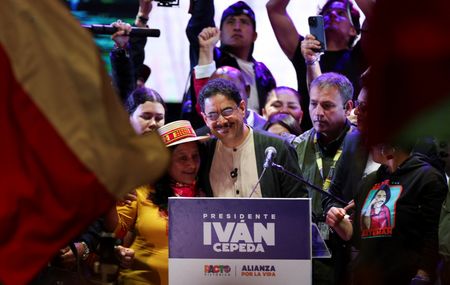

Colombia’s three main presidential contenders brought their campaigns to a close Sunday with large-scale public events, setting the stage for the May 31 election that political experts believe will lead to several weeks of intense and divisive campaigning before a June 21 runoff vote.
According to the most recent polling data before the May 31 election, leftist politician Ivan Cepeda, 63, held a slim lead among the candidates. However, the same survey suggested he would be defeated in the June runoff against either of his conservative opponents. Previous polling had indicated he would prevail in a second-round contest.
Cepeda has committed to advancing the social reform agenda initiated by current President Gustavo Petro, but he faces scrutiny over the sitting president’s unsuccessful “total peace” strategy that seeks to resolve conflicts through dialogue with illegal armed organizations operating in the nation.
Opposition voices claim Cepeda maintains connections to former leaders of the disbanded FARC guerrilla movement, whose breakaway groups continue to play significant roles in the ongoing six-decade conflict that has included right-wing paramilitary forces, narcotics traffickers and resulted in over 450,000 deaths.
Running closely behind Cepeda in the polls was Abelardo De La Espriella, 47, a business executive and attorney who has promised to reduce taxes, boost investment in mining and energy sectors, and launch military operations against illegal armed organizations and drug trafficking networks.
De La Espriella has encountered criticism for his legal representation of disputed clients, including businessman Alex Saab, who stands accused of serving as a financial intermediary for Venezuela’s ousted president Nicolas Maduro. Saab was extradited to the U.S. last week to face criminal charges.
Running in third place in polling was Paloma Valencia, 48, whose platform includes expanding military forces, reducing government size and lowering tax rates. She has received endorsement from former President Alvaro Uribe.
“We can expect a fear-mongering campaign focused on each candidate’s worst attributes,” Sergio Guzman, director of consulting firm Colombia Risk Analysis, told Reuters.
According to Guzman, accusations like “corrupt, amoral, guerrillas, drug traffickers, and paramilitary sympathizers” will likely characterize the political discourse leading up to the runoff election.
The incoming president will confront significant challenges including restoring public safety, strengthening the nation’s financial position, addressing informal employment issues and tackling poverty and inequality.
Cepeda held his final campaign event in the Caribbean coastal city of Barranquilla, while De La Espriella chose Colombia’s second-biggest city and corporate hub Medellin, and Valencia concluded her campaign in the capital Bogota.