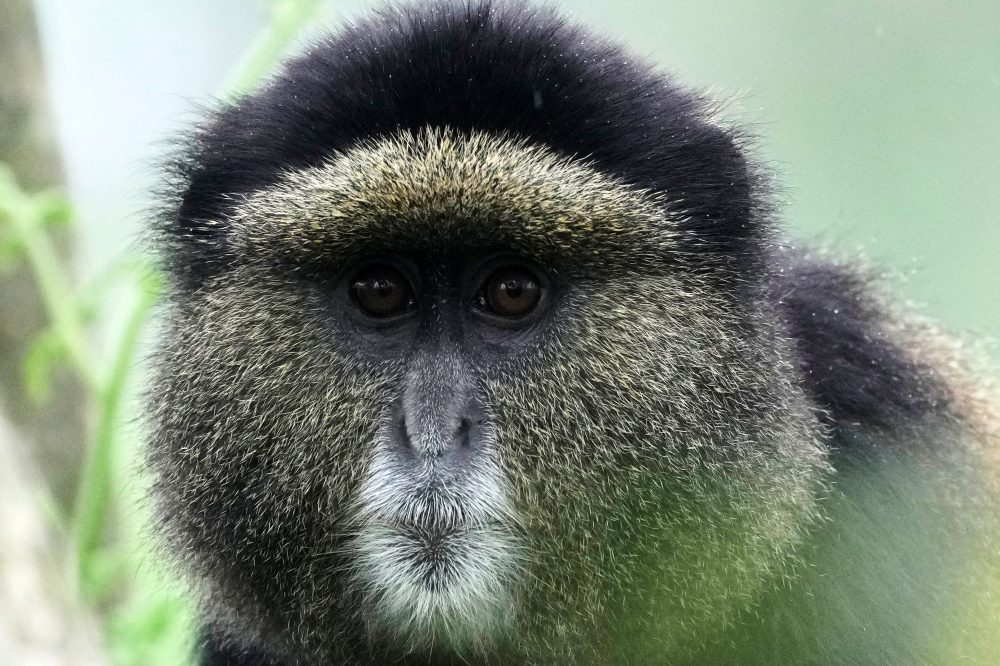

MUSANZE, Rwanda — In the mist-shrouded forests of Rwanda’s Volcanoes National Park, a wildlife guide uses distinctive grunts and clicks to communicate with endangered golden monkeys, signaling his peaceful intentions through sounds they recognize.
Within this renowned African park, the challenging landscape of steep ridges and thick vegetation makes it difficult to spot even large mountain gorillas, which are also endangered. Scientists are now adopting innovative technology to better locate and safeguard these species.
The method, called environmental DNA or eDNA, enables researchers to identify wildlife through genetic traces such as hair or droppings found in soil and water sources. This approach minimizes the need for direct human contact during wildlife studies that often involve searching blindly through foggy conditions.
This technique, typically employed in ocean conservation efforts, was brought to the region by the African Wildlife Foundation working alongside Rwanda’s government. The goal is to create a comprehensive catalog of all species within the nation’s borders, supporting biodiversity protection efforts against threats from climate change and growing human populations.
“We selected eDNA as a new technology to bring solutions and to complement existing methods used in ecological monitoring,” said the foundation’s country manager for Rwanda, Patrick Nsabimana.
For many years, biodiversity tracking has depended on camera traps activated by animal movement and direct observations by park rangers.
However, this presents difficulties in challenging landscapes like the Virunga mountains, which form the core of Volcanoes National Park spanning parts of Rwanda, Uganda and Congo. Safety concerns in border regions can also restrict ranger access.
Nsabimana explained that eDNA offers an economical monitoring solution for vast ecosystems like Virunga. Researchers collect samples from areas such as downstream water sources that likely contain traces from animals living at higher elevations, then analyze them in laboratories.
“With one sample, you can detect multiple species, mammals, birds, amphibians and many others,” said Deogratias Tuyisingize, a Rwanda-based biodiversity researcher with the Dian Fossey Gorilla Fund that is also involved in the project.
He emphasized that combining conventional tracking methods with new technology is essential for comprehensive species monitoring. Due to the area’s steep valleys and mountain slopes, “we are sure we were missing some species.”
Project participants noted that improved knowledge of endangered species locations could enhance anti-poaching patrol efforts.
The capacity to create comprehensive biodiversity assessments is vital for conservation work, particularly as Rwanda expands certain national parks by restoring former farmland.
“We can see how species are colonizing these sites over time,” Tuyisingize said.
This enables conservationists to measure progress through the return of rare or threatened wildlife and provides early detection of invasive species.
However, the eDNA method has its constraints. It cannot accurately determine animal population sizes within an ecosystem, and DNA evidence may persist long after species have relocated.
Processing samples within Rwanda also presents challenges, as initial specimens from the project required shipment to Europe for testing.
Joshua Newton, who conducted research on eDNA for Curtin University’s Trace and Environmental DNA Laboratory, said challenges also include having cold storage to preserve DNA samples and ensuring samples are not contaminated.
Information shortfalls present another obstacle. Africa maintains relatively sparse genetic reference databases despite decades of conservation efforts across the continent, complicating efforts to match DNA samples with known species.
Most genetic reference libraries come from Europe and America, said James Munyawera, a lab specialist with the Dian Fossey Gorilla Fund.
Scientists are currently developing region-specific databases to address this gap.
The Volcanoes National Park initiative has also started educating local community members and rangers to participate in monitoring activities by gathering samples.