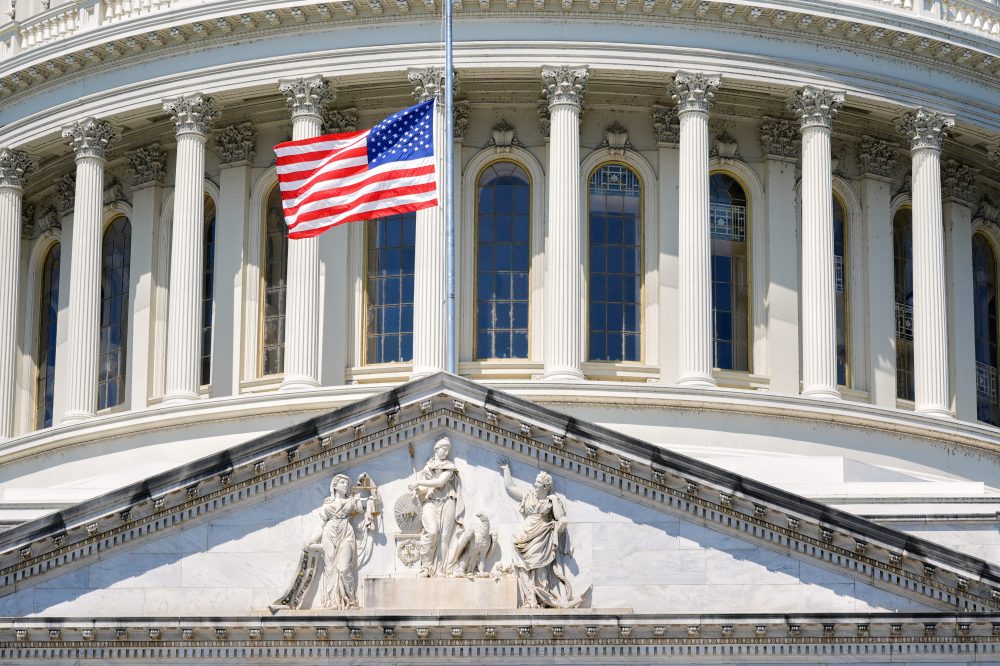

Memorial Day stands as an official American holiday dedicated to honoring military personnel who died in service, yet it has transformed into the unofficial beginning of summer featuring extended weekends filled with travel and sales on everything from bedding to gardening equipment.
Here’s how this significant holiday developed and changed over time:
The observance occurs on May’s final Monday. For this year, that date is May 25.
The day serves as a time for contemplation and honoring those who lost their lives during military service, as noted by the Congressional Research Service.
Part of the holiday includes the National Moment of Remembrance, which asks all Americans to stop at 3 p.m. for silent reflection.
The holiday’s roots extend back to the American Civil War, a conflict that claimed over 600,000 military lives from both Union and Confederate forces from 1861 through 1865.
The initial nationwide celebration of what was originally known as Decoration Day took place on May 30, 1868, following a Union veterans’ organization’s request to adorn military graves with blooming flowers.
This tradition had already become common practice. Waterloo, New York, started formal ceremonies on May 5, 1866, and later received recognition as the holiday’s official birthplace.
However, Boalsburg, Pennsylvania, claims its first ceremony occurred in October 1864, based on Library of Congress records. Additionally, women in certain Confederate states had decorated graves prior to the war’s conclusion.
David Blight, a Yale history professor, highlights May 1, 1865, when approximately 10,000 people, predominantly Black Americans, organized a parade, listened to speeches and honored Union graves in Charleston, South Carolina.
A total of 267 Union soldiers had perished at a Confederate prison facility and received burial in a collective grave. Following the war’s end, Black church members provided them with separate burial sites.
“What happened in Charleston does have the right to claim to be first, if that matters,” Blight told The Associated Press in 2011.
By 1869, The New York Times warned that the holiday risked becoming “sacrilegious” and losing its “sacred” nature if it emphasized spectacle, feasts and speeches over remembrance.
During an 1871 Decoration Day address at Arlington National Cemetery, abolitionist Frederick Douglass expressed worry that Americans were losing sight of the Civil War’s central issue: slavery.
“We must never forget that the loyal soldiers who rest beneath this sod flung themselves between the nation and the nation’s destroyers,” Douglass said.
His worries proved justified, according to Ben Railton, a professor of English and American studies at Fitchburg State University in Massachusetts.
Despite approximately 180,000 Black men fighting for the Union Army, the holiday became essentially “white Memorial Day” in numerous communities, particularly following the emergence of the Jim Crow South, Railton told the AP in 2023.
During the 1880s, then-President Grover Cleveland reportedly spent the holiday fishing, and “people were appalled,” Matthew Dennis, an emeritus history professor at the University of Oregon, told the AP.
However, when the Indianapolis 500 conducted its first race on May 30, 1911, an AP story omitted any reference to the holiday or related disputes.
Dennis explained that Memorial Day’s significance weakened somewhat following the establishment of Armistice Day, commemorating World War I’s conclusion on Nov. 11, 1918. Armistice Day achieved national holiday status by 1938 and received the new name Veterans Day in 1954.
In 1971, Congress shifted Memorial Day from its fixed May 30 date to the final Monday of May. Dennis noted that establishing the three-day weekend acknowledged Memorial Day’s evolution into a broader commemoration of the deceased and a leisure occasion.
One year afterward, Time Magazine observed that the holiday had transformed into “a three-day nationwide hootenanny that seems to have lost much of its original purpose.”
Even during the 1800s, cemetery ceremonies were accompanied by recreational activities including picnics and running competitions, Dennis noted.
The holiday also developed alongside baseball and automobiles, the five-day work schedule and summer holidays, according to the 2002 publication “A History of Memorial Day: Unity, Discord and the Pursuit of Happiness.”
During the mid-1900s, a limited number of businesses started opening in defiance of the holiday.
After the holiday switched to Monday, “the traditional barriers against doing business began to crumble,” authors Richard Harmond and Thomas Curran wrote.
Today, Memorial Day shopping events and travel have become firmly embedded in the country’s collective habits.