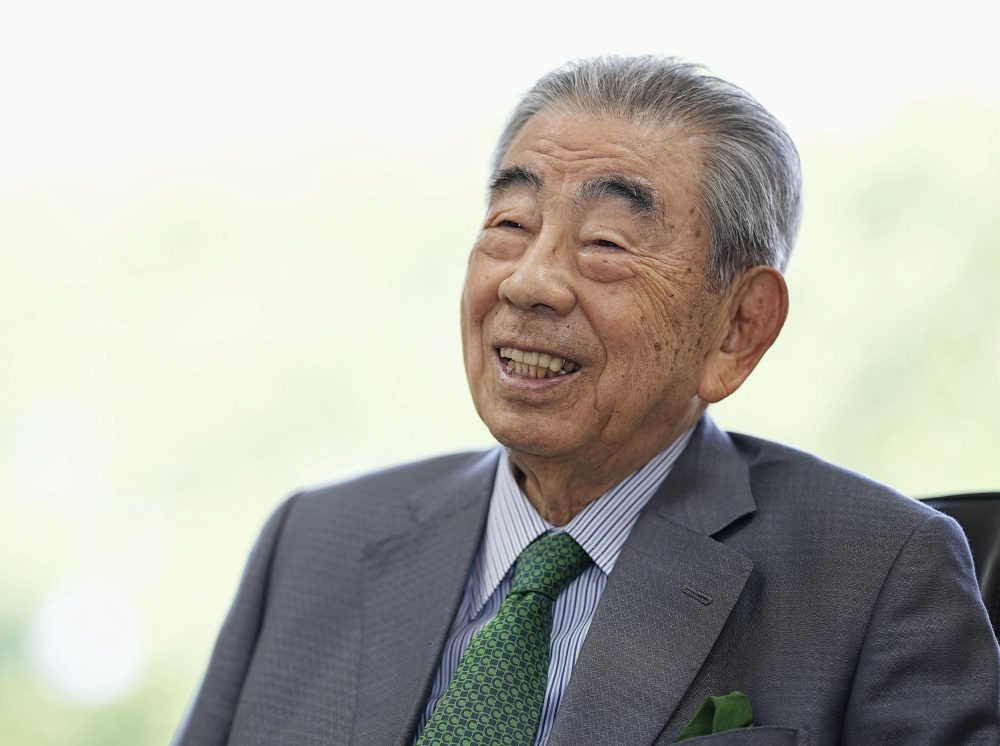

TOKYO (AP) — Toshifumi Suzuki, the business executive who transformed 7-Eleven into a worldwide convenience store phenomenon, passed away at age 93.
The honorary adviser at Seven & i Holdings succumbed to heart failure on May 18 at his residence in Tokyo, according to a company announcement made Monday.
Suzuki established the Japanese division that runs the widespread 7-Eleven “conbini” locations, where customers can quickly purchase sandwiches, rice balls, beverages, snacks and ready-to-eat meals, access ATMs, settle utility payments and make photocopies.
With more than 80,000 locations across the globe, the 7-Eleven chain has become Japan’s largest convenience store network.
The enterprise launched in Japan through a licensing deal with the American 7-Eleven company in 1973. The inaugural Japanese location opened its doors the next year.
When The Southland Corp., the original 7-Eleven founder, encountered financial troubles, the Japanese firm purchased a controlling interest during the 1990s. By 2005, it had acquired complete ownership of the American operations.
In recent years, Canadian retail company Alimentation Couche-Tard, operator of the worldwide Circle K convenience chain, attempted to acquire Seven & i Holdings. However, the company abandoned these efforts in 2024, expressing disappointment with discussions that demonstrated “a lack of constructive engagement.”
Born in Nagano Prefecture in northern Japan in 1932, Suzuki earned his degree from the respected Chuo University in Tokyo.
Prior to entering the convenience store industry, he was employed at Ito-Yokado, a prominent Japanese retail company offering diverse merchandise including food items, beauty products and apparel, which is also under Seven and i Holdings ownership.
Beyond managing 7-Eleven operations, Suzuki orchestrated the purchase of Barney’s Japan in 2015 and incorporated banking services into the business empire.
He expressed his goal of offering customers what he described as a lifestyle shopping experience. Throughout the years, the retail conglomerate also acquired the Sogo and Seibu department store chains.
Suzuki assumed the role of chief executive at 7-Eleven Japan in 1978. He is broadly recognized for transforming Japanese consumer shopping habits. Convenience stores have pioneered the adoption of innovative retail technologies among Japanese retailers.
Private funeral arrangements are being conducted with family members, and the company respectfully requested no messages, floral arrangements or sympathy gifts. Plans for a public memorial service will be announced at a later date, the company stated.
Suzuki leaves behind his spouse and two children.