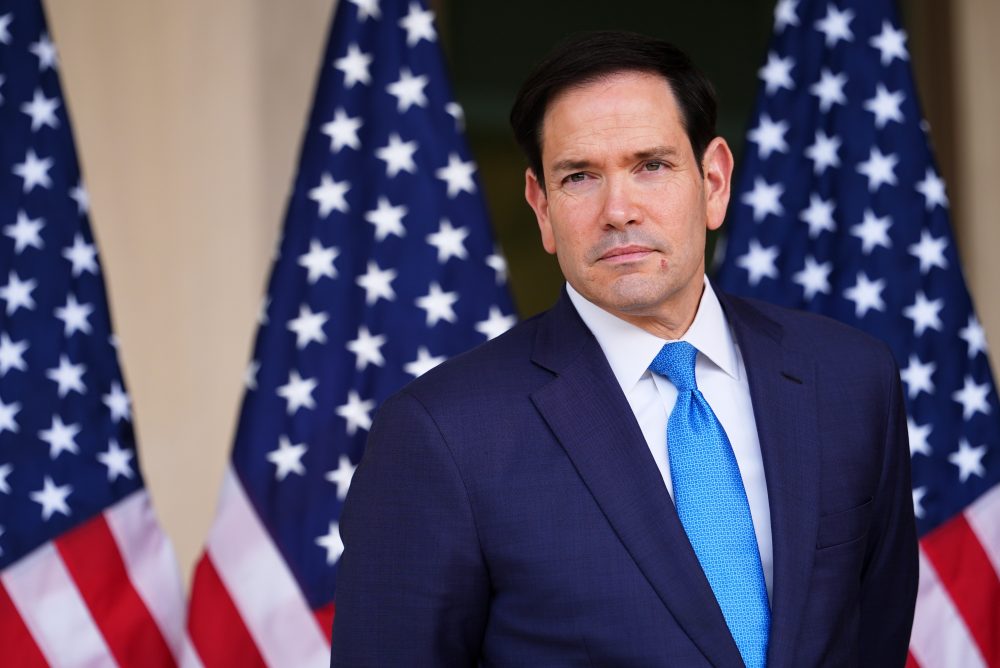
NEW DELHI (AP) — Secretary of State Marco Rubio conducted diplomatic discussions with Indian Foreign Minister Subrahmanyam Jaishankar on Sunday as both nations work to stabilize relations that have deteriorated to their worst state in more than twenty years.
The diplomatic mission occurs amid significant economic and political tensions between Washington and New Delhi, primarily caused by tariff measures implemented by President Donald Trump that increased import duties on numerous Indian products.
Rubio landed in India on Saturday for his inaugural official diplomatic visit to the country, scheduled ahead of Tuesday’s gathering with officials from India, Australia and Japan – the four nations comprising the Indo-Pacific coalition called the Quad.
“India is at the cornerstone of how the United States approaches the Indo-Pacific, and not just through the Quad, but bilaterally,” Rubio said in New Delhi.
The Secretary of State’s four-day diplomatic mission includes visits to multiple cities and attendance at a formal celebration in New Delhi commemorating America’s 250th independence anniversary.
“In the past one year, statements and rhetoric coming from Washington on some of India’s most sensitive security concerns and trade matters have not been helpful and have created a trust deficit,” said Ashok Malik, a former policy adviser in India’s Foreign Ministry.
“Certain misgivings will remain,” Malik added, noting Rubio’s visit will be considered an achievement if the talks somewhat stabilize the relationship and check further deterioration.
Policy analysts note tensions between America’s worldwide strategic objectives and India’s goals as a developing regional power. With historical connections to Russia, India has consistently displayed reluctance as it develops closer American ties, demonstrating India’s persistent skepticism of U.S. motives based on cultural distinctions and Cold War-period attitudes.
Nevertheless, Indian-American relations gradually strengthened over twenty years into an extensive strategic alliance, increasingly influenced recently by mutual concerns regarding China’s expanding aggression in the Indo-Pacific region and expressed diplomatically through Quad discussions.
The Quad alliance has consistently criticized China for demonstrating military strength in the South China Sea and forcefully advancing its ocean territory demands. Beijing argues its military operations are entirely defensive to safeguard what it describes as China’s legitimate territorial rights and characterizes the Quad as efforts to limit its economic development and regional power.
Following the presidential inauguration in January 2025, Rubio’s initial formal overseas diplomatic activity involved conferences with Quad nation foreign ministers in group and individual meetings.
Nevertheless, multiple incidents since the previous year have pushed diplomatic relations to their current low point.
Despite strong connections and frequent perception as political partners, Indian Prime Minister Narendra Modi minimized Trump’s contribution in negotiating a ceasefire following brief India-Pakistan military hostilities sparked by the April 2025 attack on predominantly Hindu visitors in Indian-controlled Kashmir. Meanwhile, Pakistan actively pursued Trump’s support and even promoted him for the Nobel Peace Prize.
Economic disputes emerged subsequently, with the Trump administration implementing tariffs against India regarding its reduced-price Russian oil purchases that further damaged relations between both countries.
“In India, there is some skepticism about U.S. policy and predictability,” said Malik, who heads the India chapter of The Asia Group advisory firm in the U.S. He said what has happened in the past year between India and the U.S. “can’t be forgotten or erased easily.”
When conflict erupted in Iran during February, America increased cooperation with Pakistan, which presented itself as an intermediary between Washington and Tehran, heightening concerns in New Delhi. Trump’s recent prominent diplomatic visit to China has further increased India’s uneasiness.
Indian-American relations face challenges “due to a few structural tensions and Trump only brought them to the fore,” said Praveen Donthi, a senior analyst with the International Crisis Group.
“New Delhi’s foreign policy, increasingly colored by its domestic politics, has become more black-and-white in the last decade, as evidenced by its deep discomfort with the U.S.’s ties with Pakistan and its moves toward detente with China,” Donthi said.
Policy experts suggest these developments demonstrate the increasing complexity of Indian-American relations founded on mutual strategic objectives, yet progressively influenced by conflicting priorities and an evolving global political environment.
“New Delhi is likely to exercise strategic patience and wait for Trump to leave office,” Donthi said. “India would hope that the bipartisan consensus on India in the U.S. survives his term and that it can start building on that again.”
A subsidiary of Nissan Motor has abandoned its investment plans for electric vehicle powertrain manufacturing in Britain due to weak European demand for the company’s electric vehicles, according to a report from the Nikkei business daily on Sunday.
JATCO had announced in January 2025 its intention to invest 48.7 million pounds ($65.39 million) in a Sunderland facility that would produce up to 340,000 electric vehicle powertrain units annually. These powertrains would combine the motor, inverter and reducer components for Nissan vehicles.
The cancellation follows Nissan’s announcement later in 2025 that the automaker would reduce its global manufacturing footprint from 17 production facilities to 10, while also reviewing its powertrain manufacturing operations. The company has been struggling with declining sales performance in both the United States and China markets.
Representatives from Nissan were not available to provide comment outside of normal business hours, and inquiries sent through JATCO’s official website have not yet received responses.
Iranian officials carried out the execution of an individual accused of espionage activities involving the United States and Israel, according to reports from the country’s judicial authorities on Sunday.
The executed person, named as Mojtaba Kian, had been convicted of transmitting sensitive information about Iran’s military defense capabilities to what officials described as “the enemy,” the judiciary’s Mizan news agency stated.
The charges were connected to alleged intelligence sharing that occurred during wartime operations, Iranian judicial sources reported.
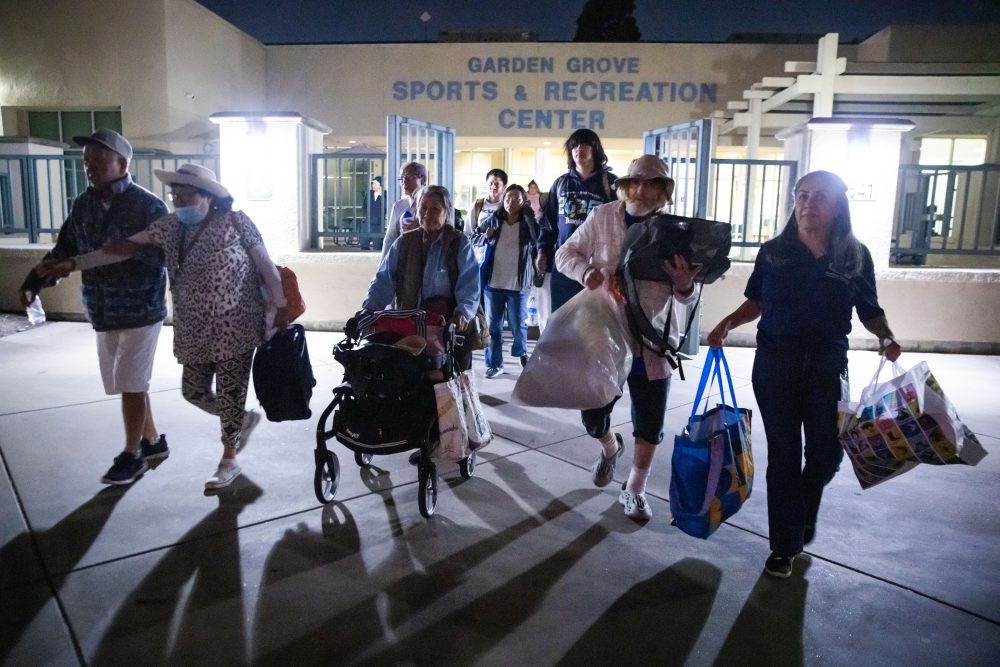
Officials in Southern California continue preparing for a potential disaster as a malfunctioning chemical tank threatens to explode or leak, forcing 40,000 residents from their homes with no clear timeline for their return during Memorial Day weekend.
The pressurized container overheated Thursday and started releasing vapors at a business facility in Garden Grove, located roughly 40 miles south of downtown Los Angeles, the Orange County Fire Authority reported. No injuries have occurred so far.
However, emergency responders face a critical problem: the tank’s valves are either damaged or “gummed up,” making it impossible for crews to extract the chemical or reduce pressure buildup, explained Craig Covey, Orange County Fire Authority division chief.
Emergency teams are primarily focused on finding methods to lower the temperature of the chemical contents to prevent a leak or explosion. Should cooling efforts fail, Purdue University engineering professor Andrew Whelton noted that a controlled leak would be preferable to contain most of the substance. The most dangerous outcome would be an explosion spreading the chemical across a wide area while sending debris flying.
Should internal temperatures keep rising, pressure will continue mounting as the methyl methacrylate transforms from liquid to gas, since the pressure relief mechanisms have stopped functioning. Whelton explained that firefighters would likely avoid puncturing the tank due to concerns about creating sparks that could ignite the volatile, flammable gas.
Temperature monitoring through drones occurs every 10 minutes to detect any increases, while teams prepare containment measures to prevent potential leaks from reaching waterways or the ocean, Covey reported on social media platform X during an evening update.
“Sitting back and allowing these tanks to fail is unacceptable,” Covey stated, while acknowledging no guarantees exist that tanks won’t rupture and leak. “Our goal is to protect your homes — no damage to them — and protect the environment.”
Tank cooling efforts seemed successful Friday, though Covey later corrected his assessment the next day, revealing that drone readings measured external rather than internal temperatures.
“Unfortunately I do have to report that the temperature was 90 degrees,” Covey announced, representing an increase from 77 Fahrenheit recorded the previous morning.
Temperature control remains crucial since the liquid chemical’s flashpoint reaches 50 Fahrenheit, according to the National Institute for Occupational Safety and Health.
Garden Grove residents received initial evacuation orders, which later expanded to portions of five additional Orange County communities: Cypress, Stanton, Anaheim, Buena Park and Westminster. Some evacuees with pets prepared to spend nights in vehicles.
Multiple shelters continued operating Saturday, including facilities at three high schools.
Marco Solano, 32, stayed Friday night at his parents’ residence, expressing frustration while monitoring news for updates about returning home.
“I don’t think that they should have dangerous chemicals in a neighborhood area, especially that dangerous that they have to evacuate people,” Solano commented. “But again, it’s not up to me. I don’t make the laws. I don’t make the rules. We just have to do what is best I guess.”
Solano, who works multiple jobs, described feeling extremely tired and weak, believing the chemical leak stress was worsening his anemia and ulcerative colitis.
“This has been affecting me quite a bit,” he said.
After work Friday, Solano visited his apartment to collect belongings and observed other residents who hadn’t evacuated, causing him concern for their safety.
The compromised tank sits at GKN Aerospace, a manufacturer of commercial and military aircraft components. It contains 6,000 to 7,000 gallons of methyl methacrylate, a substance used in plastic parts production.
Methyl methacrylate exposure can trigger severe breathing difficulties and loss of consciousness. The chemical may also cause neurological issues and irritation to skin, eyes and throat, according to safety documentation. Orange County health authorities noted the chemical produces a distinct odor that residents might detect across large areas without experiencing harm.
Whelton compared the tank’s chemical volume to the catastrophic 2023 train derailment in East Palestine, Ohio, which he investigated when more than 115,000 gallons of vinyl chloride was released after officials deliberately opened five tank cars and burned the chemical. This incident involves significantly less material.
“Many of these are acute, fast-acting effects. But the longer somebody stays in contact with it, the more potential for significant damage that occurs,” Whelton explained.
In case of explosion, officials anticipate “severe structural damage and significant harm” within the blast zone nearest the tank.
Should an explosion release chemicals into the atmosphere, Whelton emphasized the importance of conducting detailed air monitoring specifically for methyl methacrylate rather than generic volatile organic compound testing used in East Palestine. Standard tests, typically performed with portable detectors, may fail to identify this particular chemical. Indoor testing of buildings and residences might be necessary before residents return.
Weather conditions will significantly influence the direction of any chemical plume following an explosion. Officials are creating maps to predict various scenarios identifying the most affected areas.
Containment barriers have been installed to block chemicals from entering storm drainage systems or reaching nearby creeks and ocean in case of spillage, Covey reported.
Gov. Gavin Newsom issued a state emergency declaration for Orange County, providing state resources to local agencies and allowing state properties and fairgrounds to serve as emergency shelters if needed.
Garden Grove borders Anaheim, which houses Disneyland’s two theme parks that remain outside evacuation zones. Park representatives said they’re monitoring the situation and assisting affected employees.
GKN accepted a payment of more than $900,000 to state regulators in 2025 to resolve violations related to recordkeeping, permitting problems and nitrogen oxide emissions, based on South Coast Air Quality Management District website information.
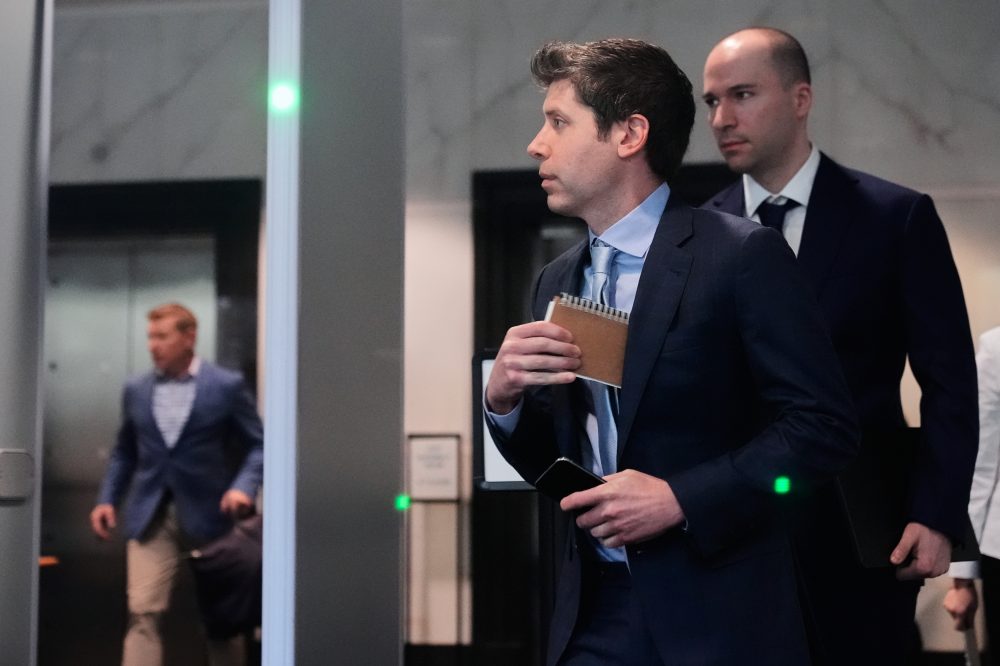
A federal courtroom battle between Elon Musk and OpenAI’s chief executive Sam Altman revealed one area where both tech billionaires found common ground: developing artificial intelligence technology demands massive financial resources and billions in funding.
While this reality appears evident today, with AI-driven stock markets fueling worldwide construction of semiconductor plants and power-intensive data facilities for chatbot operations, courtroom testimony and documents demonstrated how industry leaders with substantial influence were privately discussing these expenses almost ten years ago.
In a 2018 message to Altman and other company co-founders, Musk wrote about what he viewed as a hopeless effort to rival Google, stating: “Even raising several hundred million won’t be enough. This needs billions per year immediately or forget it.”
These escalating expenses influenced OpenAI’s path from its 2015 launch as a nonprofit organization focused on developing AI technology for public benefit to its current status as a commercial company worth $852 billion. With the San Francisco company and other AI firms preparing for potentially record-breaking Wall Street launches, the legal proceedings highlighted questions about whether non-commercial forces can guide AI’s development.
According to Karan Girotra, who teaches operations, technology, and innovation at Cornell Tech, constructing major projects using only nonprofit funding remains possible, though OpenAI’s early period coincided with AI investment uncertainty that created risk. Currently, he noted, AI investment has moved beyond speculation.
“Now it’s traditional investment in something we know works,” Girotra explained. “People want your car, you need to build the factory ahead of demand.”
Musk’s legal action claimed OpenAI abandoned its charitable purpose for AI development, alleging Altman and co-founder Greg Brockman acted secretly and improperly enriched themselves. OpenAI responded that Musk had supported for-profit company plans and filed his 2024 case to damage the ChatGPT creator’s success while developing his competing AI venture, xAI.
The Oakland, California federal jury never reached a decision on the case’s substance, finding Musk’s legal challenge exceeded statutory time limits and dismissing it Monday following three weeks of proceedings.
However, the trial documented internal conflicts that foreshadowed current social and political discussions about AI’s effects and expenses.
Microsoft’s chief technology officer Kevin Scott explained to jurors his company’s decision to invest billions supporting OpenAI’s technology development after founding supporter Musk left OpenAI’s board in 2018, testifying: “It’s sort of hard to imagine at this point, given where AI has gotten.”
Scott continued: “It was before ChatGPT. It was before these remarkable things that are happening right now and so most of the people at Microsoft were very skeptical about whether or not all of these claims were going to materialize into reality.”
Microsoft, named as a defendant in the lawsuit, sought methods to compete with Google in AI research at that time. OpenAI informed Microsoft their requirements included additional data and computing capacity, promising significantly more powerful AI systems with these resources.
Scott testified: “The things that they wanted and ultimately that we helped them do were very capital-intensive projects like building giant data centers, full of very expensive computers and networks.”
Disagreement persists regarding profit’s role as the primary driver behind OpenAI’s transformation into a capitalistic enterprise, which remains unprofitable but appears headed toward a public stock offering possibly this year.
However, the constraining effect of these costs on company choices remains undisputed.
More than five years before ChatGPT’s introduction, OpenAI achieved success training an AI system to defeat professional competitors in Dota 2, a team-based video game featuring ogres, centaurs and mythical beings.
Altman testified about the achievement: “Honestly, the world reacted to it somewhat less than I thought they should have, but to us internally, it really felt like a moment where we had shown that our technology, using something called reinforcement learning, could take on an enormously complex task.”
OpenAI’s broadcast triumph over an elite Dota 2 competitor at a 2017 Seattle event elevated the small nonprofit into serious competition with Google, then considered the AI research frontrunner. This success also prompted internal reflection about nonprofit competition strategies while depending primarily on Musk and other contributors.
Describing Musk’s reaction, Altman testified: “He was impressed. And then immediately after the Dota win, Mr. Musk said he thought we really need to get more serious and figure out how to get way more capital.”
For co-founder and former chief scientist Ilya Sutskever, the Dota success initiated conversations about establishing a for-profit entity to facilitate fundraising.
Sutskever told jurors: “The realization is that to make progress in AI, you need a big computer. And you need the big computer because the brain is a big computer. You have a hundred billion neurons and a hundred trillion synapses in the brain.”
This led to a leadership struggle between Altman and Musk over OpenAI’s direction, with Musk later attempting to merge the AI laboratory with his automotive company Tesla. Other OpenAI executives opposed this plan, ultimately leading to Musk’s departure.
The United States and Iran are reportedly nearing completion of an agreement that would extend a ceasefire for two months while reopening the Strait of Hormuz, according to a Saturday report from Axios citing a U.S. official.
The news outlet reports that under the proposed 60-day arrangement, the Strait of Hormuz would operate without tolls, and Iran would commit to removing mines it has placed in the waterway to ensure safe passage for vessels.
As part of the arrangement, the United States would end its blockade of Iranian ports and provide certain sanctions exemptions to permit Iran’s unrestricted oil sales, according to the report.
The potential agreement would also require Iran to pledge never to develop nuclear weapons and to enter discussions about halting its uranium enrichment activities while eliminating its stockpile of highly enriched uranium, Axios reported.
Two sources informed Axios that Iran has provided verbal assurances through intermediaries regarding the extent of concessions it would make concerning enrichment suspension and surrendering nuclear materials.
The United States would also commit to discussions about removing sanctions and releasing frozen Iranian assets during the two-month timeframe, according to the Axios report.
The White House has not yet responded to requests for comment from Reuters regarding the report.
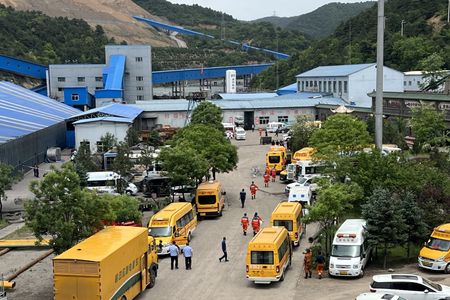
Chinese authorities have revised downward the number of fatalities from a catastrophic coal mine explosion, announcing Saturday evening that 82 people died in what officials are calling the country’s most devastating mining incident in nearly two decades.
The deadly gas explosion occurred Friday night at the Liushenyu coal mine located in China’s northern Shanxi province. Early reports from government media outlets had indicated that at least 90 workers lost their lives in the blast.
Despite the reduced casualty count, this tragedy still stands as China’s most fatal mining incident since 2009, when 108 workers perished in a gas explosion at the Xinxing Mine in Heilongjiang province.
Authorities explained during Saturday’s press briefing that confusion following the disaster resulted in the original incorrect fatality count.
“After the incident the scene was chaotic, the company’s count of the number of workers was not clear, which led to the initial inaccurate number,” said Guo Xiaofang, the head of Shanxi’s Qinyuan county, where the mine is located.
At the time the explosion occurred, 247 workers were performing their duties below ground.
According to Guo, two individuals remain missing, while 128 workers sustained injuries requiring hospitalization and 35 escaped without harm.
The mining facility operates under the ownership of Shanxi Tongzhou Coal Coking Group, and authorities have shuttered all four of the company’s mining operations while detaining corporate leadership, officials announced during the news briefing.
A front-page editorial appeared Sunday morning in the state-controlled People’s Daily newspaper, demanding increased focus on workplace safety and urging officials to “completely reverse the tendency to prioritise development over safety.”
According to Xinhua news agency, President Xi Jinping issued orders Saturday for authorities to “spare no effort” in providing medical care to survivors and continuing search and rescue efforts. The president also mandated a full investigation into the disaster.
Officials revealed during the press conference that the mining operation has an annual coal production capacity of 1.2 million tons. China extracted 4.83 billion tons of coal last year, which serves as the foundation of the nation’s electrical power generation.
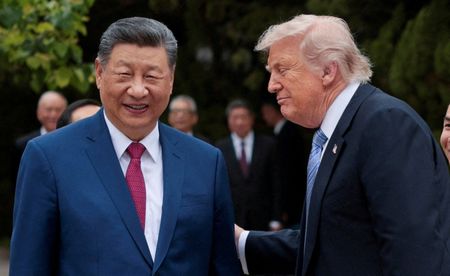
President Donald Trump came to the defense of Japanese Prime Minister Sanae Takaichi during discussions with Chinese President Xi Jinping at their summit earlier this month, according to a report from Japan’s Yomiuri Shimbun newspaper published Sunday. The report cites unnamed government sources.
Relations between Japan and China have grown tense since Takaichi made comments last November suggesting that if China were to hypothetically attack Taiwan – the democratically ruled island that China considers its territory – Japan might respond militarily.
During the summit meeting in Beijing, Xi told Trump that both Takaichi and Taiwanese President Lai Ching-te represent dangers to peace in the region and asked Trump not to back them, according to the Yomiuri’s reporting.
Trump reportedly replied that he believes Takaichi is not the type of leader who should face such criticism.
Representatives from the Japanese prime minister’s office, Japan’s foreign ministry, and the U.S. embassy in Tokyo were not available to provide comment outside of normal business hours.
Following his two-day China visit, Trump spoke by telephone with Takaichi. During that conversation, both leaders confirmed their “ironclad” partnership between their nations, according to Takaichi’s previous statements.
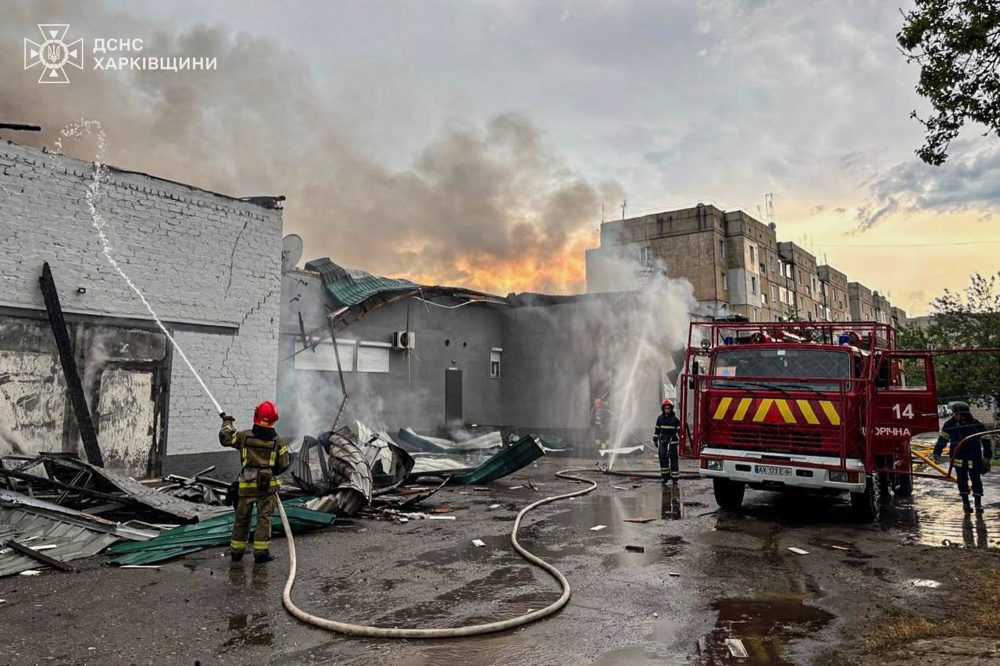
KYIV, Ukraine — Ukrainian forces faced a relentless overnight bombardment as Russian missiles and drones targeted the capital in a severe assault that rattled structures throughout the downtown area, striking near government facilities, homes, and educational institutions.
Local officials reported at least 10 wounded individuals based on initial counts. Warning sirens wailed throughout the evening hours while smoke clouds drifted over the city following the strikes. News correspondents on the ground documented thunderous blasts occurring close to the downtown core and government facilities.
The bombardment continued into Sunday morning, with additional missiles and drones anticipated to strike the capital.
Destruction was documented throughout no fewer than nine districts of the capital, including residential structures, according to Kyiv military administration head Tymur Tkachenko in a Telegram post.
Within Kyiv’s Shevchenko district, an educational facility sustained damage during the assault while civilians took shelter inside, Mayor Vitalii Klitschko said. City officials confirmed that grocery stores and storage facilities throughout the area also suffered damage.
Numerous neighborhoods experienced destruction across the broader Kyiv region, regional governor Mykola Kalashnyk reported.
Previously, Ukrainian President Volodymyr Zelenskyy cautioned that Russia intended to deploy the hypersonic Oreshnik ballistic missile, based on intelligence from the U.S. and Western partners. Ukraine’s Air Force subsequently issued warnings about a potential Oreshnik launch.
Officials could not immediately confirm whether this missile system was deployed during the nighttime assault.
Russian forces initially deployed the multiple-warhead Oreshnik against the Ukrainian city of Dnipro in November 2024. The weapon was employed for a second time in January targeting the western Lviv region.
President Vladimir Putin described the Oreshnik, which translates to “hazelnut tree” in Russian, as traveling at 10 times sound speed, or Mach 10, with the capability to demolish underground bunkers “three, four or more floors down.”
The weapon moves “like a meteorite” and cannot be stopped by any missile defense system, Putin claimed, stating that multiple such missiles, even equipped with conventional warheads, could match the destruction of a nuclear attack.
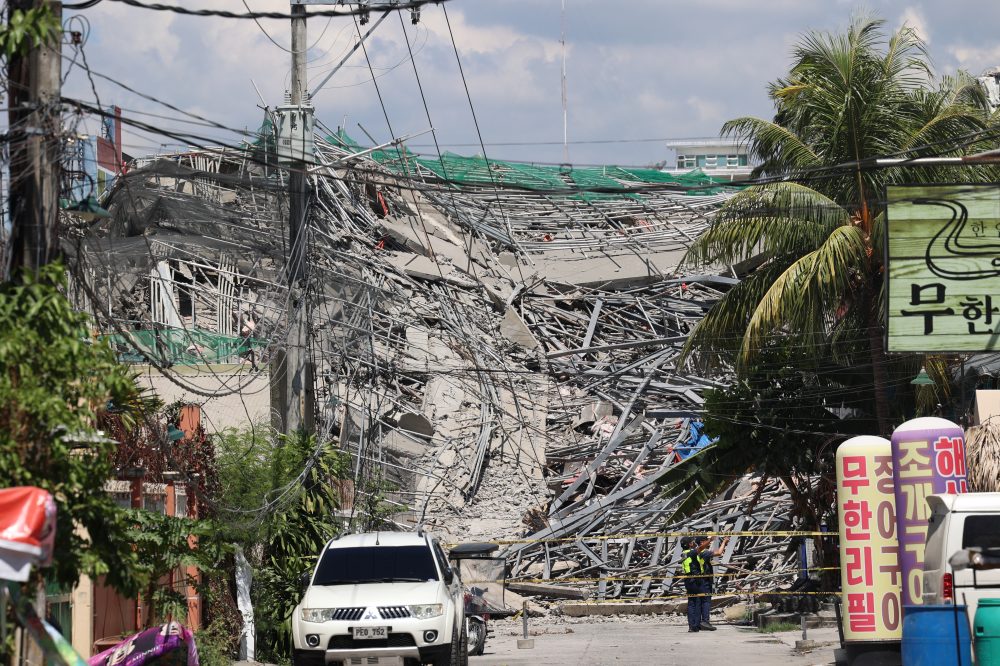
ANGELES CITY, Philippines — A construction project spanning nine floors crumbled in the early morning hours of Sunday in Angeles City, located in Pampanga province north of the Philippine capital. Twenty-two workers successfully escaped the collapse while others remain unaccounted for, according to police reports.
The structure came down before sunrise amid a severe thunderstorm. More than 100 police officers and government officials are working frantically to locate and rescue individuals believed to be buried beneath the debris, stated police Brig. Gen. Jess Mendez.
Speaking from the collapse site, Mendez reported no confirmed fatalities at this time, though he noted that several of the 22 workers who managed to flee the building sustained injuries.
The exact number of trapped workers remains unclear. However, Jay Pelayo, who heads Angeles City’s information office, estimated that approximately 30 workers could still be buried in the wreckage, based on information from a construction foreman who escaped as the building fell.
Angeles City previously housed one of the most significant U.S. Air Force installations outside American territory before its closure in the early 1990s. This military presence helped transform Angeles and surrounding communities into major entertainment and business centers within Luzon, the Philippines’ primary northern region.
The former military installation, now known as the Clark Freeport Zone, sits approximately 80 kilometers (50 miles) north of Metro Manila.
Emergency crews are working to locate survivors after a nine-story construction project collapsed in Angeles City, located north of Manila in the Philippines, according to a local government official who spoke Sunday.
Jay Pelayo, the Angeles City information officer, reported to DZBB radio that eight individuals in the surrounding area have been pulled to safety, while 11 others successfully escaped on their own, including the site foreman.
The site foreman provided information indicating that approximately 30 to 40 individuals remain unaccounted for, Pelayo told DZBB.
Rescue teams continue their efforts to locate survivors, Pelayo confirmed. The cause of the structural failure remains unknown at this time, though the city engineer is examining the project’s construction records, he noted.
The concrete construction of the collapsed structure presents significant challenges for rescue workers attempting to clear away debris, Pelayo explained.
Photos released by DZBB revealed the building had been reduced to rubble consisting of concrete chunks and bent steel, with green safety mesh visible throughout the wreckage.
“The assessment is not yet finished. The unified command system is still working on it, and it is too early to determine the cause of the collapse, which is still being evaluated,” Pelayo said.
“Power lines were hit and were now being secured. We are calling on residents in the area to cooperate with authorities so rescue operations for those trapped are not delayed, and no one else is put at risk,” he said.
President Donald Trump announced Saturday that a peace agreement with Iran has been mostly finalized, stating the deal would restore access to the Strait of Hormuz, though Iranian media sources are challenging his assertions.
The president shared on social media that the developing agreement would restore operations at the critical shipping corridor, whose blockade has disrupted worldwide energy markets since hostilities began in February following U.S. and Israeli military actions against Iran. Trump did not elaborate on other components of the potential agreement.
“Final aspects and details of the Deal are currently being discussed, and will be announced shortly,” Trump wrote on Truth Social.
However, Fars reported early Sunday that the agreement would permit Iran to control the Strait of Hormuz and described Trump’s statements about the strait as “inconsistent with reality.”
Iran announced Saturday it was pursuing a memorandum of understanding to end the conflict following meetings between its senior officials and Asim Munir, Pakistan’s army chief.
Pakistan’s military described the negotiations as yielding “encouraging” developments. Two Pakistani officials familiar with the discussions characterized the potential deal as “fairly comprehensive to terminate the war.”
A message posted on Pakistani Prime Minister Shehbaz Sharif’s X account commended Trump for his “extraordinary efforts to pursue peace.”
Reuters sources indicate the proposed framework would proceed through three phases: officially concluding the war, addressing the Strait of Hormuz situation, and establishing a 30-day negotiation period for a more extensive agreement, with possible extensions.
One Pakistani official noted that if the U.S. endorses the memorandum, additional discussions could occur following the conclusion of the Eid holiday on Friday.
The president, whose public support has suffered due to the war’s effect on domestic energy costs, said Friday he would skip his son’s wedding this weekend, citing Iran among his reasons for remaining in Washington.
Trump posted on Truth Social about Saturday phone conversations with officials from Saudi Arabia, Qatar, the United Arab Emirates, Jordan, Egypt, Turkey and Pakistan. Axios reported these leaders urged Trump to accept the developing framework.
A separate conversation with Israeli Prime Minister Benjamin Netanyahu proceeded “very well,” Trump noted.
Pakistan has worked to bridge the gap between Iran and the U.S. following weeks of warfare that have kept the essential Hormuz passage closed to most maritime traffic despite an uneasy ceasefire.
Trump has consistently stated that U.S. military action against Iran aimed to prevent nuclear weapons development. Iran has rejected claims it seeks nuclear weapons and maintains its right to uranium enrichment for peaceful uses.
“The trend this week has been towards a reduction in disputes, but there are still issues that need to be discussed through mediators. We will have to wait and see where the situation ends in the next three or four days,” said Iranian Foreign Ministry spokesperson Esmail Baghaei.
Iran has insisted on strait oversight, termination of the U.S. port blockade, and removal of sanctions on Iranian oil exports.
Baghaei indicated that while the U.S. shipping blockade issue matters, Iran’s main concerns are stopping potential new U.S. attacks and resolving the ongoing Lebanese conflict, where Iran-supported Hezbollah fighters are battling Israeli forces operating in southern Lebanon.
Pakistan’s army chief Munir departed Tehran Saturday after discussions with Iran’s chief negotiator Mohammad Baqer Qalibaf and Foreign Minister Abbas Araqchi.
Qalibaf stated Iran’s military had restored its strength during the ceasefire and warned that if the U.S. “foolishly restarts the war,” the results would be “more forceful and bitter” than when the conflict began.
Throughout weeks of fighting, Iran has maintained its stockpile of near-weapons-grade enriched uranium along with its missile, drone and proxy force capabilities.
A fallen utility pole has forced authorities to shut down a portion of Smith Bridge Road, blocking traffic in both directions.
The road closure spans the area between Brandywine Creek Road and Montchanin Road while crews work to address the downed pole.
Motorists are advised to seek alternate routes while the situation is being resolved. No timeline has been provided for when the roadway will reopen to traffic.
Oklahoma City Thunder officials have declared that guard Ajay Mitchell will be unable to play in Sunday’s Game 4 of the Western Conference finals because of a strained right calf muscle.
The sophomore player, who has filled in as a starter for All-Star Jalen Williams on seven occasions during the first three playoff rounds, initially hurt his calf during the final moments of Game 2 in Oklahoma City. While he did take the court for Game 3’s opening tip, his performance was subpar. The injury flared up again with 8:19 remaining in the third quarter.
During that moment, Mitchell received a Flagrant 1 penalty for his contact with San Antonio’s Stephon Castle, exited the game, and remained on the sideline for the remainder of Oklahoma City’s 123-108 victory.
Williams, who put up 26 points in the series opener but managed just four points in seven minutes during Game 2, sat out Game 3 with a strained left hamstring. His status for Sunday’s contest in San Antonio is listed as questionable.
Following their opening game defeat, the defending champions now hold a 2-1 advantage in the series.
During the regular season, Mitchell significantly improved his offensive production from his first year, posting 13.6 points per contest. His free-throw accuracy ranked 23rd league-wide at 87%, and he earned fifth place in Sixth Man of the Year consideration.
Mitchell’s postseason performance has been even more impressive, contributing 15.1 points and 4.3 assists per game across 11 playoff appearances.
Cason Wallace, a third-year guard who contributed 8.6 points per game in the regular season and 8.1 points through 11 playoff contests, is anticipated to get the starting nod for Game 4.
Delaware State Police have released the identity of the teenage victim killed in Thursday’s Seaford shooting as 17-year-old Jacob Rinier Jr. from Laurel, Delaware.
Authorities have taken 19-year-old Omar Vidro-Pacheco into custody and issued an arrest warrant for 19-year-old Darrin West, both Seaford residents, on murder charges and additional offenses.
Officers responded to a reported vehicle accident in the 24000 block of German Road in Seaford around 8:45 p.m. on May 21, 2026. Upon arrival, they discovered the driver, Rinier, suffering from what appeared to be a gunshot injury and immediately began emergency medical treatment. Emergency responders transported the teenager to a local medical facility, where he succumbed to his wounds. A juvenile male riding as a passenger was also hospitalized for evaluation before being discharged.
Investigators determined that Rinier had scheduled a meeting with West and Vidro-Pacheco at the Concord Pond boat ramp for a narcotics deal. According to the investigation, West brandished a firearm during the encounter, aimed it at the vehicle, and fired at Rinier as the victim attempted to drive away. Rinier became unconscious while driving on German Road and subsequently crashed his vehicle.
Police officers discovered a Hyundai Sonata belonging to Vidro-Pacheco parked at the Concord Pond boat ramp, the location where the shooting took place. Officers encountered a man standing nearby, later identified as Vidro-Pacheco, and arrested him without resistance.
Following his transport to Troop 5, Vidro-Pacheco faced formal charges and appeared before Justice of the Peace Court 11. He was ordered held at the Delaware Department of Correction with bail set at $1,126,000 cash. His booking photograph is currently unavailable.
The charges against Vidro-Pacheco include:
Murder First Degree (Felony)
Attempt to Commit Robbery First Degree (Felony)
Possession of a Firearm During the Commission of a Felony (Felony)
Conspiracy First Degree (Felony)
Police have secured an arrest warrant for West, who has not been apprehended and faces identical charges:
Murder First Degree (Felony)
Attempt to Commit Robbery First Degree (Felony)
Possession of a Firearm During the Commission of a Felony (Felony)
Conspiracy First Degree (Felony)
The Delaware State Police Homicide Unit remains actively engaged in this investigation. Investigators urge anyone with information regarding this case or West’s location to reach out to Detective B. McDerby at (302) 741-2821. Tips can also be submitted through private messages to the Delaware State Police Facebook page or by calling Delaware Crime Stoppers at (800) 847-3333.
Crime victims, witnesses, or families affected by sudden loss can access support through the Delaware State Police Victim Services Unit and Delaware Victim Center, which provides round-the-clock assistance via their toll-free helpline at 1-800-VICTIM-1 (1-800-842-8461). The Victim Services Unit can also be reached by email at [email protected].
Dover Police have activated a Gold Alert as they search for a 33-year-old Clayton man who vanished from a local hospital Saturday night.
Joushua Maria was last observed at Bayhealth Kent Campus on South State Street in Dover around 8:05 p.m. on May 23rd, where he had been receiving medical care for an unspecified medical issue.
Authorities describe Maria as a Black male standing 5 feet 9 inches tall and weighing approximately 198 pounds. He has black hair and brown eyes. When last spotted, he was dressed in a green and black plaid hoodie, a black hat, and light tan khaki pants.
The Dover Police Department is requesting anyone with information about Maria’s location to call them immediately at 302-736-7111. The case has been assigned incident number 50-26-17321.
Lieutenant Mark Hoffman serves as the Public Information Officer for this case and can be reached at [email protected] for additional inquiries.
CLEVELAND — It appears Taylor Swift has developed an interest in basketball as well.
The internationally renowned pop star was spotted sitting courtside during Saturday night’s Game 3 of the Eastern Conference finals, accompanied by her fiancé and Cleveland native Travis Kelce, as the Cavaliers faced off against the New York Knicks in a crucial matchup for the home team.
The duo, with Kelce having recently inked a 3-year, $54 million deal with the Kansas City Chiefs, arrived at their Rocket Arena seats just before game time. Their presence generated considerable excitement among attendees who noticed the celebrity couple in attendance.
It didn’t take long for Kelce to get into the game spirit, showing enthusiastic support for the Cavs throughout the contest.
Swift has become a regular fixture at Chiefs home games since beginning her relationship with Kelce several years ago. She also joined him for Game 1 of the AL Championship Series at Yankee Stadium in 2024.
Kelce has previously attended Cavs games, and both he and his brother, Jason, were honored with a bobblehead promotion by Cleveland in 2024.
The pair revealed their engagement last year, with wedding plans reportedly set for sometime during the upcoming summer months.
New York currently holds a 2-0 advantage in the best-of-seven playoff series following victories in both games at Madison Square Garden.
George Russell claimed pole position for the Canadian Grand Prix in dramatic fashion Saturday, delivering a clutch final qualifying lap that edged out his Mercedes teammate and championship leader Kimi Antonelli in Montreal.
The British driver, who had already won Saturday’s sprint race from the front row, managed to outpace the Italian by a razor-thin margin of 0.068 seconds in the closing moments of the qualifying session, just after the 19-year-old had posted what appeared to be the fastest time.
“That is the most exhilarating feeling in the world when it comes last minute out of nowhere,” Russell exclaimed over team radio following an excited celebration. “We made that a bit tricky…”
McLaren’s reigning champion Lando Norris secured third position for Sunday’s race, with Australian teammate Oscar Piastri starting fourth. Race officials have issued a ‘Rain Hazard’ warning from race director Rui Marques, suggesting wet conditions could impact the race.
Ferrari driver Lewis Hamilton earned fifth place on the grid but faces a potential investigation for allegedly blocking other drivers. Red Bull’s Max Verstappen will start sixth and expressed frustration with his car’s performance on the straights.
“I have no idea what is going on. I don’t really have a lot of words,” the four-time world champion from the Netherlands stated. “Everything is so confusing. I also didn’t like the set-up change we made. I think (Sunday) will be chaos regardless of the weather.”
This marks Russell’s third consecutive pole position at the Canadian venue, where he converted a similar starting position into victory at Circuit Gilles Villeneuve last season. Mercedes brought significant car improvements to Montreal for this weekend’s competition.
The outcome seemed uncertain just minutes before the session ended, as Russell had abandoned his initial fast lap attempt and returned to the garage with six minutes remaining without posting a competitive time. He then completed two quick laps, with the second securing his pole position.
Russell had not appeared among the top three drivers in the earlier qualifying segments, while Antonelli topped the Q1 session and Red Bull’s Isack Hadjar led Q2 times. Antonelli currently holds an 18-point championship advantage over Russell after winning the previous three races.
“That last lap came from nowhere,” Russell explained afterward. “It was such a great feeling when it was such a challenging session and you pull it all together on that last lap to throw yourselves up the leaderboard is epic. Kimi was more competitive than I and we weren’t as clear ahead of everyone else as yesterday, so it was a challenge but I redialled my driving and put it together.”
Hadjar will occupy seventh position on Sunday’s starting grid alongside Ferrari’s Charles Leclerc. Racing Bulls newcomer Arvid Lindblad qualified ninth, while Alpine’s Franco Colapinto earned tenth place after showing improved speed following his strong Miami performance.
Antonelli, who had criticized Russell after the sprint race and suggested penalties were warranted, appeared more composed following qualifying.
“I am pretty happy. There was still a little bit left on the table but George did a great lap and all eyes on tomorrow,” he commented. “We will see what the weather is like but we will try and be ready for anything.”
Norris, who finished second in the sprint race between the two Mercedes drivers, acknowledged the difficulty of maximizing performance but praised his team’s efforts.
“It’s clear these guys (Mercedes) are a little bit quicker. It’s nice to be closer than we were yesterday,” he noted. “The weather will be different tomorrow. We are in a good place and the place we need to be.”
Multiple media outlets, including mlb.com, are reporting that the Los Angeles Angels have inked right-handed pitcher Taijuan Walker to a minor league contract.
Philadelphia released Walker during the current season.
The one-time All-Star pitcher experienced difficulties during his tenure in Philadelphia. Following his signing of a four-year contract worth $72 million with the Phillies in 2023, Walker posted a 5.12 ERA over more than three seasons with the club.
During 2026, he appeared in five games and compiled a 9.13 ERA over 22 2/3 innings pitched.
The 33-year-old pitcher holds a career ERA of 4.27 across 256 games with 234 starts, having played for multiple organizations including the Seattle Mariners (2013-16, 2020), Arizona Diamondbacks (2017-19), Toronto Blue Jays (2020), New York Mets (2021-22), and Phillies.
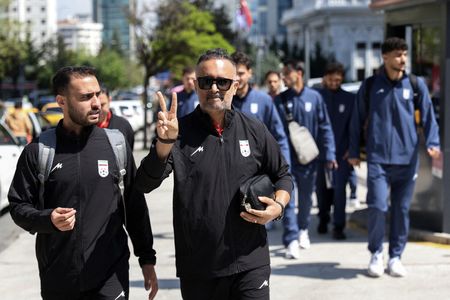
Iran’s national soccer team will establish their World Cup preparation base in Tijuana, Mexico, after receiving FIFA approval to relocate from their originally planned Arizona training facility, according to an announcement made Saturday by the country’s soccer federation leadership.
“We will be based in the Tijuana camp, which is near the Pacific Ocean and on the border between Mexico and the United States,” stated Iran’s soccer federation President Mehdi Taj in a video message shared on the organization’s Telegram social media channel.
The federation president explained that this relocation will help eliminate visa-related issues and enable the team to fly directly to Mexico using Iran Air transportation.
FIFA has not yet provided a response to requests for comment regarding this approved venue change.
The Iranian squad is scheduled to compete in three Group G matches: facing New Zealand in Los Angeles on June 15, meeting Belgium in the same city on June 21, and concluding group play against Egypt in Seattle on June 26.
“The total distance between us and the venue of our games in Los Angeles is 55 minutes by flight,” Taj explained, noting that the Tijuana location actually places them closer to their competition sites compared to the original Arizona training facility.
For several months, Iran has encountered challenges regarding travel logistics and security preparations for the upcoming World Cup, which will take place across venues in the United States, Canada and Mexico.
Earlier this month, Iranian federation representatives revealed that team members and support staff had not yet obtained necessary U.S. visas, despite the tournament beginning in less than four weeks.
According to Taj, the federation has requested FIFA provide assurances regarding visa processing, security measures and overall treatment of the Iranian delegation throughout the competition.
The World Cup tournament is scheduled to run from June 11 through July 19.
MONTREAL, May 23 – In a stunning upset at the IIHF Ice Hockey World Championship, Norway defeated Sweden 3-2 on Saturday, capitalizing on special-teams play to secure their first win against their Nordic neighbors in a decade and a half.
The victory significantly improves Norway’s chances of advancing to the tournament’s playoff stage. Norway’s success came from converting short-handed opportunities into goals, netting twice while playing with a man disadvantage.
Noah Steen led Norway’s offensive effort with two goals, while Eirik Salsten provided the game-winning score during the middle portion of the final period. Goaltender Henrik Haukeland was instrumental in preserving the victory, stopping 32 shots and withstanding Sweden’s late-game offensive surge.
Sweden managed to find the net through Ivar Stenberg and Lucas Raymond, but squandered scoring opportunities and committed crucial mistakes that proved costly in the defeat.
The historical significance of the victory cannot be understated – prior to Saturday’s contest, Norway had managed just one win against Sweden in 19 world championship encounters, achieving that lone victory in a shootout 15 years earlier in Bratislava.
WISCONSIN – A Salisbury University track and field athlete made history at the NCAA Division III Outdoor Track & Field Championships, capturing two national titles in the same day.
Kai Smith dominated the sprint events on the final day of competition at Roger Harring Stadium at Veterans Memorial Field Sports Complex in La Crosse, Wisconsin. The championships were hosted by The University of Wisconsin-La Crosse.
Smith secured victories in both the 100-meter and 200-meter races, completing his double championship performance within a span of 70 minutes. His achievements earned him recognition as the fastest man in Division III track and field for 2026.
The Salisbury University Track & Field program celebrated Smith’s outstanding performance as he brought home two National Championships from the prestigious competition.
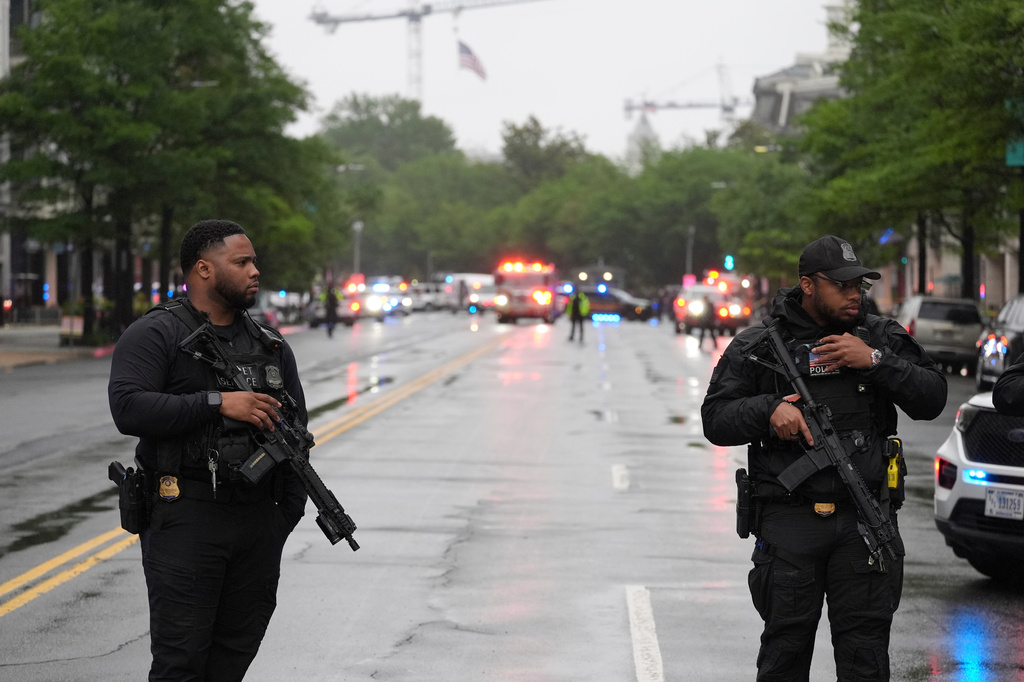
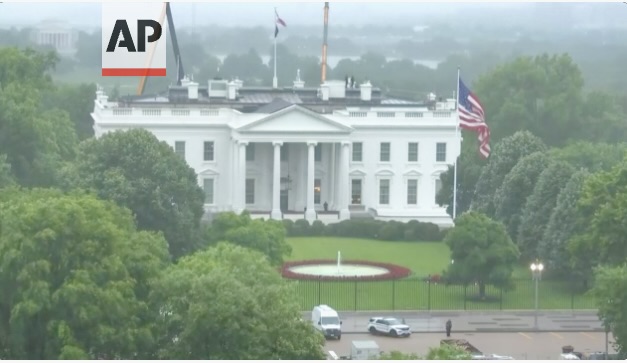
Federal protective agents fired their weapons in the area surrounding the White House, resulting in gunshot wounds to one person and injuries to a bystander, according to law enforcement officials.
The FBI Director Kash Patel took to social media to confirm that agents were responding to reports of gunfire in the area. “Update the public as we’re able,” Patel stated in his online message.
The President was reportedly present inside the executive mansion when the shooting occurred.
Authorities have not yet released additional details about the circumstances that led to the use of firearms or the condition of those who were injured.
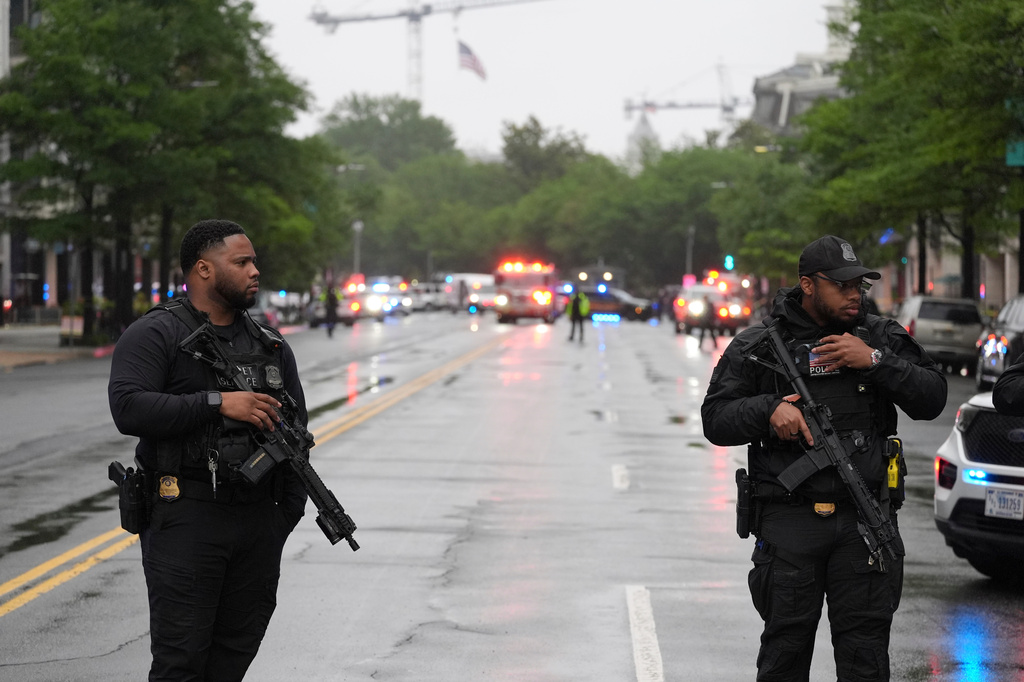
WASHINGTON — An individual who opened fire at Secret Service officers near a White House security checkpoint has died following a shootout with federal agents, authorities confirmed.
According to the U.S. Secret Service, initial findings show the individual came to a checkpoint around 6 p.m. ET Saturday, “pulled a weapon from his bag and began firing at posted officers.”
Federal agents fired back, striking the gunman, who was rushed to a local medical facility where he was later pronounced dead, the Secret Service reported.
An innocent bystander sustained injuries during the incident, though law enforcement officials remain uncertain whether the wounds came from the initial gunfire by the suspect or from rounds fired by responding officers.
The Secret Service confirmed none of their personnel were harmed in the exchange, and President Donald Trump — who was present at the White House during the shooting — remained “unaffected.”
THIS IS A BREAKING NEWS UPDATE. Earlier reporting follows below.
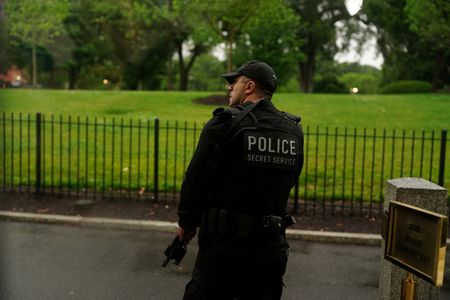
WASHINGTON — Federal agents shot an individual in the vicinity of the White House on Saturday, with a bystander also sustaining gunshot wounds, according to a law enforcement source.
Both victims were reported in critical condition, the source revealed while requesting anonymity due to lack of authorization to speak about the ongoing investigation.
White House press corps members on duty Saturday heard multiple gunshots and received instructions to take cover in the press briefing room.
The Secret Service posted on X that they were “aware of reports of shots fired near 17th Street and Pennsylvania Avenue NW” — located one block from the White House — and were “working to corroborate the information with personnel on the ground.” They promised an update would follow.
FBI Director Kash Patel posted on social media that officers were responding to reports of gunfire and promised to “update the public as we’re able.”
President Donald Trump remained inside the White House throughout the incident.
Physical evidence of the shooting remained visible on sidewalks adjacent to the White House grounds, with yellow police tape stretching across walkways and Secret Service personnel marking dozens of spots with orange evidence markers. Emergency medical supplies, including what looked like purple medical gloves and standard paramedic equipment, were scattered at the scene.
ABC News senior White House correspondent Selina Wang captured dramatic footage on X showing the moment she heard what “sounded like dozens of gunshots” and took cover. Wang had been recording a routine social media update about Trump’s earlier Saturday comments regarding a potential Iran deal when the gunfire erupted.
The video shows Wang speaking briefly before the sound of gunshots causes her to widen her eyes and duck down in the media tent positioned along the White House driveway where news crews conduct their broadcasts. Wang’s footage had been shared thousands of times and viewed over 3 million times by Saturday evening.
The Metropolitan Police Department advised on X that the Secret Service was handling the scene and urged the public to stay away from the area. The location is close to where a shooter attacked two West Virginia National Guard members last November.
U.S. Army Specialist Sarah Beckstrom, 20, succumbed to her injuries in that attack. Andrew Wolfe, then 24, suffered critical wounds. Rahmanullah Lakanwal faces charges in connection with that shooting.
Saturday’s gunfire occurred roughly one month following what authorities described as an assassination attempt against the president on April 25 during his appearance at the annual White House Correspondents’ Association Dinner at a Washington hotel. Cole Tomas Allen, of Torrance, California, recently entered a not guilty plea to charges of attempting to kill Trump and remains in federal detention.
After that incident, Secret Service agents shot a suspect who they said had opened fire on officers near the Washington Monument, also in the White House vicinity. Michael Marx, 45, of Midland, Texas, was charged in federal court in connection with the May 4 shooting. A teenage bystander suffered wounds in that incident.
British naval personnel aboard the RFA Lyme Bay, currently stationed near Gibraltar, are standing by for a potential mine-clearing operation in the Strait of Hormuz, though the mission remains uncertain pending ongoing peace negotiations.
Following criticism from U.S. President Donald Trump that allies haven’t contributed enough to America’s military efforts against Iran, which has effectively blocked the crucial shipping route and caused energy costs to spike globally, Trump challenged NATO partners in March to “go get your own oil” and secure the waterway independently.
From Gibraltar, a British territory at the southern edge of the Iberian Peninsula, the Royal Navy is making preparations for exactly that mission — though deployment will only occur after a peace settlement is finalized. Trump announced Saturday that negotiations with Iran have been “largely negotiated” following discussions with Israel and regional partners, though final details remain outstanding.
Armed Forces Minister Al Carns brought a select group of journalists to tour the RFA Lyme Bay while it prepares for a potential multinational operation, spearheaded by Britain and France, to restore security to the strait. During Carns’ briefing, crews were loading the amphibious vessel with munitions and sonar-equipped underwater drones designed for mine detection.
The RFA Lyme Bay, carrying several hundred crew members, will eventually leave Gibraltar to rendezvous with the destroyer HMS Dragon and partner vessels for aerial support before transiting the Suez Canal toward the Persian Gulf.
“Which other country can pull together 40 nations and come up with a solution to deal with a complex problem that we couldn’t predict because we weren’t involved?” Carns responded when The Associated Press questioned what Trump expects from Britain as an ally.
Following the U.S.-Israeli military action that commenced February 28, Iran responded by essentially sealing off the strait, a vital passage for regional oil, natural gas and fertilizer exports, creating worldwide economic disruption. Britain has particularly faced Trump’s criticism, with the president calling the British fleet “toys” and comparing Prime Minister Keir Starmer unfavorably to “Winston Churchill.”
According to Carns, no fewer than 6,000 vessels have been prevented from transiting the strait since hostilities started.
Cmdr. Gemma Britton, who leads the Royal Navy’s Mine and Threat Exploitation Group, explained that Iran might have deployed a “huge” array of explosive devices throughout the waterway. These weapons could include rocket-powered mines, tethered explosives, or seabed devices activated by acoustic signals, motion, or illumination.
Journalists were shown unmanned systems capable of mapping the ocean floor and water column using sonar technology in roughly half the time required for manned vessels to survey and chart potential hazards. These robotic craft generate detailed images of underwater objects, from commercial fishing equipment to infrastructure pipelines. These visuals help identify explosive devices that can then be investigated using sophisticated sound-based detection and camera systems, Britton explained.
Several systems aboard the RFA Lyme Bay can be deployed on smaller craft that launch and operate independently from the main vessel, which serves as a command platform positioned safely away from suspected minefields, according to Britton. This approach minimizes personnel exposure to danger.
Traditional mine disposal involves divers manually attaching explosive charges to detected mines before retreating to trigger detonation. However, the RFA Lyme Bay is testing remote-controlled submersibles that can descend and position charges near mines before activating them from a safe distance, Britton noted.
The immediate objective will focus on establishing a clear transit corridor through the strait to enable approximately 700 stranded ships to depart. Subsequently, crews will open a reverse-direction lane for incoming vessels, though Britton cautioned that completely clearing the entire waterway could require months or even years.
Whether mines actually exist in the strait — or whether Britain and its partners will ultimately deploy to remove them — remains unclear.
When AP asked if the British preparations were primarily theatrical, intended to improve relations with America, Carns acknowledged that some mines may have already exploded or drifted away, but noted that such uncertainty fails to satisfy commercial insurance providers. These companies require “absolute certainty” before authorizing vessel passage through the strait again.
“That’s what this capability will provide,” he stated.
The multinational strait security mission would only proceed after fighting concludes.
“Final aspects and details of the Deal are currently being discussed, and will be announced shortly,” Trump posted Saturday on social media, without specifying a timeline.
Recent weeks have seen multiple claims that an agreement was near completion.
“We don’t know when the Americans, Iranians and Israelis are going to come up with a suitable solution,” Carns acknowledged.
Until then, the RFA Lyme Bay and its personnel will remain on standby and will be “really, really ready,” Carns assured.
Ukraine’s capital city faced a large-scale assault involving missiles and drones during the early morning hours of Sunday, following warnings from Ukrainian air forces about a potential hypersonic Oreshnik ballistic missile launch by Russia.
The city experienced multiple explosions just after 1 a.m. local time, occurring shortly after military officials announced the possibility of an Oreshnik missile strike through their Telegram communications channel. The mayor of Kyiv, Vitali Klitschko, reported via Telegram that no fewer than three individuals sustained injuries and multiple residential structures suffered damage throughout the capital. He also noted that burning debris was discovered on the grounds of a centrally-located school.
On Saturday, President Volodymyr Zelenskiy had issued a warning that Russia was planning to use the Oreshnik missile system against Ukraine, based on intelligence gathered from Ukrainian, American, and European sources. Ukrainian air force officials have not yet provided confirmation regarding whether an Oreshnik missile successfully struck any targets during the attack.
This marks the third time Russia has deployed the Oreshnik weapon system against Ukraine. President Vladimir Putin has previously claimed this missile cannot be intercepted due to its reported speed exceeding ten times the velocity of sound.
The president’s earlier warning followed Putin’s directive to his armed forces to develop retaliatory options against Ukraine in response to a drone attack on student housing facilities in the Russian-occupied Luhansk area of eastern Ukraine.
Ukrainian military officials stated their forces had aimed at a Russian drone operations center during that strike.
GIZA, Egypt, May 23 – Ukrainian heavyweight boxing champion Oleksandr Usyk came dangerously close to suffering one of boxing’s greatest upsets before delivering a dramatic knockout of Dutch former kickboxer Rico Verhoeven with merely one second remaining in the 11th round of their WBC championship bout.
The Saturday night spectacle dubbed ‘Glory in Giza’ at Egypt’s Pyramids was widely anticipated to be a one-sided affair, but Verhoeven completely defied expectations from the first bell, with some judges’ scorecards showing him leading despite having only one professional boxing match 12 years prior.
The 39-year-old Ukrainian appeared unusually sluggish and came into the fight at his heaviest weight ever, forcing him to enter the 11th round desperately needing a decisive moment to secure what most observers had assumed would be a routine victory.
That crucial moment arrived in the final seconds of the penultimate round when Usyk connected with a devastating right uppercut that sent Verhoeven to the canvas. Although the Dutchman managed to beat the referee’s count, the official intervened to halt the contest.
“I thought it was an early stoppage but in the end it’s not up to me,” the 37-year-old Verhoeven said to DAZN. “I was already super thankful for this opportunity for Usyk to take this fight.”
The bout put only the WBC championship on the line for Verhoeven, while Usyk’s WBA and IBF titles would have been declared vacant had he suffered defeat.
The Ukrainian champion ultimately maintained his perfect professional record at 25 victories without a loss.
“This fight was hard. It was a good fight. I was just boxing, my right uppercut, bang. Thank you god,” Usyk commented after the fight.
“Right now, in Ukraine, my people and my country — there is bombing. My people are sitting in bomb shelters. My family. My daughter sent me a message: ‘Papa, I love you, I’m afraid.’ I said, ‘oh my God’.”
A Verhoeven victory would have ranked among boxing’s most stunning upsets, potentially exceeding the shock of Mike Tyson’s 1990 loss to underdog James ‘Buster’ Douglas.
Many boxing analysts predicted Usyk, an Olympic gold medalist from 2012 and seasoned professional, would finish the contest by the midway point or even sooner.
The theatrical pre-fight entrances featured Verhoeven dressed as a pharaoh, accompanied by torch-bearing attendants against the backdrop of the illuminated Pyramids.
Usyk chose a Roman gladiator theme, donning centurion armor and helmet while fireworks exploded overhead. However, the actual fight proved to be among his most challenging, as he struggled against an opponent who refused to fold under pressure.
Northbound traffic on Philadelphia Pike has been completely shut down near Interstate 495 following a vehicle accident, according to transportation officials.
The roadway closure is affecting the area around the I-495 interchange, with no immediate timeline provided for when normal traffic flow will resume.
Drivers traveling in the area are advised to find alternative routes and allow extra time for their commutes while emergency responders and cleanup crews address the situation.
WASHINGTON — Federal agents opened fire on an individual in the vicinity of the White House on Saturday, with an innocent bystander also wounded during the incident, according to a law enforcement source.
Both victims remain hospitalized in critical condition, the official confirmed while requesting anonymity since they lacked authorization to publicly discuss the ongoing investigation.
News reporters stationed at the White House during Saturday’s incident described hearing multiple rounds of gunfire and received instructions to take cover within the press briefing area.
The Secret Service acknowledged on X that they were “aware of reports of shots fired near 17th Street and Pennsylvania Avenue NW” — located one block from the White House — and were “working to corroborate the information with personnel on the ground.” The agency promised additional details would follow.
FBI Director Kash Patel posted on social media that law enforcement was responding to gunfire reports and stated he would “update the public as we’re able.”
President Donald Trump remained inside the White House during the shooting.
ABC News senior White House correspondent Selina Wang captured dramatic footage on X of the moment she heard what “sounded like dozens of gunshots” and took cover. Wang had been recording a routine social media video about Trump’s earlier Saturday comments regarding a potential Iran deal when the gunfire erupted. Her video shows her speaking briefly before her expression changes and she ducks down in the media tent positioned along the White House driveway where broadcasters conduct their reports. Wang’s footage had been shared thousands of times and viewed over 3 million times by Saturday evening.
The Metropolitan Police Department posted on X that the Secret Service was handling the scene and advised people to stay away from the area. This location is close to where a gunman attacked two West Virginia National Guard members last November.
U.S. Army Specialist Sarah Beckstrom, 20, succumbed to her injuries from that attack. Andrew Wolfe, then 24, sustained critical wounds. Rahmanullah Lakanwal faces charges in connection with that incident.
Saturday’s shooting occurred nearly a month following what authorities described as an assassination attempt against the president on April 25 during his attendance at the annual White House Correspondents’ Association Dinner at a Washington hotel. Cole Tomas Allen, of Torrance, California, recently pleaded not guilty to charges alleging he attempted to kill Trump and remains in federal detention.
After that incident, Secret Service agents shot a suspect who allegedly fired at officers near the Washington Monument, also in proximity to the White House. Michael Marx, 45, of Midland, Texas, was charged in a complaint filed in U.S. District Court related to the May 4 shooting. A teenage bystander sustained injuries during that encounter.
A serious traffic accident has resulted in the complete closure of all northbound lanes on Interstate 95 just before the Delaware Route 1 exit.
The crash has blocked all traffic heading north on the major highway, forcing authorities to shut down the roadway at that location. Motorists are advised to seek alternate routes while emergency crews work to clear the scene.
No additional details about the nature of the accident or potential injuries have been released at this time.
Traffic is being diverted on a major Delaware highway following a vehicle collision that has blocked all southbound lanes.
Route 1 southbound has been completely shut down in the area of Wrangle Hill Road due to the crash, according to transportation officials.
Drivers traveling in the area should anticipate significant delays and consider using alternative routes while emergency crews and cleanup operations are underway.
No additional details about the severity of the accident or potential injuries have been released at this time.
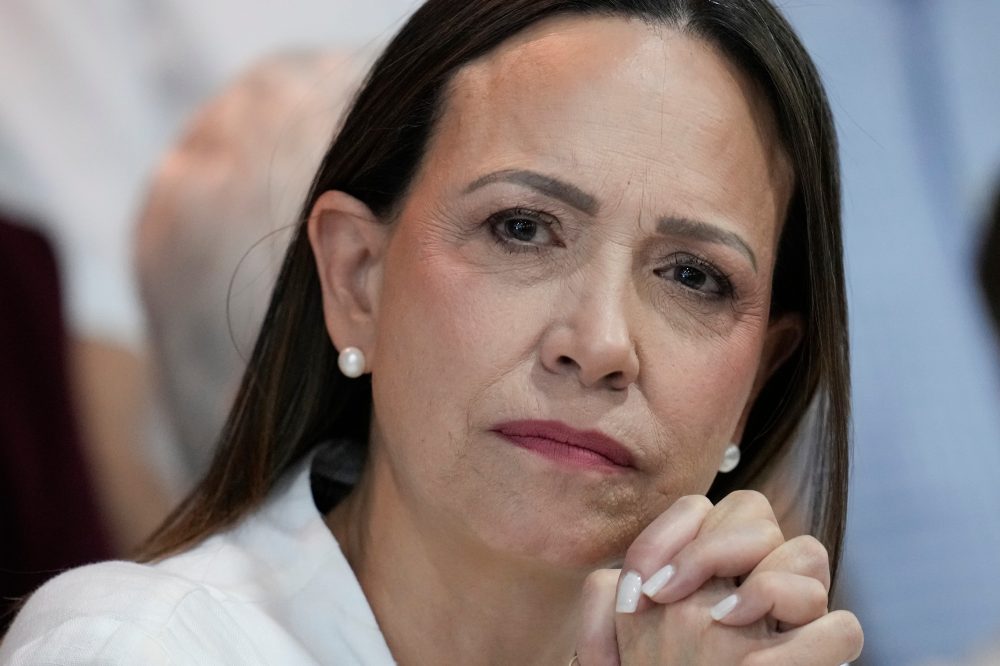
PANAMA CITY, Panama (AP) — Venezuelan opposition figure and Nobel Peace Prize winner María Corina Machado declared Saturday her intention to seek the presidency once more and expects to return to Venezuela by the close of 2026.
Speaking during a gathering with other Venezuelan opposition figures in Panama, Machado’s announcement comes over four months following the White House’s surprising choice to distance itself from her and instead collaborate with a loyalist from Venezuela’s ruling party after the U.S. military detained former President Nicolás Maduro.
Machado has remained in exile since December, after surfacing from nearly a year of hiding within Venezuela and departing for Norway to receive the Nobel prize.
During her remarks to journalists in Panama City, she stated that she and fellow opposition leaders present continue their dedication to achieving a democratic transition “through free and fair presidential elections, where all Venezuelans inside and outside the country vote.”
However, the timing of Venezuela’s next presidential election remains uncertain.
U.S. President Donald Trump and top administration figures have commended acting President Delcy Rodríguez, who succeeded Maduro and has opened Venezuela’s petroleum sector to American investment during a period of rising oil costs linked to conflict in Iran.
The Trump administration has also reduced discussion of elections, despite Venezuela’s constitutional requirement for such contests within 30 days when a president becomes “permanently unavailable.”
According to Machado, organizing an election under democratic standards would require seven to nine months of preparation. Essential reforms include selecting impartial electoral officials, updating voter registration systems, and ensuring opposition candidates can campaign without government obstruction.
Machado emerged as Maduro’s most formidable challenger in recent years, though his administration prevented her candidacy in the 2024 presidential race, prompting her to select former ambassador Edmundo González Urrutia as her ballot representative.
Ruling party officials proclaimed Maduro victorious just hours after voting ended, yet Machado’s organized campaign gathered documentation demonstrating González had won against Maduro by more than a 2-to-1 ratio.
On Saturday, she informed reporters of her readiness to face any presidential contender in “an impeccable election.”
“I will be a candidate, but there may be others, of course,” she said. “I would love to compete with everyone, with anyone who wants to be a candidate.”
WASHINGTON — Federal authorities are investigating reports of gunfire that occurred close to the White House grounds on Saturday.
Media personnel present at the location on Saturday heard multiple gunshots and received instructions to take cover in the press briefing room. Secret Service agents prevented them from exiting the area.
No injuries were reported immediately, and details about what led to the incident remain unclear.
The Secret Service posted on X that they were “aware of reports of shots fired near 17th Street and Pennsylvania Avenue NW” — located one block away from the White House — and were “working to corroborate the information with personnel on the ground.”
FBI Director Kash Patel posted on social media that law enforcement was responding to the gunfire and stated he would “update the public as we’re able.”
President Donald Trump was at the White House when the shooting occurred.
The Metropolitan Police Department had not responded to information requests immediately.
This Saturday incident follows approximately one month after what authorities described as an assassination attempt against the president on April 25 during his attendance at the annual White House Correspondents’ Association Dinner at a Washington hotel. Cole Tomas Allen, from Torrance, California, entered a not guilty plea recently to charges alleging he tried to kill Trump and is being held in federal detention.
After that incident, Secret Service agents shot a individual they claimed had opened fire on officers close to the Washington Monument, which is also in the White House vicinity. Michael Marx, 45, from Midland, Texas, faces charges in a complaint submitted to U.S. District Court regarding the May 4 shooting incident. A teenage bystander sustained injuries during that event.
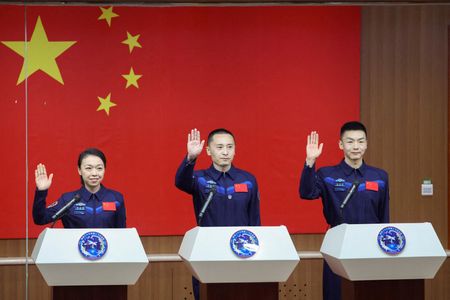
China plans to launch three astronauts to its space station this Sunday, with one crew member remaining aboard for an unprecedented year-long stay as the nation advances toward its goal of landing humans on the moon by 2030.
The Shenzhou-23 spacecraft will blast off at 11:08 p.m. local time (1508 GMT) aboard a Long March-2F Y23 rocket from the Jiuquan Satellite Launch Center in northwest China, carrying three Chinese space travelers.
Among the crew is payload specialist Li Jiaying, formerly a Hong Kong police inspector, who will become the first astronaut from Hong Kong to participate in a Chinese space mission. The mission commander is Zhu Yangzhu, while Zhang Yuanzhi serves as pilot – both are members of the People’s Liberation Army’s astronaut corps.
Officials from the China Manned Space Agency announced Saturday that which of the three astronauts will remain on the Tiangong space station for the full year will be determined based on mission developments. The yearlong duration would represent one of the longest space missions in history, though it falls short of the 14-1/2 month record established by a Russian cosmonaut in 1995.
This launch occurs as competition intensifies between China and the United States in the race to return humans to the lunar surface. The U.S. has raised concerns about what it claims are China’s intentions to colonize and extract resources from the moon, allegations that Beijing has firmly denied.
NASA targets a crewed lunar landing by 2028, two years before China’s deadline. The American space agency seeks to create a sustained lunar presence as preparation for future human missions to Mars.
Recent developments include NASA’s April achievement when four astronauts completed a historic lunar flyby as part of the Artemis II mission, traveling farther from Earth than any previous crew in the first human lunar mission in fifty years.
Additionally, Elon Musk’s SpaceX conducted a mostly successful uncrewed test of its next-generation Starship rocket on Friday, designed to support increased Starlink satellite deployments and transport future NASA lunar missions.
China faces significant challenges in meeting its 2030 target, requiring development of completely new equipment and systems for lunar operations. The nation must demonstrate mission readiness to ensure its astronauts, accustomed to the relatively secure environment of Tiangong in low-Earth orbit, can safely navigate the more dangerous journey to the moon’s surface.
Since 2021, China’s Shenzhou missions have regularly transported three-person crews to the station for six-month assignments. The Chinese space program is currently preparing two Pakistani astronauts, with one potentially joining an anticipated Tiangong mission later this year for a brief stay.
The preceding mission, Shenzhou-22, launched earlier than planned in November to retrieve three Chinese astronauts whose Shenzhou-20 spacecraft sustained damage from orbital debris.
While China has only deployed robotic missions to the moon thus far, its continuing Shenzhou operations demonstrate the country’s advancing space technology. In June 2024, China achieved a world first by collecting lunar samples from the moon’s far side using robotic systems.
Successfully completing a crewed lunar landing before 2030 would support China’s objective to build a permanent lunar base by 2035 in partnership with Russia.
Wu Weiren, the chief scientist of China’s lunar program, has indicated that Beijing’s public schedule is deliberately cautious.
Throughout the past year, Beijing has conducted safety evaluations of equipment designed for the 2030 mission, including heavy-lift Long March-10 rockets, the Mengzhou spacecraft, and the Lanyue lunar lander.
The Shenzhou-23 mission will perform the first autonomous rapid approach and docking with Tiangong’s core module, preparing for the 2030 mission that depends on automated lunar-orbit connection between the Mengzhou capsule and Lanyue lander.
Researchers will examine the physical impacts of radiation exposure, bone density reduction, and psychological strain during the extended Shenzhou-23 mission.
Beijing is conducting the world’s first human “artificial embryo” study in space, having delivered human stem cell samples to the Shenzhou-22 crew aboard Tiangong this month, according to state media reports. The research aims to investigate long-term human habitation, survival, and reproduction capabilities in space environments.
Federal authorities launched an investigation Saturday after receiving reports of gunfire in the nation’s capital near the White House.
The Secret Service announced Saturday that agents were aware of reports indicating shots had been fired in Washington, D.C., specifically at the intersection of 17th Street and Pennsylvania Avenue NW, located close to the White House. Officials stated they were actively working to verify these reports through coordination with officers stationed in the area.
FBI Director Kash Patel confirmed that FBI agents were present at the location, providing assistance to Secret Service personnel.
Indian Prime Minister Narendra Modi’s recent diplomatic tour across five nations from May 15 to 20 included stops in the United Arab Emirates, the Netherlands, Sweden, Norway, and Italy, but his visit to Rome delivered the most significant strategic outcomes. The Italian leg of the journey demonstrated how New Delhi is expanding its global partnerships by integrating commerce, technology, defense, connectivity, and corridor development into a unified diplomatic strategy.
During the Rome meetings, India and Italy upgraded their relationship to a Special Strategic Partnership and signed a comprehensive joint declaration covering commerce, investment, supply chains, critical minerals, clean technologies, semiconductors, ports, maritime security, defense industrial cooperation, innovation, space, migration, and the India-Middle East-Europe Economic Corridor (IMEC). Both nations also confirmed their goal of increasing bilateral trade to €20 billion by 2029.
This enhancement positions Italy as more than just a ceremonial diplomatic partner in India’s European strategy. Italy represents a major EU economy, a Mediterranean nation, a NATO ally, and one of the Western governments demonstrating significant political commitment to IMEC. For India, Rome serves as a valuable European bridge and potential Mediterranean gateway that New Delhi seeks to develop as a strategic advantage.
The official India-Italy declaration contained remarkably detailed practical commitments. Both governments expressed their intention to establish resilient supply chains, expand industrial and technology partnerships, and enhance cooperation across multiple sectors including textiles, clean technologies, semiconductors, automotive, energy, tourism, pharmaceuticals and medical technologies, digital technologies, steel, ports, and infrastructure. They also advocated for stronger connections between stock exchanges, investment funds, banks, insurers, and other financial institutions.
The partnership is being institutionalized beyond mere public announcements. The leaders committed to annual meetings, including during multilateral events, and agreed to utilize the Joint Strategic Action Plan 2025-2029 as their primary operational framework. This plan was initially adopted in 2024, but the Rome declaration provided renewed political momentum and positioned it as the centerpiece of bilateral follow-up efforts.
IMEC occupied a central position in the discussions. Modi and Italian Prime Minister Giorgia Meloni reconfirmed their dedication to the corridor, described its transformational possibilities, and urged the first IMEC ministerial meeting to take concrete actions in 2026. The declaration characterizes the project as a pathway not only for goods, but for broader commercial, digital, and strategic connections linking India, the Gulf, and Europe.
The maritime component proved equally significant. India and Italy endorsed a memorandum of understanding on maritime transport and ports and instructed their ministries to establish a joint working group for implementation. They also agreed to initiate a Maritime Security dialogue to enhance cooperation, coordination, information sharing, and best practices. The message was unmistakable: connectivity is being approached not as a separate technical matter, but as an integral part of a security framework.
The technology agenda followed similar patterns. The leaders announced the establishment of INNOVIT India, an innovation hub in India designed to strengthen both countries’ innovation ecosystems, support startup acceleration, improve market access and business matching, and deepen university collaboration and talent mobility. The declaration identifies fintech, healthcare, semiconductors, logistics and supply chains, agritech, energy, quantum computing, and artificial intelligence as priority areas.
They also emphasized cooperation in supercomputing, renewable energy, green hydrogen, the sustainable blue economy, and space. This breadth explains why the meeting held significance: it represented more than symbolic diplomacy. It constituted a practical effort to integrate industrial policy, advanced technology, and strategic geography into a unified relationship.
According to Rajat Ganguly, editor-in-chief of the Journal of Asian Security and International Affairs, the Rome visit reflects a broader transformation in Indian foreign policy. “I see this as India’s growing confidence in what I call a polyalignment foreign policy,” he told The Media Line. “What this effectively means is that India does not want to get pushed into one particular corner or another. A lot of people are saying that India should be more strongly in favor of BRICS against the US. This is not India’s approach to foreign policy right now. India wants to be a good partner with multiple actors.”
BRICS represents a coalition of major emerging economies pursuing greater economic and diplomatic influence in an increasingly multipolar global system. It began with Brazil, Russia, India, and China holding their first formal leaders’ summit in 2009; South Africa joined in 2010, and the bloc expanded again in 2024 and 2025 to include countries such as Egypt, Ethiopia, Iran, the United Arab Emirates, and Indonesia.
Ganguly explained the logic is apparent in India’s capacity to maintain separate relationships, even when they point in conflicting directions. “You could have India-US on one side, India-Russia on one side. … India is very close to Israel, but India is also very close to Iran,” he said. “From India’s point of view, that is probably the most useful thing: to have multiple partners, multiple friends, and not allow the difficulties between friends, let’s say, to affect their relationship with India. Iran and Israel are a classic example. India wants to have beneficial relations with both.”
This reasoning helps clarify why Italy holds importance for New Delhi. Ganguly characterized Italy as a significant trade partner and a pro-India advocate within the European Union. “Italy is a very important trade partner, and you may remember this new trade route from India to the Gulf, then on to Israel, then Greece and Italy into Europe,” he said. “If you look at it from that point of view, then obviously Italy is very, very important for India. Italy is also a voice within the European Union that is very pro-India.”
The personal rapport between Modi and Meloni also contributes, in Ganguly’s assessment. “I think Meloni’s position on many different things probably aligns quite well with Modi and his ideas,” he said. “As two prime ministers, they are probably quite aligned in terms of their political ideology, in terms of their outlook for the world, for Europe, and for India. From Modi’s point of view, Europe is very important as an alternative power center.”
He also contended that Meloni has attempted to demonstrate independence even from leaders she previously strongly supported. “Meloni used to be a very big Trump supporter,” Ganguly said. “But what she is also asserting is that she is autonomous. She supports Trump when it is good for Italy. But if she is required to criticize Trump because Trump is doing things that are not good for Italy, she will do that,” adding, “What it shows is that she has got a spine, that she is not going to bend backward for anybody.”
Leo Goretti, associate dean at Rome Business School, positions India in a somewhat different but complementary framework. He characterized the country as a “swing country” in the global system, positioned between the democratic West and a broader coalition of states seeking to reshape the international order from outside its traditional center.
He described India as “halfway between the link with the democratic and Western world and the positioning within a front of countries that somehow claim a reform of the multilateral system, of the international liberal order, starting from the outside, like the BRICS.” In his perspective, India represents a key nation, and maintaining dialogue, partnership relationships, if not friendship or even alliance with India, remains crucial for Western countries.
For Goretti, the India connection also provides Meloni an opportunity to position Italy as more than a reactive European middle power. “All this means that at this moment India can actually represent an interlocutor through which Meloni can try to relaunch the country’s foreign policy, which in recent months has seen Italy in a rather difficult situation, more reactive than proactive,” he told The Media Line.
He was cautious not to characterize this as a departure from the West. “In my opinion, this Italian government also contains different positions on this issue,” Goretti said. “I believe that the perspective of Prime Minister Meloni is a perspective that she has coherently carried out over time: the search for a united Western front. I consider it an extremely complicated perspective, if not impossible, with Trump actually translating it into concrete politics.”
Goretti added that Meloni’s approach remains connected to a Western framework even if Washington no longer appears fully committed to the same concept. “My impression is that Meloni’s position tends to be continuous in this effort to keep the Western front united,” he said, “while emphasizing the fact—and this is the paradox—that the main exponent of that front, the United States, does not seem at this moment to be interested in this type of politics, and hence all the frustrations and failures of the case.”
He also identified pressure points within the Italian right, where some smaller factions favor a more openly multipolar interpretation of world politics. “There are minority components, let’s say, in the area of the radical right, both inside and outside the government, that probably have a perspective much more linked to this ideal of a multipolar world, in which … one tries to navigate between the Russian power policy, the American one, potentially also the Chinese one, etc.,” he said. “But I believe that this is a component that, at this moment, is quite a minority, which, however, is destined to become more and more noisy before the next elections.”
The Rome meeting occurred during the same week that BRICS foreign ministers convened in New Delhi and failed to produce a joint statement due to disagreements over the Middle East. Reuters reported that rivals Iran and the UAE were among the countries unable to reach consensus on a common text, and India issued only a chair statement that referenced “differing views among some members” on West Asia and the Middle East.
This incident highlighted the limitations of viewing BRICS as a unified anti-Western alliance. “India, as one of the founding members, is the classical balancer,” Ganguly said, adding that “India is basically saying that BRICS should not be like a Cold War institution, where it is almost zero-sum politics: that BRICS is anti-America, anti-West, and therefore BRICS is in conflict with the West and with the US. We do not want that.”
He observed that the bloc’s internal disagreements are becoming more difficult to manage as membership expands. “Right now, there are 10 members, and it was not possible to get all 10 members to agree on a joint communique at the end of the meeting, particularly because the UAE and Iran did not see eye to eye,” he said. “Therein lies the problem: India’s perception of BRICS is very different from Russia’s and China’s. It is also very different from Iran’s and the UAE’s, for example.”
For Goretti, this broader uncertainty is encouraging both India and Europe to diversify their partnerships. He argued that the transatlantic relationship no longer appears as stable or automatic as it once did, which explains why countries such as Italy are examining India and other middle powers more closely. The solution, in his view, is not to abandon the West but to avoid overdependence on a single power axis.
This is where the India-EU relationship becomes relevant to the Italy narrative. The European Commission states that negotiations on the Free Trade Agreement (FTA) concluded on January 27, 2026, and that the agreement would eliminate or reduce tariffs on over 96% of EU goods exports while saving approximately €4 billion annually in duties. The commission also indicates the EU and India relaunched negotiations in 2022 for a separate Investment Protection Agreement and an Agreement on Geographical Indications.
The Rome declaration incorporated this broader European track into the bilateral relationship by welcoming the conclusion of the FTA negotiations and the India-EU Comprehensive Strategic Agenda. It also supported the India-EU Trade and Technology Council as a platform for cooperation in trade, critical technologies, and economic security.
Despite all this ambition, IMEC remains the most challenging component of the arrangement. India and Italy both characterized the corridor as transformational, but the project relies on stability across the Gulf and the eastern Mediterranean, where conflict and disruption remain active threats. The declaration expressed deep concern over the situation in West Asia and the Middle East, welcomed the ceasefire announced on April 8, 2026, and called for de-escalation, dialogue, diplomacy, freedom of navigation, and the resumption of global flows through the Strait of Hormuz.
Goretti stated that if instability persists across Yemen, Hormuz, and Iran, the corridor will remain challenging to implement. “It is certain that if there is an arc of instability and war that involves Yemen, the Strait of Hormuz, and Iran, this represents a huge problem for such an ambitious project,” he said. He also noted that current disruptions already impact routes between India and Europe.
This represents the fundamental tension at the core of the Modi-Meloni meeting. The strategic direction is evident. The relationship is more comprehensive than previously. The institutional framework is more substantial than in earlier phases. However, the route on which much of the broader vision depends still passes through one of the most volatile regions globally. Italy can help provide political support for the project, but it cannot independently supply the stability necessary to make it function at full capacity.
Ganguly argued that India’s westward expansion will continue through a network of relationships rather than a single corridor. “India’s presence in the Middle East is going to grow through the UAE, through Israel, and through very, very good ties with Saudi Arabia now,” he said. “From the Middle East, there will be Cyprus and Greece, and then into Italy and into Europe.”
He stated the common element is that India does not view these relationships as mutually exclusive. “India would say, no, no, no, each relationship is completely independent,” he said. “What we use to judge each relationship is whether it is good for India. And only India will decide what is good for India.”
This explains why the Rome visit was notable. It was not simply a cordial meeting between two leaders with some political chemistry. It represented a practical step in a larger strategy of diversification, corridor-building, and strategic autonomy. India and Italy are attempting to connect trade, technology, defense, mobility, and maritime security within a single framework, while also fitting that framework into broader India-EU and Indo-Mediterranean politics.
What remains unclear is how much of this ambition can be realized in a geopolitically strained environment. The declaration is comprehensive. The objectives are specific. The cooperation is extensive. However, the stability required to support IMEC, facilitate smooth trade flows, and ensure sustained maritime access still depends on a region where conflict can rapidly spread across borders and disrupt plans.
For Europe, this represents part of a larger transformation. Goretti said the past year and a half has served as a wake-up call for those who believed the transatlantic relationship would remain the unquestioned foundation of foreign and security policy. He argued that Europe now needs to expand its portfolio of partners, including India, the Gulf states, Brazil, and other middle powers, to avoid being forced into a pure US-China rivalry.
This broader logic provides the real context for Modi’s tour. The Gulf remains important for energy and connectivity. The Netherlands remains significant for trade and technology. Sweden and Norway remain valuable for innovation and green transition. Italy matters because it connects all of these themes to the Mediterranean and to the question of how Europe and Asia will link in the coming years.
The meeting in Rome, therefore, was less about one friendship than about an emerging pattern. India and Italy are both attempting to hedge against uncertainty by deepening ties, expanding options, and building practical cooperation around supply chains, advanced technology, and connectivity. Whether this framework becomes a functioning alternative to older routes and older assumptions will depend less on diplomatic declarations than on the ability of the wider region to avoid another round of disruption.
The Israel Defense Forces announced that Staff Sgt. Noam Hamburger, a 23-year-old soldier from Atlit, died Friday when a drone operated by Hezbollah from Lebanon hit Israeli forces positioned near the northern border within Israeli territory.
The fallen soldier worked as a combat specialist focusing on technology and maintenance within the 9th Battalion of the 401st Brigade.
Military officials reported that the attack left one soldier with serious injuries and a noncommissioned officer with minor wounds. Medical teams transported both injured personnel for treatment while their families received notification.
The IDF stated that approximately 25 minutes following the initial strike, another explosive drone touched down in the identical location. This second incident resulted in no casualties.
In an interview with Ynet, Liat Hamburger, the victim’s mother, shared memories of her son: “Noam was pleasant and kind, he was simply a great gift to any mother. He always had a big smile, was an excellent student and loved to learn.”
The family had maintained contact with him just before the fatal incident occurred. “He managed to speak with us the day before the tragedy, he wished us a happy Shavuot holiday. We planned to come to him the next day with treats he loved, but then he didn’t answer us and it was very strange, we had a feeling that something happened,” she explained.
Liat Hamburger revealed that her son was looking forward to completing his military service and returning to civilian life. “He was about to be discharged soon with many plans. It’s simply incomprehensible that our Noam with his big heart, his heart of gold, won’t return anymore,” she stated.
President Donald Trump announced Saturday that a peace agreement between the United States, Iran, and multiple Middle Eastern nations is mostly complete, though prominent Republican senators are expressing serious reservations about the potential deal.
Through a Truth Social message, President Trump revealed he held discussions from the Oval Office with officials from Saudi Arabia, the United Arab Emirates, Qatar, Pakistan, Turkey, Egypt, Jordan, and Bahrain about “all things related to a Memorandum of Understanding pertaining to PEACE.”
“An Agreement has been largely negotiated, subject to finalization between the United States of America, the Islamic Republic of Iran, and the various other Countries, as listed,” President Trump posted. He mentioned having a separate discussion with Netanyahu that “went very well.”
“Final aspects and details of the Deal are currently being discussed, and will be announced shortly,” he stated, noting that “the Strait of Hormuz will be opened.”
Mississippi Sen. Roger Wicker and South Carolina Sen. Lindsey Graham both voiced skepticism about the potential arrangement. “This combination of Iran being perceived as having the ability to terrorize the Strait in perpetuity and the ability the inflict massive damage to Gulf oil infrastructure is a major shift of the balance of power in the region and over time will be a nightmare for Israel,” Graham posted on X Saturday.
Wicker, the chairman of the Senate Armed Services Committee, indicated these negotiations could define President Trump’s presidential legacy and called on him to “finish what we started.”
In an earlier Saturday interview with Axios reporter Barak Ravid, President Trump estimated there was a “solid 50/50” probability that America would either restart military action against Iran or achieve what he characterized as a beneficial deal.
“I think one of two things will happen: either I hit them harder than they have ever been hit, or we are going to sign a deal that is good,” he stated.
The president emphasized that any final agreement must tackle uranium enrichment and Iran’s existing stockpile of enriched uranium, though Axios indicated these nuclear concerns would likely not be immediately addressed in the current memorandum under consideration.
Israeli broadcaster N12 disclosed that Netanyahu called together his security cabinet due to worries that the proposed agreement could harm Israel’s interests.
According to reports, the arrangement would require Iran to reopen the Strait of Hormuz in return for economic incentives, while future discussions would address Tehran’s nuclear activities and uranium reserves. Iran’s ballistic missile capabilities were reportedly excluded from these negotiations.
LIMA, Peru — Peru’s top Catholic officials conducted a ceremonial apology Saturday to Indigenous communities affected by land seizures connected to a Catholic organization that has since been disbanded.
The Sodalitium Christianae Vitae, which operated in Peru, was shut down in 2025 by the late Pope Francis following a Vatican probe that revealed sexual misconduct by its founder, financial wrongdoing by leadership, and spiritual mistreatment by senior members. The dissolution came after years of failed reform efforts.
Saturday’s apology ceremony took place in Catacaos, a northern community, before members of the Tallán Indigenous group.
“We are here to ask for your forgiveness in the name of the Church,” Monsignor Jordi Bertomeu, apostolic commissioner who was in charge of the dissolution process of the Sodalitium, said before a packed church. “We are late. We should have come 20 years ago, and we are truly sorry.”
Established in 1971, the Sodalitium emerged as one of several Catholic organizations created as a conservative response to the liberation theology movement that gained momentum across Latin America during the 1960s. The group reached approximately 20,000 members throughout South America and the United States at its peak, wielding significant influence in Peru.
Abuse allegations against founder Luis Figari were brought to Lima’s archdiocese in 2011 by former members. However, neither local church officials nor the Holy See acted decisively until a victim and journalist published a book about the allegations in 2015.
Following unsuccessful reform attempts, Francis dispatched his most trusted investigators, Bertomeu and Archbishop Charles Scicluna, to examine the Sodalitium abuse claims. Their investigation revealed “sadistic” cult-like abuse of authority and spirituality, financial misconduct in handling church resources, and harassment of critics.
During Saturday’s ceremony, Bertomeu referenced a 2024 message from Francis to the community, telling them: “Fight for your lands, I am with you.”
The land conflicts stretch back at least ten years, when companies connected to the Sodalitium initiated legal proceedings to remove people from thousands of hectares in Catacaos after property transfers that farmers do not acknowledge as legitimate. Numerous farmers faced prosecution for alleged “usurpation,” and two community leaders died in violent confrontations related to the eviction attempts.
The religious ceremony occurred months after Peru’s Episcopal Conference announced a potential visit by Pope Leo XIV to the South American nation later this year.
“Forgive us, offer us your forgiveness, because we too need it,” said Bertomeu, who characterized Catacaos as a community “fearful and broken.”
Tania Pariona, secretary of Peru’s National Human Rights Commission, called the ceremony a “historic gesture” in which the church “is taking the lead over the state, which has failed to protect rural communities.”
Emergency responders battling a dangerous chemical tank situation in Southern California discovered Saturday that internal temperatures are climbing despite round-the-clock cooling operations, according to the incident commander.
Tens of thousands of residents in Garden Grove, a Los Angeles suburb, remain under mandatory evacuation orders as crews work to prevent a potential explosion.
The governor of California issued a state of emergency declaration for Orange County, with his office urging residents to comply with evacuation directives.
Craig Covey, division chief of the Orange County Fire Authority, reported that emergency teams re-entered the hazardous area overnight after drone surveillance on Friday indicated that water spray operations were helping control the situation.
However, Covey explained in a Saturday morning social media video that drone measurements only captured exterior vessel temperatures, not the chemical contents within. When crews accessed the tank’s internal gauge, they discovered temperatures had risen to 90 degrees Fahrenheit from the previous reading of 77 degrees when responders had withdrawn.
The internal temperature was climbing approximately one degree per hour, according to Covey. “That’s the bad news,” he stated.
Since Friday, authorities have cautioned that the container holding methyl methacrylate – a combustible chemical utilized in plastics and manufacturing – could burst and release as much as 7,000 gallons of toxic substances or detonate and threaten surrounding tanks.
Covey said Saturday that fire crews were investigating whether increased cooling water flow could slow the chemical curing reaction inside the vessel sufficiently to reduce pressure and avoid an explosion.
“Letting this thing just fail and blow up is unacceptable to us,” Covey declared. “Our goal is to find something and not allow that to happen.”
The emergency situation started Thursday at the GKN Aerospace plant in Garden Grove, a community of approximately 172,000 residents located roughly 30 miles south of Los Angeles. According to the company’s website, the facility focuses on manufacturing and testing aircraft windows and canopies for both commercial and military use.
GKN stated it is collaborating with “all relevant experts” to resolve the crisis.
“We sincerely apologize for the significant disruption to the many local residents and businesses who have had to be evacuated,” a company spokesperson said in a Saturday statement.
Authorities broadened evacuation zones Friday as explosion risks intensified. Garden Grove Police Chief Amir El-Farra told the Orange County Register that roughly 15% of people within the evacuation area are declining to leave.
Covey reported that crews transitioned from a “defensive” approach to an “offensive” strategy overnight with assistance from chemists on the manufacturer’s emergency response team. The objective was to neutralize a nearby 15,000-gallon tank and minimize its explosive danger if the smaller vessel fails.
“We did put people in harm’s way last night,” Covey acknowledged.
Emergency shelters have been established in Garden Grove and neighboring Anaheim and Cypress.
Health authorities expressed concern that chemical vapors could trigger serious breathing issues with extended exposure. Air quality monitoring systems had not detected vapor as of the most recent health assessment referenced by officials.
“You are safe as long as you are out of the zone that was determined to be an evacuation zone,” Dr. Regina Chinsio-Kwong of the Orange County Health Care Agency said Friday.
Covey added that teams were also preparing for potential spillage by identifying methods to contain and redirect the liquid into a holding area at the industrial site, preventing it from reaching storm systems, waterways or the ocean.
According to various media outlets, midfielder Tanner Tessmann has been excluded from the U.S. men’s national soccer team’s squad for the 2026 World Cup.
Many observers had viewed Tessmann as a likely starter after he took part in six training camps under head coach Mauricio Pochettino.
The 24-year-old player, known for his versatility, appeared in five of nine Europa League matches and started 22 of 29 Ligue 1 contests for Lyon during the current season. His campaign ended on May 8 due to a muscle injury that wasn’t anticipated to affect his World Cup participation, according to The Athletic.
Diego Luna also failed to secure a spot on the 26-player squad despite recording four goals and four assists across 18 matches since joining under Pochettino in 2024. Luna, who has been managing a muscle injury, gained recognition for his tough playing style, exemplified when he continued playing in a friendly match against Costa Rica last year after suffering a broken nose.
Club América winger Alejandro Zendejas earned selection despite his last USMNT appearance being in October. He was included in four of Pochettino’s squads during 2024 and 2025 and has tallied 12 goals plus 7 assists in 28 Liga MX games this season, starting 23 of those contests.
Gio Reyna will reportedly join the American squad for the tournament beginning June 11.
The 23-year-old possesses strong playmaking abilities, though his selection by Pochettino has sparked debate due to his injury-prone career, poor club form, and previous behavioral concerns with the national team. This season, Reyna started only four games and participated in 19 total matches for Borussia Monchengladbach, scoring once with zero assists.
Seattle Sounders midfielder Cristian Roldan reportedly earned a roster spot, alongside three players who were absent from the 2022 World Cup team: center backs Miles Robinson and Chris Richards, who were injured four years ago, and forward Ricardo Pepi, who was reportedly among the final players cut from the previous World Cup squad.
Fifty percent of the current U.S. squad competed in the 2022 World Cup held in Qatar.
Pochettino plans to formally reveal the roster during a Tuesday event in New York City.
The United States, co-hosting alongside Canada and Mexico, will compete in Group D against Paraguay, Australia and Turkey. Their opening match is scheduled for June 12 versus Paraguay at SoFi Stadium in Inglewood, California.
UNITED STATES WORLD CUP ROSTER
Goalkeepers: Matt Freese, Chris Brady, Matt Turner
Defenders: Max Arfsten, Sergino Dest, Alex Freeman, Mark McKenzie, Tim Ream, Chris Richards, Antonee Robinson, Miles Robinson, Auston Trusty, Joe Scally
Midfielders: Tyler Adams, Sebastian Berhalter, Cristian Roldan, Weston McKennie, Gio Reyna, Malik Tillman
Forwards: Brenden Aaronson, Haji Wright, Folarin Balogun, Christian Pulisic, Ricardo Pepi, Tim Weah, Alejandro Zendejas
American military forces carried out a training exercise above Venezuela’s capital city on Saturday, marking the first such operation in the South American country since U.S. forces launched an assault on Caracas and detained President Nicolas Maduro along with his wife Cilia Flores on January 3.
According to Venezuelan officials, that January assault resulted in the deaths of no fewer than 100 individuals.
Saturday’s training operation, which Venezuelan leadership said they had approved as preparation for potential medical crises or natural disasters, featured a pair of MV-22B Osprey aircraft that touched down close to the American embassy, along with naval vessels that moved into Venezuelan Caribbean waters.
Venezuela’s information ministry has not yet provided a response to requests for comment.
In an official statement, the U.S. embassy expressed its continued dedication to “ensuring the implementation” of President Donald Trump’s three-part strategy, “particularly the stabilization of Venezuela.”
Embassy officials confirmed that Francis Donovan, who leads the U.S. Southern Command responsible for American military activities throughout the Americas, was present in Caracas during the exercise.
“This keeps us on guard,” said Evelyn Rebolledo, 57, an administrator living in the capital.
“A foreign country flying over the city itself, this is new to us and more so coming from the United States, given the current situation and all the turmoil in the country. It leaves us in a state of uncertainty.”
The Trump administration has endorsed the leadership of Delcy Rodriguez, who previously served as Maduro’s vice president, and her government has enacted legislation allowing American companies access to Venezuela’s extensive petroleum and mineral resources.
Milwaukee renters have launched an organized campaign aimed at removing one of the city’s biggest corporate property owners, according to a new investigative series by WUWM.
The radio station’s reporters Sam Woods and Jimmy Gutierrez are documenting this tenant organizing effort in their series titled “How to Evict Your Landlord,” which chronicles how residents are banding together to challenge a major landlord in their community.
The series explores the tactics and strategies being used by tenants as they work collectively to push back against corporate ownership of their housing.
Listen to the Evening Delmarva Farm Report Update — May 23, 2026
DELMARVA — Cold weather in the Midwest has farmers worried this week as recent temperatures have created emergence problems for corn and soybeans across parts of Illinois and Wisconsin, according to Chris Brown, a field agronomist for Burrus Seed. Brown says those crops don’t have the growing degree units and heat needed to help plants develop during this critical phase.
Policy
The Maryland Department of Agriculture announced Friday a $1.6 million grant program for postharvest infrastructure. The program will help rural communities build and enhance refrigerated storage and food distribution systems. Maryland Secretary of Agriculture Kevin Atticks says strengthening local food producers will improve access to nutritious, locally sourced food. Priority goes to agricultural producers, seafood processors, and producer groups.
Markets
Soybeans and corn finished firm Friday ahead of the Memorial Day weekend. Short covering and technical buying pushed soybean prices higher. Traders report crop planting and growing conditions look generally positive. Locally, corn at Laurel Grain Company in Laurel, Delaware is bringing $5.02 a bushel for December delivery. Soybeans there are running $11.38 for November.
Forecast
Rain continues this evening with temperatures near 58°F. Expect more rain Sunday with a high near 67°F, then showers and thunderstorms likely Sunday night. Memorial Day brings rain showers likely with highs in the low 70s.
This article is based on the Delmarva Farm Report Update Evening Edition, May 23, 2026. Hosted by Tom Bradley.
An expert from a nonpartisan policy organization weighed in on the uncertain situation surrounding modifications to American military positioning across Europe, as Secretary Rubio engaged in discussions with NATO partners.
Kristine Berzina, who serves as a Senior Fellow at The German Marshall Fund think tank, addressed the unclear circumstances involving evolving strategies for U.S. military presence in European nations.
The discussions come at a time when questions have emerged about potential changes to how American forces are positioned throughout the region, creating uncertainty among alliance members about future military arrangements.
President Donald Trump announced Saturday that a memorandum of understanding for a peace agreement with Iran has been mostly completed and would result in opening the Strait of Hormuz, with final details expected to be revealed in the near future.
“Final aspects and details of the Deal are currently being discussed, and will be announced shortly,” Trump wrote on Trump Social.
The president made his announcement following individual phone conversations with leaders from Muslim majority countries and Israeli Prime Minister Benjamin Netanyahu.
The defending champion at the Team TaylorMade Invitational is facing an uphill battle to repeat his victory from a year ago. Charlie Woods, Tiger Woods’ teenage son, finds himself in a tie for 23rd place following a second-round score of 73, three strokes over par, during Saturday’s play in Belleair, Florida.
The 17-year-old high school senior from The Benjamin School in North Palm Beach, Florida, started his round at the 10th hole. During his first nine holes of play, Woods managed an even-par performance by balancing two bogeys with two birdies.
Woods encountered significant difficulty early in his back nine, recording a triple bogey at the first hole and adding another bogey at the second. However, he managed to recover somewhat with a birdie on the seventh hole.
Last year’s tournament saw Woods capture the championship at Streamsong Resort’s Black course with an impressive 15-under-par performance, defeating several of the country’s premier junior golfers, including Miles Russell.
Following his victory in the previous year’s competition, Woods experienced a significant improvement in his standing within the AJGA rankings, currently holding the No. 13 position overall.
New Castle County Police are asking for the public’s assistance in locating a man who vanished from a local neighborhood nearly two years ago.
Mark Lynn disappeared on the morning of May 23, 2023, when he was last spotted around 6:00 a.m. in the Wilmington Manor section of New Castle. Specifically, he was seen in the 100 block of West Franklin Avenue before losing all contact with family and friends.
Investigators now suspect Lynn may have relocated to Delaware County, Pennsylvania, though efforts to reach him there have been unsuccessful. The case has been classified as a long-term missing person investigation under cold case review.
Anyone with information about Mark Lynn’s whereabouts is encouraged to contact New Castle County Police.
Delaware transportation officials report that Stanton Christiana Road, also known as Delaware Route 7, has been shut down at Exit 165B leading to Interstate 95 following a vehicle accident.
The roadway closure is currently active as emergency responders work at the scene of the crash. Motorists are advised to seek alternate routes while crews address the situation.
No additional details about the incident have been released at this time.
President Donald Trump announced Saturday that he believes there’s an equal likelihood the United States will either negotiate a diplomatic solution with Iran or launch renewed military operations, as Israeli Prime Minister Benjamin Netanyahu convened security meetings over concerns about proposed agreement terms.
Speaking with Axios reporter Barak Ravid, President Trump described the odds as a “solid 50/50” chance of either achieving what he called a “good” deal or to “blow them to kingdom come.” Trump indicated the proposed deal should tackle uranium enrichment and Iran’s current stockpile, though Axios noted these matters likely wouldn’t be immediately resolved under the current memorandum being considered.
The president announced plans to meet with envoys Steve Witkoff and Jared Kushner, alongside Vice President JD Vance.
“I think one of two things will happen: either I hit them harder than they have ever been hit, or we are going to sign a deal that is good,” he said.
Trump also noted that some administration officials favor diplomatic solutions while others support renewed military operations. He rejected suggestions that Netanyahu was “worried,” but acknowledged the Israeli leader was “torn” about the proposed deal.
On Saturday, President Trump conducted a phone conference with leaders from Saudi Arabia, Qatar, the UAE, Bahrain, Kuwait, Oman, Egypt, Jordan and Turkey to discuss the revised memorandum of understanding. Pakistan also joined the conversation, according to Reuters, while Israel did not participate.
Israeli broadcaster N12 reported that Netanyahu called together his security cabinet regarding what he considered a proposal that would disadvantage Israel.
An Israeli official quoted in the report stated that Witkoff was heavily promoting the agreement and “wants a deal at almost any price, and is placing immense pressure on Trump not to resume the war.”
The report indicated the proposed conditions would require Iran to reopen the Strait of Hormuz in return for economic incentives, while talks about Iran’s nuclear program and enriched uranium reserves would occur at a later time. Iran’s ballistic missile program was reportedly excluded from the negotiations.
DENVER (AP) — Things look challenging for the Colorado Avalanche: Trailing 2-0 following a pair of defeats at home. Without Cale Makar. Just three goals scored in the series despite being the league’s top-scoring squad. Now traveling to Vegas. Historical precedent not in their favor.
“We dug a hole,” forward Logan O’Connor said as the Avalanche prepared for Game 3 at Vegas on Sunday night in the Western Conference Final. “It’s on us (to get out).”
The statistics, however, work against them. Since 1982, visiting teams that have taken a 2-0 lead in the conference finals maintain a perfect 13-0 series record, according to NHL Stats.
However, the Avalanche have climbed back from a comparable challenging position previously in playoff competition.
Admittedly, it occurred 27 years ago when they dropped two consecutive games at home to begin the 1999 Western Conference semifinals against Detroit before mounting a comeback to win.
“Uphill climb,” Colorado goaltender Scott Wedgewood said. “We have to flip the script on them, in their rink.”
Maybe a different environment can ignite something. Colorado posted a 2-0 record at Vegas during the regular season, including a 6-5 shootout victory.
“Any building you go into, you can kind of use the crowd noise and advantage in your favor,” forward Parker Kelly said. “Teams come out hard in their home building, so we’ve got to be able to weather the storm, push back and get to our game quick.”
It wasn’t so long ago when Vegas overcame some challenging circumstances. The Golden Knights trailed Colorado 2-0 in a second-round series in 2021, only to win four straight. Avalanche forward Nicolas Roy recalls it well — he was with the Golden Knights back then.
“We’ve just got to put on our work boots,” Roy said. “If you have a great effort next game and you win it, then obviously shift the momentum. We believe in this group.”
Colorado very well could have back Makar, who is up for the Norris Trophy as the league’s top defenseman. He has been sidelined all series by an upper-body injury.
“He will tell us when he’s ready to play,” Avalanche coach Jared Bednar said. “No one can go into Cale’s body and feel what he’s feeling, so when he feels like he can do all the things he needs to be able to do on the ice to play, then he’s going to make the decision to play.”
The atmosphere in the locker room combines anger with frustration, Bednar said.
“Which I think is normal. It’s all fine,” said Bednar, whose team is outshooting the Golden Knights by a 68-53 margin. “We’ve got to be better than we were in Game 1 and 2. It’s not like we didn’t go and compete hard or play harder, but again, with it being such a fine line, a mistake or two can cost you the hockey game. We need to do a little bit better job of forcing them into a few more mistakes, and we have to clean up some of our own.”
Several of Colorado’s leading scorers have had difficulty against the Golden Knights’ tight defense. Only captain Gabriel Landeskog, Ross Colton and Valeri Nichushkin have goals on Carter Hart in the series. Nathan MacKinnon, who had a league-leading 53 goals in the regular season, has been neutralized, along with 100-point scorer Martin Necas. Another dependable offensive contributor, Brock Nelson, is a minus-5 in the series.
“If I felt like we played our best game in Game 1 and our best game in Game 2 and we lost, I’d be a little bit more like, ‘Oh, I’m really worried about this,’” Bednar said. “They still haven’t seen our best, and maybe we haven’t seen their best, either. We have a number of areas in our game that we can improve for Game 3 to give us a better chance of winning.”
CASABLANCA, Morocco (AP) — Eighteen Senegalese soccer supporters imprisoned following violent incidents during a tumultuous Africa Cup of Nations championship match received official pardons Saturday from Morocco’s king, according to the Royal Cabinet.
The Senegalese supporters received prison sentences in February lasting up to one year for charges that included damaging sporting facilities and committing violence during a sporting event. Several of the fans have already served their complete sentences.
“Given the long-standing fraternal ties between the Kingdom of Morocco and the Republic of Senegal, and on the occasion of (Muslim holiday) Eid al-Adha, King Mohammed VI has graciously granted, for humanitarian reasons, his royal pardon to Senegalese supporters convicted of offenses committed during Africa Cup of Nations competitions,” the Royal Cabinet said in a statement.
The championship match in January saw Senegalese supporters trying to rush onto the playing field, while Senegalese players left the game in protest after officials awarded a controversial late penalty to host nation Morocco.
While Senegal ultimately secured a 1-0 victory and claimed the trophy, the Confederation of African Football later took the unprecedented step of removing Senegal’s title and naming Morocco as champions. Senegal subsequently announced plans to challenge this ruling.
The controversial final and its consequences led high-ranking officials from both nations to urge restraint amid rising tensions that human rights organizations in Morocco characterized as “hate speech targeting sub-Saharan residents.” Leadership from both Morocco and Senegal committed to preserving diplomatic relationships and executed numerous agreements designed to enhance trade and investment between the countries.
Weather officials have issued a high surf advisory for the Delaware coast, warning residents and beachgoers of potentially dangerous conditions.
The National Weather Service office in Mount Holly, New Jersey, issued the advisory on Thursday, May 23rd at 4:03 PM EDT. The warning remains in effect until Friday, May 24th at 8:00 AM EDT.
The advisory alerts the public to hazardous surf conditions that could pose risks to swimmers, surfers, and anyone near the water along Delaware’s shoreline.
Beachgoers are urged to exercise extreme caution during this period and stay aware of changing ocean conditions.
Australian officials have designated a neo-Nazi organization as the second group to be prohibited under new legislation targeting hate groups and their supporters. The law was enacted following a deadly anti-Semitic incident at a December Hanukkah event at Bondi Beach in Sydney that claimed 15 lives. Government officials stated that the National Socialist Network “changed their name but didn’t change the fact that they were still an organization and were still engaging in the same sort of behavior that met the thresholds for this legislation.” A radical Muslim organization became the first group banned under this hate speech legislation in March.
Research from West Virginia University reveals that many adults who participate in religious services visit multiple congregations rather than sticking to one church. The study found that approximately 12 percent of service attendees regularly worship at different congregations, while 45 percent do so occasionally. Among those who visit multiple places of worship, roughly three-quarters attend two different congregations, with the remainder participating at three or more locations. The research indicates that politically liberal adults are more inclined toward this practice, while political conservatives typically remain loyal to a single church.
Social media platform X has committed to intensifying its efforts against anti-Semitic and terrorist material in Britain following pressure from the nation’s media oversight agency. The platform plans to implement several measures, including blocking British access to accounts managed by or representing Muslim terrorist organizations that the country has outlawed. Britain’s Jewish population of approximately 300,000 has experienced increasing harassment both online and in physical attacks. Recent incidents include multiple arson attacks and a double stabbing that have generated fear and outrage within Jewish communities. X has also committed to examining potentially illegal terrorist and hate material within a 24-hour timeframe.
The Trump administration is pursuing legal action to acquire 14 acres of property near El Paso belonging to the Catholic Diocese of Las Cruces, New Mexico, for border barrier construction. Officials have filed suit against the diocese, which is resisting the land transfer and contends that seizing the property would violate First Amendment protections. The federal government has offered nearly $200,000 for the land parcel, citing its use as a major corridor for human trafficking operations. The location has also recorded an unprecedented number of migrant fatalities in recent years. Many area residents support the installation of barriers in this region.
New York Liberty star Sabrina Ionescu announced to media members that she intends to take the court Sunday when her team faces the Dallas Wings at home.
The All-Star guard, who has earned four selections to the prestigious team, has been out of action due to an injury to her left foot that occurred during a May 3 preseason victory against Connecticut.
Ionescu has been back in practice sessions since Monday and confirmed to reporters following Saturday’s practice that she expects to suit up for Sunday’s contest.
Following Thursday’s 87-70 defeat to the Golden State Valkyries, Liberty head coach Chris DeMarco shared positive thoughts about getting his star player back on the court in the near future.
“She looks good,” DeMarco said. “It’s really about the recovery and how she’s feeling later in the day and the next day. And so yeah, we’re really close there and we’re happy with her progress.”
When speaking with reporters Saturday, Ionescu described her status as “day to day” and remained uncertain about her availability for Monday’s game against the Portland Fire.
During the 2025 season, Ionescu put up averages of 18.2 points, 5.7 assists, 4.9 rebounds and 1.3 steals across 38 contests, starting in every game for the Liberty.
Selected first overall in the 2020 WNBA Draft, she has compiled career averages of 16.7 points, 5.9 assists and 5.5 rebounds over 181 games with New York, starting 177 of those contests. She was instrumental in helping the Liberty capture the WNBA championship in 2024.
CANNES, France – Romanian filmmaker Cristian Mungiu claimed the prestigious Palme d’Or award at the Cannes Film Festival on Saturday for his latest work “Fjord.”
This marks Mungiu’s second victory at the festival’s highest honor, following his 2007 triumph with “4 Months, 3 Weeks and 2 Days.”
The film features performances by Sebastian Stan and Renate Reinsve and explores the cultural tensions that arise when a devout family from Romania settles in a small Norwegian community.
Violent confrontations between law enforcement and demonstrators broke out in Serbia’s capital Saturday as massive crowds gathered demanding immediate elections and calling for President Aleksandar Vucic to step down after more than ten years in power.
Tens of thousands of people packed Slavija Square, a major intersection in Belgrade, continuing a wave of unrest that began 18 months ago following a fatal building collapse that sparked a student-driven campaign against alleged government corruption and poor oversight.
Riot police surrounded Belgrade’s city hall, located about a kilometer from the demonstration site, before scattered confrontations erupted between demonstrators and officers near the presidential complex and outside a park where Vucic’s backers have maintained an encampment since March of last year.
Law enforcement deployed teargas and stun grenades while forcing protesters back down the street. Demonstrators responded by igniting trash-filled containers.
Numerous rally participants displayed pins featuring red handprints with the message “Your hands are bloody,” while carrying signs declaring “The students are winning.”
The anti-establishment demonstrations began following the collapse of a railway station canopy in Novi Sad, a northern Serbian city, on November 1, 2024. Opposition figures, demonstrators, and civil rights organizations claim the incident reflects widespread governmental incompetence.
Vucic and his political allies reject claims of corruption and suppression of dissent, stating they have pursued accountability for those responsible for the building failure.
Speaking to the enthusiastic crowd before violence erupted Saturday, Mirjana Nikolic, who serves as rector at Belgrade’s University of Arts, declared: “This government is … afraid of those who are defending their dignity and their rights.”
Law enforcement officials estimated attendance at the square and nearby streets at 34,300 people. However, the Archive of Public Gatherings, an organization that tracks public demonstrations, calculated participation at approximately 100,000.
“I came here to show how many of us there are, how many unhappy citizens are and that it is a high time to organise election to make things better,” said Dragan Djuric, a 55-year-old farmer from the town of Sabac who attended the demonstration.
JOHANNESBURG (AP) — Activists from South Africa who were taken into custody after their vessels were stopped while attempting to break through Israel’s Gaza blockade claimed Saturday that Israeli forces beat and tortured them while in detention.
The Global Sumud Flotilla consisting of 50 ships was stopped Monday in international waters approximately 250 miles (400 kilometers) from Israel’s coastline as participants attempted to break the blockade and bring humanitarian supplies to Palestinians in Gaza. The detained individuals reported being confined for multiple days at Israel’s K’tziot prison, where several claimed they received electric shocks during questioning about their involvement in the flotilla operation.
Israeli officials have rejected claims of abuse against the detained flotilla participants, stating the allegations were “false and entirely without factual basis.” No immediate response was available regarding Saturday’s accusations.
Pro-Palestinian demonstrators and family members welcomed the activists as they returned to South Africa from Turkey on Saturday morning.
The activists reported experiencing particularly brutal treatment once Israeli forces discovered their South African nationality, given that South Africa has brought Israel before the International Court of Justice with genocide accusations regarding Gaza.
“Water was withheld from us for extended periods. The food they provided was unfit for human consumption. Bathroom access was denied for many hours, and when we began to object, rubber bullets were fired at us,” activist Faizel Moosa stated.
Moosa, who previously fought against apartheid during South Africa’s struggle against white minority governance, described the detention conditions as the most severe he had ever endured.
“Having been detained under the apartheid system during our liberation fight, this experience was significantly worse. This demonstrates the daily reality that Palestinians face,” Moosa explained.
Dr. Margaret Connolly, who participated with an Irish group in the flotilla, described never feeling such terror while detailing the dehumanizing detention conditions.
She reported witnessing people being struck with firearms. Prisoners who had their clothing removed and were refused blankets were forced to crowd together in cold temperatures to avoid hypothermia.
Connolly, the sister of Irish President Catherine Connolly, was part of 15 Irish participants who received enthusiastic welcomes from supporters and relatives upon arriving in Dublin on Saturday.
She stated that Israeli personnel failed to supply adequate water or hygiene supplies, and her medical equipment was seized, preventing her from delivering appropriate medical treatment. She noted that bread packaging and clothing fabric used for bandages and arm supports were subsequently confiscated.
“Their intention was for us to endure suffering,” Connolly stated. “Many soldiers speaking with American accents yelled down: ‘You should have thought of this before you came.’”
Three Chilean citizens who were held by Israel during their attempt to reach Gaza with humanitarian aid also returned home Saturday, where they condemned the Chilean government for what they characterized as failure to act in securing their freedom.
Víctor Chanfreau, Claudio Caiozzi and Carolina Eltit participated in the Global Sumud Flotilla. A substantial crowd of supporters welcomed the three at Santiago’s airport with Palestinian flags, protest signs and cheering.
“The Chilean government performed terribly, which was expected,” Chanfreau informed reporters at the airport, describing the Chilean Foreign Ministry’s diplomatic response during their detention as “negligent.”
Eltit described being assaulted and confined “under terrible conditions, without toilet paper, one restroom for 190 individuals, lying in the sun, bound at hands and feet.”
Connolly criticized the Irish government for declining to impose sanctions on Israel.
Activist Qutb Hendricks urged the South African government to increase pressure on Israel by prohibiting coal sales and other supply exports to the nation.
Authorities spent Saturday searching through a New York City shipyard for clues about what triggered a deadly blast and fire that claimed one life and left more than 30 firefighters and emergency workers injured.
Officials offered few new details about the incident that unfolded Friday afternoon in Staten Island’s Mariners Harbor area on the north shore. Investigation teams continued their work at the scene while some firefighters remained on standby as a safety measure, authorities reported.
Emergency crews rushed to the shipyard around 3:30 p.m. Friday after receiving reports of flames, thick smoke, and two workers stuck in a below-ground area, according to city Fire Commissioner Lillian Bonsignore. Within less than an hour, while firefighters and medical teams were actively responding, a powerful explosion struck the location, officials reported.
One civilian lost their life in the incident, while another sustained injuries. Officials confirmed that a fire marshal and one firefighter suffered severe injuries, with 29 additional firefighters experiencing minor to moderate harm and four medical personnel receiving minor injuries. Hospital staff treated all the wounded.
“We got very lucky this day,” Bonsignore stated during Friday evening’s press briefing. “We got lucky in the sense that none of our people were killed. It’s unfortunate we had one fatality, and they did everything they could to get to that person.”
Officials had not disclosed the identity of the deceased person by Saturday.
Fire marshal Christopher Cuccaro, who was among the seriously injured, sustained a skull fracture and bleeding in the brain, reported the fire department’s chief medical officer Dr. David Prezant. Medical staff listed his condition as critical but stable.
“We will be watching him very carefully over the next 24 hours to make certain there is not subsequent brain swelling. As long as there is not, he should do well,” Prezant explained during Friday’s press conference.
Both Cuccaro and the other severely injured firefighter were hurt by the blast’s shock wave, Prezant explained. The second firefighter was recovering “very well,” he noted.
“Thankfully both of these firefighters do not have penetrating injuries and do not have blast injury damage to their organs, to their heart, lungs or abdomen,” Prezant stated.
The blaze and explosion took place inside a metal building measuring 150 feet by 150 feet located at the shipyard’s rear section, Bonsignore reported. Approximately 200 firefighters and medical personnel arrived to handle the emergency.
Local resident Richard Oviogor, who was nearby during the incident, described hearing two separate explosions and experiencing what felt like a “big shock wave” when speaking with WABC-TV.
The surrounding area houses multiple businesses, including a coffee roasting operation and a storage facility. The shipyard was previously under the ownership of the Bethlehem Steel Company, which constructed naval vessels for the U.S. Navy during World War II.
American tennis player Emma Navarro captured her inaugural clay court championship on Saturday, defeating top-seeded Victoria Mboko of Canada 6-0, 5-7, 6-2 at the Internationaux de Strasbourg in France.
Despite facing four aces from Mboko, Navarro capitalized on her opponent’s six double faults to claim her third career championship and first victory since winning the Merida Open in Mexico this past February.
The American dominated on serve, converting 34 of 46 first-serve opportunities and successfully defending seven of 10 break point chances during the 2 hour and 20 minute encounter.
Mboko’s performance was hampered by a critical double fault on game point during the final set, along with a slip at a pivotal moment. The Canadian will have little time to recover from the defeat, as she’s scheduled to face Czechia’s Nikola Bartunkova in Sunday’s French Open opening round.
Grand Prix SAR La Princesse Lalla Meryem
Croatia’s Petra Marcinko, seeded sixth, earned her first WTA championship when unseeded opponent Anhelina Kalinina withdrew during the second set of their final match in Rabat, Morocco.
Following Marcinko’s 6-2 first set victory in the WTA 250 clay tournament, Kalinina received medical attention from a physician for blisters affecting her right foot.
The Croatian had already taken the opening three games of the second set when the Ukrainian player decided to withdraw after 46 minutes of play.
Kalinina had also been seeking her first WTA Tour championship.
Drivers heading south on Coastal Highway are facing lengthy delays this afternoon due to heavy traffic conditions.
The backup extends from Dartmouth Road to the Rehoboth Avenue Extension, where motorists can expect delays ranging from 15 to 20 minutes beyond normal travel times.
Officials report that high traffic volume is the primary cause of the slowdown in the southbound lanes. Drivers are advised to plan for extra travel time or consider alternate routes if possible.
Drivers heading north on Coastal Highway are facing lengthy delays this morning due to heavy traffic conditions.
According to transportation officials, the backup extends from Hall Avenue to Silver Drive, where motorists can expect delays ranging from 10 to 15 minutes.
The slowdown is attributed to an unusually high volume of vehicles traveling through the corridor during peak hours.
Commuters are advised to allow extra travel time or consider alternate routes if possible while conditions persist.
A conservative presidential candidate in Colombia has experienced a significant boost in voter support during the final week before the country’s upcoming election, positioning him as the likely winner should a runoff become necessary.
According to the most recent AtlasIntel survey published Saturday – the final polling data before Colombia’s May 31 election – leftist candidate Ivan Cepeda maintains a narrow advantage with 38.7% support, while right-wing businessman Abelardo De La Espriella follows closely at 37.3%.
Despite trailing in the initial vote count, polling data suggests De La Espriella would prevail in a head-to-head runoff scenario, capturing 50% compared to Cepeda’s 41.3%.
The polling results come from 4,531 interviews conducted from May 18 through May 21. During the campaign’s final week, De La Espriella experienced a notable 4-point increase from the previous AtlasIntel survey, while Cepeda saw a modest 1-point rise.
Centro Democratico Party candidate Paloma Valencia, representing the right-wing faction, holds third place with 14.3% of voter preferences, dropping slightly more than 2 points. Polling indicates she would also defeat Cepeda in a runoff matchup, earning 44.6% versus his 41.5%.
Different Paths Forward for the Nation
Cepeda has committed to building upon the policies established by current President Gustavo Petro, Colombia’s first leftist leader, by expanding social programs aimed at addressing inequality and continuing diplomatic efforts with illegal armed organizations.
In contrast, De La Espriella has promised to halt such negotiations while adopting an aggressive approach toward criminal activity and narcotics trafficking, providing support for private investment and business development, and strengthening the nation’s mining and energy industries.
Valencia has outlined plans to increase military and police forces, initiate aggressive campaigns against criminal organizations and guerrilla groups, support business growth, and reduce taxation.
These opposition campaign platforms would represent a significant departure from Petro’s current administration. The former M19 rebel leader halted new petroleum and natural gas exploration permits as part of his initiative to transition the nation toward more environmentally sustainable energy alternatives.
Petro’s four-year presidency concludes in August. Should no candidate secure more than half of the valid ballots from the 41 million registered voters, a runoff election between the top two finishers will take place on June 21.
French tennis professional Gael Monfils expressed satisfaction on Saturday about motivating Black athletes to pursue success in tennis, noting that his upcoming retirement will provide him with better perspective on his career’s influence.
The athlete began his professional career in 2004 and captured 13 ATP championships, though his captivating playing style featuring spectacular displays and physical prowess earned him devoted followers both in France and internationally.
As the 39-year-old prepares for his last French Open tournament and career conclusion at season’s end, he acknowledged that he hasn’t yet fully grasped his impact while actively competing.
“Of course, now that I’m finishing, I think I’ll see a bit more,” Monfils told reporters.
“I think when you’re in it, it’s tough to look around (and see) how much influence you have had. I’m very grateful if I’ve inspired some players.
“Of course I know some young kids, they like my style, the way I play, the way I move, for the Black community also to see someone on the tour … I think it was important.
“I inspired some Black players to say yeah, they can make it … So I’ll see it a bit later and during this last year.”
The tennis star participated in a special exhibition match on Court Philippe Chatrier on Thursday, where the ceremony combined tennis action, musical performances and honors recognizing his twenty-year professional journey.
Former world number one Naomi Osaka, who participated in the tribute event, praised Monfils for his contribution to expanding the sport through his visibility and achievements.
“Yeah, seeing representation is so important, and on the women’s side, for me growing up, I had Serena and Venus (Williams), so I was so grateful to them,” Osaka, who has a Haitian-American father and a Japanese mother, said.
“On the men’s side I always looked up to him and (Jo-Wilfried) Tsonga for such a long time. It’s just so important. And obviously there’s a wave of Black French guys coming up. I can see that he’s inspired … a lot of players here.
“I really love the way he carries himself and the way he represents us. He’s just such a really cool guy. It’s nice to talk to him now, because we talk about our kids. It’s just a funny thing to have in common with him.”
Monfils will face fellow French player Hugo Gaston in his first-round match at Roland Garros as he attempts to prolong his farewell appearance at the French Open, which begins on Sunday.
Bad weather conditions have forced the postponement of Saturday’s scheduled matchup between the Detroit Tigers and Baltimore Orioles at Baltimore’s home field.
Officials have rescheduled the postponed contest for Sunday at 12:35 p.m. ET. The original Sunday game, which wraps up the three-game series, will still take place later that evening at 6:05 p.m.
The Orioles kicked off their 10-game home stretch with a 7-4 win over Detroit on Friday night. Home runs by Pete Alonso and Jackson Holliday contributed five runs to Baltimore’s victory, ending a three-game skid for the home team.
Detroit continues to struggle, having dropped seven consecutive contests and falling in 10 of their past 11 games.
Chicago White Sox management announced Saturday that they have sidelined reliever Jordan Hicks due to a right lat strain, moving him to the 15-day injured list while bringing up right-handed pitcher Jordan Leasure from Triple-A Charlotte.
The roster move dates back to Thursday for Hicks, who has struggled this season with an 0-1 record and 5.60 ERA across 20 relief outings.
The 29-year-old pitcher joined Chicago through a February 1st trade with the Boston Red Sox.
Throughout his major league career, Hicks has compiled a 17-36 record with a 4.46 ERA over 295 total appearances, including 37 starts, while playing for the St. Louis Cardinals, Toronto Blue Jays, San Francisco Giants, Red Sox and White Sox.
Leasure, age 27, has recorded a 2-1 mark with a 6.06 ERA in 16 White Sox appearances this season, including one start. During his current stint with Charlotte, he has maintained a 2.08 ERA over four relief appearances without a decision. Chicago had sent him down to the minors on May 7.
The Trump administration finds itself at a crossroads in its three-month standoff with Iran, alternating between threats of military action and attempts at diplomatic engagement. Both strategies have failed to produce a decisive outcome in the escalating tensions.
The administration’s approach has been marked by inconsistency, swinging between aggressive posturing and diplomatic outreach as officials search for an effective strategy to resolve the conflict.
NASCAR champion Kyle Busch has passed away following complications from pneumonia that developed into sepsis, his family announced.
The two-time champion died Thursday, just one day after he collapsed while working in a Chevrolet racing simulator.
According to his family’s statement, Busch’s condition deteriorated rapidly when his severe pneumonia infection spread throughout his body, leading to sepsis.
The racing community and fans are mourning the loss of one of NASCAR’s most accomplished drivers, who had been competing at the highest level of stock car racing.
A vehicle collision has forced authorities to shut down the right lane of westbound US 40 at Pleasant Valley Road.
The crash is causing traffic disruptions in the area as emergency responders work at the scene. Drivers traveling through this section of US 40 should anticipate delays and may want to seek alternative routes if possible.
No additional details about the circumstances of the accident or any potential injuries have been released at this time.
BELGRADE, Serbia — Massive crowds converged on Serbia’s capital Saturday for a demonstration organized by protesting university students, despite the authoritarian government’s attempts to prevent large-scale gatherings that have challenged President Aleksandar Vucic’s strongman leadership over the past year.
Demonstrators flooded into Belgrade’s central square from multiple routes, with many displaying banners and wearing shirts bearing the youth movement’s “Students win” slogan. Earlier that day, vehicle convoys had arrived in Belgrade from towns across Serbia.
“Students managed to gather us here with their youth and wonderful energy; I really believe that we have right to live normally,” said demonstrator Maja Milas Markovic.
The student movement sparked a countrywide surge of anti-corruption street demonstrations seeking justice for a November 2024 railway station disaster in northern Serbia that claimed 16 lives. The protests resulted in the resignation of then-Prime Minister Milos Vucevic, though Vucic later launched a harsh crackdown on demonstrators.
In an apparent effort to limit attendance from other regions of the Balkan nation, Serbia’s state railway company suspended all train service to and from Belgrade on Saturday.
Vucic supporters, meanwhile, assembled at a park encampment outside the Serbian presidency building — a setup he established before a major anti-government demonstration last March to serve as a barrier against protesters. Loud folk music played from the fenced compound, which was surrounded by fully equipped riot police.
Student organizers emphasized their rally would remain peaceful. However, concerns about potential violence persist given Vucic’s supporters — who often wear hoods and masks — have previously assaulted student demonstrators.
The Serbian president has drawn international criticism for his harsh response to the protest movement. Michael O’Flaherty, the Council of Europe Commissioner for Human Rights, condemned Serbia’s government in a report this week and stated he “will monitor the situation closely” on Saturday.
While Serbia officially pursues European Union membership, it has maintained strong relationships with Russia and China. The EU’s chief enlargement official warned last month that the democratic deterioration under Vucic could result in Serbia losing approximately 1.5 billion euros ($1.8 billion) in European Union funding.
Saturday’s demonstration took place at Belgrade’s Slavija Square, which hosted a massive anti-government protest in March 2025. That gathering ended abruptly amid what experts later claimed — though the government disputed — was the deployment of a sonic weapon against peaceful protesters.
Student leaders now indicate they intend to challenge Vucic in upcoming elections this year or next, hoping to remove the right-wing populist administration from power. Vucic announced this week that voting could occur between September and November this year.
Vucic, his administration, and pro-government media outlets have labeled opposition figures as terrorists and foreign operatives seeking to harm the nation — language that has intensified political divisions.
CARACAS, Venezuela — American military personnel carried out a rapid response training drill at the United States Embassy in Venezuela’s capital on Saturday, more than four months following the removal of former President Nicolás Maduro from office.
A pair of Marine Corps Osprey aircraft — dual-purpose vehicles that function as both helicopters and traditional airplanes — circled above the recently reopened American diplomatic facility in Caracas. The aircraft touched down in the embassy’s parking area, with powerful air currents from their rotors causing nearby tree limbs to sway as military personnel emerged from the vehicles.
“Ensuring the military’s rapid response capability is a key component of mission readiness, both here in Venezuela and around the world,” the embassy said on Instagram.
Venezuelan officials had previously disclosed plans for the training exercise earlier in the week. Foreign Minister Yván Gil explained that American forces would perform the drill as preparation “in the event of medical emergencies or catastrophic emergencies.”
The military exercise occurred nearly two months following the formal reopening of the American embassy in Caracas. The diplomatic facility’s restoration came after the United States reestablished complete diplomatic ties with the South American nation following Maduro’s removal in early January.
Several Caracas residents assembled near the embassy grounds on Saturday to observe the military aircraft, while dozens of others congregated in different parts of the city to demonstrate against the exercise. Those protesting displayed a Venezuelan flag bearing the words “No to the Yankee drill.”
American military aircraft previously appeared over Caracas on January 3, when specialized forces descended from helicopters on ropes and apprehended Maduro along with his wife. The pair were transported to New York to face charges related to drug trafficking. Both have entered not guilty pleas.
Ignacio Buse made tennis history Saturday by defeating Tommy Paul 7-6(6) 4-6 6-3 in the Hamburg Open championship match, becoming Peru’s first ATP Tour victor in almost two decades and preventing a complete American dominance of men’s clay court preparation tournaments before the French Open.
The 22-year-old qualifier secured his first professional tour championship and marked Peru’s first circuit victory since Luis Horna’s triumph at the Chilean Open in Vina del Mar in 2007, though the path to victory proved challenging.
During the back-and-forth championship match, Buse required medical attention for dizziness in the early stages and found himself down 4-0 in the second set, which he ultimately dropped, before surging ahead in the final set to stop sixth seed Paul from claiming his second championship of the year.
“It’s emotional for my family,” Buse said.
“So many people involved that I cannot describe. This is for them. I feel extremely happy. It’s the best feeling in my entire life for sure. I feel incredibly happy.
“I’m also really proud of Peru. It’s the best country in the world, so I’m just so emotional now.”
Paul’s defeat occurred shortly after Learner Tien mounted a comeback from one set behind in Geneva to defeat Argentine Mariano Navone 3-6 6-3 7-5 and capture his second ATP championship following Metz in 2025.
The 20-year-old fourth seed established himself as the youngest American male to claim a European clay court championship since his coach Michael Chang won the French Open title in 1989 at age 17.
American player Emma Navarro also prepared for Roland Garros with a confidence-building victory, claiming the Strasbourg championship by defeating top-seeded 19-year-old Canadian Victoria Mboko 6-0 5-7 6-2 for her third career title.
“It’s kind of been a little bit of a rocky year and a half or so, but I think we’ve put in a lot of really good work,” said Navarro, who has battled injury and illness this season.
Paul, Tien and Navarro are among a 37-member group of American competitors — including qualifiers and wild cards — participating in the singles competitions at this year’s second Grand Slam tournament beginning in Paris on Sunday.
Buse starts his French Open journey against Russian Andrey Rublev while Paul faces Australian Rinky Hijikata and Tien meets Chilean Cristian Garin. Navarro will compete against Indonesia’s Janice Tjen in the women’s competition.
Ukrainian President Volodymyr Zelenskiy announced Saturday that Russia is gearing up to launch an attack against Ukraine utilizing a hypersonic Oreshnik ballistic missile, based on intelligence gathered from Ukraine, the United States, and European sources.
This alert follows Russian President Vladimir Putin’s directive to his armed forces on Friday to develop retaliatory options against Ukraine following a drone attack that hit a student dormitory in the Russian-occupied Luhansk area of eastern Ukraine.
Ukrainian military officials have rejected any involvement in that dormitory attack.
“We are seeing signs of preparation for a combined strike on Ukrainian territory, including Kyiv, involving various types of weaponry. The specified intermediate-range weapons could be used in such a strike,” Zelenskiy wrote in a post on X, without referencing the drone incident.
Moscow has previously deployed the Oreshnik weapon against Ukraine on two occasions. Russian President Vladimir Putin has claimed this missile cannot be intercepted due to its reported speed exceeding 10 times the velocity of sound.
Russia initially launched an Oreshnik at what it described as a Ukrainian military manufacturing facility in November 2024. Ukrainian officials reported that the weapon carried non-explosive dummy warheads during that strike, resulting in minimal destruction.
A second strike occurred in January 2026, with the missile hitting the Lviv region in Ukraine’s western territory.
“We are drawing the attention of our partners in the United States and in Europe to the fact that the use of such weapons and the prolongation of this war also sets a global precedent for other potential aggressors,” Zelenskiy stated.
In January, the leaders of Britain, France and Germany characterized Russia’s deployment of an Oreshnik ballistic missile in western Ukraine as “escalatory and unacceptable.”
Zelenskiy emphasized that Kyiv expects a global response and seeks “a response that is not post factum, but preventive.”
He added that international pressure must be applied to Moscow to prevent the conflict from expanding further.
A prominent renewable energy executive announced Saturday his intention to seek the presidency of Real Madrid, marking the first significant challenge in more than 20 years to current president Florentino Perez’s leadership of the world’s wealthiest soccer organization.
Perez, age 79, announced new elections on May 12 despite having two years remaining in his current term. The decision came after Real Madrid completed a second consecutive season without winning any major trophies, while their longtime rivals Barcelona successfully defended their LaLiga championship.
The challenger, Enrique Riquelme, established Cox Energy in 2014, focusing on solar power development across Europe and Latin America. His company has secured major contracts in Chile, Mexico, and Spain, overseeing more than 1.2 gigawatts worth of energy projects in Spain through its subsidiary Ibox Energy.
Cox Energy completed one of its most significant transactions in 2025 when it purchased Iberdrola’s Mexican operations for $4.2 billion, including assumed debt.
In a public letter dated May 13 addressed to Perez, who leads the civil engineering firm ACS Group in addition to his Real Madrid role, Riquelme argued that the club should adopt more democratic election procedures. He stated that the strongest institutions are those that successfully blend “experience and renewal, past and future.”
The family of NASCAR champion Kyle Busch has disclosed that the racing star’s death resulted from serious pneumonia that developed into sepsis, based on information released Saturday.
“The medical evaluation provided to the Busch Family concluded that severe pneumonia progressed into sepsis, resulting in rapid and overwhelming associated complications,” the family statement read. “The Family asks for continued understanding and privacy during this difficult time.”
Dakota Hunter, vice president of Kyle Busch Companies, confirmed the family received the medical findings Saturday.
The 41-year-old driver, who captured two NASCAR Cup Series titles and is regarded as among the sport’s greatest competitors, passed away Thursday.
His family, along with Richard Childress Racing and NASCAR, announced his passing just hours after revealing he had been admitted to a hospital during the week and would be unable to compete in Sunday’s Coca-Cola 600 at Charlotte Motor Speedway.
According to a 911 emergency call that USA Today obtained Friday, Busch had been experiencing difficulty breathing and coughing up blood on the day prior to his death.
The racing champion leaves behind his spouse Samantha, along with 11-year-old son Brexton and 4-year-old daughter Lennix. He was the younger sibling of NASCAR Hall of Fame inductee Kurt Busch, who is 47.
Throughout his career, Busch accumulated 234 victories spanning NASCAR’s three premier divisions: 63 Cup Series wins, 102 in the O’Reilly Auto Parts Series, and 69 in the Craftsman Truck Series. His final triumph came at Dover’s truck race last Friday, just six days prior to his passing.
The driver from Las Vegas claimed NASCAR Cup Series championships in both 2015 and 2019. While the Daytona 500 victory eluded him, he earned his first pole position for the race this year before placing 15th.
Notable victories in Busch’s career included the 2008 Southern 500, back-to-back Brickyard 400 wins in 2015 and 2016, and the 2019 Coca-Cola 600.
WASHINGTON — President Donald Trump indicated Saturday that American and Iranian negotiators are making significant progress toward reaching an agreement to end their ongoing conflict, based on his remarks to CBS News.
According to CBS, Trump stated that any final deal must prevent Iran from developing nuclear weapons and guarantee that Iran’s enriched uranium materials are “satisfactorily handled.”
“I will only sign a deal where we get everything we want,” Trump stated in the interview.
Officials from Iran, the United States, and mediating nation Pakistan all confirmed Saturday that meaningful progress has occurred during negotiations aimed at ending nearly three months of warfare.
In a separate conversation with Axios, Trump indicated he plans to review the most recent Iranian proposal with his advisers Saturday and could decide by Sunday whether to return to military action.
“Either we reach a good deal or I’ll blow them to a thousand hells,” Trump told Axios.
The president has shifted between diplomatic engagement and threats of military force since a ceasefire began six weeks ago, allowing negotiators time to address Iran’s nuclear activities and the reopening of the Strait of Hormuz, a vital oil and gas shipping corridor currently under Tehran’s control.
A company has issued a nationwide recall for a chocolate product after federal regulators discovered it contained an undisclosed prescription drug ingredient.
JXK Enterprises, Inc announced it is voluntarily pulling Boner Bears Chocolate from the market following notification that FDA laboratory testing found sildenafil in the product. Sildenafil is the active pharmaceutical ingredient found in the prescription medication Viagra.
The recall specifically affects Lot #BB21125 of the chocolate product. The company stated the sildenafil was not disclosed anywhere on the product’s labeling.
The FDA laboratory analysis that confirmed the presence of the prescription drug ingredient prompted the company’s decision to voluntarily remove the product from distribution.
A beverage manufacturing company based in Cerritos, California has issued a recall for specialty drink products due to concerns about possible salmonella contamination.
SKS Copack announced the recall after determining the beverages could potentially contain salmonella bacteria, which poses significant health risks to consumers. The contamination could lead to severe and potentially life-threatening infections, with the greatest danger to young children, elderly individuals, and people with compromised immune systems.
Health officials warn that salmonella infections can be particularly serious for vulnerable populations, including those with weakened immunity who face higher risks of severe complications from the bacterial contamination.
Aviation sector representatives are voicing serious concerns following Homeland Security Secretary Markwayne Mullin’s confirmation that he’s weighing the removal of federal border protection personnel from airport facilities in jurisdictions with sanctuary policies — a decision that could threaten international flight operations.
According to the U.S. Travel Association, Mullin verified his consideration of pulling CPB staff during discussions where industry representatives raised objections to various Trump administration proposals that might restrict travel operations. Both U.S. Travel and major airline companies swiftly criticized the concept, with Transportation Secretary Sean Duffy also expressing skepticism about the approach.
“U.S. Travel believes such a move would have devastating consequences for the travel industry and communities that depend on international visitation,” the organization stated Friday.
The Atlantic initially disclosed information about the meeting.
During Congressional testimony earlier this week, Duffy acknowledged his unfamiliarity with Mullin’s statements, expressing interest in understanding the full context and potentially questioning Mullin directly about his intentions. However, Duffy characterized politically-motivated travel restrictions as problematic policy, noting that political control eventually shifts and “you will all switch spots at one point — hopefully not too soon Mr. Chairman,” Duffy remarked.
“We have people from around the world and around the country that need to be able to fly into all different kinds of places. We shouldn’t shut down air travel in a state that doesn’t agree with our politics,” Duffy stated.
The level of administrative backing for this proposal remains uncertain, although President Donald Trump has previously threatened financial penalties for sanctuary jurisdictions.
While sanctuary policies lack precise definition, the terminology typically refers to restricted collaboration with Immigration and Customs Enforcement. Federal courts have previously rejected funding withdrawal attempts from such jurisdictions.
During Trump’s initial presidency in 2017, judicial rulings blocked his attempts to reduce funding to these municipalities.
The specific cities and airports Mullin might target remain unclear, though the Justice Department released a catalog last year identifying three dozen states, municipalities and counties classified as sanctuary jurisdictions.
The Airlines for America organization immediately warned that the proposal would damage economic activity and create travel chaos.
“Reducing CBP staffing at major airports would have a devastating effect on the airline and tourism industries, causing a significant operational disruption to carriers, travelers and the flow of international cargo.”
Emergency shelters stayed operational across Southern California on Saturday while officials continued efforts to prevent a dangerous chemical storage tank from exploding near Disneyland’s theme parks.
The Orange County Fire Authority reported no injuries after the pressurized container began overheating Thursday and started releasing vapors in Garden Grove. Officials issued mandatory evacuation orders affecting 40,000 residents, with emergency shelters established by Friday evening at three high schools and other locations.
Orange County Fire Authority Division Chief Craig Covey explained that authorities fear the tank could rupture and spill its contents or potentially explode. The container sits at GKN Aerospace, a facility that manufactures components for commercial and military aircraft. The tank contains between 6,000 and 7,000 gallons of methyl methacrylate, a chemical used in plastic manufacturing.
Fire crews are using drone technology to track the tank’s temperature, and by Friday evening, cooling efforts showed positive results, Covey reported.
“It is not OK with me just to sit back and watch this thing blow up or fail. That is not acceptable to me,” Covey stated in a social media update. “Our group is going to do everything they can to come up with a third, a fourth, a fifth option that is not that, that is not failure, and we can get all of you back home as soon as possible. I ask you to continue to be patient.”
Officials also requested that residents avoid calling 911 with non-emergency matters, particularly suggestions for resolving the crisis, Covey noted.
“I know that everybody’s thinking they’re going to give us some really good ideas on how to fix that,” he stated. “While we really appreciate the intent of that, trust me, I have the best people around working on solutions.”
The evacuation zone initially covered Garden Grove residents but expanded Friday to include parts of five additional Orange County communities: Cypress, Stanton, Anaheim, Buena Park and Westminster.
Garden Grove sits approximately 38 miles south of downtown Los Angeles and less than a mile from Disneyland’s two theme parks, which remain outside the evacuation area. The community hosts one of the nation’s largest Vietnamese populations, and local Vietnamese television networks have been translating official updates and encouraging residents to take the emergency seriously.
Covey said emergency teams constructed sandbag barriers to contain the toxic substance and prevent it from entering storm drainage systems or reaching nearby waterways and the ocean if a spill occurs.
When the chemical becomes overheated, it can produce vapors dangerous to human health, according to Dr. Regina Chinsio-Kwong, the Orange County health officer. Exposure can trigger breathing problems, eye irritation and burning, nausea and headaches.
Emergency crews initially succeeded in neutralizing one of two compromised tanks, but Covey announced Friday morning that the remaining container was “in the biggest crisis.”
GKN Aerospace released a statement saying the company was “fully focused on working with emergency services, specialized hazardous material teams and the relevant authorities to ensure the safety of the local community, our employees and everyone else involved.”
Federal health authorities announced Saturday they are expanding enhanced Ebola screening procedures to include Hartsfield-Jackson Atlanta International Airport for U.S. citizens returning from three African countries affected by the viral outbreak.
The U.S. Centers for Disease Control and Prevention said Americans traveling back from the Democratic Republic of the Congo, Uganda, or South Sudan now have two airports where they can enter the United States under the enhanced screening protocols.
According to the CDC, Hartsfield-Jackson Atlanta International Airport has experience conducting passenger screenings and already has the necessary operational systems ready to implement. Earlier this week, officials had designated Washington’s Dulles International Airport as the initial screening location for returning citizens who may have been exposed to the Ebola virus.
The enhanced health screening at entry points represents just one part of the CDC’s comprehensive strategy to prevent Ebola transmission, which also involves screening passengers before they leave affected countries overseas, requiring airlines to report illnesses during flights, and monitoring people’s health after they arrive in the United States.
According to the World Health Organization’s latest figures, health officials have verified 82 Ebola cases in the DRC so far, resulting in seven confirmed fatalities and 177 suspected deaths. Nearly 750 additional suspected cases are connected to the Bundibugyo strain of the virus.
The Trump administration implemented additional restrictions earlier this week, prohibiting non-U.S. citizens who have recently visited the DRC, Uganda, or South Sudan from entering the country.
France’s chances at their home Grand Slam tournament took a hit Saturday when rising star Arthur Fils announced his withdrawal from the French Open due to persistent hip problems.
The 21-year-old player, currently ranked 19th globally, had emerged as a possible championship contender following his recent victory in Barcelona and reaching the semifinals in Madrid. However, he was forced to retire during his match in Rome earlier this month while losing to Andrea Pellegrino in the second round.
“In Rome I felt a little bit like around the hip, you know, pain. It was bothering me a lot. I didn’t want to take any risk,” Fils told reporters. He mentioned that medical tests afterward appeared “pretty fine,” but the discomfort continued.
“I wasn’t able to practice for the last two weeks. Actually, the practice today was my first points since two weeks in Rome,” Fils explained.
“I’ll not be fit 100% to play the tournament, and I’ll not take any risk like I did last year. I don’t want to be stupid.”
Fils had been scheduled to play against Stan Wawrinka in his first-round match.
This withdrawal continues a troubling pattern of injuries that have hampered the young player’s career development. A year ago, he was forced to abandon Roland Garros following the second round due to a stress fracture in his lower back.
That back injury essentially ended Fils’ entire season last year, and an attempted comeback in Toronto during August proved too early, requiring another extended recovery period.
After returning to competition in February, Fils showed strong form with impressive performances in Doha, Indian Wells, and Miami before capturing the Barcelona title, where he defeated Andrey Rublev in the championship match for his first victory since his injury comeback.
Yannick Noah remains the sole Frenchman to capture a Grand Slam title during the professional era, winning his home tournament in 1983.
Two standout athletes from Salisbury University’s women’s lacrosse program have earned national recognition from the Intercollegiate Women’s Lacrosse Coaches Association (IWLCA), the organization announced Friday.
Abby Fleishell received First-Team All-American status, while teammate Audrey Harrington was selected for the Second Team All-American honors for 2025.
The prestigious awards highlight the exceptional talent within the Sea Gulls’ lacrosse program and recognize the players’ outstanding performance throughout the season.
BUNIA, Congo (AP) — An Ebola treatment facility in eastern Congo was torched for the second time this week, allowing 18 suspected patients to flee into the surrounding community, according to a local medical official who spoke Saturday.
Unknown attackers targeted the medical tent in Mongbwalu, a community at the epicenter of the Bundibugyo virus outbreak, on Friday evening. The facility had been established by the Doctors Without Borders organization to care for both confirmed and suspected Ebola patients, according to Dr. Richard Lokudi, who heads the Mongbwalu General Reference Hospital.
“We strongly condemn this act, as it caused panic among the staff of the Mongbwalu Referral Hospital and also resulted in the escape of 18 suspected cases into the community,” he stated.
Earlier this week on Thursday, attackers destroyed another medical facility in Rwampara after relatives were denied access to recover a deceased local resident’s remains.
Corpses of Ebola victims carry extremely high infection risks and can trigger additional transmission when communities handle them during traditional burial preparations and funeral ceremonies. Health officials are taking control of burial procedures for suspected victims whenever feasible, though this approach often sparks resistance from grieving families and community members.
Security forces provided protection for an Ebola victim’s burial ceremony in Bunia, another community within the affected region, on Saturday as friction escalated between medical personnel and local residents.
Regional officials in northeastern Congo implemented restrictions Friday prohibiting funeral vigils and assemblies exceeding 50 participants to limit viral transmission. The World Health Organization elevated the outbreak’s threat level to “very high” risk for Congo — an increase from the previous “high” designation — while maintaining that global spread probability remains minimal.
WHO Director-General Tedros Adhanom Ghebreyesus announced Friday that Congo has recorded 82 confirmed infections and seven fatalities, though he believes the actual outbreak scope is “much larger.”
No vaccine exists for the Bundibugyo strain, which circulated undetected for weeks throughout Congo’s Ituri province after the initial known fatality while health officials tested for a different, more prevalent Ebola variant and received negative results. Current tallies show 750 suspected infections and 177 suspected fatalities, with numbers expected to climb as monitoring efforts expand.
Dr. Jean Kaseya, who leads the Africa Centers for Disease Control and Prevention, emphasized that outbreak response efforts must prioritize establishing community trust.
The International Federation of Red Cross and Red Crescent Societies announced Saturday that three volunteers perished from the outbreak in Mongbwalu. The organization believes these healthcare workers became infected during body handling duties on March 27 while participating in a humanitarian operation unconnected to Ebola response.
This revelation would substantially move back the outbreak timeline from the previously identified first confirmed death in late April in Bunia, Ituri’s capital city.
Officials from Iran and the United States are reporting advancement in diplomatic discussions Saturday, with Pakistan’s top military commander facilitating additional meetings in Tehran while the Trump administration considers launching fresh strikes against Iran.
Speaking to reporters in India, U.S. Secretary of State Marco Rubio confirmed “there’s been some progress made” and indicated “there may be news later today.”
Following discussions with Field Marshal Asim Munir, Iran’s parliament speaker Mohammad Bagher Qalibaf stated that Iran has reconstructed its military capabilities following weeks of conflict and a tenuous ceasefire, according to state television coverage.
Qalibaf, who served as Iran’s primary representative during landmark direct discussions with American officials last month, warned that any resumption of attacks by President Donald Trump would result in consequences “more crushing and more bitter” than those seen at the conflict’s beginning.
Iran’s state-run IRNA news agency reported comments from Foreign Ministry spokesperson Esmail Baghaei, who clarified that nuclear matters remain outside the scope of current discussions. Tehran prioritizes ending the ongoing conflict before addressing its nuclear activities, which have been central to international disputes.
According to Baghaei, negotiators are working to complete a memorandum of understanding, with both sides’ positions drawing closer in recent discussions.
“Over the past week, the trend has been toward narrowing differences,” he stated. “We will have to wait and see what happens over the next three or four days.”
Rubio emphasized ongoing diplomatic efforts, saying “even as I speak to you now there is some work being done. There is a chance that whether it’s later today, tomorrow, in a couple days we may have something to say.”
The Secretary of State reiterated America’s position that Iran cannot possess nuclear weapons, must surrender its highly enriched uranium stockpiles, and must ensure the Strait of Hormuz remains accessible to international shipping.
Trump previously announced he was postponing military action against Iran due to “serious negotiations” taking place and at the urging of regional allies. The president has established multiple deadlines for Tehran before retreating from those positions.
The conflict began when American and Israeli forces launched attacks on February 28, interrupting ongoing diplomatic discussions with Iran. Iran responded by essentially blocking the Strait of Hormuz, a crucial passage for regional oil, natural gas, and fertilizer shipments, creating worldwide economic disruption.
The United States subsequently imposed a naval blockade on Iranian ports. U.S. Central Command announced Saturday that American forces have redirected over 100 commercial ships and disabled four vessels since the blockade’s implementation on April 13.
Two officials in Islamabad described positive developments in discussions between Pakistan’s army chief and Iranian leadership, characterizing the talks as heading “in the right direction.” The officials requested anonymity as they lacked authorization for public statements.
Munir conducted meetings with Iranian Foreign Minister Abbas Araghchi, President Masoud Pezeshkian, and additional high-ranking officials, according to the two sources, who noted that Islamabad remains committed to facilitating another round of direct negotiations.
It remains unclear whether Pakistan’s army chief met with Brig. Gen. Ahmad Vahidi, commander of Iran’s paramilitary Revolutionary Guard, who has emerged as an influential voice in shaping Iran’s hardline negotiating position.
XIAMEN, China, May 23 – Olympic champion Masai Russell from the United States moved within striking distance of the women’s 100-meter hurdles world record Saturday, running 12.14 seconds at the Diamond League meet in Xiamen. The event also saw China’s Yan Ziyi launch the javelin 71.74 meters, marking the second-longest throw ever recorded by a female athlete.
In other standout performances, Brazil’s Alison dos Santos defeated Karsten Warholm in a showdown between Paris Olympics medalists in the men’s 400m hurdles, and Kenya’s Ferdinand Omanyala narrowly beat Gift Leotlela in the men’s 100-meter dash.
Russell, who established herself as the world’s second-fastest woman in the 100m hurdles with a 12.17-second performance last year, delivered on her Friday commitment to steadily work toward the world record this season. She maintained her lead from start to finish in the race.
Nigeria’s Tobi Amusan, who established the current world record of 12.12 seconds in 2022, came in second place, trailing Russell by 0.14 seconds.
“I don’t know when (the world record) is going to come but I keep getting closer and closer. I’m blessed, I’m ecstatic and all the hard work is truly showing,” said Russell.
The 18-year-old Yan generated tremendous excitement from the local spectators when she established a new under-20 world record on her opening attempt, coming tantalizingly close to the 72.28-meter mark set by Czech athlete Barbora Spotakova for the current world record in 2008.
Yan chose not to make additional attempts and dominated the competition, while Norway’s Sigrid Borge claimed second place with a 65.00-meter effort.
“I came to this race with the goal for 65m, so it really blew my mind to see that result coming,” said Yan.
“A flash in the pan is not what I want, I don’t want this 71.74 to be just a one-time thing… I think I can push harder. I’ll see how it will go for the next couple of years and prepare for breaking the world record.”
In the men’s 100-meter sprint, Omanyala accelerated at the race’s midpoint. Leotlela, who claimed victory the previous week, closed the gap in the final stretch, but the South African runner had to accept second place as the Kenyan athlete drove to triumph with powerful knee drive, finishing in 9.94 seconds.
Jamaica’s Shericka Jackson dominated the women’s 200-meter race for the second consecutive week, while American Jamal Britt captured the men’s 110-meter hurdles. His fellow American and world champion Cordell Tinch faded in the closing meters and placed fifth.
In the men’s 400-meter hurdles, two-time Olympic bronze medalist Dos Santos ran shoulder-to-shoulder with Warholm, the former Olympic gold medalist who earned silver in Paris. However, in the final sprint, Dos Santos surged ahead to win in 46.72 seconds.
A late surge also benefited Ethiopia’s Addisu Yihune in the men’s 5,000-meter race. He initiated his move just before the final curve and pushed through to cross the line in 12 minutes and 57.32 seconds before collapsing while holding his knee.
“It is good. It was all good,” Yihune said, confirming he was not seriously injured.
Three-time Olympic shot put champion Ryan Crouser displayed no effects from his persistent elbow problem, placing third with a 21.41-meter throw in his first major competition since capturing the World Championship last year.
Jamaica’s Rajindra Campbell achieved a 22.34-meter throw to earn his inaugural Diamond League victory.
Diplomatic negotiations between Iran and the United States showed meaningful advancement Saturday, with all parties including mediator Pakistan reporting significant headway toward ending nearly three months of warfare.
Iran’s foreign ministry announced its focus on completing a memorandum of understanding following meetings between Iran’s chief negotiator Mohammad Baqer Qalibaf and Foreign Minister Abbas Araqchi with Pakistan’s army chief Asim Munir in Tehran.
Munir also conducted discussions with President Masoud Pezeshkian before departing the Iranian capital, according to Iranian state media. Pakistan’s military described the past day’s negotiations as producing “encouraging” advancement toward reaching a final agreement.
Speaking from India during his visit, U.S. Secretary of State Marco Rubio confirmed diplomatic advancement and suggested Washington might issue statements on the matter soon.
“There’s been some progress done, some progress made, even as I speak to you now, there’s some work being done. There is a chance that, whether it’s later today, tomorrow, in a couple days, we may have something to say,” Rubio told reporters in New Delhi.
Iranian Foreign Ministry spokesperson Esmail Baghaei stated: “The trend this week has been towards a reduction in disputes, but there are still issues that need to be discussed through mediators. We will have to wait and see where the situation ends in the next three or four days.”
BOTH NATIONS MAINTAIN CORE POSITIONS
Pakistan’s diplomatic intervention seeks to bridge gaps between Iran and America following weeks of warfare that resulted in the closure of the crucial Strait of Hormuz shipping lane to most vessels despite an unstable ceasefire, disrupting worldwide energy markets.
Negotiations reportedly focused on a 14-point proposal from Iran, which Tehran views as the primary framework for discussions, along with communications passed between both nations.
Baghaei emphasized that while America’s shipping blockade against Iran remained significant, Tehran’s main concerns were stopping potential new American military actions and resolving the continuing Lebanese conflict, where Iran-supported Hezbollah fighters are battling Israeli forces operating in southern Lebanon.
Rubio restated Trump administration requirements: “Iran can never have a nuclear weapon. The straits need to be open without tolls. They need to turn over their enriched uranium.”
Qalibaf declared Iran would continue defending its “legitimate rights” through both military and diplomatic means, while expressing distrust toward “a party that has no honesty at all,” repeating previous Iranian accusations.
He warned that Iran’s military had strengthened its capabilities during the ceasefire period and that if America “foolishly restarts the war,” the results would be “more forceful and bitter” than when fighting initially began.
U.S. President Donald Trump, facing political pressure due to war-related energy price increases affecting American consumers, announced Friday he would skip his son’s wedding this weekend, citing Iran among his reasons for remaining in Washington.
Throughout weeks of fighting, Iran has maintained its stockpile of weapons-grade enriched uranium along with missile, drone and proxy military capabilities that both America and Israel seek to eliminate.
Health officials in Bangladesh announced Saturday that the country is facing one of its most devastating measles outbreaks in decades, with at least 86 children confirmed dead from the disease this year and an additional 426 deaths showing symptoms matching measles.
The rapid spread of infections has pushed hospitals beyond capacity and created enormous pressure on the nation’s already weakened healthcare infrastructure, with rural areas and crowded low-income neighborhoods bearing the heaviest burden.
According to information released by the Directorate General of Health Services, medical authorities have documented 62,507 potential measles cases across the country, along with 8,494 infections verified through laboratory testing, spanning from March 15 through May 23.
Medical experts emphasize that children younger than five face the greatest danger of serious complications and death, especially those who remain unvaccinated or have received incomplete immunization schedules.
Last month, the World Health Organization warned that reduced routine vaccination rates had elevated the possibility of a widespread epidemic.
In response to the crisis, government officials have broadened emergency vaccination efforts combining measles and rubella vaccines, specifically targeting younger children throughout the affected regions.
Officials report they have also sent out emergency response units, enhanced monitoring systems for tracking the disease, and boosted vitamin A distribution efforts to help prevent serious complications.
While measles ranks among the planet’s most easily transmitted illnesses, it remains largely preventable when individuals receive the recommended two-dose vaccination series.
A major German food delivery company announced Saturday that it has received an acquisition proposal from Uber, with the American ride-sharing giant offering 33 euros ($38.29) for each share of Delivery Hero.
The proposed price reflects a nearly 1.76% reduction from where Delivery Hero’s stock closed on Friday, based on LSEG market data.
Just one week ago, Delivery Hero revealed that the American company had expanded its ownership position to approximately 19.5% of outstanding shares, up from around 7%, establishing Uber as the German firm’s biggest shareholder. Reuters calculations indicate this stake has a value of roughly 1.7 billion euros.
The German company’s chief executive Niklas Oestberg announced his intention to resign last week, following pressure from multiple major investors calling for a comprehensive strategic evaluation.
Delivery Hero emphasized that its primary focus remains on implementing its strategic review process, though the company declined to provide further specifics regarding Uber’s acquisition proposal.
Financial news outlet Bloomberg had reported Friday that Uber was considering a complete buyout of Delivery Hero, news that caused Uber’s stock price to drop 1.6%.
The current exchange rate stands at $1 equals 0.8619 euros.
Heavy rain predictions for the New York area forced officials to call off Saturday’s scheduled matchup between the Tampa Bay Rays and Yankees.
The postponed contest will be rescheduled as a split-admission doubleheader on September 22, coinciding with the Yankees’ last homestand of the regular season.
Tampa Bay had planned to start right-hander Drew Rasmussen, who will now likely take the mound Sunday, despite continued heavy rain projections for the New York region. The Yankees were set to use Ryan Weathers on Saturday, and the left-handed pitcher will probably be pushed back to Sunday’s game.
Tampa Bay enters the series riding a five-game winning streak and holds a commanding 4-0 advantage in the season matchup, with each of those victories coming by margins of two runs or less. The Rays kicked off the series with a dramatic comeback, plating four runs in the eighth inning against reliever Tim Hill to secure a 4-2 win.
The rally featured Jonathan Aranda’s game-tying double and a crucial two-run single by Richie Palacios that deflected off Hill’s glove during the eighth frame. This victory extended Tampa Bay’s lead in the American League East to 5 1/2 games over the Yankees.
The Rays have compiled an impressive 22-4 record over their last 26 contests.
Meanwhile, the Yankees continue to struggle, managing just four victories in their previous 14 outings while being limited to three runs or fewer in nine of those games. Over their last three contests, New York has managed only three total runs while posting a dismal .136 batting average (3-for-22) with runners in scoring position.
Economic pressures and rising costs dominated headlines this past week, with Americans feeling the pinch at grocery stores and gas pumps more acutely than a year ago. These financial strains are influencing decisions made by both families and companies nationwide.
Here’s an overview of significant economic developments from the past week and their potential impact on consumers.
Borrowing costs for potential homebuyers reached their peak in almost nine months this week, as the average long-term U.S. mortgage rate increased during what is typically the housing market’s most active season.
The standard 30-year fixed mortgage rate increased to 6.51% from the previous week’s 6.36%, according to Thursday’s report from mortgage buyer Freddie Mac. While this represents a significant jump, the current average still falls short of the 6.86% rate from one year ago.
Mortgage rates have generally moved upward since the conflict with Iran commenced. Energy markets have been disrupted by the Strait of Hormuz closure, which has caused crude oil prices to surge dramatically — becoming a major factor driving inflation.
Anticipation of elevated oil costs and concerns about mounting debt burdens for the U.S. government and other entities have driven long-term bond yields upward, pushing mortgage rates higher.
American retailers have been managing an unpredictable economic landscape for months, dealing with everything from President Donald Trump’s tariffs to the effects of skyrocketing fuel costs related to the Iran conflict. According to AAA, the average cost of regular gasoline increased once more this week, reaching approximately $4.55 per gallon by Friday. Current gas prices stand roughly 45% higher than they were during the same period last year.
Financial reports from major retailers including Walmart, Target, Home Depot, Lowe’s and TJX reveal that consumers remain cautious yet continue purchasing, supported by more substantial tax refunds. However, economists widely believe that spending will decline once these refunds are exhausted. Since consumer spending drives the U.S. economy, any reduction would have far-reaching consequences.
On Thursday, Walmart released projections for the current quarter that fell short of Wall Street’s expectations. Target increased its annual revenue projections on Wednesday, indicating expected continued momentum throughout the year. However, even these improved sales forecasts remained below first-quarter performance levels.
Applications for unemployment benefits decreased last week as job cuts stay minimal despite various uncertainties affecting the economy.
U.S. unemployment benefit applications for the week ending May 16 dropped by 3,000 to 209,000, according to Thursday’s Labor Department report. This figure came in lower than the 213,000 new applications predicted by analysts surveyed by data firm FactSet.
Weekly unemployment benefit filings serve as an indicator of U.S. layoffs and provide near real-time insight into job market conditions.
While layoffs remain historically low, economists describe the current labor market as being in a “low-hire, low-fire” phase. This situation has maintained the unemployment rate at a low 4.3%, but has made it difficult for jobless individuals to secure new positions.
The gap between Wall Street performance and typical American household experiences widened further on Friday, as U.S. stocks climbed toward completing their eighth consecutive winning week — the longest such run since 2023. This occurred despite a survey revealing that U.S. consumers feel more pessimistic about economic conditions.
Stock prices for Workday and Zoom Communications increased after both companies reported quarterly profits that exceeded analyst predictions.
These companies join a growing list that have surpassed profit expectations for early 2026. This series of positive earnings reports has helped keep U.S. stocks close to record levels. Over time, stock valuations typically align with corporate profit trends.
The French Open tournament kicks off Sunday in Paris, with Novak Djokovic launching his pursuit of a fourth French Open championship and a historic 25th Grand Slam title against French player Giovanni Mpetshi Perricard. World number three Alexander Zverev will also begin play against Benjamin Bonzi.
The clay court tournament opens amid controversy, as several players limited their participation in the customary pre-tournament media events on Friday and Saturday due to escalating disputes over prize money and player representation.
FEATURED MEN’S MATCH: DJOKOVIC VERSUS MPETSHI PERRICARD
The 39-year-old Djokovic has competed in only one match since the Indian Wells tournament in March and will need to overcome any competitive rust when he faces Mpetshi Perricard for their first career meeting in his tournament opener.
The Serbian star has spent two years pursuing his 25th major championship, which would surpass Margaret Court’s record and give him sole ownership of the all-time Grand Slam record, though that goal appears increasingly challenging.
“I wanted to play more but my body was not allowing me. I was going through rehabilitation process for my injury,” Djokovic told reporters.
“If I’m able to somehow maintain a level of freshness and progress… then I feel like I have always a very good chance. I have proven that in Australia this year where I was close to winning another Slam. I always have that belief in me when I’m on the court.”
FEATURED WOMEN’S MATCH: ANDREEVA VERSUS FERRO
Russian player Mirra Andreeva has enjoyed an impressive clay court season, capturing the Linz Open title and advancing to her first WTA 1000 championship match at the Madrid Open, plus reaching the semifinals in Stuttgart and quarterfinals in Rome.
The 19-year-old opens against France’s Fiona Ferro, ranked 200th in the world, and should advance easily if she can avoid being rattled by the home crowd support like during her quarterfinal loss to Lois Boisson at last year’s tournament.
“Obviously the crowd is going to support her (Ferro) as much as they can, and that’s totally okay,” Andreeva said.
“I have some experience even from last year when I played quarters, so I pretty much know what to expect… We will see how it’s going to go, but I hope they’re not going to be too hard on me.”
ZVEREV’S GRAND SLAM BREAKTHROUGH OPPORTUNITY?
Zverev has repeatedly come close to capturing his first Grand Slam championship throughout his career, advancing to three finals without success, and the French Open appears to offer his strongest opportunity to finally break through.
The 29-year-old German reached the Paris final in 2024 and has advanced to at least the quarterfinal round in seven of the last eight tournaments, making him a top contender this year, particularly with injured world number two Carlos Alcaraz absent.
Zverev opens against Bonzi, who could present challenges as the French player is among only three competitors to win a set against world number one Jannik Sinner during the Italian’s remarkable 29-match victory streak.
SUNDAY’S FRENCH OPEN SCHEDULE:
COURT PHILIPPE CHATRIER (starting at 1000 GMT)
Sinja Kraus (Austria) v 11-Belinda Bencic (Switzerland)
Benjamin Bonzi (France) v 2-Alexander Zverev (Germany)
8-Mirra Andreeva (Russia) v Fiona Ferro (France)
Giovanni Mpetshi Perricard (France) v 3-Novak Djokovic (Serbia)
COURT SUZANNE LENGLEN (starting at 0900 GMT)
13-Karen Khachanov (Russia) v Arthur Gea (France)
26-Hailey Baptiste (United States) v Barbora Krejcikova (Czech Republic)
7-Taylor Fritz (U.S.) v Nishesh Basavareddy (U.S.)
Ksenia Efremova (France) v 18-Sorana Cirstea (Romania)
COURT SIMONNE MATHIEU (starting at 0900 GMT)
15-Marta Kostyuk (Ukraine) v Oksana Selekhmeteva (Russia)
Katie Volynets (U.S.) v Clara Burel (France)
Titouan Droguet (France) v 26-Jakub Mensik (Czech Republic)
Ukrainian forces launched successful strikes against Russian energy infrastructure on Saturday, targeting the Sheskharis oil terminal and Grushova oil depot near the Black Sea, according to military officials.
The nighttime assault ignited flames at the Sheskharis facility, described as among the Black Sea’s most significant oil terminals, Ukraine’s general staff reported via the Telegram messaging platform. Military officials also confirmed that a vessel called Chrysalis sustained damage during operations in the Black Sea.
These attacks represent part of Ukraine’s expanded offensive strategy against Russian petroleum processing and transport infrastructure over recent months, aimed at cutting Moscow’s oil and gas export income that funds its military operations.
Robert Brovdi, who leads Ukraine’s drone operations, reported Saturday that Ukrainian unmanned aircraft had targeted 13 significant Russian oil installations during May’s first 23 days.
Brovdi stated earlier this week that Ukrainian strikes had forced six out of Russia’s ten primary oil refineries to halt crude oil processing operations.
Reuters was unable to confirm these military claims independently.
In additional operations, Ukrainian leadership announced drone strikes against Metafrax Chemical, a major Russian industrial facility in the Perm region that provides materials to Moscow’s defense sector. Officials said the plant ceased operations following the attack.
Brovdi reported through Telegram that Ukrainian drones also struck a Russian military frigate and hovercraft missile vessel near the Novorossiysk naval installation on Saturday morning.
“The extent of the damage is unknown,” Brovdi added.
A Chinese artificial intelligence company announced Saturday it will permanently slash prices on its most advanced AI model by 75%, according to a company statement.
DeepSeek said the dramatic reduction will keep pricing for its V4-Pro artificial intelligence model at just one-quarter of what customers previously paid. The company did not reveal whether the permanent discount resulted from greater availability of Huawei’s Ascend 950 chips, which DeepSeek uses to enhance V4’s capabilities.
According to the statement, DeepSeek reduced V4-Pro API pricing to a range of 0.025 to 6 yuan per million tokens (approximately $0.0035 to $0.83) based on how customers use the service. Previously, costs ranged from 0.1 to 24 yuan. Tokens represent units of text that the AI system processes.
Sales of Huawei’s AI chips have grown due to U.S. trade restrictions that block Nvidia from marketing its most sophisticated semiconductors in China. However, additional limits on equipment exports for chip manufacturing have restricted Huawei’s capacity to increase Ascend production.
During V4’s debut last month, DeepSeek explained that the Pro version would carry prices up to 12 times higher than the less capable Flash version because of “constraints in high-end compute capacity,” which restricted how widely it could be offered.
The company also indicated that Pro pricing would drop significantly once Huawei begins mass production of Ascend 950 supernodes during the year’s second half.
Traffic is being diverted around a section of Frazer Road after a fallen tree blocked the roadway at the Denney Road intersection.
The road closure remains active while crews work to remove the tree and clear the area for safe travel. Motorists are advised to seek alternate routes until the obstruction can be fully cleared.
No timeline has been provided for when the intersection will reopen to normal traffic flow.
New Castle County authorities have taken two individuals into custody following an extensive narcotics investigation that spanned several months.
The probe commenced during fall 2025 when investigators with the New Castle County Police Violent Crime Interdiction Unit began examining the activities of 49-year-old Burtran Marshall. Authorities believed Marshall was involved in moving substantial amounts of illegal drugs across Delaware, with operations extending into New Castle County.
As investigators delved deeper into the case, they connected a second suspect to the alleged distribution network – 36-year-old Dominique, whose last name was not provided in the initial report.
The investigation represents part of ongoing efforts by local law enforcement to combat drug trafficking operations throughout the region.
Motorists traveling on southbound Route 1 should expect to encounter cleanup crews working in the median strip today.
The debris removal operation is taking place along the stretch of highway between Christiana Mall and Wrangle Hill Road (Route 72). Work crews are scheduled to wrap up their cleanup activities by 12 PM.
Drivers in the area should use caution and be prepared for possible delays while the maintenance work is underway.
PHNOM PENH, Cambodia — Fourteen garment factory workers lost their lives and 93 others sustained injuries in two separate vehicle crashes that occurred Saturday across Cambodia, with the majority of victims being women.
Cambodia’s textile industry serves as the nation’s primary source of export revenue, relying on affordable labor costs to remain competitive. Workers typically earn between $200-300 monthly, including overtime pay.
The deadlier of the two accidents took place in Kampong Chhnang province, situated roughly 60 kilometers (37 miles) north of Phnom Penh, the capital city. A large cargo truck collided with an open-bed truck that was transporting employees to their workplace, resulting in nine fatalities and 53 injuries, the Labor Ministry reported in an official statement.
The second tragedy unfolded in Svay Rieng province in the southeastern region, an area known for its concentration of garment manufacturing facilities. A worker transport bus left the roadway and rolled over, claiming five lives and injuring 40 additional passengers.
Open-bed trucks serve as the standard transportation option for factory employees. These vehicles typically provide no seating or bench arrangements, leaving riders to remain standing throughout their commute, which dramatically elevates the potential for serious injuries or fatalities during accidents.
In response to the incidents, the Labor Ministry expressed being “deeply shocked by two horrific traffic accidents that occurred simultaneously” and urged rigorous adherence to traffic regulations to avoid future tragedies.
Data from the Transport Ministry reveals that traffic collisions claimed 1,467 lives in 2025, establishing vehicle accidents as the predominant cause of accidental deaths throughout the Southeast Asian country.
The nation’s textile manufacturing sector, which includes apparel, footwear, and travel goods production, provides employment for approximately 800,000 to 1 million workers across roughly 1,900 manufacturing facilities. According to the country’s Ministry of Commerce, this industry generated over $15.5 billion in export revenue during the previous year.
WASHINGTON (AP) — Federal officials confirm they have pulled news releases concerning criminal prosecutions tied to the January 6, 2021, Capitol riot from the Department of Justice website, labeling the prosecution information as “partisan propaganda.”
The removal of documents detailing criminal charges, guilty verdicts and prison sentences represents another move by the Trump administration to fundamentally alter the narrative surrounding the Capitol attack, when hundreds of Republican President Donald Trump’s supporters breached the building to stop Congress from certifying his 2020 electoral defeat to Democrat Joe Biden.
During his first day returning to office in January 2025, Trump issued pardons, reduced prison terms or promised to drop charges for all of the more than 1,500 individuals facing criminal charges from the Capitol incident, including defendants found guilty of assaulting law enforcement with improvised weapons like flagpoles, a hockey stick and crutch.
This Monday, the Justice Department revealed plans for a $1.776 billion compensation fund designed to pay Trump supporters who believe they faced unfair investigation and prosecution. Acting Attorney General Todd Blanche has not dismissed the possibility that violent rioters with convictions could receive compensation, sparking anger from both parties in Congress.
Following a reporter’s Friday observation on social media platform X that the Justice Department was “quietly” taking down website news releases connected to the January 6th incident, including information about a Texas man who admitted guilt to assault charges and separately faced state charges for soliciting a minor, the department replied through its “rapid response” account that nothing was being done “quietly.”
“We are proud to reverse the DOJ’s weaponization under the Biden administration. We will do everything in our power to make whole those who were persecuted for political purposes,” the post said. “This includes stripping DOJ’s website of partisan propaganda.”
The deleted releases included those covering seditious conspiracy prosecutions of Proud Boys and Oath Keepers members, both far-right extremist organizations. Last month, the Justice Department filed an unopposed request with a federal appeals court to overturn those seditious conspiracy guilty verdicts, which the court approved Thursday. On Friday, the department moved to throw out the cases against these group members.