
Emergency crews in Southern California are racing against time to prevent a catastrophic blast from a compromised chemical storage tank that developed a crack over the weekend, forcing roughly 50,000 people to flee their homes.
The crisis began Thursday when the container started overheating and releasing vapors at a facility in Garden Grove, a community of approximately 170,000 people located about 40 miles south of downtown Los Angeles. Local and state emergency personnel are working frantically to avoid a disaster scenario, though no injuries have been documented so far.
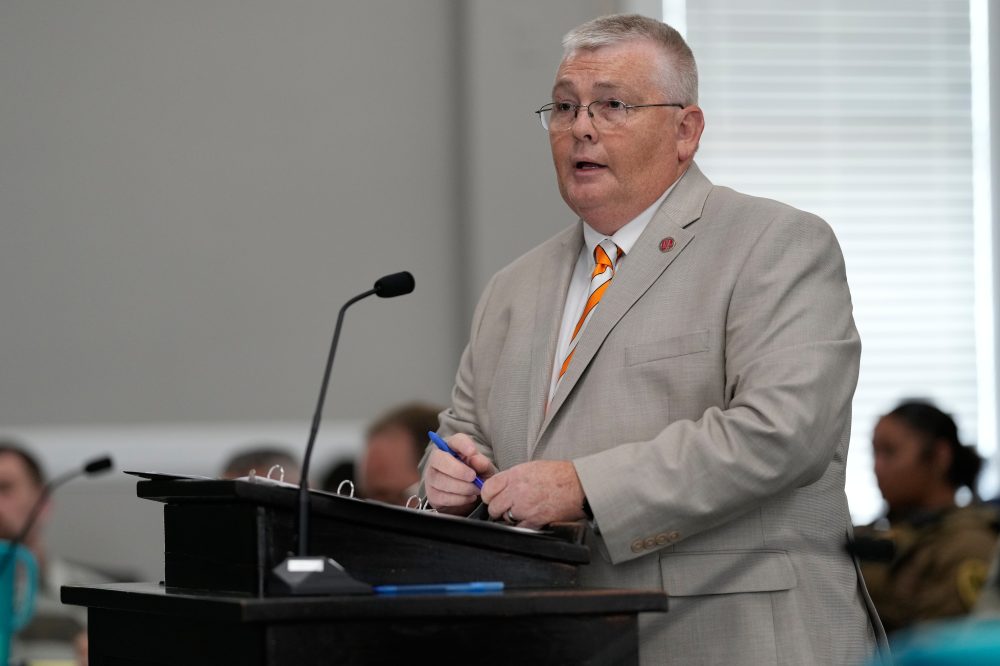
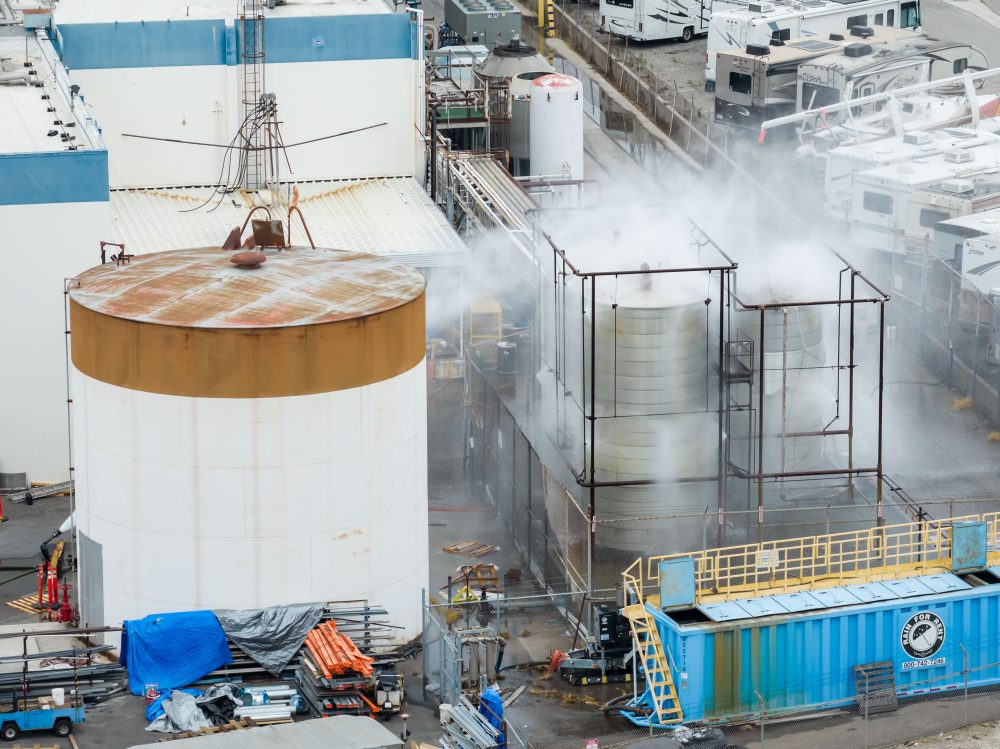
Emergency responders have continuously doused the tank with water to lower the temperature of the chemicals inside. Internal temperatures climbed to 100 degrees Sunday, marking a 10-degree Fahrenheit jump from Saturday’s readings, Democratic state Sen. Tom Umberg reported.
Emergency crews discovered the tank had developed a crack over the weekend, which may reduce the likelihood of a catastrophic blast, and no hazardous chemicals appeared to have escaped, Orange County Fire Authority Capt. Wayhowe Huang reported.
“There’s still the danger of a possible explosion,” he said.
Gov. Gavin Newsom issued a state emergency declaration Saturday and requested President Donald Trump authorize federal emergency assistance to support local and state response efforts.
The container at GKN Aerospace Transparency Systems, a manufacturer of components for civilian and military aircraft, contains 6,000 to 7,000 gallons of methyl methacrylate, a substance used in plastic component production.
Air quality testing around the evacuation perimeter showed pollution levels remained within acceptable ranges, and specialized monitoring equipment is being deployed to detect any gas releases, state and federal environmental agencies reported Saturday.
The primary objective for emergency crews is cooling the chemical contents to prevent either a leak or explosion.
Unmanned aircraft are tracking temperatures every 10 minutes to detect any dangerous increases. Protective barriers have been installed to stop the chemical from entering storm water systems or reaching waterways and the nearby coastline if a spill occurs, Orange County Fire Authority division chief Craig Covey announced on social media.
When internal temperatures increase, methyl methacrylate transforms from liquid to gas form and builds pressure, Purdue University engineering professor Andrew Whelton explained, noting that the crack might allow product or pressure to escape, decreasing explosion risk.
“Think of a soda can. If you leave it in a hot car it can explode,” Whelton said. “But if you put a hole in the can, the product is released and the can itself doesn’t explode.”
Emergency personnel are hesitant to deliberately puncture the tank due to concerns that a spark could ignite the dangerous and combustible gas. The most catastrophic outcome would be an explosion spreading the chemical across a wide area while launching debris, he explained.
Overhead photographs captured by The Associated Press revealed deserted streets throughout the area Sunday, with multiple emergency shelters operating. At a high school in adjacent La Palma, evacuees rested in vehicles or on blankets and sleeping bags on the pavement.
Garden Grove borders Anaheim, which houses Disneyland’s two theme parks that remain outside the evacuation zone. Park representatives confirmed they are closely watching developments.
Contact with methyl methacrylate can result in severe breathing difficulties, nervous system issues, and irritation to skin, eyes, and throat, according to chemical safety documentation.
Whelton emphasized that if an explosion happens, authorities must perform comprehensive air quality testing specifically for methyl methacrylate rather than general volatile organic compound screening, as officials conducted following a 2023 train accident in East Palestine, Ohio, which released over 115,000 gallons of vinyl chloride after authorities deliberately opened five tank cars and burned the chemical.
Orange County health authorities noted the chemical has a distinctive odor that people may detect across a wide area without experiencing harm.
Several Garden Grove residents initiated a class-action federal lawsuit Saturday against GKN Aerospace Transparency Systems, the company operating the facility housing the tank. Legal representatives for the residents contended that property values in the surrounding neighborhood will inevitably suffer regardless of the outcome.
GKN Aerospace declined to address the lawsuit but has issued apologies to residents and businesses required to evacuate. The company stated Sunday it was “working around the clock to mitigate the risk of a leak.”
GKN Aerospace agreed in 2025 to pay state regulators more than $900,000 to settle violations involving recordkeeping, permitting issues and nitrogen oxide emissions, according to a report on the South Coast Air Quality Management District website.